Friday, February 28, 2025

Implats mulls early closure of Canada mine amid palladium slump


Cecilia Jamasmie | February 27, 2025 |


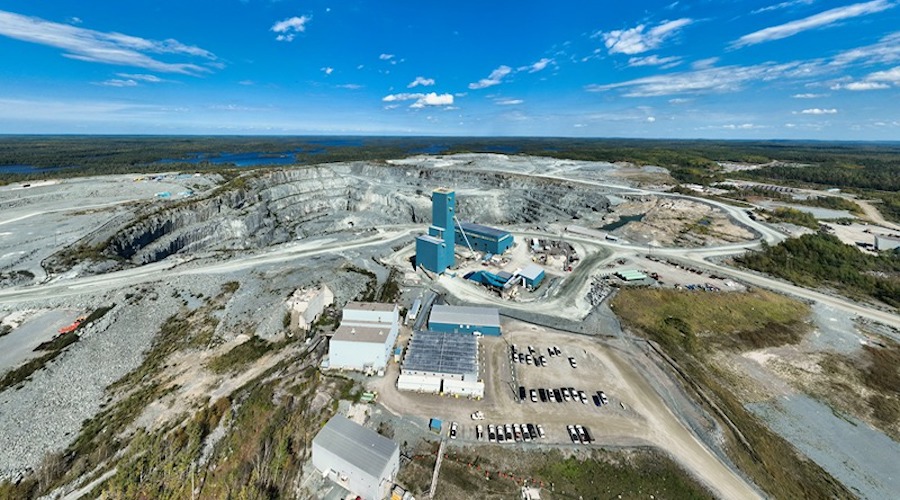
Lac des Iles mine. (Image courtesy of Implats.)


South African miner Impala Platinum (Implats) may close its Canadian palladium mine earlier than planned as prices for the metal, used in gasoline vehicles, have plummeted more than 70% over the past three years.


Commenting on the company’s results for the final six months of 2024, chief executive Nico Muller said Implats has been “continuously evaluating the future” of the palladium-rich Lac des Iles mine in Ontario. The operation contributed about 7% of the company’s production in the period.

“I would not be surprised if, in the course of the next few months we come to a position that an accelerated and responsible wind down of that operation seems to be economically the most effective way to deal with (Impala) Canada,” Muller said.
Price plunge

Palladium has suffered the steepest price drop among platinum group metals (PGMs), plunging from a peak of about $3,440 an ounce in March 2022 to current levels around $921.

The sharp fall has weighed on Implats’ profitability, cutting its first-half fiscal 2025 earnings to 1.9 billion rand ($103 million).

Implats acquired the Lac des Iles mine in 2019, which fuelled the company’s profits in the early part of the decade.

Like its peers such as Anglo American Platinum and Sibanye-Stillwater (JSE: SSW) (NYSE: SBSW), the company has been forced to cut costs and scale back production in response to persistently weak metal prices.
Panama’s ‘novel ideas’ comments offer hope for giant copper mine


Bloomberg News | February 27, 2025 | 


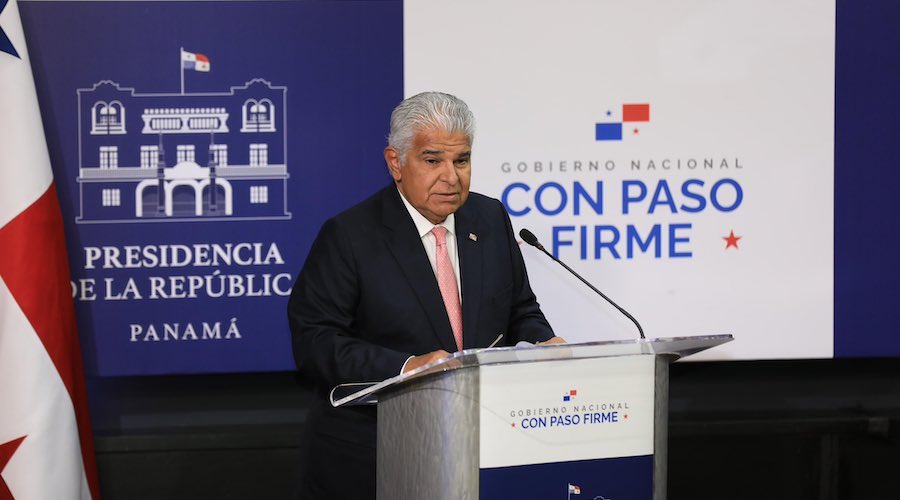
Panama’s President José Raúl Mulino. (Image: Mulino’s X account.)

Panama’s President said his government is exploring “novel ideas” on handling First Quantum Minerals Ltd.’s giant copper mine while reiterating that the firm must drop its arbitration cases against the country.


Speaking to reporters in Panama City Thursday, Jose Raul Mulino said he will visit towns near the mine that have been affected by its closure. The president said he and his closest advisors are exploring “novel ideas on changing the framework of what the mine was to what the mine can be,” adding he’ll begin dealing with the issue as soon as social security reform — which is in “the final stretch” is settled in Congress.

“At a government institution level, we are discussing what we are going to do with the mine,” Mulino said. “It’s a very, very complex topic. Have faith that, once social security is over, we are going to deal with the mine.”

First Quantum’s shares jumped after the comments, which offer renewed hope that a deal could be done to reopen one of the world’s biggest copper mines. Still, restarting a mine that was shut in the wake of mass protests represents a delicate dance for Mulino, who needs to maintain public support to help push through reforms and find new sources of water for the Panama Canal.

Shares in the Vancouver-based company rose as much as 6.9%, the biggest intraday jump since Feb. 4.

Mulino reiterated that First Quantum must drop arbitration before talks can begin on the Cobre Panama mine, which represents 5% of the country’s gross domestic product and accounted for about 40% of First Quantum’s revenue. An arbitration tribunal at the International Chamber of Commerce scheduled a final hearing on the mine for February 2026.

First Quantum declined to comment.

Mulino said he met with suppliers to the mine this week, many of whom have shut down or written off large amounts of inventory since the late-2023 closure following a constitutional court ruling against its operating contract.

“The situation is sad and depressing, the state they are in,” Mulino said of the suppliers. “Overnight, someone flipped a switch and the mine was turned off. In part, what Panama is suffering is the absence of the source of employment and the generation of wealth that the mine provided.”

(By Michael McDonald)


Costamare Reverses Course Planning to Spilt Boxship and Bulker Businesses

bulker
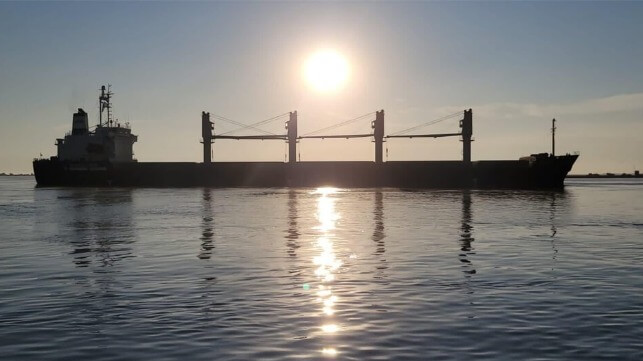
Costamare plans to spin-off its bulk business four years after buying the vessels (file photo)

Published Feb 27, 2025 8:03 PM by The Maritime Executive


Costamare which calls itself one of the leading owners and providers of containerships and dry bulk vessels for charter announced a plan to split its operations into two publicly-traded companies. The move reverses a strategy launched just four years ago to take the long-time containership owner into the dry bulk segment.

The company has been in business for 51 years and focused recently on containerships. It currently has a fleet of 68 owned containerships with a total capacity of approximately 513,000 TEU. The ships sail for well-known carriers ranging from COSCO, Evergreen, and Yang Ming to Maersk, MSC, Hapag-Lloyd, and Zim. In its year-end 2024 financial report, the company highlighted contracts had been fixed for 96 percent of its containership capacity in 2025 and 69 percent in 2026.

Costamare surprised the industry in June 2021 reporting it had decided to enter the dry bulk sector. At the time they called it a liquid sector with strong fundamentals that would provide enhanced return opportunities for shareholders. Management pointed to a low orderbook and demand that was being driven by increased infrastructure spending and commodity consumption.

The position in dry bulk was launched with the acquisition of 16 vessels in 2021. They ranged between 33,000 and 85,000 dwt, with an average age of 10 years.  Today, Costamare owns 38 dry bulk carriers with a total capacity of approximately three million dwt and has a total of 51 bulkers on its operating platform.

The company reported income of more than $290 million for 2024, but the markets for containerships and dry bulk have moved divergently. Last year, demand for containerships was very strong while analysts have questioned the prospects for segments of dry bulk. Bulkers operate on short-term charters with the company reporting in late 2024 and early 2025 that it executed over 50 charters.

The new strategy calls for a spin-off of the dry bulk business into a standalone company that will include the vessels and the operating platform. It will also trade on the New York Stock Exchange. The original company will retain the containerships and its Neptune Maritime Leasing operation.

“The board believes the proposed separation will unlock the inherent value within the two companies, which have unique growth prospects and investment opportunities,” according to the announcement. In addition to creating two pure-play investment opportunities, the transaction they said would provide a simplified structure. Management they said would have an enhanced focus on the individual business and the companies would have improved financial flexibility.

 Terms of the spin-off have not yet been set and the transaction requires final approval from the board of directors. Costamare said the spin-off is expected to be completed as soon as practical within this calendar year.


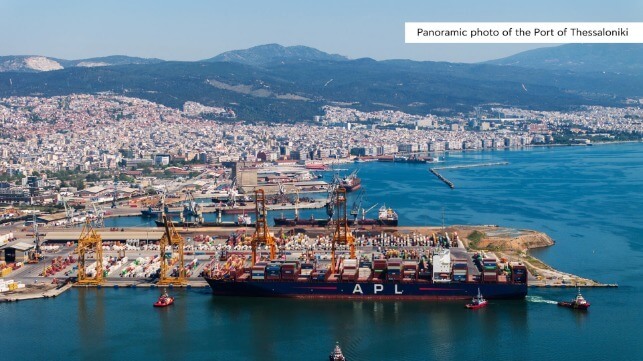
Port of Thessaloniki 1st Port in to Pilot Ship Emissions Monitoring

Port of Thessaloniki

Published Feb 27, 2025 8:00 AM by The Maritime Executive


[By: Port of Thessaloniki]

In a key milestone for maritime decarbonization, the Port of Thessaloniki (ThPA S.A.) has become the first port in the EU and the Mediterranean to integrate RightShip’s Maritime Emissions Portal (MEP) under the HELMEPA-led METAVASEA project, with the support of Lloyd’s Register Foundation.

Through this one-year pilot, Thessaloniki sets a new regional benchmark for sustainability, providing critical insights into value chain (Scope 3) emissions and enabling targeted, data-driven action. This pioneering initiative significantly advances emissions monitoring, empowering ports and shipping stakeholders to track and reduce their environmental impact.

“At ThPA S.A., sustainability is at the core of our strategy. Piloting the MEP reinforces our role in setting new standards in the port industry. By tracking and measuring value chain emissions from incoming vessels, we gain vital insights into the environmental impact of this activity, enabling targeted actions that support “greener” practices in the maritime industry. Beyond our role as a port, we actively engage with the community, ensuring our business practices align with environmental, social, and governance principles. This initiative supports our continuous progress in safeguarding the environment in the local geography we serve, creating social added value” said Athanasios Liagkos, Executive Chairman of the BoD of ThPA S.A.

'HELMEPA leads METAVASEA, a collective initiative of maritime stakeholders to advance decarbonization in the Eastern Mediterranean. The initiative strengthens industry participation, assesses preparedness for new fuels and identifies key challenges towards improving operational efficiency in ports and shipping." said Olga Stavropoulou, Director General, HELMEPA.

Andrew Roberts, Rightship’s Executive Director for EMEA and Americas, commented, “RightShip is delighted to see the adoption of the MEP as part of this innovative pilot program. Partnerships like these highlight the transformative power of technology in driving a cleaner, greener maritime future. This milestone underscores how ports can leverage cutting-edge technology to measure and aid in reducing their environmental impact.” He continued, “The MEP has already become an integral part of the sustainability toolkit for an increasing number of ports worldwide, equipping them with the data and insights necessary to meet environmental targets, drive reduction in emissions, and improve the health of local communities.”

The Director of Skills and Education of Lloyd’s Register Foundation, Dr. Tim Slingsby, commented: “In order to drive a just and equitable transition to a decarbonised shipping industry, it’s crucial that we become accountable and install robust measurement frameworks that track performance against sustainability goals and our other targets. Lloyd’s Register Foundation’s long term strategic investment in METAVASEA is helping convene responsible leaders throughout the maritime system, including The Port of Thessaloniki, and we hope this significant milestone inspires other ports in the Eastern Mediterranean and throughout Europe to join HELMEPA and help deliver safer and more sustainable outcomes both in industry and for our coastal communities.”

The METAVASEA project focusing on People-Centered Transition for Maritime Decarbonisation in the East Mediterranean is coordinated by HELMEPA in collaboration with Lloyd’s Register, World Maritime University (WMU), CYMEPA, CMMI, Premium Consulting, MIO-ECSDE, 12 associate partners, and valuable contributions of more than 70 other stakeholders. Supported strategically and financially by Lloyd’s Register Foundation, the five-year project aims to map the existing infrastructure for maritime decarbonization in Greece, Cyprus and the Eastern Mediterranean, as well as to empower seafarers, port workers, and maritime executives through the development of flexible training tools for retraining.

It is noted that the program provides for the training and re-skilling/up-skilling of 1,500 employees on issues related to new fuels, enhanced safety culture onboard ships and in ports, digital transition, soft skills, environmental leadership and marine environmental awareness-. Moreover, it seeks to enhance the participation of shipping companies and port organizations in decarbonization initiatives, to measure the level of preparedness of shipping and coastal communities in the use of new fuels, to identify related opportunities, gaps and challenges in the Eastern Mediterranean, to prevent maritime accidents by improving operational efficiency in ship and port operations, and to raise awareness among 10,000 students, 750 teachers and about 2 million inhabitants of the Eastern Mediterranean.

The Maritime Emissions Portal (MEP) is a tool developed by RightShip to monitor, measure, and manage maritime emissions with accuracy and efficiency. ThPA S.A.’s adoption of the MEP reflects its unwavering commitment to sustainability as a cornerstone of its operations. As a multi-gateway intermodal network and logistics solutions provider for the Balkans and the broader Southeast, Central, and Eastern European region, ThPA S.A. has a strong market position and deep ties to the communities it serves. This pilot program enhances its efforts to align operations with global decarbonisation goals and stakeholder expectations.

The products and services herein described in this press release are not endorsed by The Maritime Executive.
TRUMPLAND

Massachusetts Offshore Wind Farm Postponed Four Years Due to Uncertainties

offshore wind turbines
EDPR became the latest to postpone a U.S. offshore wind farm (file photo)

Published Feb 27, 2025 5:47 PM by The Maritime Executive


Yet another major U.S. offshore wind farm is being delayed with the executives citing the uncertainties created in the market since the election of Donald Trump. Portugal’s EDP Renewables reported as part of its earnings that it will be taking an impairment charge despite the fact its project off Massachusetts is fully permitted and while saying the company still believes in the project.

The lease for Southcoast Wind (originally known as Mayflower Wind) was awarded in December 2018 and the project is under development in a joint venture between EDP Renewables and Engie. The wind farm was selected in the tri-state solicitation in 2024 with Massachusetts and Rhode Island agreeing to split power from the 2.4 GW project. In one of its final acts, the Biden administration approved the construction plan for the wind farm on January 18, 2025.

As part of its year-end financial reports, EDPR said today, February 27, took an approximately $139 million impairment charge in the fourth quarter of 2024 as it postponed the project. Final negotiations were underway with Massachusetts, while financing and the interconnects were in place, and the company said it had an “attractive” power purchase agreement.

Construction on the U.S. wind farm was expected to begin in 2025. The company had previously projected the wind farm which would be located 30 miles south of Martha’s Vineyard and 20 miles south of Nantucket would be completed by 2030. The new timetable does not anticipate starting construction until 2029.

“That’s a slightly worst case scenario,” Miguel Stilwell d’Andrade, chief executive of EDPR told analysts during the investment community conference call. He said the company was still working on the project getting it “ready to go,” but that it has “taken the more prudent approach,” anticipating a delay.

The company told the analysts that it does not intend to abandon the project but it is the “prudent approach given recent executive orders and permit reviews.” Further, it cited the slow pace of approvals in Europe noting that it would be reducing its pace of investments in renewable capacity in 2025 and 2026. 

The joint venture company, Ocean Winds, also holds earlier stage leases in the United States for Bluepoint Wind in the New York Bight and Golden State Wind off California. The company is active in a total of eight countries and highlights that it continues to make progress on its projects in Europe and Asia. It was also granted a feasibility license by the Australian Government in 2024.

EDP Renewables follows moves by several other developers adjusting their U.S. projects. France’s EDF reported last week that it was writing down its investment in the Atlantic Shores project planned for New Jersey. Shell had earlier said that it was exiting the project joint venture. 

BP also withdrew its application for the transmission system connections for its Beacon Wind project. Vineyard Offshore, which is a U.S.-based affiliate of Copenhagen Infrastructure Partners, also reported it would be reworking its plans for Vineyard Wind 2 after Connecticut failed to move forward with power agreements.

Other U.S. projects currently under construction, including Vineyard Wind 1, Coastal Virginia, and Revolution Wind are proceeding. The uncertainties center around projects with permits and those currently under review by the U.S. Department of the Interior. Trump ordered that the projects be reviewed and imposed a moratorium on leases and reviews on his first day in office.


Tasmania's New Ferry May Be Used to House Ukrainian Refugees

Spirit of Tasmania
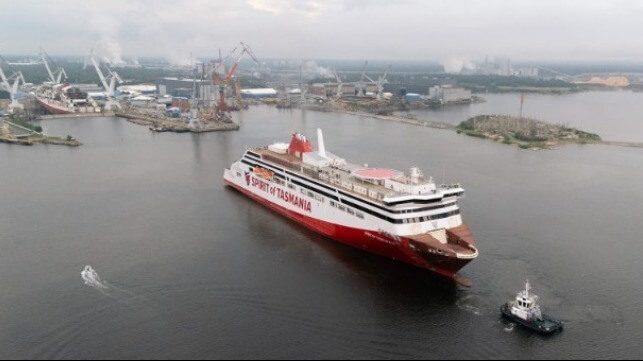
Spirit of Tasmania IV on sea trials, 2024 (Spirit of Tasmania)

Published Feb 27, 2025 8:43 PM by The Maritime Executive


The Scottish government may be closing in on a deal to lease the brand new ferry Spirit of Tasmania IV from the Tasmanian government for the purpose of housing refugees, according to Australian media. The controversial arrangement would provide an interim commercial charter for the ferry, which cannot be put to its intended use until a new terminal is built at Devonport.

Local outlet Pulse Tasmania reports that lease negotiations are now "advanced" and the details may be released soon. Tasmanian Premier Jeremy Rockliff has refused to disclose the status of the talks or any of the terms, and declined to rule out the signing of a lease. "When there is an outcome, we will release the details of that outcome," he told ABC Australia, adding that any negotiations are up to state ferry operator TT-Line. 

"We have been clear that we are seeking to secure a lease agreement that provides the best value for Tasmanian taxpayers. If this does not eventuate, the ship will be relocated to Tasmania," a spokesperson for the Tasmanian government told Pulse. 

Spirit of Tasmania IV is already in Scotland at the Port of Leith, awaiting next steps. If the deal is concluded, she would be used to house Ukrainian refugees at the same seaport. She has about 300 cabins, fewer than the Scottish government's previous berthing vessel, the ferry Victoria.  

Tasmania's political opposition has called for suspending the Scottish lease talks and bringing Spirit of Tasmania IV to her home port right away, along with sister ship Spirit of Tasmania V. The shoreside improvements at Devonport will not be ready until 2027, but in the interim the ferries could be used for homeless housing in Tasmania, suggested opposition politician Andrew Jenner. "There are more than 2,000 Tasmanians who are without a home. Spirit IV could house most of them," he told ABC. "Why is that not the priority for the government?"

CURSED

China Rejects Giant Shipment of Chilean Cherries That Got Stranded at Sea

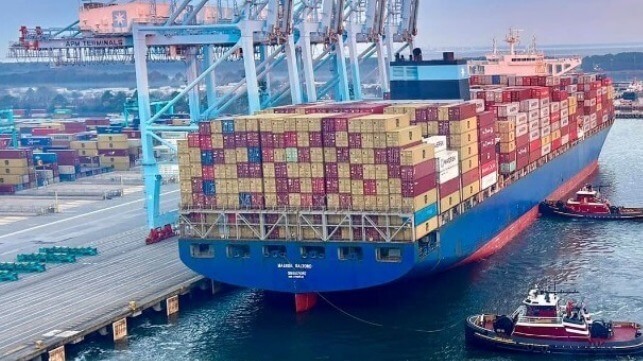
Maersk Saltoro
Maersk Saltoro (Hafen Hamburg / Dietmar Hasenpusch)

Published Feb 27, 2025 9:18 PM by The Maritime Executive


The worst fears of Chile's cherry growers have come to pass: Chinese customs authorities have rejected a huge shipment that got stranded at sea when the Maersk Saltoro broke down in the Pacific. About $60-130 million worth of cherries were stuck on board the vessel, and some or all of them will have to be thrown away. 

Maersk Saltoro, a sister ship of the Dali, was chartered to Maersk and was deployed on the seasonal "Cherry Express" run from Chile to China. Cherries sell well during China's Lunar New Year celebrations, and the special-purpose boxship rotation handled about 17,000 containers of Chilean fruit this year. 

Unfortunately, about 1,300 of those containers were aboard Maersk Saltoro. The boxship broke down in the Pacific in January, about 500 nautical miles off Pohnpei.

Maersk Saltoro drifted for three weeks, and only resumed her transit after a team of technicians came out by tugboat to join her and make repairs. The breakdown delayed the arrival of the cherry cargo until after the lucrative Lunar New Year sales window: She arrived in port 28 days late, long after peak seasonal pricing had subsided. 

The shipment's value now appears to be much reduced: Although the cargo stayed refrigerated throughout the voyage, a substantial share was in spoiled condition on arrival. Chinese customs initially rejected the entire shipment and ordered it destroyed or re-exported, but the Chilean Cherry Committee has been in talks with customs officials in order to optimize the quantity slated for disposal.  

Chinese customs officials will inspect every container, and all those marked as inedible will be taken to a designated disposal site, according to FreshPlaza.

Maersk Saltoro previously drew attention last year when U.S. officials boarded it in Baltimore to conduct an inspection. The vessel is a sister ship to the Dali, the boxship that lost power and destroyed Baltimore's Francis Scott Key Bridge. 


Dutch Safety Board Calls for Change After Deadly Allision at Repair Yard

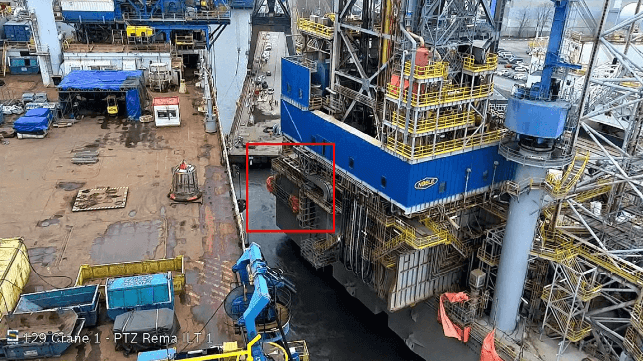
Saipem 7000 (left) drifts towards Noble Lloyd Regina (right). Scaffold with worker is outlined in red (Dutch Safety Board)

Published Feb 26, 2025 2:50 PM by The Maritime Executive


After the fatal allision between a small vessel and the giant crane ship Saipem 7000 last year, the Netherlands' safety board has called on Rotterdam's pilots and on a prominent ship repair yard to carry out better planning before navigational evolutions in tight harbor basins. 

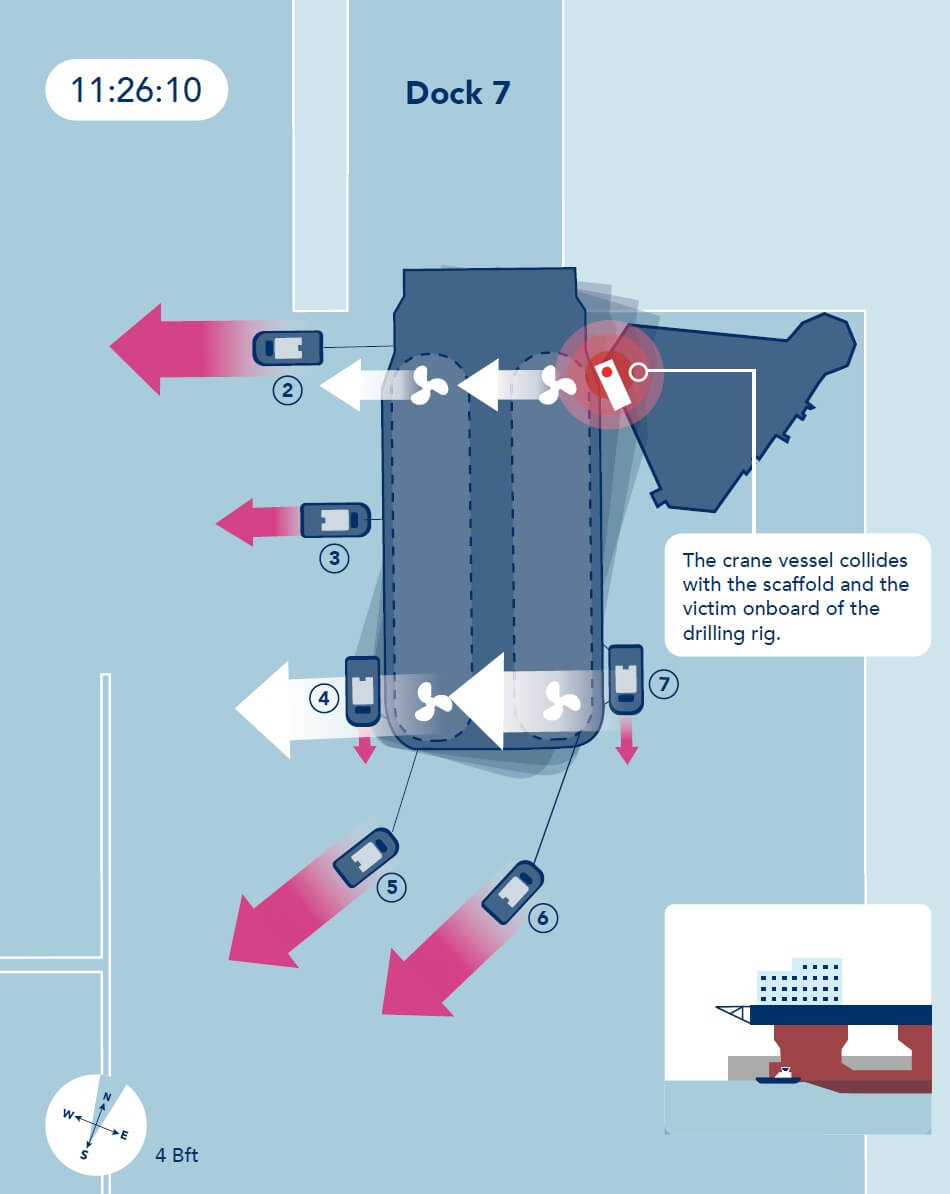
On February 21, 2024, the Saipem 7000 collided with the jackup drilling rig Noble Regina Allen while the crane vessel was docking at a well-known repair yard in the Botlek, a densely-built-up inner harbor in Rotterdam. Winds were 13 knots, in excess of the standard docking procedure for the site, but the pilot had done this evolution in stronger winds and did not believe that the conditions would be problematic. 

Because of the tight quarters and the presence of the rig, there was no tug positioned on the Saipem 7000's port quarter. Despite the power of the crane ship's DP-3 thrusters and the assistance of six tugs, the wind was enough to push the vessel off course. Its stern swung to port as it was trying to enter its berth, and its port quarter struck the rig. 

Courtesy Dutch Safety Board

A welder was working on scaffolding on the exterior of the drilling rig. When the Saipem 7000 made contact, he was trapped between the vessel and the rig, and he fell into the water. Multiple dive searches were conducted, but his body was not recovered for another three weeks. 

The board called for the Dutch pilots' association to systematically assess and improve procedures for navigating in the inner harbor. 

"Pilots must prepare themselves well for the safe execution of complex activities such as docking a crane vessel. For example, they must continuously test assumptions among all those involved and speak out about possible risks. The Regional Pilotage Corporation Rotterdam-Rijnmond is responsible for ensuring that pilots indeed prepare in this way," said Dutch Safety Board member Erica Bakkum. 

The board also called on the shipyard to lead a joint risk assessment process for complex evolutions, incorporating input from all parties involved. "A more thorough approach is needed for complex operations that are carried out simultaneously. The shipyard must ensure that risks are clearly understood and managed," the board concluded. 

Saipem 7000 is one of the world's largest crane ships, and can complete full installations of offshore developments, including topside placement and pipelay. It can lift up to 14,000 tonnes at a time with twin cranes, and it is DP3 enabled for propulsion and anchorless stationkeeping. 


Argentina Repeals 52-Year Ban on Live Export of Cattle for Slaughter

cattle for live export
Argentina already a leader in beef exports is dropping a ban on live export for slaughter (Ministry of Economy)

Published Feb 26, 2025 5:15 PM by The Maritime Executive


In a move that goes against the global trend to stop live export, Argentina announced that it is repealing a ban that has been in place since 1973. The Agriculture, Livestock and Fisheries Secretariat of the Ministry of Economy cited it as a move to support free trade and to grow Argentina’s export industry and role in world trade.

Javier Gerardo Milei who became president of Argentina in 2023 has been seeking to grow the country’s role in global trade. The country, which is already one of the leaders in the global export of frozen and refrigerated meat, said the move will allow for greater competition within the livestock and meat sector, greater market freedom, and provide a significant source of foreign currency. 

The ministry called the ban outdated and not reflecting the current focus on free development. It declared that there were no reasons to maintain the restriction while asserting that developing the live export trade would encourage the improvement of livestock breeds and add prestige to national production. It said the repeal was in keeping with a government policy to promote “an economic system based on free decisions, adopted in an area of free competition, with respect for private property and the constitutional principles of free circulation of goods, services, and labor.”

The move is likely to face strong opposition from global animal rights groups which have increased pressure on the trade and governments around the world. They argue it is inhumane treatment of the animals and unnecessary cruelty. After years of pressure, New Zealand banned live export in 2023 followed by moves in Great Britain. Australia has limited its trade and is scheduled to end the export of sheep in 2028.

Animal rights groups have also been successful in demanding changes to the vessels used for live export after documenting conditions aboard. Combined with the bans, the shipping industry is in decline. In January 2025, Wellard, which had been involved in live export for 46 years and once was described as Australia’s largest live export business, announced the sale of its last vessel and an end to live exports.

Despite the pressure, the trade however has persisted. Experts report continuing demand from countries including Turkey, Iraq, Lebanon, Egypt, Jordan, Argentina, Peru, and Colombia. Argentina’s neighboring country Brazil has been conducting live export since 2010 with reports saying around 2.6 million live cattle were shipped. Advocates however are also pressing Brazil to end its live exports.

For Argentina, live export is seen as a new opportunity to expand on its record levels of exports of frozen, refrigerated, and processed beef. The Ministry reported today, February 26, that Argentina increased beef exports by 10 percent in 2024 reaching a total of 935,261 tons. It was the highest level since a record reached in 1924 of 918 thousand tons. The main destinations for Argentina’s beef in 2024 were the United States, as well as China, Mexico, Canada, and Malaysia. In total, Argentina ships to 53 international markets, which was up by 11 in 2024.

The Ministry says Argentina's beef exports reflect the combination of quality, market diversification, and the ability to adapt to international demands. They report the meat sector is emerging as a pillar of the country’s economic growth.


- - - - 

Famine, Affluence, and Morality. Peter Singer. Philosophy and Public Affairs, vol. 1, no. 1 (Spring 1972), pp. 229-243 [revised edition]. As I write this, in ...


* In TOM REGAN & PETER SINGER (eds.), Animal Rights and Human Obligations. New Jersey: Prentice-Hall, 1989, pp. 148-. 162. Page 2. men are; dogs, on the other ...

That's an important step forward, and a sign that over the next forty years we may see even bigger changes in the ways we treat animals. Peter Singer. February ...

In Practical Ethics, Peter Singer argues that ethics is not "an ideal system which is all very noble in theory but no good in practice." 1 Singer identifies ..

Beasts of. Burden. Capitalism · Animals. Communism as on ent ons. s a een ree. Page 2. Beasts of Burden: Capitalism - Animals -. Communism. Published October ...

Nov 18, 2005 ... Beasts of Burden forces to rethink the whole "primitivist" debate. ... Gilles Dauvé- Letter on animal liberation.pdf (316.85 KB). primitivism ..


USCG Revokes San Juan Terminal's Permit for Ammonium Nitrate

Puerto Rico Terminals
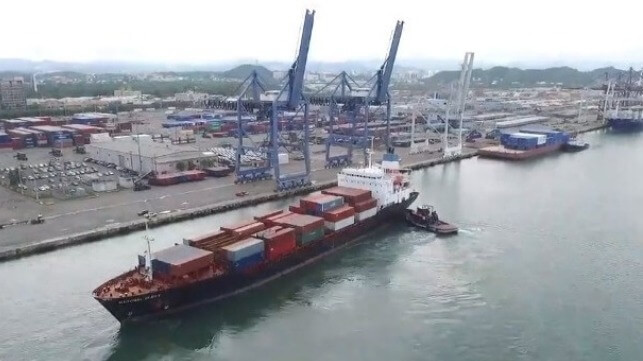
File image courtesy Puerto Rico Terminals

Published Feb 27, 2025 6:09 PM by The Maritime Executive


The U.S. Coast Guard has ordered a container terminal in San Juan, Puerto Rico to stop handling ammonium nitrate - a dangerous cargo that can explode under the wrong conditions - until it installs proper firefighting equipment. 

The Coast Guard has long had concerns about the Puerto Nuevo Terminal (PNT) facility's alleged lack of firefighting capability for handling dangerous goods, specifically including a requirement to have fire hydrants every 300 feet and a sufficient water supply to run them. Sector San Juan worked with the terminal's management to encourage them to bring their operations into compliance with Coast Guard regulations, and eventually handed PNT a hard deadline of October 8, 2024 to comply or lose its permit to handle dangerous cargoes. PNT did not, according to Sector San Juan, and its permit was revoked. 

After the revocation, PNT brought in temporary firefighting equipment as an interim solution, and Sector San Juan renewed the permit to allow cargo operations to resume - with restrictions. However, during a routine visit, Coast Guard inspectors found that PNT was violating the terms of those restrictions, resulting in a full suspension of the permit "to ensure the safety and security of the port and surrounding waterways." 

If PNT still doesn't comply, according to Sector San Juan, it now faces a fine of nearly $120,000 per day for violations - and the possibility of prosecution for a Class D felony, with fines of up to $500,000 for a company (and possible prison time for individuals). 

Puerto Nuevo Terminals (PNT) is a 50/50 joint venture between Luis Ayala Colon and Saltchuk-owned Puerto Rico Terminals. It is now one of only two container terminals in San Juan. The JV was approved by the Federal Maritime Commission in 2019; at the time, the FMC had serious concerns that the combination of the two terminals would reduce competition in Puerto Rico and increase prices for consumers, and though a majority voted for approval, the commission said that it would continue to monitor PNT closely.