Tuesday, March 04, 2025

PKK: We will comply with Leader Öcalan's call, we declare a ceasefire

The PKK Executive Committee said in a statement: "We agree with the content of Leader Öcalan's call and declare a ceasefire effective as of today.


ANF
BEHDINAN
Saturday, 1 March 2025,

The Executive Committee of the Kurdistan Workers’ Party (PKK) released a statement in response to the historic call made by Kurdish leader Abdullah Öcalan on 27 February. Öcalan highlighted the urgent need for democratization in Turkey and called for the PKK to lay down arms and dissolve itself.

The PKK Executive Committee's written statement titled 'To Our Patriotic People and Democratic Public Opinion' reads as follows:

“Leader Abdullah Öcalan's February 27 statement titled “Call for Peace and Democratic Society” is a Manifesto of the Age that illuminates the path of all forces of freedom and democracy. We respectfully salute Leader Apo [Abdullah Öcalan] for presenting such a manifesto for democratic society to our people and humanity.

A new historic process is beginning in Kurdistan and the Middle East

It is clear that a new historic process is beginning in Kurdistan and the Middle East with the Call in question. This will also have a great impact on the development of free life and democratic governance worldwide. The responsibility on this basis belongs to all of us; everyone must embrace their duties and responsibilities and fulfill the requirements.

We agree with the content of the call as it is

Undoubtedly, being able to make such a call was of historical importance; now, the successful implementation of its content is of similar importance. We in the PKK agree with the content of the call as it is and state that we will fully comply with and implement the requirements of the call on our part. However, we would like to underline that democratic politics and legal grounds must also be secured for its success.

We are carrying historic achievements into a new phase of resistance

It is very clear that the PKK has been the great heroic and true movement of the last half century in Kurdistan. Everything was won through a very brave and self-sacrificing struggle, with a price and labor. We remember all the heroic martyrs of this great freedom struggle with deep respect, love and gratitude. Now, in the same spirit and conviction, we are carrying these historic achievements into a new phase of resistance. The awareness developed by Leader Apo and the great legacy of experience created by the PKK give our people the strength to continue the struggle for the good, the true, the beautiful and freedom on the basis of democratic politics.

We are declaring a ceasefire effective as of today

In this context, in order to pave the way for the implementation of Leader Apo's Call for Peace and Democratic Society, we are declaring a ceasefire to be effective from today on. None of our forces will take armed action unless attacked. Beyond this, only the practical leadership of Leader Apo can make matters such as laying down arms practical.

Leader Apo must personally direct and lead the Congress

On the other hand, we are ready to convene the party congress as Leader Apo wants. However, in order for this to happen, a suitable security environment must be created, and Leader Apo must personally direct and lead it to make it successful. Up until now, we have led the war to this day - with all its mistakes and shortcomings. However, only Leader Apo can take over the leadership of the era of peace and democratic society.

Leader Öcalan must be granted conditions to live and work in physical freedom

The concrete facts clearly show that in order for the Call for Peace and Democratic Society to be successfully implemented, for the democratization of Turkey and the Middle East based on a democratic solution to the Kurdish question, and for the development of the global democracy movement, Leader Abdullah Öcalan must be granted with conditions to live and work in physical freedom and establish unhindered relationships with anyone he wants, including his friends. We hope that the requirements of this will be fulfilled by the relevant institutions of the state.

The Call by Leader Apo is definitely not an end, but rather a new beginning

Our Esteemed People and Friends!

The Call made by Leader Apo is definitely not an end, but rather a new beginning. The statement puts it very strikingly that what we have not been able to do in a timely and sufficient manner over the last 35 years in general and over the last 20 years in particular needs to be done very clearly and sharply now. In this respect, it is necessary to correctly and sufficiently understand the Leader's call, its reasons, the characteristics of the new process and the tasks involved, and to successfully implement the requirements. It is of historic importance to approach the content of the Call with great responsibility and seriousness and to successfully implement it in every area.

Let us all consider ourselves responsible for the success of this Call

Let us not forget that Leader Apo has always shouldered the biggest burden himself and has illuminated our path and led us. Now, he is taking a new step with the ‘Call for Peace and Democratic Society’ and is starting a new process of struggle for all the oppressed, especially women and young people. So, let us correctly understand the characteristics of this new process and successfully fulfill its duties on the basis of always being prepared against all kinds of dirty tricks and attacks. Let us develop our democratic organization and our struggle for freedom in every area with great courage and dedication in Kurdistan, the Middle East and all around the world. Let us all consider ourselves responsible for the success of this Call.

We call on everyone to support the Leader's Call

We have entered the month of March. We are feeling a new excitement leading us to 8 March and Newroz. We are developing the Women's Freedom Revolution on the basis of Jineoloji, organizing moral and political social life in the Line of Democratic Civilization. We are trying to understand the Apoist reality more accurately and adequately, and to develop the revolution of truth, which is a revolution of mentality and lifestyle. Leader Apo's last Call is a call to embrace 8 March and Newroz more strongly and to celebrate with more enthusiasm. More than anyone else, women and young people need to understand this Call correctly, embrace it strongly and fulfill its requirements.

On this basis, we congratulate all women and young people, our people and our friends on 8 March Working Women's Day and Newroz, and we call on everyone to support the Leader's Call in the spirit of 8 March and Newroz and to develop the freedom struggle in every field!

Long live the Heroic Pioneer of Our People, the PKK!

Bijî Rêber APO!”

PJAK: We support Leader Öcalan’s call

“As a party that carries out its struggle on the basis of Leader Öcalan's philosophy and paradigm of democratic society, we support Leader Öcalan's call for peace in Turkey and the peaceful resolution of the Kurdish question as a whole,” PJAK said.

ANF
NEWS DESK
Sunday, 2 March 2025


The Free Life Party of Kurdistan (PJAK) made the following statement regarding the “Call for Peace and Democratic Society” announced by Kurdish leader Abdullah Öcalan through the DEM Party İmralı Delegation in Istanbul on 27 February:

“Leader Apo [Abdullah Öcalan] made a historic call on 27 February. In his call, Leader Apo specifically points to a peaceful solution to the Kurdish question, the establishment of a democratic society and fundamental changes in the Kurdish people's freedom movement.

The Middle East is undergoing a vast and rapid change. The region can no longer cope with the problems and crises caused by the authoritarian policies of nation-states. Nationalism is both the source of these challenging and complex issues and the biggest obstacle to a solution.

In this context, the Kurdish issue, which is considered a security problem and tried to be resolved through repression and military force as a result of the nation-state mentality, has become a deep wound and an unresolvable knot. This situation also reflects the approach of the ruling regimes in the Middle East to solving problems. Leader Apo's call is an attempt to overcome this crisis and a historic opportunity for the Turkish state and other regional states to take steps towards a democratic solution.

Undoubtedly, the success of Leader Apo's step for peace depends on the physical liberation of himself and all other political prisoners, the ending of the war by the Turkish state and the establishment of a political, legal and democratic foundation.

In his historic call, Leader Apo points out that the Kurdistan Freedom Movement, despite great sacrifices, has not been able to fully respond to this issue due to the bipolar world mentality.

For half a century, the Kurdistan Workers' Party, through a relentless struggle, has protected the Kurdish nation from the threat of ethnic extinction and exposed the policy based on the denial of the Kurdish people. The Kurdish nation has now successfully passed the stage of 'resurrection' and the matter of existence as a nation, and has reached the stage of self-determination, self-government and leadership in democracy. Of course, the success of this process requires new approaches and measures to continue the struggle.

During the 1990s and the 26 years he spent in Imrali Prison, Leader Apo waged an extensive struggle to change the understanding and paradigm of the struggle of the Kurdistan Freedom Movement.

He put forward a new paradigm of struggle on the basis of a democratic, ecological society and women's liberation, which is the road map of our struggle. Leader Apo's latest call covers very important, remarkable and vital issues. As a party that carries out its struggle on the basis of Leader Apo's philosophy and paradigm of democratic society, we support Leader Apo's call for peace in Turkey and the peaceful resolution of the Kurdish question as a whole.”

HSM: The ceasefire decision taken by the PKK is valid for all our forces

The People's Defense Center Headquarters Command said in a statement that "the ceasefire decision taken by our Party PKK, within the framework of the historic call made by Leader Apo, as of March 1, 2025, is valid for all our forces."


ANF
BEHDINAN
Sunday, 2 March 2025

The Headquarters Command of the People's Defense Center (HSM) issued a directive titled "To All People's Defense Forces", stating the following:

"In line with the historic call made by Leader Apo (Abdullah Öcalan), the ceasefire decision taken by our Party, the PKK, effective from March 1, 2025, applies to all our forces. All command units and relevant divisions must strictly adhere to our Party's ceasefire decision and fully comply with it.

Undoubtedly, in the face of potential attacks, our forces have the fundamental right to defend themselves and to respond within the framework of legitimate self-defense. Our forces also retain the right to retaliate against continuous attacks.

This decision applies not only to our main forces in Turkey and Bakurê (North) Kurdistan, but also to all structures, as well as to the special fedai (suicide squad) teams, all autonomous units, YPS (Civil Defense Units), MAK (Martyr Aziz Güler Units), and other self-defense units.

Everyone must comply with this decision. All relevant structures with autonomous operational capabilities must reposition themselves on a defensive basis within the framework of this decision. In this critical process, none of our forces should diminish their defense measures in any way and must strengthen defensive measures under all circumstances.

In this historic new phase, it is a fundamental duty for all HPG and affiliated units to act sensitively and responsibly to uphold a stance and struggle in line with Leader Apo's vision. Careful measures must be taken against possible provocative situations that may arise, and such situations must be handled with utmost caution.

We have full confidence that all comrades will approach this decision responsibly.

On this basis, we salute all command and fighter comrades and wish them great success."

YPC: We will adhere to the ceasefire declared by the PKK


The Self-Defense Units stated that they would comply with the PKK’s ceasefire decision and meet the strategic move of Abdullah Öcalan with a strong stance in the field.

ANF
NEWS DESK
Tuesday, 4 March 2025


The Self-Defense Units (Yekîneyên Parastina Cewherî-YPC) announced that they would adhere to the ceasefire declared by the PKK on March 1 following Abdullah Öcalan’s call on February 27.

“The historic statement made by Leader Apo [Abdullah Öcalan] on February 27, 2025 declares that our struggle has entered a new phase,” said the written statement released by the YPC on Tuesday.

“We embrace this process initiated by our leader with great consciousness and determination, and together with all our units, we announce to the public that we will adhere with absolute discipline to the ceasefire decision taken by our Party Center, the PKK Executive Committee, as of March 1, 2025,” the YPC stated.

“This decision is a strategic step on the path to freedom. The main task of every comrade is to strengthen and raise this process,” said the YPC and continued:

“Our Leader and our Party are carrying out a historic process with the responsibility of building the free future of our peoples. With this awareness, we will show absolute commitment to the PKK Executive Council's call for inaction for all our units. As Yekîneyên Parastina Cewherî (Self-Defense Units), we will fully comply with the ceasefire decision and meet the strategic move of our Leader with a strong stance in the field.

We will carry out this process with discipline, commitment and organizational consciousness within the framework determined by our Party, and we will shape the path to freedom in line with the perspective of our Leader.

Based on the statement by the People's Defense Center (HSM) to which we are affiliated, we will act within the specified framework and reserve our right to retaliate against continuous attacks.”

HPG reports ongoing Turkish attacks on guerrilla areas despite the PKK's announcement of a ceasefire

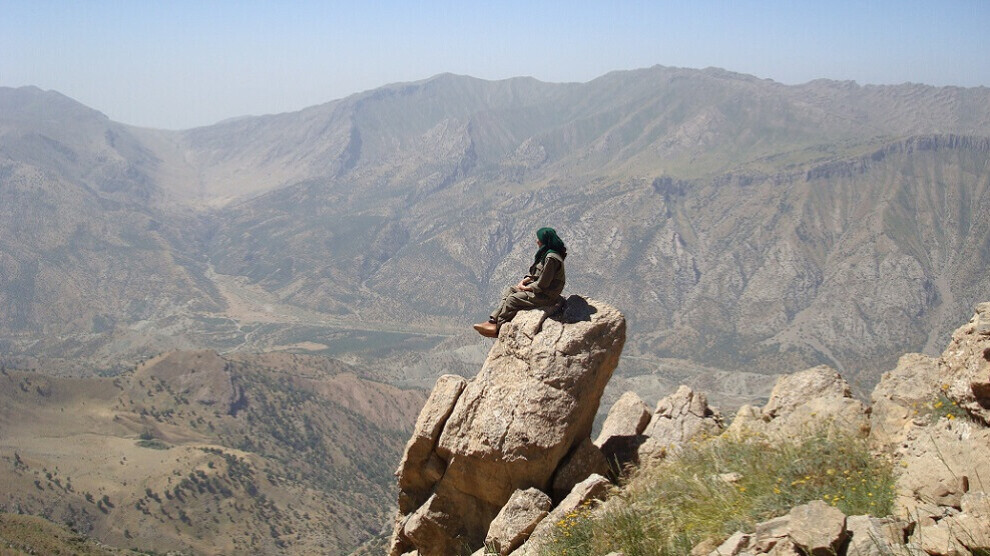
Despite the PKK's announcement of a ceasefire, the Turkish army continues to bomb guerrilla areas in southern Kurdistan.


ANF
BEHDINAN
Tuesday, 4 March 2025

Despite a unilateral ceasefire announced by the Kurdistan Workers' Party (PKK), Turkey continues to bomb guerrilla areas in the guerilla-held Medya Defense Zones in southern Kurdistan (northern Iraq), reported the Press Center of the People's Defense Forces (HPG) in a statement on Tuesday.

According to the statement, while Turkish attacks from the ground as well as from the air continue, the guerrillas are adhering to the ceasefire announced by the PKK on March 1st and are only exercising their right to self-defense when the situation demands it.

Regarding the details of the most recent attacks on guerrilla areas and the response by the guerrilla forces, the statement said the following:

Şehîd Delîl Western Zap region;

On February 26th at 10:40, the invaders going into action in Girê Cûdî Resistance Area were intervened by the guerrillas with heavy weapons.

On February 27th at 07:25, the invaders in Girê Cûdî Resistance Area were intervened by the YJA Star (Free Women’s Troops) guerrillas with heavy weapons.

On March 1st, between 17:30 - 18:30, the invaders who attempted to advance towards the guerrillas' tunnels in Girê Amediyê Resistance Area and install technical equipment in the area were intervened. As a result of the intervention, a member of the invasion troops was killed.

Garê region;

On February 26th at 11:30 am, a guerrilla fighter named Delil was martyred as a result of an attack by warplanes in the Dînartê region. The identity information of the fallen fighter will be shared later on.

Attacks carried out by the occupying Turkish army with banned explosives;

On March 1st, the guerrillas' tunnels in Girê Cûdî Resistance Area in Şehîd Delîl Western Zap region were bombed 4 times with banned explosives.

On March 1st and 3rd, the guerrillas' tunnels in Girê Amediyê Resistance Area in Şehîd Delîl West Zap region were bombed 3 times with drones loaded with explosives.

Attacks carried out by the occupying Turkish army;

Between March 1st and 3rd, the areas of Spîndarê, Girê Mesken, Dêreşê and Deşta Kafya in Garê region were bombed 6 times by warplanes.

Between March 1st and 3rd, the Turkish army carried out a total of 1072 attacks with heavy weapons and howitzers. The attacks were directed against the areas of Berê Zînê, Lolan, Kendekola in Xakurkê; the areas of Deşta Kafya, Dêreşê, Spîndarê, Mijê, Girgaşê, Girê Zengil, Kanî Sarkê, Zêvkê in Garê region; the areas of Serê Metîna, Şêlazê, Bêşîlî in Metîna region; the areas of Girê Cûdî and Girê Amediyê in Şehîd Delîl Western Zap region.
OCALAN, PKK, KURDISH CEASEFIRE

Türkoğlu: We will build the politics of a new era


Halide Türkoğlu stated that Abdullah Öcalan’s call has opened a new era.


ANF
ANKARA
Tuesday, 4 March 2025

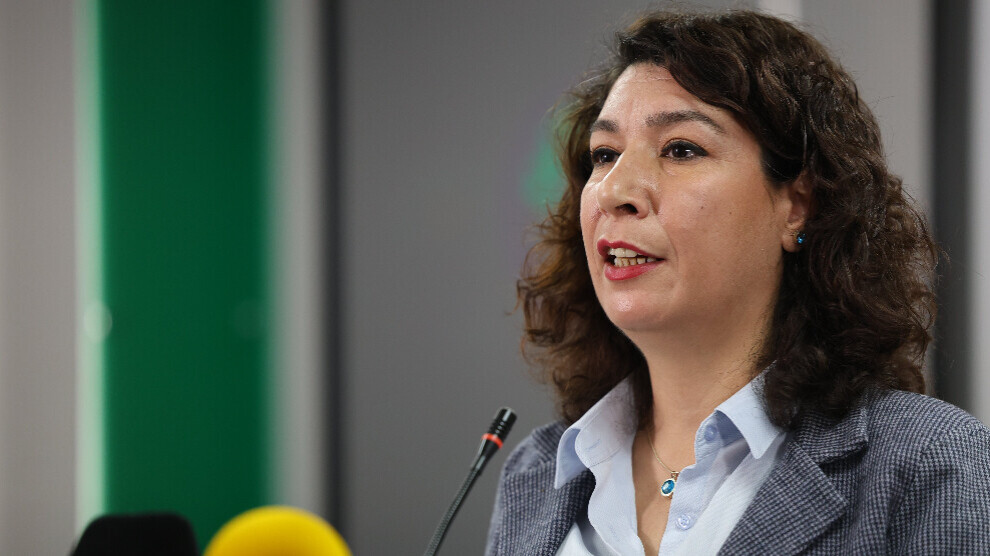
Halide Türkoğlu, spokesperson of the Peoples’ Equality and Democracy Party (DEM Party) Women's Assembly, addressed current developments during a press conference held at the party's headquarters.

A new era has begun

Halide Türkoğlu referred to Abdullah Öcalan’s call on February 27, stating that "this call has opened the door to a new era in the 21st century, not only in Turkey but also in the Middle East and globally, paving the way for the reconstruction of a democratic society. As women, we see it as our fundamental duty and responsibility to strengthen the struggle for peace through the experiences, achievements, and legacy of our women's movement. The government must immediately fulfill the requirements of this call. Mr. Öcalan must be granted free and effective conditions, allowing him to establish contact with the people."

Immediate steps must be taken

Türkoğlu urged the Turkish state to take immediate action. She said: "Establishing a democratic political and legal framework is not merely a condition; it is the very foundation, projection, and guarantee of peace and resolution. Steps must be taken without delay. For over a century, since the formation of the Republic of Turkey, policies of denial and annihilation have deepened war, polarization, suffering, mourning, displacement, arrests, torture, enforced disappearances, and massacres in our region. The institutionalization of militarism, nationalism, and sexism in all areas has led to a continuous rise in femicides, harassment, and sexual violence."

Opportunities and threats

Türkoğlu added that "the democratization of Turkey is essential for the democratic and peaceful resolution of the Kurdish issue. Every step taken toward this democratization will undoubtedly have an impact on the broader Middle East." She cautioned that while significant opportunities exist, serious dangers also loom, stating, "We are closer than ever to peace, resolution, democracy, and freedom, surrounded by opportunities. At the same time, we stand on the brink, caught on the edge of war."

Women will be the strongest defenders of this call

Türkoğlu underlined the significance of Öcalan’s call for women, saying that "the ‘Call for Peace and a Democratic Society’ sets the most suitable framework for advancing the achievements of women's long-standing struggle for equality and freedom. We are fully aware that dominant masculinity is further strengthened through conflict and war. As women, we have always been at the forefront of the struggle for peace, and our movement holds powerful experience and knowledge. Therefore, women will be the strongest defenders of this call."

She continued: "The construction of peace and a democratic society is only possible with women and through women’s struggle. We want to collectively build a language of peace in politics. As the Women's Assembly of the DEM Party, we are here with a plan, a program, and a call to ensure that democratic politics, the socialization of peace, and women's active role as agents of change in the legal sphere become realities. We seek to establish dialogue and negotiations with women members of parliament and women's organizations within political parties, uniting them under a shared women's perspective."

We will discuss together

Türkoğlu said that they would meet with political parties in the coming week and continued: "We will engage in discussions with women journalists and press organizations to place women's peace politics and struggle at the center of both national and local political agendas in both national and local politics. Our goal is to ensure that this process is not dominated by male-centered political approaches but rather highlights the insistence on and visibility of a women-centered democratization. We recognize that the women's struggle is the guarantee of local democracy.

We will come together with women's platforms and city councils to strengthen democratic politics and to socialize the discourse and struggle for peace at the local level. With institutions and organizations fighting against violence against women, we will collectively discuss how conflict translates into violence in our lives and how peace and democratization can become a victory in women’s struggle for equality and freedom. We know the cost of war from the exploitation of our labor and the precariousness of our lives. To advance peace politics, we will meet with women's structures within labor organizations and trade unions, walking together in building a democratic society and driving democratic change."

We will expand the struggle

Türkoğlu emphasized the importance of collective engagement in the call for "Peace and a Democratic Society," and added: "Together with women intellectuals, writers, lawyers, academics, and artists, we will discuss how society and the state can take part in peace and democratic transformation at this historical crossroads. We, as women who have been silenced, punished, and censored in the politics of the ruling powers will open paths for one another and walk together in building the politics of a free, equal, and democratic society. For democratic transformation to be possible, it is essential to free politics and the state from monolithic structures. The essence of democracy lies in plurality and diversity, and for this essence to thrive, all identities must be recognized. A democratic Turkey is not only about achieving a peaceful resolution to the Kurdish issue, it is also about ensuring that, through this resolution, all peoples, faiths, and marginalized identities can collectively win. Both the opportunities and the struggle for this future are in our hands. We will expand our struggle together to ensure that all women take part in this process."

We will build the politics and language of the new era

Türkoğlu emphasized that the socialization of peace cannot develop independently of the socialization of women's freedom, stating: "This is why we must stand together more than ever and insist on peace. Achieving a democratic constitution, strengthening local democracy, and establishing a democratic republic requires continuous dialogue and oversight in social, political, and legal spheres with women playing a leading role. As the Women's Assembly of the DEM Party, we want to emphasize that ensuring this process is effectively carried out on a democratic political foundation requires recognizing that women are the organized force of a democratic society, those who create and transform. We, as women, will build the democratic politics and language of this new era together."


Idris Baluken: Turkish state and society should take responsibility

Idris Baluken said that Abdullah Öcalan’s call should be evaluated from a historical perspective.


SERKAN DEMIREL
NEWS DESK
Monday, 3 March 2025

PART ONE

Abdullah Öcalan’s call for "Peace and a Democratic Society," announced by the Imrali Delegation on February 27, has resonated not only in Turkey, Kurdistan, and the Middle East, but also at an international level. To discuss this historic stance, which advocates a democratic and political resolution to the Kurdish question, we spoke with former Imrali Delegation member and Kurdish politician Idris Baluken.


Öcalan's long-anticipated call for 'Peace and a Democratic Society' was announced by the Imrali Delegation. With this call, Öcalan has also marked the beginning of a new process. How do you evaluate it?

First and foremost, I believe it is essential to evaluate, from a historical perspective, the fact that after 26 years, Kurdish People’s Leader Öcalan has once again placed the Kurdish people’s struggle for democracy, peace, and freedom at the center of Middle Eastern and global politics. We know that 26 years ago, through an international conspiracy (culminating on 15 February 1999, the day Öcalan was abducted in Kenya), he was targeted for elimination, with the intention of leaving him without a place to seek refuge in the world and severing all ties with his people and organizational structure.

Following this, he was subjected to a system of severe torture and isolation on Imrali. However, despite all this, Öcalan has carried his ideological and intellectual concentration on freedom, democracy, and peace to this day, positioning it at the heart of regional and global politics. This confronts us with a significant and powerful reality. Yesterday, this issue shaped the global agenda, and beyond the content of the message itself, its timing and historical significance were equally crucial. I wanted to emphasize this point in particular.

What emerged was an exceptionally strong message, one that rekindles hopes for peace, advocates for democratic transformation, and asserts that a free future is not only possible for the Kurdish people but also for the Turkish people and all the peoples of the Middle East.

At a time when the Middle East is being reshaped, Mr. Öcalan is not merely addressing the current political situation; he is intervening in the process with a perspective that takes into account fifty, even a hundred years of regional realities. If his counterparts respond positively, it is fair to say that he has presented a proposal package capable of paving the way for significant short-term developments in favor of the peoples. From this point forward, the course of events will depend on whether a response emerges that matches the depth, sincerity, and seriousness of the approach Öcalan has put forward.

You were part of the previous Imrali Delegation. At that time, negotiations were conducted, but due to the state’s stance, the process was disrupted and ultimately failed. If we compare that period with the process being reconsidered today, what would you say? How should we interpret the attempt to rebuild the table that was overturned years ago?

Nearly ten years have passed, and it has been an extremely difficult period. The heavy costs of that time have created immense pressure on society. Regionally, too, significant developments have taken place over this decade. For the Kurdish side, it was a challenging process, sacrifices were made, a 'collapse concept' was implemented, and an attempt was made to completely break the will of the Kurdish political movement. However, at the end of these ten years, it is clear that this attempt has failed, and the Kurdish movement has maintained its will and dynamism in its struggle.

For the state, a different reality emerged. Turkey has descended into an unprecedented administrative, structural, legal, and economic crisis. When we analyze the consequences of overturning the negotiation table from this perspective, we see that, had the negotiation framework set forth in the Dolmabahçe Agreement ten years ago been implemented, Turkey would not be experiencing its current crisis and collapse, and the Kurdish people would not have had to endure such a painful and challenging period.

At the same time, the dynamics in the Middle East have shifted significantly. Developments in the Palestine, Lebanon, and Syria axes have brought the Kurdish issue to a point where it can no longer remain unresolved. When we consider all of these factors together, the resolution of the Kurdish issue has become a matter of vital urgency. The situation has reached a breaking point where a solution is no longer a choice but a necessity.

The Turkish state or the current government’s search for a new approach cannot be considered separately from these developments. Mr. Öcalan has consistently maintained his stance on peace and a democratic political resolution, which has once again drawn global attention. In the 2013–2015 resolution process, he made this clear through the Dolmabahçe Agreement.

Looking at the current situation, Öcalan continues his efforts from where he is, maintaining his commitment to peace and a democratic political resolution. On the state’s side, given both the deepening internal crises and the way the Kurdish issue is forcing its own resolution in the Middle East, we can speak of a new position. From this point forward, what matters is whether the state and the government will take concrete and practical steps in line with this new position. If there is a sincere and serious approach, the peace and democracy solution proposed by Öcalan could open the door to an entirely new process for the whole Middle East.

The Turkish side has particularly highlighted Öcalan’s call for the Kurdistan Workers’ Party (PKK) to lay down arms. Although this statement was not explicitly included in the text, Sırrı Süreyya Önder conveyed Öcalan’s words: 'Undoubtedly, the practical abandonment of arms and the dissolution of the PKK require the recognition of the legal and democratic political framework.' Despite this, some circles still express confusion. What steps should the state take to ensure this process leads to success?

Mr. Öcalan’s stance on this matter has always been very clear. With that statement, Sırrı Süreyya Önder essentially articulated the expectations that Öcalan had conveyed to the state and government regarding the process. The call that has been announced assigns responsibilities not only to the Kurdish side but also to the Turkish state and its government. There is no ambiguity or confusion within the Kurdish movement. The Kurdish people and the Kurdish political movement have already declared that they are ready to seriously engage with the initiative put forward by Öcalan. Their position is clear.

However, when we look at the state and the government’s stance up until now, starting from the widely publicized image of Devlet Bahçeli approaching the ranks of the Peoples' Equality and Democracy Party (DEM Party) in parliament, we see a contradiction between words and actions. This contradiction has created significant distrust and confusion. No legal or constitutional reforms necessary for democratization have been implemented. Moreover, no substantial progress has been made regarding the isolation imposed on İmralı Island. The restrictions on family and lawyer visits continue.

The Kurds will not lose with Öcalan at the negotiation table

Despite all these challenges, Abdullah Öcalan has once again demonstrated that he is making a historic effort to secure the next fifty, even a hundred years, for all the peoples of the Middle East. However, while doing so, he has also felt the need to remind the state and the government of their responsibilities. If democratic politics is not given room to operate, if legal steps toward resolving the Kurdish issue and democratizing Turkey are not taken, this process will have no chance of progressing.

At the same time, the confusion surrounding Kurdish rights should be seen as an area that certain circles, those unable or unwilling to clearly express their stance on the process, seek to manipulate. Mr. Öcalan’s contributions to the Kurdish people’s struggle for democracy, peace, and freedom are undeniable. The resurgence of a people whose identity, language, and culture had been denied, and their emergence as a political force, is a direct result of Öcalan’s political efforts.

Even after spending the last 26 years imprisoned on an island, behind bars and walls, Öcalan has never wavered from the demands of his people. On the contrary, he has strengthened this struggle with new ideological openings. For this reason, it is impossible to say that the Kurdish people have any doubts about him. Alongside their organized structures, the Kurdish people trust that, just as in the past, Öcalan will guide this process correctly today and in the future.

The people are well aware that in any negotiation process involving Öcalan, the Kurdish people will not lose. Moreover, this process will not only benefit the Kurdish people but also bring gains for all marginalized and oppressed groups in Turkey.

PART TWO

Baluken: 

Öcalan places responsibility on everyone

In the second part of this interview, Kurdish politician Idris Baluken told ANF that Abdullah Öcalan in his call placed responsibility on everyone.


SERKAN DEMIREL
NEWS DESK
Tuesday, 4 March 2025

In the second part of this interview, former Imrali Delegation member and Kurdish politician Idris Baluken told ANF that in the call he made, Abdullah Öcalan assigned responsibilities to everyone.

Vice Co-Chair of the DEM Party, Tayyip Temel, spoke to Medya Haber television and emphasized that Abdullah Öcalan had warned about the reactivation of a coup mechanism. Do you have any information regarding this warning? Considering your past experiences, what would you like to say about Öcalan’s warning?

A coup mechanism is likely to be set in motion whenever the Kurdish issue remains unresolved and the war machine continues to operate. Turkey’s recent history has shown this as well. To prevent this uninterrupted coup mechanism, Mr. Öcalan has consistently issued warnings in the past, particularly during the peace process. He stated that Turkey could escape this coup mechanism by democratizing, integrating the state structure with society, and achieving a solution.

At the time, when we were the delegation that first started talking about the coup mechanism, we heard comments from democratic, liberal, and leftist circles in Turkey, saying, ‘Would a coup really happen in Turkey at this point? Would such a mechanism still function?’ However, we all witnessed what happened in the following period. The coup practices that were put into action, both militarily and civically, proved just how accurate Mr. Öcalan’s assessments were.

Mr. Öcalan sees this danger today as well. A Turkey that resolves the Kurdish issue and ensures democratization can only rid itself of these shameful pages of the past. It can find peace by integrating with society in the present. Öcalan has evaluated the situation within this broader strategic framework. I believe that, above all, this evaluation must be taken seriously by the government and state authorities.

Öcalan’s historic call imposes a great responsibility on both Turkey and the Kurdish people, doesn’t it? What should different social and political groups do to ensure the success of this process?

Yes, this is a very important question. But before answering it, I want to emphasize something in particular: Mr. Öcalan is not a leader who takes a stance solely based on the developments happening today or tomorrow, either in the country or the region.

We have seen this in the past as well. He evaluates regional and global developments very well, analyzing the political background of the next fifty, perhaps even a hundred years. In doing so, he operates from a perspective grounded in political, sociological, philosophical, and historical realities. That is why understanding the strategic moves he puts forward can sometimes be difficult for those who fall into the shallowness of daily politics. However, as the process unfolds, the value of his moves becomes clear.

If you remember, when the 2013-2015 peace process began, there was confusion in different circles, including some segments of the Kurdish people. A very intense war period had been experienced. There were political arrests. The government was not showing any will regarding Kurdish policies or democratization.

At that time, everyone was asking, ‘Why is such a process needed when all of this is happening?’ But over time, the developments in Rojava, the tangible emergence of the revolutionary process there, the Kurdish political movement’s leap from a 6-7% range to 13% in Turkish politics through the Peoples' Democratic Party (HDP), and its establishment as a key force in Turkey’s political landscape, positioning itself as a third alternative between the two main political axes, Mr. Öcalan was considered as a peace leader for the first time in Turkish society (west of the Euphrates and in the international community), in opposition to his always misrepresented image. All happened thanks to the resolution process.

People often discuss the peace process only in terms of what happened after the table was overturned, but they ignore what the process brought to the Kurdish people and the revolutionary and democratic circles in Turkey.

I see the current process as similar to that one. Of course, there may be concerns, worries, and difficulties in interpreting it through the lens of daily politics. However, leadership, especially peace leadership, is precisely about this. It is about having the courage to make strategic moves without getting caught up in conventional patterns and taking that risk.

The value of the move put forward by Mr. Öcalan will soon be understood. Its effects, in the long run, will shape all future developments and mark a historic turning point. That is why I wanted to emphasize this in particular.

Öcalan places responsibility on everyone

On the other hand, as mentioned in the text, Mr. Öcalan has assigned responsibilities to everyone. First and foremost, he has made a call to the state and government within a defined framework, emphasizing that a new century must not be wasted. He urges that this century should be shaped around a democratic republic, the path for democratic politics must be opened, obstacles to democracy must be removed, and the necessary legal arrangements should be made.

At this point, it is both our sincere wish and an essential necessity that state and government officials do not remain indifferent.

On the Kurdish side, there is a responsibility to focus on democratic transformation, to shape and organize itself accordingly, to guide the politics of the era within this framework, and to approach current developments with this perspective. The democratic transformation power that the Kurdish political movement has demonstrated in this context and its recent successful practices show that there must be an intensive effort in line with Öcalan’s perspective.

At this stage, different dynamics within the Kurdish political movement will take on responsibilities and assign themselves tasks accordingly.

Moreover, Mr.Öcalan also places responsibility on all social segments regarding democracy and peace. He emphasizes that for this process to be supported, embraced by society, and ultimately succeed, everyone must contribute to it.

He demonstrates that if we address century-old problems with responsibility, we can move toward a lasting solution for the next century.

Therefore, rather than focusing solely on the attitude of the state and government in the coming period or basing our actions entirely on their stance, I believe that intensifying efforts to build a democratic society and peace in line with Mr. Öcalan’s perspective will contribute to a solution.

The struggle for peace and democracy is far too great to be placed on the shoulders of a single individual. It is a process that requires collective labor and sacrifice. In the previous peace process, the aspect of societal engagement was not achieved successfully. This time, regardless of the stance of the government and state, it must be expanded. This process must generate pressure on the government and state in favor of peace and democracy.

This support must go beyond mere rhetoric

At this point, a few words must be said about the opposition in Turkey. The main opposition, the Republican People's Party (CHP), has maintained a generally positive approach since the beginning of the process, though only at the level of rhetoric. In the past, the Nationalist Movement Party (MHP) and its leader Devlet Bahçeli categorically opposed the peace process. However, in this phase, even they have, at least rhetorically, acknowledged Turkey’s need for a final peace. These are significant developments.

However, this support must not remain at the level of rhetoric. At present, aside from a few small racist, nationalist, and marginal parties in parliament, nearly all political parties, both inside and outside of parliament, along with civil society organizations that have a representative presence, have expressed their willingness to support a civil peace process. This is a very important matter, but now it must transition from rhetoric to action. In other words, initiatives should be developed within parliament to facilitate democratic transformation and bring lasting peace closer through legal regulations. The primary agenda of parliament should be focused on democracy and a peaceful future.

Likewise, every political party and civil society organization should now prepare its base for this democratic and peaceful future, independently of the government’s stance. They should take on the responsibility of conducting effective campaigns to achieve this. If the approach to this process is developed with such a sense of responsibility, I believe that the strategic move put forward by Mr. Öcalan not only to secure the medium and long-term future, but also to save the country’s immediate future, will serve a crucial function.

Watch: Palestine crackdown hits Canada


Tamara Nassar The Electronic Intifada Podcast 
4 March 2025

The growing repression against journalists and activists who expose Israel’s crimes in Western countries should not “deter” campaigners.


This was the message Canadian author and activist Yves Engler shared during The Electronic Intifada Livestream on 27 February.

Engler was certainly not deterred. He continued to speak out against Israel’s crimes even after spending five days in a Montreal jail.

Engler was initially charged with “harassment” in connection with social media posts criticizing Dahlia Kurtz, an influencer who uses social media to spread hatred against Palestinians and Muslims, and to disseminate debunked 7 October atrocity propaganda used to justify Israel’s genocide in Gaza.

After police called Engler and informed him of his impending arrest, he went online to refute the accusations of harassment. “On dozens of occasions I’ve responded to Kurtz’s racist, violent anti-Palestinian posts on X,” Engler wrote on his website.

Because of that post, police then claimed Engler was also harassing the police and added a series of new charges.

Throughout the 16-month bombing campaign in Gaza, Engler would film his confrontations of figures that supported Israel’s genocide in Gaza. This included high profile Canadian politicians, including foreign minister Mélanie Jolie, then-deputy prime minister and finance minister Chrystia Freeland, as well as Prime Minister Justin Trudeau.


Engler said the legal case against him was a “prime example of the lawfare that’s being used by Zionist groups across North America and the world.”

The author said this was a reaction to the strength that the Palestine solidarity movement has built.

“There’s never been a greater upsurge of international solidarity than over the past 16 months,” Engler said.

“There is no example in the history of Canadian foreign policy where there’s been more demonstrations, more actions, more disruptions, against Canada’s complicity in an international crime.”

For this reason, Engler emphasized the importance of pushing back.

“I think we still have relatively free societies,” Engler said.

It should not get too far to “deter us from activity, deter us from campaigning, deter us from being bold, from continuing to take action.”

At the top of the program, associate editor Nora Barrows-Friedman delivered a news briefing highlighting Israel’s ongoing military assault in the occupied West Bank, as well as Israel’s delayed handover of hundreds of Palestinian prisoners as part of the exchange deal that concluded the first phase of the ceasefire in Gaza.


BBC censorship

Associate editor Asa Winstanley highlighted the BBC’s censoring of their own documentary Gaza: How to Survive a Warzone following an anti-Palestinian campaign.
The British broadcaster faced criticism for translating references to “Jews” – al-yahud in Arabic – by Palestinians in the documentary to “Israelis.”

Ali Abunimah, director of The Electronic Intifada, explained why that translation is accurate within its context.


“Hamas, as a part of the Palestinian resistance, has made clear repeatedly from its top leadership down, and this was as part of the renewed official charter that was published in 2017,” Abunimah said.

“They say that we fight the Israelis not because they are Jews, but because there are oppressors.”

Palestinians fight for their liberation from Israel’s settler-colonialism in “exactly the same way that the Algerians fought the French,” Abunimah added.

“Not because they didn’t like camembert and brie” or “baguettes and garlic and berets,” Abunimah explained.

“It wasn’t because they’re anti-French or because they don’t like complicated subjunctive tenses of the French language. It’s because the French were their oppressors. The French had come to steal their country from them and subjugate them.”

Palestinians “didn’t choose the religion of their occupier,” Barrows-Friedman added.

“It’s not their fault that their occupier happened to be Jewish.”

Rather, it is Israel and its propaganda apparatus that consistently tries to blur the line between anti-Jewish bigotry, on the one hand, with criticism of Israel’s state ideology, Zionism, on the other.

“They put the Jewish symbols on their weapons, on their tanks, on their warplanes, on their uniforms,” Abunimah said.

“The system of rule that Israel has imposed is one of what B’Tselem, the Israeli human rights group, accurately describes as Jewish supremacy,” Abunimah added, referring to B’Tselem’s 2021 report concluding that Israel is an apartheid state.
Israel’s sabotage of the ceasefire

Contributing editor Jon Elmer broke down the seventh prisoner exchange of the first phase of the ceasefire, as well as the handover of the remains of Israeli captives, including those of the Bibas family.

The exchanges took place in the southern city of Rafah, as well as in Nuseirat in central Gaza.

Elmer discussed several military operations that the Qassam Brigades, the armed wing of Hamas, depicted on stage during the Rafah exchange that their forces carried out against the Israeli military during the war.

He also emphasized Israel’s repeated violations of the ceasefire.
In the discussion, Jon, Nora, Ali and Asa talked about the prospects for the next phase of the deal – as Israel apparently moves to scupper it by cutting off all food and humanitarian supplies to Gaza.


They also looked at how Israel used the return of the bodies of the Bibas family, three of whose members apparently died in an Israeli airstrike in Gaza in November 2023, to stir up renewed genocidal hate against Palestinians.

And they talked about how New York governor Kathy Hochul forced Hunter College, part of the City University of New York, to cancel a search for a professorship in Palestine studies, yet another blatant act of censorship on behalf of Israel and its lobby.

You can watch the program on YouTube, Rumble or Twitter/X, or you can listen to it on your preferred podcast platform.

This writer produced and directed the program and The Electronic Intifada’s Maureen Clare Murphy and Asa Winstanley contributed writing and production. Michael F. Brown contributed pre-production assistance and Eli Gerzon contributed post-production assistance. Past episodes of The Electronic Intifada livestream can be viewed on our YouTube channel.


Illinois man who killed 6-year-old Palestinian boy found guilty of murder, hate crime

Joseph Czuba, 73, was convicted on Friday for the murder of a 6-year-old Palestinian American boy, Wadea Al-Fayoume, in October 2023. Czuba, who was the boy's landlord, faces life in prison after a jury found him guilty of committing a hate crime.
 February 28, 2025 
MONDOWEISS

6-year-old Wadea Al-Fayoume (Photo via social media)

On Friday an Illinois man has been found guilty of the murder 6-year-old Palestinian American, in an attack that prosecutors said was influenced by events in the region.

Joseph Czuba, 73, was convicted of first-degree murder for the fatal stabbing of Wadea Al-Fayoume. He also stabbed Wadee’s mother, Hanan Shaheen, but she survived the assault. The killing took place a week after the October 7 Hamas attack and authorities say that Czuba had targeted the family, which had been renting rooms in his house, over their Muslim faith and the fact they were Palestinian.

Al-Fayoume was stabbed 26 times and Czuba reportedly said “All Muslims must die.”
Advertisement

Days before the attack Czuba had told Shaheen that Muslims were killing Jewish babies and that they had to move out of the house.

“I told him, ‘Pray for peace,’” said Shaheen during her testimony.

“This happened because this defendant was afraid that a war that had started on Oct. 7, 2023, a half a world away in the Middle East, was going to come to his doorstep,” prosecutor Michael Fitzgerald told jurors during his opening statement. “This happened because Hanan and Wadee were Muslim.”

Al-Fayoume’s murder occurred amid repeated calls for the U.S. to destroy Gaza and consistent dehumanizing rhetoric toward Palestinians. In the days after October 7, Senator Lindsey Graham (R-SC) has called for Gaza to be “flattened” and Israeli Defense Minister Yoav Gallant declared that the Israeli army was fighting against “human animals.”

“We are not animals, we are humans,” Al-Fayoume’s uncle, Yousef Hannon, told reporters shortly after the killing. “We want people to see us as humans, to feel us as humans, to deal with us as humans, because this is what we are.”

“I can’t take this anymore,” wrote Rep. Rashida Tlaib (D-MI) on Instagram in response to the attack. “The hate and racist rhetoric coming out of Washington is pushing incendiary, hateful, and dehumanizing anti-Palestinian & anti-Muslim rhetoric that must be called out. Stop it! All of you.”

“Wadea did not deserve his 6 year old body to be mutilated 26 times with a knife,” she continued. “He didn’t deserve his country to have people believe he is sub human. Allah Yerhamo.”

Jurors deliberated for less than 2 hours before delivering the Guilty verdict.

“I don’t know if I should be pleased or upset, if I should be crying or laughing,” said Wadee’s father, Odai Al-Fayoume, through a translator after the trial. “People are telling me to smile. Maybe if I were one of you, I would be smiling. But I’m the father of the child, and I’ve lost the child.”
Israel is stepping up its military aggression across the region. But is it out of strength, or weakness?

In the midst of fragile ceasefires in Gaza and Lebanon, Israel is escalating its military aggressions in the region, begging the question: is Israel experiencing a moment of unprecedented force, or is it afraid of betraying unprecedented weakness?
February 28, 2025 
MONDOWEISS

February 23, 2025, Jenin, West Bank, Palestine: People watch as Israeli military tanks participate in the military operation on the city and its camp. The Israeli Minister of Defense said that its forces will remain in the refugee camps for the next year and announced extensive military operations that include the deployment of tanks after the displacement of tens of thousands of Palestinians. (Credit Nasser Ishtayeh/SOPA Images via ZUMA Press Wire APA Images)


In the midst of two fragile ceasefires, one in Gaza and one in Lebanon, Israel continues to escalate militarily on all fronts. Earlier this week, Israeli warplanes conducted airstrikes in southern Syria on the surroundings of the Syrian towns of Izrea and Ain al-Beida, while Israeli ground troops pushed deeper into Syrian territory and entered the administrative limits of the governorates of Deraa and Quneitera.

The week before, Israeli Prime Minister Benjamin Netanyahu announced in a speech at a graduation ceremony for Israeli officers that Israel would not leave the territories it occupied in Syria after the fall of the Assad regime last December. Netanyahu also said that Israel would not allow Syria’s new army south of Damascus.

In Lebanon, Israel said that it will maintain control over five positions in the country’s southern border. During the funeral of Hezbollah leaders Hasan Nasrallah and Hashem Safiyuddin, Israeli fighter jets flew over the ceremony in Beirut at low altitude as a show of force, while simultaneously bombing several locations in the Bekaa Valley and the south.

In the northern West Bank, Israel has continued to expand its “Iron Wall” offensive, reaching new Palestinian refugee camps and towns. 40,000 people have been expelled from their homes in the northern West Bank since the start of the onslaught last month. Israeli war minister Israel Katz said that Israel would not allow displaced Palestinians to return to their homes for at least a year, adding that no time limit had been attached to the offensive.

All this has been taking place in the background while Israel has systematically violated its tenuous ceasefire agreement with Hamas during its first phase. Meanwhile, Israel has been dragging its feet in moving on to the second phase of the ceasefire deal, which would include negotiations regarding the end of the war, and hardline Israeli Finance Minister Bezalel Smotrich has continued to threaten an even harsher attack on Gaza in the past few days.

In other words, Israel is projecting military force on all fronts while showing recalcitrance on the diplomatic level. It is doing so at a moment when it seems to feel all-powerful and unchecked after having weakened its northern foe, Hezbollah, and gaining a free rein to do what it wants in the West Bank.

But the reality is that Israel has come out of a year and a half of an unprecedented war, having unleashed unprecedented levels of violence, engaged in an unprecedented degree of military mobilization, and dragged it out for 15 months — the longest war in its history. Yet it has done all of that without achieving the goals it had publicly set out to achieve: the elimination of Hamas. Now, it is negotiating with the Palestinian movement, having been unable to retrieve the majority of Israeli captives through force. But it is aiming to prolong the first phase of the ceasefire so that it can release more captives without granting any more concessions to Hamas.

Moreover, in the final three months of the war before the ceasefire, Israel was unable to achieve its implicit goal of ethnically cleansing northern Gaza; it accepted to see the return of hundreds of thousands of Palestinians to the north as a price for the prisoner swap. And although it has been able to weaken Hezbollah, it hasn’t been able to eliminate it or eliminate its capacity to rebuild its force — let alone neutralize Yemen’s Ansar Allah (commonly known as the “Houthis”), who only halted their attacks on Israel when the ceasefire was announced and continue to threaten to resume military action if Israel returns to war.

Even more, internal accountability for the security failure of October 7 hasn’t even begun, although the Israeli army probe into those failures has. Netanyahu has been struggling to gain control of the investigation process concerning these failures, which strongly indicates his own fear of being held accountable. Netanyahu’s government is also holding on by a thread, cornered as it is between appeasing the sectors of Israeli society that want to proceed with the ceasefire, including the military establishment, and his extremist allies, who threaten to quit the government and thereby precipitate its collapse in the event that Netanyahu doesn’t resume the war.

In light of these seemingly opposing facts, it is difficult to judge if Israel’s continued military escalations is an expression of force, overconfidence, or an attempt to prolong the state of war in order to avoid facing the consequences of its failure. Is Israel experiencing a moment of unprecedented force, or is it afraid of betraying unprecedented weakness?
The green light that didn’t deliver

A year after October 7, 2023, the Biden administration’s envoy to the Middle East, Amos Hochstein, who played a key role in securing the ceasefire between Israel and Hezbollah, denied that the U.S. had given Israel a green light to attack Lebanon, adding that media reports suggesting as much were “irresponsible.” However, Israel had been waging its campaign on Gaza and Lebanon for a full year with U.S. weapons. According to Brown University’s “Costs of War” project, the U.S. has spent at least 17.9 billion dollars in military assistance to Israel since October 7, which is more than U.S. military assistance to Israel in any year since the U.S. began to assist Israel militarily.

U.S. support for Israel’s war was not limited to military aid either. From day one, Washington adopted the Israeli narrative about what happened on October 7 and on the war itself. And it vetoed a ceasefire resolution three times at the UN Security Council, against the will of a majority of member states.

But this seemingly limitless endorsement had a goal: wiping out Hamas and the Palestinian armed resistance in Gaza, which would pave the way for creating a new political environment in the region that would allow the proceeding of normalization agreements between Israel and Arab countries. It would create the atmosphere for new business deals involving Gaza (including its recently-discovered natural gas fields) unburdened by the Palestine question.

Israel was unable to deliver. The Palestinian cause has taken center stage once again and become impossible to overlook internationally. Saudi Arabia, which was expected to proceed with a normalization agreement with Israel before October 7, now conditions its normalization of diplomatic relations with Israel upon reopening a political process to establish a Palestinian state.

Israel itself is being investigated for charges of genocide, while its Prime Minister and former war minister have international arrest warrants against them. This alone is a major shift in the international treatment of Palestine and Israel. For the first time ever, the international system takes steps toward holding Israel accountable.

The International Court of Justice’s ruling in July of last year that Israel’s occupation of the West Bank, Gaza, East Jerusalem, and the Golan Heights was unlawful ended a decades-long debate over the legal foundation of the occupation, clearing away the ambiguity on which Israel depended to secure international support, and at least, international tolerance of its occupation policies. These developments won’t end the occupation, or even U.S. and Western support for it, but they make it impossible to hide the occupation, forcing Israel and its allies to square the dilemma of whether it is willing to put limits to its behavior.
Force facing reality

This dilemma hasn’t grown enough to produce a radical change, but it has begun to manifest in different forms. One of them is the fact that the Trump administration, the least diplomatic U.S. administration in recent memory — especially when it comes to supporting Israel — practically imposed the ceasefire on Netanyahu’s government.

For the U.S. and Trump, the Middle East agenda is much larger than Gaza, and even more than Israel and its wars. For Trump, business comes first, and as his first presidency proved, business in the region comes through normalization and stability, not war. Israel had 15 months to prepare the scene for Trump’s project in the Middle East without Palestine on the table, and it failed. Now, Trump’s envoy to the region, Steve Witkoff, is handling the ceasefire negotiations, taking away Netanyahu’s absolute control over it amidst Israeli attempts to change the terms and escape the commitments it had signed onto.

However, the U.S. and the Trump administration is far from breaking the traditional U.S. stance of full support for Israel. On the contrary, it has completely dropped the traditional appearances of trying to reach a deal with Palestinians based on a two-state solution, giving priority to Israel’s “security” concerns. In all his declarations, Trump has reaffirmed his support for Israel’s choices, including in resuming the war on Gaza, and even endorsed the Israeli ambition of ethnically cleansing Gaza, adding to it a Trumpian flavor by vowing to create a “Riviera of the Middle East.”

Despite all this, Trump has made it clear that he is not interested in expanding the war, much less fighting Iran. Aside from Trump’s over-the-top declarations about Gaza, his right hand for the Middle East, Steve Witkoff, is only focusing on saving the ceasefire deal and removing the obstacles that Netanyahu has been placing in front of it.

Trump is also realizing that not everyone responds positively to the U.S.’s bullying. The collective rejection of Trump’s displacement plan for Gaza by Arab, European, and other governments, made it clear that some constants can’t be moved so easily. Donald Trump himself walked back his Gaza plan, stating last week that he was “surprised” by the region’s rejection of it, adding that he “won’t impose it.” The limits of what the U.S.-Israeli force-based alliance can achieve have begun to appear.
In the ‘NYTimes,’ Israeli captives are ‘hostages.’ But Palestinians are ‘prisoners.’ The biased coverage continues

The one-sided ‘New York Times’ coverage of the latest news from Israel and Palestine continues, unchanged.
 March 4, 2025 1
MONDOWEISS

Palestinian prisoners are embraced by members of their family at the European Hospital in Khan Yunis in the southern Gaza Strip on February 27, 2025, following their release by Israeli authorities. Hamas handed over the coffins of four hostages early on February 27, Israeli authorities confirmed, followed soon after by the return of hundreds of freed Palestinian prisoners to the West Bank and Gaza. In the West Bank and Gaza, Journalists saw hundreds of Palestinian prisoners freed by Israel arrive on buses accompanied by Red Cross vehicles. More than 600 were due to be released in the latest exchange, while Al Jazeera reported nearly 100 would be deported to Egypt. 
(Photo by Omar Ashtawy apaimages)


The one-sided New York Times coverage of the latest news from Israel and Palestine continues, unchanged.

*Times reports on the release of people held in captivity continue to be slanted. Israelis who are freed are called “hostages,” and human interest details accompany the detailed coverage. Palestinian are “prisoners,” even though many of them, most likely hundreds, were also held without trial or any due process — and the sparest of personal details accompany the Times reports.

* The Times covered the burial of 3 members of the Israeli Bibas family on February 26 in detail, with a long article plus a video report. Times correspondent Isabel Kershner did spend a few paragraphs reporting on criticism of the Netanyahu government by some Bibas family supporters, but she barely scratched the surface of their anger; huge numbers of Israelis continue to say that Netanyahu is actually delaying the prisoner exchanges for his own political and personal benefit, and at least one man — the body of his son is still being held in Gaza — charged the Israeli leader with “murder” as a consequence.

* Dr. Hussam Abu Safiya, the brave administrator of the Kamal Adwan Hospital in northern Gaza, remains imprisoned by Israel, and there are sickening reports that he is being tortured. The Times has not mentioned his name once since January 7, even though human rights agencies have conducted a global campaign for his release.

A Times report on February 26 about the exchange of captives was revealing. Here’s one key sentence, that appeared down in paragraph 13, after the report had repeatedly and characteristically called the released Israelis “hostages,” while the Palestinians were labeled as “prisoners.”


“Some of the Palestinian prisoners listed for release were convicted of deadly attacks against Israelis. Others — including minors — were arrested without formal charges after Israeli forces swept through Gaza during a ground invasion.”

Times editors must have taken the day off. How many “prisoners” were convicted of “deadly attacks?” How many “others — including minors” were arrested without formal charges? (Why aren’t these Palestinian minors also called “hostages?”)

Let’s turn to the Bibas family. At least Isabel Kershner did not try to hide how many Israelis feel anger toward the government. Her report said that Israelis attending the funerals said that, “The military had failed to come to their rescue and the government failed to bring them, and many other hostages, home in time.”

This is an astonishing effort to downplay the truth. Many Israelis since way back in October 2023 have charged that Benjamin Netanyahu has deliberately refused to come to an agreement that would have returned Israeli hostages because 1) A deal would have ripped apart his fragile far-right ruling coalition, which 2) would have meant new elections, that he would have lost, which then 3) would have meant that his criminal trials for corruption re-started, which 4) could have ended with him in prison.

Why the New York Times has all along been squeamish about reporting this ugly reality is a mystery. Tens of thousands of Israelis assert it, loudly and frequently.

Let’s now turn to Dr. Hussam Abu Safiya. This site noted that even though his courage in walking through the north Gaza rubble toward an Israeli tank back in December had been immortalized in a now iconic photo, and his arrest had been followed by global concern and outrage, the New York Times had barely covered the event, (and not reproduced that photo). We also said that the paper should have commissioned a profile of the doctor, who has an international reputation.

Another month has passed, and not a single word about Dr. Safiya in the Times. Instead though, there are frightening reports elsewhere; his attorney told Al-Jazeera that he is being “subjected to various forms on intense torture and inhumane treatment in an Israeli military prison.”

Let’s hope Dr. Safiya is released soon. The Times will then face a dilemma: Was he a “prisoner?” Or a “hostage?”

Kurdish oil export talks postponed to Thursday after financial disputes

March 4, 2025 

A picture shows the Bai Hassan oil field, west of the multi-ethnic northern Iraqi city of Kirkuk on October 17, 2017 [AHMAD AL-RUBAYE/AFP via Getty Images]

Talks to speed up a resumption in oil exports from Iraq’s semi-autonomous Kurdistan region have been postponed until Thursday because of disagreements over finance terms between oil companies and the oil ministry, three sources have told Reuters.

The meeting had been scheduled for Tuesday, but initial talks on Sunday ended without agreement on key issues, including how foreign companies operating in the region would be paid, forcing the two-day postponement.

The meeting was called after repeated statements by Iraqi Oil Minister Hayan Abdel-Ghani and his government said that the Iraq-Turkey pipeline, which has been shut for two years, would resume exports soon.

However, the Association of the Petroleum Industry of Kurdistan (APIKUR), which groups eight companies representing 60 per cent of production from the region, said last Friday that there had been no formal approach offering any clarity on commercial agreements and guarantees of payment for past and future exports.

Iraq has come under US pressure to allow Kurdish oil exports via Turkey, thereby boosting supply to the global market at a time when Washington wants to reduce Iranian oil exports as part of efforts to curb Iran’s nuclear programme.

Seven sources told Reuters that a meeting had taken place on Sunday with no agreement made and that one of the main sticking points had been written guarantees on payment for past and future exports.

An Iraqi oil ministry source said that oil companies had demanded clarification on how debts accumulated between 2022 and 2023 would be repaid but were told that the meeting was held to discuss future exports and not past payments. Other sticking points included pricing and payment mechanisms, said the sources.

The Sunday meeting, which took place at the oil ministry headquarters in Baghdad, included the international oil companies operating in Kurdistan and Kurdish regional energy officials.

Oil companies and the Kurdish officials will confer with the Kurdistan Regional Government before relaying their final position to Baghdad, said one Kurdish official briefed about the meeting.

Another lingering key issue is companies seeking guarantees over their contracts, the seven sources added.
Opinion

How a key ingredient in Coca-Cola, M&M’s is smuggled from war-torn Sudan


A  general view of the atmosphere at the Coca-Cola Road to Milan-Cortina 2026 Olympic Games announcement during the 75th Sanremo Music Festival 2025 at Casa Coca-Cola on February 13, 2025 in Sanremo, Italy [Stefano Guidi/Getty Images]

MEMO
March 4, 2025 
by Reuters

Gum arabic, a vital ingredient used in everything from Coca-Cola to M&M’s sweets, is increasingly being trafficked from rebel-held areas of war-torn Sudan, traders and industry sources say, complicating Western companies’ efforts to insulate their supply chains from the conflict.

Sudan produces around 80 per cent of the world’s gum arabic, a natural substance harvested from acacia trees that’s used widely to mix, stabilise and thicken ingredients in mass-market products including L’Oreal lipsticks and Nestle pet food.

The paramilitary Rapid Support Forces (RSF), at war since April 2023 with Sudan’s army, seized control late last year of the main gum-harvesting regions of Kordofan and Darfur in western Sudan. Since then the raw product, which can only be marketed by Sudanese traders in return for a fee to the RSF, is making its way to Sudan’s neighbours without proper certification, according to conversations with eight producers and buyers who are directly involved in gum arabic trading or based in Sudan. The gum is also exported through informal border markets, two traders told Reuters.

Asked for comment, an RSF representative said that the militia had protected the gum arabic trade and only collected small fees.

Talk of any lawbreaking was propaganda against the paramilitary group, he claimed.

Last month, the RSF signed a charter with allied groups establishing a parallel government in the parts of Sudan it controls.

In recent months, traders in countries with lower gum arabic production than Sudan, such as Chad and Senegal, or which barely exported it before the war, like Egypt and South Sudan, have begun to offer the commodity aggressively at cheap prices and without proof that it is conflict-free, two buyers who have been approached by traders told Reuters. While the acacia trees that yield gum arabic grow across Africa’s arid Sahel region — known as the “gum belt” — Sudan has become by far the world’s biggest exporter due to its extensive groves.

Herve Canevet, Global Marketing Specialist at Singapore-based supplier of speciality food ingredients Eco-Agri, said that it was often difficult to determine where gum supplies are coming from as many traders would not say if their product has been smuggled. “Today, the gum in Sudan, I would say all of it is smuggled, because there’s no real authority in the country,” he said.

The Association for International Promotion of Gums (AIPG), an industry lobby, said in a 27 January public statement that it “does not see any evidence of links between the gum [arabic] supply chain and the competing [Sudanese] forces.”

However, five industry sources said that the opaque new trade in gum risked infiltrating the procurement system of global ingredients makers. Companies like Nexira, Alland & Robert and Ingredion buy a refined version of the amber-coloured gum arabic, turn it into emulsifiers and sell it to big consumer goods firms.

READ: Turkiye calls for ceasefire as Sudan conflict escalates

Contacted by Reuters, Ingredion said that it works to ensure that all supply chain transactions are fully legitimate. The company added that it has diversified sourcing since the start of the war to include other countries such as Cameroon.

Nexira told Reuters that the civil war prompted it to cut its imports from Sudan and take proactive measures to mitigate the impact of the conflict on its supply chain, including broadening sourcing to ten other countries. Alland & Robert, Nestle and Coca Cola did not comment. M&M’s maker Mars and L’Oreal did not return requests for comment.

Mohammed Hussein Sorge, founder of Khartoum-based Unity Arabic Gum, which served global ingredients makers before the war, said that he was offered gum arabic in December by traders in Senegal and Chad. The Chad-based traders, he explained, wanted $3,500 per tonne for hashab gum, a more expensive variety of gum arabic produced primarily in Sudan, for which he would normally expect to pay more than $5,000 per tonne.


The sellers could not provide any Sedex certification.

Such certification assures buyers that a supplier meets sustainable and ethical standards, Sorge told Reuters. He did not buy the gum because he feared that the low price and lack of documentation was an indication it had been stolen in Sudan or exported via informal RSF-affiliated networks. “Smugglers manage to smuggle gum arabic through the RSF because the RSF controls all production areas,” he pointed out.

Sorge, who fled to Egypt after RSF forces stole his entire gum supply in 2023, shared WhatsApp messages with Reuters showing that these gum traders had reached out on five separate occasions, including as recently as 9 January.

Since October, the RSF has banned exports of 12 goods to Egypt, including gum arabic, in retaliation for what it said was Egyptian air strikes against its forces. Asked for comment, the paramilitary group said that it banned what it called smuggling to Egypt because it was not benefiting Sudan.

A buyer, who declined to be named for safety reasons, recounted how he also was approached by shadowy gum traders. “I have [acacia] seyal cleaned open quantities ready for shipping,” read one WhatsApp message, reviewed by Reuters and offering a load of seyal gum, a cheaper gum arabic variety.

In subsequent WhatsApp messages, the trader proposed to schedule shipping every two months at a negotiable price of $1,950 per metric tonne, lower than the $3,000 per tonne the buyer said that he would expect to pay for this kind of shipment.

In a different WhatsApp conversation with the same buyer, reviewed by Reuters, a different trader said that trucks carrying gum arabic had crossed the Sudanese border into South Sudan and Egypt.

In all instances, none of the gum traders could provide Sedex certification, said the buyer, adding that he declined the offers for fear the gum came from RSF-affiliated networks.

READ: WFP suspends food distribution in Sudan’s Zamzam Refugee Camp due to intensified clashes

Before the Sudanese civil war, the raw gum would be sorted in Khartoum and then trucked to Port Sudan, on the Red Sea, to be shipped via the Suez Canal around the world. Since late last year, however, RSF-affiliated gum arabic started to appear on sale at two informal markets on the border between the Sudanese province of West Kordofan and South Sudan, according to a buyer based in an RSF-controlled area, who declined to be named due to safety concerns.

The buyer, a major trader in the West Kordofan area, said that traders collect gum from Sudanese land owners and sell them to South Sudanese traders in these markets for US dollars.

All of this happens with RSF protection, which the traders pay for, added the buyer.

Abdallah Mohamed, a producer who owns acacia groves in West Kordofan, also told Reuters that the RSF takes a fee from the traders for protection. The paramilitary group has diversified its interests into gold, livestock, agriculture and banking.

South Sudan Information Minister Michael Makuei, who is also the government’s spokesperson, told Reuters that the transport of gum through South Sudan was not the government’s responsibility. Calls and messages to Joseph Moum Majak, the minister of trade and industry in South Sudan, went unanswered.

The RSF also takes the product to the Central African Republic through the border town of Um Dafoog, the buyer said, adding that some goes to Chad. A wholesale buyer, based outside Sudan, told Reuters that the gum was now being exported through Mombasa in Kenya and South Sudan’s capital Juba.

Gum arabic of illicit origin has also appeared on sale online. Isam Siddig, a Sudanese gum processor who is now a refugee in Britain, told Reuters that his warehouses in Khartoum had been raided by the RSF after he fled in April 2023 with three suitcases of gum. A year later, his gum products appeared on sale, still in his company’s branded packaging, in an online Facebook group, according to a screenshot shared with Reuters.


The views expressed in this article belong to the author and do not necessarily reflect the editorial policy of Middle East Monitor.