Thursday, March 13, 2025


Big Tech Backs Tripling of Global Nuclear Power Capacity by 2050

A group of large energy users, including technology giants Amazon, Google, and Meta, on Wednesday pledged their support to the goal of at least tripling global nuclear capacity by 2050.

The tech firms were among the founding signatories of the pledge as a cross-industry group of eight large energy users teamed up for the first time to launch a cross-sector pledge “to emphasize nuclear energy’s essential role in enhancing energy security, resiliency and providing continuous clean energy.”

The pledge was signed on the sidelines of CERAWeek 2025, the top U.S. energy conference running in Houston this week.

The founding signatories – Amazon, Google, Meta, Dow, Occidental, Allseas, OSGE, and IHI – expect the pledge to gain more support over the coming months, reflecting growing interest in nuclear power from industries including the maritime, aviation, and oil and gas sectors.  

The eight companies have come together to publicly back an extensive and concerted expansion of nuclear power to meet increasing global energy demand. They also urge other energy users to support the goal to triple nuclear energy.

With Wednesday’s pledge, the signatories join 14 major global banks and financial institutions, 140 nuclear industry companies, and 31 countries in supporting the goal to triple global nuclear capacity by 2050.

In September 2024, banks including Morgan Stanley, Goldman Sachs, Bank of America, Barclays, and BNP Paribas, recognized the key role that nuclear energy must play in the global energy transition and that improving access to financing can help unlock nuclear energy’s potential.

As energy demand is soaring with the advancements in AI, Big Tech firms are backing the development of next-generation nuclear reactors.

Renewables plus battery storage cannot meet all the growth in demand, so nuclear power has become the next best thing for Big Tech, which is looking to boost AI advancements and climate commitments at the same time.

By Tsvetana Paraskova for Oilprice.com

Amazon, Google, Meta and Dow back goal to triple nuclear capacity


Wednesday, 12 March 2025

Tech giants and other major energy users Amazon, Google, Meta, Dow, Occidental, Allseas and OSGE have signed a pledge supporting the goal of at least tripling global nuclear capacity by 2050.

Amazon, Google, Meta and Dow back goal to triple nuclear capacity
(Image: Composite of companies' logos)

The announcement, at CERAWeek 2025 in Houston, Texas, in the USA, of the Large Energy Users Pledge, follows earlier pledges by 31 countries, by 140 nuclear industry companies and 14 major global banks and financial institutions to support the tripling goal.

The pledge says that "despite ongoing energy efficiency and optimisation efforts, energy demand in many industries is expected to increase significantly in the coming years in order to support growing economies" and the signatories "agree that nuclear energy capacity should at least triple by 2050, from current levels, to help achieve global goals for enhanced energy resiliency and security, and continuous firm clean energy supply".

It recognises "that large energy users often depend on the availability of abundant energy for their successful and cost-competitive operations, and that nuclear energy can provide round-the-clock energy independently of the weather, the season or the geographical location" and that "safe, clean, firm energy technologies, including nuclear, play an important role in creating a diversified and reliable grid".

They also agree "that there is a significant role for nuclear technologies to provide generation for a wide range of economic activity, including the technology sector, increased electrification, the provision of high temperature industrial process heat, hydrogen production, district heating and the production of synthetic fuels" and "by ensuring that nuclear and other energy sources have equal access to finance, governments can enable nuclear capacity deployment at scale worldwide". It also calls "on other large energy user companies to join this pledge".

What the signatories said
 

Google's Lucia Tian, Head of Clean Energy & Decarbonization Technologies, said: "We are proud to sign a pledge in support of tripling nuclear capacity by 2050, as nuclear power will be pivotal in building a reliable, secure, and sustainable energy future. Google will continue to work alongside our partners to accelerate the commercialisation of advanced nuclear technologies that can provide the around-the-clock clean energy necessary to meet growing electricity demand around the world."

Amazon Web Services' Brandon Oyer, Head of Americas Energy and Water, said: "Accelerating nuclear energy development will be critical to strengthening our nation’s security, meeting future energy demands, and addressing climate change. Amazon supports the World Nuclear Association’s pledge, and is proud to have invested more than USD1 billion over the last year in nuclear energy projects and technologies, which is part of our broader Climate Pledge commitment to be net-zero carbon by 2040."

Meta's Urvi Parekh, Head of Global Energy, said: "As global economies expand, the need for a reliable, clean, and resilient energy supply is paramount. Nuclear energy, with its ability to provide continuous power, can help meet this rising demand. We’re excited to join alongside this multi-organisational effort with the Tripling Nuclear Pledge to reiterate our commitment to nuclear energy."

Dow Energy & Climate Business Vice President Edward Stones said: "Energy is the lifeblood of global manufacturing and therefore investing and expanding access to clean, reliable, cost-competitive nuclear energy is critical to industrial progress. Dow considers nuclear energy, especially the promising technology of advanced small modular nuclear, to be a long-term competitive source of safe, firm and clean energy."

The announcement


The official unveiling of the pledge will take place at a CERAWeek event co-hosted by World Nuclear Association and Urenco on Wednesday evening. Sama Bilbao y León, Director General of World Nuclear Association, said: "The unprecedented support announced today by some of the world’s most influential companies to at least triple global nuclear capacity by 2050 sends a clear signal to accelerate policy, finance and regulatory changes that enable the rapid expansion of nuclear power. The global shift towards more nuclear highlights this is the only way we’ll deliver the abundant firm clean energy required to power growth and innovation in technology, a host of other industries and the entire economy."

Urenco Chief Commercial Officer Laurent Odeh said: "It will be a lot harder to address environmental concerns while facilitating economic development in the world without the reliable, 24/7 baseload power nuclear energy provides. This support from large energy users is another sign for governments to enable new nuclear projects so we can accelerate construction and meet the energy needs of both industry and the public.”

The background


Over the past year there have been a growing number of companies which use large amounts of energy - and expect their needs to increase - who have announced plans to invest in nuclear energy as a way to meet their requirements while also cutting their carbon emissions. The growing energy demands of AI and data centres has led to large numbers of small modular reactor, and some large-scale new nuclear units, being planned or discussed, as well as growing recognition from other industries that they can use nuclear-generated energy and heat to decarbonise their industrial processes.

The initial pledge to triple global nuclear energy capacity was launched by World Nuclear Association in partnership with Emirates Nuclear Energy Corporation ahead of the COP28 summit in Dubai in 2023.

Nuclear energy currently accounts for 9% of the world's electricity from 439 operable nuclear power reactors. Global energy demand is projected to grow at about 4% per year, according to the International Energy Agency.

Data4 and Westinghouse to evaluate AP300 for data centre deployment


Wednesday, 12 March 2025

European data centre developer and operator Data4 is to evaluate the AP300 small modular reactor for deployment at one of its future European data centres under an agreement with Westinghouse Electric Company.

Data4 and Westinghouse to evaluate AP300 for data centre deployment
The memorandum of understanding was signed in Paris by Fragman (on the left) and Micheli (Image: Businesswire)

The AP300 - which is based on the Westinghouse AP1000 pressurised water reactor - has been selected by Data4 as its technology of choice in a memorandum of understanding signed by the two companies on 11 March.

Data centre operators need abundant, highly reliable and clean power to operate 24/7, mission-critical digital services. Westinghouse says its AP300  technology meets this critical need by providing cost-effective, carbon-free baseload nuclear power in a safe, compact and flexible design based on the proven Westinghouse AP1000 pressurised water reactor.

The data centre industry is undergoing a profound transformation with the rise of artificial intelligence, Data4 CEO Olivier Micheli said. "In the past, data centres relied solely on traditional power utilities. Today, we are entering an era where the campuses of the future will be powered by multiple intelligent sources, seamlessly integrating on-site generation, traditional grid supply and energy storage," he said.

"By integrating a solution such as the Westinghouse AP300 SMR, these campuses will gain greater energy autonomy, reducing their reliance on traditional grids and helping to alleviate pressure on public power networks. This marks a major step toward a more resilient, sustainable and self-sufficient data centre infrastructure."

Westinghouse President and CEO Patrick Fragman said small modular reactors offer a promising solution for powering the next generation of energy-intensive computing. "Our AP300 modular reactor can provide data centres with a dedicated, on-site power source for reliable and carbon-free energy," he added.

Westinghouse claims its 300 MWe reactor design is the most proven and readily deployable small modular reactor solution, without the first-of-a-kind risks associated with other designs that are under development, because it uses AP1000 engineering, licensing, components and supply chain. The company says it expects the AP300 to be in operation by the early 2030s.

Data4 finances, designs, builds and operates its own data centres. Its 35 European data centres in France, Italy, Spain, Poland, Germany and Greece are grouped together on campuses, a model the company says offers an efficient and scalable solution for its customers.

World Nuclear News

Orano to start developing Uzbek mine with state-owned partner

Reuters | March 12, 2025 | 


Stock image.


French nuclear fuels company Orano said on Wednesday it would start developing its South Djengeldi uranium mining project in Uzbekistan as part of its Nurlikum Mining joint venture with Uzbek state-owned mining company Navoiyuran.


The mine is expected to produce for over a decade, with peak output forecast at 700 metric tons of uranium a year, Orano said in a statement.

Japan’s ITOCHU Corporation has also acquired a minority stake in the joint venture, the statement said, and the partners will embark on an exploration program with the aim of at least doubling the JV’s mineral resources.

(By Forrest Crellin; Editing by GV De Clercq and Mark Potter)

U.S. Aims to Expand Influence in Global Nuclear Energy


By Haley Zaremba - Mar 11, 2025


The United States is experiencing renewed bipartisan support for nuclear energy, with recent legislation and investments aimed at expanding its role in the global market.

A global nuclear energy renaissance driven by increased energy demands and climate change goals presents an opportunity for the US to challenge Russia's significant influence in the sector.

The US government and private sector, including tech giants, are actively working to develop and deploy advanced nuclear technologies to ensure energy security and reduce reliance on Russian nuclear energy sources.


In a time of extreme contention and relentless flux in United States politics, at least one thing appears to be a consistent bipartisan priority: defending the nation’s position as the world’s premier nuclear energy producer and expanding the nation’s presence in the global nuclear energy marketplace.

Nuclear energy is currently undergoing an international renaissance as energy demand continues to balloon and decarbonization goalposts draw nearer. As developing countries continue to electrify and expand their economies in the climate change era, baseload clean energy is an increasingly enticing option. And now energy demand in developed economies, too, is skyrocketing thanks to runaway energy demand from data centers, propelled in large part by the rapid expansion of energy-intensive Artificial Intelligence.

“The market, technology and policy foundations are in place for a new era of growth in nuclear energy over the coming decades,” the International Energy Agency (IEA) wrote in a report published in January. The IEA says that the world will produce more nuclear energy in 2025 than ever before. In addition, Birol stated that “more than 70 gigawatts of new nuclear capacity is under construction globally, one of the highest levels in the last 30 years, and more than 40 countries around the world have plans to expand nuclear’s role in their energy systems.”

While the United States is still the largest nuclear energy producer in the world, accounting for nearly a third of global capacity, the sector has been underfunded to the point of neglect in recent decades, as nuclear fell out of favor. Now, the U.S. aging nuclear fleet is in decline, with no new reactors currently under construction.

But public and private support for nuclear energy are at their highest point in a decade, and politicians on both sides of the aisle are clearly eager to retain the United States’ dominance in the sector. During Trump’s first administration, the Nuclear Energy Innovation and Modernization Act became law in 2019, facilitating a more advanced reactor licensing process. At the end of 2023, the United States was one of more than 20 countries that cooperated to launch the Declaration to Triple Nuclear Energy at the COP28 global climate conference. Then, in June of 2024, Congress passed the ADVANCE Act in a bipartisan landslide to increase the number of nuclear reactors coming online. And a few months later, Late last year, tech giants Google, Amazon, and Microsoft publicly pledged to invest in small reactors, an emerging technology that could provide cheaper, safer, and more reliable nuclear energy expansion.

And so far, the new Trump administration remains committed to the cause under its current term. Just last month, U.S. Secretary of Energy Chris Wright said that the Trump administration intends to “lead the commercialization of affordable and abundant nuclear energy” in the interest of energy security.

And while the Trump administration is no enemy of Vladmir Putin, expanding U.S. influence in global nuclear energy markets would also serve to counteract Russian geopolitical leverage. The Atlantic Council recently urged that “In partnership with allies, the United States should advance financial and commercial solutions to help countries dependent on Russian nuclear energy diversify their domestic power programs,” before going on to emphasize that “the United States is well positioned to do so.”

The global nuclear energy renaissance has been a major boon to the Russian economy, as the nation’s state-operated nuclear energy firm Rosatom is a giant in international nuclear energy supply chains. Nearly one in five nuclear power plants worldwide are either in Russia or are Russian-built, and any other nation building a nuclear power plant likely has to go through Rosatom for at least some part of the process. Rosatom is a key player in markets for nuclear fuel, enrichment services, and providing lines of funding for new nuclear facilities, which are prohibitively expensive for practically any private company.

The nuclear energy sector has not only shielded the Russian economy from broader energy sanctions, it has also granted the Kremlin significant geopolitical leverage. But years of strong pro-nuclear policy in the United States, as well as demonstrated support from the private sector and especially Silicon Valley, have given the United States the opportunity to exert its own influence in the sector. Moreover, Trump’s “embrace of financial vehicles” to bridge public and private sectors could help fund new nuclear projects, which tend to carry monumentally expensive up-front costs.

Together, the Atlantic Council argues, “these factors bode well for the United States to substantially weaken Russia’s share of global nuclear markets and its geopolitical influence.”

By Haley Zaremba for Oilprice.com


Minister updates parliament on Indian SMR project


Wednesday, 12 March 2025

The first two lead units of a 55 MW variant of the Bharat small modular reactor will be built at a Department of Atomic Energy site by 2033, Minister of State Jitendra Singh has told parliamentarians.

Minister updates parliament on Indian SMR project
(Image: Motionstock/Pixabay)

Singh provided information on the status of the Department of Atomic Energy's (DAE) Bharat small modular reactor (SMR) offering in a written answer to the Lok Sabha, the lower house of the Indian parliament, providing information on the 200 MW version - the BSMR-200 - and a 55 MW version.

The BSMR-200 pressurised heavy water reactor (PHWR) will use slightly enriched uranium fuel, Singh said, adding that the "majority of equipment are within the capability of Indian industries" - India has built 220 MWe PHWRs since the 1980s, and is now constructing a fleet of indigenously designed 700 MWe PHWRs.

The reactor is being designed and developed by Bhabha Atomic Research Centre and Nuclear Power Corporation of India Limited (NPCIL) to provide "captive" power generation for energy intensive industries such as steel, aluminium and cement; for repurposing retiring thermal power plants; and to provide electricity to remote locations without grid connectivity, Singh said.

"The lead unit will be located at a DAE site. The subsequent units are to be located at the sites of the end-user industry in case of captive power plants and at brownfields sites of retiring thermal power plants," he said.

"Manufacturing and delivery of equipment and components will be carried out through various indigenous nuclear vendors developed by DAE. Development of critical items such as low alloy steel forgings required for manufacturing the reactor pressure vessel and reactivity control drive mechanisms have been realised by the domestic private vendors. Development works for other critical items such as reactor coolant pumps have been initiated with the private vendors. All major development works will be completed in the pre-project phase. The concept design of BSMR has been completed and is in approval stage. Estimated time for construction of BSMR is 60 to 72 months after receipt of project sanction."

The BSMR will have passive safety features as well as "several engineered safety systems to ensure nuclear safety during accidents", Singh said. Used fuel will be handled and stored in-situ, in line with India's broad philosophy to recover "useful radioisotopes" by reprocessing, with remaining waste vitrified and stored in engineered facilities in line with internationally accepted practices. "However, in the case of SMRs the reprocessing technology is to be re-engineered based on the fuel configuration," he said.

The 2025 budget includes an allocation of INR20,000 crore (around USD2.5 billion) for the design and deployment of SMRs, Singh noted (1 crore is 10 million).

Deployment plans


A 55 MWe SMR - targeted at deployment in remote locations - is also being developed, Singh said, with the lead twin units to be "set up in a DAE site by 2033".

"Depending on the projected demand, BSMR-200 also can be deployed for such purposes. Both these plants are designed to operate in isolated mode not connected to the grid," he said. 

New funding to advance Thorizon molten salt reactor development


Wednesday, 12 March 2025

Thorizon of the Netherlands announced it has secured EUR20 million (USD22 million) in funding to accelerate the development of its advanced small modular molten salt reactor, Thorizon One. It said the funding will be used to advance prototyping, licensing and demonstration of Thorizon One's cartridge fuel system.

New funding to advance Thorizon molten salt reactor development
(Image: Jarien Geels / Thorizon)

The company said the latest funding includes EUR16 million as the first tranche of its Series A round, led by the Dutch National Promotional Institution, Invest-NL, backed by an InvestEU guarantee from the European Commission for the research part, with strong backing from Positron Ventures, PDENH, and Impuls Zeeland. It said all of Thorizon's existing shareholders have reinforced their commitment in this investment round.

Thorizon recently secured an additional EUR4 million grant from the Dutch Province of Noord-Brabant in consortium with VDL Groep and Demcon. The recent investments follow an earlier EUR10 million grant from the France 2030 Innovative Reactor Programme of the French government in 2024.

In total, including its first equity round, Thorizon has now raised EUR42.5 million to drive the commercialisation of its reactor technology.

"The capital will drive the prototyping and demonstration of Thorizon One's groundbreaking 'cartridge' fuel system, designed to safely and cost-effectively generate power by recycling nuclear waste," the company said. "Additionally, Thorizon will finalise the reactor's basic design, advance licensing, and prototype key components as it progresses toward starting construction in 2030."

"With strong support from our investors and government partners, we are in a solid position to advance the development of Thorizon One," said Thorizon CEO Kiki Lauwers. "Our mission is to drive nuclear innovation in Europe - enhancing energy security while reducing carbon emissions and burning long-lived nuclear waste. We welcome new strategic partners to join us in making Europe's first molten salt reactor a reality."

Thorizon - a spin-off from NRG, which operates the High Flux Reactor in Petten - is developing a 250 MWt/100 MWe molten salt reactor, targeted at large industrial customers and utilities. The Thorizon One concept is unique in that the core is composed of a set of cartridges that is replaced every five to ten years.

The company said it is conducting pre-feasibility studies at three nuclear-designated sites in France, Belgium and the Netherlands, targeting construction by 2030.

India's Minister of Finance Nirmala Sitharaman announced in the 2024 budget the government's intention to research and develop the Bharat Small Modular Reactor. In this year's budget - announced in February - she promised federal funds to develop at least five Indian-designed SMRs to be operational by 2033, as well as amendments to Indian legislation to encourage private sector participation, as part of plans to develop at least 100 GW of nuclear energy by 2047.

Earlier this year, NPCIL issued a Request for Proposals from 'visionary Indian industries' to finance and build a proposed fleet of 220 MW Bharat Small Reactors. Tata Power and the Naveen Jindal Group have already expressed interest in setting up small modular reactors, and  in February, Minister for Railways Ashwini Vaishnaw told the Rajya Sabha - the upper house of the Indian parliament - that nuclear power is under consideration to meet the growing power needs of the country's rail sector.

HD Hyundai to help commercialise TerraPower SMR

Wednesday, 12 March 2025

TerraPower has announced a strategic collaboration with South Korean conglomerate HD Hyundai to expand the global manufacturing supply chain for Natrium small modular reactors, supporting the rapid commercialisation of the advanced nuclear technology.

HD Hyundai to help commercialise TerraPower SMR
(Image: HD Hyundai)

The signing ceremony was attended by Chung Kisun, Executive Vice Chairman of HD Hyundai; Won Kwang-shik, Head of Marine Energy Business Division at HD Hyundai Heavy Industries; Bill Gates, founder and chairman of TerraPower; Chris Levesque, president and CEO of TerraPower; and other officials.

The agreement combines HD Hyundai's manufacturing expertise with TerraPower's cutting-edge reactor technology, and will build new supply chain capacity to enable large-scale production and global deployment of Natrium plants.

The agreement with HD Hyundai Heavy Industries - an affiliate of HD Hyundai specialising in shipbuilding - creates the manufacturing foundation necessary for full-scale commercialisation beyond the initial demonstration project that is currently under development. In particular, HD Hyundai will develop optimised manufacturing processes to supply key Natrium reactor components.

This partnership builds upon the relationship established in 2024 when HD Hyundai Heavy Industries was competitively selected by TerraPower to develop the cylindrical reactor vessel to be installed in the first Natrium reactor.

"TerraPower is committed to delivering our first Natrium plant in the United States, as well as rapidly deploying additional units at competitive prices during the next decade in the US and around the world," said TerraPower's Levesque. "The Natrium technology provides crucial baseload power plus gigawatt-scale energy storage; these plants will provide reliable and flexible power to address growing energy demand. HD Hyundai Heavy Industries' manufacturing capabilities are world-renowned, and I look forward to working with them to establish the commercial-scale production capacity that will be essential for successful deployment of multiple Natrium units globally."

Won added: "We expect that HD Hyundai's extensive experience and advanced technological capabilities in manufacturing will help build the foundation for commercialisation of Natrium reactors. Based on this cooperation, we will accelerate the commercialisation of next-generation nuclear energy solutions and create new growth opportunities in the global SMR market."

Natrium technology features a 345 MWe sodium-cooled fast reactor using high-assay low-enriched uranium fuel, with a molten salt-based energy storage system that can boost the system's output to 500 MWe for more than five and a half hours when needed.

TerraPower is the first and only advanced nuclear developer with a permit application for a commercial advanced reactor submitted to the US Nuclear Regulatory Commission. That application was submitted in March 2024 and is on track for approval in December 2026.

TerraPower is constructing the Natrium demonstration plant near a retiring coal facility at Kemmerer in Wyoming. A ground-breaking ceremony held in June last year marked the start of non-nuclear construction at the site. Nuclear construction will begin after the application is approved: the company is eyeing the start of work on the nuclear island in 2026.

Eight RITM reactors currently under production


Wednesday, 12 March 2025

Russia's Rosatom has begun assembling the RITM-200 reactor vessel for the Leningrad nuclear-powered icebreaker, bringing the total number of RITM reactor units currently being produced at its ZIO-Podolsk plant to eight.
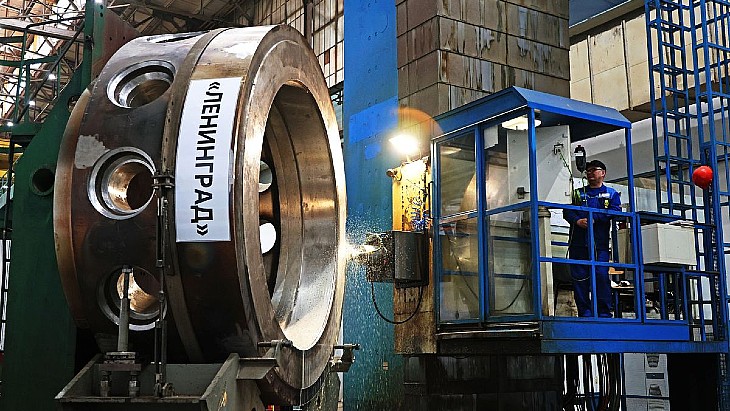
Eight RITM reactors currently under production
(Image: Rosatom)

The new generation of Russian nuclear-powered icebreakers - the Project 22220 vessels - each feature two RITM-200 reactors and the ZIO-Podolsk plant, part of Rosatom's machine-building division, has already manufactured 10 of them for the icebreakers Arktika, Sibir, Ural, Yakutia and Chukotka.

The RITM-200 reactors, having demonstrated their suitability for Arctic conditions, are also going to be used in floating power plants which are being built to supply electricity for a large industrial consumer in Chukotka. Another project will use the RITM-200N as part of a land-based small modular reactor nuclear power plant in Yakutia. There is also an agreement for six such reactors in Uzbekistan.

According to Rosatom: "Currently, for the first time in the plant’s history, there are eight RITM series reactor units at different stages of production (for icebreakers and floating power units)."

The nuclear-powered icerbreakers are a key part of Russia's plan to develop the Northern Sea Route, the shipping lane along its north coast, which can cut the distance and speed for shipping goods by sea from northern Europe to Asia.

Plant Director Anton Lebedev said: "We have accumulated a colossal amount of knowledge and skills, and today we have competencies that no one else in the world has, having mastered and launched the flow production of the latest reactor units of the RITM series. This is not only RITM-200 for nuclear icebreakers and small nuclear power, but also their more powerful analogues RITM-400, which will help ensure year-round navigation along the Northern Sea Route."

Background


The Leningrad will be the sixth in the Project 22220 series of icebreakers that are 173 metres long, 34 metres wide and with a height from the waterline to the mainmast of 57 metres. They are designed to break through ice up to three metres thick and have a speed of 22 knots in clear water. The RITM-200 is a pressurised water reactor with a thermal capacity of 175 MW, which converts to 30 MW at the propellers. It is 7.3 metres high with a diameter of 3.3 metres and an integral layout which its manufacturers say means it is lighter, more compact and 25 MW more powerful than previous generations used on nuclear-powered icebreakers. The service life is 40 years.

Rosatom's proposed floating nuclear power plants, with power capacities of 100 MW and 106 MW, have been designed using reactors based on the RITM-200 ones used in the icebreaker fleet. Under a contract signed in 2021, Rosatom's Machine Engineering Division is supplying four floating power units, each with a capacity of up to 106 MW of electric power, for the Baimsky Mining and Processing Plant. Three of the FPUs will be primary units, while the fourth will serve as a backup and the project is designed to be the first "serial" reference for floating power units and the world’s first experience in electrification using a floating power unit for mineral extraction projects.

The nuclear power plant agreement with Uzbekistan is for a six-unit small modular reactor project featuring the 55 MW RITM-200N, adapted from that used in the icebreakers. The Yakutia plant, which was granted a construction licence in April 2023 and which has a commissioning target of 2028, is also due to feature one or two RITM-200N 55 MW reactors, with a service life of 60 years and a five-year refuelling schedule. The proposed RITM-400 is an 80 MW pressurised water reactor and is an option for a 320 MW four-SMR plant in Norilsk.


Russia Set to Resume Oil & Gas Operations in Iraqi Kurdistan


Moscow is resuming oil and gas operations in Iraq’s Kurdistan Region (KRI) to regain geopolitical influence lost after setbacks in Ukraine and Syria.

The West is increasing investments in Kurdistan to counter Russian, Chinese, and Iranian influence.

Iraq has only extracted 15-20% of its recoverable oil resources, leaving room for significant future production.


 By Simon Watkins - Mar 10, 2025

Russia is to restart its key oil and gas operations in the semi-autonomous Kurdistan Region of Iraq (KRI) according to recent comments from its Energy Minister Sergei Tsivilev. From 2017 until the forced removal of President Bashar al-Assad of Syria, Moscow’s extensive energy operations in the KRI provided it with very cheap oil and gas supplies and were also an integral part of its growing geopolitical presence on the western flank of the Middle East. This encompassed the KRI, much of the rest of Iraq under the control of its Federal Government (FGI) in Baghdad, Syria, and by dint of these the ability to hold sway over all the other ‘Shia Crescent of Power’ countries, as analysed in full in my latest book on the new global oil market order. Given China’s similar policy to expand its influence in the region, with a primary initial focus on Iran and Saudi Arabia, Moscow and Beijing found their efforts especially rewarded after the U.S.’s unilateral withdrawal from the Joint Comprehensive Plan of Action (‘JCPOA’, or colloquially ‘the nuclear deal’) with Iran in May 2018. That said, Russia’s dismal showing in its 2022 invasion of Ukraine and the subsequent removal of front man al-Assad in Syria in moves orchestrated in key respects by the U.S. and U.K. threaten Russia’s and China’s gains across the region. Consequently, this latest move by Russia to restart its operations in the KRI is a high-stakes geopolitical and energy game.

Moscow is starting from a very high base level of influence in the KRI. Following the chaos that ensued after over 90% of the KRI’s population voted in favour of independence from Iraq in the September 2017 Independence Referendum, Russia thought the time was right to exploit the discord for its own ends, as also detailed in my latest book. At that point, the Kremlin’s corporate oil proxy Rosneft executed three deals that effectively took over the ownership of Kurdistan’s oil sector. First, Russia provided the KRI’s government (the KRG) with US$1.5 billion in financing through forward oil sales payable in the next three to five years. Second, it took an 80% working interest in five potentially major oil blocks in the region. And third, it established 60% ownership of the vital KRG pipeline by dint of a commitment to invest USD1.8 billion to increase its capacity to one million barrels per day. Moscow considered itself well-placed at that point to leverage this presence into a similarly powerful position in the south of the country (run by the FGI). This was to be effected by striking new oil and gas field exploration and development deals with Baghdad as part of Russia’s role in intermediating in the perennial dispute between the KRI and the FGI on the budget disbursements (from the FGI)-for-oil (from the KRI) deal first struck in November 2014.

Russia not only challenged the percentage of the budget payments that was earmarked for payment to the KRI but also insisted that oil flows that had been suspended in the KRI following the September 2017 Independence Referendum would not restart fully until pipeline transit fees and pumping tariffs were paid to Rosneft. By that time, the firm had formalised its 60% stake in the Kirkuk-Ceyhan pipeline. Moscow also wanted the FGI in Baghdad to look again at its decision to deem ‘invalid’ the assignment to Rosneft by the KRG of the five exploration blocks in Kurdish territory in which it had secured an 80% stake. These were estimated to have aggregate 3P reserves of 670 million barrels. Rosneft’s involvement in the KRI not only threatened Iraq’s plans to meet its new in-house oil production targets but also its potential export routes for the new flows, given the Russian company’s involvement in the northern pipelines leading into Turkey’s Ceyhan port. The original Kirkuk to Ceyhan Pipeline – the ITP – consisted of two pipes, which had a nameplate capacity of 1.6 million bpd combined. The FGI-controlled pipeline’s export capacity reached between 250,000 and 400,000 bpd when running normally, although it was subject to regular sabotage by militants of various types. The KRG, in response to the regular attacks on the FGI pipeline, completed its own single-side track Taq field-Khurmala-Kirkuk/Ceyhan pipeline in the border town of Fishkhabur. This was part of its drive to raise oil exports above 1 million bpd. It is interesting to note that Russia’s restarting of its operations in the KRI are occurring at a time when Iraqi oil exports through the ITP remain embargoed mainly because of Baghdad seeking to stop independent oil flows from the KRI. This gives the Kremlin the same sort of potential to leverage chaos into increased influence in both the KRI and FGI regions of Iraq.

It is also interesting to note that since the removal of al-Assad from Syria, Western interest in investing in the KRI has surged. The West had been a major sponsor of KRI interests before and during the expansion of Islamic State across the region in 2014, but this had declined as Russia’s influence in neighbouring Syria had expanded over the period, as also analysed in full in my latest book. In very basic terms, a senior source who works closely with the European Union’s (E.U.) energy security complex exclusively told OilPrice.com, the current broad policy of the West is to target investments in the KRI such that it persuades the KRI government to terminate all links with Chinese, Russian and Iranian companies connected to the Islamic Revolutionary Guards Corps over the long term. One such deal that might act as a template for renewed cooperation between the West and Baghdad is BP’s US$25 billion deal formally signed recently to develop four huge oil fields in the Kirkuk region. The U.S. and Israel also have a further strategic interest in utilising the Kurdistan Region as a base for ongoing monitoring operations against Iran. On the other side of the power balance, China and Russia’s general policy is to remove the KRI’s main source of financing -- oil exports – by stopping all independent sales and then gradually reducing all budget dispersals from the FGI down to nothing. As a senior political source in Moscow exclusively told OilPrice.com many months ago: “Iraq will be one unified country and by keeping the West out of energy deals there, the end of Western hegemony in the Middle East will become the decisive chapter in the West’s final demise.” This ultimate objective was clearly laid out on 3 August last year when Iraqi Prime Minister, Mohammed Al-Sudani said the new unified oil law -- run in every way that matters out of Baghdad -- will govern all oil and gas production and investments in both the FGI and KRI areas and will constitute “a strong factor for Iraq’s unity”.

Aside from the geopolitics of it all, the KRI also has enormous oil potential. Prior to the recent rise in exploration activity in the region, more than half of the exploratory wells in Iraq had been drilled prior to 1962, a time when technical limitations and low oil prices meant a much tighter definition of a commercially successful well than would be the case today, as highlighted by the International Energy Agency in its 2017 report on the country Based on the previous limited exploration and development of oil fields in the KRI area, the proven oil reserves figure was first put at around 4 billion barrels. This was subsequently upgraded by the KRI government to 45 billion barrels, but this again may well be a significant underestimate of the oil resources there. Even using the most conservative figures, Iraq had produced only around 15-20% of its ultimately recoverable oil resources back in 2017, compared with 23% for the Middle East as a whole, according to the IEA. This figure for Iraq has not significantly changed since then. Further exploration is highly likely to add substantially to the proven reserves figure over the coming decades, particularly given the high success rate of drilled prospects in Iraq. Similarly propitious are current estimates of at least 200 trillion cubic feet (Tcf, or 5.67 trillion cubic metres) of natural gas reserves in the KRI -- around 3% of the world’s total reserves.


By Simon Watkins for Oilprice.com
Can China Maintain Its Clean Energy Dominance?

By Felicity Bradstock - Mar 12, 2025


China has achieved renewable energy superpower status through decades of strategic investment, but faces potential challenges like overcapacity and reduced subsidies.

S&P Global predicts China's share of solar and battery manufacturing will decline due to economic factors and increased global competition.

While China continues to invest in green energy projects and infrastructure, its long-term dominance is questioned as the government plans to reduce clean power subsidies.


Despite being the world’s biggest polluter, China is also a renewable energy superpower. Following decades of investment, China is the world’s biggest green energy producer, and its renewable energy capacity keeps on growing. The Asian giant is aiming to achieve carbon neutrality by 2060, despite continuing to be heavily reliant on oil, gas and coal. As China’s renewable energy sector continues to expand, how long will this last until the bubble bursts?

In March, China’s National Development and Reform Commission (NDRC) announced the country’s plans to invest in major renewable energy projects, including the development of new offshore wind farms and large-scale clean energy bases combining solar and wind farms. Planned projects include a controversial hydropower project on the Yarlung Tsangpo River in Tibet, which experts worry could harm downstream water flows to India, and a direct power transmission route connecting Tibet with Hong Kong, Macao, and the southeastern Guangdong province.

This is just one of several moves China is making to support a green transition. Unlike most other countries, which have only really grown their renewable energy capacity over the last decade, the Chinese government has long been investing in green energy projects to establish the country’s dominance in the sector.

“Several of the clean energy industries were identified by the government several decades ago as strategic industries, where they really wanted to invest and position themselves as the global leader,” explained the director of the science, technology, and international affairs program at Georgetown University Joanna Lewis. “This has really been a long-term strategic effort on behalf of the government to both put in place policies that would promote the deployment of renewables domestically within China but also build up the industrial capacity to allow them to actually manufacture the technologies as well.”

In 2020, the Chinese government pledged to double its green energy capacity by the end of the decade, a goal that it achieved six years ahead of schedule. Heavy public investment and favourable policies have catapulted China to become the dominant renewable energy force globally. In 2024, China invested more than any other country in the energy transition, funding around two-thirds of the $2.1 trillion spent globally on clean energy projects.

China currently produces 31 percent of its electricity from renewable sources. While the country is still heavily dependent on coal, the government expects solar energy to overtake fossil fuels as China’s main energy source by 2026. In addition, China is supporting the global green transition by developing infrastructure through its Belt and Road Initiative. The government is investing heavily in the development of clean energy and green infrastructure in developing countries worldwide. Meanwhile, its renewable product exports increased by 35 percent between 2019 and 2023.

There is also significant private investment being seen in China’s renewable energy sector. This month, Saudi Arabia’s Acwa Power opened a renewable-energy innovation centre in Shanghai as part of the firm’s plans to expand its presence in China. The centre will focus on photovoltaics, wind, energy storage, green hydrogen, and seawater desalination. Phase I will see $2.8 million in funding for a research and development centre and a green energy laboratory. Acwa Power has signed preliminary deals with Gulf Renewables Laboratory (GRL) and Shanghai Jiao Tong University (SJTU) to develop the project. This follows the signing of agreements by Acwa Power earlier in the year to develop over 1 GW of green energy projects across China. The company expects to invest up to $30 billion in projects in China by 2030.

However, while many assume China’s green energy sector will keep on growing, others are less enthusiasticabout the outlook. The ratings agency S&P Global predicts that China’s clean energy hegemony will begin to decline in the coming years because of its weak domestic economy, slow global demand, export barriers, and overcapacity. It expects China’s share of solar photovoltaic module manufacturing to decrease from 70 percent in 2024 to 65 percent in 2030, and its share of battery-cell manufacturing to drop from 80 percent to 61 percent over the same period.

“As we look towards 2025, manufacturing growth in China is expected to slow down in response to current overcapacity issues, leading to a more diversified cleantech manufacturing footprint by 2030,” S&P said.

China has also announced plans to reduce clean power subsidies in the coming years following several successful years of growth in solar and wind power. Lower subsidies for new solar farms could put pressure on China's solar industry, where overcapacity relative to global demand has prompted plunging solar panel prices and threatened to drive smaller producers into bankruptcy.

China’s renewable energy sector is likely to keep growing over the next decade as the government strives to reduce the country’s dependence on coal and significantly decrease its carbon emissions. However, following more than a decade of sharp green energy capacity growth, the government is beginning to reduce its subsidies for certain renewable energy sectors and, in the long-term, other countries may gradually increase their market share of sectors such as solar module and battery manufacturing as growth in China slows.

By Felicity Bradstock for Oilprice.com


Kazakh Tycoon Bets on China’s EV Boom

By Charles Kennedy - Mar 11, 2025

Kazakh millionaire Kenges Rakishev, who built his fortune in oil, gas, and metals, sees major opportunities in the EV sector.

Kazakhstan is well positioned to be China's key supplier of critical minerals like lithium, nickel, and cobalt.

With 80% of Chinese goods to the EU passing through Kazakhstan, the country could serve as a strategic EV manufacturing hub for Chinese automakers.


Sales of electric vehicles have been slowing down across markets, but one man believes the future remains bright. That man is Kazakh millionaire Kenges Rakishev, who made his money from oil and gas and metals, and now wants a piece of the EV pie.

“The West is lagging behind China when it comes to the EV race,” Rakishev, chairman of Fincraft Group, told the South China Morning Post in an interview. “China started to secure supplies of lithium, cobalt, and graphite decades ago, and they are racing ahead when it comes to the price and quality of their EVs. We are a natural partner for China, especially in the growing EV sector.”

Kazakhstan is perhaps most famous as an oil-producing state—and the biggest miner of uranium in the world—but it also has substantial other mineral resources. Among these are chrome and zinc, of which Kazakhstan is a major global producer, along with copper, iron ore, lead, gold, and manganese.

In terms of copper, Kazakhstan is the world’s ninth-largest producer, with production rising at a sizable 7% compound annual growth rate between 2018 and 2022. Since then, output growth has slowed and is about to reverse, following global trends. Even so, Kazakhstan certainly has a part to play in the EV industry, and one of its wealthiest businessmen is grabbing the opportunity.

Rakishev has been making inroads into transition technology for a few years now, focusing on EVs, solar panels, and batteries. A special company was set up to produce nickel and cobalt in the eastern part of the country, which is already one of the leading mineral suppliers to Chinese businesses.

“There is still much to be developed,” Rakishev told the South China Morning Post. “The scale of these resources presents enormous opportunities and we are eager to partner with Chinese companies who can contribute to our growth.”

Meanwhile, Chinese EV makers are setting up shop in the Central Asian country. Sales of Chinese electric vehicles in Kazakhstan reached 12,587 last year, which although a small figure, represented a 60% increase on the previous year, with projections for more than 40,000 EVs in sales by 2035, not least thanks to government tax breaks emulating other countries’ strategy to boost EV adoption.

Kazakhstan is already China’s biggest trade partner in Central Asia, and the country’s government has signaled a strong interest in boosting ties, specifically in the electric vehicle space in the form of critical minerals. According to Rakishev, the next step in this EV partnership could see the cars being made in Kazakhstan.

“Kazakhstan is a large consumption economy for EVs, but we also want to see Chinese investors come and build production here, in addition to buying these metals,” he told the South China Morning Post. And those EVs will not just be sold on the local market, either. The bigger prize could be Europe.

As much as 80% of Chinese goods sold in the European Union passes through Kazakhstan, according to the country’s deputy prime minister, Roman Sklyar. According to Rakishev, “This means that if China invests in Kazakhstan for manufacturing – whether it’s cars, EV batteries, or related industries – this market could become a significant opportunity for them. And through Kazakhstan, you can have very fast access to Europe. For China, this is very important.”

The only potential problem for this is the abovementioned slowdown in EV sales due to still high prices—for non-Chinese vehicles—and governments running out of subsidy money. The problem looks especially grave in the European Union, where member state governments must now fork out fresh billions for defense spending.

By Charles Kennedy for Oilprice.com
Trump blasts Ireland on trade during traditional visit


By AFP
March 12, 2025


US President Donald Trump meets with Irish Prime Minister Micheal Martin (L) in the White House - Copyright AFP Mandel NGAN


Danny KEMP

It was perhaps not the welcome Irish Prime Minister Micheal Martin had hoped for on an annual US trip to mark Saint Patrick’s Day — a dressing down from Donald Trump on trade and tariffs.

“We do have a massive deficit with Ireland,” the US president said in answer to the very first question he faced with Martin in the Oval Office, before going on to lambast the European Union in general.

Trump promised to respond to tariffs imposed by the EU in retaliation for new US levies on steel and aluminum — an economic shockwave that could hit Ireland too.

Certainly the encounter with the Irish taoiseach, or premier, was calmer than the scene less than two weeks ago when Trump and Ukraine’s President Volodymyr Zelensky got into a blazing row, also in the Oval Office.

There was even a light-hearted moment as Trump ribbed Vice President JD Vance about the green-and-white shamrock socks he wore to honor Martin’s trip, a tradition by the Irish leader ahead of Saint Patrick’s Day on March 17.

But despite the pleasantries during the visit, the 78-year-old president had a long list of grievances about the Emerald Isle.

Trump said he had “great respect” for Ireland but in the same breath accused it of luring pharma and tech giants to its shores with low taxes.

“This is this beautiful island of five million people, it’s got the entire US pharmaceutical industry in its grip,” Trump said.

The United States is Ireland’s single biggest export market for pharmaceutical drugs and ingredients, mostly manufactured by American companies like Pfizer, Eli Lilly, and Johnson & Johnson.


– ‘Very tough’ –


“I’m not upset with you. I think I respect what you’ve done,” said Trump. “But the United States shouldn’t have let it happen.”

The US president complained about “tremendously bad” treatment of tech titan Apple, which was ordered by Brussels to pay a multi-billion-euro tax settlement to Ireland.

It then got personal, as it often seems to with Trump, as the billionaire former property developer complained about EU red tape holding up the expansion of a resort he owns in Ireland.

Trump finally returned to one of his favorite themes as he launched a broader attack on the 27-nation European Union.

“The EU was set up in order to take advantage of the United States,” Trump said.

Trump also doubled down on his threats to impose reciprocal tariffs on the European Union in April.

“So whatever they charge us, we’re charging them.”

When Martin got a word in edgeways, he tried to strike a diplomatic tone.

“It’s a two-way street,” Martin said, adding that Ireland was stepping up investments in the United States.

“It’s a relationship that we can develop and that will endure into the future.”

Trump agreed — and then went back to speaking about the deficit.

The Irish and US leaders also ended up talking past each other on the subject of the Israel-Hamas war.

Non-NATO member Ireland is one of the most pro-Palestinian countries in Europe, in stark contrast to Trump who has called for the US to “take over” Gaza.

“It’s been our view that a two-state solution is the ideal,” Martin said.
EU hits back hard at Trump tariffs to force dialogue


By AFP
March 12, 2025


The EU responded swiftly to US steel and aluminium tariffs by saying it would retaliate with countermeasures from April 1 - Copyright AFP Geoff Caddick

Raziye Akkoc

The EU put on a quick show of force Wednesday against sweeping new US steel and aluminium tariffs, striking back with countermeasures that seek to hurt the United States and force it to the negotiating table.

President Donald Trump’s 25-percent levies took effect just after midnight struck in Washington, “with no exceptions or exemptions”, as promised by the White House — despite countries’ efforts to avert them.

The European Commission, which leads the EU’s trade policy, responded swiftly by saying it would impose “countermeasures” from April 1.

They will target US states controlled by Trump’s Republican Party as well as goods that the EU believes will hurt American businesses enough to force the president to row back.

Although Trump’s higher customs duties impact a swathe of countries, only the European Union and China initially vowed to retaliate to defend their businesses and citizens.

“We deeply regret this measure,” European Commission chief Ursula von der Leyen said.

“Tariffs are taxes. They are bad for business and worse for consumers. They are disrupting supply chains. They bring uncertainty for the economy,” she added.

An EU official said the 27-country bloc wanted to “show strength” and give a response that “very clearly shows how we consider this completely unnecessary”, all while seeking to resolve the tensions through dialogue.

But the official said the EU was not filing a World Trade Organization complaint at this point as it observes how the United States reacts.

Von der Leyen estimated the US tariffs would target $28 billion worth of exports, and the European Union’s response would affect the same amount of US products.

European businesses and American firms on the continent criticised the tariffs, warning they would do damage to both sides of the Atlantic.


– ‘Lose-lose scenario’ –


The EU plans to target industrial goods and agricultural products, particularly those exported to Europe from politically important states.

This will include soybeans produced in Louisiana, the home of US Speaker Mike Johnson, as well as beef and poultry from states that voted for Trump in the last election: Nebraska and Kansas.

The EU official said the bloc could source soybean from Brazil or Argentina.

The hope is that the targeted products “will provide the right incentives to the US to come to the table”, the official said.

The intensifying drum beats for a damaging trade war between the EU and the United States have spooked businesses.

“These tariffs, along with the EU’s announced countermeasures, will only harm jobs, prosperity and security on both sides of the Atlantic,” warned Malte Lohan, CEO of the American Chamber of Commerce to the EU.

“Additional US tariffs… are a lose-lose for both sides of the Atlantic,” said Markus J Beyrer of EU-wide lobby group BusinessEurope.

But Washington has framed the move as a bid to protect US steel and American workers as the sector declines and faces fierce overseas competition, especially from Asia.

The latest duties will also impact Australia, Britain, Canada, Japan and China as well as Brazil and Mexico despite last-ditch attempts by some to get exemptions.

Amid fears the US move will lead to steel dumping in Europe, the bloc will monitor the situation and take action where necessary to protect European industry, officials say.


– Target ‘right products’ –


It’s not the first time Trump has slapped tariffs on the metals.

During his first presidency, he imposed duties on steel and aluminium exports in 2018 — prompting the EU to respond with its own higher duties that were later frozen in a deal with Washington.

As part of the EU’s two-pronged approach to Trump’s actions, von der Leyen said Brussels will allow the previous levies to take effect again automatically when their suspension ends on March 31.

“For the first time, these rebalancing measures will be implemented in full. Tariffs will be applied on products ranging from boats to bourbon to motorbikes,” the commission said.

And the EU formally launched a procedure on Wednesday to draw up and impose additional countermeasures.

The first step will be a “two-week stakeholder consultation” to make sure the “right products” are targeted and avoid disruptions to consumers and businesses.

The measures would be fully in place by mid-April unless Trump reverses course.

Trump’s tariffs could have significant impact on packaging


By Dr. Tim Sandle
March 12, 2025
DIGITAL JOURNAL


The Panama Canal is owned and operated by the Central American nation, but US President-elect Donald Trump has made waves about excessive shipping fees and has threatened to demand control of the vital waterway be returned to Washington - Copyright Panama Canal Authority/AFP/File Handout

In any shop, and nearly everything — except some produce — comes in some type of package. Bottled water, cheese, electronics, large appliances…each is wrapped in protective material to ensure that items are not damaged in transit and to aid their preservation.

Changes, such as tariffs in the global marketplace, could have a ripple effect on packaging. This is the view of Laszlo Horvath, an associate professor in the College of Natural Resources and Environment at Virginia Tech.

Horvath’s research interests include packaging sustainability, smart and connected packaging, and unit load Interactions, which is highlighted by generating information used to create a commercial pallet design software.

“Tariffs can significantly impact costs”, Horvath continues. “Many packaging moulds, which can cost millions, are made overseas. If a company orders a mould from Europe or China, and tariffs increase before it arrives, they suddenly owe more money. This increased cost is then passed down to consumers.”

The potential impact of Trump’s tariffs could also adjust shipping routes or the actual method of transportation.

“If a shipping route changes, packaging requirements may also change,” Horvath adds. “For example, if a product that was originally shipped by sea now needs to be transported by rail, it faces different types of vibrations and impacts. Packaging designed for one mode of transportation might not be suitable for another.”

As an example, if a product is manufactured in Pennsylvania and shipped to Virginia, it spends minimal time in transit with limited handling. In contrast, a product made in China must first be transported by truck to a port, cross the ocean, arrive in California, travel by train to Chicago, and finally reach its destination. This significantly longer journey involves multiple handling points, increasing the likelihood of damage.

Hence, packages must be designed to withstand these conditions. Horvath explains: “Every time a package is handled, there’s a chance it will be dropped, compressed, or hit. Additionally, environmental factors like temperature and humidity fluctuations must be considered.”

Drawing on another example, a product moving from the humid climate of Costa Rica to the cold of Alaska requires packaging that can handle these extremes. Therefore, if a shipping route changes due to tariffs, there’s also the possibility of the packaging design to be revised to fit the new handling points, which could also increase costs for the consumer.

Horvath recently joined ⁠Virginia Tech’s “Curious Conversations”⁠ to talk about the complexities of packaging and the factors to be considered during packaging design. Here the academic shared insights related to affordability and sustainability as well as how international tariffs and other supply chain disruptions can impact packaging and ultimately customers.

Trump Tariffs Threaten U.S. Oil Refiners

  • President Trump's new tariffs on energy imports from Canada and Mexico are expected to significantly impact US refiners, particularly those reliant on heavy crude.

  • While Canadian oil imports are likely to continue despite tariffs, Mexican oil imports may see a sharp decline due to alternative sources available to Gulf Coast refiners.

  • These tariffs could lead to higher fuel prices for consumers, increased market volatility, and broader economic repercussions for industries dependent on oil and gas.

President Donald Trump’s newly imposed 25% tariffs on goods from Mexico and a 10% tariff on energy products from Canada have the potential to send ripples through the U.S. oil and gas market. 

These tariffs, effective March 4, come after last-minute negotiations failed, raising concerns about higher costs for refiners and potential disruptions to North America’s tightly integrated energy supply chains.

How Canadian Oil Tariffs Could Disrupt U.S. Refiners

The U.S. imports approximately 4.4 million barrels per day (MMb/d) of crude oil from Canada, accounting for about 27% of total U.S. refinery demand.  The Midwest (PADD 2) is particularly dependent on Canadian oil, receiving about 3.5 MMb/d—roughly 75% of Canada’s total crude exports. 

Many U.S. refiners, particularly in the Midwest and Rocky Mountain regions, have spent billions upgrading facilities to process Canada’s heavy, sour crude. These refiners prefer Canada’s discounted barrels because they provide the best refining margins.

A 10% tariff on Canadian crude will increase costs for these refiners, and this will both erode margins, and get passed on to consumers in the form of higher gasoline and diesel prices. Refiners do have some options for replacing this crude, but they are more expensive, and there may be logistical challenges. Further, in the short-term it will definitely cause some disruptions to U.S. refinery operations, much as Russia’s invasion of Ukraine did in 2022. 

However, because of how deeply integrated the U.S.-Canada crude supply chain is, analysts believe that nearly 90% of Canadian oil imports will continue flowing into the U.S. despite the tariff. The bigger concern is for refiners in California and the Northeast, which rely on Canadian crude shipped from Newfoundland and Alberta. Some may seek alternative sources such as Alaskan North Slope (ANS) crude or heavier Middle Eastern grades but switching suppliers could present the aforementioned logistical and pricing challenges.

Impact on Mexican Oil Imports

The 25% tariff on Mexican crude is even more significant. The U.S. imported about 625,000 barrels per day from Mexico in 2024, mainly heavy Maya crude destined for Gulf Coast refiners (PADD 3). This heavy crude is a critical feedstock for refineries that specialize in processing lower-quality oils into usable fuels.

Unlike Canadian crude, Mexican oil imports could see a sharp decline because refiners along the Gulf Coast have more alternative sources. Venezuelan crude, Middle Eastern heavy grades, and even some Canadian barrels rerouted from PADD 2 could replace Mexican oil. However, redirecting supply chains is not seamless—it involves higher transportation costs and potential disruptions. In the short term, refiners may absorb some of the higher costs, but over time, fuel prices could inch higher as a result.

Wider Economic and Market Impacts

Beyond oil and gas prices, tariffs on energy imports can have broader economic repercussions. Higher refining costs could squeeze profit margins for U.S. refiners, potentially leading to lower capital expenditures, delayed maintenance schedules, and even job reductions in refinery-dependent regions. Additionally, any sustained increase in energy costs could impact industries that rely heavily on oil and gas, such as transportation, agriculture, and manufacturing.

Energy markets also react strongly to uncertainty. If tariffs introduce supply chain inefficiencies or raise the prospect of retaliatory actions from Mexico and Canada, crude oil futures could experience higher volatility. Canada and Mexico could respond by imposing tariffs on U.S. refined fuel exports, making American gasoline, diesel, and jet fuel more expensive in key foreign markets.

Final Thoughts

The U.S. oil market is deeply intertwined with those of Canada and Mexico, and tariffs on crude oil imports will have consequences—some immediate, others playing out over time. While U.S. refiners will still process the majority of Canadian crude despite the 10% tariff, the 25% tariff on Mexican oil could shift trade patterns and raise costs for Gulf Coast refiners.

Ultimately, the energy industry is adept at adjusting to policy shifts, but those adjustments come at a cost. It also takes time to adjust, and prices can be volatile during the adjustment period. If sustained, these tariffs could contribute to higher fuel prices, market volatility, and economic inefficiencies—raising the question of whether the benefits of trade leverage outweigh the financial burden imposed on American consumers.

By Robert Rapier