Monday, March 17, 2025

Cypria: The Struggle of Cyprus for Freedom and Union with Greece


 March 17, 2025
Facebook
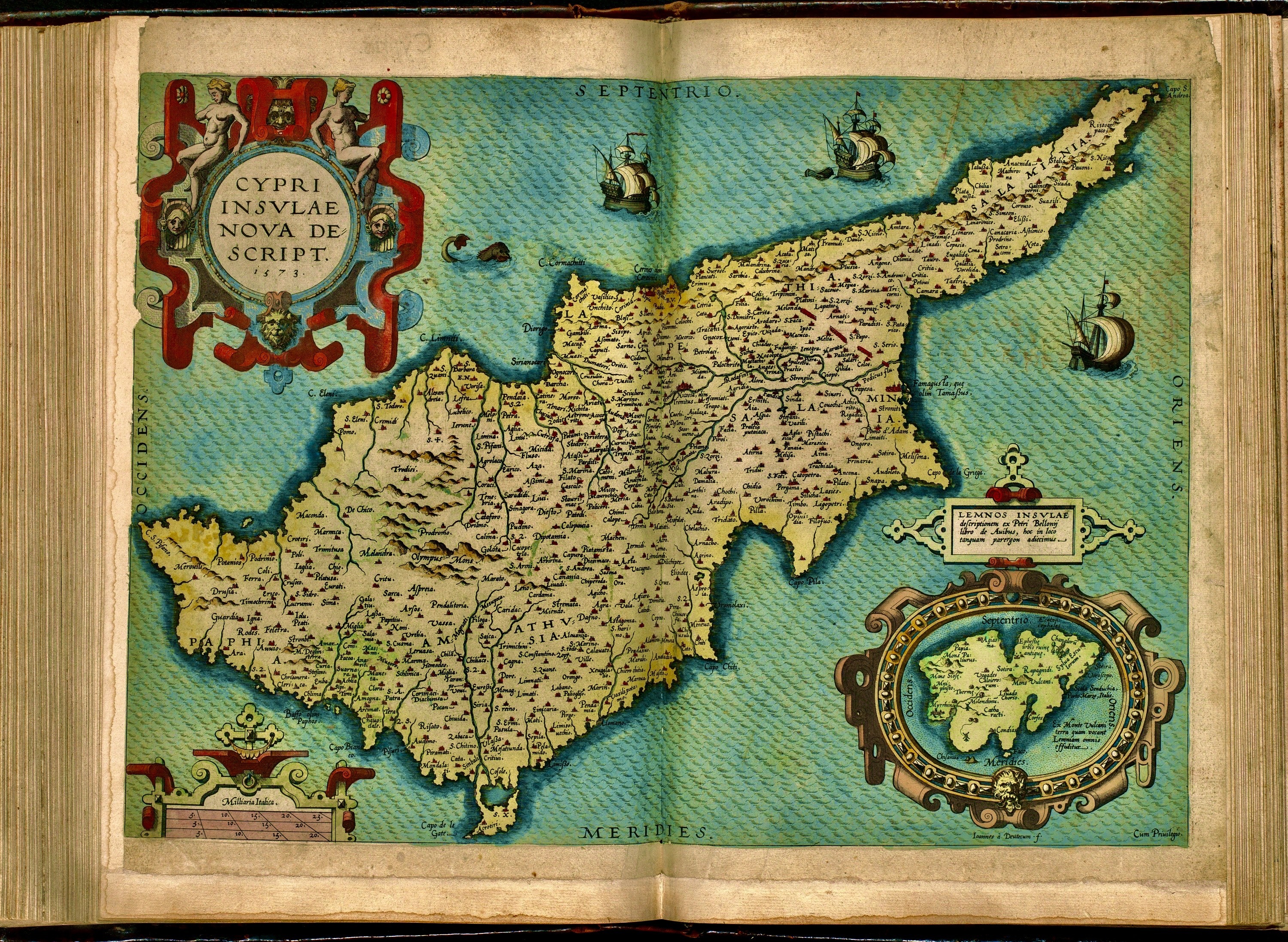
An old map of cyprus AI-generated content may be incorrect.

Map of Cyprus by Abraham Ortelius, 1527-1598. KB National Library of the Netherlands, Amsterdam. Public Domain

Prologue

An Orphic hymn says that Kypris, Aphrodite of Cyprus, was the “scheming mother of necessity.” She controlled and gave birth to the Earth, the sea, and the Cosmos (Orphic Hymn to Aphrodite 55). Another myth says that Aphrodite was born from the white aphros, foam, of the cut genitals of Ouranos (sky). The name Aphrodite comes from that sky aphros. She has the additional name of Kythereia because she first came close to the island of Kythera.
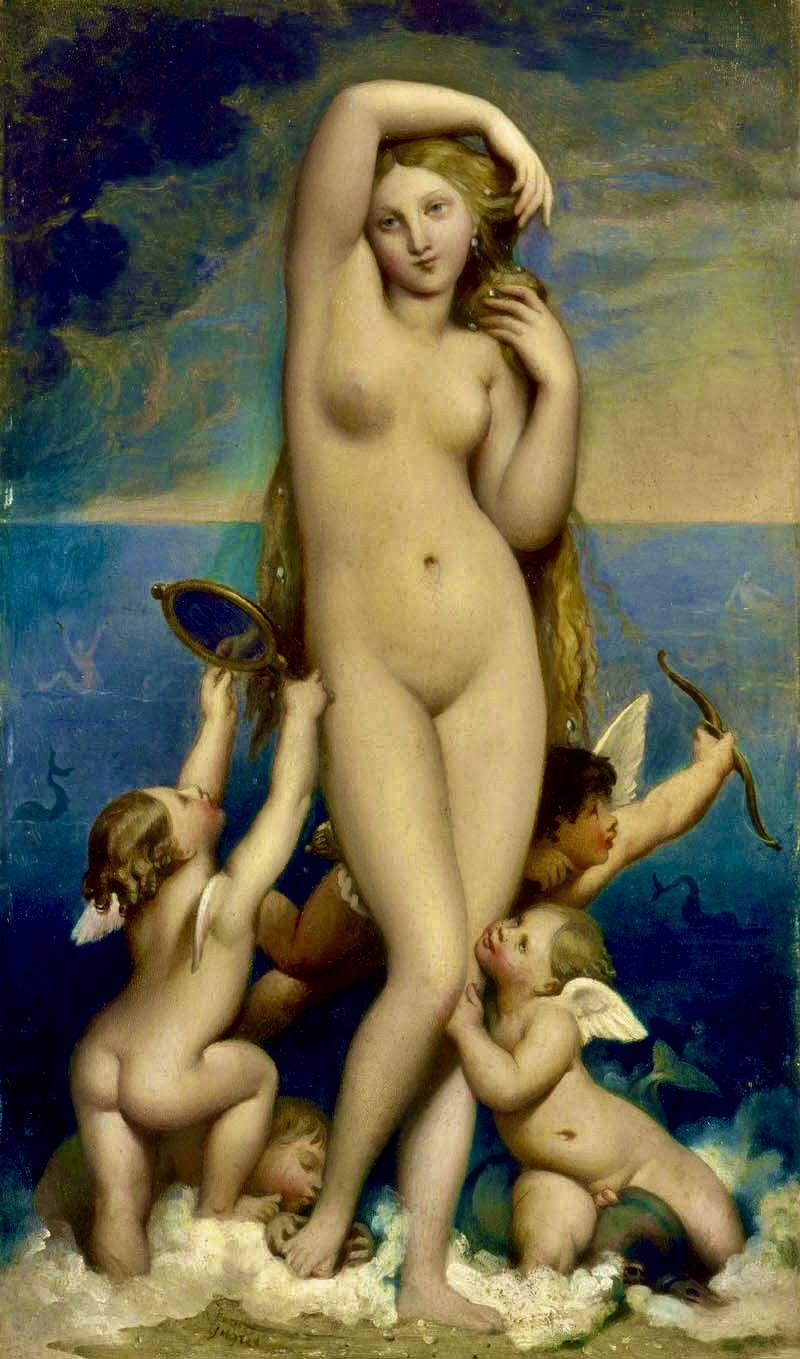
A painting of a person with angels AI-generated content may be incorrect.

Venus (Aphrodite) Anadyomene (Rising from the aphros of the sea) by Jean-Auguste-Dominique Ingres, 1848. Louvre. Public Domain

Cyprus, however, like Greece, has millennia long history. In the Bronze Age Cyprus had a thriving copper trade with Eurasia. Its name, Cyprus, may be connected to copper, also known as Cyprus.

Cyprus is the third largest island in the Mediterranean, some 3,572 square miles in size. Nevertheless, Cyprus suffered the indignities of foreign occupation. Empires / states that occupied Cyprus include Assyria, Egypt, Persia, Greek Ptolemaic Egypt, Rome, Arab caliphates, France, Venice, Mongol Ottoman Turkey, and Britain. Cypriot Greeks revolted against the pro-Turkish British rule and won Independence in 1960. England took revenge by bringing Turkey back to Cyprus.

The pogrom of 1955
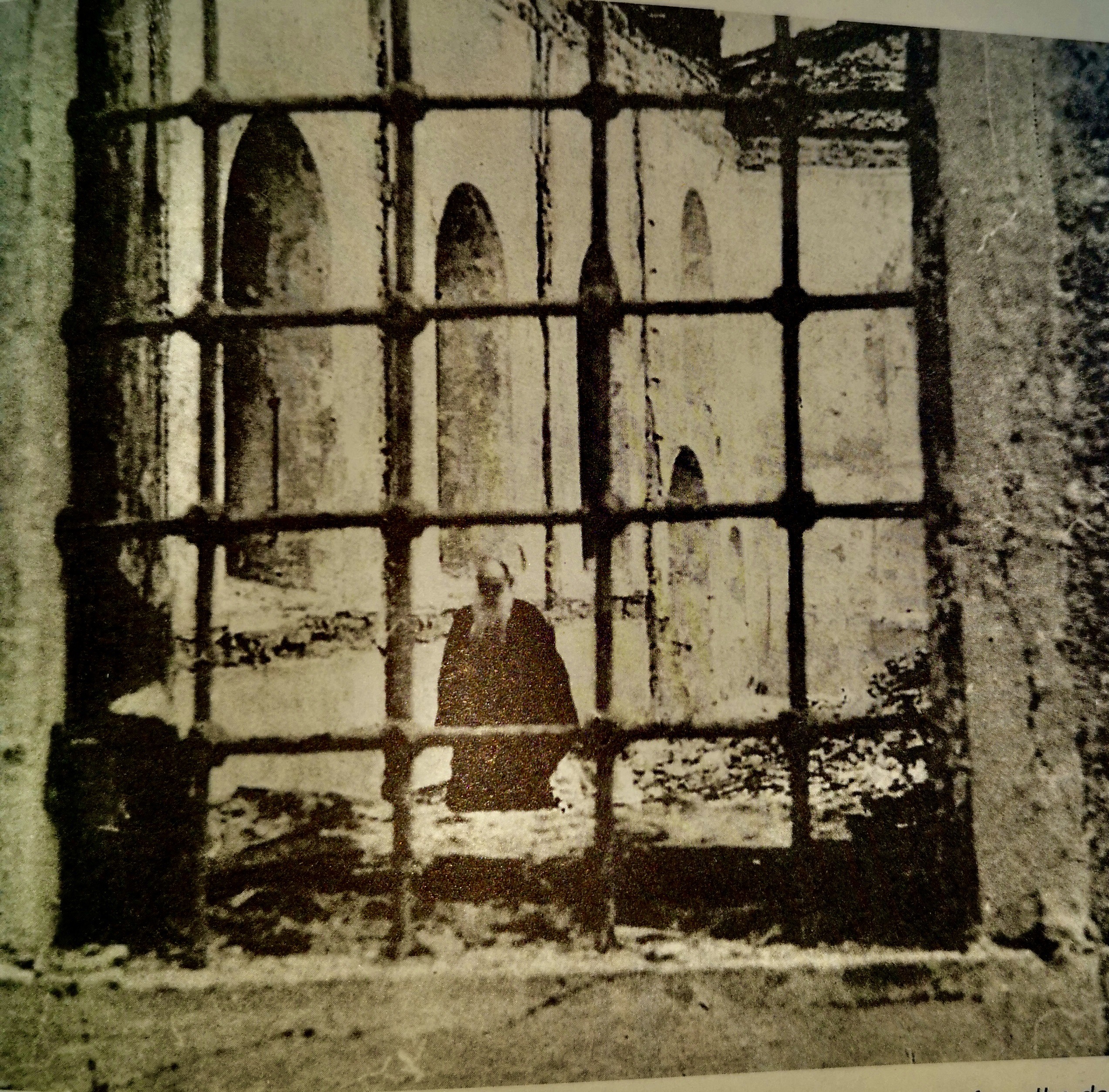
A person standing behind a window AI-generated content may be incorrect.

The Patriarch emerging from the ruined church of the Holy Vergin at the Belgrade Gate, Istanbul, Turkey, during Pogrom, September 6-7, 1955. From Dimitrios Kaloumenos, The Crucifixion of Christianity, 48th edition, Athens, 2001. Courtesy Leonidas Chrysanthopoulos.

The violence exploded with the 1955 vicious Turkish pogrom against 85,000 Greeks in Istanbul. The pogrom took place during the London conference on Cyprus in late August to early September 1955 between Britain, Turkey, and Greece. The collusion of Britain and Turkey in this conference was part and parcel of Turkey’s unleashing of the pogrom against the Greeks of Istanbul. The two events, the Cyprus conference and the pogrom became indistinguishable.

On the eve of the pogrom, activists marked the Greek homes and properties for destruction. They had learned a lesson from the 1572 Saint Bartholomew Day massacre in France. Once the pogrom was over, the pogromists nearly disappeared. They had succeeded in their mission beyond expectation. They provided the Turkish government a fig leaf for the utter destruction of the Greeks of Istanbul.

Speros Vryonis, UCLA professor of history, explained the pogrom as an expression of “the depth of the inherited, historical hatred of much of Turkish Islam for everything non-Muslim.” That’s why religious fanaticism was “at the core of the pogrom’s fury.” This invested the pogromists with limitless violence. Their destruction of the Greeks’ property, and household and livelihood, what the Greeks call noikokirio, was “the most extensive and intensively organized” in the 500 years since Constantinople fell to the Ottomans in 1453. The Turks destroyed more than 4,000 to 4,500 businesses and 3,500 homes; they wrecked about 90 percent of the Greek churches, showing off their “fervid chauvinism” and “profound religious fanaticism,” desecrating icons, defecating, and urinating on altars. They mocked, beat, and circumcised clerics. They exhumed and knifed the dead in the cemeteries, behaving like savage barbarians.

Shock, outrage and fear

On the aftermath of the pogrom, Greek Turkish relations took the form of a non-shooting war. Greece kept sending Turkey one memorandum after another, reminding Menderes of his responsibility to compensate the injured Greeks of Istanbul while punishing those who destroyed the Greek community. Menderes ignored the pleas of the Greek government but kept making the life of the Greeks in Turkey unbearable. Finally, on May 27, 1960, a military coup brought down the Menderes government, putting to death Menderes and his two closest associates. But the generals continued Menderes’ policies. Their “neo-Ottoman imperialism” armed Turkey to the teeth, crashing the Kurds. In 1974, with the permission of the US and England, Turkey, guided by the military, invaded, and occupied forty percent of Cyprus where they put into practice the cleansing policies Menderes tested in 1955 against the Greeks in Istanbul.
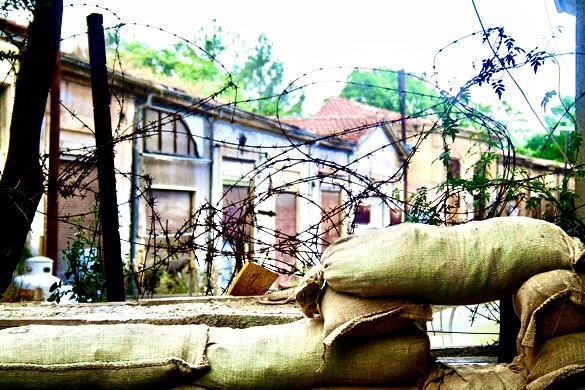
A barbed wire fence with sandbags AI-generated content may be incorrect.

UN administrative zone in Nicosia. Behind this zone is the Turkish occupied territory of Cyprus — since 1974. Courtesy Lobby for Cyprus.

The Turks, embolden by the tacit approval of the US, which has been funding their armaments, continue to violate Greek airspace, an aggression they have been carrying out since 1964. And yet, despite this Turkish record of enmity against Greece, a behavior bordering on perpetual war, Greece on the surface persists in being friendly to Turkey. There’s no other explanation for such incomprehensive and demeaning Greek submission to the strategic aggression of Turkey in the Aegean than the dictates of America. The dogma of Imia still stands. The US considers Turkey a more important ally than Greece. The Turkish violations of Greek air space and Greek sovereignty in the Aegean Sea show the Europeans and Americans the real genocidal face of the Islamic state of Turkey. Neither NATO not the European Union react to the hostility of Turkey against Greece, member of both NATO and EU and a country that civilized the Western world. And Greece keeps following the American and NATO dictates of bowing to Turkey’s demands. Turkey even prevents Greece from connecting Crete to Cyprus with underwater cables. Turkish warships threaten war and disrupt the Greek exploration and works in the Greek Aegean Sea.

Despite Turkish aggression, Britain and America cooked the 1967 Greek military coup in Athens and the 1974 Turkish invasion of Cyprus.

A Greek agent?

I came to the United States to study. During 1967 to 1972, I was a graduate student. I was concerned that soldiers governed Greece. But I did not have a clue of American meddling in the hatching of the coup or plans against Cyprus. My postdoctoral studies in the history of science at Harvard did not help to clear the picture. My Harvard studies brought me to Washington, DC, where I worked for a Congressional Committee, the Office of Technology Assessment. Then I joined the staff of Congressman Clarence Long (D-Maryland). This was in 1978, four years after the Turks occupied the northern half of Cyprus. The Cypriot ambassador met with Long, and I prepared the background for the meeting. I found the argument of the ambassador compelling. He was requesting about 15 million dollars to assist the internal refugees following the brutal Turkish invasion. Privately, I explained to the Congressman that what happened to Cyprus was catastrophic. I said the US should have never allowed, much less encouraged, Turkey to embark on such an atrocity.

A couple of months later, Congressman Long said to me, through his chief of staff, I should be looking for another job. Long himself said to me: “I never thought I hired a Greek agent.” It was useless to argue with him. He liked to be addressed as Dr. Long. He pretended he was against corruption. I convinced him to investigate the corrupt International Monetary Fund and the World Bank, both creatures of the US Treasury Department. I prepared hearings on IMF and the World Bank, only to find out Long cancelled the hearings all together – at the last moment . Lobbyists crawled all over his office.

Cypria

With this background, we turn to a richly rewarding and memorable and beautifully written book about Cyprus, the island of Aphrodite. The book has an ancient Greek title, Cypria: A Journey to the Heart of the Mediterranean (Bloomsbury Continuum, 2024). The author is a British Cypriot writer and publisher, Alex Christofi.

Cypria, a lost Cypriot epic on the origins of the Trojan War, in the hands of Christofi becomes Cyprus. This is a beautiful island in the heart of the Mediterranean. Christofi relates the history of Cyprus like a personal journey, something like another Odyssey. He has no doubt that Cyprus is the Elysian Fields of gods and men. He says that Aphrodite came out of the waters of the Cypriot city of Paphos. I fully understand Christofi. When my daughter was very young, I used to tell her I was the first cousin of Odysseus. My struggles in America and efforts to return to Greece were Odysseys. All that accumulated passion for return, Nostos, would often explode in tears during “nostimon emar,” the day of return. But for Christofi, in addition to his love for Cyprus, he speaks about the strategic place of Cyprus at the intersection of Africa, Asia and Europe in the Mediterranean. Then he cites the island’s Greek traditions. He is proud of the Cypriot Greek script and that Cypriots claimed Homer as their own poet. He is right saying “Cypriots were the first to learn the vital secret of smelting iron.” The Cypriots also had a purple dying industry in their polis of Kition before 1,000 BCE.

In the Classical Age, Christofi highlights the Stoic philosophy of Zeno of Kition who flourished in Athens in late fourth century BCE. Zeno, says Christofi, “built a stupendous fortune of 6 million drachmas by trading purple dye across the Mediterranean.” However, Zeno lost his boats in a storm while in Piraeus, the harbor of Athens. At that moment, Zeno decided to educate himself. He spent 20 years following Greek philosophers. When he started giving his own lectures in the Stoa of Athens, he proposed a way of life that attracted millions for about 800 years. Christofi sums up Zeno’s philosophy, Stoicism. “Living well,” he says, “is simple: be strict with yourself and tolerant of others; if it isn’t right, don’t do it; if it’s not true, don’t say it; the best revenge is not to be like your enemy. More than anything – and you can imagine how this went down with the other philosophers – stop arguing about what it takes to be a good person and be one.”

Starting in the fourth century of our era, 800 years after Zeno, the Greek civilization of Cyprus and Greece came under ceaseless attacks by Christianity and, in the seventh century and after, by Islam. Both antagonistic and warring religions arrived in Cyprus early. Christofi, an Eastern Orthodox Christian, likes both religions. In fact, he writes with deep respect and affection for Islam. His friendly narrative on the Ottoman Mongol Sultans becomes lyrical when he describes Sultan Suleiman.

He says that, up to mid-twentieth century, Christian and Moslem Cypriots respected each other’s religion. Yet the Mongol Turks for centuries were vicious and genocidal against the Greeks.

In 1570 -1571 the Mongol Turkish troops captured Cyprus. They slaughtered many Greek Cypriots, looted the treasures of people, and enslaved the Greek population of Cyprus. “[The large polis of Cyprus,]Nicosia,” says Christofi, was pillaged, its inhabitants variously raped, murdered and enslaved.”

The rule of Turks in Cyprus was brutal and genocidal. The Greek Revolution of 1821 unsettled the oppressors of Cyprus. Just to terrorize the Cypriots so they would not follow the paradigm of their brothers and sisters in Greece, the Turks hanged hundreds of Cypriots, including the Archbishop of Cyprus Kyprianos. The next crucial date is 1878 when Sultan Abdul Hamid II handed Cyprus to British Prime Minister Benjamin Disraeli, with the promise that England would protect the Ottoman empire from Russia.

As I mentioned, Britain treated Cyprus harshly, its primary concern was to keep Turkey powerful and Greece and the Cypriot Greeks weak. Christofi says:

“Cyprus is in the middle of the sea at the meeting point of three continents, an island that only exists in the tension between the Eurasian, Arabian and African tectonic plates… It now connects the three continents umbilically as a major hub for undersea fibre-optic cables, a nerve-centre of the modern age. It is a crossroads, its identity ambiguous, contested – the only EU member that the UN places in Asia…. Our history is kaleidoscopic: a church built on the foundation of a temple to Aphrodite; a mosque that takes the form of a French Gothic church; a museum that was a British prison, that was an Ottoman fort, that was unhewn stone, trodden by pygmy hippopotami… I am an I that shouldn’t exist, a happiness born out of suffering, standing between the fortress and the open sea.”

Read Cypria. It’s an incisive and inspiring and timely story of Cyprus, especially the bloodletting of the twentieth century. Turkey is entrenched in northern Cyprus for 50 years. It threatens Greece and Greek Democratic Cyprus. And of the great powers, America, Russia, China, India and the European Union, no one dares to order Turkey off Cyprus. So the struggle for freedom and union of Cyprus with Greece must continue. Christofi’s Cypria is a superb introduction to the history of Cyprus, why it is our moral duty to free northern Cyprus from the genocidal impulse of Islamic Turkey.

Evaggelos Vallianatos, Ph.D., studied history and biology at the University of Illinois; earned his Ph.D. in Greek and European history at the University of Wisconsin; did postdoctoral studies in the history of science at Harvard. He worked on Capitol Hill and the US EPA; taught at several universities and authored several books, including The Antikythera Mechanism: The Story Behind the Genius of the Greek Computer and its Demise. He is the author of Earth on Fire: Brewing Plagues and Climate Chaos in Our Backyards, forthcoming by World Scientific, Spring 2025.

Macedonia’s Foreign Policy Between Two Suns


 March 17, 2025
Facebook

At the Munich Security Conference in February 2025, Macedonian Prime Minister Hristijan Mickoski was the only European to applaud the speech by US Vice President JD Vance. From Munich, Mickoski went to Washington, DC, for the Conservative Political Action Conference (CPAC). At CPAC, hesaid that Macedonia could be used by the United States to manoeuvre against Russia and China. A small country, in other words, offered itself as the battlefield for the great powers.

Upon his return to Skopje, journalists asked whether this marked a shift in Macedonia’s foreign policy, which had so far been dictated by the North Atlantic Treaty Organisation (NATO) and the European Union (EU). His response was: ‘We are among the first to take to the pitch. That is my style; there is no second chance to make a first impression. We are on the pitch, and others can come behind us. We must find a place for ourselves in the new normal.’

But what exactly is the ‘new normal’ for a country on the periphery of Europe? Until recently, Macedonia had no major foreign policy dilemmas simply because it had no foreign policy! Elites followed Brussels’s directives. NATO and EU membership became substitutes for the former socialist ideology – more than that, they became a secular religion, a dogma that no one dared to question. Just before joining NATO, following an unconstitutional and imposed change of the country’s constitution and name, a representative of the ruling coalition (later a deputy prime minister) stated: ‘For us, the sun rises in the West!’ But now, it seems there are two suns – both rising in the West – leaving small and dependent states facing an impossible choice.

Trump’s ‘second coming’ has shattered the illusion of Western unity, exposing deep fractures within what was once considered a monolithic Atlantic bloc. His (still hypothetical and undeveloped) peace plan for Ukraine has thrown NATO into disarray—if not outright paralysis. Some analysts already speak of a post-NATO world. Others describe the alliance as a ‘zombie’ structure, a relic of the first Cold War, while still others predict its partial or complete transformation. NATO’s fate, like so much else, now hinges entirely on the will of the United States.

The frequent summits of select European countries, forming structures that are neither fully NATO nor entirely EU, only add to the confusion. Some EU member states have rushed to align with different factions within the transatlantic divide, reflecting the growing disunity. At the same time, the EU has lost its moral compass and strategic purpose, shifting from a welfare to a warfare agenda.

The ongoing confusion in Macedonia is not just a matter of foreign policy; it is deeply rooted in domestic politics as well. Elites incapable of building a sustainable state that functions in the collective interest have relied on the promise that ‘NATO will defend us, and the EU will feed us.’ In religious terms, this would be akin to waiting for the afterlife, where all earthly suffering will be overcome.

Indeed, since 2020, Macedonia has become a NATO member, but EU membership is now more distant than ever. This is especially evident given that Brussels has begun accession talks with Ukraine in the midst of a war, while Macedonia faces demands for constitutional changes that have no connection to the Copenhagen criteria and are practically impossible to fulfil. The aspiration for NATO and EU membership also served as a pacifier for internal tensions. Every conflict had a standard resolution: look forward to European integration, forget the past, and even ignore the grim present.

During the Polish ambassador’s address to the Macedonian Parliament on 10 March 2025 regarding Poland’s EU presidency priorities, an opposition MP noted that the word ‘enlargement’ was not mentioned at all. He then concluded, ‘While listening to the ambassador, I realise that the EU’s fantasies revolve around another war with the Russian Federation.’ Meanwhile, the deputy speaker of Parliament Antonio MiloÅ¡oski, from the ruling conservative party VMRO-DPMNE (Internal Macedonian Revolutionary Organization – Democratic Party for Macedonian National Unity) attempted a diplomatic quip. MiloÅ¡oski urged Poland and other member states to restore the transatlantic dialogue as soon as possible, emphasising that on the question of ‘whom we support’, the best answer now is: ‘We are for Donald (meaning Trump and Tusk)’ – referring to Donald Tusk, the Prime Minister of Poland.

The new Foreign Minister has announced a ‘three-pillar’ policy: NATO, the EU, and the USA. However, this supposedly new formula is not the result of strategic thinking but rather an attempt to avoid choosing between two competing Western factions – one that insists on prolonging the war in Ukraine (the EU) and another that grudgingly accepts the ‘new geopolitical reality’ and seeks a peace settlement with Russia (the United States). Macedonia’s elites have simply emphasised an additional ‘pillar’ (i.e. the United States) within the fractured Western bloc, pretending they can balance between diverging interests.

The fundamental problem is that none of these three pillars are stable. There is no common Western strategy on any major issue. The three entities on which Macedonia has staked its future – NATO, the EU, and the US – are themselves deeply divided, consumed by internal contradictions, and driven by short-term transactional logic. All three rely on and sustain the military-industrial complex. The US empire is undergoing internal erosion. NATO and the EU are over-militarizing and indebting themselves—and worse, they are not sleepwalking but rushing toward a global war.

This small country, Macedonia, which has already paid a bizarre yet deeply painful price for NATO membership – sacrificing its constitutional sovereignty, changing its state name, and altering its national identity – now faces mounting demands, regardless of which Western faction it turns to. Each power center demands loyalty and sacrifice, yet none offers anything in return. Macedonia lacks strategic resources, rare metals, or economic leverage. It cannot fulfil US demands to increase military spending for NATO – not because its elites wouldn’t comply, but because the country is over-indebted and impoverished. Cynically speaking, it can hardly provide ‘cannon fodder,’ as its young population is steadily emigrating. Yet, the Defense Minister announced that six new military equipment contracts with the US were passed at a closed government session. It is obviously a way to meet Trump’s transactional scheme and appease him.

The Macedonian government is not the only one grappling with the unresolvable dilemma of trying to ‘have your cake and eat it too’. The answer is simple for those willing to pull their heads out of the sand: the sun, after all, rises in the east (with a small ‘e’), and the world has four directions where new friends can be found.

This article was produced by Globetrotter.

Biljana Vankovska is a professor of peace studies and head of Global Change Center, Skopje, Macedonia.

Insatiable Greed Gutting US Public Education


 March 17, 2025
Facebook

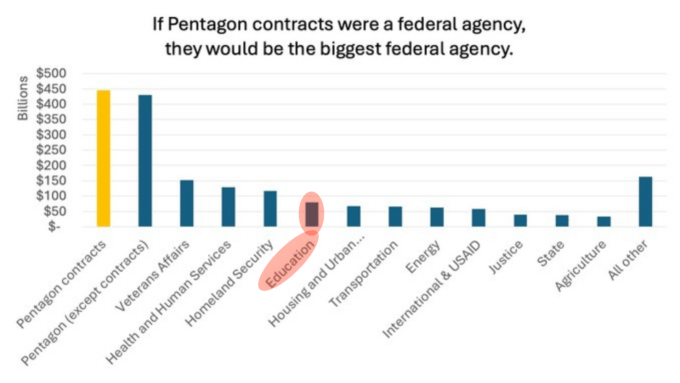
Source: National Priorities Project crunching 2024 data from USASpending.gov, OMB [emphasis mine]

In my 30’s I decided to leave the private sector and become a teacher, and I enrolled in grad school to earn education credits enough for certification. One of my most pragmatic professors shared a fact that seemed doubtful at the time but soon proved to be all too true: most school board directors, he said, are involved because they want to make decisions about school sports.

I think of this when I hear the rationale for 47 and the elongated muskrat firing 50% of the staff at the federal Department of Education: students will benefit from local funding and local control. No, they won’t.

In fact, nearly every time I attended a school board meeting in districts where I was employed for 25 years, the insane amount of time spent discussing topics like whether or not the boys basketball team should get new jerseys a year ahead of schedule filled me with dismay. The board would vote to cut a social worker position with NO discussion after spending an hour on sports uniforms, or scoreboards, or coaching positions. And I would drive home thinking, I can’t work for these people — we don’t share the same values. I did keep working, though, and mostly I just avoided going to school board meetings.

Here’s what I have to say to those who argue that cutting the DOE won’t affect teaching positions: you don’t know what you’re talking about. Yes, Maine pays for about 50% of public school costs via federal/state funds and about 50% locally. This makes the school systems in wealthy areas outperform those in areas with high poverty and unemployment. It’s partly about local property values, partly about local poverty levels, and partly about whether or not parents in the community have college degrees. (Standardized testing mostly measures the latter i.e. whether or not your parents are doctors vs. work for minimum wage will largely determine your score.)

Federal funding for education also plays a huge role in equitably educating special needs students. That is a benefit to those students, their peers, and society as a whole. Research suggests the regular ed peers are less likely to turn out like the elongated muskrat, throwing around the slur “r***rd” and citing empathy as a fundamental weakness of Western society.

Federal funding also contributes to improvement plans to shore up schools lagging in reading or math scores. I’ve helped write and administer three such grants and can attest that some were a boondoggle that wasted taxpayer money e.g. sending a team several thousand miles to study a program they would never faithfully implement, while others funded an entire reading specialist/instructional coach position for several years to support learners in a high poverty area who were struggling with literacy skills.

U.S. federal budget expenditures in 2023 (Koshgarian, Lusuegro, Siddique, 2023)

For context, let’s look at the overall federal budget — as it has been, and as it will be. The temporary funding bill passed by the House this week would cut $13 billion in non-military spending from the levels in the 2024 budget while increasing military spending by $6 billion. To see where we are now, the bar graph at the top of this post shows the first two categories — contractors who build weapons systems, and Pentagon staff like troops — dwarfing other categories. According to the National Priorities Project federal budget analysis, “In 2023, the average U.S. taxpayer paid $11 for Musk’s SpaceX.”

The question of whether a billionaire with extensive federal contracts should be empowered to cut competing federal expenditures is a conflict of interest issue, not an educational issue, so I’ll leave that for now.

FY2023 military spending of $921 billion (easily $1 trillion with hidden budget items like nuclear weapons and CIA black sites) could instead have funded 9.5 million elementary school teachers, or 23.65 million scholarships for university students. Students who might become doctors or teachers themselves. But who needs an educated populace? Not billionaires who will pay to educate their own children privately with other elites while believing that robotics and AI will replace most workers.

According to NBC News:

Around 3,000 people work in the [DOE]’s Washington headquarters, and roughly 1,000 are in 10 regional offices — making Education one of the smallest Cabinet-level federal departments. Its $268 billion appropriations last year represented 4% of the federal budget.

[Incoming DOE Secretary Linda] McMahon said in an interview Tuesday night that the layoffs were the first step on the road toward shutting down the department.

Back in Maine, school budgets are being formulated locally to put before voters in late spring. A relatively large, diverse district in South Portland heard from their superintendent this week about how shortfalls in federal funding are likely to affect their school system. Per reporting in the Portland Press Herald:

Matheney unveiled his proposed $73 million budget.., a 5.98% increase over last year. It includes reductions that will impact all seven schools and dozens of other programs and departments. The layoffs include 11 teachers, seven educational technicians and several administrative staff or districtwide employees (including the director of curriculum)..

In recent years, Matheney said, the district has declined in enrollment but increased in special education students, multilingual learners,.. and homeless students. At the same time, staffing has continued to rise. The district will need to fund more than 10 positions in special education and teaching that were previously supported by outside funding sources.

Guess which countries fund schools entirely at the local rather than national level? Not France, not Australia, not China, not Japan, not Russia.. I could go on but you get the picture.

I believe the current administration in the U.S. especially wants to defund schools because teachers unions are powerful. And if there’s something that billionaires really hate, it’s workers who have organized to bargain collectively for salary, benefits, and working conditions. They are also historically the strongest advocates for student needs. Because nobody goes into teaching as a career to make a bunch of money. Most do it because they care about kids.

Finally, just because I believe in robustly funded schools for everyone doesn’t mean that I think all meaningful education takes place in a school setting. When faced with the either-or attitude toward homeschooling often expressed by parents, my question is: Weren’t you planning to do both?

Lisa Savage is a CODEPINK coordinator in Maine who blogs at went2thebridge.blogspot.com.