It’s possible that I shall make an ass of myself. But in that case one can always get out of it with a little dialectic. I have, of course, so worded my proposition as to be right either way (K.Marx, Letter to F.Engels on the Indian Mutiny)
Wednesday, March 19, 2025
Scientists call for targeted fibre diets to boost health
Australian food scientists have reclassified dietary fibres – beyond just soluble and insoluble – to better guide nutritional decisions and drive targeted health food products.
Australian food scientists have reclassified dietary fibres – beyond just soluble and insoluble – to better guide nutritional decisions and drive targeted health food products.
Dietary fibres in fruit, vegetables, beans and whole grains are some of the most important food components for human health. They help digestion, weight management, blood sugar control, heart health, cancer prevention and more.
But RMIT University food scientist Professor Raj Eri said consumer advice on how best to use them for these various benefits is sorely lacking.
“Quite like how different medicines target different conditions, so too do different types of fibres,” he said.
“For example, apples and bananas are both rich in dietary fibre but the fibre in each works very differently.
“Our research is helping to understand which type of fibres we should eat to help address certain ailments.”
A new model for more tailored diets
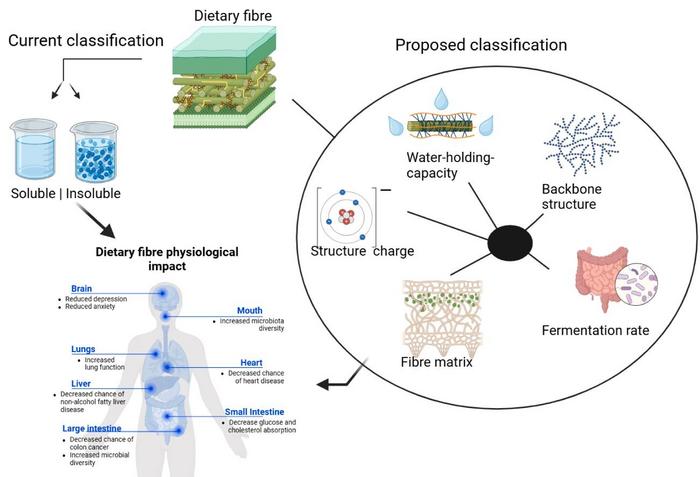
In a new study published in Food Research International, the RMIT University team propose a more nuanced fibre classification based on five key features: backbone structure, water-holding-capacity, structural charge, fibre matrix and fermentation rate.
Study lead author and RMIT PhD candidate Christo Opperman said by starting with the key active features of fibre, this ‘bottom-up approach’more accurately described each fibre’s health impacts.
“For example, suppose you want to promote colonic health. In that case, you identify a fibre’s properties as defined by the bottom-up approach, which align with your desired outcome – in this case fermentation rate,” Opperman said.
“Applying this framework can assure consumers, dieticians, clinicians and food technologists that they are receiving their desired health effect, which previously was a vague guessing game.”
Opperman said the RMIT team have now taken 20 different types of fibres and studied how they interact specifically with microbiome in the gut.
“Until now, these types of specific interactions have been understudied, but with this framework as a beginning, we are on the verge of a much more helpful and detailed understanding,” he said.
A global fibre gap
Eri said there was already strong interest among dieticians, clinicians and food technologists – and of course consumers – on how to better integrate fibre into diets.
“In the countries surveyed, including Europe and the USA, every single population had a deficiency of fibre,” Eri said.
“Considering fibre is one of the most important nutrients, this is extremely worrying.”
While recommended dietary fibre intake is 28–42 grams per day, Americans on average get only 12–14 grams per day and Europeans 18–24 grams per day.
Beyond soluble and insoluble
The current classification of dietary fibres has them grouped into soluble and insoluble fibres, which is based on whether they dissolve in water.
Insoluble fibres are seldom fermented in the large intestine and help keep us regular.
Soluble fibres are more readily fermented and can reduce cholesterol, glucose absorption and food craving.
But it’s not always so straightforward. For example, often insoluble fibres can also rapidly ferment and reduce glucose absorption.
“Despite our evolving understanding of how central different types of fibre are to nurturing a healthy gut biome, our dietary fibre classifications remain simplistic between broad categories of soluble and insoluble types,” Eri said.
“This binary classification of soluble and insoluble insufficiently captures the diverse structures and complex mechanisms through which dietary fibres influence human physiology.”
“Our framework is an essential step in addressing this gap,” he said.
The researchers are now planning to investigate how a specific type of fibre (based on our new classification) modulates the microbiota and how we can utilise such knowledge for specific health applications.
‘Beyond soluble and insoluble: A comprehensive framework for classifying dietary fibre’s health effects’ is published in Food Research International (DOI: https://doi.org/10.1016/j.foodres.2025.115843)
Graphical abstract of the new dietry fibre classification.
People with cardiometabolic disorders—such as obesity, diabetes and heart disease—could increase their chances of living longer by adopting a healthy plant-based diet, according to a study being presented at the American College of Cardiology’s Annual Scientific Session (ACC.25).
While previous studies have assessed the benefits of plant-based diets in a general population, this new study is the first to focus on their benefits in people with cardiometabolic disorders, which are rising in prevalence worldwide and bring an increased risk of premature death.
“Among populations with cardiometabolic disorders, higher adherence to a healthful plant-based diet was significantly associated with a lower risk of total, cardiovascular and cancer mortality,” said Zhangling Chen, MD, PhD, of the Department of Cardiovascular Medicine at the Second Xiangya Hospital of Central South University in Changsha, China, and the study’s lead author. “More intake of healthy plant-based foods, less intake of unhealthy plant-based foods and less intake of animal-based foods are all important.”
Cardiometabolic disorders stem from a variety of genetic, environmental and lifestyle factors and affect the health of the cardiovascular system and how the body processes food. While some medications can help manage these disorders, diet and other lifestyle factors are key in preventing the progression to serious forms of heart disease and cancer that are associated with cardiometabolic disorders.
Researchers analyzed data from nearly 78,000 people with cardiometabolic disorders who participated in large prospective studies in the United Kingdom, United States and China. The pooled datasets included 55,000 adults from the U.K. Biobank (UKB) between 2006-2022, 18,000 U.S. adults from the National Health and Nutrition Examination Study (NHANES) between 1999-2018 and almost 4,500 Chinese adults from the Chinese Longitudinal Healthy Longevity Study (CLHLS) between 2006-2018.
Based on their responses to 24-hour dietary recall interviews or dietary questionnaires at baseline, researchers assigned each participant a score on two indexes. People who reported a diet high in healthy plant-based foods such as vegetables, fruits, whole grains, legumes, tea and coffee scored higher on the healthful plant-based diet index, while those who reported a diet higher in refined grains, potatoes, sugar-sweetened beverages and animal-based foods scored higher on the unhealthful.
Overall, closer adherence to a healthful plant-based diet was associated with a 17% to 24% lower risk of death from any cause, cardiovascular disease or cancer, while closer adherence to an unhealthful plant-based diet brought a 28% to 36% increased risk of death from any cause, cardiovascular disease or cancer.
For the analysis, researchers adjusted for confounding factors such as demographics, dietary and lifestyle factors. Results were consistent across subgroups by age, race, sex, smoking, alcohol intake, body mass index and physical activity. They were also consistent in people with different types of cardiometabolic disorders and in people from the U.K., U.S. and Chinese cohorts when these groups were analyzed separately, even though the U.K. and U.S. groups were significantly younger, with an average age of 57 years and 59 years, respectively, compared with the Chinese group, which had an average age of 84 years.
In a separate study that only used NHANES data and did not focus on people with cardiometabolic disorders, the same research group found that a greater adherence to a healthy beverage pattern was associated with a lower risk of premature death. They defined a healthy beverage pattern as one high in tea, coffee and low-fat milk and low in alcohol, whole-fat milk, fruit juice and sugar-sweetened and artificially sweetened beverages.
“These findings may help individuals with cardiometabolic disorders make heathier lifestyle choices,” Chen said. “It is important to identify and develop cost-effective strategies to promote health among individuals with cardiometabolic disorders.”
For both studies, the researchers said that dietary data were self-reported by study participants at baseline and not assessed again, so the studies were not able to reflect any dietary changes participants may have made. They added that some potentially confounding factors were difficult to eliminate and suggested that additional prospective studies in diverse global populations would help to strengthen the evidence and confirm the importance of healthy food and beverage consumption patterns in broader populations.
Chen will present the studies, “Associations Between Plant-Based Diets and Total Mortality Among Participants with Cardiometabolic Disorders” and “Associations of a Healthy Beverage Score with All-Cause and Cause-Specific Mortality among U.S. Adults: A Nationwide Cohort Study,” on Saturday, March 29, 2025, at 3:30 p.m. CT / 20:30 UTC in South Hall.
ACC.25 will take place March 29-31, 2025, in Chicago, bringing together cardiologists and cardiovascular specialists from around the world to share the newest discoveries in treatment and prevention. Follow @ACCinTouch, @ACCMediaCenter and #ACC25 for the latest news from the meeting.
The American College of Cardiology (ACC) is the global leader in transforming cardiovascular care and improving heart health for all. As the preeminent source of professional medical education for the entire cardiovascular care team since 1949, ACC credentials cardiovascular professionals in over 140 countries who meet stringent qualifications and leads in the formation of health policy, standards and guidelines. Through its world-renowned family of JACC Journals, NCDR registries, ACC Accreditation Services, global network of Member Sections, CardioSmart patient resources and more, the College is committed to ensuring a world where science, knowledge and innovation optimize patient care and outcomes. Learn more at ACC.org.
###
Popular cooking cheese made with peas yields same taste and texture
Creamy, crumbly, mild, or sharp — cheese is a true crowd-pleaser. From everyday meals to gourmet delights, it’s a staple across the Western world. In 2023, the average European enjoyed 20.5 kilograms of cheese.
But it is no secret that, as a dairy product, heavy cheese consumption comes with a significant environmental impact. As such, extensive research is being conducted on how to produce plant-based cheeses. Unfortunately, finding an entirely plant-based cheese that satisfies cheese lovers in terms of both texture and taste has been difficult. And texture in particular has been challenging to get just right.
So, food researchers at the University of Copenhagen opted for a different approach – hybrid cheese. They see cheese produced from a combination of milk and plant proteins as the way forward.
"It’s really difficult to create a texture that matches regular cheese if you only use plant proteins. Therefore, our strategy is to get the best of both worlds by replacing as much milk protein as possible with plant protein, without compromising on taste and texture," says Professor Lilia Ahrné from the Department of Food Science. She continues:
"Because, consumers who don't like the taste experience won't buy a product just because you tell them it's sustainable."
She and her team have now successfully developed a recipe for a hybrid cheese similar to paneer, a widely-used South Asian cooking cheese. Their hybrid paneer consists partly of casein, the milk protein that is the main component of paneer, and partly of pea protein. And as peas are grown in Europe they are a more sustainable choice than, for example, soy-based protein.
25% peas
"We’ve investigated what happens to a cheese's texture as we add more pea protein. How much can we add before it falls apart or loses its original paneer shape? Our experiments show that at least 25% of the milk proteins can be replaced with pea protein while still producing a cheese with a texture, shape, and taste similar to the original product," says postdoc Wenjie Xia, first author of the study published in Food Research International.
When making paneer and most other cheeses, part of the process involves pressing it. In their experiments, the researchers applied higher pressure than usual to the hybrid cheese because pea proteins retain more water than milk proteins. This increased pressure helped the cheese maintain a solid shape despite its relatively high plant-based content.
"Hybrid cheeses like this are a solid step towards more sustainable dairy products. We demonstrate that it is possible to replace a significant portion of the milk in cheese with plant protein. With further research, we believe that it will be possible to reduce the milk content even more while still creating a product that people want to eat. In this way, there is great potential to reduce the climate footprint of a popular food category," says Wenjie Xia.
Not only do hybrid cheeses lower the climate footprint, they can also have nutritional advantages, Lilia Ahrné points out:
“While dairy ingredients contribute with better protein quality (essential amino acids) and calcium, plant ingredients can bring dietary fibers to the product. So also nutrionally hybrid cheese has the potential to bring together qualities from both worlds.”
Grilled, baked or fried
The researchers decided to focus on paneer because they see great potential in this type of cheese. Cooking cheeses such as paneer, halloumi and feta are all characterized by the fact that they don’t melt when baked or fried.
"Because of paneer's properties – that allow it to be both grilled and baked without melting – it has been a popular meat alternative in India for many years, where there are many vegans and vegetarians. That’s why we see this type of cooking cheese as a potential meat substitute in the West, where we enjoy grilling and frying our food," says Lilia Ahrné.
The researchers emphasize that, despite the promising start that shows we get right the texture, further studies could help refine the taste experience before the cheese goes into production.
Enzymes found in landfills around the world may be able to break down plastic waste. Some 11 billion metric tons of plastic are projected to accumulate in the environment by 2050. Enzymatic and microbial degradation is a promising method of plastic recycling. Landfills, environments where plastics are an abundant resource, are crucibles of bacterial evolution. Liyan Song and colleagues collected plastic biocatalytic enzymes from landfills around the world, using metagenomics and machine learning. Samples came from China, Italy, Canada, Great Britain, Jamaica, and India and included refuse, leachate, sludge, and airborne particles. The authors identified 31,989 possible plastic-degrading enzymes using the machine learning model CLEAN, which stands for “contrastive learning-enabled enzyme annotation.” The authors then inferred the catalytic activity and microbial hosts of 712 predicted proteins using tertiary structure modeling, superposition, and metagenome-assembled genomes (MAG) reconstruction. The authors recommend further work to confirm the predicted protein functions, noting their versatile capabilities could broaden applications for tackling plastic waste. According to the authors, plastic may not be forever—and landfill bacteria can help shorten the life of plastic pollution.
Journal
PNAS Nexus
Article Title
Natural-selected plastics biodegradation species and enzymes in landfills
Article Publication Date
18-Mar-2025
Leading US organizations unite to affirm vaccine safety amid rising misinformation and declining trust
Credit: Please credit The American Association of Immunologists and link to: https://news.aai.org/2025/03/18/leading-organizations-unite-to-affirm-vaccine-safety-amid-rising-misinformation-and-declining-trust/
In response to growing concerns over vaccine misinformation, declining public trust in science, and recent outbreaks of preventable diseases, a coalition of 34 scientific and medical organizations, led by the American Association of Immunologists (AAI) and the American College of Physicians (ACP), has issued a unified statement emphasizing the critical role of vaccinations in public health.
“We strongly support vaccination as a cornerstone of public health, a shining example of the power of scientific research, and a vital tool in the fight against preventable diseases,” the statement asserts. “We urge everyone to adhere to recommended vaccination schedules to protect themselves, their families, and their communities.”
AAI President Stephen C. Jameson said: "Vaccines are one of the greatest achievements of biomedical research, made possible by decades of rigorous scientific investigation and investment in discovery. The development of safe and effective vaccines requires a strong, well-funded scientific enterprise, from basic immunology research to large-scale clinical trials. Ensuring continued support for science is essential to protecting public health and combating emerging infectious diseases."
ACP President Isaac O. Opole, added: “As internal medicine physicians on the front lines of patient care, we understand what needs to be done to mitigate the spread of preventable diseases. Vaccines are safe, effective and vital to our ability to prevent diseases that threaten public health. ACP remains concerned about the spread of disinformation and misinformation regarding vaccination and treatment and strongly supports evidence-based guidance. With the current measles outbreak and the threat of other preventable infectious diseases, we need to ensure that members of the public have reliable, accurate information to guide their choices.”
This unified statement from leading science and medical organizations comes against a backdrop of declining trust in science, rising vaccine misinformation, and outbreaks of preventable infectious diseases.
Recent studies have highlighted a worrisome decline in public confidence toward scientific institutions. A Pew Research Center survey revealed that the percentage of Americans who believe science has a mostly positive effect on society dropped from 73% in 2019 to 57% in 2023 Furthermore, a study by Columbia University's Mailman School of Public Health found that misinformation about vaccines on social media contributes to vaccine hesitancy.
The tangible consequences of declining vaccination rates are evident. An ongoing measles outbreak in Texas has already resulted in over 300 cases and the tragic death of an unvaccinated child—the first such death in the U.S. in a decade.
The coalition's statement underscores the extensive scientific foundation and rigorous safety protocols behind vaccine development. It highlights that decades of research and multiple phases of clinical trials ensure vaccine safety and efficacy. The statement also notes that while no medical intervention is without risk, the benefits of vaccination in preventing serious illness and death far outweigh any risk associated with vaccines.
In light of the current climate, the coalition calls upon individuals to consult with trusted healthcare professionals regarding any concerns about vaccines and to rely on credible, science-based information when making health decisions.
A full copy of the statement is available on the AAI website.
Coalition Organizations
American Association of Immunologists
American College of Physicians
Academy of Managed Care Pharmacy (AMCP)
American Academy of Pediatrics
American Anthropological Association
American Association for Anatomy
American Association for Dental, Oral, and Craniofacial Research
American Association of Colleges of Pharmacy (AACP)
American College of Obstetricians and Gynecologists
American Industrial Hygiene Association
American Institute of Biological Sciences
American Osteopathic Association
American Pharmacists Association
American Physiological Society
American Society for Biochemistry and Molecular Biology
American Society for Clinical Pharmacology & Therapeutics (ASCPT)
American Society for Investigative Pathology
American Society for Matrix Biology (ASMB)
American Society for Microbiology
American Society for Pharmacology and Experimental Therapeutics (ASPET)
American Society of Tropical Medicine and Hygiene
American Statistical Association
Association of Biomolecular Resource Facilities
Biophysical Society
Council of Medical Specialty Societies
Entomological Society of America
FASEB
Gerontological Society of America
March of Dimes
Society for Leukocyte Biology
Society of Behavioral Medicine
The Histochemical Society
The Society for Research in Child Development
United States Pharmacopeia (USP)
About The American Association of Immunologists
The American Association of Immunologists (AAI) is one of the world’s largest organizations of immunologists and scientists in related disciplines. Our mission is to improve global health and well-being by advancing immunology and elevating public understanding of the immune system. AAI members are responsible for some of the most significant biomedical discoveries of the past century, including the development of life-saving cancer immunotherapies, antibody therapies, transplant technologies, and vaccines. We support scientists across the field of immunology through knowledge dissemination, community building, advocacy, and public outreach.
About the American College of Physicians The American College of Physicians is the largest medical specialty organization in the United States with members in more than 172 countries worldwide. ACP membership includes 161,000 internal medicine physicians, related subspecialists, and medical students. Internal medicine physicians are specialists who apply scientific knowledge and clinical expertise to the diagnosis, treatment, and compassionate care of adults across the spectrum from health to complex illness. Follow ACP on X, Facebook, Instagram, Threads and LinkedIn.
WITCHES FAMILIAR
Feline therapy: Study suggests cats could fill an assistive niche
PULLMAN, Wash. — For years, therapy dogs have ruled the world of animal-assisted services (AAS), offering stress relief to college students, hospital patients, and those in need of emotional support. But new research suggests that some cats might also have what it takes to join the ranks of therapy animals—bringing their purrs, gentle headbutts, and calm demeanor to the field.
A study in the journal Animals co-authored by Washington State University professor Patricia Pendry, in collaboration with researchers in Belgium, found that therapy cats share specific behavioral traits that may make them well-suited for AAS programs. The research team surveyed hundreds of cat owners across Belgium using a standardized behavioral assessment. They identified key differences between cats participating in AAS and other cats in terms of feline behavior.
“There’s this perception that cats just aren’t suitable for this kind of work, but our study shows that some cats may thrive in these settings,” Pendry said. “It turns out that cats chosen to engage in AAS seem to exhibit the same behavioral traits as therapy dogs—like high sociability and a willingness to engage with people.”
The study found that AAS cats tend to be more social with both humans and other cats, more attention-seeking, and more tolerant of being handled—particularly when it comes to being picked up, a behavior many pet owners would describe as rare in the feline world.
While animal-assisted services have long been dominated by dogs, the study suggests that expanding these programs to include felines could make therapy more accessible to a wider range of people. Some individuals may find comfort in a cat’s quiet presence rather than the enthusiastic energy of a dog. However, Pendry cautioned that not all cats are suited for the role, and unlike dogs, therapy cats are not typically trained for the job. Instead, certain cats appear to naturally possess the necessary personality traits. Pendry noted while some cat breeds, such as Ragdolls or Maine Coons, may be considered more sociable, the study did not examine differences in behavior based on breed. In fact, the research only examined individual differences in behavioral traits within groups of cats rather than between species or breed.
Currently, therapy cats appear to be more common in Europe than in the U.S., where the idea has been slower to catch on. In Belgium, where the study was conducted, cats are becoming a more common presence in AAS programs, demonstrating their potential in stress-relief settings. In contrast, American campuses and hospitals remain largely focused on therapy dogs.
Despite the study’s promising findings, researchers stress that more work is needed before therapy cats become a mainstream option. Questions remain about whether these traits are innate or developed through experience, as well as how to ensure that therapy work does not negatively impact feline welfare.
For now, therapy cats remain an underutilized resource in the U.S., but with growing research and awareness, they may soon find themselves sitting side-by-side with their canine counterparts—soaking up attention and offering comfort in their own uniquely feline way.
“The goal of the study isn’t to suddenly promote cats into therapy work,” Pendry said. “It’s about recognizing that some cats may genuinely enjoy this kind of interaction and, in the right setting, can provide meaningful support to people who need it.”
After all, she added, if any animal could turn lounging around and receiving affection into a legitimate career, it would be a cat.