Three years after Russia’s invasion of Ukraine, why have Putin’s anti-war opponents failed so far?
First published in German at Work - die Zeitung der Gewerkschaft. Translation to English from Labour Solidarity. Edited for clarity.
Three years have passed. Three years since the beginning of the second phase of Russia’s military operation. Three years after the attack on a neighbouring country, on Ukraine. Three years on, we return in our thoughts to this point, to February 24, 2022. We try to understand what has changed in us. What has changed outside. What has changed in Russian society. And how Europe changed during these years.
But when we look at the last three years, we must recognise that it is impossible to separate them from the historical process that began in Russia after 2000 and eventually led to this merciless, senseless and terrible military operation.
The story began when Russian President Vladimir Putin came to power and tried to deconstruct Russian civil society. From 2008 onwards, we experienced the intensification of repression against civil society. Of course, at that time we could not imagine the extent this would take. But now everything is much clearer.
First published in German at Work - die Zeitung der Gewerkschaft. Translation to English from Labour Solidarity. Edited for clarity.
Three years have passed. Three years since the beginning of the second phase of Russia’s military operation. Three years after the attack on a neighbouring country, on Ukraine. Three years on, we return in our thoughts to this point, to February 24, 2022. We try to understand what has changed in us. What has changed outside. What has changed in Russian society. And how Europe changed during these years.
But when we look at the last three years, we must recognise that it is impossible to separate them from the historical process that began in Russia after 2000 and eventually led to this merciless, senseless and terrible military operation.
The story began when Russian President Vladimir Putin came to power and tried to deconstruct Russian civil society. From 2008 onwards, we experienced the intensification of repression against civil society. Of course, at that time we could not imagine the extent this would take. But now everything is much clearer.
The 2014 war — A sea of blue and yellow flags in Moscow
The war broke out in 2014, when Russia moved its troops into Ukraine for the first time. But this war ended within a few months. Russian authorities had not expected such strong resistance from the Ukrainian population, who began to actively resist. Russian authorities had also not expected such a strong wave of protest at home.
The anti-war protests from 2014 to early 2015 were huge. Hundreds of thousands, probably even millions, took to the streets. Many more people condemned the actions of the Russian authorities in silence. Unfortunately, not everyone was aware at the time that this horror would continue — in the form of a second phase of the operation — if they did not actively protest against it.
But the number of people who took to the streets was considerable. On the internet, there are numerous photos and videos showing how the streets and squares of Moscow and St Petersburg filled with people carrying Ukrainian flags. When we look at these photos today with Ukrainian friends, they can hardly believe that at one point so many yellow and blue flags were visible in Moscow. And so many slogans calling for an end to the massacres.
In February 2015, the operation was stopped. But we did not know that it had only been suspended and that authorities were already preparing a new war. From 2014/15, we saw how much money and resources were pumped into the military apparatus. The Black Sea region in particular was rearmed. But it should not be forgotten that the dismantling of democratic institutions began back then.
The war broke out in 2014, when Russia moved its troops into Ukraine for the first time. But this war ended within a few months. Russian authorities had not expected such strong resistance from the Ukrainian population, who began to actively resist. Russian authorities had also not expected such a strong wave of protest at home.
The anti-war protests from 2014 to early 2015 were huge. Hundreds of thousands, probably even millions, took to the streets. Many more people condemned the actions of the Russian authorities in silence. Unfortunately, not everyone was aware at the time that this horror would continue — in the form of a second phase of the operation — if they did not actively protest against it.
But the number of people who took to the streets was considerable. On the internet, there are numerous photos and videos showing how the streets and squares of Moscow and St Petersburg filled with people carrying Ukrainian flags. When we look at these photos today with Ukrainian friends, they can hardly believe that at one point so many yellow and blue flags were visible in Moscow. And so many slogans calling for an end to the massacres.
In February 2015, the operation was stopped. But we did not know that it had only been suspended and that authorities were already preparing a new war. From 2014/15, we saw how much money and resources were pumped into the military apparatus. The Black Sea region in particular was rearmed. But it should not be forgotten that the dismantling of democratic institutions began back then.
Civil society smashed, then tanks rolled out
The most important starting point is the assassination of Boris Nemtsov, the most prominent war opponent and Putin’s main contender at the time. He was shot on February 27, 2015, right next to Red Square in Moscow. The result was a huge wave of protest. Again, hundreds of thousands of people took to the streets. Authorities recognised that the nocturnal murder of opponents in the middle of cities had anything but the desired effect, and instead caused the protests to grow.
This led to other mechanisms for eliminating dissenters. Poison, particularly Novichok, was increasingly used. Numerous Russian opposition leaders were victims of poisoning attempts. In addition, one free media outlet after another first lost its independence, and were then forced to close. Political activists were sentenced to long prison terms. The courts were purged of all judges who were not obedient enough.
There were mass arrests and large-scale trials. While earlier repressions focused on individual cases, after 2015 collective proceedings and trials were initiated. The penalties became harsher. At the same time, all democratic institutions were curtailed and civil organisations closed.
At the end of 2021, the Moscow Helsinki Group was destroyed, a human rights organisation that dates back to the Helsinki Conference of 1975 and the basic principles for security in Europe established there. In February 2022, Memorial was finally dissolved, the international organisation for human rights and the reappraisal of Stalinist tyranny. With this, the deconstruction process of civil society was completed. Shortly afterwards, the tanks rolled towards Ukraine again.
The most important starting point is the assassination of Boris Nemtsov, the most prominent war opponent and Putin’s main contender at the time. He was shot on February 27, 2015, right next to Red Square in Moscow. The result was a huge wave of protest. Again, hundreds of thousands of people took to the streets. Authorities recognised that the nocturnal murder of opponents in the middle of cities had anything but the desired effect, and instead caused the protests to grow.
This led to other mechanisms for eliminating dissenters. Poison, particularly Novichok, was increasingly used. Numerous Russian opposition leaders were victims of poisoning attempts. In addition, one free media outlet after another first lost its independence, and were then forced to close. Political activists were sentenced to long prison terms. The courts were purged of all judges who were not obedient enough.
There were mass arrests and large-scale trials. While earlier repressions focused on individual cases, after 2015 collective proceedings and trials were initiated. The penalties became harsher. At the same time, all democratic institutions were curtailed and civil organisations closed.
At the end of 2021, the Moscow Helsinki Group was destroyed, a human rights organisation that dates back to the Helsinki Conference of 1975 and the basic principles for security in Europe established there. In February 2022, Memorial was finally dissolved, the international organisation for human rights and the reappraisal of Stalinist tyranny. With this, the deconstruction process of civil society was completed. Shortly afterwards, the tanks rolled towards Ukraine again.
Why Putin supported Lukashenko in Belarus
I describe this in such detail because it is important. There is a direct connection between domestic and foreign policy. The problem of war-driven foreign policy cannot be solved without solving the problem of aggressive suppression of civil liberties at home. Any peace process will fail if it tries to separate foreign policy from domestic policy.
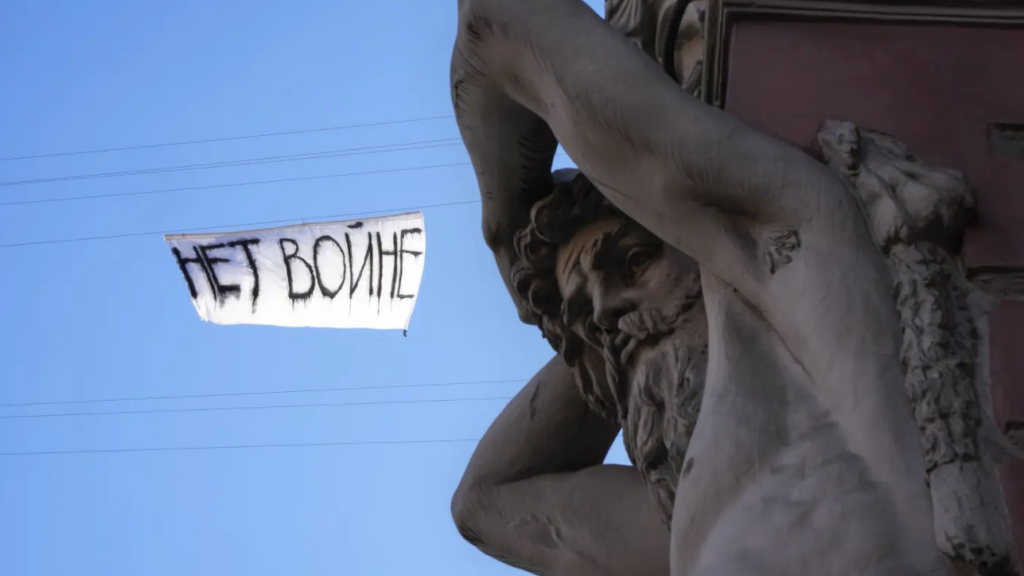
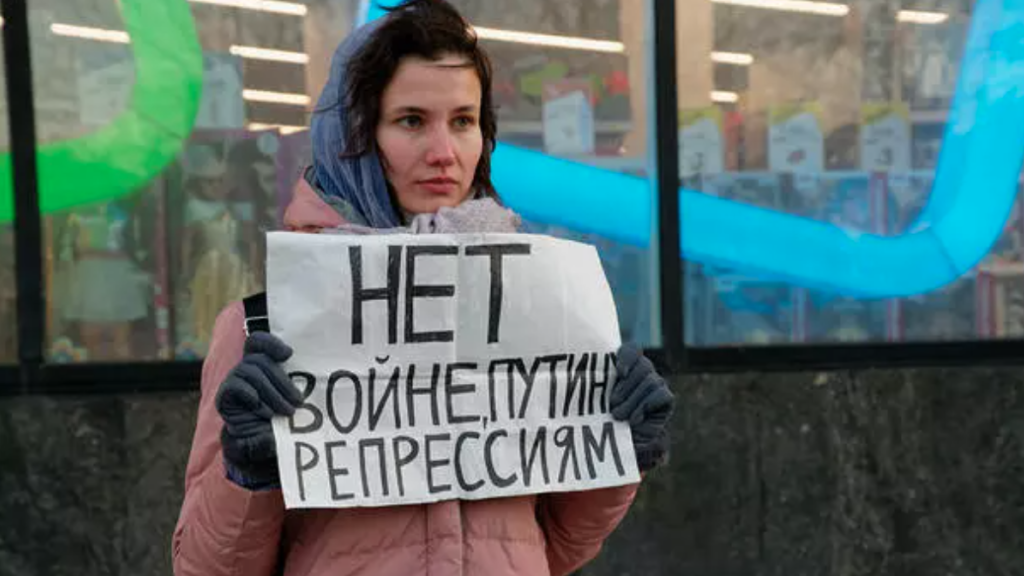
By the time Russian forces crossed the Ukrainian border on February 24, 2022, the anti-war movement within Russia had already been purged and deprived of any instruments and structures for action. We no longer had the opportunity to protest — at least not like in 2014. Society was in a state of shock. Numerous people tried to take to the streets, but these protests were not very numerous and mostly silent. Those who held up banners and placards were immediately arrested.
The democratic mass movement in Belarus had previously been suppressed in the same way. When thousands of Belarusians took to the streets in 2020 to protest against the falsification of election results, they were genuinely surprised that Putin intervened in favour of Alexander Lukashenko. We also wondered why the Russian authorities were supporting this faltering dictator.
Now it is clear that Putin could not let anyone other than Lukashenko win, because only Lukashenko could provide Belarus as a platform for an attack on Ukraine. In this sense, the fates of Belarus and Russia are similar. Both countries have become hostages to Putin’s military ambitions.
In February 2022, civil society was left in tatters: with hundreds of political prisoners in Russia and Belarus; with terrible, inhumane detention conditions for those who protested; with massive use of the most cruel torture against civil activists; and with a truly depressed and demoralised society that no longer had the opportunity to speak out against the actions of the authorities.
I describe this in such detail because it is important. There is a direct connection between domestic and foreign policy. The problem of war-driven foreign policy cannot be solved without solving the problem of aggressive suppression of civil liberties at home. Any peace process will fail if it tries to separate foreign policy from domestic policy.
By the time Russian forces crossed the Ukrainian border on February 24, 2022, the anti-war movement within Russia had already been purged and deprived of any instruments and structures for action. We no longer had the opportunity to protest — at least not like in 2014. Society was in a state of shock. Numerous people tried to take to the streets, but these protests were not very numerous and mostly silent. Those who held up banners and placards were immediately arrested.
The democratic mass movement in Belarus had previously been suppressed in the same way. When thousands of Belarusians took to the streets in 2020 to protest against the falsification of election results, they were genuinely surprised that Putin intervened in favour of Alexander Lukashenko. We also wondered why the Russian authorities were supporting this faltering dictator.
Now it is clear that Putin could not let anyone other than Lukashenko win, because only Lukashenko could provide Belarus as a platform for an attack on Ukraine. In this sense, the fates of Belarus and Russia are similar. Both countries have become hostages to Putin’s military ambitions.
In February 2022, civil society was left in tatters: with hundreds of political prisoners in Russia and Belarus; with terrible, inhumane detention conditions for those who protested; with massive use of the most cruel torture against civil activists; and with a truly depressed and demoralised society that no longer had the opportunity to speak out against the actions of the authorities.
From shock to solidarity
The following three years can also be divided into several stages. The first year was a year of paralysis. People were in shock. Many people lost faith in the possibility of changing anything. Many were forced to save themselves and their families; they had to flee and find a new place to stay. People were traumatised and depressed.
Yet even then, in March 2022, Russian civil society began to shake off the nuclear dust it was covered in. The first and central task was humanitarian — to help people who had suffered from military aggression in Ukraine. A great deal was done in this first year. Here in the West, Ukrainian refugees were received along almost all humanitarian corridors by activists from Russian civil society. From Przemyśl to Warsaw to Berlin and so on — wherever refugees arrived, Russians were also ready.
Russian-speaking people were in great demand because most people fleeing the hostilities came from the eastern regions of Ukraine. For them, Russian was naturally the main language of communication. A large number of accommodations, refugee camps and legal information centres were organised by Russian activists. They saw this as an opportunity, not to excuse their inability to stop the war, but to at least slightly compensate for the damage that Russia was inflicting on the neighbouring country and its population.
Mass demonstrations across Europe in support of Ukraine were also very important during this time. The evacuation and reception of refugees, the mass solidarity actions such as in Zurich, Bern or Geneva — everywhere these demonstrations were prepared with the participation of Russian activists.
The following three years can also be divided into several stages. The first year was a year of paralysis. People were in shock. Many people lost faith in the possibility of changing anything. Many were forced to save themselves and their families; they had to flee and find a new place to stay. People were traumatised and depressed.
Yet even then, in March 2022, Russian civil society began to shake off the nuclear dust it was covered in. The first and central task was humanitarian — to help people who had suffered from military aggression in Ukraine. A great deal was done in this first year. Here in the West, Ukrainian refugees were received along almost all humanitarian corridors by activists from Russian civil society. From Przemyśl to Warsaw to Berlin and so on — wherever refugees arrived, Russians were also ready.
Russian-speaking people were in great demand because most people fleeing the hostilities came from the eastern regions of Ukraine. For them, Russian was naturally the main language of communication. A large number of accommodations, refugee camps and legal information centres were organised by Russian activists. They saw this as an opportunity, not to excuse their inability to stop the war, but to at least slightly compensate for the damage that Russia was inflicting on the neighbouring country and its population.
Mass demonstrations across Europe in support of Ukraine were also very important during this time. The evacuation and reception of refugees, the mass solidarity actions such as in Zurich, Bern or Geneva — everywhere these demonstrations were prepared with the participation of Russian activists.
Culture flourishes in exile
But such actions took place not only in Europe. There were also numerous petitions against the war in Russia in spring 2022. They were signed by doctors, teachers, university professors and students. Subsequently, the initiators and signatories of these petitions were persecuted. It also became impossible to protest in public.
Gradually, the movement shifted to other countries, and many Russian civil society institutions were revived in exile, especially in European countries. Today, there are countless new media outlets. We have democratic newspapers published in Russian. We have websites and web resources. There are television channels. There are blogs. There are publishers that publish books in Russian, and there are distribution networks for these books. In Switzerland, there is the “Dar” literary prize. More than 150 Russian-speaking anti-war authors have already submitted their books for this. Songs, films and documentaries are being made. Russian theatre is also alive. Today, in almost every major city, for example in Zurich and Geneva, there is at least one Russian acting ensemble with anti-war convictions.
Thousands of people are involved in this, bringing Russian culture back to where it belongs: into the bosom of humanistic thinking and the humanistic culture of the world. We now use the Russian language as a means of consolidating society and as a means of countering Putin’s propaganda.
But such actions took place not only in Europe. There were also numerous petitions against the war in Russia in spring 2022. They were signed by doctors, teachers, university professors and students. Subsequently, the initiators and signatories of these petitions were persecuted. It also became impossible to protest in public.
Gradually, the movement shifted to other countries, and many Russian civil society institutions were revived in exile, especially in European countries. Today, there are countless new media outlets. We have democratic newspapers published in Russian. We have websites and web resources. There are television channels. There are blogs. There are publishers that publish books in Russian, and there are distribution networks for these books. In Switzerland, there is the “Dar” literary prize. More than 150 Russian-speaking anti-war authors have already submitted their books for this. Songs, films and documentaries are being made. Russian theatre is also alive. Today, in almost every major city, for example in Zurich and Geneva, there is at least one Russian acting ensemble with anti-war convictions.
Thousands of people are involved in this, bringing Russian culture back to where it belongs: into the bosom of humanistic thinking and the humanistic culture of the world. We now use the Russian language as a means of consolidating society and as a means of countering Putin’s propaganda.
The serious mistakes of the democratic opposition
What else has changed in these three years? We have learned our lessons and recognised many things. We have recognised that we have made many and big mistakes. Especially during the time when we were busy building civil society institutions and free, independent and democratic trade unions in Russia and in the countries of the Commonwealth of Independent States (CIS).
We have recognised that a real civil society must be completely independent and uncontrolled. That it must raise its own financial means and must not depend on state subsidies, private donors, the charity of oligarchs or foreign subsidies. And it should rely on people who are ready to invest their time and energy daily in maintaining civil control over the state system.
What else has changed in these three years? We have learned our lessons and recognised many things. We have recognised that we have made many and big mistakes. Especially during the time when we were busy building civil society institutions and free, independent and democratic trade unions in Russia and in the countries of the Commonwealth of Independent States (CIS).
We have recognised that a real civil society must be completely independent and uncontrolled. That it must raise its own financial means and must not depend on state subsidies, private donors, the charity of oligarchs or foreign subsidies. And it should rely on people who are ready to invest their time and energy daily in maintaining civil control over the state system.
What has happened in recent days
In recent days, several European heads of government have proposed a one-month ceasefire in the Ukraine war. This proposal was discussed at the Ukraine summit in London. The European Union has also reaffirmed its support for Ukraine and emphasised that it is ready to take more responsibility should the US reduce its support.
This was preceded by a scandal in the Oval Office of the White House: in front of the world’s press, US President Donald Trump and his Vice President JD Vance verbally attacked Ukrainian President Volodymyr Zelensky. Among other things, they accused him of risking a Third World War with his behaviour and of not showing gratitude towards the US. The Kremlin gleefully noted this incident and stated that Zelensky was the main obstacle to peace.
Trump is pushing for a raw materials agreement with Ukraine. The exact text of the treaty is not yet known. At its core, it is about the US wanting to be compensated for the war aid it provided, specifically through access to Ukrainian raw materials such as rare earths, oil and gas. After the scandal, Zelensky stressed that he was still willing to sign a raw materials agreement with Trump, but also pointed out that peace would not be possible without security guarantees from the US.
Today, the Russian democratic movement, which sees itself as an opposition movement, holds various conferences. There, discussions take place about the possible “beautiful Russia of the future” and what it should look like. Declarations and statements are drafted containing many correct messages, such as the demand for an independent parliament, independent political parties, independent media and independent courts.
But practically nowhere, on no platform and in none of these memoranda do we find an appeal to the social necessities and the basic needs of working people. The democratic movement still prefers to ignore these people, as if they did not exist. But this is precisely one of the reasons why civil society was unable to establish a sustainable democracy in Russia. Their platforms contain no elements of social justice. So it is not at all clear why wage earners should support a democratic movement. What do we need democracy for if people live in poverty?
In recent days, several European heads of government have proposed a one-month ceasefire in the Ukraine war. This proposal was discussed at the Ukraine summit in London. The European Union has also reaffirmed its support for Ukraine and emphasised that it is ready to take more responsibility should the US reduce its support.
This was preceded by a scandal in the Oval Office of the White House: in front of the world’s press, US President Donald Trump and his Vice President JD Vance verbally attacked Ukrainian President Volodymyr Zelensky. Among other things, they accused him of risking a Third World War with his behaviour and of not showing gratitude towards the US. The Kremlin gleefully noted this incident and stated that Zelensky was the main obstacle to peace.
Trump is pushing for a raw materials agreement with Ukraine. The exact text of the treaty is not yet known. At its core, it is about the US wanting to be compensated for the war aid it provided, specifically through access to Ukrainian raw materials such as rare earths, oil and gas. After the scandal, Zelensky stressed that he was still willing to sign a raw materials agreement with Trump, but also pointed out that peace would not be possible without security guarantees from the US.
Today, the Russian democratic movement, which sees itself as an opposition movement, holds various conferences. There, discussions take place about the possible “beautiful Russia of the future” and what it should look like. Declarations and statements are drafted containing many correct messages, such as the demand for an independent parliament, independent political parties, independent media and independent courts.
But practically nowhere, on no platform and in none of these memoranda do we find an appeal to the social necessities and the basic needs of working people. The democratic movement still prefers to ignore these people, as if they did not exist. But this is precisely one of the reasons why civil society was unable to establish a sustainable democracy in Russia. Their platforms contain no elements of social justice. So it is not at all clear why wage earners should support a democratic movement. What do we need democracy for if people live in poverty?
Poverty as a driver of war
Of course, the creation of a large mass of poor people also served to prepare society for war. The main motivation for those who volunteered for military service was not political support for Putin. Nor was it hatred of Ukrainians. The main motivation was their low income. It is so low that people cannot live in adequate conditions. They also have no access to high-quality information, to high-quality education that promotes critical thinking, or to culture. Of course, such a society is the most important fuel for war propaganda. But above all, it creates the economic incentive for people to consent to participation in the war.
Our discussions about the future of Russia, about the future of Eastern Europe, about the future of all of Europe must include an answer to the question of how the new world will respond to the demands of the working class, at least to its most basic needs. People must have a decent income and decent working conditions. In the 25 years of economic prosperity, when all those transnational companies extracted super-profits from Russia, while the wages of Russian workers remained miserable, a large stratum has formed for whom war has become the only possibility of earning an adequate income. If we do not want this to be repeated, we must recognise that democracy and peace cannot be achieved without social justice. These three elements cannot exist in isolation from each other.
Of course, the creation of a large mass of poor people also served to prepare society for war. The main motivation for those who volunteered for military service was not political support for Putin. Nor was it hatred of Ukrainians. The main motivation was their low income. It is so low that people cannot live in adequate conditions. They also have no access to high-quality information, to high-quality education that promotes critical thinking, or to culture. Of course, such a society is the most important fuel for war propaganda. But above all, it creates the economic incentive for people to consent to participation in the war.
Our discussions about the future of Russia, about the future of Eastern Europe, about the future of all of Europe must include an answer to the question of how the new world will respond to the demands of the working class, at least to its most basic needs. People must have a decent income and decent working conditions. In the 25 years of economic prosperity, when all those transnational companies extracted super-profits from Russia, while the wages of Russian workers remained miserable, a large stratum has formed for whom war has become the only possibility of earning an adequate income. If we do not want this to be repeated, we must recognise that democracy and peace cannot be achieved without social justice. These three elements cannot exist in isolation from each other.
What is needed for a sustainable peace
These are the most important conclusions we can draw from the extremely bitter experiences we have had during these 25 years under Putin and these ten years of war. A war, by the way, that is also raging within Russian society — between those who oppose the war and those who use it to maintain their chauvinist-kleptocratic power.
Paradoxically, these chauvinist sentiments are now being fuelled as the war profiteers receive unexpected support from the US president. Trump has significantly accelerated talks about a ceasefire and peace. But what kind of peace can this be? How sustainable can it be if Russia does not return to the path of democratic development and the program to destroy civil society that has been running for ten years is not reversed? If we do not bring back the independent courts and independent media? If we do not bring Memorial back to Russia? If — and this is the most important thing — thousands of political prisoners in Russia and Belarus are not released?
We know that Ukrainian society has its own perspective and its own understanding of a just peace. But I would like to emphasise that there is another central element: there will be no lasting and just peace in Europe if dictators continue to rule in Russia and Belarus.
Kirill Buketow is Political Secretary of the International Union of Food Workers (IUF) and has been working at its Geneva headquarters since 2008. Previously, the Moscow native travelled through the countries of the former Soviet Union for years, establishing the union in the tobacco, fishing and food industries there. Already in the final phase of the Soviet Union, the then bricklayer and factory worker participated in building independent trade unions. After studying history, law and philosophy at the Pedagogical State University of Moscow, Buketow worked for three years as deputy editor-in-chief of Solidarnost, the newspaper of the then still progressive Russian trade union confederation Federation of Independent Trade Unions of Russia (FNPR). Buketow is a member of Unia and the SP Geneva. He is also an editor at Rabochaya Politika, an online portal for studying the labour movements of Eastern Europe.
These are the most important conclusions we can draw from the extremely bitter experiences we have had during these 25 years under Putin and these ten years of war. A war, by the way, that is also raging within Russian society — between those who oppose the war and those who use it to maintain their chauvinist-kleptocratic power.
Paradoxically, these chauvinist sentiments are now being fuelled as the war profiteers receive unexpected support from the US president. Trump has significantly accelerated talks about a ceasefire and peace. But what kind of peace can this be? How sustainable can it be if Russia does not return to the path of democratic development and the program to destroy civil society that has been running for ten years is not reversed? If we do not bring back the independent courts and independent media? If we do not bring Memorial back to Russia? If — and this is the most important thing — thousands of political prisoners in Russia and Belarus are not released?
We know that Ukrainian society has its own perspective and its own understanding of a just peace. But I would like to emphasise that there is another central element: there will be no lasting and just peace in Europe if dictators continue to rule in Russia and Belarus.
Kirill Buketow is Political Secretary of the International Union of Food Workers (IUF) and has been working at its Geneva headquarters since 2008. Previously, the Moscow native travelled through the countries of the former Soviet Union for years, establishing the union in the tobacco, fishing and food industries there. Already in the final phase of the Soviet Union, the then bricklayer and factory worker participated in building independent trade unions. After studying history, law and philosophy at the Pedagogical State University of Moscow, Buketow worked for three years as deputy editor-in-chief of Solidarnost, the newspaper of the then still progressive Russian trade union confederation Federation of Independent Trade Unions of Russia (FNPR). Buketow is a member of Unia and the SP Geneva. He is also an editor at Rabochaya Politika, an online portal for studying the labour movements of Eastern Europe.
Boris Kagarlitsky: Waiting for Russia’s spring
Russia’s political winter set in even before the outbreak of the armed conflict with Ukraine, which official documents euphemistically refer to as the “special military operation” (SMO). The COVID-19 pandemic in 2020 had already served as a pretext for sharply restricting freedom of assembly. This was followed by constitutional amendments that extended Russian President Vladimir Putin’s rule — already lasting for 20 years — by another anticipated 12 years, effectively making it lifelong. The pandemic also provided justification for changing election laws in ways that made monitoring voting and vote counting nearly impossible.
Nevertheless, in the fall of 2021, during the State Duma elections, voters in Moscow attempted to elect opposition candidates in most districts. Such a scandal in the capital was unacceptable. The problem was solved through remote electronic voting (REV). As soon as the REV results were added to the overall tally, opposition candidates (who had often been leading by impressive margins) were suddenly overtaken by ruling party candidates. The officially sanctioned parliamentary opposition, having resigned itself to this outcome, lost all political significance. These parties were no longer even perceived as a channel through which citizens could signal dissatisfaction with government policies.
This left only the non-systemic opposition, the most influential representative of which was Alexei Navalny. However, new repressive legislation swiftly destroyed the nationwide network of offices he had built. Their leaders were arrested or forced into exile. Navalny himself, having returned from Germany where he had been treated following a (suspected) poisoning attempt, was detained at the airport and died in custody on February 16, 2024. Recently, a Russian court ruled that even merely mentioning the name “Alexei” could be considered a sign of extremism.
As part of the broader crackdown on dissent, the infamous “foreign agents” law was enacted. Under this law, any Russian citizen deemed to be under foreign influence could be labeled a foreign agent without any judicial review. Those designated as foreign agents are barred from teaching at state universities, participating in electoral campaigns, and even have restrictions placed on earning income from creative work or renting out property. The law continues to be expanded with new prohibitions and restrictions.
Authorities actively pressured designated “foreign agents” to emigrate, while those who remained in Russia had to comply with numerous humiliating bureaucratic requirements under the threat of fines and, eventually, imprisonment. Additionally, a registry of terrorists and extremists was created, allowing any citizen to be included based on an administrative decision. Once listed, an individual not only loses access to their bank accounts but is also prohibited from conducting even cash transactions through banks without special permission.
Thus, even before Russian tanks rolled toward Kyiv on February 24, 2022, an extensive system of repressive measures had already been put in place, effectively freezing political life in the country. The armed conflict merely served as a pretext to further tighten the screws. Dozens of additional repressive laws were enacted or toughened. Estimates suggest the number of political prisoners ranges from 1000 to 3000, though there are reasons to believe these figures are significantly understated.
All Duma parties unanimously supported the government’s policies. Nevertheless, they too underwent systematic purges. Activists and politicians deemed unreliable were labelled as foreign agents (such as Oleg Shein from A Just Russia and Evgeny Stupin from the Communist Party of the Russian Federation). Such individuals were removed from party positions, excluded from electoral lists and forced out of the country. Many fell silent out of fear, but even that did not always guarantee safety.
A wave of purges swept through universities, leading to the dismissal of professors suspected of freethinking. Newspapers, journals and websites were shut down. Several unsuccessful attempts were made to block social media, but the state encountered technological obstacles. The mass exodus of people dissatisfied with the situation, along with the flight of young men evading mobilisation in the fall of 2022, seemed to have put an end to independent civic activity, turning the country into a political desert. At least, that is the impression one might get from a superficial glance, without paying attention to deeper processes that often escape the notice of casual observers.
The reality of Russians’ access to opposition online resources suggests a more complex picture. It is not just that critics of the regime are able to broadcast from abroad, much like the “enemy voices” that once infiltrated Soviet homes via radio waves. The ongoing struggle over the internet demonstrates a widespread grassroots resistance. Every time YouTube is slowed down, or another service or social network is blocked in Russia, countless tech-savvy individuals develop accelerators and software to bypass the restrictions, many of which are completely free.
The growing number of political prisoners also points to rising dissent. Moreover, their social and cultural profile has changed dramatically. Previously, a typical political prisoner was a young member of the intelligentsia, but today, more and more of those incarcerated are middle-aged, often less formally educated, and engaged in physical labour. Their political views differ significantly from those of the urban liberal opposition. For example, they tend to view the Soviet past far more positively, especially its social policies. In this sense, the protest movement is becoming more popular, more socially driven, and more leftist.
An important indicator of society’s readiness for change came in January 2024 with the campaign to nominate Boris Nadezhdin as a presidential candidate. The mere fact that he was allowed to collect signatures suggested that a faction within the ruling elite was at least concerned with maintaining the appearance of democratic procedures. Nadezhdin, despite his politically moderate stance, presented himself as an “anti-war candidate”. Yet the biggest surprise was the rapid nationwide growth of his campaign offices, which sprang up “like mushrooms after the rain,” with significant participation from various leftist groups. When Nadezhdin’s campaign gathered 300,000 signatures — far exceeding the required 100,000 — he was predictably disqualified from the race. However, this episode vividly demonstrated the presence of significant protest potential in the country.
While liberal exiles viewed Nadezhdin’s campaign with skepticism at best, leftist activists who remained in Russia largely supported it, albeit critically. It is also noteworthy that leftist online platforms, despite all the risks and challenges, strive to continue operating from within Russia. This often requires them to be more cautious in their criticism, but it ensures they remain connected to their audience. Even the few remaining liberal media outlets in Russia have been forced to rely on leftist journalists and commentators.
After Navalny’s death, the exile opposition was plagued by numerous scandals and conflicts. Of course, not all members of the liberal emigration took part in these disputes. For example, Vladimir Kara-Murza, who had spent significant time in prison and was released in August 2024 as part of a prisoner exchange between Russia and the West, focused all his efforts on supporting political prisoners still in Russia. However, the overall atmosphere within the exile community did little to enhance its credibility.
In contrast, activists who remained in Russia, along with groups abroad that maintained connections with them, fostered an environment of solidarity and mutual aid. Supporting political prisoners became a key focus of their activities. People raise funds, send care packages, and write thousands of letters to express solidarity with those behind bars. The experience of fundraising for prisoners has demonstrated the emergence of a self-sustaining culture — one that operates without foreign grants, oligarch subsidies or state support.
As an early conclusion, we can observe that underlying processes are reshaping the balance of power in society. When the next political spring begins, the landscape revealed beneath the melting ice will be significantly different from what existed before the freeze.
But do we have reason to hope for a spring — let alone expect one soon? It seems that we do.
The rise of authoritarianism in the 2020s was neither accidental nor the result of the ill will of security service veterans who had seized key positions in the state. On the contrary, the escalation of the conflict with Ukraine and the march on Kyiv in 2022 were largely driven not only by international tensions but also by internal contradictions. The expectation was that a “small victorious war” would consolidate society, much like the annexation of Crimea had in 2014. But whereas that victory was swift and bloodless, events this time unfolded quite differently. Not only did the war fail to resolve any of Russia’s existing problems, it created new ones. The conflict allowed the government to indefinitely postpone long-overdue reforms, but contradictions and tensions only accumulated, including within the ruling elite.
Many, of course, profited from the war in Ukraine and military contracts, but the civilian sectors of the economy suffered. At the same time, the prospect of an imminent peace settlement brings serious new challenges. The Russian economy has not collapsed under sanctions and even shows noticeable growth, but it has become increasingly contradictory. The reduction of ties with the West has not led to a consistent reorientation toward BRICS [Brazil-Russia-India-China-South Africa] trade partners. This became especially evident when China and India cut back on Russian oil purchases — highlighting the fact that, beyond raw material exports, Russian companies have little to offer global markets.
Meanwhile, socially significant sectors are shrinking rapidly and military spending has become the primary driver of economic growth. However, sustaining this level of defense expenditure after a ceasefire will be difficult — not only financially, but politically. The battle against inflation has relied on raising the central bank’s key interest rate, making credit inaccessible to much of the business sector and stifling non-military demand. It is increasingly clear that a transition to peaceful development will require a huge redistribution of resources and a change in priorities and approaches, which is impossible without a radical transformation of decision-making processes — meaning that political change is inevitable.
Even a significant part of the ruling elite is beginning to grasp this reality. The majority of both society and the dominant class may dream of returning to the “happy” days of 2019, but unfortunately, that is impossible — due to the shifting geopolitical landscape in the Trump era, economic challenges, and the deep fatigue that has accumulated across all layers of society after Putin’s “long rule”. Taken together, these factors make change not only overdue but inevitable.
While peace agreements may reduce global tensions, they do not resolve Russia’s internal problems; on the contrary, they exacerbate them (one of the reasons why the peace process itself is so fraught with difficulties). Change is coming — the only question is whose interests will shape it and on what principles new priorities will be formulated.
Social and economic contradictions demand political solutions. The repressive campaign of 2020–24 only managed to temporarily freeze the situation, but in doing so, it also created new conditions that will inevitably influence future developments. As the well-known leftist blogger Konstantin Syomin remarked in 2023, applications for participation in political life are now submitted through the penitentiary system. Neither the liberal exiles nor the current bureaucrats will be capable of formulating new ideas for the country’s development — both remain trapped in the past.
If change begins, society itself will put forward new leaders. Some of them are currently sitting in trenches in Ukraine, others are working to sustain local initiatives or preserve the remnants of independent media. Today’s political prisoners may find themselves at the forefront of efforts to build new social institutions and clean out the Augean stables of accumulated problems. They are prepared to work toward transforming their country and the world.
But for now, they need support and solidarity above all else. From there, events will take their natural course.
How this unfolds is well known from Russian history.
This article was sent by Russian anti-war socialist and political prisoner Boris Kagarlitsky on February 18 from the penal colony in Torzhok, Russia, where he is serving a five-year sentence for “justification of terrorism.” Translation by Dmitry Pozhidaev for LINKS International Journal of Socialist Renewal.