Monday, March 24, 2025

Frozen relations
INDIA PAKISTAN

DAWN
March 24, 2025 


The writer is a former ambassador to the US, UK and UN.

TWO recent developments have reinforced the fraught relationship between Pakistan and India, which makes the prospect bleak for any thaw in their ties. The first concerns the terrorist attack and hijacking of the Jaffar Express train in Balochistan and statements that followed from Pakistani officials. The second development involves Indian Prime Minister Narendra Modi’s allegations in a podcast that Pakistan is waging a proxy war against his country. This war of words is, of course, nothing new but its re-eruption makes it even harder to overcome the protracted diplomatic impasse between the two countries.

Following the terrorist incident in Balochistan, Pakistan’s military spokesman accused India of complicity, saying the country’s eastern neighbour has long been involved in fomenting such violence and supporting militant groups. These accusations echo what Islamabad has consistently said about Indian interference; the arrest of RAW operative Kulbhushan Jadhav in 2016 being incontrovertible evidence of this. The Indian naval officer who was convicted of espionage had confessed to his role in subversive activities in Pakistan and assisting Baloch militant groups. India predictably rejected the latest allegations by Pakistani officials as “baseless” saying Pakistan should instead “look inwards”.

In a podcast with Lex Fridman, broadcast on March 16, Prime Minister Modi’s lengthy remarks about the tense relationship with Pakistan added to the toxic environment between the two countries. He attributed the troubled bilateral relationship to Pakistan’s pursuit of “state-sponsored terrorism” and insincere peace efforts over decades. Claiming India had made peace moves but they were met by “betrayal” by Pakistan, which had not chosen the path of peaceful coexistence, he described Pakistan as the “epicentre of turmoil.” This was familiar rhetoric but its strident reiteration at this juncture injected more strains into the relationship.


The outlook for any India-Pakistan normalisation remains bleak.

Modi’s comments, in fact, reinforce the narrative India has increasingly built against Islamabad. This places the blame entirely on Pakistan for the slide in relations as well as shifts the onus on it for any resumption of ‘normal’ diplomatic relations. It is also part of a strategy to mount pressure on Pakistan in what is seen by many in India as a moment of vulnerability. This is also indicated by the way the Indian media went into overdrive after the Balochistan terror attack in what seemed an orchestrated and hyper coverage of the incident.


All this leaves relations between the two neighbours in an uncertain and unstable place. In the absence of formal dialogue, suspended now for well over five years, and given the nature of issues driving present tensions, a backchannel may be useful to manage tensions and avert the risk of miscalculation by either side.

Islamabad seems interested in putting such a mechanism in place and has conveyed this informally through the track two process, which involves exchanges between former officials and other participants from the two countries. In a track two interaction held in London in late February, the Indian side did not respond to Pakistan’s backchannel suggestion. Instead, it said this could be discussed at the leadership level either on the sidelines of the Shanghai Cooperation Organisation summit in July or UNGA in September. That, of course, is if the two prime ministers meet.

At the official level, the Indian view is that existing arrangements are adequate to manage or prevent any crisis and a formal backchannel is not required for now. The reference seems to be to communication that has taken place on an ad hoc basis between Rawalpindi and India’s national security adviser when tensions escalated in the past. The last time this happened was during the Brahmos incident in March 2022, when India accidentally fired a missile from Ambala that landed in Mian Channu in Pakistan. The dangerous situation was quickly defused and a crisis averted.

There are several obstacles to the resumption of formal talks between the nuclear neighbours. The biggest hurdle is the seemingly unbridgeable gap in the two countries’ positions on occupied Jammu and Kashmir. Relations, in fact, broke down when India illegally annexed, bifurcated and absorbed the disputed state of Jammu and Kashmir into the Indian union on Aug 5, 2019 — in violation and defiance of UN Security Council resolutions. Delhi’s action, accompanied by a sweeping set of repressive measures, prompted Pakistan to suspend trade and downgrade diplomatic ties by recalling its high commissioner. The Modi government’s post-2019 actions in J&K further intensified tensions with Pakistan.

India wants Pakistan’s acceptance of Aug 5, 2019, to be the starting point for any re-engagement and is not willing to show any flexibility much less offer any concessions. Its officials have repeatedly said the Kashmir ‘problem’ has been ‘resolved’ and there is nothing to negotiate with Pakistan. In August 2024, Indian Foreign Minister S. Jaishankar declared the “era of uninterrupted dialogue with Pakistan is over … So far as J&K is concerned, [abrogation of] Article 370 is done”. This take-it-or-leave-it approach puts Pakistan in a dilemma. However much the current Pakistani leadership may want to move towards a modus vivendi with India, it cannot abandon its principled position on Kashmir. Relegating Kashmir to the backburner to resume other aspects of the relationship such as trade will enable Delhi to construe that as Pakistan’s de facto acceptance of its August 2019 action. How to square this circle remains a vexing policy challenge.

Nevertheless, working level engagement on practical issues continues through diplomatic missions in both capitals. This led in October 2024 to renewal of the agreement on Kartarpur Corridor for another five years to enable Indian Sikh pilgrims to visit the holy site. This was done at New Delhi’s request. Issuance of visas by both sides for visits to religious sites has been another area of cooperation as has release of fishermen who stray into each other’s territorial waters.

This low-level diplomatic channel obviously can’t produce a thaw. The relationship can only be extricated from its frozen state by the leadership on both sides who show the will and accommodation needed to bring this about. But for now, the Indian leadership seems to have concluded that disengagement with Pakistan better serves its interests. The BJP government also sees a political advantage in constantly demonising Pakistan as this reinforces its Hindutva agenda.

Published in Dawn, March 24th, 2025
PAKISTAN

PPP’s Faisal Kundi calls for dealing with ‘anti-state’ people in Balochistan strictly


Published March 24, 2025
 DAWN

Khyber Pakhtunkhwa Governor Faisal Karim Kundi speaks during DawnNewsTV programme ‘Doosra Rukh’, aired on March 23, 2025. — DawnNewsTV

Khyber Pakhtunkhwa Governor Faisal Karim Kundi has called for “anti-state” protesters in Balochistan to be dealt with strictly.

His statement follows shutter-down strikes in various cities of Balochistan over the recent arrests of Baloch Yakjehti Committee’s (BYC) leadership and a crackdown on its sit-in in Quetta against alleged enforced disappearances in the province.

BYC chief organiser Dr Mahrang Baloch and 16 other activists were arrested from their protest camp at Quetta’s Sariab Road on Saturday, a day after they claimed that three protesters had died due to police action.

Speaking during DawnNewsTV programme ‘Doosra Rukh’ on Sunday night, the PPP leader — whose party is in power in Balochistan — said: “I definitely think that whoever is against Pakistan or the state should be dealt with full-fledged strictness.”


He added that the state would have make a decision now. “We will have to abandon leniency and be strict. I don’t think a person who is anti-state or resorting to injustice can be dealt with leniently,” the KP governor said.

He highlighted there were “performances every day” in Balochistan of late, to which the host asked him if he meant the protests by Mahrang, but Kundi replied that he did not wish to provide them “fame by mentioning any names”.

Asked if he would prioritise holding a dialogue, the PPP leader said, “I do not think that these beings […] the agenda they are working on [can be dealt] with dialogue.”

However, answering a query on possible talks with veteran politician MNA Akhtar Mengal, Kundi said he was in favour of such a process “if senior people believe we can work together for Pakistan’s improvement”.

“But if they want Pakistan not to prosper and their agenda to rule; this cannot happen,” the KP governor added.

To a query if he thought harsh action was the last option, Kundi highlighted attacks on security personnel, last year’s Quetta Railway Station bombing, the recent Jaffar Express attack, and incidents of labourers being targeted.

When pointed out that the Jaffar Express attack was claimed by the banned Balochistan Liberation Army (BLA) group, Kundi said “whoever doesn’t accept Pakistan’s constitution and laws, [and] wants to destabilise” the country should be dealt with harshly.

Responding to whether he considered the BYC “anti-Pakistan”, Kundi simply reiterated: “There is no need for a dialogue with anyone who does not accept Pakistan’s constitution.”

Mahrang, along with 150 others, has been booked by Quetta’s Sariab police in a terrorism case on charges of forcibly taking away bodies from a morgue and incitement to violence. Other alleged offences include murder, attempted murder, incitement to violence and rebellion, creating disorder, promoting racial hatred, and property damage.

According to police officials, Mahrang’s arrest has not been officially disclosed. She is not in the custody of Civil Lines Police and remains in Quetta District Jail under Maintenance of Public Order (MPO) provisions.
‘No military operation in KP’

Speaking about counterterrorism in his province, Kundi clarified that no plans for a military operation in KP came under discussion in the recent meeting of the Parliamentary Committee on National Security (PCNS).

The high-level security moot on March 18 — chaired by National Assembly Speaker Ayaz Sadiq — was attended by Chief of Army Staff (COAS) General Asim Munir, Prime Minister Shehbaz Sharif, senior political leaders, military officials and intelligence representatives.

The PCNS had emphasised the urgent need to implement counterterrorism frameworks — the Nat­ional Action Plan (NAP) and Vision Azm-i-Istehkam — to curb terrorism, while COAS Munir pointed to governance gaps as a key reason behind the spike in terrorism and called for making Pakistan a “hard state”.

Following the moot, the government ruled out a fresh military offensive to rein in the surge in terrorism, according to Minis­ter of State for Interior Talal Chaudhry.

Speaking on the programme, Kundi said there was “no talk of a military operation” during the PCNS meeting. “No one has said of a full-fledged military operation.”

However, he noted that intelligence-based counterterrorism operations have been ongoing in the province.

Asked about the KP government’s firm opposition to a military operation in the province, Kundi claimed Chief Minister Ali Amin Gandapur’s reported stance might have been a “message to his friends and colluders on the other side that ‘see, I defended you’”.

Countering insurgency
Published March 23, 2025
DAWN


The writer is a security analyst.

THE growing intensity of the Baloch insurgency has led to a debate on how to tackle it. Security institutions vow to address it with force, and want to see Pakistan as a “hard state”. On the other hand, sections of the intelligentsia and the political class insist that political problems should be resolved through political means. These contrasting approaches reflect old and new evidence to bolster the respective arguments. This diversity of opinion is a healthy sign, and can lead to effective, consensus-based strategies — provided that the establishment is not averse to engaging with viewpoints that challenge its own.

In controlled polities, the power dynamics favour those voices that align with its own interests. In Pakistan, it is common for segments of the intelligentsia, academia, media, and politicians across ideological lines to distort or manipulate the facts in order to appease those in power and seek personal or institutional rewards. This needs to be acknowledged before assessing global best practices for counterinsurgency (COIN).

Too often, in their efforts to justify state policies, so-called intellectuals misrepresent research findings. One unfortunate example is the frequent misinterpretation of a RAND Corporation report titled Paths to Victory: Detailed Insurgency Case Studies, authored by Christopher Paul, Beth Grill, Colin P. Clarke, and Molly Dunigan. Anyone familiar with internal security discussions in Pakistan would know that this study is often cited to argue that crushing insurgencies is the key to victory.

Actually, the study deconstructs this argument by analysing 71 insurgencies resolved between World War II and 2010. It acknowledges that every insurgency is unique, and rigorously tests 17 out of 24 counterinsurgency strategies that emphasise brute force. The findings provide strong evidence against the ‘crush them’ approach. Instead, the 286-page report offers a multidimensional analysis of COIN, demonstrating that effective COIN strategies do not rely on a single method but rather a mix of several best practices.

Identifying common elements in successful COIN campaigns is not difficult. Three key factors emerge. The first is the reduction of tangible support — in every successful COIN campaign, governments effectively cut off material support to insurgents. The second is commitment and motivation — victorious COIN forces exhibit a genuine commitment to defeating the insurgency rather than prioritising personal wealth, prolonging the conflict for external aid, or avoiding combat. The third factor comprises flexibility and adaptability. For COIN operations to be successful, they must adjust to the evolving strategies and tactics of the insurgents.


It is necessary to go beyond simplistic narratives and recognise the complex nature of COIN.

For Pakistan to address the ongoing insurgency in Balochistan effectively, it is necessary to go beyond simplistic narratives and recognise the complex nature of COIN. Sole reliance on force is hardly effective, and contradicts the lessons of history and empirical evidence.

The study closely examines effective and ineffective COIN practices. In our context, there is greater focus on maintaining national unity, which comes from ensuring that at least one factor legitimises the government’s authority and reduces corruption. The focus of successful COIN efforts is on engaging the local people, building trust, ensuring the provision of essential services, and fostering a sense of security in controlled areas.

At the other end, ineffective COIN strategies include collective punishment, escalating repression, and corrupt, arbitrary governance. Conflicts persist when ruling elites have incentives to prolong them or insurgents receive external military support. Economic dependence on foreign backers, failure to adapt to tactics, excessive coercion, and a lack of alignment between the government and COIN forces weaken counterinsurgency efforts. Additionally, when insurgents are more skilled or motivated than COIN forces or state forces resort to looting for survival, the chances of failure increase.

A key lesson for countering operations is that counterinsurgency forces often compel insurgents to adopt guerrilla warfare on reaching the decisive phase of the conflict. While insurgents typically rely on terrorist tactics, sabotage, and the exploitation of political narratives, their strategy evolves in response to state actions.

The study also exposes the wide variation in the duration of insurgencies. The median length of the 71 cases examined was around 118 months. The shortest insurgency lasted for about nine months (Bangladesh, 1971); the longest over 35 years (Guatemala, 1960–1996). On average, insurgencies lasted around 128 months, though the median figure — less influenced by extreme cases — provides a more balanced perspective on typical conflict duration.

The study also examined the 1971 insurgency in East Pakistan, identifying two significant factors behind Pakistan’s loss: the denial of a political mandate and the excessive use of force. But despite these lessons, Pakistan applied a similar approach in Balochistan during the 1972-78 insurgency. The Baloch People’s Liberation Front (later the Baloch Liberation Front) had widespread local support and used standard guerrilla tactics, ie, targeting major supply lines and transportation routes between Balochistan and its neighbouring provinces. However, the insurgents couldn’t overcome the more extensive and better equipped COIN force, which consisted of the Pakistan Army and special forces units. By resorting to overwhelming force, Pakistan managed to suppress the insurgency.

However, the ‘crush them’ strategy did not go according to plan. After the decisive phase of the conflict, insurgents established bases in Afghanistan and continued to wage a low-level insurgency across the border. But, their cross-border presence prolonged the conflict instead of leading to a decisive victory for them. The report misses a critical factor: Iran’s military and political support for Pakistan during this period, which played a significant role in countering the insurgency. In contrast, today’s insurgents have found safe havens across the border in Iran, and Tehran’s support for Pakistan is no longer available.

Had Pakistan prioritised development and governance reforms after the counterinsurgency, ma­­t­­ters in Balochistan might have been different. The study found that in 36 cases, COIN forces fai­led because they did not establish legitimacy and address grievances after military success. Addi­t­ionally, democracy was a decisive factor in long-term stability: COIN forces that did not adopt de­­mocratic governance lost in 26 out of 30 cases. The study emphasises that democracy enhances legitimacy by gaining public support through good governance, which comes from fair processes. Without such measures, even militarily successful COIN campaigns risk long-term failure.

Published in Dawn, March 23rd, 2025

NAP it in the bud

DAWN
Published March 23, 2025 


The writer is a former editor of Dawn.


DESPITE the media focus on the reported ‘hard state’ remarks by the army chief at the Parliamentary Committee on National Security (PCNS) meeting earlier this week, the huddle also saw agreement on a renewal of comprehensive counterterrorism measures such as the National Action Plan (NAP).

The NAP was developed and approved by consensus after the terror attack and massacre of students at the Army Public School in 2014 and, as Baqir Sajjad Syed recalled in his Dawn report on the PCNS meeting, was designed to combat terrorism through judicial reforms, strengthened law enforcement and measures against terror financing. It was revised in 2021.

Item No 14 in the original NAP, and No 10 in the 2021 revised version, calls for reconciliation efforts in Balochistan side by side with all necessary kinetic operations to tackle rising militancy, even terrorism targeting civilians, in the province.

The main difference between the new and old action points is that while the older version called for the provincial government to take the lead in the reconciliation, the 2021 version did not prescribe who’d lead the process (if it were ever to start).

It is important for all thinking people in the country, including Balochistan, to come up with concrete suggestions.


It is not clear whether the later version was an acknowledgement of the criticism particularly in Balochistan of the set-up seen as foisted on the province via selected rather than elected people, and that would have much to lose if a genuinely elected system were to be ushered in.

The critics’ reference is to the disenfranchisement of the Baloch, which started with the subversion of the provincial government, ahead of the crucial Senate elections in March 2018, by the same intelligence officials who are being blamed today for facilitating the return of TTP militants to the merged districts a little after PTI’s Imran Khan became prime minister in 2018.

Given the civil-military resolve to tackle militancy/ terrorism in a multi-dimensional, structured manner, it is important for all thinking people in the country including Balochistan to not just criticise and condemn but also come up with concrete suggestions.

I have been talking to many such people including Baloch friends and offer my own list of measures that may restore some sanity to the discourse and re-engage constitutionalists such as former Balochistan chief minister Sardar Akhtar Mengal, who stated he had given up hope.

Politicians such as Dr Malik Baloch, a Baloch nationalist, who remains a peaceful advocate of his province’s rights, should be listened to, not just invited to meetings and then ignored. As chief minister, he strived relentlessly to present his constituents’ legitimate concerns, within the confines of the federation, and get them addressed by the centre, the Council of Common Interests and every other institutional forum. The mild-mannered politician failed.

He’d also been tasked, along with his coalition partner PML-N’s retired Lt-Gen Qadir Baloch, to initiate a dialogue with estranged Baloch leaders in a reconciliation attempt, but was made to cut a sorry figure because, despite a positive response from the interlocutors, there was no follow-up. The state was either never interested or changed its mind.

These politicians and others like them who have placed their faith in the Constitution and federation are unpalatable to the state for one reason: they reflect and articulate the concerns of those who elect them.

As a first step, this has to change. It is time to acknowledge that their master’s voice may serve as dutiful echo chambers but can’t deliver and have zero cred.

As already mentioned in these columns, the question of the missing must be addressed. It would take courage to start our very own truth and reconciliation process. But no more courage than that being displayed by our soldiers who face a hail of bullets every day to do their duty and offer the supreme sacrifice.

One of Pakistan’s brightest minds and foremost public policy expert/ intellectual Rafiullah Kakar points out several other issues too. He told Shehzad Ghias Shaikh’s Pakistan Experience podcast that all the goodwill created by the 18th Amendment, the NFC award and Aghaz-i-Huqooq-i-Balochistan package between 2008 and 2013, which encouraged nationalists to contest the 2013 elections in droves, has evaporated due to the centre’s intransigence and mala fide political engineering.

Economic rights present a picture not dissimilar to the political rights of the province. For example, even before the passage of the 18th Amendment, the ownership of all natural resources, minerals (with the exception of gas and oil) belonged to the provinces.

Despite this, the Saindak contract signed in 2002 gave a 50 per cent share of the profit to the Chinese, 48pc to the centre and 2pc (yes, two) to the Balochistan government. The 18th Amendment (2010) awarded 50pc ownership in gas and oil production to Balochistan. This was to cover all new contracts.

In Aghaz-i-Huqooq, it was pledged that Saindak would be handed over to Balochistan in 2012 to decide the terms of contract renewal, etc, but the Balochistan government was arm-twisted into agreeing to a five-year extension, as the then chief minister Raisani wilted under pressure. The contract was extended twice again in 2017 when Dr Malik’s efforts were thwarted and, unsurprisingly, BAP also relented in 2022 for yet another extension.

Another irritant is natural gas where Balochistan produces at least seven to eight times what it consumes and the consumption is subsidised; here too there is just one loser.

The advocates of status quo say the sheer spread of the province renders unviable any infrastructure to deliver gas everywhere. Then what would they say about the remarkably sad statistics from the Benazir Income Support Programme where, as per three different criteria, Balochistan’s population makes up 9pc to 10pc of the country’s poorest but only receives 3pc to 4pc allocation under this widely acclaimed poverty alleviation scheme?

There is a lot more to say and do, but Balochistan can be brought back from the brink into the mainstream. It is not easy to cede control. It will take political will.


abbas.nasir@hotmail.com

Published in Dawn, March 23rd, 2025


Climate action

Editorial 
Published March 24, 2025
DAWN

PAKISTAN’S climate challenge is enormous. Despite contributing less than 1pc to GHG emissions, the country is among the nations most vulnerable to the impact of climate change. In fact, the Global Climate Risk Index lists Pakistan as the world’s fifth most climate-vulnerable country.

The massive floods of 2022 that killed hundreds, displaced millions, and inflicted economic losses in tens of billions of dollars, besides increasing food insecurity, highlighted the kind of existential threat the cash-starved Pakistani economy must fight off to survive. As if the periodic extreme weather events, ranging from heatwaves to abnormal rains to destructive floods, did not pose enough of a challenge, the shrinking glaciers in the north mean the country would have far less water for its agriculture in the not too distant future. Sadly, the fact that policymakers understand the implications of climate change for the people and economy does not mean their concern will automatically translate into concrete policy actions anytime soon.

The world is too busy with its own problems to focus on and fund our climate challenge. Only a few hundred million dollars have so far been received out of more than $10bn promised by various nations and global agencies to help Islamabad rebuild the infrastructure destroyed in 2022 and rehabilitate those displaced by the deluge. A large number of affected people remain displaced nearly three years after the floods.

Though the World Bank has pledged to finance some climate-resilient infrastructure projects under its 10-year Country Partnership Framework initiative, the promised funds are too meagre to make any significant impact. Now the government is looking to the IMF to provide $1bn in climate funding and has launched green action bonds to finance sustainable green projects for greater climate change adaptation and mitigation. However, there is little evidence to back its assertions that it is integrating climate-resilient policies across the sectors.

On Friday, Finance Minister Mohammed Aurangzeb rightly pointed out a huge financing gap and lack of technical capacity in our fight against climate change. However, there are policy actions that simply need political will and commitment and not money to address the climate change challenges.

With international climate financing slow to come, it falls upon our policymakers to use whatever money we have in such a way that it helps create climate-resilient infrastructure and climate-adaptation measures. Waiting for outside help to arrive will only aggravate our climate challenges and not mitigate them. As the finance minister has emphasised, sustainable economic and environmental growth go hand in hand. It is time for the government to translate its verbal commitments into concrete actions that promote environmentally stable growth.

Published in Dawn, March 24th, 2025

Advocate raises concerns about Indigenous exclusion during mining conference session

Image

Image Caption

Katherine Koostachin, vice-president of Indigenous relations and reconciliation for the Ottawa-based Sussex Strategy Group.
By Sam Laskaris
Local Journalism Initiative Reporter
Windspeaker.com

Thursday, March 6th, 2025 

With a focus on lands, resources, energy, critical minerals, climate policy and reconciliation, Katherine Koostachin has spent the past 15 years advancing Indigenous priorities.

Koostachin, a member of Attawapiskat First Nation in northern Ontario, says there are troubling gaps in Canada’s dealings with Indigenous peoples.

Koostachin was a speaker March 3 at the Prospectors & Developers Association of Canada (PDAC) conference in Toronto. The PDAC conference is considered the world’s premier mineral exploration and mining convention.

“Right now, we’re shifting into a greener economy where we’re trying to electrify, especially in the mining operations,” she said. But Canada’s attention to climate concerns have taken a backseat to other priorities.

“Right now, in this geopolitical context, and with the recent election of Ontario and the U.S. trade tariff war and the looming federal election, we're actually at a point where we're kind of regressing in a sense of climate policy. That’s for sure.”

Koostachin is a former senior advisor of Indigenous policy and litigation in the Prime Minister’s Office. She spoke at a conference session titled Understanding the impacts of climate change: Perspectives and collaboration.

Affordability, the tariff war, calls to accelerate oil and gas extraction, and the desire to speed up access to the country’s critical minerals and get them to global markets, “all of these have potential implications or there's concerns from Indigenous communities how they participate in this process,” she said. She takes issue with the lack of participation of Indigenous peoples in decision-making processes on these matters.

Engagement with Indigenous peoples on Canada’s climate change policies came late in the game, Koostachin said, and that concern is repeating with critical minerals.

“What I found is that when the critical mineral strategy was being developed in 2022 by the federal government, Indigenous (inclusion) was kind of an afterthought,” said Koostachin, who is vice-president of Indigenous relations and reconciliation for the Ottawa-based Sussex Strategy Group.

Before releasing the strategy, they had to go back and address Indigenous concerns, Koostachin said. Federal officials finally sought out Indigenous participation for a more thoughtful analysis for the critical mineral strategy.

Koostachin believes the desire to accelerate the development of critical minerals provides an opportunity to reset the relationship between the federal government and Indigenous peoples.

“We need to be a part of this,” she said. “We don’t want to be left behind.”

There are inequities that need to be addressed. She uses her own remote First Nation and the move towards electric vehicles as an example of such inequity.

“How are they going to get electric vehicles?” she said. “I just don’t see them withstanding the harsh climate as well, even though I know there’s supposed to be improvements,” said Koostachin.

“There’s a lot of change happening in society and I worry about people like in my community.”  She uses the development of artificial intelligence as another inequity.

“They’re going to get further behind in a sense that it’s not their making. And they will continue to be poor and they struggle.”

Federal officials do claim they want Indigenous peoples to be part of the economy.
“I just don't want our communities to be left behind and just because you're accelerating something, don't consider climate change and Indigenous as an afterthought,” said Koostachin.

She was joined in her session by two other panelists, Claudia Tornquist and Sonia li Trottier.

Tornquist is the CEO of Kodiak Copper Corp., a Vancouver-based company which engages in the exploration and development of base metals properties throughout North America.

Trottier is the director of the Canada Climate Law Initiative, a national organization that provides businesses and regulators with climate governance guidance to assist with decisions towards a net-zero economy.

The PDAC conference has been held annually in Toronto since 1932. This year’s event featured about 27,000 delegates from more than 135 countries around the world.

Local Journalism Initiative Reporters are supported by a financial contribution made by the Government of Canada.


Author introduces children to their plant relations and what makes up a healthy ecosystem


Wednesday, March 19th, 2025 

Image

Image Caption

Author Leigh Joseph. Photo by Alana Paterson
By Shari Narine
Windspeaker.com Books Feature Writer
Local Journalism Initiative Reporter

Both on the page and in real life, Leigh Joseph is giving her children an opportunity that wasn't there for her grandparents. 

As the characters in her first children's book, The Land Knows Me: A Nature Walk Exploring Indigenous Wisdom, Joseph takes her son, daughter and niece through the Pacific northwest rainforest, and in a respectful way introduces them to their relations, the plants and everything, like pollinators, that makes an ecosystem healthy.

“It's been really important, since I've had kids, as I reflected on the fact that my grandparents’ generation just didn't have the opportunity in the same sense to go out and to learn on the land with family. They had their residential school experiences and everything that came after that in terms of their survival and still not feeling safe to go out on their own homelands,” said Joseph.

Through vibrant colourful illustrations by Natalie Schnitter and with the help of a language expert from Joseph’s community of Skwxwú7mesh (Squamish) First Nation, the 42-page book is a combination of English and Squamish words for the names of plants and relations.

Respect for the plants and land as sacred beings and as a place of the ancestors is also prominent throughout the pages as the children introduce themselves to the plants, give gifts to the land and harvest in a sustainable manner.

In fact, that connection is why Joseph chose to call her book The Land Knows Me instead of I Know the Land.

“It's important to me because I wanted to centre the land just as much as the characters in the book and to centre this idea that the more time we spend on the land, on walks like shown in the book… that relationship is built. And then that land reflects them back and knows them and they feel that comfort there on that land,” said Joseph.

Joseph is an ethnobotanist, which is explained in the book as someone who “loves and studies plants.” More fully, an ethnobotanist studies the relationship between people and plants, focusing on how different cultures utilize and perceive plants for a variety of purposes.  Joseph is also a university professor at Simon Fraser University.

The Land Knows Me is Joseph’s second book. Her first book, Held by the Land: A Guide to Indigenous Plants for Wellness (2023), came about through the academic work she did with the community.

“I just saw what a wonderful tool it was, and it was a tool that my community had been asking for, like a resource,” she said.

When Robin Wall Kimmerer’s Braiding Sweetgrass was adapted as a young readers’ edition, it gave Joseph the idea of producing a book that could engage children with plants and the land.

She reached out to her publisher, Quarto Publishing Group, “and from there the process unfurled,” said Joseph. “The hope is that young readers and their families can learn together, as well as take the book out with them seasonally on the trail or see plants outside and then come back and learn about them in a kid-friendly way.”

Joseph called upon the beloved books of her childhood to guide her in the writing process. She worked with development editors on how to blend science and cultural knowledge through story at the appropriate age level.

Joseph sent illustrator Schnitter reference photos of plants and the landscape around Squamish, as well as of her family. Joseph also provided guidance for the book cover, which included ensuring she wore a cedar hat and beaded earrings, “tweaking skin tones,” and adjusting clothing to ensure there were “some really clear visual cues” so The Land Knows Me was a “visibly Indigenous book from the Pacific northwest.”

That distinction was important to her as a member of Skwxwú7mesh First Nation.

“When I'm writing as an Indigenous author, I want to be really aware of grounding what I'm sharing in my own story and experience but writing it in a way that is more broadly accessible to other Indigenous communities who have an interest in the topic, as well as non-Indigenous readers,” she said, confident that the story will resonate with people from different regions.

For Squamish readers, Joseph hopes they’ll get joy and pride from seeing their words and landscapes portrayed in The Land Knows Me. For other Indigenous Nations, she hopes the book inspires another author to write about the land in their community.

For non-Indigenous readers, she hopes the book leads to “conversations about what respecting natural spaces looks like with their kids, have creative, fun adventures with their kids and just really look at ways of building those relationships while also considering some cultural teachings that are embedded in the book as well.”

As for children, Joseph still remembers her favourite childhood books and “I hope that there's kids out there that listen to the story and just let their imagination take them on this walk and that it's something that stays with them in some way in their life, just even a little part of it. And to me that would be the best outcome.”

The Land Knows Me, which was published earlier this month, is available for purchase wherever books are sold, including Amazon, Indigo, and independent bookstores nationwide.

Local Journalism Initiative Reporters are supported by a financial contribution made by the Government of Canada.


New book interprets Piikani and Secwepemc rock paintings

Image

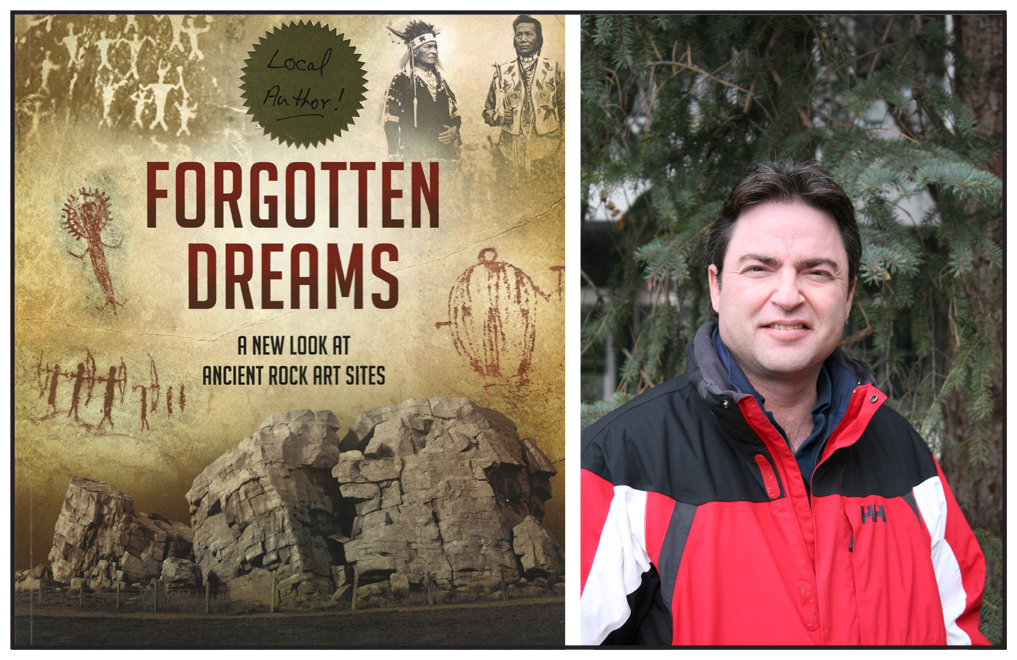
At left is a book cover featuring images of pictographs. At right a man in a red jacket stands in front of a spruce tree.

Image Caption

At left is the book cover of Forgotten Dreams: A New Look at Ancient Rock Art Sites. Photo supplied by author and publisher Brad Himour, seen at right.

Summary

Wednesday, March 5th, 2025 


“I started talking with the Elders about how we could try to preserve these sites without physically altering them at all, because the Elders wanted a non-invasive, non-intrusive approach.”— author Brad Himour
By Shari Narine
Windspeaker.com Books Feature Writer
Local Journalism Initiative

Piikani Nation Elder Harley Bastien calls technology “a double-edged sword,” but he’s quick to say that the DStretch software enhancement program is a positive thing. The program allowed Bastien and other Elders to interpret paintings on rocks in southwestern Alberta and southeastern British Columbia.

Bastien is one of about 30 Elders who collaborated with former Parks Canada archeologist Brad Himour on the book Forgotten Dreams: A New Look at Ancient Rock Art Sites.

Himour took photographs of the rock art and used NASA-developed DStretch technology to enhance even the faded parts of the pictographs. Elders were able to view the photographs and provide interpretations.

Recording events on stone is one of many traditions impacted when Europeans arrived on Indigenous lands, said Bastien. Then with the onset of Indian residential schools, grandparents no longer had the opportunity to pass the oral traditions of such activity and the history down to their grandchildren.

camera crew at rock site
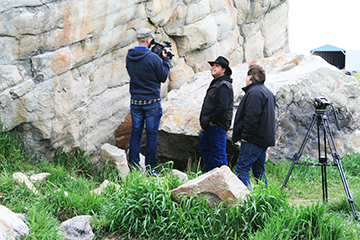
Piikani Nation Elder Harley Bastien (centre) at Big Rock provincial historic site in Okotoks, Alberta.  (Photo: Brad Himour)

“When you are talking about this type of knowledge, traditional old-time knowledge, a lot of it has been lost. But the thing about the Blackfoot, (the knowledge) wasn't totally wiped out. There was fragments of it that was still around,” he said.

For the Piikani, a member of the Blackfoot Confederacy in southern Alberta, one or two people in the tribe were chosen to record events on stone using ochre processed into paint.

“The painters would have to have been people of high stature, who got the right to go out and record these events that took place. That's kind of how they were chosen, how it was done,” said Bastien.

“As far as I know that tradition is gone. At least here in Blackfoot country. I don't know of anyone who does that.”

However, there are still some from the Piikani Nation who make the trek to land that is now privately owned where they collect the traditional powders that formed the red ochre paint.

“They go up there and now say prayers and lay down tobacco. But the old way has died with the Elders,” said Bastien.

Himour began limited work to preserve the rock art in 2008 when he was with Parks Canada.

“I started talking with the Elders about how we could try to preserve these sites without physically altering them at all, because the Elders wanted a non-invasive, non-intrusive approach, that (the sites) would be left in their natural state,” said Himour.

In 2009, he discovered DStretch technology. Now the enhanced photographs can be taken to Elders for their interpretation. Himour points out that many of the pictograph sites are in hard-to-access locations.

Himour took all the photos in Forgotten Dreams on his own time and points out that 90 to 95 per cent of the pictograph sites are not located in national parks or national historic sites or on federal lands. The pictographs highlighted in the book are instead protected by provincial historical resource legislation in Alberta and B.C.

“It really became kind of an area of interest for me,” said Himour. “I've always enjoyed Indigenous storytelling, Indigenous cultural awareness and cultural preservation.”

Himour and Bastien have worked together on and off for two decades. In 2023, they began Eagle and Raven Consulting, bridging the gap between business, industry and Indigenous communities and fostering inclusion of Indigenous knowledge and moving reconciliation forward.

Himour is clear that while the photographs in the book are under his copyright, the Indigenous knowledge shared by the Elders is owned by them and their families.

That’s an important statement, said Bastien, because it also provides “legal protection of that knowledge being expropriated (and) that in turn protects the text of the Elders and their knowledge.”

Bastien was joined by Piikani Elder Morris Little Wolf to interpret the Blackfoot paintings based on “our instincts.” Some paintings were viewed in person, but the majority were viewed through photographs.

“For Blackfoot people, because when a person has some knowledge (and) gets put into a situation like that, it kind of rekindles something inside a person… (It) almost transports you back in some sort of a way and that’s what we’re doing (in interpreting),” he said.

Himour also worked with Secwepemc Elders.

Secwepemc storytelling or myths and legends, as noted by Elders Xavier and Marge Eugene in Forgotten Dreams, included “fairytales, hunting tales, warrior tales, information on our gathering places and often our ‘spirit stories’ gained from a vision quest or ceremony. There is always a story behind a pictograph.”

Forgotten Dreams focuses on 18 pictograph sites. It also explains the methodology of how pictographs were made.

Himour said one of the intentions of Forgotten Dreams is to underscore the diversity in pictographs, “depending on which nation and what their cultural traditions were. They're each very different and unique and distinct from each other.”

He points out that there are “thousands and thousands” of pictograph sites throughout western Canada with more than 800 just on Kootenay Lake and Arrow Lakes and in southeastern B.C.

The Elders he worked with, said Himour, “really wanted to participate in the project, primarily for the educational aspect. They want this knowledge passed on to future generations.”

Bastien said he would love to see Forgotten Dreams in classrooms, both on and off reserve.

Forgotten Dreams: A New Look at Ancient Rock Art Sites was self-published by Himour with 500 copies printed. The book can be purchased on https://forgottendreamspictographs.com/.

There is reduced pricing for books ordered by First Nation communities, tribal councils, and Indigenous and non-Indigenous educational institutes, such as colleges, universities and schools.

Himour said to contact him at forgottendreamspictographs@outlook.com for the reduced price.


U.S. violating international law with talk of making Canada its 51st state, says National Chief


Thursday, March 6th, 2025 

Image

Image Caption

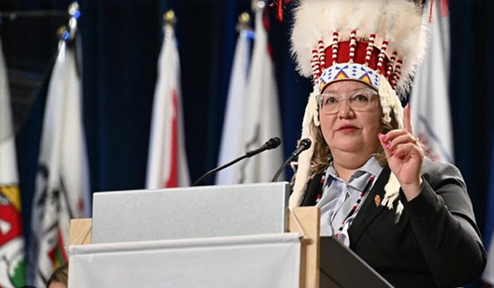
Assembly of First Nations National Chief Cindy Woodhouse Nepinak
Assembly of First Nations National Chief Cindy Woodhouse Nepinak released the following statement demanding action on U.S. tariffs impacting First Nations.

“As National Chief, I stand with First Nations across Turtle Island in strongly condemning the United States government's imposition of tariffs,” said National Chief Cindy Woodhouse Nepinak. “The short-sighted actions of President Trump and statements about forcing Canada to become part of the U.S. through economic coercion are a violation of international law, which protects the right to self-determination of all First Nations. 

“Our lands hold vast deposits of critical minerals, forests and freshwater supplies that sustain communities on both sides of the Medicine Line. That is why we are again calling for First Nations to be included in Team Canada discussions between First Ministers,” added National Chief Woodhouse Nepinak. “Excluding First Nations from these crucial conversations that impact our Treaty rights is no longer acceptable in 2025. It is not Team Canada without Treaty Rights holders at the table.”

“Canada must walk the talk of anti-colonialism by holding up the principle of equality of all peoples and the right to self-determination of First Nations. Ignoring well-established Treaty and Aboriginal rights that have been upheld by Canada’s highest courts is not a winning strategy, particularly as it relates to agreements regarding natural resources, water, and Arctic sovereignty.”

“It is time for First Ministers to unlock their doors and bring the First Peoples of this land into the conversation,” continued National Chief Woodhouse Nepinak. “Let’s show President Trump you can still win by being inclusive, respecting rights, and honouring treaties. We also call on First Ministers to ensure First Nations, our businesses, and tourism operations are supported in any Buy Canada initiative or emergency assistance package being considered in response to this new era of U.S. colonialism.”

“As Canadians cancel hundreds of millions of dollars in travel plans to the U.S., we invite all citizens to reconnect with each other and explore First Nations destinations here at home instead,” concluded National Chief Woodhouse Nepinak. “Not only will this save your family money on the exchange rate and send a message to Trump, but it will also help build our nation through truth and reconciliation. In the coming weeks, we will continue meeting regularly with AFN leadership, Jay Treaty Border Alliance representatives, Canadian officials at the United Nations, federal Ministers, and Native American Tribal leaders in the U.S.”