Wednesday, April 02, 2025


When greedy corporations want a stupid law, they come to Texas
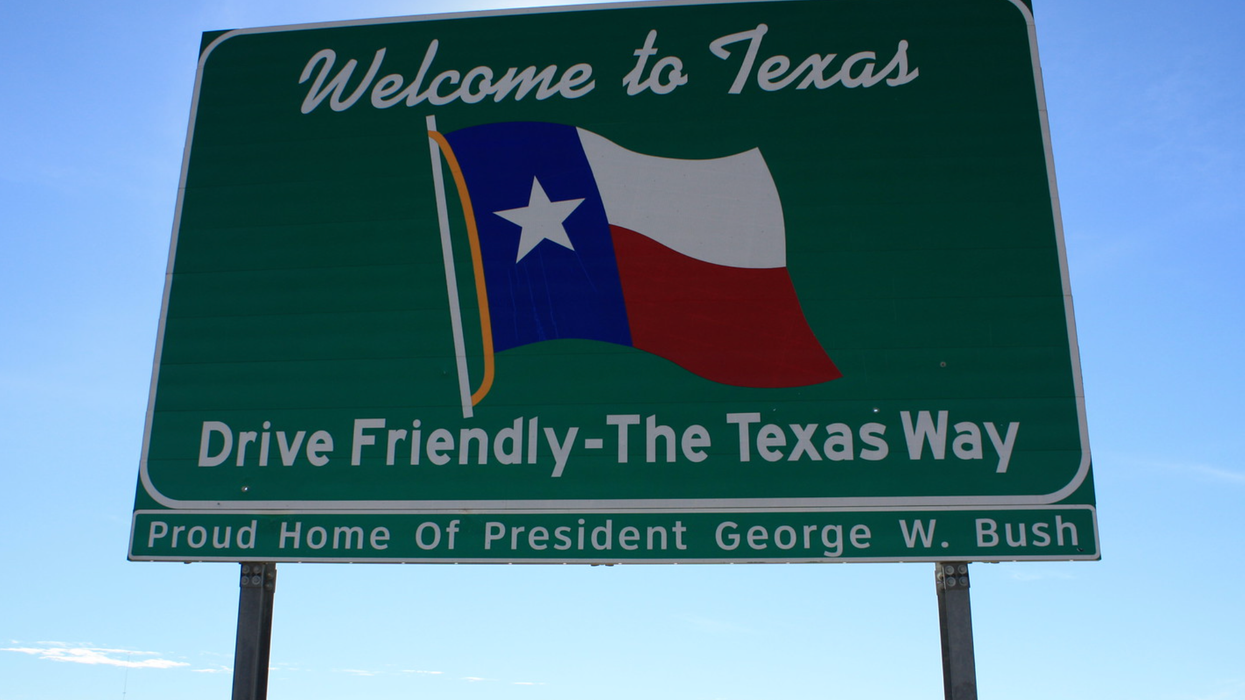

The Welcome To Texas sign, taken from the south (Texas) side of the New Mexico/Texas state line, halfway between Las Cruces (NM) and El Paso (TX).
 (Photo: David Herrera / Creative Commons)
April 01, 2025

Once again, my state's GOP hierarchy is leading the nation in creative ways to increase corporate power over people's rights. This time, lawmakers are rushing to protect corrupt executives from legal challenges by their own shareholders!

Their law would ban rank-and-file owners of corporate giants from suing their CEOs and other top officials for financial malfeasance. In particular, it's a heavy-handed attempt to prohibit shareholders from suing bosses who lavish shareholder funds on extravagant pay and luxury perks for themselves.

But leave it to Lone Star Republicans to make a bad law worse. Indeed, they say they only want to bar suits by "pesky" small investors -- people who own less than 3% of a corporation's stock. But that's a flimflam, since almost no one owns more than 3% of any big corporation. And the few who do are huge Wall Street operators and multibillionaires -- and they're not about to sue a fellow richie for being greedy.

The Texas law would effectively institutionalize a corrupt, closed-loop protection racket, freeing self-serving executives from internal accountability.

Speaking of corruption, who wrote this boondoggle? It's sponsored by Dustin Burrows, the top official of the Texas House, but he doesn't write bills -- he totes bills written by big campaign donors, corporate lobbyists, and right-wing extremists. In this case, he's working for all three.

This is Jim Hightower saying ... Burrows brags that his scam will be a boon for our state because it'll prompt CEOs everywhere to move their corporations here to take advantage of this law. Sure -- corporations are up to no good! Who needs 'em? And if they set a precedent in Texas, I guarantee you they'll be pushing it in your state next.

DO WE HAVE TO LET BRIGHT LIGHTS BLIND US TO STARRY NIGHTS?

Let us embrace the darkness.

Not the political dark ages being pushed on us by today's regressive right-wing forces, but nature's own pure darkness of night. Unfortunately, we Homo sapiens have largely blacked out nature's billions of beacons in the night sky, which have both dazzled and guided Earth's creatures for eons.

Ironically, the tool used to wash out natural light ... is light! In all cities and most towns, the glare of artificial lighting has pulled an impervious curtain across our sky. Especially garish (and entirely useless) is the lighting of corporate skyscrapers throughout the night with blinding spotlights that keep us from seeing the genuinely majestic view beyond.

I was lucky as a child to spend summer evenings on my Aunt Eula's farm, entranced as darkness fell and the celestial show began. But today, most children don't even know it's there. Indeed, 80% of Americans never see the stream of the Milky Way galaxy that is our home -- much less see the spectacular cosmic beams shining from trillions of miles beyond.

This doesn't mean we should just stumble around in the dark. We need light but try a little common sense. One, stop spotlighting buildings. Two, don't point outdoor lighting up at the sky -- shine it down on our streets, parking lots, stadiums, and porches where the illumination is needed. Three, remember that there's an off switch. Even small steps can make a big difference. After all, all we're giving up is bad lighting.

This is Jim Hightower saying ... We can have the light we need and still let nature's sky be the star. The good news is that towns, cities and even countries have begun adopting such sensible lighting policies. To help do this where you live, go to DarkSky International: darksky.org
Trump tariffs threaten Latin American steel industry


By AFP
March 31, 2025


Trabajadores en una fábrica de piezas para motores en Binzhou, China, el 14 de marzo de 2025. - Copyright AFP STR

Mauricio RABUFFETTI

Chile’s largest steel plant shut down last year, yielding to cheaper production in China.

Now, six months later, the tariffs that President Donald Trump has imposed on US imports of the metal threaten the livelihood of 1.4 million workers in Latin America.

As he did during his first term in office from 2017 to 2021, Trump is trying to protect American producers by making steel imports costlier with a 25 percent tariff that kicked in on March 12.

The United States imports 25 million tons of steel each year, and Canada is it main supplier, followed by Brazil and Mexico, each with products tailored to other industries like car manufacturing and construction.

The United States relies on Latin America for specialized steel products, said Ezequiel Tavernelli, head of the Latin American Steel Association, Alacero.

With the world awash steel production overcapacity, and China the main offender, the Trump tariffs will distort the market.

“The only thing they will bring is a flood of steel” that had been headed to the United States and is now rerouted to regions that are less protected and have less ability to defend themselves, like Latin America, said Tavernelli.

To explain the threat he gives these figures: in 2000 China exported less than 100,000 tons of steel a year to Latin America, but today it is more than 14 million tons. The growth is exponential.

Steel production in Latin America has been falling for three years. And the Chinese share of what is consumed is getting bigger and bigger .

And now, due to the Trump tariffs Latin American producers will not only lose market share in the United States but also miss out in some markets of their own region due to Chinese competition.

– When it rains it pours-


The numbers are jarring. China accounts for more than 45 percent of the world’s steel production capacity and produces 140 million tons it does not need.

It dumps this excess cheaply on the international market, says Alacero, which says China produces 23 percent of the world’s excess steel.

“The main problem of our region, and that of the United States, is world steel overcapacity,” Tavernelli told AFP.

And China behaves disloyally, he argued, by selling steel below cost thanks to government subsidies.

In September of last year Chile endured what Tavernelli is talking about. Its Huachipato steelworks, the country’s largest, shut down its blast furnaces for good.

With the smoke that drifted out of its chimneys went nearly 75 years of company history. Chinese steel was 40 percent cheaper and Huachipato simply could not compete.

Alacero argues that regionalization of supply chains — for instance, US steel producers, car makers and construction companies buy Latin American steel — “is the best way to defend against disloyal business by China and countries of Southeast Asia.”

As Brazil’s vice president Geraldo Alckmin, who is also the minister of development and industry, put it, the region’s goal should be to achieve “economic complementarity.”

Brazil and Mexico are negotiating with the United States to try to win exemptions from the US tariffs, and managed to pull this off during Trump’s first term in power.

In the same vein, Mexico’s iron and steel producers association, Canacero, said last month there is a high level of production integration between the US and Mexican steel industries and regional benefits should be the priority in the face of the threat of excess capacity of China and Southeast Asia.

So there is the risk that more long-standing firms like Huachipato will have to shut down, said Tavernelli, who insisted the countries of Latin America have to work together.
In the crosshairs: Trump opens up a new front in the history wars

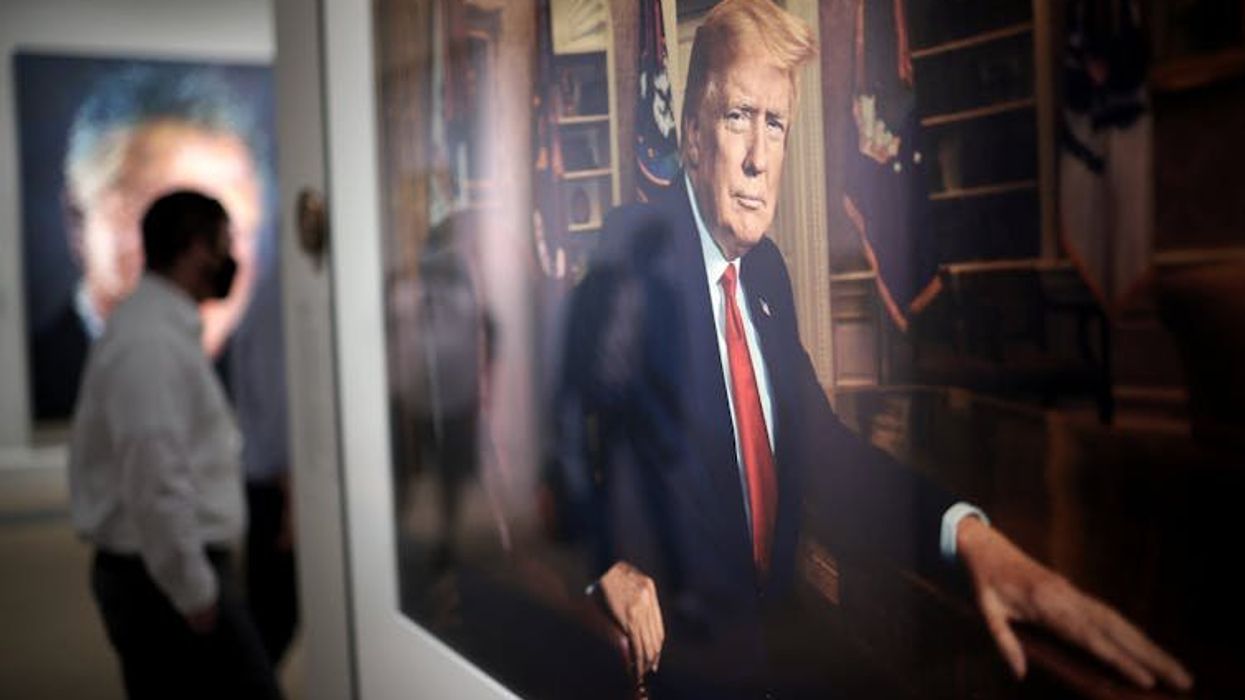
A portrait of President Donald Trump in the ‘America’s Presidents’ exhibition at the Smithsonian Institution’s National Portrait Gallery. Win McNamee/Getty Images

April 02, 2025

I teach history in Connecticut, but I grew up in Oklahoma and Kansas, where my interest in the subject was sparked by visits to local museums.


I fondly remember trips to the Fellow-Reeves Museum in Wichita, Kansas, and the National Cowboy & Western Heritage Museum in Oklahoma City. A 1908 photograph of my great-grandparents picking cotton has been used as a poster by the Oklahoma Historical Society.

This love of learning history continued into my years as a graduate student of history, when I would spend hours at the Smithsonian Institution’s National Air and Space Museum learning about the history of human flight and ballooning. As a professor, I’ve integrated the institution’s exhibits into my history courses.

The Trump administration, however, is not happy with the way the Smithsonian Institution and other U.S. museums are portraying history.

On March 27, 2025, the president issued an executive order, “Restoring Truth and Sanity to American History,” which asserted, “Over the past decade, Americans have witnessed a concerted and widespread effort to rewrite our Nation’s history, replacing objective facts with a distorted narrative driven by ideology rather than truth. Under this historical revision, our Nation’s unparalleled legacy of advancing liberty, individual rights, and human happiness is reconstructed as inherently racist, sexist, oppressive, or otherwise irredeemably flawed.”

Trump singled out a few museums, including the Smithsonian, dedicating a whole section of the order on “saving” the institution from “divisive, race-centered ideology.”

Of course, history is contested. There will always be a variety of views about what should be included and excluded from America’s story. For example, in my own research, I found that Prohibition-era school boards in the 1920s argued over whether it was appropriate for history textbooks to include pictures of soldiers drinking to illustrate the 1791 Whiskey Rebellion.

But most recent debates center on how much attention should be given to the history of the nation’s accomplishments over its darker chapters. The Smithsonian, as a national institution that receives most of its funds from the federal government, has sometimes found itself in the crosshairs.
America’s historical repository

The Smithsonian Institution was founded in 1846 thanks to its namesake, British chemist James Smithson.

Smithson willed his estate to his nephew and stated that if his nephew died without an heir, the money – roughly US$15 million in today’s dollars – would be donated to the U.S. to found “an establishment for the increase and diffusion of knowledge.”

The idea of a national institution dedicated to history, science and learning was contentious from the start

.
An 1816 portrait of British chemist James Smithson.
Heritage Art/Heritage Images via Getty Images


In her book “The Stranger and the Statesman,” historian Nina Burleigh shows how Smithson’s bequest was nearly lost due to battles between competing interests.

Southern plantation owners and western frontiersmen, including President Andrew Jackson, saw the establishment of a national museum as an unnecessary assertion of federal power. They also challenged the very idea of accepting a gift from a non-American and thought that it was beneath the dignity of the government to confer immortality on someone simply because of a large donation.

In the end, a group led by congressman and former president John Quincy Adams ensured Smithson’s vision was realized. Adams felt that the country was failing to live up to its early promise. He thought a national museum was an important way to burnish the ideals of the young republic and educate the public.

Today the Smithsonian runs 14 education and research centers, the National Zoo and 21 museums, including the National Portrait Gallery and the National Museum of African American History and Culture, which was created with bipartisan support during President George W. Bush’s administration.

In the introduction to his book “Smithsonian’s History of America in 101 Objects,” cultural anthropologist Richard Kurin talks about how the institution has also supported hundreds of small and large institutions outside of the nation’s capital.

In 2024, the Smithsonian sent over 2 million artifacts on loan to museums in 52 U.S. states and territories and 33 foreign countries. It also partners with over 200 affiliate museums. YouGov has periodically tracked Americans’ approval of the Smithsonian, which has held steady at roughly 68% approval and 2% disapproval since 2020.
Smithsonian in the crosshairs

Precursors to the Trump administration’s efforts to reshape the Smithsonian took place in the 1990s.

In 1991, the Smithsonian American Art Museum, which was then known as the National Museum of American Art, created an exhibition titled “The West as America, Reinterpreting Images of the Frontier, 1820-1920.” Conservatives complained that the museum portrayed western expansion as a tale of conquest and destruction, rather than one of progress and nation-building. The Wall Street Journal editorialized that the exhibit represented “an entirely hostile ideological assault on the nation’s founding and history.”

The exhibition proved popular: Attendance to the National Museum of American Art was 60% higher than it had been during the same period the year prior. But the debate raised questions about whether public museums were able to express ideas that are critical of the U.S. without risk of censorship.

In 1994, controversy again erupted, this time at the National Air and Space Museum over a forthcoming exhibition centered on the Enola Gay, the plane that dropped the first atomic bomb on Hiroshima 50 years prior.

Should the exhibition explore the loss of Japanese lives? Or emphasize the U.S. war victory?

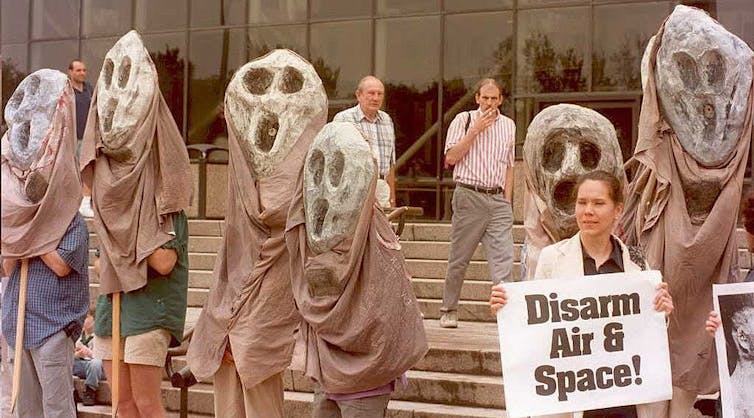
Veterans groups insisted that the atomic bomb ended the war and saved 1 million American lives, and demanded the removal of photographs of the destruction and a melted Japanese school lunch box from the exhibit. Meanwhile, other activists protested the exhibition by arguing that a symbol of human destruction shouldn’t be commemorated at an institution that’s supposed to celebrate human achievement.


Protesters demonstrate against the opening of the Enola Gay exhibit outside the Smithsonian Institution’s National Air and Space Museum in 1995.
Joyce Naltchayan/AFP via Getty Images

Republicans won the House in 1994 and threatened cuts to the Smithsonian’s budget over the Enola Gay exhibition, compelling curators to walk a tightrope. In the end, the fuselage of the Enola Gay was displayed in the Smithsonian’s National Air and Space Museum. But the exhibit would not tell the full story of the plane’s role in the war from a myriad of perspectives.


Trump enters the fray

In 2019, The New York Times launched the 1619 project, which aimed to reframe the country’s history by placing slavery and its consequences at its very center. The first Trump administration quickly responded by forming its 1776 commission. In January 2021, it produced a report critiquing the 1619 project, claiming that an emphasis on the country’s history of racism and slavery was counterproductive to promoting “patriotic education.”

That same year, Trump pledged to build “a vast outdoor park that will feature the statues of the greatest Americans to ever live,” with 250 statues to mark the 250th anniversary of the Declaration of Independence.

President Joe Biden rescinded the order in 2021. Trump reissued it after retaking the White House, and pointed to figures he’d like to see included, such as Christopher Columbus, George Washington, Betsy Ross, Sitting Bull, Bob Hope, Thurgood Marshall and Whitney Houston.

I don’t think there is anything wrong with honoring Americans, though I think a focus on celebrities and major figures clouds the fascinating histories of ordinary Americans. I also find it troubling that there seems to be such a concerted effort to so forcefully shape the teaching and understanding of history via threats and bullying. Yale historian Jason Stanley has written about how aspiring authoritarian governments seek to control historical narratives and discourage an exploration of the complexities of the past.

Historical scholarship requires an openness to debate and a willingness to embrace new findings and perspectives. It also involves the humility to accept that no one – least of all the government – has a monopoly on the truth.

In his executive order, Trump noted that “Museums in our Nation’s capital should be places where individuals go to learn.” I share that view. Doing so, however, means not dismantling history, but instead complicating the story – in all its messy glory.

The Conversation U.S. receives funding from the Smithsonian Institution.

Jennifer Tucker, Professor of History, Wesleyan University

This article is republished from The Conversation under a Creative Commons license. Read the original article.
Christian Zionism hasn’t always been a conservative evangelical creed


Participants in a ‘United for Israel’ march, led by The Pursuit NW Christian Church, stand on the University of Washington’s campus in May 2024. 
Jason Redmond/AFP via Getty Images

April 02, 2025

During confirmation hearings, Mike Huckabee, President Donald Trump’s nominee as ambassador to Israel, told senators that he would “respect and represent the President,” not his own views. But the Baptist minister’s views on the Middle East – and their religious roots – came through.

“The spiritual connections between your church, mine, many churches in America, Jewish congregations, to the state of Israel is because we ultimately are people of the book,” he said on March 25, 2025, in response to a question from a senator. “We believe the Bible, and therefore that connection is not geopolitical. It is also spiritual.”

Huckabee is one of the GOP’s most prominentChristian Zionists” – a phrase often associated with conservative evangelicals’ support for Israel.

But Christian Zionism is much older than the 1980s alliance between the Republican Party and the religious right. American Christian attitudes toward the idea of a Jewish state have been evolving and changing dramatically since long before Israel’s creation.
Theologians for Israel

Zionism’s modern form emerged in the late 19th century. Its declared aim was to create a Jewish homeland in the region of Palestine, then under control of the Ottoman Empire. This was the land from which Jews were exiled in antiquity.

The “founding father” of the modern movement was Theodore Herzl, an Austro-Hungarian Jewish intellectual and activist who convened the first Zionist Congress in Switzerland in 1897. While most of the 200 attendees were Jews from various parts of the world, there were also prominent Protestant Christian leaders in attendance: church leaders and philanthropists who supported “the restoration of the Jews to their land.” Herzl dubbed these allies “Christian Zionists.”
Most delegates at the first Zionist Congress were Jewish, but the gathering also included Christians.
Universal History Archive/Universal Images Group via Getty Images

Catholic leaders, however, were not among the supporters of a Jewish state. The prospect of a Jewish state in the Christian Holy Land challenged the church’s view of Judaism as a religion whose people were condemned to permanent exile as punishment for rejecting Christ.

Eventually, in the wake of the Holocaust and the establishment of Israel, attitudes shifted. In 1965, reforms at the Vatican II council signaled a radical change for the better in Catholic-Jewish relations.

But it would be three decades until that change was reflected in the Vatican’s diplomatic recognition of the Jewish state.

In contrast, Protestants were more open to Jews’ aspiration to return. In 1917, the British foreign secretary published the Balfour Declaration, announcing government support for “the establishment in Palestine of a national home for the Jewish people.” With the British victory over the Ottoman Empire, the area soon fell under British control in the form of the League of Nations’ Mandate for Palestine.

In the U.S., the idea elicited enthusiasm among conservative Christians who hoped that the Jews’ return to Israel would help hasten the end times, when they believed Christ would return. Within a few years, Congress endorsed the Balfour Declaration.

Pastor W. Fuller Gooch summed up the evangelical reaction to the Balfour Declaration: “Palestine is for the Jews. The most striking ‘Sign of the Times’ is the proposal to give Palestine to the Jews once more. They have long desired the land, though as yet unrepentant of the terrible crime which led to their expulsion.” This “terrible crime” refers to Jews’ rejection of Jesus – one of multiple anti-Jewish tropes in the sermon.
Pivotal moment

Two decades later, prominent American theologian Reinhold Niebuhr declared himself a supporter of political Zionism. Unlike evangelicals, Niebuhr’s support for a Jewish state was based on pragmatic grounds: Considering the dangerous situation in 1930s Europe, he argued, Jews needed a state in order to be safe


.
A 1963 photo of Reinhold Niebuhr, one of the most influential theologians from the U.S.
AP Photo

In the early 1940s, Niebuhr wrote a series of articles titled “Jews After the War” for The Nation magazine. His biographer Richard W. Fox called these articles “an eloquent statement of the Zionist case: The Jews had rights not just as individuals, but as a people, and they deserved not just a homeland, but a homeland in Palestine.”

Thus, in the 1930s and ‘40s, two different types of American Christian Zionism emerged. Some liberal Protestants, while giving qualified support to Zionism, expressed concern for the fate of the Palestinian Arabs. Conservative evangelicals, on the other hand, tended to be more hostile to Arab political aspirations.

In 1947, on the eve of the United Nations’ vote on the partition of Palestine, Niebuhr and six other prominent American intellectuals wrote a long letter to The New York Times, arguing that a Jewish state in the Middle East would serve American interests. “Politically, we would like to see the lands of the Middle East practice democracy as we do here,” they wrote. “Thus far there is only one vanguard of progress and modernization in the Middle East, and that is Jewish Palestine.”

In 1948, the U.S. government, at President Harry Truman’s direction, granted the newly declared state of Israel diplomatic recognition, over the objections of State Department officials.

There were, of course, prominent Americans who objected to recognizing Israel, or to embracing it so strongly. Among them was journalist Dorothy Thompson, who had turned against the Zionist cause after a Jewish militant group bombed Jerusalem’s King David Hotel in 1946. These opponents made the case for supporting emerging Arab nationalism and Palestinian autonomy and asserted that recognizing Israel would deepen America’s entanglement in the unfolding Middle Eastern conflicts.

But by the late 1950s and ‘60s, American criticism of Israel was increasingly muted. Liberal Christians, in particular, viewed it as a beleaguered democratic state and ally.
Rightward shift

Conservative Christian Zionists, meanwhile, continued to often view “love of Israel” through a biblical lens.

In the late '60s, the American journal Christianity Today published an article by editor Nelson Bell, father-in-law of famous evangelist Billy Graham. Jewish control of Jerusalem inspires “renewed faith in the accuracy and validity of the Bible,” Bell wrote.


Rev. Jerry Falwell, on the right, listens as Israeli Prime Minister Benjamin Netanyahu gives a speech to a conservative Christian group in Washington in 1998.William Philpott/AFP via Getty Images

Fifteen years later, televangelist Jerry Falwell told an interviewer that Jewish people have both a theological and historical “right to the land.” He added, “I am personally a Zionist, having gained that perspective from my belief in Old Testament scriptures.”

These Christians, like some Jewish religious Zionists, saw “the hand of God” in Israel’s conquest of East Jerusalem during the Six-Day War of 1967. They considered any territorial compromise with Arab states and the Palestinians to be an act against God.

During the 1980s, as the Republican Party forged alliances with the emerging religious right, Israel would become a core cause for the GOP. Some liberal Jews who supported Israel grew alarmed by these ties and by the rightward shift in Israeli policies toward the Palestinians.

Yet this brand of Christian Zionism is clearly the forerunner to today’s – and holds sway in Washington. Today, 83% of Republicans view Israel favorably, compared with 33% of Democrats. Republicans in Congress are pushing to use the biblical terms “Judea and Samaria” instead of “the West Bank.” Evangelical Christian Zionists continue to call for support of the Israeli right and of settlers in the occupied territories.

And in Huckabee, they see a potential ambassador who shares their views.

In 2009, when Huckabee was considering a presidential campaign, he visited Israel and met with settler leaders. On hearing of Huckabee’s presidential aspirations, a rabbi said, “We hope that under Mike Huckabee’s presidency, he will be like Cyrus and push us to rebuild the Temple and bring the final redemption.” The rabbi was referring to the biblical story of Cyrus, King of Persia, and his proclamation that the exiled Jews be allowed to return to Zion.

Seven decades after the state of Israel’s founding, evangelical Christian Zionism’s influence is greater than ever. This turn to the political right is very far from the mid-20th century Zionism of Truman, Niebuhr and the Democratic Party.

Shalom Goldman, Professor of Religion, Middlebury

This article is republished from The Conversation under a Creative Commons license. Read the original article.

'Downright scary': How Trump is destroying institutions that 'spur US innovation'


Alex Henderson 
April 02, 2025
ALTERNET


Under Mao Tse Tung, the People's Republic of China was a communist dictatorship. And it is still a one-party authoritarian state ruled by the Chinese Communist Party. But post-Mao China replaced old-school Maoism with more of a crony capitalist system long ago, and a great deal of U.S. manufacturing takes place in Mainland China.

In his April 2 column, conservative-leaning New York Times opinion writer Thomas Friedman warns that China is making a point of turning out high-skilled, high-tech workers at a time when the U.S. is discouraging scientific "innovation."


Friedman, who recently visited Shanghai, argues, "It's downright scary to watch this close up. President Trump is focused on what teams American transgender athletes can race on, and China is focused on transforming its factories with AI so it can outrace all our factories. Trump's 'Liberation Day' strategy is to double down on tariffs while gutting our national scientific institutions and work force that spur U.S. innovation. China's liberation strategy is to open more research campuses and double down on AI-driven innovation to be permanently liberated from Trump's tariffs."

Friedman adds, "Beijing's message to America: We're not afraid of you. You aren't who you think you are — and we aren't who you think we are."

The Times columnist laments that Trump's steep new tariffs will do nothing to help U.S. businesses.

"I agreed with Trump regarding his tariffs on China in his first term," Friedman explains. "China was keeping out certain U.S. products and services, and we needed to treat Beijing's tariffs reciprocally. For instance, China dragged its feet for years on letting U.S. credit cards be used in China, waiting until its own payment platforms completely dominated the market and made it a cashless society, where virtually everyone pays for everything with mobile payment apps on their phones…. My problem is with Trump's magical thinking that you just put up walls of protection around an industry, or our whole economy, and — presto! — in short order, U.S. factories will blossom and make those products in America at the same cost with no burden for U.S. consumers."


Friedman adds, "For starters, that view completely misses the fact that virtually every complex product today — from cars to iPhones to mRNA vaccines — is manufactured by giant, complex, global manufacturing ecosystems."

Thomas Friedman's full New York Times column is available at this link (subscription required).
Elon Musk 'being driven visibly insane' by anti-Tesla protests: analysis

AFRIKANER SUPREMACIST


Brad Reed
April 2, 2025
RAW STORY


Tesla CEO Elon Musk has publicly raged in recent weeks about the protests being lodged against his flagship electric car company, and Mother Jones writer Timothy Murphy believes that the demonstrations have been successful beyond their organizers' wildest dreams.

Murphy in particular points to a recent rant from Musk demanding that billionaires whom he baselessly suspects of funding the protests to be arrested.

"This is a bit authoritarian, yes, but just as importantly it is pathetic," Murphy contends. "Suggesting that George Soros and the founder of LinkedIn should be arrested after an old lady shouted at a car is one of the softest moments in recent American history. This is not the gesture of a man who is impervious to protests. It is the response of an oligarch who is being driven visibly insane by them."

ALSO READ: Trump says Elon Musk will be out of the White House 'soon': report

He also thinks that Democrats need to start using Musk's angry ravings about the protests against him.

"Musk’s spiraling is an asset," he writes. "He is both deeply unpopular and out of control; his response to opposition is to descend deeper into the paranoia that got him there."

For evidence of this, Murphy points to the way that Musk injected himself directly into the Wisconsin state Supreme Court race by holding rallies in the state where he handed out $1 million checks in a scheme that many legal experts say likely breaks the state's laws against paying people in exchange for votes.

"Musk made the election a referendum on himself, turnout surged, and the Democrat won in a landslide," he argues.

All of this leads Murphy to conclude that Musk "cannot take the heat" and recommends that his opponents wage psychological war against him.

"He has not just the taste and sensibilities of a boy, but the temperament of one," he writes. "He throws a fit out when things don’t go his way. He wilts. This is someone who can be beat."


'International backlash': Elon Musk’s 'toxic' politics blamed as Tesla suffers worst sales decline ever
April 02, 2025
ALTERNET

Billionaire Tesla/SpaceX/X.com leader Elon Musk is the richest man in the world and a prominent figure in U.S. politics. President Donald Trump chose Musk to head an advisory group called the Department of Government Efficiency (DOGE), which is helping the Trump Administration orchestrate mass layoffs of federal government workers.

But Musk is being reminded that his policies are not universally loved. Musk poured over $20 million into a Wisconsin Supreme Court race, yet the conservative candidate he backed, Judge Brad Schimel, lost to his liberal opponent, Judge Susan Crawford, by roughly 10 percent in an election held on Tuesday, April 1. Anti-Musk protests are taking place in both the U.S. and Europe, and according to CNN, Tesla is suffering its worst sales decline ever.

In an article published on Wednesday, April 2, CNN's Chris Isidore reports, "Tesla sales plunged 13 percent in the first three months of this year, as the company reported the largest drop in deliveries in its history by far, amid backlash against CEO Elon Musk and as growing competition from other automakers' electric vehicles took a large bite out of demand for its EVs. Tesla reported that it delivered 336,681 cars in the quarter, compared to 386,810 in the first three months of last year. The Wednesday data represented the company's worst sales in nearly three years — a drop of 50,000 vehicles from a year ago."

Tesla's declining sales are a major topic on the Musk-owned X.com, formerly Twitter.

Some MAGA Republicans on X are claiming that Tesla's declining sales are no big deal, but other X users see Tesla's problems as the result of an anti-MAGA backlash.

The MeidasTouch Network tweeted, "TESLA SALES IN COLLAPSE Tesla suffered its biggest sales decline in the company's history as sales fell 13% in the first quarter amid massive backlash against Elon Musk. Tesla reported that it delivered 50,000 fewer cars from a year ago, and fell 72,000 cars short of analyst expectations — despite providing incentives such as massive price cuts and zero financing."

Writer Greg Cantwell argued, "Imagine what would have happened to Apple if Steve Jobs decided to spend his days firing middle class workers and pulling social security and Medicare from elderly folks. When your CEO is the avatar of your brand, and the CEO becomes a toxic a------, the brand suffers."

Bloomberg TV observed, "Tesla sales fell 13% in the first quarter, dragged down by international backlash against Elon Musk."

Author Holger Zschaepit wrote, "OUCH! #Tesla sales drop to lowest level since 2022 amid growing anti-Musk backlash. In Q1 2025, the company sold 336,681 vehicles, a 13% decline YoY and the lowest quarterly total since Q2 2022. That figure also came in well below analyst expectations for over 390,000 units sold. (BBG)."

Market strategist Bladimir Ruiz posted, "Tesla’s Q1 2025 slowdown is more than just a number — it's a turning point. Deliveries dropped to 2022 levels, far below expectations, amid rising Musk backlash. Is Tesla's competitive edge fading? The next strategic moves will be critical."

X user Frederick Barwell posted, "Oh dear what a shame (for) Elon to suffer and lose for being an evil selfish liar."

Another X user, Marcos Monzon, tweeted, "Elon is going to lose @Tesla just like he lost Wisconsin."


'Explain that to the American people': Fox host confronts Musk over DOGE conflicts of interest


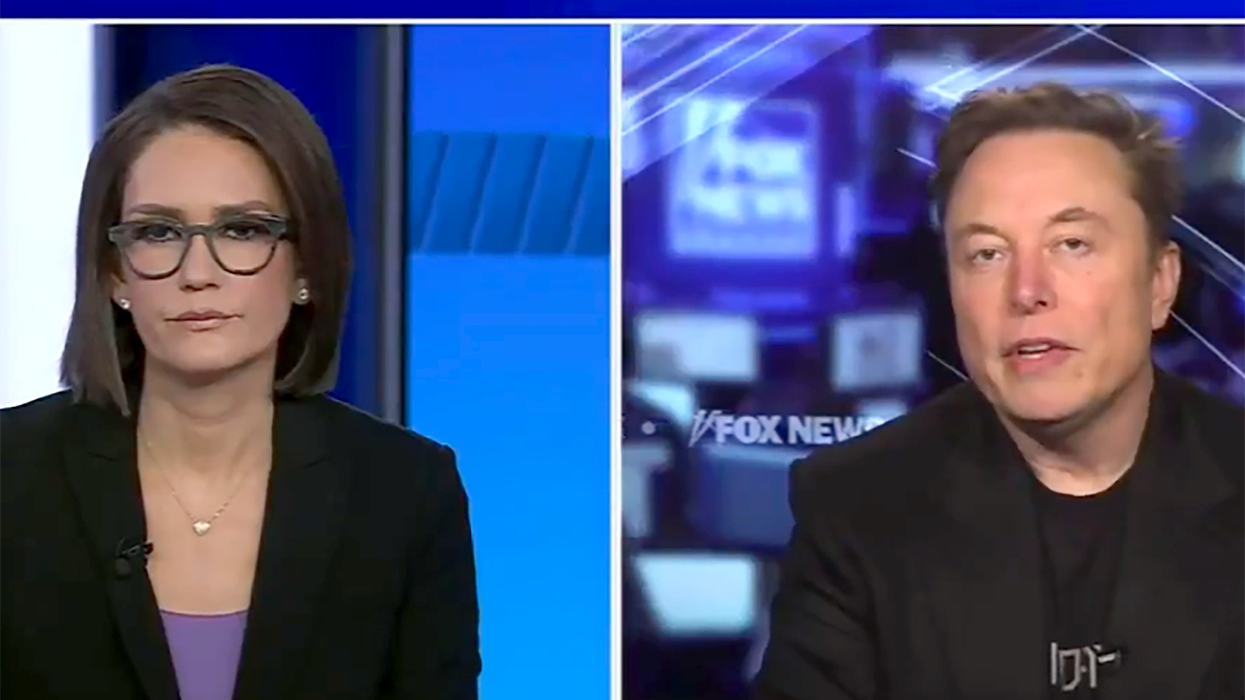
Image via Screengrab.

Ailia Zehra
April 02, 2025
ALTERNET


Tech billionaire and Department of Government Efficiency (DOGE) head Elon Musk dodged a question Tuesday about his conflicts of interests as a White House advisor who continues to run his businesses while working the federal government.

“You’ve been making cuts to a lot of the agencies that have open investigations and regulatory battles with your companies. At the same time, you continue to get billions in government contracts. Tesla gets billions in subsidies. How do you explain that to the American people?” Fox News host Jessica Tarlov asked Musk on her show.

Musk did not directly address the questions, but said DOGE was an “open book.”

READ MORE: 'Warning to the GOP': WSJ sounds alarm over 'MAGA backlash'

“If anyone has a concern about any one of those actions, they can bring that up,” he said.

Still, the DOGE head didn’t seem to have a clear answer to her question.

Amid the Trump administration and DOGE’s efforts to cut the size of the federal government, employees have been terminated from multiple agencies, including the National Labor Relations Board (NLRB), Environmental Protection Agency, Federal Aviation Authority, Securities and Exchange Commission, Food and Drug Administration and U.S. Department of Transportation.

The NLRB has initiated several cases against Musk's businesses, including a claim that SpaceX unlawfully terminated eight workers in 2022 for an open letter their lawyers stated was a protest against Musk's "inappropriate, disparaging, sexually charged comments" on Twitter. These cases are still in progress, and the agency has recorded 14 active unfair labor practice cases against Tesla.

But in February, the NLRB was essentially shut down after President Donald Trump fired one of its board members and left it without the quorum it needs to function.

Since Trump’s inauguration in January, Musk has been wielded significant influence in the new administration.

In January, Trump dismissed the inspector general of the Transportation Department shortly after the National Highway Traffic Safety Administration began investigating accidents associated with a mobile app that allows Tesla drivers to control their cars remotely. Musk is the CEO of Tesla.

Moreover, Michael Whitaker, the FAA administrator, resigned on Inauguration Day after Musk sought his departure. Whitaker had suggested imposing a $600,000 fine on Musk’s aerospace company SpaceX for allegedly failing to adhere to safety regulations.


However, on Monday, Trump indicated the billionaire’s time in government might be coming to a close.

Trump said Musk should remain at the White House as long as he is willing to manage DOGE, but added that he wants to “go back.”

"I think he's been amazing, but I also think he's got a big company to run," Trump told reporters in the Oval Office. "And at some point, he's going to be going back. He wants to."

Watch the video below or at this link.


'Not gonna happen!' Analysis exposes 'idiotic' fallacy of Trump’s tariff tax scheme


Donald Trump in Reading, Pennsylvania on October 09, 2024 
(Chip Somodevilla/Shutterstock.com)
April 02, 2025
ALTERNET
President Donald Trump is acknowledging that his steep new tariffs will bring some economic pain in the United States, but he insists that short-term discomfort will be followed by a period of major prosperity and a renaissance in U.S. manufacturing.

Trump is also claiming that money from tariffs will replace any federal revenue lost because of tax cuts for the United States' wealthiest Americans. And he is describing Wednesday, April 2 — the day his new tariffs are scheduled to take effect — as "Liberation Day."

But The New Republic's Timonthy Noah, in a biting article published on April 2, lays out some major flaws in Trump's arguments on tariffs and taxes.

READ MORE: Chances of a recession hiked to 35 percent as Trump's 'Liberation Day' tariffs loom

"I'm starting to believe April 2 really will be Liberation Day," Noah argues. "But instead of liberating us from foreign imports, it will liberate us from any lingering illusion that Trump's tariffs are about anything more than eliminating the progressive income tax."

The math in Trump's claims, according to Noah, doesn't add up.

"News accounts about President Donald Trump's tariffs routinely mention that raising revenue is one of Trump's stated goals," Noah explains. "But they hurry quickly past this because it's totally idiotic to think tariffs could ever replace the income tax, even partially, as a meaningful source of federal revenue. And they’re right: This idea is really, really stupid!"

Noah adds, "Where the press goes wrong is in not plumbing the depths of Trump's commitment to this stupid idea. How stupid? Well, the Internal Revenue Service last year collected $2.96 trillion from income taxes on individual and corporate income, and the United States imported $3.3 trillion in foreign goods. You'll note these numbers are pretty close. To replace all income-tax revenue, you'd have to impose a tariff of nearly 100 percent on all foreign imports. Not gonna happen!"

Timothy Noah's full article for The New Republic is available at this link.


'A large revenue heist': WSJ bashes Trump’s 'ideological fixation on tariffs'


Donald Trump speaks at Turning Point USA's AmericaFest in Phoenix, Arizona, U.S., December 22, 2024. REUTERS/Cheney Orr/File Photo

April 01, 2025
 ALTERNET

Calling out the Trump administration over its attempts to present the planned tariff increase as “tax cuts,” the Wall Street Journal termed these tariffs “a large revenue heist.”

“In the real economic world, a tariff is a tax,” the newspaper wrote in its Tuesday editorial.

The editorial was a response to President Donald Trump’s chief trade adviser Peter Navarro who on Sunday told Fox News tariffs will raise about $600 billion a year and “about $6 trillion over a 10-year period” but that this is a tax cut.

Navarro called Trump's tariffs proposal "the biggest tax cut in American history for the middle class, for the blue collar.”

In a sharp rebuke to Navarro’s claims, the WSJ noted the $600 billion figure “would be one of the largest in U.S. history.”

“By any definition that is a tax increase,” the newspaper said.

“The President’s ideological fixation on tariffs is crowding out rational judgments about the consequences. Americans are being told to accept the pain of higher prices, a slower economy, and shrinking 401(k) balances in the name of Mr. Trump’s project to transform the American economy into what he imagines it was like in the McKinley era of the 1890s,” it added.

The president is set to introduce a series of tariffs on Wednesday on imports that he claims will free the United States from dependence on foreign products, frequently referring to April 2 as "Liberation Day.” But there are still many uncertainties regarding the implementation of Trump’s tariffs.

Trump indicated these tariffs will be "reciprocal," meaning they will match the duties imposed by other countries on American goods.


On Monday, White House press secretary Karoline Leavitt said Trump is expected to reveal his plans for reciprocal tariffs affecting nearly all U.S. trading partners on Wednesday. The specifics, however, will be determined by the president himself, per Leavitt.

Trump is radically altering the long-established rules of global trade. The "reciprocal" tariffs he is anticipated to announce on Wednesday could disrupt international businesses and create tension with both America's allies and rivals.

Since the 1960s, tariffs, or import taxes, have been a result of negotiations among numerous nations. Trump is aiming to take control of this process.

Trump argues that unfair competition from abroad has harmed American manufacturers and ravaged factory towns in the Midwest. In his first term, he imposed tariffs on foreign steel, aluminum, washing machines, solar panels and nearly all imports from China.

But critics say such tariffs hurt the American economy instead of helping it.


‘Tariff man’: Trump’s long history with trade wars


By AFP
March 31, 2025


Donald Trump has insisted on the benefits of tariffs for decades - Copyright AFP ROBERTO SCHMIDT

Donald Trump loves few things more than talking about his affinity for tariffs, but it’s nothing new: he’s been saying the same thing for decades.

“To me, the most beautiful word in the dictionary is ‘tariff,'” Trump repeatedly said on the campaign trail for the 2024 election.

He has since joked that it is now his fourth favorite word, after love, God and family — but his commitment to them remains as strong as ever.

The 78-year-old Republican has promised a “Liberation Day” for America on Wednesday when he announces sweeping “reciprocal” tariffs targeting any country that has import levies against US goods.

The sudden trade war has sent leading world economies scrambling — yet anyone surprised by the onslaught has not been listening to Trump himself.

Other policies have come and gone, especially on hot-button issues such as abortion, but Trump’s belief that America is being ripped off by the world has remained one of his core values.

So has his innate conviction that tariffs are the solution, despite arguments by opponents and many economists that US consumers will suffer when importers pass on increased prices.


– ‘Ripping off’ –


“I am a Tariff Man,” Trump declared in a social media post back in 2018 during his first presidential term.

In fact, Trump has been saying as much since the 1980s.

His main target then was Japan, as Trump — best known in those days as a brash property dealer and tabloid fixture — discussed getting into politics in an interview with CNN’s Larry King.

“A lot of people are tired of watching other countries ripping off the United States,” Trump said in 1987, using rhetoric that has changed little in the intervening 38 years.

“Behind our backs, they laugh at us because of our own stupidity.”

In a separate interview with chat show host Oprah Winfrey, he raged: “We let Japan come in and dump everything right into our markets.”

By the 1990s and early 2000s, China entered his crosshairs, and Beijing remains one of his top tariff targets, along with Canada, Mexico and the European Union.

In his successful 2016 election campaign, Trump stepped up the rhetoric, saying: “We can’t continue to allow China to rape our country.”


– ‘Very rich’ –


During his second term, Trump has also started citing a historical precedent going back more than a century — President William McKinley.

McKinley’s passion for both territorial expansion and economic protectionism during his time in office from 1897 to 1901 could have been the model for Trump’s “Make America Great Again” policies.

“President McKinley made our country very rich through tariffs and through talent — he was a natural businessman,” Trump said in his inauguration speech in January.

Trump’s promises of a “Golden Age” harkens back to the so-called “Gilded Age” that culminated with McKinley’s presidency, a time when America’s population and economy exploded — along with the power of oligarchs.

In addition to deploying tariffs, McKinley presided over a period of territorial adventurism for the United States, including the Spanish-American war and the purchases of Guam, Puerto Rico and the Philippines.

Such moves echo Trump’s own designs for Greenland, Panama and Canada.

The two also share the unwanted similarity of being struck by an assassin’s bullet — although Trump survived the attempt on his life at an election rally last July, while McKinley was killed by an anarchist in 1901.
Tariff-battered U.S. farmers are getting exactly what they deserve: ex-GOP insider

DAVID FRUM EX-PAT CANADIAN

April 2, 2025
RAW STORY


Farmer walking in corn field. (Photo credit: Zoran Zeremski / Shutterstock)

David Frum, a former speechwriter for President George W. Bush, believes that American farmers are getting exactly what they deserve if they find themselves getting hurt by President Donald Trump's trade wars

Writing in The Atlantic, Frum breaks down all the ways that Trump's tariffs will hurt American farmers, who overwhelmingly voted for him in the 2024 election.

"Farm costs will rise," Frum explains. "Farm incomes will drop. Under Trump’s tariffs, farmers will pay more for fertilizer. They will pay more for farm equipment. They will pay more for the fuel to ship their products to market. When foreign countries retaliate, raising their own tariff barriers, American farmers will lose export markets. Their domestic sales will come under pressure too, because tariffs will shrink Americans’ disposable incomes: Consumers will have to cut back everywhere, including at the grocery store."

ALSO READ: 'Honestly shocked': Wisconsin Republicans reel as voters reject Elon Musk

Despite the hardships that farmers will endure, Frum argues that they are not deserving of sympathy or financial relief, especially given that "farmers can better afford to pay the price of Trump’s tariffs than many other tariff victims," as they "can already obtain federal insurance against depressed prices for their products."

Additionally, Frum writes that everyone is going to suffer from Trump's tariffs and farmers shouldn't get more special exemptions.

"If a farm family voted for Trump, believing that his policies were good, it seems strange that they would then demand that they, and only they, should be spared the full consequences of those policies," he writes. "Tariffs are the dish that rural America ordered for everyone. Now the dish has arrived at the table. For some reason, they do not want to partake themselves or pay their share of the bill. That’s not how it should work. What you serve to others you should eat yourself. And if rural America cannot choke down its portion, why must other Americans stomach theirs?"
'Just plain dumb': Trump ridiculed after latest anti-Canada rant

David Badash,
 The New Civil Rights Movement
April 2, 2025 

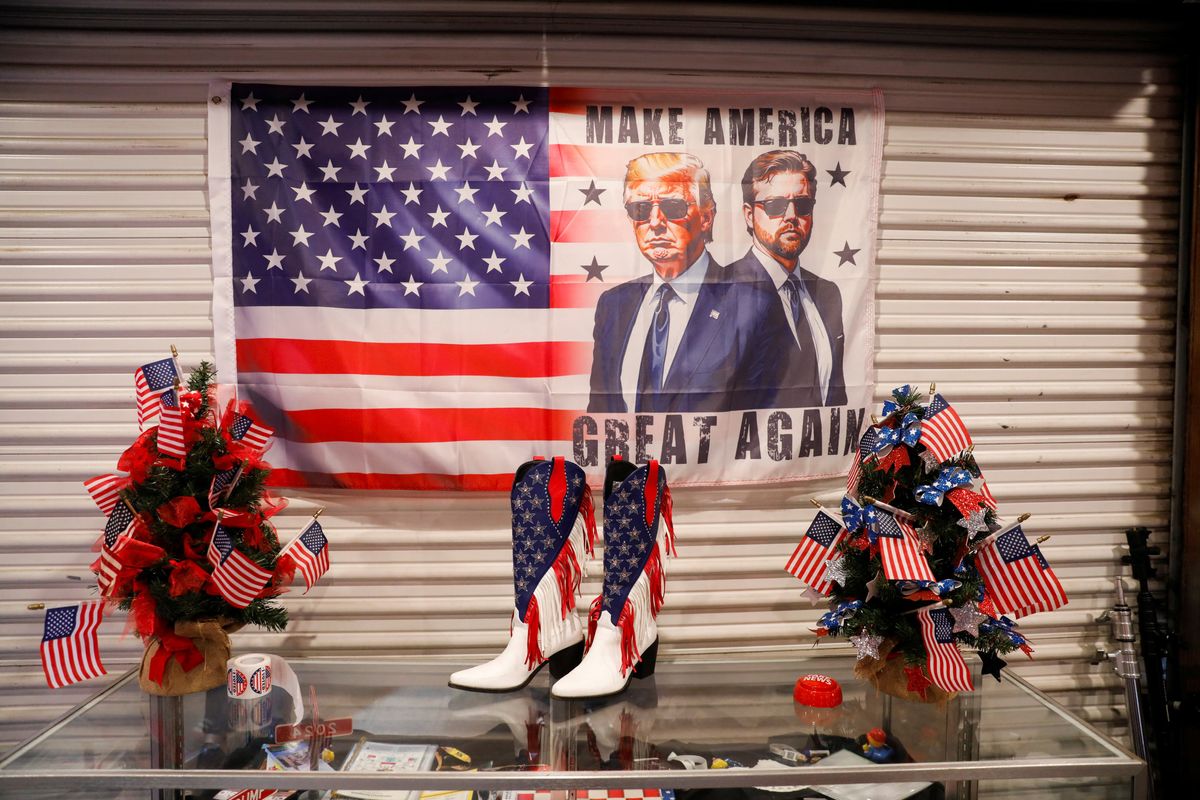
A U.S flag with an image of U.S. President Donald Trump and U.S. Vice President JD Vance, is placed at a venue for a watch party for Randy Fine, Republican nominee for 2025 Florida's 6th congressional district special election, as Florida holds a special election for a U.S. House of Representatives seat vacated by National Security Adviser Michael Waltz, in Ormond Beach, Florida, U.S. April 1, 2025. REUTERS/Octavio Jones

In a late-night tirade against top Senate Republicans, President Donald Trump—repeating a claim he made earlier in the week—insisted that smuggled fentanyl can be subjected to tariffs, drawing widespread ridicule, including from conservatives. He offered no explanation for how such a policy would work, nor did he clarify whether traffickers are expected to declare illegal drugs at the border.

Just before 1 AM, the President blasted former Senate Republican Leader Mitch McConnell and his fellow Kentucky Senator Rand Paul, along with Alaska’s Lisa Murkowski and Maine’s Susan Collins, for supporting legislation that would remove the tariffs the President is imposing on the nation of Canada, one of America’s largest and oldest allies and trading partners. The Constitution grants Congress, not the President, the power over tariffs.

Trump urged them to “get on the Republican bandwagon, for a change, and fight the Democrats wild and flagrant push to not penalize Canada for the sale, into our Country, of large amounts of Fentanyl, by Tariffing the value of this horrible and deadly drug in order to make it more costly to distribute and buy.”

The President has offered different reasons at different times over the past few months to explain why he is imposing tariffs on Canada. Fentanyl from Canada represents an infinitesimal amount of the drug that comes into the U.S.—most of which is smuggled in by American citizens.

Trump continued his rant, baselessly blaming the four Republicans for “allowing Fentanyl to pour into our Country unchecked, and without penalty.”


“What is wrong with them, other than suffering from Trump Derangement Syndrome, commonly known as TDS?” he asked, before declaring they are “extremely difficult to deal with and, unbelievably disloyal to hardworking Majority Leader John Thune, and the Republican Party itself.”

Economic historian Phil Magness observed, “If this panic-tweet is true, it appears that the GOP has the 4 votes needed for the Senate resolution rescinding Trump’s unconstitutional tariff decree against Canada.” He added: “Trump appears to believe that his tariff is actually taxing illegal fentanyl sales.”

Just one day earlier, Trump had also suggested that illegal fentanyl being smuggled in from Canada can be tariffed.

“Senator Tim Kaine, who ran against me with Crooked Hillary in 2016, is trying to halt our critical Tariffs on deadly Fentanyl coming in from Canada,” Trump wrote.

Responding to Wednesday’s post-midnight tirade, critics of various political stripes, mocked the President.

Jonah Goldberg, the conservative journalist and author of the book “Liberal Fascism,” wrote: “Wait. Does Trump think we can tariff the ‘sale’ of fentanyl into America from those Canadian drug cartels?”

Attorney George Conway, responding to Goldberg, remarked, “Trump really is just plain … dumb.”

U.S. Rep. Sean Casten (D-IL) also mocked Trump.

“I’m withholding my judgement on this bill until I see whether the sales & use tax exemptions allow fentanyl precursors to evade this tariff,” Casten wrote, before adding: “(I’m joking of course. It takes a very dumb man to think drug traffickers are filing import paperwork & tax forms at the border.)”Economist Max Gulker, a senior policy research analyst at the libertarian Reason Foundation, took a more textbook approach. Since President Trump at times has claimed he is placing tariffs on goods to motivate manufacturers to return to the U.S., Gulker wrote: “Wait are these strategic tariffs or are we trying to reshore fentanyl labs?”


Undocumented migrants turn to Whatsapp to stay ahead of US raids


Rosario's only lifeline is a community group on the messaging app that provides news about immigration raids in Washington neighborhoods - Copyright AFP/File Brendan Smialowski


By AFP
March 31, 2025

Anuj CHOPRA

Fearing a US immigration raid will separate her from her children, an undocumented Honduran immigrant hunkers down in her Washington home, anxiously scouring a WhatsApp group for real-time updates on nearby sweeps.

Rosario, a 35-year-old mother of two, practically lives in hiding in the face of US President Donald Trump’s sweeping campaign to arrest and deport millions of undocumented immigrants since his return to the White House in January.

Her only lifeline is a community group on the messaging app that provides news about immigration raids in Washington neighborhoods — often mixed with unverified or false information.

“You stay informed and stay a little more alert thanks to the group,” Rosario told AFP in her studio apartment, festooned with birthday balloons, stuffed toys, and a wall hanging made from corn husk.

“That way, you get rid of fear a little bit — but fear always persists,” said the part-time dishwasher, who crossed into the United States in 2021 after an arduous journey from her home country.

Rosario, who refused to disclose her real name, peered through her window blinds for any lurking agents from ICE — the Immigration and Customs Enforcement department, which has been deployed to carry out the Trump administration’s promise to target undocumented immigrants.

“Alert: ICE activity was reported at a business center on (Mount) Pleasant around noon,” a message flashed in the group, adding that six masked agents were spotted in the Washington neighborhood and one person was detained.

It was not possible for Rosario to ascertain whether the tip was real or fake.

Still, she remained confident the community group, fed by other immigrants and advocates, provided reliable information — crucial for determining her limited movements to work and to purchase groceries.

– ‘Scary climate’ –

Rosario also puzzled over another morsel of unverified information in the group that had not appeared in the mainstream media: that an undocumented female immigrant was detained by ICE at a school in the Bethesda neighborhood.

Immigration sweeps on educational institutions are rare, but the Trump administration has said it no longer considers sensitive locations such as schools, churches, and hospitals off-limits to agents. The policy has been legally challenged by religious organizations.

Such uncertainty and fear have spawned a flurry of rumors about suspected immigration raids and movements of ICE agents that ricochet across messaging apps and online platforms, leaving immigrant communities on edge.

In February, AFP’s fact-checkers debunked a viral online video that claimed to show an undocumented Colombian woman being expelled from the United States. In reality, it was a fictionalized clip posted in 2023 by an American YouTuber.

Last month, another online video purportedly showed undocumented immigrants being arrested from a US barbershop. AFP found the video staged, with the uniforms worn by the supposed immigration officials appearing inauthentic.

“In the current scary climate, it is hard to know what’s true, what’s inaccurate,” the director of an immigration advocacy group in Washington told AFP, requesting anonymity.

The heightened fears among immigrant communities, he added, have made it harder to “decipher fact from fiction.”

– ‘Fear grabs you’ –

Despite an uptick in immigration arrests, authorities appear to be struggling to meet Trump’s mass deportation goals.

The number of deportation flights since Trump took office on January 20 has been roughly the same as those in the final months of President Joe Biden’s administration, US media reported, citing data collected by an immigration rights advocate.

That has done little to allay fears among the country’s estimated 14 million undocumented immigrants.

Those concerns are aggravated by the government’s shock-and-awe tactics of publicizing raids in major cities and footage of shackled migrants being loaded onto deportation flights.

Amid a lack of reliable information and fears of stepped-up raids, many undocumented immigrants have gone underground, with some even withdrawing their children from school, advocacy groups say.

Many also remain vulnerable to exploitation by their employers.

Elizabeth, an undocumented immigrant and mother of five, avoids the messaging groups filled with unverified information, choosing instead to stay vigilant and aware of her surroundings.

“If you don’t know what is happening, fear grabs you,” she told AFP, declining to share her real name and country of origin.

“Fear is a product of misinformation.”


El Salvador’s Bukele flaunts ‘iron fist’ alliance with Trump


By AFP
April 2, 2025


Both Nayib Bukele and Donald Trump have enthusiastically shared pictures of prisoners shackled, shorn and manhandled while simultaneously highlighting and rejecting objections from judges and opponents
 - Copyright EL SALVADOR'S PRESIDENCY PRESS OFFICE/AFP Handout

El Salvador’s pugilistic president has become a key partner for US President Donald Trump’s in-your-face campaign to deport migrants, with both men hoping to reap the political benefits.

Through a rollout of slickly produced videos featuring chained and tattooed men roughly escorted off planes, Nayib Bukele has won the US president’s attention and admiration.

“Thank you President Bukele, of El Salvador, for taking the criminals that were so stupidly allowed, by the Crooked Joe Biden Administration, to enter our country, and giving them such a wonderful place to live!” Trump posted on Monday on his TruthSocial platform.

His comments were accompanied by the latest video posted by Bukele featuring heavily staged, militaristic and confrontational clips of migrants arriving in the Central American nation.

Trump’s appreciation was quickly reciprocated: “Grateful for your words, President Trump. Onward together!” Bukele posted.

To cement the relationship, the pair will meet at the White House this month, with Bukele promising to bring “several cans of Diet Coke” for his famously soda-thirsty host.

But behind the hardman camaraderie lies raw politics.

For Bukele, accepting hundreds of deportees from the United States “consolidates his image as the leader who transformed security in El Salvador” said Migration Policy Institute analyst Diego Chaves-Gonzalez.


– Gang crackdown –


Since coming to power in 2019, Bukele has subdued his once gang-plagued nation of about six million people.

Dispensing with warrants and due process, he jailed almost two percent of the population and brought the murder rate down from more than 6,500 a year to just 114, according to official figures.

Security remains central to the “iron fist” political brand that makes Bukele one of the most popular politicians on the planet — with a domestic approval rating hovering above 85 percent.

Welcoming Trump deportees to El Salvador’s mega jail CECOT has not just made Bukele a friend in the White House, but also allowed the 43-year-old president to put the signature 40,000-prisoner jail on full display.

The sprawling facility’s austere concrete walls and army of masked guards have featured prominently in videos produced by Bukele’s government.

Trump’s Homeland Security Secretary Kristi Noem even visited CECOT, posing in front of a cell overflowing with seemingly dead-eyed and heavily tattooed men.


– ‘Propaganda’ –


Both Bukele and Trump have enthusiastically shared pictures of prisoners shackled, shorn and manhandled while simultaneously highlighting and rejecting objections from judges and opponents.

In that sense, Trump appears to be echoing Bukele’s political imagery to appeal to his own base of US voters.

“It is a sign that Trump is interested in ‘iron fist’ propaganda and disobeying judicial rulings,” said Salvadoran political analyst Napoleon Campos.

That heavy-handed approach has its risks. The White House was forced into an embarrassing admission on Tuesday that an “administrative error” had seen a Salvadoran man living in the United States under protected legal status swept up in the hurried deportation process and sent to Bukele’s prison.

Even so, a recent CBS poll showed 53 percent of voters, and an overwhelming majority of Republicans, approve of Trump’s handling of immigration — a higher approval rating than he receives on the economy.

Aside from political benefits for both men, there is a potential security and economic boon for Bukele.

His government received six million dollars for taking deportees, a fee that Bukele described as “a very low fee for them, but a high one for us.”

He also received more than 20 allegedly high-ranking members of El Salvador’s most notorious gang MS-13, who were being held in the United States.

Bukele claimed that would help “finalize intelligence gathering and go after the last remnants of MS-13, including its former and new members, money, weapons, drugs, hideouts, collaborators, and sponsors.”

And there is the promise of US investment in El Salvador, a country which still has a per capita income comparable to Iraq or war-ravaged Ukraine.

When he heads to the White House this month, Bukele will be hoping for more than warm words and a few cans of Diet Coke as payback for his support.