In post-Assad Syria, Kurdish-led SDF impose media blackout on Aleppo neighbourhoods
The Kurdish-led SDF are due to evacuate two Aleppo neighbourhoods under a deal with the Syrian government, but are still stopping media from accessing them

The SDF are due to evacuate Sheikh Maqsoud soon [Amer Al-Sayid Ali / The New Arab]
Aleppo, Syria - Dirt barriers and guards remained stationed outside two Kurdish-dominated enclaves in the city of Aleppo on Friday, as members of the Syrian Democratic Forces (SDF) left the neighbourhoods this week after an agreement with the Syrian government.
Security and administration in Aleppo’s Sheikh Maqsoud and Achrafiah neighbourhoods have been largely managed by the US-backed Kurdish-led SDF since 2015, which controls around 25% of Syria's territory, including most of the northeast.
Following a pact signed by Syrian interim President Ahmed Al-Sharaa and SDF military commander Mazloum Abdi on 10 March, it was agreed that all areas would eventually be brought under government control and SDF units integrated into the national army.
Following the withdrawal of Kurdish fighters last week, armed guards from the SDF-linked Asayish security forces remained stationed at the entrance of Sheikh Maqsoud on Friday, inspecting bags and screening people entering the district.
Guards at Sheikh Maqsoud would not allow The New Arab and Al-Araby Al-Jadeed journalists entry to the North Aleppo neighbourhood without approval from the Democratic Autonomous Administration of North and East Syria (AANES), something we have sought for over a month.
At the security point in Sheikh Maqsoud, a small lone Syrian national flag now flies alongside six larger blue banners of the Asayish and Kurdish authorities. The entrance to the neighbourhood still shows signs of 14 years of fighting in the city of Aleppo, with damage from shelling and sniper positions visible in a wall of apartment blocks that surround the enclave.
The situation was similar in Achrafieh, where the flags of the Asayish security forces were visible from a long line of traffic waiting to enter the neighbourhood.
Bar sporadic checkpoints, most Syrians - including journalists - have been largely free to move around the country following the fall of Bashar Al-Assad on 8 December, whose regime killed 181 journalists since the start of the conflict in 2011, with no independent media allowed to operate in regime-controlled areas.
The two Kurdish enclaves in Aleppo, like northeastern Syria, have remained largely autonomous throughout the war with their own administrative, security, and ‘visa’ procedures.
This includes stringent protocols for foreign journalists operating in SDF-controlled areas, including requiring permission to enter the territories - approval Al-Araby Al-Jadeed and The New Arab have continuously sought over the past six weeks.
Shahira Salloum, managing editor of Al-Araby Al-Jadeed website, was with The New Arab during our attempts to enter Sheikh Maqsoud, and said her experience at the enclave was in stark contrast to reporting from other parts of Syria.
"We have entered all parts of Syria freely, and the one side that didn’t allow us into areas they control was the SDF," Salloum told The New Arab.
"It was a very strange experience for us given our previous experiences in Syria, where people and security forces opened their doors and spoke freely. It puts a question mark over their policies and their supposed commitment to democracy."
The situation was similar the the SDF-controlled ‘border point’ near Raqqa, where guards prevented The New Arab and Al-Araby Al-Jadeed journalists from accessing northeast Syria.
Media rights groups such as Reporters Without Borders have for years called on Kurdish-dominated authorities in the northeast to lift restrictions on journalists, with foreign and Syrian reporters needing approval from the AANES to access areas under their control.
In addition to this stringent accreditation process for foreign media entering the northeast, journalists also require a local fixer to operate in the area.
Local journalists have also been jailed for writing critically about the AANES, while broadcasters such as Rudaw and Kurdistan 24, which cover Kurdish politics in Syria and Iraq, have also faced restrictions in the territories.
The agreement signed between Abdi and Sharaa in March stipulates that all border points, airports, and oil fields will come under the control of the Damascus government by the end of the year.
Since the agreement was signed, there has been prisoner exchanges between the two sides, while Kurdish rights will be guaranteed, including a lifting on restrictions on the teaching of the Kurdish language implemented during the Baathist regime.
SDF fighters will also withdraw from Sheikh Maqsoud and Achrafieh, with two batches leaving the two Aleppo enclaves over the past week and heading for northeast of Syria - an Arab-majority region but under the control of a Kurdish-dominated political and security apparatus.
Kurds who lost their nationality during Bashar and Hafez Al-Assad’s rule will also be given Syrian citizenship, while internally displaced Kurds will be allowed to return to their homes.
The deal ends years of conflict between the SDF and rebel forces now integrated into the Syrian government, including Hayat Tahrir Al-Sham, was once led by Al-Sharaa, which has fought fierce clashes with Kurdish militias in Aleppo.
What does the Trump administration want from Damascus?The Kurdish-led SDF are due to evacuate two Aleppo neighbourhoods under a deal with the Syrian government, but are still stopping media from accessing them
Paul McLoughlin
Syria
13 April, 2025
Syria
13 April, 2025

The SDF are due to evacuate Sheikh Maqsoud soon [Amer Al-Sayid Ali / The New Arab]
Aleppo, Syria - Dirt barriers and guards remained stationed outside two Kurdish-dominated enclaves in the city of Aleppo on Friday, as members of the Syrian Democratic Forces (SDF) left the neighbourhoods this week after an agreement with the Syrian government.
Security and administration in Aleppo’s Sheikh Maqsoud and Achrafiah neighbourhoods have been largely managed by the US-backed Kurdish-led SDF since 2015, which controls around 25% of Syria's territory, including most of the northeast.
Following a pact signed by Syrian interim President Ahmed Al-Sharaa and SDF military commander Mazloum Abdi on 10 March, it was agreed that all areas would eventually be brought under government control and SDF units integrated into the national army.
Following the withdrawal of Kurdish fighters last week, armed guards from the SDF-linked Asayish security forces remained stationed at the entrance of Sheikh Maqsoud on Friday, inspecting bags and screening people entering the district.
Guards at Sheikh Maqsoud would not allow The New Arab and Al-Araby Al-Jadeed journalists entry to the North Aleppo neighbourhood without approval from the Democratic Autonomous Administration of North and East Syria (AANES), something we have sought for over a month.
At the security point in Sheikh Maqsoud, a small lone Syrian national flag now flies alongside six larger blue banners of the Asayish and Kurdish authorities. The entrance to the neighbourhood still shows signs of 14 years of fighting in the city of Aleppo, with damage from shelling and sniper positions visible in a wall of apartment blocks that surround the enclave.
The situation was similar in Achrafieh, where the flags of the Asayish security forces were visible from a long line of traffic waiting to enter the neighbourhood.
Bar sporadic checkpoints, most Syrians - including journalists - have been largely free to move around the country following the fall of Bashar Al-Assad on 8 December, whose regime killed 181 journalists since the start of the conflict in 2011, with no independent media allowed to operate in regime-controlled areas.
The two Kurdish enclaves in Aleppo, like northeastern Syria, have remained largely autonomous throughout the war with their own administrative, security, and ‘visa’ procedures.
This includes stringent protocols for foreign journalists operating in SDF-controlled areas, including requiring permission to enter the territories - approval Al-Araby Al-Jadeed and The New Arab have continuously sought over the past six weeks.
Shahira Salloum, managing editor of Al-Araby Al-Jadeed website, was with The New Arab during our attempts to enter Sheikh Maqsoud, and said her experience at the enclave was in stark contrast to reporting from other parts of Syria.
"We have entered all parts of Syria freely, and the one side that didn’t allow us into areas they control was the SDF," Salloum told The New Arab.
"It was a very strange experience for us given our previous experiences in Syria, where people and security forces opened their doors and spoke freely. It puts a question mark over their policies and their supposed commitment to democracy."
The situation was similar the the SDF-controlled ‘border point’ near Raqqa, where guards prevented The New Arab and Al-Araby Al-Jadeed journalists from accessing northeast Syria.
Media rights groups such as Reporters Without Borders have for years called on Kurdish-dominated authorities in the northeast to lift restrictions on journalists, with foreign and Syrian reporters needing approval from the AANES to access areas under their control.
In addition to this stringent accreditation process for foreign media entering the northeast, journalists also require a local fixer to operate in the area.
Local journalists have also been jailed for writing critically about the AANES, while broadcasters such as Rudaw and Kurdistan 24, which cover Kurdish politics in Syria and Iraq, have also faced restrictions in the territories.
The agreement signed between Abdi and Sharaa in March stipulates that all border points, airports, and oil fields will come under the control of the Damascus government by the end of the year.
Since the agreement was signed, there has been prisoner exchanges between the two sides, while Kurdish rights will be guaranteed, including a lifting on restrictions on the teaching of the Kurdish language implemented during the Baathist regime.
SDF fighters will also withdraw from Sheikh Maqsoud and Achrafieh, with two batches leaving the two Aleppo enclaves over the past week and heading for northeast of Syria - an Arab-majority region but under the control of a Kurdish-dominated political and security apparatus.
Kurds who lost their nationality during Bashar and Hafez Al-Assad’s rule will also be given Syrian citizenship, while internally displaced Kurds will be allowed to return to their homes.
The deal ends years of conflict between the SDF and rebel forces now integrated into the Syrian government, including Hayat Tahrir Al-Sham, was once led by Al-Sharaa, which has fought fierce clashes with Kurdish militias in Aleppo.
Syrian forces deploy at key dam under deal with Kurds: media
The Kurdish authorities in northeastern Syria struck a deal with the central government on running a key dam they captured from the Islamic State group.
The New Arab Staff & Agencies
12 April, 2025

Fighters loyal to the new Syrian government in Damascus established after the December overthrow of longtime strongman Bashar al-Assad have begun taking over security and a joint administration will run the Tishrin dam. [Getty]
Security forces from the new government in Damascus deployed Saturday around a strategic dam in northern Syria, under a deal with the autonomous Kurdish administration, state media reported.
Under the agreement, Kurdish-led fighters of the US-backed Syrian Democratic Forces (SDF) will pull back from the dam which they captured from the Islamic State group in late 2015.
The Tishrin dam near Manbij in Aleppo province is one of several on the Euphrates and its tributaries in Syria that play a key role in the nation's economy by providing it with water for irrigation and hydro-electric power.
On Thursday, a Kurdish source said the Kurdish authorities in northeast Syria had reached agreement with the central government on running the dam.
A separate Kurdish source told news agency AFP on Saturday that the deal, supervised by the US-led coalition, stipulates that the dam remain under Kurdish civilian administration.
Syria's state news agency SANA reported "the entry of Syrian Arab Army forces and security forces into the Tishrin Dam ... to impose security in the region, under the agreement reached with the SDF".
The accord also calls for a joint military force to protect the dam, and for the withdrawal of Turkey-backed factions "that seek to disrupt this agreement", SANA said.
It is part of a broader agreement reached in mid-March between Syria's interim President Ahmed al-Sharaa and SDF commander Mazloum Abdi, aiming to integrate the institutions of the Kurdish autonomous administration into the national government.
The dam was a key battleground in Syria's civil war that broke out in 2011, falling first to rebels and then to IS before being captured by the SDF.
Days after Sharaa's coalition overthrew Syrian leader Bashar al-Assad in December, Turkish drone strikes targeted the dam, killing dozens of civilians, Kurdish officials and a Britain-based war monitor.
The Kurdish authorities in northeastern Syria struck a deal with the central government on running a key dam they captured from the Islamic State group.
The New Arab Staff & Agencies
12 April, 2025
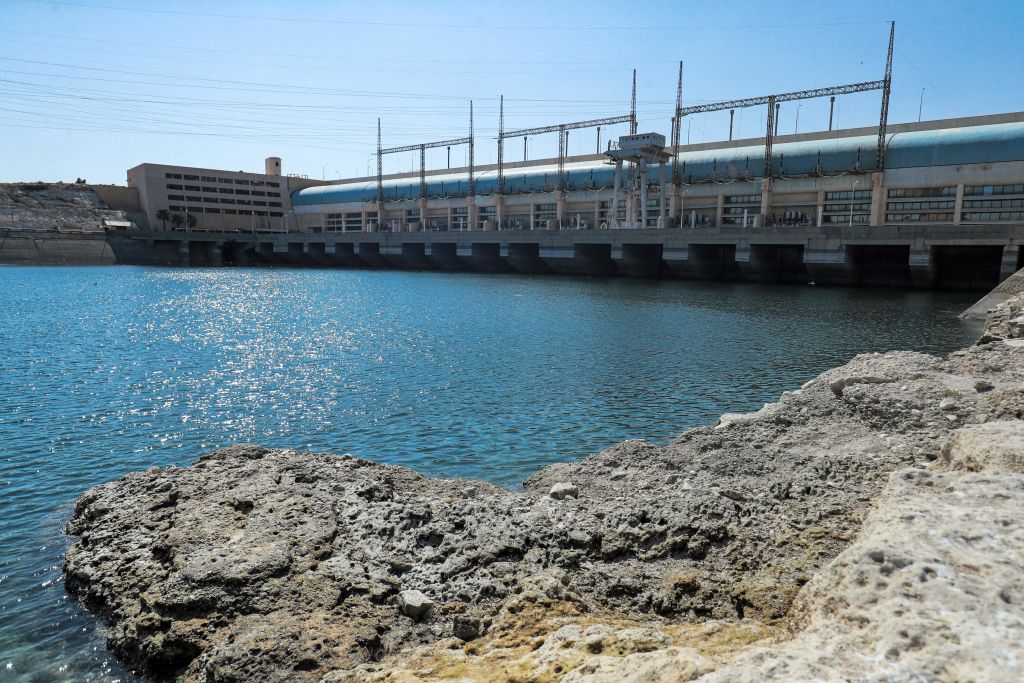
Fighters loyal to the new Syrian government in Damascus established after the December overthrow of longtime strongman Bashar al-Assad have begun taking over security and a joint administration will run the Tishrin dam. [Getty]
Security forces from the new government in Damascus deployed Saturday around a strategic dam in northern Syria, under a deal with the autonomous Kurdish administration, state media reported.
Under the agreement, Kurdish-led fighters of the US-backed Syrian Democratic Forces (SDF) will pull back from the dam which they captured from the Islamic State group in late 2015.
The Tishrin dam near Manbij in Aleppo province is one of several on the Euphrates and its tributaries in Syria that play a key role in the nation's economy by providing it with water for irrigation and hydro-electric power.
On Thursday, a Kurdish source said the Kurdish authorities in northeast Syria had reached agreement with the central government on running the dam.
A separate Kurdish source told news agency AFP on Saturday that the deal, supervised by the US-led coalition, stipulates that the dam remain under Kurdish civilian administration.
Syria's state news agency SANA reported "the entry of Syrian Arab Army forces and security forces into the Tishrin Dam ... to impose security in the region, under the agreement reached with the SDF".
The accord also calls for a joint military force to protect the dam, and for the withdrawal of Turkey-backed factions "that seek to disrupt this agreement", SANA said.
It is part of a broader agreement reached in mid-March between Syria's interim President Ahmed al-Sharaa and SDF commander Mazloum Abdi, aiming to integrate the institutions of the Kurdish autonomous administration into the national government.
The dam was a key battleground in Syria's civil war that broke out in 2011, falling first to rebels and then to IS before being captured by the SDF.
Days after Sharaa's coalition overthrew Syrian leader Bashar al-Assad in December, Turkish drone strikes targeted the dam, killing dozens of civilians, Kurdish officials and a Britain-based war monitor.
Israel cancels 'provocative' tourist tours inside occupied Syria
Israel has cancelled all 'tourist tours' inside illegally occupied Syrian territory days after they were originally announced
The New Arab Staff
12 April, 2025

Israel has expanded its illegal occupation of the Golan Heights [Getty]
The Israeli army announced on Friday the cancellation of all planned "tourist tours" to border areas inside illegally occupied Syrian territory, which had been arranged for Israeli tourists accompanied by guides holding official permits.
In a statement, the Israeli army explained that the decision came following an "operational situation assessment," adding that "entry to the fence-crossing routes will not be permitted at this stage," in reference to areas seized by the Israeli army beginning in December 2024, adjacent to the occupied Syrian Golan Heights.
According to the Israeli newspaper Yedioth Ahronoth, the cancellations affected three main routes: the Ruqad River, the Hamma Bridge on the banks of the Yarmouk River, and the Hejaz Railway tunnel in the Yarmouk area.
On the other hand, a fourth route, located on Mount Hermon overlooking the Lebanese border, was excluded from the cancellation decision, with the army confirming that this path will remain temporarily open for now.
Days earlier, the Israeli military had notified potential Israeli tourists of its intention to organise special tours inside Syrian lands beyond the border strip, in an unprecedented move aimed at reinforcing what it calls "security tourism," under the direct protection of the army.
According to Haaretz newspaper, the surprise invitation to the tours came from the Northern Command of the Israeli army and Division 210, in coordination with the Golan Regional Council.
The tours include areas that are normally off-limits - locations recently occupied by Israel and classified as being outside the border fence of the buffer zone.
According to Israeli media outlets, one of the planned tours was expected to include a visit to an observation point on Mount Dov, overlooking southern Lebanon and the Beqaa Valley.
Some of the areas included in the tours were previously controlled by the former Assad regime’s forces prior to its fall, while others were taken over by Israel later.
Despite Israeli military assurances that the initiative is “entirely safe,” this has been widely questioned in Israel due to the sensitive nature of the border regions involved—particularly in light of the repeated security incidents that have occurred there in recent years.
Yedioth Ahronoth described the move as unprecedented since the founding of Israel, noting that many of the sites involved in the tours are considered closed military zones. This gives the activity a provocative character and has stirred concerns about covert expansionist aims masked as tourism.
Almost as soon a Syrian rebel coalition overthrew the regime of Bashar al-Assad in December, Israel exploited the situation by seizing Syrian territory adjacent to the occupied Golan Heights in southwestern Syria.
Since then, it has unleashed unprecedented airstrikes on Syrian targets, killing dozens of civilians and destroying key infrastructure in the country. It has also issued numerous threats against the Syrian government, warning its security forces to stay out of southern Syria.
Israel has cancelled all 'tourist tours' inside illegally occupied Syrian territory days after they were originally announced
The New Arab Staff
12 April, 2025

Israel has expanded its illegal occupation of the Golan Heights [Getty]
The Israeli army announced on Friday the cancellation of all planned "tourist tours" to border areas inside illegally occupied Syrian territory, which had been arranged for Israeli tourists accompanied by guides holding official permits.
In a statement, the Israeli army explained that the decision came following an "operational situation assessment," adding that "entry to the fence-crossing routes will not be permitted at this stage," in reference to areas seized by the Israeli army beginning in December 2024, adjacent to the occupied Syrian Golan Heights.
According to the Israeli newspaper Yedioth Ahronoth, the cancellations affected three main routes: the Ruqad River, the Hamma Bridge on the banks of the Yarmouk River, and the Hejaz Railway tunnel in the Yarmouk area.
On the other hand, a fourth route, located on Mount Hermon overlooking the Lebanese border, was excluded from the cancellation decision, with the army confirming that this path will remain temporarily open for now.
Days earlier, the Israeli military had notified potential Israeli tourists of its intention to organise special tours inside Syrian lands beyond the border strip, in an unprecedented move aimed at reinforcing what it calls "security tourism," under the direct protection of the army.
According to Haaretz newspaper, the surprise invitation to the tours came from the Northern Command of the Israeli army and Division 210, in coordination with the Golan Regional Council.
The tours include areas that are normally off-limits - locations recently occupied by Israel and classified as being outside the border fence of the buffer zone.
According to Israeli media outlets, one of the planned tours was expected to include a visit to an observation point on Mount Dov, overlooking southern Lebanon and the Beqaa Valley.
Some of the areas included in the tours were previously controlled by the former Assad regime’s forces prior to its fall, while others were taken over by Israel later.
Despite Israeli military assurances that the initiative is “entirely safe,” this has been widely questioned in Israel due to the sensitive nature of the border regions involved—particularly in light of the repeated security incidents that have occurred there in recent years.
Yedioth Ahronoth described the move as unprecedented since the founding of Israel, noting that many of the sites involved in the tours are considered closed military zones. This gives the activity a provocative character and has stirred concerns about covert expansionist aims masked as tourism.
Almost as soon a Syrian rebel coalition overthrew the regime of Bashar al-Assad in December, Israel exploited the situation by seizing Syrian territory adjacent to the occupied Golan Heights in southwestern Syria.
Since then, it has unleashed unprecedented airstrikes on Syrian targets, killing dozens of civilians and destroying key infrastructure in the country. It has also issued numerous threats against the Syrian government, warning its security forces to stay out of southern Syria.

An aerial view of the area as protesters march through the streets of Yarmouk Refugee Camp in Damascus, Syria, on March 28, 2025, carrying Palestinian flags and chanting anti-Israel slogans. [Bakr Al Kasem – Anadolu Agency]
Opinion
April 11, 2025
by Ghazi Dahman
MEMO
Following US President Donald Trump’s administration’s decision to change the status of Syrian diplomats at the UN mission, which involved the US not recognising the new Syrian administration, a question comes to mind: What does the Trump administration want from Damascus? Is it using non-recognition as a bargaining chip to manipulate Damascus, and perhaps its regional and international backers?
The US administration’s decision can be described as largely technical, meaning it is bureaucratic in nature, not political. For example, the decision to change the visa type is based on an internal assessment that classifies the interim transitional government in Syria as an extension of structures unacceptable to the US, specifically in terms of its alleged ties to factions designated as terrorist organisations. Its technical nature is confirmed by the fact that it is issued by institutions of a technical, rather than political, nature, such as the Department of Homeland Security.
However, this does not mean that the decision has no political implications, and it indicates that lifting the sanctions is not on the Trump administration’s agenda. There is a possibility that the Trump administration will reconsider the US Treasury Department’s decision under the Biden administration, which stipulated a six-month relief of the sanctions, which could be extended. This means that the road to Syria’s exit from its economic crisis is still long, given that the US role in this area is crucial, and that these policies may push many countries to change their approach to relations with Damascus out of fear of being affected by US sanctions.
What is interesting about American policy is that, even at the height of its conflict with Iran, Russia and the Assad regime, and while leading an international coalition through the Military Operations Centre (MOC) offices in Turkiye and Jordan, it did not go so far as to withdraw recognition of Bashar Al-Assad’s regime, and neither the status nor privileges of Syrian diplomats at the UN mission in New York were affected. Furthermore, the new government in Damascus enjoys de facto legitimacy, a legitimacy based on which most countries in the South were able to integrate themselves seamlessly into the international system without any problems or complications. Furthermore, the removal of the Assad regime entailed geopolitical changes that served Washington’s interests, as part of its efforts to weaken Iranian influence in the region.
Various assessments and analyses of the American position suggest that Washington is still evaluating the new administration in Damascus to reach an arrangement for dealing with this administration, which is primarily composed of Islamist groups led by Hay’at Tahrir Al-Sham, which Washington classifies as a “terrorist organisation.” However, this new Syrian administration is attempting to formulate a moderate governing system an Islamic nature, similar to those in Turkiye and Malaysia, to gain the approval of the outside world. Yet, American political behaviour remains cautious in dealing with this new regime, with responses ranging from placing it under observation to testing it through a list of conditions presented by Deputy Assistant Secretary of State for Levant and Syria Affairs, Natasha Franceschi, to Syrian Foreign Minister, Asaad Al-Shaibani, on the sidelines of the donors’ conference. Furthermore, the Trump administration is witnessing a difference in views between the State Department and the White House on the nature of dealing with Damascus. It appears that the White House (which is home to many pro-Israel supporters) remains the most effective in determining the form of policies to be adopted toward Damascus.
Despite this, the Trump administration’s policy remains largely unclear and vague. There is no clear negative position toward the policies of the new Syrian administration, which has expressed its willingness to cooperate on issues of concern to Washington, particularly the fight against the Islamic State (Daesh) and the issue of chemical weapons. The US administration does not appear to be particularly concerned with the issue of minorities, especially since President Ahmad Al-Sharaa’s administration is working diligently to accommodate Christians, who are the Trump administration’s primary concern. The rest of the components are a given for Washington. The Trump administration has hinted at its relative satisfaction with the Sharaa administration’s measures regarding the constitutional declaration and government formation or at least has not expressed explicit objection to these measures.
This means that the Trump administration is not interested in the specifics of Syria itself, nor in the nature of policies pursued by the Sharaa administration, reflecting the unimportance of Syria to the Trump administration, especially after Iran’s withdrawal and Russia’s weakening. Consequently, the strategic status (already low in the Trump administration’s opinion) has declined to a minimum, placing Syria outside the Trump administration’s priorities, demoting it to a neglected file. Its affairs may be entrusted to regional and international actors in the coming period given growing indications of a US withdrawal from Syria, which is no longer a possibility but has entered the implementation phase through the successive gradual withdrawals of US forces from eastern Syria.
The Trump administration will likely not have a specific policy on Syria in the coming period, nor will it invest diplomatically in Syria. It is likely to pursue a policy of managing the situation through low-level diplomacy to manage the relationship between Turkiye and Israel. In the best-case scenario, it will turn Syria into a bargaining chip for regional parties seeking to benefit from the Syrian dynamic, especially since they possess the tools capable of paralysing Syria: US sanctions, the continuity of which would hinder any ability to emerge from fragility and danger.
This article first appeared in Arabic in Al-Araby Al-Jadeed on 10 April 2025
The views expressed in this article belong to the author and do not necessarily reflect the editorial policy of Middle East Monitor.
The US administration’s decision can be described as largely technical, meaning it is bureaucratic in nature, not political. For example, the decision to change the visa type is based on an internal assessment that classifies the interim transitional government in Syria as an extension of structures unacceptable to the US, specifically in terms of its alleged ties to factions designated as terrorist organisations. Its technical nature is confirmed by the fact that it is issued by institutions of a technical, rather than political, nature, such as the Department of Homeland Security.
However, this does not mean that the decision has no political implications, and it indicates that lifting the sanctions is not on the Trump administration’s agenda. There is a possibility that the Trump administration will reconsider the US Treasury Department’s decision under the Biden administration, which stipulated a six-month relief of the sanctions, which could be extended. This means that the road to Syria’s exit from its economic crisis is still long, given that the US role in this area is crucial, and that these policies may push many countries to change their approach to relations with Damascus out of fear of being affected by US sanctions.
What is interesting about American policy is that, even at the height of its conflict with Iran, Russia and the Assad regime, and while leading an international coalition through the Military Operations Centre (MOC) offices in Turkiye and Jordan, it did not go so far as to withdraw recognition of Bashar Al-Assad’s regime, and neither the status nor privileges of Syrian diplomats at the UN mission in New York were affected. Furthermore, the new government in Damascus enjoys de facto legitimacy, a legitimacy based on which most countries in the South were able to integrate themselves seamlessly into the international system without any problems or complications. Furthermore, the removal of the Assad regime entailed geopolitical changes that served Washington’s interests, as part of its efforts to weaken Iranian influence in the region.
Various assessments and analyses of the American position suggest that Washington is still evaluating the new administration in Damascus to reach an arrangement for dealing with this administration, which is primarily composed of Islamist groups led by Hay’at Tahrir Al-Sham, which Washington classifies as a “terrorist organisation.” However, this new Syrian administration is attempting to formulate a moderate governing system an Islamic nature, similar to those in Turkiye and Malaysia, to gain the approval of the outside world. Yet, American political behaviour remains cautious in dealing with this new regime, with responses ranging from placing it under observation to testing it through a list of conditions presented by Deputy Assistant Secretary of State for Levant and Syria Affairs, Natasha Franceschi, to Syrian Foreign Minister, Asaad Al-Shaibani, on the sidelines of the donors’ conference. Furthermore, the Trump administration is witnessing a difference in views between the State Department and the White House on the nature of dealing with Damascus. It appears that the White House (which is home to many pro-Israel supporters) remains the most effective in determining the form of policies to be adopted toward Damascus.
Despite this, the Trump administration’s policy remains largely unclear and vague. There is no clear negative position toward the policies of the new Syrian administration, which has expressed its willingness to cooperate on issues of concern to Washington, particularly the fight against the Islamic State (Daesh) and the issue of chemical weapons. The US administration does not appear to be particularly concerned with the issue of minorities, especially since President Ahmad Al-Sharaa’s administration is working diligently to accommodate Christians, who are the Trump administration’s primary concern. The rest of the components are a given for Washington. The Trump administration has hinted at its relative satisfaction with the Sharaa administration’s measures regarding the constitutional declaration and government formation or at least has not expressed explicit objection to these measures.
This means that the Trump administration is not interested in the specifics of Syria itself, nor in the nature of policies pursued by the Sharaa administration, reflecting the unimportance of Syria to the Trump administration, especially after Iran’s withdrawal and Russia’s weakening. Consequently, the strategic status (already low in the Trump administration’s opinion) has declined to a minimum, placing Syria outside the Trump administration’s priorities, demoting it to a neglected file. Its affairs may be entrusted to regional and international actors in the coming period given growing indications of a US withdrawal from Syria, which is no longer a possibility but has entered the implementation phase through the successive gradual withdrawals of US forces from eastern Syria.
The Trump administration will likely not have a specific policy on Syria in the coming period, nor will it invest diplomatically in Syria. It is likely to pursue a policy of managing the situation through low-level diplomacy to manage the relationship between Turkiye and Israel. In the best-case scenario, it will turn Syria into a bargaining chip for regional parties seeking to benefit from the Syrian dynamic, especially since they possess the tools capable of paralysing Syria: US sanctions, the continuity of which would hinder any ability to emerge from fragility and danger.
This article first appeared in Arabic in Al-Araby Al-Jadeed on 10 April 2025
The views expressed in this article belong to the author and do not necessarily reflect the editorial policy of Middle East Monitor.
Syria extends deadline for probe into killings of Alawites

Red Crescent workers help evacuate wounded members of the Alawite sect on March 10 after they sought refuge near a Russian airbase in coastal Syria after violence and revenge killings. (AP/File)
Updated 11 April 2025
AP
President Ahmed Al-Sharaa grants fact-finding committee three month extension to identify perpetrators
Human rights groups say more than 1,000 civilians — mostly Alawites were killed in violence last month
BEIRUT: Syria’s presidency announced on Friday that it would extend a probe into the killings of Alawite civilians in coastal areas that left hundreds dead after clashes between government forces and armed groups loyal to former President Bashar Assad spiraled into sectarian revenge attacks.
The violence erupted on March 6 after Assad loyalists ambushed patrols of the new government, prompting Islamist-led groups to launch coordinated assaults on Latakia, Baniyas, and other coastal areas.
According to human rights groups, more than 1,000 civilians — mostly Alawites, an Islamic minority to which Assad belongs — were killed in retaliatory attacks, including home raids, executions, and arson, displacing thousands.
The sectarian violence was possibly among the bloodiest 72 hours in Syria’s modern history, including the 14 years of civil war from which the country is now emerging. The violence brought fear of a renewed civil war and threatened to open an endless cycle of vengeance, driving thousands of Alawites to flee their homes, with an estimated 30,000 seeking refuge in northern Lebanon.
On March 9, President Ahmed Al-Sharaa, the former leader of an Islamist insurgent group, formed a fact-finding committee and gave it 30 days to report its findings and identify perpetrators. In a decree published late Thursday, Sharaa said the committee had requested more time and was granted a three-month non-renewable extension.
The committee’s spokesperson, Yasser Farhan, said in a statement on Friday that the committee has recorded 41 sites where killings took place, each forming the basis for a separate case and requiring more time to gather evidence. He said some areas remained inaccessible due to time constraints, but that residents had cooperated, despite threats from pro-Assad remnants.
In a report published on April 3, Amnesty International said its probe into the killings concluded that at least 32 of more than 100 people killed in the town of Baniyas were deliberately targeted on sectarian grounds — a potential war crime.
The rights organization welcomed the committee’s formation but stressed it must be independent, properly resourced, and granted full access to burial sites and witnesses to conduct a credible investigation. It also said the committee should be granted “adequate time to complete the investigation.”
Witnesses to the killings identified the attackers as hard-line Sunni Islamists, including Syria-based jihadi foreign fighters and members of former rebel factions that took part in the offensive that overthrew Assad. However, many were also local Sunnis, seeking revenge for past atrocities blamed on Alawites loyal to Assad.
While some Sunnis hold the Alawite community responsible for Assad’s brutal crackdowns, Alawites themselves say they also suffered under his rule.
Red Crescent workers help evacuate wounded members of the Alawite sect on March 10 after they sought refuge near a Russian airbase in coastal Syria after violence and revenge killings. (AP/File)
Updated 11 April 2025
AP
President Ahmed Al-Sharaa grants fact-finding committee three month extension to identify perpetrators
Human rights groups say more than 1,000 civilians — mostly Alawites were killed in violence last month
BEIRUT: Syria’s presidency announced on Friday that it would extend a probe into the killings of Alawite civilians in coastal areas that left hundreds dead after clashes between government forces and armed groups loyal to former President Bashar Assad spiraled into sectarian revenge attacks.
The violence erupted on March 6 after Assad loyalists ambushed patrols of the new government, prompting Islamist-led groups to launch coordinated assaults on Latakia, Baniyas, and other coastal areas.
According to human rights groups, more than 1,000 civilians — mostly Alawites, an Islamic minority to which Assad belongs — were killed in retaliatory attacks, including home raids, executions, and arson, displacing thousands.
The sectarian violence was possibly among the bloodiest 72 hours in Syria’s modern history, including the 14 years of civil war from which the country is now emerging. The violence brought fear of a renewed civil war and threatened to open an endless cycle of vengeance, driving thousands of Alawites to flee their homes, with an estimated 30,000 seeking refuge in northern Lebanon.
On March 9, President Ahmed Al-Sharaa, the former leader of an Islamist insurgent group, formed a fact-finding committee and gave it 30 days to report its findings and identify perpetrators. In a decree published late Thursday, Sharaa said the committee had requested more time and was granted a three-month non-renewable extension.
The committee’s spokesperson, Yasser Farhan, said in a statement on Friday that the committee has recorded 41 sites where killings took place, each forming the basis for a separate case and requiring more time to gather evidence. He said some areas remained inaccessible due to time constraints, but that residents had cooperated, despite threats from pro-Assad remnants.
In a report published on April 3, Amnesty International said its probe into the killings concluded that at least 32 of more than 100 people killed in the town of Baniyas were deliberately targeted on sectarian grounds — a potential war crime.
The rights organization welcomed the committee’s formation but stressed it must be independent, properly resourced, and granted full access to burial sites and witnesses to conduct a credible investigation. It also said the committee should be granted “adequate time to complete the investigation.”
Witnesses to the killings identified the attackers as hard-line Sunni Islamists, including Syria-based jihadi foreign fighters and members of former rebel factions that took part in the offensive that overthrew Assad. However, many were also local Sunnis, seeking revenge for past atrocities blamed on Alawites loyal to Assad.
While some Sunnis hold the Alawite community responsible for Assad’s brutal crackdowns, Alawites themselves say they also suffered under his rule.