Thursday, April 17, 2025


Breaking Bad and America’s Dark Shadows


 April 17, 2025
FacebookTwitter\Reddit\BlueskyEmail

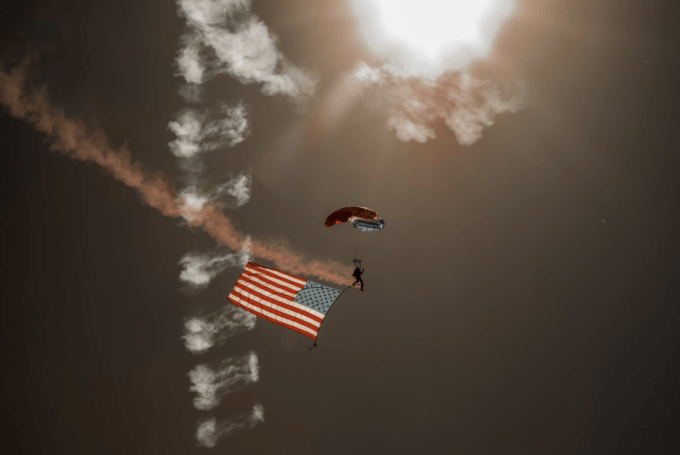
Photo by Denis Oliveira

I first watched Breaking Bad a few years ago, after the show had completed its original run. During these past two months, I’ve rewatched the entire series, which–in light of the Trumpian reign of terror–seems oddly cathartic.   

The locus of Breaking Bad is Albuquerque, New Mexico. Its protagonist is Walter White (Bryan Cranston), a downtrodden, underappreciated high school chemistry teacher.  White, we learn, is a onetime scientific hotshot and had been a core founder of a startup business–an endeavor that made a fortune after his own ignoble exit, robbing him of money and prestige. He lives in a sort of purgatory.

White is suddenly faced with the catastrophic medical diagnosis of advanced, most likely fatal, cancer. A high school teacher has insurance coverage, of course, but in White’s case it is not adequate enough for the first-rate care that will potentially extend or save his life. The show presents this without editorializing or even explanation: It is simply understood that the system will not fully provide.

White taps into his reservoir of chemical expertise and—joining forces with his scabrous (and very funny) ex-student, Jesse Pinkman (played brilliantly by Aaron Paul)—begins to manufacture meth, ostensibly to cover his medical expenses and leave his family a nest egg when he’s gone. Breaking Bad chronicles White’s gradual, pathological transformation from teacher to ruthless criminal mastermind.

A survey of Breaking Bad’s many plot complexities and vast, vivid canvas of characters could fill a book. There is perhaps the most stunning montage I’ve ever seen, delineating the beginning of Walt and Jesse’s new business endeavor. Incongruously juxtaposed with a sprightly lounge-jazz tune and bright, cheery lyrics, Jesse makes his sales rounds amid desolate parking lots, a mostly empty laundromat, and the subsistence-level motels that can be found all over the United States. His meth-consuming clientele ranges from the rough-looking, the haggard, the sinister—and in one telling instance, the prosperous.  It is life in these United States.

Breaking Bad loosely follows in the Godfather lineage, in which enshrined American archetypes are utilized for nefarious purposes. Vito Corleone arrives at Ellis Island with nothing, and thanks to his discipline, hard work, and foresight, rises to the top. It is the classic American success story. Likewise, Walter White, faced with catastrophe, takes a can-do attitude and uses his scientific skills to save himself and his family.

The Godfather canon also explicitly links organized crime to capitalist success: the idea that the Mafia is a business is an ongoing trope. This is made even more explicit in Breaking Bad. (And interestingly, both Michael Corleone and Water White start out as criminal neophytes, and both eventually out-brutalize hardened criminals.)

White has followed the classic entrepreneurial playbook by launching his own startup. This particular startup is illegal, but it mimics legitimate business models and harnesses those cherished concepts of “disruption” and “innovation.” His meth has a distinctive blue tint that makes for effective branding. The quality and purity of the product keep the customers coming back. White even brands himself with an attention-grabbing alias: Heisenberg, in a perverted homage to the German scientist-philosopher Werner Heisenberg.

White takes immense pride in his product, its purity, and in that blue tint. But like so many entrepreneurs, Walt and Jesse certainly have the technical know-how, yet are lacking in expertise when it comes to effective product distribution. It could be grist for a TED Talk.

In order to move their product, they enter into a business alliance with Gus Fring, the straitlaced, courteous owner of the Los Pollos Hermanos fast-food chicken chain: paragon of respectability, civic booster, friend of the police—and, in reality, a brutal drug kingpin.

Breaking Bad is set in a United States full of sinister nooks and crannies. The high school teacher produces meth. The friendly fast-food outlet is, in reality, a crime epicenter. Even the local vacuum cleaner store is the place of nefarious secrets. The proprietor of one such store—played by the late Robert Forster, in his final role—is known as the “disappearer.” For a large sum of money, he can provide you with an entirely new identity and place to live. The viewer is not privy to any backstory; we have no idea who this disappearer really is. All we have is shadowy conjecture.

In the Breaking Bad constellation, there are deceptions large and small, violence at every turn, white supremacists. The New Mexico desert is simply a utilitarian device to dispose of contraband or bodies.

Authority figures are inept: White is growing his burgeoning drug empire under the very nose of his brother-in-law, a highly placed drug enforcement agent. If they’re not inept, they’re part of the rot and grand deception. There is the twisted, cheerfully amoral lawyer and fixer Saul Goodman (titular character of the Better Call Saul spinoff) and the ruthless henchman Mike Ehrmantraut, who is a defrocked Philadelphia policeman.

Breaking Bad is a study in fear: If one enters Walter White’s orbit, the threats come from a wide array of sources. Nobody will help you. And it is strongly implied that nobody will help you, really, even if you stay out of Walter White’s orbit.

The United States as a whole is saturated with shadow and incongruity. Are there other countries this continuously frightened?  We are being invaded by fearsome migrants, so ferocious as to eat household pets. There is ANTIFA, Black Lives Matter—posing threats nobody can define–Venezuelan gangs, a trans and gay “agenda”—which also has no definition–and a president who was secretly a Kenyan. We are being visited by UFOs that potentially bear the threat of annihilation—and the government knows this and is keeping the salient details hidden. In the outside world, we are beset with a growing list of lethal threats: Iran, China, North Korea, Cuba, Islamic fundamentalism. And in the Trump universe, even the dead have malevolent power: they vote, they collect Social Security benefits.

Breaking Bad is fiction and comes to a delineated conclusion—which may be why watching it has been cathartic. It is a startlingly accurate look at the twisted, frightened American psyche.

Our unfolding political and social catastrophe is, of course, very real. There is no conclusion, delineated or otherwise. In fact, this is just the beginning.

The Meltdown of the United States


 April 17, 2025
Facebook

Photo by Eric Brehm

“The whole world has decided that the U.S. government has no idea what it’s doing.”

– Mark Blyth, “Inflation: A Guide for Users and Losers,” (New York Times, April 14, 2025.)

Professor Mark Blyth’s remarks were aimed at the Trump administration’s creation of turmoil in the world’s financial markets due to its completely inept handling of the bond markets and the start of a trade war with China.  But Blyth’s charge could have been leveled at every aspect of Trump’s governance over the past three months, beginning with the appointment of the most inexperienced and least capable cabinet secretaries and agency heads in the history of the United States.  Donald Trump’s inauguration address for his first term in 2017 talked of “American Carnage.”  Well, eight years later, here we are—American Carnage.

In less than 90 days, the United States under Trump has become a very different country.  It is not an exaggeration to say that the United States is facing a meltdown that will be difficult to reverse.  The executive branch has taken on powers that are usually associated with wartime requirements.  The legislative branch has been largely neutralized because of the near total abdication of the Republican Party.  And the judicial system is facing an unprecedented challenge from a president and vice president who have no respect for our courts and our judges.  Trump has fired at least 15 inspectors general who were tasked by the Congress to root out abuses in federal agencies.  This is an open invitation for corruption and abuse.

The United States is facing existential, constitutional, and identity crises that mark the country’s decline; the impact can already be seen in terms of our domestic and international instability.

THE CONSTITUTIONAL CRISIS:  Donald Trump’s failure to obey the Supreme Court’s unsigned order last week to take steps to garner the return of a Salvadoran migrant—Kilmar Abrego Garcia—marked the beginning of a constitutional crisis that was anticipated by many who feared Trump’s return to the White House.  Abrego Garcia was wrongfully deported to the most notorious prison in El Salvador, and there is still no evidence of wrongdoing on his part.  He has never been arrested or accused of a crime.  El Salvador President Nayib Bukele told Trump on April 14 that he would not return Abrego Garcia, and Attorney General Pam Bondi, sitting next to Trump, said that it was up to El Salvador to decide.  In a perfect example of the abject cruelty and heartlessness of the Trump administration, Bondi added that “if they want to return him, we would facilitate it, meaning provide a plane.”

Last week, Trump said he had no respect for the decisions of federal courts, but would obey the decisions of the Supreme Court.  Two days later, the Trump administration threw down the gauntlet, stating that it was not required to engage El Salvador’s government in order to facilitate Abrego Garcia’s return.  Abrego Garcia’s deportation amounted to a case of “official kidnapping,” as he was removed from the United States without due process.  Trump’s tone of defiance was backed by his Department of Justice that is moving to expand the powers of the executive branch in ways that are illegal and even unconstitutional.

THE EXISTENTIAL CRISIS:  The constitutional crisis places the United States in an existential crisis that finds leading members of the administration, particularly the Attorney General and the Deputy Chief of Staff to the president questioning fundamental concepts of the rule of law and freedom itself.  There has not been a challenge of this magnitude at any time in U.S. history with the exception of the Civil War period in the 1860s.  For the past 150 years, U.S. politicians and historians have prided the United States on its exceptionalism, which set the United States apart and justified the export of U.S. traditions and values.  “Exceptionalism” no longer works as a trope in political speeches and historical narratives.

Over the past 80 years, the United States took particular pride in playing an indispensable role in ridding the world of Fascist and Communist threats, but the Trump administration has created strategic confusion concerning U.S. goals and objectives.  The state of the Atlantic alliance is now in question; the trade and tariff war with China is worsening; and the pressure on Ukraine has raised doubts about U.S. support among allies in Europe and Asia.

THE IDENTITY CRISIS:  The identity crisis is marked by the profound meanness of Trump himself, who is personally responsible for the cruelty that marks his administration’s illegal and unconstitutional handling of refugees.  The poem on the Statue of Liberty expresses the statue’s role as a symbol of welcome and hope.  Now refugees in the United States, who have encountered violence in their own countries, find greater violence in the United States.  Trump has committed himself to deporting one million immigrants in his first year, and only a lack of funding and staffing will probably prevent that goal.  Deputy Chief of Staff Stephen Miller is directing the deportation effort, pressing 30 countries to take migrants who are not their citizens.  The case of Abrego Garcia is typical of the overwhelming meanness of the Trump team.

The revocation of the visas of foreign students by Secretary of State Marco Rubio, which appears to be his only activity these days, is another marker of the new U.S. identity.  In less than 60 days, more than 1,000 international students have had their visas revoked as part of a phony effort to fight anti-semitism on college campuses.  Columbia University student Mahmoud Khalil was the first case in this crackdown, and it has caused many international students to self-deport, which is exactly what Trump, Rubio, and Miller favor.  As a result, foreign students will not consider U.S. universities for their higher education, especially since Canada and Australia offer far more safety and support.

American citizens themselves are also experiencing the meanness of the Trump team.  Trump has revoked security protection for President Joe Biden’s son and daughter, and even talked of Hunter Biden as deserving of the death penalty, which explains why Biden pardoned his son before leaving office in the first place.  Trump’s language has created serous serious concerns for former national security adviser John Bolton, Dr. Anthony Fauci, and General Mark Milley, which probably explains Trump’s delight in removing their security protection. More than a dozen prosecutors who worked for special council Jack Smith’s criminal investigation of Trump have been fired.

Every important institution in the United States is being targeted by the troglodytes in the Trump administration, even libraries and museums that we rely on as the “most trusted sources of information in this country,” according to the CEO of the American Alliance of Museums.  We used to say that the Soviet Union was the only country in the world that had an “unpredictable past,” but that charge could be applied to the United States as well.  Last month, Trump issued an executive order called “Restoring Truth and Sanity to American History,” which promises a revision of our historical narrative.

Trump himself has targeted the Smithsonian Institution and the National Museum of African American History and Culture for retooling and revision.  Vice President J.D. Vance, who now sits on the Smithsonian’s board, is in charge of removing the institution’s “improper ideology.”  Elite universities; successful regulatory agencies; health departments; and prestigious law firms  are being targeted and weakened in the process.  Donald Trump even engineered a a direct takeover of the Kennedy Center, which was an example of his pathological narcissism.

Russian President Vladimir Putin said that the collapse of the Soviet Union in 1991 was the “greatest geopolitical disaster of the 20th century.”  It is possible that the Soviet collapse endowed the United States with too much power for its own good, leading to the misuse of power in the expansion of the North Atlantic Treaty Organization; the twenty years of war in Afghanistan, and a continued military presence in Iraq that followed a similar twenty-year war.  The greatest geopolitical disaster thus far in the 21st century may be the political and economic meltdown of the United States, which is having far-reaching results for the entire international community.

In addition to the domestic turmoil initiated by the Trump administration, the United States has been losing power and influence in the international arena, including the decline of U.S. influence in the Atlantic Alliance that had secured the safety of U.S. relations with Western Europe; the mindless and “monumental split” between the United States and China that makes no geopolitical sense whatsoever; the retreat from arms control and disarmament; the purge and politicization of the professional military; and last week’s threat to the global financial system that had secured the primacy of the U.S. dollar and U.S. bonds in international markets.  Britain lost the primacy of the pound in the wake of the Suez War in 1956.  History does not repeat itself, but it does rhyme; perhaps we are witnessing the lost primacy of the dollar due to the idiocy of the Trump national security team.

Melvin A. Goodman is a senior fellow at the Center for International Policy and a professor of government at Johns Hopkins University.  A former CIA analyst, Goodman is the author of Failure of Intelligence: The Decline and Fall of the CIA and National Insecurity: The Cost of American Militarism. and A Whistleblower at the CIA. His most recent books are “American Carnage: The Wars of Donald Trump” (Opus Publishing, 2019) and “Containing the National Security State” (Opus Publishing, 2021). Goodman is the national security columnist for counterpunch.org.


Chad

Marine Le Pen invited by the Chadian dictatorship

Saturday 12 April 2025, by Paul Martial


France’s far right Rassemblement national (RN) party has been trying to establish relations in Africa for several years now, and party leader Marine Le Pen’s visit to Chad from 14-16 March 2025 is the latest avatar. The RN leader, accompanied by one of her close associates Louis Aliot, was received by Mahamat Déby, the Chadian president who has been in power for over three years thanks to a coup d’état ostensibly supported by Emmanuel Macron. Even if relative, the RN leader’s interest in Africa, the source and cause of the much-hated “migratory submersion”, seems counter-intuitive to say the least.

The RN tour operator

Marine Le Pen was already received by former Chadian President Idriss Déby in 2018 and by Senegalese President Macky Sall in 2023. This visit was preceded by an article in the French newspaper L’Opinion, in which she made the incongruous proposal that Senegal should become a member of the UN Security Council on behalf of Africa. Myriam Lamzoudi, a local politician from the Oise region and a defector from the Les Républicains party, spares no effort in forging links between the RN and representatives from African countries and the diaspora. She scours conferences and seminars to hand out business cards and propose meetings. On her Facebook account, between two posts in her chat room, she doesn’t hesitate to praise Nelson Mandela and protest against the racist insults levelled at certain French journalists.

But beyond this, Le Pen’s few connections are mostly the fruit of the mediation of Philippe Bohn, former CEO of Air Sénégal, with a well-stocked address book on the continent. He uses his good relations within the Christian Democrat International to promote the RN’s policies to African audiences.

During her visits to Africa, Le Pen avoids certain subjects, such as the positive effects of colonization, her opposition to any repentance concerning France’s colonial policy, and restrictions on aid and visas. She is also very discreet about the statements made by her father and mentor in 1986: “I believe in the inequality of races”.

It’s worth noting that the African potentates who have agreed to receive Le Pen’s father, then his daughter, are totally indifferent to the fate of their compatriots who are the target of the racist hatred promoted in France by their interlocutor, the same indifference they have in their own country.

L’anticapitaliste 27 March 2025


Attached documentsmarine-le-pen-invited-by-the-chadian-dictatorship_a8936-2.pdf (PDF - 903 KiB)
Extraction PDF [->article8936]

Paul Martial
Paul Martial is a correspondent for International Viewpoint. He is editor of Afriques en Lutte and a member of the Fourth International in France.


International Viewpoint is published under the responsibility of the Bureau of the Fourth International. Signed articles do not necessarily reflect editorial policy. Articles can be reprinted with acknowledgement, and a live link if possible.
Palestine: Land Day, March 30th

Sunday 13 April 2025, by Louison le Guen


Since 1976, the Palestinian people have celebrated Land Day every March 30th, a day rooted in the history of Palestinian resistance and emblematic of the current struggle for survival. In 1976, the Israeli government launched a plan to Judaize the Galilee, confiscating 20,000 dunams of land (18 km2) in the midst of Arab villages. The aim was to build Jewish settlements on land belonging to Palestinian Arab citizens - the majority of the region’s population. Everywhere in Palestine, from the Galilee to the Negev, in towns and villages, there were general strikes and demonstrations.

On March 30, 1976, Israeli police opened fire, killing six people, wounding dozens and arresting hundreds. It was the first time since 1948 that Palestinian citizens of Israel had organized a response to Israeli policy as a national Palestinian collective. Since then, this date has become Land Day for Palestinians around the world, symbolizing their attachment to the land, their resistance and their struggle against occupation and colonization.

To stay, to cultivate, is to resist!

Since then, the dispossession of the land of the Palestinian people has never ceased. Since the start of the genocide in Gaza in 2024, the Israeli army has confiscated an additional 41 km2 of land in the West Bank and Jerusalem. The number of settlers has increased 5-fold in 30 years, to almost 800,000 today. In addition to the authorized settlements, which will exceed 10,000 units in the first quarter of 2025, i.e. more than in the whole of 2024, the Israeli state systematically validates all unauthorized settlements, the outposts set up by the most aggressive settlers, and sends its army to protect them.

The colonization of the West Bank continues, more than ever, and the linking of settlements accentuates the fragmentation of territories under Palestinian control. In Gaza, in addition to continuing military aggression, the genocidal state’s political offensive includes the departure of Hamas leaders to allow implementation of the Trump plan, the ‘voluntary’ exile of Gazans. The aim is to get 40% of them to leave! It’s easy to see what’s at stake, and the vital need for Palestinians to stay, cultivate and resist.
A provocation

Netanyahu’s decision to build two new roads in the occupied West Bank on the very day of March 30, 2025, should be seen as yet another provocation. The effect will be to reinforce the settlements in the Ma’ale Adumim region, east of Jerusalem, where more than 40,000 settlers are already illegally established. The Israeli NGO “Peace Now” denounces this “new apartheid road”, which will annex around 3% of the West Bank - yet another step towards the physical and political liquidation of the Palestinian question.

L’Anticapitaliste 2 April 2025


Attached documentspalestine-land-day-march-30th_a8941.pdf (PDF - 904 KiB)


Louison le Guen
Louison le Guen writes for l’Anticapitaliste.


International Viewpoint is published under the responsibility of the Bureau of the Fourth International. Signed articles do not necessarily reflect editorial policy. Articles can be reprinted with acknowledgement, and a live link if possible.
Serbian students cycle to Strasbourg, Macron prefers to receive the autocrat Vučić

Monday 14 April 2025, by Jean-Arnault Dérens


Challenged by a social movement of unprecedented scale, Serbian President Aleksandar Vučić was received on Wednesday 9 April in Paris for a working lunch with Emmanuel Macron. A gesture perceived as a provocation in Serbia, while a hundred students cycle to Strasbourg.


Aleksandar Aleksandar Vučić was smiling as he announced on Sunday evening [6 April] that he would be going ‘in two or three days to the Elysée Palace’ to ‘annoy a little more those who don’t like Serbia’. In one of his endless televised addresses to the nation, which he is fond of, he had just ruled out the possibility of early elections by pulling out of his hat the name of a complete unknown, Dr Đuro Macut, who was tasked with forming the new government, the outgoing prime minister having been ‘sacrificed’ at the end of January, without calming the wave of protest that is shaking the country.

Emmanuel Macron’s invitation was reportedly extended during a telephone conversation between the two men on 30 March, but it comes across as a real provocation at a time when around a hundred students have set off on bicycles from Novi Sad on 3 April to reach Strasbourg, where they are due to arrive on 15 April to present their demands to the European institutions. In this long 1,400-kilometre race ‘to wake up Europe’, they were welcomed as heroes in Budapest - the mayor of the Hungarian capital, an opponent of Viktor Orbán, joined the Serbian diaspora - and in Vienna. In the Austrian capital, all the Balkan diasporas gathered to cheer the student cyclists in Marie-Thérèse Square, recalling that, in all their countries, ‘corruption kills’.

Since the beginning of the movement, sparked by the tragic collapse of the canopy at Novi Sad railway station on 1 November 2024, Serbian civil society has repeatedly criticised the European Union for its silence. On 20 March, five days after the largest demonstration ever organised in Belgrade, marked by the use of a hypersonic weapon by the police, the European Commissioner for Enlargement, the Slovenian Marta Kos, caused a scandal by receiving Aleksandar Vučić in Brussels and declaring that the meeting had been ‘constructive’. Faced with the rising anger in both Serbia and Slovenia, where public opinion is very supportive of the Serbian students, the commissioner merely explained that, in her role, ‘she could not have spoken to anyone else’ but the authorities.

In fact, apart from a few rhetorical calls to ‘avoid violence’, the European Union has remained silent since the beginning of the crisis. This silence, which contrasts with the attention paid to Georgia a few months ago, is tantamount to support for the Serbian regime. But why such complacency?

The European Union, which no longer has any real prospect of enlargement to offer the Balkans, is betting solely on the ‘stability’ of the region, which it believes is better guaranteed by constant compromises with authoritarian regimes such as that of Serbia. Germany, for its part, covets the Serbian lithium reserves. However, only Aleksandar Vučić’s regime is capable of guaranteeing its exploitation, which is strongly contested by the population.
Economic interests and ‘Franco-Serbian friendship’

France, for its part, signed a contract at the end of August 2024 to sell twelve state-of-the-art Rafale fighter jets to Serbia for a trifling 3 billion euros. The planes have not yet been delivered or paid for, and it is not certain that they ever will be, as it is unclear where Belgrade could find such a sum. At the time, the Elysée’s talking points explained that Serbia needed to be ‘anchored’ in the Western camp and distanced from Russia...

This is the strategy that France has stubbornly pursued since the start of the large-scale invasion of Ukraine in February 2022. While Serbia is the only candidate country not to apply sanctions against Russia, it would be necessary to ‘give everything’ to its cunning leader in order to try to convince him that his best friends would be in the West. In reality, promises to sell only commit those who want to believe in them, and today it is Belgrade that, thanks to these virtual Rafales, has Paris on a leash.

Economic interests are not limited to fighter planes. For several years now, France has been conducting a relatively aggressive economic diplomacy in Serbia: Vinci has got its hands on Belgrade airport and Paris dreams of selling nuclear power plants to Serbia, which dreams of acquiring them. The French engineering firm Egis has been commissioned by the Serbian Ministry of Mining and Energy to conduct a preliminary technical study. For the record, this same firm was involved in supervising the construction of the Novi Sad railway station.

By receiving Aleksandar Vučić in Paris, Emmanuel Macron is going further than any other European country in supporting a regime that is overwhelmingly rejected by its population, which cannot be explained by economic interests or an obsession with stability. Since his two official trips to Serbia, in 2019 and 2024, even mangling a few words of Serbian on occasion, the French president seems to have become infatuated with his counterpart Vučić and the old spectre of ‘Franco-Serbian friendship’ dating back to the First World War and cultivated above all in some far-right circles. Serbian students are well aware of this history but, if they sing the old song Tamo daleko, which dates from this conflict, it is to demand justice and truth.

9 April 2025

Translated by International Viewpoint from Mediapart.


Attached documentsserbian-students-cycle-to-strasbourg-macron-prefers-to_a8948.pdf (PDF - 898.8 KiB)
Extraction PDF [->article8948]


Jean-Arnault Dérens
Jean-Arnault Dérens is a journalist at Mediapart.


International Viewpoint is published under the responsibility of the Bureau of the Fourth International. Signed articles do not necessarily reflect editorial policy. Articles can be reprinted with acknowledgement, and a live link if possible.
Mali: the dead end of all-out war

Tuesday 15 April 2025, by Paul Martial


An alliance is emerging between jihadist forces and pro-independence forces in northern Mali, which would improve their balance of power in the ongoing conflict.


In February, the convoy of the Minister for Higher Education was attacked in the Sikasso region, followed a week later by a second attack on the Kati-Soribougou road. This time it was the Minister of Sanitation who was targeted. These two raids were claimed by the Islamists, who continue to gain ground to the point where the state now controls only half the territory.

A desire for peace

In this difficult situation for the military junta, the announcement of talks between the al-Qaida-affiliated Groupe de soutien à l’islam et aux musulmans (GSIM) and the Front de libération de l’Azawad (FLA), which brings together all the pro-independence and autonomy organisations in northern Mali, is a new source of concern.

An initial non-aggression pact was signed in the spring of 2024 between the two organisations, which have very different agendas. The Islamists want to establish a state based on Sharia law, while the FLA is campaigning, at least for its most radical members, for secession from the country.

These talks are a response to the people’s desire for peace. This desire has been expressed for years and was reiterated during the national dialogue organised by the putschists. The FLA has said it is sensitive to this, especially as the idea is also widely shared by members of the communities where it is established. There is also the idea that the GSIM could abandon part of its programme and its most radical methods, in the image of the evolution of the al-Nosra Front, which participated in the creation of Hayat Tahrir al-Sham, which has taken over the reins of government in Syria.
Negotiations under way

It would appear that the GSIM has accepted the FLA’s proposal on how Sharia law should be applied, in a less brutal manner and under the responsibility of religious notables recognised by the communities, regardless of whether or not they are affiliated to the GSIM. For the GSIM, disaffiliation from al-Qaeda could even be envisaged if there were major upheavals within the country, such as the fall of the government or the independence of Azawad. Although the GSIM believes that the international community would find it easier to accept a state based on Sharia law than the partition of Mali. Finally, should the situation arise, the GSIM does not rule out the possibility of joint administration of towns or territories with the FLA.

This rapprochement between the two organisations is also the consequence of the attitude of the junta, supported by the Russian mercenaries of Wagner/Africa Corps, which refuses to consider a political solution to this crisis, which is rooted in economic, social and community problems.

The people are paying a high price for the ongoing conflict. In 2024, the Malian armed forces and their Russian auxiliaries killed three times as many civilians as the Islamists - even if the latter, through their policy of encircling towns, are deepening the impoverishment of the population and carrying out violent reprisals.

L’anticapitaliste 15 March 2025


Attached documentsmali-the-dead-end-of-all-out-war_a8945.pdf (PDF - 904.8 KiB)
Extraction PDF [->article8945]


Paul Martial
Paul Martial is a correspondent for International Viewpoint. He is editor of Afriques en Lutte and a member of the Fourth International in France.

International Viewpoint is published under the responsibility of the Bureau of the Fourth International. Signed articles do not necessarily reflect editorial policy. Articles can be reprinted with acknowledgement, and a live link if possible.

Trump’s racism becomes policy: Blacks, Latinos, immigrants pay the price


Wednesday 16 April 2025, by Dan La Botz


President Donald Trump’s macho, white, nationalist ideology leads him to attack women, LGBT people, workers, the poor, the disabled and others, but his racism is particularly striking. He has in myriad ways made racism against Blacks, Latinos, and immigrants official U.S. policy. From the highest levels of government to the lowest economic levels of society people of color are being discriminated against, mistreated, and victimized as at no time since the 1920s.


Some of Trump’s actions are notorious, such as his racist firing of air force general CQ Brown Jr. a Black man, as chair of the joint chiefs of staff for supposedly putting diversity, equity, and inclusion programs ahead of the defense of the United States. Other Trump actions affect millions.

Trump issued an executive order ending all federal “diversity, equity, and inclusion” or DEI programs in the federal government. Many of those leading and working in such programs were Black, Latino, or Asian, and now hundreds and perhaps thousands have been fired. DEI represented an attempt by earlier administrations to ensure that federal programs served a diverse population. Now the government will lean the other way. In a spiteful example, Trump, in making English the only official language, has terminated weather emergency announcements—hurricanes, tornados, floods—in languages other than English.

Trump’s hatchet man Elon Musk is now carrying out the firing of 13 percent of the country’s 2.4 million civilian workers, that is, 312,000 people. While Black people make up 13.7 percent of the U.S. population, they made up 18.2% in the federal workforce. For decades the federal government gave Black people opportunities for secure jobs with decent pay and benefits when many private corporations did not.

As one former Black federal employee told the nonprofit Capital B news service, ‘My whole life is built on having a parent who was working in the federal service. That definitely shaped me — all of the opportunities and experiences that I got. That’s what we’re talking about when we talk about generations that are going to be impacted by these executive orders.”

Another large group being targeted are undocumented immigrants whom Trump plans to deport from the United States. Trump claims there are 20 million, though most experts say 11 million. In his first two months in office, Trump deported only about 25,000 undocumented immigrants, fewer than former president Joseph Biden, but U.S. immigration police are gearing up for truly mass deportation in the near future.

Trump is violating the U.S. Constitution and laws in deporting some 238 Venezuelan alleged gang members without any hearings or other due process and sending them to the notorious Maximum Security Terrorism Confinement Center in El Salvador. The Los Angeles Times reports that 90% of them had no criminal records and many were identified as gang members solely by their tattoos. There are various lawsuits attempting to reverse or stop such deportations.

Even legal immigrants are in danger. Trump ended what is called “temporary protective status” for 472,000 Venezuelans, 213,000 Haitian, 110,900 Cubans, over 93,000 Nicaraguans,14,600 Afghans, and 7,900 Cameroonians who will in the next few months become subject to deportation. If deported to their native countries, many of these people will face violence from their home country’s governments.

Trump has also begun to move thousands of immigrants’ Social Security numbers into the “death master file,” so that they become “legally dead,” making it more difficult to work in the United States or to get access to credit cards or bank accounts. The idea is to make their lives so impossible that they will “self-deport.”

While it is good that many have filed court cases against these actions, it will take a powerful working-class movement of unions and Black, Latino, and immigrant workers to stop Trump.

Attached documentstrump-s-racism-becomes-policy-blacks-latinos-immigrants-pay_a8950.pdf (PDF - 905.6 KiB)
Extraction PDF [->article8950]


Dan La Botz
Dan La Botz was a founding member of Teamsters for a Democratic Union (TDU). He is the author of Rank-and-File Rebellion: Teamsters for a Democratic Union (1991). He is also a co-editor of New Politics and editor of Mexican Labor News and Analysis.


International Viewpoint is published under the responsibility of the Bureau of the Fourth International. Signed articles do not necessarily reflect editorial policy. Articles can be reprinted with acknowledgement, and a live link if possible.