Thursday, April 17, 2025

The Dire Wolf Has Not Been Revived: Problems for Conservation Biology


 April 16, 2025
Facebook

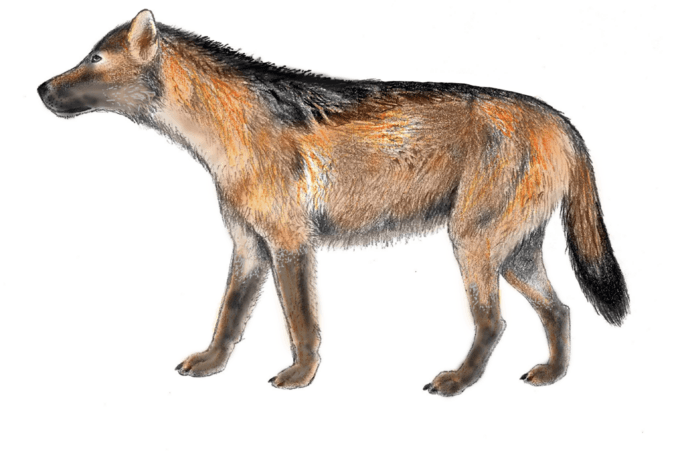
Illustration of what an extinct Ise Age dire wolf (Aenocyon dirus) may have looked like, based on mounted fossil material from the tar pits at Rancho La Brea, California. Illustration by Laura Cunningham Copyright 2025.

In early April, Colossal Laboratories & Biosciences claimed they had resurrected the long-extinct Ice Age dire wolf using gene editing techniques such as CRISPR on gray wolf genes. These edited genes were then inserted into eggs that were carried to term by domestic dogs. In a big press splash and social media frenzy, Colossal revealed the white-colored wolves to the world as a supposed model for the conservation of imperiled species.

Secretary of the Interior Doug Burgum tweeted about how this “marvel of ‘de-extinction’ technology can help forge a future where populations are never at risk.” He continued, “The only thing we’d like to see go extinct is the need for an endangered species list to exist.” We all share that dream, Mr. Burgum, but true conservationists aren’t interested in sci-fi futures where near-extinct animals live in captivity for the sake of thwarting true protections.

Science does not support this methodology as a viable future to save wildlife. Colossal chose to genetically engineer a designer wolf-dog straight out of Game of Thrones, cherry-picking some traits that they thought might resemble a dire wolf such as larger size. But they are ignoring most other morphological characters that define dire wolves as a separate species from living wolves. Dire wolves had very strong jaws and a bone-crushing dentition, beginning to approach hyenas.

Dire wolf DNA that has been extracted from Pleistocene fossil material: a recent peer-reviewed paper analyzed the fragmentary nuclear genome of dire wolves compared to living canids (see Perri et al., 2021, Dire wolves were the last of an ancient New World canid lineage). Dire wolves fall out genetically as closer to jackals than to gray wolves, and appear to be a unique and ancient North-South American canid lineage that diverged as far back as 6 million years ago from gray wolves and coyotes.

Fossil dire wolves turn out to be so different from modern wolves (Canis lupus) that they were given a whole new genus to mark them as distinct from the gray wolf and its living relatives. Dire wolves are in their own group: Aenocyon dirus, a lineage which went extinct about 12,900 years ago.

Colossal’s own scientists team agreed, differing markedly from their media team.

In a detailed and technical scientific paper released as a preprint before peer review, Colossal scientist Gregory Gedman and a slew of credentialed co-authors analyzed reconstructed paleogenomes from fragmentary ancient DNA extracted from two fossil specimens of dire wolf. Their results bolstered previous research indicating that the dire wolf lineage diverged early, before the split between black-backed jackals and other wolf-like canids, about 4.5 million years ago in the Miocene Epoch. Colossal’s DNA analysis was sensitive enough to pick up two or three modeled gene flow events through the history of the dire wolf lineage where admixtures (hybridization) of other canid lineages enriched dire wolves. The proposed gene tree might support some past Ice Age gene flow from dire wolves into the lineage that lead to gray wolves and coyotes. But that is a far cry from saying that genetically engineered modern white-colored gray wolves are the same as dire wolves.

Colossal’s project isn’t even close to de-extincting dire wolves, and that’s a good thing. Where would they live?

Habitat loss is one of the primary drivers of population declines and extinctions. The loss of habitat for rare or imperiled species is a major issue neglected by this GMO wolf experiment. Colossal is keeping its three white wolf hybrids in a zoo-like enclosure, hardly their native habitat.

Elon Musk shared Colossal’s post and joked about ordering a mini mammoth from the tech company. At least, I hope it was a joke. While this billionaire fantasizes about having the coolest pet in town, his pet project – DOGE – is gutting the very agencies tasked with ensuring species don’t go extinct in the first place.

The negative implications for threatened and endangered species conservation are profound. Wild animals are more than a sum of genetic characters and phenotypic looks. They are part of a complex ecosystem with food webs, behavioral interactions, and population dynamics. Wild species need habitat, and plenty of it, to survive. No amount of technology can fix this need, and intact habitat must be conserved to allow endangered species to thrive.

Laura Cunningham has a Bachelor’s of Science degree in Paleontology from the University of California at Berkeley. She worked in the field of wildlife biology for several years before joining the conservation nonprofit Western Watersheds Project, as their California Director. She is the author of A State of Change: Forgotten Landscapes of California (Heyday: 2010).


Safeguarding the future of electric vehicles: New AI-powered method detects lithium plating in electric vehicle batteries


Beijing Institute of Technology Press Co., Ltd
Intelligent lithium plating detection and prediction method for Li-ion batteries based on random forest model 

image: 

Intelligent lithium plating detection and prediction method for Li-ion batteries based on random forest model

view more 

Credit: GREEN ENERGY AND INTELLIGENT TRANSPORTATION


Electric vehicles (EVs) have emerged as a cornerstone of sustainable transportation, but their widespread adoption faces a critical safety challenge: lithium plating in lithium-ion batteries (LIBs). Lithium plating occurs when lithium ions accumulate on the surface of a battery's negative electrode rather than intercalating properly into the graphite structure. This phenomenon typically happens during fast charging, at low temperatures, or at high states of charge, which can lead to rapid capacity degradation and even catastrophic safety incidents. Traditional detection methods either require specialized equipment or lack sufficient accuracy for real-world applications. Researchers from University of Shanghai for Science and Technology have now developed a feasible solution that could optimize EV battery safety monitoring.


This new research introduces an intelligent lithium plating detection and early warning system based on the Random Forest machine learning algorithm. This innovative approach analyzes data collected during pulse charging to identify the subtle electrical signatures that indicate lithium plating is occurring. What makes this approach novel is its ability to detect lithium plating with over 97.2% accuracy using only external electrical measurements. This means the technology can be implemented without modifying existing battery systems.


One of the key innovations in this research is the feature extraction method that transforms limited battery data into rich, multi-dimensional features. The researchers demonstrated that using single features alone achieved only 68.5% detection accuracy, while their multi-dimensional approach pushed accuracy beyond 97%. The system analyzes normalized internal resistance patterns and relaxation voltage characteristics during pulse charging, extracting subtle patterns that indicate lithium plating long before it becomes dangerous. This early detection capability could prevent battery degradation and potentially catastrophic safety incidents. The technology has immediate applications for electric vehicle manufacturers and battery management system developers. Because it requires only standard electrical measurements, it can be deployed as a software update to existing battery management systems or implemented in cloud-based monitoring platforms.


Looking ahead, the researchers plan to expand their dataset to include different types of lithium-ion batteries, enhancing the model's versatility across various battery chemistries and form factors. This would make the technology applicable not just to EVs but also to energy storage systems, consumer electronics, and other applications relying on lithium-ion technology. The team is also exploring how this technology could be integrated with fast-charging protocols to dynamically adjust charging parameters based on real-time lithium plating risk assessment, potentially enabling faster charging without compromising battery longevity or safety.


As electric vehicles continue to replace internal combustion engines worldwide, technologies like this intelligent lithium plating detection system will play a crucial role in ensuring that the transition to electric mobility is not just environmentally beneficial but also safe and reliable for all users.


Reference

Author: Guangying Zhu a, Jianguo Chen a, Xuyang Liu a, Tao Sun a, Xin Lai a, Yuejiu Zheng a b, Yue Guo c, Rohit Bhagat c

Title of original paper: Intelligent lithium plating detection and prediction method for Li-ion batteries based on random forest model

Article link: https://doi.org/10.1016/j.geits.2024.100167

Journal: Green Energy and Intelligent Transportation

https://www.sciencedirect.com/science/article/pii/S2773153724000197

DOI: 10.1016/j.geits.2024.100167

Affiliations:

a School of Mechanical Engineering, University of Shanghai for Science and Technology, Shanghai 200093, China

b State Key Laboratory of Automotive Safety and Energy, Tsinghua University, Beijing 100084, China

c Centre for E-Mobility and Clean Growth Research, Coventry University, Coventry, CV1 5FB, United Kingdom

Informatica and Carnegie Mellon University partner to drive innovation in generative AI for data management


Carnegie Mellon University


REDWOOD CITY, Calif. – April. 17, 2025 – Informatica (NYSE: INFA), a leader in enterprise AI-powered cloud data management, today announced a strategic partnership with Carnegie Mellon University (CMU) School of Computer Science, one of the world's foremost institutions for computer science and artificial intelligence research. The collaboration brings together Informatica’s deep industry expertise and CMU’s academic leadership to advance the development and application of generative AI (GenAI) technologies for data management.

By combining Informatica’s AI-driven innovations with CMU’s cutting-edge research, the partnership aims to accelerate breakthroughs in GenAI-powered data management, particularly within Informatica’s CLAIRE® AI suite. Key areas of focus will include:

  • AI-Driven Automation – Advancing the use of GenAI to automate and accelerate data management processes, reducing costs, complexity and time to value of data management.
  • Metadata-Driven Agentic AI – Developing AI-based automation for multi-source enterprise GenAI applications, enabling businesses to deploy advanced AI solutions that access data from diverse sources with ease.
  • Optimized AI Training & Inference – Innovating new approaches to enhance training and inference efficiency in multi-model enterprise environments, ensuring the best price-to-performance ratio for global, distributed GenAI applications.

"Our partnership with Carnegie Mellon University underscores Informatica’s commitment to pushing the boundaries of what's possible with generative AI in data management," said Rik Tamm-Daniels, Group Vice President of Strategic Ecosystems at Informatica. "By uniting our expertise with CMU's research excellence, we are pioneering AI-driven innovations that will redefine enterprise data management. These advancements will be embedded within CLAIRE GPT and CLAIRE AI Copilot, bringing transformative benefits to our customers and the industry at large."

Martial Hebert, dean of Carnegie Mellon University’s School of Computer Science, praised the collaboration, stating, "Partnerships between academia and industry are essential for driving meaningful advancements in artificial intelligence. By working with Informatica, we can explore real-world applications of generative AI while providing valuable research and hands-on learning opportunities for our students and faculty. This collaboration will contribute to AI breakthroughs that shape the future of technology."

The findings from this research initiative will further enhance Informatica's Intelligent Data Management Cloud (IDMC) platform, equipping enterprises with next-generation AI capabilities to build robust, scalable and AI-ready data foundations. Additionally, the partnership will contribute key innovations to the broader AI research community, reinforcing Informatica's position as a trailblazer in generative AI.

###

About Informatica

Informatica (NYSE: INFA), a leader in enterprise AI-powered cloud data management, brings data and AI to life by empowering businesses to realize the transformative power of their most critical assets. We have created a new category of software, the Informatica Intelligent Data Management Cloud (IDMC). IDMC is an end-to-end data management platform, powered by CLAIRE® AI, that connects, manages and unifies data across any multi-cloud or hybrid system, democratizing data and enabling enterprises to modernize and advance their business strategies. Customers in approximately 100 countries, including more than 80 of the Fortune 100, rely on Informatica to drive data-led digital transformation. Informatica. Where data and AI come to life.

FAU designated a National Center of Academic Excellence in Cyber Research


Florida Atlantic University
CAE-R designation 

image: 

Edoardo Persichetti, Ph.D., an associate professor in the Department of Mathematics and Statistics and director of the Center for Cryptology and Information Security within the FAU Charles E. Schmidt College of Science

view more 

Credit: Florida Atlantic University


Florida Atlantic University has been recognized as a National Center of Academic Excellence in Cyber Research (CAE-R) by the National Security Agency (NSA) and its partners in the National Centers of Academic Excellence in Cybersecurity (NCAE-C). This prestigious designation, awarded through the academic year 2030, affirms the university’s leadership and innovation in the field of cybersecurity research at the doctoral level.

This recognition places FAU among an elite group of institutions nationwide that have demonstrated a sustained commitment to cutting-edge research in cyber defense and security. The CAE-R designation is awarded to universities whose programs meet rigorous academic and research standards set by the NSA and are aligned with the nation’s strategic priorities in cybersecurity.

“This designation is a powerful affirmation of the strength and impact of our research and academic programs in cybersecurity,” said Valery E. Forbes, Ph.D., the dean of the FAU Charles E. Schmidt College of Science. “It highlights our faculty’s dedication to pushing the boundaries of cyber science, and our students’ ability to conduct high-impact research that directly addresses some of the most pressing national security challenges of our time. We are not only advancing the field of cybersecurity but also equipping the next generation of thought leaders and innovators who will serve as the architects of tomorrow’s defended digital infrastructure.”

As a designated CAE-R institution, FAU is positioned to expand its role in shaping the future of cyber research through deeper collaboration with federal agencies, increased access to research funding, and continued innovation in key areas such as cyber threat intelligence, critical infrastructure protection, and emerging digital technologies. The designation not only reflects the strength of the university’s faculty and doctoral programs but enhances opportunities for students to engage in federally relevant research and pursue careers in national defense and cybersecurity.

“I am both proud and deeply humbled by this designation,” said Edoardo Persichetti, Ph.D., an associate professor in the Department of Mathematics and Statistics and director of the Center for Cryptology and Information Security within the FAU Charles E. Schmidt College of Science. “This recognition reflects years of collaborative effort across our faculty, researchers and students who are passionately committed to advancing cybersecurity knowledge and practice. It affirms the national impact of our research and the trust placed in us to contribute meaningfully to the country’s cyber defense capabilities. Being recognized through 2030 is not just an honor – it’s a responsibility we take very seriously, and it motivates us to continue pushing the boundaries of innovation in this critical field.”

The NCAE-C program is managed by the National Cryptologic School at the NSA and operates in close partnership with several key federal agencies, including the Cybersecurity and Infrastructure Security Agency (CISA) and the Federal Bureau of Investigation (FBI). The program office also collaborates with the National Institute of Standards and Technology (NIST) through the National Initiative on Cybersecurity Education (NICE), the National Science Foundation (NSF), the Department of Defense Office of the Chief Information Officer (DoD-CIO), and U.S. Cyber Command (CYBERCOM).

The mission of the NCAE-C program is to build and sustain a collaborative cybersecurity educational framework across community colleges and universities nationwide. This initiative seeks to establish rigorous standards for cybersecurity curricula and academic excellence, foster the development of competencies among both students and faculty, promote community outreach and leadership in professional development, and integrate cybersecurity practices throughout institutional disciplines. Additionally, the program encourages active engagement in addressing the complex challenges facing cybersecurity education today.

- FAU -

About Florida Atlantic University:
Florida Atlantic University, established in 1961, officially opened its doors in 1964 as the fifth public university in Florida. Today, Florida Atlantic serves more than 30,000 undergraduate and graduate students across six campuses located along the Southeast Florida coast. In recent years, the University has doubled its research expenditures and outpaced its peers in student achievement rates. Through the coexistence of access and excellence, Florida Atlantic embodies an innovative model where traditional achievement gaps vanish. Florida Atlantic is designated as a Hispanic-serving institution, ranked as a top public university by U.S. News & World Report, and holds the designation of “R1: Very High Research Spending and Doctorate Production” by the Carnegie Classification of Institutions of Higher Education. Florida Atlantic shares this status with less than 5% of the nearly 4,000 universities in the United States. For more information, visit www.fau.edu.


First ever assessment reveals accuracy of key maps cocoa companies rely on for environmental compliance


The World Cocoa Foundation (WCF) and the Alliance of Bioversity International and CIAT have assessed the most commonly used maps for environmental compliance


The Alliance of Bioversity International and the International Center for Tropical Agriculture

New report analyzes maps used by cocoa companies 

image: 

Credible environmental reporting is essential for companies to meet sustainability commitments.

view more 

Credit: World Cocoa Foundation


To strengthen and standardise environmental monitoring across the global cocoa sector, the World Cocoa Foundation (WCF), in collaboration with the Alliance of Bioversity International and CIAT, has for the first time assessed the quality of the maps most commonly used to assess deforestation, tree planting (reforestation/agroforestry) and greenhouse gas (GHG) emissions and removal monitoring. The study supports cocoa companies who rely on these sources to meet regulatory compliance and improve their sustainability impact.

Credible and compliant environmental reporting is essential for companies to meet EU regulations and net-zero commitments. This has led to increased demand for best practice remote sensing methods, whose high accuracy analyses depend on high quality map data. 

Without an independent assessment of the quality of these data sources, companies could be using inaccurate data – risking unfair fines due to false claims, failure with compliance and potential exclusion from the EU market for producing countries and farmers. 

New criteria for the cocoa sector

This first-of-its-kind assessment addresses this challenge, drawing on criteria that WCF and CIAT – one of 15 CGIAR research centres – developed with key stakeholder groups including governments and WCF members.

Focusing on Ghana and Côte d'Ivoire, it assesses how well the maps capture real-world land cover, for instance: whether cocoa plantations are accurately distinguished from natural forests; whether they provide adequate geographical coverage within cocoa growing regions; and how well the methods for developing the maps and underlying data are documented and made publicly accessible. It also assesses the inclusion of smallholder farmers, who are often left out of compliance system development but are essential for developing accurate and equitable monitoring systems.

Supporting informed decision-making

"Inaccurate data leads to inaccurate reporting, posing significant risk to companies, governments and farmers”, said Michael Matarasso, WCF Impact Director and Head of North America. “This work ensures that all key players in the cocoa sector—whether public or private—can make informed decisions based on the accuracy and verifiability of the data they are using, with the end goal of delivering a deforestation and greenhouse gas-free supply chain." 

The assessment revealed that open access global maps, while essential, are not accurate enough for the cocoa analyses needed in these countries. "This assessment highlights the importance of combining several of the most accurate maps when using open access global maps. If commercial maps are preferred, users should first insist that independent, third-party assessments on accuracy are conducted.", said Louis Reymondin, Senior Scientist at the Alliance of Bioversity and CIAT.

Working towards high accuracy for the global cocoa sector

The study also found that maps produced by the Ghana and Côte d'Ivoire governments are often more accurate than open access global maps. Michael Matarasso added: "This underscores the need for collaboration and investment in national maps and the development of standardised, science-based national forest monitoring systems across all cocoa-producing countries".

Dr. Serge Kotchi, Director of the Agriculture, Geographic Information and Digital Technology Division at the Bureau National d’Études Techniques et de Developpment (BNETD) in Côte d’Ivoire, said: "By improving common knowledge around data quality, the global cocoa sector can work towards high accuracy. Establishing these data standards will ensure that our national monitoring systems are aligned with global best practices and we are all speaking the same language."

Standardisation for the cocoa sector

As the industry's voice for cocoa sustainability, WCF has long advocated for the development and use of best practices, tools and data to support and monitor industry-wide sustainability efforts — in alignment with global sustainability standards. The criteria and quality assessment complement its portfolio of methods, tools and guidance, including the deforestation risk assessment methodology and GHG accounting methodology. These tools will also support producing-country governments as they develop national traceability and monitoring systems.

The criteria, quality assessment and supporting information can be found here.


About WCF
The World Cocoa Foundation (WCF) is an international membership organisation representing the global cocoa and chocolate sectors. Its members include farmer cooperatives, cocoa processors, chocolate manufacturers, supply chain companies and other companies worldwide. 

WCF’s vision is to be a catalyst for a thriving and equitable cocoa sector that is collaborating to improve farmer income, reverse deforestation, and combat child labour. WCF’s unique position at the centre of the cocoa and chocolate sector enables it to create strategic relationships and collaborative programmes with cocoa farming communities, governments, and civil society, which deliver transformative impact and systemic reform.

About the Alliance of Bioversity International and CIAT
The Alliance of Bioversity International and the International Center for Tropical Agriculture (CIAT) delivers research-based solutions that harness agricultural biodiversity and sustainably transform food systems to improve people’s lives. Alliance solutions address the global crises of malnutrition, climate change, biodiversity loss, and environmental degradation.

With novel partnerships, the Alliance generates evidence and mainstreams innovations to transform food systems and landscapes so that they sustain the planet, drive prosperity, and nourish people in a climate crisis.

The Alliance is part of CGIAR, a global research partnership for a food-secure future. www.alliancebioversityciat.org