Thursday, April 17, 2025


Generative AI’s diagnostic capabilities comparable to non-specialist doctors


Meta-analysis of medical research with LLMs reveals diagnostic accuracy


Osaka Metropolitan University


The use of generative AI for diagnostics has attracted attention in the medical field and many research papers have been published on this topic. However, because the evaluation criteria were different for each study, a comprehensive analysis was needed to determine the extent AI could be used in actual medical settings and what advantages it featured in comparison to doctors.

A research group led by Dr. Hirotaka Takita and Associate Professor Daiju Ueda at Osaka Metropolitan University’s Graduate School of Medicine conducted a meta-analysis of generative AI’s diagnostic capabilities using 83 research papers published between June 2018 and June 2024 that covered a wide range of medical specialties. Of the large language models (LLMs) that were analyzed, ChatGPT was the most commonly studied.

The comparative evaluation revealed that medical specialists had a 15.8% higher diagnostic accuracy than generative AI. The average diagnostic accuracy of generative AI was 52.1%, with the latest models of generative AI sometimes showing accuracy on par with non-specialist doctors.

“This research shows that generative AI’s diagnostic capabilities are comparable to non-specialist doctors. It could be used in medical education to support non-specialist doctors and assist in diagnostics in areas with limited medical resources.” stated Dr. Takita. “Further research, such as evaluations in more complex clinical scenarios, performance evaluations using actual medical records, improving the transparency of AI decision-making, and verification in diverse patient groups, is needed to verify AI’s capabilities.”

The findings were published in npj Digital Medicine.

###

About OMU 

Established in Osaka as one of the largest public universities in Japan, Osaka Metropolitan University is committed to shaping the future of society through “Convergence of Knowledge” and the promotion of world-class research. For more research news, visit https://www.omu.ac.jp/en/ and follow us on social media: XFacebookInstagramLinkedIn.

Trinity Evangelical Divinity School will move to Canada in acquisition deal

(RNS) — The Evangelical Free Church long had an outsized role in evangelicalism and helped give birth to such institutions as The Gospel Coalition and Sojourners magazine. But declining enrollment and financial struggles have dogged the school for years.

Trinity Evangelical Divinity School logo. (Courtesy image)
Bob Smietana
April 8, 2025


(RNS) — A prominent but troubled evangelical seminary has agreed to be acquired by a Canadian university and move to British Columbia, the school’s leaders announced Tuesday (April 8).

The move comes after years of financial struggle and declining attendance at Trinity Evangelical Divinity School — known as TEDS — an Evangelical Free Church school whose alums have played an outsized role in shaping American evangelicalism.

Trinity will continue to hold classes at its Bannockburn, Illinois, campus north of Chicago during the 2025-2026 academic year but will move to the campus of Trinity Western University in Langley, British Columbia, in 2026. Current faculty will get a contract for the coming year but it’s unclear how many will move to Canada in the future.

The school said current students will be able to complete their program through in-person and online options. Students who are U.S. citizens will still be eligible for federal financial aid, though the school said details about scholarships for students have yet to be determined.

Along with moving, TEDS will part ways with Trinity International University, its parent nonprofit, which will continue to run online classes and operate a law school in Santa Ana, California. Trinity International President Kevin Kompelien said that given the challenges in higher education, the divinity school needed to ally itself with a larger institution.

“I believe a school like TEDS will thrive best and accomplish our mission most effectively as part of a larger theologically and missionally aligned evangelical Christian university,” Kompelien said in a statement.
RELATED: Theological schools report continued drop in master of divinity degrees

Founded by Scandinavian immigrants, Trinity was born from a merger in the 1940s of the Chicago-based Swedish Bible Institute and the Minnesota-based Norwegian-Danish Bible Institute. Though affiliated with the Evangelical Free Church, a Minneapolis-based denomination with 1,600 churches, the school has long sought to influence the wider evangelical world. Longtime former dean Kenneth Kantzer, who led the school from 1960 to 1978 and helped it grow to national prominence, called TEDS “the Free Church’s love gift to the worldwide church of Christ.”

Among the school’s alumni are historian Randall Balmer, Sojourners founder Jim Wallis, New Testament scholars Scot McKnight and Craig Blomberg, disgraced evangelist Ravi Zacharias, Christian television host John Ankerberg and Collin Hansen, editor-in-chief of The Gospel Coalition. Longtime professor Don Carson also was one of the founders of The Gospel Coalition, helping launch the so-called Young, Restless and Reformed movement that led to a Calvinist revival among evangelicals. Kantzer went on to be editor of Christianity Today magazine. The school is also home to a number of centers, including the Carl F.H. Henry Center for Theological Understanding, named for a prominent evangelical theologian.

But over the last decade, Trinity has fallen on hard times. In 2015, the divinity school had 1,182 students — the equivalent of 753 full-timers — making it one of the nation’s larger seminaries. By the fall of 2024, that had dropped to 813 students and 403 full-time equivalents.

In 2023, the university shut down its on-campus programs, leaving it with too much property and not enough students. The university ran a $17.3 million deficit in 2023, according to its latest financial disclosure to the IRS, after shutting down its in-person undergraduate program. Trinity’s 2024 audit shows a $7.6 million deficit, with a similar deficit expected this year. A $19 million long-term loan is also coming due in 2026.

The entire Trinity campus is currently under contract, and the school hopes to close on that sale in October. After the sale is complete, Trinity will lease back part of the campus for the rest of the academic year and use the proceeds to pay off the $19 million loan. About 100 students currently live on campus and their leases will become month to month for the upcoming academic year.

A university spokesman said many details of TWU’s acquisition of TEDS remain to be sorted out, such as what happens to the Henry Center and other centers at the school and how many professors will move to Canada. The two schools are doing due diligence in hopes of finalizing the acquisition by the end of 2025.

Trinity Western will not take on any of TED’s financial obligations as part of the merger. The Canadian school’s president said the merger will lead to a “stronger combined future.”

“We are privileged to continue a longstanding legacy of evangelical scholarship and expand the impact of a global Christian education,” TWU President Todd F. Martin said in a statement. “We are driven by the same heartbeat for the gospel, and together, we can do even more to serve the Church and societies worldwide.”

Historian Joey Cochran, a TEDS alum, said news of the move to Canada is another sign that evangelicalism in the Midwest is on the decline. Institutions like TEDS, he said, once helped shaped the movement, but now most of the power has shifted to the South, he said, pointing out that Baptist seminaries in the South dominate theological education, with nearly 20,000 students enrolled in the six seminaries run by the Southern Baptist Convention or at Liberty University. That’s more than a quarter of the 74,000 seminary students in the U.S., according to data from the Association of Theological Schools, which includes Protestant, Roman Catholic, Orthodox and Jewish graduate schools of theology.

“We are seeing, in real time, the Southern-ification of evangelicalism,” said Cochran.

Mike Woodruff, pastor of Christ Church, a multisite evangelical church based in Lake Forest, Illinois, not far from the TEDS campus, said news of the move and merger is sad but not unexpected.

“Most graduate schools in theology are struggling,” he said. “It’s just a very different world.”

Woodruff said his church had hired grads from TEDS in the pasts and that professors from TEDS have taught in the church’s programs. The school’s presence will be missed, he said.

“It’s a loss,” he said.

Mark Labberton, former president of Fuller Theological Seminary in Pasadena, California, said Trinity, like many seminaries, including Fuller, has faced serious headlines in recent years, like nearly all institutions of higher learning. While the school had outsized influence, it was tied to a smaller denomination, so had fewer resources to draw on. And while many TEDS graduates were known for their ability to innovate and influence, the school itself was less so.

“It would be known for faithfulness but not creativity alongside faithfulness,” said Labberton.

Ed Stetzer, dean of the Talbot School of Theology at Biola University, said TEDS was often referred to as the “Queen of the Seminaries” and was well respected for its influence in theological education. News of the move and the school’s troubles is unsettling, he said.

“It’s a jarring moment in theological education, and a sign of the times,” he said. “Seminary education is in trouble — and more closures and mergers are coming, unless seminaries and churches find new and innovative ways to partner.”

David Dockery, a former Trinity International University president who now leads Southwestern Baptist Theological Seminary in Fort Worth, Texas, said he has hope for the future of TEDS. The school has reinvented itself before, moving from Minneapolis to downtown Chicago and later to the Chicago suburbs.

“This in many ways will be Trinity 4.0,” he said. “It now has an opportunity for a new and next phase, and I pray God’s blessings upon them as they make this important transition.”

Dockery said the combination of theological excellence and Scandinavian piety — from its Free Church founding — helped TEDS gain global influence. “That combination made for a marvelous institution that attracted some of the best scholars in the evangelical world,” he said.

Jun 15, 2018 ... Trinity Western University has lost its legal battle for a new evangelical Christian law school, with a Supreme Court of Canada ruling today ...

Feb 23, 2023 ... When I first came to B.C. Christian university Trinity Western University (TWU) in Fall 2018, the school had recently lost its Supreme Court ...

The BCCT was concerned that the TWU Community Standards, applicable to all students, faculty and staff, embodied discrimination against homosexuals.

Aug 14, 2018 ... The fight centered on the covenant, with law societies in B.C. and Ontario successfully arguing the code of conduct was discriminatory against ...

Jun 15, 2018 ... (Ottawa – June 15, 2018) The Canadian Association of University Teachers (CAUT) is welcoming the ruling of the Supreme Court of Canada (SCC) ...

Newman, “On the Trinity Western University Controversy: An argument for a. Christian Law School in Canada”, 22 Constitutional Forum (2015), at 6, which ...

The Supreme Court held that the LSUC was entitled to find that the creation of the TWU law school could harm the legal profession by creating barriers for LGBTQ ...

Trinity Western is Canada's largest privately funded Christian university with a broad-based liberal arts, sciences, and professional studies curriculum, ...

Aug 14, 2018 ... British Columbia's Trinity Western University has dropped a requirement that students adhere to a community covenant that forbids sex outside of heterosexual&n...

Dec 9, 2017 ... This sexual conduct policy or covenant is at the centre of the controversy surrounding Trinity Western University's (TWU) proposed law school.


LA REVUE GAUCHE - Left Comment: Search results for CLAC


LA REVUE GAUCHE - Left Comment: Search results for WRF


Syria extends the deadline for a probe into coastal killings of Alawites

BEIRUT (AP) — The sectarian violence was possibly among the bloodiest 72 hours in Syria’s modern history, including the 14 years of civil war from which the country is now emerging.


Sally Abou Aljoud
April 14, 2025

BEIRUT (AP) — Syria’s presidency announced on Friday that it would extend a probe into the killings of Alawite civilians in coastal areas that left hundreds dead after clashes between government forces and armed groups loyal to former President Bashar Assad spiraled into sectarian revenge attacks.

The violence erupted on March 6 after Assad loyalists ambushed patrols of the new government, prompting Islamist-led groups to launch coordinated assaults on Latakia, Baniyas, and other coastal areas.

According to human rights groups, more than 1,000 civilians — mostly Alawites, an Islamic minority to which Assad belongs — were killed in retaliatory attacks, including home raids, executions, and arson, displacing thousands.

The sectarian violence was possibly among the bloodiest 72 hours in Syria’s modern history, including the 14 years of civil war from which the country is now emerging. The violence brought fear of a renewed civil war and threatened to open an endless cycle of vengeance, driving thousands of Alawites to flee their homes, with an estimated 30,000 seeking refuge in northern Lebanon.

On March 9, President Ahmed al-Sharaa, the former leader of an Islamist insurgent group, formed a fact-finding committee and gave it 30 days to report its findings and identify perpetrators. In a decree published late Thursday, Sharaa said the committee had requested more time and was granted a three-month non-renewable extension.

The committee’s spokesperson, Yasser Farhan, said in a statement on Friday that the committee has recorded 41 sites where killings took place, each forming the basis for a separate case and requiring more time to gather evidence. He said some areas remained inaccessible due to time constraints, but that residents had cooperated, despite threats from pro-Assad remnants.

In a report published on April 3, Amnesty International said its probe into the killings concluded that at least 32 of more than 100 people killed in the town of Baniyas were deliberately targeted on sectarian grounds — a potential war crime.

The rights organization welcomed the committee’s formation but stressed it must be independent, properly resourced, and granted full access to burial sites and witnesses to conduct a credible investigation. It also said the committee should be granted “adequate time to complete the investigation.”

Witnesses to the killings identified the attackers as hard-line Sunni Islamists, including Syria-based jihadi foreign fighters and members of former rebel factions that took part in the offensive that overthrew Assad. However, many were also local Sunnis, seeking revenge for past atrocities blamed on Alawites loyal to Assad.

While some Sunnis hold the Alawite community responsible for Assad’s brutal crackdowns, Alawites themselves say they also suffered under his rule.


The Conversation religion coverage receives support through the AP’s collaboration with The Conversation US, with funding from Lilly Endowment Inc. The Conversation is solely responsible for this content.


Historic domes of Hagia Sophia are renovated to protect the landmark from earthquakes
ISTANBUL (AP) — In 2023, a 7.8 magnitude earthquake struck southern Turkey, destroying or damaging hundreds of thousands of buildings and leaving more than 53,000 people dead.


Mehmet Guzel and Robert Badendieck
April 15, 2025

ISTANBUL (AP) — Turkey has begun a new phase in sweeping restorations of the nearly 1,500-year-old Hagia Sophia in Istanbul, focusing on preserving the monument’s historic domes from the threat of earthquakes.

Officials say the project will include reinforcing Hagia Sophia’s main dome and half domes, replacing the worn lead coverings and upgrading the steel framework while worship continues uninterrupted in the mosque.

A newly installed tower crane on the eastern façade is expected to facilitate the efforts by transporting materials, expediting the renovations.

“We have been carrying out intensive restoration efforts on Hagia Sophia and its surrounding structures for three years,” said Dr. Mehmet Selim Okten, a construction engineer, lecturer at Mimar Sinan University and a member of the scientific council overseeing the renovations. “At the end of these three years, we have focused on the seismic safety of Hagia Sophia, the minarets, the main dome and the main arches, especially due to the expected Istanbul earthquake.”

In 2023, a 7.8 magnitude earthquake struck southern Turkey, destroying or damaging hundreds of thousands of buildings and leaving more than 53,000 people dead. While Istanbul was not impacted, the devastation in southern Turkey heightened fears of a similar quake with experts citing the city’s proximity to fault lines.

Okten said a “new phase” of work is about to begin, one that he describes as the most significant intervention in over 150 years and in the totality of the structure’s long history.

“A tower crane will be installed on the eastern facade, and then we will cover the top of this unique structure with a protective frame system,” he said. “That way, we can work more safely and examine the building’s layers academically, including damage it suffered from fires and earthquakes in the 10th and 14th centuries.”

Built by the Byzantine Emperor Justinian in 537, Hagia Sophia was turned into a mosque with the 1453 Ottoman conquest of Istanbul. Mustafa Kemal Ataturk, the founding leader of the Turkish republic, converted it into a museum in 1934.


Although an annex to Hagia Sophia, the sultan’s pavilion, has been open to prayers since the 1990s, religious and nationalist groups in Turkey had long yearned for the nearly 1,500-year-old edifice they regard as the legacy of Ottoman Sultan Mehmet the Conqueror to be reverted into a mosque.

Turkey’s highest administrative court overturned the 1934 decree in 2020, allowing it to reopen as a mosque.

“We have completed our work on the four minarets and the main structure,” Okten said. “But for this unique cultural heritage (of the domes), we plan to use modern, lightweight materials and keep the building open to the public.”

Visitors to the site expressed approval of the plan.

“Hagia Sophia is amazing, it’s one of the world’s most important monuments,” said Cambridge University lecturer Rupert Wegerif. “It seems really important that they are going to strengthen it in case of earthquakes and preserve it.”

Okten said that while it wasn’t clear when the renovations will be finished, the process would be open to the public to be “monitored transparently.”
In win for faith groups, federal judge rules Trump must begin admitting some refugees


(RNS) — ‘We pray the government finally respects the court order as well as human dignity, and admits the thousands of refugees,’ said Mark Hetfield, whose organization, HIAS, was one of the plaintiffs.


Jack Jenkins
April 10, 2025

(RNS) — A federal judge has denied a request by the Trump administration to reconsider a ruling in a lawsuit brought by faith-based refugee resettlement agencies, ordering the government to begin immediately processing and admitting refugees who were conditionally approved before Jan 20.

In his ruling on Wednesday (April 9), U.S. District Judge Jamal Whitehead declared, “the Government must continue processing, admitting, and providing resettlement support to them — and funding (United States Refugee Admissions Program) partners to the extent necessary to do so— consistent with this Court’s previous order.”

Mark Hetfield, head of HIAS, a Jewish organization that works with refugee resettlement, and a plaintiff in the case, celebrated the ruling. “Even after multiple court actions have ordered their admission, the Trump Administration has sadistically forced them to linger in danger, anguish and uncertainty. As we say on Passover, Dayeinu! That’s enough,” Hetfield told RNS by text.

He added, “We pray the government finally respects the court order as well as human dignity, and admits the thousands of refugees.”

The judge’s ruling follows weeks of courtroom clashes between the government and three religious groups — HIAS, Church World Service and Lutheran Community Services Northwest — who are among the 10 organizations that have long partnered with the federal government on refugee resettlement. In all, seven of the organizations are faith-based — although the U.S. Conference of Catholic bishops recently announced it would no longer participate.


Mark Hetfield discusses the U.S. Refugee Admissions Program during a panel at the Religion News Association conference, Thursday, April 3, 2025, in Arlington, Va. (RNS photo/Kit Doyle)

The latest chapter in the case, known as Pacito v. Trump, focuses on a trio of court orders issued over the past two months — two issued by Whitehead and a third originating from the 9th U.S. Circuit Court of Appeals.

The dispute began shortly after Trump took office in January, when he signed an executive order effectively freezing the U.S. refugee program and abruptly halting payments to organizations that assist with refugee resettlement. The change left refugees set to enter the U.S. in limbo, and the sudden lack of funds — including payments for work already performed, according to Church World Service — left the religious groups scrambling to find money to care for refugees who had recently arrived while also instituting mass layoffs.

The faith groups, along with several individual plaintiffs, promptly sued, and they won a victory in late February when Whitehead issued an injunction blocking the administration’s halt to the refugee program. But within a week, lawyers for the plaintiffs suggested the government was being slow to comply, prompting Whitehead to order the administration to produce a “status report” on its efforts to resume the programs. Whitehead also granted the plaintiffs a second preliminary injunction in late March, ordering the government to “reinstate all cooperative agreements” with the resettlement groups that were abruptly terminated in late February.

The government, meanwhile, appealed the initial injunction to the 9th U.S. Circuit Court of Appeals. The court partially denied the government’s motion to stay Whitehead’s ruling, but parties disagree on how to interpret the order: On Wednesday, government’s attorneys argued the 9th Circuit “largely said that the injunction needs to be paused,” whereas lawyers for the faith groups insisted Whitehead’s initial injunction should remain in effect for refugees who were conditionally approved as of Jan. 20 — a group that, lawyers for the faith groups said, likely includes “tens of thousands of people.”

Linda B. Evarts, a lawyer for the faith groups, argued the government’s lawyers “have made clear that they … have not and do not plan to comply with the court’s orders,” and she likened the legal battle to a game of “Whack-a-Mole.”

“It has now been a month and a half since the court issued its first preliminary injunction, and now defendants say that they do not have to comply not only with the first injunction, but also with the second injunction,” Evarts said.


Pastor Jennifer Castle joins others outside the U.S. District Court after a federal judge blocked President Donald Trump’s effort to halt the nation’s refugee admissions system, Feb. 25, 2025, in Seattle. (AP Photo/Ryan Sun)

Lawyers for the faith groups were even more strident in a brief filed shortly before the hearing.

“Defendants now admit that they are not complying and do not intend to comply with either of this Court’s preliminary injunctions,” the brief read. “To defend their open defiance, they splice together fragments of the Ninth Circuit’s stay order to assert an interpretation so tortured as to defy basic logic and erase this Court’s rulings from the books.”

Benjamin Mark Moss, who represented the government on Wednesday, rejected the allegation during the hearing, saying, “The government strongly disagrees with any suggestion that the government has been out of compliance.”

The ruling comes two days after an announcement from the U.S. Conference of Catholic Bishops that it would not seek to renew federal agreements to provide refugee resettlement and children’s services. Leaders at the USCCB, which is also embroiled in a separate legal battle with the government over refugee resettlement, called the decision “heartbreaking.”

“While this marks a painful end to a life-sustaining partnership with our government that has spanned decades across administrations of both political parties, it offers every Catholic an opportunity to search our hearts for new ways to assist,” the USCCB’s president, Archbishop Timothy Broglio, who leads the Archdiocese for the Military Services, said in a statement.

“We simply cannot sustain the work on our own at current levels or in current form.”

The cases have also proved turbulent for the litigators involved. Among the Trump administration lawyers who originally appeared before the court in Pacito v. Trump was August Flentje, acting director of the Office of Immigration Litigation. But Flentje was abruptly put on administrative leave over the past week for “failure to supervise a subordinate” — namely, Erez Reuveni, the office’s acting deputy director, who had also been abruptly put on leave by the Trump administration after he acknowledged in court that a Maryland man was deported to El Salvador in error.

Another government lawyer, Nancy K. Canter, withdrew from the case on Wednesday morning just hours before the hearing. A request for clarification on the reason for her departure was sent to the email associated with Canter; an automated response said she was “out of the office on extended leave” and directed inquiries to Flentje and Reuveni.

The Department of Justice did not respond to questions regarding her withdrawal.
African church leaders defend migrants after Libya bans humanitarian aid agencies


NAIROBI, Kenya (RNS) — Libya's move signals its determination not to become a resettlement zone for migrants fleeing violence in East Africa.


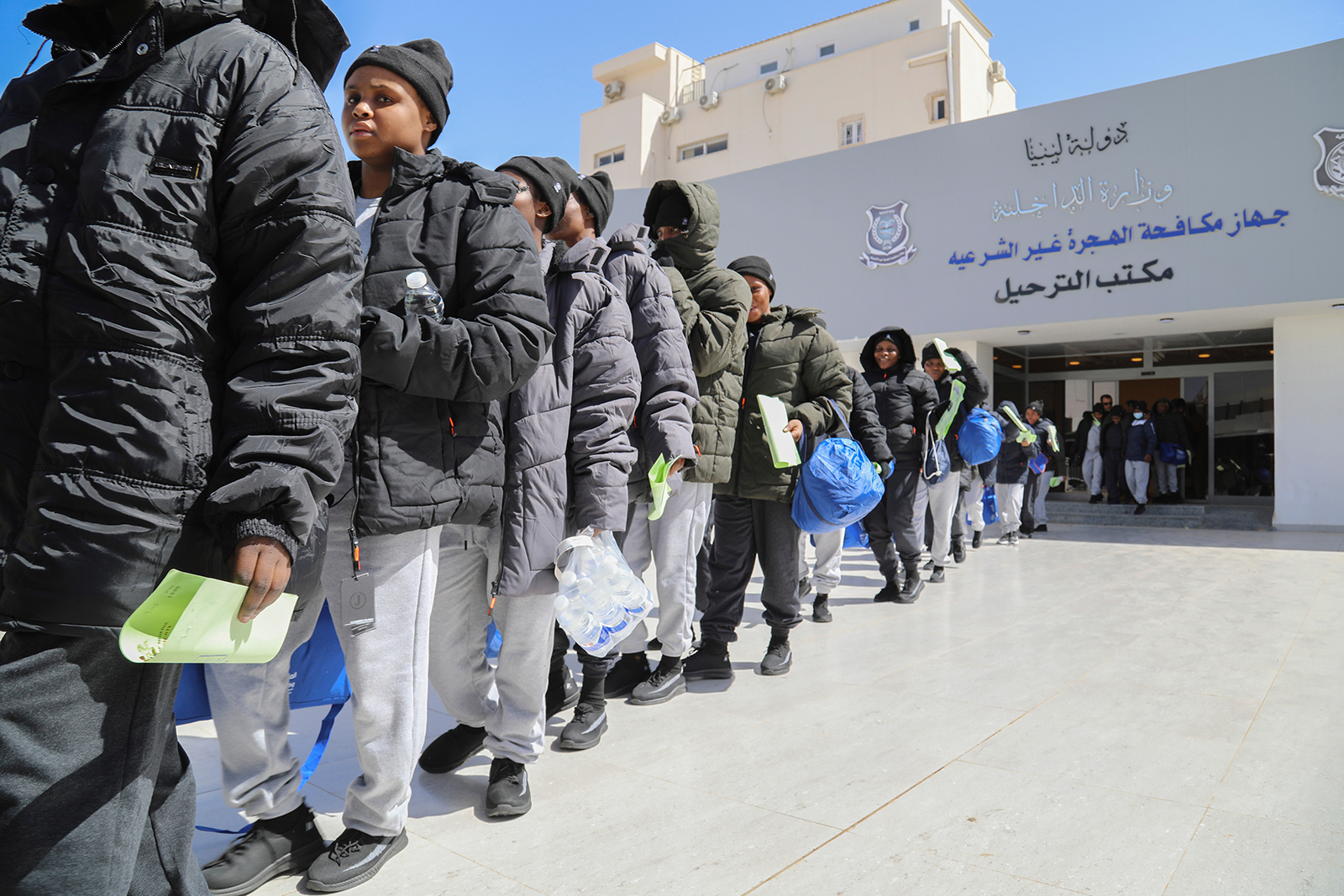
Around 180 Nigerian migrants stand in line before being deported from Tripoli, Libya, Tuesday, March 18, 2025
. (AP Photo/Yousef Murad)

Fredrick Nzwili
April 11, 2025


NAIROBI, Kenya (RNS) — African church leaders are speaking out against Libya’s move to shut down humanitarian organizations providing care to migrants and refugees being held in detention centers in the North African country.

The move is the latest signal of Libya’s determination not to become a resettlement zone for migrants fleeing violence in the Horn of Africa who have been stopped by European Union countries from crossing the Mediterranean.

“This deeply disturbs me. It (lack of care for migrants) leaves me angry,” Catholic Bishop Tesfasellassie Medhin told Religion News Service in a telephone interview from Ethiopia’s Tigray region. “It proves that we are losing communal responsibility.”

Thousands of migrants from Tigray fled into Sudan from 2020 to 2022 as the conflict between the Ethiopian army and a rebel group, the Tigray People’s Liberation Front, intensified. An estimated 600,000 people have been killed in the fighting, and an estimated 3 million others have been displaced, according to aid agencies. Barely a year later, the civil war in Sudan reignited, forcing the Tigray refugees to flee again.
RELATED: After Khartoum recaptured, badly damaged Anglican Cathedral still stands

With nowhere else to go, many landed in Libya, where they were crowded into ad hoc camps run by Libyan militias. The armed groups, some affiliated with the government but others run by smugglers and traffickers, have tortured and sexually assault refugees, according to church and human rights organizations.

On April 2, Libya’s Internal Security Authority banned 10 international non-governmental organizations from aiding migrants, accusing the nonprofits of attempting to resettle migrants of African origin in the mostly Arab country.


Libya, red, in North Africa. (Image courtesy Wikimedia/Creative Commons)

The Norwegian Refugee Council and Doctors Without Borders were among the organizations targeted. Representatives of Doctors Without Borders said that since mid-March, security agents had been summoning NGO officials and staffers at medical clinics working with them for interrogation. The authorities have ordered Doctors Without Borders to stop referring migrants to the clinics.

“Our organization is very concerned about the consequences that these (suspensions) will have on the health of patients and the safety of humanitarian workers,” a member of the NGO told Infomigrants.

Representatives of other aid organizations declined to speak about the suspension.

Libya is a major embarkation point for asylum seekers and migrants aiming to reach Europe, but church leaders say that, increasingly, militias in Tripoli, the capital, and other cities are not targeting those trying to cross to Europe but are instead arresting sub-Saharan migrants who have taken up residence while waiting for the adjudication of asylum claims. After arresting them, church sources say, they are sold as slaves; women and girls are forced into sex work.

More than 60,000 refugees and asylum seekers are in Libya, according to the United Nations High Commission for Refugees, while an estimated 4,700 migrants have been been detained by armed groups in camps, according to the African Union.

The Rev. Mussie Zerai, an Eritrean Catholic priest known as “Dr. Father Moses” for his work with migrants attempting the Mediterranean crossing, reported that in recent weeks, house-to-house raids have been carried out with a “very high dose of violence and racism.”

“We are trying to urge UNHCR and the EU to intervene, but the instigator of these anti-migrant policies underway in Libya is the European Union,” he told RNS. “Countries like Italy finance these militias to do the dirty work to prevent any potential migrants from trying to reach Europe.”

The problem has been exacerbated, Zerai said, by the Trump administration’s withdrawal of funds from U.N. refugee programs. “The UNHCR is very weakened due to a lack of funds after the political choices that Trump is carrying out in the USA, cutting funds to many U.N. agencies. So it is difficult for us to find solutions, too,” said the priest.

RELATED: Sudanese Christians pray in secret, plead for end to war and religious attacks

Zerai urged African churches to exert more pressure on the African Union to do all in its power to protect human rights and rights of migrants and refugees.

“Africa cannot continue to ignore the dignity and fundamental rights of its children that are systematically trampled in countries such as Libya, Tunisia, Algeria and Egypt, all in an anti-African key to please the Europeans,” said the priest.

The same day that Libya announced its ban, it was reported that 500 migrants will be evacuated from the country to Rwanda under an agreement struck in 2019 by the AU, Rwanda and UNHCR to set up an emergency mechanism for evacuating refugees and asylum seekers.
Fearing more faith-based attacks, many Nigerian Christians are avoiding churches this Easter

(RNS) — ‘It is unfortunate that attacks like these are eroding the freedom of worship for Christians,’ said Pastor Moses Mashat of the evangelical Christian church in central Nigeria.

People attend the funeral of a man who was killed during an attack by gunmen in the Zike farming community in north-central Nigeria, April 15, 2025. (AP Photo/Samson Omale)

Tonny Onyulo
April 17, 2025


(RNS) — As Christians across the globe prepare to celebrate Easter, many in Nigeria fear they may be unable to observe the sacred day due to escalating attacks from Islamic militants.

“We could not celebrate Palm Sunday due to the security situation in our area,” Mary Yakubu, a resident of Nigeria’s central Plateau state, where nearly 200 Christians were killed on Christmas Eve in 2023, told RNS by phone. “Once again, we will be unable to prepare and celebrate Easter, as most churches here are closed and people fear gathering due to the ongoing attacks on churches and worshippers.”

Yakubu’s fear is not unique. Communities in Plateau and other regions are facing a new wave of attacks by Islamic militant groups including the Fulani, Boko Haram and Islamic State West Africa Province. The nation of over 236 million people has seen the jihadist violence escalate in the last couple weeks.

In Plateau, over 60 Christians were killed by radicalized Fulani militants in a series of violent attacks in early April. The attacks targeted several villages and have also resulted in the displacement of more than 1,000 Christians and the destruction of 383 homes, said community leader Maren Aradong. State Gov. Caleb Mutfwang referred to the assaults as a genocide.

Open Doors — a group that supports persecuted Christians around the world — estimates that over a hundred million people, or 46.5% of the population in Nigeria, identify as Christian.

According to the Open Doors World Watch List, approximately 3,100 Christians were killed and 2,830 were kidnapped in Nigeria in 2024 — far surpassing any other country last year. Open Doors ranks Nigeria seventh on its list of countries where Christians face the highest levels of persecution.

Fulani extremists in particular are increasingly targeting Christian farmers to take over their land and livestock. In their quest to establish an Islamic caliphate, the extremists also intimidate Christians, demanding they convert to Islam or face death.

Pastor Moses Mashat of the evangelical Christian church in central Nigeria told RNS that Christians in the country are deeply concerned about their safety during Easter celebrations. Abductions and killings by militants are frequent and random, he said.

“It is unfortunate that attacks like these are eroding the freedom of worship for Christians,” he said. “Many people are avoiding church, and they will not celebrate Easter or other events like Christmas because of these threats.”

RELATED: Islamist Nigerian militants press attacks against Christians to foment religious war

Mashat asked for prayers to protect believers during Holy Week, noting it has also become challenging for ministers to establish new churches and share the gospel in certain regions due to fears of attacks.

Militant groups in northern Nigeria and the north-central region, particularly in Plateau, are especially targeting men, Mashat said, and are kidnapping, molesting and raping Christian women. They are also destroying homes, churches and people’s livelihoods. Historically, Christians were mostly at risk in the Muslim-majority northern states, but violent attacks are increasingly occurring in the south, where the majority of Nigeria’s Christians live, he added, calling it an “alarming trend that cannot be ignored any longer.”

“The attacks are on the rise, and the government needs to take action,” he said, also noting the harsh realities Christian converts from Islam face as they often endure rejection from their families and intense pressure to abandon their newfound faith.


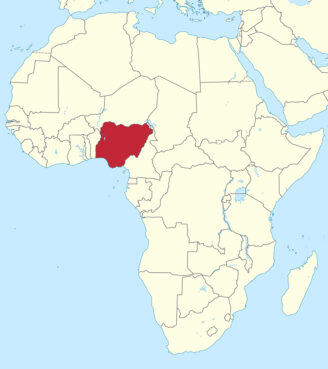
Nigeria, red, located in Africa. Image courtesy of Creative Commons

Jeff King, president of International Christian Concern, an organization advocating for persecuted Christians around the world, also raised concerns about the frequent attacks, particularly in Plateau, describing the situation as “Nigeria’s genocide against its Christian population.” He criticized the Nigerian government for its inaction and urged immediate international intervention.

“The Fulani militias have operated with impunity for almost 20 years, leaving villages in ruins and families shattered,” he said in a statement. “The Nigerian government has never acted in a meaningful way to catch the perpetrators of these attacks or bring them to justice because they choose to ignore them while they plead with the U.S. for more military aid. The global community must hold the Nigerian government accountable to stop the stealth jihad and slow-motion genocide.”

For decades, the Nigerian army has combated Islamic militant groups across the country. However, the government lacks a clear strategy and its security forces are often unable to execute precise strikes against the insurgents. Consequently, government operations frequently result in indiscriminate killings of both insurgents and civilians.


Bishop Michael Gobal Gokum of the Pankshin Diocese in Nigeria’s north-central region described the situation as devastating. He said one local church is currently sheltering over 1,000 residents who were recently attacked by Fulani militants in Plateau.
RELATED: 1 in 7 global Christians faces ‘high-level’ persecution: Open Doors report

During a visit with displaced individuals, Gokum observed that the latest round of attacks this month affected children, the elderly and the sick, leaving many with life-threatening injuries and resulting in significant destruction of property, he said. He urged the government to take action as surviving residents are traumatized by these attacks.

“The people have suffered enough at the hands of terrorists, kidnappers and criminal elements,” Gokum said. “The perpetrators of these heinous acts should face the full extent of the law.”

Yakubu emphasized the Nigerian government cannot resolve the security crisis without pressure from the international community. And as churches currently lack adequate security, people are tending to avoid worshipping in them due to fears of being targeted.

“We have been raising concerns about security for a long time, as our loved ones continue to be killed and our freedom of worship is restricted,” she said.
Opinion

It's Easter in Gaza, where Christians are praying for a miracle


(RNS) — Palestinian Christians have dwindled from 11% to less than 1% of the population in Israel, the West Bank and the Gaza Strip. The war in Gaza has put them on the precipice.


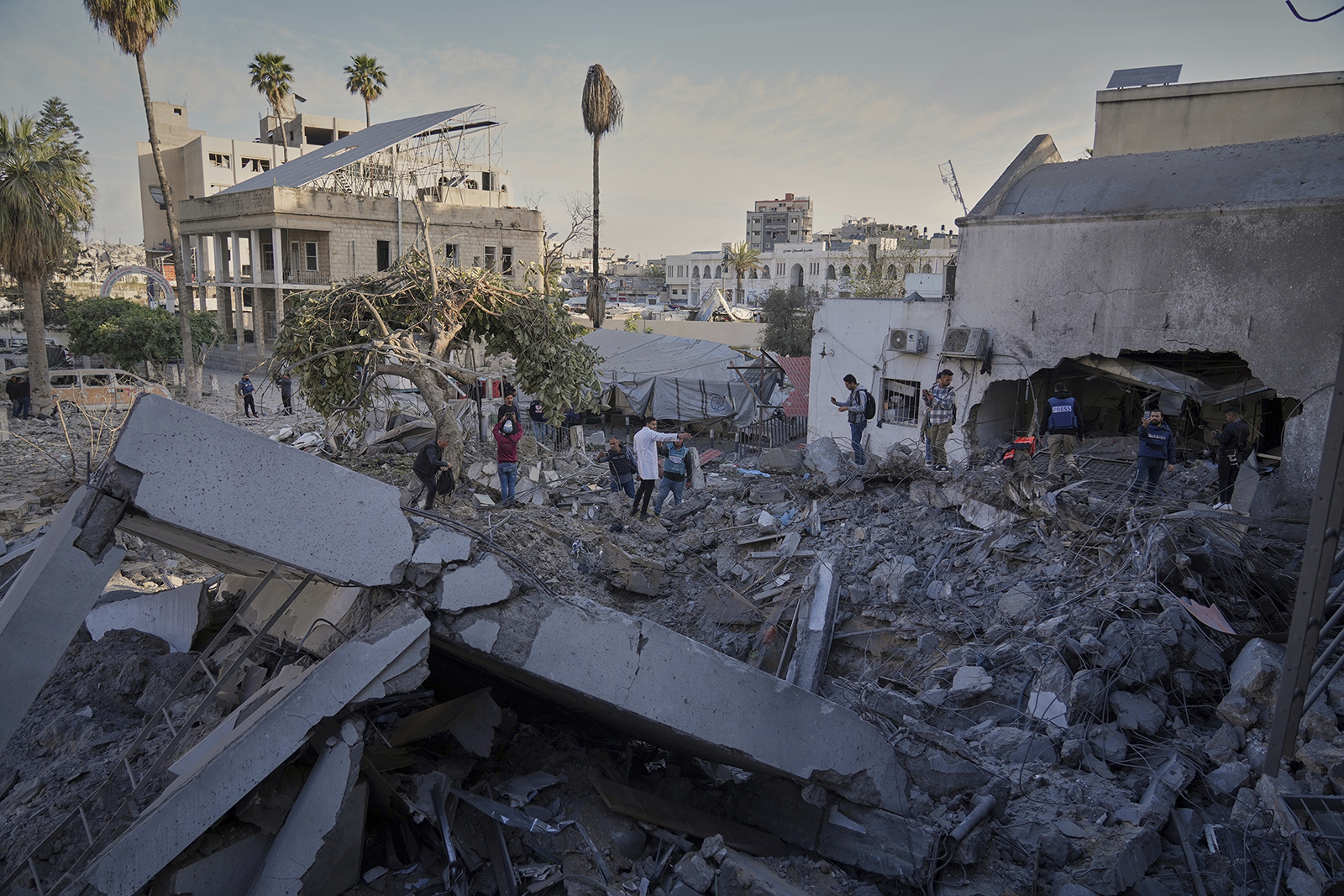
The outpatient and laboratory wards of the Al-Ahli Hospital in Gaza City are seen April 13, 2025, after being hit by an Israeli strike following a warning issued by the army to evacuate patients. (AP Photo/Jehad Alshrafi)


Gregory Khalil
April 15, 2025

(RNS) — On Palm Sunday morning (April 13), an emergency room doctor at Gaza’s last functioning hospital, the Anglican-run Al-Ahli Hospital, received a startling message: Evacuate within 20 minutes or die.

This threat could stand for the story of Palestinian Christians. For decades they have warned of their eventual extinction, but this Easter it feels imminent — not just at the hands of Israeli bombs, but another formidable foe: Christian Zionists in the United States. Even as local Christians swiftly condemned the Palm Sunday attack, most American evangelical Christians, long blinded by their zealous support for Israel to the suffering of the world’s oldest Christian community, stayed silent.

Yet silence may be preferable to championing policies that have not only gutted the Holy Land of Christians, but also brought untold horrors to millions of Palestinians and Israelis. On Ash Wednesday, President Donald Trump issued an ominous threat “to the People of Gaza: A beautiful Future awaits, but not if you hold hostages. If you do, you are DEAD!

Secretary of State Marco Rubio, a black cross smeared across his forehead, quickly echoed him: “If he says he’s going to do something, he’ll do it.” Palestinian Christians watched, horrified. “Not our cross. Not our Christ. The cross should represent Christ’s love to everyone,” replied Bethlehem pastor Munther Isaac, who rose to prominence when his church displayed the baby Jesus wrapped in a Palestinian kaffiyeh in lieu of a traditional Nativity scene in 2023. “Does he not know he’s putting our very presence at risk?” he rhetorically asked.

Palestinian Christians trace their roots directly to Jesus and his disciples. They take pride in passing their faith down from parent to child, under empire after empire, in the land of Jesus’ birth and mission.

But since the rise of Zionism a century ago, Palestinian Christians have dwindled from 11% to less than 1% of the population in Israel, the West Bank and the Gaza Strip. Aside from the “Nakba,” when three-quarters of Palestine’s indigenous Muslim and Christian Palestinians were expelled surrounding Israel’s founding in 1948, the primary drivers are well documented: a massive influx of Jewish immigrants; lower birth rates than their Muslim and Jewish counterparts; and more opportunities to emigrate for those seeking to flee what even Israeli human rights groups call “apartheid.” And that was before the war in Gaza. Over the last 18 months, Israel has killed tens of thousands of Palestinians, including an estimated 3% of Gaza’s remaining Christians, in what courts and experts around the world have deemed an active genocide.

Yet Trump and Rubio seem to care more about power than people. “I did it for the evangelicals,” Trump famously declared in 2017, after moving the United States Embassy from Tel Aviv to Jerusalem. It seems to be paying off. More than 80% of white evangelical Christians — about 20% of the U.S. electorate — have consistently voted for Trump, partly because of his hawkish support for Israel.

One prominent Christian Zionist, former Arkansas Gov. Mike Huckabee, has long supported extremist “pro-Israel” views, declaring at one point, “There’s no such thing as a Palestinian.” Huckabee, recently confirmed as ambassador to Israel, has championed Israel’s illegal settlements and opposed a two-state solution. His rationale? “God gave the land to the Jewish people 3,500 years ago,” erasing centuries of Palestinian Christian and Muslim witness, along with their humanity.

Many Christian Zionists go further, seeing Jews’ presence in Israel as a necessary condition for Jesus’ second coming. Once universally seen as antisemitic (consider the logic here: The Holocaust worked as God’s divine plan to return Jews to Israel), this view is the basis for Christian Zionists’ strong ties with the Israeli right, who have called American evangelicals more important to Israel than American Jews. Indeed, American evangelicals spend more of their lobbying dollars on Israel than on poverty, immigration and abortion.

Some Christians are pushing back. “We participate in the end of the world every time we accept the murder of our Palestinian neighbors,” said Andrew DeCort, a Chicago-based theologian and author. He called Christian Zionism “morally bankrupt” and “anti-Jesus,” ironically noting that when it comes to Palestinian Christians, “Christian Zionists are killing Christianity.”

Independently, support for Israel among younger evangelicals has plummeted from 64% to 33% from 2018 to 2021, with a plurality supporting Israelis and Palestinians equally. New polling shows that the majority of Americans now hold negative views of Israel, including both Republicans and Democrats under 50.

Some pastors believe these numbers point to something deeper. Keri Ladouceur, a former evangelical pastor and executive director of the Post Evangelical Collective, which organizes hundreds of disaffected American pastors who seek to reform their faith, said that young evangelicals embrace a “Kingdom worldview [that] doesn’t preference Christian over Muslim, Jew or Republican or Democrat.”

Daniel Bannoura, a Palestinian Christian who hosts a popular podcast connecting American and Palestinian Christians, worries “it’s too little, too late.” He said he finds it “tragic that Palestinians have to be massacred … for people to start paying attention.” He laments: “Why is it so hard for Christians to be Christ-like when it actually matters? Why do our lives, our dignity and freedom, matter so little to them?”

Steps away from the Anglican-run hospital in Gaza stands the third-oldest living church in the world, St. Porphyrios Greek Orthodox Church, which Israeli missiles once targeted in October 2023, killing 18 people. Hours after Sunday morning’s bombing, children folded palm leaves somberly into crosses. A ritual of defiant hope amid absolute dread. This Easter, they’re commemorating one miracle — the resurrection of Jesus — but remain in urgent need of another.

(Gregory Khalil is president and co-founder of Telos, a nonprofit that promotes peacemaking. He is also an adjunct professor at Columbia University’s Graduate School of Journalism, where he co-teaches the Covering Religion course. The views expressed in this commentary do not necessarily reflect those of RNS.)