Friday, April 18, 2025


Nigeria: Tinubu Slashes Family Planning Budget By 97% Amid Decline in Donor Funding

With donor support decreasing and domestic investment declining, experts worry about the impact on women already facing challenges accessing essential reproductive health services.

The Nigerian government has reduced its family planning budget for 2025, raising concerns about how the country will sustain access to reproductive health services for millions of citizens amidst a global decline in donor funding.

In the 2025 budget, N66.39 million was allocated for family planning, a 97 per cent decrease from the N2.2 billion allocated in 2024.

This budget cut comes as the United States Agency for International Development (USAID) froze funding support for key health initiatives in developing countries, including family planning programmes in Nigeria. The funding pause followed a directive from President Donald Trump shortly after his inauguration in January 2025.

The Nigerian government has not given any official reason for cutting funding for family planning. Repeated efforts to get a response from the health ministry were unsuccessful. This reporter was referred to the ministry's Director of Family Health, Binyerem Ukaire, by other ministry officials. However, in response to our enquiries, Ms Ukaire simply said, "To get reaction from the government, you need to go through the right channel."

For a country with one of the highest maternal death rates in the world, with many of the deaths preventable with timely access to contraception and quality care, this drop in funding could reverse the progress made over the years.

The United Nations recently warned that global reductions in health aid could reverse decades of progress in tackling maternal mortality.

In a report titled Trends in Maternal Mortality, released ahead of the 2025 World Health Day, the UN attributed the 40 per cent global decline in maternal deaths between 2000 and 2023 to improved access to critical health services.

Nigeria, according to the report, had the highest estimated number of maternal deaths in 2020, accounting for more than one-quarter (28.5 per cent) of the global total, with approximately 82,000 maternal deaths recorded.

Trend in budget allocation

Over the years, PREMIUM TIMES has reported Nigeria's inconsistent commitment to family planning, particularly in the face of declining donor support.

In 2020, under former President Muhammadu Buhari's administration, the family planning programme received only 0.2 per cent of the health budget and in 2021, the allocation dwindled further to 0.01 per cent of the health budget. In subsequent years, 2022 and 2023, the budget line for family planning was non-existent.

Following reports by PREMIUM TIMES highlighting the government's failure to include family planning in the 2022 budget, and demands by activists and civil society organisations, the government committed to allocating at least one per cent of its health budget to family planning.

Although there was an increase in family planning allocation in 2024 (N2.225 billion), it still fell short of the national commitment to dedicate at least one per cent of the annual health budget to family planning.

Health experts have repeatedly stressed the importance of sustained domestic investment in reproductive health as a way to manage Nigeria's growing population and reduce preventable maternal deaths.

Nigeria's 2025 budget totals N54.9 trillion, with N2.38 trillion dedicated to the health sector, which amounts to 4.33 per cent of the budget. Within this health allocation, only N66.39 million (0.0028 per cent) was earmarked for family planning, which falls far below one per cent of the health budget.

This underfunding of family planning raises concerns about Nigeria's ability to achieve its Family Planning 2030 (FP2030) targets, which aim for a 27 per cent modern contraceptive prevalence rate (mCPR) by 2030.

Stanley Ukpai, the director of Programmes at the development Research and Projects Centre (dRPC), expressed concerns with the reduction, saying Nigeria is still struggling to close a longstanding gap in family planning funding.

According to him, the country has depended heavily on external sources to support reproductive health services for years.

Mr Ukpai noted that following the N2.2 billion allocated to family planning in the 2024 budget, advocates and stakeholders were optimistic that the 2025 budget would show continued progress.

"In 2024, we saw a significant step forward with the N2.2 billion allocation, which was an attempt to address the financing gap. I understand that the funds were eventually released in December," he said.

"But we were shocked to see that only N66 million was allocated for family planning in 2025."

Dependence on donors, risks

Nigeria has depended heavily on foreign donors to support its family planning programmes for years.

Organisations like the United Nations Population Fund (UNFPA) and the USAID played key roles in supplying contraceptives and funding training and outreach activities.

UNFPA supports family planning in 19 states and the Federal Capital Territory, while USAID partnered with community groups across all 36 states.

However, this dependence comes with its risks. In 2021, the United Kingdom withdrew its annual funding of about £3 million from Nigeria's family planning basket fund.

Then, in January 2025, USAID paused funding. Based on the US Foreign Assistance website data, the United States disbursed approximately $1.02 billion in foreign assistance to Nigeria in 2023.

While the site breaks down funding across various sectors, it does not specify the exact amount allocated exclusively for family planning.

However, a significant portion of US assistance to Nigeria historically supported health initiatives, including family planning.

For instance, in 2020, USAID allocated $35 million for family planning efforts in Nigeria as part of a broader $234.5 million development assistance package.

Implications of funding cuts

Ijeoma Nwankwo, programme manager at the Pharmaceutical Society of Nigeria Foundation (PSNF), expressed deep concern over the recent cut in Nigeria's family planning budget, describing it as a major threat to reproductive health service delivery, especially in rural and underserved communities.

Ms Nwankwo, a pharmacist, said this drastic reduction will significantly hinder access to essential family planning commodities and services for millions of women, particularly those in hard-to-reach areas who already face barriers due to distance, cost, and cultural stigma.

"Without adequate funding, we risk reversing the progress made in reducing maternal mortality and improving women's health outcomes," she said.

Mr Ukpai, the dRPC director of programmes, noted that with the withdrawal of key international donors like the US, UK, and EU--many of whom are redirecting funds to other priorities like national defence--Nigeria now faces a widening funding gap.

He warned that these global aid reductions could have significant implications for the country's reproductive health services, especially if domestic investment continues to decline.

The impact of family planning underfunding is already visible. According to reports, the number of women receiving family planning services has sharply declined.

Saleh Abba, a family physician based in Borno State, recently disclosed in an interview that family planning uptake in Borno State dropped from 13,000 women in January to just 3,000 in February this year.

Ms Abba stated that the shortage of contraceptive supplies and the pause in donor funding are major reasons for this decline.

Need for increased domestic funding

In 2020, the Nigerian government introduced a Family Planning Blueprint (2020-2024), a strategic document aimed at increasing access to modern contraceptives and reducing maternal deaths.

The blueprint provided a clear roadmap with targets and accountability measures. However, as it ended in 2024, many of its goals remained unmet due to inconsistent funding and heavy reliance on donor support.

Health professionals and advocacy groups have warned that relying too much on foreign support is risky.

A 2023 study published by BMC's Women's Health, a journal focused on the health and wellbeing of adolescent girls and women, highlighted the country's heavy reliance on external funding.

The study titled: "A narrative review of evidence to support increased domestic resource mobilisation for family planning in Nigeria," emphasised the urgency of increasing domestic funding for family planning in Nigeria to ensure sustainability and reduce dependency on external donors.

According to the study, the heavy reliance on external donors makes funding for family planning services unpredictable and imbalanced.

Evidence shows that investing in family planning can also save money. Preventing unwanted pregnancies reduces pressure on hospitals and cuts the cost of maternal health care.

According to global estimates by UNFPA and the Guttmacher Institute, every dollar spent on family planning can save up to four dollars in maternal and newborn health costs. When translated into local currency, this suggests that for every N1,000 spent, Nigeria could save about N4,000 in healthcare costs.

State financing, private sector involvement

Stanley Ilechukwu, executive director of the South Saharan Social Development Organisation (SSDO), noted that although the cessation of funding has thrown Nigeria's health sector into disarray, there are still ways to mitigate the damage.

He pointed out that the recent judicial stamp on the autonomy of Local Government Areas (LGAs) presents a unique opportunity to address the funding shortfall.

"With LGAs now 'autonomous', we should begin to hold them to the same standards as the federal and state governments and make them commit to the same pledges, particularly with regards to healthcare financing," he said.

He proposed that a portion of LGA funding should be earmarked for procuring family planning commodities. He believes that if all LGAs commit, along with matching funds from state governments over a four-year period, this could help create a sustainable market for family planning commodities in the country.

Mr Ilechukwu added that balancing the demand and supply side of family planning services is key to ensuring both immediate and future needs are met in a sustainable way.

"It is critical to ensure that we are not just dependent on donor funding but are also creating domestic solutions to address these challenges," he said.

Ms Nwankwo, the pharmacist, emphasised that while donor funding has historically supported Nigeria's family planning initiatives, relying solely on external partners is not sustainable.

"It's time for the government, at all levels, to take ownership of reproductive health programmes. States must begin to allocate and release dedicated budgets for family planning as part of their commitment to primary health care and women's health," she said.

Ms Nwankwo also highlighted the role of the private sector in bridging funding gaps.

According to her, the private sector can play a critical role -- from strengthening supply chain systems to investing in public awareness campaigns and driving innovation around contraceptive access.

She called on the government to take proactive steps to ensure the continuity and sustainability of family planning services nationwide.

ANTI-DEI IS STR8 WHITE MALE CHRISTIAN SUPREMACY

Federal judge blocks key parts of Trump’s anti-DEI orders

A judge for the US District Court for the Northern District of Illinois on Tuesday issued a preliminary injunction preventing the US Department of Labor from requiring government contractors and federal grant recipients to certify that they do not operate any diversity, equity and inclusion (DEI) programs that violate any federal anti-discrimination laws.

Executive Order 14151, the termination provision, orders applicable federal agencies to terminate all “equity action plans,” “equity” actions, initiatives, or programs, “equity-related” grants or contracts, and all DEI performance requirements for employees, contractors or grantees. Executive Order 14173—the certification provision—mandates that recipients of federal grants validate that they are not conducting any DEI initiatives in violation of federal anti-discrimination laws.

The preliminary injunction comes after the non-profit organization Chicago Women in Trades (CWIT) filed a complaint challenging the executive orders. In 2024, CWIT received federal money from the Women in Apprenticeship and Nontraditional Occupations (WANTO) program, which works to increase women’s participation in apprenticeship programs and nontraditional occupations such as trades, construction, project management, and cybersecurity. After Trump’s executive orders, CWIT stood to lose thousands of dollars in federal funding, hindering its efforts to increase the representation of marginalized women in key fields. Approximately 70 percent of CWIT’s participants are Black and Latina women.

In the preliminary injunction, Judge Matthew Kennelly held that CWIT would likely prevail on its First Amendment challenge to the certification provision. CWIT argued that the anti-DEI executive orders impose restrictions that are “overbroad” and “impossibly vague” and that “condition CWIT’s receipt of federal funding upon the stifling of CWIT’s protected speech.” Additionally, Kennelly found that CWIT was likely to succeed on the merits of its claim that the termination provision violates the separation of powers. The US Constitution does not permit any executive branch official to unilaterally terminate federal grants and contracts without express statutory authority from Congress. The preliminary injunction is narrow in scope and applies only to the US Department of Labor, not to all federal agencies.

Just a few weeks ago, the US Court of Appeals for the Fourth Circuit upheld the government’s request to stay a nationwide preliminary injunction that blocked enforcement of the same contested elements of the two executive orders.

Explainer: What does the US ruling on Google's illegal ad tech monopoly mean?

The logo of Google on the facade of headquarter of the parent company Alphabet.

Photo: AFP

By Kenrick Cai and Peter Henderson, Reuters

A US judge's ruling that Google has illegal monopolies in ad technology sets up the possibility of US prosecutors seeking a breakup. Here's what the case involves and what Google owner Alphabet faces from here.

What is this about?

The most important thing is what this is not about: this is not about search, Google's bread and butter, although there is a separate antitrust case about search. The Justice Department's ad technology case revolves around Google Network, a division of the business that manages its auction-style system that advertisers use to purchase digital ad space. The ad tech chooses what ad to put where at what cost.

Federal prosecutors said that Google's power over the ad tech allows it to illegally fend off competition, which hurts web publishers, such as news outlets. The judge agreed. Google's argument was that it out-competed rivals with superior technology.

Advertising accounted for about 75 percent of Alphabet's $US350.02 billion ($NZ586b) in revenue for 2024. The Google Network business accounted for only 8.7 percent of the revenue.

What happens next?

The judge who ruled there are illegal monopolies now will hear arguments about what to do. The Justice Department had been seeking, at a minimum, the divestiture of Google Ad Manager, a platform within the Network division. Ad Manager represented 4.1 percent of overall revenue and 1.5 percent of operating profit in 2020, according to Wedbush research and analysis of court documents.

More recent figures were redacted from court documents.

How big a deal is this for Google?

Erik Hovenkamp, a professor at Cornell Law School, earlier in the case had predicted that if it lost, Google would probably have to divest some, not all, of its display advertising business, and the net effect would be a drop in revenues of less than 10 percent.

Google has even been open to some ad tech divestiture. Reuters first reported on 18 September that Google itself offered to sell its advertising exchange, which is part of Google Ad Manager, to appease European antitrust regulators. Publishers rejected the proposal, sources said.

Could this have ripple effects?

The most serious implication of the ruling might be how the company manages the ripple effects of court-ordered remedies across other parts of its ad tech suite, Nikolas Guggenberger, a law professor at the University of Houston, has said. In theory, a DOJ win would make it easier for advertisers and publishers to switch ad tech platforms.

There is also the political precedent set in terms of political will: the Biden and Trump administrations both have supported this case so far, showing an almost unique level of cooperation on the two sides of the political aisle in the prosecution of Big Tech.

There is a separate, higher stakes antitrust case about Google's search technology that continues, and this is a flesh wound compared to the implications of a loss in search, analysts say. A judge in Washington next week will hold a trial related to search.

Is this the end?

No. Google already has said it will appeal. The federal judge next must decide what the remedies are to the illegal monopoly. It will be some time, likely years, before this is finished, unless a settlement is agreed.

-Reuters


US federal judge rules against Google advertising monopoly

US federal judge rules against Google advertising monopoly

US Federal District Judge Leonie Brinkema ruled Thursday that tech giant Google LLC had violated federal anti-trust law by engaging in anti-competitive acts to attain monopoly power and depriving competitors of the ability to compete.

An accompanying order issued by the judge required both parties to submit a joint proposed schedule for further briefing on their respective positions on remedies in the case.

Judge Brinkema found Google liable under three counts including 1) monopolization of the publisher ad server market; 2) monopolization of the ad exchange market; and 3) unlawful tying of the company’s publisher ad server and ad exchange.

The particular technology in the case includes software that the tech giant uses to assist with transactions between advertisers and online publishers who sell the ad space. Google was accused of holding a monopoly on this software and tying that monopoly to its stranglehold over several of the marketplaces that facilitate deals between advertisers and online publishers.

Much of Judge Brinkema’s opinion was dedicated to explaining the complex world of programmatic advertising while explaining how targeted advertising enabled by technological advances has upended the industry and how advertisers and publishers do business with each other.

Judge Brinkema explained that Google’s free services including its search engine, apps, and location services have enabled the company to collect “detailed knowledge about billions of people who have used its products.” This information has in turn been used to match advertisers to users and “increase its advertiser customers’ return on ad expenditures.” Brinkema concluded that since nearly 80 percent of the company’s revenue has been generated from this activity, “Google is fundamentally in the business of advertising.”

Google’s substantial market share and “supracompetitive” pricing for its services were cited as evidence of the company having achieved monopoly status in the digital ad network and ad tech stack marketplaces.

Google has expressed ambivalence over the ruling declaring that they had won “half the lawsuit” in defeating one of the counts while vowing to appeal the adverse portions of the ruling.

This is the second anti-trust case in the last two years that has ended with a judgment against the tech giant. A case over the company’s search engine was decided in August of 2024 with the court finding that Google had achieved a monopoly in online searches with potential remedies including the sale of the Chrome browser.


Thursday, April 17, 2025

OLIGARCHS

Wealth of Russia's richest people rises to record $820 billion


Entrepreneur and billionaire Vagit Alekperov attends the St. Petersburg International Economic Forum (SPIEF) in Saint Petersburg, Russia, on June 17, 2022
PHOTO: Reuters

April 17, 2025 

MOSCOW - Russia's richest people saw their wealth rise by more than 8 per cent to $625.5 billion (S$820 billion) over the past year, with at least 146 billionaires listed by the Forbes Russian-language list of the wealthiest people in Russia, the magazine said on Thursday (April 17).

Vagit Alekperov, former boss of the Lukoil oil company, topped the Forbes list for a second year, with a fortune of $28.7 billion. He resigned as president of Lukoil in 2022 after Britain imposed sanctions against him.

Alexei Mordashov took second place in the rating with wealth of $28.6 billion, rising from fourth place in last year's list.

Forbes said there were 15 completely new billionaires in the ranking, the richest of which was Indian-born Vikram Punia, owner of pharmaceutical company Pharmasyntez. Forbes said he had a fortune of $2.1 billion.

None of the billionaires listed by Forbes could be immediately reached for comment.

The richest 10 billionaires are listed below:

1) Vagit Alekperov - $28.7 billion


2) Alexei Mordashov - $28.6 billion

3) Leonid Mikhelson - $28.4 billion

4) Vladimir Lisin - $26.5 billion

5) Vladimir Potanin - $24.2 billion

6) Gennady Timchenko - $23.2 billion

7) Andrei Melnichenko - $17.4 billion

8) Pavel Durov - $17.1 billion

9) Alisher Usmanov - $16.7 billion

10) Suleiman Kerimov and family - $16.4 billion

Source: Reuters


Myanmar junta and opposition to extend ceasefire, says Malaysia PM Anwar


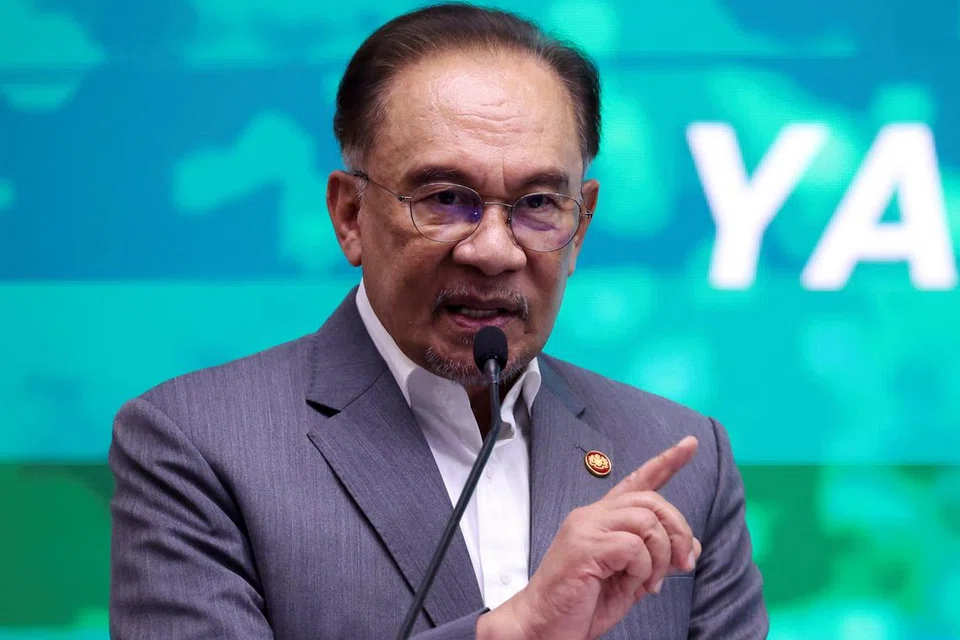
Malaysia's Prime Minister Anwar Ibrahim (pictured) said he held discussions with junta chief Min Aung Hlaing.
PHOTO: REUTERS

UPDATED Apr 18, 2025

BANGKOK - Myanmar’s junta and a key opposition group have indicated they will extend a ceasefire to support more aid efforts, following a devastating earthquake in late March in the strife-torn nation, Malaysia’s Prime Minister Anwar Ibrahim said on April 18.

Datuk Seri Anwar, who is also chair of the regional Asean bloc, revealed the outcome of talks he has held since April 17 with Myanmar’s junta chief and the prime minister of its shadow government in a rare outreach effort.

“There will be a ceasefire and no unnecessary provocations, because otherwise, the whole humanitarian exercise would fail,” Mr Anwar told reporters in the Thai capital.

“My initial exchange with both the SAC (State Administration Council) Prime Minister and NUG (National Unity Government) has been very successful,” he added, referring to junta chief Min Aung Hlaing.

Besides his meeting with Senior General Min Aung Hlaing in Bangkok on April 17, the Malaysian premier said he also spoke on April 18 with Myanmar’s shadow administration, the NUG, as part of regional efforts to engage all parties in the conflict.

Myanmar has been ravaged by conflict since 2021 when its powerful military ousted an elected civilian government, triggering widespread protests that expanded into a nationwide civil war, displacing over 3.5 million people and shattering the economy.

A powerful 7.7-magnitude earthquake in late March, which left more than 3,600 people dead and damaged critical infrastructure, has piled more misery on the impoverished nation but opened a diplomatic window for Gen Min Aung Hlaing.

Myanmar’s junta announced a 20-day ceasefire on April 2, following a similar move by the opposition NUG.

However, the junta has continued military operations in some areas, according to the United Nations and other groups in Myanmar.

“Our priority is humanitarian efforts. They must have a ceasefire. They must ensure the safety of all the personnel helping out with the humanitarian arrangements,” Mr Anwar added.

The 10-nation Asean grouping has shunned the junta leadership since the coup began, barring Myanmar’s ruling generals from its meetings for their failure to comply with its peace plan.

“The Asean position is that we should be more involved in the effort to get them to agree on the basis of the five-point consensus,” Mr Anwar said, referring to Asean’s peace plan.

“I’ve already consulted Asean leaders that I will continue to engage.”

In the talks with the NUG, Mr Anwar said he had conveyed that Asean would continue dialogue with it and the junta, while humanitarian support would also continue.

The NUG, which includes remnants of the elected administration deposed by the 2021 coup, and other anti-junta groups had previously opposed the talks between the leaders of Malaysia and Myanmar, warning that any unilateral engagement with the military leader should be approached with “utmost caution”.

Thailand's Prime Minister Paetongtarn Shinawatra, who met Mr Anwar for a bilateral meeting on April 17, also pushed for further engagement with Myanmar.

“The involvement of all sides will lead to positive development in Myanmar in line with the Asean five-point consensus,” a Thai government spokesman said, referring to their discussions. 

REUTERS


Malaysia PM to hold talks with Myanmar opposition after meeting junta chief


Malaysian Prime Minister Anwar Ibrahim speaks during a press conference, next to Malaysia's Trade Minister Tengku Zafrul Aziz, Secretary General of the Ministry of Foreign Affairs Amran Mohamed Zin and Works Minister Datuk Seri Alexander Nanta Linggi, following talks with a key Myanmar opposition group, a day after meeting with Myanmar's junta chief Min Aung Hlaing in Bangkok, Thailand, on April 18, 2025.
PHOTO: Reuters

April 18, 2025 

BANGKOK - Malaysian Prime Minister Anwar Ibrahim will hold talks with a key Myanmar opposition group on Friday (April 18), a day after he met the leader of the war-torn country's ruling junta in Bangkok to discuss humanitarian needs after a devastating earthquake.

Myanmar has been ravaged by conflict since 2021 when its powerful military ousted an elected civilian government, triggering widespread protests that expanded into a nationwide civil war, displacing over 3.5 million people and shattering the economy.

A powerful 7.7 magnitude earthquake in late March, which left more than 3,600 people dead and damaged critical infrastructure, has piled more misery on the impoverished nation but opened a diplomatic window for junta leader Min Aung Hlaing.


Malaysia's Anwar, who is also the chair of the regional Asean bloc, said late on Thursday that he had held discussions with Min Aung Hlaing, in part focused on Myanmar's humanitarian requirements in the aftermath of the earthquake.

Before the meeting, Anwar had said he would seek to extend a ceasefire called since the quake. The 10-nation grouping of Southeast Asian nations has shunned the junta leadership for years.

"Tomorrow morning, I will meet with representatives of the National Unity Government (NUG)," Anwar said in a post on Facebook.

"We continue to encourage all parties to engage seriously in the interest of Myanmar's stability and the wellbeing of its people."


Read Also

malaysia
Malaysia takes on Asean mantle but tempers expectations on Myanmar, South China Sea


The NUG, which includes remnants of the elected administration deposed by the 2021 coup, and other anti-junta groups had previously opposed the talks between Anwar and Min Aung Hlaing, warning any unilateral engagement with the military leader should be approached with "utmost caution".

Since the coup, Asean has barred Myanmar's ruling generals from its meetings for their failure to comply with the bloc's peace plan, known as the five-point consensus.

Thailand's Prime Minister Paetongtarn Shinawatra, who met Anwar for a bilateral meeting on Thursday, also pushed for further engagement with Myanmar.

"The involvement of all sides will lead to positive development in Myanmar in line with the Asean five-point consensus," a Thai government spokesman said, referring to their discussions.

Source: Reuters
Hamas says it is ready to release all remaining hostages for an end to Gaza war


A child looks on at the site of an Israeli strike on a tent camp sheltering displaced people, in Khan Younis in the southern Gaza Strip, on April 17, 2025.
PHOTO: Reuters

April 17, 2025 9:41 PM

CAIRO - Hamas wants a comprehensive deal to end the war in Gaza and swap all Israeli hostages for Palestinians jailed in Israel, a senior official from the Palestinian militant group said, rejecting Israel's offer of an interim truce.

In a televised speech, Khalil Al-Hayya, the group's Gaza chief who leads its negotiating team, said the group would no longer agree to interim deals, adopting a position that Israel is unlikely to accept and potentially further delaying an end to the devastating attacks that restarted in recent weeks.

Instead, Hayya said Hamas was ready to immediately engage in "comprehensive package negotiations" to release all remaining hostages in its custody in return for an end to the Gaza war, the release of Palestinians jailed by Israel, and the reconstruction of Gaza.

"Netanyahu and his government use partial agreements as a cover for their political agenda, which is based on continuing the war of extermination and starvation, even if the price is sacrificing all his prisoners (hostages)," said Hayya, referring to Israeli Prime Minister Benjamin Netanyahu.

"We will not be part of passing this policy."

Egyptian mediators have been working to revive the January ceasefire agreement that halted fighting in Gaza before it broke down last month, but there has been little sign of progress with both Israel and Hamas blaming each other.

"Hamas's comments demonstrate they are not interested in peace but perpetual violence. The terms made by the Trump Administration have not changed: release the hostages or face hell," said National Security Council spokesperson James Hewitt.

The latest round of talks on Monday in Cairo to restore the ceasefire and free Israeli hostages ended with no apparent breakthrough, Palestinian and Egyptian sources said.

Israel had proposed a 45-day truce in Gaza to allow hostage releases and potentially begin indirect talks to end the war. Hamas has already rejected one of its conditions - that it lay down its arms. In his speech, Hayya accused Israel of offering a counterproposal with "impossible conditions."

Hamas released 38 hostages under a ceasefire that began on Jan 19. In March, Israel's military resumed its ground and aerial offensive on Gaza, abandoning the ceasefire after Hamas rejected proposals to extend the truce without ending the war.

Israeli officials say that the offensive will continue until the remaining 59 hostages are freed and Gaza is demilitarized. Hamas insists it will free hostages only as part of a deal to end the war and has rejected demands to lay down its arms.
Israeli strikes

On Tuesday (April 15), the armed wing of Hamas armed said the group had lost contact with militants holding Israeli-American hostage Edan Alexander after the Israeli army attacked their hideout. Alexander is a New Jersey native and a 21-year-old soldier in the Israeli army.

The armed wing later released a video warning hostages' families that their "children will return in black coffins with their bodies torn apart from shrapnel from your army."

Israeli military strikes killed at least 32 Palestinians, including women and children, across the Gaza Strip on Thursday, local health authorities said.

One of those strikes killed six people and wounded several others at a UN-run school in Jabalia in northern Gaza Strip. The Israeli military said the strike targeted a Hamas command centre.

The war was triggered by Hamas' Oct 7, 2023, attack on southern Israel, in which 1,200 people were killed and 251 taken hostage to Gaza, according to Israeli tallies.

Since then, more than 51,000 Palestinians have been killed in the Israeli offensive, according to local health authorities.

Source: Reuters


Hamas formally rejects Israeli ceasefire deal


Friday 18 April 2025

Credit: AP

Hamas has formally rejected a ceasefire deal presented by Israel earlier this week but insists Hamas is "immediately" ready to negotiate a deal.

In a televised statement from Qatar on Thursday night, Khalil Al-Hayya, the head of negotiating for Hamas said: "The resistance and its weaponry are linked to the existence of the [Israeli] occupation, and it is a natural right for our people and all peoples under occupation."

Al-Hayya insisted that Hamas is "immediately" ready to begin negotiations for an agreement that would see the release of the remaining hostages for an "agreed-upon number" of Palestinian prisoners.

Such an agreement would include the beginning of Gaza’s reconstruction and an end to the blockade of the region.

The Israeli plan had called for a 45-day truce, during which the two sides would aim to negotiate a permanent ceasefire.


IDF strikes hospital in southern Gaza after Palestinian death toll passes 50,000


Palestinian Red Crescent demands investigation into Gaza paramedics' deaths


Under the proposal, the remaining 59 hostages would be released in stages, starting with American-Israeli hostage, Edan Alexander, on the first day of the truce as a "special gesture" to the US.

A further nine Israeli hostages would be released in two stages in exchange for 120 Palestinian prisoners serving life sentences and more than 1,100 detainees held without charge since October 7, 2023.

Israel also demanded that Hamas provide information about the remaining living Israeli hostages held by the group, "in exchange for information about the Palestinian detainees".

The proposal also included the release of the bodies of 16 deceased Israeli hostages for the remains of 160 deceased Palestinians held by Israel.
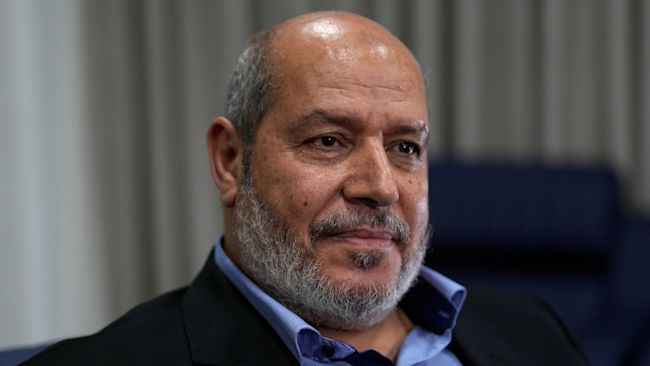
Khalil Al-Hayya, Head of negation for Hamas.Credit: AP

Hamas studied the proposal for several days before responding but it stood little chance of success.

Hamas had repeatedly made clear that it demanded an end to the war as part of any hostage release, and it refused calls for a complete disarmament.

Hamas also called for a complete withdrawal of Israeli forces from Gaza, while the Israeli proposal only included a temporary redeployment of the military.

Israeli Finance Minister Bezalel Smotrich said that Israel would continue its bombardment of Gaza.

"The state of Israel shall not surrender to Hamas and won’t end the war without the complete victory and fulfillment of all its objectives, including eliminating Hamas and returning all the hostages," he said in a statement.
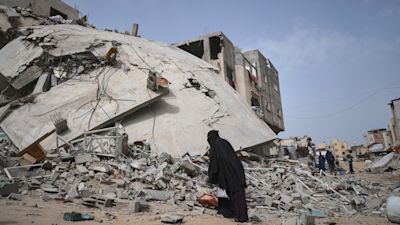
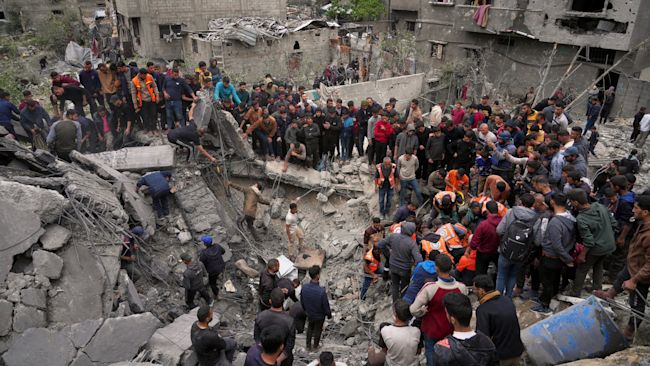
Emergency services pull someone from the rubble following a strike.Credit: AP

The renewed assault by Israel has seen more than 500,000 Palestinians displaced in less than a month, according to the UN, while attacks on Gaza, including hospitals, have killed nearly 1,700 Palestinians since March 18, according to Gaza's health ministry.

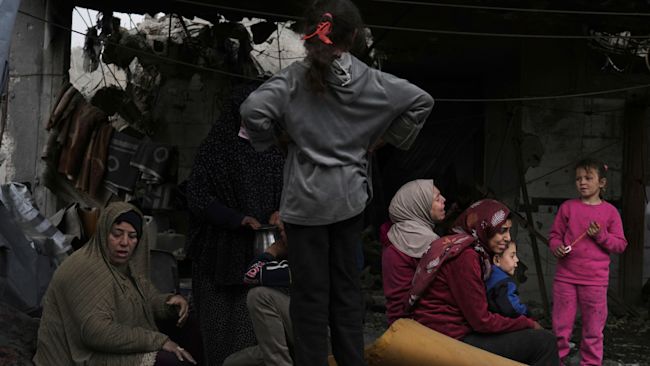
Meanwhile the humanitarian situation continues to deteriorate.

The UN has warned that lifesaving supplies were nearly all gone due to Israel's blockade.

In March, Israel cut-off essential aid and supplies to the enclave, sparking a humanitarian crisis.

Stéphane Dujarric, spokesman for the UN Secretary-General, said that nearly 90% of water infrastructure, including wells, pumping stations, and sewage plants, had been destroyed or damaged by hostilities, exacerbating disease risks and forcing families to rely on unsafe sources
.
The UN has warned the humanitarian situation in Gaza is deteriorating.Credit: AP

"Stress levels, particularly among children, are surging as violence and deprivation persist," Dujarric said, emphasising that Israel bears legal responsibility, under international law, to ensure access to food, medical care, and public health services.

But Israel has argued that the humanitarian blockade has pressured Hamas into agreeing to a ceasefire.

On Wednesday, Defense Minister Israel Katz said, "The pressure on Hamas to carry out the deal is heavy and the tension between it and the local population is increasing."

More than 50,000 Palestinians have been killed since the beginning of the war on October 7, 2023, according to Gaza's health ministry, following the militant group’s attack on Israel that killed 1,200 people and saw 251 taken hostage, according to Israeli authorities.


US Senator Van Hollen meets wrongly deported man in El Salvador 

By Daniel Trotta and Kanishka Singh

Reuters

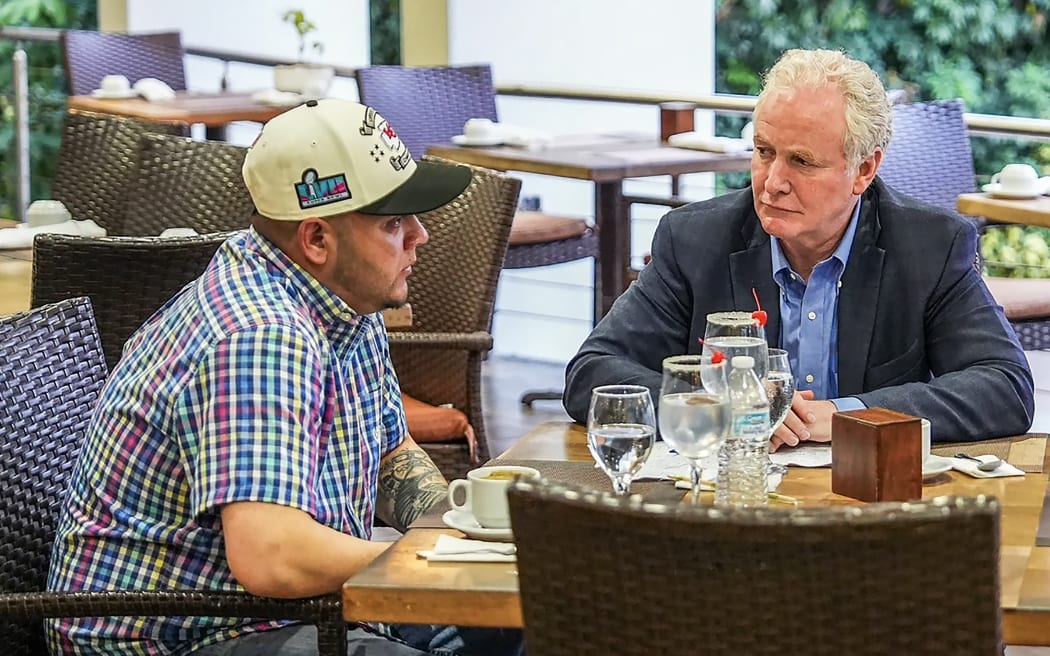
Picture obtained from the X account of Salvadorean President Nayib Bukele, @nayibbukele, showing US Senator Chris Van Hollen (R) holding a meeting with Salvadoran migrant Kilmar Abrego Garcia, a US resident wrongfully deported to his home country, at a hotel in San Salvador on April 17, 2025. Van Hollen met with Salvadoran Abrego Garcia, whose wrongful deportation has triggered a political firestorm over President Donald Trump's hard-line immigration policies. Abrego Garcia was detained in Maryland last month and expelled to El Salvador along with 238 Venezuelans and 22 fellow Salvadorans who were deported shortly after President Donald Trump invoked a rarely-used wartime authority. (Photo by X account of El Salvador's President Nayib Bukele / AFP) / RESTRICTED TO EDITORIAL USE - MANDATORY CREDIT "AFP PHOTO / X ACCOUNT OF EL SALVADOR'S PRESIDENTNAYIB BUKELE" - NO MARKETING NO ADVERTISING CAMPAIGNS - DISTRIBUTED AS A SERVICE TO CLIENTS

Picture obtained from the X account of Salvadorean President Nayib Bukele, @nayibbukele, showing US Senator Chris Van Hollen (R) holding a meeting with Salvadoran migrant Kilmar Abrego Garcia, a US resident wrongfully deported to his home country, at a hotel in San Salvador on 17 April 2025. Photo: AFP / Supplied

  • Van Hollen posts image of meeting with Abrego Garcia
  • El Salvador's leader indicates Abrego Garcia to remain there
  • Abrego Garcia was wrongly deported by Trump administration

Democratic US Senator Chris Van Hollen met on Thursday (local time) with Kilmar Abrego Garcia, the man wrongly deported to El Salvador in a case that has pitted a defiant Trump administration against the courts and fanned the prospect of a constitutional conflict.

The senator posted on X an image of himself in El Salvador with Abrego Garcia, dressed in a collared shirt, jeans and a baseball cap, a day after being denied access to the notorious prison for gang members where he has been held.

"I said my main goal of this trip (to El Salvador) was to meet with Kilmar. Tonight I had that chance," the senator wrote in his post, but giving no indication of Abrego Garcia's health or state of mind.

"I have called his wife, Jennifer, to pass along his message of love," Van Hollen added. "I look forward to providing a full update upon my return."

The US Supreme Court has directed the administration of President Donald Trump to facilitate Abrego Garcia's return after Washington acknowledged he was deported because of an administrative error.

In a statement apart from the ruling, liberal Supreme Court Justice Sonia Sotomayor said the government had cited no basis for what she called Abrego Garcia's "warrantless arrest," nor for his deportation or imprisonment in El Salvador.

Abrego Garcia's lawyers say he has never been charged with, nor convicted of, any crime, and deny the Justice Department's accusation that he belongs to the criminal gang MS-13.

But the government has given no indication it plans to seek his return and said it had no authority to release a man from a foreign prison, raising the potential for a constitutional conflict should Trump defy the highest court.

In a statement after the meeting, White House Deputy Press Secretary Kush Desai repeated the unproven accusation that Abrego Garcia was a member of MS-13.

"Chris Van Hollen has firmly established Democrats as the party whose top priority is the welfare of an illegal alien MS-13 terrorist," Desai said.

"It is truly disgusting. President Trump will continue to stand on the side of law-abiding Americans."

Trump's border czar, Tom Homan, told CNN the man belonged in prison, despite the Supreme Court directive.

"He's a citizen of El Salvador and he's in El Salvador. He's home," Homan said.

"I think we did the right thing, I think he is where he should be. Even if he came back ... he's going to be detained and he's going to be removed as per the order of removal."

Along with Abrego Garcia, the Trump administration has deported to El Salvador hundreds of people, mostly Venezuelans, whom it says are gang members, under the Alien Enemies Act of 1798, without presenting evidence and without a trial.

A US district judge, James Boasberg, has already threatened administration officials with criminal contempt charges over the deportations.

Boasberg said the administration demonstrated "wilful disregard" for his 15 March order barring the deportations to El Salvador under the 1798 act.

Salvadoran officials have also shown no interest in releasing Abrego Garcia.

During a meeting with Trump at the White House on Monday, El Salvador's president, Nayib Bukele, said he had no plans to return Abrego Garcia.

Bukele also posted pictures of the encounter with Van Hollen on social media, followed by a post saying he would remain in the custody of the Central American.

"Now that he's been confirmed healthy, he gets the honour of staying in El Salvador's custody," Bukele said.

Van Hollen, the US senator from Maryland, where Abrego Garcia lived, arrived on Wednesday in El Salvador to meet senior officials and advocate for his release, but was told by Vice President Felix Ulloa he could not authorize a visit or a telephone call with Abrego Garcia.

It was not immediately clear what changed to allow the senator's access.

Abrego Garcia, 29, left El Salvador at age 16 to escape gang-related violence, his lawyers said, and received a protective order in 2019 to continue living in the United States.

Representatives of Abrego Garcia and Van Hollen did not immediately respond to a request for further comment on the meeting.

Reuters

GLOBALIZATION LIVES


Poland’s InPost takes over Yodel to create one of UK’s largest delivery firms

17 April 2025, 

Yodel lorry on M40 motorway
Yodel bought up by rival consortium. Picture: PA

InPost, which has 10,000 parcel lockers in the UK, said the deal will help it ‘revolutionise’ the delivery market.

Polish parcel locker firm InPost has announced it is acquiring UK rival Yodel in a £100 million deal, combining the home delivery and collection networks to create one of the largest logistics groups in Britain.

InPost, which has 10,000 parcel lockers in the UK, said the takeover will help it “revolutionise” the UK delivery market and deepen its presence across Europe.

It has agreed to acquire 95.5% of Yodel’s parent company, Judge Logistics Ltd.

The debt-to-equity arrangement will see InPost converting an existing loan to the group, worth £106 million, into equity.

Payments business PayPoint will retain its existing 4.5% minority stake in Yodel.

The two delivery companies started working together at the end of last year through a “locker-to-door” service that saw Yodel handle the delivery of parcels from InPost lockers to customers’ homes.

InPost has about 10,000 parcel lockers in the UK (Alamy/PA)

The latest takeover comes several months after InPost snapped up UK logistics business Menzies Distribution for £60 million.

Liverpool-based Yodel was ranked the second-worst parcel firm at helping its customers, behind Evri, according to an Ofcom report in October.

The delivery firm performed “below average” on some aspects of its customer contact processes, contributing to a score of 38%, the regulator found.

InPost said after acquiring Yodel, which handles some 190 million parcels every year, its total share of the UK market will grow to about 8%.

Bringing together the delivery and locker services will create the third-largest independent logistics firm in the UK e-commerce market, behind Royal Mail and Evri, and excluding Amazon, the company said.

Neil Kusche, InPost UK’s chief executive, said: “This acquisition is a game-changer for InPost’s operations in the UK.

“Combining doorstep deliveries with our unrivalled locker network, we are reshaping the future of parcel delivery.

“We will be able to provide customers and e-commerce retailers with the reliability, flexibility, and efficiency they expect.”

By Press Association

Alexandria Ocasio-Cortez Fires Back As 'Trump Country' Banner Flown Over Packed Rally

The New York congresswoman let the crowd size speak for itself as her Fighting Oligarchy tour with Bernie Sanders rolled into another Republican area.


By Graeme Demianyk
17/04/2025 
HUFFPOST


Representative Alexandria Ocasio-Cortez (Democrat, New York) waves to the crowd during a stop of the 'Fighting Oligarchy' rally at Folsom lake College in Folsom, Calif., Tuesday, April 15, 2025.
San Francisco Chronicle/Hearst Newspapers via Getty Images

At another packed anti-Trump rally, Sen. Bernie Sanders (Independent, Vermont) and Rep. Alexandria Ocasio-Cortez (Democrat, New York) shrugged off a warning that they were entering “Trump country” as they found another huge audience in Republican territory.

Their nationwide Fighting Oligarchy tour has for weeks drawn massive crowds as the Vermont senator and New York congresswoman push progressive policies and condemn President Donald Trump over his handling of the economy and growing authoritarianism.

In recent days, the pair have spoken at sold-out venues in deep-red states, with 12,500 people on Monday filling an arena in Nampa, Idaho, a state Trump took by more than 35 percentage points in 2024.

On Tuesday, Sanders and Ocasio-Cortez rolled into Republican-dominated Folsom in northern California, a city which sits within Republican Rep. Kevin Kiley’s district.

To underscore the point, a small plane was spotted overhead before the rally pulling a banner emblazoned with the words “Folsom Is Trump Country” in red letters.
Advertisement

The more than 30,000 people gathered at Folsom Lake College’s athletic track may have disagreed. Ocasio-Cortez certainly did.

“I heard that someone started flying a plane with a banner that said, ‘This is Trump country,’” she said to the crowd, prompting a chorus of boos.

She continued, “It sure don’t look like it today. I don’t think this is Trump country. I think this is our country. ”

Sanders picked up the theme when handed the rhetorical baton.

“We are seeing unbelievable turnouts,” he said. “We were in Idaho — Idaho! — we had 12,000 people coming out in Idaho, the most conservative state in the country. We had 20,000 people in Salt Lake City, a Republican state.”

He added, “I think what the American people — Republicans, independents, Democrats — are saying [is], ‘Sorry, Mr. Trump, we don’t want your oligarchy. Sorry, Mr. Trump, too many men and women have fought and died to defend democracy. You’re not going to take us into authoritarianism.’”
Advertisement

Next stop: Missoula, Montana, a state Trump has won in three consecutive elections.