Saturday, April 19, 2025

U.S. Strike on Yemen Oil Port Kills 58, Houthis Say

At least 58 people were killed in U.S. air strikes on a fuel port in Yemen, Houthi-run Al-Masirah TV said on Friday, in what could be the deadliest U.S. attack in Yemen since U.S. President Donald Trump ordered strikes on targets of the Iran-aligned rebels a month ago.

In the middle of March, the U.S. began air strikes on Houthi targets in Yemen, with the U.S. Department of Defense stating the attacks would continue until the Houthis stop attacking ships traversing the Red Sea.

The U.S. Central Command said on Thursday about the attack that “The Iran-backed Houthis use fuel to sustain their military operations, as a weapon of control, and to benefit economically from embezzling the profits from the import.”

“This fuel should be legitimately supplied to the people of Yemen. Despite the Foreign Terrorist Designation that went into effect on 05 April, ships have continued to supply fuel via the port of Ras Isa. Profits from these illegal sales are directly funding and sustaining Houthi terrorist efforts.”

The Central Command also noted that “US forces took action to eliminate this source of fuel for the Iran-backed Houthi terrorists and deprive them of illegal revenue that has funded Houthi efforts to terrorize the entire region for over 10 years.”

The U.S. military said that the objective of the latest strikes was to reduce the economic source of power of the Houthis.

“This strike was not intended to harm the people of Yemen, who rightly want to throw off the yoke of Houthi subjugation and live peacefully.”

“The Houthis, their Iranian masters, and those who knowingly aid and abet their terrorist actions should be put on notice that the world will not accept illicit smuggling of fuel and war material to a terrorist organization,” the Central Command said.

The Houthis responded in a statement that “We affirm that the targeting of the Ras Isa oil port is a full-fledged war crime, as the port is a civilian facility and not a military one.”

By Charles Kennedy for Oilprice.com


U.S. Destroys Houthi Fuel Terminals at Ras Isa

As the region gears up for a new ground offensive, U.S. forces hit fuel piers in Ras Isa

Centcom
Burning tank trucks at Ras Isa, April 17 (Houthi media)

Published Apr 17, 2025 11:21 PM by The Maritime Executive


After striking fuel piers at Ras Isa, Yemen on Thursday, U.S. Central Command expressed solidarity with Yemeni citizens who want to "throw off the yoke of Houthi subjugation." It is the first time since the start of the Red Sea maritime security crisis that the command has discussed regime change in northwestern Yemen, and it comes amidst reports of Yemeni government-aligned troops preparing for a ground offensive against the Houthis. 

"Today, US forces took action to eliminate this source of fuel for the Iran-backed Houthi terrorists and deprive them of illegal revenue that has funded Houthi efforts to terrorize the entire region for over 10 years," U.S. Central Command said in a statement. 

The strike hit at least two different locations in Ras Isa, triggering large secondary explosions. Houthi media outlets have reported that more than two dozen people were killed in the blasts. In a statement, the Houthi leadership accused the U.S. of "direct targeting of the entire Yemeni people"  and called the port "a vital civilian facility." Central Command did not discuss casualty numbers, but emphasized that the goal of the strike was not to harm Yemeni civilians. 

Ras Isa is a dual-use port, providing energy imports for Houthi military operations and for the Yemen's civilian population. Duties on commercial energy imports are an important source of revenue for the Houthis' finances. 

Previously, on April 9, the U.S. State Department warned that the U.S. would no longer tolerate "offloading ships and provisioning oil at Houthi-controlled ports." In addition to Ras Isa, the Houthis also control the key commercial port of Hodeidah, 100 miles away to the south. 

Forces allied with Yemen's internationally-recognized government are reportedly arming and preparing for an offensive to retake the coastline region controlled by the Houthis. Bloomberg reports that U.S. military officials have held talks with regional partners and Yemen's anti-Houthi coalition about their plans for renewed combat on the ground. 


Report: Chinese Satellites Feed Houthis Target Ship Data
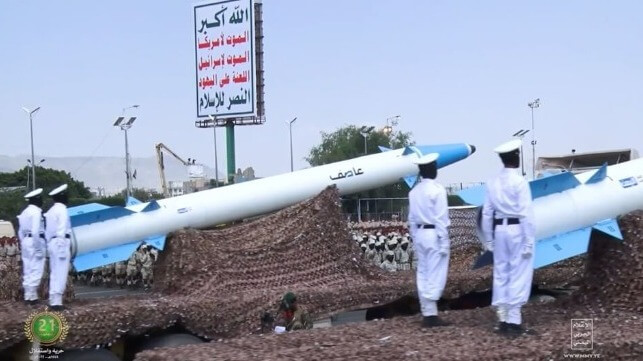
Houthi missile
U.S. asserts Chinese satelitte data is helping the Houthis to target ships (Houthi military photo)

Published Apr 18, 2025 11:03 AM by The Maritime Executive


U.S. officials are asserting that Chinese companies are providing support to the Houthi militants in Yemen with their attacks on Western shipping. The Financial Times is quoting a senior U.S. State Department official who says the Houthis have been receiving Chinese satellite data in addition to support from Iran for the attacks that started in late 2023 and targeted more than 100 merchant ships.

It was previously well understood that the Houthis were receiving targeting data for their missile and drone attacks on Israel and shipping in the Red Sea from both Russia and Iran, with IRGC Qods Force operatives based in Yemen acting as the conduit. The Iranian Khayyam satellite was jointly built with Russia, based on Kanopus-V imagery satellite, with the Iranian satellite likely to be operating within Russia’s own Kanopus-V constellation. The Iranians and Russians are likely to share most of the output of this combined constellation. Supplementing the satellite imagery data, the Iranians would have added in their own intelligence feeds from IRGC spy ships and regular Iranian Navy ships operating in the area, prior to these vessels being withdrawn from the area several months ago.

A senior State Department official in Washington briefed the Financial Times that the Chinese company Chang Guang Satellite Technology, a commercial entity owned by or with close links to the Chinese People’s Liberation Army, has also been feeding targeting data to the Houthis. Chang Guang Satellite is reported to have had 100 mini-satellites in orbit in 2024, a figure which was planned to rise to 300 by the end of 2025. With such a constellation, a 10-minute refresh time would be feasible for any point in the target area. 

The Financial Times report was unclear whether raw imagery was being passed to the Houthis, or whether processed information was shared either as intelligence or in the form of targeting packs. Chinese military standard communications equipment that would enable such transmission has regularly been seized in the same consignments of arms and ammunition dispatched by the IRGC Qods Force to the Houthis but intercepted at sea by Coalition naval forces. With the reported withdrawal of IRGC Qods Force embeds in the Houthi command and control structure, in the face of targeted US attacks, there will be even greater emphasis on building data links to support the Houthis remotely as the American attacks continue, destroying and degrading the Houthis’ existing communications networks. 
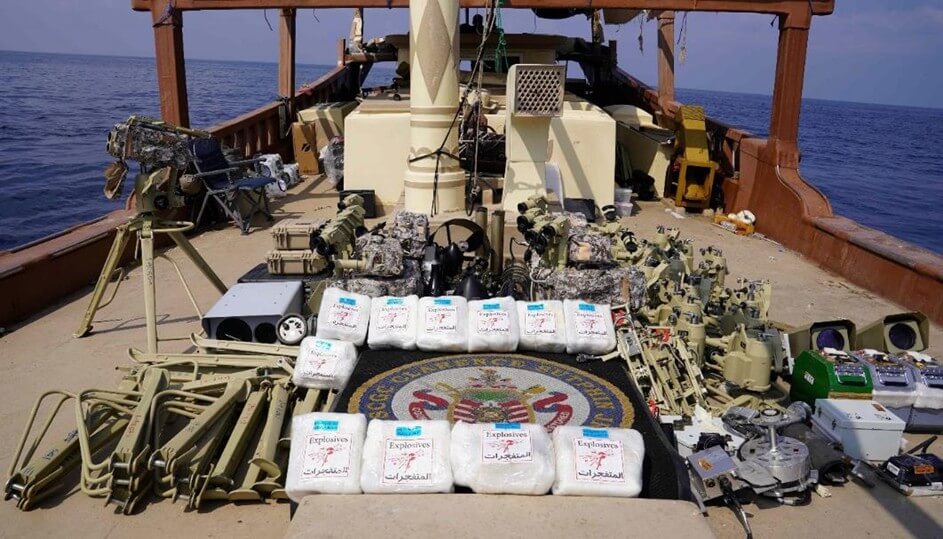
 

On January 28, US Coast Guard Cutter U.S. Coast Guard cutter USCGC Clarence Sutphin Jr (WPC 1147) seized a consignment en route to the Houthis which included Chinese military-grade communication and network equipment (CENTCOM)


The unnamed senior State Department official briefing the Financial Times was supported by Tammy Bruce, the State Department spokeswoman, who was quoted on the record as confirming that Chang Guang Satellite Technology was “directly supporting Iran-backed Houthi terrorist attacks on US interests”. The feed of information from the State Department as opposed to the Defense Department suggests that the Chinese behavior is being considered as a factor in broader discussions with China on matters of tariff and trade.

Surveillance carried out by the Chinese satellites may also enable the Chinese to warn off the Houthis from attacking Chinese ships as they transit the area. Chinese vessels are still regularly using the Gulf of Aden to Suez Internationally Recommended Transit Corridor, giving them a simple commercial advantage over shipping lines obliged by Houthi attacks to take the long way between Asia and Europe around the Cape of Good Hope.

 

Equinor Considers Legal Remedies, $1.5B Cost After Trump Stops NY Wind Farm

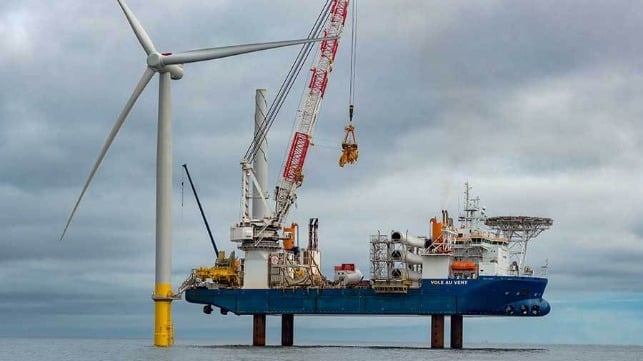
offshore wind instalaltion
Equinor considers next steps after Trump administration stopped its offshore construction (file photo)

Published Apr 17, 2025 4:28 PM by The Maritime Executive


Equinor issued a statement detailing the potential impact of the Trump administration’s order yesterday, April 16, stopping construction that was underway on its New York offshore wind farm Empire Wind. At the same time, the state’s regulators issued a strongly worded condemnation of the order following a vow yesterday for the state’s governor to fight the administration.

The company reports that it is suspending offshore work on the project, as ordered, complying with the order received yesterday from the Bureau of Ocean Energy Management (BOEM). It states the project has a gross book value of around $2.5 billion, including its investment in the South Brooklyn Marine Terminal which would be the construction and operational base. 

It reports that it has drawn about $1.5 billion from the project finance term loan that was completed in late 2024. Equinor US Holdings has provided guarantees for the equity commitment in the project financing and would have to repair the $1.5 billion to the project finance lenders in a full-stop scenario. The company would also be exposed to termination fees from its supplies.

Both the state and Equinor are highlighting the long and rigorous review process the Empire Wind project went through before it received federal and state approvals in 2024. NYSERDA (New York State Research and Development Authority) highlighted that it was the first Trump administration that issued the lease for the project saying they are now showing “a complete disregard” for a project that is New York’s largest energy infrastructure project in 50 years and follows Trump’s prioritization of independence and locally produced energy.

“The federal government’s interference not only ignores the reality surrounding the future energy security of our state and country, it’s fueled by a shortsighted, political agenda that ignores the well-demonstrated economic benefits that this industry can provide as the state and nation work to ensure an affordable, reliable and abundant energy supply for future generations,” said Doreen M. Harris, President and CEO, NYSERDA. “The irrefutable harm created by this action will send a chilling signal to any party investing in the U.S. market, all of whom rely on regulatory certainty.”

Yesterday, Interior Secretary Doug Burgum asserted that had information that “raises serious issues” with the project’s approvals. He asserted the Biden administration rushed the approvals “without sufficient analysis or consultation among relevant agencies.” Burgum directed BOEM to order Empire Wind to cease all construction activities until a further review is completed to “address these serious deficiencies.”

While saying it will safely halt the offshore construction, Empire also said it is, “engaging with relevant authorities to clarify this matter and is considering its legal remedies, including appealing the order.”

The company highlights it has more than 35 years of history in the U.S. It says it has invested more than $60 billion in the U.S. to date, including in oil, gas, and renewables.

Several companies including Shell and BP have already pulled back from the U.S. offshore wind sector while analysts were left to speculate on the broader implications of the stop work order against Empire Wind. Burgun in his memorandum said the review is ongoing of federal wind permitting practices with respect to “both existing and pending permits.”
Two projects, Vineyard Wind and Coastal Virginia Offshore Wind as well underway with offshore construction. Vineyard was delayed by a blade failure and subsequent inspection program while Dominion paused some offshore work during the winter and is due to resume this spring. Orsted also has two projects, Sunrise Wind and Revolution Wind, which have started onshore cabling and other work. In total, the Biden administration approved 11 offshore projects with one completed in 2024. Other projects remain in review at the federal and state levels.


Shipping Industry Joins with China Calling for U.S. to Reconsider Port Fees

Chinese containership
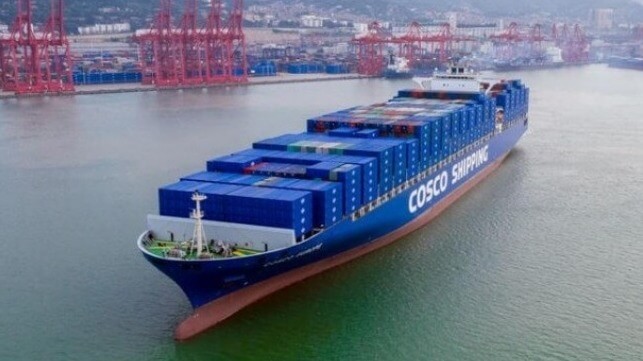
Industry raises "serious" and legal concerns to the proposed U.S. port fees on Chinese-built ships (COSCO)

Published Apr 18, 2025 1:39 PM by The Maritime Executive


While recognizing the Trump administration softened the financial impact of its port fees on Chinese-built shipping for many carriers, the shipping industry was quick to respond raising serious concerns after the U.S. Trade Representative’s Office released the structure of the fees. Like the Chinese, the shipping industry asserts that the fees will do little to support the resurgence of U.S. shipbuilding while instead penalizing the U.S. economy and consumers.

The USTR outlined sweeping fees with the costliest targeted at Chinese carriers and while reducing the dollar amounts would also charge all carriers as Chinese-built ships arrive or offload containers. The surprise came with a fee on each vehicle landed from all foreign-built ships, which the World Shipping Council points out encompasses nearly every vehicle carrier in the world. The shipping industry lobbying group calls the fee on car carriers an “arbitrary action” that will slow U.S. economic growth and raise auto prices while doing little to encourage U.S. maritime investment.

“We urge the U.S. to respect facts and multilateral rules and immediately stop its wrong practices,” said Lin Jian, spokesperson for the Chinese Ministry of Foreign Affairs. He said China believes the fees will “disrupt the stability of the global supply chain, and increase inflationary pressure in the U.S., but “ultimately fail to revitalize the U.S. shipbuilding industry.” China highlights the decline of the U.S. shipbuilding industry began in the 1970s.

Trump administration officials were quick to defend the president’s policy and tout the benefits. In an op-ed in the Washington Examiner, Transportation Secretary Sean Duff writes, “The inauguration of a new Trump-era in maritime dominance is a fundamental feature of the golden age of transportation.”

The World Shipping Council while saving it supports the efforts to revitalize the U.S. shipbuilding sector, says “the fee regime announced by USTR is a step in the wrong direction as it will raise prices for consumers, weaken U.S. trade, and do little to revitalize the U.S. maritime industry.” 

Joe Kramek, President and CEO of the World Shipping Council, points to serious problems with the structure saying the “backward-looking penalties” would disrupt investment, and risk harming American exporters. Basing the fees on net tonnage, the WSC contends “disproportionately penalizes larger, more efficient vessels that deliver essential goods, including components used in U.S. production lines.”

The WSC also flags “significant legal concerns,” noting that the proposed fees appear to extend beyond the authority granted under U.S. trade law.

“The WSC is urging the administration to reconsider this counterproductive measure, which risks harming U.S. consumers, manufacturers, and farmers without delivering meaningful progress toward revitalizing the U.S. maritime industry,” the group writes in its statement. It instead calls for steps such as targeted investment incentives, infrastructure improvements, and streamlined regulatory processes to strengthen the U.S. maritime sector.

China has launched a public relations effort against the U.S. tariffs and highlights that it is taking the lead in lobbying other countries to resist Trump’s tariffs. Foreign Minister Wang Yi warned of unilateral bullying and protectionism in a speech delivered on Thursday hours before the port tariff regime was unveiled. Chinese President Xi Jinping visited Vietnam and Cambodia urging opposing unilateral bullying.

Next week, China is planning Reuters reports informal discussions at the UN Security Council. Reuters says China will accuse the U.S. of bullying.


Port Everglades Welcomes First Cargo Ship Powered by LNG to Call Port

Port Everglades

Published Apr 18, 2025 1:39 PM by The Maritime Executive


[By: Port Everglades]

Broward County's Port Everglades this week welcomed its first cargo ship fueled by Liquified Natural Gas (LNG), an environmentally friendly alternative fuel. The Crowley ship, Quetzal, is one of four new-build vessels using cleaner fuel that the Florida-based global company plans for trade among the U.S., Central America and the Caribbean Basin.

Several cruise ships fueled with LNG, including Princess Cruises' Sun Princess and Silversea's Silver Nova and Silver Ray, already visit Port Everglades, however, this is the first LNG-powered cargo ship to call.

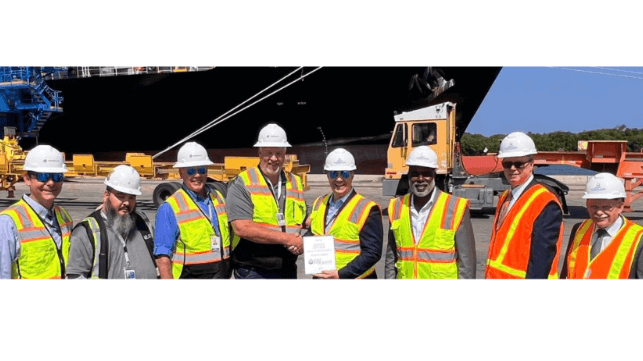
Broward County Commissioners Lamar P. Fisher and Robert McKinzie joined port staff during a dockside plaque presentation to recognize Crowley's commitment to decarbonization and their trade partnership. This was also Queztal's first U.S. port call as part of its route between Central America and the U.S.

The Quetzal, like the other three forthcoming Avance Class container ships, has a capacity for 1,400 TEUs (20-foot container equivalent units) and 300 refrigerated unit plugs for transporting perishable cargo.

"Over the last year, our port has welcomed several cruise ships that use LNG, and we applaud Crowley's efforts to reduce its impact when transporting perishables through Florida's No. 1 port for perishable goods," said CEO and Port Director Joseph Morris. "It's clear that our maritime future relies on innovation and continuous evolution."

Ships using LNG, instead of diesel, can significantly lower greenhouse gas emissions such as sulfur oxide, carbon dioxide and nitrogen oxide while eliminating particulate matter.  According to Crowley, the new class of vessels also have high-pressure ME-GI engines and reduce methane slippage to negligible levels.

The products and services herein described in this press release are not endorsed by The Maritime Executive.


Diplomatic Dispute Between Algeria and France Delays CMA CGM Port Deal

Oran Algeria
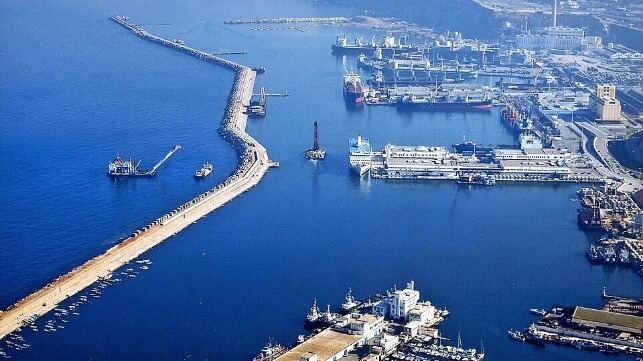
Port of Oran is strategically located and close to industrial centers in Algeria (Habib Kaki -- CC BY 3.0)

Published Apr 18, 2025 5:30 PM by The Maritime Executive


The diplomatic dispute brewing between Algeria and France has impacted a potential investment by the CMA CGM in the Algerian port sector. The French ship[ping company was reported to be negotiating a concession for the port of Oran through its subsidiary CMA Terminals, but the deal has been on hold as tensions rise between the two countries. 

Early this week, the CEO of CMA CGM Rodolphe Saadé was scheduled to visit Algeria for a business trip. However, the visit was reportedly postponed as relations between Algeria and France further deteriorated this week. According to local media reports, Rodolphe Saadé was to be received by Algerian President Abdelmadjid Tebboune to finalize a port investment deal, which has been under negotiations for nearly a year. 

The diplomatic incident emerged as Algeria protested after one of its consular staff was arrested in France. The indictment of the official was over suspicion of involvement in the kidnapping of an Algerian government critic in Paris in April 2024. This has seen the two countries expel diplomats from both sides in a tit-for-tat move.

The diplomatic dispute also appears to have taken an economic dimension. The Algerian Economic Renewal Council (CREA), the country’s largest business organization, canceled its planned visit to France next month, where it was to hold a meeting with the French employers’ association (MEDEF). CREA accused French authorities of blocking investments in Algeria.

“The cancellation of the trip follows measures taken by French authorities, who strongly pressured a French maritime transport company to abandon its trip to Algeria to finalize an investment project,” said CREA. With the ongoing tension between Algeria and France, and Saadé’s visit on hold, the negotiations for the port concession are expected to be delayed. 

CMA CGM is already present in nine Algerian ports including Algiers, Annaba, Béjaïa, Skikda, and Ghazaouet. The interest in Oran is because of the port’s strategic location in the Western Mediterranean and its proximity to Europe. CMA CGM is believed to be considering a feeder shipping line between Marseille and Oran, to be operated by its subsidiary, La Méridionale.


Top photo by Habib Kaki -- CC BY 3.0


Global Ports Holding Unveils Multi-Million-Dollar International Investment

Global Ports Holding

Published Apr 18, 2025 12:59 PM by The Maritime Executive


[By: Global Ports Holding]

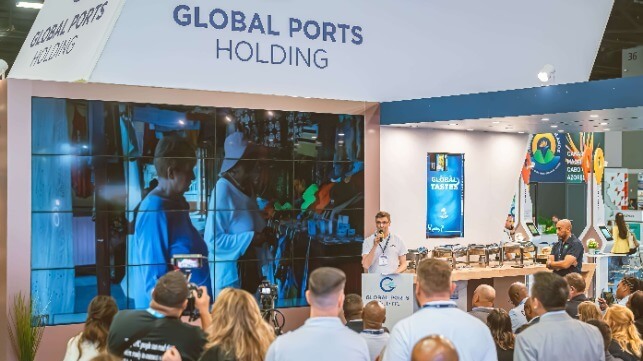
Global Ports Holding (GPH), the world’s largest independent cruise port operator, revealed significant updates to its global investment strategy at an exclusive press conference during Seatrade Cruise Global in Miami last week. The event, held on April 8, 2025, marked the unveiling of a multi-million-dollar investment programme designed to future-proof the company’s cruise port network.

Titled “Shaping Tomorrow’s Ports,” the conference included an insightful presentation followed by a reception, where GPH executives, partners, and attendees gathered to discuss key developments in the company’s expansion. The highlight of the session was a spotlight on one of GPH’s newest and most ambitious projects in Saint Lucia, a transformative development aimed at enhancing the island’s cruise tourism infrastructure, with a special appearance by Saint Lucian Olympic Champion and Tourism Ambassador, Julien Alfred.

A Multi-Million-Dollar Commitment to Future-Ready Ports
During the press conference, GPH presented its robust investment strategy, which is designed to meet the evolving needs of the global cruise industry. As the cruise industry grows in fleet size and passenger volumes, GPH’s investment focuses on creating innovative, sustainable, and operationally efficient port facilities and strengthening its partnerships with destinations.

“We are at a critical juncture in the cruise industry’s development, and GPH is proud to lead the charge in building future-ready ports that will support the next generation of cruise tourism,” said Mehmet Kutman, CEO of Global Ports Holding. “Our significant investment programme is not just about improving port infrastructure; it’s about creating lasting value for the communities we serve, fostering sustainable growth, and ensuring that our ports are equipped to handle the demands of today’s growing cruise market.”

He added, "We believe that the strength of our community partnerships is the cornerstone of our global success. By fostering collaboration and empowering local stakeholders, we create sustainable growth and shared prosperity that resonates far beyond our ports.”

Investment Highlights At Ports Worldwide
Key investment highlights include:

  • Tarragona Cruise Port (Spain): GPH’s newly inaugurated sustainable terminal at Moll de Balears, a 2,200m² facility designed with energy efficiency and self-sufficiency in mind.
  • Alicante Cruise Port (Spain): A highly anticipated terminal modernization project, scheduled for completion by April 2025, focused on improving passenger flow and port experience.
  • Las Palmas Cruise Port (Canary Islands): Completion of a sustainable terminal, set to accommodate the world’s largest cruise ships and serve over 1.6 million passengers annually, with completion expected by September 2025.
  • Antigua Cruise Port (Caribbean): A substantial upland development project, which will include a state-of-the-art cruise terminal and expansion for new retail stores, launched in February 2025.
  • Nassau Cruise Port (The Bahamas): An exciting pool project and yacht marina expansion plan, which is set for completion by March 2026.
  • San Juan Cruise Port (Puerto Rico): A significant infrastructure enhancement programme, which began in September 2024, with an additional funding provided for Pier 3 upgrades.

Spotlight on Saint Lucia
One of the most exciting developments shared during the event was the multi-million-dollar upcoming investments in Saint Lucia’s cruise port infrastructure. This project, which is currently underway and set for completion in October 2026, will enhance Port Castries and Pointe Seraphine with significant berth enhancements, a new boardwalk, and the creation of a Fishermen’s Village at Banannes Bay. Additionally, Saint Lucia Cruise Port will construct a new tender dock and upland facilities at Soufriere.

“This project underscores our commitment to supporting long-term tourism growth and strengthening our partnerships with local communities,” said Lancelot Arnold, Director of GPH Eastern Caribbean & General Manager, Saint Lucia Cruise Port. “Saint Lucia represents the future of cruise tourism, and we are proud to be part of its evolution.”

A Moment of National Pride
In a special moment of national pride, Julien Alfred, Saint Lucia’s Olympic 100m champion, graced the event as a special guest. Her achievements are a testament to the excellence and spirit of Saint Lucia, values that GPH celebrates through its investment and community partnerships.  Saint Lucia Cruise Port recently donated $10,000 to support the launch of Ms. Alfred’s upcoming charitable foundation, aimed at providing financial support for athletics programs and other empowering opportunities for Saint Lucia’s youth.

Strengthening Local Partnerships
During the event, Dr. Ernest Hilaire, Minister for Tourism, Investment, Creative Industries, Culture & Information, shared his vision for the future of cruise tourism in Saint Lucia while emphasizing the importance of private-public collaboration in ensuring sustainable growth in the tourism sector.

“GPH’s investment is an example of how strategic partnerships can drive economic growth and benefit local communities. We look forward to continuing our collaboration to ensure that Saint Lucia remains a top cruise destination,” said Dr. Hilaire.

A Focus on Sustainable Financial Growth
Jan Fomferra, Chief Financial Officer of Global Ports Holding, also shared insights on the financial and sustainability aspects of GPH's investments: “At Global Ports Holding, we view sustainability as a fundamental pillar of our investment strategy. Our financial approach is focused on ensuring that every project not only generates long-term value for stakeholders but also promotes environmental responsibility and social impact. This multi-million-dollar global investment programme is designed to balance robust financial performance with our commitment to sustainability—delivering projects that enhance both the cruise experience and the communities we serve.”

The products and services herein described in this press release are not endorsed by The Maritime Executive.


USTR Sets Escalating Fees on Chinese-Built Ships, Operators, LNG, and PCTCs

shipbuilding
USTR targets Chinese-built vessels and the foreign operators of the ships but also targets vehicle carriers and LNG export all to rebuild U.S. shipbuilding (IAM Union photo)

Published Apr 17, 2025 7:11 PM by The Maritime Executive


After a 13-month investigation and complaints filed by five U.S. trade unions, the U.S. Trade Representative released its proposal calling for escalating tariffs on Chinese-built ships and the companies that operate them designed to address the perceived unfair Chinese trade practices. While the fees are not as large as the proposal in February 2025, they are broader targeting both LNG exports and vehicle carriers. The effort is tied to President Donald Trump’s call to rebuild the American shipbuilding industry.

In light of the information obtained during the investigation and taking into account public comments, the U.S. Trade Representative determined that China’s targeting of the maritime, logistics, and shipbuilding sectors for dominance is unreasonable and burdens or restricts U.S. commerce and is therefore actionable. Specifically, USTR found China’s targeting for dominance unreasonable because it displaces foreign firms, deprives market-oriented businesses and their workers of commercial opportunities, and lessens competition and creates dependencies on China, increasing risk and reducing supply chain resilience. China’s targeting for dominance is also unreasonable because of Beijing’s extraordinary control over its economic actors and these sectors.

USTR asserts that China’s targeting for dominance burdens or restricts U.S. commerce by undercutting business opportunities for and investments in the U.S. maritime, logistics, and shipbuilding sectors; restricting competition and choice; creating economic security risks from dependence and vulnerabilities in sectors critical to the functioning of the U.S. economy; and undermining supply chain resilience.

While it focuses on Chinese vessel operators and vessel owners, Chinese-built vessels, the industry was surprised by the inclusion of all foreign vehicle carriers (PCTCs) and the transport of LNG. The structure does offer some exemptions for vessels in the MARAD programs, engaged in short sea shipping, arriving empty at U.S. ports and below a certain size or capacity threshold. It also includes fees on container cranes, containers, and chassis made in China.

The proposal sets the fees for Chinese-built vessels based on the net tonnage of the vessel and a phased-in schedule. The fee would be charged up to five times per year, per vessel. The first fee effective October 14, 2025, would be $50 per net ton and step up six months later to $80. Annual increases would move to $110 and $140 per net ton in 2028.

For vessel operators of Chinese-built vessels, the fee starts at $18 per net ton in October 2025, moving six months later to $23 per net ton. The annual step-ups would be to $28 in 2027 and $33 per net ton in 2028. The alternative for vessel operators is based on per container discharged, starting at $120 for each container in October 2025, and then the step-ups at $153 per container in 2026, $195 in 2027, and finally $250 per container in 2028. The fee can be suspended for up to three years if the owner orders and takes delivery of a U.S.-built vessel of equal or greater net tonnage. Among the other exemptions are for vessels with a capacity of less than 4,000 TEU, specialized vessels, and Lakers.

Vehicle carriers get one of the harshest penalties, and it targets all foreign-built vessels in the sector. The fee is set at $150 per car arriving on the vessels starting in October 2025. Again, there is a possible exemption for operators who order U.S.-built vehicle carriers. 

LNG transport is also targeted with a requirement that one percent is exported on U.S.-built vessels starting in 2028. The percentage steps up every two years so that by 2047 fifteen percent of LNG must be exported on U.S.-built vessels.

The language in the proposal offers a much stricter definition of what constitutes a U.S.-built ship versus the current Jones Act definitions used by the U.S. Coast Guard which permits foreign-made elements and components. The language in the USTR schedule requires all major components of the hull or superstructure of the vessel to be manufactured (including all manufacturing processes from the initial melting stage through the application of coatings for iron or steel products) in the United States. It also specifies key components of the vessel must be built in the United States.

USTR which is led by Ambassador Jamieson Greer who was confirmed at the end of February 2025, said these steps are necessary because China controls nearly a fifth of the world’s commercial shipping fleet, allowing them to influence the pricing and availability of ships used to conduct international trade. It cites data from the Center for Strategic and International Studies that shows the U.S.only accounts for 0.1 percent of global shipbuilding while China produces (more than 53 percent) more than the rest of the world combined. Chinese officials have criticized the effort saying the U.S. was blaming its long-term decline on China instead of investing in its shipbuilding industry.

While the industry was still analyzing the 42-page outline of the fees, the unions were quick to respond calling the USTR effort “meaningful remedies put forward to reinvigorate domestic shipbuilding.” The International Association of Machinists and Aerospace Workers, one of the unions filing the original complaint, said it applauds the United States Trade Representative and vowed to “work to ensure these policies are properly implemented.”

The release of the proposal starts a comment period that runs to May 19, and once finalized the proposal calls for the fees to begin after 180 days. 


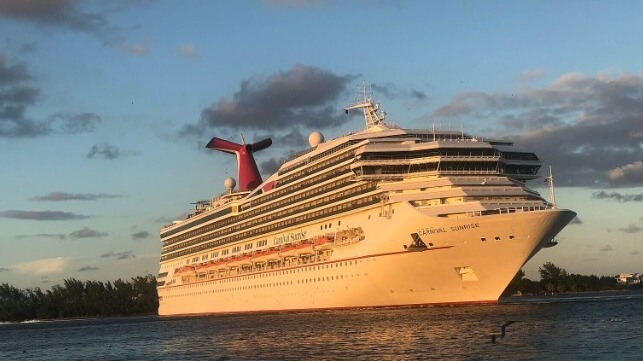
Teenager Sentenced to Eight Months for Carnival Sunrise Bomb Hoax

Carnival Sunrise
Sushumnarao / CC BY-SA 4.0

Published Apr 16, 2025 8:33 PM by The Maritime Executive


A federal judge has sentenced a Michigan teenager to eight months in prison for calling in a bomb threat to Carnival Cruise Line because he was upset that his girlfriend had gone on a cruise without him. 

Joshua Darrell Lowe, 19, was found guilty of sending an email to Carnival with a short - but potentially dangerous - threat. According to court documents, Lowe's message read "Hey, I think someone might have a bomb on your sunrise cruise ship [sic]." Carnival took the matter seriously, and Carnival Sunrise - which was under way in the Caribbean - was diverted to Jamaica for an inspection. Officials had to search through more than 1,000 cabins for any sign of a hazardous device; none was found. 

Lowe's motivation, according to prosecutors, was not related to  Carnival or to the ship. He was angry at his girlfriend, who had gone on a cruise with her family "while leaving him behind to care for their pets." The FBI traced the email address back to Lowe and questioned him; he admitted sending the message. 

When he was charged, Lowe took responsibility for writing the email and pleaded guilty to a single count of false information and hoaxes. On Monday, he was sentenced to eight months in prison followed by two years of supervised release. The relationship he had with his girlfriend is now over, his counsel said in a memorandum before the sentencing. 

"Bomb threats are not a laughing matter and are extremely irresponsible," said Cheyvoryea Gibson, FBI Special Agent in Charge for the case. "When individuals make false hoax threats, they divert critical law enforcement resources and spread unnecessary fear. The FBI takes all threats to life seriously and will ensure that those who resort to this kind of intimidation face the appropriate consequences."


Helmsman and Pilots Worked Against Each Other During Fremantle Allision

Maersk Shekou

Published Apr 16, 2025 10:52 PM by The Maritime Executive


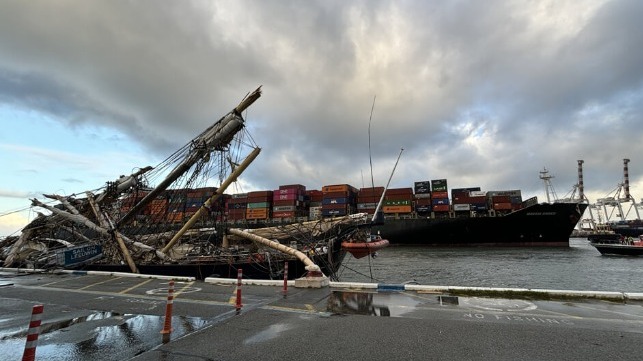
An interim factfinding report on the allision involving the boxship Maersk Shekou at Fremantle last year suggests that the vessel's helmsman and pilots were operating with different goals. The helmsman was actively steering to maintain a heading of 083 degrees, his last received helm order. Meanwhile, the pilots were trying to make an emergency turn to port, using full ahead thrust, assist tugs, bow thrusters and the port anchor - unaware that their helmsman was applying starboard rudder to counteract them. The ship hit a historic tall ship and a museum, causing considerable damage.

In the early hours of August 22, 2024, Maersk Shekou began heading inbound into Fremantle's harbor and took aboard two pilots. The primary pilot assigned for the transit was fatigued, so the backup pilot took charge during the master/pilot exchange.  

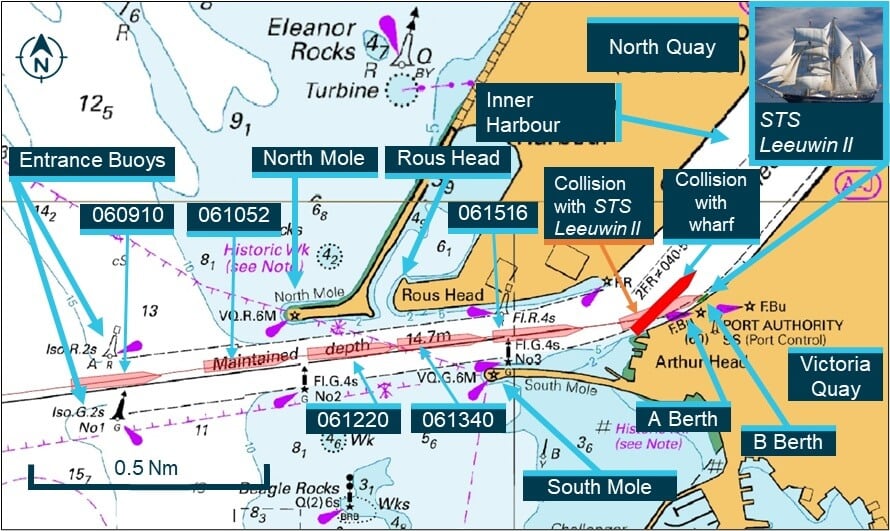
At about 0610, as they entered the narrow entrance channel for the inner harbor, southwesterly winds picked up to about 40 knots on the starboard quarter. The ship began to swing to starboard. The pilot ordered the helmsman to steer 083; the helmsman correctly acknowledged the order at about 0613:45. This was the heading that the helmsman would try to maintain throughout the final minutes of the casualty sequence. 

At the time that the order was given, the helmsman had the rudder hard to port to counteract the effects of the strengthening wind. It wasn't enough to do the job, and Maersk Shekou's heading was about four degrees off to starboard (087). The master suggested going to full ahead to increase steering forces, and at about 0614:34, the pilot agreed. There was a pier ahead, and they needed to turn to port fast in order to enter the harbor. 

With more power and a series of assist tug movements, Maersk Shekou began to swing back to port. As it swung back from 087 through 086, the helmsman moved to check the swing: he brought the helm to midships, then briefly to 33 degrees starboard. The vessel steadied up squarely on 083, the last ordered heading he had received, which was straight towards the pier. 

Courtesy ATSB

The pilot was unsure why the vessel had stopped swinging to port, and at 1615:33 he told the (fatigued) secondary pilot that something was wrong. The secondary pilot had been on a phone conversation at the back of the bridge and had not been involved in the back-and-forth among the bridge team, but he interrupted the call and joined the decisionmaking process. 

Together, without checking in with the helmsman, they began working the assist tugs to try to turn Maersk Shekou to port. The rudder was amidships at this point, and the helmsman was maintaining a steady heading of 083.5 towards the moored tall ship STS Leeuwin II - now less than a ship length away, with the boxship full ahead and making seven knots. 

At 0615:54, the master put the bow thrusters full to port. At 0616:10, the secondary pilot ordered stop engines, then full astern, and the master ordered the crew to prepare to drop the port anchor. 

Beginning at 0616:21, as these emergency measures to turn to port were under way, the helmsman applied more starboard rudder to try to counteract the effort to turn to port. The rudder would be over to starboard as much as 29 degrees over the course of the next minute. 

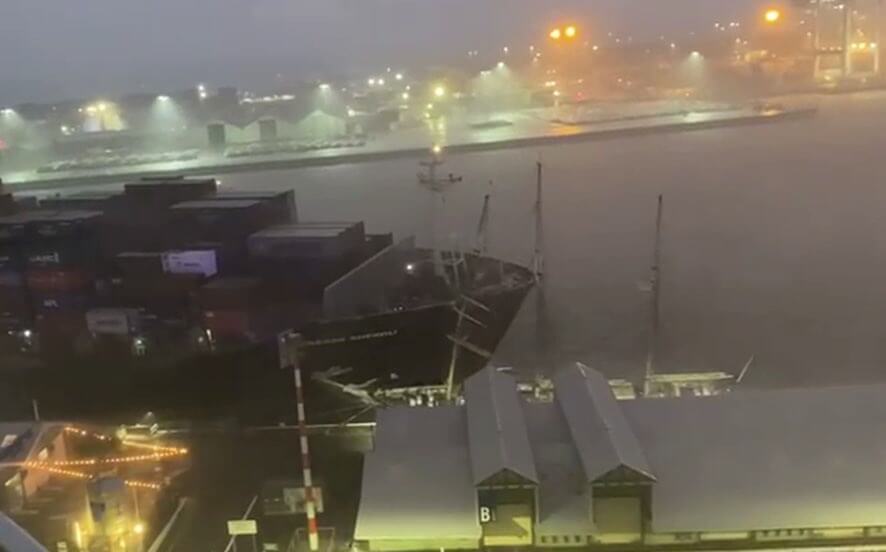
At 0616:49, the engines reached full astern and Maersk Shekou began to slow. The anchor, tugs and bow thruster managed to start a swing to port, but not fast enough to avert an allision. At about 0618, Maersk Shekou hit STS Leeuwin II at about three knots, dismasting the sailing vessel and prompting the two crewmembers aboard to flee onto the pier. They escaped with minor injuries. 

Maersk Shekou makes contact with STS Leeuwin II

Maersk Shekou came to a full stop by about 0618:30, but continued to spin in place. The bow thrusters were still on full to port, and the ship was swinging to port at about 13 degrees per minute. At 0619:52, the master noted to the pilots that the bow thrusters were still running with full power to port, and the thrusters were shut down - but not quickly enough to prevent contact in the narrow confines of the harbor.

40 seconds later, a stack of containers on Maersk Shekou's starboard quarter hit the roof of the Western Australia Maritime Museum. The ship's hull scraped along the wharf for a short distance, damaging the quayside and breaching a small section of the hull plating above the waterline. 

The ATSB continues its investigation and will release its full report, including its formal conclusions, when it has completed its review.