Sunday, April 20, 2025

Elon Musk suffers 'setbacks' while 'unnerving even some veteran Trump officials': NY

David McAfee
April 19, 2025 
RAW STORY


The richest man in the world has suffered a "series of setbacks" while embracing a fringe MAGA figure whose growing influence has "unnerved even some veteran" members of Donald Trump's administration, a new report states.

Elon Musk enjoyed a smooth early ride in Trump's second administration, but lately is hitting bumps in the road, according to the New York Times.

"At the start of the new Trump administration, Elon Musk’s influence seemed to have no limits," reported the Times' political reporter Jess Bidgood. She then added, "Over the past couple of weeks, though, Trump’s highest-profile governing partner has faced setbacks that raise questions about his enduring power and relationships in the White House."


ALSO READ: 'Dictatorship, not a town hall': Families 'distraught' as MTG disruptors tased and jailed

Recounting Musk's purported missteps, Bidgood said, "Some of my colleagues reported today that the acting commissioner of the Internal Revenue Service was being replaced after the Treasury secretary, Scott Bessent, complained that Musk had his preferred candidate installed in the role without Bessent’s blessing. It was only on Tuesday that Trump had appointed Musk’s choice, Gary Shapley, to run the agency temporarily. But since then, my colleagues reported, Bessent secured the president’s approval to send Musk’s pick packing."

This, according to the reporter, is "the latest bump in the road during Musk’s three-month crash course in government."


"He has repeatedly rankled certain members of Trump’s cabinet by failing to coordinate with them. His overall progress with the Department of Government Efficiency has been slower than he imagined. He was practically admonished by Trump in public after a plan for him to receive a classified briefing on China was leaked and then scuttled," the report states. "He suffered a high-profile political defeat after inserting himself into this month’s Wisconsin Supreme Court race. And despite his public opposition to Trump’s tariffs — and the trade adviser promoting them — he is not believed to have played a substantial role in persuading the president to change course."

The reporter further noted, "As these obstacles have piled up, I’ve noticed that we haven’t seen quite so much of a billionaire who usually possesses no shortage of main-character energy."


Musk's embrace of fringe Trump ally Laura Loomer has also reportedly raised some red flags, even for those closest to the President.


"It’s notable that Musk has started taking cues from Loomer, with whom he’s had a rocky relationship. He reinstated her account on the social media platform after buying it in 2022, earning her praise. But they clashed over Musk’s support for visas for foreign tech workers after Trump won the election last fall. Loomer accused Musk of censoring her and of stripping a verification check mark from her account," Bidgood reported. "What appears to be Loomer’s growing influence among Trump and some of his allies has unnerved even some veteran Trump officials."

Read the full piece right here.
Trump visa crackdown shakes Indian students

in New Delhi
DW
April 18, 2025

Revoked visas, deportations and political uncertainty are forcing Indian students to reconsider studying in the US.

India has surpassed China to become the country sending the most international students to the United States
Image: Steven Senne/AP/picture alliance

At least 1,024 international students at US colleges, universities and university systems have had their visas revoked or their legal status terminated since late March, according to a review of university statements and correspondence with school officials by The Associated Press.

The administration of US President Donald Trump said it should be allowed to deport noncitizens over involvement in pro-Palestinian activism. But in the vast majority of visa revocations, colleges have said there is no indication affected students had a role in protests.

OPT program hopes unravel

The United States issues the bulk of its foreign skilled worker visas (H-1B) to students from India, many of whom are drawn to the US because of OPT (Optional Practical Training) programs in STEM (science, technology, engineering and mathematics). OPTs allow graduates to remain in the US for an additional two years after completing their studies.

One Indian student on a STEM OPT, who was recently approved for an H-1B visa, told DW he was arrested "while helping out an injured friend because he could not drive."

He explained that he was charged with driving under the influence in January, but pointed out that he was not convicted. After searching for a job for more than two years, he finally received an offer letter, but lost it because his visa had been revoked.

"I took out a massive loan to study in the US which I still have to repay. I worked hard for four years and I am at a stage of settling down. If I lose all of this over a mistake, then what is the point?" he said. "What am I supposed to tell my aging parents back home?"
Visa shock leaves students scrambling for help

The visa crackdown, widely seen as part of Trump's immigration agenda, is fueling anxiety among Indian students hoping to study in the US.


The speed and scope of the federal government's efforts to terminate the legal status of international students have stunned colleges and universities across the US.

The US Department of Homeland Security has terminated the visas of 22 international students at the University of Michigan, according to a statement issued earlier this month.

The university has "reached out to affected individuals who ... are required to leave the country immediately. We are working closely with offices, colleges and schools from across the university, to ensure the impacted individuals understand their options and have access to resources," the statement said.

"For the last two weeks, we are tirelessly working to help the students," said Ravi Lothumalla, a US-based education consultant who is also counseling Indian students on their student visa revocations and helping them connect with lawyers.

Chand Parvathaneni, a Texas-based immigration attorney, whose firm has consulted nearly 40 students facing visa revocations, noted that "most of these cases are of minor violation charges."

He said many charges don't warrant deportation and don't imply guilt, noting that, "the government has not given the students a chance to respond back so now students are needing the intervention of the court."

Most Indian students in the US take out big loans for a US education. Along with mental stress, the students are now also having to deal with the hefty cost of legal fees, Parvathaneni said.


Many students resort to self-censorship

For Indian students, the wave of mass visa revocations of international students comes on the heels of two high-profile cases of deportation of Indian students — Badar Khan Suri and Ranjani Srinivasan.


Indian postdoctoral fellow Badar Khan Suri of Georgetown University was detained in the US over alleged ties to the Palestinian militant group Hamas, his lawyer said. A court has put his deportation on hold.

Ranjani Srinivasan, a Fulbright scholar at Columbia University, self-deported to Canada last month after her visa was revoked following accusations of pro-Hamas advocacy.

An Indian PhD scholar studying at a US university told DW on the condition of anonymity that: "My university has unofficially advised us to remove any posts that are seemingly controversial."

"After two years, I was planning to go back home and meet my parents but in the present circumstances, I fear I might be denied entry to the US on my return."


Is US losing its shine as a study destination for Indian students?


The changed political environment and aggressive targeting of international students under Trump has forced many Indian students to look at the US as a study destination with skepticism.

For 26-year-old Bhavika Kohli, who wants to pursue a STEM-designated master's degree, the US had long been a top choice.

"Right now my decision-making has completely changed," she told DW, adding that even if she graduates in two years, she might not be able to get a decent job as an international student "in this kind of political environment."

Kohli said she is weighing her options now. "The incumbent government in the US has even compelled me to consider doing post-graduation from India" — an option, she said, she never considered until now.


A growing number of students from India share concerns with Kohli who see the current political environment as hostile toward international students.

"Compared to last year, we are anticipating a 20%-25% fall in the number of Indian students going to the US this year," Sushil Sukhwani, founding director of Edwise International, an India-based study abroad consultancy, told DW.

More than anything, the students' apprehensions are rooted in the uncertainty that comes with Trump's sudden and sweeping policy decisions.

Madhavan, who didn't want to give DW his real name, has quit his job in Delhi as he is slated to join a master's journalism program at a US university in August. However, he is anxious for his future as an international student under the Trump administration.

"There is an institutional level of change ongoing in the US. And considering that, as an Indian student, I feel extremely powerless and uncertain. If I am going there, I don't know what is going to happen," Madhavan said, adding that he should be planning his move to the US, but instead he is wondering if he would even be allowed to go.

"It's extremely uncertain and it is going to be challenging, since you don't know what you can or can't do."

Edited by: Keith Walker
Midhat Fatimah Writer and reporter based in New Delhi@MidhatFatimah

Lingering Poison: My Witness to Deepwater Horizon’s Legacy on the Gulf Coast


Fifteen years after the oil spill, the legacy of Corexit dispersants continues to manifest in the broken bodies and shattered lives of those who were exposed, including those who spoke out to save future generations.


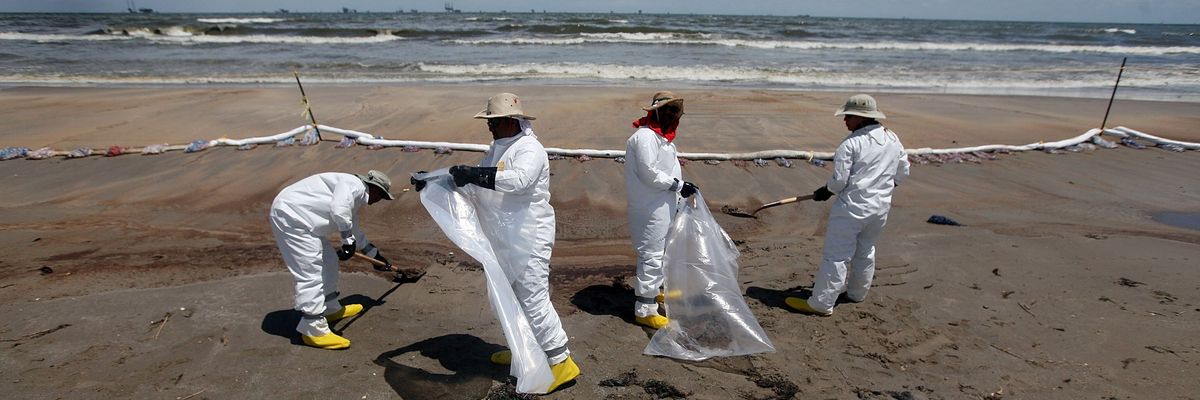
Workers are seen as they clear off some of the oil washing on to Fourchon Beach from the Deepwater Horizon oil spill in the Gulf of Mexico on June 28, 2010 in Port Fourchon, Louisiana.
(Photo: Joe Raedle/Getty Images)

OPINION
Lesley Pacey
Apr 20, 2025
Common Dreams

As the mother of a childhood cancer survivor from a coastal Alabama cluster, I reflect on the 15th anniversary of the Deepwater Horizon disaster with anger and frustration at the countless lives needlessly destroyed by the spill and its “cleanup.” But more than anything, I am afraid… I am afraid because the same chemicals that wrought havoc on Gulf communities aren’t being disposed of—they are being rebranded to be reused.

During my seven years of assisting cleanup workers at a Miami-based law firm and Government Accountability Project, I saw the stuff of medical nightmares manifest in real life as I came face-to-face with an innocuously named monster: Corexit. Corexit is a chemical oil dispersant that was used liberally in the wake of the Deepwater Horizon disaster to break up oil slicks into smaller droplets that can be submerged underwater. While Corexit was once described as being “as safe as dish soap” by a BP executive, the final chapter of its use in the Deepwater Horizon disaster was not to be told via feel-good commercials of freshly cleaned ducklings. It is still being written by outsiders documenting the broken lives of the men and women who can no longer speak for themselves after volunteering to clean the Gulf.

Many of the men and women who volunteered to clean the Gulf, a body of water that bound together their communities, jobs, and very way of life, died in the months and years after exposure to Corexit, often from serious diseases including blood and pancreatic cancers—silencing their voices long before justice could be served. I personally knew dozens who were exposed and subsequently left the Earth far too soon.

The corporate shell game of rebranding these toxic chemicals under new names must not distract us from the fundamental truth that these dispersants should never be used again in our waters.

I still think about Captain Bill, who came to us when Stage 4 colon cancer appeared after running a supply boat to the sinking Deepwater Horizon rig. He did not believe all the hype from environmentalists about the dangers of dispersants until he got crop-dusted with them. He developed softball sized cysts all over his body filled with bacteria and was left with just months to live. He left behind a wife and three children, including a young son with autism.

I remember Sandra, a woman who always exuded joy during the 20 years I’d known her. Her job for BP required her to hop on and off oil-contaminated boats; she tragically developed a rare myeloproliferative disorder that ended her life at age 60. She left behind a husband who missed her so profoundly that he lasted only a few months without her.

Corexit has been proven to have deadly side effects within humans, but that won’t stop corporate greed from slapping a new label on it and sending it to a different country. The U.S. Environmental Protection Agency (EPA) was in the process of finalizing new rules and regulations governing the usage of oil dispersants. Right before the rules were set to be finalized, the manufacturer of Corexit abruptly discontinued its product line which constituted over 45% of globally stockpiled dispersants. This was likely not coincidental; the new EPA rules require manufacturers to truthfully report known or anticipated harm to human health and wildlife from their products. Corexit’s parent company chose to withdraw from the U.S. market while re-registering the same toxic products in the United Kingdom and Brazil in 2024, with France also considering approval.

People and communities were falsely reassured about the safety of the working conditions, as BP told workers personal protective gear was unnecessary when dealing with the chemicals. Now, with the risks and threats of exposure known, the protective gear could have saved hundreds of lives and communities from devastation.

Fifteen years after the Deepwater Horizon oil spill, the legacy of Corexit dispersants continues to manifest in the broken bodies and shattered lives of those who were exposed, including those who spoke out to save future generations. The corporate shell game of rebranding these toxic chemicals under new names must not distract us from the fundamental truth that these dispersants should never be used again in our waters. The time has come to close this dark chapter in our history and commit to solutions that truly protect both our coasts and the people who call them home.
Kristi Noem and the Greenland War–A Dog’s Tale?

As the struggle against Denmark over the island heats up, who better qualified to conduct a national anti-Great Dane campaign than Noem?


U.S. Secretary of Homeland Security Kristi Noem speaks during a tour of the Terrorist Confinement Center as prisoners stand, looking out from a cell, in Tecoluca, El Salvador, on March 26, 2025.
(Photo: Alex Brandon/POOL/AFP via Getty Images)

Tom Gallagher
Apr 19, 2025
Common Dreams

Unless you’ve lived in South Dakota—which Kristi Noem represented in Congress and later served as governor—there’s a good chance that if you recognize her name, it’s due to the video clip from inside a prison in El Salvador that featured the new secretary of Homeland Security in front of a cell full of shirtless, tattooed, shaven headed Venezuelan deportees that she denounces—while sporting a $50,000 Rolex watch. An immediate effect of which was to raise anew the question of why President Donald Trump had appointed her to a position for which she appeared to have little to no relevant experience.

Some attributed it to her exhibiting a superior level of sycophancy during last year’s vice-presidential speculation season. No, thought others, in such times fawners sprout like toadstools after a summer rain; surely there must be something special about this one. And now, a theory—involving America’s upcoming war with Denmark and Noem’s previous career PR highpoint—the story of how she had once shot her 14-month-old dog, out of frustration at her inability to train her.

For those who savor the surprises of the Trump years, the recently articulated hostility to Denmark has to rank as top tier. We can imagine that he himself was actually as amazed as the next American to learn that humongous Greenland is actually an autonomous territory of otherwise tiny Denmark. And, real estate being the president’s primary business interest, he has decided that the U.S. has greater need for the world’s largest island than Denmark does. Heads that take Trump seriously—as well as those that don’t—were set spinning alike by this newly enunciated national security priority. But as the now ubiquitous, but previously unfamiliar, north pole-centered maps clearly show—across the ever-shrinking Arctic ice pack from the U.S. lies… Russia!

Imagine, if you will, her standing there—in front of a pound filled with chained, baying, deported Great Danes—shotgun in hand, and Rolex on wrist.

The thing is, though, Trump doesn’t actually seem all that concerned about Russia as a security threat. During his February 28 Oval Office encounter with Ukrainian President Volodymyr Zelenskyy, he went so far as to tell him that “Putin went through a hell of a lot with me.” He’s even claimed that it was Ukraine that started the war with Russia. And the fact is that the secret potential war plans on which the Pentagon intended to brief Elon Musk—before public outcry put the kibosh on the idea—concerned China, not Russia. Which should make it pretty clear which nation is actually being ginned up as the “national security threat.”

Now, the fact is that Trump has never particularly been known for an expansive interest in or knowledge of geography that doesn’t hold some kind of business angle for him. Could it be, then, that he thinks Greenland would actually provide some kind of buffer against China? This all, of course, is speculative, but what we do know is that so far as the prospect of the U.S. taking possession of Greenland, Trump says he “thinks there’s a good possibility that we could do it without military force”—which should be quite reassuring to us all, although he cautioned that “I don’t take anything off the table.”

Hey, that’s what the man said, so let’s imagine what happens when the absurd gets serious. Some may recall that when France proved a tough sell on the endless War on Terror, announcing its intent to veto any United Nations resolution calling for invasion of Iraq, the U.S. House of Representatives responded by altering the menus of three congressional cafeterias—renaming French fries as “freedom fries.” (None will recall, however, when the U.S. entry into the First World War against Germany turned frankfurters into hot dogs.) So, if Denmark continues to balk at the presidential whim, we can no doubt look forward to ordering Cheese Americans to go with our coffee in the future.

But the ire directed at the willful little Scandinavian nation will not likely stop at the pastry shop. Which is what brings us back to the question of what Kristi Noem’s doing here. Well, the story she told about her dead dog was that she was “untrainable,” “dangerous to anyone she came in contact with,” “less than worthless … as a hunting dog.” “I hated that dog,” Noem said. The final straw came when she dropped in on some neighbors, let the dog escape her control, and it proceeded to kill the neighbors’ chickens. After paying for the chickens, she took the dog to a gravel pit and shot it. But that’s not all. She then realized that “another unpleasant job needed to be done,” and went back and got a goat her family had who was “nasty and mean,” prone to chasing and knocking down her kids. Oh, and he smelled bad—“disgusting, musky, rancid.” So she shot the goat too. Didn’t get the job done on her first shot though. Had to go back to the truck for a another shell to finish him off.

None of this story, you must understand, required any sort of hard-nosed investigative journalism to uncover. It comes from a book that Noem herself wrote: No Going Back: The Truth on What’s Wrong with Politics and How We Move America Forward, an autobiography—her second—written when she was preening for the vice-presidential nod. She recounted the bizarre anecdote, she says, as an example of her willingness to do “difficult, messy, and ugly” things when they just had to be done. As we know, she didn’t ultimately land the nomination. Some suspect it was because it took her two shots to get the goat. Who knows, but Trump did ultimately decide he wanted her around.

Should the president’s Greenland-Denmark obsession continue to meander on, the campaign against Danish aggression surely won’t stop at the breakfast counter. And it’s when we start to envision additional targets that the potential Kristi Noem role in all this starts to take shape. The most obvious display of this alien roadblock to American national security? It’s the dogs, of course—Great Danes being pretty much the Greenland of dog breeds. The threat that canines of that size—in the service of an enemy power—would pose to America’s most vulnerable citizens—our children—is too obvious to require discussion.

Who—then—better qualified to conduct a national anti-Great Dane campaign than Noem? Imagine, if you will, her standing there—in front of a pound filled with chained, baying, deported Great Danes—shotgun in hand, and Rolex on wrist. Could there be a more powerful image of the nation’s determination in a life and death struggle with Denmark—and if need be against Europe itself? And should any Great Dane think to resist arrest, well, we know that Noem is one government bureaucrat whose bark is not worse than her bite.

Far fetched, you say? Scoff you may, but remember what else you used to consider far fetched until not so long ago. I know that if I had a Great Dane, I’d be thinking about lifestyle alternatives for the dog—perhaps even getting a saddle and trying to pass it off as an Icelandic pony. And I’d get real nervous if I heard that Noem was in town.

As of late, she’s been called ICE Barbie for her appearance at deportation raids. The future? Kristi Noem: Bane of Great Danes? As we are well aware, crazier things have already happened.


Poland: 'Hajnowka 5' on trial for aiding desperate refugees

n Bialystok, Poland
DW
April 17, 2025

Polish activists gave food and clothes to a group of refugees before trying to smuggle them to safety. Now they are on trial and could face years in prison.

Four of the Hajnowka 5 appeared in a Polish courtroom to face criminal charges on Tuesday
Image: Monika Sieradzka/DW


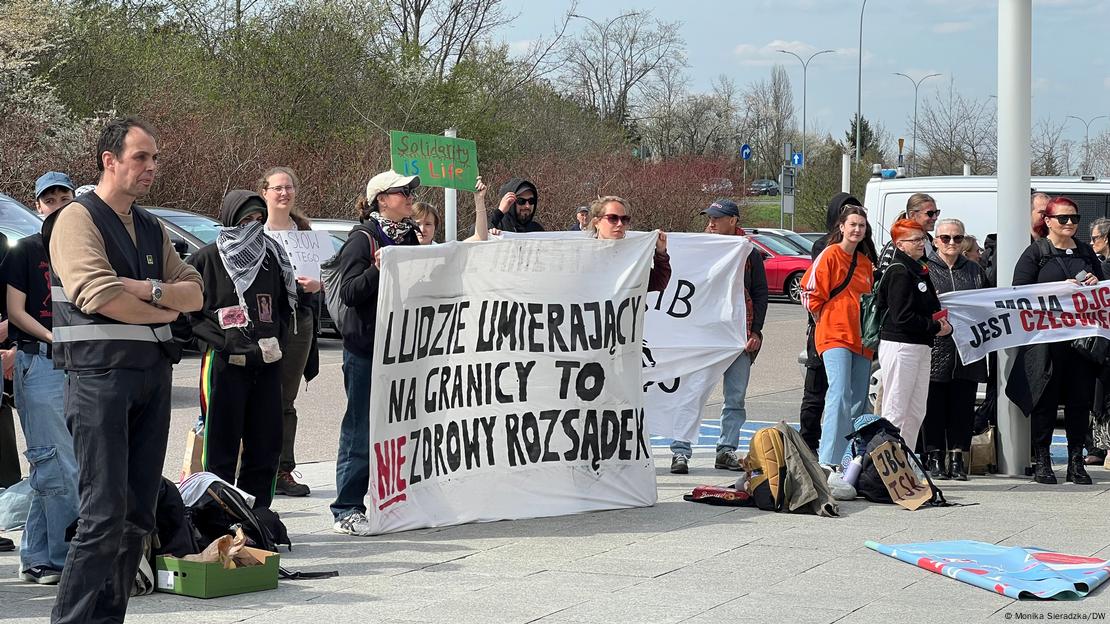
About 100 demonstrators gathered outside the Bialystok courthouse in northern Poland on a recent April morning to show support for five Poles on trial. Four of the five appeared for the trial, and the fifth failed to show.

Demonstrators held up signs reading "Freedom for the five," "Helping is not a crime," or "Laws can't smother the truth." A group of drum-banging young people approached. Others yelled words of encouragement to the defendants, shouting, "You'll never walk alone!" Cheers erupted when the four appeared in court.

In March 2022, the five gave water, food and clothing to a desperate Iraqi couple, their seven children and an elderly Egyptian man who was with them. The refugees had illegally crossed the Belarus-Polish border and spent several days living in the woods. The five Poles then decided to drive the group to the next closest town around 13 kilometers (8 miles) away, but border patrol agents stopped them before they could get there.

Among those who appeared for questioning before the court on April 14 were the border patrol agents who discovered the refugees in the activists' vehicle. "Suddenly," said one, "I saw the back seat move. There were people hidden under the blankets that were stacked on it."


Demonstrators came out to call for the release of the so-called Hajnowka Five
Image: Monika Sieradzka/DW

Prosecutors in Hajnowka demanded the activists, now known as the "Hajnowka Five" (#H5), be jailed immediately, but a court rejected the plea. Now, after months of hearings and witness testimony, the five have been formally charged.

They are accused of providing "illegal assistance" to refugees, "making it easier for them to stay in the Republic of Poland" by "providing food and clothing to them while they were hiding in the woods, giving them shelter and rest and transporting them into Poland on March 22, 2022."

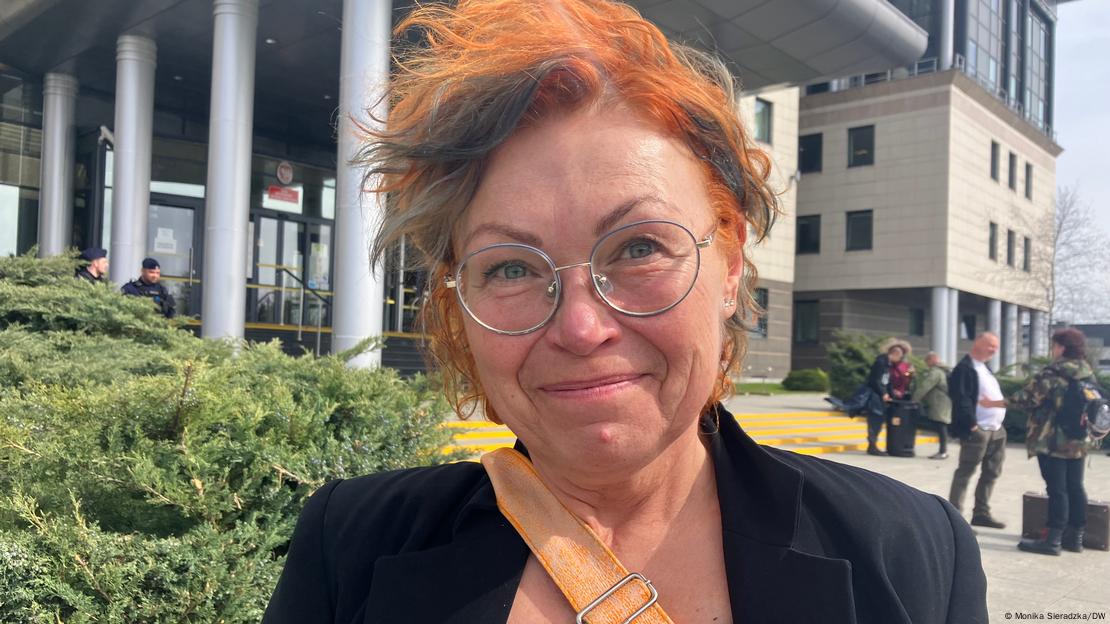
Ewe Moroz-Keczynska doesn't regret helping refugees in need
Image: Monika Sieradzka/DW


Crisis at the Belarus-Poland border

One of those on trial is Ewa Moroz-Keczynska, an ethnologist who leads the educational department at the Bialowieza National Park near the border.

"We locals are in the woods a lot. It's where we work and relax," she told DW. In 2021, something terrible happened. Our forest started to move. Suddenly, it was full of people. We met people who were suffering from malnutrition, dehydration or other ailments, some even seemed to have hidden themselves to die in peace."

Moroz-Keczynska said it's difficult to go back to living a normal life once you have seen such images.

"I went into the woods with a backpack and started helping people. It's not something you really want to do. There should be organizations or state institutions to do that. It mostly falls to the young activists who come here to help and then have to suffer this trauma. As a local I had no choice. I had to do what I have always taught my students and my children."

Illegal crossings of Belarus and Poland's shared 418-kilometer (2260-mile) border jumped dramatically in the fall of 2021. Those crossing were people from the Middle East, Africa and Asia who had been invited to come to Belarus on tourist visas before being bused directly to the Polish border, often by Belarus soldiers. The route is one of the most popular into Europe but also one of the most treacherous.
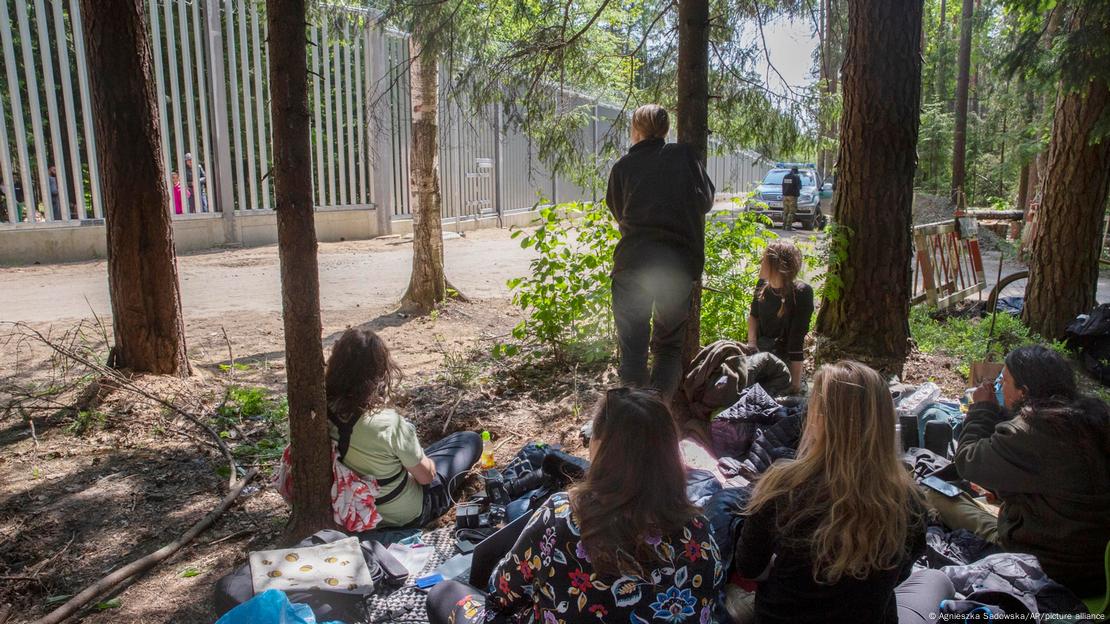
 May 2023, these volunteers tried to help refugees on the other side of the Belarus-Poland border
Image: Agnieszka Sadowska/AP/picture alliance


'We are not talking about human trafficking'

Lawyer Hanna Machinska of the Helsinki Foundation for Human Rights is one of the many human rights and legal experts watching what she called "a shameful trial" and an assault on those seeking to help.

Machinska said authorities should incorporate people who want to help into their own ranks, letting them work with state institutions such as border patrol agencies, rather than prosecuting them.

"These people have experience. They know how to help. If it wasn't for them, the death toll at the border would be far higher than the 58 recorded so far," she told DW.

Moreover, she said the charges are an absurdly skewed interpretation of the law. The legal basis for the suit (paragraph 264.1 of the Polish legal code) was actually designed to prosecute those who help illegals reside in Poland "for financial or personal gain." The penalty for a guilty verdict can be up to five years in prison.

The law targets human traffickers, but now prosecutors are arguing that the gist of the law is to clamp down on "advantages gained by refugees."

Machinska rejects that argument. "We are not talking about human trafficking here. We are talking about humanitarian assistance. It's a refusal to provide such assistance that should be a crime," she said.

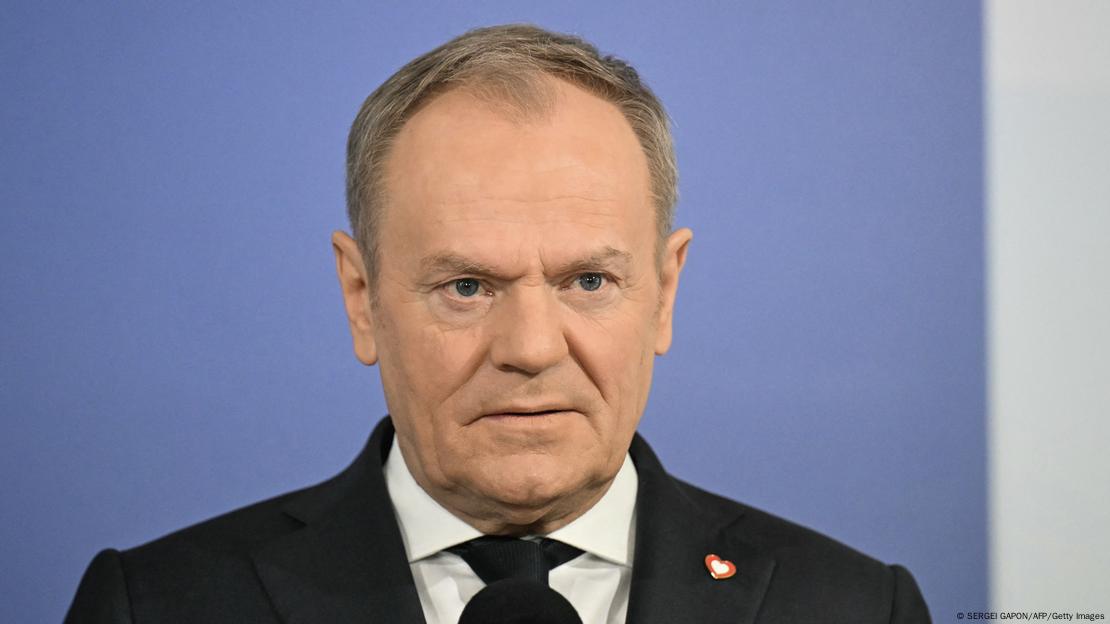
Polish Prime Minister Donald Tusk has surprised supporters with his hard-line stance on migration
Image: SERGEI GAPON/AFP/Getty Images


Tough migration policy from a liberal government

The next court appearance for the defendants is scheduled for May 14, exactly four days before a presidential election featuring right-wing and extreme-right candidates.

The trial has also put the restrictive migration policies of center-right Prime Minister Donald Tusk and his administration under the spotlight. Many of those who voted for his coalition are deeply disappointed that Tusk's migration policies are even harsher than those of the previous right-wing nationalist Law and Justice (PiS) government.

In early March, for instance, Tusk suspended the right to request asylum at the Belarus-Poland border, citing his belief that refugees there were being used as yet another component in a Russian-led hybrid war against Europe. Polish border agents have been regularly accused of not allowing people to make use of their internationally recognized right to request asylum. Human rights advocates see the suspension of asylum rights as an attempt to legalize so-called pushbacks.

Justice Minister Adam Bodnar, who also serves as Poland's attorney general, has also raised eyebrows for refusing to drop charges against the Hajnowka Five, despite numerous appeals to do so and the fact that the investigation began under the previous Law and Justice government.

This article was originally written in German.

Monika Sieradzka DW correspondent in Warsaw
After US talks, is Europe back in the game on Ukraine?


Ella Joyner in Brussels
DW
April 17, 2025

France heralded positive momentum after talks that brought together US, Ukraine and European officials in Paris. Further meetings could help Ukraine's European allies shape the course of peace negotiations with Russia.

French President Emmanuel Macron (left) welcomed US Secretary of State Marco Rubio (right) and special envoy Steve Witkoff (center) to the Paris talks on Thursday
Image: Ludovic Marin/Pool AFP/AP/dpa

Top US, French and Ukrainian met in Paris on Thursday for talks that could see sidelined European officials reinsert themselves into the sluggish US-led negotiations to end the Ukraine war.

French President Emmanuel Macron personally received US Secretary of State Marco Rubio and presidential envoy Steve Witkoff, who recently met personally with Russian President Vladimir Putin as the Trump administration tries to thrash out a deal to bring the three-year war to a close.

A French government source described the talks as "positive and constructive" and announced there would be further discussions involving key European, Ukrainian and US officials in London next week.

"I believe the Americans see the interest in working in this format," the source told reporters on condition of anonymity, after a day of back-to-back talks.

High-ranking officials from Britain and Germany, plus Ukrainian presidential adviser Andrii Yermak, were also in Paris. Before the talks, Macron's office said the goal was to "review progress on peace negotiationsaimed at ending the Russian aggression in Ukraine."
Zelenskyy: 'We must put pressure on the killers'

In the run-up to his inauguration this January, US President Donald Trump vowed to rapidly end the war in Ukraine, which began when Russia launched a full-scale invasion in February 2022.

Shortly after taking office, Trump floored European leaders by opening bilateral talks with the Kremlin to end the war in Ukraine, sidelining traditional allies that, like the US, have funneled billions to Ukraine as it fights off Russia.


Those talks have yet to lead to significant breakthroughs. A few weeks back, Putin rejected a US-Ukrainian proposal for a ceasefire, irking the Trump administration.

On Thursday, Ukrainian President Volodymyr Zelenskyy called on those gathering in Paris to apply pressure on the Kremlin.

"Russia uses every day and every night to kill. We must put pressure on the killers ... to end this war and guarantee a lasting peace," he wrote on Telegram.

In Russia, Kremlin spokesperson Dmitry Peskov dismissed the talks. "Unfortunately, we see from Europeans a focus on continuing the war," he said.

Trans-Atlantic rapprochement in the cards?

The first months of Trump's second term in the White House have been highly challenging for trans-Atlantic relations, not only due to the Ukraine negotiations.

In recent weeks, the opening salvos of trade war, with 10% tariffs slapped on almost all goods imported into the US, were also a nasty shock for Europe.

When Rubio met with his NATO counterparts, most of whom are also from EU member states, in Brussels two weeks ago, he was at great pains to stress that the US still valued the defense alliance and its European partners. But many allies expressed exasperation with the Trump tariffs and the US insistence of spending 5% of GDP on defense.

Since then, the Trump administration has backed away from some of its more extreme threats on trade measures, calling for a three-month pause to allow for negotiations.

With Italian Prime Minister Giorgia Meloni visiting Washington on Thursday, Trump said he foresaw a trade deal with the EU, potentially signalling a way out of the tariff dispute.

Europe tries to retake seat at the table


As the US has pivoted away from Ukraine and cultivated a potential rapprochement with Russia, Macron, together with British Prime Minister Keir Starmer, has been coordinating a group of around 30 countries trying to fill the possible void for Ukraine.

The pair is planning a "reassurance force" of international troops to act as a deterrent to further Russian incursions in a post-conflict scenario. The Kremlin has slammed the initiative as a provocation.


However, many officials in NATO countries feel such a force would de facto require some form of US support to be viable.

The same French government source who announced follow-up talks in London said they believed the US had very appreciated Franco-British initiative in recent weeks.

For European officials, Thursday's talks may have offered a chance to reinsert themselves fully into the currently stalled negotiations and reshape them in their favor. Some of the terms floated during negotiations have been unacceptable to both Ukraine and the EU.

One EU diplomat, speaking on condition of anonymity before talks began, said it was a good first step. "It depends very much on … how concretely they involve Europeans in the negotiations in the future."

But Marie Dumoulin, an analyst from the European Council on Foreign Relations, sees things a little differently. "To me, this meeting is rather about Europeans trying to clarify to the US how they can contribute to Ukraine's future and Ukraine's future security," she told DW.

"This may mean the US is understanding that Europeans will be need to be on board of a future agreement, which is something the Russians have already made clear. I'm not sure we can see it as a kind of rapprochement."

Edited by: Davis VanOpdorp

Ella Joyner Correspondent

Tuberculosis: An ancient killer we can't seem to defeat
DW
April 18, 2025

We've been able to cure tuberculosis for decades. So why does the disease still kill more than 1 million people every year?


Tuberculosis generally affects the lungs, and a typical symptom is a cough. But most infections show no symptoms
Image: picture-alliance/ dpa

An estimated quarter of the world's population — about 2 billion people — unknowingly carries a dormant tuberculosis infection.

It's a disease we've known how to treat since the 1950s, and yet tuberculosis (TB) continues to infect some 10 million people and kill a million more every year.

The World Health Organization (WHO) aims to reduce TB cases by 80% by 2030. But control efforts were dealt a blow by COVID-19, which reversed years of progress as attention shifted to addressing the pandemic.

Now TB is again the world's deadliest infectious disease.

While TB disproportionately affects lower-income countries, wealthy nations aren't immune. The United Kingdom reported a 13% rise in TB cases in 2024, threatening its "low TB" status, with one-third of patients experiencing treatment delays.

In January 2025, the US recorded its largest ever outbreak.

What is TB?


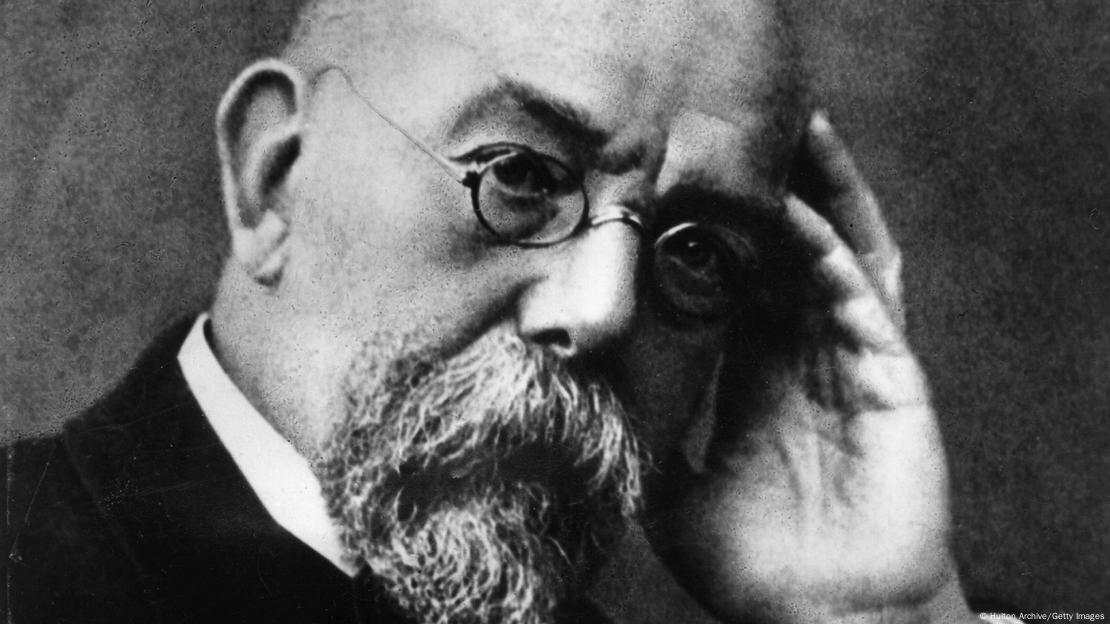
Skeletal records from 4,000 B.C. show TB has been infecting humans for thousands of years, spreading through airborne droplets when infected people cough or speak. It's caused by Mycobacterium tuberculosis; a bacterium first identified in the 1880s by German scientist Robert Koch.

But unlike many disease-causing microbes, TB can lie dormant in a person's body for decades without causing symptoms.

When it becomes active — often triggered by weak immunity — it attacks the lungs and can also spread throughout the body. Typical symptoms include a cough producing blood-containing mucus, fever and weight loss.
Robert Koch, a German bacteriologist, was the first person to identify the bacteria that causes TBImage: Hulton Archive/Getty Images


'Missing millions' continue to transmit TB

TB has proven remarkably resilient and difficult to contain.

While there are ways to diagnose and treat the disease, several critical barriers continue to prevent its elimination.

"The price of effective TB tests remains too high," said Jasmin Behrends, an advocacy officer at Doctors Without Borders.

The WHO estimates nearly 3 million TB cases are never diagnosed or reported every year, creating a reservoir for continued transmission. These cases are known as the "missing millions."

"We need to shift from passive to proactive case finding, including intensified case finding, among those who visit health facilities," said Dr. Mohammed Yassin, a senior adviser on tuberculosis at the Global Fund.

"[We also need to take these] services to where people are, especially to reach those with high risk and limited access — homes, workplaces, prisons, urban slums and remote communities."

"Children at risk of having TB are often overlooked, either going undiagnosed or facing delays in diagnosis," said Behrends.


TB can develop antibiotic resistance


TB bacteria can develop resistance to antibiotics, especially when treatments are interrupted or incomplete.

Standard TB treatment requires multiple antibiotics taken consistently for six months — a regimen many patients struggle to complete due to side effects, stigma or limited access to health care.

Multidrug-resistant TB requires longer, more toxic and more expensive treatment courses. The WHO estimated 400,000 new cases of drug-resistant TB in 2023 alone.

"Shorter regiments to treat resistant forms of TB have to be implemented worldwide to treat patients with less severe side effects in a much shorter time," said Behrends.

Meanwhile, the first and only TB vaccine, known as the BCG, was developed over a century ago. While it protects children from the most severe forms of TB, it offers minimal protection to adults.

But meaningful opportunities for better vaccines have been limited by funding.

While COVID-19 vaccines received $90 billion (€79.1 billion) in development funding, TB vaccine research has secured just $1.1 billion (€967 million) over the last 11 years.


Dwindling support for TB measures, but hope remains


Recent funding decisions have also raised concerns. The US government's recent move to slash USAID funding, and other nations' cuts to foreign aid, have threatened to undermine progress in high-burden countries at a critical moment.

"[Doctors Without Borders] is gravely concerned about the recent United States funding cuts," said Behrends, "We are already seeing disruptions due to shortages of medical supplies and staff not being paid."

"Sustained international financing is essential to the global fight against TB. Any reduction in funding — whether temporary or long term — can have real and immediate effects on people’s lives," said Yassin.

Can tuberculosis be eradicated?


New molecular diagnostic tools can detect TB in hours rather than weeks, allowing for faster treatment. Meanwhile, several candidates for TB vaccines are in late-stage clinical trials.

The Tuberculosis Vaccine Accelerator Council, launched in 2023, aims to speed up development by applying lessons from the COVID-19 response.

But ending TB will require multi-sector action: strengthening health care systems, addressing poverty and malnutrition, improving housing conditions to reduce transmission and ensuring universal access to diagnosis and treatment.

A UN high-level meeting on TB in 2023 renewed these commitments, but translating promises into action remains the critical challenge.

"TB is no longer a silent epidemic," said Yassin.

"Advocates, survivors, scientists and donors are coming together to demand change. The momentum from the 2023 UN high-level meeting on TB shows that global leaders recognize the urgency — and the opportunity — to end TB within our lifetime."

Edited by: Matthew Ward Agius
Should Africa be worried about earthquakes?

Abubakar Said Saad and Hannah Heckelsmüller
DW
April 19, 2025

Myanmar's deadly earthquake has raised alarms beyond Southeast Asia. In Africa, fault lines stretching across the continent pose serious risks, yet preparedness remains low.


Morocco's 2023 earthquake disaster killed nearly 3,000 people
Image: FADEL SENNA/AFP


The recent earthquake in Myanmar has drawn fresh attention to global preparedness for natural disasters, including on the African continent.

African experts are concerned about seismic threats and limited local capacity to respond. For Gladys Karegi Kianji, a seismologist at the University of Nairobi, Kenya, who has studied African earthquakes for 15 years, this is far from a new worry.

"I don't hire an apartment in a tall building beyond the first floor in Nairobi,” Kianji said.

Is Africa at risk of earthquakes?

Earthquakes have struck the continent before. Thousands were killed in Morocco's 2023 disaster, while Ethiopia's 2005 quake resulted in the displacement of about 6,500 people.

Folarin Kolawole, a structural geologist at Columbia University, US, says assessing a region's earthquake risk involves looking at historic earthquakes in the region and identifying fault lines, which are fractures between rocks.

Africa, he says, lies on a complex geological structure that makes it vulnerable to seismic activity.

At the core of this risk is the East African Rift System, where the African Plate is slowly splitting into the Nubian and Somali Plates. As these plates drift apart more, Kolawole says it leads to earthquakes in countries like Ethiopia, Kenya, Uganda, Tanzania, and Mozambique.
Where are Africa's earthquake zones?

Africa has several active seismic zones.

In 2016, a group of geologists created the Seismotectonic Map of Africa, highlighting regions based on historical quakes and geological activity.


Kolawole identifies the East African Rift covering Malawi, Tanzania, Ethiopia and Madagascar as the most earthquake prone part of Africa.

These countries lie along a 3,000-kilometer (1,864-mile) fault stretching from Ethiopia to Mozambique and frequently experience tremors, some causing significant damage.

And while West Africa is often seen as tectonically stable, he points to Ghana's past earthquakes and recent tremors in Nigeria as signs of potential for a large magnitude earthquake to occur.

Lake Kivu: A volatile mix of geology and gas

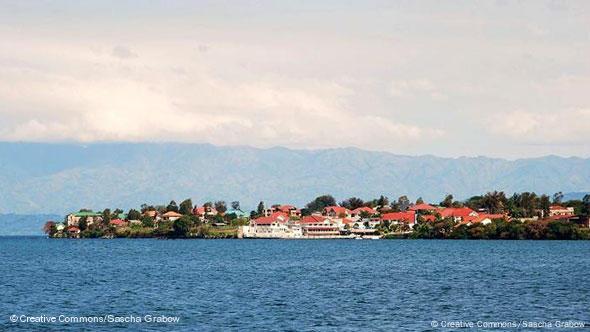
Lake Kivu, between Rwanda and the Democratic Republic of Congo, is one of Africa's deepest lakes.

What makes it dangerous, Kolawole explained, is the large amount of dissolved carbon dioxide and methane, the latter being highly flammable.

In the event of a strong earthquake, these gases could be released in a rare "limnic eruption", potentially suffocating thousands.

In 1986, a similar event at Lake Nyos in Cameroon killed over 1,700 people when a gas cloud silently swept across nearby villages.

To mitigate this risk, the Rwandan government launched the KivuWatt Gas Methane Power Plant in 2016 to extract methane from the lake for electricity production.

Lake Kivu is one of Africa's deepest lakes and a risk-site for limnic eruptions
Image: Creative Commons/Sascha Grabow

Despite active fault lines, rising seismic activity, and initiatives like this methane extraction facility, Africa remains overall ill-prepared.

"[Governments] don't recognize the importance of putting a network that is going to feed them with the information to actually do the seismic hazard warning. Definitely nothing like that exists,” said Kianji.

She added that governments are often reactive rather than proactive in disaster risk reduction.

What's needed, she said, is greater awareness, seismic monitoring systems, better policies and urban planning, and economic investment.

Kolawole added that "conflict and unrest in some of the African countries such as Congo” hinders preparedness efforts.

"We cannot stop earthquakes from happening,” Kolawole said. "The best we can do is to prepare for it and monitor.”

Fewer than a third of African countries have implemented multi-hazard early warning systems.

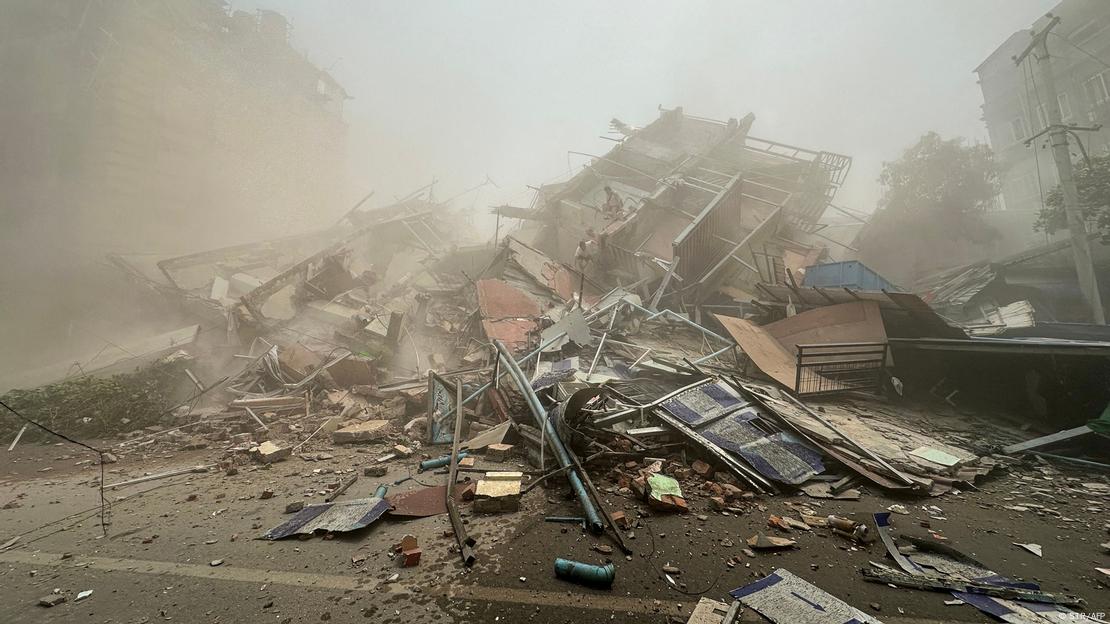
The recent earthquake in Myanmar and Thailand has drawn fresh attention to global preparedness
Image: STR/AFP

Africa can learn from global examples including Myanmar's recent quake.

That includes better building standards and investment in understanding the geological activity in the region.

"I think there was a lapse in the administration in terms of the building and construction,” said Kianji of the Myanmar quakes.

"If a lot of [scientific] research was put in, some of those very active zones they may have been able to warn people to be able to evacuate.”

Edited by: Matthew Ward Agius

Abubakar Said Saad Sa’id Sa’ad is Nigerian writer and multimedia journalist currently based in Germany.@saidsaadwrites


Amid discontent over Gaza, more Israelis back hostage deal

in Jerusalem
DW
April 18, 2025

giant billboard in Tel Aviv called on the Israeli government to secure the release of the remaining 59 hostages, both alive and dead, held in Gaza
Image: Jack Guez/AFP

In recent weeks, thousands of Israeli reservists and security forces retirees have signed petitions calling on the government to prioritize the release of hostages over the fight against Hamas.

Every week, large crowds gather in cities across Israel to call on the government to bring home hostages held in Gaza.

The hostages' fate has been on many Israeli minds since the Hamas-led attacks on Israel on October 7, 2023, which killed 1,200 people. Recent opinion polls show that nearly 70% of Israelis want a deal to bring home the remaining 59 hostages of the around 250 taken during the attacks, 24 of whom are still believed to be alive.

Now, a growing number of Air Force pilots, former Secret Service agents, intelligence unit members and many other army reservists and retirees are publicly expressing growing discontent with the government's failure to secure the hostages' release. Their message: First the hostages, then Hamas, even if war is necessary later. Israel, the United States, Germany and several other countries designate Hamas a terrorist organization.

A group of 250 former Mossad foreign intelligence agency officers has backed a recent initiative by Air Force pilots and air crews.

"We will join the call to act immediately to reach an agreement to return all 59 hostages home, without delay, even at the cost of cessation of the fighting," their open letter read.

The letter concluded with a message to Prime Minister Benjamin Netanyahu directly: "The sanctity of life, Mr. Prime Minister, takes precedence over God of vengeance," in reference to Psalm 94.
Israeli government 'going in the wrong direction'

Israel resumed military operations in Gaza on March 18 after negotiations over the second phase of a ceasefire agreement with Hamas broke down. The first phase saw the release of nearly 40 Israeli and foreign national hostages from Gaza, and Israel freed nearly 2,000 Palestinian prisoners in exchange.

For Haim Tomer, a former Mossad head of division with decades of service, the government's decision to break the ceasefire and renew its military offensive was one his reasons for speaking out.

"People started to ask themselves how long we go with this war before we get our hostages back," Tomer told DW. "The idea of our public letters is to tell the Israeli public that the government is going in the wrong direction [and] that this direction will not bring back the hostages. Hostages can die every day."
Netanyahu accused of political tactics

The Air Force officers, reservists and retired staff who started the campaign of open letters accused Netanyahu and his government of putting the lives of the hostages and the lives of soldiers at risk for his own political gain.

"At this time, the war serves mainly political and personal interests and not security interests," they wrote. "Continuing the war does not contribute to any of its declared goals and will lead to the deaths of the hostages, of IDF soldiers and innocent civilians and to the exhaustion of reservists."

Avner Yarkoni, who has served as a fighter pilot for 35 years and as head of Israel's Civil Aviation Authority, said that while the war was initially justified, many now feel it is going nowhere.

"We eventually figured out that the prime minister would like to stretch this war on forever," Yarkoni told DW. "Once we stop the war, there will be two issues: Elections and a commission of inquiry. And then he won't be prime minister anymore."

Hamas rejects Israel's latest proposal, demands lasting deal
02:07


Critics have also pointed out that Netanyahu's decision to return to war and not negotiate the second phase of the ceasefire agreement with Hamas was driven by his need to keep his far-right coalition partners in government. They threatened to quit the government if the war ended, a move that could bring down Netanyahu's coalition.

"I served 40 years for the state of Israel ... and I can say while looking in the eyes of the prime minister or any minister: 'You are wrong in regard to the ways to secure the future of Israel,'" said Tomer, the former Mossad officer.

Many argue that only negotiations have led to the release of large numbers of hostages throughout the war. They say the government's strategy of "maximum military pressure" is endangering the lives of hostages.

"Because we are pilots.... fighting Hamas while they are holding hostages is like fighting with your hands cuffed," said Yarkoni, the former fighter pilot.

What does this discontent mean for Israel's military?

The simmering discontent among reservists, many of whom have been called up several times and served hundreds of days, is a potential problem for the military. Israel has a relatively small standing military and relies on its much larger reserve corps in times of war. While there are reports that many reservists don't report for duty for various reasons, the exact figures are not known.

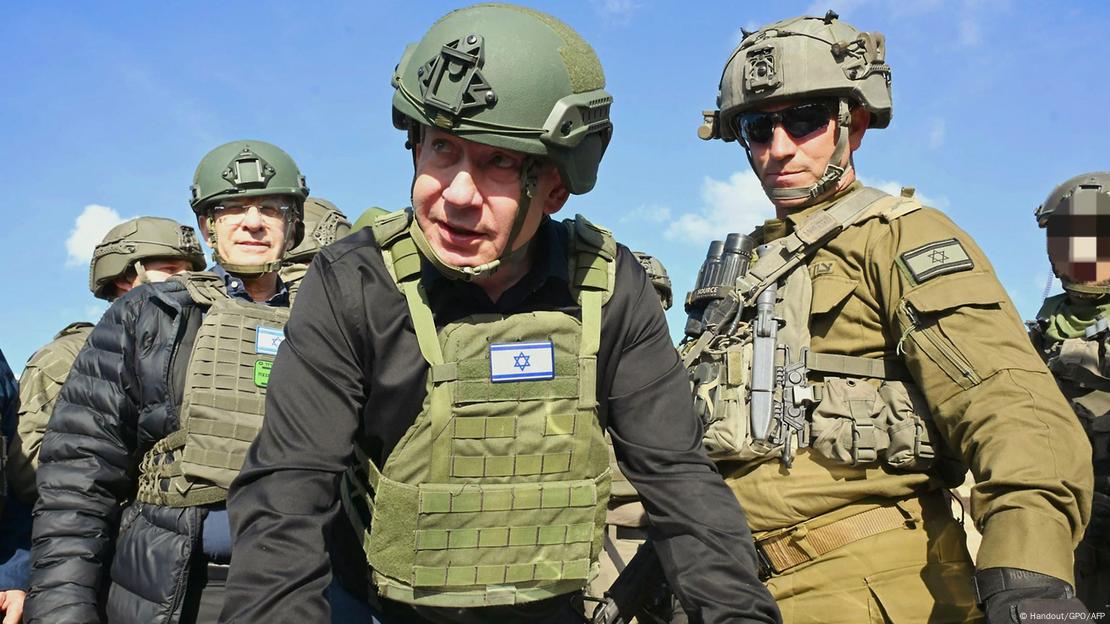
Netanyahu visited troops in northern Gaza on April 15, as seen in this handout photo from the Israeli government press office
Handout/GPO/AFP


Netanyahu immediately dismissed the Air Force letter, saying it was written by a "marginal and extremist group that is once again trying to break Israeli society from within." He also ordered the dismissal of the reservists who had signed the letter, but only a few were on active duty.

The letters do not call for refusal to serve, as some Air Force reservists did during the height of the mass protests against the government's judicial overhaul plans in July 2023.

Netanyahu's dismissal has prompted even more Israelis, including reservists and retired members of various military units, the medical corps, artists and other professionals, to express solidarity with the Air Force members. They also called on the government to change course and openly expressed their distrust of the prime minister.

Is there a genuine desire for peace?

Some, however, have questioned the petitions and their focus on the "hostages first, war later strategy." Dahlia Scheindlin, a journalist for the daily newspaper Haaretz, wrote recently that only a few letters mention Palestinian suffering amid the horrific humanitarian situation in Gaza.

She wrote that while bringing the hostages home is the most "unifying cause in Israel today," without a "permanent end to the war, followed by a political framework for peace — imperfect as it will be — how will the campaign for hostage release protect future victims from the 'cycle of horror'?'"

On a recent Saturday night protest in west Jerusalem, a small group of anti-war demonstrators marched through the city center alongside others calling for the release of the hostages and those demonstrating against the government.

"We have always been at the back of all the demonstrations over the past year, a small group of people protesting for an end to the war. We want the hostages home, but we also want the war to end, for all," Hila, who declined to give her last name, told DW.

Yarkoni said many Israelis, himself included, are still traumatized by the October 7 attacks. "We haven't gotten over it yet because stories and videos of that day keep [appearing]. It was a horrible massacre," he said.

However, he added, while in this stage of the war "maybe we are hurting more civilians than terrorists," he hopes that the open letters create a momentum to bring the hostages home.

Edited by: Davis VanOpdorp