Monday, May 12, 2025

Bananas under threat as rising temperatures killing crops – report

An analysis found 60% of the most suitable banana-growing areas in Latin America and the Caribbean could be lost by 2080.


Consumers and businesses are being urged to choose bananas certified as Fairtrade (Kirsty O’Connor/PA)

Rebecca Speare-Cole
 Evening Standard.
MAY 12, 2025

Bananas are coming under increasing threat from climate change, with farmers saying extreme weather is “killing” their crops, according to a report.

An analysis by international development charity Christian Aid released on Monday shows rising temperatures and climate-related pests are putting bananas at risk.

It found that nearly two-thirds of the most suitable banana-growing areas in Latin America and the Caribbean – a region responsible for around 80% of the world’s banana exports – could be lost by 2080 due to climate impacts.

Bananas grow in a temperature range of between 15-35C but are also very sensitive to water shortages, meaning increasingly extreme weather is affecting the plant’s ability to photosynthesise.

Diseases such as fusarium tropical race 4 have also emerged as a growing threat in recent years, causing the loss of entire farms across Latin America.

Christian Aid cited farmers from the region who say their farms are “dying”, which in turn is affecting their income.

Aurelia Pop Xo, 53, a banana grower in Guatemala, said: “Climate change has been killing our crops.

“This means there is no income because we cannot sell anything. What is happening is that my plantation has been dying.

“In the past, there was a prediction that this would happen in the future, but it has come earlier, and this is because we are not taking care of our motherland, our ecosystems, and this is very worrying for our kids, and especially for our grandkids.”

In light of the findings, Christian Aid is urging developed nations to urgently reduce their carbon emissions to stem the growing impacts of climate change.

It also calls for international climate finance to support banana growers and agricultural communities to adapt to the changing climate.

Osai Ojigho, Christian Aid’s director of policy and campaigns, said: “Bananas are not just the world’s favourite fruit, but they are also an essential food for millions of people.

“The lives and livelihoods of people who have done nothing to cause the climate crisis are already under threat.”

Ms Ojigho called on countries to use this year’s deadline for new UN national climate action plans as an opportunity to accelerate the transition away from fossil fuels and ensure climate finance “reaches people in desperate need of it”.

Elsewhere, consumers and businesses are being urged to choose bananas certified as Fairtrade, which ensures farmers are paid more for their crops.

Anna Pierides, Fairtrade Foundation’s senior sustainable sourcing manager for bananas, said: “Without fair prices, banana farmers simply cannot make ends meet.

“Fairtrade is committed to raising incomes, living standards and the resilience of banana producers to enable them to deal with the changing climate and to continue farming.

“One way businesses can support this is through our Shared Impact initiative, which brings buyers together to ensure longer-term sourcing commitments, greater transparency and more opportunities for banana growers to sell more on Fairtrade terms.”

Holly Woodward-Davey, project co-ordinator at Banana Link, which works across the banana supply chain, said: “The climate crisis and the associated biodiversity crisis demand a rethink of industrial food production systems, which depend on the use of increasing amounts of harmful chemicals.

Governments must continue to take decisive action to reduce greenhouse gas emissions and ban the most toxic chemicals while investing in transitions to fair, stable and healthy food systems.”

'Stop the dither and delay': Nurses issue strike warning to Streeting over pay

Royal College of Nursing general secretary Professor Nicola Ranger will warn ministers to come up with a 'significant' pay offer or face 'escalation'

Article thumbnail image
Wes Streeting has been warned that nurses may strike this summer unless issues over pay can be resolved (Photo: Jordan Pettitt/PA)
bookmark

The head of the UK’s biggest nursing union has warned staff may strike again unless the Government comes up with a “significant” pay offer.

At its annual congress in Liverpool, Royal College of Nursing (RCN) general secretary and chief executive, Professor Nicola Ranger, will warn ministers “not to sail too close to the wind” when it comes to announcing a pay deal and believes the situation will “escalate” if the profession is left “ailing and underpaid”.

Last month, the NHS Pay Review Body (PRB) recommended a pay rise of about 3 per cent for nurses for the year 2025-26 but the Government has yet to announce its offer. It has previously budgeted for a 2.8 per cent uplift to staff pay.

Nurses in England rejected the 5.5 per cent pay rise they were offered last year having been left fuming after the Government awarded junior – now resident – doctors a 22 per cent deal over two years. The deal brought the doctors’ strikes to an end.

However, the British Medical Association will launch a fresh ballot for industrial action at the end of the month after it said Health Secretary Wes Streeting had refused to promise them a return to 2008 levels of pay within two years.

‘Stop the dither and delay’

The RCN has been warning for months that another “poor by comparison” deal for nurses would make further industrial action more likely. Prof Ranger said she will not tell nurses to strike but warned the situation could escalate and called on ministers to “stop the dither and delay” over a new deal.

In a keynote speech to delegates on Monday she will also warn that staffing levels are “dreadfully unsafe” and urged nurses not to accept corridor care as “the norm”.

Striking nurses on a picket line outside University College London Hospital during strike action in London, UK, on Monday, Feb. 6, 2023. Healthcare workers will walk out in record numbers this week, crippling the National Health Service and piling pressure on Prime Minister Rishi Sunak to resolve multiple disputes over pay for public-sector workers. Photographer: Carlos Jasso/Bloomberg via Getty Images
Striking nurses on a picket line outside University College London Hospital during strike action in London (Photo: Carlos Jasso/Bloomberg via Getty)

“In the NHS, your pay award was due six weeks ago,” Prof Ranger is expected to say. “Government should stop the dither and delay and make the announcements. It has now been a whole month since the Pay Review Body gave its report and recommendations to government but still no news.

“We need a significant pay rise for nursing and for every NHS employer to be given the full money to pay it – anything else is a cut to patient services.

“I’m not here to tell you we’re going on strike. You will decide how you feel and we will plan together the best way to get what nursing needs. But I ask ministers not to sail close to the wind. If you continue to insult this profession, leave it ailing and underpaid this summer then you know how this could escalate.”

Better deal for nurses in Scotland

Nurses, midwives and healthcare staff across Scotland have been offered an 8 per cent pay increase over two years – a 4.25 per cent increase in 2025-26 and a 3.75 per cent rise next year.

The offer – which the Government said would cost around £701m – will also be protected by an “inflation guarantee”, meaning pay increases will always be at least 1 per cent above the Consumer Price Index (CPI) rate.

Unison said it would consult its members on the Scottish government proposal with a digital ballot while RCN Scotland said its board was considering the offer “in detail”. GMB Scotland, one of the biggest unions in NHS Scotland, and the Scottish Ambulance Service will also ballot members on the pay offer.

One RCN member in England told The i Paper: “Many of us felt hard done by after the 5.5 per cent offer only to see doctors, who carried on striking, get significantly more than that.

“This time the Government says it has only enough money for a 2.8 per cent rise but if that is confirmed it will go down very badly – especially when you look at what nurses in Scotland are being offered – and raise questions about wider NHS pay across the UK.”

Last week, NHS trusts in England revealed they are cutting thousands of nursing and other clinical roles to meet demands to fill a £6.6bn deficit. Health unions criticised the move and also warned it could lead to industrial action this summer.

The deficit within the NHS comes as Rachel Reeves faces missing her target to balance the budget by the end of the decade by £62.9bn, piling pressure on the Chancellor to raise taxes and restrict pay rises in the public sector.

Staffing levels ‘dreadfully unsafe’

Prof Ranger will also use her speech on Monday to warn over unsafe staffing levels and corridor care.

It comes after a damning report by the RCN, published in January, claimed patients are dying in corridors and sometimes going undiscovered for hours.

“Right now, staffing levels are dreadfully unsafe,” Prof Ranger will say. “One registered nurse to 15 to 20 patients. One nurse told me she was the only person left in charge of 40. It’s taking advantage of your goodwill and you take home guilt when you’ve not been able to deliver high quality care.

“Safety is not an optional extra – it should be the standard. Caring for patients in corridors is not ‘the norm’ and we have to be clear we do not accept it. These tough times require political leaders that are tougher and reach for the big ideas, not modest tinkering. Nursing needs investment, recognition and to be valued.”

A government spokesperson said: “This Government inherited a broken NHS with an overworked, undervalued and demoralised workforce. We hugely value the work of talented nurses and midwives, and through our plan for change we are rebuilding the NHS for the benefit of patient and staff, and ensuring nursing remains an attractive career choice.

“One of the first acts of this Government was to award nurses an above-inflation pay rise for the first time in years, because we recognise that their pay has been hit over previous years. We are carefully considering the recommendations from the NHS pay review body and will update as soon as possible.”

One in four UK employers plan to make redundancies in next three months, report claims

The number of candidates for advertised jobs has increased substantially

Alan Jones
Monday 12 May 2025 
THE INDEPENDENT


open image in galleryA woman walks towards the door of Job Centre Plus in Shrewsbury town center, Shropshire (Getty Images)

The number of employers expecting to increase staff numbers in the next three months has fallen to a record low outside of the pandemic, new research suggests.

One in four employers plan to make redundancies in the next three months, the report added.

A survey of 2,000 businesses found issues such as rising employment costs and growing global uncertainties.

The Chartered Institute of Personnel and Development (CIPD) said the rate of employers expecting to increase headcount has fallen sharply among large private sector employers, and in retail in particular.

James Cockett, senior labour market economist at the CIPD, said: “From April, employers across the UK have begun to feel the full effect of increases to National Insurance Contributions and the National Living Wage outlined in last year’s budget.

“They’re also looking at the potential impact of the Employment Rights Bill on employment costs and plans, and this comes at a time of global uncertainty. Employer confidence is low, which is being reflected in their hiring plans.

“The Employment Rights Bill is landing in a fundamentally different landscape to the one expected when it formed part of the Labour manifesto in summer of last year.

“It was always going to be a huge change for employers but they’re operating in an even more complex world now. It’s vital the government works closely with employers to balance the very real risk of reductions in investment in people, training and technology with their desire to reduce poor employment practice.”


 People stand outside the Job Centre in Chatham (AFP via Getty Images)

It comes as the number of candidates for advertised jobs has increased substantially, according to recruiters.

The recent increase was largely because of job losses amid company restructuring efforts and redundancies, as well as a reduction in recruitment activity, according to research among 400 recruitment agencies.

Demand for staff weakened in April, said the Recruitment and Employment Confederation (REC) and KPMG.

Neil Carberry, REC chief executive, said: “Given the wave of costs firms faced in April, maintaining the gradual improvement in numbers we have seen over the past few months is on the good end of our expectations.

“While we are yet to see real momentum build, hopes of an improving picture in the second half of the year should be buoyed by today’s data.

“The biggest single drag factor on activity right now is uncertainty. Some of that can’t be helped, but payroll tax costs and regulation design is in the Government’s gift.

“Businesses have welcomed positive discussions with ministers on the Employment Rights Bill, but now it is time for real changes to address employers’ fears and boost hiring.

“A sensible timetable and practical changes that reduce the red tape for firms in complying with the Bill will go a long way to calming nerves about taking a chance on someone.”
‘Generational shift’ in free childcare will give women freedom, says Phillipson

The expansion of funded childcare began being rolled out in England in April last year for working parents of two-year-olds.


Education Secretary Bridget Phillipson (PA)

PA Wire
Jessica Coates

Women will be given added “freedom” to have more children by expanded government-funded childcare, the Education Secretary has said.

Starting Monday, working parents of children who turn nine months old before September 1 can apply to access up to 30 hours of free childcare per week, until their child is old enough to start school.


Education Secretary Bridget Phillipson told the Daily Mail the scheme, originally introduced by the previous Conservative government, would give working mothers more freedom to balance work and family life.


“They will be able to make choices about the career that’s right for them, the hours that they want, but also [have] the freedom to think about family size and how many children they want to have, with support from the Government around childcare hours,” she said.

“That brings huge benefits to working women and this is a generational shift in terms of the new funding that’s been put in place.”

The expansion of funded childcare began being rolled out in England in April last year for working parents of two-year-olds.

Working parents of children older than nine months are currently able to access 15 hours of funded childcare a week, before the full rollout of 30 hours a week to all eligible families in September.

The Labour Government announced up to to 4,000 childcare places are set to be rolled out at new or expanded school-based nurseries in England from September.

Ms Phillipson said she had been “flat out to make sure we’ve got as many places available as possible”.

The Department for Education (DfE) has approved the first round of funding for 300 school-based nursery projects across England.

Each successful school, which were able to apply for up to £150,000, will receive the amount of funding they bid for to repurpose or extend existing spaces and deliver childcare provision.

The first 300 school-based nurseries will offer an average of 20 places per site and up to 6,000 new places in total, with up to 4,000 set to be available by the end of September, the DfE said.

It comes after schools were able to bid for a share of £15 million funding in October to deliver up to 300 new or expanded nurseries across England.


Labour said in its manifesto that it would open an additional 3,000 nurseries through “upgrading space” in primary schools.

Jason Elsom, chief executive of Parentkind, said: “Parents often struggle with finding good quality childcare, and many will welcome this investment, especially as parents with more than one child may be saved from the mad dash from nursery to school in the morning and afternoon.”

Starmer says he is ‘horrified’ steelworks are mothballed due to SNP’s ‘bad deal’

The Prime Minister said the Scottish Government had failed to find work to keep the sites thriving.

LABOUR NATIONALIZED BRITISH STEEL

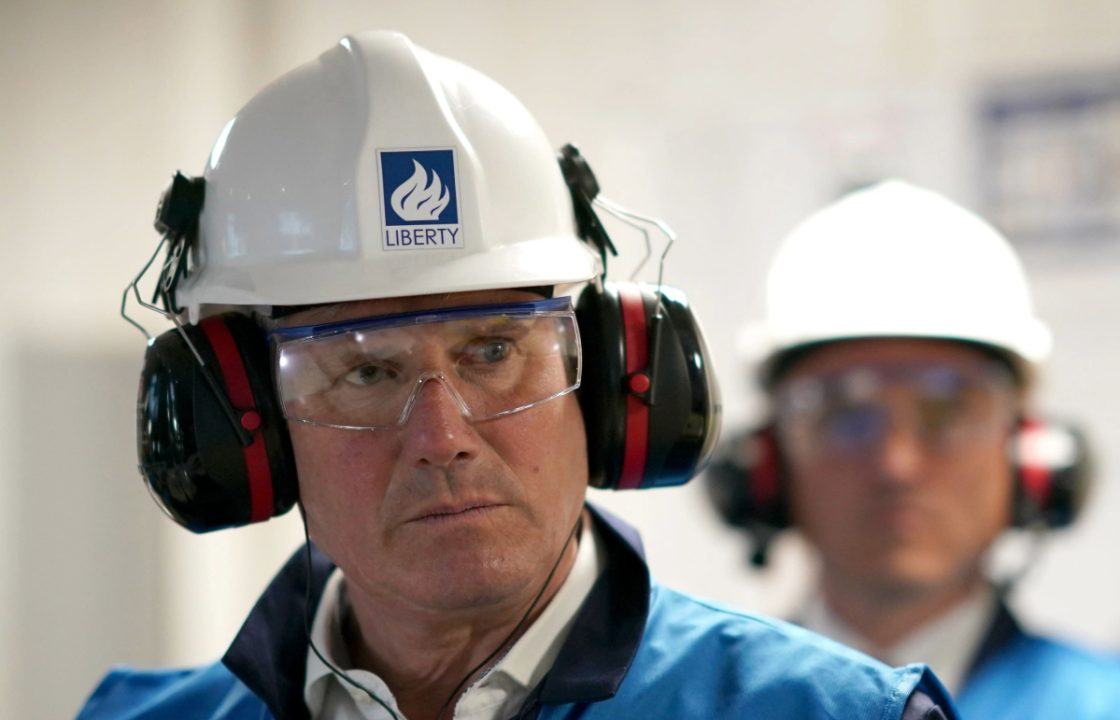
PA MediaThe Prime Minister said the SNP had no industrial strategy
 (Ian Forsyth/PA)

PA Media

Sir Keir Starmer has said he is “horrified” that steelworks in Lanarkshire have been effectively mothballed, and is calling on John Swinney to step in to revive them.

The Prime Minister said the SNP-run Scottish Government had failed to find work to keep the sites thriving after negotiating a “bad deal” which saw them being bought by a new owner.

The plants at Dalzell and Clydebridge were bought by the Liberty House group in 2016, backed by a £7 million loan from the Scottish Government.

The group, which is part of Sanjeev Gupta’s GFG Alliance, also owns the Lochaber aluminium smelter.

The Labour leader’s comments come after the US trade deal which was reached on Thursday – which cut tariffs on cars, steel and aluminium.

Mr Swinney’s party said Sir Keir was attempting to “wash over” his own industrial failures.

Writing in the Sunday Times, the Prime Minister said: “I’m proud we’ve secured a deal that slashes tariffs on the steel and aluminium industries to zero.

“This Labour government will always support our proud steel industry. So I’m horrified that the Dalzell and Clydebridge steelworks in Lanarkshire are lying mothballed, with workers on furlough.

“All because the SNP negotiated a bad deal and have had no industrial strategy to bring work to those mills.

“We’re standing up for Scottish steel – now Swinney needs to step in and get those plants up and running again.”

It is understood that some staff at Dalzell in Motherwell have been furloughed and there is no work going through the plant.

The Prime Minister also highlighted the trade deal with India, which cuts costs on the crucial Scottish export of whisky.

SNP MP Pete Wishart laid the blame on the UK Government, saying it had failed to back the Scottish industry in contrast to the action taken to protect plants south of the border.

He said: “The audacity of Keir Starmer to attempt to wash over the UK government’s betrayal of Scottish industry is insulting.

“They put emergency support in for Scunthorpe steelworks and deliberately legislated to exclude Scotland and therefore, Dalzell works from any such help, now or in the future.

“Westminster did nothing to help the SNP save Dalzell. It did nothing to help us save Lochaber. And now it has done nothing to save Grangemouth.”

He added: “Like the Tories, Labour are making it abundantly clear that Scotland will always be an afterthought for Westminster. The SNP is the only party that will always be on Scotland’s side.”

 Man dubbed 'king' of asylum seeker hotels becomes billionaire


Graham King is named as a new billionaire on the Sunday Times' latest Rich List


Conor Gogarty 
Investigations editor
 11 May 2025
WALES ONLINE

Protest outside the gates of Penally Asylum Camp
(Image: Laura Clements/WalesOnline)

A controversial businessman has become a billionaire after profits surged at his business housing asylum seekers. Graham King, sometimes called the "Asylum King", is the founder of Clearsprings Ready Homes, which has a lucrative contract to provide asylum seekers with accommodation in Wales and England.

The Sunday Times reports that the 58-year-old has seen a 35% jump in his fortune in the past year, resulting in him being named as a new billionaire on the newspaper's Rich List. He made his debut on the Rich List last year when he appeared at number 221 with a worth of £750million.

That figure has soared to £1.015 billion in this year's list, putting him in 154th place.

Get the latest Wales Online breaking news on WhatsApp

Our community members are treated to special offers, promotions and adverts from us and our partners. You can check out at any time. More info

Mr King has been involved in several controversies in Wales.

In 2016 he was criticised for accepting a 379% payrise — meaning an annual packet of £960,000 — for his role as an executive of the firm running Cardiff asylum centre Lynx House, which just months earlier had been hit with allegations of overcrowding and mould infestation, as well as asylum seekers wearing wristbands to receive meals.


In 2021 inspectors described the conditions in two of Clearsprings’ asylum centres — one being Penally Camp in Pembrokeshire — as “decrepit”, “impoverished” and “rundown”.

One asylum seeker who was housed at Penally said that living there was the "worst thing to happen to me" since he left Syria.

The centre closed in the fallout from the report.

In 2023, Clearsprings Ready Homes' plans to convert Stradey Park Hotel in Llanelli into an asylum centre attracted fierce criticism.

Carmarthenshire council and many locals opposed the move, which would have resulted in around 100 job losses.

A makeshift base for protesters was set up outside the hotel before the Home Office finally scrapped the plans.

The Sunday Times links Mr King's rising wealth to an increase in the number of people claiming asylum in the UK from 91,811 in 2023 to a record figure of 108,138 last year.

A backlog in processing asylum claims led to an estimated 38,000 asylum seekers being housed in 222 hotels and a further 66,000 in other accommodation in the last year.

Clearsprings was founded in 1999 as a property company in Mr King's home county of Essex.

Its latest big UK Government contract is a deal to provide accommodation in the south of England and Wales, running until September 2029. The Home Office estimates this is worth £7.3billion, having previously valued it at £1billion.

The firm's profits climbed from £74.4million to £119.4million in the year ending January 2024, according to the Sunday Times, which "conservatively" values the business at £1.015billion. King owns more than 99% of the shares, the newspaper reports.

UK's Starmer, under pressure from Farage, tightens migration rules

Published : May 12, 2025 - KOREAN HERALD

Britain's Prime Minister Keir Starmer (AP-Yonhap)

LONDON (Reuters) -- Prime Minister Keir Starmer announced a new salvo of measures to toughen up Britain's migration system on Sunday, saying many immigrants would have to wait longer before getting the status they need to claim welfare.

Starmer's government -- which was due to publish plans for new legislation to reduce immigration on Monday -- is under pressure to counter the rise in popularity of Nigel Farage's right-wing, anti-immigration Reform UK party.

Over the weekend, Interior Minister Yvette Cooper announced plans to restrict skilled worker visas to graduate-level applicants, prevent care sector firms from recruiting abroad and require businesses to increase training for local workers.

"Every area of the immigration system, including work, family and study, will be tightened up so we have more control," Starmer said in a statement. "Enforcement will be tougher than ever and migration numbers will fall." Under the changes, automatic settlement and citizenship for people who move to Britain will apply after 10 years, up from five years now, although highly skilled workers -- such as nurses, doctors, engineers and AI experts -- would be fast-tracked.

Migrants who are in the UK on visas are typically ineligible for welfare benefits and social housing.

The government also said it plans to raise English language requirements to include all adult dependents who will have to show a basic understanding of English. It said the change would help integration and reduce the risks of exploitation.

"This is a clean break from the past and will ensure settlement in this country is a privilege that must be earned, not a right," Starmer said.

"And when people come to our country, they should also commit to integration and to learning our language," he said.

The number of European Union migrants to Britain fell sharply after Brexit but new visa rules, a rise in people arriving from Ukraine and Hong Kong and higher net numbers of foreign students led to an overall surge in recent years.

Net migration -- the number of people coming to Britain minus the number leaving -- hit a record 906,000 in the year to June 2023, up from 184,000 who arrived in the same period during 2019, when Britain was still in the EU.

Employers' groups are worried that tightening the rules on foreign workers will make it harder for companies to fill vacancies.

"This major intervention in the labour market will leave many employers fearful that in tackling concerns about immigration, government goes after the wrong target," Neil Carberry, chief executive of the Recruitment and Employment Confederation, said.

Being open to skilled workers was essential for Britain "but so is a controlled, affordable and responsive immigration system that keeps investment flowing to the UK," Carberry
 said.

Keir Starmer to ensure settlement in UK a 'privilege' and 'not a right' in massive overhaul of immigration system

Sir Keir Starmer is set to announce an overhaul of the immigration system to ensure "settlement in this country is a privilege" and "not a right" as Immigration White Paper is unveiled


Charlotte Fisher
11 May 2025
MANCHESTER EVENING STANDARD

Net migration figures reached 728,000 last year

Prime Minister Sir Keir Starmer will pledge that “every area” of the immigration system will be “tightened up” as he unveils massive new reforms on Monday. The changes largely affect visa and citizenship requirements in a bid to "ensure settlement in this country is a privilege that must be earned, not a right."

Migrants will be told they need to spend a decade in the UK before they can apply for citizenship and English language requirements will be increased for all routes into the UK, as ministers look to bring down net migration which reached 728,000 last year.
Article continues below

The Prime Minister will say that “enforcement will be tougher than ever and migration numbers will fall” as a result of the policies in the Immigration White Paper, set to be unveiled on Monday, May 12.

It comes after Home Secretary Yvette Cooper said on Sunday that the care worker visa would be closed for overseas recruitment. The skilled visa threshold will also be raised to require a graduate qualification under the white paper.

“Every area of the immigration system, including work, family and study, will be tightened up so we have more control,” the Prime Minister is expected to say on Monday.

“Enforcement will be tougher than ever and migration numbers will fall.”

Officials hope this will help people integrate and be able to find employment. However despite the changes, ministers will not be putting a target figure on net migration numbers.

Ms Cooper told Sky News that doing so left previous governments with “broken promises”.

“We’re not going to take that really failed approach, because I think what we need to do is rebuild credibility and trust in the whole system,” she added.


Migrants must ‘learn our language’ under Starmer’s immigration crackdown


Migrants and their dependents will be required to show a greater understanding of English under the reforms which the Prime Minister says will make settlement in the UK a privilege to be earnt

Article thumbnail image
The Government is set to announce a major crackdown on immigration (Photo: Oli Scarff/Getty Images)

bookmark

Keir Starmer has pledged that immigrants will be made to “commit to integration” and improve their standard of English if they want to settle in the UK, as part of Labour’s new immigration crackdown.

Under the changes, due to be outlined in a white paper on Monday, immigrants will have to wait up to 10 years before they can apply for residency unless they can prove a “lasting contribution” to the British economy.

Care worker visas are set to be halted altogether, and care homes will instead be encouraged to train and hire people already in the UK.

Migrants arriving on skilled worker visas face tighter rules and will need to have a graduate qualification or a higher salary to be eligible.

Starmer will use a speech on Monday ahead of the white paper’s launch to promise that these tough new reforms will ensure the immigration system is “controlled, selective and fair”.

“This is a clean break from the past and will ensure settlement in this country is a privilege that must be earned, not a right,” he is expected to say.

“And when people come to our country, they should also commit to integration and to learning our language.”

Labour’s plan to cut immigration

Quicker deportation of foreign criminals:  The Home Office will be given new powers to streamline the deportation of foreign criminals. Ministers will now be notified of all convictions involving a foreign national in the UK, rather than only those with a custodial sentence of over one year. Foreign nationals with criminal records overseas may also face removal. Short-term visa holders can now have their visas cancelled and be blocked from future applications.

Restrictions on care worker visas: The care worker visa route for overseas recruitment will be closed. Employers will be expected to hire from within the UK, either from among British citizens or foreign workers who already have a visa.

Tighter rules for skilled worker visas: Eligibility for skilled worker visas will now require a graduate-level qualification or a higher salary threshold. Access to lower-skilled roles will be restricted and they will only available in sectors listed as critical to the UK’s industrial strategy. A new Labour Market Evidence Group will assess which sectors have shortages that require overseas workers.

Training British workers: Employers in high-migration sectors will have to invest in UK-based training before recruiting from abroad. Sectors set to be targeted include IT, telecommunications, and engineering, which are deemed to recruit from abroad disproportionately.

Crackdown on visa overstayers: The Government will restrict visas for nationalities with higher overstay or asylum rates. Financial documents will be scrutinised more closely, and access to taxpayer-funded accommodation will be limited.

Longer permanent residence wait: The minimum residence period for indefinite leave to remain will be extended from five to ten years. Fast-track routes will be limited to high-skilled individuals. Those with limited UK ties or long absences may face additional checks before securing permanent status or applying for citizenship.

English language tests:  Work visa applicants must now meet an English standard equivalent to an A-level. The requirement also applies to adult dependents. The change raises the threshold from the current GCSE-equivalent level. Applicants must show they can write detailed texts and communicate fluently on complex topics.

The Conservatives, however, have warned that the reforms are a “white flag” and that Labour has “failed” to go far enough to tackle the issue of rising migration.

Shadow home secretary Chris Philp accused Labour of “boasting about returns built entirely on the back of Conservative groundwork” and urged the Government to go further to control migrant numbers.

“If Labour were serious about immigration, they’d back our binding immigration cap and back our plan to repeal the entire Human Rights Act from immigration matters. But they have got no grip, no guts, and no plan,” he said.

Under the plans, a fast-track route will remain for “high-skilled, high-contributing individuals”, such as NHS staff, engineers, and AI specialists, allowing them to bypass the 10-year wait.

Language requirements will also be raised across all visa routes, with adult dependents required to “demonstrate a basic understanding of English” for the first time.

The Home Office said these new, stricter rules would help migrants “integrate into their local community, find employment and [reduce] the risk of exploitation and abuse”.

Currently, migrants are only required to be able to read and speak English at a level equivalent to a GCSE qualification, but the Government wants to require all visa applicants to demonstrate that they can speak English to A-level standard in the future.

Employers will be targeted as part of the immigration crackdown. Companies will now be expected to prove they are investing in UK workers before they can sponsor visas for overseas staff.

Announcing this change on Sunday, Home Secretary Yvette Cooper said that under the Conservative government “employers were given much greater freedom to recruit from abroad while action on training fell”.

She added: “Overseas recruitment soared at the same time as big increases in the number of people not working or in education here in the UK.

“The last government lost control of the immigration system, and there was no proper plan to tackle skills shortages here at home. This has undermined public confidence, distorted our labour market, and been really damaging for both our immigration system and our economy.”

Cooper also announced that the white paper would include measures to speed up the deportation of foreign criminals.

Currently, the Home Office is only informed that a foreign national has been convicted of crimes if they also receive a prison sentence, and deportations usually only occur if that sentence is for more than a year.

The changes will ensure that the Home Office is informed about all convicted foreign nationals, regardless of whether they receive a prison sentence.

New powers will be set up allowing the Government to more easily deport recent immigrants who have committed crimes in other countries.