Tuesday, May 13, 2025


Trump's Energy Policies Are Set to Significantly Boost U.S. Emissions

  • Trump has reversed many of Biden's environmental policies, boosting fossil fuel production and cutting renewable energy initiatives.

  • Wind energy projects are paused, and offshore developments like Empire Wind face legal challenges under new executive orders.

  • The U.S. is forecasted to increase its oil production and greenhouse gas emissions, reversing progress made during the Biden administration.

Despite having invested heavily in clean energy under former President Joe Biden, the U.S. is now falling back into old habits, which is driving up its greenhouse gas emissions. Since coming into office in January, President Donald Trump has introduced a wide range of policies aimed at increasing fossil fuel production, reining in the renewable energy sector, and cutting funding for environmental research. These moves have led experts to reassess their greenhouse gas emissions outlooks for the U.S., as many increase their emissions forecasts. 

Upon entering office, Trump declared the U.S. was experiencing an “energy emergency” and introduced executive orders to reopen land and ocean for new fossil fuel exploration activities, marking a U-turn on restrictions introduced under Biden. Oil and gas production in the U.S. rose to record highs under President Biden, despite these restrictions, as the former leader sought to shift reliance away from Russia following its invasion of Ukraine. However, Trump wants to push output even higher, repeatedly stating his mantra: “drill, baby, drill”. 

Trump has not only gone full force on fossil fuels, but he also announced plans to restrict renewable energy projects, which has made the industry wary of new investment in clean energy. In January, Trump introduced an executive order pausing approvals, permits, and loans for all wind energy projects both onshore and offshore, a move that is currently facing legal action from 18 states. Trump also halted the development of the Empire Wind 1 offshore wind farm in New York in April, for which he may also face legal action from Norwegian energy major Equinor. 

Meanwhile, the Trump administration has cut funding for a range of environmental initiatives, government agencies, and research projects. In May, the government announced plans for a significant reorganisation of the Environmental Protection Agency (EPA), suggesting major cuts in staffing, particularly in the EPA’s scientific research arm. Staff levels could fall to levels not seen since the Ronald Reagan era in the 1980s. The Trump administration also proposed cutting billions of dollars in federal funding next year for a range of projects, including renewable energy and electric vehicle chargers, as well as halting programmes aimed at tackling climate change, as part of a wider request to cut $163 billion in 2026 federal spending

These moves are expected to contribute to an increase in greenhouse gas emissions in the U.S. under the Trump administration, compared to the decrease seen under Biden. To date, Trump has taken 145 initial actions to reverse environmental regulations and promote the use of fossil fuels. Michael Burger, a climate law expert at Columbia University, stated, “What we’ve seen in this first 100 days is unprecedented – the deregulatory ambition of this administration is mind-blowing.” Burger added, “They are doing things faster and with less process than last time, often disregarding the law. The intent is to shock, overwhelm and to overcome resistance through sheer force of numbers.”

While many of these actions will require further attention to come into practice, the U.S. is expected to increase its crude output to 15 million bpd from about 13.5 million bpd at present, according to Rystad Energy forecasts. The International Energy Agency (IEA) has repeatedly stated that to achieve global heating aims, countries must not approve any new fossil fuel projects. Olivier Bois von Kursk, policy adviser at the International Institute for Sustainable Development, stated, “The uptick in embodied emissions from forecast U.S. oil and gas production is worrying… The world can’t afford more climate chaos.” 

The U.S. Energy Information Administration (EIA) forecasts “U.S. energy-related carbon dioxide (CO2) emissions will increase by 1 percent in 2025, followed by a 1 percent decrease back to 2024 levels in 2026.” The EIA predicts, “Coal, petroleum products, and natural gas all contribute to changes in 2025 and 2026 emissions. Coal emissions make up most of the total emissions increase in 2025 and most of the decrease in 2026. These changes are associated with coal-fired electricity generation, which we forecast to increase by 6 percent in 2025 and decrease by 9 percent in 2026.”

Rhodium Group predicts that “rolling back executive action on climate and repealing the energy and tax policies that were enhanced and expanded through the Inflation Reduction Act (IRA) starting in 2025 could raise average household energy costs by as much as $489 a year in 2035, increase dependence on imported oil and gas, drive GHG emissions levels 24-36 percent higher compared to current policy in 2035, and risk substantial levels of private investment.” 

President Trump has moved far more quickly in his efforts to boost fossil fuel production, restrict renewable energy development, and cut climate funding during his first 100 days in office than during his first term as president. This is expected to have a significant impact on U.S. green transition progress and will likely drive up greenhouse gas emissions in the coming years.

By Felicity Bradstock for Oilprice.com


House Republicans Look to Eliminate Green Tax Credits

The House Committee on Energy and Commerce has proposed phasing out tax credits linked to climate policies stipulated in Biden’s Inflation Reduction Act. This, per the Committee, will raise some $6.5 billion.

The phaseout is part of the Republicans’ broader effort to roll back climate funding generously committed to various projects and initiatives by the previous federal government. Among the specific credits targeted are the incentive for EV purchases, tax credit for home energy efficiency improvements, and wind and solar subsidies, Reuters reported.

The report also noted a related proposal by the House Ways and Means panel about phasing out various tax incentives aiming to fuel the expansion of wind and solar energy, electric vehicles, and other transition technologies.

Naturally, the news sparked a strong reaction from the climate tech world. “While American businesses are demanding more energy to compete against our adversaries, and consumers are turning to clean energy to hedge against rising electricity prices, these proposals will undermine our nation’s efforts to achieve President Trump’s American energy dominance agenda,” the president of the Solar Energy Industries Association said in a statement.

“To make matters worse, this legislation is an attack on our individual liberties and freedom to choose how we power our homes. By effectively repealing the clean energy tax credit for homeowners, it rips consumer choice away from millions of hardworking Americans,” Abigail Ross Hopper also said.

On the other hand, the Committee’s chairman, Brett Guthrie, said in a WSJ op-ed that “This bill would claw back money headed for green boondoggles through “environmental and climate justice block grants” and other spending mechanisms through the Environmental Protection Agency and Energy Department. The legislation would reverse the most reckless parts of the engorged climate spending in the misnamed Inflation Reduction Act, returning $6.5 billion in unspent funds.”

By Irina Slav for Oilprice.com


U$ Department of Energy Proposes Billions in Savings Through Deregulation

  • The Department of Energy has proposed to remove or reduce regulations that they claim will save $11 billion and boost the energy industry.

  • Key regulatory changes include the removal of greenhouse gas emissions reporting requirements and the streamlining of natural gas import/export procedures.

  • The Trump administration has moved to reverse previous climate policies, including withdrawing from the Paris Agreement and halting offshore wind power development, leading to a lawsuit from several states.

The Department of Energy has proposed to eliminate or shrink regulations that it says would result in savings worth $11 billion and stimulate energy industry growth. The department said this was the biggest deregulation push in its history.

“While it would normally take years for the Department of Energy to remove just a handful of regulations, the Trump Administration assembled a team working around the clock to reduce costs and deliver results for the American people in just over 110 days,” Energy Secretary Chris Wright said.

“Thanks to President Trump’s leadership, we are bringing back common sense -- slashing regulations meant to appease Green New Deal fantasies, restrict consumer choice and increase costs for the American people. Promises made, promises kept,” Wright added.

Among the notable changes proposed is the removal of reporting requirements for greenhouse gas emissions and the streamlining the administrative procedures related to natural gas imports and exports. The Department also proposes to axe the renewable energy production incentive along with various water and energy efficiency standards implemented by the previous administration—often to the chagrin of water and energy users across the States.

The reversal of the Biden admin’s climate policies and regulations has been a fundamental part of Trump’s plans for his term and he wasted no time in addressing them as soon as he took office. In his first day in office, the president withdrew the United States from the Paris Agreement, just as he had done during his first term, and reversed Biden’s ban on offshore oil and gas drilling in parts of the U.S. continental shelf. 

That was just the start. In addition to the boost of oil and gas, the Trump administration started cutting off funding for various climate-focused organizations linked to the federal government, and paused all activities related to offshore wind power generation. Some 17 states have filed a lawsuit against the federal government because of the wind ban.

By Charles Kennedy for Oilprice.com


Brazil's Renewable Energy Revolution

  • Nearly 90% of Brazil's electricity comes from renewables, making it a prime location for energy-intensive AI infrastructure.

  • Amazon, Microsoft, and other tech giants are investing billions in Brazilian data centers powered by clean energy.

  • Brazil aims to prove that a renewable-focused energy grid can sustain large-scale AI growth, challenging the dominance of the US and China.

Brazil is sending a message to the world that it can meet the needs of artificial intelligence (AI) with renewable energy, and the world is listening. The South American nation is flaunting its renewable energy sources and expansive energy grids to court tech companies to set up shop within its borders, and it’s working. Already, Amazon and Microsoft are setting up data centers across the country and pouring billions into the Brazilian economy. 

Currently, the global AI race is dominated by the United States and China. The world’s two largest economies are leading the charge on large language model development and in terms of investment dollars. But as Forbes reports, “The AI contest isn’t about who crosses a finish line first — it’s about who navigates an endless obstacle course with the fewest stumbles.”

And Brazil has a fighting chance to become a major player in that game. “Brazil is well positioned,” Luciana Aparecida da Costa, director of infrastructure, energy transition, and climate change at  Brazilian development bank BNDES, told a reporter for TIME Magazine. “But we know that we have to compete with other countries to attract this.” And competing they are.

Last year, Brazil rolled out a $4 billion AI investment plan to support its own homegrown AI sector. "Instead of waiting for AI to come from China, the U.S., South Korea, Japan, why not have our own?" said Brazilian President Luiz Inacio Lula da Silva while presenting the investment plan. "Our artificial intelligence needs to be intelligent, it needs to be a source of income and employment," he added. But while the AI plan was built on a platform of sovereignty, it is already pulling in a considerable amount of foreign tech investment.

Critically, Brazil’s AI investment plan includes significant provisions for added energy infrastructure to keep up with the sector’s significant and growing energy demand. AI requires a staggering amount of energy to train its models, and the International Energy Agency projects that this energy footprint is set to double by just 2030 to reach 945 terawatt-hours (TWh), which is roughly equivalent to the annual electricity consumption of Japan. “By comparison, data centres consumed 415 TWh in 2024, roughly 1.5% of the world’s total electricity consumption,” Nature recently reported.

But a huge portion of Brazil’s electricity – almost 90% – comes from renewables. “Access to electricity across the country is almost universal and renewables meet almost 45% of primary energy demand, making Brazil’s energy sector one of the least carbon-intensive in the world,” says the International Energy Agency. This makes the country a very attractive hub for tech companies looking to expand their AI ambitions without totally walking back their climate pledges. Already, Alphabet – the company behind Google – has had to publicly admit that it likely won’t meet its own emissions targets thanks to the deployment of AI.

The question of whether AI will destroy global decarbonization initiatives is a big one, and it has garnered no shortage of discussion in headlines and boardrooms. Unwittingly, Brazil has become a sort of guinea pig to see whether a renewable-focused power grid can sustain a major global data center hub. The result of this experiment could have far-ranging consequences for would-be copycats. “As electricity in some emerging market countries increasingly comes from solar power, they may stand to gain foreign investment - not just from AI but also from any foreign investor who wants their products made cleanly,” reports TIME.

And so far, Brazil seems more than eager to be the global poster child for clean-powered AI. On a panel at the Web Summit in Rio de Janeiro this month, Brazil’s deputy minister of science, technology, and innovation Luis Manuel Rebelo Fernandes declared: “Our message to the world, on the basis of our plan, is that AI [power demand] is satiable with usage of renewable energy sources.”

By Haley Zaremba for Oilprice.com


Inside Kazakhstan's Green Energy Transformation

  • Kazakhstan is committed to shifting from coal dependence to a renewable energy mix, with ambitious goals for 2050 and significant investment opportunities.

  • Recent agreements, including a 1 GW wind power project with the UAE, signal growing international cooperation and investment in Kazakhstan's green energy sector.

  • Green hydrogen is a focal point of Kazakhstan's long-term energy strategy, with aspirations to become a leading supplier to Europe via strategic trade corridors.

The Central Asian state of Kazakhstan – the world’s largest landlocked country – has major renewable energy ambitions that include wind, solar, and hydropower, as well as green hydrogen, as part of the government’s aims for a green transition. The government plans to support a shift away from a reliance on fossil fuels to a lower-carbon power sector. At present, coal continues to be Kazakhstan’s main energy source, providing around 64.7 percent of?the total projected generation?and 74 percent of thermal generation in 2019. However, the government hopes to attract higher levels of foreign investment over the coming decades to increase Kazakhstan’s renewable energy capacity and reduce its dependence on coal. 

The government’s National Green Growth Plan introduced several ambitious objectives for a green transition. These include an energy mix of 49 percent coal, 21 percent gas, 10 percent hydropower, 8 percent nuclear power and a wide variety of renewable resources by the end of the decade. However, energy experts believe that Kazakhstan’s coal dependence is unlikely to fall this rapidly and expect coal to continue contributing around 64.9 percent of total electricity generation by 2028. 

The government plans to launch a domestic nuclear energy programme to support the country’s shift to green, as well as significant public and private investment in non-hydro renewables. There has been a greater openness to foreign investment in recent years and the government aims to attract high levels of private financing for renewable energy projects in the coming years. However, investor uncertainty and a complicated business environment are hindering the achievement of this goal. Nevertheless, President Nazarbayev has stated the aim to reach 50 percent of renewable energy sources in the total energy mix by 2050. 

Kazakhstan is home to abundant renewable energy sources, and with greater funding, it could significantly increase its green energy capacity over the next few decades. The Ministry of Energy launched a competitive auction scheme for renewable energy projects in 2018 and has since issued annual project schedules. In February, the ministry approved its 2025 renewable energy auction schedule, with a total of 1,810 MW of renewable energy capacity to be allocated through the auction of 13 projects across multiple sectors, including four wind power projects (one with energy storage), four solar projects, four hydropower projects, and one biomass project.

In late April, the government approved a major renewable energy deal with the United Arab Emirates (UAE) to build a 1 GW wind power plant. The facility will be developed in the Zhambyl region and will include a 300 MW energy storage system. Kazakh Energy Minister Erlan Akkenzhenov said the agreement marks a major milestone in renewable energy cooperation and expects the project to boost Kazakhstan’s renewable energy share by around 3 percent. 

The deal supports the development of two 500 MW wind farms, capable of generating 3.4 billion kilowatt-hours of electricity a year, as well as the construction of 425 km of new transmission lines. The project is expected to attract $1.4 billion in foreign direct investment and support the creation of around 1,000 construction jobs and up to 100 permanent roles.

Together, wind and solar projects provided around 5 percent of Kazakhstan’s electricity generation in 2023. Thanks to its vast land area, Kazakhstan has the highest onshore wind potential in the Central Asian region, with a potential annual generating capacity of around 929 TWh, which is equivalent to three times the region’s power demand. Further, the planned green energy corridors connecting Kazakhstan, Uzbekistan, Azerbaijan, Türkiye, and the EU could help promote the power-sharing of renewable energy sources, supporting low-cost, sustainable power across borders.

In addition to conventional renewable energy projects, the government is also open to alternative energy projects, such as green hydrogen. Kazakhstan has significant potential to develop its hydrogen industry and become a regional powerhouse in clean energy. A European Bank for Reconstruction and Development assessment showed that Kazakhstan has good potential for the large-scale production of both green and blue hydrogen. In 2024, the country’s Energy Ministry approved the concept for the development of hydrogen energy until 2040, with green hydrogen expected to account for 50 percent of this production. 

However, the hydrogen industry is largely undeveloped in Kazakhstan at present, meaning that significant investment will be needed for the country to develop its hydrogen potential. If successful, Kazakhstan is ideally situated to become a major supplier of green hydrogen to the EU via routes like the Trans-Caspian International Transport Corridor. The demand for green hydrogen is expected to rise dramatically over the coming decades, as governments strive to decarbonise hard-to-abate industries using the fuel to support a green transition. 

Kazakhstan has great potential to develop its renewable energy sector and significantly increase its green energy capacity over the coming decades. Achieving this will require high levels of foreign investment and sectoral expertise to support the development of nascent industries, such as green hydrogen. However, if successful, Kazakhstan could become a regional green energy hub and an exporter of green hydrogen to Europe.

By Felicity Bradstock for Oilprice.com


Global Net-Zero Targets in Jeopardy as Rich Countries Lag Behind

By Felicity Bradstock - May 11, 2025


Bill Gates calls for wealthy nations to prioritize net-zero emissions, emphasizing their responsibility to combat climate change.


Despite global net-zero pledges, rich countries lag in decarbonisation, risking the goals of the Paris Agreement.


Gates highlights the need for innovation investments and stronger climate commitments from high-income nations.


Alongside environmentalists and climate scientists, Bill Gates is the latest public figure to call on high-income countries to do more to reduce their greenhouse gas emissions. While reducing emissions in developing countries can be difficult, due to a lack of funding and infrastructure, meaning it could take several more years to expand the renewable energy capacity of certain regions, Western nations have no such excuse.

Rich countries and regions, such as the United States and China, have some of the highest carbon emissions in the world, and many climate experts have criticised governments for not enforcing decarbonisation initiatives fast enough. Several high-income countries continue to rely heavily on fossil fuels for their power and heating, despite the huge potential for renewable alternatives.

This week, Microsoft’s founder, Bill Gates, said that rich countries “owe it to the world” to achieve net-zero emissions, during the opening dinner of the Ecosperity sustainability event in Singapore. Gates is the chairman of the non-profit Gates Foundation, which provides funding for a wide range of causes, including climate-related projects.

Speaking with Singapore’s Ambassador for Climate Action Ravi Menon, Gates stressed that high-income countries must achieve net zero even if the entire world cannot. “The notion that the entire world is going to get [to net zero] by 2050 is at this point not realistic,” said Gates. “There are levels of emissions that are small enough that the temperature worsening actually is not a problem,” he added. However, if rich nations can reach net zero, it demonstrates to other countries the potential to tackle the effects of the climate crisis.

The United Nations defines net zero as “cutting carbon emissions to a small amount of residual emissions that can be absorbed and durably stored by nature and other carbon dioxide removal measures, leaving zero in the atmosphere.” According to the UN, “The science shows clearly that in order to avert the worst impacts of climate change and preserve a liveable planet, global temperature increase needs to be limited to 1.5°C above pre-industrial levels. Currently, the Earth is already about 1.2°C warmer than it was in the late 1800s, and emissions continue to rise. To keep global warming to no more than 1.5°C – as called for in the Paris Agreement – emissions need to be reduced by 45 percent by 2030 and reach net zero by 2050.”


Several countries around the globe have established net-zero carbon emissions pledges with various deadlines. As of June 2024, 107 countries, responsible for approximately 82 percent of global greenhouse gas emissions, had adopted net-zero pledges either in law, in a policy document or a long-term strategy, or in a government announcement. Thousands of companies around the globe have made similar pledges, many aiming for around mid-century.

However, recent analyses suggest that many countries are far from achieving their climate goals. Just 13 of the 195 Paris Agreement signatories had published their new emissions-cutting plans, known as “nationally determined contributions” (NDCs), by the 10 February deadline. The missing countries represent 83 percent of global emissions and almost 80 percent of the world’s economy. Meanwhile, the UN Framework Convention on Climate Change said the existing NDCs were enough to reduce global emissions by 2.6 percent from 2019 to 2030, but were nowhere near the 43 percent cut required to stay on track for the heating target of 1.5 degrees.

Gates said this week that the world must be bolder with innovation investments that seek to combat climate change. “The sooner we get there, the better. [But] we need the examples,” stated Gates. He explained that one of the main barriers to innovation is securing risk capital for projects.

In addition to failing to fund innovative solutions, many have accused high-income countries of backsliding on their climate targets. In April, over 175 countries met in London at the International Maritime Organisation to discuss the decarbonisation of the maritime sector. However, several developing country leaders were not optimistic about the outcome of the event based on previous experience.

“It is difficult to understand what these countries are thinking,” said Ambassador Albon Ishoda from the Marshall Islands. “Maybe they are worried about their national sovereignty. But we are basing our argument [for decarbonisation and a levy on shipping] on scientific grounds. The most vulnerable countries are acting as the adults in the room.” Ishoda stressed that, in 2023, governments agreed on a roadmap to decarbonise shipping by 2050, although little progress has been seen.

For years, environmentalists, climate scientists, the leaders of countries at risk of climate disasters, and many others have been urging high-income countries to do more to cut emissions or face the consequences. While many developing nations cannot achieve net zero without a major influx of funding and infrastructure development, most rich countries have no excuse for their slow decarbonisation progress. However, based on the current global rate of decarbonisation, it seems unlikely we will meet the aims set out in the Paris Agreement.

By Felicity Bradstock for Oilprice.com


Egypt to Boost LNG Imports as Soaring Demand Outpaces Local Supply

State firm Egyptian Natural Gas Holding Company (EGAS) has signed a 10-year agreement with Hoegh Evi to have it deploy a floating LNG import unit near Alexandria on the Mediterranean, as the North African country struggles to meet soaring gas and power demand amid dwindling domestic production.

Hoegh Evi will deploy the LNG carrier, the Hoegh Gandria, at Sumed near Alexandria in late 2026, the company told Bloomberg in a statement on Monday. The conversion of Hoegh Gandria into a floating storage and regasification unit (FSRU) will begin immediately.

Egypt turned from a net LNG exporter to a net LNG importer at the end of 2024 as the country imported last year the highest number of LNG cargoes in years as it looked to ease the strain on its grid and industry amid energy shortages that led to rolling blackouts last summer.

Last year, Egyptian Natural Gas Holding sought to lease a liquefied natural gas import terminal from providers of FLNG units to get ahead of the scorching summer season that routinely triggers power blackouts due to the heavier load.

Höegh LNG Holdings Ltd announced in May 2024 an agreement between Höegh LNG, Australian Industrial Energy Pty Ltd (AIE), and Egyptian Natural Gas Holding Company (EGAS) for the deployment of the Floating Storage and Regasification Unit (FSRU) Hoegh Galleon, to support energy security in Egypt. 

The new FSRU, Hoegh Gandria, will replace the Hoegh Galleon, which is currently Egypt’s only operational LNG import terminal.

Separately, Egypt has just launched a new oil and gas bid round and is inviting international companies to bid for 13 offshore and onshore blocks in a licensing round as it aims to boost domestic oil and gas production.

Companies are invited to bid on six new exploration areas and seven undeveloped discoveries. The undeveloped discoveries are in the Mediterranean, while the six exploration areas include three offshore exploration blocks in the Gulf of Suez and three onshore exploration areas in Egypt’s Western Desert.

By Charles Kennedy for Oilprice.com

Halliburton, Schlumberger Brace for the Next Oil Slump

  • All of the majors reported lower earnings for the first quarter.

  • Already, some energy companies active in the shale patch are cutting their drilling budgets for the year.

  • Oilfield services providers are bracing for impact as several large E&P firms are cutting back on drilling programs.

U.S. oilfield service majors had a good run after the pandemic lockdowns ended. Demand for oil rebounded strongly, drillers drilled more, and even the climate-focused energy policies of the Biden administration could not ruin that. Now, a price rout that has already prompted the E&P segment to issue warning after warning is putting the good run on an extended pause.

All of the majors reported lower earnings for the first quarter—yet more evidence that the lower prices have started to cause some real financial pain in the oilfield services sector. As producers begin to revise their production growth plans for the year—which most of them did at the release of their first-quarter results—the effects of that revision will bite oilfield service providers.

Baker Hughes posted a 27% drop in net profits for the first quarter, to $509 million, and warned about “broader macro and trade policy uncertainty,” meaning tariffs and the oft-cited risk of a global slowdown as a result of these tariffs. But now OPEC+ is also pumping more—much more than it said it would—and this additional supply is making things even worse for producers.

Schlumberger also had a word of warning at the release of its first-quarter figures, which featured a more modest net earnings decline of 4% from a year ago but a 22% decline from a quarter earlier. Schlumberger’s CEO said, “The industry may experience a potential shift of priorities driven by changes in the global economy, fluctuating commodity prices and evolving tariffs — all of which could impact upstream oil and gas investment and, in turn, affect demand for our products and services.”

Halliburton sounded the same alarm when it reported first-quarter performance, especially worried about the possibility that tariffs would lead to a surge in the price of oilfield services equipment—something that producers also worried about earlier this year when President Trump launched his trade policy offensive. Yet it seems the primary concern of the oilfield services sector is the price of crude.

“With oil prices falling out of the well-defined range that had persisted for much of the past 2+ years, producer budgets are encountering meaningful strain for the first time in several years,” analysts from Raymond James said, as quoted by Reuters recently.

Indeed, while there is a debate about the severity of price decline that U.S. shale drillers could endure without shrinking activity, Dallas Fed survey data and Baker Hughes’ weekly rig count reports suggest that West Texas Intermediate below $65 begins to affect activity and the lower it goes, the more severe the impact on drillers, and, by extension, oilfield service providers.

Already some energy companies active in the shale patch are cutting their drilling budgets for the year. Diamondback Energy and Coterra Energy are among them, while the CEO of Formentera Partners, Bryan Sheffield, told Bloomberg last month that “The industry needs to cut immediately and hunker down to let the tariff war play out,” describing the current situation in the industry as a “bloodbath”.

The situation looks worse at home for the oilfield services majors because of shale oil’s relatively high production costs, but it appears that global operations will also see some pain from the tariff war while it lasts. Schlumberger expects a decline in global oil investment, and Baker Hughes and Halliburton expect a direct impact on their share prices and earnings from the fallout from the tariff war.

On the flip side, cheap oil stimulates demand for the commodity, which would ultimately lead to higher prices as history tells us—and it would mitigate the impact of the tariffs. “Unless you export the stuff, cheaper oil should bring some tailwinds for the global economy,” ING’s Global Head of Macro, Carsten Brzeski, wrote in a recent note. “It probably won't be enough to fully offset the tariff-driven inflation surge in the US, but it could help compensate for the adverse effect on eurozone growth and will definitely add to the current disinflationary trend.”

So, it seems Bryan Sheffield was right when he advised the industry to “hunker down” and let the turbulent times play out. This is what drillers have been doing every few years as the cyclical nature of the industry manifests itself in yet another price rout. Indeed, there were warnings that the trough of the cycle was coming even before Trump began tariffing imports left and right. In January, Rystad Energy said the oilfield services sector was slowing down, and the slowdown would intensify this year.

“Market volatility, heightened geopolitical tensions and cost and capacity challenges,” were the issues Rystad Energy identified for the sector back in January, which suggests that even without a tariff war, oilfield services providers would be having a tough 2025. Yet it’s not all doom and gloom—LNG is thriving, and offshore oil and gas is set to grow, too. The industry will weather this period of depression just as it weathered all the others that came before it.

By Irina Slav for Oilprice.com

BAN DEEP SEA MINING


TMC wins $37M strategic backing to drive deep-sea mineral development

May 12, 2025
SA News Editor


MonumentalDoom/iStock via Getty Images

TMC the Metals Company (NASDAQ:TMC) +1.6% in Monday's trading after saying it secured a $37M capital injection through a registered direct offering, positioning it to advance its commercial plans for harvesting polymetallic nodules from international waters.

Under the deal terms, TMC (NASDAQ:TMC) will issue 12.3M common shares at $3.00/share, with each share accompanied by a Class C warrant to purchase one additional share at an exercise price of $4.50/share.

The financing round is anchored by Michael Hess, chief investment officer of Hess Capital, and Brian Paes-Braga, managing partner at SAF Group and head of SAF Growth; an unnamed existing investor in TMC (TMC) also participated in the deal, the company said.

"In recent weeks, both our company and the industry have made major strides," TMC (TMC) Chair and CEO Gerard Barron said, pointing to President Trump's recent executive order to accelerate seabed mining through expedited permitting, evaluation of offtake rights, and potential federal investment.

More on TMC the Metals Company
US to fast-track Utah uranium mine permit

Reuters | May 12, 2025 | 

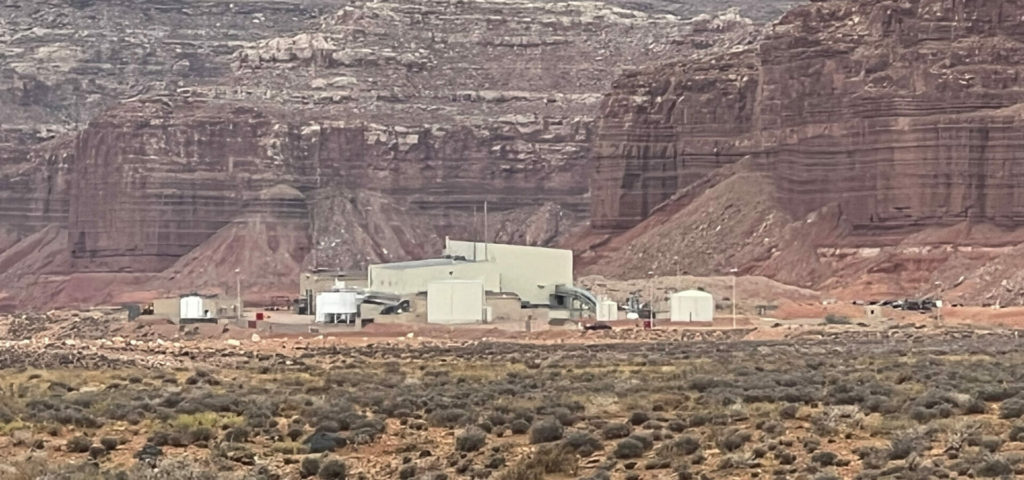
Velvet-Wood uranium project. Credit: Anfield Energy

The US Interior Department said on Monday it will fast-track environmental permitting for Anfield Energy’s proposed Velvet-Wood uranium mine project in Utah to boost President Donald Trump’s efforts to ramp up domestic energy production.


As a result, the project’s environmental review will be completed in just 14 days, the department said in a statement. Such studies typically take years because of the potential environmental effects of uranium mining.

US Interior Department to fast-track mining and energy projects

“America is facing an alarming energy emergency because of the prior administration’s climate extremist policies. President Trump and his administration are responding with speed and strength to solve this crisis,” said Secretary of the Interior Doug Burgum.

“The expedited mining project review represents exactly the kind of decisive action we need to secure our energy future,” he said.

If approved, the Velvet-Wood mine project in San Juan County would produce uranium, used in both nuclear energy and nuclear weapons production, as well as vanadium, a metal than can be used in batteries or to strengthen steel and other alloys.

The Interior Department said the project would be located at the site of a previous mining operation and lead to only three acres of new surface disturbance.

Anfield also owns the Shootaring Canyon uranium mill in Utah, which it intends to restart. That mill would convert uranium ore into uranium concentrate that could be used as a nuclear fuel.

Anfield said it was pleased by the Interior Department’s announcement.

“These efforts not only bring increased investor attention to the sector but will also help boost Anfield’s production prospects as one of very few companies with a near-term path to US uranium production,” it said in a statement emailed to Reuters.

(By Nichola Groom and Richard Valdmanis; Editing by Rosalba O’Brien and Nick Zieminski)
Pension fund exits Australia’s MinRes, citing governance concerns

Reuters | May 12, 2025 | 

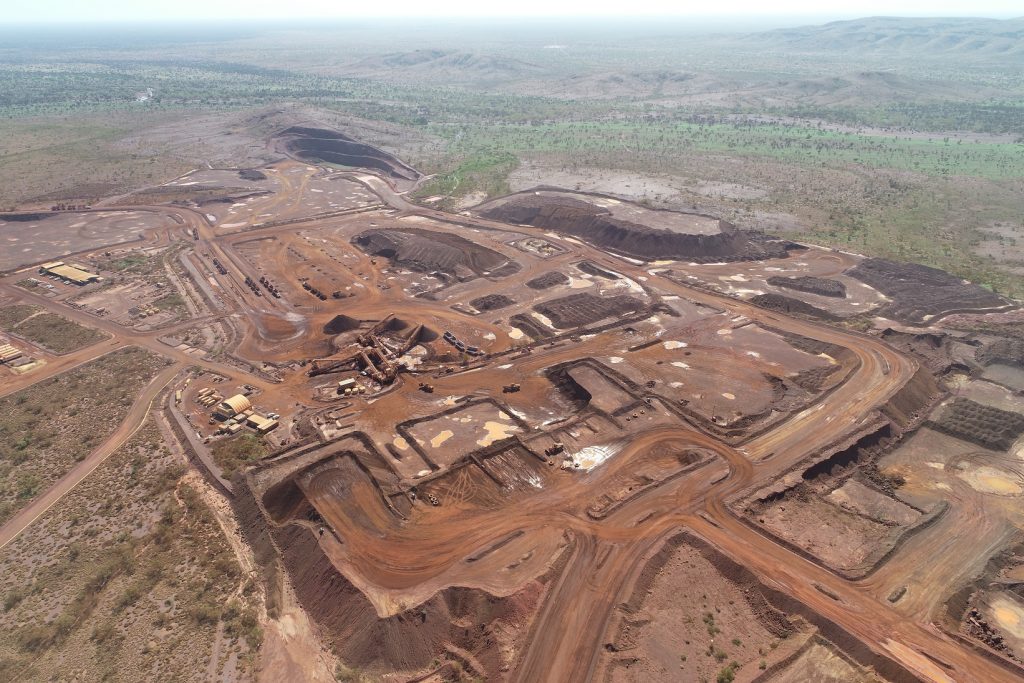
Credit: Mineral Resources Ltd.

Australian pension fund HESTA said on Monday it had sold its remaining stake in billionaire Chris Ellison-founded Mineral Resources, citing “serious governance concerns”.


The mining services provider has been grappling with governance issues, primarily involving Ellison, with allegations including tax evasion and misuse of company resources for personal projects.

MinRes’ founder Ellison to exit after internal misconduct probe

In an email to Reuters, HESTA confirmed it had divested approximately A$14 million ($8.99 million) worth of its stake in Mineral Resources.

HESTA said concerns about the company’s governance were not addressed quickly enough, despite repeated engagement with the board.

It added that departures of directors on the ethics and governance committee were a “significant step backwards” in addressing the concerns.

A spokesperson for Mineral Resources, in an emailed response to Reuters, said that the company remains committed to strengthening corporate governance and the appointment of the new chairman is “well advanced”.

“The ethics and governance committee will be maintained going forward,” the spokesperson said.

($1 = 1.5571 Australian dollars)

(By Kumar Tanishk and Sneha Kumar; Editing by Rashmi Aich and Mrigank Dhaniwala)