Wednesday, May 14, 2025


New study sheds light on health differences between sexes


Queen Mary University of London


The results of an international study led by researchers from Queen Mary University of London’s Precision Healthcare University Research Institute (PHURI) shed new light the underlying biological mechanisms which cause differences in health risks, symptoms and outcomes between males and females.  

The study, carried out in collaboration with the Berlin Institute of Health at Charité, Universitätsmedizin Berlin, and the Medical Research Council (MRC) Epidemiology Unit at the University of Cambridge, was published today in Nature Communications. Using data from UK Biobank and the Fenland study, the team carried an in-depth analysis of the genetic links between ~6,000 proteins and hundreds of diseases in 56,000 males and females.  

The team found that for two-thirds of these proteins, their levels differed between males and females. Further examination revealed that only a very small fraction, around 100 proteins out of the 6,000 studied, had differences in the genetic ‘switches’ which control their levels, when compared between males and females.  

These findings, which may have implications for drug development, indicate that while there are differences between the sexes in relation to how much they express certain proteins, what’s causing these differences isn’t solely down to differences in their genetics.  

Instead, the authors highlight the importance of looking beyond genetics – and other medical factors such as hormones – when comparing health risks and outcomes between males and females. Their findings indicate that non-medical factors such as where people work and live, their education, financial situation, access to resources, as well as their lifestyle also contribute to the health differences experiences between the sexes and so should be explored further and considered more when exploring sex differences in health. 

Mine Koprulu, lead author of the study and a postdoctoral researcher at Queen Mary’s PHURI, said: “For the first time in history, we are able to study human biology at this level of detail—across genes, proteins, and more. This is the largest study to date exploring the similarities and differences in how our genetic code regulates blood protein levels between sexes. Our findings highlight the need to better understand the factors that impact health differences — at the genetic level and beyond— to create more tailored and equitable healthcare for everyone.” 

Professor Claudia Langenberg, Director of the PHURI at Queen Mary and Professor of Computational Medicine at the Berlin Institute of Health at Charité, Germany, said: “Drug development pipelines increasingly incorporate information on genetic differences in protein levels and function and this has led to large investment in human cohorts, such as UK Biobank. From this perspective, better understanding of population differences in the regulation of proteins, such as those between males and females, is essential to guide precision medicine approaches and identify where one size may not fit all. Our results clearly show that with very few exceptions, protein regulating genetic variants identified so far behave in a very similar way in males and females. This provides evidence for an important implicit assumption – that insights arising from studying these variants apply to both sexes.” 

In this study, data was categorised as male or female based on chromosomal information (XX or XY). The authors acknowledge that chromosomal information does not always align with an individual’s gender identity. However, for the purposes of this study (genetic and protein-level scientific analyses), this categorisation was necessary, and data on gender identity was not reliably recoded meaning it could not be consistently used across all data. 

ENDS 

Paper details:    

Mine Koprulu, et al. “Sex differences in the genetic regulation of the human plasma proteome.” Published in Nature Communications.  

DOI: 10.1038/s41467-025-59034-4 

Available after publication at: https://www.nature.com/articles/s41467-025-59034-4  

A copy of the paper is available upon request.  

Conflicts of interest:  Eleanor Wheeler is now an employee of AstraZeneca. The remaining authors declare no competing interests.  


Funded by:  

The Fenland Study (DOI 10.22025/2017.10.101.00001) is funded by the Medical Research Council (MC_UU_12015/1, Claudia Langenberg, Nicholas J. Wareham). 

This work is supported by the Medical Research Council (MC_UU_00006/1 - Aetiology and Mechanisms) (Claudia Langenberg, Eleanor Wheeler, Maik Pietzner, Nicola D. Kerrison, and Nicholas J. Wareham). 

Mine Koprulu is supported by Gates Cambridge Trust.  

Harry Hemingway is supported by Health Data Research UK and the NIHR University College London Hospitals Biomedical Research Centre.  

Spiros Denaxas is supported by a) the BHF Data Science Centre led by HDR UK (grant SP/19/3/34678), b) BigData@Heart Consortium, funded by the Innovative Medicines Initiative-2 Joint Undertaking under grant agreement 116074, c) the NIHR Biomedical Research Centre at University College London Hospital NHS Trust (UCLH BRC), d) a BHF Accelerator Award (AA/18/6/24223), e) the CVD-COVID-UK/COVID-IMPACT consortium and f) the Multimorbidity Mechanism and Therapeutic Research Collaborative (MMTRC, grant number MR/V033867/1).  

Julia Carrasco-Zanini was supported by a 4-year Wellcome Trust PhD Studentship and the Cambridge Trust. We are grateful for all the participants from Fenland Study and UK Biobank cohort who have enabled this work. 


About Queen Mary    

www.qmul.ac.uk      

At Queen Mary University of London, we believe that a diversity of ideas helps us achieve the previously unthinkable.   

Throughout our history, we’ve fostered social justice and improved lives through academic excellence. And we continue to live and breathe this spirit today, not because it’s simply ‘the right thing to do’ but for what it helps us achieve and the intellectual brilliance it delivers.     

Our reformer heritage informs our conviction that great ideas can and should come from anywhere. It’s an approach that has brought results across the globe, from the communities of east London to the favelas of Rio de Janeiro.     

We continue to embrace diversity of thought and opinion in everything we do, in the belief that when views collide, disciplines interact, and perspectives intersect, truly original thought takes form.    


About the MRC Epidemiology Unit 

www.mrc-epid.cam.ac.uk 

The MRC Epidemiology Unit is a department at the University of Cambridge. It is working to improve the health of people in the UK and around the world. Obesity, type 2 diabetes and related metabolic disorders present a major and growing global public health challenge. These disorders result from a complex interplay between genetic, developmental, behavioural and environmental factors that operate throughout life. The mission of the Unit is to investigate the individual and combined effects of these factors and to develop and evaluate strategies to prevent these diseases and their consequences.  


About the Medical Research Council 

https://mrc.ukri.org/ 

The Medical Research Council is at the forefront of scientific discovery to improve human health. Founded in 1913 to tackle tuberculosis, the MRC now invests taxpayers’ money in some of the best medical research in the world across every area of health. Thirty-three MRC-funded researchers have won Nobel prizes in a wide range of disciplines, and MRC scientists have been behind such diverse discoveries as vitamins, the structure of DNA and the link between smoking and cancer, as well as achievements such as pioneering the use of randomised controlled trials, the invention of MRI scanning, and the development of a group of antibodies used in the making of some of the most successful drugs ever developed. Today, MRC-funded scientists tackle some of the greatest health problems facing humanity in the 21st century, from the rising tide of chronic diseases associated with ageing to the threats posed by rapidly mutating micro-organisms. The Medical Research Council is part of UK Research and Innovation.   


About the University of Cambridge 

www.cam.ac.uk 

The University of Cambridge is one of the world’s leading universities, with a rich history of radical thinking dating back to 1209. Its mission is to contribute to society through the pursuit of education, learning and research at the highest international levels of excellence.  

The University comprises 31 autonomous Colleges and over 100 departments, faculties and institutions. Its 24,000 students include around 9,000 international students from 147 countries. In 2023, 73% of its new undergraduate students were from state schools and more than 25% from economically disadvantaged backgrounds. 

Cambridge research spans almost every discipline, from science, technology, engineering and medicine through to the arts, humanities and social sciences, with multi-disciplinary teams working to address major global challenges. In the Times Higher Education’s rankings based on the UK Research Excellence Framework, the University was rated as the highest scoring institution covering all the major disciplines. 

2023 report found that the University contributes nearly £30 billion to the UK economy annually and supports more than 86,000 jobs across the UK, including 52,000 in the East of England. For every £1 the University spends, it creates £11.70 of economic impact, and for every £1 million of publicly-funded research income it receives, it generates £12.65 million in economic impact across the UK. 

The University sits at the heart of the ‘Cambridge cluster’, in which more than 5,000 knowledge-intensive firms employ more than 71,000 people and generate £21 billion in turnover. Cambridge has the highest number of patent applications per 100,000 residents in the UK. 


Growth in informal lead mining is contributing to widespread poisoning


New study documents lead mining as exposure source in Nigeria


OK International

Lead Ore 

image: 

Lead ore is bagged and sold for export.

view more 

Credit: Occupational Knowledge International


Artisanal lead mining in Nigeria is responsible for airborne lead exposures that are 10 times the U.S. Permissible Exposure Limit according to a study published today. This is the first study to report on airborne lead levels from self-employed artisanal lead miners as a source of community exposures.

The study also found that airborne lead exposures from gold ore processing in Northern Nigeria is associated with exposures that are more than 30 times greater than allowable exposure limits. The artisanal gold ore processing that was monitored utilized a variety of manual and machine grinding methods to process and extract the gold.

The study, Airborne lead exposures during artisanal lead mining and gold ore processing in Zamfara Nigeria, published in the Journal of Occupational and Environmental Hygiene is available at: https://www.tandfonline.com/doi/full/10.1080/15459624.2025.2491490?src=

Lead is mined for use in many products but primarily goes into manufacturing lead batteries. The market for lead batteries continues to grow despite growing competition for lithium-ion batteries and other more expensive battery chemistries.

“We found that lead exposures among underground lead miners are as much as 22 times the occupational lead air standard, said Manti Michael Nota, Lecturer at Ardhi University, Dar es salaam, Tanzania and the lead author of the study.  He added that “these exposures are contributing to the high rates of childhood lead poisoning we have seen in these communities.”

Lead battery storage is considered essential to promote “clean” energy from solar and wind in most countries and particularly in rural areas that remain unconnected to the electricity grid.  In addition to the hazardous exposures seen in mining lead the manufacturing and recycling of these batteries are a well-documented source of occupational and childhood lead poisoning.

“These finds suggest that informal lead mining is one of the most hazardous forms of mining that gets little attention despite the growing presence self-employed lead mining operations around the world,” said Perry Gottesfeld, Executive Director of Occupational Knowledge International (OK International) whose organization partnered with Doctors Without Borders/ Médecins Sans Frontières (MSF) in this effort.

Most of the lead ore mined in Nigeria is exported to China for processing. Exports grew by more than 360% over the decade from 2013 to 2022.

Informal lead mining is a growing activity in many countries around the world.  Ongoing lead mining in Kabwe Zambia has been linked to extensive poisoning and widespread environmental contamination. A recent report from Southern Myanmar that documents the rapid increase in lead mining to supply ore to China has been ongoing since the coup in February 2021. (see: https://news.mongabay.com/2025/04/armed-groups-and-junta-profit-as-toxic-mines-devour-southern-myanmar/)

Gottesfeld noted that, “the study makes clear that mining can be associated with extremely high exposures to a range of metals present in the ore that can contaminate homes and poison communities.”

Lead causes severe neurological deficits and death among children in these communities, but even at low exposure levels is responsible for an estimated 5 million deaths each year primarily due to cardiovascular disease. Investments in safer mining to reduce lead exposures would have a significant return on investment compared to the costs of treating severe lead poisoning in these communities.

The Nigerian government has attempted to impose a ban on mining in Zamfara State but these efforts have largely been unsuccessful as ongoing lead poisoning cases are reported in mining communities.

There are an estimated 40 million informal small-scale miners working in at least 70 countries around the world.  In addition to artisanal gold mining, informal lead mining accounts for an increasing share of the global lead supply.

----------------------------------------

About Occupational Knowledge International (OK International)

OK International is a U.S. based NGO that works to build capacity in developing countries to identify, monitor, and mitigate environmental and occupational exposures to hazardous materials in order to protect public health and the environment. For more information: www.okinternational.org

Trump’s push to control Greenland echoes US purchase of Alaska from Russia in 1867

Talk of a takeover of Greenland may seem fanciful. But it wouldn’t be the first time the U.S. was able to procure a piece of the Arctic


President Dwight Eisenhower signs a proclamation admitting Alaska as the 49th state, Jan. 3, 1959.
 (AP Photo/Harvey Georges)

THE CONVERSATION
MAY 11, 2025
William L. Iggiagruk Hensley


President-elect Donald Trump is again signaling his interest in Greenland through a series of provocative statements in which he’s mused about the prospect of the U.S. taking ownership – perhaps by force or economic coersion – of the world’s largest island by area.

Talk of a takeover of Greenland may seem fanciful. But it wouldn’t be the first time the U.S. was able to procure a piece of the Arctic. The U.S. bought Alaska from Russia in 1867. To mark the 150th anniversary of the sale in 2017, we asked William L. Iggiagruk Hensley, a visiting professor at the University of Alaska Anchorage, to write about that historic sale. This is the article "The Conversation" published then, with minor updates.

On March 30, 1867, U.S. Secretary of State William H. Seward and Russian envoy Baron Edouard de Stoeckl signed the Treaty of Cession. With a stroke of a pen, Tsar Alexander II had ceded Alaska, his country’s last remaining foothold in North America, to the United States for US$7.2 million.

That sum, amounting to just $138 million in today’s dollars, brought to an end Russia’s 125-year odyssey in Alaska and its expansion across the treacherous Bering Sea, which at one point extended the Russian Empire as far south as Fort Ross, California, 90 miles from San Francisco Bay.

Today, Alaska is one of the richest U.S. states thanks to its abundance of natural resources, such as petroleum, gold and fish, as well as its vast expanse of pristine wilderness and strategic location as a window on Russia and gateway to the Arctic.

So, what prompted Russia to withdraw from its American beachhead? And how did it come to possess it in the first place?

As a descendant of Inupiaq Eskimos, I have been living and studying this history all my life. In a way, there are two histories of how Alaska came to be American – and two perspectives. One concerns how the Russians took “possession” of Alaska and eventually ceded it to the U.S. The other is from the perspective of my people, who have lived in Alaska for thousands of years, and for whom the anniversary of the cession brings mixed emotions, including immense loss but also optimism.

Russia looks east

The lust for new lands that brought Russia to Alaska and eventually California began in the 16th century, when the country was a fraction of its current size.

That began to change in 1581, when Russia overran a Siberian territory known as the Khanate of Sibir, which was controlled by a grandson of Genghis Khan. This key victory opened up Siberia, and within 60 years the Russians were at the Pacific.

The Russian advance across Siberia was fueled in part by the lucrative fur trade, a desire to expand the Russian Orthodox Christian faith to the “heathen” populations in the east and the addition of new taxpayers and resources to the empire.

In the early 18th century, Peter the Great – who created Russia’s first navy – wanted to know how far the Asian landmass extended to the east. The Siberian city of Okhotsk became the staging point for two explorations he ordered. And in 1741, Vitus Bering successfully crossed the strait that bears his name and sighted Mt. Saint Elias, near what is now the village of Yakutat, Alaska.

Although Bering’s second Kamchatka expedition brought disaster for him personally when adverse weather on the return journey led to a shipwreck on one of the westernmost Aleutian Islands and his eventual death from scurvy in December 1741, it was an incredible success for Russia. The surviving crew fixed the ship, stocked it full of hundreds of the sea otters, foxes and fur seals that were abundant there, and returned to Siberia, impressing Russian fur hunters with their valuable cargo. This prompted something akin to the Klondike gold rush 150 years later.

Challenges emerge

But maintaining these settlements wasn’t easy. Russians in Alaska, who numbered no more than 800 at their peak, faced the reality of being half a globe away from Saint Petersburg, then the capital of the empire, making communications a key problem.

Also, Alaska was too far north to allow for significant agriculture and therefore unfavorable as a place to send large numbers of settlers. So they began exploring lands farther south, at first looking only for people to trade with so they could import the foods that wouldn’t grow in Alaska’s harsh climate. They sent ships to what is now California, established trade relations with the Spaniards there and eventually set up their own settlement at Fort Ross in 1812.

Thirty years later, however, the entity set up to handle Russia’s American explorations failed and sold what remained. Not long after, the Russians began to seriously question whether they could continue their Alaskan colony as well.

For starters, the colony was no longer profitable after the sea otter population was decimated. Then there was the fact that Alaska was difficult to defend, and Russia was short on cash due to the costs of the war in Crimea.

Americans eager for a deal

So, clearly, the Russians were ready to sell, but what motivated the Americans to want to buy?

In the 1840s, the United States had expanded its interests to Oregon, annexed Texas, fought a war with Mexico and acquired California. Afterward, Secretary of State Seward wrote in March 1848:


“Our population is destined to roll resistless waves to the ice barriers of the north, and to encounter oriental civilization on the shores of the Pacific.”

Almost 20 years after expressing his thoughts about expansion into the Arctic, Seward accomplished his goal.

In Alaska, the Americans foresaw a potential for gold, fur and fisheries, as well as more trade with China and Japan. The Americans worried that England might try to establish a presence in the territory, and the acquisition of Alaska, it was believed, would help the U.S. become a Pacific power. And overall the government was in an expansionist mode backed by the then-popular idea of “manifest destiny.”

So a deal with incalculable geopolitical consequences was struck, and the Americans seemed to get quite a bargain for their $7.2 million.

Just in terms of wealth, the U.S. gained about 370 million acres of mostly pristine wilderness, including 220 million acres of what are now federal parks and wildlife refuges. Hundreds of billions of dollars in whale oil, fur, copper, gold, timber, fish, platinum, zinc, lead and petroleum have been produced in Alaska over the years – allowing the state to do without a sales or income tax and give every resident an annual stipend. Alaska still likely has billions of barrels of oil reserves.

The state is also a key part of the United States defense system, with military bases located in Anchorage and Fairbanks, and it is the country’s only connection to the Arctic, which ensures it has a seat at the table as melting glaciers allow the exploration of the region’s significant resources.

Impact on Alaska Natives

But there’s an alternate version of this history.

When Bering finally located Alaska in 1741, Alaska was home to about 100,000 people, including Inuit, Athabascan, Yupik, Unangan and Tlingit. There were 17,000 alone on the Aleutian Islands.

Despite the relatively small number of Russians who at any one time lived at one of their settlements – mostly on the Aleutians Islands, Kodiak, Kenai Peninsula and Sitka – they ruled over the Native populations in their areas with an iron hand, taking children of the leaders as hostages, destroying kayaks and other hunting equipment to control the men and showing extreme force when necessary.

The Russians brought with them weaponry such as firearms, swords, cannons and gunpowder, which helped them secure a foothold in Alaska along the southern coast. They used firepower, spies and secured forts to maintain security, and they selected Christianized local leaders to carry out their wishes. They also met resistance, however, such as from the Tlingits, who were capable warriors, ensuring their hold on territory was tenuous.

By the time of the cession, only 50,000 Indigenous people were estimated to be left, as well as 483 Russians and 1,421 Creoles (descendants of Russian men and Indigenous women).

On the Aleutian Islands alone, the Russians enslaved or killed thousands of Aleuts. Their population plummeted to 1,500 in the first 50 years of Russian occupation due to a combination of warfare, disease and enslavement.

When the Americans took over, the United States was still engaged in its Indian wars, so they looked at Alaska and its Indigenous inhabitants as potential adversaries. Alaska was made a military district by Gen. Ulysses S. Grant.

For their part, Alaska Natives claimed that they still had title to the territory as its original inhabitants and having not lost the land in war or ceded it to any country – including the U.S., which technically didn’t buy it from the Russians but bought the right to negotiate with the Indigenous populations. Still, Natives were denied U.S. citizenship until 1924, when the Indian Citizenship Act was passed.

During that time, Alaska Natives had no rights as citizens and could not vote, own property or file for mining claims. The Bureau of Indian Affairs, in conjunction with missionary societies, in the 1860s began a campaign to eradicate Indigenous languages, religion, art, music, dance, ceremonies and lifestyles.

It was only in 1936 that the Indian Reorganization Act authorized tribal governments to form, and only nine years later overt discrimination was outlawed by Alaska’s Anti-Discrimination Act of 1945. The law banned signs such as “No Natives Need Apply” and “No Dogs or Natives Allowed,” which were common at the time.

Statehood and a disclaimer

Eventually, however, the situation improved markedly for Natives.

Alaska finally became a state in 1959, when President Dwight D. Eisenhower signed the Alaska Statehood Act, allotting it 104 million acres of the territory. And in an unprecedented nod to the rights of Alaska’s Indigenous populations, the act contained a clause emphasizing that citizens of the new state were declining any right to land subject to Native title – which by itself was a very thorny topic because they claimed the entire territory.

A result of this clause was that in 1971 President Richard Nixon ceded 44 million acres of federal land, along with $1 billion, to Alaska’s Native populations, which numbered about 75,000 at the time. That came after a Land Claims Task Force that I chaired gave the state ideas about how to resolve the issue.

Today, Alaska has a population of 740,000, of which 120,000 are Natives.

As the United States celebrates the signing of the Treaty of Cession, we all – Alaskans, Natives and Americans of the lower 48 – should salute Secretary of State William H. Seward, the man who eventually brought democracy and the rule of law to Alaska.

This article was first published on March 29, 2017.


The Conversation is an independent, nonprofit news organization dedicated to unlocking the ideas and knowledge of academic experts for the public.


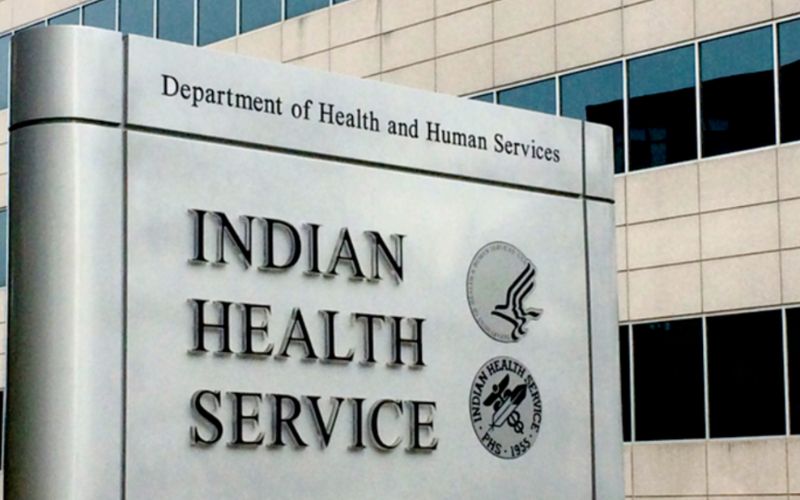
A bipartisan group of senators with oversight on tribal and appropriations matters is calling on Health and Human Services Secretary Robert F. Kennedy Jr. to immediately halt staffing reductions and resource cuts to the Indian Health Service (IHS).

In a letter sent Tuesday, Sens. Jeff Merkley (D-Ore.), Brian Schatz (D-Hawaii) and Lisa Murkowski (R-Alaska) stressed that efforts to reduce federal spending and hiring strain the agency’s already understaffed and underresourced facilities and impede the federal government’s obligation to provide healthcare to federally recognized tribes.

American Indians and Alaska Natives face staggering health disparities, with higher mortality rates from cardiac disease, respiratory illness, liver disease, diabetes, injuries, assault and suicide. Their life expectancy of 65.2 years falls more than a decade below the national average.

The IHS provides healthcare to 2.8 million Native Americans, despite a chronic 30% staffing shortage and an annual budget shortfall of $50 billion.

The letter notes that “IHS cannot deliver quality health care without sufficient personnel – not just physicians, nurses, dentists, and mental health professionals, but also laboratory technicians who perform tests and process and collect specimens, and administrative personnel who perform essential tasks, including billing, appointment scheduling, and ensuring IHS facilities maintain their accreditation.”

The lawmakers warn that losing accreditation would further limit healthcare access in Indian Country and jeopardize Medicare and Medicaid reimbursements, which provide 30-60% of funding at many IHS locations.

The letter urged Kennedy to engage in meaningful tribal consultation before taking any further action that could affect IHS’s capacity to provide healthcare to Native communities. It also addresses reports of senior officials from HHS agencies being reassigned to IHS positions in Alaska, Montana, and Oklahoma without consideration of tribal needs, Indian Preference requirements, or IHS service priorities.

“This foundational tenet of the federal government’s trust relationship empowers Tribes to be a part of policymaking on a government-to-government basis,” the letter read. It appears that HHS has failed to meaningfully consult with Tribes on recent actions, which have negatively impacted the federal-Tribal relationship, and we urge you to seek Tribal input and consult on any future federal action impacting their interests.”

In an email to Native News Online, Merkley said the administration should be filling open positions at IHS.

“Trump and his unelected billionaire sidekick Elon Musk are wreaking havoc on Tribal communities by forcing people out of the workforce at HHS and IHS and putting a hiring freeze in place,” Merkley wrote. “This administration should be doing everything it can to shore up vacancies, not create new ones.”

Merkley also addressed sweeping cuts made to other agencies operating under HHS that serve tribal nations.

According to the Department of Government Efficiency (DOGE) website tracking federal spending and staffing reductions, more cuts have been made to HHS since January than to any other federal agency.

“I hope that HHS and Secretary Kennedy will heed our call to reverse these dangerous decisions to arbitrarily cut programs not only at IHS but also at the NIH, SAMHSA, CMS, and the CDC, all of which impact care for Tribes,” Merkley wrote. “They must also engage in meaningful Tribal consultation, as is required by law.”

More Stories Like This

Leaked Budget Proposal Would Cut $56M Naloxone Grant Program for First Responders
CDC’s Tribal Overdose Prevention Team Gutted in Federal Workforce Cuts
Q&A: Dr. Yolandra Gomez

About The Author
Elyse Wild
Elyse Wild
Senior Health Editor
Elyse Wild is Senior Health Editor for Native News Online, where she leads coverage of health equity issues including mental health, environmental health, maternal mortality, and the overdose crisis in Indian Country. Her award-winning journalism has appeared in The Guardian, McClatchy newspapers, and NPR affiliates. In 2024, she received the inaugural Excellence in Recovery Journalism Award for her solutions-focused reporting on addiction and recovery in Native communities. She is currently working on a Pulitzer Center-funded series exploring cultural approaches to addiction treatment.

Senate Committee on Indian Affairs to Host an Oversight Hearing on the Impact of Health & Human Services Cuts to Native Communities

By Native News Online Staff 
 May 13, 2025
Yahoo News


On Wednesday, May 14, at 3:30 p.m. ET,
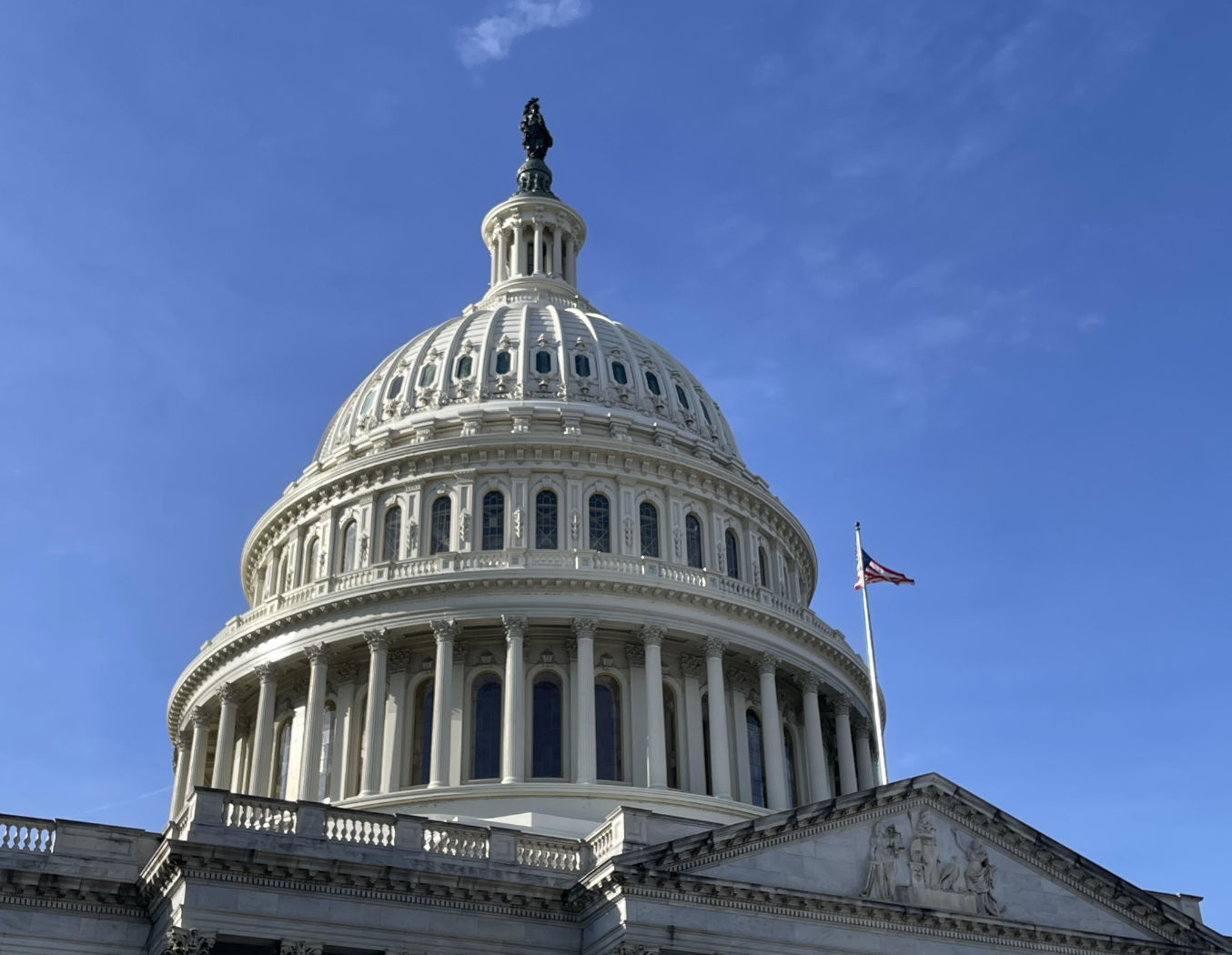
U.S. Senators Lisa Murkowski (R-Alaska), Chair of the Committee and Brian Schatz (D-Hawaiʻi), Vice Chairman of the Senate Committee on Indian Affairs, and , will convene an oversight hearing titled “Delivering Essential Public Health and Social Services to Native Americans – Examining Federal Programs Serving Native Americans Across the Operating Divisions at the U.S. Department of Health and Human Services (HHS).” The hearing will take place in Room 628 of the Dirksen Senate Office Building in Washington, D.C.


U.S. Capitol (Photo/Levi Rickert for Native News Online)

This week, Senators Schatz and Murkowski wrote to HHS Secretary Robert F. Kennedy Jr. to sound the alarm over his dismantling of HHS, as well as urgent staffing shortages at the Indian Health Service. Schatz has previously warned about the devastating potential impact that Republican plans to cut Medicaid would have on Native communities specifically.


Event Details:

WHAT:

Murkowski and Schatz to lead Senate Committee on Indian Affairs oversight hearing on HHS programs serving American Indian, Alaska Native, and Native Hawaiians

WITNESSES:
THE HONORABLE JANET ALKIRE, Chairwoman of the Standing Rock Sioux Tribe, Fort Yates, North Dakota (in-person)
THE HONORABLE LONI GRENINGER, Vice Chair, Jamestown S’Klallam Tribal Council, Sequim, Washington (in-person)
MS. MELISSA CHARLIE, Executive Director, Fairbanks Native Association, Fairbanks, Alaska (in-person)
MS. LUCY SIMPSON, Executive Director, National Indigenous Women’s Resource Center, Lame Deer, Montana (in-person)
MS. SHERI-ANN DANIELS, Chief Executive Officer, Papa Ola Lōkahi, Honolulu, Hawaiʻi (in-person)

WHEN:

Wednesday, May 14, 3:30 p.m. ET

WHERE:

Dirksen Senate Office Building, Room 628

Live video of the event will be available here.
Minnesota Lt. Gov. Peggy Flanagan Gets Sen. Warren's Endorsement for US Senate

Yahoo News

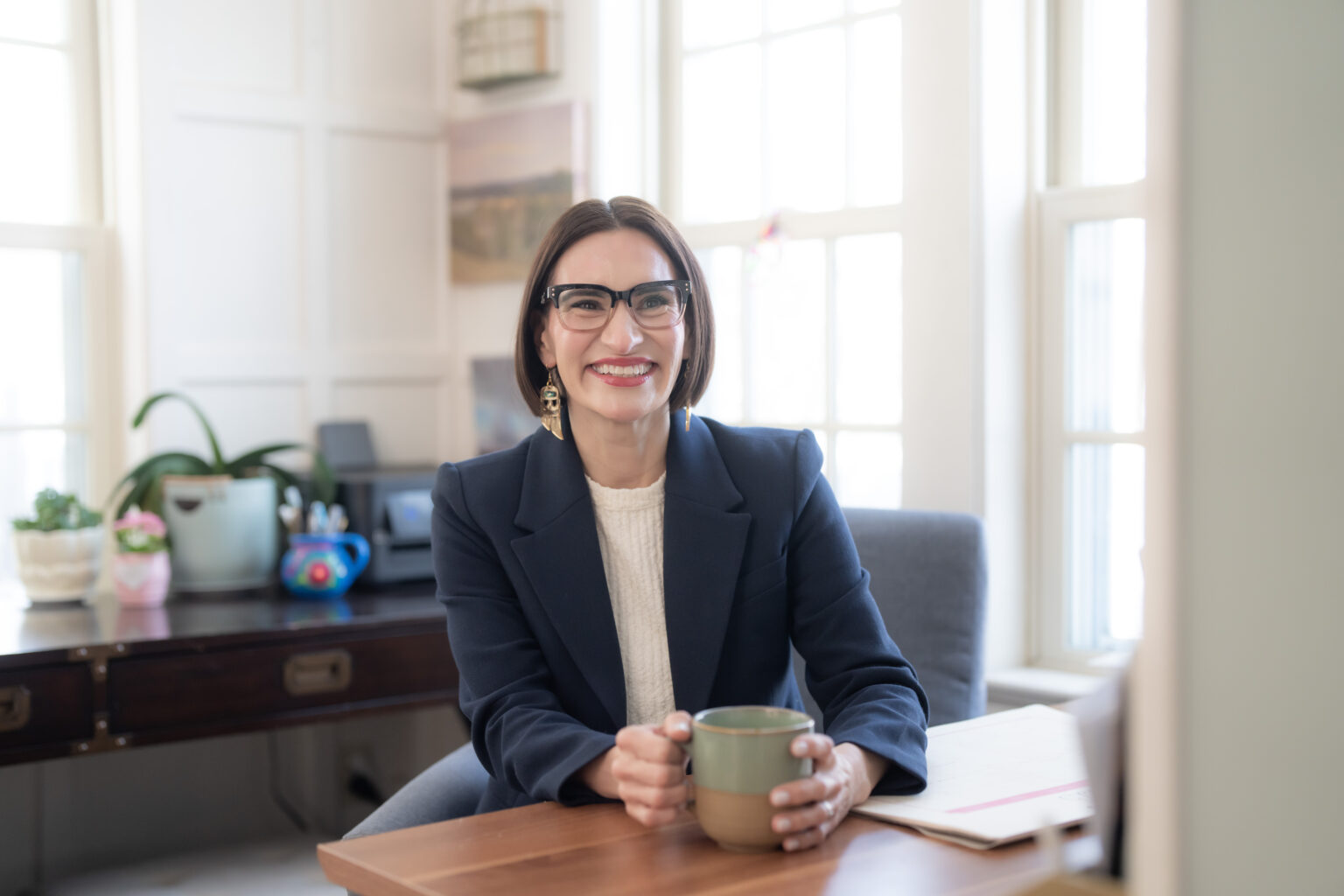
Minn. Lt. Gov. Peggy Flanagan (Photo/File)By Neely Bardwell May 13, 2025

Native Vote. 

Sen. Elizabeth Warren (D-MA), endorsed Minnesota Lt. Governor Peggy Flanagan, a tribal citizen of the White Earth Nation, for U.S. Senate in a video today, adding to the growing list of support.

In Warren’s video, she commended Flanagan, who is running for one of the Senate seats in Minnesota, calling her a “fighter” ready to support the working class of America.

“We need Democrats in the Senate who are going to fight with everything they've got for working families. That’s why I’m endorsing Lieutenant Governor Peggy Flanagan to be the next senator for Minnesota,” said Senator Warren. “Peggy’s a fighter. She’s tough, smart, experienced, and ready to take on corrupt special interests in order to make life better for working people.”

Flanagan has already secured endorsements from Saint Paul Mayor Melvin Carter, former U.S. Senator Al Franken, Attorney General Keith Ellison, State Auditor Julie Blaha, and dozens of state, local, and community leaders, including nearly every member of DFL House Leadership and five legislators from the second congressional district.

Flanagan expressed her gratitude to Warren for her endorsement in a statement.

“I am beyond honored to have Senator Warren’s endorsement,” said Flanagan. “Elizabeth is a hero of mine. She’s a pragmatic leader who has spent decades fighting for working families. We don't get what we don’t fight for - and I’m ready to join her in the fight to take on Donald Trump, challenge the status quo in DC, and build something better for Minnesota families.”
Three Indigenous members of Canada’s Parliament named to prime minister’s cabinet

Mandy Gull-Masty makes history as first Indigenous minister of Indigenous services


Parliament Hill in Ottawa on Thursday, March 20, 2025. 
(Sean Kilpatrick /The Canadian Press via AP)


Miles Morrisseau
ICT

It was a historic day in the Canadian government with the naming of the nation’s first Indigenous Minister of Indigenous Services.

Newly elected Prime Minister Mark Carney tapped Member of Parliament Mandy Gull-Masty, a former chief of the Quebec Crees, for the historic appointment. Gull-Masty, Cree, of Carney’s Liberal Party, won in the northern Quebec riding of Abitibi-Baie-James-Nunavik-Eeyou, flipping a seat that had previously been won by the Bloc Quebecois.

Congratulations from the Cree in Quebec greeted the historic news Tuesday.

“On behalf of the Grand Council of the Crees (Eeyou Istchee)/Cree Nation Government,” the council stated on X, formerly known as Twitter. “We extend our congratulations to Mandy Gull-Masty on her appointment as Minister of Indigenous Services in the new federal cabinet formed this morning.”


In this file photo from 2022, Pope Francis meets Mandy Gull-Masty, then-grand chief of the Cree Nation Government, during his papal visit across Canada in Quebec City on July 27th, 2022. (Bernard Brault/The Canadian Press via AP)

Rebecca Chartrand who won in the northern Manitoba riding of Churchill Keewatinok Aski has been named Minister of Northern and Arctic Affairs. Chartrand, Anishinaabe/Inninew/Dakota/Métis, also flipped a seat for the Liberals, defeating Nikki Ashton, the long time New Democratic Party incumbent.

Buckley Belanger was named to cabinet as Secretary of State for Rural Development. Belanger was victorious in the northern Saskatchewan riding of Desnethé-Missinippi-Churchill River. Belanger was the lone Liberal elected in the entire province of Saskatchewan.

Rebecca Alty has been named as the minister responsible for Crown-Indigenous relations. Alty is non-Indigenous but represents the Northwest Territories and a significant Indigenous demographic.

The Federation of Sovereign Indigenous Nations put out a release welcoming Alty to the role of Crown-Indigenous relations and stating that the former mayor of Yellowknife “brings valuable northern perspective and experience working with Indigenous communities.” FSIN also congratulated Gull-Masty on her historic appointment.

“The appointment of these two accomplished women to lead key Indigenous portfolios signals a positive step forward for Prime Minister Carney’s government to advancing reconciliation and addressing the priorities of First Nations,” said FSIN Chief Bobby Cameron. “We look forward to establishing strong working relationships with both ministers as we collectively work to address the needs of our community.”

Métis National Council President Victoria Pruden was also encouraged with the new cabinet.

“The Métis National Council welcomes the announcement of the new federal cabinet and is encouraged by the appointment of three Indigenous Members of Parliament to key leadership role,” Pruden told ICT. “We are particularly pleased to see the historic appointment of Mandy Gull-Masty, former Grand Chief of the Crees (Eeyou Istchee), as the first Indigenous Minister of Indigenous Services Canada. We also recognize the proud Métis citizen from Île-à-la-Crosse, Buckley Belanger, who has been named Secretary of State for Rural Development, and Rebecca Chartrand—Anishinaabe, Inninew, Dakota, and Métis—as the new Minister of Northern Affairs and Minister responsible for the Canadian Northern Economic Development Agency.”

Pruden also stated that the council is ready to work with the new government to improve the lives of Métis people and strengthen the Métis Nation.

“We look forward to continuing to work in partnership through a government-to-government, nation-to-nation approach to advance the rights, interests, and priorities of the Métis Nation," she said. "This includes strengthening the Métis economy and addressing the cost-of-living crisis, workforce readiness, Métis climate leadership, and enhancing Métis data sovereignty and capacity.”

The Assembly of Manitoba Chiefs stated that the historic appointment of Gull-Masty and the appointment of Chartrand reflect the growing presence and leadership of First Nations women in federal decision-making.

“The swearing-in of Prime Minister Carney’s Cabinet is a significant moment for the country, and especially for First Nations,” said Grand Chief Kyra Wilson. “We look forward to building respectful, Nation-to-Nation relationships with this new team and ensuring that the commitments made to First Nations in the Liberal Party platform are fully implemented with clear identified timelines and deliverables. Treaty implementation will continue to be a priority for our Nations as we move ahead.”

The new ministers were sworn in at Rideau Hall, the official residence of the Governor General Mary Simon, Inuk. Each Member of Parliament swears allegiance to Simon, who is the representative of the King of England.

Following the swearing-in ceremony, Carney spoke to the media.

“Our new government will be a strong and reliable partner to the provinces, the territories and to Indigenous peoples,” Carney said. “We will reinforce bridges across labor, business and civil society, and together, we will advance the nation, building investments that will support the core mission of this government, which is to create the strongest economy in the G7, an economy that works for everyone.”

Carney referenced the rumblings about separation from some in the oil-rich province of Alberta who were disappointed in his election.

“Canada is only one nation, a confederation based on the union of peoples, French, English and Indigenous,” said Carney. “Our government’s approach will reflect that reality. We will govern as a cabinet constructively and collaboratively working with caucus and across parties in Parliament to deliver the change that Canadians want and desire.”

Although the Liberals won the election, they will lead with a minority government, which will require support from the other parties. In the previous government of Justin Trudeau, the Liberals made a deal with the National Democratic Party to get their support and have the necessary votes in the House of Commons to pass legislation.

It is still unknown what type of arrangement will be made, if any, but it is very possible that the NDP will hold some balance of power in the new government. The NDP was decimated in the recent national election, losing official party status, but their Members of Parliament could still hold influence if Carney wants to make a deal.

Of the seven NDP Members of Parliament, two are Indigenous and are returning to Ottawa after successfully defending their seats. Leah Gazan, Wood Mountain Lakota Nation has held the riding of Winnipeg Centre since 2019. Lori Idlout, Inuk, held her seat of Nunavut since 2021.

The Carney government will be heading back to work on May 27, when Parliament with be opened with King Charles III and Queen Camilla in attendance.


BY MILES MORRISSEAU
Miles Morrisseau, a citizen of the Métis Nation, is a special correspondent for ICT based in the historic Métis Community of Grand Rapids, Manitoba, Canada. He reported as the national Native Affairs broadcaster for CBC Radio and is former editor-in-chief of Indian Country Today.
San Carlos Apache Tribe Applauds Federal Court Ruling Blocking Transfer of Sacred Oak Flat Land

Yahoo News

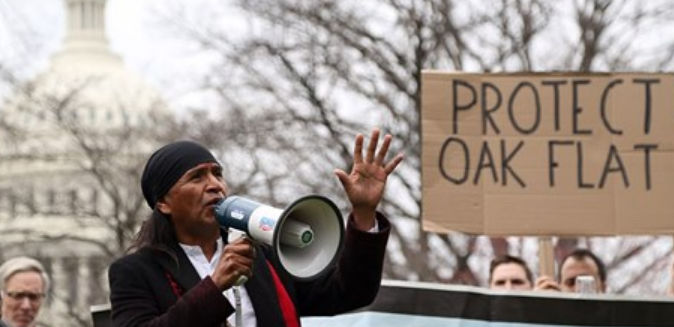
. Wendsler Nosie has led the fight to protect Oak Flats for almost a decade. (Photo/Apache Stronghold)

By Native News Online Staff 
 May 12, 2025

The San Carlos Apache Tribe welcomed a May 9 federal court decision that temporarily halts the U.S. government’s plan to transfer Oak Flat—sacred Western Apache land within the Tonto National Forest—to Resolution Copper, a company backed by Chinese interests.

“This marks a turning point in our two-decade struggle to save Oak Flat from destruction by two of the world’s largest mining corporations,” said San Carlos Apache Chairman Terry Rambler. “We congratulate Apache Stronghold for securing this historic legal victory.”

Apache Stronghold filed an emergency motion to block the transfer while the U.S. Supreme Court considers hearing their case. The case challenges a federal law mandating the land’s transfer to Resolution Copper Mining, LLC once an environmental impact report is issued—a report the federal government was preparing to release after June 16.

The ruling halts the land transfer until the Supreme Court decides whether to review the case.

“There is no close question in this matter,” wrote U.S. District Judge Steven P. Logan. “The balance of equities tips sharply in Plaintiff’s favor, and they have presented serious questions on the merits that warrant the Supreme Court’s careful scrutiny.”

Oak Flat, or Chi’chil Biłdagoteel in Apache, is on the National Register of Historic Places and had been protected for 70 years. Those protections were revoked in 2014 when Congress added a land-swap provision to a must-pass defense bill. Resolution Copper plans to mine the area, ultimately creating a crater two miles wide and over 1,000 feet deep.

“We urge the Supreme Court to accept Apache Stronghold’s petition and affirm our right to practice religious ceremonies that can only be held at Oak Flat,” Chairman Rambler added. “Indigenous peoples around the world are watching and hoping the Court will finally treat Native religious practices with the same respect as other major world religions.”

Resolution Copper is jointly owned by Rio Tinto (UK-based) and BHP (Australia-based), the two largest mining companies globally. Both derive significant revenue from China. The Chinese state-owned firm Chinalco, which focuses on securing strategic minerals like copper, is Rio Tinto’s largest shareholder, holding nearly 15% of its stock.

US Federal Court Halts Destruction of Oak Flat


(Photo/Becket Fund)

By Levi Rickert 
 May 09, 2025
Yahoo News

A federal court has issued an order halting the U.S. government’s plans to transfer Oak Flat—the most sacred site of the Western Apaches—to a multinational mining corporation for destruction. In the case Apache Stronghold v. United States, the government recently indicated it could hand over the land as soon as June 16, 2025, to Resolution Copper, a mining company with Chinese ownership, which intends to transform the sacred site into a massive copper mine. This would effectively end Apache religious practices tied to the land. Apache Stronghold, a coalition of Western Apaches, other Native communities, and allies, filed an emergency motion to pause the transfer while the case awaits review by the U.S. Supreme Court.

A federal court granted that request today, with Judge Steven P. Logan concluding, “There is no close question in this matter. It is abundantly clear that the balance of equities ‘tips sharply’ in Plaintiff’s favor, and … they have presented serious questions on the merits that warrant the Supreme Court’s careful scrutiny.”

For countless generations, Western Apaches and other Native peoples have gathered at Oak Flat—known in Apache as Chi’chil Biłdagoteel—just outside present-day Superior, Arizona, to conduct sacred ceremonies that cannot be held anywhere else.

Oak Flat is listed on the National Register of Historic Places and has been shielded from mining and other destructive activities for the past seventy years. That protection came under threat in December 2014, when a last-minute provision was quietly added to a must-pass defense bill, authorizing the land’s transfer to Resolution Copper. The company now plans to turn this sacred site into a crater two miles wide and 1,100 feet deep. Resolution Copper is majority-owned by Rio Tinto, the same mining giant that drew global condemnation for destroying 46,000-year-old Indigenous rock shelters at a major cultural site in Australia.

“The federal government and Resolution Copper have put Oak Flat on death row—they are racing to destroy our spiritual lifeblood and erase our religious traditions forever,” said Dr. Wendsler Nosie Sr. of Apache Stronghold. “We are grateful the judge stopped this land grab in its tracks so that the Supreme Court has time to protect Oak Flat from destruction.”

Apache Stronghold filed this lawsuit in January 2021 to stop the proposed copper mine at Oak Flat. The project faces widespread opposition—including 21 of the 22 federally recognized tribal nations in Arizona, the National Congress of American Indians, and a broad coalition of religious groups, civil rights organizations, and legal scholars. National polls show that 74% of Americans support preserving Oak Flat. Despite this, the Ninth Circuit Court of Appeals ruled 6–5 last year that the land transfer does not violate federal religious freedom protections. In a strong dissent, five judges warned the court had “tragically err[ed]” in failing to safeguard the sacred site.


“The feds have absolutely no reason to ram through the transfer of Oak Flat while our case is standing on the doorstep of the Supreme Court,” said Luke Goodrich, vice president and senior counsel at Becket. “This ruling ensures that Oak Flat remains protected as the legal process continues, giving the Supreme Court time to decide if cherished Apache rituals can continue for future generations.”

In addition to Becket, Apache Stronghold is represented by Erin Murphy of Clement & Murphy PLLC, Professor Stephanie Barclay of Georgetown Law School, and attorneys Michael V. Nixon and Clifford Levenson.