Friday, May 30, 2025

Robert Reich: The Reemergence Of Social Darwinism – OpEd


"History repeats itself: The Robber Barons of the Middle Ages and the Robber Barons of Today." Cartoon that appeared in the American weekly Puck in 1889.


By 


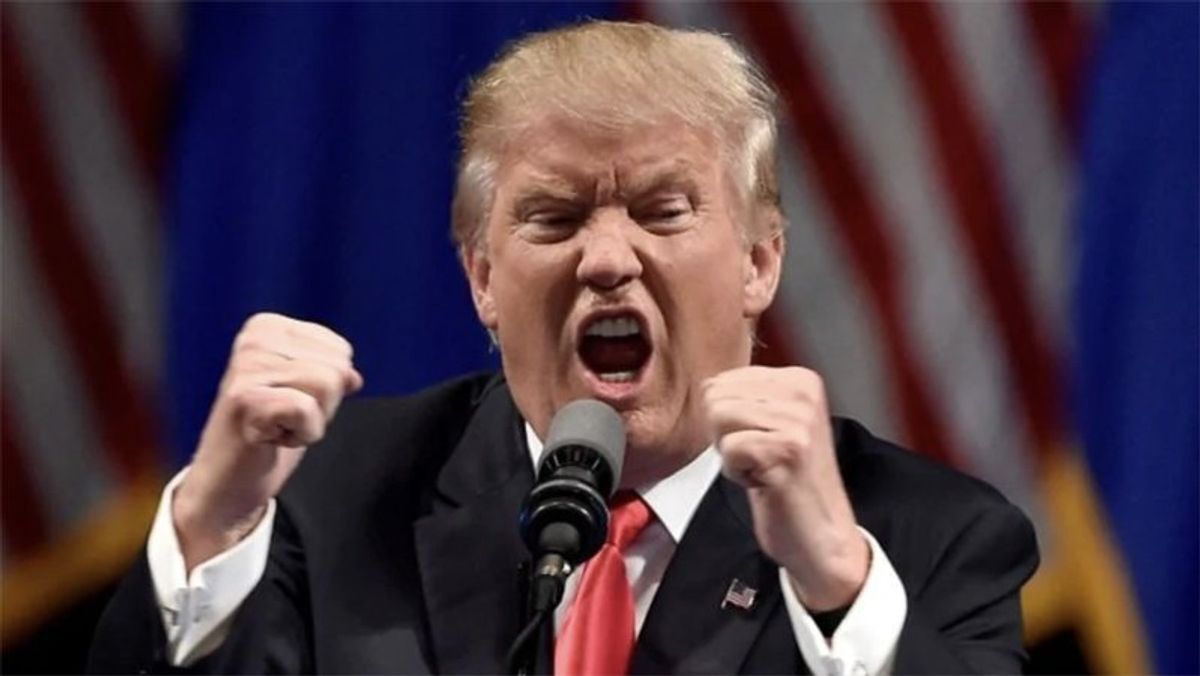
Cut Medicaid to give billionaires a huge tax cut. But why


They say they want a smaller government, but that can’t be it. 

Most seek a larger national defense and more muscular homeland security. Almost all want to widen the government’s powers of search and surveillance inside the United States — expunging undocumented immigrants, “securing” the nation’s borders. They want stiffer criminal sentences. Many also want government to intrude on the most intimate aspects of private, intimate life.

Many call themselves conservatives, but that’s not it, either. 

They don’t want to conserve what we now have. They’d rather take the country backward — before the Environmental Protection Act, before Medicare and Medicaid, before the New Deal and its provision for Social Security, unemployment insurance, the 40-hour workweek, before official recognition of trade unions, even before the first national income tax, antitrust laws, and Federal Reserve.

Some say they want the American working class to do better. But that can’t be it, either, because they’re cutting Medicaid and other safety nets the working class depends on in order to finance a huge tax cut for the super-rich. And they support tariffs that will drive up the costs of just about everything the working class buys. 

The America they actually seek is the one we last had in the Gilded Age of the late 19th century.

“We were at our richest from 1870 to 1913. That’s when we were a tariff country. And then they went to an income tax concept,” Trump said in January. 

Yes, we had tariffs during that Gilded Age. It was also an era when the nation was mesmerized by the doctrine of free enterprise, although few Americans actually enjoyed much freedom. 

Robber barons such as financier Jay Gould, railroad magnate Cornelius Vanderbilt, and oil tycoon John D. Rockefeller controlled much of American industry. 

They corrupted American politics. Their lackeys literally deposited sacks of money on the desks of pliant legislators.

The gap between rich and poor turned into a chasm. Urban slums festered. Women couldn’t vote. Black Americans were subject to Jim Crow. 

Most tellingly, it was a time when the ideas of William Graham Sumner, a professor of political and social science at Yale, dominated American social thought. 

Sumner brought Charles Darwin to America and twisted him into a theory to fit the times.

Few Americans living today have read any of Sumner’s writings, but they had an electrifying effect on America during the last three decades of the 19th century.

To Sumner and his followers, life was a competitive struggle in which only the fittest could survive — and through this struggle, societies became stronger over time. 

A correlate of this principle was that government should do little or nothing to help those in need, because that would interfere with natural selection.

Listen to today’s Republican debates and you hear a continuous regurgitation of Sumner. As Sumner wrote in the 1880s:

“Civilization has a simple choice [of either] liberty, inequality, survival of the fittest [or] not-liberty, equality, survival of the unfittest. The former carries society forward and favors all its best members; the latter carries society downwards and favors all its worst members.”

Sound familiar?

Trump and his Republicans on Capitol Hill not only echo Sumner’s thoughts but mimic Sumner’s reputed arrogance. They say we must reward “entrepreneurs” (by which they mean anyone who has made a pile of money) and warn us not to “coddle” people in need (for example, they want to put work requirements on Medicaid). 

They oppose extending unemployment insurance because, they say, we shouldn’t “give people money for doing nothing.”

Sumner, likewise, warned against handouts to people he termed “negligent, shiftless, inefficient, silly, and imprudent.”

Trump and other Republican lawmakers are dead set against raising taxes on billionaires, relying on the standard Republican trickle-down rationale that billionaires create jobs.

Here’s Sumner, more than a century ago: 

“Millionaires are the product of natural selection, acting on the whole body of men to pick out those who can meet the requirement of certain work to be done. … It is because they are thus selected that wealth aggregates under their hands – both their own and that intrusted to them … They may fairly be regarded as the naturally selected agents of society.” Although they live in luxury, “the bargain is a good one for society.”

Social Darwinism offered a moral justification for the wild inequities and social cruelties of the late 19th century — the era when, according to Trump, “we were richest.”

Social Darwinism allowed John D. Rockefeller to claim the fortune he accumulated through his giant Standard Oil Trust was “merely a survival of the fittest.” It was, he insisted, “the working out of a law of nature and of God.”

Social Darwinism also undermined all efforts at the time to build a nation of broadly based prosperity and rescue our democracy from the tight grip of a very few at the top. It was used by the privileged and powerful to convince everyone else that government shouldn’t do much of anything.

Not until the 20th century did America reject Social Darwinism. Instead of Social Darwinism, we created an inclusive society. We created the largest middle class in the history of the world — which became the core of our economy and democracy. 

We built safety nets to catch Americans who fell downward through no fault of their own. We designed regulations to protect against the inevitable excesses of free-market greed. 

We taxed the rich and invested in public goods — public schools, public universities, public transportation, public parks, public health — that made us all better off.

In short, we rejected the notion that each of us is on his or her own in a competitive contest for survival. We depended on one another. 

But now America is in its Second Gilded Age, and its new robber barons have found the same rationale as they did in the First. 

Under Trump and his lapdogs in the House and Senate, Social Darwinism is back.


Robert Reich

Robert B. Reich is Chancellor's Professor of Public Policy at the University of California at Berkeley and Senior Fellow at the Blum Center for Developing Economies, and writes at robertreich.substack.com. Reich served as Secretary of Labor in the Clinton administration, for which Time Magazine named him one of the ten most effective cabinet secretaries of the twentieth century. He has written fifteen books, including the best sellers "Aftershock", "The Work of Nations," and"Beyond Outrage," and, his most recent, "The Common Good," which is available in bookstores now. He is also a founding editor of the American Prospect magazine, chairman of Common Cause, a member of the American Academy of Arts and Sciences, and co-creator of the award-winning documentary, "Inequality For All." He's co-creator of the Netflix original documentary "Saving Capitalism," which is streaming now.
‘Meltdown’: Trump Fumes When Confronted With ‘Always Chickens Out’ Claim

 May 28, 2025 
By David Badash
THE NEW CIVIL RIGHTS MOVEMENT


President Donald Trump’s tariff policy has been highly criticized, especially for his seemingly arbitrary, up and down, in-effect and paused actions, which have led the stock markets to rise and fall—providing little stability or reassurance to manufacturers and investors alike.

“Traders are loading up and dumping stocks based on Trump’s erratic approach to announcing tariffs and then retreating on them,” The New York Times reported on Wednesday.

McGill University Associate Professor Robert Rutledge, an astrophysicist, on Tuesday posted a screenshot from a New York Times article titled, “Stocks Rally on the ‘TACO Trade’,” which explained the phenomenon.

During Wednesday’s swearing-in ceremony of Trump’s interim U.S. Attorney for Washington, D.C., former Fox host Jeanine Pirro, a reporter confronted the president with remarks from analysts who have dubbed his tactics “TACO,” or, “Trump Always Chickens Out.”

“Mr. President,” a reporter said (video below), “Wall Street analysts have coined a new term called the ‘Taco Trade.’ They’re saying Trump always chickens out on your tariff threats, and that’s why markets are higher this week. What’s your response to that?”

After some back-and-forth, the President admitted, “I’ve never heard that,” before growing defensive.


“You mean because I reduced China from 145%, that I set down to 100% and then down to another number, and I said, ‘You have to open up your whole country.’ And because, I gave the European Union a 50% tax tariff, and they called up, and they said, ‘Please, let’s meet right now. Please, let’s meet right now.'”

Trump claimed that “after I did what I did, they said, ‘We’ll meet anytime you want.'” And we have an end date of July 9th. You call that chickening out?”

He then lashed out at his predecessor, President Joe Biden, for not imposing high tariffs.

“Because we have $14 trillion now invested, committed to investing, when Biden didn’t have practically anything, Trump claimed, although there are few actual, finalized agreements.

“Biden, this country was dying,” Trump continued. “You know, we have the hottest country anywhere in the world. I went to Saudi Arabia. The king told me. He said, ‘You got the hottest—We have the hottest country in the world right now.'”

“Six months ago, this country was stone cold dead,” Trump alleged. “We had a dead country.”

“We had a country people didn’t think it was gonna survive, and you ask a nasty question like that?” he said, attacking the reporter. “It’s called ‘negotiation.’ You set a number. And if you go down, you know set a number at

After explaining his China policy, he again attacked, telling the reporter, “don’t ever say what you said. That’s a nasty question.”

“For me, that’s the nastiest question.”

Economist Justin Wolfers on Tuesday explained some of the ramifications of “TACO.”

“Those truck drivers … won’t have goods to truck across the country, they also won’t be stopping a gas stations to buy a sandwich. And then the sandwich demand falls off and on and on it goes. But I think it’s actually the effects are far deeper than that,” Wolfers explained.

“There’s an asset here that really matters called ‘American credibility.’ There was a time when the President opened his mouth when you had to pay attention, because you thought it meant something, that it was a shift in policy that other countries could rely on and respond to. That’s no longer the case.”

After specifically mentioning TACO, Wolfers continued with more examples. He noted, for example, “there’s a factory that could be built, except that one of the most important imports we get from the European Union is precision machinery. And that either just went up 50% or went up 10%, but no one can be sure.”

Critics blasted the President for his Oval Office remarks.

Democratic strategist Keith Edwards mocked Trump, saying that he “just learned Wall Street is calling his tariffs ‘TACO trade’ (‘Trump Always Chickens Out’) — and you have to watch his meltdown.”

The political action committee Really American called it “an insane moment,” noting that Trump had “a complete meltdown.”

“What’s hilarious about this whole thing is there has to be people in the admin who know about this stuff and everyone is afraid to tell him bad news,” noted Democratic strategist Adam Parkhomenko. ” So we get to see him lose his s— for the first time live on tv.”

Watch the video below or at this link.

'Nasty button pressed': Nicolle Wallace mocks triggered Trump after TACO joke

TACO stands for "Trump always chickens out"

Sarah K. Burris
May 29, 2025
RAW STORY


Donald Trump (Photo via Reuters)

At the top of her Thursday show, MSNBC host Nicolle Wallace showed the clip of President Donald Trump snapping at a reporter who asked him about the new "TACO trade" nickname he's earned.

Financial Times commentator Robert Armstrong invented the joke in his newsletter. TACO stands for "Trump always chickens out," and refers largely to the trade war.

Trump snapped at the reporter, saying, "And you ask a nasty question like that!"

"Oh! She got the nasty, nasty button-pressed," said Wallace. "Chicken out, defined there by Donald Trump publicly for the first time. Trump blocked by the courts, shocked by the markets, and mocked by Wall Street analysts is where we start today."

Wallace's guest Armstrong told Trump that one of his concerns is that the TACO joke was a good thing, because he backed off of destructive tariffs. His fear is that Trump's humiliation means he will no longer back down, and that's bad for the American economy.

"I meant to make a joke, not cause a recession," Armstrong told Wallace. "He's the president! I'm an inky-finger hack making a dumb joke! I'm the one who's supposed to behave carefully around the president of the United States? How did we get here? I mean, the situation is — bizarre doesn't even begin to cover it, as far as I'm concerned."

He commented on the "serious question about" living in "a world in which you're not allowed to make fun of the president."

"Look, the reason the TACO trade joke, which is kind of a dumb joke, stuck, is because it has this huge element of truth in it," he explained. "And yes, a lot of times in the last, you know, 12 or 18 hours since that conversation in the White House, people have either written me or mentioned me on social media saying, this guy's dumb joke is going to cause a recession. And I don't like that at all. I meant to make a joke, not cause a recession."

Charlotte Howard, executive editor of The Economist, recalled a "boiling" Trump who was forced to listen as President Barack Obama excoriated him at the White House Correspondents Dinner in 2011. It infuriated Trump enough to inspire his bid for the presidency.

"He does detest being mocked," Howard told Wallace.

"The fact that we're having that conversation points to this weird environment in which, you know, some people seem to be treating Trump like a senile uncle who needs to be appeased," she added.

However, Wallace argued, "No one is humiliating Donald Trump except Donald Trump."

See the clip below or at the link here.


'Serious question': Creator of viral Trump nickname fears he may tank economy out of spite


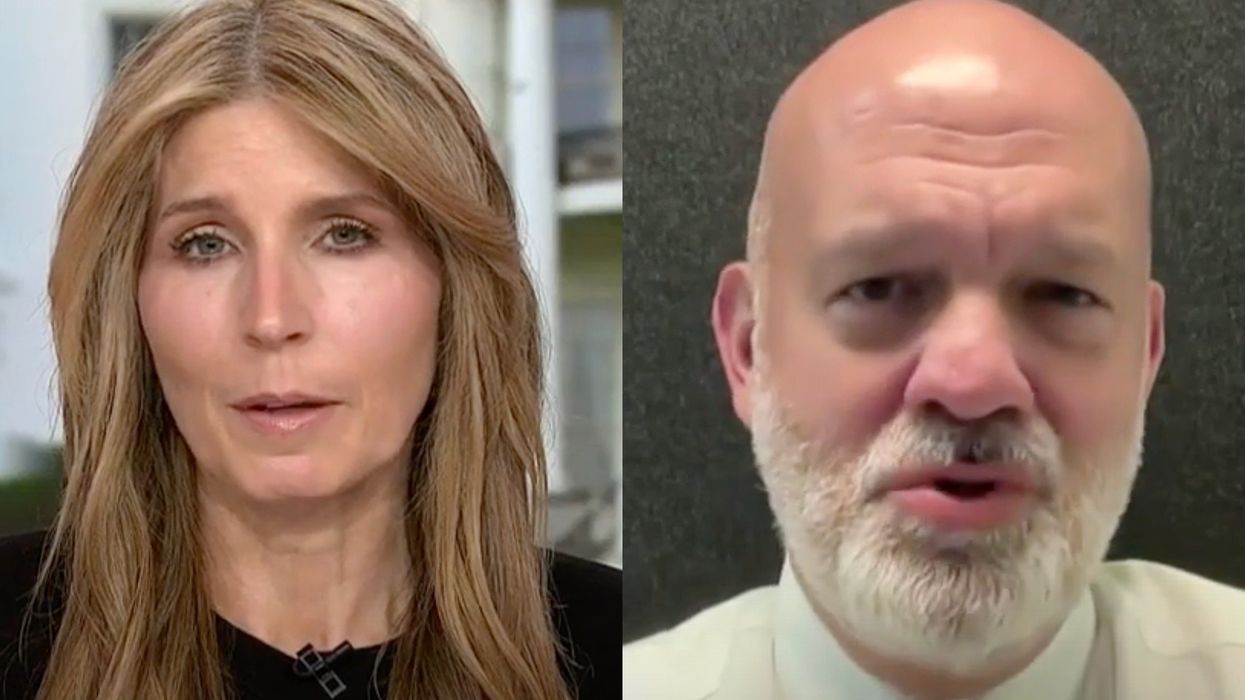
MSNBC host Nicolle Wallace and Financial Times columnist Robert Armstrong on MSNBC on May 29, 2025 (Image: Screengrab via MSNBC / YouTube)

May 29, 2025 
ALTERNET

Financial Times columnist Robert Armstrong initially coined the acronym "TACO," which stands for "Trump Always Chickens Out," earlier this month. The acronym caught on and President Donald Trump snapped at a reporter who brought it up during a press conference this week. Now, Armstrong is worried of the implications.

During a Thursday panel discussion on MSNBC's "Deadline: White House," conservative journalist Charlie Sykes opined that Trump may end up doubling down on his trade war as a means of proving the "TACO" nickname wrong, thus triggering a global recession in the process. Host Nicolle Wallace then pivoted from Sykes' point to ask Armstrong about whether there's truth to the theory that a "humiliated" Trump could end up permanently damaging the global economy out of spite. She also noted that Trump himself has given weight to the nickname by how frequently he changes his mind from one day to the next.

"The truth of the number of times that he blinked is a data point that exists in public," Wallace said. "We know no investigative journalist dug up the number of times Trump balked because of the poor reception to his tariffs. And they were announced. They were paused. They were raised. They were dropped. They were put back in. They were pulled off. 100 deals in 100 days. There were none. Now there's a framework for one with the UK and the beginning of talks in Switzerland with China. No framework, no deal."

Armstrong responded by saying he knew the "TACO" acronym was "kind of a dumb joke" but that it "stuck" because it has "an element of truth." However, he added that he didn't like the suggestion that his joke in a column could be the catalyst for a global recession due to the risk of angering a sensitive president.

"I meant to make a joke, not cause a recession. But there is a serious question here ... about a world in which you're not allowed to make fun of the president," Armstrong said. "He's the president! I am an inky-fingered hack making a dumb joke. I'm the one who's supposed to behave carefully around the president of the United States? How did we get here?"

Wallace countered that if the economy did slide into a recession, that it wouldn't be Armstrong's fault, but that it would be due to both Trump's policies and a failure of those around him to rein in his worst impulses. Armstrong then made a comparison to former President Joe Biden, and referenced reports that his inner circle kept the octogenarian president away from even other White House staffers to hide his condition.

"Treating the current president with kid gloves by his advisers or by the press or by anybody else is a bad idea. It was a bad idea with a Democrat. It's a bad idea with a Republican. we shouldn't do it," Armstrong said, adding that Biden at least had a "sense of humor" that would prevent him from causing economic harm over a joke.

Watch the segment below, or by clicking this link.


This new nickname must become everyone's motto — because it will drive Trump crazy


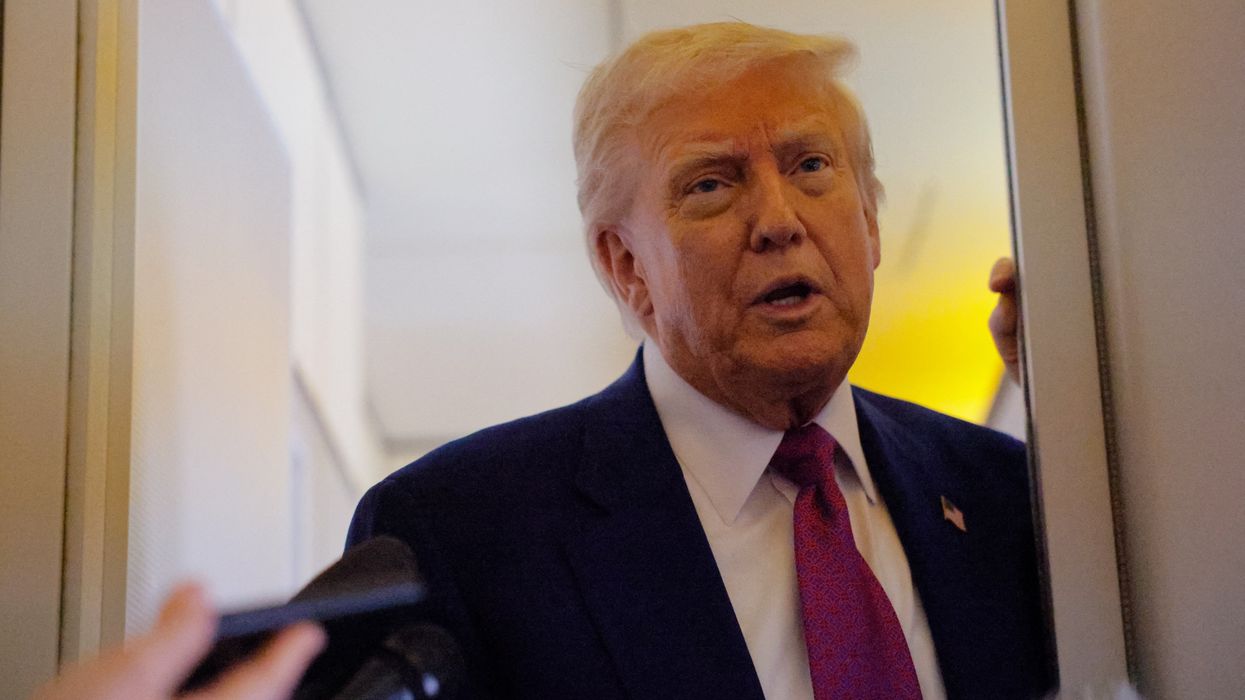
U.S. President Donald Trump talks to reporters aboard Air Force One, en-route to Abu Dhabi, United Arab Emirates, May 15, 2025. REUTERS/Brian Snyder

May 29, 2025 

Wall Street traders, who are almost feral in sniffing out patterns in which to make money, are using the term coined by Financial Times columnist Neil Armstrong, “the TACO trade”— which stands for “Trump Always Chickens Out”—regarding Trump threatening tariffs, sending the markets plummeting, only to back down later, causing markets to rise.

Trump became agitated yesterday in the Oval Office when a reporter asked him about TACO . At first, he was bewildered, not seeming to know about it, but soon he became angry, calling it a “nasty question.” That’s how you know something is true, when Trump is exposed— humiliated about the truth surfacing—and soon becomes furious.

We can all learn from the market traders and from China and others beating Trump at his own game. In fact, TACO should be a motto—and an ad campaign—for Democrats, because it’s both empowering to those taking on Trump, and it also gets under his skin big time.

There’s no question Trump is engaged in mass corruption and destruction to our democracy, causing what is seemingly irreparable harm. But Trump is also losing a lot too.

Those two things can be true at once. I don’t have to go through all the ways Trump is engaged in corruption—from crypto dinners to pardons—and the ways he’s taken a sledgehammer to our democracy. We’re all seeing it happen every day.

At the same time, those who’ve chosen to fight Trump rather than capitulate find it’s the only way to respond, and they’re often winning. Trying to strike a deal with Trump—as Columbia University and some law firms did—only has him extorting you further, like the mob, as former FBI director James Comey put it last week. Trump is a classic narcissist who doesn’t really believe in striking “a deal.” That involves give and take, calibration and compromise, with both sides coming out on top or able to tell their supporters that.

Trump doesn’t want compromise, and always wants to be the only winner. He wants domination, and once he knows he can dominate you—such as when you agree to his supposed “deal”—he will keep dominating you, as Columbia and the cowardly law firms are finding out. He now wants to control Columbia’s entire curriculum, and he’s making the law firms that struck “deals” with him represent shady MAGA clients, after they agreed to give him and his “causes” billions in pro bono work.

So the only way is to fight him—you have nothing to lose and everything to gain—because more often not he caves in, or is a dealt a blow in court, as happened with three with law firms in recent weeks that said no to him.

China, unlike some other countries, refused to bow to Trump, and retaliated with tariffs. As it escalated dramatically, it was Trump who backed down, dropping the 145% tariffs, with China making no concessions of any kind. TACO was in play.

Even Vladimir Putin, in a terrible example, knows how to play Trump, aware that Trump would never get tough. So far, horribly, it’s TACO again.

Those who fought Trump have also often won in court. Trump had a series of losses in recent days, including the stunning defeat at the U.S. Court of International Trade yesterday. The three-judge panel—an Obama appointee, a Reagan appointee, and Trump appointee—unanimously threw out most of his tariffs. The administration is, of course, appealing, but the states and businesses that brought cases have had a big win, and legal experts believe that the Supreme Court will uphold the ruling.

There was no way that Trump’s using emergency powers granted by Congress decades ago to impose tariffs for an unlimited amount of time was constitutional. But unless you decide to fight it, a court won’t declare it.

The universities and law firms that capitulated to Trump worried they’d suffer losses if they didn’t. Yet, their reputations are now in tatters, a major loss. And the law firms have lost major clients, and are losing attorneys, who are leaving for other firms or starting their own firms. Meanwhile, Harvard has the public behind it in its fight, and the law firms that fought Trump are empowering others.

Trump’s goal, again, is domination, not negotiation and compromise. China and others learned that if you push back, he folds. So, we all should learn from the Wall Street traders’ shorthand—”Trump Always Chickens Out.” It empowers more of us to fight—including major institutions with power and influence, which we need on our side—and it drives Trump crazy.


UK-Israel Free Trade Deal On Hold – OpEd


By 

In the afternoon of Monday, May 19, David Lammy, Britain’s Foreign Secretary, rose to his feet in the House of Commons and read out a statement condemning how the war in Gaza was being conducted by the Israeli government.


“Netanyahu’s government is planning to drive Gazans from their homes into a corner of the Strip to the south,” he said, “and permit them a fraction of the aid that they need…The planned displacement of so many Gazans is morally unjustifiable, wholly disproportionate and utterly counter-productive.”

“We cannot stand by in the face of this new deterioration,” said Lammy. “Therefore today, I am announcing that we have suspended negotiations with this Israeli government on a new free trade agreement…The Netanyahu government’s actions have made this necessary.”

 ​Clearly Britain’s Labour government has little sympathy with Israel’s Likud-led coalition​. Nevertheless it condemns Hamas’s bloodthirsty incursion into Israel on October 7, 2023.  UK ministers, from the prime minister down, reiterate time and again their support for Israel’s right to defend itself, and continue to demand that Hamas release all the hostages it snatched during its pogrom. Beyond this, however, there seems little, if any, empathy with the formidable problems that Israel faces, or with its efforts to deal with them.

The left wing of Britain’s Labour party is notoriously anti-Israel – a euphemism, many believe, for frank antisemitism.  This was demonstrated beyond any doubt during the five years the party was led by the radical Jeremy Corbyn (2015-2020).  In May 2019 the Equality and Human Rights Commission (EHRC), a body legally charged with promoting and enforcing the UK’s equality and non-discrimination laws, launched a formal investigation into whether Labour had “unlawfully discriminated against, harassed or victimized people because they are Jewish.”

The legacy Corbyn bequeathed to Sir Keir Starmer, who succeeded him as Labour leader and is now Britain’s prime minister, was the EHRC report, published in October 2020.  In it the EHRC determined that the Labour party had indeed been “responsible for unlawful acts of harassment and discrimination” against Jewish people.  As a result, the party was legally obliged to draft an action plan to remedy the unlawful aspects of its governance. 


But pro-Palestinian sentiment was too deeply embedded in the Labour party for ​the leadership to ignore​ it.  The manifesto on which Starmer’s Labour party fought the July 2024 general election declared:  “Palestinian statehood is the inalienable right of the Palestinian people.”  It went on to commit a future Labour government to recognize a Palestinian state “as a contribution to a renewed peace process which results in a two-state solution, with a safe and secure Israel alongside a viable and sovereign Palestinian state.”

 Following the Hamas attack of October 7, Starmer stood shoulder-to-shoulder with then-UK prime minister Rishi Sunak, then-US president Joe Biden, and most Western political leaders, in proclaiming Israel’s right to defend itself.  His stance was not acceptable to two entities he faces on his own political terrain, and this remains his problem​ today.  One is the powerful hard-left element within his party; the other is the strong Muslim presence in some traditionally Labour constituencies.

Four years ago there were some 4 million Muslims in the UK, representing about 6% of the population.  The figures are almost certainly higher than that today, and in certain areas represent a significant proportion of the voting electorate.

Labour’s pro-Palestine component began to assert itself on October 7 itself, with scattered voices approving the Hamas attack.  The collateral civilian deaths and casualties arising from the IDF campaign were enough for the party’s support for Israel to begin to slide. Then came the first test of electoral opinion in the UK since October 7.  On May 2, 2024 local elections took place across the country.  The results, no doubt to Starmer’s dismay, indicated that Labour’s position on the Israel-Hamas war had dented its support in Muslim areas.  A BBC analysis found that in areas with a substantial Muslim presence Labour’s share of the vote had slipped by 21% compared with the last time the seats were contested.

Ali Milani, chair of Labour Muslim Network, said Labour’s positioning on Gaza “is going to have a serious electoral consequence.” 

He was not wrong.  In the general election in July 2024, which Labour won with a landslide, five independent pro-Palestine candidates unseated Labour incumbents in key constituencies. Four were Muslim; one was Jeremy Corbyn.

In the aftermath, Corbyn announced plans to form a parliamentary alliance with the four independent Muslim MPs. Th​is permanent anti-Israel bloc in the House of Commons, supported by many radical Labour MPs, has ​resulted in increased advocacy for Palestinian rights, and increased pressure on the UK’s foreign policy decisions related to the Middle East.  It has contributed to the decision announced by Lammy to suspend the negotiations aimed at securing a comprehensive free trade agreement (FTA) between the UK and Israel.

A​s the UK left the EU, it signed a continuity agreement with Israel​ to ensure uninterrupted trade between the two countries.  Coming into effect on 1 January 2021, ​it coincided with the end of the Brexit transition period​ and maintain​ed the terms of the EU-Israel Association Agreement. ​ ​On July 20, 2022​ the UK and Israel embarked on the negotiations for a FTA ​. ​With both parties ​world leaders in hi-tech, the negotiators aimed​ ​particularly to enhance collaboration in technology, innovation, and digital services.

The talks were conducted against the backdrop of flourishing ​UK-Israel bilateral trade.  There had been year-on-year growth from 2014 to 2018, when the figure reached $10.5 billion​.  Subsequently both Brexit and Covid caused the figure to fluctuate​. The best estimate of UK-Israel bilateral trade in 2024 is $7.2 billion.

The suspension of negotiations for a UK-Israel FTA will not necessarily have a major impact in the short term. Trade between the UK and Israel will continue under the UK-Israel Trade and Partnership Agreement, concluded at the time of Brexit.  Businesses will still be able to trade with relative certainty, and supply chains will remain intact. What might be affected is investor confidence.

If the suspension is maintained, however, the consequences for both parties could be significant.  The half-formalized FTA aimed to modernize and expand the​ bilateral  trade framework to cover areas such as digital trade, cybersecurity, med-tech, green energy, AI, intellectual property rights, fintech, optics and lasers, aerospace and defense, sustainability and government procurement.  Without the developmental boost that the FTA was calculated to provide, growth in these hi-tech areas, in which Israel is a world leader, will certainly slow down.  The UK, no less than Israel,​ will lose out.​  And so ​will the world at large​. 

Neville Teller

Neville Teller's latest book is ""Trump and the Holy Land: 2016-2020". He has written about the Middle East for more than 30 years, has published five books on the subject, and blogs at "A Mid-East Journal". Born in London and a graduate of Oxford University, he is also a long-time dramatist, writer and abridger for BBC radio and for the UK audiobook industry. He was made an MBE in the Queen's Birthday Honours, 2006 "for services to broadcasting and to drama."
Israel aid blockage making Gaza 'hungriest region on earth', UN says


Issued on: 30/05/2025 -

Israel is blocking all but a trickle of humanitarian aid from entering Gaza, the United Nations Office for the Coordination of Humanitarian Affairs (OCHA) said, with almost no ready-to-eat food entering what its spokesperson described as "the hungriest place on earth".


US truce proposal 'so ambiguous it gives Israel leeway to effectively not act in good faith'

Issued on: 30/05/2025 -


Israel has accepted a new U.S. proposal for a temporary ceasefire with Hamas, while Hamas officials gave the Israeli-approved draft a cool response. Meanwhile, Gaza is "the hungriest place on Earth", the United Nations is warning that the Palestinian territory's entire population was now at risk of famine. For in-depth analysis and a deeper perspective, FRANCE 24's Erin Ogunkeye welcomes Tahani Mustafa, International Crisis Group’s Senior Palestine Analyst.


REST IN POWER

Abortion pill inventor Etienne-Emile Baulieu dies aged 98

Paris (AFP) – French scientist Etienne-Emile Baulieu, the inventor of the abortion pill, died at the age of 98 at his home in Paris on Friday, his wife told AFP.


Issued on: 30/05/2025 - 

Baulieu was demonised by US anti-abortion groups who accused him of inventing a 'death pill'

 © JOEL SAGET / AFP


The doctor and researcher, who achieved worldwide renown for his work that led to the pill, had an eventful life that included fighting in the French resistance and becoming friends with artists such as Andy Warhol.

"His research was guided by his commitment to the progress made possible by science, his dedication to women's freedom, and his desire to enable everyone to live better, longer lives," Baulieu's wife Simone Harari Baulieu said in a statement.

French President Emmanuel Macron paid tribute to his life, calling him "a beacon of courage" and "a progressive mind who enabled women to win their freedom".

"Few French people have changed the world to such an extent," he added in a post on X.

Baulieu's most famous discovery helped create the oral drug RU-486, also known as mifepristone, which provided a safe and inexpensive alternative to surgical abortion to millions of women across the world.

For decades, he pushed governments to authorise the drug, facing fierce criticism and sometimes threats from opponents of abortion.

When Wyoming became the first US state to outlaw the abortion pill in 2023, Baulieu told AFP it was "scandalous".

Then aged 96, Baulieu said he had dedicated a large part of his life to "increasing the freedom of women," and such bans were a step in the wrong direction.

On news of his death, French Equality Minister Aurore Berge passed on her condolences to Baulieu's family, saying on X he was "guided throughout his life by one requirement: human dignity."
'Fascinated by artists'

Born on December 12, 1926 in Strasbourg to Jewish parents, Etienne Blum was raised by his feminist mother after his father, a doctor, died.

He changed his name to Emile Baulieu when he joined the French resistance against Nazi occupation at the age of 15, then later adding Etienne.

After the war, he became a self-described "doctor who does science," specialising in the field of steroid hormones.

Invited to work in the United States, Baulieu was noticed in 1961 by Gregory Pincus, known as the father of the contraceptive pill, who convinced him to focus on sex hormones.

Back in France, Baulieu designed a way to block the effect of the hormone progesterone, which is essential for the egg to implant in the uterus after fertilisation.

This led to the development of mifepristone in 1982.

Dragged before the courts and demonised by US anti-abortion groups who accused him of inventing a "death pill", Baulieu refused to back down.

"Adversity slides off him like water off a duck's back," Simone Harari Baulieu told AFP.

"You, a Jew and a resistance fighter, you were overwhelmed with the most atrocious insults and even compared to Nazi scientists," Macron said as he presented Baulieu with France's top honour in 2023.

"But you held on, for the love of freedom and science."

In the 1960s, literature fan Baulieu became friends with artists such as Andy Warhol.

He said he was "fascinated by artists who claim to have access to the human soul, something that will forever remain beyond the reach of scientists."
Alzheimer's, depression research

Baulieu kept going into his Parisian office well into his mid-90s.

"I would be bored if I did not work anymore," he said in 2023.

His recent research has included trying to find a way to prevent the development of Alzheimer's disease, as well as a treatment for severe depression, for which clinical trials are currently underway across the world.

"There is no reason we cannot find treatments" for both illnesses, he said.

Baulieu was also the first to describe how the hormone DHEA secreted from adrenal glands in 1963.

He was convinced of the hormone's anti-ageing abilities, but drugs using it only had limited effects, such as in skin-firming creams.

In the United States, Baulieu was also awarded the prestigious Lasker prize in 1989.

After his wife Yolande Compagnon died, Baulieu married Simone Harari in 2016.

He leaves behind three children, eight grandchildren and nine great-grandchildren, according to the statement released by his family.

© 2025 AFP
Hunger-striking mum of jailed UK-Egyptian close to death: family

London (AFP) – The mother of jailed Egyptian-British activist Alaa Abdel Fattah is close to death after 242 days on hunger strike, her daughter warned Friday.

Issued on: 30/05/2025 - 

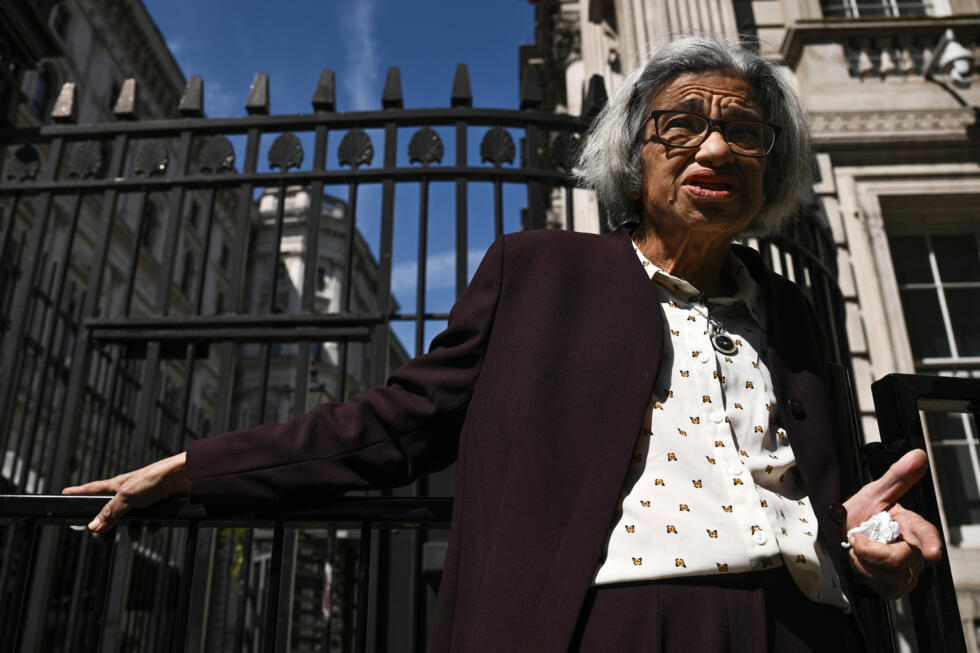
Sanaa Seif, sister of jailed activist Alaa Abdel Fattah, speaking to reporters outisde the London hospital where her mother was admitted amid her hunger strike 
© BENJAMIN CREMEL / AFP


Laila Soueif, 69, was hospitalised Thursday in London with "critically low" blood sugar, having resumed her full hunger strike last week.

Doctors gave "her proteins that help the body produce glucose", her anxious daughter Sanaa Seif said outside St Thomas hospital in London.

"It worked for a couple of hours" but the "bottom line is, we're losing her, and... there is no time," Seif added, saying her mother was still refusing to accept glucose.

UK Prime Minister Keir Starmer "needs to act now, not tomorrow, not Monday. Now, right now," she said.

"It's a miracle that we still have her, I'm really proud of her, and I want to remind Keir Starmer (of) his promise to us."

Soueif's son Abdel Fattah was arrested in Egypt in September 2019 and sentenced to five years in prison on charges of "spreading false news" after sharing a Facebook post about police brutality.

The 43-year-old writer and activist has become a symbol of the plight of thousands of political prisoners languishing in Egyptian jails.

A United Nations panel of experts on Wednesday determined his detention was arbitrary and illegal and called for his immediate release.

Laila Soueif has been on hunger strike for 242 days calling for his release by the Egyptian authorities © Ben STANSALL / AFP

Soueif has been on hunger strike since September 29, 2024, the day her son was expected to be released after completing his five-year prison sentence.

Abdel Fattah, who has spent most of the past decade behind bars, has also been on hunger strike himself since March 1 after learning his mother had been hospitalised with dangerously low blood sugar and blood pressure.

Following her February hospitalisation, Soueif decided to ease her strike after Starmer said he had pressed for her son's release in a call with Egyptian President Abdel Fattah al-Sisi.

She began consuming 300 calories a day through a liquid nutritional supplement, still going without food until last week, when she returned to consuming only rehydration salts, tea without sugar and vitamins.

Her family says she has lost over 40 percent of her bodyweight since September.

Last week, Starmer's office again said the prime minister had pressed for Abdel Fattah's release in a call with Sisi.

A key figure in the 2011 uprising that toppled longtime autocrat Hosni Mubarak, he has been detained under successive administrations since.

Soueif's daughter said she had been in contact with the UK foreign ministry. "They know she's dying. They know in detail how she's dying," she said, visibly upset.

A foreign ministry spokesperson told AFP they were "concerned to hear of Laila's hospitalisation" and continued to press for Abdel Fattah's release.

© 2025 AFP
Canada growth up but Trump tariffs starting to hurt

Ottawa (AFP) – Canada's latest growth figures, released Friday, were better than expected, but also highlighted weaknesses in the economy as the effects of a trade war launched by US President Donald Trump began to take hold.


Issued on: 30/05/2025 -

Canadians have seen exports surge but lower household spending as US President Donald Trump's tariffs begin to bite, new government figures show 
© Katherine KY Cheng / GETTY IMAGES NORTH AMERICA/AFP

The nation has been shaken by the mercurial Republican billionaire's repeated tariff threats -- and his targeting of its automotive, steel and aluminum sectors in particular with 25 percent levies.

The protectionist policy has fractured longstanding relations between the two neighbors that had seen a progressive melding of their supply chains over decades.

The Canadian economy grew by 2.2 percent in the first three months of 2025, as exports surged to try to get ahead of the US tariffs, according to the national statistical agency.

Most analysts had expected only modest growth.


The rise was largely driven by exports and a buildup in business inventories mostly by wholesalers, said Statistics Canada.

But lower household spending in the quarter suggests the "domestic economy looked very frail," Desjardins analyst Royce Mendes said in a research note.

He noted the "boost in outbound shipments was the result of US buyers trying to get ahead of tariffs" imposed by Trump.

At the same time, domestic demand "stagnation points to a disappointing underlying growth rate relative to the already-tempered expectations," he said.

TD Economics senior economist Andrew Hencic agreed, saying: "The top line measure would suggest the Canadian economy continues to chug along at a decent clip, but digging beneath the surface suggests otherwise."

"Trade tensions and the uncertainty they heaped on the economy have started to show through on activity," he said, with consumers pulling back on spending.

Trump had announced -- then halted, pending negotiations -- several levies on Canadian imports into the United States, while Canada hit back with counter tariffs.
'Worrying signs'

Canada, whose economy is heavily reliant on trade, sends about 75 percent of its exports to its southern neighbor.

According to Statistics Canada, exports led by passenger vehicles and industrial machinery rose 1.6 percent in the first quarter of 2025.

Imports also increased in the first three months of the year.

Household spending, however, slowed 0.3 percent after rising in the last three months of 2024.

The GDP figure is the last economic indicator before Canada's central bank on Wednesday makes its next interest rate announcement.

That decision is going to be "a close call," commented Nathan Janzen of RBC Economics. He predicted the Bank of Canada would continue to hold its key lending rate steady.

The central bank in April paused a stream of recent rate cuts at 2.75 percent.

Janzen said the economy has shown itself to be "relatively resilient relative plunging consumer and business confidence."

But he acknowledged "worrying signs of softening" in the labor market, with tens of thousands of manufacturing jobs shed last month.

Preliminary estimates indicate the economy would expand only slightly in April at the start of the second quarter.

Hencic said this, combined with rising unemployment, suggests that "domestic demand has all but petered out."

But he added, "With the tailwinds from last year's rate reductions fading, the Bank of Canada should have room to deliver two more rate reductions this year and give the economy a bit more breathing room."

Prime Minister Mark Carney, elected at the end of April, promised to radically transform the Canadian economy, the world's ninth largest economy, by focusing particularly on internal trade and energy.

But he faces pressures to act quickly as several auto companies have already announced temporary production reductions in one of Canada's largest industrial sectors.

© 2025 AFP


World Boxing introducing gender tests for all boxers, targets Khelif


Paris (AFP) – World Boxing announced on Friday it will introduce mandatory gender testing to determine the eligibility of male and female athletes wanting to take part in its competitions.

CHECKING ON MALES TO SEE IF THEY WERE FEMALE ONCE, I DOUBT IT.


Issued on: 30/05/2025 
Algerian boxer Imane Khelif celebrates winning gold at the 2024 Olympics in Paris © MOHD RASFAN / AFP/File


The international federation said it was introducing the policy after the furore surrounding boxers including women's welterweight gold medallist Imane Khelif of Algeria at the Paris Olympics last year.

World Boxing will organise the boxing competition at the 2028 Los Angeles Olympics after being granted provisional recognition by the International Olympic Committee.

World Boxing said it had informed the Algerian Boxing Federation that Khelif would have to undergo the test if she wanted to compete at the Eindhoven Box Cup in the Netherlands on June 5-10.

"World Boxing has written to the Algerian Boxing Federation to inform it that Imane Khelif will not be allowed to participate in the female category at the Eindhoven Box Cup or any World Boxing event until Imane Khelif undergoes sex testing," it said in a statement.

Under the new policy, all athletes over 18 that want to participate in a World Boxing owned or sanctioned competition will need to undergo a PCR, or polymerase chain reaction genetic test, to determine what sex they were at birth and their eligibility to compete.

The PCR test is a laboratory technique used to detect specific genetic material, in this case the SRY gene, that reveals the presence of the Y chromosome, which is an indicator of biological sex.

The test can be conducted by a nasal or mouth swab, or by taking a sample of saliva or blood.

National federations will be responsible for testing and will be required to confirm the sex of their athletes when entering them into World Boxing competitions by producing certification of their chromosomal sex, as determined by a PCR test.

Khelif said in March: "For me, I see myself as a girl, just like any other girl. I was born a girl, raised as a girl, and have lived my entire life as one."

The 26-year-old is targeting a second gold medal at the 2028 Games in Los Angeles after her triumph in Paris.

Her success, along with that of Taiwan's Lin Yu-ting, sparked a raging gender eligibility debate, with high-profile figures such as US President Donald Trump and Elon Musk weighing in.

Khelif and Lin were disqualified from the International Boxing Association's 2023 world championships after the organisation, the long-standing governing body of amateur boxing, said they had failed gender eligibility tests.

The IOC has severed links with the IBA over financial, governance and ethical concerns. The IBA is led by the Kremlin-linked Russian Umar Kremlev.

Last month the IOC provisionally recognised World Boxing as the body to oversee the sport at future Games.

© 2025 AFP