Saturday, June 07, 2025

Russia's large-scale attacks on Ukrainian cities leave trail of destruction


Copyright Evgeniy Maloletka/Copyright 2025 The AP. All rights reserved

By Jerry Fisayo-Bambi with EBU
Published on 07/06/2025 - 

Ukrainian President Volodymyr Zelensky said Friday's strikes killed at least four people and injured dozens. The attacks targeted the capital, Kyiv, the Ternopil region in the northwest of the country, and the city of Lutsk.

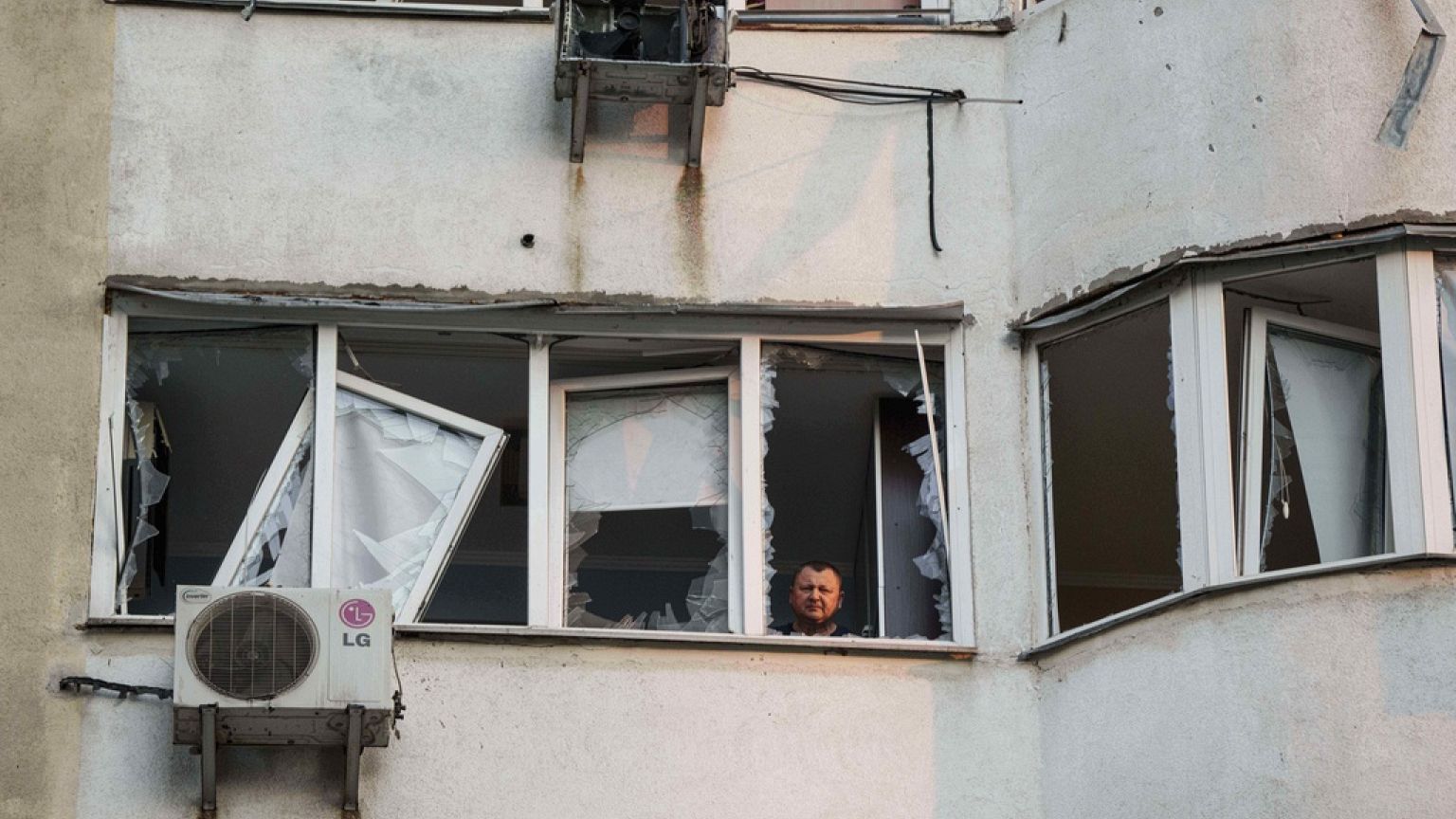
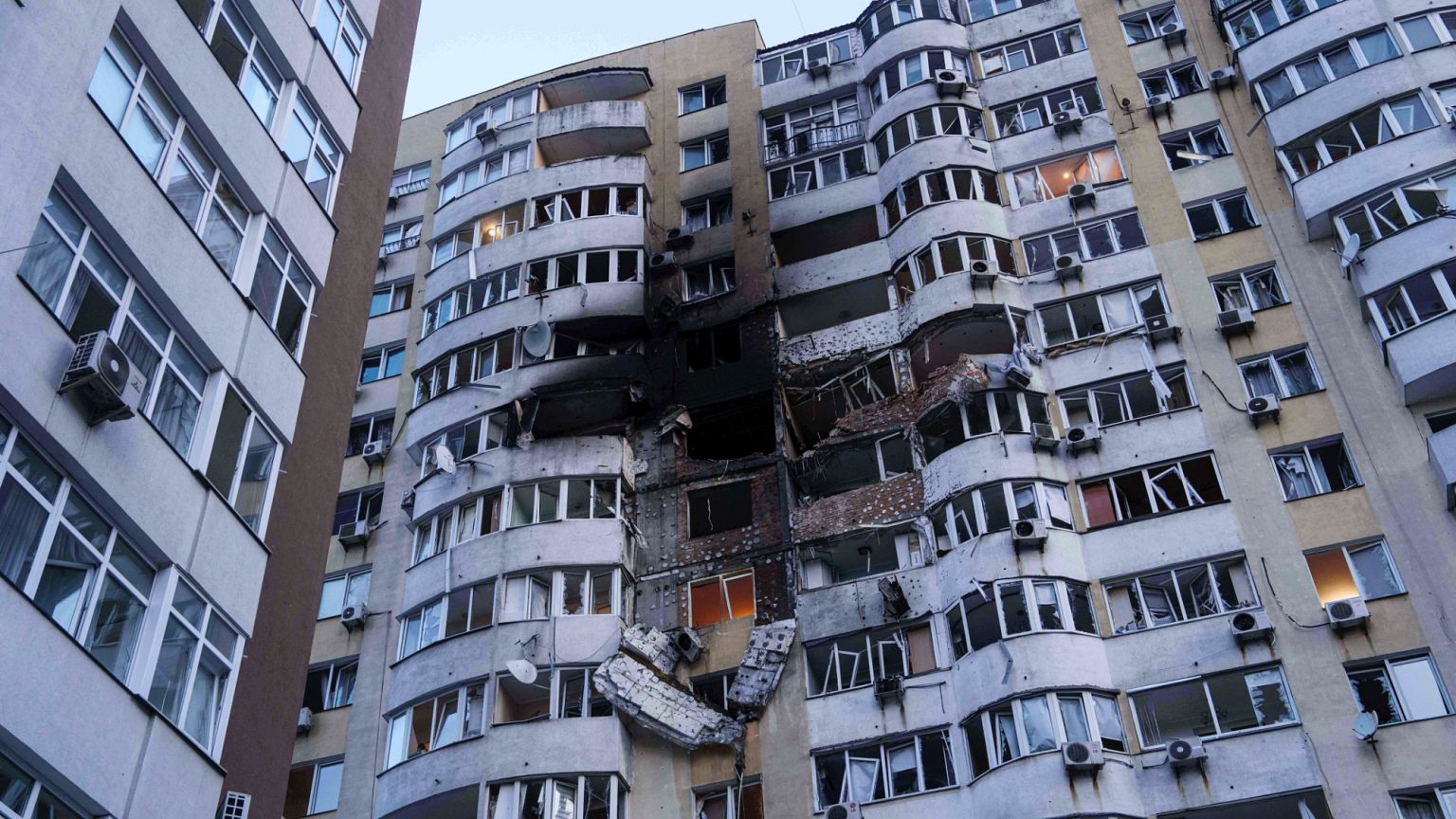
A barrage of Russian strikes on Ukraine early Friday left a trail of destruction visible across several cities in the country, where some buildings and properties were destroyed.

Ukrainian President Volodymyr Zelensky said Friday's strikes killed at least four people and injured dozens. The attacks targeted the capital, Kyiv, the Ternopil region in the northwest of the country, and the city of Lutsk.

One person was killed in Lutsk, and several were injured following a Russian missile and drone strike on the northwestern city in the Volyn region.

According to the Ukrainian authorities, 15 attack drones and six cruise missiles were directed at the city in the early hours of Friday, triggering explosions and structural collapses in several neighbourhoods.

Some residents reported three powerful blasts, likely due to direct hits or the work of air defence systems.

"It started around 4:30 a.m. I saw with my own eyes how things were flying there and exploding. I was standing right here, and the blast wave pushed us into the hallway. Most people ran to the shelter." Yevheniia Kamienieva, a resident of Lutsk, said.

"According to eyewitnesses who were outside, since unfortunately we don't have functional shelters here, it was a missile strike," Alisa Yerofieieva, head of the condominium association in the city, said.

Rescuers in the city said at least 16 people sustained various injuries from the attacks, which sparked numerous fires.

Ukraine's State Emergency Service (SES) reported that the latest Russian strikes had targeted regions across Ukraine, including Kyiv, where three of those killed were rescuers.

With the explosions lasting for several hours overnight, many people in the Ukrainian capital took shelter in metro stations. The SES said several administrative buildings, industrial facilities, and vehicles were also damaged.
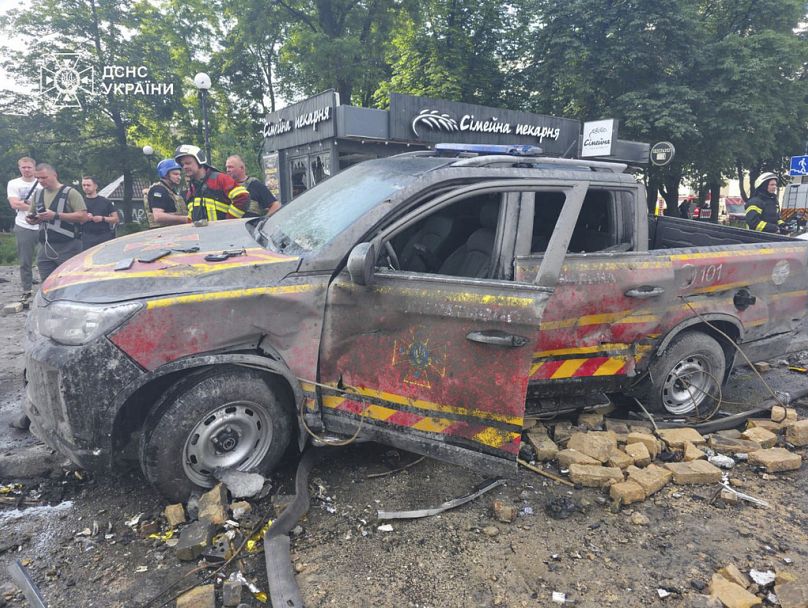
In this photo provided by the Ukrainian Emergency Service, an emergency vehicle damaged in Russia's missile attack is seen in the street in Kyiv, Ukraine, Friday, June 6, 2025AP/Ukrainian Emergency Service via AP

Strikes were also reported in the city of Sloviansk, according to Donetsk region police. The police said Russian drones hit Sloviansk, damaging buildings, over a dozen vehicles and a service station. Fortunately, no casualties were reported, the police said.

The strikes, according to Russia's defense ministry, were in retaliation for "terrorist acts by the Kyiv regime." Russia claimed it targeted only military installations, something Kyiv disputes with evidence of mounting civilian casualties on Ukraine's side.


Moscow's attacks came just days after US President Donald Trump said Russian President Vladimir Putin had said "he will have to respond" following Ukraine's Operation Spider's Web, which targeted Russian warplanes at military airbases last weekend.

The covert operation was described as one for the “history books” by Ukraine’s president, who blamed Russia's refusal of a proposed ceasefire in May for the latest escalation in the three-and-a-half-year-old war.

Russian ‘retaliatory’ attack could have been worse if it wasn’t for Kyiv’s ‘preemptive’ strikes


Copyright AP Photo

By Sasha Vakulina
Published on 06/06/2025


Russia’s overnight attack on Ukraine could have been worse if Ukrainian forces hadn’t struck Russian missile concentration sites in Russia right before. Moscow was threatening with "retaliation" for Kyiv’s daring Operation "Spiderweb" last weekend, but Kyiv says it launched ‘preemptive’ strikes.

Ukraine’s defence forces claim to have launched a "preemptive" strike as Russia was preparing for a large-scale drone and missile attack on Ukrainian cities.

The General Staff reported that Ukraine hit a Russian airfield and military facilities on the eve of Moscow’s massive attack overnight on Friday.

Kyiv says on the night of 6 June it hit Engels airfield in Russia’s Saratov region, a place of concentration of Russian aircraft left over from the Ukrainian Security Service (SBU) operation.

Also in the Saratov region, numerous hits were confirmed on at least three fuel reservoirs on the eve of a Russian attack, followed by a large-scale fire at the facility, Kyiv reported.

Apart from that the airfield of Dyagilevo in Russia’s Ryazan region was it. Kyiv says this is where air refuelling and escort fighters are based and used to support missile strikes on the territory of Ukraine.

Earlier on Thursday, Ukraine also hit a Russian missile base in the Bryansk region, damaging Iskander missile launchers, the Ukrainian military said.

The targeted unit near the city of Klintsy had attempted to fire on Ukrainian territory — likely aiming at Kyiv — before it was hit, according to the General Staff of Ukraine’s Armed Forces.

The Iskander is a short-range ballistic missile system used by Moscow for precision strikes against military and infrastructure targets. Overnight on Friday Russia launched six Iskander ballistic missiles at Ukraine — and Kyiv managed to intercept four of them.

Russia’s Bryansk region borders Ukraine’s Sumy region, which has become a major target of Moscow’s assault operations.
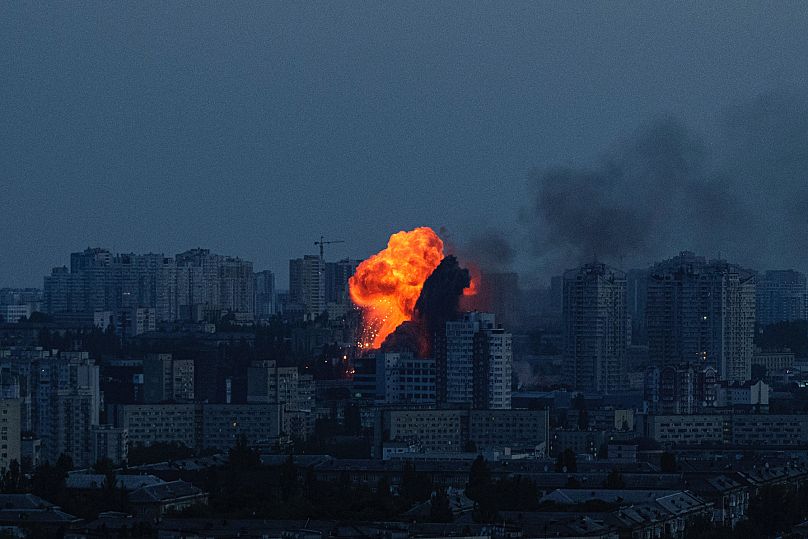
An explosion is seen after a Russian air strike on Kyiv, Ukraine, on Friday, June 6, 2025.AP Photo

Moscow’s ‘retaliation’ for Operation ‘Spiderweb’

Three days after Ukraine’s daring Operation "Spiderweb" against Russian military airfields and heavy bombers, Russian President Vladimir Putin threatened to "retaliate" against Ukraine, which he invaded over three years ago, with Moscow launching daily missile and drone strikes against Ukrainian cities and civilian targets since then.

US President Donald Trump said Putin told him about it during the phone call on Wednesday.

The Russian president did not make any public comments about Kyiv’s operation since Sunday, when Ukraine hit over 40 Russian bombers at four airfields with the FPV drones launched from Russian territory near the airfields.
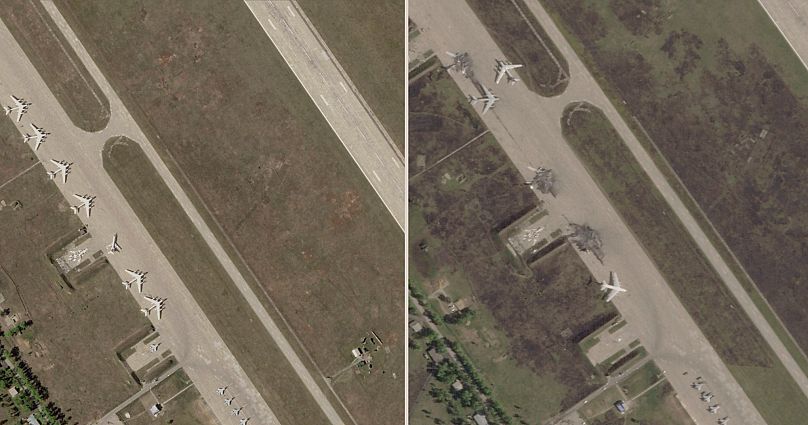
This photo combo from satellite images from Planet Labs PBC shows Belaya Air Base before a Ukrainian drone attack and damage after. (Planet Labs PBC via AP)AP Photo

On Wednesday, Ukrainian President Volodymyr Zelenskyy said Kyiv would not have launched its drone strike on Russian strategic bombers if Moscow had accepted Ukraine's calls for a ceasefire.

Ukraine has repeatedly urged Russia to accept the US-backed 30-day ceasefire proposal, which Kyiv says could be the first step to putting an end to Russia’s all-out war against Ukraine.

Commenting on Russia’s "retaliatory" attack on Friday, Ukraine’s president said that "Russia’s doesn’t change its stripes – another massive strike on cities and ordinary life," pointing to Moscow’s regular attacks on civilians in Ukraine.

“Russia must be held accountable for this. Since the first minute of this war, they have been striking cities and villages to destroy life,” Zelenskyy added, calling for more pressure to be put on Moscow by Ukraine’s western partners, specifically the US.

Related

Trump has repeatedly threatened to impose sanctions on Russia if he does not see progress in peace talks between Kyiv and Moscow, but hasn’t done it.

When asked by reporters in the Oval Office on Thursday as to whether a deadline exists for the implementation of sanctions, Trump replied: "Yes, it's in my brain the deadline," without specifying a date.

“We’ve done a lot together with the world to enable Ukraine to defend itself. But now is exactly the moment when America, Europe, and everyone around the world can stop this war together by pressuring Russia," Zelenskyy said.

"If someone is not applying pressure and is giving the war more time to take lives – that is complicity and accountability. We must act decisively.”


Poland’s fertility rate sinks to just below 1.1 in 2024, a new historic low

Poland’s fertility rate sinks to just below 1.1 in 2024, a new historic low
Poland’s fertility rate sinks to just below 1.1 in 2024, a new historic low / bne IntelliNews
By bne IntelliNews June 6, 2025

Poland’s fertility rate fell to a historic low of 1.099 in 2024, Poland’s statistical office GUS said in a report, which has deepened concerns about the country’s shrinking and ageing population.

The figure marks a steep decline from 1.991 in 1990 and remains well below the replacement rate of 2.1. Only eight countries recorded a lower fertility rate than Poland in 2024, including South Korea (0.7), Singapore, Thailand and Ukraine (all 1.0). Poland’s rate is also below those of Japan (1.2), Germany and the UK (both 1.4) and France (1.6).

Births fell to a postwar low of 252,000 last year, while deaths reached 409,000, making 2024 the twelfth year in a row with more deaths than births. 

Reversing, or barely improving, the situation will be difficult, GUS said in the report, pointing to decades of low fertility and fewer women of reproductive age.

Women had their first child at an average age of 29.1 in 2024, up from 22.7 in 1990. Meanwhile, 23.8% of the population was over retirement age, rising sharply from 12.8% in 1990.

There is no single cause for the fertility drop. The Covid-19 pandemic and the war in Ukraine are recent factors but, in the longer run, Poland’s lack of housing policy and – perhaps most importantly – cultural changes may have played a fundamental role.

Poland also has one of Europe’s strictest abortion laws, which, experts have long said, discourages women from having children at all.

The former Law and Justice (PiS) government introduced pro-family measures like the “500+” child benefit, later raised to “800+”, but admitted in 2020 that they had failed to raise fertility long term.

The current government, in power since December 2023, has kept those payments and introduced measures to help parents return to work. It has also reinstated public funding for IVF.

High immigration levels have partially offset the demographic losses in recent years.

Immigration, however, has become a touchy issue in politics, with politicians from the hard right to the centre speaking out against the influx of immigrants, who they paint as a threat to social cohesion and Poland’s traditional values.

The population decline trend in Poland and other countries of so-called emerging Europe is a long-running phenomenon, threatening a drop in the populations of many countries to levels not seen since the early 20th century.


Google signs deal with Chile for Pacific submarine cable to Asia

Google signs deal with Chile for Pacific submarine cable to Asia
The initiative aims to strengthen Chile's digital connectivity with Asian markets, particularly China, the country's largest trading partner while positioning Chile as a regional technological hub for Latin America. / unsplash
By Mathew Cohen June 5, 2025

Google has inked a groundbreaking agreement with Chile's government to deploy a 14,800km submarine data cable across the Pacific Ocean, connecting Chile with Australia and Asia by 2027. The pact represents the first such deal between the technology giant and a sovereign nation.

“This is the first submarine cable in the South Pacific, so it’s an important commitment,” Transport Minister Juan Carlos Muñoz told journalists following the signing ceremony, as quoted by AP.

The initiative aims to strengthen Chile's digital connectivity with Asian markets, particularly China, the country's largest trading partner while positioning Chile as a regional technological hub for Latin America. Cristian Ramos, head of telecommunications infrastructure for Alphabet's Latin American unit, confirmed the cable would be accessible to other entities, including technology firms operating in Chile.

While total investment figures remain undisclosed, Chilean officials previously estimated project costs between $300mn and $550mn, with Chile contributing $25mn through state-owned partner Desarrollo Pais, according to general manager Patricio Rey.

"This cable not only meets a technical need, but also represents a bet on resilience, diversification of digital routes, and the opening up of new possibilities for international collaboration," Foreign Minister Alberto van Klaveren stated at the signing ceremony in Santiago.

The cable promises diverse applications, from enhancing Asian platform performance like TikTok to supporting real-time astronomical data transmission and mining operations. "Mining companies that have operations in Chile and Australia, by having a direct route, we can think about a shared command centre... where the command centres can support each other," Deputy Secretary of Telecommunications Claudio Araya was quoted by Reuters as saying.

This infrastructure development occurs amid intensifying US-China competition for Latin American influence, with subsea cables becoming critical battlegrounds in their technological rivalry. The project could position Chile strategically in global data flows while potentially attracting additional ventures connecting South America with Asia, fundamentally reshaping the region's digital connectivity landscape.

Hungary breached EU law by restricting LGBTQ content, CJEU adviser says

Hungary breached EU law by restricting LGBTQ content, CJEU adviser says
Organisers of the Budapest Pride said they are planning to move ahead with the event on June 28, despite the ban.

By bne IntelliNews June 6, 2025


Czech finance minister rejects calls for his resignation amid bitcoin scandal embarrassment

Czech finance minister rejects calls for his resignation amid bitcoin scandal embarrassment
Czech finance minister rejects calls for his resignation amid bitcoin scandal embarrassment. / bne IntelliNews
By Albin Sybera June 6, 2025

Czech Minister of Finance Zbyněk Stanjura has rejected opposition calls for his resignation as more embarrassing details emerge from the bitcoin scandal.

The unprecedented scandal has already cost a seat of Stanjura’s ODS party colleague and Minister of Justice, Pavel BlaĹľek, after it was revealed that BlaĹľek’s ministry had accepted CZK1bn (€40mn) in bitcoin from a sentenced drug dealer, Tomáš JiĹ™ikovskĂ˝, who donated the bitcoins after his release from prison in 2021. The donation is under police investigation.

“I view the bitcoin affair as a failure of Minister BlaĹľek and his office, and I repeat again that the Ministry of Finance had nothing to do with the whole process, nor with the Justice resort decision to accept a billion from a drug dealer,” Stanjura wrote on his Twitter social media profile.

Stanjura made the comments following his interview with the country’s online news outlet Seznam Zprávy (SZ), in which he admitted that he knew about BlaĹľek’s plans to accept the suspicious donation, but he tried to talk him out of it.

“I saw a potential political problem in it,” Stanjura told SZ after he stated he had no power to prevent BlaĹľek from accepting the donation.

Stanjura’s words left many observers of the country’s politics in awe, fuelling more speculation about the extent of BlaĹľek’s informal powers in the centre-right cabinet of Petr Fiala. Separately, SZ also reported  that the donated bitcoins arrived from an illegal marketplace, Nucleus, even though the bitcoins were supposed to be legal.

Moreover, Czech Radio (CRo) reported that the Ministry of Justice had already sold some of the bitcoins in 78 auctions between March and May at a 10% discount, marking the first time that a public institution in Czechia sold a cryptocurrency.

Economist Richard Hindls told Czech Radio (CRo) that such bitcoin transactions would not have been possible in the banking sector. “Banks are very careful in this and I am convinced that in this situation they would have acted differently,” Hindls was quoted as saying by CRo.  

Earlier this week, Czechia’s liberal President Petr Pavel addressed the country's parliament and called the ongoing bitcoin scandal “a major problem” harming the country abroad as well. The largest opposition party, populist ANO of billionaire ex-Prime Minister Andrej Babiš, called on the whole cabinet to resign.

BlaĹľek’s resignation comes just four months before the October elections, which are widely expected to be won by ANO, which regularly polls above 30% and has a more than 10% lead ahead of the Fiala-led SPOLU joint list, which is struggling to secure even 20% support.

The scandal could reduce the support for the ruling coalition parties from Fiala’s cabinet, which is already one of the least popular cabinets on record. Meanwhile, several far-right and anti-EU parties are polling above or around the 5% parliamentary threshold, including the stalwart far-right SPD, anti-green Motorists and red-brown STAÄŚILO! (It’s been enough!) list.

While in the cabinet, BlaĹľek had a firm backing from his ODS party colleague, Fiala, which enabled him to weather allegations of meddling in a court case involving ODS politicians, as well as an off-the-record meeting with a Kremlin-linked lobbyist.

BlaĹľek is seen as instrumental in having secured party support for Fiala when he first became chairman of the neoliberal ODS in 2014, a time when ODS was facing an existential crisis after its cabinet, led by Petr NeÄŤas, collapsed in 2013 amid corruption allegations. Fiala also praised BlaĹľek’s work at the ministry when commenting on the resignation.

“Incidentally, he [BlaĹľek] decided to resign on the day when the Chamber of Deputies passed the amendment of the criminal law, praised by professionals and wider public,” Fiala was quoted as saying by CT, adding that BlaĹľek has accomplished the “modernisation of Czech justice”.


The Bazarification of war

The Bazarification of war
Iranian drones have upended 40 years of security policy in less than half a decade. / bne IntelliNews


By bnm Tehran bureau June 5, 2025

In the early hours of June 1, 2025, Ukrainian intelligence operatives executed what military historians may well regard as warfare's equivalent of Pearl Harbor. Hidden inside innocuous wooden sheds mounted on lorries, 117 drones lay dormant across the vast expanse of Russia, some positioned in deepest Siberia, over 4,300 kilometres from Ukraine's borders. When remotely activated mechanisms lifted the roof panels, these mechanical harbingers of a new era emerged like deadly phoenixes, proceeding to devastate strategic bomber aircraft worth an estimated $7bn across five Russian regions.

This audacious operation represents the latest chapter in a remarkable story of how Western sanctions inadvertently created the perfect hothouse conditions for Iranian military innovation. What began as punishment has transformed into technological revolution, leaving the West scrambling to understand how decades of isolation produced not weakness but devastating military advantage. The irony is palpable: sanctions designed to constrain Iranian capability have instead forced Tehran to develop the most cost-effective military technology on earth.

The transformation began when Turkey demonstrated that warfare's future lay not in expensive sophistication but in affordable mass. During the 2020 Nagorno-Karabakh conflict, Turkish Bayraktar TB2 drones systematically dismantled Armenian forces, proving that cheap, numerous systems could overwhelm traditional defences. Yet Turkey's $1-2mn TB2s were still too expensive for true mass production. Iran watched this demonstration and saw opportunity where others saw cost constraints.

Locked out of Western technology markets by decades of sanctions, Iranian engineers were forced into radical innovation. They couldn't buy American processors or European guidance systems, so they learned to reverse-engineer everything. The Shahed-136 emerged from this necessity – a deceptively simple delta-winged kamikaze aircraft costing $20,000 to $50,000, representing a 50-fold cost reduction whilst maintaining devastating effectiveness. Iran had achieved what economists call disruptive innovation through enforced isolation.

Tehran's enforced genius lay in embracing commercial supply chains that sanctions couldn't fully control. Iranian engineers assembled Shaheds from Texas Instruments processors, Polish fuel pumps, Chinese voltage converters and Swiss components – all technically civilian items flowing through third countries. Rather than developing bespoke military systems, they created the "Model T Ford" of warfare: cheap, reliable and mass-producible using globally available parts.

Iran's success has scrambled traditional assumptions about military power. The country now operates drone factories not only domestically in Isfahan but across a distributed network spanning Russia's Alabuga Special Economic Zone and facilities in Tajikistan. This represents perhaps the most successful technology transfer from a sanctioned state to a major power in modern history. Russia, once synonymous with military-industrial might, now depends on Iranian workshops for battlefield effectiveness.

The scale of this dependence is staggering. Russia has ordered up to 3,000 Iranian drones, paying between $290,000 and $375,000 per unit – still vastly cheaper than domestic alternatives. Moscow's most effective weapons now bear the hallmarks of Iranian innovation forced by Western isolation. The cruel irony is that sanctions created the conditions for Iran to out-innovate the imposers of such embargoes.

This transformation has left Western military establishments bewildered. Decades of procurement focused on sophisticated, expensive systems suddenly appear misguided when Iranian workshops can produce weapons that neutralise billion-dollar assets. The economic logic is unforgiving: Russia launches hundreds of $35,000 Iranian drones against Ukrainian air defences firing $1mn interceptors. Even with 90% intercept rates, the mathematics favour the attacker.

The West's confusion is evident in its scrambled response. The United States, which pioneered drone technology with $32mn Reapers, now finds itself trying to replicate Iranian cost advantages. Congress has approved $1bn for low-cost drone production, whilst American military leaders speak desperately of "attritable" systems – acknowledgement that sophistication has been trumped by affordability. Even Donald Trump, never one to praise adversaries, admitted he wanted drones "as cheap as Iran's."

Speaking at a recent press briefing, US President Donald Trump also contrasted Iran’s production costs, “$35,000 to $40,000,” with US manufacturers quoting $41mn for comparable models.

“I asked one of the companies, I want a lot of drones... and in the case of Iran, they make a good drone. And it makes them for 35-40 thousand dollars,” Trump said. “So I say to this company, I wanna see... they came in 2 weeks later with a drone that cost 41mn. I said that’s not what I’m talking about.”

The now exiled billionaire backer of Donald Trump’s election campaign slammed the “idiots” who continue to build manned fighter jets like the F-35 in a post on X in 2024, adding a trash can emoji.

In a separate post Musk, who is CEO of both Tesla and SpaceX, doubled down.

“The F-35 design was broken at the requirements level, because it was required to be too many things to too many people,” he wrote. This made it an expensive and complex jack of all trades, master of none. Success was never in the set of possible outcomes.

“And manned fighter jets are obsolete in the age of drones anyway,” Musk added. “Will just get pilots killed.”

Ukraine's adaptation demonstrates how quickly this technology diffuses once the cost barriers collapse. Since 2022, approximately 30 Ukrainian companies have emerged to mass-produce drones with start-up agility. More than two-thirds of Russian tanks destroyed recently were eliminated using FPV drones costing hundreds rather than millions. Ukraine's June strike against Russian strategic bombers validates the Iranian model completely – cheap systems eliminating sophisticated targets through mass rather than precision.

The effect of sanctions has created something unprecedented: a sanctioned state achieving technological leadership through enforced innovation. Iran couldn't access Western military technology, so it reinvented military technology entirely. Locked out of global markets, Iranian engineers developed systems that global markets now desperately want to copy.

This represents more than military innovation – it signals fundamental shifts in how technological advantage is created and sustained. Traditional defence manufacturers, constrained by regulations and focused on sophisticated systems, cannot compete with Iranian mass production born from necessity. When workshops in Isfahan produce weapons that neutralise Western military assets, the entire logic of defence spending requires rethinking.

Russia's dependence on Iranian innovation reveals how quickly established hierarchies can invert. A country that once epitomised military-industrial supremacy now relies on Tehran's sanctioned engineers for battlefield effectiveness. Meanwhile, Western attempts to restrict Iranian technology transfer only demonstrate how thoroughly the West has lost control of this particular innovation cycle.

The denial game continues despite overwhelming evidence. Iran maintains it supplies no drones to Russia, even as wreckage bearing Iranian components litters Ukrainian battlefields. Russia claims its "Geran-2" drones are domestically produced, despite obvious similarities to Iranian Shaheds. These fictions reflect uncomfortable truths about technological leadership shifting to unexpected quarters.

Perhaps most remarkably, Iran has achieved this transformation whilst remaining under the most comprehensive sanctions regime in modern history. Rather than constraining capability, isolation forced innovation that Western military establishments struggle to comprehend, let alone counter. The hothouse effect has produced not weakness but devastating strength.

The bazarification of warfare transforms conflict into a contest of manufacturing efficiency rather than technological sophistication. Iran's achievement – creating devastating military capability through commercial supply chains and simplified design whilst under siege – forces military establishments worldwide to reconsider fundamental assumptions about power, innovation and strategy.

The age of warfare by cheapest cost has arrived, with Iran as its unlikely architect. Sanctions designed to constrain have instead liberated Iranian innovation from Western assumptions about how military technology should work. The implications will reverberate far beyond current battlefields, reshaping how nations understand the relationship between isolation and innovation in an interconnected world where commercial components can become strategic weapons.


Construction bosses turn witness in Turkey’s investigation into “Imamoglu Crime Syndicate”


Construction bosses turn witness in Turkey’s investigation into “Imamoglu Crime Syndicate”
Erdogan (second right) presents an award to Basar Arioglu (second left) at the Overseas Contracting Services Achievement Award Ceremony organised by the Turkish Contractors Association for Turkish companies featuring on the ENR Top 250 International Contractors 2024 list. / Linkedin Yapi Merkezi
By Akin Nazli in Belgrade June 6, 2025

Three board members of Istanbul-based construction contractor group Yapi Merkezi Insaat have delivered confessions serving as evidence for the prosecution in the investigation mounted against the so-called “Imamoglu Crime Syndicate” supposedly led by jailed chief political rival to Turkish President Recep Tayyip Erdogan, Istanbul mayor Ekrem Imamoglu, government-run news service Anadolu Agency reported on June 4.

The trio, namely Mustafa Basar Arioglu (board chairman), Erdem Arioglu (vice chairman) and S. Ozge Arioglu (board member), were detained on May 23 in the fourth detention wave conducted against the alleged syndicate.

They were then released on June 4 after becoming witnesses.

Utterly bogus, say critics

The Istanbul chief public prosecutor’s office is conducting the investigation – described as utterly bogus by regime critics – that was launched on March 19. Erdogan talks of the claimed criminal organisation as resembling an “octopus” with many tentacles.

So far, five detention waves have been executed.

Kirazli-Halkali metro project

The bosses of Yapi Merkezi provided the prosecutors with statements on the Kirazli-Halkali metro project in Istanbul, according to Anadolu.

As a result, the prosecutors decided that they should be rewarded by being released.

Among regime’s leading contractors

Yapi Merkezi is among the leading contractors of the Erdogan regime that carry out Turkey’s controversial public-private-partnership (PPP) projects.

It is among the contractors behind the 1915 Canakkale Bridge and the Eurasia Tunnel

The company is also active in countries across three continents, namely Europe (including BosniaSlovenia and Hungary), Asia (including UAE and Saudi Arabia) and Africa (including EthiopiaUgandaKenya and Tanzania).

Yapi Merkezi was ranked the 82nd largest contractor in the world and the fourth largest contractor in Turkey on the Engineering News Record (ENR) Top International Contractors 2024 list.

Owner of Nuhoglu Insaat also turned witness

On June 5, Anadolu reported that businessman Ali Nuhoglu and Suleyman Atik, owner of Otto Akilli Sehircilik Istihdam, were also released after turning into witnesses that provided confessions.

On March 25, the Istanbul chief prosecutor’s office, using a local court order, seized Trend Insaat and Nuhoglu Insaat owned by Ali Nuhoglu.

So far, no further information has been provided as to the current status of Nuhoglu’s companies since he turned witness.

Nuhoglu applied to the prosecutors on June 1 and June 4 to turn witness while Atik applied on May 13, May 31 and June 4.

Both men have reportedly provided the prosecutors with “tangible” information on the “syndicate”.

Istanbul Municipality’s sets up X account to rebut circulated allegations

Allegations propose that Nuhoglu bribed Imamoglu by directly providing him with cash as well as by providing Imamoglu Insaat, a real estate developer owned by the Imamoglu family, with two villas.

Both Nuhoglu and Atik were detained in the first wave of detentions in the Imamoglu operation executed on March 19, the day Imamoglu was taken into custody. After spending a couple of months in jail, they stated that they bribed Imamoglu.

Istanbul Municipality (IBB) has denied all the allegations that have emerged. The municipality (@istanbulbld) has an X account entitled IBB Tekzip (IBB Disclaimer/@ibbtekzip) that is used to publish denials of the accusations circulated by the Istanbul prosecutor’s office via government media.

Enlightenment in jail

Seyhmus Sariboga, who on May 28 applied to turn witness, experienced a similar enlightenment in jail.

“Although I previously said in my first statement that the Seyhmus mentioned by Ahmet Cicek, owner of ad agency Neva Reklamcilik, was not me, I may have filed such a statement due to nervous excitement. I am the Seyhmus mentioned by Ahmet Cicek in his statement,” he told  prosecutors.

Raining witnesses, 24 so far…

Local daily Hurriyet reported on June 5 following the releasing of Nuhoglu and Atik that the number of witnesses that have provided confessions in the syndicate investigation stood at 24.

Murat Ilbak, Huseyin Kum, Taner Gumus, Murat Biyik, Kadir Gumus, Altan Gozcu, Servet Yildirim, Aziz Ihsan Aktas, Mustafa Mutlu, Seyfi Beyaz (owner of Beyaz Insaat), Eyup Subasi, Kabil Tasci, Gungor Gurman, Murat Abbas, Ertan Yildiz, Ahmet Cicek, Noyan Kirmizigul are among the witnesses.


The fall of Sritex: unravelling the collapse of Southeast Asia’s textile giant

The fall of Sritex: unravelling the collapse of Southeast Asia’s textile giant
/ Kevin Limbri - Unsplash


   By bno - Jakarta Office June 5, 2025


On  March 1 2025, production at PT Sri Rejeki Isman Tbk, widely known as Sritex,  came to a complete halt.

Once celebrated as Southeast Asia’s largest textile producer, the Indonesian firm shuttered its operations, resulting in job losses for nearly 11,000 workers across Central Java. The closure sent tremors through the nation’s economy and prompted serious concerns over the future of Indonesia’s textile industry.

From market stall to manufacturing empire

Founded in 1966 by H.M. Lukminto as a modest cloth kiosk in Solo’s Klewer Market, the company gradually expanded its operations. According to the Business & Human Rights Resource Centre, a fabric printing facility followed in 1968, and by 1978, Sritex had officially incorporated. It eventually became a vertically integrated manufacturer, managing processes from yarn spinning to finished garments. Sritex reached its peak by supplying military attire to over 15 countries and producing garments for major global retailers such as H&M and Uniqlo.

The company symbolised national pride and was a significant contributor to Indonesia’s export economy. In 2020 alone, it posted sales nearing $1.3bn, including $762mn from exports. However, despite these figures, cracks in the foundation were beginning to show.

Political optimism

In early 2024, signs of hope lingered, however. Detik reports that Gibran Rakabuming Raka, son of President Joko Widodo and then a vice-presidential contender, paid a visit to Sritex’s Sukoharjo facility alongside his wife, Selvi Ananda. The visit sparked excitement, with thousands of employees chanting campaign slogans and brandishing signs in support.

The company’s President Commissioner, Iwan Setiawan Lukminto, also the founder’s son, expressed optimism that Gibran’s political journey could boost the beleaguered textile sector. As a symbolic act, Iwan gifted him a tactical jacket made by Sritex, underlining the firm’s dual commercial and military production capabilities.

Gradual decline

The onset of the COVID-19 pandemic proved catastrophic for Sritex though. Global demand for textiles plunged, severely impacting revenues. Although the firm sought to restructure its debt in 2021, financial conditions continued to deteriorate.

By October 2024, the Semarang Commercial Court had ruled the company insolvent after creditors turned down its proposed restructuring plan. The South China Morning Post reports that the Supreme Court later affirmed this decision in December 2024. In the months that followed, production facilities in Sukoharjo, Boyolali, and Semarang slowly closed. By March 2025, operations had ceased entirely.

The shutdown devastated thousands of employees, many of whom had worked at Sritex for years. It also had a domino effect on the local economy, impacting countless small suppliers and businesses linked to the firm.

Scandal and mismanagement

The company’s troubles were further complicated by a major corruption case. In May 2025, Antara reports that former President Director Iwan Setiawan Lukminto was taken into custody, along with two banking officials from Bank BJB and Bank DKI. They faced corruption charges concerning the unlawful approval of loans totalling IDR692bn (around $44bn), even as the company’s finances were clearly in decline.

Authorities found that the loans were granted without appropriate risk evaluation, violating banking norms and leading to significant financial losses for the state. These revelations pointed to critical shortcomings in both internal corporate practices and external regulatory mechanisms.

A closer examination of Sritex’s finances showed disturbing shifts: from reporting a profit of $85.32mn in 2020 to a staggering $1.08bn loss the following year - figures that suggest deep-rooted financial irregularities.

Investigations continue

As of June 2025, the corruption probe had widened. According to Antara, Prosecutors are now examining additional senior figures suspected of being involved in the irregular lending. Both banks implicated are under regulatory scrutiny and could face penalties for their role. The Attorney General’s Office has committed to holding all parties accountable and recovering state funds.

Simultaneously, former employees and trade unions are demanding fair compensation and clearer communication. Public sentiment is pushing for stronger enforcement of anti-corruption laws and greater transparency in the corporate sector.

Wider impact

Sritex’s downfall is not an isolated event. According to the Confederation of Nusantara Trade Unions (KSPI), between 2019 and mid-2024, at least 36 textile companies in Indonesia shut down, reflecting a sector plagued by high operational costs, intensified global competition, and poor financial management.

Amid the turmoil, industry stakeholders are also urging regulatory reform. The Indonesian Textile Association (API) has called on the Ministry of Trade to revise Permendag No. 8/2024 and reinstate technical considerations (pertek) to tighten import oversight. API argues the regulation weakened domestic protections and, along with a surge in illegal imports, accelerated industry decline - a concern echoed by Sritex’s leadership.

As the government reviews the policy, discussions have focused on striking a balance between safeguarding local manufacturers and streamlining import procedures. 

In response, President Prabowo Subianto’s administration has pledged to support the affected workforce. Initiatives include severance pay assistance, retraining schemes, and efforts to attract investors who might revive Sritex’s facilities and equipment.

Nonetheless, many industry observers argue that only substantial reforms in industrial policy, financial governance, and corporate accountability can prevent such implosions in the future.

What happened in Sritex is more than just corporate collapse, it’s a warning about what happens when unchecked growth outpaces good governance. The signs were there: erratic financials, dubious loans, and a reliance on political theatre over real reform.

But the real cost was borne by nearly 11,000 workers, many of whom lost their livelihoods overnight. These weren’t just employees — they were the backbone of communities now struggling to stay afloat. It’s a stark reminder of how fragile job security has become, particularly in labour-heavy sectors like textiles.

While government promises of severance and retraining are welcome, they’re no substitute for a long-term plan. Protecting workers should be baked into industrial policy, not patched in after the damage is done.


Encouraging Findings On Public Acceptance Of Global Climate Policy

Nature worship climate change Woman Inspiration Dance Model Women Freedom Yoga


By 

Even though the topic seems to have slipped down the political agenda, comprehensive measures to combat global heating enjoy widespread public support around the world.


A study co-authored by the Potsdam Institute for Climate Impact Research (PIK) and published in the renowned journal Nature Human Behaviour now takes a scientific look at the acceptance of global climate policies. The research team draws on surveys that it initiated around the globe specifically for this purpose. It shows that there is strong and genuine support for international carbon pricing, per capita reimbursement of revenues, and thus redistribution to poorer countries.

“This study is not about current sentiment, but about deep-seated attitudes,” explains co-author Linus Mattauch, head of PIK’s Societal Transition and Well-being research group. “That’s why we test the robustness of questionnaire responses by a wide variety of methods – in other words, we check whether they will hold up over time. We were pleasantly surprised by the results. Politicians should not be too afraid of citizens when pushing ahead with global climate protection.”

The encouraging findings are based on two scientifically rigorous representative surveys conducted in 2021 and 2023: the first among around 41,000 people in 20 countries accounting for almost three-quarters of all carbon emissions, and the second among 8,000 people in the US and the EU. The 20-country survey shows support for climate policy at the global level, ranging from 70 percent (US) to 94 percent (Japan). And there is similarly high support, in principle, for an ambitious global carbon pricing scheme, in which the remaining global emissions budget (in line with the 2-degree limit) is divided according to population, with countries receiving emission rights that they can trade.

List experiment and conjoint analyses

A finding from the US–EU survey goes even further: the questionnaire specified a concrete timeline for pricing, with 90 dollars per tonne of CO₂ in 2030, and a per capita reimbursement of 30 dollars per month for every adult worldwide. This would be a substantial financial inflow to the Global South, where per capita carbon emissions are relatively low and where 30 dollars has more purchasing power than in the wealthy Global North. Even though they understood that their own country would occur a financial loss under these conditions, three-quarters of respondents in the EU, and more than half in the US, expressed support for this idea.

To test whether these were genuinely held convictions, the research team used a list experiment, for example: it “hid” the proposal among other ideas so that it would not be perceived as socially desirable and selected for that reason alone. It also linked the answer to an “action” – namely signing a fictitious petition to the government. The experts also used conjoint analysis, commonly used in market research, in which they broke down the “product” in the questionnaire (i.e., global carbon pricing with redistribution) into its constituent features and compared it with alternatives. Asking respondents to rank various measures, and probing the pros and cons of the actual proposal, also helped to verify the seriousness of the responses.

Willingness to pay the Global South

The reference point of the study – global carbon pricing with redistribution – is considered a long-term goal at best. Indeed, the only concrete plans currently on the table are “climate clubs” involving several countries, or climate agreements (“Just Energy Transition Partnerships”) between industrialised countries and individual nations in the Global South. Regardless of the specific model, however, public acceptance will be a critical issue. The research team is confident that people in the wealthy Global North are willing to pay for climate protection in poorer countries.

“Against this backdrop, the question is why the international community is not making faster progress,” says Adrien Fabre from the French research centre CIRED, the lead author of the study. “How misunderstandings and misperceptions arise in public discourse, and what role interest groups play is yet unclear. Perhaps the boundaries of what is considered realistic are shifting. Our work could contribute to this.”


Eurasia Review

Eurasia Review is an independent Journal that provides a venue for analysts and experts to disseminate content on a wide-range of subjects that are often overlooked or under-represented by Western dominated media.