Saturday, June 14, 2025


Houthis In Somalia: Friends With Technological Benefits? – Analysis

The sharing of lethal drone technology with al-Shabaab and IS Somalia could recast the conflict in the Horn of Africa and beyond. Credit: ISS


By 

By Karen Allen


Yemen’s Ansar Allah – commonly known as the Houthis – and Somalia’s two proscribed terrorist organisations, al-Shabaab and Islamic State in Somalia (IS Somalia), are reportedly deepening ties.

How could this impact the tools of war, especially lethal drone technology, which is increasingly a hallmark of Ansar Allah’s operations backed by its powerful ally, Iran? Will the relationship with the United Nations (UN)-sanctioned group influence how Somalia’s violent extremist groups fight or are perceived regionally?

Technology transfer between armed groups is better understood since the proliferation of improvised explosive devices following conflicts in Iraq (2002) and Afghanistan (2001-2021). Migration of foreign fighters and access to 3D printing have ramped up these groups’ ability to exploit arms trafficking channels, share knowledge, access components or inspire others. The proliferation of military-grade drones in Africa makes this an even more crowded space.

Al-Shabaab has to date used drones largely for propaganda, intelligence and surveillance rather than attacks. UN monitors describe its relationship with Ansar Allah as ‘transactional or opportunistic’ – the pair having shared interests in smuggling routes and access to revenue streams.

Al-Shabaab gets access to sophisticated arms, while Ansar Allah gets smuggling routes and financial opportunities

However, there is evidence that al-Shabaab may seek a more lethal use of drones. The UN monitors note that in meetings between the two groups in 2024, al-Shabaab’s leadership requested ‘advanced weapons and training’ from Ansar Allah.


Ansar Allah has demonstrated a penchant for using drones, seen during attacks on commercial ships during the Red Sea crisis that began in 2023. Some of the group’s equipment and components were traced directly to Iran, ‘and were likely mostly domestically assembled Sammad-series [unmanned aerial vehicles],’ Conflict Armament Research’s Head of Gulf Operations Taimur Khan told ISS Today.

‘The Houthis procure the internal dual-use components themselves and make the airframes domestically.’ They also use commercial off-the-shelf drones.

Al-Shabaab, IS Somalia and Ansar Allah mutually benefit from working together. A Carnegie Endowment for International Peace report, which includes interviews with coastguards, claims that, ‘Somalia’s porous coastlines have become critical to ensuring that the group has access to Iranian supplies of Chinese equipment necessary for the growth of its Iranian-supported drone and missile programme.’ And Somalia’s armed groups allegedly benefit from training and more sophisticated drones.

IS Somalia is also experimenting with drones. In Puntland, where it has a foothold, the group’s first recorded drone strikes – on the Puntland Security Force – were in January. In the six months before, security officials seized five suicide drones ‘dispatched by Ansar Allah … and arrested seven individuals’ linked to Somalia’s two main extremist groups.

Assault rifles are the main weapon smuggled into the region, but experts say drone proliferation seems inevitable

Furthermore, the UN monitors said that in May 2024 ‘[IS Somalia] employed unmanned aerial vehicles for reconnaissance and limited explosive deployment … It is assessed that the programme was aimed at building suicide unmanned aerial vehicles.’ This either suggests cooperation between Yemen and Somalia’s armed groups or that they draw inspiration from each other.

Owning drones is important for armed groups’ power projection. Media focus on suicide or first-person view drones used for short-range missions. These enable operators to receive real-time information, and are ‘one of the deadliest threats to civilians in frontline areas,’ say UN human rights monitors in Ukraine. They are regarded as a game-changer in asymmetric warfare and seem highly coveted by armed groups, including Ansar Allah.

But how likely are these weapons to be routinely used in Somalia? ‘There have been … seizures of FPV [drone] components being smuggled into Yemen, but Conflict Armament Research has not seen FPV drones being used by [al-Shabaab], although it does not mean it has never happened,’ says Khan.

Assault rifles are still the main weapon smuggled into the region, but experts say greater drone proliferation seems almost inevitable. ‘Once this technology is adopted [by] a particular terrorist group, the ideas will proliferate in the region and be picked up by other armed groups, even if there are no direct links between those groups,’ says Khan.

Pre-existing supply routes for other forms of contraband can easily be repurposed. The relationship between Ansar Allah and al-Shabaab provides greater access for al-Shabaab to more sophisticated arms, and smuggling routes and financial opportunities for Ansar Allah.

Insurgents need only one successful drone strike to impact the conflict’s direction

Closer ties with extremist groups in Somalia also mean that Ansar Allah – and more so Iran, which provides it with military, financial and logistical support – gains ‘strategic depth,’ says the Carnegie Endowment. Via its Yemeni proxy, Iran can help ‘shape the maritime security architecture of the Gulf of Aden and Bab-al-Mandab Strait,’ the site of many commercial shipping attacks.

It also potentially increases threat perceptions in the region, especially in Ethiopia, Somalia, Djibouti and Kenya. This will force militaries to allocate more resources to air defences, says Institute for Security Studies (ISS) Maritime Senior Researcher Timothy Walker.

There is also a psychological and diplomatic effect of more lethal technology transfer, says ISS Senior Researcher Moses Okello. He suggests the mere threat of owning lethal drones or having access to components and supply routes, may impact diplomacy such that ‘insurgents may be less willing to take part in political discussions.’

For the African Union Support and Stabilization Mission in Somalia, the prospect of lethal drones in the hands of al-Shabaab is alarming, Okello adds. ‘Offensive drones have not yet taken root, but al-Shabaab is said to be adapting commercial drones, adding payloads to them.’ Insurgents need only one successful drone strike to impact the conflict’s direction.

Peacekeepers know that for now, assault rifles are still the weapon of choice in Somalia. But sharing technology and expertise with a key player in Yemen’s complex proxy war could recast the conflict in the Horn of Africa and beyond.


ISS

The Institute for Security Studies (ISS) partners to build knowledge and skills that secure Africa’s future. Our goal is to enhance human security as a means to achieve sustainable peace and prosperity. The ISS is an African non-profit organisation with offices in South Africa, Kenya, Ethiopia and Senegal.

 

Putin Turns To Linguistics Like Dictators Before Him – Analysis

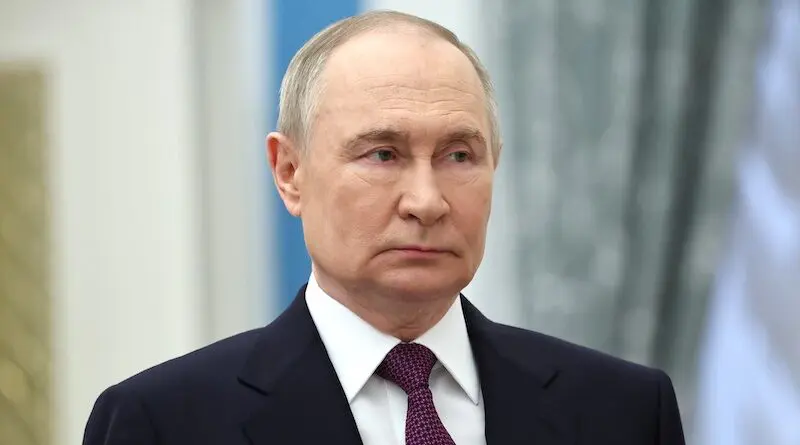
Russia's President Vladimir Putin. Photo Credit: Kremlin.ru

By 

More than any previous Moscow ruler, Russian President Vladimir Putin has made knowledge and use of the Russian language central to his understanding of Russian identity, a core link between the Russian people and his regime, and a key element in his foreign policy (Russian Presidential Academy, November 6).

Tsars typically put the Orthodox faith at the center, and the Soviets used Marxism-Leninism. The current Kremlin leader, however, has made language more than anything else the basis of identity and loyalty for residents of the Russian Federation and even for those abroad who are linked to Moscow or whom he hopes will be (Wsem.ru, June 11). While stressing the power and importance of the Russian language,

Putin has also suggested that it is currently subject to attack by other powers with other languages. He claims that these continuing attacks require the constant intervention of the state to defend it from corruption and defeat, something he has committed himself to doing, and that allows Russians to feel both triumphant and victims at the same time (Business Online, June 5). As part of his support for the Russian language, Putin has threatened the non-Russian languages spoken by many in the Russian Federation and suggested that their speakers must learn Russian and use it as their primary means of communication, not only with others in Russia but also more generally (Window on Eurasia, June 8).

These ideas have been present in Putin’s discourse since he came to power. They converged, however, last week at a meeting of the state council on June 5 devoted to state language policies. (For a transcript of these remarks, seePresident of Russia, June 5; and for an initial Russian discussion of their meaning, see Nezavisimaya Gazeta, June 5.) This was unsurprising given his past actions and the propensity of dictators to focus on language as a value, which does not limit them nearly as much as any religious or political faith.

Similar to Mussolini, for example, who promoted the Italian language, which he viewed as important not only in its own right but as a link to the glories of the Roman Empire, and Stalin, who argued near the end of his life that Russian not pass away as some interpretations of Marxism-Leninism suggested it would, Putin has now made clear that he views the Russian language as key to holding Russia together and even to expand more broadly beyond its borders (Mees, Kirk, “Stalin, Marr and the struggle for a Soviet linguistics,” 2006; University of Oslo, June 3, 2019).

That is all the more the case since he and his supporters have followed up his remarks with additional comments along the same line, as well as the speeding up of the adoption of new laws governing the teaching and use of Russian at home and abroad (Parlamentskaya Gazeta, June 11; Regnum, June 10).

Because Putin has pushed Russian so hard in the past, his speech on June 6 may well be dismissed as little more than a codification of what he has done and hopes to do. Even those who take that view, however, can easily see that the Kremlin leader’s decision to raise the issue to a new level—both by bringing these disparate ideas together and making some new proposals as well—suggests that it will become a turning point in Russian policies and politics.

There are three reasons for that conclusion. First, as even Putin himself conceded, work on supporting non-Russian languages has gone far slower than Moscow promised. His regime likely intended this, and that signals the further decline of their importance in his mind and a development that is already sparking additional anger among non-Russians (Chechen State Television and Radio Company – Grozny, June 9).

Second, Putin elevated Fyodor Tyuchev, a minor poet, tsarist censor, and conservative nationalist police spy, over Aleksandr Pushkin, long acknowledged as the national poet of Russia, as the candidate for regime commemorations during their shared anniversary year of 2028, something hitherto unthinkable and certain to be much criticized (RIA Novosti, June 5). Third, the Kremlin leader called for creating new centers to promote the study of Russian, not only within the Russian Federation but also abroad, to further unite the country and spread Moscow’s influence (Vedomosti, June 5).

The most important aspects of Putin’s speech lie elsewhere, starting with the fact that he gave it at all. That choice almost certainly reflects his concern that unless everyone in Russia is fluent in Russian, his country could be at risk of disintegration along ethnic and, thus, in his mind, linguistic lines, given his definition of nationality.

According to some Russian commentators, that is what Putin believes has happened in Ukraine (The New Times, June 9). These analysts warn that, at the very least, Putin’s approach will further isolate Russians from the rest of the world (The New Times, June 9). The most important consequence of Putin’s speech is likely that his focus on language will not only further divide ethnic Russians and non-Russians within the Russian Federation, but also Russian speakers and others in some foreign countries as well.

Non-Russians inside Russia are certain to view Putin’s words as a sign that he plans to step up his effort to Russianize and even Russify them. This has the added threat that if they stop speaking their national languages, Putin will likely no longer view them as separate nations with the right to have their own state institutions. The Kremlin leader’s words obviously support such a conclusion. To the extent that non-Russians within the Russian Federation read it that way, they will become more radicalized in their defense of their languages and thus their nations. That sets the stage for increased ethnic conflict in Russia itself, exactly the opposite of the future Putin wants but one he is making inevitable by violating what most have long understood to be true: multi-national states put themselves at risk when they try to promote the language and culture of the largest nation at the expense of all others.

This problem for Moscow will not end at the borders of the Russian Federation. By conflating Russian-speaking with a Russian national identity loyal to Moscow, Putin will unwittingly be promoting ethnic conflict in many former Soviet republics and hostility to Moscow, which is now openly conflating the Russian language with loyalty to Moscow. Many non-Russian nationalists in these countries already believe that it is already true, and Putin has just provided them with evidence that they are right. His words thus are likely to prove far more fateful than he expects—and in a direction far different from what he wants. 


Paul Goble

Paul Goble is a longtime specialist on ethnic and religious questions in Eurasia. Most recently, he was director of research and publications at the Azerbaijan Diplomatic Academy. Earlier, he served as vice dean for the social sciences and humanities at Audentes University in Tallinn and a senior research associate at the EuroCollege of the University of Tartu in Estonia. He has served in various capacities in the U.S. State Department, the Central Intelligence Agency and the International Broadcasting Bureau as well as at the Voice of America and Radio Free Europe/Radio Liberty and at the Carnegie Endowment for International Peace. Mr. Goble maintains the Window on Eurasia blog and can be contacted directly at paul.goble@gmail.com .


Gallup Poll Says Many Americans Think US Is Becoming More Religious (CHRISTIAN)

Praying God Christianity Belief Prayer Pray Adult


By 

By Madalaine Elhabbal


The number of adults in the U.S. who believe religion is experiencing a resurgence in America has gone up significantly, recent polling has found.

“Thirty-four percent of U.S. adults believe religion is increasing its influence in American life, similar to the 35% measured in December but up from 20% a year ago,” the latest Gallup poll reads.

Gallup conducts polling on religious influence at least twice per year as part of an effort to gauge “U.S. religious attitudes and behavior.” 

Last year, 75% of adults said they believed religion was losing its influence on American society. While the majority of Americans still maintain this belief, according to the poll, that number has come down to 59%. 

“These recent shifts represent a departure from the trend over the past 15 years that has generally seen larger percentages of Americans saying religious influence is decreasing rather than increasing,” the Gallup poll noted.


Republican presidential victory, first American pope possible factors

In its analysis of the recent positive trend regarding religion, Gallup noted the election of U.S.-born Pope Leo XIV on May 8 as having taken place during its most recent May 1–18 survey period. 

However, it pointed out that the pope’s election took place several months after the earlier spike in December. 

More likely, Gallup said in its analysis, is the possibility that “the change in religious attitudes is a reaction to the Republican sweep of the federal government in last fall’s elections.” 

The polling outfit noted that a similar spike had occurred after Republicans won Congress for the first time in 40 years in 1994, but not in the more recent GOP victories in 2000, 2010, and 2016. 

Gallup also observed that two of the most recent low points of confidence in religion’s increase — 18% in 2009 and 16% in 2021 — were both “the first readings after Democrats won control of the federal government.” 

Polling also found that although all major subgroups “are significantly more likely to believe that religious influence is increasing,” Republicans showed the largest increase of any subgroup, jumping from 11% to 35%. 

Democratic and liberal respondents, in comparison, jumped nine points from 32% to 41%, while independents increased from 21% to 31%. 

“These results suggest that election outcomes, under certain circumstances, may shape Americans’ perceptions of religion’s influence by making the connection between politics and religion more prominent,” Gallup stated. 

According to Gallup, the U.S. has experienced numerous spikes in reports of increased religious sentiments, particularly after certain major events in recent decades. 

One of “most notable” increases Gallup said it recorded took place after the Sept. 11, 2001, terror attacks, when 71% of Americans polled in December 2001 said they believed religious influence was going up. 

This was up from 39% in February that same year and was the highest recorded number since Gallup began its recordings in 1957. 

Another surge in religiosity was recorded amid the COVID-19 pandemic, when the number jumped from 19% in December 2019 to 38% in April 2020. This number was the highest recorded since 2006.


CNA

The Catholic News Agency (CNA) has been, since 2004, one of the fastest growing Catholic news providers to the English speaking world. The Catholic News Agency takes much of its mission from its sister agency, ACI Prensa, which was founded in Lima, Peru, in 1980 by Fr. Adalbert Marie Mohm (†1986).


Barbie maker Mattel teams up with OpenAI, eyes first AI-powered product this year

By Reuters
June 12, 2025 

Mattel expects to launch its first AI-powered Barbie product later this year, the Barbie-maker said on Thursday.

Mattel has teamed up with OpenAI to develop toys and games with artificial intelligence, and expects to launch its first AI-powered product later this year, the Barbie-maker said on Thursday.

The company, which also makes Hot Wheels and Uno cards, plans to “bring the magic of AI to age-appropriate play experiences with an emphasis on innovation, privacy, and safety,” it said.

The move comes at a time when toy manufacturers are battling muted demand backdrop as consumers rein in spending to brace for the economic fallout of U.S. President Trump’s shifting trade policy.

Mattel will also incorporate OpenAI’s advanced AI tools like ChatGPT Enterprise into its business operations to enhance product innovation, the company said.

“With OpenAI, Mattel has access to an advanced set of AI capabilities alongside new tools to enable productivity, creativity, and company-wide transformation at scale,” said OpenAI operating chief Brad Lightcap.


Over the last year, Mattel has relied on producing films, TV shows and mobile games based on its products such as Hot Wheels and Barbie to offset a slowdown in its core toy business.

Last month, Mattel withdrew its annual forecast and said it would raise prices on some products sold domestically in a bid to mitigate higher supply chain costs.

(Reporting by Savyata Mishra in Bengaluru; Editing by Leroy Leo)
Coinbase hires top Democrat political strategist as crypto industry flexes its newfound political might

By The Associated Press
 June 12, 2025 


David Plouffe, right, Uber senior vice president of policy and communications, talks about the Uber expansion in Phoenix as Arizona Gov. Doug Ducey listens during a news conference announcing the opening of the new Uber offices June 11, 2015, in Phoenix. (AP Photo/Ross D. Franklin, File)

NEW YORK — A senior adviser to Kamala Harris’ 2024 presidential campaign is joining Coinbase’s global advisory council, which already includes several former U.S. senators and President Donald Trump’s ex-campaign manager, as the cryptocurrency exchange broadens its political reach.

David Plouffe, a top Democratic strategist best known as an architect of Barack Obama’s successful 2008 presidential campaign, is the latest addition to the council, joining as the cryptocurrency industry plays an increasingly prominent role in shaping fast-moving legislation in Congress.

The bipartisan involvement reflects how both parties see crypto holders as an important and growing base of potential swing voters they are eager to tap, as well as their efforts to shape — and profit from — the lucrative industry. It also shows the political heft the crypto industry now carries under Trump, with several Democrats and Republicans joining the company’s payroll.

The crypto industry was among the largest spenders in the 2024 election. A crypto super political action committee spent over US$130 million in 2024 congressional races. Coinbase — the nation’s largest crypto exchange — was the super PAC’s biggest contributor.

The cryptocurrency industry’s bets are already paying dividends. Congress is now moving quickly on industry-friendly legislation that would create a comprehensive framework for the regulation of digital assets amid a shift in Washington. Trump, a Republican, has pledged to make the U.S. the global capital of cryptocurrency, contrasting with what industry leaders viewed as a stifling regulatory approach under the previous Democratic administration.

Americans may soon be able to invest in crypto in their retirement accounts, after Trump’s Labor Secretary repealed a Biden administration guidance that said crypto may not be appropriate for 401ks and IRAs. President Joe Biden’s regulators had argued that extreme volatility of cryptocurrencies makes the asset class too risky for Americans trying to save long-term for retirement.

Regardless of how crypto has performed in the past, the ability for Americans to put their retirement funds — roughly US$44 trillion in assets — into crypto will lead to billions of dollars in profits for the industry, if even a small portion of Americans put their assets into a cryptocurrency fund.

Trump and his family have also been aggressively expanding their personal business into almost every part of the cryptocurrency ecosystem, including raising billions of dollars to buy bitcoin, creating a new stablecoin and launching and promoting a Trump-themed meme coin.

Trump addressed crypto enthusiasts at Coinbase’s policy conference in New York via video on Thursday, saying it’s “a really big honor” to be called the “first crypto president.”

“Congratulations to everyone at this exciting time for your industry and in our country’s life,” Trump said, to applause.

Chris LaCivita, the former co-campaign manager of Trump’s 2024 presidential bid, joined Coinbase’s advisory council in January.

Interviewed at Thursday’s conference, LaCivita and Plouffe recounted their efforts to court so-called “crypto voters” in the 2024 election. Both the Harris and Trump teams viewed the group as a new bloc of potential swing voters who were up for grabs. Coinbase chief policy officer Faryar Shirzad said the company met with both campaign to sell them on the potential.

LaCivita said Trump — who had once been a crypto skeptic — quickly came around, with the help of input from his sons Barron Trump and Donald Trump Jr.

“The newness of it I think was exciting, from the president’s standpoint,” said LaCivita. “It didn’t take really a lot.”

The campaign, he said, also saw an opportunity to reach a swath of voters who may not have been actively engaged with politics in the past, including Black and younger voters, with whom the Republican Party struggled in the past.

“It gave us an opportunity to establish common ground with an area and a demographic that we need expand in in order to be successful,” he said. “This was one of those just great growth opportunities in politics,” which he said are “few and far between.”

Plouffe said the Harris campaign had reached the same conclusion and argued the group is only growing.

“The folks who own crypto are pretty politically competitive,” he said. “These are not MAGA voters. They are swing voters. Lean a little Democratic, certainly lean a lot younger.”

Both were also bullish on their party’s chances in next year’s midterm elections. Plouffe stressed the party out of power generally has an edge. He acknowledged that the Democratic Party “has a lot of work to do on its brand” after their disappointing finish last year, but said he hoped “that’s going to come from the people who run and from the grassroots together.”

LaCivita said the goal for Trump would be to demonstrate to voters that he is delivering on his campaign promises.

Plouffe, who previously served on the global advisory board for Binance, joins a council that also includes former Arizona Sen. Kyrsten Sinema, a Democrat-turned-independent. The role of advisers is to be a “sounding board” to discuss policy efforts and business strategy, Shirzad said.

In Congress, legislation is advancing far more quickly than usual for a new industry — a pace that some involved in shaping the bills say comes amid an all-out pressure campaign from the cryptocurrency sector.

On Wednesday, a group of Democrats joined the Republican majority to advance legislation regulating stablecoins, a type of cryptocurrency typically pegged to the U.S. dollar. Final passage through the Senate could come next week.

Meanwhile, a more sweeping bill to implement cryptocurrency market structure has begun moving through House committees.

___

Joey Cappelletti, Ken Sweet and Jill Colvin, The Associated Press

Cappelletti reported from Washington.


Shaquille O’Neal to pay US$1.8 million to settle FTX class action lawsuit

By The Associated Press
June 13, 2025 

Shaquille O'Neal speaks during a press conference on Feb. 13, 2024, in Orlando, Fla. (AP Photo/Kevin Kolczynski, File)

Former NBA player Shaquille O’Neal will pay US$1.8 million to settle a class action lawsuit related to the demise of cryptocurrency exchange FTX.

O’Neal, and other celebrities like Tom Brady and Stephen Curry, were named in the lawsuit in 2022. They had been accused of touting FTX as a reputable and trustworthy investment option via paid endorsements. The proposed settlement only pertains to O’Neal.

Three years ago FTX was the third-largest cryptocurrency exchange, but it ended up with billions of dollars worth of losses and had to seek bankruptcy protection. The Bahamas-based company and its founder, Sam Bankman-Fried, came under investigation by state and federal authorities for allegedly investing depositors funds in ventures without their approval.

Before its failure, FTX was known to use high-profile Hollywood and sports celebrities to promote its products. It had the naming rights to a Formula One racing team as well as a sports arena in Miami. Its commercials featured “Seinfeld” creator Larry David, as well as Brady, the former quarterback of the Tampa Bay Buccaneers and New England Patriots, basketball players O’Neal and Curry, and tennis star Naomi Osaka.

Bankman-Fried was sentenced to 25 years in prison in March 2024. A little more than a month after that, FTX said in a court filing that nearly all of its customers would receive the money back that they were owed.

While the proposed settlement with O’Neal had been agreed to in April, the payment amount and other terms were disclosed in a filing with the U.S. District Court, Southern District of Florida, Miami Division, earlier this week.

The settlement class includes anyone who deposited funds into FTX or bought its FTT token between May 2019 and late 2022.

The agreement, which still needs court approval, would provide O’Neal with a broad release from future claims and also includes a stipulation that he can’t seek reimbursement from the FTX estate.

The payment will be made within 30 days of the settlement being finalized, according to the filing.

Michelle Chapman, The Associated Press

Trump administration moves to lift Biden-era mining restrictions near Boundary Waters in Minnesota

By The Associated Press
 June 13, 2025


MINNEAPOLIS — U.S. President Donald Trump’s administration is moving to lift restrictions on copper-nickel mining that the Biden administration imposed near the Boundary Waters Canoe Area Wilderness in northeastern Minnesota.

The decision, announced Wednesday by Agriculture Secretary Brooke Rollins and Interior Secretary Doug Burgum, threw a lifeline to the proposed Twin Metals Minnesota mine near Ely.

Democratic administrations have tried to kill the project because of what they called the threat of acid mine drainage into Boundary Waters, the country’s most-visited federally designated wilderness area.


Twin Metals is owned by Chilean mining giant Antofagasta. President Barack Obama’s administration declined to renew the company’s mineral rights leases in the area in 2016. The first Trump administration reinstated those leases in 2019.


President Joe Biden’s administration canceled the leases again in 2022 and imposed a 20-year moratorium on mining known as a “mineral withdrawal” in a 350-square-mile (900-square-kilometer) area of the Superior National Forest upstream from the wilderness that includes the proposed underground mine site.

Trump has singled out copper as a focus of his domestic minerals policy and promised during a campaign stop in St. Cloud, Minnesota, last year that he would quickly reverse the moratorium.

The Boundary Waters is managed by the U.S. Forest Service, which is part of the Agriculture Department, putting it under Rollins’ purview, and the leases are controlled by Burgum’s Interior Department.

“After careful review, including extensive public input, the US Forest Service has enough information to know the withdrawal was never needed,” Rollins posted on X. “We look forward to working with Sec. Burgum to pursue American Energy Dominance and reverse the costly and disastrous policies of the Biden Administration.”

Twin Metals spokesperson Kathy Graul praised the Trump administration for beginning the process of reversing the Biden administration’s decision, which she said was “based on a deeply flawed assessment” that failed to consider environmental safeguards the company built into its project design.

The company argues that its mine design will prevent acid discharges, and that the best way to determine whether it’s safe is by allowing it to undergo a formal environmental review process, which the state canceled in 2022.

“Overturning the mineral withdrawal will allow Minnesota the opportunity to become a global leader in the much-needed domestic production of minerals under some of the most rigorous environment and labor standards in the world,” Graul said in a statement.

But critics disputed her claim about public input, pointing out that the Trump administration has not conducted a formal public comment process on the policy reversal.

“The announcement by Secretaries Burgum and Rollins is shocking,” Ingrid Lyons, executive director of Save the Boundary Waters, said in a statement. “They claim to have consulted with the people of Minnesota about the Boundary Waters when they clearly have not.”


Democratic U.S. Sen. Tina Smith of Minnesota scoffed at the secretary’s claim about a “careful review,” saying on X that the administration is “using pseudoscience to justify bad actions” and predicting that the decision will be challenged in court.

“Not this mine. Not this place. The Boundary Waters are too precious,” Smith said.

Republican U.S. Rep. Pete Stauber, who represents northeastern Minnesota and has championed the region’s iron and copper-nickel mining industries, said the Biden-era decision was a “massive wrong” that only “further cemented our reliance on Communist China” for critical minerals.

“As the demand for critical minerals continues to skyrocket, I look forward to seeing Minnesota’s skilled miners safely deliver our vast mineral wealth to the nation using the best labor and environmental standards in the world,” Stauber said in a statement.

Twin Metals is separate from two other proposed copper-nickel mines in Minnesota, the NewRange project formerly known as PolyMet, near Hoyt Lakes, which remains stalled by regulatory and court setbacks, and Talon Metals, near McGregor, which the Biden administration supported.

Steve Karnowski, The Associated Press
Canadian Maritime premiers turn to New England governors for support on Trump tariffs


By The Canadian Press
June 13, 2025 

Premier of New Brunswick Susan Holt speaks to media following the First Minister’s Meeting in Saskatoon, Sask., Monday, June 2, 2025. THE CANADIAN PRESS/Liam Richards

FREDERICTON — A group of Canadian premiers appears to be setting high expectations as they pursue negotiations with American governors to mitigate the impacts of United States-imposed tariffs on their economies.

Premiers from New Brunswick, Nova Scotia, Prince Edward Island, Newfoundland and Labrador, Ontario, and Quebec’s economic minister are scheduled to meet with New England governors on Monday in Boston.

New Brunswick Premier Susan Holt said the premiers are looking to the New England governors for insights on how to deal with the White House and U.S. President Donald Trump.

“I mean, ideally, what we would get is every governor ... agreeing to articulate in loud and formal terms their objection to the tariffs to their administration,” Holt told reporters Thursday.

“If we can get everyone agreeing that the tariffs are negatively impacting Americans and passing that message on to the White House, that would be a win.”


Holt also said she plans on raising “critical” energy and infrastructure files.

Massachusetts Gov. Maura Healey said last month that the leaders hope to discuss how they can work together and maintain economic relationships in the face of Trump’s tariffs.

“Canada is Massachusetts’ No. 1 trading partner,” she said in a May 5 news release.

“For generations, we have enjoyed a strong partnership and a healthy exchange of energy, lumber, dairy, cars and car parts, seafood and more. Our businesses and our residents all benefit from this relationship. But President Trump’s tariffs are undermining this partnership, making it harder for businesses to keep their doors open, and increasing the cost of everything that the New England and Canadian people rely on.”

Joseph Steinberg, a professor at University of Toronto’s economics department, said domestic U.S. pressure, particularly from Republican states, is more effective in influencing Trump’s tariff policies than international retaliation.

“I think what matters most is the pushback that the president hears from leaders within the United States,” Steinberg said. “The more of that pushback there is, and the more he hears that American household and American firms are hurting — that is the most effective thing to get him to change his tariff policy.”

He added that it would be a good thing to keep the lines of communication open between the premiers and the governors.

“The U.S. is one of the biggest economies in the world, and it’s right next door. So technologically and geographically, the United States is always going to be our biggest trade partner. There’s no way to get around that.”

Holt said New Brunswick supplies a lot of energy products to New England.

“I think 90 per cent of the cars in Boston are driving with gas that comes from the Irving refinery and us. They are keen to make sure we will continue to be a reliable supplier of energy to them,” she said.

“We see the U.S. as a market to sell energy in a way that is profitable and beneficial to New Brunswick.”


Healey said an analysis showed that tariffs on Canadian energy would raise gas and heating oil prices by over 30 cents a gallon and could cost nearly $1.4 billion a year for people in Massachusetts, and $3.4 billion for those in the New England area.

Ontario is also looking to discuss energy and minerals with the U.S., said Grace Lee, spokeswoman for Premier Doug Ford.

“Ontario is proud to have one of the cleanest and most reliable energy grids, alongside mineral rich areas ready for development and a highly skilled workforce that the U.S. needs and relies on,” she said in a statement.

“Premier Ford will advocate for his vision of Fortress Am-Can, a renewed strategic alliance that makes Canada and the U.S. the richest, most prosperous, safest and most secure two countries on the planet.”

Prince Edward Island Premier Rob Lantz’s office did not respond to a request for comment.

Léa Fortin, spokeswoman for Quebec’s economic minister Christopher Skeete, said the meeting is a chance to reiterate ties between Quebec and the United States, as well as the Atlantic provinces.

Sonja Pomeroy, spokeswoman for Premier John Hogan said Newfoundland and Labrador exported approximately $4.5 billion of goods to the United States in 2023, representing 37 per cent of the province’s total exports.

For example, she said in any given year, 60 to 80 per cent of Newfoundland and Labrador’s seafood exports go to the United States.

So the meeting is an opportunity to reinforce the social and economic value of Canada’s long relationship with the United States, she explained.

“Barriers to trade are bad for both national economies,” Pomeroy said.

Maine Gov. Janet Mills said Canadian provinces and her state have enjoyed strong relationships over generations because of shared economies and cultures. But these are now strained from Trump’s “haphazard tariffs and harmful rhetoric targeting our northern neighbours,” she said in the May 5 statement.

Nova Scotia Premier Tim Houston acknowledged Canadian provinces don’t have the power to resolve trade issues on their own.

“But that doesn’t mean we can’t have a positive relationship with governors and Americans in general,” Houston said. “I think that’s the goal.”

This report by The Canadian Press was first published June 13, 2025.