Monday, June 30, 2025


Artificial Intelligence: A Tool That Is Reshaping Geopolitics – Analysis

artificial intelligence cyborg

By 

In recent years, following the end of the COVID-19 crisis, the term artificial intelligence (AI) has become omnipresent in public discourse. According to the Merriam-Webster dictionary, artificial intelligence is “the capability of computer systems or algorithms to imitate intelligent human behavior.” This emerging phenomenon is receiving great attention. In truth, it is neither a new concept nor a new occurrence, as AI began gradually developing in 1956 with a scientific conference in Dartmouth. Since then, AI has experienced both advances and setbacks, having been most utilized in fields such as the military, medicine, robotics, and education.

Over time, artificial intelligence has significantly advanced. Today, ordinary people around the world can use basic smart computer models, but there is little doubt that the centers of global power—national governments, intelligence agencies, and various organizations—possess models that are ten or more years ahead of what is publicly available.

An Indispensable Tool of Our Time

Many analysts warn that artificial intelligence will replace and subordinate human beings. This is a highly debatable claim, as AI is not some superior “divine” entity, but rather a technology created by flesh-and-blood humans with all their imperfections. Similarly, when the Industrial Revolution emerged in the 18th century, many feared machines would replace humans. That did not happen. It is unlikely AI will do so either. However, it is evident that individuals who do not use AI tools will be unable to keep up with those who do. The same applies to the international political arena.

States, multilateral organizations, and movements that utilize AI will remain competitive in the political arena, while those that do not will stagnate and decline. According to S&P Global, between 2013 and 2023, 5,509 AI companies were founded in the United States, with total private investments reaching approximately $335.2 billion. During the same period, China saw the establishment of 1,446 AI companies, with private investments amounting to about $103.7 billion.

Political Leaders Recognize a New Weapon

Russian President Vladimir Putin stated back in 2017: “Artificial intelligence is the future, not only for Russia but for all of humanity.” He added that AI carries enormous opportunities, but also threats that are difficult to foresee, noting that whoever becomes the leader in this field will become the ruler of the world. 

In December 2017, Donald Trump signed a new National Security Strategy emphasizing the importance of artificial intelligence for the national security and economic development of the United States. The strategy states that “continued American leadership in artificial intelligence is of utmost importance for preserving the economic and national security of the United States.” During the 20th National Congress of the Communist Party of China in October 2022, Chinese President Xi Jinping declared that China must accelerate achieving a high level of scientific and technological self-reliance and improvement, clearly referring to AI.

A Game-Changer in Geopolitics

Artificial intelligence is a tool reshaping geopolitics on a multidimensional level. This is not a conventional change, but a revolutionary one. AI could significantly alter the way we understand international relations and diplomacy today. The sooner policymakers realize this, the better. Although diplomacy, as an interdisciplinary field, belongs to the social sciences and humanities (a blend of history, politics, law, sociology, and communication), AI introduces mathematical models into diplomacy. This could be described as the “technologization of diplomacy.” In geopolitical terms, AI’s use is most important in two interconnected areas: diplomacy and national security. Put simply, AI is a crucial diplomatic and military-security tool.

A Modern Diplomatic Instrument

Artificial intelligence is transforming the conduct of bilateral and multilateral relations. National governments and leading commissions in organizations such as the UN, EU, and BRICS are actively using smart technology—from basic real-time translations to the creation of complex analyses. Diplomats can communicate more easily with their colleagues thanks to AI, receiving instant translations as well as real-time suggestions from virtual assistants.

AI can facilitate diplomatic negotiations between two or more countries by analyzing historical relationships, proposing new strategies for improving relations, and offering guidance on negotiation styles. Diplomats and politicians are often unimaginative and unable to grasp new ideas. However, many of today’s political disputes also existed in the past. AI can compare historical and current contexts and offer constructive proposals. Beyond negotiation content, outcomes are influenced by style. If the style is wrong (too assertive or too timid), the outcome may be negative even if the idea itself is good.

Based on available data (public opinion, military deployments, leaders’ behavior), AI programs can predict the early onset of crises and wars. AI can recommend which countries should receive peacekeeping missions before a crisis erupts or where peacekeepers should be withdrawn. Similarly, governments can use computer models to present diplomatic negotiations and agreements to the public in a more acceptable way to ensure support. Politics is about perception, and political results can often be interpreted both as victories and defeats.

A Military-Security Tool

Artificial intelligence is becoming a key military tool for many powerful states and organizations. The United States uses AI to develop autonomous drones, defend against cyberattacks, and analyze military intelligence. China applies AI in mass surveillance systems, facial recognition, and unmanned technology. Russia uses AI for cyber defense, automating military systems such as drones, analyzing satellite and intelligence data, and electronic warfare. Israel employs AI in several key military systems, the most famous being the “Iron Dome.” AI helps rapidly detect and intercept threats such as rockets and mortar shells.

NATO uses AI to forecast conflicts, protect communication networks, manage logistics, and optimize military operations. All mentioned countries also use AI for cyber warfare (targeting infrastructure of other nations and spreading propaganda) and to protect against foreign cyberattacks. Organizations like the U.S. DARPA and China’s AI Institute are developing advanced military systems. The use of AI can offer advantages on the battlefield but also increases the risk of conflict escalation. Therefore, there is a growing need for international rules and oversight on AI in the military sector.

The Race to Develop AI for Geopolitical Purposes

All significant global powers have realized that a race is underway to develop artificial intelligence for political purposes. American companies like Google, Amazon, and Microsoft are developing computer models to help the U.S. maintain its status as the world’s most powerful country and to preserve organizations such as NATO, the G7, OAS, IMF, and the World Bank. The Chinese are using AI to advance their Belt and Road Initiative. The Digital Silk Road accompanies this initiative, focusing on the development of digital infrastructure, technology, and internet networks wherever the Belt and Road passes (Asia, Africa, Europe). China aims to establish itself as the world’s new technological leader. 

Russia primarily develops AI tools for propaganda purposes, subtly reshaping the narrative that is unfavorable to them in parts of the world (the EU and the U.S.). The European Union seeks to position itself as a leader in ethical AI use, promoting a global framework for moral application. BRICS countries like India, Brazil, and South Africa place less emphasis on ethics, using AI mainly to develop their economies and redefine global power structures that limit their growth.

Conclusion

Thanks to the development of advanced analytical tools and predictive algorithms, artificial intelligence has been widely used in international relations and diplomacy since the 2010s. Because of its advantages—such as precise data processing and rapid solution proposals—AI has become an indispensable tool in modern diplomacy. However, when, how much, and in what way it will be used depends on people—the decision-makers. AI is a mathematical model with its own shortcomings and requires skilled experts to be used appropriately. The risks are significant.



Matija Šerić

Matija Šerić is a geopolitical analyst and journalist from Croatia and writes on foreign policy, history, economy, society, etc.


 

Hitting The Right Notes To Play Music By Ear

Music Jazz Musician Musical Sound Instrument

By 

Learning to play music by ear is challenging for most musicians, but research from a team at the University of Waterloo may help musicians-in-training find the right notes.

The Waterloo team analyzed a range of YouTube videos that focused on learning music by ear and identified four simple ways music learning technology can better aid prospective musicians – helping people improve recall while listening, limiting playback to small chunks, identifying musical subsequences to memorize, and replaying notes indefinitely.

“There are a lot of apps and electronic tools out there to help learn by ear from recorded music,” said Christopher Liscio, a recent Waterloo master’s graduate in computer science and the study’s lead author. 

“But we see evidence that musicians don’t appear to use them very much, which makes us question whether these tools are truly well-suited to the task. By studying how people teach and learn how to play music by ear in YouTube videos, we can try to understand what might actually help these ear-learning musicians.” 

The team studied 28 YouTube ear-learning lessons, breaking each down to examine how the instructors structured their teaching and how students would likely retain what they heard. Surprisingly, they found that very few creators or viewers were using existing digital learning tools to loop playback or manipulate playback speed despite their availability for over two decades.

“We started this research planning to build a specific tool for ear learners, but then we realized we might be reinforcing a negative pattern of building tools without knowing what users actually want,” said Dan Brown, professor of Computer Science at Waterloo. “Then we got excited when we realized YouTube could be a helpful resource for that research process.”  


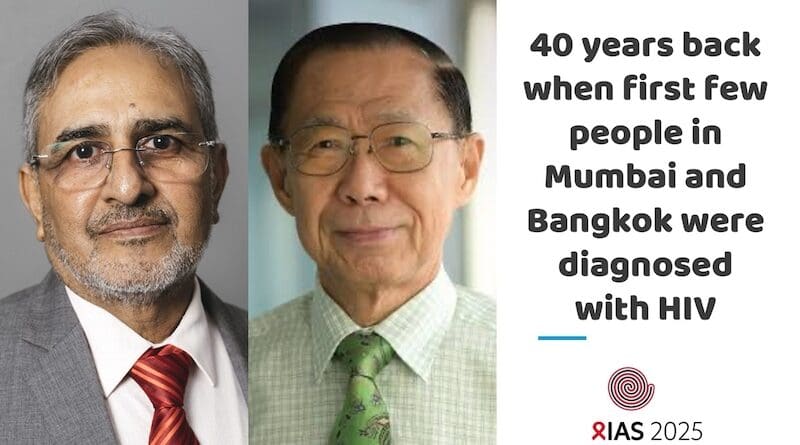
40 Years Back When First Few People In Mumbai And Bangkok Were Diagnosed With HIV – OpEd

Credit: Citizen News Service


By 

Although world is not on track to end AIDS by 2030 but it is no less than a miracle when we take into account the scientific and community-led progress which has powered the global AIDS response since 1981 – when for the first time AIDS was reported in the world.


In lead up to world’s largest HIV science conference (13th International AIDS Society (IAS) Conference on HIV Science (IAS 2025), let us remember when first few people with HIV were diagnosed in Mumbai, India and Thailand. CNS (Citizen News Service) spoke with Dr Ishwar Gilada from India (who is credited to establish India’s first AIDS Clinic in 1986) and Dr Praphan Phanuphak from Thailand, both of whom are widely known to help diagnose first people with HIV.

40 years back, Dr Ishwar Gilada, India’s longest serving HIV medical expert was working as a senior consultant at government-run JJ Hospital in Mumbai, India. News reports of 1980s show that he was actively campaigning amongst sex workers to encourage them on protecting themselves from sexually transmitted infections including HIV. Noted filmstar Sunit Dutt and several other known personalities had also joined his crusade. Noted journalists Jayashree Shetty and Gopal Shetty have co-authored a 2023 book: “The Blunting Of An Epidemic: A Courageous War On AIDS” chronicling Dr Gilada’s tireless and courageous crusade against AIDS for over four decades.

First three HIV infections were in sex workers from Mumbai’s Kamathipura in 1985

Dr Gilada said: “We were doing active disease surveillance in Mumbai’s sex work area, Kamathipura. In December 1985, three of the blood samples drawn from sex workers tested positive for HIV. One of them was a transgender person. I tested them at the Skin and Sexually Transmitted Diseases (STD) Department, JJ Hospital on kits donated by Abbott Laboratories in December 1985. The first HIV clinic in India was established in JJ Hospital by me on 5th March 1986.”

“But confirmation of our HIV tests had to be done at government’s National Institute of Virology in Pune in January 1986. However, Dr Khorshed M Pavri, then Director of National Institute of Virology, chose to withhold results. Dr Pavri came personally to collect fresh blood samples of people presumptive for HIV. I had to get all 6 sex workers to come to JJ Hospital once again to give their blood samples to Dr Pavri. She then sent samples to CDC Atlanta, USA, which caused inordinate delays in providing confirmation. Dr Pavri then published her scientific article, “First HIV culture in Indian patients” where I am listed as a co-author along with Dr Jeanette J Rodrigues,” shared Dr Gilada. Dr Pavri was India’s first virologist, as well as first woman Director of National Institute of Virology.

In clinical practice, Dr Gilada’s first clinical HIV case was of a German national who was referred to him from Goa Medical College in July 1987. He recollects the first Indian national with HIV who came to his clinic – a former sex worker who had stopped sex work in 1979. She was under his medical care but despite best of efforts, she could not be saved and died of AIDS in JJ Hospital. Her postmortem examination confirmed she had HIV and abdominal TB. This was also the first postmortem examination in India of a person positive for HIV. It was done by Dr DN Lanjewar in 1988.

Flashback: When first HIV cases were diagnosed in Thailand

“I was accidentally involved in HIV/AIDS arena. I am not an infectious disease doctor, but an allergist and clinical immunologist trained in USA. The first patient, an American gay man living in Thailand, was referred to me at King Chulalongkorn Hospital in October 1984 to investigate the cause of his recurrent muco-cutaneous infection. Immunologic investigations revealed that his T-helper cell numbers and T-cell functions were moderately low, but no diagnosis was made. In February 1985 the patient was admitted into the hospital with confirmed diagnosis of Pneumocystis carinii pneumonia (PCP) and his T-cell numbers and functions were further deteriorated. With the diagnosis of PCP and severe T-cell defect, AIDS was diagnosed at that time,” said Dr Praphan Phanuphak, a living legend who helped shape Thailand’s HIV response since the first few AIDS cases got diagnosed in the land of smiles in 1985.

Dr Praphan Phanuphak is a distinguished Professor Emeritus of the Faculty of Medicine, Chulalongkorn University in Bangkok, Thailand. Together with late Professors Joep Lange and David Cooper, Prof Praphan co-founded HIV-NAT (the HIV Netherlands, Australia, Thailand Research Collaboration), Asia’s first HIV clinical trials centre in Bangkok in 1996. Prof Praphan served as the Director of the Thai Red Cross AIDS Research Centre for 31 years (1989-2020) and is currently the Senior Research and Policy Advocacy Advisor of the Institute of HIV Research and Innovation (IHRI) in Bangkok as well as the Advisor of HIV-NAT.

Dr Phanuphak shared: “During the same month, a Thai male sex worker was referred to Chulalongkorn Hospital because of multi-organ cryptococcal infection. His T-cell numbers and T-cell functions were also severely impaired. AIDS was diagnosed in this second patient since he had sexual contact with a foreign man who had sex with men. The girlfriend of this patient was asymptomatic but had generalised lymphadenopathy, Her T-cell numbers and functions were moderately impaired. This patient was counted as the third case. Sera collected from these 3 patients were tested for HIV in May 1985 when the anti-HIV test kit was available in Thailand. All were HIV-positive. These are the first 3 HIV/AIDS cases diagnosed in Thailand, all in February 1985. With the increasing availability of HIV test in Thailand, more and more patients were diagnosed. This accidentally drove me deeper and deeper into the HIV field, coupled with the fact that there were not very many infectious disease doctors in the early days who were willing to see HIV patients.”

Way forward towards ending AIDS

Dr Phanuphak’s and Dr Gilada’s lifetime contribution and continuing guidance to shaping HIV responses is commendable.

Governments have promised to end AIDS by 2030. Ending AIDS means that all people living with HIV should have viral load undetectable (so that they can live normal healthy lives and there is zero risk of any infection spread from them as per the WHO). In addition, all people in all their diversities, must have access to full range of science-based HIV combination prevention options in a person-centred and rights-based manner. But global AIDS response is slipping and is off the mark. With recent funding cuts, it becomes even more challenging to ensure that HIV response gets on track to end AIDS. But if we are to deliver on the promises enshrined in SDGs and #HealthForAll, then ending AIDS is clearly a human rights imperative.


Shobha Shukla

Shobha Shukla co-leads the editorial content of CNS (Citizen News Service) and is on the governing board of Global Antimicrobial Resistance Media Alliance (GAMA) and Asia Pacific Media Alliance for Health and Development (APCAT Media).

BURN BABY BURN

Burning Trash For Energy, People And Planet – OpEd

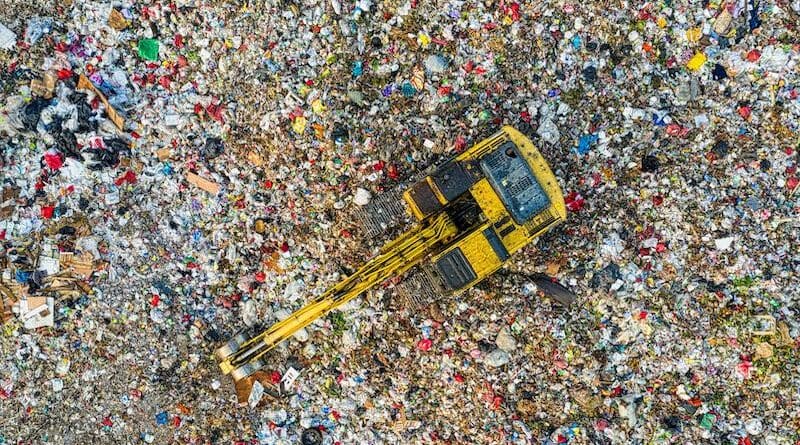
landfill garbage dump


By 

Waste-to-Energy reduces landfilling, increases recycling, powers society and avoids blackouts


After years of opposing them, but facing constituents increasingly angry about rising electricity prices, New York Governor Kathy Hochul recently gave grudging support for two new Williams Companies natural gas pipelines.

Assuming they clear new hurdles, the Constitution Pipeline will transport gas 100+ miles from northeastern Pennsylvania fracking fields toward Albany. The 23-mile Northeast Supply Enhancement Pipeline will connect New York to the New Jersey segment of the Transco Pipeline, America’s largest-volume natural gas pipeline system, and carry enough gas to heat 2.3 million homes.

Hochul, other state Democrats and environmental activists have long stymied the projects, using exaggerated and fabricated water quality and climate change arguments – and fanciful expectations that heavily subsidized solar panels and onshore and offshore wind turbines can provide enough affordable electricity, enough of the time, to meet steadily increasing New York City and State power demands.

In exchange, the Trump Administration will let them continue installing gigantic offshore wind turbines that will generate 9,000 MW of electricity (less than one-third of what the state needs on hot summer days) perhaps 30-40% of the year … and be supported by fire-prone grid-scale batteries that would provide statewide backup power for about 45 minutes.

New gas turbines would help avoid blackouts, ensure that poor families freeze less often in winter and swelter less in summer, and help the state meet power needs that are soaring because of data centers, artificial intelligence, and legislatively mandated conversions from gasoline and gas to electric vehicles, stoves, and home and water heating.


They could also help reduce the need to import electricity from Canada and other states: some 36,000 gigawatt-hours (11% of statewide electricity) annually.

But legislators want to put another hurdle in the way. New legislation would force homes and businesses to pay $10,000 or more to connect to natural gas lines. If Gov. Hochul signs the bill, or the legislature overrides a veto, few or no new customers would take advantage of the new gas.

It’s a kill switch, reflecting the state’s determination to impose “climate leadership” and “protect communities” from alleged dangers from fossil fuels.

It’s also hypocritical and irresponsible. New York doesn’t just import electricity; it also exports garbage.

New York City generates nearly eight million tons of waste annually. Its last municipal incinerator closed in 1990; its last municipal landfill in 2001. City trash is now mostly sent on barges, trucks and trains to landfills (80%) and incinerators (20%) in New Jersey, Upstate New York, Pennsylvania, and even Virginia, Ohio and South Carolina! NY State exports 30% of its garbage.

The city and state could address both garbage and electricity challenges by using natural gas to power waste-to-energy (WTE) generating plants that burn trash, thereby reducing the need to landfill or export garbage, while increasing recycling, producing reliable, affordable, much-needed electricity, and reducing blackout risks that are climbing every year.

In Fairfax County, Virginia, a WTE or resource recovery facility operated by Reworld Waste burns home, business, industrial and other garbage that doesn’t go straight into recycling programs and would typically be landfilled, including myriad extraneous plastics. The trash is dumped in a receiving area, sorted for unacceptable materials like rocks, mixed thoroughly, and burned with natural gas in a chamber at 2000 degrees F for up to two hours, until it’s totally combusted to ash. 

The heat converts water to steam, which is super-heated in tubes to drive turbines that generate electricity: 80 megawatts 24/7, enough for about 52,000 homes. Depending on its composition, a ton of waste generates 550-700 kilowatt-hours of electricity.

Since opening in 1990, the plant’s trash has replaced the equivalent of burning 2,000,000 barrels of oil for electricity every year.

Glass from lightbulbs and other nonrecyclable sources becomes part of the ash stream, from which ferrous and nonferrous metals are recovered. Most of the remaining ash is used as a substitute for sand and aggregates in road and building construction, cement and cinder block production, and manufacturing other building materials.

Unsold ash is landfilled but, by the time the metals are removed, only about 10% of the original trash bulk and 25% of its original weight is left.

Even staples, paper clips, bottle caps, metal light bulb bases, aluminum foil, and wires from spiral notebooks and furnace filters can be “recycled” this way. In fact, enough iron, steel, aluminum, copper and other metals are recovered from the resultant ash at the Fairfax facility to build 20,000 automobiles annually.

However, plastic-metal-glass waste (computers, monitors, keyboards, printers, microwaves), broken pots and pans, household appliances and other larger refuse should go to special “white goods” and metal recycling centers.

Lime neutralizes acids in the airstream, activated carbon controls heavy metals, and fabric filter bags remove particulates, keeping air emissions below EPA standards. The scrubber waste (fly ash) is then dewatered and chemically stabilized, before being landfilled or used in construction materials. 

Process steam condenses back into water and is reused. Water from the wastes and scrubbers is recovered, treated and used to cool the facility and equipment.

Two other trash-to-energy facilities serve the Washington, DC area; 75 across the USA generate over 2,500 MW of electricity. However, more WTE plants could help solve garbage, energy, landfill and pollution problems in metropolitan areas across the country (and worldwide), including:

* Philadelphia, PA – 1,300,000 tons per year of municipal solid waste (MSW), but only one WTE; 
* Chicago, IL – 3,100,000 tpy, but just one WTE plant (other proposed facilities were rejected);
* Houston, TX – 4,200,000 tpy, with one WTE facility;
* Phoenix, AZ – 1,000,000 tpy, and one WTE facility;
* Los Angeles, CA – 4,000,000 tpy, but again only one WTE facility.  

New York and other jurisdictions that have rejected natural gas and waste-to-energy/resource-recovery facilities are missing enormous opportunities to address challenges that will only become worse. They’re also dumping their own local responsibilities into their neighbors’ backyards.

These facilities ensure secure, affordable electricity generation close by, without the need for expensive backup power and multi-hundred-mile transmission lines to part-time wind and solar power.

They utilize fuels that America still has in abundance: gas and trash. And they reduce the need for resources that are in increasingly short supply: landfill space, cropland and wildlife habitats impacted, and bird, bat and other wildlife lost due to wind, solar and transmission installations.

From my perch, these clear and significant benefits clearly offset the cost and subsidyconcerns that some have raised about WTE facilities.

Metro areas and states should apply pragmatism, reality and these benefits when reconsidering climate and “renewable” energy ideologies that have dominated public policies for far too long.


Paul Driessen

Paul Driessen is a senior fellow with the Committee For A Constructive Tomorrow and Center for the Defense of Free Enterprise, nonprofit public policy institutes that focus on energy, the environment, economic development and international affairs.
During a 25-year career that included staff tenures with the United States Senate, Department of the Interior and an energy trade association, he has spoken and written frequently on energy and environmental policy, global climate change, corporate social responsibility and other topics. He’s also written articles and professional papers on marine life associated with oil platforms off the coasts of California and Louisiana – and produced a video documentary on the subject.


Wildfires Affected 30 Million Hectares In Brazil In 2024

Brazil Fire Forest Fire Children Fear Flame Amazon


By 

By Fabiola Sinimbu


In 2024, fires affected 30 million hectares of Brazil’s territory—the second-largest area burned in the past 40 years, and 62 percent above the average for the 1985–2024 period, according to the Annual Mapping of Land Cover and Use in Brazil (MapBiomas), a project developed since 1985 by a multi-institutional network that includes universities, NGOs, and technology companies.

The data were published on Tuesday (Jun. 24) in the first edition of the Annual Fire Report (RAF) and in Collection 4 of Brazil’s fire scar maps.

Last year, 72 percent of the area burned in Brazil was native vegetation. Forest cover was the hardest hit, with 7.7 million hectares consumed by fire, representing an increase of 287 percent compared to the average of the last four decades.

The Amazon

Studies show that the Amazon was the most hit biome in 2024, with 15.6 million hectares burned—the largest area harmed in the biome throughout the entire historical series. This corresponds to more than half (52%) of the total area consumed by fire in the whole country.

The region was not only the epicenter of burnt areas in the country, exceeding the average of the last 40 years by 117 percent, but also experienced a qualitative change in the type of vegetation altered.


For the first time, forest areas were the most impacted, accounting for 43 percent of the total burned area.

A total of 6.7 million hectares of forest and 5.2 million hectares of pasture were burned. According to the researchers, areas previously converted to pasture have historically been the most damaged, due to the common practice of using fire to clear land before planting pasture.

MapBiomas’ Amazon mapping coordinator, Felipe Martenexen, noted that the region was heavily affected by the El Niño phenomenon in 2023 and 2024, which left the biome drier and more susceptible to fire. However, since the occurrence of natural fires in native vegetation is very low, human action was necessary for the fires to start.

“We believe that inadequate pasture management plays a major role, as fire often escapes and causes forest fires,” explains Martenexen.

Atlantic Forest

The Atlantic Forest also registered a record area burned in 2024, exceeding the historical average by 261 percent. The biome saw 1.2 million hectares exposed to fire and includes four of the ten municipalities with the highest proportion of burned area: Barrinha, Dumont, Pontal, and Pontes Gestal.

Human-modified areas were hit hardest by fire last year, but the burning of natural vegetation also rose compared to the last 20 years.

“When fires occur, they tend to have a significant impact on the scarce forest remnants within the biome,” says Natalia Crusco, from MapBiomas’ Atlantic Forest team.

Pantanal

In 2024, the area burned in the Pantanal increased by 157 percent, representing the highest proportional rise in fire occurrence among all biomes in the country, compared to the historical average.

It was the third year with the largest area burned, totaling 2.2 million hectares. Of this total, 93 percent damaged native vegetation, primarily grasslands, flooded fields, and marshes.

Researcher Eduardo Rosa, MapBiomas’ Pantanal mapping coordinator, explains that fire dynamics in the biome were driven by drought in the Paraguay River region, where natural vegetation is concentrated.

“Although parts of the Pantanal are more adapted to fire, the areas near rivers contain a very complex mosaic of native vegetation that is more vulnerable,” says Rosa.

Cerrado, Caatinga, and Pampa

Last year, fires in the Cerrado accounted for 35 percent of the total area burned in Brazil. A total of 10.6 million hectares were hit—representing a 10 percet increase compared to the historical average of 9.6 million hectares per year.

In 2024, the area burned in the Caatinga decreased by 16 percent, with 404,000 hectares scarred by fire compared to an average of 480,000 hectares over the past 40 years.

In the Pampa, fire impacted a slightly larger area than in 2023, totaling 7,900 hectares—well below the historical average of 15,300 hectares per year. This represents a 48 percent reduction compared to the period analyzed.

Researchers state that the data offer the most comprehensive overview of fire activity across the country and reveal patterns in the occurrence of burn-offs and wildfires.

“The report enables us to support the planning of preventive measures and to direct firefighting efforts more effectively,” concludes Ane Alencar, Science Director at the Amazon Environmental Research Institute (IPAM) and coordinator of MapBiomas Fogo.


ABr

Agência Brasil (ABr) is the national public news agency, run by the Brazilian government. It is a part of the public media corporation Empresa Brasil de Comunicação (EBC), created in 2007 to unite two government media enterprises Radiobrás and TVE (Televisão Educativa).