Tuesday, July 01, 2025


'Incredibly destructive': Anti-Tax titan Grover Norquist still pulling the GOP's strings


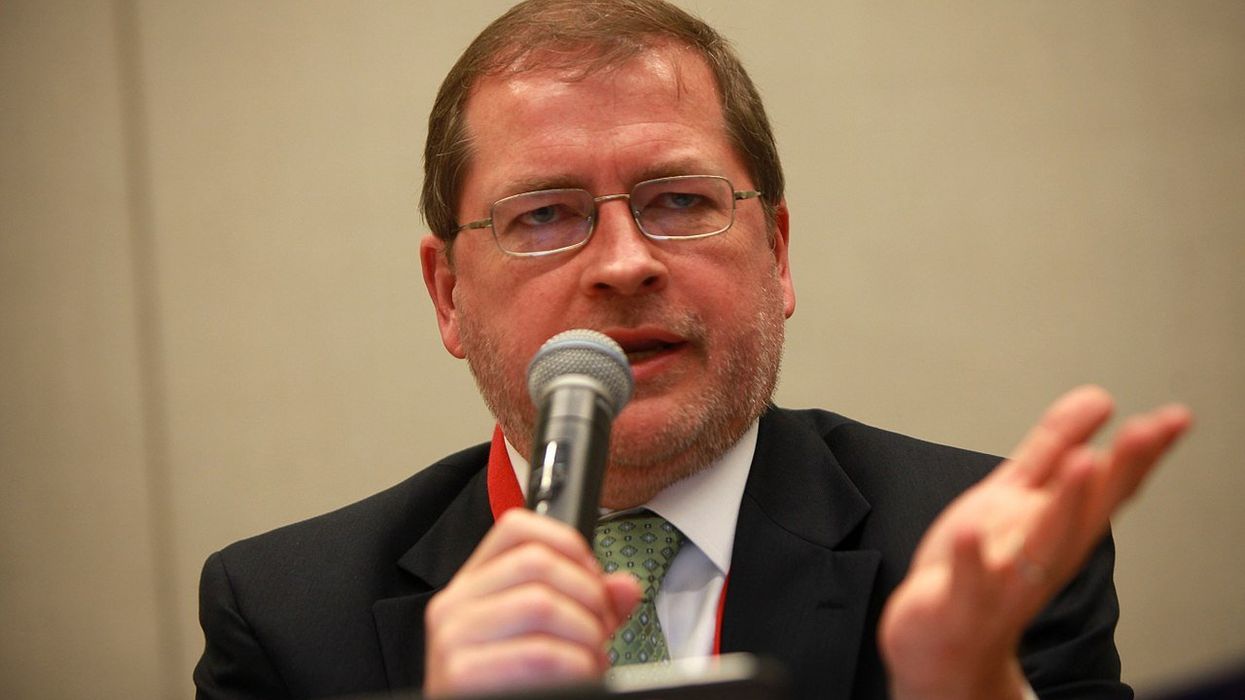
Grover Norquist speaking in Phoenix in 2014 (Gage Skidmore)


The Conversation
June 26, 2025


In the “one, big, beautiful bill,” President Donald Trump has called for substantial decreases in federal domestic spending. However, a schism emerged between Republican lawmakers during the budget debates in Congress.


Some Republicans in blue states called for a tax increase for the wealthiest Americans, prompting longtime anti-tax advocate Grover Norquist to call the increase an “incredibly destructive idea economically, and very foolish politically.”

As he has done since the 1980s, Norquist demonstrated his influence over the GOP. Since Trump’s second inauguration, he has appeared in several high-profile news stories about the budget, including a Washington Post article where he said, “Tax cuts are income to Americans and a loss to the bureaucracy.”

Ultimately, the tax increase was defeated, and the Trump budget proposal passed the House on May 22, 2025.

Norquist praised the leadership from Speaker Mike Johnson and Majority Leader Steve Scalise, saying taxpayers owe them “bigly for managing a narrow Republican House Majority that was united and committed to reducing taxes on the American people.”

As scholars of U.S. politics, we examined Norquist’s emergence, traced debates about the scope and size of the American government and assessed Norquist’s relevance in the Donald Trump era, where he continues to wield considerable sway in the Republican Party.

The conscience of a conservative

In 1960, a slim, 123-page book changed the trajectory of American conservative thought.

The Conscience of a Conservative,” written by Barry Goldwater, laid out the premise that an expansive federal bureaucracy was the root evil of government.


Four years later, Ronald Reagan launched his political career with a speech supporting Goldwater. His words echoed Goldwater: “No government ever voluntarily reduces itself in size … a government bureau is the nearest thing to eternal life we’ll ever see on this earth.”

Reagan ended the speech by noting, “You and I have a rendezvous with destiny.” Goldwater wouldn’t manifest that destiny, but Reagan, 16 years later, took this vision of fiscal conservatism to the White House.


By the 1980s, Goldwater’s limited government creed had become part of Republican dogma. Government wasn’t just bloated, according to Reagan. It was, as he noted, the problem. The Reagan presidency ushered in the doctrine of supply-side economics, which rests on the premise that tax cuts are key to stimulating economic growth.


Norquist’s emergence

Into this landscape stepped a young Norquist.

He had cut his teeth at the National Taxpayer’s Union, a fiscally conservative taxpayer advocacy group. Then, in 1981, he became the executive director of the College Republican National Committee.

In the first issue of CR Report, a college Republican newsletter, Norquist’s position as executive director was announced, and he provided a list of suggested readings. Among the titles he recommended were Goldwater’s “Conscience,” Milton Friedman’s “Capitalism and Freedom” and Friedrich Hayek’s “The Road to Serfdom.”

In 1985, Norquist founded Americans for Tax Reform to support his tax reduction efforts. As Norquist noted, “The tax issue is one thing everyone agrees on.”

He and his organization effectively institutionalized a permanent tax revolt in Congress supported by his “Taxpayer Protection Pledge,” a promise made starting in 1986 to oppose all efforts to increase marginal tax rates or reduce deductions or credits.

The pledge became a litmus test for fiscally conservative GOP candidates and cemented the party’s anti-tax stance.

Feeling this pressure, GOP nominee George H.W. Bush delivered his famous line, “read my lips, no new taxes,” at the 1988 Republican National Convention. Those six words were repeatedly used by primary challenger Pat Buchanan and Bush’s opponent in the general election, Bill Clinton, to raise questions about Bush’s honesty – since he made a pledge that he was unable to keep.

With Clinton in the White House in 1994, Norquist helped House Minority Whip Newt Gingrich write the “Contract with America” to legislate fiscal conservatism. Weaponizing government shutdowns and setting a more confrontational tone, congressional Republicans successfully rolled back welfare programs, reduced the size of government and cut taxes.

In 1995, they came two votes shy in the Senate of approving an amendment to the Constitution that would have required the federal budget to be balanced – with no borrowing – every year.

Anti-tax conservatism in the 21st century


In 2001, Norquist told a reporter at The Nation: “My goal is to cut government in half in twenty-five years to get it down to the size where we can drown it in the bathtub.”

This objective would have to wait during the George W. Bush presidency. Resulting in part from the Sept. 11 terrorist attacks, the Bush administration saw dramatic expansions of federal power and spending in homeland security, defense and Medicare, as well as a large increase in the budget deficit.

The tea party movement, a fiscally conservative political group, was formed in response to these Bush-era increases and two signature programs of the Barack Obama administration: the massive stimulus package, the American Recovery and Reinvestment Act, and his signature health care reform, the Affordable Care Act.

Norquist reveled in renewed attention to tax policies and the size of government, urging readers of The Guardian to “join the Tea Party movement.”

Norquist’s continuing legacy


For more than four decades, Norquist has been a relentless advocate for fiscal conservatism. He is the living embodiment of an ideological thread that stretches from Goldwater to Reagan to Gingrich to current GOP leadership.

The ongoing debates about the Trump budget are just the latest example of Norquist’s influence. He continues to play an active role in debates about the federal budget and still has considerable sway with Republicans.

However, Norquist’s uncompromising stance on taxes has coincided with increases in federal spending, surging budget deficits and increased national debt.

That additional debt is accumulating because many Republicans have adopted his anti-tax position while simultaneously increasing defense budgets, maintaining or expanding entitlement spending and lowering taxes on the wealthiest Americans.

Nevertheless, Norquist continues to be the fiscal conscience of the Republican Party. Politicians come and go. Powerful ideas, and those who champion them, endure.

Gibbs Knotts, Professor of Political Science, Coastal Carolina University and Drew Kurlowski, Associate Professor of Political Science, Coastal Carolina University

This article is republished from The Conversation under a Creative Commons license. Read the original article.

ANTI-DEI 


New US Army Shaving Policy Will Allow Soldiers with Skin Condition that Affects Mostly Black Men to Be Kicked Out

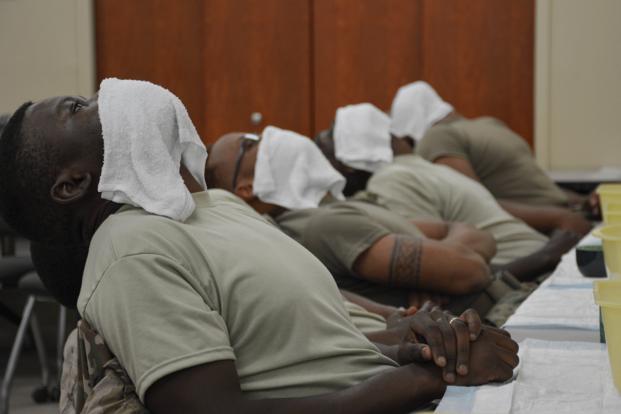
Soldiers assigned to the 3rd Infantry Division Sustainment Brigade use hot towels to warm their faces during a shaving clinic
Soldiers assigned to the 3rd Infantry Division Sustainment Brigade use hot towels to warm their faces during a shaving clinic May 22, 2017 at the brigade's organizational classroom. (Caitlyn Smoyer/U.S. Army)

The Army is preparing to roll out a new policy that could lead to soldiers diagnosed with a chronic skin condition that causes painful razor bumps and scarring to be kicked out of the service -- an issue that disproportionately affects Black men.

The new guidance, expected to take effect in the coming weeks, would bar permanent shaving waivers and require medical personnel to craft formal treatment plans for affected troops, according to multiple service officials and internal documents reviewed by Military.com.

Advertisement

Soldiers in need of prolonged waivers may be directed to get laser treatments. Those who need shaving exemptions for more than 12 months over a two-year period could be kicked out of the Army. Units across the force will also be mandated to rebrief personnel on grooming standards within 90 days of the policy's rollout.

Read Next: Military Domestic Violence Conviction Skyrocketed After Commanders Were Removed from Process

Most shaving waivers are for soldiers diagnosed with pseudofolliculitis barbae, or PFB, a condition in which hairs curl back into the skin after shaving and cause irritation. The Pentagon may cover the laser treatment, but that can cost thousands of dollars per soldier, depending on the number of sessions required. It's unclear how many soldiers would require the procedure.

Advertisemen

The American Osteopathic College of Dermatology estimates that up to 60% of Black men are affected by the condition. Laser treatments can cause scarring and changes in skin pigmentation.

"Of course, this is racially motivated," one senior noncommissioned officer familiar with the plans told Military.com on the condition of anonymity to avoid retaliation. "There's no tactical reason; you can look professional with facial hair."

In March, the Marine Corps rolled out a similar program allowing troops to be separated if the genetic skin condition persists, also raising concerns of racial discrimination.

The Army has been in a prolonged recruiting slump since the high-water mark of the wars in Iraq and Afghanistan, something it started to turn around last year.

While Black Americans make up about 14% of the U.S. population, they have accounted for roughly one-quarter of the Army's new recruits in recent years, with that number steadily rising.

However, the services have made deliberate efforts to reduce recruiting efforts linked to minority groups amid Defense Secretary Pete Hegseth's purge of diversity initiatives during the Trump administration.

In 2018, more than 44,000 new recruits identified as white, according to Army data. By 2023, that number had fallen to just over 25,000 -- a staggering 43% drop in five years. The steepest annual decline came most recently, with a 6% dip from 2022 to 2023 alone. No other demographic group has seen such a precipitous fall.

Much of the recent recruiting slump was attributable to men being less qualified, or willing, to don the uniform while women have been joining the ranks at a steady rate.

Medical complications tied to mandatory shaving emerged as a flashpoint during the military's bumpy road toward racial integration. In the early 1970s, then-Chief of Naval Operations Adm. Elmo Zumwalt launched an aggressive campaign to root out racism and sexism across the ranks.

As part of that broader push, Zumwalt issued a now-famous directive permitting sailors to grow beards and mustaches, a move that clashed with the Navy's traditionally rigid grooming codes but aimed to ease chronic skin issues that disproportionately affected Black service members.

The primary argument against allowing beards in the ranks has long centered on concerns that they could compromise the seal of a gas mask. But a 2021 study from Military Medicine, a peer-reviewed medical journal, found there's no conclusive evidence that a well-groomed, modest beard interferes with mask function.

The publication also noted that only a small fraction of service members operate in environments where chemical attacks are a realistic threat.

In Alaska, units are granted wide latitude when it comes to grooming standards, with commanders often waiving shaving requirements during the frigid winter months. Troops are frequently instructed to skip their morning shave or forgo it entirely while operating in the field -- not out of convenience but as a safety precaution. The extreme cold can make shaving a medical hazard, with exposed skin at risk of frostbite and other cold-weather injuries.

The Army move to clamp down on shaving waivers follows Hegseth, who has protested shaving waivers, ordering a sweeping review of grooming standards across the services. He has claimed that standards have fallen in recent years and damaged the military.

"We kicked out good soldiers for having naked women tattooed on their arms," Hegseth said in a March statement criticizing what he characterized as bad policy decisions by past administrations. "And today we are relaxing the standards on shaving, dreadlocks, man buns, and straight-up obesity. Piece by piece, the standard had to go -- because of equity."

Related: Air Force Unveils New Policies on Shaving, Nail Polish, Hair Length in Leaked Memos

'The Eternal Queen of Asian Pop' sings one last encore from beyond the grave


Teresa Teng, who died in 1995, still has legions of fans around the world. Nora Tam/South China Morning Post via Getty Images 

June 22, 2025 | 06:14AM ET

Several years ago, an employee at Universal Music came across a cassette tape in a Tokyo warehouse while sorting through archival materials. On it was a recording by the late Taiwanese pop star Teresa Teng that had never been released; the pop ballad, likely recorded in the mid-1980s while Teng was living and performing in Japan, was a collaboration between composer Takashi Miki and lyricist Toyohisa Araki.

Now, to the delight of her millions of fans, the track titled “Love Songs Are Best in the Foggy Nightwill appear on an album set to be released on June 25, 2025.

Teng died 30 years ago. Most Americans know little about her life and her body of work. Yet the ballads of Teng, who could sing in Mandarin, Cantonese, Japanese and Indonesian, continue to echo through karaoke rooms, on Spotify playlists, at tribute concerts and at family gatherings across Asia and beyond.

I study how pop music has served as a tool of soft power, and I’ve spent the past several years researching Teng’s music and its legacy. I’ve found that Teng’s influence endures not just because of her voice, but also because her music transcends Asia’s political fault lines.

From local star to Asian icon

Born in 1953 in Yunlin, Taiwan, Teresa Teng grew up in one of the many villages that were built to house soldiers and their families who had fled mainland China in 1949 after the communists claimed victory in the Chinese civil war. Her early exposure to traditional Chinese music and opera laid the foundation for her singing career. By age 6, she was taking voice lessons. She soon began winning local singing competitions.

“It wasn’t adults who wanted me to sing,” Teng wrote in her memoir. “I wanted to sing. As long as I could sing, I was happy.”

At 14, Teng dropped out of high school to focus entirely on music, signing with the local label Yeu Jow Records. Soon thereafter, she released her first album, “Fengyang Flower Drum.” In the 1970s, she toured and recorded across Taiwan, Hong Kong, Japan and Southeast Asia, becoming one of Asia’s first truly transnational pop stars.

Teng’s career flourished in the late 1970s and 1980s. She released some of her most iconic tracks, such as her covers of Chinese singer Zhou Xuan’s 1937 hit “When Will You Return?” and Taiwanese singer Chen Fen-lan’s “The Moon Represents My Heart,” and toured widely across Asia, sparking what came to be known as “Teresa Teng Fever.”

In the early 1990s, Teng was forced to stop performing for health reasons. She died suddenly of an asthma attack on May 8, 1995, while on vacation in Chiang Mai, Thailand, at the age of 42.


China catches Teng Fever

Perhaps the most remarkable aspect of Teng’s story is that Teng Fever peaked in China.

Teng was ethnically Chinese, with ancestral roots in China’s Shandong province. But the political divide between China and Taiwan following the Chinese civil war had led to decades of hostility, with each side refusing to recognize the legitimacy of the other.


\
Teng speaks at a press conference in Hong Kong in 1980.
P.Y. Tang/South China Morning Post via Getty Images

During the late 1970s and 1980s, however, China began to relax its political control under Deng Xiaoping’s Reform and Opening Up policy. This sweeping initiative shifted China toward a market-oriented economy, encouraged foreign trade and investment, and cautiously reintroduced global cultural influences after decades of isolation.

Pop music from other parts of the world began trickling in, including Teng’s tender ballads. Her songs could be heard in coastal provinces such as Guangdong and Shanghai, inland cities such as Beijing and Tianjin, and even remote regions such as Tibet. Shanghai’s propaganda department wrote an internal memo in 1980 noting that her music had spread to the city’s public parks, restaurants, nursing homes and wedding halls.

Teng’s immense popularity in China was no accident; it reflected a time in the country’s history when its people were particularly eager for emotionally resonant art after decades of cultural propaganda and censorship.

For a society that had been awash in rote, revolutionary songs like “The East is Red” and “Union is Strength,” Teng’s music offered something entirely different. It was personal, tender and deeply human. Her gentle, approachable style – often described as “angelic” or like that of “a girl next door” – provided solace and a sense of intimacy that had long been absent from public life.Teng performs ‘Fly Me to the Moon’ in Taipei in 1984.

Teng’s music was also admired for her ability to bridge eras. Her 1983 album “Light Exquisite Feeling” fused classical Chinese poetry with contemporary Western pop melodies, showcasing her gift for blending the traditional and the modern. It cemented her reputation not just as a pop star but as a cultural innovator.

It’s no secret why audiences across China and Asia were so deeply drawn to her and her music. She was fluent in multiple languages; she was elegant but humble, polite and relatable; she was involved in various charities; and she spoke out in support of democratic values.


A sound of home in distant lands

Throughout the 1990s and early 2000s, the Chinese immigrant population in the United States grew to over 1.1 million. Teng’s music has also deeply embedded itself within Chinese diasporic communities across the country. In cities such as Los Angeles, San Francisco and New York, Chinese immigrants played her music at family gatherings, during holidays and at community events. Walk through any Chinatown during Lunar New Year and you’re bound to hear her voice wafting through the streets.


Teng visits New York City’s Chinatown during her 1980 concert tour in the U.S.
Wikimedia Commons

For younger Chinese Americans and even non-Chinese audiences, Teng’s music has become a window into Chinese culture.

When I was studying in the U.S., I often met Asian American students who belted out her songs at karaoke nights or during cultural festivals. Many had grown up hearing her music through their parents’ playlists or local community celebrations.

The release of her recently discovered song is a reminder that some voices do not fade – they evolve, migrate and live on in the hearts of people scattered across the world.Teresa Teng’s music is still celebrated in Chinatowns across the U.S.

In an age when global politics drive different cultures apart, Teng’s enduring appeal reminds us of something quieter yet more lasting: the power of voice to transmit emotion across time and space, the way a melody can build a bridge between continents and generations.

I recently rewatched the YouTube video for Teng’s iconic 1977 ballad “The Moon Represents My Heart.” As I read the comments section, one perfectly encapsulated what I had discovered about Teresa Teng in my own research: “Teng’s music opened a window to a culture I never knew I needed.”

Xianda Huang, PhD student in Asian Languages and Cultures, University of California, Los Angeles

This article is republished from The Conversation under a Creative Commons license. Read the original article.



'Jaws' — and the two musical notes that changed Hollywood forever

Many film historians see ‘Jaws’ as the first true summer blockbuster. 

June 22, 2025 |


“Da, duh.”


Two simple notes – E and F – have become synonymous with tension, fear and sharks, representing the primal dread of being stalked by a predator.

And they largely have “Jaws” to thank.

Fifty years ago, Steven Spielberg’s blockbuster film – along with its spooky score composed by John Williams – convinced generations of swimmers to think twice before going in the water.

As a scholar of media history and popular culture, I decided to take a deeper dive into the staying power of these two notes and learned about how they’re influenced by 19th-century classical music, Mickey Mouse and Alfred Hitchcock.When John Williams proposed the two-note theme for ‘Jaws,’ Steven Spielberg initially thought it was a joke.


The first summer blockbuster

In 1964, fisherman Frank Mundus killed a 4,500-pound great white shark off Long Island.

After hearing the story, freelance journalist Peter Benchley began pitching a novel based on three men’s attempt to capture a man-eating shark, basing the character of Quint off of Mundus. Doubleday commissioned Benchley to write the novel, and in 1973, Universal Studios producers Richard D. Zanuck and David Brown purchased the film rights to the novel before it was published. The 26-year-old Spielberg was signed on to be the director.

Tapping into both mythical and real fears regarding great white sharks – including an infamous set of shark attacks along the Jersey Shore in 1916 – Benchley’s 1974 novel became a bestseller. The book was a key part of Universal’s marketing campaign, which began several months before the film’s release.

Starting in the fall of 1974, Zanuck, Brown and Benchley appeared on a number of radio and television programs to simultaneously promote the release of the paperback edition of the novel and the upcoming film. The marketing also included a national television advertising campaign that featured emerging composer Williams’ two-note theme. The plan was for a summer release, which, at the time, was reserved for films with less than stellar reviews.TV ads promoting the film featured John Williams’ two-note theme.

Films at the time typically were released market by market, preceded by local reviews. However, Universal’s decision to release the film in hundreds of theaters across the country on June 20, 1975, led to huge up-front profits, sparking a 14-week run as the No. 1 film in the U.S.

Many consider “Jaws” the first true summer blockbuster. It catapulted Spielberg to fame and kicked off the director’s long collaboration with Williams, who would go on to earn the second-highest number of Academy Award nominations in history – 54 – behind only Walt Disney’s 59.


The film’s beating heart

Though it’s now considered one of the greatest scores in film history, when Williams proposed the two-note theme, Spielberg initially thought it was a joke.

But Williams had been inspired by 19th and 20th century composers, including Claude Debussy, Igor Stravinsky and especially Antonin Dvorak’s Symphony No. 9, “From the New World.” In the “Jaws” theme, you can hear echoes of the end of Dvorak’s symphony, as well as the sounds of another character-driven musical piece, Sergei Prokofiev’s “Peter and the Wolf.”

“Peter and the Wolf” and the score from “Jaws” are both prime examples of leitmotifs, or a musical piece that represents a place or character.

The varying pace of the ostinato – a musical motif that repeats itself – elicits intensifying degrees of emotion and fear. This became more integral as Spielberg and the technical team struggled with the malfunctioning pneumatic sharks that they’d nicknamed “Bruce,” after Spielberg’s lawyer.

As a result, the shark does not appear until the 81-minute mark of the 124-minute film. But its presence is felt through Williams’ theme, which some music scholars have theorized evoke the shark’s heartbeat.


During filming, issues with ‘Bruce’ the mechanical shark forced Steven Spielberg to rely more on mood and atmosphere.
Screen Archives/Moviepix via Getty Images

Sounds to manipulate emotions

Williams also has Disney to thank for revolutionizing character-driven music in film.

The two don’t just share a brimming trophy case. They also understood how music can heighten emotion and magnify action for audiences.

Although his career started in the silent film era, Disney became a titan of film, and later media, by leveraging sound to establish one of the greatest stars in media history, Mickey Mouse.

When Disney saw “The Jazz Singer” in 1927, he knew that sound would be the future of film.

On Nov. 18, 1928, “Steamboat Willie” premiered at Universal’s Colony Theater in New York City as Disney’s first animated film to incorporate synchronized sound.

Unlike previous attempts to bring sound to film by having record players concurrently play or deploying live musicians to perform in the theater, Disney used technology that recorded sound directly on the film reel.

It wasn’t the first animated film with synchronized sound, but it was a technical improvement to previous attempts at it, and “Steamboat Willie” became an international hit, launching Mickey’s – and Disney’s – career.

The use of music or sound to match the rhythm of the characters on screen became known as “Mickey Mousing.”

“King Kong” in 1933 would deftly deploy Mickey Mousing in a live action film, with music mimicking the giant gorilla’s movements. For example, in one scene, Kong carries away Ann Darrow, who’s played by actress Fay Wray. Composer Max Steiner uses lighter tones to convey Kong’s curiosity as he holds Ann, followed by ominous, faster, tones as Ann escapes and Kong chases after her. In doing so, Steiner encourages viewers to both fear and connect with the beast throughout the film, helping them suspend disbelief and enter a world of fantasy.

Mickey Mousing declined in popularity after World War II. Many filmmakers saw it as juvenile and too simplistic for the evolving and advancing film industry.

When less is more

In spite of this criticism, the technique was still used to score some iconic scenes, like the playing of violins in the shower as Marion Crane is stabbed in Alfred Hitchcock’s “Psycho.”

Spielberg idolized Hitchcock. A young Spielberg was even kicked off the Universal lot after sneaking on to watch the production of Hitchcock’s 1966 film “Torn Curtain.”

Although Hitchcock and Spielberg never met, “Jaws” clearly exhibits the influence of Hitchcock, the “Master of Suspense.” And maybe that’s why Spielberg initially overcame his doubts about using something so simple to represent tension in the thriller.


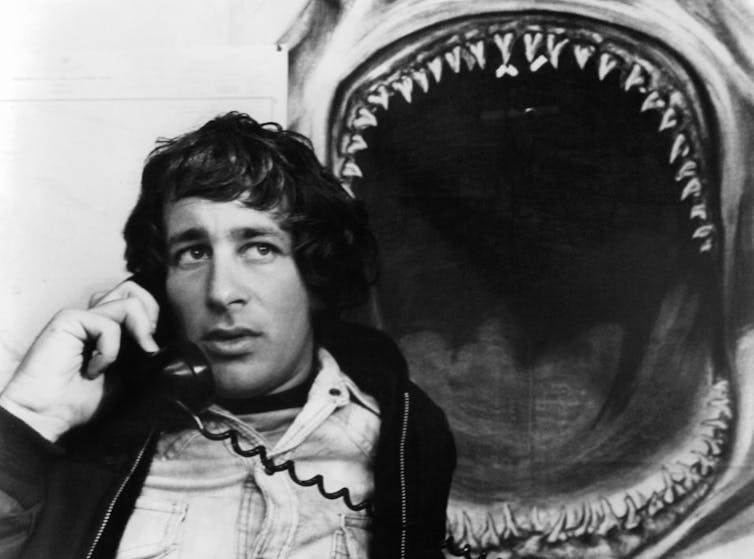
Steven Spielberg was just 26 years old when he signed on to direct ‘Jaws.’
Universal/Getty Images

The use of the two-note motif helped overcome the production issues Spielberg faced directing the first feature length movie to be filmed on the ocean. The malfunctioning animatronic shark forced Spielberg to leverage Williams’ minimalist theme to represent the shark’s ominous presence in spite of the limited appearances by the eponymous predatory star.

As Williams continued his legendary career, he would deploy a similar sonic motif for certain “Star Wars” characters. Each time Darth Vader appeared, the “Imperial March” was played to set the tone for the leader of the dark side.

As movie budgets creep closer to a half-billion dollars, the “Jaws” theme – and the way those two notes manipulate tension – is a reminder that in film, sometimes less can be more.

Jared Bahir Browsh, Assistant Teaching Professor of Critical Sports Studies, University of Colorado Boulder

This article is republished from The Conversation under a Creative Commons license. Read the original article.

'Banning people for speech': US State Dept. revokes English punk duo’s visa after Glastonbury chant


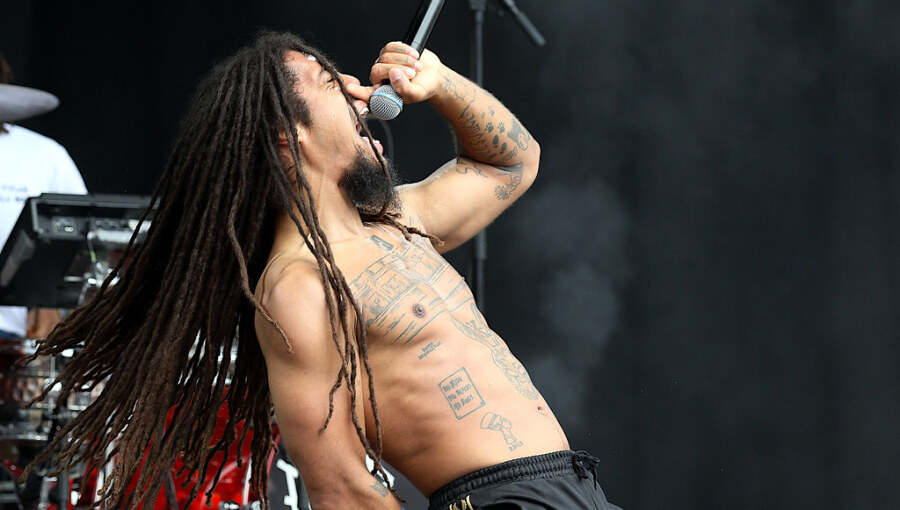
Guitarist and singer Bobby Vylan of the punk-rap duo Bob Vylan delivers a message in support of Palestinians during his performance at the Glastonbury music festival, in Pilton, Britain, June 28, 2025, in this still image from video obtained from social media. ROCKAWAY PARK/via REUTER

June 30, 2025 |


On Monday morning, June 30, the Washington Free Beacon's Adam Kredo reported that according to a U.S. State Department official, visas for the British punk/hip-hop punk artist Bob Vylan had been revoked.

Vylan was planning a North American tour for the fall, with performances in both the U.S. and Canada. Dates in New York City and Boston were planned for early November but would be canceled if Vylan is unable to perform in the U.S.

Vylan, an outspoken critic of the Israeli government's Gaza policy and the Israeli Defense Forces (IVF), hasn't shied away from controversy in the U.K. — leading a crowd in a chant of "Death to the IDF" during a performance at the Glastonbury Festival.

The news on Vylan's U.S. visa is drawing a lot of reactions on X, formerly Twitter — including tweets from MAGA Republicans who are praising the move.

Author and WorldStrat President Jim Hanson tweeted, "This is how you treat terrorist promoters."

But critics are calling it out as an attack on free speech by The Trump Administration — including some who don't necessarily agree with Vylan's views.

Progressive Jacob Bonfarte wrote, "Where did they promote terrorism?"

Another X user, Daniel Hannan, argued, "Free speech means you can be ill-mannered up to the point of harassment, obnoxious up to the point of intimidation, offensive up to the point of incitement. This applies equally to Kneecap, Bob Vylan and Lucy Connolly - none of whom actually pushed people into violence."

Hannan also tweeted, "Who was incited? Do we really suppose that the stoned attendees at Glastonbury are going to board the next flight to Ben Gurion and attack an IDF soldier?"

X user Razor Marone tweeted, "Why shouldn’t Bob Vylan, or indeed anyone else, be able to tell those who are carrying out genocide on live tv daily (or enthusiastically supporting them doing so) to go f--- themselves? I'm getting a bit confused on the concept of free speech in this country?"

Marone also posted, "Free speech for me and not for thee again is it?"

Britbatcali wrote, "If they manage to not allow Bob Vylan entry to the US there should be a mass streaming effort or something to get around this censorship. They welcome war criminals but will silence those opposed to war crimes."


Anarchist Frodo commented, "Banning people for their speech is as un-American as it gets. If you think Bob Vylan is an evil POS, then dont support him. Just remember that when the pendulum swings back, the leftists won't hesitate to ban you over free speech either."


FREE GAZA! FUCK KEIR STARMER! DEATH TO THE IDF!

Iran MP calls Bob Vylan 'brother' after ‘death to the IDF’ chant

Iran MP calls Bob Vylan 'brother' after ‘death to the IDF’ chant
Performer Bob Vylan in 2022. / CC: NMK Photography
By bnm Gulf bureau July 1, 2025

An Iranian MP has praised British rap-punk duo Bob Vylan following their recent highly contentious performance at the Glastonbury music festival in England, calling them a "brother" and suggesting artists would join the fight against Israel, the Ana news agency reported on July 1.

Mojtaba Zarei, a member of Iran's parliament National Security and Foreign Policy Commission, has surprised many in Iran with his words of encouragement to the duo, which have caused a political storm in the UK following last weekend’s performance on the Pyramid stage at the annual music festival.

Bob Vylan is a British rap-punk duo that led crowds at Glastonbury Festival on June 28 in chants of "death, death to the IDF" and "free, free Palestine," prompting police investigations and US visa revocations ordered by President Donald Trump.

Zarei reacted to Bob Vylan's recent concert by posting on social media platform X: "Greetings to Vylan! He is our brother!"

The MP suggested that even without support from Hezbollah, Hamas, Ansar and Iranians, artists would oppose Israel. "Artists will come to war against you Israeli cannibals!" Zarei wrote.

Zarei referenced the late Mojtahed Tehrani, saying that in Karbala, more of "these same people" came to the aid of Hussein than the pious, conservatives and cowards.

He stopped short of offering the musical pair a performance in Iran, an offer rarely made to foreign musicians, something rarely offered to foreign performers.

The duo have come under increasing pressure in recent days with their agency, United Talent Agency dropping them as clients and removing them from their website following the backlash over the comments. 

UK Prime Minister Sir Keir Starmer and other politicians condemned the chants as hate speech, and Glastonbury organisers distanced themselves from the band, stating the performance "crossed a line" and emphasising there is no room for antisemitism or incitement at the festival.

The last Western musicians to perform in Iran were Germany’s Schiller, in 2017, with earlier attempts by other singers including Chris de Burgh visiting the country in 2008 but not being permitted to perform his “Lady in Red” song.

'Chilling effect': Faith groups slam GOP investigation as 'invasion of religious liberty'


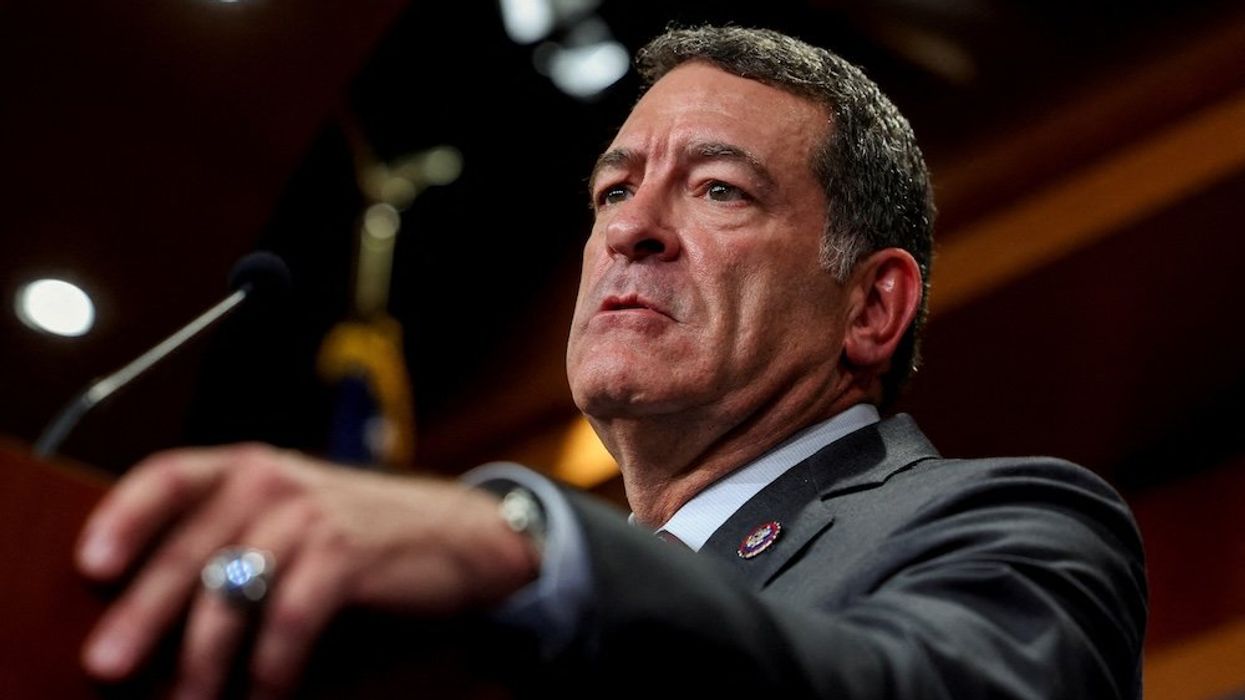
U.S. Rep. Mark Green (R-TN) speaks alongside House Republican impeachment managers and other Senate Republicans during a press conference on the impeachment of U.S. Secretary of Department of Homeland Security, Alejandro Mayorkas on Capitol Hill in Washington, U.S., April 16, 2024. REUTERS/Amanda Andrade-Rhoades/File Photo


June 26, 2025
ALTERNET

Religious organizations are slamming a Republican House probe, calling it a violation of their liberty, reports Religion News Service.

“It’s an invasion of religious liberty,” said Bishop Dwayne Royster, a United Church of Christ pastor who heads Faith in Action. Royster argues his group reserves the right to practice a form of faith “which says that there’s no strangers amongst us, that we’re all siblings.”

But Royster said Reps. Mark E. Green (R-Tenn.) and Josh Brecheen (R-Okla.) were anything but friends when they announced plans to probe more than 200 nongovernmental organizations earlier this month. The congressmen are accusing their targets of being “involved in providing services or support to inadmissible aliens during the Biden-Harris administration’s historic border crisis.”

Royster told Religion News the probe was “designed to have a chilling effect” on organizations like Faith in Action. He added: “I will be damned if they’re going to stop us from doing what we feel mandated and called to do by God: To care for other human beings to the best of our ability.”

The chairmen are requesting each non-governmental organization complete a survey of questions about government grants, contracts, and disbursements they received, lawsuits they are petitioning and amicus briefs they have filed in any lawsuit brought against the federal government. The survey also demands organizations reveal any legal service, translation service, transportation, housing, sheltering, or any other form of assistance they’ve provided to non-citizen residents or unaccompanied non-citizen children since January 2021.

Green and Breechen, who chair the House Subcommittee on Oversight, Investigations and Accountability, expressly targeted the U.S. Conference of Catholic Bishops, Catholic Charities USA, the Council on American-Islamic Relations and Global Refuge for the probe. But a list provided to Religion News Service indicates more than 30 religious groups have received the lawmakers' letter.

Royster said the questionnaire wasn’t relevant to Faith in Action’s work, and said he had no intention of responding to it.

Unitarian Universalist Association general counsel Adrienne K. Walker denied her denomination receiving any grants, contracts or disbursements from the Biden administration, and she criticized the probe as appearing “to target the UUA and its members’ fundamental rights to exercise their religious practices protected under the First Amendment to the Constitution and the Religious Freedom Restoration Act.”

United States Conference of Catholic Bishops' spokesperson Chieko Noguchi said USCCB plans to respond to the survey but argues that the USCCB has a 45-year agreement with the federal government to serve groups of people authorized by that same government to receive assistance.

Read the full Religion News Service report at this link.


'Biblical prophecy': Christian nationalists pushing Trump to 'usher in the End Times'


Alex Henderson
June 25, 2025 |
ALTERNET

Before launching his 2016 presidential campaign, Donald Trump didn't have a lot of contact with evangelical Christian fundamentalism.

Trump was raised Presbyterian/Mainline Protestant — not evangelical — in Queens by a Scottish immigrant mother and an American father. And religion, even non-fundamentalist Protestant Christianity, wasn't a high priority for him.

In 2016, 2020 and 2024, however, white evangelicals were a key part of Trump's MAGA base. And he gets a lot of input from them, often attacking Democrats as anti-religion even though many prominent Democrats — from Sen. Raphael Warnock (D-Georgia) to MSNBC's the Rev. Al Sharpton to Catholic former House Speaker Nancy Pelosi (D-California) — are quite religious and can quote the Bible with much more detail than Trump.

In an article published on June 25, Salon's Amanda Marcotte warns that Trump is getting a lot of input from far-right white Christian nationalists on the Middle East and explains why that is dangerous.


"The wild claims made by leaders of the Christian Right have also been in the mix: that Trump is a prophet sent by God to usher in the End Times, and that attacking Iran is necessary to bring about the end of the world and the return of Jesus Christ," the Philadelphia-based Marcotte explains. "It's this delusion that (Sen. Ted) Cruz was winking at, and it was likely a powerful reason Trump decided to escalate."

White evangelical Christian fundamentalists have a complex relationship with Israel. On one hand, they believe that Jews are damned to eternal hell because they don't accept Jesus Christ as the Messiah; on the other hand, they consider themselves very pro-Israel because of the role they think Israel will play in the End Times.

"Anthea Butler, a religious studies professor at the University of Pennsylvania, told Salon that Cruz was referencing evangelical belief in a Biblical prophecy that war involving Israel and the larger Middle East is 'only one more step in ushering in Jesus' return," Marcotte notes. "As journalist Sarah Posner explained at Talking Points Memo, 'this movement holds that a series of prophesied events, including Jews' return to Israel and invasion by armies of foreign countries including Iran, will culminate in a bloody, victorious battle at Armageddon.'"

Marcotte continues, "As a result, the conflict between Iran and Israel has launched a frenzy within evangelical circles, as they hope the final battle is coming and they will get to witness the End Times…. Family Research Council head Tony Perkins was one of the architects of Project 2025, the far-right plan for a government takeover being implemented by Trump's administration. He's also a big believer in this Biblical prophecy and, as Kyle Mantyla of Right Wing Watch documented, has been using his podcast to frame war with Iran as the key to bringing Jesus back to Earth."

According to Marcotte, the "pressure from Trump's evangelical base" on the Middle East "offers insight into why he is cracking."

"He almost certainly would like to leave his intervention in Iran behind," Marcotte observes. "But he can't say no to evangelicals, because he knows that he’s nothing without them."

Amanda Marcotte's full article for Salon is available at this link.


'So grateful': Pro-Trump Texas pastors view bombings as preamble to 'bloody last battle'

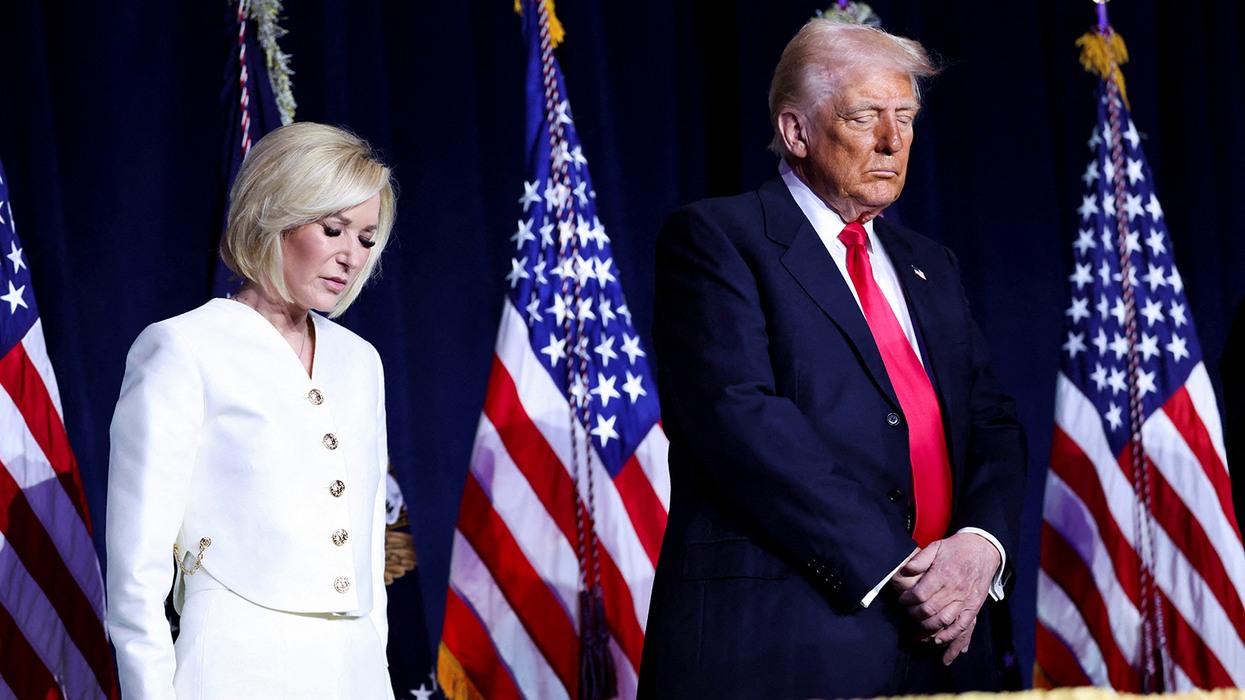
U.S. President Donald Trump and Pastor Paula White attend the annual National Prayer Breakfast at Hilton hotel in Washington, U.S., February 6, 2025. REUTERS/Kevin Lamarque REFILE - QUALITY REPEAT

June 23, 2025 |
ALTERNET

In the aftermath of the United States' strike on Iran’s nuclear facilities over the weekend, Christian Zionism took center stage as conservative Texas pastors rallied, framing the military action as a Biblical mandate rather than mere geopolitics, the Houston Chronicle reported Monday.

Pastor Jack Graham of Plano’s Prestonwood Baptist Church led the chorus, praising President Donald Trump’s strike and declaring he was “so grateful for his moral clarity and his commitment to keep America safe and protect it.”

The Chronicle further reported that Graham told his congregation of 50,000 that “peace comes through strength” and warned, “You cannot allow the primary sponsor of terrorism in the world to have a nuclear weapon.”

On Sunday morning, Graham took to social media, writing: "As we gather in churches across America and around the world today, let us pray with thanksgiving that the nuclear threat of Iranian madmen is obliterated."

This support extends beyond national security concerns into a broader evangelist movement rooted in dispensationalist theology — a belief that backing Israel is not only politically sound but fulfills prophecy and hastens the Second Coming of Christ.

Texas pastors have consistently expressed solidarity with Israel, citing U.S. involvement in conflicts with Hamas and Iran as part of a divine script. Their conviction is that partial support won't suffice and unwavering allegiance to Israel is a scriptural imperative.

The Chronicle's report notes that leaders like San Antonio’s Pastor John Hagee have turned Christian Zionist ideology into political power. Hagee founded Christians United for Israel (CUFI), which claims over 10 million members and aggressively lobbies for pro-Israel initiatives, including embassy relocation, settlement backing, and even pre‑emptive strikes against Iran, per the report.

At CUFI gatherings, conflict in the Middle East is reportedly portrayed not as diplomacy gone wrong but as the necessary precursor to the “bloody last battle at Armageddon,” after which believers expect Jesus to return and usher in a thousand-year reign.

For adherents, current Middle Eastern tensions aren’t accidents of history — they’re foretold events coming to life. This worldview has translated into tangible influence: evangelical voters and lobbyists have shaped U.S. policy on Jerusalem, the Golan Heights, and pressure on Iran.

Despite this, criticism comes from within Christian ranks. Historical declarations like La Grange in 1979 and 1981 challenged the theological underpinnings of Christian Zionism, warning that uncritical support for Israel undermines Palestinian rights and complicates interfaith efforts.

Meanwhile, younger evangelicals are increasingly questioning whether scripture mandates backing every Israeli policy or military action, the report noted.
 
'It's coming': Trump's new warning to reporters escalates fears in the press


Ailia Zehra
June 30, 2025
ALTERNET

President Donald Trump, in an interview on Fox News aired Sunday, warned of efforts to hold reporters and Democratic figures accountable for allegedly leaking classified intelligence.

When host Maria Bartiromo pointed to Trump's recent social media posts critizing media outlets that reported on an intelligence assessment that Iran's nuclear program was not "obliterated" in recent U.S. strikes, Trump said, “They should be prosecuted.”

“Who specifically?” the anchor asked.

Trump outlined an assertive plan: “We can find out. You go up and tell the reporter, 'national security, who gave it?' You have to do that. And I suspect we'll be doing things like that.”

The president's remarks generated backlash on social media, with journalists and attorneys raising concerns over his apparent plan to target reporters for their stories.

National security attorney Mark Zaid wrote on the social platform X: "Be ready for President Trump to pursue prosecution against journalist[s] under #EspionageAct, particularly if they don't reveal source. It's coming. #1stAmendment won't protect."

Tracey Gallagher, another attorney, wrote: "The reporter is not legally obligated to turn over a leaker’s identity to the Department of Justice (DOJ), even if national security is cited, due to strong First Amendment protections for the press. The landmark 1971 Supreme Court case New York Times Co. v. United States (the Pentagon Papers case) established that the government cannot censor or compel the press to reveal sources, even in matters involving national security."

She added, referencing Trump's social media post calling for mass evacuations in Tehran: "You were also the one who told everyone in Tehran to evacuate. You might want to look into your inner circle they might not be as loyal as you thought they were."

Writer Mona Burns said: "They are doing everything they can think of the kill free speech. He's heavily implying here that they're now going to start challenging what is known as 'reporter's privilege.' A right granted in the First Amendment giving press the ability to protect their sources."

A user posted: "Trump didn’t just attack Democrats — he openly called for gutting press freedom. He wants reporters bullied into naming sources like it’s a police state. And Bartiromo? She sat there grinning, practically handing him the match to burn the First Amendment. This isn’t tough talk — it’s the language of dictatorship in drag."

"Imagine his surprise when he realizes it was someone from his own administration!" wrote another user.

"He’s blaming Democrats and he doesn’t know who leaked the intel?" said another X account.


'Why not the press?' Trump may use this century-old law to prosecute and jail journalists


Donald Trump gestures at Turning Point USA's AmericaFest in Phoenix, Arizona, U.S., December 22, 2024. REUTERS/Cheney Orr/File Photo


Carl Gibson
 June 30, 2025
ALTERNET

A new report suggests that President Donald Trump may soon be setting his sights on the Fourth Estate, and his administration is already allegedly looking for a "test case" to see how much it can get away with in the courts.

That's according to a Monday article in Rolling Stone, which reported that unnamed sources close to the White House say Trump is considering the Espionage Act to prosecute journalists who report on leaks obtained from inside the administration. According to Rolling Stone, the president was so incensed about reporting on a leaked Pentagon report that undermined his claims about Iranian nuclear sites being "obliterated" as a result of strikes he ordered in mid-June that he contemplated using the 108 year-old law to bring cases against reporters.

"Why not the press?" Trump reportedly said during the conversation.

The source said that the Trump administration would not only charge individual journalists under the Espionage Act, but would also indict their employers as "co-conspirators" and bring cases against publications. A separate source described as a "senior Trump administration official" affirmed that the question of whether to invoke the Espionage Act wasn't merely theoretical.

"All we’d really need is one text or email from a reporter telling a source: ‘Can you pull something for me?’ or something very direct of that nature,” the senior official told Rolling Stone. “If somebody in the media wasn’t careful even for a split second, that could make the difference between a reporter, and a criminal.”

Rolling Stone's Ryan Bort and Asawin Suebsaeng recalled a comment from an unnamed conservative attorney close to Trump who suggested in December that Trump's second term would be "brutal" in his approach to whistleblowers, leakers and journalists who they speak to. That attorney promised that Trump's second administration would "be even more aggressive" in its crackdown on leaks and reporters that publish them.

Trump isn't the first president to use the Espionage Act against journalists, however. Bort and Suebsaeng reported that former President Barack Obama's administration indicted eight sources under the law, though Trump had already surpassed that number just two years into his first term.
Trump’s Attack on Science Will Leave Us All Sicker

Budget cuts and layoffs at major U.S. public health agencies threaten our health and well-being and will hobble scientific progress and innovation.


Former federal workers protest against Trump administration policies in front of the Hubert Humphrey Health and Human Services building in Washington D.C. on February 19, 2025.
(Photo Dominic Gwinn / Middle East Images / Middle East Images via AFP)

Tim Whitehouse
Jun 22, 2025
Common Dreams


The Trump administration’s evisceration of the federal agencies that protect our health and environment is a full-throttled attack on science that will set our nation back for years, if not decades to come.

The illegal firings of thousands of employees across Health and Human Services’ (HHS) 13 divisions, the freezing of government contracts, attacks on universities, and cuts to billions in research dollars will have profound effects on our health and well-being, economic competitiveness, and standing as a world leader in science.

And the wrecking ball has just begun swinging. HHS is slated to shed 20,000 employees, or one-quarter of its dedicated workforce, and see its budget cut by 26%.

At its worst, the dismantling of federal agencies like the CDC, the NIH, and the Food and Drug Administration is cruelly calculated to hurt those most vulnerable in our society—the poor, the disabled, and the elderly.

A disdain for independent science and expertise is seemingly a root cause of the actions. As Sudip Parikh, chief executive officer of the American Association for the Advancement of Science and executive publisher, Science journals said at this year’s annual meeting in Boston, “Science and engineering and medicine are searches for truth, facts, and objectivity. We live in a time when that seems under threat, and we need to be able to say that.”

To his point, a May 23 Executive Order puts science under the control of politicians by giving presidential appointees broad latitude to police scientific research and conduct and punish alleged violations of its Orwellian “Gold Standard Science.”

Robert F. Kennedy Jr., the secretary of HHS, has already acted on the EO by firing the entire advisery committee that helps guide vaccine policy for the Centers for Disease Control and Prevention (CDC). Seventeen highly qualified, evidence-based physicians and researchers, many with decades of expertise, are to be replaced with individuals aligned with Kennedy’s anti-vaccination ideology.

The president’s appointment of Kennedy, a lawyer with no scientific training, to lead the HHS is itself an attack on expertise and truth. In four short months, Kennedy has made ill-informed decisions from announcing a change in Covid-19 vaccine policy without notifying the CDC, to offering a Florida sanctuary for Canadian ostriches exposed to bird flu, to ending the development of a vaccine for the H5N1 virus, even as researchers demonstrate its ability to rapidly spread through airborne transmission.

Science is clearly taking a backseat to grandstanding, and the consequences could be deadly.

At its best, the demolition of our public health and research institutions shows an indifference to the pain and suffering that may fall on Americans when the agencies that keep our food safe, water clean, and protect us from deadly diseases are kneecapped. At its worst, the dismantling of federal agencies like the CDC, the NIH, and the Food and Drug Administration is cruelly calculated to hurt those most vulnerable in our society—the poor, the disabled, and the elderly.

Americans are already sicker and die younger in comparison with other wealthy nations, according to a 2024 report by the Commonwealth Fund. Life expectancy is 4.1 years shorter in the U.S. compared with our peer nations, and maternal mortality, for instance, is more than three times higher than in Europe. The Trump administration’s attacks on science and medicine will only worsen these gaps.

Lawsuits challenging the legality of the administration’s executive orders are moving through the court system, but we do not yet know how all of this will play out.

Already the damages are taking a toll, with NIH being especially hard hit. With an annual budget of $47 billion, the NIH is the world’s largest public funder of biomedical research and development. It’s no coincidence that the world’s leading medical labs are located in the U.S., or that our research benefits people across the globe.

The Trump administration plans to cut NIH’s budget by $18 billion, or about 40%, and to consolidate its 27 institutes and centers into just eight. At least 2,100 NIH research grants have been terminated thus far, totaling $9.5 billion.

With at least 1,200 staff laid off all at once, and thousands more voluntarily resigning, the loss of institutional knowledge and medical expertise is staggering. The full extent of the brain drain is unknown because NIH Director Jayanta Bhattacharya has yet to report the total number of staff losses.

One of NIH’s critical roles is to fund the basic science research that underpins development of drugs and therapeutics, long before the private sector takes an interest. Companies take that basic science and further develop and commercialize vaccines, drugs, and therapies that save lives. Funding for the grants that the NIH provides these labs, universities, and institutions has largely been frozen for the past month, as part of the administration’s war on universities, even though a federal judge ordered a release of the money. Billions of biomedical research dollars allocated to Harvard, Cornell, Northwestern, Brown, Columbia, and Princeton are being withheld.

The agency has reportedly stopped vetting future studies on cancer, Alzheimer’s, heart disease, and other illnesses and slashed the programs for cancer and Alzheimer’s research.

The Trump administration also cut the overhead rate that NIH pays to research universities to keep the lights on, computers running, and lab equipment maintained from between 40% and 70% to 15%. Such deep cuts will lead to even more layoffs, and research could grind to a halt.

While a U.S. District Court ruled the change was “arbitrary and capricious,” it’s unclear whether the Trump administration will reverse the policy.

Halting research will have profound impacts on the American health system and on our health.

It will disrupt local economies and hurt our overall competitiveness. Every dollar that NIH spends on research generates more than two dollars in economic activity, not to mention the patents and biomedical startups that ensue.

Some U.S. universities are reducing or halting their PhD admissions as a consequence. Doctoral students—our scientific future—are watching their dreams die.

“Many are right now questioning the viability of being a scientist in the U.S. going forward,” Carole Labonne, developmental and stem cell biologist at Northwestern University, said in a PBS interview. We could see a brain drain in the U.S., as young scientists choose a different career path or choose another country in which to build their career.

And NIH is but one federal agency that the Trump administration is taking a chain saw to. Cuts at the Food and Drug Administration could have immediate impacts on our food safety, at a time when food contamination outbreaks are on the rise. Staff with technical expertise in nutrition, infant formula, and food safety response have been cut.

Similarly, at the CDC, staff cuts and contract freezes are coming at a time when the nation is experiencing an H5N1 outbreak in poultry and dairy cattle that may well lead to another pandemic, an unprecedented spread of measles in 33 states, and a tuberculosis outbreak in Kansas. The CDC plays a vital role, working with states and communities to understand where disease is, how to prevent it, and how to react. Simply put, we are losing people on the front lines of keeping people healthy.