Tuesday, July 01, 2025

REST IN POWER

Bill Moyers Was a Truth-Teller, Not a Stenographer for the Powerful

He showed a generation of journalists, scholars, and public intellectuals what it means to speak truth to power.
PublishedJune 27, 2025

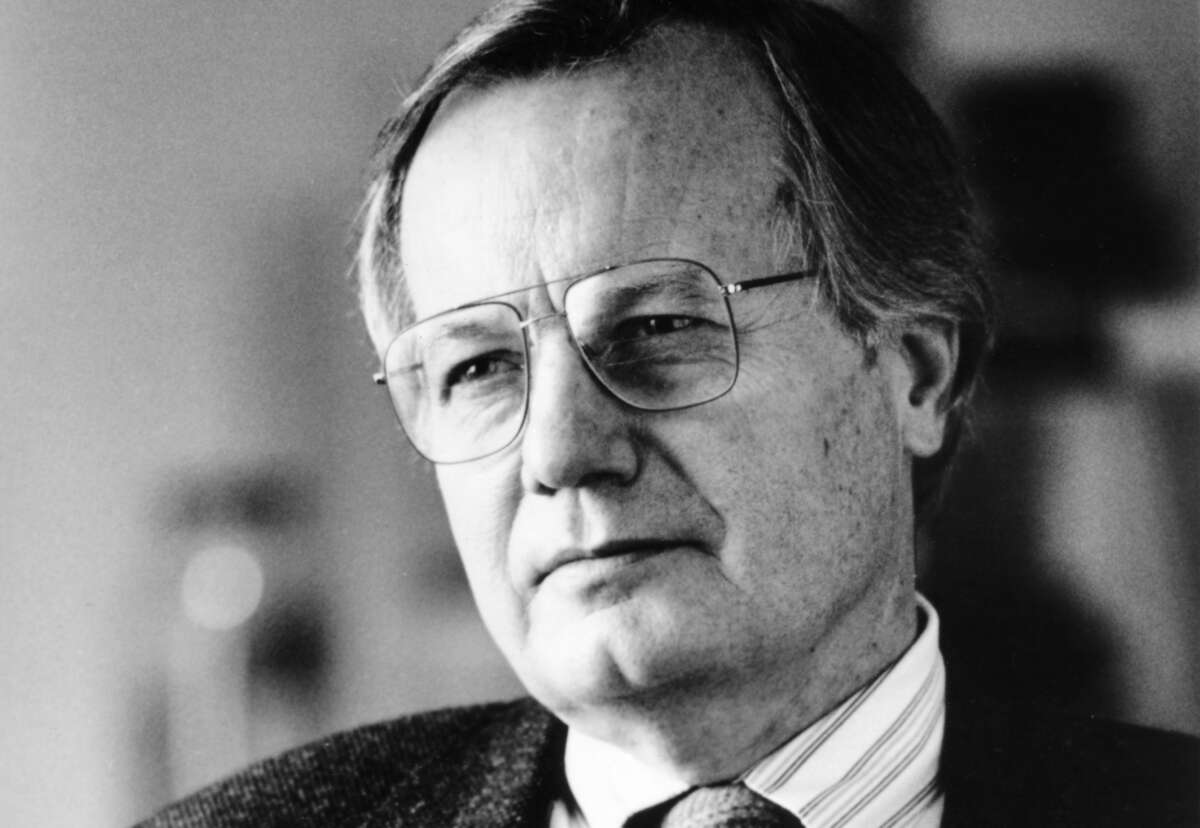
Bill Moyers, journalist and White House press secretary for President Lyndon Johnson, pictured in the 1980's.
Universal History Archive / Universal Images Group via Getty Images


My dear friend, Bill Moyers, died yesterday.

He was the finest interviewer I’ve ever worked with, probing, fearless, and profoundly attuned to both the fragility and the enduring promise of democracy. With a rare combination of moral clarity and intellectual generosity, Bill devoted his life to illuminating the dangers that threatened the democratic imagination and nurturing its most humane possibilities. His work was never about spectacle or self-regard; it was about awakening the American conscience.

Bill began his journey into the public eye as a young press secretary for President Lyndon B. Johnson, where he was thrust into the center of political history. In that role, he became a quiet but relentless force behind the scenes, shaping key moments in U.S. governance. His time in the White House only deepened his understanding of the importance of truth in politics and the role of the media in safeguarding democracy. It was this commitment to truth-telling that would later define his extraordinary career in journalism. Through the power of his two landmark television programs, including “Bill Moyers Journal” and “Moyers & Company,” Bill gave space to the underrepresented, held power to account, and invited audiences into the most critical conversations of our time. These shows, which spanned decades, were more than just broadcasts; they were lifelines of intellectual rigor and moral clarity in a media landscape often dominated by spectacle and shallow soundbites. With each episode, Bill didn’t just inform — he awakened the public conscience, reminding us all of our collective responsibility to protect the fragile promise of democracy.

After reading one of my essays on Truthout, Bill would often write to me with words of encouragement far more generous than I deserved. His praise was never performative; it came from a place of humility and grace, grounded in a deep and abiding belief in the power of truth-telling. Every note he wrote carried with it a quiet but fierce sense of solidarity. He made you feel that your work mattered, that it was part of a larger struggle for justice and dignity.

As the years went on, Bill grew increasingly troubled by the authoritarian currents rising in the United States, the erosion of truth, the takeover of the media by financial elites, and the transformation of journalists into little more than stenographers for the powerful. Yet even in his despair, he remained committed to naming what was wrong with stunning precision and passion.

Related Story
Interview |
Moving Toward Plutocracy: Bill Moyers Talks to Ben Fountain About the Trump Age
Ben Fountain’s “Beautiful Country Burn Again” is a bold, brave book about the state of politics in the era of Trump.
By Bill Moyers , Moyers&CompanyOctober 18, 2018


Bill Moyers was no ordinary commentator; he was a giant. He saw the wider issue in all of its complexity with unmatched brilliance and clarity. Though he was always quick to praise others for their courage, it was he who modeled what moral and political courage looked like. He mentored a generation of journalists, scholars, and public intellectuals — not through grand declarations but by showing, day after day, what it means to speak truth to power with grace and conviction.

The best interview of my life was with him in 2013. Bill came to it as he came to everything: with deep preparation, fierce intellect, and compassion that never wavered. That conversation remains, for me, a testament to who he was.

His passing is a profound loss. In a time when so much of the media has surrendered to banality, historical amnesia, and cowardice, Bill’s legacy stands as a luminous reminder of what journalism can be: fierce, principled, and devoted to democracy’s highest ideals and the promise of a more just, equal, and radically democratic future. In these dark and dangerous times, the urgency of his example could not be clearer. The work he championed must live on. We owe him that, and so much more.

Bill Moyers was more than a mentor, teacher, inspiration, and friend; he was a symbol of hope, whose courage inspired so many of us through the murk of such dark times. His absence leaves a profound silence, a space where hope for the future appears in retreat. But even with this painful loss, there is a call to action, an echo of his enduring commitment to truth, democracy, and the common good. The shadow of giants like Bill Moyers is not a place of despair, but of inspiration, urging us to carry forward the work he began, to give voice to the voiceless, and to never let go of the fragile but precious ideals he cherished.

I will miss you, rest in peace, my friend.
As Extreme Heat Bakes US, 160+ Global Groups Demand 'Real' Climate Action

"Reject false solutions, such as natural gas, mega-dams, geoengineering, bioenergy, forest offsets, carbon trading schemes, nuclear energy, biodiversity credits, and carbon capture and storage."


People try to stay cool in New York City, as temperatures hit the high 90s with a heat index o over 100ºF, on June 23, 2025.
(Photo: Spencer Platt/Getty Images)

Jessica Corbett
Jun 23, 2025
COMMON DREAMS

As about 265 million people across the United States face advisories for this week's "climate change-driven heatwave," over 160 groups from 45 countries on Monday collectively called for "real" and urgent action to "keep global warming below 1.5ºC to preserve a healthy and livable planet for ourselves and future generations."

The "call to action" was released as United Nations climate meetings are wrapping up in Bonn, Germany, and in anticipation of the next U.N. Climate Change Conference (COP30), set to be held in Belém, Brazil in November.

The joint call was published on the first day of the virtual Global Women's Assembly for Climate Justice: Path to COP30 and Beyond, organized by the Women's Earth and Climate Action Network (WECAN) International.

"For too long, science-based climate solutions have been sacrificed on the altar of capitalism."

"The climate crisis is not just an environmental crisis—it is a crisis of justice, of society, and of humanity itself. How we respond, and who is centered in that response, matters profoundly," said WECAN founder and executive director Osprey Orielle Lake in a statement. "We are calling for systemic transformation—one that delivers climate, social, and economic justice for all generations."

"While governments and corporations push us deeper into climate chaos, movements around the world are rising," she noted. "From every corner of the Earth, women leaders are coming together with solutions and strategies to defend our planet and our communities. We call on governments and financial institutions to heed their voices and ensure effective and equitable policies—from Bonn to Belém and beyond. We must rise boldly, because climate change is not waiting for politics. Our movements are not bending. We are not breaking. We are defining and building a healthy and just future for all."

The new call to action points out that "last year, the world breached this threshold with global average temperatures exceeding 1.5ºC above preindustrial levels. This alarming milestone is not yet a permanent breach of the Paris agreement guardrail, which refers to long-term warming, although scientists predict that 2024 will be the first of a 20-year period reaching 1.5ºC warming."

"Although the pathway is drastically narrowing, the International Energy Agency affirms that the goal of the Paris agreement is still attainable," the publication continues. "Scientists assert that limiting global warming to 1.5ºC will require significant and urgent action from governments and financial institutions."

Specifically, the coalition outlined 10 broad actions for governments and financial institutions, beginning with urging both the public and private sectors to end fossil fuel expansion and extraction, and to "reject false solutions, such as natural gas, mega-dams, geoengineering, bioenergy, forest offsets, carbon trading schemes, nuclear energy, biodiversity credits, and carbon capture and storage."

The collective also called for accelerating a just transition, promoting women's leadership and gender equity, protecting the rights of Indigenous peoples, safeguarding forests and biodiversity, preserving oceans and freshwater, advancing food security and sovereignty, implementing the Rights of Nature, providing robust climate finance, and cutting off financial institutions' support for "harmful projects and redirecting resources into climate solutions."


In addition to WECAN, signatories include Amazon Watch, Journalists for Human Rights, MADRE, MoveOn.org, Public Citizen, Rainforest Action Network, Turtle Island Restoration Network, Urgewald, and over 100 other organizations.

"For too long, science-based climate solutions have been sacrificed on the altar of capitalism," said Zukiswa White, a project specialist and social justice consultant, and speaker at the WECAN assembly. "Corporations, financial institutions, and governments have criminalized and penalized those fighting to defend life, protect the integrity of the planet, and fight for climate action. All this, while the wealthy elite profit off of extracting and burning our planet's resources."

"If we are to prevent the worst of climate change—a crisis that is already impacting most people on the planet—we demand that we insist on a different path," White continued. "Choosing to keep the status quo is neither a coincidence nor is it our inevitable destiny. Rather, it is a political choice. So too is upholding systems that violate planetary boundaries. To counter this, we must center the work of frontline leaders and experts around the world—move into implementation of policies that not only halt climate devastation, but also champion democratic, gender transformative, and community-based solutions."
Trump wants Alaska reserve open ​for drilling. We can still stop him

The Conversation
June 30, 2025 
Michigan State University


The Alaskan landscape as seen from Air Force One. REUTERS/Jonathan Ernst/File Photo

The largest tract of public land in the United States is a wild expanse of tundra and wetlands stretching across nearly 23 million acres of northern Alaska. It’s called the National Petroleum Reserve in Alaska, but despite its industrial-sounding name, the National Petroleum Reserve-Alaska, or NPR-A, is much more than a fuel depot.

Tens of thousands of caribou feed and breed in this area, which is the size of Maine. Migratory birds flock to its lakes in summer, and fish rely on the many rivers that crisscross the region.

The area is also vital for the health of the planet. However, its future is at risk.

The Trump administration announced a plan on June 17, 2025, to open nearly 82% of this fragile landscape to oil and gas development, including some of its most ecologically sensitive areas. The government is accepting public comments on the plan through July 1.

I am an ecologist, and I have been studying sensitive ecosystems and the species that depend on them for over 20 years. Disturbing this landscape and its wildlife could lead to consequences that are difficult – if not impossible – to reverse.

What is the National Petroleum Reserve-Alaska?


The National Petroleum Reserve-Alaska was originally designated in 1923 by President Warren Harding as an emergency oil supply for the U.S. Navy.

In the 1970s, its management was transferred to the Department of Interior under the Naval Petroleum Reserves Production Act. This congressional act requires that, in addition to managing the area for energy development, the secretary of the interior must ensure the “maximum protection” of “any significant subsistence, recreational, fish and wildlife, or historical or scenic value.”

The Bureau of Land Management is responsible for overseeing the reserve and identifying and protecting areas with important ecological or cultural values – aptly named “special areas.”

The Trump administration now plans to expand the amount of land available for drilling in the NPR-A from about 11.7 million acres to more than 18.5 million acres – including parts of those “special areas” – as part of its effort to increase U.S. oil drilling and reduce regulations on the industry.

I recently worked with scientists and scholars at The Wilderness Society to write a detailed report outlining many of the ecological and cultural values found across the reserve.

A refuge for wildlife


The reserve is a sanctuary for many Arctic wildlife, including caribou populations that have experienced sharp global declines in recent years.

The reserve’s open tundra provides critical calving, foraging, migratory and winter habitat for three of the four caribou herds on Alaska’s North Slope. These herds undertake some of the longest overland migrations on Earth. Infrastructure such as roads and industrial activity can disrupt their movement, further harming the populations’ health.

The NPR-A is also globally significant for migratory birds. Situated at the northern end of five major flyways, birds come here from all corners of the Earth, including all 50 states. It hosts some of the highest densities of breeding shorebirds anywhere on the planet.

An estimated 72% of Arctic Coastal Plain shorebirds — over 4.5 million birds — nest in the reserve. This includes the yellow-billed loon, the largest loon species in the world, with most of its U.S. breeding population concentrated in the reserve.

Expanding oil and gas development in the National Petroleum Reserve-Alaska could threaten these birds by disrupting their habitat and adding noise to the landscape.

Many other species also depend on intact ecosystems there.

Polar bears build dens in the area, making it critical for cub survivalWolverines, which follow caribou herds, also rely on large, connected expanses of undisturbed habitat for their dens and food. Moose browse along the Colville River, the largest river on the North Slope, while peregrine falcons, gyrfalcons and rough-legged hawks nest on the cliffs above.

A large stretch of the Colville River is currently protected as a special area, but the Trump administration’s proposed plan will remove those protections. The Teshekpuk Lake special area, critical habitat for caribou and migrating birds, would also lose protection.

Indigenous communities in the Arctic, particularly the Iñupiat people, also depend on these lands, waters and wildlife for subsistence hunting and fishing. Their livelihoods, food security, cultural identity and spiritual practices are deeply intertwined with the health of this ecosystem.

Oil and gas drilling’s impact

The National Petroleum Reserve-Alaska is vast, and drilling won’t occur across all of it. But oil and gas operations pose far-reaching risks that extend well beyond the drill sites.

Infrastructure like roads, pipelines, airstrips and gravel pads fragment and degrade the landscape. That can alter water flow and the timing of ice melt. It can also disrupt reproduction and migration routes for wildlife that rely on large, connected habitats.


Networks of winter ice roads and the way exploration equipment compacts the land can delay spring and early summer thawing patterns on the landscape. That can upset the normal pattern of meltwater, making it harder for shore birds to nest.

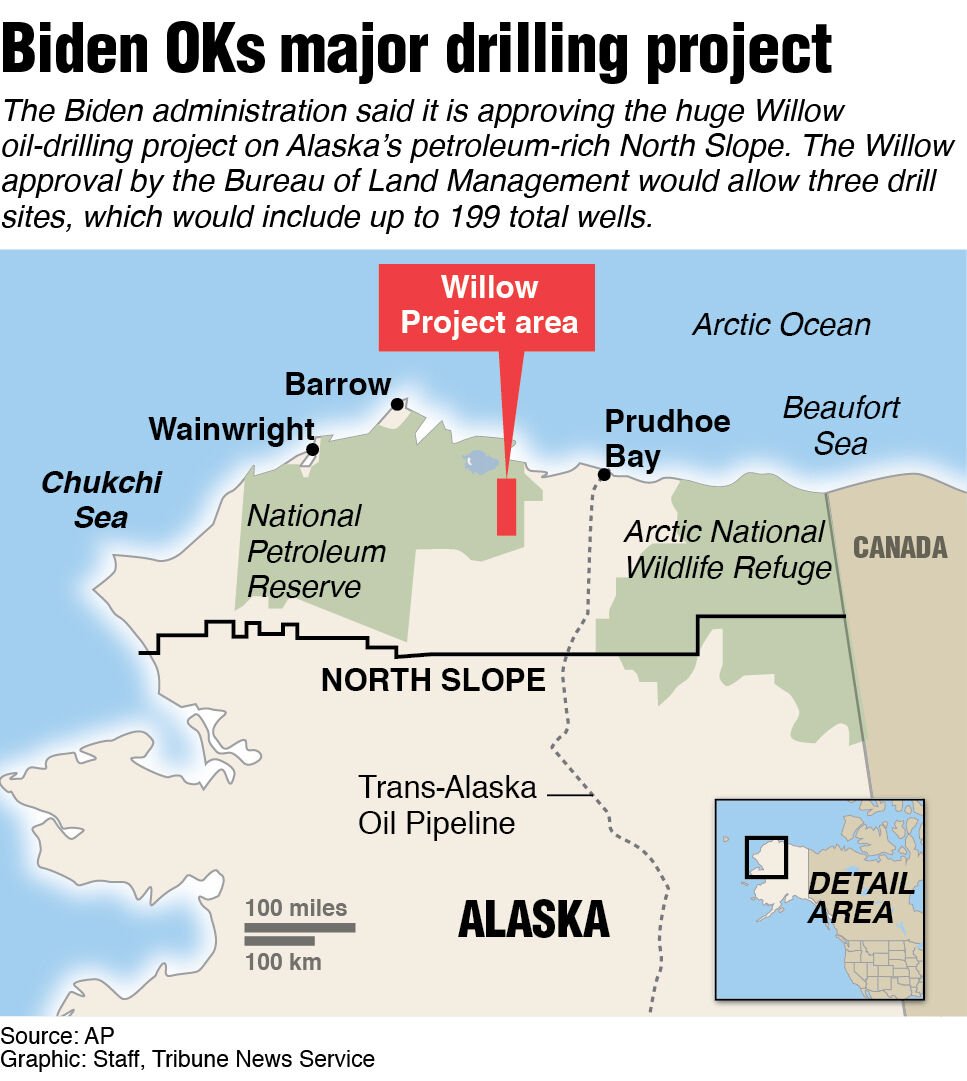
ConocoPhillips’ Willow drilling project, approved by the Biden administration in 2023 on the eastern side of the reserve, provides some insight into the potential impact: An initial project plan, later scaled back, included up to 575 miles (925 kilometers) of ice roads for construction, an air strip, more than 300 miles (nearly 485 kilometers) of new pipeline, a processing facility, a gravel mine and barge transportation, in addition to five drilling sites.

Many animals will try to steer clear of noise, light and human activity. Roads and industrial operations can force them to alter their behavior, which can affect their health and how well they can reproduce. Research has shown that caribou mothers with new calves avoid infrastructure and that this impact does not lessen over time of exposure.

At Alaska’s Prudhoe Bay, the largest oilfield in the U.S., decades of oil development have led to pollution, including hundreds of oil spills and leaks, and habitat loss, such as flooding and shoreline erosion, extensive permafrost thaw and damage from roads, construction and gravel mining. In short, the footprint of drilling is not confined to isolated locations — it radiates outward, undermining the ecological integrity of the region. Permafrost thaw now even threatens the stability of the oil industry’s own infrastructure.

Consequences for the climate

The National Petroleum Reserve-Alaska and the surrounding Arctic ecosystem also play an outsized role in regulating the global climate.

Vast amounts of climate-warming carbon is currently locked away in the wetlands and permafrost of the tundra, but the Arctic is warming close to three times faster than the global average.

Roads, drilling and development can increase permafrost thaw and cause coastlines to erode, releasing carbon long locked in the soil. In addition, these operations will ultimately add more carbon dioxide to the atmosphere, further warming the planet.

The public comment period on the White House’s plan to open more of the National Petroleum Reserve-Alaska to oil and gas drilling closes at the end of the day on July 1.

The decisions made today will shape the future of the Arctic — and one of the last wild ecosystems in the United States — for generations to come.

Mariah Meek is Associate Professor of Integrative Biology, Michigan State University. She has received funding from the National Science Foundation, the US Fish and Wildlife Service, and several state agencies. In addition to being a professor, she is also the director of research for The Wilderness Society, where she supervises a team of scientists doing research to understand ecological interactions in the Alaskan Arctic.

Fury as Trump Puts Tens of Millions of Protected Forests on the Chopping Block


"The roadless rule is the most effective conservation rule on the books at protecting mature and old-growth forests," said one environmental campaigner.


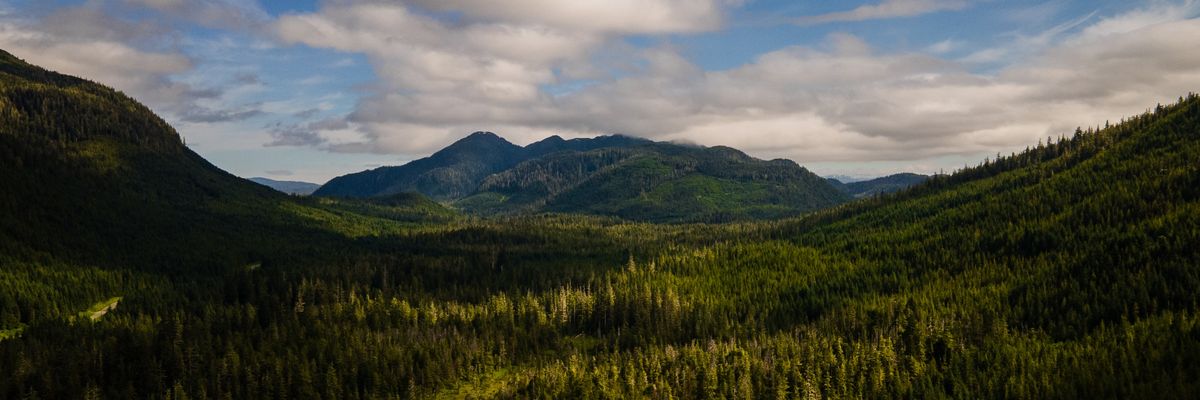
The Tongass National Forest on Prince of Wales Island, Alaska, Friday, July 2, 2021.
(Photo: Salwan Georges/The Washington Post via Getty Images)

Eloise Goldsmith
Jun 24, 2025
COMMON DREAMS

A top Trump official on Monday announced a plan to end a rule that protects tens of millions of acres in the National Forest System and which would clear the way for road development and timber production on those lands—news that elicited alarm from conservation and environmental groups.

U.S. Secretary of Agriculture Brooke Rollins announced that the Trump administration plans to rescind the 2001 Roadless Area Conservation Rule, which has for decades protected 58.5 million acres of forests from timber harvesting and road construction.

Rollins called the rule overly restrictive and added that the move "opens a new era of consistency and sustainability for our nation's forests. It is abundantly clear that properly managing our forests preserves them from devastating fires and allows future generations of Americans to enjoy and reap the benefits of this great land."

The environmental law group Earthjustice took issue with wildfire prevention being used to justify the rollback.

"While the Trump administration has suggested that wildfire risk is an underlying reason for these sweeping policy changes, rolling back the roadless rule actually threatens to cause more fires. That's because fire ignitions are far more likely in roaded landscapes," said Drew Caputo, the group's vice president of litigation for lands, wildlife, and oceans, in a statement on Monday.

Rollins made the announcement at the annual meeting of the Western Governors' Association. Hundreds of protestors gathered outside of the building where the event was taking place in Santa Fe, New Mexico in order to denounce efforts that might lead to federal public lands being privatized, according to The Associated Press.

The roadless rule covers areas including the Tongass National Forest in Alaska. In 2019, during the first Trump administration, the U.S. Department of Agriculture codified a regulatory framework that exempted Tongass from the roadless rule. Former President Joe Biden undid that change while he was in office.

Idaho and Colorado have adopted state roadless area rules that supersede the boundaries of the federal roadless rule boundaries for those states, according to the USDA's website, which appears to mean that not all of the 58.5 million acres would be impacted if the Trump administration goes through with this change.

"The roadless rule is one of the country's conservation success stories, safeguarding singular natural values across nearly 60 million acres of America's great forests," said Garett Rose, a senior attorney at the Natural Resources Defense Council.

Great Outdoors Campaign Director Ellen Montgomery at Environment America similarly said that "the roadless rule is the most effective conservation rule on the books at protecting mature and old-growth forests."

"Once again, the Trump administration is ignoring the voices of millions of Americans to pursue a corporate giveaway for his billionaire buddies. Stripping our national forests of roadless rule protections will put close to 60 million acres of wildlands across the country on the chopping block," said Sierra Club's forest campaign manager, Alex Craven, in a statement on Monday. "That means polluting our clean air and drinking water sources to pad the bottom lines of timber and mining companies—all while pursuing the same kind of mismanagement that increases wildfire severity."

Caputo at Earthjustice made some of these same points and indicated his organization is ready to sue over the move. "If the Trump administration actually revokes the roadless rule, we'll see them in court," he said.

The move follows a March executive order from U.S. President Donald Trump directing Rollins and the secretary of the U.S. Department of Interior to take steps to increase timber production.
Trump’s Attack on CA Environmental Law Brings Us Closer to Climate Catastrophe


Trump wants to destroy the ability of states to chart their own course on combating climate change.


By Sasha Abramsky , TruthoutPublishedJune 29, 2025

An aerial view, traffic moves on Interstate 80 on May 19, 2025, in Emeryville, California.Justin Sullivan / Getty Images


Truthout is an indispensable resource for activists, movement leaders and workers everywhere. Please make this work possible with a quick donation.

Earlier this month, Donald Trump took his war against California and its web of environmental policies to a new extreme.

Around the same time as he was federalizing the California National Guard and preparing to deploy hundreds of marines into Los Angeles, at Trump’s behest, Congress was voting to overturn California’s state laws phasing out the sale of new gas-based passenger vehicles by 2035, mandating an increase in the percentage of nonfossil fuel-based trucks sold, and limiting nitrogen oxide emissions for heavy duty and off-road vehicles.

On June 12, Trump signed the resolutions into law, overturning the California mandates. This is despite the fact that the Senate parliamentarian — who is in charge of interpreting Senate rules — and the Government Accountability Office (GAO) had concluded that this was an illegitimate use of the Congressional Review Act (CRA) because California’s waiver was an order subject to the Administrative Procedure Act rather than simply an agency rule that the CRA could overturn. It’s technical stuff, but, basically, they were arguing that the CRA can only be applied to a very limited set of rules, which the Environmental Protection Agency (EPA) waiver fell outside of. In signing Congress’s resolutions despite the GAO and Senate parliamentarian’s concerns, Trump said he was rescuing the U.S. auto industry from destruction. In reality, by giving his stamp of approval to the political priorities of big oil, Trump was doing yet more damage to the global climate.

Trump, far and away the most anti-environment modern president, has long had California’s state-level environmental standards in his sights. That includes targeting the half-century-old EPA waivers which allow the Golden State to establish pollution and emissions standards for vehicles that go above and beyond the federal minimums. In the last years of the MAGA leader’s first administration, he pushed to roll back the waivers, resulting in a lengthy legal battle that was still unresolved when Joe Biden entered office, and his administration declined to defend the position of its predecessor.

Now, in version 2.0 of Trump’s presidency — with the entire federal government weaponized against climate research, mitigation efforts, and any policies that could move us away from fossil fuels and towards sustainable fuel alternatives — that campaign against California has accelerated. The gutting of the 2035 internal combustion engine phaseout effort is one part of this. The ongoing effort to eliminate the right of the state’s Air Resources Board to set its own tailpipe emissions standards is another. Meanwhile, on the federal level, these efforts include the attacks on universities and on climate science and the gutting of the National Oceanic and Atmospheric Administration and other federal agencies responsible for generating climate data. And this past week, the Supreme Court also put its thumb on the scales, ruling that a group of fuel producers could sue California over its vehicle emissions standards.

Related Story

After Massive Cuts to Forest Service, US Enters Fire Season Woefully Unprepared
The results could be catastrophic, especially in states that have experienced unprecedented fires in recent years.
By Sasha Abramsky , Truthout J une 14, 2025


The implications of the move against California are stark: Because about a dozen other Democratic-led states follow California’s lead on emissions standards and electric vehicle (EV) mandates, it has a huge role in shaping U.S. markets. California’s bloc of states represents roughly 40 percent of the U.S. population — and since automakers are reluctant to have to hew to two separate markets within the country, they generally adhere to the highest common denominator when it comes to pollution standards. In other words, if California’s pollution and EV mandates stand, the country’s air gets cleaner and the shift away from fossil fuel reliance picks up steam, regardless of the priorities of the Trump administration. Moreover, this has an international magnifier effect, since many other countries also look to California when working out best practices for the shift away from fossil fuels. California helps make any kind of U.S. de facto adherence to Paris climate accord emissions reduction goals possible, even though Trump has, for the second time, withdrawn the country from the accord and prioritized the acceleration of fossil fuel production.

It’s that realization that is driving Trump’s animus here. He doesn’t just want to end federal climate change efforts; he wants to destroy the ability of states to chart their own course on the issue. After all, this is the man who, during the election campaign, promised to enact Big Oil’s every whim should the industry cough up $1 billion to pad his political war chest. Since that patently corrupt offer of a quid pro quo, he has repeatedly feted oil executives at Mar-a-Lago and in the White House, has ordered shuttered coal-based power plants to reopen, and has dismantled Biden-era tax subsidies for, and investments in, the development of an array of clean energy sources, from wind and solar farms to EV infrastructure.

If California’s EV mandate is shredded, the country will use billions more gallons of gas over the coming years than it would have otherwise. In 2022, the California Air Resources Board estimated that the shift away from oil-based fuels for California’s huge vehicle fleet would, by 2040, reduce CO2 emissions by 395 million tons, would result in 915 million fewer barrels of oil being used, and would result in thousands fewer deaths related to environmental pollution. Now, all that progress is being deliberately rolled back by the federal government, and for no good reason. It will, in consequence, be that much more difficult for the world to avoid passing critical tipping points in global warming. Yet in Trump’s calculus, that calamity is more than outweighed by the short-term financial benefits for the fossil fuel industry that will accrue as the pump is primed to increase demand for their products.

California is well aware of the stakes. Consider it a modern-day version of the automobile and gas industries’ purchase and destruction of public transit tram lines in Los Angeles generations ago — a wanton act of industrial vandalism that turned Los Angeles from a city with a viable and expanding public transport system into the private car capital of the universe. That helped set the U.S. on a century-long trajectory that, with the exception of a few cities, prioritized private vehicle usage over public transit.

In the aftermath of the congressional voiding of the state’s 2035 electric vehicle mandate, California Gov. Gavin Newsom issued an executive order asking state legislators and the Air Resources Board to come up with alternative ways to stimulate the growth of the EV market and to protect its emissions standards, and to prioritize state contracts with companies meeting EV targets.

At the same time, the state’s attorney general filed suit against Trump for an illegal use of the Congressional Review Act. The suit is being joined by 10 other states: Colorado, Delaware, Massachusetts, New Jersey, New Mexico, New York, Oregon, Rhode Island, Vermont, and Washington.

Because the mandate was overturned through the Congressional Review Act, however, it typically wouldn’t be subject to judicial review. This means that California’s lawsuit, which is largely based around the parliamentarian’s conclusions, is still something of a long shot.

Trump’s wrecking ball approach to environmental policy is continuing apace. Over the coming months, California and its blue state allies will need to work out a new strategy — one that moves beyond simply filing lawsuits — to get around the federal vise. If it can, then the blue parts of the United States might be able to maintain their environmental policies in the face of the MAGA onslaught and help reduce emissions for all of us; if it can’t, the climate crisis will pick up evermore steam.

Sasha Abramsky is a freelance journalist and a part-time lecturer at the University of California at Davis. His work has appeared in numerous publications, including The Nation, The Atlantic Monthly, New York Magazine, The Village Voice and Rolling Stone. He also writes a weekly political column. Originally from England, with a bachelor’s in politics, philosophy and economics from Oxford University and a master’s degree from the Columbia University Graduate School of Journalism, he now lives in Sacramento, California.
INTERVIEW

What We Can Learn From the Defiant Life and Legacy of Marsha P. Johnson


Black trans artist, filmmaker, and activist Tourmaline discusses her new book about Marsha’s trailblazing life.
PublishedJune 28, 2025

American gay liberation activist Marsha P. Johnson (1945-1992,  left) along with unidentified others, on the corner of Christopher Street and 7th Avenue during the Pride March, New York City, June 27, 1982.Barbara Alper / Getty Images

Marsha P. Johnson has become an icon of gay, trans, and queer liberation, and yet little is known about her life beyond her participation in the Stonewall Uprising of 1969 and the decadeslong controversy after her lifeless body was found floating in the Hudson River in 1992. In Marsha: The Joy and Defiance of Marsha P. Johnson, Tourmaline, an award-winning Black trans artist, filmmaker, and activist who has dedicated her life to uplifting Marsha P. Johnson’s legacy, recuperates her life from the flatness of postmortem deification.

Here we find a fully embodied story of a 1950s New Jersey kid; a 1960s Times Square Hustler and den mother; a fiercely talented performer; and a dedicated activist and AIDS care worker whose unconventional way of thinking and being paved the way for generations of street queens and trans people. Her influence looms large, and Tourmaline is intent on presenting the full range of her choices, inspirations, limitations, and visionary imaginings for us to learn from today.

Mattilda Bernstein Sycamore: This is a biography of Marsha P. Johnson, but it’s also a story about friendship as a resource for trans survival, political engagement, personal transformation, and communal care. What role did friendship play in Marsha’s life, and how does looking at her life’s work through the lens of friendship enrich her legacy?

Tourmaline: Friendship almost doesn’t feel like a big enough word for the depth and breadth of love Marsha offered to and received from her dear ones. We talk a lot in the queer community about “chosen family,” and the relationships that Marsha built in NewYork City starting when she moved to Manhattan in 1963 didn’t just shape her life, they shaped history. Marsha’s ability to be a beacon of power and joy was fueled by, nurtured in, and shaped among the community that she built with her fellow street queens, the wider queer community, and the bicoastal and transatlantic connections she made in a period of immense cultural change.

Two friendships really stand out to me in very different ways — Marsha’s relationship with Sylvia Rivera, and her relationship with Randy Wicker. Could you speak to the ways these relationships both challenged and enriched Marsha’s life, and the lives of Rivera and Wicker?


Interview |
New Oral History Captures Decades of Trans Life in the Words of Elders of Color
Amid the current anti-trans backlash, let’s heed the wisdom and perspective of the trans elders in our communities.
By Mattilda Bernstein Sycamore , TruthoutMay 23, 2025


I feel so lucky to have been able to become friends with Randy myself over 15 years ago while archiving Marsha’s life. Then in the process of writing this book and my other work on Marsha’s legacy, including my film Happy Birthday, Marsha, Randy has been incredibly generous in sharing source material related to Marsha, as well as his own memories and reflections. They supported each other in so many ways, pushing each other to see the world more expansively and lovingly, and offering each other really concrete, material support too.

Of course, Marsha’s friendship with Sylvia was also an extraordinary source of mutual power and motivation. The two of them came together when Sylvia was just 13 years old, hustling in Times Square, and Marsha at times played a role of mother figure to the young street queens — offering guidance, love, and unconditional support that many had never had access to before. Together they engaged in what we might call, in the words of Robin D.G. Kelley, “freedom dreaming” — seeing through the challenge of their circumstances to a bigger, more beautiful world that they knew they could build together.


Marsha P. Johnson and Sylvia Rivera are now hailed as icons of gay, queer, and trans liberation, but when they were alive they were often dismissed and marginalized by the gay establishment. What realities does their postmortem deification hide, and what possibilities does it limit?

Authentic individual expression that disrupts binaries, coercive control, or the established flow of power is inherently threatening to the systems that be. Marsha, Sylvia, and other people who were committed to living authentically and deliberately demonstrated a new way of being that many people weren’t ready for — it felt destabilizing to see so much freedom in action. But Marsha actually didn’t focus very much of her time or energy on any kind of direct, oppositional conflict. There were occasions when it was a necessary result of her existence — for instance, at Stonewall — but I think often of her middle initial: P, which she said stood for “pay it no mind.” Her ability to look beyond, through, and even past daily circumstances of dismissal or marginalization was a huge source of strength and power allowing her to dream up the world she wanted and desired. She was too busy falling in love, making art, inspiring others, traveling, resting, relaxing, and honoring her own joy to pay any mind to attempts to make her smaller.

Stonewall has become romanticized as a place where everyone belonged, but you show how actually it was a Mafia-run, segregated gay bar where street queens were most often not even allowed inside. White gay men were in the front, and everyone else in the back — what does telling the actual story of this space where the Stonewall Uprising emerged help us to understand?

Nuance and complexity are hard to hold when our culture often operates in binaries. Stonewall was a hugely important community gathering place, and it was also reflective of all of the realities of its time. It was not a perfect utopia of total collective welcome; but what it was was a gathering place where people found their way towards each other, even across some of the limitations you described. And that moment of collective uprising in 1969 — even coming out of an imperfect hub for gathering and building community — might help us learn the power of broad-based coalitions for freedom and joy. Stonewall can teach us how strong we can be when we ignore what would keep us apart, and double down on our desire to be together, free from fear and shame.

You quote poet and disability justice author and activist Leah Lakshmi Piepzna-Samarasinha as saying that a riot is a “powerful place of madness.” So, if we want to reinvoke the spirit of Stonewall, should we be invoking madness?

Absolutely. Marsha was open with herself and others about the ways that trauma, violence, and her own unique humanity led her to perceive the world differently than others. Sylvia Rivera reflected on this quality in her friend too, and she observed that it was a huge source of freedom — Marsha had a different way of seeing the world, and it was one that invited and encouraged freedom and a wider lens.

By applying a disability justice lens to Marsha’s story, you’re able to show how her mental health challenges were also part of how she was able to imagine a different world, to conjure this in everyday experience, in spite of abuse from her mother, from people on the street, from the cops — talk more about what this enabled her to do.

Marsha looked beyond and through the harsh circumstances she endured. She saw the world as it could be, instead of narrowly as it was. She invested in a vision of the world that others found improbable or even impossible. Her belief in her own sight — and the spiritual fuel she found in her relationship with the divine — empowered her to bring her visions into reality over and over again.

You really bring STAR House, the trans youth shelter that operated briefly in lower Manhattan in 1970 and 1971, to life — this collective experiment in trans self-determination and communal care. They managed to do so much with so little resources. Now we have funded nonprofits that often do much less. Is there a lesson here?

Marsha’s relentless pursuit of her dreams was antithetical to the narrow understanding of logic that many of our institutions use today. Her logic was sound, but perhaps unfamiliar to many people. She knew that she could glimpse the world she wanted to live in in the midst of harsh circumstances that surrounded her. She knew that by leaning into her own vision, her faith, her love, and her joy, it was entirely possible to build the types of spaces she wanted to experience. For me, the book is the story of her and her community doing that over and over again.

You write that Marsha P. Johnson was “disinterested entirely in respectability and assimilation.” What can this teach us today?

In my two decades of researching, learning from, and diving into Marsha’s life story, I’ve learned over and over again that turning the volume up on what makes us feel authentically alive and joyful can be a powerful antidote to structures and systems that would try to reduce our power. Marsha taught us that being authentically and unapologetically yourself can be a guiding light that leads us closer to the world of freedom, ease, love, and joy that we deserve to live in.


Copyright © Truthout and Mattilda Bernstein Sycamore. May not be reprinted without permission.

Mattilda Bernstein Sycamore

Mattilda Bernstein Sycamore is the author, most recently, of Touching the Art, a finalist for a Pacific Northwest Book Award and a Washington State Book Award. Her new novel, Terry Dactyl, will be out from Coffee House in November 2025.
Queer as Fungi: What Mushrooms Can Teach Us About Resistance and Community

For powerful lessons about organizing and queer community, let’s look beneath our feet.
June 30, 2025

Bioluminescent ghost mushrooms glow green in the dark.
Chasing Light - Photography by James Stone james-stone.com / Getty Images

Pride month was established in June to acknowledge a pivotal event in queer American history — the Stonewall Uprising. On June 28, 1969, a popular gay bar in New York City was targeted by a police raid, as it had been countless times before. But on this occasion, the patrons fought back. The story is common knowledge to most queer people in the U.S., but some details bear retelling. At this point in history, it was illegal to be outwardly queer, gay, homosexual, transgender, or to otherwise express yourself in ways that were “misaligned” with your sex. Psychologists and medical doctors could have someone institutionalized on the basis of their “perversions,” a person could be fired for even spurious allegations of gay activity, and police would routinely target and entrap people, especially men, who were known or presumed to be gay. This was not just local policy or small-town bigotry. In fact, it was official U.S. government policy to classify queer people as “subversives” who were a threat and a liability to the American identity and imperial project. If you were queer, they said, you were a sexual deviant, and worse — a communist.

The criminalization of queer life and expression forced the community underground. Relics of the prohibition-era infrastructure were transformed — often by the mafia — into clandestine queer spaces of dance and revelry. The Genovese family, which owned the Stonewall Inn, paid bribes to the New York City Police Department so it would pass over the bar on the monthly raids conducted by the Public Morals Squad. But in the early morning hours of June 28, 1969, what started as a typical raid spontaneously transformed into a radical act of defiance. The 200 or so patrons resisted arrest, smashed glass bottles, swung their purses, slashed the tires of the police wagons, and freed as many detained comrades as they could. Though this uprising was unplanned, it was not disconnected, climatologically, from the concurrent civil rights uprisings happening all across the country. That is how subversion and uprisings work: energy flows through the collective, organizing happens underground.

Currently, queer rights are once again being undermined and dismantled across the United States. The trend of incremental progress that characterized the past 50 years now appears to be moving in reverse. In moments of heightened political conflict such as these, it’s crucial to find our teachers. Our elders and past resistance movements provide essential learning. But we should not restrict ourselves to learning exclusively from human beings.

As a mycologist (someone who studies fungi), I have found the lessons I’ve learned from fungi to be radical and life-affirming. Fungi with both male and female sexes in one body taught me about my own queer experience. Some fungi shapeshift, alternating between sexual and asexual forms, producing ephemeral mushrooms, then retreating to their mycelial form underground. From them I learned that there is a freedom in living undefined, existing outside the limits of predictability. Lichens — which are part fungi, part photosynthetic microorganisms — are best understood as living, interdependent communities, inspiring the word “symbiosis.” They teach us that our fixation on individualism is not only inaccurate biologically, it’s a dead end.

In this moment in time, I think it is important to reflect on the meaning of the word “queer.” The word was long used in a derogatory way against people existing and behaving outside of heteronormative culture, but it was reclaimed during the height of the AIDS epidemic in the United States. “Queer” was a way to bring together separate subsets of people — gays, lesbians, trans people, and others — and harness the power of the collective against oppressive violence. Queerness, therefore, is a rallying cry, an animate force, an ethic of collective responsibility. Queerness is not a plea for permission to assimilate into systems of oppression. Queerness is a community revolt. Queerness is the understanding that all living beings are interdependent. Queerness teaches us to be like fungi.


When contending with misused state power, individualism will not save us. Nor will a reductionist usage of identity politics. What we need is community.

One of the most powerful lessons I’ve learned from fungi is about strategizing underground. Certain species of fungi form mycorrhizal networks, which are mutualistic partnerships between fungi and plants. The roots and the fungal cells connect underground sharing nutrients and protection against pathogens. Each is uniquely suited to contribute in their own way — the plants supply sugar, the fungi supply nitrogen and phosphorus. They are different kingdoms, but they need each other; together their differences become a strength. Through these microscopic linkages entire forests are sustained. These networks may span across many trees and individual fungi, forming a grid pulsing with animacy. Sunlight becomes sugar which becomes a patch of colorful mushroom bursting from the soil. The exact time and place of a fungal fruiting is not always predictable. Amazingly, for reasons and by mechanisms not fully understood, members of the same mushroom species will spontaneously fruit across an entire continent. Like an uprising, their energy is tapped into the collective.

When contending with misused state power, individualism will not save us. Nor will a reductionist usage of identity politics. What we need is community, however messy it may be. We need diverse coalitions through which we share skills and resources. We need to be queer. We need to learn from fungi.


This article is licensed under Creative Commons (CC BY-NC-ND 4.0), and you are free to share and republish under the terms of the license.

Patricia Ononiwu Kaishian
Dr. Patricia Ononiwu Kaishian is a mycologist, educator, and writer. She is the author of Forest Euphoria: The Abounding Queerness of Nature.

Turning social fragmentation into action through discovering relatedness


Kobe University
250701-Goto-Tojishasei-Interaction 

image: 

Kobe University lifelong learning researcher GOTO Satomi developed a new approach to intersectional learning where the individual with its different degrees of relatedness to any given issue takes the center stage.

view more 

Credit: GOTO Satomi


Discovering relatedness outside of a topical issue helps diverse groups to overcome differences and develop action for social change. The Kobe University addition to educational theory offers a framework to analyze and promote intersectional learning.

To achieve social change in a fragmented modern society, individuals from diverse backgrounds need to join together and develop a common plan for action. This is important especially for education related to social change, where groups of varying involvement in a particular issue, e.g., learners and teachers, interact in a structured setting. Current educational theories fall short of offering a framework of how such cultural differences between the participating individuals can be met, overcome and used as motivation for learning.

Kobe University lifelong learning researcher GOTO Satomi says: “Based on my own personal history of repressing my opinions in school to live up to what I perceived to be the expectations of the teacher, I realized that the role of the individuals’ diverse backgrounds has been neglected in education theory. But through my involvement in various volunteer activities, I realized that social issues are always also individual issues.” Consequently, she developed a new approach to intersectional learning where the individual, with its different degrees of relatedness to any given issue, takes the center stage.

In the International Journal of Lifelong Education, Goto comprehensively outlines her theory that results in each individual exhibiting a multilayered nature of issue relatedness, assuming people to be “a bundle of relationships with conscious or latent issues.” Thus, she argues, “By providing a variety of entry points for involvement in multiple themes, not just a specific social issue, a wider range of stakeholders can be involved, which will activate the field and increase collective emergence.” Not only does this theory offer a systematic way of explaining the origin of community engagement from an individual’s point of view, it can also “capture a broader range of learner transformations, rather than just the approach to a specific issue or theme, as the axis of evaluation.”

The term she uses for the degree of relatedness, the Japanese “tojisha-sei,” is interesting in itself. The word, as well as a substantial part of the theoretical body, derives from group development activities in Japan, such as the community reconstruction efforts in the wake of the 2011 Great East Japan Earthquake or the social movements surrounding the Minamata disease problem. In these cases, the multi-layered relatedness to a broad range of issues apart from the main issue allowed different parties to connect and, in the end, together promote movement around the main issue.

“The tojisha-sei concept helps to blur the boundaries between those who are directly involved in a particular issue/theme and those who are not, and to promote interaction between the two and the learning that results from this process,” Goto writes in the paper. For the future, she wants to explore whether and under what conditions such a realization of shared relatedness can be catalyzed practically, for example in school education. The goal of such a further development ultimately is, she writes, “helping learners become more autonomous and aware of their relationship to society.”

This research was funded by the Japan Society for the Promotion of Science (grant 23KJ1573).

Kobe University is a national university with roots dating back to the Kobe Higher Commercial School founded in 1902. It is now one of Japan’s leading comprehensive research universities with nearly 16,000 students and nearly 1,700 faculty in 11 faculties and schools and 15 graduate schools. Combining the social and natural sciences to cultivate leaders with an interdisciplinary perspective, Kobe University creates knowledge and fosters innovation to address society’s challenges.


'Cruelty over care': Outrage erupts after Trump shuts down LGBTQ youth suicide hotline
THE NEW CIVIL RIGHTS MOVEMENT
June 19, 2025 

The Trump administration is once again drawing criticism during LGBTQ Pride Month—this time for defunding the LGBTQ youth-specific branch of the national 988 suicide hotline, which has supported 1.3 million LGBTQ+ young people since its launch in 2022.

Known as “988 Press 3 Option,” the LGBTQ crisis line has been operated by The Trevor Project—a nonprofit serving LGBTQ+ youth in crisis—since 1998. As the nation’s first suicide prevention helpline dedicated to LGBTQ youth, it will continue to operate independently, but it is being removed from the federal government’s 988 system.

The “Press 3 Option” support for LGBTQ+ callers “was established in 2022 based on a recognition that gay and transgender people experience distinct mental health issues — often driven by family rejection and societal discrimination — and have disproportionately high suicide rates,” The New York Times reported.

READ MORE: ‘Make Asbestos Great Again?’: Trump Slammed for Move to End Ban on Russia-Tied Carcinogen

“On July 17, the 988 Suicide & Crisis Lifeline will no longer silo LGB+ youth services, also known as the ‘Press 3 option,’ to focus on serving all help seekers, including those previously served through the Press 3 option,” read a statement Tuesday from the federal government’s Substance Abuse and Mental Health Services Administration (SAMHSA).

CBS News reports it is “unclear if staff for the specialized option 3 care line will be cut or moved to the general 988 line.”

“This means that, in 30 short days, this program that has provided life-saving services to more than 1.3 million LGBTQ+ young people will no longer be available for those who need it,” said Jaymes Black, CEO of The Trevor Project, in a statement Wednesday. “Suicide prevention is about people, not politics. The administration’s decision to remove a bipartisan, evidence-based service that has effectively supported a high-risk group of young people through their darkest moments is incomprehensible.”

Black called the decision to announce the shutdown during Pride Month “callous,” and blasted the federal government for removing the “T” in LGBT, writing: “Transgender people can never, and will never, be erased.”

But as The New York Times also reported, “the White House Office of Management and Budget has previously described the hotline’s L.G.B.T.Q. section as ‘a chat service where children are encouraged to embrace radical gender ideology by ‘counselors’ without consent or knowledge of their parents.’ That language reflects the Trump administration’s broader efforts to eliminate services for and legal recognition of transgender people.”

Earlier this month, Defense Secretary Pete Hegseth ordered the un-naming of the USNS Harvey Milk, a U.S. Navy ship named for the assassinated veteran and LGBTQ activist who was the first openly-gay man to be elected to public office in California. The decision to announce the plan during LGBTQ Pride Month reportedly was intentional.

Critics are blasting the decision to end federal funding for the LGBTQ+ option for the 988 suicide prevention hotline.

“The ‘pro-life’ party is shutting down suicide hotlines,” wrote podcaster Brian Tyler Cohen.

“When folks are in crisis, this admin chooses cruelty over care—every time. But this is the party of ‘family values,’ right?” observed U.S. Rep. Jasmine Crockett (D-TX).

“The LGBTQ+ community faces so much discrimination, isolation, and violence that makes them over 4x as likely to die by suicide. Trump’s decision to end the federal LGBTQ+ suicide hotline is absolutely devastating and it’s the opposite of ‘pro-life’,” noted U.S. Rep. Sara Jacobs (D-CA).

“The Trump Administration is wholly pro-death,” declared The Atlantic’s Dr. Norman Ornstein, a political scientist. “As they fan the flames of virulent homophobia and trans-hatred, they cut out the LGBT suicide hotline. People will die. For them, it is a feature, not a bug.”

CBS News cited these support options:

The 988 Suicide & Crisis Lifeline can be reached by calling or texting 988. You can also chat with the 988 Suicide & Crisis Lifeline here.

The Trevor Project’s trained crisis counselors are available 24/7 at 1-866-488-7386, via chat at TheTrevorProject.org/Get-Help, or by texting START to 678678.

For more information about mental health care resources and support, The National Alliance on Mental Illness HelpLine can be reached Monday through Friday, 10 a.m.–10 p.m. ET, at 1-800-950-NAMI (6264) or email info@nami.org


Mamdani Says Billionaires Shouldn’t Exist: “What We Need More of Is Equality”


Mayoral candidate Zohran Mamdani has proposed raising taxes on corporations and the wealthy in New York City.
PublishedJune 30, 2025

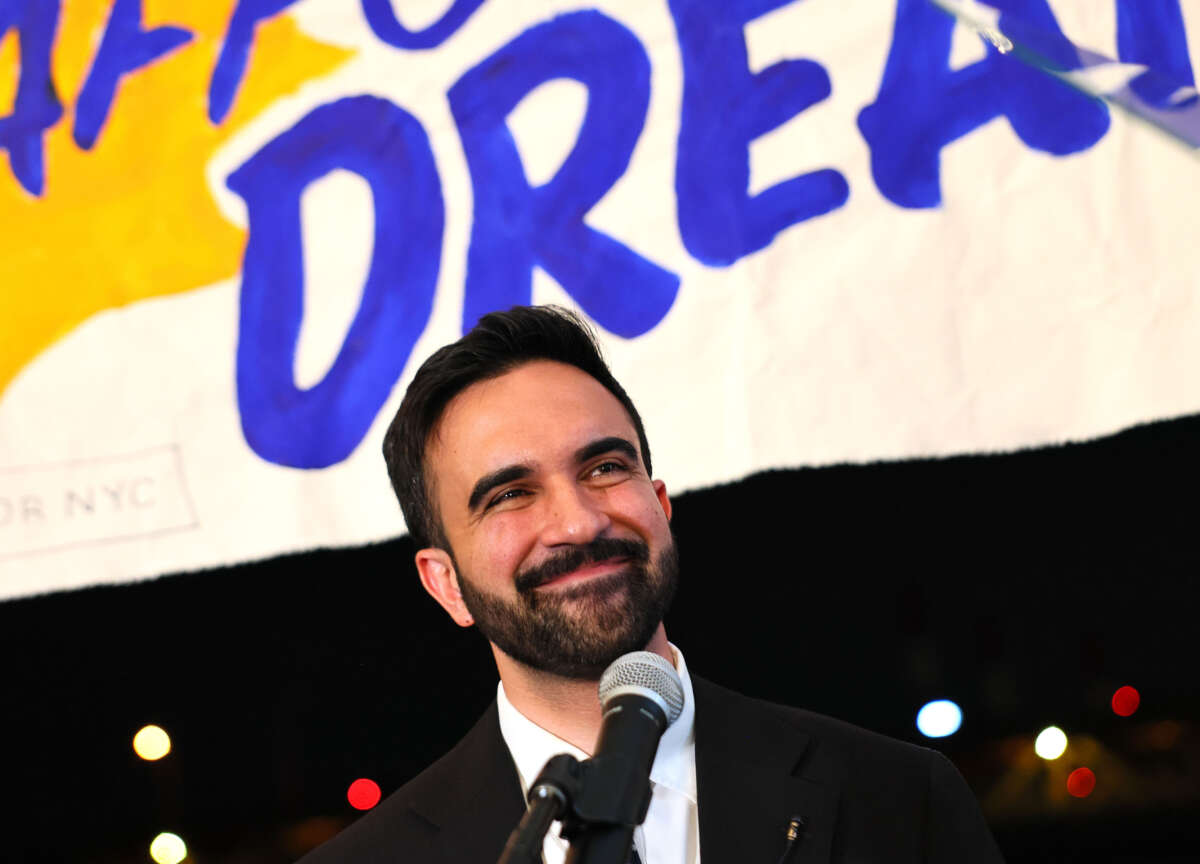
New York mayoral candidate, State Rep. Zohran Mamdani speaks to supporters during an election night gathering at The Greats of Craft LIC on June 24, 2025, in the Long Island City neighborhood of the Queens borough in New York City
.Michael M. Santiago / Getty Images

Zohran Mamdani has said that billionaires shouldn’t exist, repeating a longtime goal of the left as he affirmed his commitment to equality instead in an interview on Sunday.

“You are a self-described democratic socialist. Do you think billionaires have a right to exist?” asked the NBC host, Kristen Welker, weirdly echoing the language used by pundits when discussing Israel.

“I don’t think that we should have billionaires, because, frankly, it is so much money in a moment of such inequality,” Mamdani responded. “And, ultimately, what we need more of is equality across our city and our state and across our country. And I look forward to work with everyone, including billionaires, to make a city that is fairer for all of them.”

Mamdani’s viewpoint is one shared by many on the left, including politicians like Sen. Bernie Sanders (I-Vermont), who have proposed policies like a wealth tax in order to ensure that billionaires pay their fair share back into society.

Polls have found that such proposals are extremely popular across the political spectrum. However, the right has been fear mongering about Mamdani’s political stances, with figures like President Donald Trump painting him as a radical communist — clearly as an insult meant to invoke the Red Scare.


Zohran Mamdani’s 

“I already have to get used to the fact that the president is going to talk about how I look, how I sound, where I’m from, who I am — ultimately because he wants to distract from what I’m fighting for. And I’m fighting for the very working people that he ran a campaign to empower that he has since then betrayed,” Mamdani said, after the host asked if he identifies as a communist.

“When we talk about my politics, I call myself a democratic socialist in many ways inspired by the words of Dr. King, from decades ago, he said: Call it democracy, call it democratic socialism, but there must be a better distribution of wealth for all God’s children within this country,” he went on.

Mamdani has shaken up the political world in just a few months, elevating the New York City mayoral race to one of national intrigue as the openly left-wing, pro-Palestine candidate has captured a remarkable level of popularity.

Mamdani’s platform is centered around affordability in New York, with proposals like universal child care, establishing city-run grocery stores, and building affordable housing. To pay for these plans, he has proposed raising the state corporate tax rate and placing a 2 percent tax on those making above $1 million annually in New York City.

Both major parties have turned to billionaires in recent years for support for their campaigns, often in a barely-veiled quid pro quo for lawmakers to support tax cuts for corporations and the wealthy. This potentially explains why numerous Democrats, including leaders like House Minority Leader Hakeem Jeffries (D-New York), are holding back on backing Mamdani, despite his historic campaign.

At a time when enthusiasm for the Democratic Party establishment is waning, Mamdani’s campaign has been credited with spurring massive turnout, effectively creating a voter base where one didn’t exist before; according to The New York Times, in the two weeks before the election last week, 37,000 people registered to vote, compared to 3,000 people in the last mayoral primary for the city. This rise is largely credited to Mamdani’s campaign, with voters aged 18 to 34 turning out in higher numbers than any other age group.

Still, many establishment Democrats are aligning themselves with Trump in opposing Mamdani’s agenda in order to punch left.