Wednesday, July 16, 2025


Geronimo Power Breaks Ground on 250-MW Portage Solar Project in Wisconsin

Geronimo Power, formerly National Grid Renewables, has begun construction on its 250-megawatt (MW) Portage Solar Project in Portage County, Wisconsin, marking a significant step in the state’s renewable energy expansion. The project, part of the Midcontinent Independent System Operator (MISO) market, follows the recent start of construction on Geronimo’s 100-MW Apple River Solar project in Polk County, reinforcing the company’s commitment to clean energy and economic development in the Badger State.

The Portage Solar Project is expected to deliver substantial economic benefits, with Geronimo projecting more than $73 million in direct economic impact over its first 20 years of operation. This includes $24 million in new tax revenue for Portage County and local townships, alongside job creation and increased local spending. Combined with the Apple River project, Geronimo’s initiatives are anticipated to contribute over $100 million to Wisconsin’s economy. “The true value of renewable energy isn’t in the power it provides to the local grid,” said Joe Ibrahim, Geronimo Power’s vice president of construction. “It’s about the immensely positive impact to local economies in the form of new revenue streams and job creation.”

The project will create more than 300 construction jobs, with Geronimo prioritizing local Wisconsin craft labor to fill these roles. The company has partnered with Burns & McDonnell, an engineering, procurement, and construction firm, for its first collaboration on a solar power project. Leslie M. Duke, chair and CEO of Burns & McDonnell, highlighted the project’s alignment with growing energy demands, particularly from data centers. “As demand for data centers continues to grow, so does the need for reliable, renewable energy,” Duke said. “We are proud to support Geronimo Power in the buildout of the Portage site.”

Beyond economic contributions, Geronimo has pledged $1.25 million to local charities and organizations over the project’s first 20 years through a dedicated charitable fund. This initiative underscores the company’s farmer-founded, community-focused ethos, aiming to foster long-term partnerships in project areas.

The Portage Solar Project comes at a time when renewable energy is gaining traction across the Midwest, driven by falling costs and supportive policies. According to Reuters, U.S. solar capacity is expected to grow significantly through 2025, with projects like Portage helping meet rising electricity demands from data centers and electrification trends. However, challenges remain, as Inside Climate News reported that MISO’s grid faces delays due to interconnection backlogs and costly transmission upgrades, which have stalled some renewable projects in the region.

Geronimo’s efforts align with broader clean energy goals. The company, which has developed over 2,400 MW of wind and solar projects nationwide, is leveraging a power purchase agreement (PPA) to ensure the Portage project’s output supports Wisconsin’s clean energy transition. With the state aiming to reduce carbon emissions, projects like Portage and Apple River are critical to meeting those targets while revitalizing rural economies.

As construction progresses, the Portage Solar Project is poised to deliver clean energy, economic growth, and community support, solidifying Wisconsin’s role in the nation’s renewable energy landscape.

By Michael Kern for Oilprice.com 


Informal miners lift blockades along Peru’s key copper route, protest leader says

Protests at Las Bambas. Credit: Ondando, Wikimedia Commons under licence CC BY-SA 4.0.

Informal miners in Peru have paused their more-than-two-week-long protest that blocked a major copper transit route, one of the protest leaders, Luis Huaman, told Reuters on Tuesday.

He said they planned to suspend the protest at least through Friday, while continuing to press the government for more favorable regulations for informal mining.

(By Marco Aquino and Daina Beth Solomon; Editing by Kylie Madry)


Ghana moves to hedge gold price to preserve build-up of reserves

Kwame Nkrumah Memorial Park, Accra, Ghana. Stock image.

Ghana is working on a program to hedge the price of gold exports as it seeks to shield earnings that have bolstered the central bank’s foreign reserves from future volatility, Governor of the Bank of Ghana Johnson Asiama said.

Increased production and higher prices have helped Africa’s top gold miner to boost gross international reserves to $11.1 billion, Asiama said in the capital, Accra on Tuesday. The buffer is enough to cover 4.8 months of imports, he said.

“While beneficial for now, a future correction in prices could quickly narrow our trade surplus,” Asiama said.

Ghana’s gold exports increased by 76% from a year earlier to $5.2 billion in the first four months through April. That’s underpinned a widening in the trade surplus to $4.1 billion from $759 million over this period.

The improvement, alongside government commitment to fiscal consolidation, has spurred a more than 40% rally in the cedi against the dollar this year to make it the second-best performer in the world among currencies tracked by Bloomberg, after the Russian ruble.

Gold rose 0.3% to $3,351 an ounce at 1:33 p.m. in London, pushing its gain this year to 27.7%. The cedi traded unchanged at 10.4 per dollar.

Cryptocurrency oversight

Asiama said the country is finalizing a regulatory framework for cryptocurrency dealings to bring exchanges and other digital asset platforms under formal oversight.

“It is a fact that crypto is a big thing in Ghana,” he said. “We can pretend but reality is that it is impacting.”

Regulation will allow the central bank to bring virtual currencies under the oversight of its anti-money laundering and terrorism finance rules, and ensure that digital innovation supports rather than undermines foreign exchange control and monetary stability, he said.

(By Moses Mozart Dzawu)


Indigenous groups ask Chile court to pause community review of Codelco-SQM lithium deal


Atacama salt flat. (Image by Nicolas de Camaret, Flickr.)

Two Indigenous groups in northern Chile have asked a local court to suspend a state-led community review process that is required for a lithium partnership between copper giant Codelco and lithium miner SQM, according to legal documents reviewed by Reuters.

The Indigenous community of Coyo and the Atacameno Association of Irrigators and Farmers of San Pedro de Atacama each independently filed legal challenges last week with a Chilean appeals court in the Antofagasta region, accusing Chilean economic development agency Corfo of not properly carrying out a consultation process to seek their input on the partnership.

The process is one of the final conditions for a deal to go into effect in which state-run Codelco will take a majority stake in SQM’s lithium mining operations in the Atacama salt flat.

The Coyo community and the Atacameno Association of Irrigators and Farmers, which has Indigenous members, said they needed more information and time to be able to provide informed consent on the plan.

The Antofagasta court on Friday accepted their challenges, according to a court document. It ordered Corfo to respond to the allegations within 15 days, and asked Codelco and SQM to provide comments.

Corfo told Reuters that the consultation process was still in progress.

“The Indigenous consultation process with the Atacama Indigenous organizations is moving forward and has been carried out in accordance with the regulations,” the agency said in a statement.

Codelco declined to comment, while SQM did not immediately reply to a request for comment.

The Indigenous consultation, which was led by Corfo and included a few dozen community groups located around the Atacama salt flat, was due to conclude around late July.

SQM and Codelco are separately holding talks with communities near the salt flat to discuss a model for Indigenous oversight over lithium extraction.

The Coyo community and Atacameno Association of Irrigators and Farmers both asked the court to suspend the process until a new methodology for the community review could be implemented, and more information provided.

Both groups said Corfo had not provided enough detail about the proposed contract between Codelco and SQM and argued that the consultation’s timeline between November 2024 and July 2025 was too fast to allow for detailed analysis.

They also said Corfo at several points did not act in good faith, and did not meet the standards set out by the International Labour Organization, a UN agency.

“This situation directly affects the fundamental rights of the Community by limiting its influence over decisions that impact its territory, environmental surroundings, and collective rights, thereby violating constitutional guarantees,” the Coyo community said in its court filing.

(By Daina Beth Solomon; Editing by Jamie Freed)


Critical Metals soars as it begins drilling to boost Greenland rare earth resource


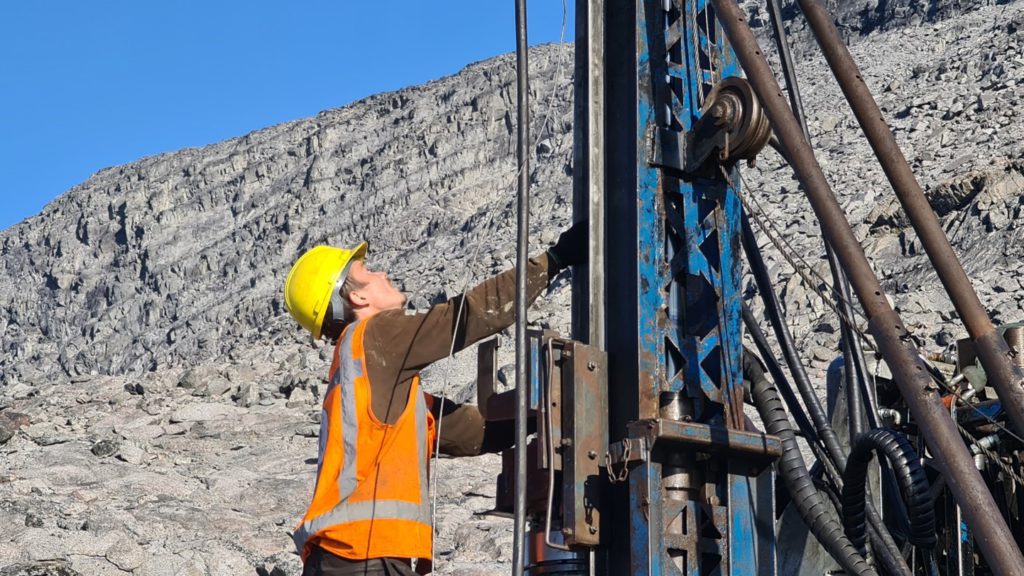
Drill rig at Tanbreez project. Credit: Critical Metals Corp.

Critical Metals (NASDAQ: CRML) has launched a 2,000-metre drilling program aimed at expanding the resource at its Tanbreez rare earth project in Greenland ahead of a feasibility study. Its shares surged on the update.

In a press release Tuesday, the New York-based critical minerals developer said the drilling represents “an important investment and step” in its efforts to bring a “game-changing rare earth asset” into production as soon as possible.

The Tanbreez project — situated on a 4.7-billion-tonne mineralized kakortokite unit in southern Greenland that has been largely unexplored to date — represents one of the world’s largest rare earth deposits.

The rare earth resource, from an orebody covering 8 km x 5 km in area, is estimated at nearly 45 million tonnes (indicated and inferred), representing just 1% of the entire host rock. Approximately 27% of that resource is categorized as heavy rare earths, which are used in high-performance applications such as clean energy and defense, and are less common than light rare earths.

Based on this resource, Critical Metals released a preliminary economic assessment earlier this year, showing a net present value (NPV) of approximately $3 billion (approximately $2.8 billion to $3.6 billion at discount rates of 15% and 12.5%, respectively, before tax), with an internal rate of return (IRR) of 180%.

The report outlines a phased growth strategy for the Tanbreez project, with initial production of around 85,000 tonnes of rare earth oxides per annum, beginning as early as 2026, then scaled to 425,000 tonnes after modular expansion.

500Mt exploration target

The 2025 drilling campaign will focus solely on the eudialyte component of Tanbreez rare earth mineralization found on the Fjord deposit, which accounts for about half of the resource at 22.6 million tonnes. The remaining resources are contained in feldspar and arfvedsonite.

Specifically, the Critical Metals team is looking to further extend the Fjord deposit to the east approximately 700 metres, and 650 metres along strike of the kakortokite host rock, which by comparison measures 5 km x 2.5 km in area and several hundred metres thick.

In its press release, the company said it considers this as a 500-million-tonne exploration target with the 4.7-billion-tonne host rock.


According to the company, the target depths for the vertical drill holes will range from 80 to 250 metres over the undulating topography. The first hole has already been collared and down to approximately 60 metres in outcropping kakortokite host.

“This new drilling program is designed to significantly increase the size of the current mineral resource estimate (MRE) and support the development of the bankable feasibility study (BFS), paving the way for a final decision to mine,” CEO Tony Sage said in a news release.

The company also expects new drill results from its 2024 campaign to further verify the potential of the Tanbreez project while it completes this year’s drilling.

With full exploration teams now on site, Critical Metals says new data collected will “play a key role” in finalizing the BFS and preparing the comprehensive reports required by Greenland regulators as well as its proposed financial partners. Last month, it received a letter from the US Export-Import Bank (EXIM) for a loan worth up to $120 million to fund the project.

Shares of Critical Metals soared over 22% to a four-month high of $3.80 on the NASDAQ on the announcement of drilling. It pulled back to around $3.60 a share by noon EST, for a market capitalization of $361.8 million.


Apple invests $500M in Pentagon-backed MP Materials


Apple has committed $500 million to buying American-made rare earth magnets developed at MP Materials. (Image courtesy of Apple.)

Tech giant Apple (NASDAQ: AAPL) has struck a $500 million deal with Pentagon-backed MP Materials (NYSE: MP), the United States’ only producer of rare earth elements, as part of a larger effort to secure domestic supply chains for smartphones and electric vehicles.

The investment includes Apple purchasing US-made rare earth magnets from MP Materials’ facility in Fort Worth, Texas. The two companies will co-develop a factory with neodymium magnet production lines specifically tailored for Apple products. The investment is part of Apple’s broader strategy to increase domestic manufacturing, with plans to spend more than $500 billion in the US over the next four years.

Shares of MP Materials surged 22.5%to $59.5 in early trading in New York on Tuesday, the highest intraday price since April 2022. Apple’s stock was up a modest 1%, trading at $211 each.

“Rare earth materials are essential for making advanced technology, and this partnership will help strengthen the supply of these vital materials here in the United States, Apple chief executive officer Tim Cook said in the statement.

Apple said the collaboration will create dozens of new manufacturing and R&D jobs. It also includes a rare earth recycling initiative at MP Materials’ Mountain Pass mine in California, which will convert recycled feedstock into materials for Apple products. 

The companies will co-develop new magnet materials and innovative processing technologies to improve performance.

“This collaboration deepens our vertical integration, strengthens supply chain resilience, and reinforces America’s industrial capacity at a pivotal moment,” MP Materials CEO James Litinsky said in a separate statement Tuesday

MP Materials landed last week a multi-billion-dollar deal with the US Department of Defense (DoD) to develop a domestic rare earth supply chain. The deal aims to reduce dependence on foreign sources, particularly China.

Earlier this year, after the U.S. imposed 145% tariffs on Chinese imports, Beijing retaliated by halting exports of rare earths magnets, critical for electronics, wind turbines, EVs, and fighter jets. The move disrupted global supply chains: Ford and Suzuki halted some production, Elon Musk cited shortages affecting his robotics operations, and governments scrambled to lock down non-Chinese sources.

Despite global demand, producers outside China, including MP Materials and Australia’s Lynas Rare Earths (ASX: LYC), have struggled with profitability due to weak prices and oversupply.

MP Materials operates the world’s second-largest rare earth mine at Mountain Pass. Mining began in 2017; refining followed in 2023. The company expects to supply magnets to General Motors by year-end and begin shipping from its Texas plant in 2027 to support hundreds of millions of Apple devices.


Trump’s 50% copper tariffs jolt US market as buyers slash imports and delay orders


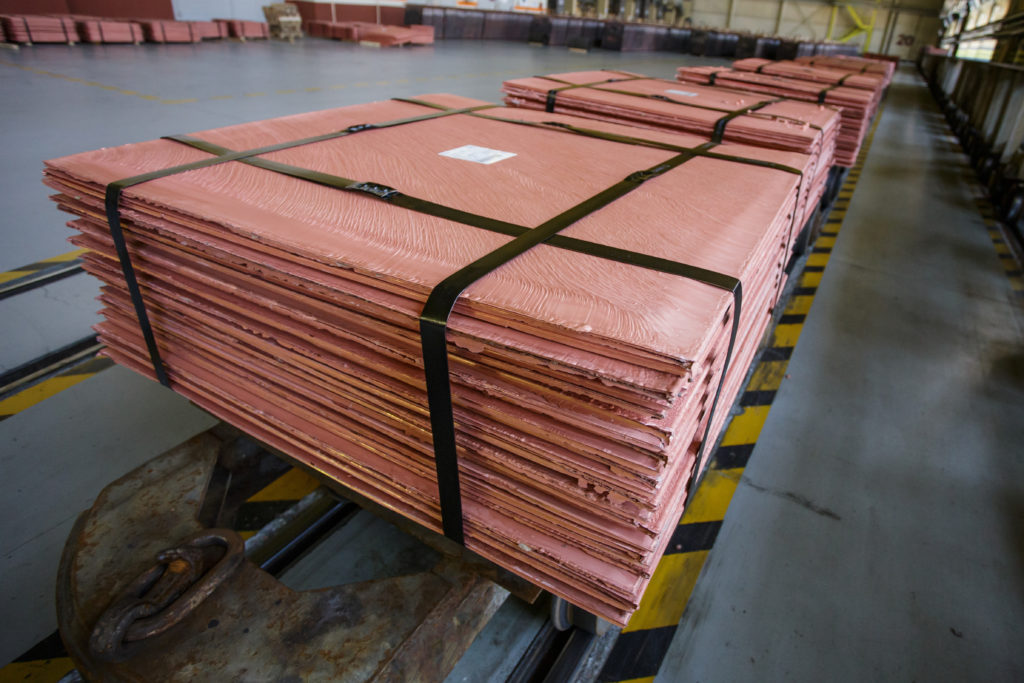
Cathodes with pure copper metal. Stock image.

President Donald Trump’s moves to slap tariffs on US copper imports set off a global race for traders to rush cargoes into the country for much of the year. Now that the 50% levy is just weeks away, there are already signs that demand for the metal is drying up from Texas to New Jersey.

Sam Desai is vice president at RM-Metals, a distributor in the Garden State that brings in copper from abroad and sells it to domestic users like appliance makers. US prices had already been trading higher than global benchmarks for most of the year as the market anticipated tariffs. But 50% is higher than what Desai expected, forcing RM-Metals to immediately reduce the amount of copper it imports.

“We made about a 25% reduction” from previous buying levels once the news broke, he said, adding that the company also canceled pre-existing orders when possible. For the shipments that weren’t canceled, Desai predicts they will largely end up sitting in stockpiles because customers are “leery” about buying products now.

“The customers don’t want to pay the duty on it — it’s too high,” he said. “We’re going to hold it, and then see what happens in a couple months.”

The comments from US metals distributors offer an early sign of how Trump’s proposed copper tariff — which came in much higher than initially anticipated — is already filtering through the industrial supply chain, potentially eroding demand for the metal that’s used in construction and manufacturing.

The tariffs are scheduled to start Aug. 1, though American factories have already been paying more for the metal. For months, New York futures — the domestic benchmark — have traded at premiums to London prices. Comex copper prices have risen 38% this year, compared to the 10% gain on the London Metal Exchange. The dislocations have significant impact because copper finds its way into almost every part of the economy, from housing and telecommunications wires to appliances and computer chips.

In the US, copper buyers now have the option to draw from stockpiles built up from earlier this year, rather than place new orders with distributors like RM-Metals. Inventories in Comex-certified warehouses have swelled to a seven-year high as metals traders rushed in shipments to take advantage of arbitrage opportunities.

There are also plenty of unknowns when it comes to the tariffs. There is a lack of official details on what products will be covered, whether there will be any exemptions and how they will be enforced.

The uncertainty prompted Aviva Metals, which says it’s the largest US manufacturer and distributor of copper alloys, to put some of its transactions on hold, said Roger Deines, the company’s purchasing manager who’s based in Houston.

“Does it affect copper, does it affect brass, does it affect bronze? Does it affect everything with copper in it, or is it just pure copper or copper cathodes? Really nothing is defined,” Deines said. “We can’t make any real business decisions until it’s all defined.”

Charles Bareijsza, the chief executive officer at Metals Associates in New Jersey, started working the phones after news broke on the tariff.

“I called our largest customer, and I said to them, ‘Be prepared, there’s going to be some problems with the copper pricing,” he said, referring to the rising cost of imports.

“Unfortunately, we have to pass the increase to the customers, and we have no idea how they’re going to handle it,” Bareijsza said. “For us, it’s a very confusing time.”

Copper is valued in power infrastructure for its conductivity — making it key for both the energy transition and the data center boom. Trump’s plan for tariffs is a bid to support the development of a more robust domestic supply chain. Now that the US is awash with inventories, that’s providing a buffer for manufacturers and time for the domestic copper industry to ramp up.

But it’s unclear how quickly investments into the US industry will start flowing and how significant they will be. Some industry experts have expressed concern that inflation will rise in the meantime, which would put pressure on the US to backtrack on the levies.

That scenario is adding to the uncertainty for RM-Metals, Desai said.

“The biggest worry customers have is that, let’s say it’s 50% today and tomorrow drops to 40% or 30%, who’s going to cover the cost of the drop?” he said. “Customers are very leery about ordering for the future.”

(By Elise Harris)


Stena Bulk Prepares to Reflag First Suezmax Under Swedish Flag

Stena Bulk
A Stena Bulk Suezmax tanker

Published Jul 15, 2025 10:53 AM by The Maritime Executive


[By: Stena Bulk]

Leading tanker shipping company Stena Bulk today confirmed that it is in the final stage of executing its plan to reflag five of its Suezmax tankers under the Swedish flag. The first vessel –Stena Sunrise – is now fully prepared for reflagging, which is scheduled to take place in Singapore at the end of July 2025.

This milestone follows the company’s original ambition to complete all preparatory steps by 30 June – a goal that has now been fulfilled. Only the final practical steps remain, to be executed during the in-port flag change of Stena Sunrise. This has been made possible thanks to the excellent and proactive cooperation with Swedish authorities, government officials, and trade unions, all of whom have worked in close partnership with Stena Bulk throughout the process.

This reflagging initiative reflects Stena Bulk’s strong commitment to strengthening the Swedish maritime sector and leveraging the improved competitiveness of Sweden as a flag state. In recent years, reforms such as the removal of stamp duty on ship registration, the development of a more competitive tonnage tax regime, and improvements to the Swedish Ship Register have provided a solid foundation for shipowners to make long-term investment decisions under the Swedish flag.

Currently, there are no Suezmax tankers registered in Sweden. By flagging five such vessels in the country, Stena Bulk will not only close this gap but also contribute to Sweden’s strategic resilience and maritime readiness in an increasingly complex geopolitical landscape.

Stena Sunrise is the first of the five Suezmaxes to transition. The remaining four vessels will follow, each at a time and location that makes sense from an operational and administrative perspective. The company will carry out each reflagging in conjunction with the vessels' commercial routing and in-port availability, ensuring smooth execution.

Throughout this initiative, Stena Bulk has placed strong emphasis on ensuring safe and efficient operations. The company has worked in close collaboration with relevant Swedish stakeholders to address crewing, compliance, and technical aspects. These efforts underline the company’s commitment to translating strategy into practical, high-standard execution.

Erik HÃ¥nell, President & CEO of Stena Bulk, commented: “We are proud to say that our ambition has been fulfilled. With Stena Sunrise set for reflagging in the coming days, we are delivering on our plan. This could not have been done without the truly constructive and forward-leaning collaboration we’ve had with the Swedish authorities, trade unions, and the government. Together, we have not only moved fast, but we’ve done so with great professionalism and shared purpose".

The presence of these vessels under the Swedish flag will contribute to the broader development of Sweden’s maritime sector, including the creation of new opportunities for Swedish seafarers, officers, and maritime professionals. It also enhances Sweden’s representation and voice in global shipping forums such as the European Union and the International Maritime Organization.

Stena Bulk remains committed to contributing to Sweden’s long-term maritime strategy and looks forward to continuing strong partnerships across the public and private sectors to ensure long-term impact and success.

The products and services herein described in this press release are not endorsed by The Maritime Executive.


Italian Port Authorities Pledge Support for Rebuilding Ukraine's Seaports

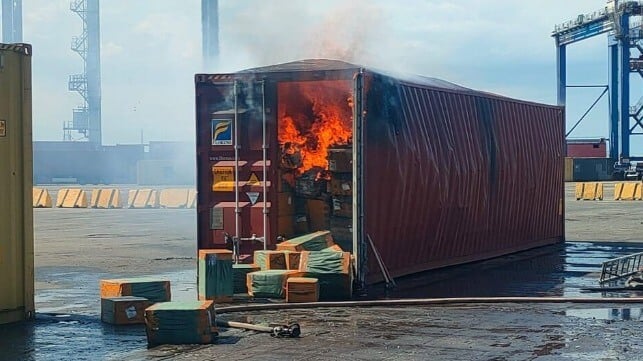
Container burns after a Russian strike on Odesa, 2025 (Oleksii Kuleba/Telegram)

Published Jul 15, 2025 10:47 PM by The Maritime Executive


As Ukraine intensifies recovery efforts, Italy has pledged support in the reconstruction of its ports, which have been repeatedly targeted in Russian missile and drone strikes. Last week, the Ukrainian Sea Ports Authority(USPA) signed two memorandums of understanding (MoUs) with Italian port authorities, the Eastern Adriatic Sea Port Authority and the Western Ligurian Sea Port Authority. The agreements were signed on the sidelines of the International Conference on the Reconstruction of Ukraine, held in Rome.

With Eastern Adriatic Port Authority managing the ports of Trieste and Monfalcone, Ukraine hopes to benefit from the Authority’s expertise in the implementation of digital port solutions. The Port of Trieste is one of the largest cargo ports in Italy and a critical terminal in the Trans-European Transport Network (TEN-T). Italy, through national railways company Ferrovie dello Stato (FS Group), is already leading plans to establish a logistics corridor from Western Ukraine (Lviv) to Trieste and Venice ports.

On Friday, to accelerate development of the corridor, FS Group signed a cooperation agreement with Ukrainian Railways (UZ). FS Group said that a working group will be formed with representatives from both railway companies, which will meet at least four times a year. Italian shipbuilding firm Fincantieri is also said to be considering to set up a shipyard in Odessa. These plans were initially revealed in September last year, with Fincantieri targeting to revive Ukraine’s defunct state-owned shipyards in the port of Odessa. 

“These memorandums open up new opportunities for digitization and implementation of modern logistics solutions as well adapt ports to new challenges. This is another step towards integration into the European logistics space - through concrete cooperation, training and investments,” said Oleksandr Semirga, the head of USPA.

Notably, the Rome conference helped Ukraine secure over $11 billion in deals spanning defense and infrastructure. Ukraine’s Prime Minister Denys Shmyhal estimated the country’s rebuild at $1 trillion. The deputy minister of territorial development, Andriy Kashuba, estimated that Ukraine needs $566 million to rebuild critical port infrastructure in the Black Sea region.


Metal Shark Delivers 1st of Two Advanced New Fireboats to Tampa Fire Rescue

Metal Shark

Published Jul 15, 2025 8:22 PM by The Maritime Executive


[By: Metal Shark]

Boat builder Metal Shark has announced the delivery of a new 40’ x 12’ welded aluminum monohull pilothouse fireboat to Tampa Fire Rescue. Designed in-house by Metal Shark and built at the company’s Jeanerette, Louisiana production facility, the new vessel is the first of two next-generation 38 Defiant NXT fireboats being built for the Department.

Powered by triple 300 hp Yamaha outboards with HelmMaster controls and joystick operational capability, the new 38 Defiant NXT combines proven high-speed performance with exceptional maneuverability. The vessel is purpose-built to enable Tampa Fire Rescue to deliver faster response and increased capability across a wide range of critical missions.

Tampa Fire Rescue is charged with the responsibility of primary fire suppression in and about Port Tampa Bay and the surrounding industrialized area, the 42-mile Tampa shipping channel, and all waters of Tampa Bay from downtown Tampa to the barrier island of Egmont Key. Search and rescue missions, including emergency medical response are also within the scope of the Department’s mission.

“Our Defiant NXT firefighting vessels are specifically designed to meet the complex mission challenges faced by Tampa Fire Rescue and many other departments across the nation,” said Dean Jones, Metal Shark VP of Sales for LE, Fire/Rescue and Specialty Markets. “The 38 Defiant NXT is right-sized, versatile, crew-friendly, and designed for safe and efficient mission execution, making it the perfect platform for Tampa Fire Rescue. Our fireboat specialists worked closely with the Tampa Fire Rescue team to design and outfit this vessel to meet the demanding and specific needs of their personnel.”

The Department’s new vessel features Metal Shark’s NXT EMS response cabin equipped with three SHOXS shock-mitigating seats, an EMS bench, dedicated officer/communications and firefighting control stations, and comprehensive gear storage for EMS, fire suppression, dive, and rescue operations. Equipped with a Honeywell CBRNE (chemical, biological, radiological, nuclear, and high-yield explosive) detection system and an HDT cabin filtration and pressurization package, the vessel is fully prepared for HAZMAT and CBRNE response missions at the Port or at sea.

Firefighting capabilities are anchored by a Darley fire pump drawing from a fully flooded Seachest and delivering 1,500 GPM via NFPA piping and electronically controlled valves to a remote-operated monitor. This configuration enables long-range throw for ship-to-ship and ship-to-shore operations. Additional features include dual 2.5” handline discharges, a 5” Storz hydrant discharge for supplying land-based apparatus, and a 40-gallon quick-fill foam injection system for AFFF firefighting capability.

For search and rescue (SAR), dive, and emergency medical missions, the vessel offers a urethane-sheathedclosed-cell foam collar by Wing, bow push knees, port and starboard full-height hinged dive doors, a dedicated dive/rescue ladder, SCBA and dive tank storage, and Metal Shark’s exclusive full EMS-size bow access hatch. A generator-powered HVAC system ensures cabin climate control, while advanced Raymarine electronics, FLIR thermal imaging system with dedicated Nauticomp LCD display, long-range search lighting, and a full emergency lighting package support safe and effective operations around the clock.

“The delivery of this advanced new fireboat represents a significant capability boost for Tampa Fire Rescue,” said Metal Shark CEO Chris Allard. “We are proud to support Tampa and departments across the country with purpose-built vessels designed to meet the evolving challenges faced by first responders on the water.” Metal Shark is delivering new fireboats to over a dozen fire departments nationwide in an 18-month span as part of its ongoing expansion in the fireboat market.

The new Tampa Fire Rescue 38 Defiant NXT will be joined by a second sister vessel in 2026, further strengthening Tampa’s ability to respond rapidly to a wide range of emergencies on the water.

The products and services herein described in this press release are not endorsed by The Maritime Executive.