Syria forms emergency committee to deliver humanitarian aid to Suwayda
'Steps taken by the state in Suwayda were aimed at protecting civilians and preventing the conflict from escalating further,' says Hamza al-Mustafa
Rania Abu Shamala and Murat Basoglu |19.07.2025 - TRT/AA
ISTANBUL
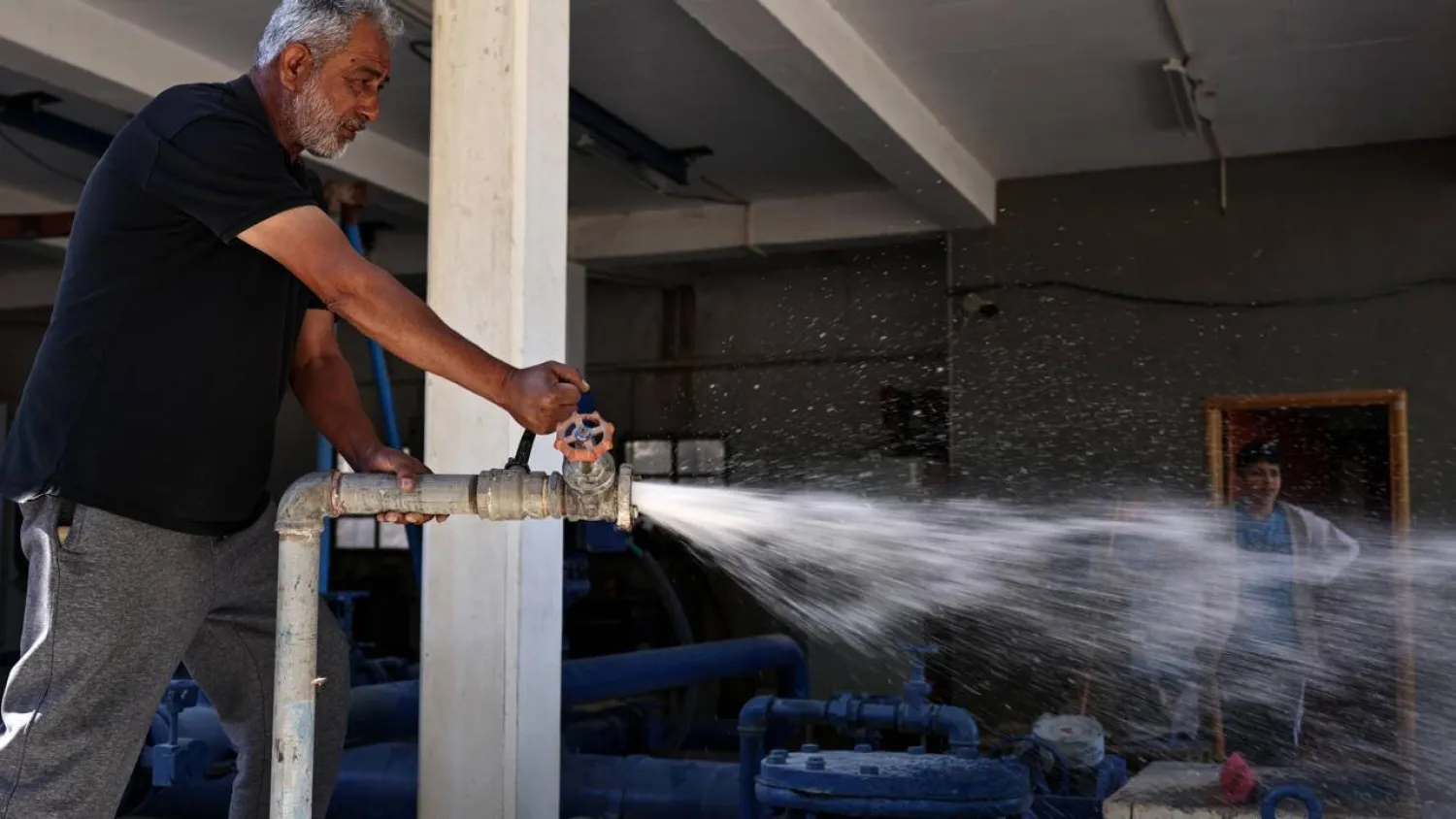
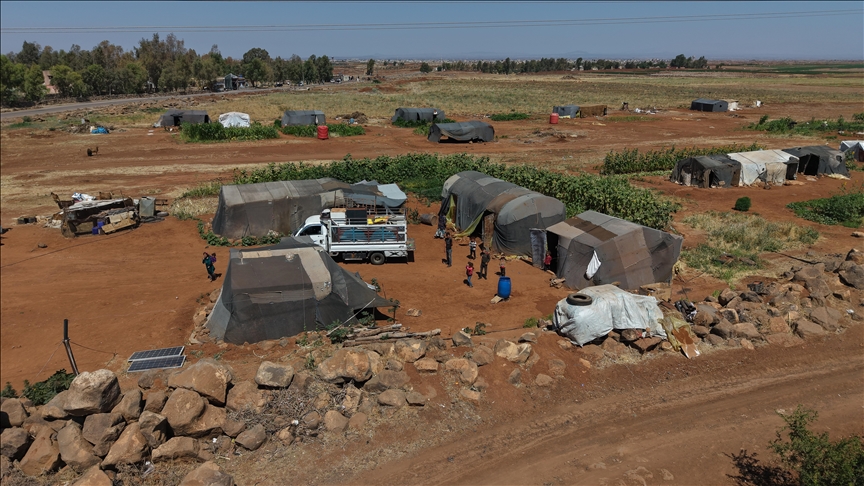
Syrian Information Minister Hamza al-Mustafa announced the formation of an emergency committee composed of government agencies on Saturday to provide humanitarian aid and services in the southern province of Suwayda.
“Steps taken by the state in Suwayda were aimed at protecting civilians and preventing the conflict from escalating further,” Mustafa told a press conference.
He stressed that events in the province did not constitute a military campaign or a premeditated operation, but were rather a state response to the worsening violence in the province.
The Syrian government has announced four ceasefire agreements in Suwayda, the most recent of which was declared on Saturday morning.
The previous three ceasefire deals did not hold for long.
Clashes renewed on Friday after a group affiliated with senior Druze leader Sheikh Hikmat al-Hajri forcibly displaced several members of Sunni Bedouin tribes and committed violations against them.
Outlining the details of the latest agreement, Mustafa stated: "The first phase of the agreement includes the deployment of internal security forces to de-escalate tensions and prevent clashes in most of the western and northern countryside of Suwayda, as well as on major roads outside city centers to avoid direct friction."
The second phase "involves opening humanitarian corridors between the provinces of Daraa and Suwayda to enable the evacuation of civilians, the wounded, and anyone wishing to leave Suwayda,” he added.
The minister said that the third phase will begin once the ceasefire is stabilized and will include "the gradual reactivation of state institutions and the deployment of internal security forces throughout the province in accordance with agreed terms to ensure a return to normal life and the enforcement of the rule of law."
In his criticism of al-Hajri, the Syrian minister said that he and other parties breached the agreements made with the state and “promoted rhetoric calling for foreign involvement.”
He stressed that al-Hajri “committed serious strategic errors by turning to (Israeli Prime Minister Benjamin) Netanyahu, endangering the people of Suwayda.”
On July 13, clashes broke out between Bedouin Arab tribes and armed Druze groups in Suwayda.
Violence escalated and Israeli airstrikes followed, including on Syrian military positions and infrastructure in Damascus. Israel cited the need to protect Druze communities as a pretext for its attacks.
However, most Druze leaders in Syria have publicly rejected any foreign interference and reaffirmed their commitment to a unified Syrian state.
Following the fall of Bashar al-Assad’s regime in December 2024, Israel intensified its air campaign in Syria and declared the buffer zone between the two countries defunct alongside the 1974 Disengagement Agreement.
‘People are scared for their lives’ – Syrian research fellow at Chatham House

We spoke to Dr Haid Haid, who’s Syrian and a senior research fellow at the Arab Reform Initiative and the Middle East and North Africa Programme at the Chatham House think tank in London.
Clashes continue in Sweida as ceasefire struggles to hold
Renewed clashes between Bedouin tribes and Druze fighters were reported despite a ceasefire agreement announced earlier on Saturday.
Clashes continued in Sweida late on Saturday, despite a ceasefire declaration that had been announced earlier in the day.
Government forces were redeployed on Saturday to Sweida to halt the renewed fighting that had erupted late Thursday.
Shortly after the announcement, Syria's interior ministry said the fighting had stopped and that Sweida had been cleared of Bedouin tribal fighters. However, several clashes were reported to have taken place in the predominantly Druze region of Sweida.
Clashes began last Sunday between Druze militias and local Sunni Muslim Bedouin tribes in Syria’s southern Sweida province. Government forces intervened, nominally to restore order, but ended up taking the Bedouins’ side against the Druze.
On Thursday, government forces largely withdrew from the southern province of Sweida, a day after Israel launched several strikes on Damascus, citing a need to protect the Druze community.
However, shortly after, state media reported that Druze militants had launched retaliatory attacks on the Bedouin communities.
In his second televised address since the fighting started, al-Sharaa blamed the conflict’s escalation between “lawless groups on one side and Bedouin communities on the other, leading to an unprecedented deterioration of the situation."
He had urged all parties to "fully commit" to the ceasefire.
"Everyone must understand that this moment requires unity and full cooperation in order to overcome the hardships we all face and to protect our country and land from foreign interference and internal strife," he said on Saturday.
The Syrian Observatory for Human Rights report at least 940 people have been killed since clashes erupted on Sunday. Meanwhile, the UN estimated that roughly 80,000 people have been displaced.
Late on Saturday, the interior ministry said clashes in Sweida city had been halted and the area cleared of Bedouin tribal fighters following the deployment
Reuters Published 20.07.25
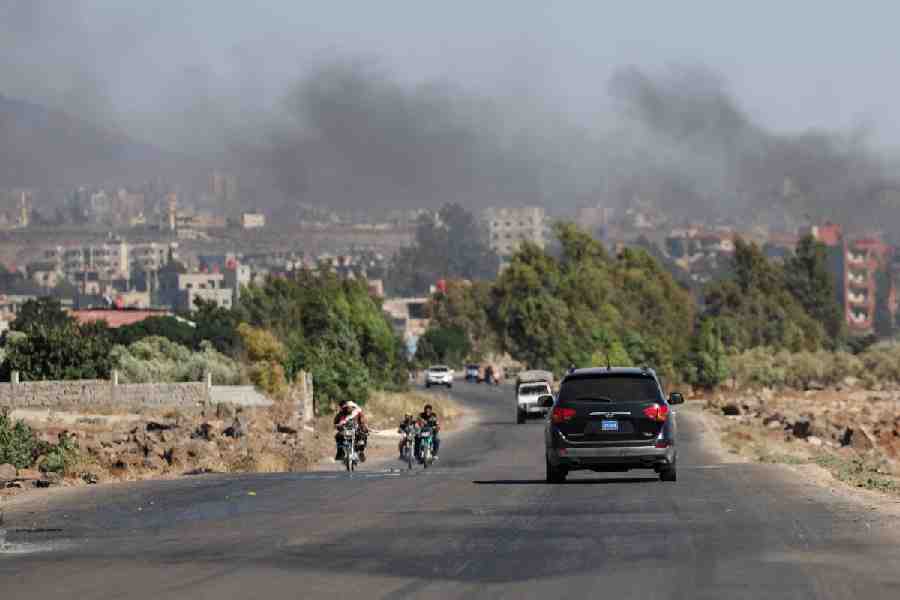
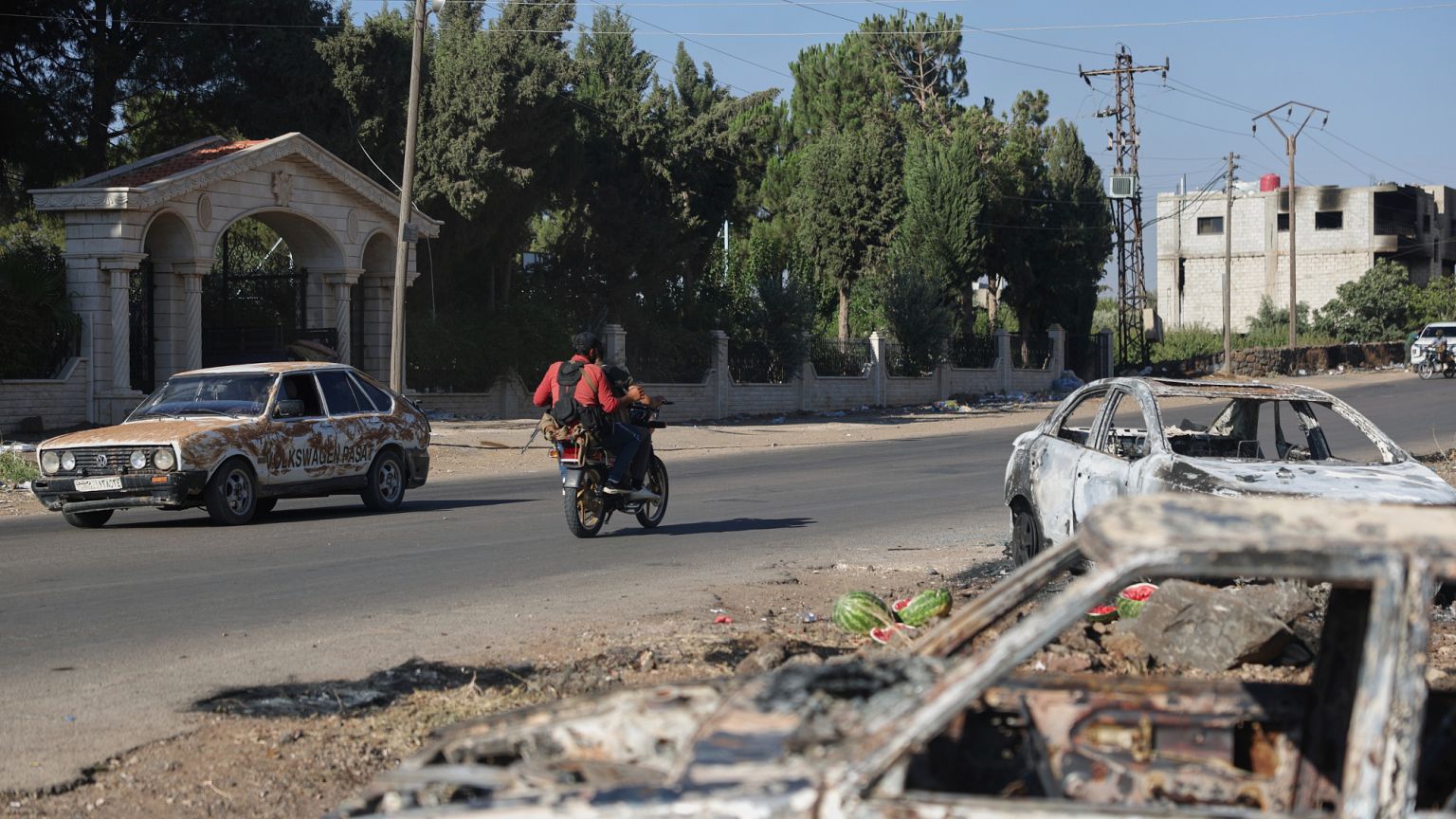
Cars drive along a road at an Internal Security Forces checkpoint working to prevent Bedouin fighters from advancing towards Sweida, following renewed fighting between Bedouin fighters and Druze gunmen, despite an announced truce, in Walgha, Sweida province, Syria July 19, 2025. Reuters picture
Sectarian clashes escalated in Syria's predominantly Druze region of Sweida on Saturday, with machinegun fire and mortar shelling ringing out after days of bloodshed as the Islamist-led government struggled to implement a ceasefire.
Reuters reporters heard gunfire from inside the city of Sweida and saw shells land in nearby villages. There were no immediate, confirmed reports of casualties.
The government had said security forces were deploying in the southern region to try to keep peace, and urged all parties to stop fighting after nearly a week of factional bloodshed in which hundreds have been killed.
Late on Saturday, the interior ministry said clashes in Sweida city had been halted and the area cleared of Bedouin tribal fighters following the deployment.
The Syrian Observatory for Human Rights, a British-based monitoring group, said clashes since last week around Sweida had killed at least 940 people. Reuters could not independently verify the toll.
Interim President Ahmed al-Sharaa said "Arab and American" mediation had helped restore calm, before the clashes escalated. He criticised Israel for airstrikes during the week.
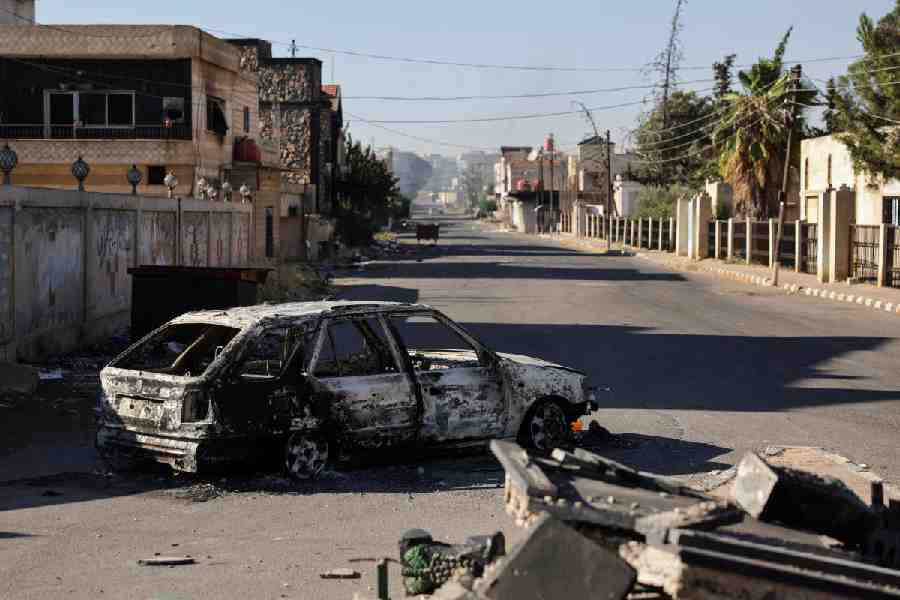
A damaged car is seen at an Internal Security Forces checkpoint working to prevent Bedouin fighters from advancing towards Sweida, following renewed fighting between Bedouin fighters and Druze gunmen, despite an announced truce, in Walgha, Sweida province, Syria July 19, 2025. Reuters picture
VIOLENCE IN DRUZE REGION CHALLENGES DAMASCUS
The fighting is the latest challenge to the control of Sharaa's Islamist-dominated government, which took over after rebels toppled autocratic president Bashar al-Assad in December.
It started last week as clashes between the Druze - a religious minority native to southern Syria, the Israeli-occupied Golan Heights and parts of Lebanon and Jordan - and Syrian Bedouin tribes.
Government forces then arrived to try to quell tensions, clashing with Druze gunmen and attacking the Druze community.
Saturday's violence once again pitted Druze against Bedouin, witnesses said.
The fighting has drawn in neighbouring Israel, which carried out airstrikes in southern Syria and on the defence ministry in Damascus this week while government forces were fighting with the Druze. Israel says it is protecting the Druze, who also form a significant minority in Israel.
But Israel and Washington differ over Syria. The U.S. supports a centralised Syria under Sharaa's government, which has pledged to rule for all citizens, while Israel says the government is dominated by jihadists and a danger to minorities.
In March, Syria's military was involved in mass killings of members of the Alawite minority, to which much of Assad's elite belonged.
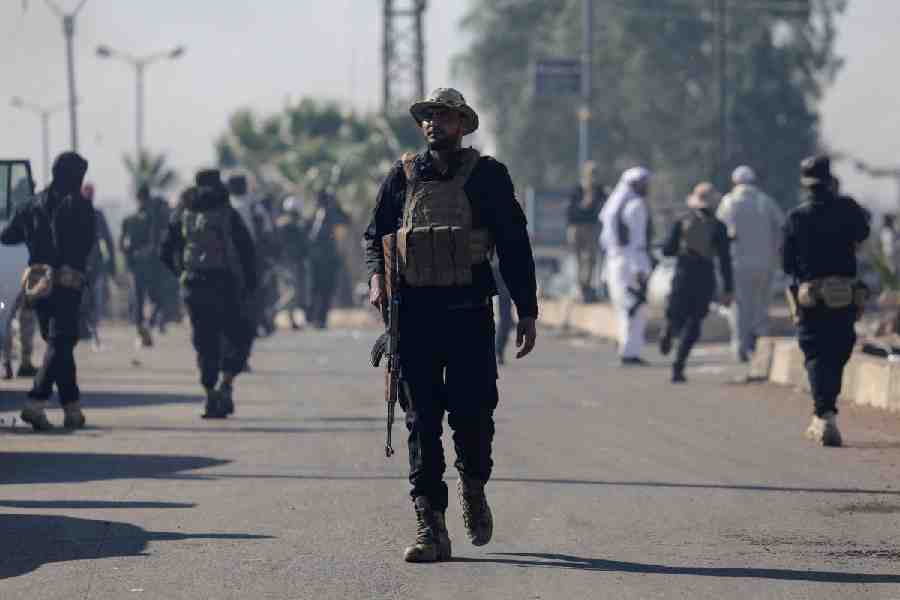
An Internal Security Forces officer walks at an Internal Security Forces checkpoint working to prevent Bedouin fighters from advancing towards Sweida, following renewed fighting between Bedouin fighters and Druze gunmen, despite an announced truce, in Walgha, Sweida province, Syria July 19, 2025. Reuters picture
ISRAEL-SYRIA TENSIONS
In a statement on Saturday, the Syrian presidency announced an immediate ceasefire and urged an immediate end to hostilities. Sharaa said Syria would not be a "testing ground for partition, secession, or sectarian incitement".
"The Israeli intervention pushed the country into a dangerous phase that threatened its stability," he said in a televised speech.
Sharaa appeared to blame Druze gunmen for the latest clashes, accusing them of revenge attacks against Bedouins.
Israeli Foreign Minister Gideon Saar said Sharaa was siding with the perpetrators.
"In al-Shara’s Syria, it is very dangerous to be a member of a minority — Kurd, Druze, Alawite, or Christian," he posted on X.
U.S. envoy Tom Barrack announced on Friday that Syria and Israel had agreed to a ceasefire.
Barrack, who is both U.S. ambassador to Turkey and Washington's Syria envoy, urged Druze, Bedouins and Sunnis, together with other minorities, to "build a new and united Syrian identity".
Israel has attacked Syrian military facilities in the seven months since Assad fell, and says it wants areas of southern Syria near its border to remain demilitarised.
On Friday, an Israeli official said Israel had agreed to allow Syrian forces limited access to Sweida for two days.
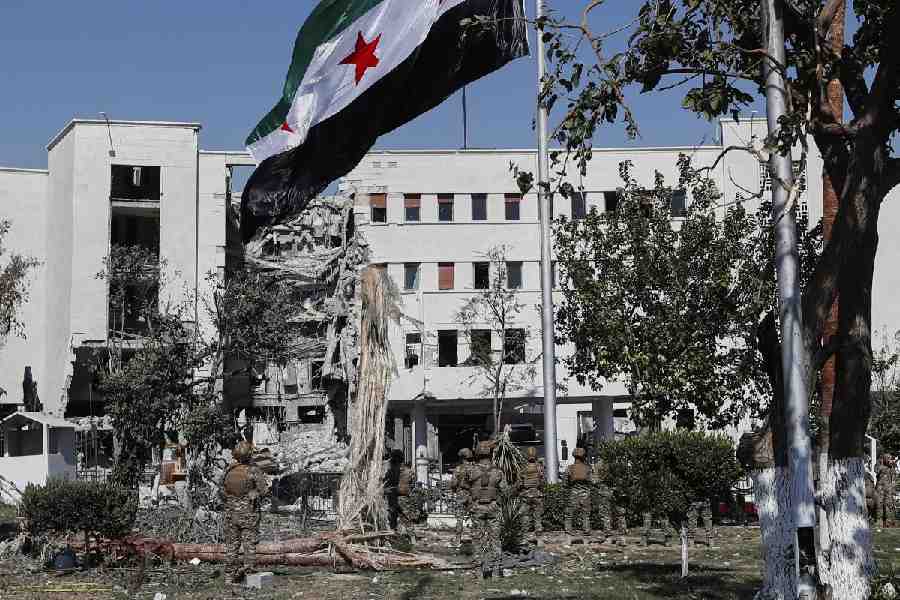
Syrian soldiers raise the national flag in front of the Defense Ministry building in Damascus, Syria, Saturday, July 19, 2025, which was heavily damaged by Israeli airstrikes on Wednesday. PTI picture
SWEIDA HOSPITAL FILLS WITH CASUALTIES
Mansour Namour, a resident of a village near Sweida city, said mortar shells were still landing near his home on Saturday afternoon, and that at least 22 people had been wounded.
A doctor in Sweida said a local hospital was full of bodies and wounded people from days of violence.
"All the injuries are from bombs, some people with their chests wounded. There are also injuries to limbs from shrapnel," said Omar Obeid, director of the hospital.
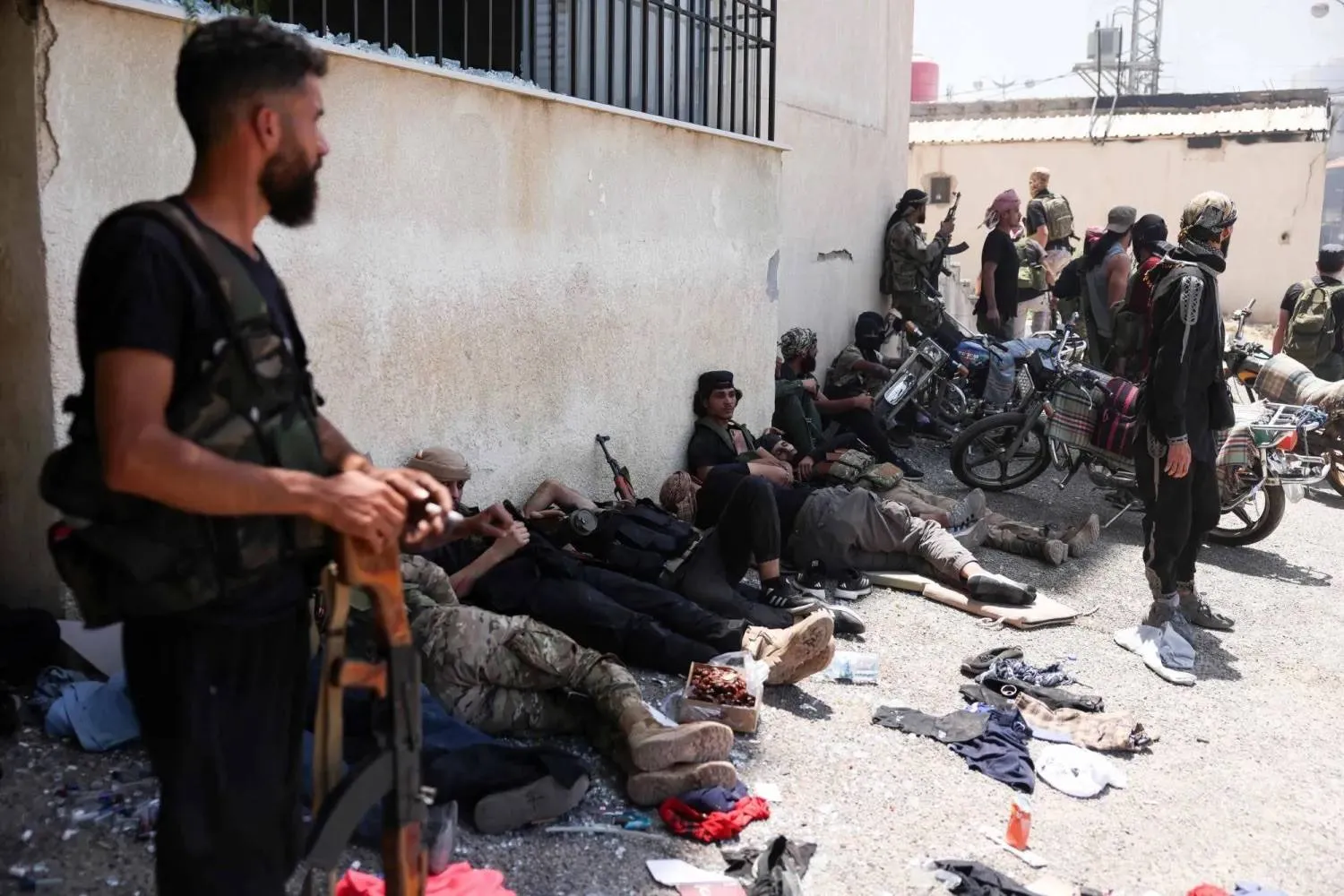
Fighters from the Bedouin clans in the city of Sweida on Saturday (AFP)
Qamishli: Kamal Sheikho
20 July 2025
The recent violent clashes in Sweida between local Druze factions and pro-government Bedouin tribes have reignited concerns over the stability of tribal alliances across Syria. As Arab tribes rallied to support the Bedouins, speculation mounted that a similar tribal uprising could erupt in eastern and northern Syria, where US-backed Syrian Democratic Forces (SDF) maintain a stronghold.
The fear of a broader tribal insurgency grew after thousands of tribal fighters reportedly mobilized toward the Sweida front from provinces such as Aleppo, Deir ez-Zor, and Raqqa, areas that remain divided between the SDF, a Kurdish-Arab coalition, and the Syrian government.
However, Sheikh Maan Hamidi Daham al-Jarba, head of the Shammar tribe, dismissed the possibility of the Sweida scenario repeating itself in northeastern Syria.
Speaking to Asharq Al-Awsat, he praised the SDF and its commander, General Mazloum Abdi, for achieving what he called “historic political balances and understandings” during a highly sensitive phase. The Shammar’s military wing, the Sanadid Forces - numbering between 7,000 and 10,000 fighters - have been key SDF partners since 2013, operating primarily along Syria’s eastern border with Iraq.
The SDF, established in 2015, introduced itself as a unified national military force representing Arabs, Kurds, Syriacs, and other communities in Syria. Earlier this year, its commander, Abdi, signed a landmark agreement with Syrian President Ahmad al-Sharaa to integrate the SDF and its civilian administration into the Ministry of Defense and national institutions by the end of 2025.
Bedir Mulla Rashid, a Kurdish affairs analyst at the Raman Center for Research, noted that the SDF’s power base has long rested on alliances with Arab tribal councils. While he acknowledged that the Sweida events could shake dynamics in the northeast, he ruled out an imminent tribal uprising. He emphasized ongoing US efforts to stabilize the region, partial sanctions relief, and a peace process between Türkiye and the Kurdistan Workers’ Party (PKK), as factors discouraging escalation.
“There is no equivalent to the Sweida factions in the northeast,” Rashid said. “Nor is there a regional power willing to fuel a confrontation with the SDF, especially as Türkiye is currently focused on internal reconciliation with the Kurds.”
In regions like al-Jazira and the Euphrates, tribal divisions have deepened over the course of Syria’s conflict. Last summer, tribal infighting erupted in deadly clashes. Yet, figures like Akram Mahshoush al-Zoubaa, head of the Elders Council within the Autonomous Administration and adviser to the Jabour tribe, remain adamant that the recent unrest should not be viewed as a model for the east.
“These movements do not reflect the values of Arab tribes,” al-Zoubaa said. “The SDF represents all components of society, despite ongoing efforts by various actors to sow division.”
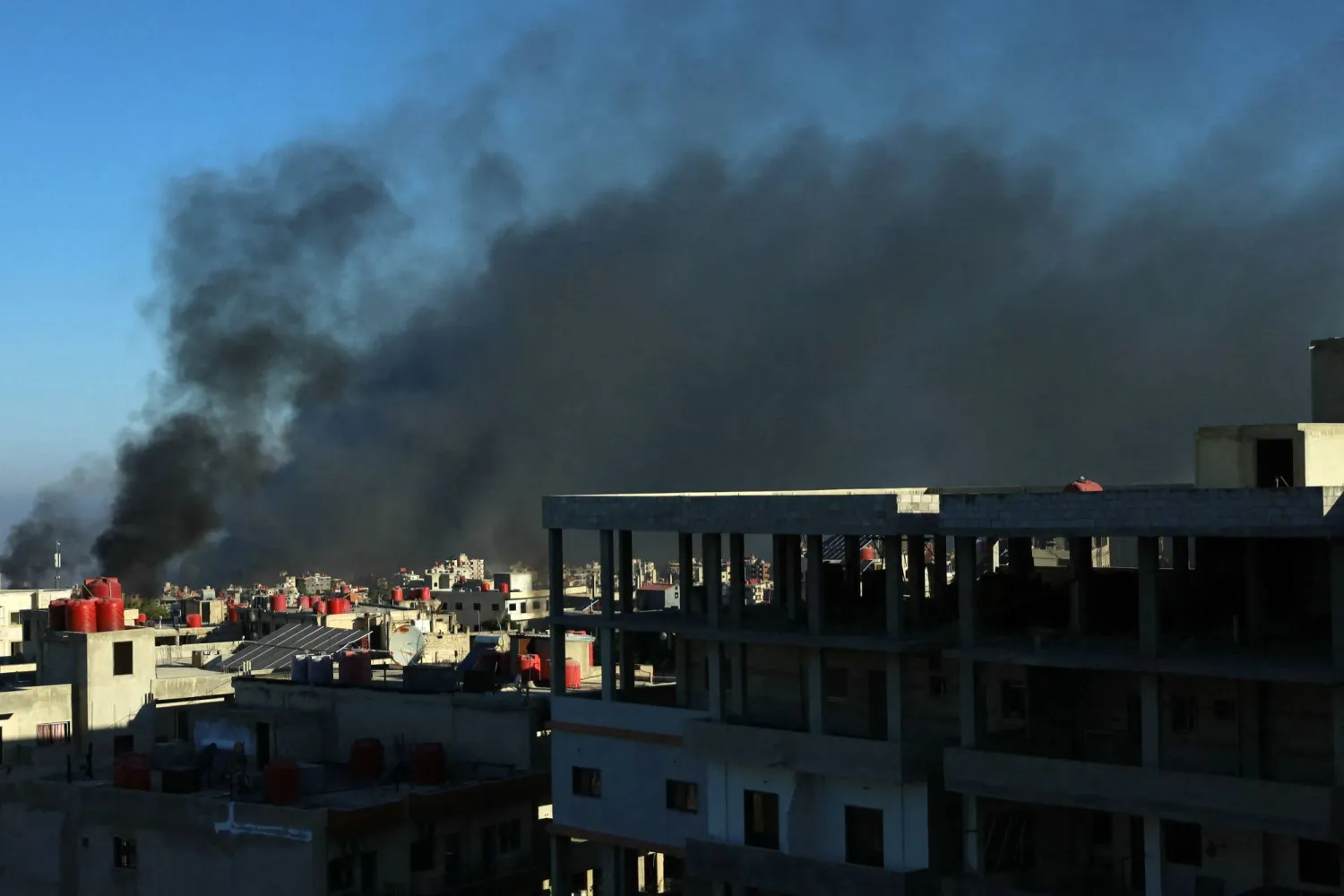
Black smoke rises above buildings in southern Syria's city of Sweida on July 19, 2025. (Photo by Shadi AL-DUBAISI / AFP)
Asharq Al Awsat
19 July 2025
Syria's government misread how Israel would respond to its troops deploying to the country's south this week, encouraged by US messaging that Syria should be governed as a centralized state, eight sources familiar with the matter told Reuters.
Israel carried out strikes on Syrian troops and on Damascus on Wednesday in an escalation that took the leadership by surprise, the sources said, after government forces were accused of killing scores of people in the Druze city of Sweida.
Damascus believed it had a green light from both the US and Israel to dispatch its forces south despite months of Israeli warnings not to do so, according to the sources, which include Syrian political and military officials, two diplomats, and regional security sources.
That understanding was based on public and private comments from US special envoy for Syria Thomas Barrack, as well as on nascent security talks with Israel, the sources said. Barrack has called for Syria to be centrally administered as "one country" without autonomous zones.
Syria's understanding of US and Israeli messages regarding its troop deployment to the south has not been previously reported.
A State Department spokesperson declined to comment on private diplomatic discussions but said the United States supported the territorial unity of Syria.
"The Syrian state has an obligation to protect all Syrians, including minority groups," the spokesperson said, urging the Syrian government to hold perpetrators of violence accountable.
In response to Reuters questions, a senior official from Syria's ministry of foreign affairs denied that Barrack's comments had influenced the decision to deploy troops, which was made based on "purely national considerations" and with the aim of "stopping the bloodshed, protecting civilians and preventing the escalation of civil conflict.”
Damascus sent troops and tanks to Sweida province on Monday to quell fighting between Bedouin tribes and armed factions within the Druze community.
Syrian forces entering the city came under fire from Druze fighters, according to Syrian sources.
Subsequent violence attributed to Syrian troops triggered Israeli strikes on Syrian security forces, the defense ministry in Damascus and the environs of the presidential palace.
Prime Minister Benjamin Netanyahu said Israel intervened to block Syrian troops from entering southern Syria - which Israel has publicly said should be a demilitarized zone - and to uphold a longstanding commitment to protect the Druze.
Syrian leader Ahmed al-Sharaa has vowed to hold accountable those responsible for violations against the Druze. He blamed "outlaw groups" seeking to inflame tensions for any crimes against civilians and did not say whether government forces were involved.
The US and others quickly intervened to secure a ceasefire by Wednesday evening. US Secretary of State Marco Rubio described the flare-up as a "misunderstanding" between Israel and Syria.
A Syrian and a Western source familiar with the matter said Damascus believed that talks with Israel as recently as last week in Baku produced an understanding over the deployment of troops to southern Syria to bring Sweida under government control.
Netanyahu's office declined to comment in response Reuters' questions.
Israel said on Friday it had agreed to allow limited access by Syrian forces into Sweida for the next two days. Soon after, Syria said it would deploy a force dedicated to ending the communal clashes, which continued into Saturday morning.