Thursday, July 24, 2025

Most US adults still support legal abortion 3 years after Roe was overturned, an AP-NORC poll finds

Three years after the Supreme Court opened the door to state abortion bans , most U.S. adults continue to say abortion should be legal — views that look similar to before the landmark ruling.
FILE - Abortion rights activists and Women's March leaders protest as part of a national day of strike actions outside the Supreme Court, June 24, 2024, in Washington. (AP Photo/Mark Schiefelbein, File)

Three years after the Supreme Court opened the door to state abortion bans, most U.S. adults continue to say abortion should be legal — views that look similar to before the landmark ruling.

The new findings from The Associated Press-NORC Center for Public Affairs Research poll show that about two-thirds of U.S. adults think abortion should be legal in all or most cases.

About half believe abortion should be available in their state if someone does not want to be pregnant for any reason.

That level of support for abortion is down slightly from what an AP-NORC poll showed last year, when it seemed that support for legal abortion might be rising.

Laws and opinions changed when Roe was overturned

The June 2022 Supreme Court ruling that overturned Roe v. Wade and opened the door to state bans on abortion led to major policy changes.

Most states have either moved to protect abortion access or restrict it. Twelve are now enforcing bans on abortion at every stage of pregnancy, and four more do so after about six weeks' gestation, which is often before women realize they're pregnant.

In the aftermath of the ruling, AP-NORC polling suggested that support for legal abortion access might be increasing.

Last year, an AP-NORC poll conducted in June found that 7 in 10 U.S. adults said it should be available in all or most cases, up slightly from 65% in May 2022, just before the decision that overruled the constitutional right to abortion, and 57% in June 2021.

The new poll is closer to Americans' views before the Supreme Court ruled. Now, 64% of adults support legal abortion in most or all cases. More than half the adults in states with the most stringent bans are in that group.

Similarly, about half now say abortion should be available in their state when someone doesn’t want to continue their pregnancy for any reason — about the same as in June 2021 but down from about 6 in 10 who said that in 2024.

Adults in the strictest states are just as likely as others to say abortion should be available in their state to women who want to end pregnancies for any reason.

Democrats support abortion access far more than Republicans do. Support for legal abortion has dropped slightly among members of both parties since June 2024, but nearly 9 in 10 Democrats and roughly 4 in 10 Republicans say abortion should be legal in at least most instances.

Fallout from state bans has influenced some people's positions — but not others

Seeing what's happened in the aftermath of the ruling has strengthened the abortion rights position of Wilaysha White, a 25-year-old Ohio mom.

She has some regrets about the abortion she had when she was homeless.

“I don’t think you should be able to get an abortion anytime,” said White, who calls herself a “semi-Republican.”

But she said that hearing about situations — including when a Georgia woman was arrested after a miscarriage and initially charged with concealing a death — is a bigger concern.

“Seeing women being sick and life or death, they’re not being put first — that’s just scary,” she said. “I’d rather have it be legal across the board than have that.”

Julie Reynolds’ strong anti-abortion stance has been cemented for decades and hasn’t shifted since Roe was overturned.

“It’s a moral issue,” said the 66-year-old Arizona woman, who works part time as a bank teller.

She said her view is shaped partly by having obtained an abortion herself when she was in her 20s. “I would not want a woman to go through that,” she said. “I live with that every day. I took a life.”

Support remains high for legal abortion in certain situations

The vast majority of U.S. adults — at least 8 in 10 — continue to say their state should allow legal abortion if a fetal abnormality would prevent the child from surviving outside the womb, if the patient’s health is seriously endangered by the pregnancy, or if the person became pregnant as a result of rape or incest.

Consistent with AP-NORC’s June 2024 poll, about 7 in 10 U.S. adults “strongly” or “somewhat” favor protecting access to abortions for patients who are experiencing miscarriages or other pregnancy-related emergencies.

In states that have banned or restricted abortion, such medical exceptions have been sharply in focus.

This is a major concern for Nicole Jones, a 32-year-old Florida resident.

Jones and her husband would like to have children soon. But she said she’s worried about access to abortion if there’s a fetal abnormality or a condition that would threaten her life in pregnancy since they live in a state that bans most abortions after the first six weeks of gestation.

“What if we needed something?” she asked. “We’d have to travel out of state or risk my life because of this ban.”

Adults support protections for seeking abortions across state lines — but not as strongly

There's less consensus on whether states that allow abortion should protect access for women who live in places with bans.

Just over half support protecting a patient's right to obtain an abortion in another state and shielding those who provide abortions from fines or prison time. In both cases, relatively few adults — about 2 in 10 — oppose the measures and about 1 in 4 are neutral.

More Americans also favor than oppose legal protections for doctors who prescribe and mail abortion pills to patients in states with bans. About 4 in 10 “somewhat” or “strongly” favor those protections, and roughly 3 in 10 oppose them.

Such telehealth prescriptions are a key reason that the number of abortions nationally has risen even as travel for abortion has declined slightly.

___

The AP-NORC poll of 1,437 adults was conducted July 10-14, using a sample drawn from NORC’s probability-based AmeriSpeak Panel, which is designed to be representative of the U.S. population. The margin of sampling error for adults overall is plus or minus 3.6 percentage points.

___

Follow the AP's coverage of abortion at https://apnews.com/hub/abortion.

Geoff Mulvihill And Amelia Thomson-deveaux, The Associated Press


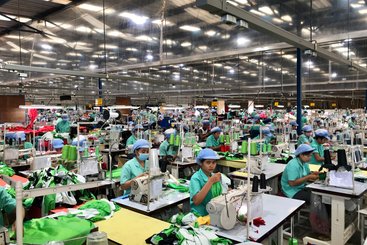
Beyond trade wars: women garment workers bear the brunt of US tariff recalibration

24 July 2025~
Expert comment~
Written byPrachi Agarwal

Image credit:Source: I Love Coffee dot Today- ShutterStock

This Week in Macroeconomics – Issue 16

Welcome to the latest issue of This Week in Macroeconomics, your essential guide to navigating the forces shaping the global economy. This week, Research Fellow Prachi Agarwal exposes a critical consequence of US trade policy: its disproportionate impact on women’s livelihoods across Least Developed Countries (LDCs). Prachi unpacks the data, revealing a gendered supply chain shock rippling through the global garment industry.

Beyond trade wars: women garment workers bear the brunt of US tariff recalibration

As geopolitics reshape global trade, the fallout from a contentious US tariff policy is spreading far beyond its intended targets. Least Developed Countries (LDCs) – many of which play only a minor role in the US trade imbalance that Washington seeks to address – are being swept up in this recalibration. What is emerging is more than simple trade disruption. It is a gendered supply chain shock, with women employed in the garment industry in countries like Lesotho, Bangladesh, Haiti, Madagascar and Cambodia paying a high price.

For over two decades, Lesotho, a small landlocked nation, successfully integrated itself into global value chains through the garment sector. Approximately 90% of its exports to the US are from the apparel industry, supported, until recently, by preferential tariffs under the African Growth and Opportunity Act (AGOA).

However, with AGOA set to expire in September 2025 and new reciprocal US tariffs – some as high as 50% – now imposed, Lesotho’s competitive edge has collapsed, forcing the country to declare a national state of disaster. Factory closures are accelerating, putting over 5,000 jobs at risk. The majority of those affected are women, who comprise 80% of the workforce and usually support their families.

This is a part of a wider pattern. There was a moment of cautious optimism in some LDCs when the US-China trade war intensified. The hope was that US buyers shifting away from China would create opportunities for other garment exporters to step in and fill the gap. In theory, this was plausible. But in practice, the US implemented blanket tariffs on many countries, including small, trade-dependent LDCs caught in the crossfire.
Women on the frontline of trade disruptions

Take Bangladesh, for example. It exports nearly US$9 billion in apparel annually to the US. Now, the sector is being squeezed by higher input costs and order uncertainty, forcing suppliers to trim operations. The result: factory workers – again, largely women (60% of the workforce) – face rising precarity in a sector already grappling with wage stagnation and limited protections.

The story is even worse in Haiti, where nearly 99% of apparel exports go to the US (Figure 1), mostly under long-standing preferential agreements (HOPE/HELP), also expiring in 2025. Factories in Port-au-Prince have already begun shedding jobs. Of the 35,000 workers in the industry, the most affected are young women already on disproportionately low wages.

A Flourish chart


In Madagascar, over 60,000 jobs are on the line across the industry due to a 47% tariff, leading to garment factories scaling back operations. The majority of those being laid off are, again, women – many of whom migrated to cities in search of economic security. In Cambodia, a newly-negotiated 36% tariff is undermining competitiveness and threatening a workforce that is overwhelmingly female.

The picture across LDCs suggests a gendered supply chain shock to the garment industry. As women’s jobs disappear, the knock-on effects are immediate: increased food insecurity, children taken out of school and a potential rise in domestic violence. In Lesotho, these risks are already materialising through increased workplace exploitation and gender-based violence.

So what options do LDCs have?


Diversifying trade is part of the answer. Lesotho and Madagascar should explore opportunities within SADC, South Africa and the African Continental Free Trade Area (AfCFTA). Other LDCs could perhaps diversify towards their European or North American partners. While these markets cannot fully replace US demand, they can help cushion the impact. Former AGOA beneficiaries could also negotiate collectively with the US for better terms, while finalising AfCFTA’s rules of origin to boost intra-African exports.

At the same time, governments can adopt gender-responsive strategies to absorb trade shocks. These include re-skilling programmes, wage support for unemployed women, and social protection mechanisms that activate when factories close. Recognising that most LDCs lack the necessary fiscal space, development banks can play a vital role in providing financial support, as they did during the post-pandemic recovery.

Ultimately, trade policy is never gender neutral. As the US recalibrates its global trade relationships, its policies are unintentionally harming women in vulnerable economies. In LDCS, where women are overrepresented in export-led garment industries, the costs of trade disruptions are deeply gendered. If trade is to be a vehicle for inclusive development, it must be guided by principles of equity – both among nations and within them.
Donald Trump slams US tech giants for ‘building factories in China, hiring workers in India’

Earlier on May, 2025, Trump had told Apple CEO Tim Cook that he does not want him 'building in India' and that 'India can take care of themselves'

Our Web Desk Published 24.07.25, TELEGRAPH CALCUTTA


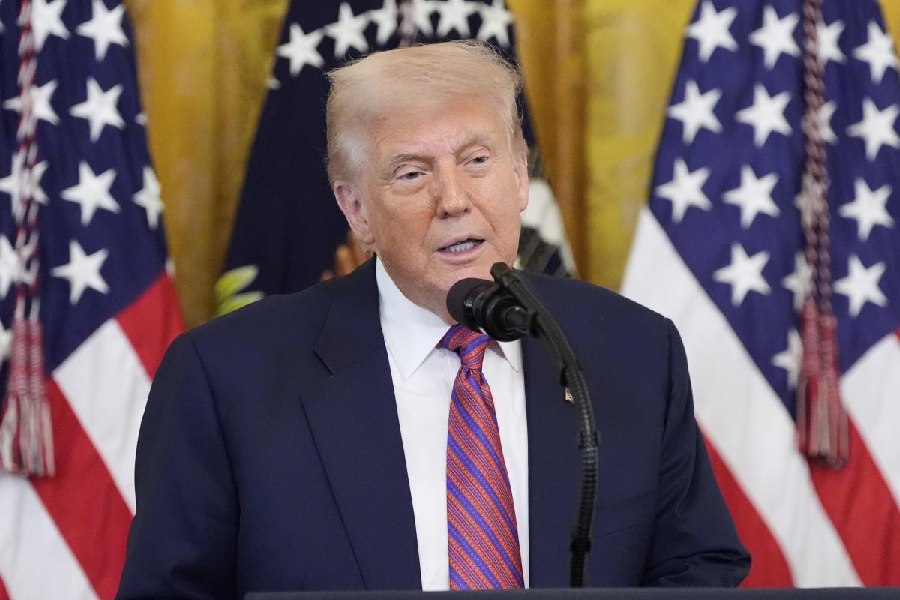
U.S. President Donald Trump delivers remarks on artificial intelligence at the "Winning the AI Race" Summit in Washington D.C., U.S., July 23, 2025.Reuters picture

US President Donald Trump on Thursday expressed strong disapproval of American technology companies for their business activities abroad, particularly in China and India.

Trump made the remarks at the AI Summit where he signed three executive orders related to Artificial Intelligence, including a White House action plan to utilise AI.

Trump stated that "for too long, much of America’s tech industry pursued a 'radical globalism' that left millions of Americans feeling 'distrustful and betrayed.'"

He stated that under his presidency, “those days are over”.

Taking a direct jab at ‘many’ of America's tech companies, he accused them of reaping “the blessings of American freedom”.

“Many of our largest tech companies have reaped the blessings of American freedom while building their factories in China, hiring workers in India and slashing profits in Ireland, you know that. All the while dismissing and even censoring their fellow citizens right here at home,” he said.

“We need US technology companies to be all in for America. We want you to put America first. You have to do that. That's all we ask,” he added.

Also Read
Three auto giants wince, India waits as Trump declares deals with three Asian nations


At the summit, Trump articulated his vision for AI development, stating, "Winning the AI race will demand a new spirit of patriotism and national loyalty in Silicon Valley and beyond." This call to action was part of a broader narrative advocating for more domestically-focused business practices.

Trump signed three executive orders related to AI, including a White House action plan, an order that establishes a coordinated national effort to support the American AI industry by promoting the export of full-stack American AI technology packages.

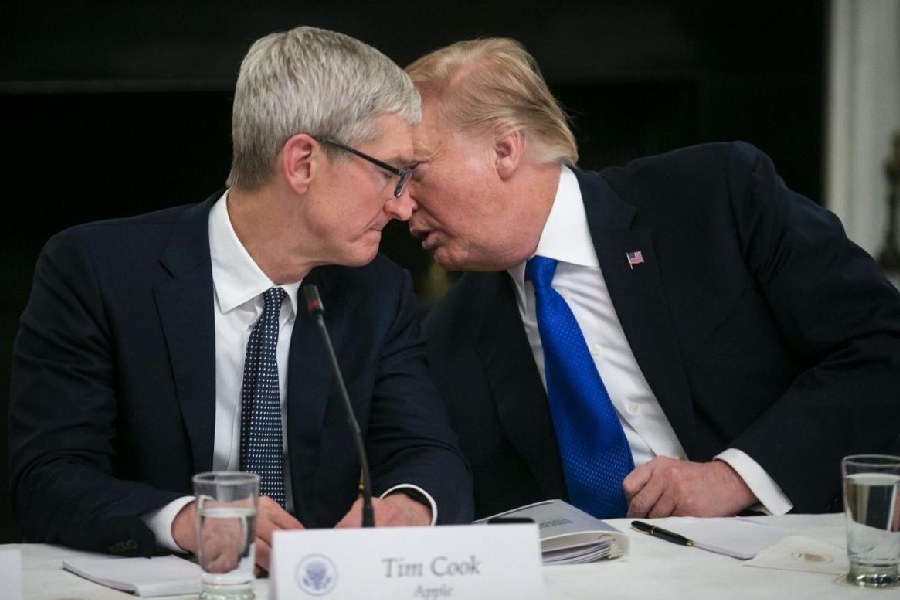
Earlier on May, 2025, Trump had told Apple CEO Tim Cook that he does not want him "building in India" and that "India can take care of themselves".

AFP reported that Tim Cook had said he expected "a majority of iPhones sold in the US will have India as their country of origin".

Also Read
‘Don’t build in India’: Trump pressures Apple, but Delhi reaffirms manufacturing plans


At a business event in Doha, the US President said he had a "little problem" with Tim Cook. "I said to him, my friend, I am treating you very good. You are coming up with $500 billion, but now I hear you are building all over India. I don't want you building in India."

Apple currently has three plants in India, two in Tamil Nadu and one in Karnataka. One of these is operated by Foxconn, and the other two by the Tata Group. Two more Apple plants are in the pipeline.

(With inputs from agencies)
 Starmer and Modi hail long-sought India-U.K. trade deal as historic

Britain’s Prime Minister Keir Starmer welcomes Indian Prime Minister Narendra Modi at Chequers near Aylesbury, England, Thursday, July 24, 2025.
(AP Photo/Kin Cheung, Pool) 

By Jill Lawless - Associated Press - Thursday, July 24, 2025

LONDON — The prime ministers of Britain and India sealed a hard-wrought trade agreement on Thursday that will slash tariffs on products including Scotch whisky and English gin shipped to India and Indian food and spices sent to the U.K.

Keir Starmer and Narendra Modi met at Chequers, the British leader’s official country residence outside London, where the U.K. and Indian trade ministers, Jonathan Reynolds and Piyush Goyal, formally signed the agreement.

Starmer said it was “the biggest and most economically significant trade deal” Britain has made since leaving the European Union in 2020.

Modi said it was “a historic day in our bilateral relations.”

Alongside the agreement, the two countries announced almost 6 billion pounds ($8 billion) in trade and investment deals in areas including AI, aerospace and dairy products, and pledged to work more closely together in areas such as defense, migration, climate and health.

The trade agreement between India and Britain, the world’s fifth- and sixth-largest economies, was announced in May, more than three years after negotiations started, and stalled, under Britain’s previous Conservative government.

It still must be ratified by Britain’s Parliament.

The U.K. government said the deal will reduce India’s average tariff on British goods from 15% to 3%. Import taxes on whisky and gin will be halved from 150% to 75% before falling to 40% by year 10 of the deal. Automotive tariffs will fall from over 100% to 10% under a quota.

Britain said the deal is expected to increase bilateral trade by 25.5 billion pounds ($35 billion) annually from 2040 and add almost 5 billion pounds ($6.8 billion) a year to the British economy.

India’s Trade Ministry said in May that 99% of Indian exports will face no import duty under the deal, which applies to products including clothes, shoes and food.

Formal talks began in 2022 on a free trade agreement that then-Prime Minister Boris Johnson hailed as a key goal after Britain left the EU. Johnson famously promised to have a deal done by the Diwali holiday in October of that year.

The two countries held 13 rounds of negotiations without a breakthrough before talks were suspended while both nations held general elections in 2024.

Modi was re-elected and Britain replaced the Conservative government with one led by Starmer’s center-left Labour Party.

Almost 2 million people in the U.K. have roots in India, where Britain was the colonial power until independence in 1947.

Starmer said Britain and India “have unique bonds of history, of family and of culture, and we want to strengthen our relationship further, so that it is even more ambitious, modern and focused on the long term.”

Speaking as England and India face off in a cricket test series, Modi sad the sport was “a great metaphor for our partnership.”

“There may be a swing and a miss at times, but we always play with a straight bat,” he said. “We are committed to building a high-scoring, solid partnership.”


When it comes to the Malvinas Islands, a name is more than just a name to Argentinians

Satellite image of the Malvinas Islands, also known as Falkland Islands in the UK.

Satellite image of the Malvinas Islands, known as the Falkland Islands in the UK. Art over public domain image on Wikimedia Commons.

When the Argentinian science fiction comic series “The Eternaut first became available on the streaming service Netflix, translator Daiana Estefanía Díaz published an explanation on her LinkedIn page for why people around the world would read and hear Malvinas Islands instead of Falkland Islands, in every language, when referring to the disputed archipelago in the Southern Atlantic.

The islands are famously at the center of a century-long feud between the United Kingdom and Argentina, which led to a bloody war in 1982, that lasted 10 weeks and killed more than 900 people649 of them Argentinians. Still an open wound for many in the South American nation, it also became an updated feature of the original story from the graphic novel that was adapted into a series.

The original story by Héctor Germán Oesterheld with artwork by Francisco Solano López, a classic in the Argentinian comics world, was written in 1957. Now, almost 70 years later, creator Bruno Stagnaro decided to add local details closer to contemporary society in his new productionAnd so, Juan Salvo, the Eternaut hero who travels through timelines trying to save his country from an alien menace, played by Ricardo Darín, became a veteran of the Malvinas conflict.

Díaz explained her choice to keep Malvinas in her translation into English:

It was the only viable option, I never doubted. Not only because it would never occur to me to use any name other than Malvinas in that context and in an Argentine production, but also because I know that an Argentinian, either real or fictional, would never call them any other way.

The translator also suggested the islands name should be Malvinas in all other languages available on the streaming service. Díaz said it was one thing explaining to other translators how to work on words for truco plays (a popular, traditional card game in South America that appears in the first episode) but the Malvinas was “a much deeper issue.

I told them it also snowed there in 1982, that this plane from the Peruvian Army doesn't show up [on the show] by chance, that when they say “the islands they are talking about those two, but also about many other things. What, who, when, how, where and why. This is a sensitive issue, still very present, that crosses us in the political, historical, cultural and social scopes…It seats us on a side of history from where we are not going to move.

Historical background

Raising of the Argentine flag on the Malvinas Islands in 1982.

Raising of the Argentine flag after landing on the Malvinas Islands in 1982. Photo: Argentina.gob.ar (CC BY 4.0).

On April 2, 2025, officially Day of the Veterans and Fallen of the Malvinas War, Argentinian President Javier Milei’s speech marked a shift in the Argentinian government’s historical position over the issue, according to local press. He defended the right to self-determination for the island’s inhabitants, saying he hoped they would choose to be Argentinian. Under his countrys constitution, however, they already are.

According to the United Nations, the Malvinas/Falklands have a population of 3,662 over 12.173 square kilometres (4.7 square miles), administrated by the United Kingdom of Great Britain and Northern Ireland. The UN Special Committee on Decolonization has discussed the issue since 1964 and issues annual resolutions.

The dispute over the territory has lasted for almost two centuries. Argentinians claim it as part of their Province of Tierra del Fuego, Antarctica and South Atlantic Islands. The country maintains that the Malvinas were ruled by Spain until 1816, when Argentina became independent, which Argentinians support led to it automatically inheriting the islands as part of their territory. In 1833, however, the British started to control the archipelago, which was only briefly interrupted by the war in 1982.

At the time, with the military dictatorship pressured by an economic and political crisis, then president General Leopoldo Galtieri decided to launch the operation as an attempt to reverse the game. It was the only international warlike conflict in which Argentina was a key figure during the 20th century, says a publication from the Conicet (National Scientific and Technical Research Council). After 74 days of war, 255 British people, three islanders and 649 Argentinians were killed. As journalist Leila Guerriero wrote in a story published by El País newspaper in 2020:

Many were buried in a graveyard in the islands and remained there without identification for decades.

An article written in 2021 by Daniel Filmus, then secretary for the Malvinas and Southern Atlantic, and published on Argentinas Foreign Ministry website, said:

Argentina protested immediately following the British act of force [in the 19th century] and has never renounced to its sovereignty. If the controversy still lives on to this day, it is because of the British refusal to solve it.

According to a BBC article from 2007, former UK prime minister Tony Blair once said “going to war over the Falklands took ‘political courage’ and was ‘the right thing to do’. Last year, the UK government’s Foreign, Commonwealth & Development Office’s official account on X (formerly Twitter) posted a video stating:

A cultural symbol

When the war broke out in 1982, renowned Argentinian writer Jorge Luis Borges said it was like having two bald men fighting over a combBut, as the explanation written by Díaz, The Eternaut’s translator, demonstrates, to Argentinians, the islands are a matter of identity sewn into their culture.

Over the years, the political slogan “The Malvinas are Argentinian” (“Las Malvinas son Argentinas”) spread throughout the country on public signs, over T-shirts, football stadiums, music, and turned into a cultural reference of its own.

The apex was reached two years after the end of the conflict, with Argentina facing England in the quarter-finals of the 1986 World Cup. A 25-year-old Diego Armando Maradona scored two historic goals within four minutes; the first one was the iconic “hand of God, and the second one was named “the goal of the century. Argentina eliminated England and moved on to win its second World Cup title.

Although saying before the match that it was just football, avoiding the political aspect of the match, later on, Maradona would declare:

It was like winning over a country, not just a football team. Many Argentinian kids had died; they killed them as if they were little birds. It was a revenge, the hell that it would be just another match!Categories

Otters spotted in Kashmir waters, and residents are both thrilled and wary


Long believed to be extinct, Eurasian otters show signs of resurgence, with three sightings by Indian wildlife officers in two places since 2023.

By Jehangir Ali
Published On 22 Jul 202522 Jul 2025


Hugam, Indian-administered Kashmir – Nasir Amin Bhat, 17, was barely ankle-deep in the water when his school friend and neighbour Adil Ahmad shouted from the riverbank on a breezy summer evening in May.

“Turn back! There’s something in the water.”

Recommended Stories
Kashmir’s famed saffron faces devastating new terror: Porcupines

Across the Lidder, a tributary of the Jhelum River, in Hugam village of Indian-administered Kashmir’s Anantnag district, a Eurasian otter (Lutra lutra) plunged into the glacial waters and started paddling furiously against the current with all four limbs.

“I had no idea what it was,” Bhat, a high school student, told Al Jazeera, “but I grabbed my smartphone and turned on the camera.”

The grainy, nine-second video shows the creature with a fur coat – classified as “near threatened” on the International Union for Conservation of Nature (IUCN) Red List – gliding out of the water and jumping onto the riverbank.

After a few clumsy steps, the semiaquatic animal, which can reach elevations of 3,660 metres (12,000 feet) in the Himalayas during the summer, disappears behind a thick grove of bushes, bringing the video to an uneventful end.

Eurasian otters used to thrive along the banks of the Lidder River, but rampant construction forced the semiaquatic animal to retreat [Jehangir Ali/Al Jazeera]

Long believed to have gone extinct, Eurasian otters seem to be showing signs of resurgence in Kashmir, with three individuals spotted by Indian wildlife officers in two places since 2023.

The chance sightings have excited environmentalists and wildlife conservationists while raising hopes of a better future for the Himalayan region’s fragile freshwater ecosystems, which have been battered by climate change in recent years.

‘Habitat has improved’

Indian wildlife biologist Nisarg Prakash believes the sighting of otters in Kashmir was an indicator of high-quality aquatic habitats.

“The reappearance of otters might mean that poaching has come down or the habitat has improved, and maybe both in some cases,” Prakash, whose work focuses on otters in southern parts of India, told Al Jazeera.

Protected under India’s Wildlife Protection Act, otters were once widely distributed across north India, including the Himalayan foothills, the Gangetic plains and parts of the northeast.

A peer-reviewed study by IUCN in November last year noted that the Eurasian otter, known among Kashmiri locals as “voddur”, was found in water bodies of Lidder and Jehlum valleys, including Wular Lake, one of Asia’s largest freshwater lakes.

Hugam village in Anantnag district, Indian-administered Kashmir [Jehangir Ali/Al Jazeera]

However, over the years, their population became “patchy and fragmented due to habitat loss, pollution and human disturbances”, says Khursheed Ahmad, a senior wildlife scientist at the Sher-e-Kashmir University of Agricultural Sciences and Technology (SKUAST-K).

Ahmad said that, due to habitat alterations from human activities and the encroachment of their ideal habitats along riverbanks and other water bodies, Eurasian otters retreated and became confined to areas that were least accessible to humans.

“Although they were not extinct, sightings and occurrences had become extremely rare and they were never documented,” said Ahmad, who heads the Division of Wildlife Sciences at SKUAST-K.

Less than two years ago, a research team led by Ahmad accidentally stumbled on otters during a study on musk deer in Gurez, a valley of lush meadows and towering peaks split into two by the Kishanganga River along the Line of Control, the de facto border between India and Pakistan in the Himalayas.

Past midnight on August 6, 2023, two individual otters were captured in a riverine habitat at an altitude of 2,600 metres (8,530 feet) in the valley near the 330MW Kishanganga Hydro Electric Project built by India following a prolonged legal battle with Pakistan at the Permanent Court of Arbitration in The Hague.

After that sighting, the research team focused on documenting the presence of otters on the Indian side of Kashmir.

“Unfortunately, due to heavy disturbance from fishing and other local and paramilitary activities, no further presence was documented,” the IUCN study notes.

Ahmed said Bhat’s video is only the second photographic evidence of otters in Kashmir.


Rare otter sighting in Lidder River, Indian-administered Kashmir


‘Too terrified to go there’

But in the large farming village of Hugam, comprising some 300 families, residents are both excited and worried.

At the crack of dawn, Muneera Bano, a homemaker, wakes to the flutter of crows cawing furiously on the willow trees lining the tributary’s banks outside her home in Hugam, located some 58km (36 miles) south of the main city of Srinagar.

Bano has stopped washing clothes and utensils on the riverbank after the otter was discovered, something she had done for years.

“There are underwater caves [in the tributary], and it is hiding in one of them. When it comes out in the morning, crows see it and they start screaming. I am too terrified to go there,” she said.

Bhat, the teenager who filmed the video, said he often used to bathe in the tributary’s glacial waters and sometimes also caught fish. “Now I can’t even think about going there,” he said


.
Nasir Amin Bhat captured the Eurasian otter on his mobile phone on May 28, 2025, when he was about to take a bath in the Lidder [Jehangir Ali/Al Jazeera]

The grainy video led to rumours about the presence of crocodiles in the tributary, prompting Indian wildlife officials to set up a camera trap, which confirmed that it was a Eurasian otter – also seen in Bhat’s video – and not a crocodile.

Some wildlife officials even bathed in the river in the presence of village elders to demonstrate that the water was completely safe.

Although otters do not pose any threat to humans, they can turn unpredictable, especially when close to humans. But scientists say these animals can grow accustomed to the presence of humans.

Wildlife biologist Prakash said rather than being scared or fearful, curiosity about otters can make them a sight to be enjoyed while watching them fish or swim.

“Otters are largely active around dawn, dusk and after dark, though they can sometimes be seen during daytime as well. Eurasian otters largely prey on fish, eels, and sometimes, waterfowl,” he said.

Kashmiri farmer Wasim Ahmad remembers a summer day in the early 1990s when he was on the way back from school situated along the banks of Doodhganga, a major tributary of the Jhelum River.

As Ahmad, now in his 40s, turned the corner, he saw a large procession of people walking jubilantly. One man was holding a dead otter while another was walking a dog on a leash.

Bagh-e-Mehtab in Srinagar is home to a community of poachers who, in the past, made a living by selling skins of animals such as cats, otters, and other animals. With stricter animal welfare laws in force in India now, the community has given up the old profession.

“Our elders warned us that otters skinned the children and ate them raw,” said Ahmad, who was in ninth grade then. “But as I grew up, I didn’t come across even one person who was harmed by otters. It was basically a tactic to keep the children away from the river.”

Ahmad, the wildlife scientist, said the reappearance of otters in Kashmir was a positive sign.

“Now we should see to it that the new habitat is protected from uncontrolled pollution, garbage accumulation, increased carbon emissions and habitat degradation. Addressing these challenges is crucial for their conservation and wellbeing,” he told Al Jazeera.