Thursday, July 24, 2025

Bureaucratized Confucianism: How Tradition Became a Tool of Control in China


Values once rooted in moral constraint, like filial piety, virtue, and ethical cultivation, are being refitted to serve a system built on obedience and authority.


By Carlo J.V. Caro
July 21, 2025

Credit: Nick Fewings on Unsplash

What does it mean when a regime speaks the language of ancient virtue but enforces it through curriculum mandates and ideological scorecards? The opening essay of Simulated Sagehood, a five-part series, traces how Confucianism has been reconstructed, not as a living tradition, but as a calibrated instrument of bureaucratic control.

Through textbook reform, propaganda choreography, and institutional incentives, Xi’s China fuses ethical language with Leninist mechanics. The result is not revival but simulation: a Confucianism of surfaces, stripped of its moral interior.

The return of Confucian language under Chinese leader Xi Jinping isn’t a spontaneous cultural revival. It’s a carefully orchestrated campaign — engineered from the top of the Chinese party-state — to wrap centralized political control in the language of ancient virtue. What’s unfolding is a quiet reversal: values once rooted in moral constraint, like filial piety, virtue, and ethical cultivation, are being refitted to serve a system built on obedience and authority. This isn’t Confucianism reborn. It’s a state-authored script, stitching together the vocabulary of tradition to legitimize modern power.

The turning point came in 2013 with a little-known but foundational document: the Communiqué on the Current State of the Ideological Sphere — more commonly known as Document No. 9. Here, the Chinese Communist Party elevated “cultural security” to the same strategic level as political or cyber defense, identifying “Western constitutional democracy,” “universal values,” and “historical nihilism” as existential threats. The proposed solution wasn’t dialogue or reform, but insulation: Confucian culture would be deployed as a kind of ideological firewall, meant to inoculate China against liberal ideas.

This approach was codified in the 2017 Opinions on Implementing the Inheritance and Development Project of Excellent Traditional Chinese Culture — a mouthful of a title, but one with clear intent. It brought Confucian texts under the wing of national security. The classics were no longer seen as sources of independent moral insight, but as symbolic tools linking the Communist Party to an unbroken Han civilizational arc.

The machinery driving this transformation spans a vast web of state organs: the propaganda system, the education bureaucracy, and the united front system — a structure designed to manage intellectuals, religious groups, and diaspora networks. Each branch reshapes Confucian motifs to suit its own mission. After the Central Propaganda Department issued its 2015 Action Plan for promoting “core socialist values,” local governments were told to inject concepts like li (ritual), xiao (filial piety), and zhong (loyalty) into school posters, radio scripts, and CCP publications. But these concepts are no longer invitations to ethical reflection. Xiao is reframed as deference to political authority. Zhong — which once carried the tension between loyalty and principled dissent — is reduced to personal allegiance to Xi as the party’s “core.” These values aren’t interpreted; they’re rebranded as slogans.

The shift is institutionalized most clearly through the Ministry of Education. In 2017, under State Council directive No. 61, the government established the National Textbook Committee, chaired by a vice premier and staffed by Marxist theorists and propaganda cadres. Its job? To vet all school textbooks for ideological conformity. Accuracy — whether philological or philosophical — takes a backseat. By 2019, new standardized textbooks in literature, civics, and history began inserting handpicked excerpts from the Analects, the Classic of Filial Piety, and the Zhongyong (Doctrine of the Mean). These insertions weren’t meant to provoke classical interpretation. One widely noted example pairs Mencius’ famous line, “When the ruler is upright, the people will follow,” with a photo of Xi visiting a poor village. The message is clear: Xi doesn’t just rule — he continues a civilizational mandate.

This symbolic fusion reached a new level in 2021 with the launch of the Three-Subject Unified Textbooks (三科统编教材). For the first time, Xi Jinping Thought became mandatory reading in all public primary and secondary schools — including in ethnic minority regions. Sayings like “The noble man cultivates himself to govern family and state” (君子修其身以齐家治国) now appear alongside directives to “love and follow the party’s core, General Secretary Xi.” Confucian virtues are no longer positioned as part of an ethical journey. They are cast as historical truths — completed, fulfilled, and embodied in CCP rule. What remains of Confucian discourse is the scaffolding. The meaning has been hollowed and refilled with political certainty.

Since 2020, this “Confucianism with CCP characteristics” has become part of institutional performance. The state now applies ideological-political quality assessments (思想政治素质考核) to teachers, cadres, and schools. The Eight-Ministry Opinion of 2020 explicitly links results from these evaluations to funding decisions, promotions, and curriculum approvals. By 2023, the National Cadre Education and Training Plan designated the study and application of Xi Jinping Thought as the key test for political fitness. Provincial party academies now use numerical dashboards to track how often officials invoke “excellent traditional culture” in speeches, papers, and events. In this environment, Confucian vocabulary doesn’t function as ethical language. It becomes metadata — an ideological KPI, measurable and monetized. The tradition survives not as thought, but as performance.


The LDP Bears Responsibility for Japan’s Populist Surge


A mix of LDP hubris and inaction contributed to its electoral setback – and the rise of textbook-style populism.

By Jio Kamata
July 22, 2025
THE DIPLOMAT


Kamiya Sohei, the founder and secretary general of Sanseito, speaks at a rally after Japan’s upper house election, July 21, 2025.
Credit: Facebook / Kamiya Sohei

During the campaign for July 20’s House of Councillors election, the ruling Liberal Democratic Party’s pitch appeared more focused on past achievements than on present or future offerings. One of its campaign slogans, announced prior to the official campaign period, crystallized this notion: “We have a responsibility to govern this country.”

Claiming “responsibility” – particularly the need to safeguard the sanity of national finances – the LDP refused to campaign on a consumption tax cut, which all opposition parties supported. Instead, it limited its election pledge to a 20,000 yen (around $135) cash distribution for the entire public, while rival parties proposed more generous plans.

On the stump, Prime Minister Ishiba Shigeru raised national security as a rationale for his party’s continued leadership. Other LDP politician simply claimed they were “better” than the supposedly irresponsible opposition. The LDP appeared to bet that its long-standing dominance and surplus of credibility would be enough to sustain its hold on power.

Instead, the LDP notched its worst upper house performance since 2007, losing 13 seats and its majority. For the first time since the party’s founding, it has lost its majorities in both house of the Japanese Diet.

It’s worth keeping in mind that the disastrous upper house election in 2007 eventually resulted in the party’s ouster from power in 2009.

The election results cast serious doubt on whether the LDP’s credibility remains intact. A mix of LDP hubris and shifting public perception ultimately contributed to its electoral setback – and the rise of textbook-style populism.

Two parties with populist characteristics won big in this election: the Democratic Party For the People (DPFP) and Sanseito, which became the top two proportional ballot vote-getters after the LDP. The DPFP expanded its seats by 13; Sanseito added 14 to its upper house tally. While the parties differ in the degree of elite skepticism – the DPFP suggests that elites are too stubborn to experiment with fiscal policy, while Sanseito indulges in conspiracy theories – both succeeded in capitalizing on the public’s fear and anger during this election cycle


The DPFP’s ongoing pledge to “raise take-home pay” resonated strongly amid persistent inflation, largely driven by the weakening yen. Sanseito has singlehandedly elevated the issue of “foreigners” – using demagoguery but striking a chord with public concern over the rise in foreign tourists and workers in the country, absent a national debate – onto the political agenda, forcing the LDP to scramble for a solution that had been low on their priority list.

So, what are the factors which contributed to the rise of populism in Japan? According to Cas Mudde and Cristóbal Rovira Kaltwasser, populism is caused when established parties act in ways that reinforce the stereotypes that elites are corrupt and unresponsive. On the issue of corruption, the LDP is still struggling to overcome the tainted image left by the political slush fund scandal, which had an overwhelming impact on last year’s lower house election. The electoral loss forced the ruling coalition into minority government status, making it impossible for the LDP to enact meaningful policy to quell the populist irritation and show the public that they are responding to their demands.

Regarding the second component of populism, elite unresponsiveness, the refusal to take drastic measure to cure inflation and the LDP’s lack of consideration of the tension between foreigners and the native population, could be factors that further soured perceptions of the LDP.

In effect, by enabling the rise of the two populist-style parties the electorate called out the LDP’s “irresponsibility.”

Even before the electoral results, the anticipated rise of parties calling for increased government spending had been already shaping the bond market. And if these trends continue, there are concerns that the LDP’s minority status in both chambers will force them to loosen their purse – which could potentially limit Japan’s bond issuing power.

The LDP bears responsibility for these consequences. To be generous, considering the still-massive national debt and the potential ballooning of future debt servicing costs – due to the Bank of Japan’s gradual approach to raising interest rates – the government’s refusal to increase spending could be seen as “responsible.” However, the LDP has failed to convince the public that this is truly the case.

To counter the worst instincts of populism, the party should respond to demands grounded in real-life concerns and remain open to forming coalitions with partners who may not see eye to eye on fiscal and monetary policy. Demonstrating responsiveness – not responsibility – is key to navigating the newly emerging populist era.


Japan ruling party’s election loss is in the price, investors say


21 July 2025 - 
By Vidya Ranganathan


Ruling Liberal Democratic Party secretary-general Hiroshi Moriyama reacts at the party's headquarters on the day of Upper House elections in Tokyo on July 20 2025.
Image: Franck Robichon/Pool via REUTERS

Japan's upper house election on Sunday dealt a big blow to the ruling coalition and sets up markets for possible policy paralysis and a bigger fiscal deficit, much of which is priced in, analysts said.

The nation's ruling coalition lost control of the upper house, further weakening Prime Minister Shigeru Ishiba's grip on power as he vowed to remain party leader, citing a looming tariff deadline with the US.

Japanese markets were closed on Monday for a holiday, but the rise in the yen and Nikkei futures showed investors had priced in the election outcome. The Japanese currency has weakened considerably this year on expectations of changes to taxes and a bigger fiscal deficit.

The election result, while not entirely a shock to markets, also comes at a tricky time for a country trying to get a tariff deal with US President Donald Trump before an August 1 deadline.

Japanese government bonds plunged last week, sending yields on 30-year debt to an all-time high, while the yen slid to multi-month lows against the US dollar and the euro.

"I will not chase the coalition loss trades, and I suspect participants will spend some time analysing the implications of the loss, which could take time to materialise, and also refocus attention to the trade negotiations which are another major macro risk for Japan," said Rong Ren Goh, a portfolio manager in the fixed income team at Eastspring Investments.

Investors expect it will be a while before it becomes clear whether the ruling coalition intends to continue as a minority government, or draw in a new partner.

Among the most likely candidates is the Democratic Party for the People, which has urged the Bank of Japan (BOJ) to reverse course and again loosen monetary policy. Investors are bracing for the Liberal Democratic Party (LDP) to compromise heavily to accommodate opposition parties' desire for tax cuts.

Ishiba's fate also remains an unknown, though he said on Sunday he intends to stay in his position.

Within the LDP, a leading candidate to replace Ishiba, should he step down, is Abenomics proponent Sanae Takaichi, who has advocated for a resumption of monetary easing by the BOJ.

All three leading opposition parties back some form of consumption tax cuts, with the populist, right-wing Sanseito proposing a phase-out of VAT altogether.

The cuts would have to be paid for with increased Japanese government bond issuance. With debt about 2-1/2 times GDP, Japan is the world's most indebted major country.

Shoki Omori, chief desk strategist at Mizuho Securities in Japan, said in a note he does not expect the LDP to force a leadership change, particularly while trade talks with the US government are ongoing.

"Against that political backdrop, prospects for an aggressive fiscal stimulus are limited. A meaningful supplementary budget, if one emerges, would not be debated until the autumn diet session at the earliest," he wrote.

If Ishiba resigns, the political uncertainty could be a trigger for foreign investors to sell Japanese shares and the yen, analysts said.

Barclays analysts estimate a five percentage point cut to Japan's sales tax, from 10%, would lead to a 15 to 20 basis point increase in the 30-year yield.

Japanese government 30-year yields are up 80 basis points (bps) this year and the yield curve is at its steepest in years, with the spread between 10-year and 30-year bonds above 150 bps.

The yen has had a volatile first half of 2025 in a range of 140 to 160 per dollar.

It rallied hard after the BOJ's rate rise in January stoked expectations for a faster pace of monetary tightening, but has dithered since late April on political uncertainty, fractious tariff negotiations with US President Donald Trump's administration and the BOJ's dovishness.

Long speculative positions in the yen are, however, very large, making it likely the currency will fall rapidly if Japan calls for a snap election or fiscal policy is loosened.

The Nikkei 225 benchmark, by contrast, is up more than 11% since April 2, when Trump unveiled his global tariffs.

Reuters


The ICC Wants to Arrest Taliban Leaders Over Their Mistreatment of Women. Will It Matter?


The warrants are the first ever on charges of gender persecution. But will they actually improve the plight of women and girls in Afghanistan?


By Yvonne Breitwieser-Faria
July 22, 2025
THE CONVERSATION 

Credit: Depositphotos

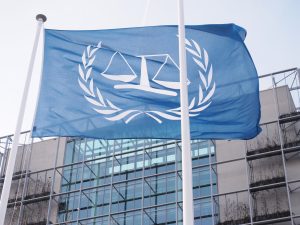
Earlier this month, the International Criminal Court (ICC) issued arrest warrants against the Taliban leadership in Afghanistan. The court’s Pre-Trial Chamber II cited reasonable grounds for believing Supreme Leader Haibatullah Akhundzada and Chief Justice Abdul Hakim Haqqani were guilty of “ordering, inducing or soliciting the crime against humanity of persecution on gender grounds.”

The warrants – the first ever on charges of gender persecution – are being hailed as an “important vindication and acknowledgement of the rights of Afghan women and girls.” But will they improve the plight of women and girls in Afghanistan, given the Taliban does not recognize the court or its jurisdiction?

The signs are not good, with the Taliban denying the allegations and condemning the warrants as a “clear act of hostility [and an] insult to the beliefs of Muslims around the world.”

Strict rules and prohibitions have been imposed on the Afghan people since the Taliban returned to power in August 2021. Women and girls have been singled out for even worse treatment by reason of their gender.

According the warrants, the Taliban have “severely deprived, through decrees and edicts, girls and women of the rights to education, privacy and family life and the freedoms of movement, expression, thought, conscience and religion.

Women are banned from public places and girls from attending school once they turn 12.

Zahra Nader is the editor-in-chief of newsroom Zan Times, which investigates human rights violations in Afghanistan. She says Afghan women and girls are being silenced, restricted and stripped of their basic human rights.

It is this discriminatory system of control of woman and girls in Afghanistan that is at the core of the court’s prosecution.

The warrants also accuse the Taliban of persecuting “other persons who don’t conform with the Taliban’s ideological expectations of gender, gender identity or expression; and on political grounds against persons perceived as ‘allies of girls and women.’”

This is the first time an international tribunal or court has confirmed crimes against humanity involving LGBTQ+ victims. This marks an important milestone in the protection of sexual minorities under international law.

International law clearly spells put the offenses that constitute crimes against humanity. The aim is to protect civilians from serious and widespread attacks on their fundamental rights.

Different definitions of crimes against humanity have been included in the statutes of a handful of international tribunals and courts. The definition under the Rome Statute of the International Criminal Court is the most comprehensive. It includes severe deprivation of personal liberty, murder, enslavement, rape, torture, forced deportation, or apartheid.

Specifically, the Taliban leaders are accused under Article 7(1)(h) of the Rome Statute, which states: “Persecution against any identifiable group or collectivity on political, racial, national, ethnic, cultural, religious, gender… or other grounds that are universally recognised as impermissible under international law.”

Physical and direct violence is not necessary for persecution on “gender… grounds” to be established. Systemic and institutionalized forms of harm, which can be the imposition of discriminatory societal norms, are sufficient.

Women and girls are often disproportionately affected by Taliban policies and rules. But proving gender-based crimes have occurred is not enough. Discriminatory intent must also be established.

The Taliban have been open about their religious beliefs and interpretations, suggesting a clear intention to persecute on the grounds of gender.

As with other cases, the court relies on the cooperation of states to execute and surrender those accused.

The Republic government in Kabul, which was formed after the U.S.-led invasion in 2001, became a party to the Rome Statute in 2003. Afghanistan remains legally obligated to prosecute perpetrators of these crimes – it must accept the ICC’s jurisdiction in the matter.

The Purple Saturdays Movement, an Afghan women-led protest group, is warning the arrest warrants must be more than just symbolic. Any failure to prosecute would likely result in an escalation of human rights violations, the group said: “The Taliban has historically responded to international pressure not with reform, but by intensifying such repressive policies.”

It is important to note the strict policies and widespread abuses targeting women and girls in Afghanistan are ongoing, despite the intervention by the International Criminal Court.

The court’s Office of the Prosecutor is stressing its commitment to pursuing “effective legal pathways” to bring the Taliban leadership to account. The Afghan Women’s Movement in Exile wants an independent international judicial committee established to monitor and accelerate the legal process.

It is not yet clear if the warrants will actually lead to arrest and prosecution in The Hague. But we know this is possible, with a prime example being the arrest earlier this year of former Philippines President Rodrigo Duterte.

At the very least, the arrests warrants are a hopeful step toward accountability for the Taliban and justice for the women and girls of Afghanistan.

This article was originally published on The Conversation. Read the original article.


Hanoi's street food culture gains ground with Michelin nods


Published : July 22, 2025 -
Korea Herald


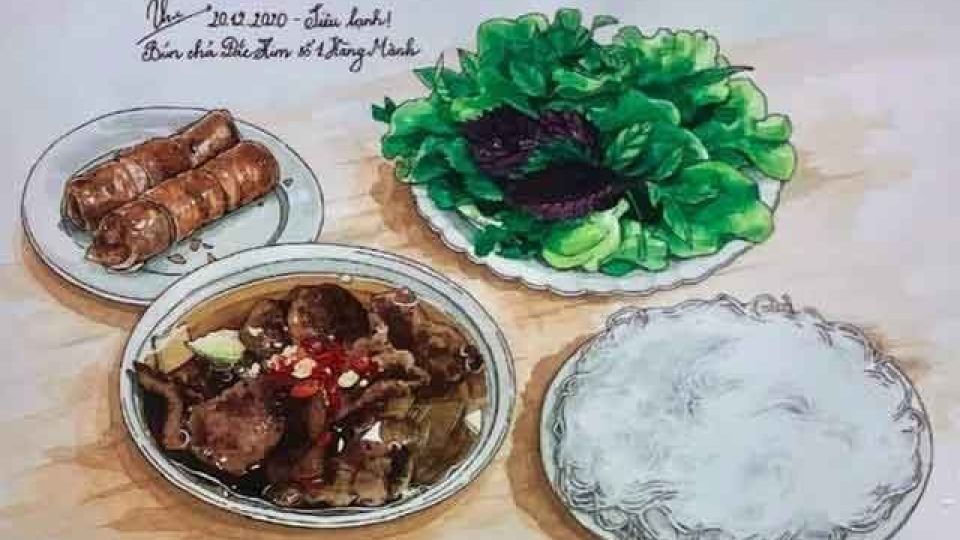
A painting by Thu Hang in the sketchbook project "Flavors of Hanoi." (Viet Nam News)

HANOI, Vietnam (Viet Nam News/ANN) -- Several Hanoi street-side eateries have earned recognition from Michelin, but the question remains: is this enough to elevate the city's vibrant street food scene?

Hoan Kiem bun cha, pho take the spotlight

From its very first year in Vietnam, the Michelin Guide was quick to take note of bun cha (rice vermicelli with grilled pork and fresh herbs), a humble yet iconic dish from Hanoi. In 2023, two bun cha spots made it into Michelin's recommended list: Bun cha Dac Kim on Hang Manh street and bun cha Huong Lien on Le Van Huu street.

That same year, other sidewalk eateries such as Ba Xuan Steamed Rolled Pancakes on Hoe Nhai street, Cham Chicken pho (rice noodle) on Quan Thanh Street, and Tien pho on Nguyen Truong To street were also spotlighted.

These dishes, particularly bun cha and pho, were further recognized in the "good food at reasonable prices" category.

In subsequent years, the list has grown to include pho Khoi Hoi and Pho Lam, Cham Chicken Pho on Yen Ninh Street, and Chinh Thang Pho Cuon. Other humble dishes such as the eel vermicelli from Dong Thinh and Chan Cam eateries, or the nostalgic countryside-style perch soup from Hieu Luc on Hai Ba Trung street, have also made their way into the guide.

A notable trend is that most Michelin-recognized street eateries are clustered in the Old Quarter in Hoan Kiem ward and adjacent areas. Yet despite global acclaim, no banh mi (Vietnamese baguette) vendor has been featured, an absence that food experts find surprising given its international reputation and even inclusion in the Oxford Dictionary as a Vietnamese-style sandwich. In 2024, banh mi was listed among the world's best sandwiches, yet it remains absent from Michelin's radar.

A foundation for growth, but more is needed

There are currently no official statistics on whether Michelin recognition has caused a significant surge in patronage at these eateries. However, from a culinary tourism standpoint, this attention presents an opportunity, especially if supported by a strategic plan. For instance, multiple bun cha restaurants gaining recognition could create a ripple effect, boosting the visibility of other outstanding bun cha establishments across the capital.

One approach is to develop cultural projects that spotlight Hanoi's culinary richness. The recently launched sketchbook project "Flavors of the Old Quarter" highlights many highly rated bun cha spots, such as those tucked away in Hang Quat, Bat Su, Cua Dong, and Gia Ngu streets. Author Pham Tien Long notes that seasoned locals still frequent hidden gems in

Dong Xuan market or on Luong Ngoc Quyen and Nguyen Du streets, where traditional bun cha que tre, grilled pork skewers on bamboo sticks, is served.

Long also pointed to a small but thoughtful gesture at Michelin-recommended Dac Kim: "Western visitors often recommend the spot to friends because it's frequently mentioned in Hanoi travel and food guides. The restaurant is considerate enough to keep forks in the chopstick holders, anticipating guests who may not be used to chopsticks."

This detail highlights an important point: if bun cha alone can spark Michelin interest, other Hanoi street foods also deserve curated recognition. At the same time, upgrading services, like offering utensils for international guests, goes a long way in enhancing the overall experience.

According to Dr. Nguyen Thu Thuy from the Vietnam National University, to elevate Hanoi's street food, vendors must first ensure their offerings are distinctive, something that builds a unique brand identity. Food safety, friendly and enthusiastic service, and active digital communication are also essential. Engaging customers on social platforms can help turn them into ambassadors for the business.

She added that street vendors should aim to serve both dine-in and takeaway customers. Embracing technology, such as food delivery apps, not only reduces staffing needs but also helps manage operations efficiently, offering visuals, prices, and ordering options to customers.

Thuy noted that food tech service providers are now readily available, and integrating these solutions could significantly improve service quality.
khnews@heraldcorp.com

US Management Of The Zangezur Corridor In The Caucasus? Iran Won’t Like It – Analysis


By Kian Sharifi


(RFE/RL) — A US proposal to place the proposed Zangezur Corridor — a critical link between mainland Azerbaijan and its Naxcivan exclave via southern Armenia — under American management has deepened fault lines in the South Caucasus and stirred unease in Iran.

At stake is not just regional connectivity but the geopolitical order along Iran’s sensitive northern frontier.

For Iran, the 43-kilometer corridor through Armenia’s Syunik Province cuts to the core of its strategic calculations.

Hamidreza Azizi, a fellow at the German Institute for International and Security Affairs, warned that the plan would “deprive Iran of its natural land access to the South Caucasus through Armenia,” placing it at the mercy of a route “controlled by Azerbaijan or other international actors.”

Speaking to RFE/RL, he called the corridor “the last nail in the coffin,” a step toward what some observers term Iran’s “geopolitical suffocation.”


If Baku gains control or foreign management is introduced, Iran would lose leverage over its northward trade.

“Iran would be almost exclusively reliant on Azerbaijan for trade not only with the South Caucasus, but also with Russia and Europe,” Azizi noted, warning of “a serious blow to Iran’s geoeconomic standing.”

He added that sidelining Iran’s route through Armenia could also reduce its role in China’s Belt and Road Initiative, weakening its value as a partner to Beijing.

Security And Regional Order

Tehran’s main concern is clear: the corridor could expand Turkish influence and, now, bring a direct US presence.

“The biggest concern in Iran is that such a corridor would, once and for all, end any prospects for Iran’s involvement in…East-West transport,” Azizi said. A US-managed route heightens these anxieties by placing American interests “directly on Iran’s northern border.”

This shift comes as Russia’s leverage in the South Caucasus erodes amid the war in Ukraine and shifting power dynamics since the Second Karabakh War. Iran, once content to defer to Moscow, now finds its buffer under threat.

With “limited strategic options,” Tehran is engaging all major actors while seeking “closer political and security cooperation with Armenia.”

According to Azizi, Iran’s official statements and military drills it has held in the area since 2021 are less about confrontation than signaling unwillingness to accept unfettered foreign presence on its borders.

Control, Transit, And Sovereignty

The US proposal has been met cautiously in Yerevan and Baku.

Azerbaijan views the corridor as a vital transport link to Naxcivan and part of post‑war integration.

Armenia fears it could threaten its sovereignty and insists any route remain under Armenian control, wary that true “corridor” status could mean surrendering authority.

Azerbaijan, meanwhile, is adamant that “there is no desire for any third party involvement,” said Richard Giragosian, director of the Regional Studies Center in Yerevan.

For Baku, the corridor is about unimpeded access to Naxcivan; any foreign supervision — American, European, or Russian — is unacceptable.

A Real Proposal Or Just A Stunt?

For Washington, the project highlights an attempt to exploit a rare power vacuum in the region as Russian influence wanes amid a souring of relations between Moscow and both Baku and Yerevan.

Giragosian voiced skepticism about the plan: “I don’t take the proposal very seriously…skepticism better defines the view in both Baku and Yerevan.”

He called it a “reckless real estate deal” and questioned whether Washington grasps the region’s complexities.

“It’s more about pursuing a [Nobel] Peace Prize for President Donald Trump…without any real preparation and little potential for follow through.”

Russia’s management of Armenia’s railway networks and Western sanctions also raise feasibility issues.

“It would make it complicated, because…a US private company going in and managing road and rail while it’s Russian owned or managed,” Giragosian said.

For Tehran, the corridor debate reflects deeper anxieties about encirclement, isolation, and loss of leverage.

Iran’s options to counter any project are limited, constrained by recent setbacks in the Middle East and last month’s conflict with Israel.

Tehran hopes for renewed Russian resistance to a Western presence, but shifting power dynamics leave Iran with diminishing influence.

Meanwhile, both Armenia and Azerbaijan remain wary of surrendering control or sovereignty, clinging to their own visions of what the corridor should be.

Ultimately, the Zangezur Corridor has become less a route of transit than a flashpoint where competing visions of sovereignty, influence, and regional order collide.


  • Kian Sharifi is a feature writer specializing in Iranian affairs in RFE/RL’s Central Newsroom in Prague. He got his start in journalism at the Financial Tribune, an English-language newspaper published in Tehran, where he worked as an editor. He then moved to BBC Monitoring, where he led a team of journalists who closely watched media trends and analyzed key developments in Iran and the wider region.


RFE RL

RFE/RL journalists report the news in 21 countries where a free press is banned by the government or not fully established.

Pakistan: Khyber Pakhtunkhwa And Rise Of The Quadcopter – Analysis


By 

By Tushar Ranjan Mohanty 


On July 19, 2025, unidentified terrorists attacked Miryan Police Station in Bannu District of Khyber Pakhtunkhwa (KP) with a quadcopter drone rigged with explosives. However, the no casualties were reported.

On July 18, 2025, a Police Assistant Sub-Inspector (ASI) and a constable were injured when the Miryan Police Station in Bannu District was struck by terrorists with a quadcopter drone. Bannu District Police Officer (DPO) Saleem Abbas Kulachi disclosed that this was the sixth time the same Police Station had been attacked by quadcopters, since the terrorists had started using quadcopters to target Police infrastructure and personnel. 

On July 10, 2025, a Police constable was injured when terrorists used a quadcopter drone to target a Security Force (SF) vehicle in the Nurar area of Bannu District. A Tehreek-e-Taliban Pakistan (TTP) terrorist was also injured during a clash when terrorists were trying to establish a check post to check vehicles. The Police and Counter Terrorism Department (CTD) were hit by a quadcopter drone, after which the vehicle they were travelling in was damaged. The vehicle was then set on fire by TTP terrorists, after which an intensive battle took place when re-enforcements arrived. Once again a mortar from a quadcopter drone was used to target the Police. The attackers managed to escape after the incident. 

On July 9, 2025, one person was killed while three children were injured after terrorists carried out two quadcopter drone attacks in Bannu District. In the first quadcopter drone attack, one woman was killed while three children were injured, including two of the woman’s children. In the second quadcopter drone attack, solar panels on the rooftop of the Maryan Police Station were damaged. Police personnel, however, remained safe.    

On July 3, 2025, a watchman was killed and another injured when unidentified terrorists were trying to fly a quadcopter drone for surveillance of a Police Station in the Hawaid area of Bannu District. The watchmen flashed a light, spotting the terrorists, who opened fire at them.   


On June 29, 2025, a woman was killed when a quadcopter drone with explosives used by the terrorists crashed into the kitchen of the paramilitary battalion headquarters in Ladha Town of South Waziristan District. The accompanying terrorist attack was repulsed after a heavy exchange of firing. 

On June 29, 2021, a quadcopter drone with explosives crashed into the solar panels on the roof of the Miryan Police Stations in Bannu District. An unnamed senior Police official disclosed that the use of quadcopter drones by non-state actors had increased manifold in the preceding months. 

On June 20, 2021, a quadcopter drone attack in the Dashka area of Makin tehsil (revenue unit) in North Waziristan District, resulted in the death of one child and injuries to at least six children.  

Thus, during the month preceding July 20, 2025, at least eight terrorist-orchestrated quadcopter drone attacks were reported, resulting in four fatalities and 13 injured, while just another three attacks with three fatalities were reported during the preceding months of 2025. Over the past year, multiple quadcopter drone attacks have been reported across KP, in which remotely operated drones were used to drop explosives. Though no group has so far claimed any quadcopter drone attack, the Army has blamed TTP and its allied groups for these incidents.

Quadcopter drones can be used to carry various payloads, with the specific capacity depending on the drone’s size and design. Consumer-grade quadcopters can typically handle payloads up to a few kilograms, while larger, industrial-grade models can carry significantly more, even up to hundreds of kilograms.  

In the tribal areas of Pakistan, where the fight against terrorism has been continuing since two decades, the use of quadcopter drones, both by the military and the militants, is a recent trend. Though the Pakistan Army blames militants for using quadcopters to target SFs, the military has also been exploiting the technology in its counter-terrorism operations. The first media-reported incident of the use of a quadcopter was on October 21, 2024, when at least 15 terrorists were killed in an SF quadcopter strike on TTP and Lashkar-i-Islam (LI) hideouts in the hilly terrain of Peer Mela in the Tirah Valley of Khyber District. Though there was no official word about the exact number of injured militants, unnamed officials, quoting their own contacts, claimed that about 15 terrorists, including a local ‘commander’, were injured in the strike.  

Since then, drones have become one of the Army’s preferred mediums in counter-terrorism operations in the difficult terrain of the tribal areas. Some of the notable Army drone attacks against terrorists include: 

On February 16, 2025, a local ‘commander’ of the Hafiz Gul Bahadar (HGB) faction of TTP, Shaheen Wazir, was killed in the Shaktu area of South Waziristan District in an SF quadcopter strike. 

On February 12, 2025, at least five terrorists were killed in an SF projectile strike by quadcopter, in the Draban area of Dera Ismail Khan District.  

On November 29, 2024, SFs used a quadcopter to neutralise seven terrorists during an operation in the Bakka Khel area of Bannu District in KP. 

Meanwhile, the use of quadcopter drones has proved a double-edged sword, as a disturbing pattern of civilian collateral damage emerges during counter-terrorism operations since March 2025. On March 29, 2025, a drone strike in the Katalang area of Mardan District killed 11 civilians, including two children. Local witnesses attributed the strike to SFs, but the Government denied the use of drones in the operation. Again, on May 19, 2025, a quadcopter attack in the Hurmuz village of North Waziristan District killed four children from a single family and left five others seriously injured. Villagers alleged that the attack was conducted by SFs, but the military and the Federal Ministry of Interior denied SF involvement and put the blame on TTP and its allied groups. 

On June 25, 2025, the South Asia chapter of Amnesty International issued a strongly worded statement against the use of drones in civilian areas, and has called upon the Pakistani state to initiate independent and transparent investigations into each incident. On the basis of such investigations, those responsible should be prosecuted in accordance with national and international law, and compensation and rehabilitation should be provided to the affected families.

Isabelle Lasseur, Deputy Regional Director, Amnesty International, observed: “Drone and quadcopter attacks resulting in civilian deaths constitute a serious violation of international humanitarian law. When homes, playgrounds, and ordinary people become targets, the legal and moral implications are severe.”

A worrisome issue in these drone attacks is the recurring pattern of child casualties. However, while the Pakistan Government seeks to shed responsibility, terming these causalities ‘collateral damage’, the Army claimed SFs had been “falsely implicated”. After the March 29 attack, in which 11 civilians were killed, instead of taking responsibility, the Provincial Government issued a press note claiming that a counter-terrorism operation had been conducted in the remote hilltop area of Katlang, based on intelligence regarding the presence of armed militants using the location as a hideout and transit point, though it conceded that “non-combatants” also died in the operation. 

Similarly, after the May 19 incident in which four children were killed, the Inter-Services Public Relations (ISPR) asserted: “Following a tragic incident on May 19, 2025, in the general area of Mir Ali, North Waziristan district, which regrettably resulted in civilian casualties, unfounded and misleading allegations have been circulated by certain quarters, falsely implicating Pakistan’s security forces.” 

The harsh reality of drone attacks in KP is that, while the State remains evasive on fixing accountability for SF operations, the security establishment remains clueless on how to deal with quadcopter attacks by the terrorists. On March 27, 2025, KP Inspector General of Police (IGP) Zulfiqar Hameed stated that his department lacked modern equipment to fight terrorism, the toughest challenge the province faces. IGP Hameed revealing that terrorists were using advanced weaponry, including quadcopters, in the province, which the local Police were unable to counter due to lack of equipment: “They [terrorists] have acquired the latest US weapons and modern gadgets. They’re carrying out quadcopter attacks. If we don’t advance, how will we fight back, since we don’t have anti-quadcopter technology?” He added that terrorist attacks could no longer be countered with the help of conventional weapons, as terrorists were using modern equipment and gadgets to carry out operations. 

Clearly, till the Government and SFs find solutions to counter this new trend of attacks from the skies, the tribal areas of Pakistan will witness more death, including mounting collateral damage, in the conflict in KP.

  • Tushar Ranjan Mohanty 
    Research Associate, Institute for Conflict Management

SATP

SATP, or the South Asia Terrorism Portal (SATP) publishes the South Asia Intelligence Review, and is a product of The Institute for Conflict Management, a non-Profit Society set up in 1997 in New Delhi, and which is committed to the continuous evaluation and resolution of problems of internal security in South Asia. The Institute was set up on the initiative of, and is presently headed by, its President, Mr. K.P.S. Gill, IPS (Retd).