Friday, July 25, 2025

HEAR, HEAR

Canada Must Deploy Peacekeeping Troops into Gaza to End Mass StarvationFeature

Canada Must Deploy Peacekeeping Troops into Gaza to End Mass Starvation

Gaza is suffering “man-made mass starvation” caused by the blockade of aid into the territory, the head of the World-Health Organization, Tedros Adhanom Ghebreyesus, has said, as more than 100 humanitarian agencies urged Israel to allow supplies in to alleviate the crisis.

In the face of this catastrophe, Canada must urgently deploy peacekeeping forces to break Israel’s blockade of Gaza and end what U.N. Special Rapporteur on the Right to Food, Michael Fakhri, has called “the fastest starvation campaign we’ve seen in modern history.” More than 18,000 Canadians have already signed Parliamentary e-petition 6619, calling on the Canadian government to “work with international partners, including the United Nations, to urgently deploy peacekeeping forces to Gaza for the protection of civilians, to support the delivery of humanitarian aid.” The petition, sponsored by NDP Member of Parliament Heather McPherson, affirms that “impartial international peacekeeping forces have historically played a vital role in protecting civilians and facilitating humanitarian aid in areas of armed conflict.”

Yet when JURIST reached out to Canada’s current ambassador to the United Nations, Bob Rae, to inquire why Canada has not publicly supported the deployment of peacekeeping troops to Gaza to help end mass starvation, no response was given.  The lack of response highlights a broader hesitation within the Canadian government to translate growing public concern into concrete international action—despite Canada facing a  formal UN investigation for its complicity in enabling Israeli atrocities.

Editor’s note: After the publication of this piece, JURIST received the following response from UN Ambassador Bob Rae:

In order for there to be a peacekeeping operation, there has to be a ceasefire and the release of hostages held by Hamas. Those discussions are currently underway. Canada has long been calling for such a [ceasefire].  We support the full withdrawal of Israeli troops from Gaza and the West Bank. A peacekeeping force would require authorization by UN and whether Canada would join would depend on agreement / but security and safety must return to the region.

In a comment to JURIST, Western University law professor emeritus and former UN Special Rapporteur on the Occupied Palestinian Territories, Michael Lynk, stated:

The United Nations General Assembly has affirmed, on numerous occasions, its permanent responsibility with respect to the Question of Palestine until it is satisfactorily resolved in all of its aspects.

Given that Israel is conducting an unlawful occupation—as determined by the International Court of Justice in July 2024 and accepted by the General Assembly in September 2024—and has shown no indication of ending this occupation by the September 2025 deadline, and given its repeated defiance of legally binding provisional measures issued by the Court in January, March, and May 2024, the United Nations has the legal responsibility to take all feasible steps to end both the occupation and the military assault on Gaza.

This would include sending peacekeeping forces and a peacekeeping administration to all parts of the occupied Palestinian territory (as was done in East Timor) to facilitate the transition to a genuine Palestinian state.

The legal pathway for such intervention exists through established UN mechanisms that circumvent Security Council paralysis. As Fakhri notes, “when the Security Council is in a deadlock because of a veto, the United Nations General Assembly has the authority to call for peacekeepers to accompany humanitarian convoys to enter Gaza.” Canada should immediately invoke the “Uniting for Peace” resolution and work with like-minded nations to authorize a robust peacekeeping mission through the General Assembly. The East Timor precedent that Lynk references provides a concrete example of how the UN can deploy comprehensive peacekeeping missions to facilitate transition to statehood when occupation powers refuse to comply with international law.

Canada’s moral authority to lead such an initiative is undercut by growing international scrutiny of its own role in the humanitarian catastrophe. In May 2025, the UN Committee on the Elimination of Racial Discrimination launched a formal inquiry into Canada’s military exports to Israel, expressing “deep concern” that these transfers may be facilitating “crimes against humanity, war crimes, and genocide” in Gaza. This marks the first time a UN treaty body has formally examined Canada’s potential legal responsibility in connection with Israel’s assault on Gaza’s civilian population.

The operational rationale for deploying peacekeepers centers on breaking Israel’s blockade on Gaza that has precipitated an unprecedented humanitarian collapse. Current conditions in Gaza represent a complete breakdown of civilian protection, with Amnesty International documenting how “hundreds of Palestinians have been killed and thousands injured either near militarized distribution sites or en route to humanitarian aid convoys.” Displaced Palestinians like Ghada al-Fayoumi describe how “there’s no food, no bread, no drinks, no rice, no sugar, no cooking oil, no bulgur, nothing.”

A recent Leger poll demonstrates that Canadian public opinion aligns with this legal imperative, showing “49 per cent” of Canadians “agree that Israel is committing genocide in the Gaza Strip,” with “more than 60 percent of Liberal Party, NDP, Green Party and Bloc Quebecois supporters” believing “Israel’s actions amount to genocide.” This public consciousness creates political space for Canada to lead an international peacekeeping mission that could break Israel’s blockade and save thousands of lives— while addressing the profound contradiction of a country under UN investigation for enabling the atrocities in Gaza.

A Canadian-led multinational peacekeeping force could fulfill three urgent roles:

  1. Physically breaking the blockade by securing humanitarian corridors;
  2. Protecting civilians from ongoing violence; and
  3. Creating space for sustainable political solutions

The mission would require sufficient mandate and resources to deter attacks on civilians and aid operations, potentially including naval vessels to secure sea-based aid delivery and air assets to monitor compliance with international humanitarian law. Canadian Forces could coordinate with nations like France, Ireland, Norway, and South Africa—countries that have shown strong support for Palestinian rights—to deploy a comprehensive mission combining military protection and humanitarian capacity.

However, Canada cannot credibly lead such a mission while simultaneously undermining Palestinian self-determination through Operation Proteus and supplying military goods that may support Israeli war crimes. Operation Proteus, whereby Canadian police train Palestinian security forces in the West Bank to suppress protest against Israel’s occupation, fundamentally contradicts Canada’s stated commitment to protect Palestinian civilians and erodes Canadian credibility before a single Canadian peacekeeper is even deployed into Gaza.

Prime Minister Mark Carney has already acknowledged that Israel’s “denial of humanitarian aid in Gaza is a violation of international law” and called for replacing “Israel’s control of aid distribution” with “comprehensive provision of humanitarian assistance led by international organizations.” This statement provides a policy foundation for peacekeeping deployment, while international momentum builds with France’s decision to recognize Palestinian statehood creating diplomatic opportunity for coordinated action.

The UN investigation into Canada’s complicity underscores a stark reality: continuing with the current policy of passive alignment with Israeli actions while claiming to champion human rights is an unsustainable and morally bankrupt position.

Canada’s path forward demands immediate and decisive action:

  • Terminate Operation Proteus to eliminate policy contradictions
  • End all direct and indirect exports of military goods to Israel to address UN concerns about complicity
  • Mobilize international partners to pursue General Assembly authorization for a peacekeeping mission; and
  • Deploy Canadian peacekeepers with a clear mandate to break the blockade and secure humanitarian access

History will judge Canada’s response to this crisis. Canada has a legal and moral obligation to meet the moment.


Canada urges 'Israel to unblock humanitarian aid immediately'


'As I will discuss at the United Nations next week, Canada is committed to a two-state solution where Palestinians and Israelis can live peacefully side by side,' says foreign minister


Merve Aydogan |25.07.2025 - TRT/AA


HAMILTON, Canada

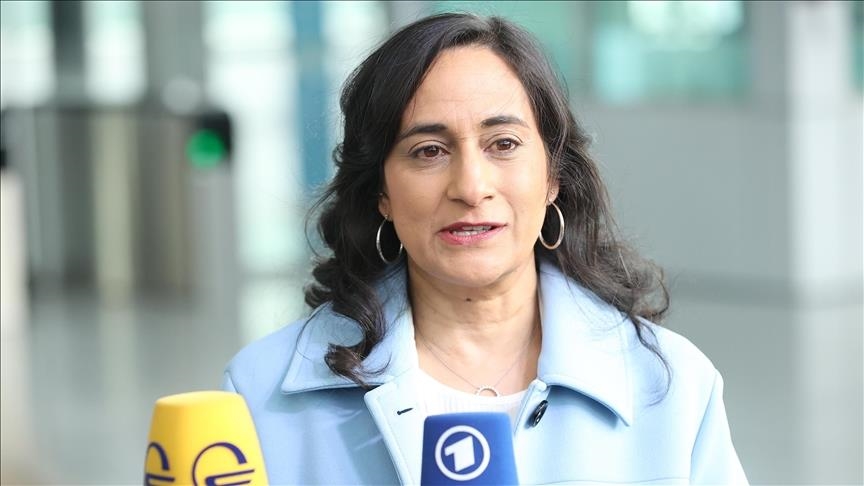
Canadian Foreign Minister Anita Anand called on Israel Friday to "immediately" allow the flow of humanitarian aid into the Gaza Strip, where deaths by starvation have climbed in recent days.

"Today, I spoke with Minister Gideon Saar. I underlined the urgent need for Israel to unblock humanitarian aid immediately, of which Canada has committed over $300 million, and to end the unnecessary humanitarian crisis in Gaza," Anand said in a post on X.

She said Canada remains committed to efforts to restore peace and stability in the region.

"I also reiterated Canada’s ongoing support for an immediate ceasefire. Hamas must release all hostages, lay down its arms and play no role in the governance of a Palestinian State," she said.

She confirmed her attendance to upcoming UN conference in New York on the two-state solution, and said: "Canada is committed to a two-state solution where Palestinians and Israelis can live peacefully side by side."

Canadian Prime Minister Mark Carney on Thursday had condemned Israel's failure to prevent a humanitarian crisis in Gaza, urging the Israeli government to relinquish control over aid distribution and allow international organizations to take the lead.

"Israel’s control of aid distribution must be replaced by comprehensive provision of humanitarian assistance led by international organizations," he said on X.


Palestine urges Canada to recognize statehood amid growing global momentum


Palestinian Foreign Minister Farsin Aghabekian Shahin during phone call with his Canadian counterpart Anita Anand cites Gaza crisis, stalled revenues, and rising global support as key reasons for Ottawa to act

Aysar Alais and Tarek Chouiref |25.07.2025 - TRT/AA


​​​​​​​RAMALLAH, Palestine / ISTANBUL

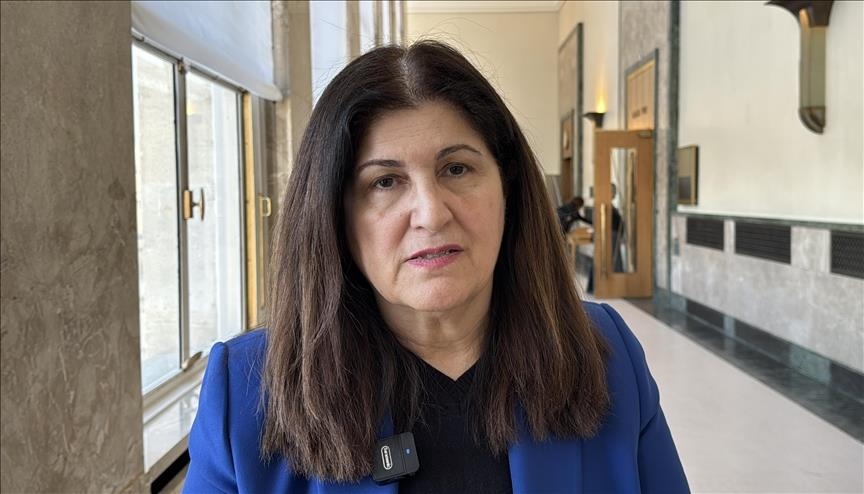
Palestinian Foreign Minister Farsin Aghabekian Shahin on Friday called on Canada to recognize the State of Palestine, saying the move is vital to protect the two-state solution from further erosion.

Shahin made the appeal during a phone call with Canadian Foreign Minister Anita Anand, according to a statement from the Palestinian Foreign Ministry.

She said Canadian recognition would “help preserve the political horizon for peace” and counter Israel’s continued unilateral actions.

The call comes amid renewed diplomatic momentum for Palestinian statehood.

On Thursday, French President Emmanuel Macron announced that Paris would officially recognize Palestine during the UN General Assembly in September.

So far, 149 of the UN’s 193 member states have recognized Palestine—a number that has steadily risen since Israel began its war on Gaza in October last year.

Shahin and Anand also discussed the worsening humanitarian crisis in Gaza and efforts to revive international engagement toward a comprehensive peace, the statement said.

Shahin stressed the urgent need for a cease-fire, unhindered humanitarian access, and an end to what she called Israel's use of starvation as a weapon of war, which violates international law.

She urged Canada to take a more active role in pressuring Israel to release Palestinian clearance revenues it has withheld for months.

“These funds are essential for the Palestinian Authority to continue providing basic services to its people,” she said, warning that the financial strain could undermine regional stability.

The Palestinian Authority has not been able to pay full salaries to public employees for the past two months. Since 2019, Israel has withheld portions of Palestinian tax revenues under various pretexts, totaling more than $2.7 billion.

Israel has killed more than 59,700 Palestinians, most of them women and children, in the Gaza Strip since October 2023. The military campaign has devastated the enclave, collapsed the health system, and triggered famine-like conditions.

Last November, the International Criminal Court issued arrest warrants for Israeli Prime Minister Benjamin Netanyahu and his former Defense Minister Yoav Gallant for war crimes and crimes against humanity in Gaza.

Israel also faces a genocide case at the International Court of Justice over its war on the enclave.
How France's recognition of the state of Palestine could shift Middle East dynamics

France has announced it will recognize the state of Palestine, a move that could shift discussions about the Middle East’s future

“Macron’s declaration could create a precedent because it would be the first Western country in the G7 to do so"

July 25, 2025 
By John Leicester | AP


PARIS — France’s bold decision to recognize the state of Palestine could help to shift conversations about the future of the Middle East , even if it’s unlikely to have an immediate impact for people in Gaza or on Israel’s war with Hamas .

In a world where nations are again using military force to impose their will on others — notably Russia in Ukraine , and the U.S. and Israel with their recent strikes on Iran and its nuclear facilities — French President Emmanuel Macron is attempting to strike a blow for diplomacy and the idea that war rarely brings peace.

With less than two years left of his second and last term as president, Macron also has his legacy to think about. Not acting decisively as a humanitarian disaster unfolds in Gaza could be a stain when history books are written.

Macron has levers to influence world affairs as leader of a nuclear-armed, economically and diplomatically powerful country that also sits at the big table at the United Nations, as one of the five permanent members of its security council.

Being the first member of the G7 group of industrialized nations to take this leap carries domestic risks. Presiding over a country with both Europe’s largest Jewish population and largest Muslim population, Macron is on a public opinion tightrope. His words will please some voters but infuriate others — a fact reflected by deeply divided political reactions in France to his decision announced on X on Thursday evening.

But after staunchly backing Israel’s right to defend itself against Hamas and its Oct. 7, 2023 , attack that triggered the war, Macron is signaling that France’s support can only go so far.

Israeli Prime Minister Benjamin Netanyahu denounced the shift by one of his country’s closer allies in Europe. “Such a move rewards terror and risks creating another Iranian proxy, just as Gaza became,” he said in a statement. “A Palestinian state in these conditions would be a launch pad to annihilate Israel — not to live in peace beside it.’’

A step but not a magic wand

The idea that Palestinians and Israelis could live side by side in peace in their own states has perhaps never looked more unrealistic — with Gaza in ruins and the occupied West Bank facing increasing settlement by Israelis. Macron’s words alone won’t change that. Still, the French leader’s message is that the hope of a “two-state solution” achieved through diplomacy must not be allowed to die — however unattainable it may seem.

“This solution is the only path that can address the legitimate aspirations of both the Israelis and the Palestinians. It must now be brought about as quickly as possible,” Macron said in a letter to Palestinian President Mahmoud Abbas which confirmed his decision to recognize Palestine as a state.

“The prospect of a negotiated solution to the conflict in the Middle East seems increasingly distant. I cannot resign myself to that,” he said.

The first impacts are likeliest not in Gaza but in world capitals where leaders may face pressure or feel emboldened to follow France’s lead. Attention is focusing on other G7 nations, because of their economic and diplomatic sway.

“Macron’s declaration could create a precedent because it would be the first Western country in the G7 to do so, which could have the effect of leading others,” said David Rigoulet-Roze, a researcher at the French Institute of Strategic Analysis.


Although more than 140 countries recognize Palestine as a state, France will be the biggest, most populous and most powerful among those in Europe that have taken this step.


“It creates some small momentum,” said Yossi Mekelberg, a senior consulting fellow at the Chatham House think tank in London who also added, however, that “this is not enough.”


“France should be congratulated, and Macron should be congratulated for doing that and showing the courage,” he said.

A shift in the balance of big powers

Until now, China and Russia were the only permanent members of the U.N. Security Council that recognized Palestinian statehood. France will join them when Macron makes good on his promise in September at the U.N. General Assembly. The new trio will leave the U.S. and the U.K. in a security council minority as its only permanent members that don’t recognize Palestine as a state.

The so-called P5 nations are divided on many other issues — including Ukraine, trade and climate change — so France’s shift isn’t, in itself, likely to spur radical and rapid change for Palestinians. Still, if only mathematically, the U.S. — Israel’s most important ally — and the U.K could find themselves more isolated among the big powers in any discussions on solutions for the Middle East.

U.S. President Donald Trump dismissed Macron’s decision on Friday, saying “What he says doesn’t matter. It’s not going to change anything.”

France may have better traction with the U.K. Putting Brexit behind them, the U.K. and France are now drawing closer, most notably in support for Ukraine. If British Prime Minister Keir Starmer follows Macron’s example, Trump could become the odd man out on Palestinian statehood among the security council’s big five powers.

Starmer has signaled growing disquiet over the humanitarian crisis in Gaza, saying in a statement Thursday that suffering and starvation there “is unspeakable and indefensible.” But he doesn’t seem ready to take a leap like Macron, suggesting that fighting must stop first.

“Statehood is the inalienable right of the Palestinian people,” Starmer said. “A ceasefire will put us on a path to the recognition of a Palestinian state and a two-state solution.”

—-

AP writers Jill Lawless in London, and Michelle Price in Washington, contributed.


Starvation in Gaza as MPs call for UK to recognise Palestinian state


Amid warnings of “catastrophic” levels of starvation in Gaza – the UK, France and Germany have issued a joint statement calling for an end to the war and urging Israel to “immediately lift the restrictions on the flow of aid”.

But Sir Keir Starmer said that recognising Palestinian statehood should be part of a wider ‘pathway’ to peace.


Dozens killed as fierce tropical storm batters the Philippines as president warns country must 'adapt' to climate change

26 July 2025, 

Residents of Malabon city in the Philippines wade along a flooded road as Typhoon Co-may intensified seasonal monsoon rains
Residents of Malabon city in the Philippines wade along a flooded road as Typhoon Co-may intensified seasonal monsoon rains. Picture: Alamy

By Jennifer Kennedy

Typhoon Co-may tore through the north of the Phillippines this week, leaving 25 people dead and eight missing

Typhoon Co-may hit the town of Agno in Pangasinan province on Thursday night, with winds reaching speeds of 74 miles per hour.

The storm followed more than a week of seasonal monsoon drains that lashed a large part of the Philippines.

At least 25 deaths have been reported since last weekend, and eight people have been reported missing. The deaths were mostly caused by flash floods, falling trees, landslides, and electrocution, according to officials in the Philippines.

Military personnel, police officers, coast guard members, firefighters, and civilian volunteers have been mobilised to help rescue affected residents.

Philippines President Ferdinand Marcos Jr. said on Thursday: "Everything has changed."

Read More: At least 14 dead following military clashes at border between Thailand and Cambodia

Read More: Two people 'burned alive in vehicle' as Cyrus wildfires rip through areas close to popular tourist town

A couple aboard a wooden boat docks at their submerged home at a village in Calumpit town, Bulacan province
A couple aboard a wooden boat docks at their submerged home at a village in Calumpit town, Bulacan province. Picture: Getty
The typhoon has now been downgraded to a tropical storm
The typhoon has now been downgraded to a tropical storm. Picture: Alamy

He later convened an emergency meeting with disaster-response officials, emphasising that both the government and the public must adjust to the growing frequency and unpredictability of natural disasters driven by climate change.

Over 80 towns and cities have declared a state of calamity, allowing quicker access to emergency funds and the freezing of prices on essential goods. Mostly of these places are on Luzon, the largest and most populous island in the Philippines.

278,000 people have been forced to seek shelter in emergency shelters or with relatives. Around 3,000 homes have been damaged, according to the government's disaster response agency.

Schools in Manila have been closed since Wednesday. Classes are also suspended in 35 provinces across the main northern region of Luzon.

The United States has said it will provide military aircraft to assist in delivering food and other aid to remote areas if weather conditions deteriorate further.

Forecasts predict more than a dozen more tropical storms will strike the Philippines before the end of 2025.

Doctors in England start 5-day strike after pay negotiations with government break down


By —Associated Press
Jul 25, 2025 

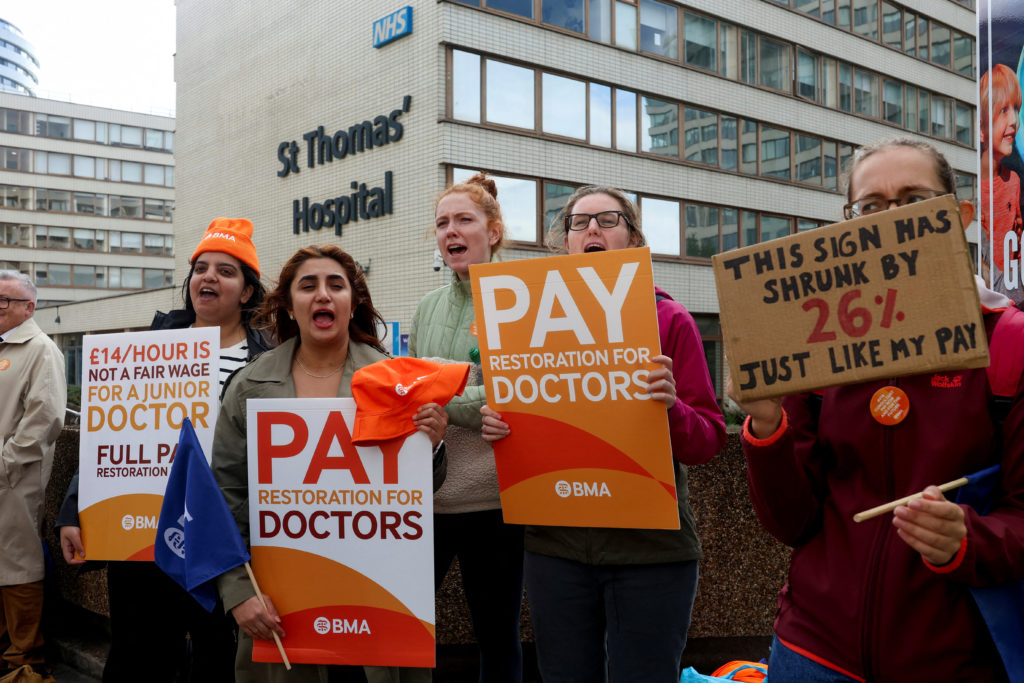
LONDON (AP) — Thousands of doctors in England’s state-funded health system walked off the job Friday in a five-day strike over pay that the government says will disrupt care for patients across the country.

Resident doctors, those early in their careers who form the backbone of hospital and clinic care, took to picket lines outside hospitals after talks with the government broke down.

READ MORE:    South Korean doctors hold mass protest against government’s medical school admissions plan

The National Health Service said emergency departments would be open and hospitals and clinics would try to carry out as many scheduled appointments as possible.

The doctors are seeking a pay raise to make up for what their union, the British Medical Association, says is a 20% real-terms pay cut since 2008.

“When doctors decide to take strike action it’s always portrayed as though we’re being selfish, but we’re here as a body to help the public day in, day out, to work hours that don’t even end sometimes,” said Kelly Johnson, a doctor on the picket line outside St. Thomas’ Hospital in central London,

“Here we are just trying to get what’s right for us so we can do our best to serve the public.”

The government says doctors have received an average 28.9% increase as part of a deal to settle previous strikes and it will not offer more, but is willing to discuss improved working conditions.

Prime Minister Keir Starmer urged the doctors to go back to work.

“Most people do not support these strikes. They know they will cause real damage,” he wrote in The Times newspaper.

“Behind the headlines are the patients whose lives will be blighted by this decision. The frustration and disappointment of necessary treatment delayed. And worse, late diagnoses and care that risks their long-term health,” Starmer wrote.

Health sector staff staged a series of rolling strikes over more than a year in 2023-24, seeking pay rises to offset the rising cost of living. The strikes forced tens of thousands of appointments and procedures to be postponed.

The strikes hit efforts by the National Health Service to dig out of an appointment backlog that ballooned after the COVID-19 pandemic and led to longer waiting times to see a doctor.

The strikes stopped after the Labour government elected in July 2024 gave doctors a raise, but the union held a new strike vote last month.
DOGE CUTS
US Plane suddenly drops 500 feet to ‘avoid mid-air collision’ with British jet fighter

Jessica Kwong
 July 26, 2025 
METRO UK

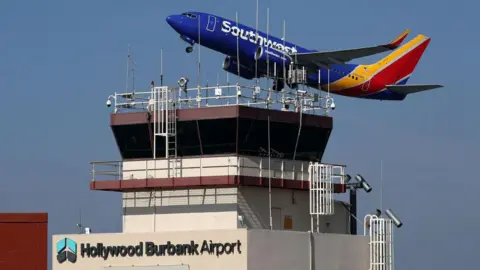
A Southwest Airlines plane dove 500 feet to avoid crashing into a Hawker Hunter (Picture: Shutterstock)

A Southwest Airlines plane abruptly dropped about 500 feet reportedly to avoid a mid-air collision with a British jet fighter.

Flight 1496 plummeted from 14,100 feet to 13,625 feet only six minutes after departing from Hollywood Burbank Airport in California on Friday, flightRadar24 shows.

Passenger Steve Ulasewicz said he ‘felt a significant drop’ that lasted eight to 10 seconds and that ‘the plane was just in a freefall’.

‘People were screaming,’ Ulasewicz told NBCLA.

A Hawker Hunter was flying at an altitude of about 14,653 feet when the Southwest plane started descending (Picture: Getty Images)

‘It was pandemonium.’

He said the pilot announced that the plane used software to avoid getting into a mid-air collision.

A Hawker Hunter, N number N335AX, was flying at an altitude of about 14,653 feet when the Southwest airplane started to descend.

Several Hawker Hunter jets were in the area conducting a routine operation at the time of the incident, a source told ABC News.

Southwest Airline Flight 1496 continued on its journey after the terrifying incident and landed safely in Las Vegas (Picture: FlightAware)

Planes are equipped with collision avoidance systems that guide them to go down or up as the other aircraft is expected to go the opposite direction.

The Southwest plane and the British jet fighter were several miles from each other when the pilots received the alerts to move positions, according to preliminary data.

Southwest stated that it was in contact with the Federal Aviation Administration to ‘further understand the circumstances’.

‘No injuries were immediately reported by Customers, but two Flight Attendants are being treated for injuries,’ stated the airline.

‘We appreciate the professionalism of our Flight Crew and Flight Attendants in responding to this event.

‘Nothing is more important to Southwest than the Safety of our Customers and Employees.’

Ulasewicz he saw an injured flight attendant receive attention from medical personnel immediately after the plane landed safely in Las Vegas, its intended destination.

The frightening incident happened nearly six months after American Airlines Flight 5342 collided mid-air with a military Black Hawk aircraft and both sunk in the Potomac River in Washington, DC, killing all 67 people on board.


Southwest flight plummets, injuring flight attendants

1 hour ago
Max Matza
BBC News
Getty Images


A Southwest Airlines plane rapidly dropped in elevation after departing from the Los Angeles area on Friday, with passengers posting online that the pilot was forced to rapidly change course to avoid a potential collision with another aircraft.

Flight 1496 from Hollywood Burbank Airport to Las Vegas plummeted rapidly, lifting passengers out of their seats and injuring two flight attendants.

The crew "responded to two onboard traffic alerts... requiring them to climb and descend to comply with the alerts", Southwest said in a statement.

The Federal Aviation Administration (FAA) said it was investigating the "incident". It comes less than one week after a similar near-miss.

"Ensuring the safety of everyone in the national airspace system remains our top priority," the FAA statement added.

Stand-up comedian Jimmy Dore was onboard the plane, and was among the passengers saying that the erratic move was due to a near-miss with another plane.

"Pilot said his collision warning went off & he needed to avoid plane coming at us. Wow," Dore wrote on X. "A flight attendant needed medical attention."

His colleague Stef Zamorano added that all the passengers applauded when the plane landed.

Caitlin Burdi told Fox News that passengers were "screaming" as the plane rapidly fell.

"It was terrifying. We really thought we were plummeting to a plane crash," she said.

She added that the pilot came over the speaker afterwards to say that the plane had almost hit another plane, and that they had lost contact with air traffic control.

"I just remember him saying, 'What just happened was we almost collided with another plane, and I had to make the emergency attempt to go under because we lost service with the air traffic controller,'" she said.

According to CNN, the plane was nearly intercepted by a privately owned Hawker Hunter fighter jet after less than six minutes in the air.

The jet crossed less than two miles in front of it, and within a few hundred feet of its altitude, CNN reported, citing flight tracking data. It had departed from El Pas, Texas and was flying to Oxnard, California.

The Southwest statement said that the flight continued on to Las Vegas, "where it landed uneventfully", and that the airline is "engaged" with the FAA "to further understand the circumstances".

"We appreciate the professionalism of our Flight Crew and Flight Attendants in responding to this event. Nothing is more important to Southwest than the Safety of our Customers and Employees."

It comes less than one week after a Delta regional flight from Minneapolis was forced to make a sudden evasive manoeuvre to avoid a US military bomber.

Delta flight makes 'aggressive manoeuvre' to avoid collision with military aircraft

4 days ago
Ana Faguy
BBC News


A Delta regional jet pilot was forced to make an "aggressive" evasive manoeuvre to avoid a potential mid-air collision with a US military aircraft before landing in North Dakota.

The pilot, who identified the aircraft as a B-52 bomber, is heard in video recordings shared on social media saying it was "kind of, sort of coming at us". "So, sorry about the aggressive manoeuvre," he says.

Delta Air Lines regional jet SkyWest Flight 3788 was en route from Minneapolis, Minnesota, to Minot, North Dakota on Friday, the airline said.

"We took a really hard right turn, we were completely sideways," Monica Green, a woman on the flight who recorded the audio told the BBC. "I was facing the grass."

"We had no idea what was going on, we didn't know if there was anything wrong with the plane or if the sharp turns would continue," Ms Green said.

As soon as the plane became level again, the passengers went quiet, she said.

The aircraft landed safely "after being cleared for approach" but "performed a go-around when another aircraft became visible in their flight path", the SkyWest Airlines said in a statement.

After the plane landed, the pilot came out from the cockpit and explained to the passengers that the tower instructed him to turn right but that when he looked over, he saw a B-52 bomber.

At that point he was instructed to turn left but said he looked over and "saw the airplane that was kind of coming on a converging course with us".

The pilot told the passengers that the other aircraft was moving faster than the SkyWest plane, so he made the decision to turn behind it.

"It caught me by surprise," he said. "This is not normal at all. I don't know why they didn't give us a heads up."

He concluded his message with an apology: "Long story short, it was not fun, but I do apologize for it - and thank you for understanding." Passengers responded with applause, the video shows.

SkyWest Airlines and the Federal Aviation Administration are investigating the incident.

COMMIZAR RETREATS, TOO LATE

EU Still Has Questions On Ukraine Despite Zelenskyy's Anti-Corruption Law U-Turn

July 26, 2025 
By Rikard Jozwiak


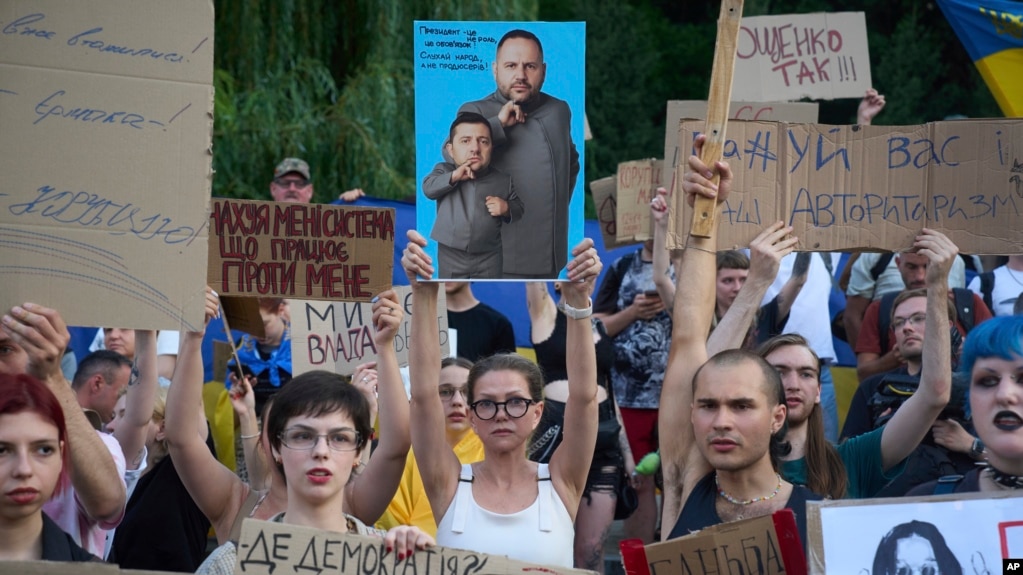
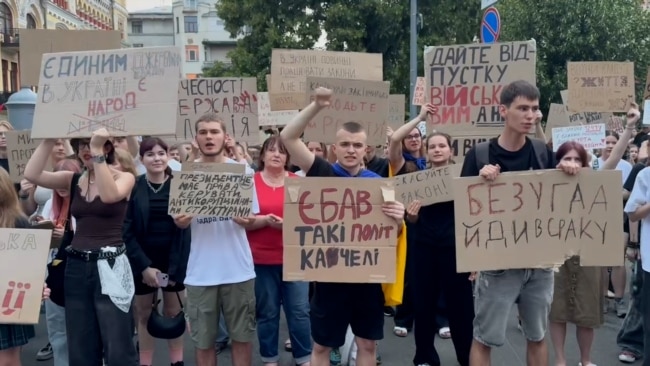
Ukrainians protested this week against legislation signed by President Volodymyr Zelenskyy that threatened the independence of the country’s anti-corruption agencies. He cited their pressure as a reason why he backtracked on the law just days later

The EuropeanUnion has breathed a collective sigh of relief after Ukrainian President Volodymyr Zelenskyy’s swift U-turn this week over legislation that would have limited the independence of two key anti-corruption agencies.

But questions and speculation remain about what triggered it, what it says about Kyiv’s ruling class and how it will affect the war-torn country’s chances to join the bloc.

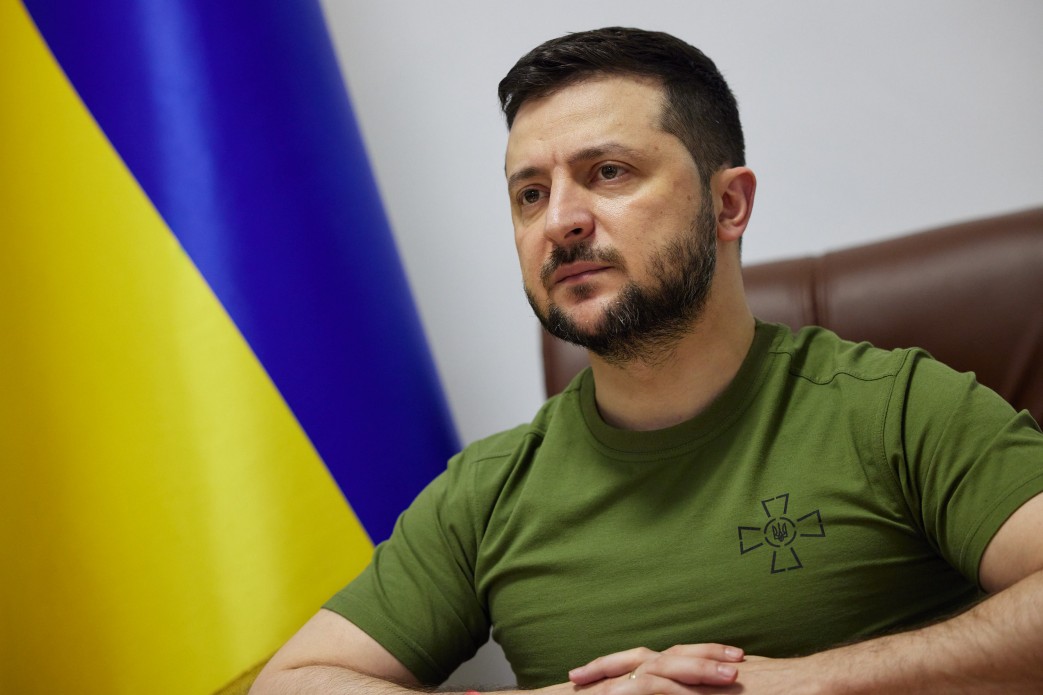
On July 22, Zelenskyy signed a bill approved by parliament that placed the National Anti-Corruption Bureau of Ukraine (NABU) and the Special Anti-Corruption Prosecutor’s Office (SAPO) under the auspices of the Prosecutor General, a position appointed by the president.


Zelenskyy’s Anti-Corruption Climbdown: What It Means For Ukraine


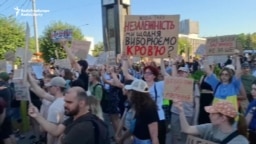
Within hours Ukrainians, despite Russian air strikes earlier in the day, took to the streets to protest the move, which critics said took away the independence of the institutions in a country long know for deep-seated corruption.

The response also was immediate from Brussels to the Ukrainian parliament and president rushing through the legislation.

Both the European Commission President Ursula von der Leyen and the president of the European Council, Antonio Costa, called Zelenskyy demanding an explanation and expressing “strong concerns.”

European enlargement commissioner Marta Kos said in a post on X that “independent bodies like NABU and SAPO are essential for Ukraine’s EU path.”

Within two days Zelenskyy had done an about-face, putting forward new legislation that would reverse course and ensure independence for NABU and SAPO.

But the damage was already done.

Speaking on condition of anonymity, one diplomat said Zelenskyy “really had managed to shoot himself in the foot for no apparent reason” as it gave ample ammunition to the many in the 27-nation bloc who claim that Kyiv just is hopelessly corrupt.


Another noted that it seemed that Ukraine suddenly had transported back to the era of former President Viktor Yanukovych, who constantly battled to control the judiciary.

Yanukovych was ousted from power in 2014 during the Maidan protests, sparked by his decision not to sign a political association and free trade deal with the EU, instead choosing closer ties with Moscow.

Grumblings over this week's legislative rollercoaster were also directed against Zelenskyy’s head of office, Andriy Yermak, a powerful but deeply polarizing figure in European circles.

Sources said questions persist if this in fact was the “real face” of Zelenskyy and his entourage given that many officials have long held fears about what they call his “tendencies to want to centralize power.”

Zelenskyy admitted that demonstrations in the country, the first such show of defiance against the government since Russia launched its full-scale the invasion in February 2022, had made him change his mind.


'A Perilous Moment For Ukraine' As New Law Undermines Wartime Unity


EU officials saw the change as positive -- signaling both a healthy and powerful civil society that also highlighted Zelenskyy’s democratic credentials -- in contrast with the considerable backsliding, for example, that has been seen recently in Georgia.

It appears as though pressure from Brussels may have also helped Zelenskyy's decision.

Everything was on the table, admits one official, and the bloc made that known.

That would mean freezing some of the billions of euros in funds that the EU provides Ukraine on a regular basis. A lot of this cash is conditioned on reform efforts, notably when it comes to the judiciary.
Visa Liberalization

One of the benchmarks for Ukraine to get visa liberalization to the bloc back in 2017 was the setting up of NABU. While no one was openly suggesting the suspension of visa liberalization, as is currently being mooted with Tbilisi, the threat of looking into it was enough to rattle Kyiv.

Then there was the delicate issue of de-coupling Ukraine from Moldova, allowing the latter to proceed alone in the EU accession process. That would be a heavy blow to Ukraine given the pair so far have moved closer to membership hand in hand.

The discussion about this started in Brussels in the spring with Hungary reluctant to give green light to Kyiv to start accession talks.

The idea was very much alive before the latest developments in Ukraine and EU officials have indicated to RFE/RL that it may come up again in early September with the view of giving Moldova’s ruling pro-EU government a boost before its crucial parliamentary election later that same month.

The fact that Hungary appears to be unlikely to change its position on the issue ahead of its own national elections in April next year, has made the issue even more pressing.

Many EU member states believe that this decoupling would be unfair as it essentially would give in to Budapest’s "blackmailing."

Yet some diplomats admitted that the latest events had weakened their argument, regardless of the subsequent Ukrainian backtracking.

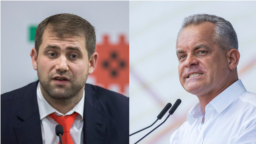
Highlighting the diverging paths, the same day Ukraine's parliament approved the controversial law, Greek police arrested the Moldovan oligarch Vladimir Plahotniuc, arguably the country’s most wanted man.


EU Ministers Set To Approve Sanctions Targeting Moldova's 'Destabilizers'


A former politician and one of Moldova's richest people, Plahotniuc is allegedly the mastermind behind the theft of $1 billion from Chisinau a decade ago -- a charge he denies.

At this moment, Moldova’s and Ukraine’s efforts to fight corruption couldn’t have contrasted more in the eyes of some in Brussels.

Interestingly, there is a feeling in Brussels that the Ukrainian frustration with the Hungarian veto and the bloc’s inability to deal with it could have driven Zelenskiy to care less about EU “hobby horses” such as corruption.

Rumors are swirling that several of the bloc’s leaders told him at a recent conference in Rome that he should be ready to accept that Moldova might move ahead of Ukraine.

That, coupled with less focus on the issue from the new American administration, gave him an opportunity to deal with long-standing nuisances such as pesky anti-corruption officials, diplomatic sources said.

He may have overplayed his hand on this occasion or possibly revealed it. Either way, the EU has taken note

.
Rikard Jozwiak is the Europe editor for RFE/RL in Prague, focusing on coverage of the European Union and NATO. He previously worked as RFE/RL’s Brussels correspondent, covering numerous international summits, European elections, and international court rulings. He has reported from most European capitals, as well as Central Asia.
jozwiakr@rferl.org


Ukraine president turns new anti-corruption bill over to legislature amid protests and EU criticism


Ukraine president turns new anti-corruption bill over to legislature amid protests and EU criticism
Ukrainian President Volodymyr Zelenskyy announced on Thursday that he has sent a bill to the country’s parliament, Verkhovna Rada, aimed at restoring the independence of anti-corruption agencies. The move comes amid nationwide protests and criticism from the European Union (EU) over a bill approved days earlier that removed the independence of these agencies.

In his announcement, President Zelenskyy claimed that this bill will guarantee full autonomy to anti-corruption bodies, establish tools to prevent Russian interference, and adopt measures to prevent abuses. The president also stated that EU experts have been consulted to “engage all necessary expert capabilities.” According to the Chairman of the Verkhovna Rada, Ruslan Stefanchuk, officials have scheduled the bill’s consideration date for the end of July, along with other legislative initiatives.

Earlier this week, a separate new law, 4555-IX, was adopted, weakening the independence of Ukraine’s two main anti-corruption bodies, the National Anti-Corruption Bureau of Ukraine (NABU) and the Specialized Anti-Corruption Prosecutor’s Office (SAPO). These anti-corruption bodies were created in 2015 after the Euromaidan protests, and their establishment was a condition for financial support to Ukraine by the International Monetary Fund.

Because of the swift adoption of 4555-IX and its contentious provisions, it earned widespread criticism from Ukrainians. On the day the law was adopted, protests took place in Kyiv, Dnipro, Lviv and Odesa, eventually spreading to nearly every city in the country. Protestors fear the law will significantly weaken the authority and effectiveness of the NABU and SAPO, undermining their independence in fighting corruption. The protestors demanded the abolition of the law and stated that they would continue demonstrating until they were heard by the government.

The new law also strengthens the role of the Prosecutor General, granting it the authority to delegate the powers of the SAPO prosecutor to other prosecutors, request materials from any of the NABU and SAPO cases, delegate them to other prosecutors, delegate the NABU’s criminal proceedings to other pre-trial investigation bodies, and provide NABU with written instructions that are binding. Given the NABU and SAPO’s previous level of independence, the provisions in 4555-IX could reduce their procedural and operational autonomy. After parliament adopted the law in late July, President Zelenskyy signed it that same day, which turned the bill into law the very next day.

The EU also voiced strong criticism of 4555-IX. President of the European Commission Ursula von der Leyen contacted President Zelenskyy to convey her worries about the consequences of the legislative changes and requested the Ukrainian government for an explanation. A spokesperson for the commission emphasized that the EU values the rule of law and anti-corruption efforts: “The respect for the rule of law and the fight against corruption are core elements of the European Union. As a candidate country, Ukraine is expected to uphold these standards fully. There cannot be a compromise.”

Human Rights Watch (HRW) additionally condemned the law, similarly warning that it threatens the rule of law, Ukraine’s democratic foundations, and its EU accession prospects. HRW also expressed concern that Ukrainian officials were targeting Vitaliy Shabunin, a well-known anti-corruption activist.

Kennedy plans overhaul of key health panel guiding insurer coverage: Report

Robert F. Kennedy Jr. may dismiss the entire panel that decides which cancer screenings and preventive treatments insurers must cover, prompting concern from over 100 major health and medical groups.


Robert F. Kennedy Jr. (File photo)


India Today World Desk
New Delhi,

UPDATED: Jul 26, 2025


In Short

The panel, USPSTF, guides preventive care coverage under the Affordable Care Act.

HHS states no final decision yet but hints at a major revamp.

Kennedy previously dismissed CDC vaccine advisory members, showing vaccine scepticism.


US Health Secretary Robert F. Kennedy Jr. is reportedly planning to oust all 16 members of a federal advisory panel that determines which cancer screenings and preventive health services insurers are required to cover, the Wall Street Journal reported on Friday.

According to The Wall Street Journal, Kennedy aims to remove the entire US Preventive Services Task Force (USPSTF), a volunteer panel of medical experts whose recommendations undergird the preventive care mandates established by the Affordable Care Act. The task force evaluates screenings and services from breast cancer detection to HIV prevention medication.

While the Department of Health and Human Services (HHS) said Friday that “no final decision has been made,” the agency’s tone suggested a shake-up is being considered. “No final decision has been made on how the USPSTF can better support HHS’ mandate to Make America Healthy Again,” an HHS spokesperson told the Journal.

If carried out, the mass dismissal would mark Kennedy’s latest attempt to reshape US public health policy, particularly around vaccines and preventive medicine, Reuters reported. A long-time vaccine skeptic, Kennedy fired all 17 members of the Centers for Disease Control and Prevention’s Advisory Committee on Immunization Practices in June and replaced them with just seven appointees — some of whom share his skepticism.

The potential gutting of the USPSTF has drawn criticism from more than 100 health organizations, including the American Medical Association and the American Academy of Pediatrics. In a letter to Congressional health committees earlier this month, they urged lawmakers “to protect the integrity” of the task force.

“The recommendations of the USPSTF are a cornerstone of preventive care,” the letter stated. “Undermining its independence could jeopardize the health of millions of Americans.”

Though the USPSTF operates independently, its members are appointed by the HHS secretary without Senate confirmation and receive support from the Agency for Healthcare Research and Quality. The group’s authority was reaffirmed in June when the US Supreme Court upheld the task force’s constitutional standing and its role in shaping preventive care mandates.

- Ends

With inputs from Reuters