Saturday, July 26, 2025

Driverless cargo trucks introduced on Kazakhstan-China border

Driverless cargo trucks introduced on Kazakhstan-China border
Kazakhstan often comes under fire for jammed border checkpoints. Driverless trucks could deliver new efficiencies. / gov.kz
By Nizom Khodjayev in Astana July 25, 2025

Kazakhstan’s finance ministry announced on July 23 that, along with China, the country has launched the “Smart Customs” pilot project to streamline cross-border trade transit. The initiative is being tested at the Bakhty (Kazakhstan) and Pokitu (China) border checkpoints.

The project, the first of its kind between the two countries, enables unmanned, autonomous trucks to transport goods across the border as part of a broader effort to modernise customs infrastructure and reduce processing times.

The initiative was formalised during a working meeting between Zhandos Duisembiev, chairman of Kazakhstan’s State Revenue Committee, and Zhixianwei, Party Secretary of the Chinese city of Tacheng in Xinjiang Uyghur Autonomous Region. The two sides signed a cooperation agreement to share expertise and support digital innovation in logistics.

Smart Customs integrates several high-tech components, including a unified electronic declaration system, fully digitised documentation, continuous unmanned cargo movement and automated navigation and operational control.

The initiative is expected to enable an annual cargo traffic volume of 10mn tonnes, reduce transport costs, improve border efficiency and attract investment. It also aims to support new logistics hubs, create employment opportunities, and boost exports of Kazakh agricultural goods such as grain, oilseeds, meat and processed products.

Kazakhstan has come under scrutiny for lengthy border inspections. According to a 2024 study by the German Society for International Cooperation (GIZ), as reported by The Times of Central Asia, Kazakhstan recorded the slowest customs inspection times in Central Asia, averaging two hours and 26 minutes per cargo unit. By comparison, Turkmenistan averaged 50 minutes, Uzbekistan one hour and 25 minutes, Kyrgyzstan one hour and 28 minutes and Tajikistan one hour and 50 minutes.

Russia and China have proposed a driverless freight link that would operate across the Blagoveshchensk–Heihe Bridge, although the project has yet to be implemented.

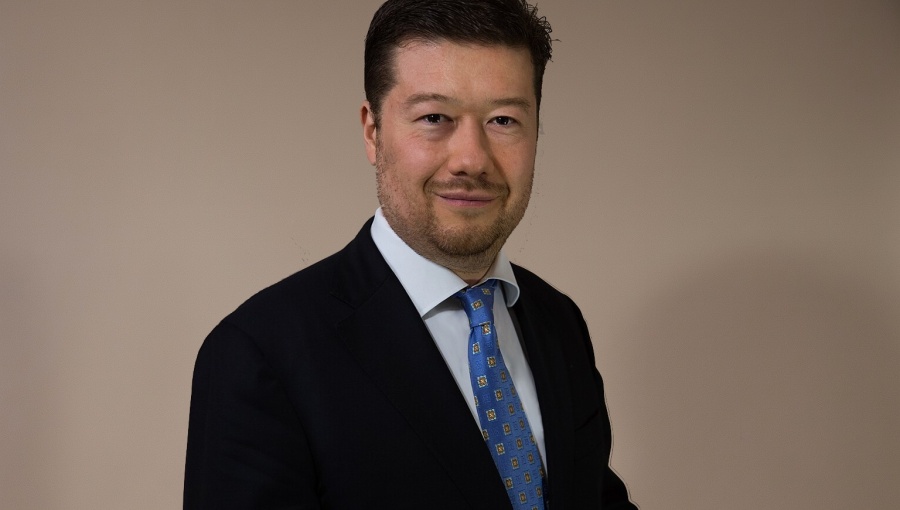
Czech police press charges against leader of far-right opposition SPD party

Czech police press charges against leader of far-right opposition SPD party
Czech police press charges against Tomio Okamura leader of far-right opposition SPD party / bne IntelliNews
By Albin Sybera in Prague July 25, 2025

The Czech police have pressed charges against Tomio Okamura, leader of the far-right opposition Freedom and Direct Democracy (SPD) party, following the investigation into the anti-immigration campaign carried out by the SPD last year.

SPD billboards, seen as racist by many observers, campaigned “against the EU migration pact” depicting a black man with a blood-stained shirt and holding a knife, accompanied by the message “discrepancies in healthcare won’t be solved by ‘surgeons’ from import”.

Okamura is accused of inciting hatred, a crime which carries a penalty of up to three years in prison.

“The police have ended the investigation and submitted the file to the state procurator proposing charges,” state prosecutor for Prague 1 Jan Lelek confirmed in a statement for Czech online news outlet Seznam Zprávy (SZ).

As bne IntelliNews covered earlier this year, the Czech parliament stripped Okamura of his parliamentary immunity following the January police request so he can be interrogated over the SPD’s 2024 summer and autumn billboard campaign ahead of regional and Senate elections in the country.

Okamura has seized the opportunity to portray himself as a victim of the rule of the sitting centre-right government of Petr Fiala, whom he accused of trying to silence him.

“It is an effort of Premier Fiala and Minister of Interior [Vít] Rakušan to criminalise opposition for anti-immigration poster, because Fiala’s government is trying to manipulate the elections in its favour to stay in power at any cost,” Okamura told the Czech Press Agency (CTK) in his latest allegations against the government and in response to police pressing charges.

National elections are scheduled for October, and the largest opposition party, populist ANO (31.5%) led by billionaire ex-PM Andrej Babiš, has a wide lead in the polls ahead of Fiala’s SPOLU (19.4%) list. SPD (12.8%) is battling for third place with the remaining ruling coalition party, centrist Stan (12.2%), according to the latest Stem poll for commercial television CNN Prima News.

SPD is openly courting ANO to form the next government, but it is unclear whether ANO would be willing to join forces with SPD at governmental level. In the previous parliament, ANO avoided collaborating with SPD in government, but frequently relied on the support of its legislators and joined forces with SPD in attacks on public media.

The country’s political analysts have argued that the high-profile case against Okamura could help SPD and Okamura during the ongoing election campaign.

“In individual locations, SPD is carrying out a petition campaign for freedom of speech, so it is having a real effect on the pre-election campaign,” Miroslav Mareš, a political scientist and lawyer from Masaryk University in Brno, told Czech Radio (CRo) in an interview in response to Okamura facing police charges.


Protests resume in Serbia over Rio Tinto lithium project

Protests resume in Serbia over Rio Tinto lithium project
/ @Pavle_Cicvaric

By Tatyana Kekic in Belgrade July 25, 2025

Thousands of demonstrators rallied in the western Serbian city of Valjevo late on July 24, reigniting protests against Rio Tinto’s controversial lithium mining project, as tensions mount over the country’s role in Europe’s clean energy transition.

The protest marked a new wave of resistance against the Anglo-Australian mining giant’s plans to develop the Jadar lithium deposit, which critics warn could cause severe environmental damage.

Citizens from Valjevo, Šabac, Kosjerić and other towns converged in Valjevo's city centre around 8 p.m. on July 24, in a coordinated demonstration organised by local citizens' assemblies and the environmental group Ne damo Jadar (We Won’t Give Up Jadar).

The demonstration ended in unrest near the offices of the ruling Serbian Progressive Party (SNS), where masked men threw eggs and smashed windows. One protester told local broadcaster N1 that stones and sharp objects were thrown from the building.

Serbian police detained three protest participants on July 25, with one later released on misdemeanour charges. A journalist in Valjevo reported that authorities searched homes and workplaces of demonstrators. The Ministry of Interior has yet to issue an official statement.

Chants such as “Ecology or oncology” and “Call elections, coward” echoed through the crowd, following months of anti-government protests that have swept the country since November 1, 2024. 

The protests come just weeks after the European Commission designated the Jadar project a strategic initiative under its newly adopted Critical Raw Materials Act. The Jadar site, near the town of Loznica, is projected to yield up to 58,000 tonnes of lithium carbonate annually—enough to support battery production for approximately 1.1mn electric vehicles, a key part of the EU’s climate strategy.

A memorandum of understanding signed in July 2024 between the EU and Serbia aims to secure access to critical raw materials, such as lithium, nickel, cobalt and graphite, while reducing dependence on China.

Despite European backing, Rio Tinto's project has faced persistent public opposition since mass protests erupted in 2021. The Serbian government suspended the project in early 2022 in response to public outcry, but revived it in 2024 amid soaring lithium prices and intensifying EU demand.

The EU’s involvement has sparked criticism from civil society groups and opposition leaders, who accuse Brussels of prioritising raw materials over democratic values, amid growing concerns about authoritarianism and corruption in Serbia.

Rio Tinto, which discovered the unique lithium-bearing mineral jadarite in Serbia in 2004, has invested years into planning the mine, claiming it could position Serbia as a linchpin in Europe's green transition.


CK Hutchison delays $23bn ports deal as US-China tensions grow over Panama sale

CK Hutchison delays $23bn ports deal as US-China tensions grow over Panama sale
The political stakes rose sharply after US President Donald Trump publicly endorsed the transaction, framing it as a "reclamation" of the Panama Canal from alleged Chinese influence, despite the canal being under Panamanian control since 1999. / PCA
By Alek Buttermann July 25, 2025

CK Hutchison’s $22.8bn plan to divest most of its global ports business is facing significant delays, with sources indicating the 145-day exclusivity window for talks with a BlackRock-led consortium is likely to be extended beyond its July 27 deadline. The transaction, already under scrutiny due to the inclusion of two strategic ports in Panama, has become a geopolitical flashpoint amid worsening US-China relations.

As reported by Reuters, the Hong Kong-based conglomerate controlled by billionaire Li Ka-shing is negotiating exclusively with a consortium comprising BlackRock and Mediterranean Shipping Company (MSC). The sale includes 43 port assets across 23 countries, but attention has centred on the Balboa and Cristóbal terminals on either side of the Panama Canal. These locations are considered highly strategic, handling roughly 3% of global seaborne trade and a substantial share of US container traffic.

The deal, first announced in March, has already missed one key milestone: a separate agreement covering the Panama assets was supposed to be finalised by April 2, but no documentation was signed. Now, three individuals close to the matter have told Reuters that the broader talks may continue beyond the July deadline, with neither party seeking an immediate exit despite growing complications.

The political stakes rose sharply after US President Donald Trump publicly endorsed the transaction, framing it as a "reclamation" of the Panama Canal from alleged Chinese influence, despite the canal being under Panamanian control since 1999. The Chinese government, in turn, launched an antitrust review via its market regulator and voiced strong opposition to the sale, with pro-Beijing media accusing CK Hutchison of capitulating to US pressure.

Compounding the tension is the potential entry of Chinese state-owned shipping firm Cosco into the consortium. According to Bloomberg, Cosco is negotiating access to full transaction data and has demanded veto rights over operational decisions, claims it argues are necessary to protect China’s national interests. Analysts warn that including Cosco could provoke US objections and further complicate regulatory approval.

CK Hutchison has publicly stated that the sale will only proceed under full compliance with regulatory frameworks in all relevant jurisdictions. The company is also attempting to reassure shareholders, asserting that the deal is being treated strictly as a commercial transaction. Nevertheless, the escalating political noise, coupled with internal deal delays and unresolved governance issues, suggests that closing the deal in the near term remains unlikely.


Unlocking the brain’s filing cabinet


USC researchers have discovered how the human brain organizes its visual memories through precise neural timing.


University of Southern California


Researchers at USC have made a significant breakthrough in understanding how the human brain forms, stores and recalls visual memories. A new study, published in Advanced Science, harnesses human patient brain recordings and a powerful machine learning model to shed new light on the brain’s internal code that sorts memories of objects into categories — think of it like the brain’s filing cabinet of imagery.

The results demonstrated that the research team could essentially read subjects’ minds, by pinpointing the category of visual image being recalled, purely from the precise timing of the subject’s neural activity.

The work solves a fundamental neuroscience debate and offers exciting potential for future brain-computer interfaces, including memory prostheses to restore lost memory in patients with neurological disorders like dementia. The research was led by Dong Song, associate professor in the Department of Neurological Surgery and the Alfred E. Mann Department of Biomedical Engineering. and Charles Liu, the USC Neurorestoration Center director at Keck School of Medicine of USC and professor of biomedical engineering at USC Viterbi School of Engineering. The first author, Xiwei She, is a former Ph.D. student from the Song Lab and is currently a postdoctoral researcher at Stanford University.

How does the brain store visual information?

The hippocampus is a critical brain region, well-known for its role in creating new episodic memories – the what, where, and when of past events. While its function in encoding spatial (“where”) and temporal (“when”) information is relatively understood, how it manages to encode the vast and high-dimensional world of objects (“what”) has remained a mystery. It’s simply not feasible for the hippocampus to store every single object separately; instead, scientists hypothesized that the brain might simplify this complexity by encoding objects into categories.

Song, who is Director of the USC Neural Modeling and Interface Laboratory, has been conducting pioneering work in the area of memory prostheses, creating devices that mimic and restore cognitive function, with potential clinical applications for patients with dementia and Alzheimer’s disease.

“We have tested our memory prostheses in a lot of human patients. We created the prostheses and have published several papers showing that it can enhance memory function,” Song said. “But I also wanted to take the opportunity to answer some fundamental neuroscience questions. And this is one of them.”

Brain recordings from epilepsy patients yield insights

Song, Liu and their team’s latest work harnesses brain recording from 24 epilepsy patients with intracranial depth electrodes implanted in their brains for seizure localization. Recordings from these patients allowed the team to pinpoint how hippocampal neurons encode complex visual information, not by firing rate alone, but by the precise timing of their activity.

“Working with human patients suffering from memory dysfunction, it was exceptionally exciting to see the current studies reveal a model for the neural basis of memory formation,” Liu said.

The research team developed an innovative experimental-modeling approach to unravel this intricate process. The team recorded the electrical activity, specifically “spikes,” from hippocampal CA3 and CA1 neurons in the epilepsy patients. The recordings were gathered while patients performed a “delayed match-to-sample” (DMS) task — a popular neuroscience technique to test visual short-term memory.

“We let the patients see five categories of images: ‘animal,’ ‘plant,’ ‘building,’ ‘vehicle,’ and ‘small tools.’ Then we recorded the hippocampal signal,” Song said. “Then, based on the signal, we asked ourselves a question, using our machine learning technique. Can we decode what category image they are recalling purely based on their brain signal?”

The results confirmed the hypothesis that the human brain does indeed recall visual objects by sorting them into categories, and that these visual memory categories that the patients were thinking of were decodable based on their brain signals.

“It’s like reading your hippocampus to see what kind of memory you are trying to form,” Song said. “We found that we can actually do that. We can pretty accurately decode what kind of category of image the patient was trying to remember.”

An efficient strategy for storing diverse memories

The core of the discovery lies in the research team’s interpretable memory decoding model. Unlike previous methods that often rely on averaging neuronal activity over many trials or using pre-selected temporal resolutions, this advanced model analyzes the “spatio-temporal patterns” of spikes from an entire ensemble of neurons.

The study also provides evidence that the hippocampus uses a temporal code to represent visual memory categories. This means that the precise timing of individual neuron spikes, often at the millisecond scale, carries meaningful information. While previous studies often focused on individual neurons, this research revealed that hippocampal neuron ensembles encode memory categories in a distributed manner. This means that while a large proportion of neurons (70-80%) were involved in assigning a visual memory to a category, within each individual neuron, only brief, specific moments contributed to this encoding. This efficient strategy allows the brain to store diverse memories while minimizing energy consumption.

“With this knowledge, we can begin to develop clinical tools to restore memory loss and improve lives, including memory prostheses and other neurorestorative strategies,” Liu said. “While this result may be important to all patients who suffer memory disorders, it has profound relevance specifically to the epilepsy patients who participated in the studies, many of whom suffer from hippocampal dysfunction that manifests in both seizures as well as cognitive/memory disorders.”


First ever one-day island-wide soil microbiome study completed on Crete


Researchers from The University of Maryland School of Medicine among the scientists to make surprising findings on the record-setting day


University of Maryland School of Medicine

Soil Sampling on Crete 

image: 

Lynn Schriml, PhD, a scientist with the Institute for Genome Sciences in Baltimore samples soil on Crete during the first-ever island-wide, same-day soil collection.

view more 

Credit: Institute for Genome Sciences


Friday, July 25, 2025

Japan sees big wins for far-right, anti-immigration party that denounced ‘Jewish capital’

Sanseito’s leader, Sohei Kamiya, has denied being antisemitic.


Japan's opposition party Sanseito leader Sohei Kamiya smiles as he speaks to members of the media at the vote counting center in Tokyo on July 20, 2025.
 (Jiji Press/AFP via Getty Images)

By Shira Li Bartov
July 25, 2025
JTA

Japan’s far-right Sanseito party emerged triumphant in the country’s latest parliamentary election this week, signaling the rise of a nationalist, anti-immigrant movement with a history of decrying “Jewish capital.”

Sanseito, which flies a “Japanese First” banner explicitly inspired by President Donald Trump, gained 14 seats in the country’s upper house elections on Sunday — a leap from only one seat, held by leader Sohei Kamiya.

The upper house is less powerful than Japan’s lower house, where Sanseito has three seats. But the party’s upper house victories stripped a majority from the center-right Liberal Democratic Party, which has governed almost continuously since its formation in 1955, triggering calls for Prime Minister Shigeru Ishiba to resign.

Sanseito was born only five years ago during the COVID pandemic, when Kamiya founded a YouTube channel and built a base of social media followers united by their disaffection with conventional political parties. The channel opposed public health measures such as mask mandates and vaccine requirements, and espoused conspiracy theories about global liberal elites who sought to weaken Japanese security and cultural purity.

Kamiya won Sanseito’s first upper house seat in 2022. During the campaign, he published a pamphlet that claimed Jewish financiers were profiting from inciting fears about COVID, saying that Sanseito would not “sell Japan out to Jewish capital.” About 1,000 Jews live in Japan, most of them immigrants and expatriates.

Kamyia has denied being antisemitic. According to Jewish journalist Jake Adelstein, he said at a press conference earlier this month, “I have Jewish friends and in fact, was a member of the Japan-Israel Friendship Society, which led online commentators to accuse me of being a puppet of the Jews.”

In this election, Sanseito campaigned on restricting immigration and foreign capital, bolstering defense and curbing gender equality and diversity policies. Kamiya has advocated for women to leave the workplace and focus on raising children.

Though Japan has a relatively low number of immigrants — only about 3% of the population — immigration has increased since the 1980s, when it opened up to migrant labor from across Asia and Latin America. More recently, the government has softened immigration laws to allow more workers into a country with an aging, shrinking population.

Nonetheless, local commentators say that Sanseito’s platform resonated with voters who are frustrated with Japan’s rising inflation and cost-of-living crisis. The party blamed immigrants for hoarding welfare benefits, depressing wages and worsening crime, claims boosted by a torrent of disinformation online.
UN chief criticizes UK government for classifying pro-Palestine group as terrorist


UN Human Rights Chief Volker Türk cautioned on Thursday that the UK government’s decision to list the activist group Palestine Action under terrorist legislation may contravene international standards.

Türk noted that under international standards, acts of terrorism should be limited to “criminal acts intended to cause death or serious injury” with the goal of “intimidating a population” or the government towards a particular act or omission. Under section 2(b) of the UK Terrorism Act 2000, a terrorist act can include “serious damage to property,” which Türk found too broad compared to international standards.

Türk went on to elaborate that:

The decision appears disproportionate and unnecessary. It limits the rights of many people involved with and supportive of Palestine Action who have not themselves engaged in any underlying criminal activity but rather exercised their rights to freedom of expression, peaceful assembly and association.

UN experts previously warned the UK government against the “unjustified labelling” of Palestine Action as a terrorist organization, particularly because a ban leads to the criminalization of any membership or support with Palestine Action. In mid-July, UK police arrested protestors who were upset about the classification of Palestine Action as a terrorist organization. 42 protestors at a sit-in in central London were arrested, while 13 protestors outside of the BBC Cymru Wales headquarters were also arrested.

The UK parliament voted to proscribe Palestine Action as a terrorist organization earlier this month. Ms. Yvette Cooper, the secretary of state for the Home Department, issued a draft proscription stating, among other reasons, that the organization had a “long history of unacceptable criminal damage.”

The decision to ban Palestine Action comes after several recent acts by the group, including how the activists from the organization allegedly broke into a military base in Brize Norton in late June and spray-painted two military planes.

Sen. Sanders demands US action to stop 'atrocities and starvation' in Gaza

'American taxpayer dollars are being used to starve children, bomb civilians and support the cruelty of Netanyahu,' says Bernie Sanders


Diyar Güldoğan |26.07.2025 - TRT/AA


WASHINGTON

US Sen. Bernie Sanders demanded the US end support for Israel’s "illegal war” in the Gaza Strip, with mass starvation and civilian casualties.

"After 21 months of brutal war, the Netanyahu government’s extermination of Gaza is entering a new and terrible phase. America and the world cannot continue to look away. We must reckon with what is being done with our taxpayer money, our weapons and the support of our government.

"More than that, we must act to stop it," Sanders said in a statement.

Sanders condemned Israeli Prime Minister Benjamin Netanyahu’s government for blocking humanitarian aid, and pointed to data from humanitarian groups and the UN that indicate one-third of Gaza’s population is going days without food, with children dying from malnutrition and hospitals collapsing under starvation.

"When mass death from starvation begins, it is difficult to reverse. Aid groups say Gaza faces a tidal wave of preventable death. This is the direct result of the Israeli government’s policies," he said.

Stressing that Israel did not allow a single shipment of aid into Gaza from March 2 to May 19, Sanders said more than 1,000 Palestinians have been shot down while trying to get food aid in the last two months.

"Most of these deaths are the result of Israel’s replacement of the established United Nations distribution system with the untested Gaza Humanitarian Foundation (GHF), whose few distribution points have become death traps for Palestinian civilians, with near-daily massacres," he added.

The GHF aid distribution sites, launched May 27 in Gaza, which also have US backing, have been described as “death traps” by critics.

"This is the reality: Having already killed or wounded 200,000 Palestinians, mostly women and children, the extremist Israeli government is using mass starvation to engineer the ethnic cleansing of Gaza," said Sanders.

Sanders said the US has provided more than $22 billion in military aid to Israel since the war began in 2023, despite the rising death toll.

"In other words, American taxpayer dollars are being used to starve children, bomb civilians and support the cruelty of Netanyahu and his criminal ministers.

“Enough is enough. The White House and Congress must immediately act to end this war using the full scope of American influence. No more military aid to the Netanyahu government. History will condemn those who fail to act in the face of this horror," he added.

Israel has killed more than 59,700 Palestinians, most of them women and children, in Gaza since October 2023. The military campaign has devastated the enclave, collapsed the health system, and led to severe food shortages.

Last November, the International Criminal Court issued arrest warrants for Netanyahu and his former Defense Minister Yoav Gallant for war crimes and crimes against humanity in Gaza.

Israel also faces a genocide case at the International Court of Justice for its war on the enclave.

 Is anyone going to stop a looming death spiral in Gaza?


A veteran aid worker’s warning on what happens next in Gaza.


by Nicole Narea
Jul 25, 2025, 
VOX

LONG READ

Palestinians carrying pans gather to receive hot meals, distributed by a charity organization in Gaza City, where residents are struggling to access food due to the ongoing Israeli blockade and attacks on July 23, 2025. Khames Alrefi/Anadolu via Getty Images

Gaza is on the brink of a mass starvation crisis, and once it starts, it will be difficult if not impossible to stop.

The Palestinian population of the Gaza Strip has faced various levels of food insecurity throughout the war that Israel has waged on the territory since Hamas’s October 7, 2023, attack, fluctuating with the amount of aid Israel has allowed to enter the enclave via checkpoints it controls.

Related  The dire state of Gaza negotiations, briefly explained


In March 2024, the Integrated Food Security Phase Classification (IPC) — the primary organization tracking food insecurity worldwide — issued a warning that every resident of Gaza was at risk of crisis levels of food insecurity, and half were at risk of famine. (Crisis levels are reached when a population has “food consumption gaps alongside acute malnutrition” or is “only just able to meet their food needs, resorting to crisis coping strategies like selling off essential livelihood assets.” Famine is the most serious form of hunger, involving a complete lack of access to food and resulting starvation and death.) A famine was never officially declared, and food access peaked during the negotiated ceasefire reached in January.

In March, Israel cut off all shipments into the Gaza Strip, including food aid, when the ceasefire expired. Israel justified it as a tactical strategy to get Hamas to release more Israeli hostages as part of continuing negotiations.

The flow of humanitarian aid has since slowed to a trickle under the purview of the Gaza Humanitarian Foundation, a private group backed by the US and Israeli governments. It began operating in May, and is the sole entity that has been allowed to deliver food. Almost one-third of the 2.1 million people remaining in Gaza are not eating for multiple days in a row, according to the United Nations World Food Programme.

Israel has also made it treacherous for hungry Gazans to even access food from the GHF. The UN estimates that the Israeli military has killed more than 1,000 Palestinians trying to get aid in Gaza since May. There are four GHF distribution centers throughout Gaza, three of which are in areas where the Israeli military has issued evacuation orders, and they are often only open for short periods of time, sometimes spurring crowds to rush to get provisions.

After enduring more than 21 months in a war zone with inadequate nutrition, the population of Gaza is worn down, and humanitarian groups say that imminent famine will likely cause many to die — not just from hunger, but also from preventable disease that their bodies can no longer fight off.

To understand how Gaza got to this point and what happens next, I spoke with Jeremy Konyndyk, president of Refugees International, an organization that advocates for humanitarian assistance and protection for displaced people. Our conversation below has been edited for length and clarity.

How has access to food in Gaza changed throughout the course of the war?

What happened from really almost the start of the war through all of last year was a population that was hovering right at the edge of a starvation emergency, but never quite dipping fully into it.

The Israeli government had been hugely restricting aid through January and February of 2024. The warning of potential famine came out in early March [2024], and then they subsequently allowed a great deal more aid in in April, and the situation improved. Some of the concessions that the Israelis then made in late March into April, and somewhat beyond that, really did make a meaningful difference. And then the Rafah offensive started in May, and things worsened again after that.

The period of the ceasefire [beginning in January 2025] was the best period for aid access since the war began. For six weeks, hundreds of aid trucks were coming in every day. There was relative freedom of movement and freedom of operation for aid organizations who previously had been heavily, heavily constricted by [Israel Defense Forces] operations and permission structures.

There was always just enough that would be allowed in to prevent the kind of full-blown famine outcomes that I think we’re now beginning to see.

Why is the population of Gaza now on the brink of starvation?

If you fully cut someone off [from food] when they are otherwise in good health, it’s going to take longer for them to deteriorate. If they have spent a year-plus being one step removed from starvation, then they’re much more vulnerable. Another shock to their system has the risk to be much, much more damaging.

I think that’s what we’re now seeing, when Israel withdrew from the ceasefire in March and imposed a total, complete, hermetic blockade on Gaza.

There was, for a while, enough residual aid that had been brought in during the ceasefire.The population could stretch that out and and make do for a while before the deprivation really started to bite again.

I would argue what we’re seeing is still effectively an extension of that blockade, because the primary aid that Israel has been allowing in is through this Gaza Humanitarian Foundation, which is not a meaningful factor in terms of the hunger situation in Gaza. The amounts they’ve been letting in are vanishingly small.

This Gaza Humanitarian Foundation is distributing modest amounts of very poor quality aid to, as far as we can tell, a pretty limited number of people: the ones who happen to be able to get to their sites, which is not most of the population. The cost of a bag of flour has gone up from 50 shekels during the ceasefire earlier this year to over 1,700 now.


What happens if famine sets in now?


When you have a population that is that stressed, whose health has deteriorated that much, or is [already] in such an advanced state of population-level food deprivation and malnutrition, then things can turn bad very rapidly, because there is nothing to stand in the way of starvation.

We have seen this kind of a trajectory in other settings before. Once people’s coping mechanisms are exhausted, once their food and financial reserves are exhausted, once their bodies are in a very weakened state due to sustained malnutrition over a long period of time, then it doesn’t take much to kill someone.

It is very hard for your body to fight off disease or survive an injury, or even just survive. In most famines, we see mortality coming from a mix of both outright starvation and opportunistic infections. So people’s bodies are greatly weakened, and they can’t fight off diseases that would otherwise be very survivable.

There is nothing coming on the horizon to improve that situation unless the Israeli government allows the mainstream professional humanitarian community to actually do their fucking jobs, and that is the one thing they will not allow.

Famines have a momentum, and the longer that they are allowed to deepen, the harder they are to reverse. You need your standard food aid package distributed at scale. But you also need specialized, fortified food products, because people are in such an advanced state of malnutrition. You need advanced therapeutic malnutrition treatment, because a lot more people are now going to be coming into an advanced state of malnutrition that requires inpatient malnutrition treatment.

You need clean water because the food that’s being distributed has to be prepared with water. You need fuel so that people can cook the foods. You need medical treatment because many people who die in a famine die of disease, rather than outright starvation. And you need to improve sanitation, because if people do not have good sanitation, that’s what allows the spread of waterborne diseases.

None of that’s possible right now.

Why in your view has the Gaza Humanitarian Foundation been so ineffective?

A core principle of humanitarian aid delivery is you want to get the aid as close to where the population is as possible.

Gaza Humanitarian Foundation inverts that: They make the people come to the aid, rather than bringing the aid to the people. And they make people come to the aid through a deeply insecure territory, past IDF forces, who have been consistently trigger-happy anytime they see a crowd of Palestinians nearby.

I and others warned very early on that this was likely to produce massacres, that this model was a recipe for disaster.

Another core principle of humanitarian aid is that you must not provide aid in a way that increases the risk to the population. There’s a very strongly ingrained ethos of “do no harm.” This is a “do harm” ethos, if anything. You’re creating a situation where, in order to access aid, you compel people to cross a military perimeter where they are routinely shot at. That is not humanitarianism.

Some advocates have suggested that Israel is using starvation as a weapon of war. Do you agree with that?

That’s indisputable. It’s explicit. They want Hamas to relent, and they see the starvation of the population as a pressure point there.


Do you think the US is complicit in that?


I think the US is certainly complicit in that. I think even the Biden administration bears a degree of complicity in that, because they put somewhat more pressure on the Israeli government than the Trump administration has. But fundamentally, they tolerated the situation that brought Gaza to this point.

They tolerated a year-plus of starvation tactics being used, deprivation and illegal blockade tactics being used, and obstruction of aid, including aid provided by the US government. Rather than taking that on with the Netanyahu government, they did gimmick after gimmick. They did air drops. They did that ridiculous pier operation.

It wasn’t until nearly the very end of the administration that they sent the formal letter to the Israeli government demanding concrete progress. And then, of course, there was no meaningful progress.

I don’t think that solely falls on the Trump administration. Obviously, it is currently the Trump administration’s complicity.