Tuesday, July 29, 2025

 TURKIYE

Revitalizing The Çöllolar Coalfield: Technical, Economic, And Safety Challenges – OpEd


By 

Once a key supplier of lignite to Turkey’s Afşin–Elbistan B Thermal Power Plant, the Çöllolar open-pit coalfield in Kahramanmaraş was shut down after two catastrophic landslides in 2011.


Now, after years of legal, technical, and environmental assessments, the site has been transferred to state ownership and is undergoing rehabilitation. This article summarizes the recent technical progress, ownership transition, and plans to restart production.

History and the Landslide Disaster

The Çöllolar lignite mine was initially operated by Park Teknik, a subsidiary of the Ciner Group, under a coal production agreement with the Turkish state. However, in February 2011, two massive landslides engulfed mining equipment and claimed multiple lives, forcing operations to cease entirely[^1].

Importantly, the Ciner Group never fully owned the mining license; it operated under a coal production contract. After the landslides, the project was abandoned, and a lengthy legal and technical reassessment period began.

Ownership and Institutional Transfer

Nearly a decade after operations halted, the ownership and operating model of the mine underwent significant change. In October 2021, Park Teknik officially transferred the site to Electricity Generation Company (EÜAŞ). In March 2022, EÜAŞ handed over the site to Turkish Coal Enterprises (TKİ). Today, the mine is fully owned and operated by TKİ through its Afşin–Elbistan Lignite Operations Directorate[^2].

Technical Rehabilitation Efforts

Extensive technical work is underway to ensure that mining operations can resume safely:


• Over 1,000 drainage wells have been drilled to reduce underground water levels and stabilize pit slopes.

• Large-scale overburden removal (decapage) and geotechnical projects have been planned and partially tendered.

• More than 1 billion Turkish Lira (approx. $35 million USD) has been earmarked for initial investments and equipment procurement[^3].

Given the karstic geological structure of the region, dewatering operations must be conducted with precision and constantly monitored. Comprehensive application of geosciences is also essential to manage the unknown subsurface risks.

Production and Supply Plans

When operational, the revitalized mine is expected to:

• Produce approximately 17–17.5 million metric tons of lignite per year,

• Supply coal to the 1,440 MW Afşin–Elbistan B Thermal Power Plant,

• Employ around 1,000 workers at full capacity[^4].

As of mid-2025, full-scale production has yet to commence, but coal shipments are expected to begin within the year.

Challenges and Outlook

Key challenges facing the project include:

• Ensuring long-term slope stability in a geologically complex and previously unstable area,

• Meeting environmental obligations, including dust control, water management, and land rehabilitation,

• Managing the large-scale logistics required for continuous coal delivery to the power plant.

Despite these challenges, the Turkish government considers the Çöllolar field a strategic asset in reducing dependency on imported coal. Its reactivation represents a case study in balancing energy security, economic necessity, and operational safety.

Looking forward, the sustainable future of the mine will require transparent reporting, scientific oversight, and disciplined operational planning.

Footnotes

[^1]: “Çöllolar’da ikinci göçük: 1 kişi öldü, 11 kişi kayıp”, NTV Haber, 11 February 2011.

[^2]: “Park Teknik, Çöllolar Sahası’nı EÜAŞ’a devretti”, Enerji Günlüğü, 15 October 2021.

[^3]: TKİ 2023 Faaliyet Raporu, Türkiye Kömür İşletmeleri Genel Müdürlüğü.

[^4]: “Afşin–Elbistan Termik Santrali için linyit üretim hedefi”, T.C. Enerji ve Tabii Kaynaklar Bakanlığı, 2024 Resmi Açıklaması.


Haluk Direskeneli

Haluk Direskeneli, is a graduate of METU Mechanical Engineering department (1973). He worked in public, private enterprises, USA Turkish JV companies (B&W, CSWI, AEP, Entergy), in fabrication, basic and detail design, marketing, sales and project management of thermal power plants. He is currently working as freelance consultant/ energy analyst with thermal power plants basic/ detail design software expertise for private engineering companies, investors, universities and research institutions. He is a member of Chamber of Turkish Mechanical Engineers Energy Working Group.


Google admits earthquake alert system failed to warn most users before 2023 Turkey quake

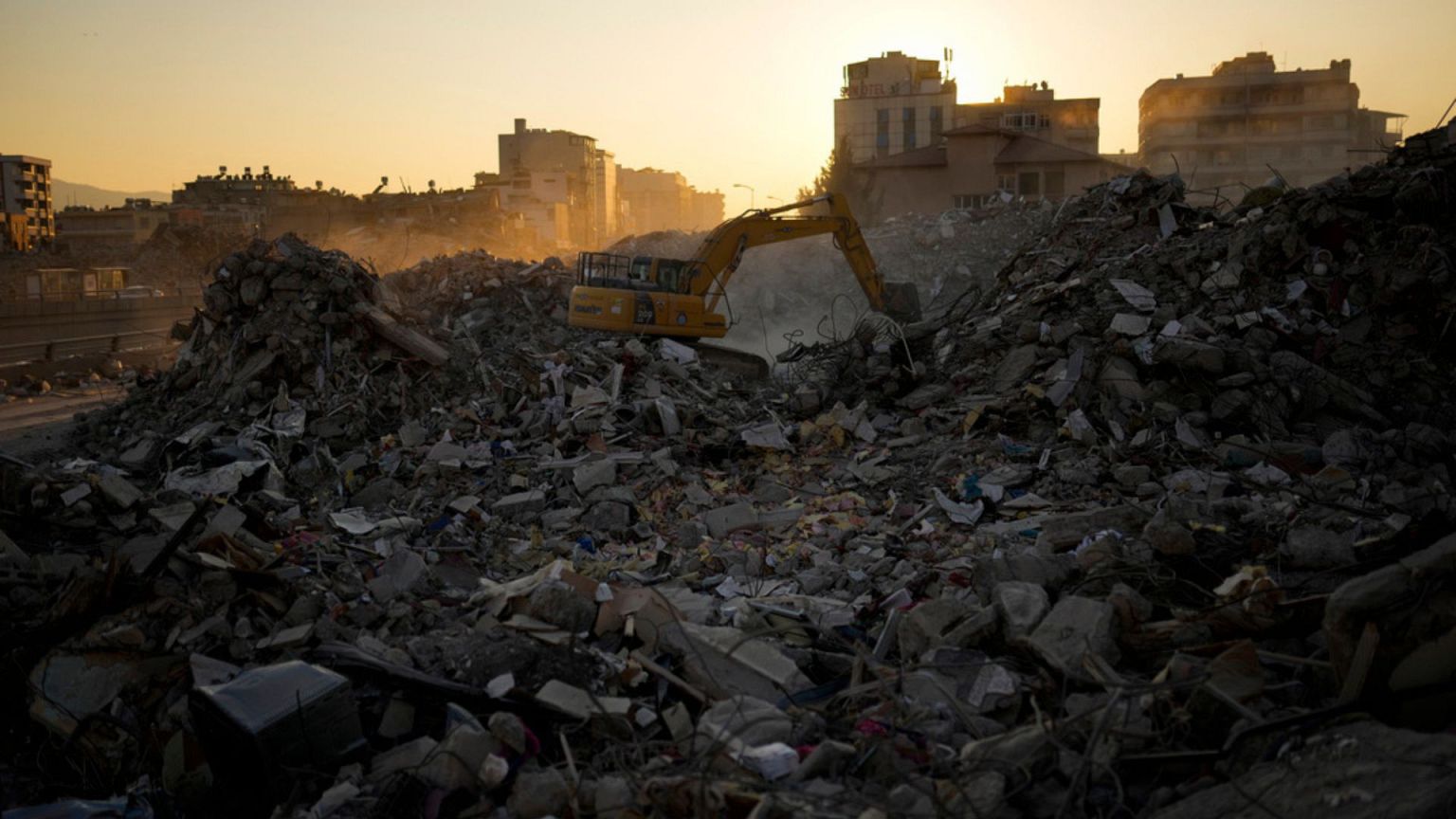
FILE - An excavator digs in the rubble of destroyed buildings in Iskenderun city, southern Turkey, 14 Feb 2023.
Copyright AP Photo/Francisco Seco, File

By Oman Al Yahyai
Published on 

Despite the potential to alert millions, only 469 high-level “Take Action” warnings were sent out before the initial 7.8 magnitude quake.

Google has acknowledged that its Android Earthquake Alerts (AEA) system failed to accurately warn the vast majority of people before the catastrophic earthquake that struck Turkey in February 2023, killing over 55,000 and injuring more than 100,000.

Despite the potential to issue high-level alerts to 10 million people within 158 kilometres of the epicentre, only 469 “Take Action” alerts were sent out ahead of the first 7.8 magnitude quake, a risky shortfall, as this is the level of warning designed to wake sleeping users and prompt them to seek immediate safety.

Instead, Google told the BBC that around 500,000 users received the less severe “Be Aware” notification, intended only for light shaking and incapable of overriding a device’s Do Not Disturb setting. 

The alert system underestimated the severity of the quake, initially calculating the shaking at just 4.5 to 4.9 on the moment magnitude scale, which is far below the actual magnitude of 7.8.

“We continue to improve the system based on what we learn in each earthquake,” a Google spokesperson said.

The BBC’s investigation following the disaster revealed that no users interviewed across the affected region had received the more serious Take Action alert before the tremors. 

The alert would have been especially vital given that the earthquake struck at 4:17 am local time (3:17 am CET), when most people were asleep in buildings that ultimately collapsed.

While Google had previously claimed the system had "performed well", it later published research in the Science journal acknowledging “limitations to the detection algorithms” that contributed to the system’s failure.

The second major earthquake that struck later that day was also underestimated, although it triggered more alerts — 8,158 Take Action and nearly four million Be Aware.

After the incident, Google revised its detection algorithms and ran a simulation of the first earthquake. The updated system, had it been in place at the time, would have sent 10 million Take Action alerts and an additional 67 million Be Aware notifications, according to the company.

“Every earthquake early warning system grapples with the same challenge — tuning algorithms for large magnitude events,” Google told the BBC.

Yet experts have expressed grave concern about the delay in releasing this information.

“I'm really frustrated that it took so long,” said Elizabeth Reddy, assistant professor at the Colorado School of Mines.

“We're not talking about a little event — people died — and we didn't see a performance of this warning in the way we would like.”

The AEA system, available in 98 countries, operates independently of national governments and is managed directly by Google. It detects tremors through the movement of Android smartphones, which make up over 70% of mobile devices in Turkey.

Google has maintained that AEA is meant to supplement, not replace, national warning systems. However, scientists worry that some countries may be overly reliant on this technology

“Would some places make the calculation that Google’s doing it, so we don’t have to?” asked Harold Tobin, director of the Pacific Northwest Seismic Network.

“I think being very transparent about how well it works is absolutely critical.”

The BBC has since asked Google how the AEA system performed during the 2025 earthquake in Myanmar, but has not yet received a response.

Dramatic hunger surge strikes the Middle East and Africa, UN survey shows


Copyright Sam Mednick/Copyright 2023 The AP. All rights reserved

By Sergio Cantone
Published on 28/07/2025 - 

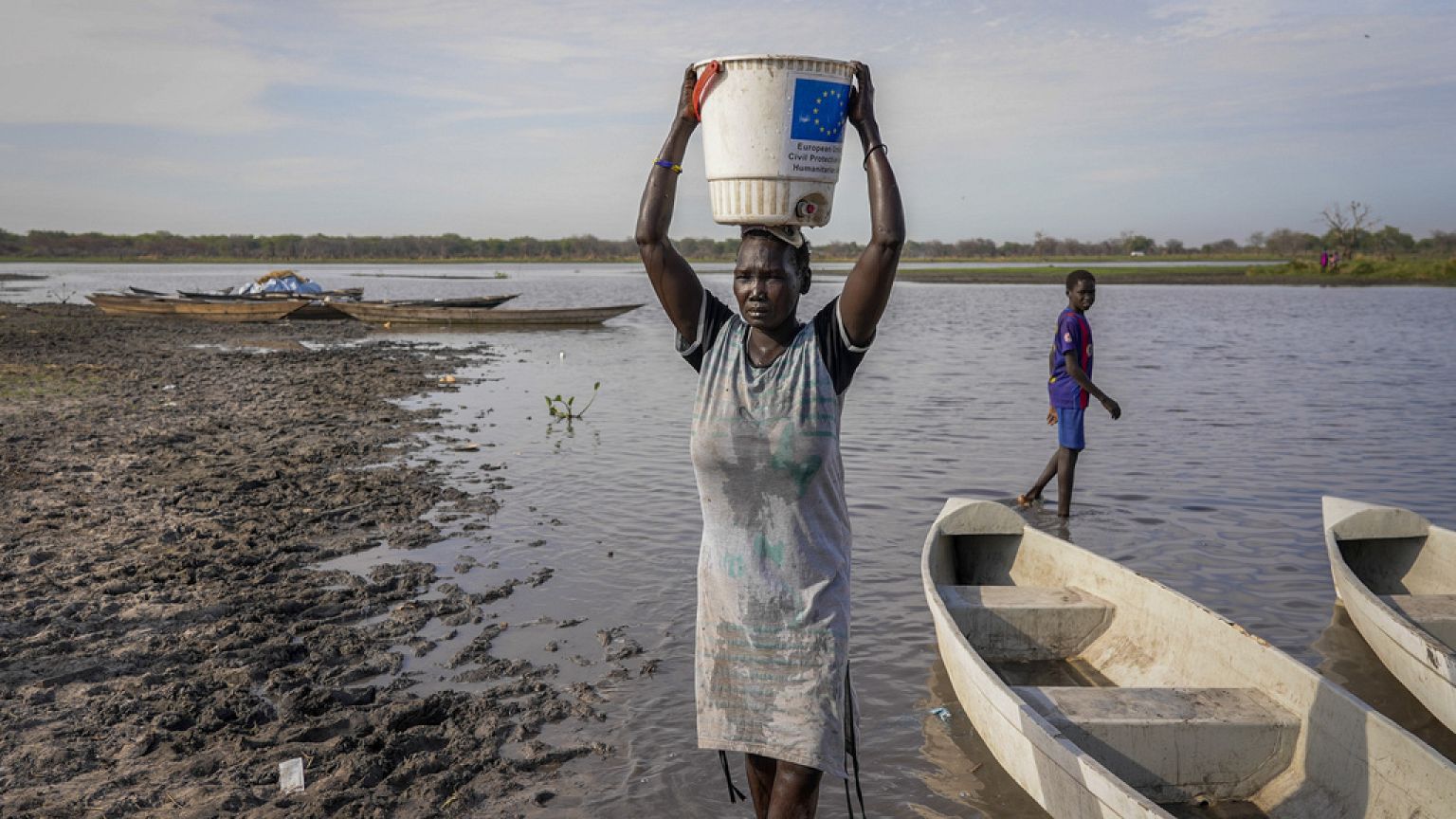
Global crises are fueling hunger in Africa, Asia and the Middle East, with trade tensions, conflicts, and climate change driving food inflation, according to the UN's SOFI report.

The ongoing burden of rising global crises has exacerbated hunger in Africa, Asia and the Middle East, UN agencies warn.

According to the UN's State of Food Security and Nutrition in the World 2025 report, also known as the SOFI report, trade tensions, conflicts and climate change are the primary causes of global food inflation.

The report, which gathers data from five international organisations — FAO, IFAD, UNICEF, WFP, and WHO — was drafted by IFAD, a Rome-based UN agency that provides grants and low-interest loans to fund projects in developing countries.

"The situation is quite alarming, especially in Africa and in the Middle East," Álvaro Lario, president of IFAD, told Euronews.

"It's a mixture between the conflicts, some of the disruption or shocks caused by economic or trade tensions and also the climate shocks. These are the three main drivers," Lario explained.

Since the trade tensions of 2018, during the first Trump administration, elevated tariffs have mainly remained in place, contributing to ongoing trade tensions and influencing global agricultural trade dynamics.

The figures of the survey show that the proportion of the population facing hunger in Africa surpassed 20% in 2024, affecting 307 million people, while in the Middle East an estimated 12.7% of the population, or more than 39 million people, faced hunger in 2024.


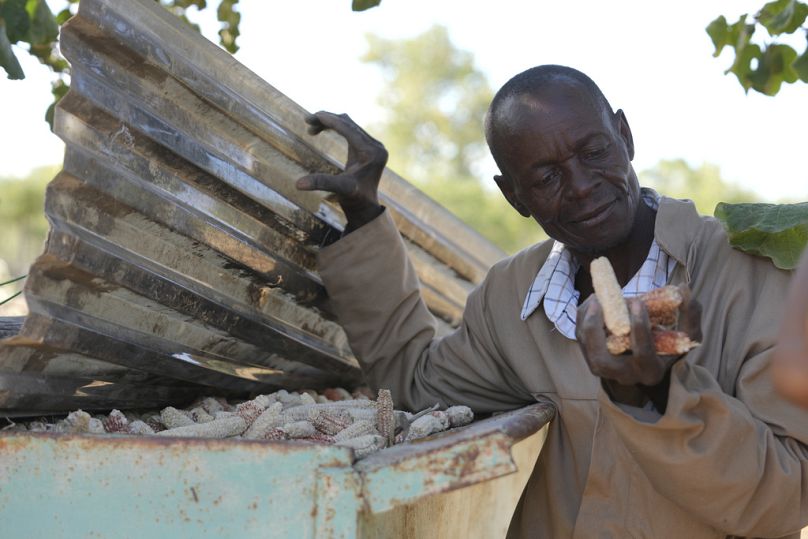
James Tshuma, a small scale farmer, holds some of the plant residue he uses to take care of his garden in Mangwe district in Zimbabwe, Friday, March 22, 2024 Tsvangiary Mukwazhi/AP


Small farming activities under threat

Increasingly dire living conditions for small farmers and rural populations in developing countries are catalysts for economic migration flows.

"It's clear, when people do not have the ability of really having a livelihood where they are, then they are forced to migrate," Lario said.

The link between migration, the ability to feed oneself, and the ability to also continue producing food is clear, he added.

According to UN criteria, small-scale farmers are those who exploit less than 2 hectares of land. They produce one-third of the world’s food and up to 70% of the food in Africa.

The economic existence and sustainability of small-scale farmers are quintessential to food supply and food security in developing countries.

Yet, according to international standards, they all live under the poverty threshold. They represent 80% of the world's poorest population.

According to the IFAD assessment, international aid to agriculture doesn't meet the needs of small-scale farmers: in fact, they receive less than 1% of climate finance, which amounts to slightly more than €4 billion per year, when they would need more than €70 billion.

Long-term investment in agriculture and small-scale farmers in developing countries is crucial for addressing global hunger.

"Africa imports approximately €70, 80 billion of food every year. Clearly, they could be self-sufficient and they could create a lot of those jobs in Africa," said Lario.

Each year, approximately 10 million young Africans enter the job market.

"There could be many jobs created in terms of not only production, but distribution, storage, marketing, exporting," Lario stated.

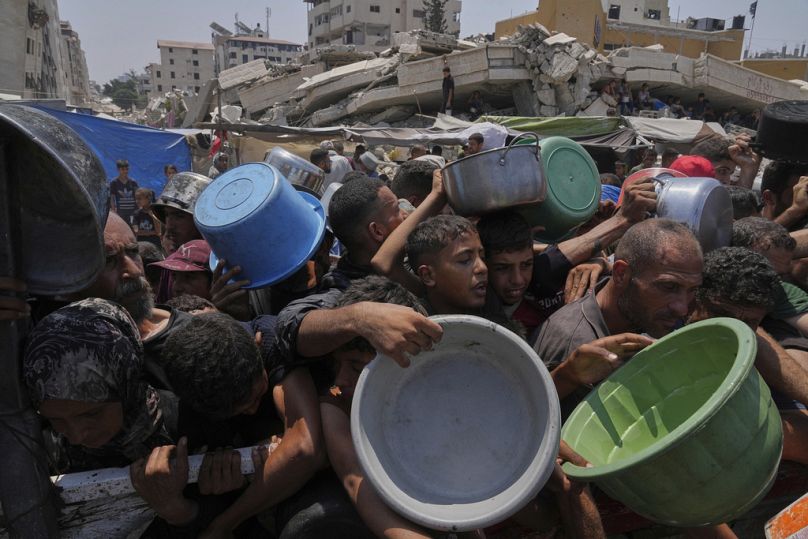
Food distribution in Gaza Abdel Kareem Hana/Copyright 2025 The AP. All rights reserved.


Rising conflicts disrupt the food chain


According to the Integrated Food Security Phase Classification (IPC), more than 35 million people are living in a state of emergency (IPC Phase 4), and almost 2 million have reached IPC Phase 5, which is categorised as "catastrophe".

Places where the population is facing extreme degrees of food insecurity are the Palestinians living in the Gaza Strip, along with South Sudan, Sudan, Yemen and Haiti.

The survey indicates that 100% of the population in the Gaza Strip faces high levels of acute food insecurity, affecting a total of 1,106,900 people, nearly twice the 576,000 recorded in 2023, the highest numbers ever estimated globally in IPC history.

"The situation is quite alarming, especially in Africa and especially in the Middle East. I would say those are the two areas where we're saying the numbers continue to increase," concluded Lario.
Proposed changes to EU deforestation law will boost illegal Russia timber trade, NGO warns


Copyright AP Photo/Eraldo Peres

By Eleonora Vasques
Published on 29/07/2025 - 

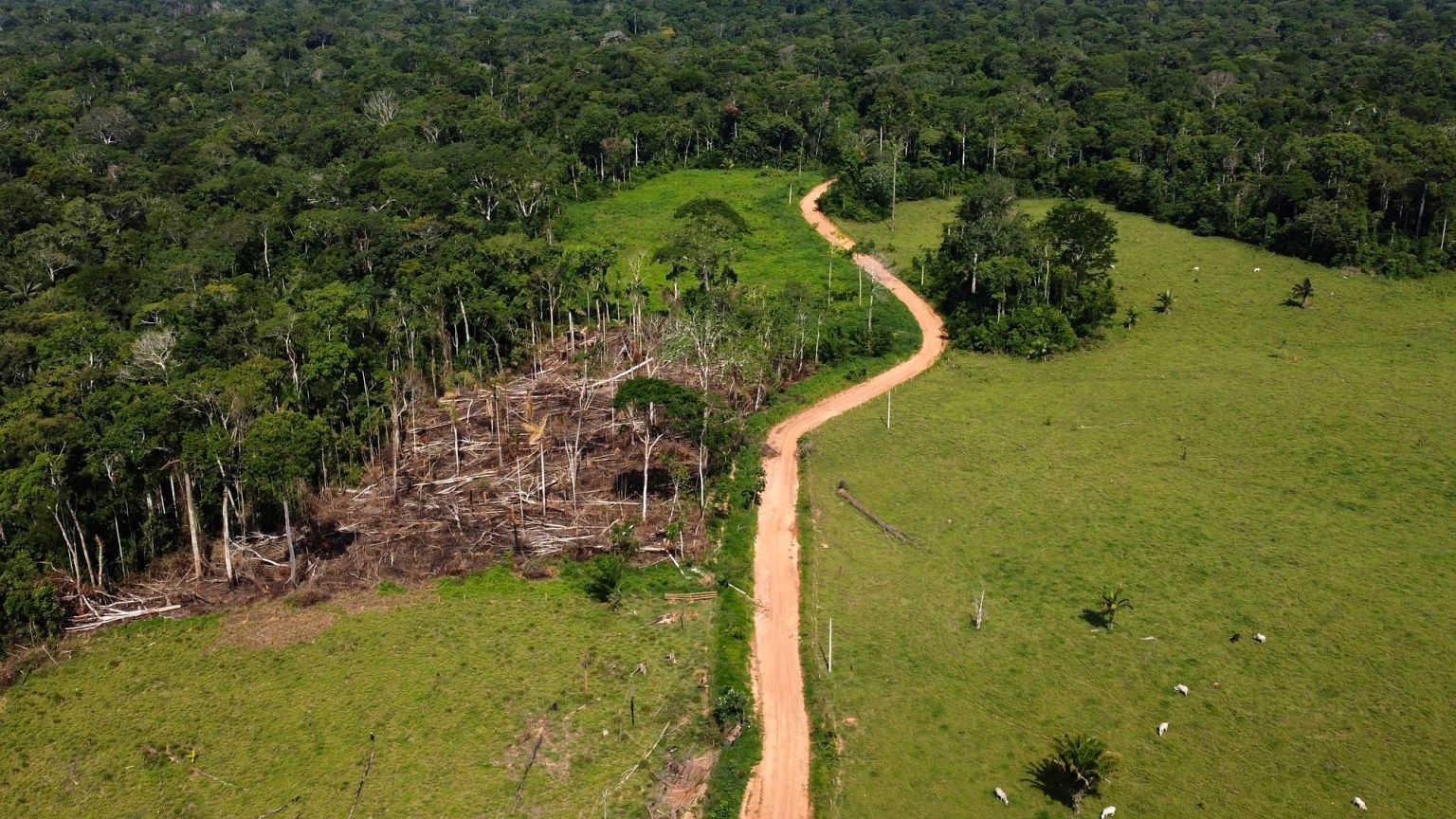
A majority of EU countries are pushing for changes to the EU deforestation law that could likely boost illegal timber imports from sanctioned Russia and Belarus, according to NGO Earthsight, which claims states pushing for the changes are benefiting from the illegal timber trade.

Proposed changes to the EU deforestation law supported by a majority of member states will boost the potential for illegal trade of Russian and Belarusian timber, according to an NGO which has conducted an investigation into the trade.

In May 18 EU member states sent a letter to the European Commission proposing to simplify the EU Deforestation Regulation, the bloc’s legislation that aims to reduce the EU's impact on global deforestation.
RelatedEighteen EU countries call for 'simplification' of EU Deforestation Law

The law entered into force in June 2023 and classifies countries according to their risk of deforestation in the production of seven commodities: cattle, cocoa, coffee, oil palm, rubber, soya, and wood.

The European Commission decided to postpone its implementation to 30 December 2025 for large and medium-sized companies, and to 30 June 2026 for micro and small companies, following pressure from member states.

The regulation boosts controls over illegal imports of timber by introducing more mandatory border checks and compulsory geolocation of timber.

"Geolocation is a very powerful tool because it can be used to debunk fake harvest and false origin claims,” Tara Ganesh, lead timber expert at the NGO Earthsight told Euronews in an interview.

The ‘No Risk’ category

“The way the current proposal is worded, it would strip away a key part of the law, the requirement for geolocation in certain countries. For so-called 'no-risk' countries, they would be exempt from geolocation requirements, and there would also be no obligation for authorities to carry out a minimum number of checks on those countries," Ganesh said.

The EU deforestation law categorises countries from low to high risk of deforestation.

Based on the risk category, different rules apply. For instance, for a high risk category, more layers of control are mandatory.

In the draft reform, member states want to introduce a new ‘no risk’ category with lighter rules, which Ganesh claims would be open to abuse by those seeking to circumvent sanctions by importing timber from Russia and Belarus.

“Several NGOs around the world have shown that wood, not just from Russia, but also from other high-risk tropical countries and deforestation hotspots, is regularly laundered through countries like China. Essentially, what we are calling for is for the European Commission to firmly reject the zero-risk proposal from the outset and to implement the law as it stands by the end of this year," Ganesh said.
EU countries gaining more from the illegal imports

Ganesh said that eight of the countries pushing for these amendments already account for 67% of the illegal timber market in the EU currently subjected to sanctions.

"Incidentally, many of the member states calling for [simplifying the legislation] are also among those receiving some of the highest volumes of conflict plywood we have been documenting. In particular, eight of the top ten EU importers of conflict plywood, according to the most recent data, are among the member states pushing for the reform," Ganesh told Euronews.

Russia is among the largest producers of wood worldwide, and its birch plywood is used for a range of purposes including much furniture.

Following Russia's invasion of Ukraine, the EU imposed sanctions on wood products on Russia and Belarus.

In January Earthsight published the results of an undercover investigation, which claimed that the EU systematically imported more than €1.5 billion of illegal Russian and Belarusian birch plywood since sanctions came into effect in July 2022.

In updated research published in July, the NGO claimed that further €273 million's worth of illegal plywood was imported between November 2024 and April 2025, and said the circumvention is still ongoing.

“We saw that as soon as the sanctions took effect, the flow of timber from Russia stopped or declined drastically, and at the same time, imports from third countries rose,” Ganesh said, earmarking China, Georgia, Kazakhstan and Turkey as among countries from which exports had increased significantly over that time.

They are able to get fake certificates, even from big labelling companies, the investigation claims.

“Our report was all about showing how companies in these third countries are simply sticking new labels and new packaging on Russian-manufactured goods, then sending them to the EU with documents originating from those third countries. For the EU importer, they are able to safely claim that the products are manufactured, for instance, in China,” she added.

Euronews contacted the European Commission for comment on the investigation and its reactions.

Countries seeking the simplification of the Deforestation Regulation are Austria, Bulgaria, Croatia, the Czech Republic, Estonia, Finland, Hungary, Ireland, Italy, Latvia, Lithuania, Luxembourg, Poland, Portugal, Romania, Slovakia, Slovenia and Sweden.

World countries gather at UN to revive two-state solution efforts

World  countries gather at UN to revive two-state solution efforts
UN Secretary General António Guterres. / bne IntelliNews

By bna Cairo bureau July 28, 2025

In a historic move to revive the long-stalled two-state solution, the international community has launched a high-level conference at the United Nations General Assembly in New York, aimed at turning the vision of a Palestinian state alongside Israel into reality after nearly eight decades of conflict, war, and unfulfilled promises.

The two-day conference, which began on July 28, is jointly sponsored by Saudi Arabia and France under the title "For the Peaceful Resolution of the Palestinian Issue and the Implementation of the Two-State Solution." While the US chose not to participate, it notably did not object to the initiative, signalling a subtle shift in its posture.

The event follows French President Emmanuel Macron’s announcement of plans to recognise the State of Palestine—a move likely to trigger wider recognition. Asked about this, US President Donald Trump said, “Let them do what they want,” which a senior European official called a sign that “the US is not making any special effort to stop the momentum.”

Dozens of foreign ministers convened at the UN to back the two-state solution, including France’s Jean-Noël Barrot, Saudi Arabia’s Prince Faisal bin Farhan, Egypt’s Foreign Minister, UK Foreign Secretary David Lammy, Germany’s State Minister for Foreign Affairs, Florian Hahn, and Palestinian Prime Minister Mohammad Mustafa. 

Neither Israel nor the US attended. Asked if UK PM Keir Starmer might recognise Palestine like Macron, Trump replied, “I wouldn’t mind him taking that stance”—highlighting a lack of US pushback, unlike Netanyahu’s firm opposition.

In his opening remarks, UN Secretary-General António Guterres expressed gratitude to Saudi Arabia and France for sponsoring the event. “The Israeli–Palestinian conflict has persisted for generations, defying diplomacy and countless resolutions... defying international law,” he said, noting that the two-state solution now appears “more distant than ever.”

While he condemned “the horrific Hamas terrorist attacks of October 7, 2023 and the taking of hostages,” he also made clear, “Nothing justifies the destruction of Gaza or the starvation of its population.”

Guterres warned of the ongoing “expansion of settlements, rising settler violence against Palestinians, and the creeping annexation of the occupied West Bank,” describing it as part of a “systemic reality that is dismantling the foundations of peace in the Middle East.”

He called the conference “a rare opportunity—it can and must be a turning point, a moment that drives irreversible progress toward ending the occupation.” He reiterated the need for “two independent, democratic, and sovereign states, living side by side in peace and security, recognised by all, based on the pre-1967 lines, with Jerusalem as the capital of both.”

Saudi Foreign Minister Prince Faisal bin Farhan stressed that the two-state solution is key to regional stability. “This conference marks a pivotal moment on the path to implementing that solution,” he said. “Stability in the region begins with granting the Palestinian people their legitimate rights.”

He welcomed Macron’s announcement and called for an immediate end to the humanitarian catastrophe in Gaza, revealing that Saudi Arabia and France had facilitated the transfer of $300mn from the World Bank to support Palestine.

French Foreign Minister Barrot echoed these sentiments: “We cannot accept the targeting of civilians in Gaza,” he said. “The war has gone on too long and must stop.”

He continued: “We must work to make the two-state solution a tangible reality. It meets the legitimate aspirations of the Palestinian people, and this conference must be a turning point in making it happen. We have launched an irreversible momentum towards a political solution in the Middle East.”

Barrot added, “It was absolutely necessary to restart the political process—the two-state solution—which today faces greater threats than ever before.”

Palestinian Prime Minister Mohammad Mustafa said, “The Palestinian people must not be condemned to eternal displacement and occupation.”

He called for an immediate end to the violence in Gaza, describing the situation as “one of the most horrific massacres in history.”

Mustafa expressed gratitude to Saudi Arabia and France for co-hosting the conference, stating, We are grateful to Saudi Arabia and France for leading this historic conference, which sends a powerful message to the Palestinian people that the world stands with them.”

“This conference is a message to Israelis to move toward peace,” and praised France’s brave step in committing to recognise the State of Palestine, "he added.

Egyptian Foreign Minister Badr Abdelatty said, “Egypt has intensified its humanitarian assistance in recent weeks by delivering urgent aid to Gaza to ease the suffering of its people. It is essential to sustain and strengthen these efforts in cooperation with international partners.”

“We welcome the French president’s commitment to recognising the State of Palestine and aspire to build international consensus toward full recognition of Palestinian statehood.” Abdelatty said

“We are engaged in intensive consultations with Qatar and the US to coordinate a major international conference for Gaza’s reconstruction, to be held once a ceasefire is reached. This conference will serve as a vital platform to attract global support and boost development efforts in the Strip,” he added. 

The two-state solution conference is expected to provide fresh momentum toward a summit anticipated in  September, which may be held in either Paris or New York, alongside high-level meetings during the 80th session of the United Nations General Assembly.

France says 'no alternative' to two-state solution for Israel, Palestinians

France told a UN conference co-chaired with Saudi Arabia on Monday that there is "no alternative" to a two-state solution between Israel and the Palestinians.


Issued on: 28/07/2025 

RFI

Conference co-chairs French Foreign Minister Jean-Noël Barrot and Saudi Arabia's Foreign Minister Faisal bin Farhan Al-Saud attend a ministerial high level meeting during a United Nations conference on a two state solution for Israel and the Palestinians, at UN headquarters on 28 July, 2025, in New York City. AFP - TIMOTHY A. CLARY

"Only a political, two-state solution will help respond to the legitimate aspirations of Israelis and Palestinians to live in peace and security. There is no alternative," French Foreign Minister Jean-Noël Barrot said at the start of the three-day meeting.

Days before the conference, French President Emmanuel Macron announced that he would formally recognise a State of Palestine in September.

In an interview with French weekly La Tribune Dimanche, Barrot said that other European countries will confirm "their intention to recognise the State of Palestine" during the conference, without confirming which.

"All states have a responsibility to act now," said Palestinian prime minister Mohammad Mustafa at the start of the meeting, calling for an international force to deploy to help underwrite Palestinian statehood. "Recognise the state of Palestine without delay."

France is hoping that Britain will take this step. More than 200 British members of parliament on Friday voiced support for the idea, but Prime Minister Keir Starmer reiterated that recognition of a Palestinian state "must be part of a wider plan."

According to a database created by French news agency AFP, at least 142 of the 193 UN member states – including France – now recognize the Palestinian state proclaimed by the Palestinian leadership in exile in 1988.

Thousands of lives lost


In 1947, a resolution of the UN General Assembly decided on the partition of Palestine, then under a British mandate, into two independent states – one Jewish and the other Arab. The following year, the state of Israel was proclaimed.

For several decades, the vast majority of UN member states have supported the idea of a two-state solution, Israelis and Palestinians living side-by-side.

But after more than 21 months of war in Gaza, the ongoing expansion of Israeli settlements in the West Bank, and Israeli officials declaring designs to annex occupied territory, it is feared a Palestinian state could be geographically impossible.

The current war in Gaza started following a deadly attack by Hamas on Israel, which responded with a large-scale military response that has claimed tens of thousands of Palestinian lives.

This week's conference comes at a moment when "the prospect of a Palestinian state has never been so threatened, or so necessary," Barrot said.

Beyond facilitating conditions for the recognition of a Palestinian state, the meeting will focus on three other issues – reform of the Palestinian Authority, disarmament of Hamas and its exclusion from Palestinian public life, and normalisation of relations with Israel by Arab states.

Growing international pressure


However, no new normalisation deals are expected to be announced at the meeting, according to a French diplomatic source.

On the other hand, "for the first time, Arab countries will condemn Hamas and call for its disarmament," Barrot said.

The conference "offers a unique opportunity to transform international law and the international consensus into an achievable plan and to demonstrate resolve to end the occupation and conflict once and for all, for the benefit of all peoples," said Palestinian ambassador to the UN Riyad Mansour, calling for "courage" from participants.

Israel and the United States were not taking part in the meeting, amid growing international pressure to mount on Israel to end nearly two years of war in Gaza.

Despite "tactical pauses" in some military operations announced by Israel, the humanitarian catastrophe in the ravaged coastal territory is expected to dominate speeches by representatives of more than 100 countries as they take the podium.

Bruno Stagno, chief advocacy officer at Human Rights Watch, said "more platitudes about a two-state solution and peace process will do nothing to advance the conference's goals, nor to halt the extermination of Palestinians in Gaza."

(with AFP)


Vatican Communication Office Urges Two-State Solution As France Backs Palestinian Statehood


By 

By Kate Quiñones


The Vatican’s Dicastery for Communication reiterated its long-standing call for recognition of Palestine statehood amid the ongoing Israel-Hamas conflict after France announced last week it would recognize the region’s statehood.

The editorial manager for the Vatican’s Dicastery for Communication, Andrea Tornielli, called for a “two-state solution” and recognition of Palestine as a state in a July 27 editorial

In the editorial, Tornielli cited France’s recent movement toward recognition. Last week, French President Emmanuel Macron announced in a post on X that France would recognize Palestine as a state — a plan that was quickly rejected by various Western countries including the United States, the United Kingdom, Germany, Italy, and Australia. 

In addition to affirming Palestine as a state, Macron called for the demilitarization of the terrorist group Hamas that runs the government of Gaza. He demanded the release of the hostages, called for humanitarian aid for Gaza, and said that Palestine must accept demilitarization and fully recognize Israel.

In 2015, the Vatican signed its first treaty with the “State of Palestine.” Tornielli recalled the “comprehensive agreement” between the two parties, noting that the treaty affirmed the right of the Palestinian people to an “independent, sovereign, democratic, and viable” state.


While Pope Francis was the first of the popes to use the term “State of Palestine” upon his 2014 visit to the Holy land, Tornielli pointed out that Pope Benedict XVI affirmed both that “the State of Israel has the right to exist and enjoy peace and security” and that “the Palestinian people have the right to an independent and sovereign homeland.”

Before Benedict, in the early 1990s, Pope John Paul II established relationships with both the State of Israel and the Palestine Liberation Organization, according to Tornielli. 

“It is to be hoped that the High-Level International Conference for the Peaceful Resolution of the Palestinian Question and the implementation of the two-state solution, grasping the urgency of a common response to the Palestinian drama, will decisively pursue a solution to finally guarantee this people a state with secure, respected, and recognized borders,” Tornielli wrote in the editorial.

Notably, the Vatican’s support of the “two-state solution” runs counter to the stances of many Western countries. The United States, the United Kingdom, Germany, Italy, and Australia rejected Macron’s Palestine statehood plan outright, while President Donald Trump dismissed Macron, telling reporters at the White House: “What he says doesn’t matter. It’s not going to change anything.” 

Macron said in his post that he plans to announce the recognition at the United Nations General Assembly in September. 

While U.K. Prime Minister Keir Starmer rejected the plan, he explained in a statement he supported the “two-state solution” but said it must ensure “lasting security for Palestinians and Israelis.”

On a local level, the Representative Council of Jewish Institutions of France called the decision a moral failure and said it risks security for Jews worldwide, while top American Jewish groups declined to attend a meeting with the French government after his statement. 

Israeli Prime Minister Benjamin Netanyahu “strongly” condemned Macron’s decision, saying the move “rewards terror and risks creating another Iranian proxy, just as Gaza became.” 

“A Palestinian state in these conditions would be a launch pad to annihilate Israel — not to live in peace beside it,” Netanyahu said. “Let’s be clear: The Palestinians do not seek a state alongside Israel. They seek a state instead of Israel.”


CNA

The Catholic News Agency (CNA) has been, since 2004, one of the fastest growing Catholic news providers to the English speaking world. The Catholic News Agency takes much of its mission from its sister agency, ACI Prensa, which was founded in Lima, Peru, in 1980 by Fr. Adalbert Marie Mohm (†1986).


EU proposes to suspend Israeli access to European research fund over Gaza war

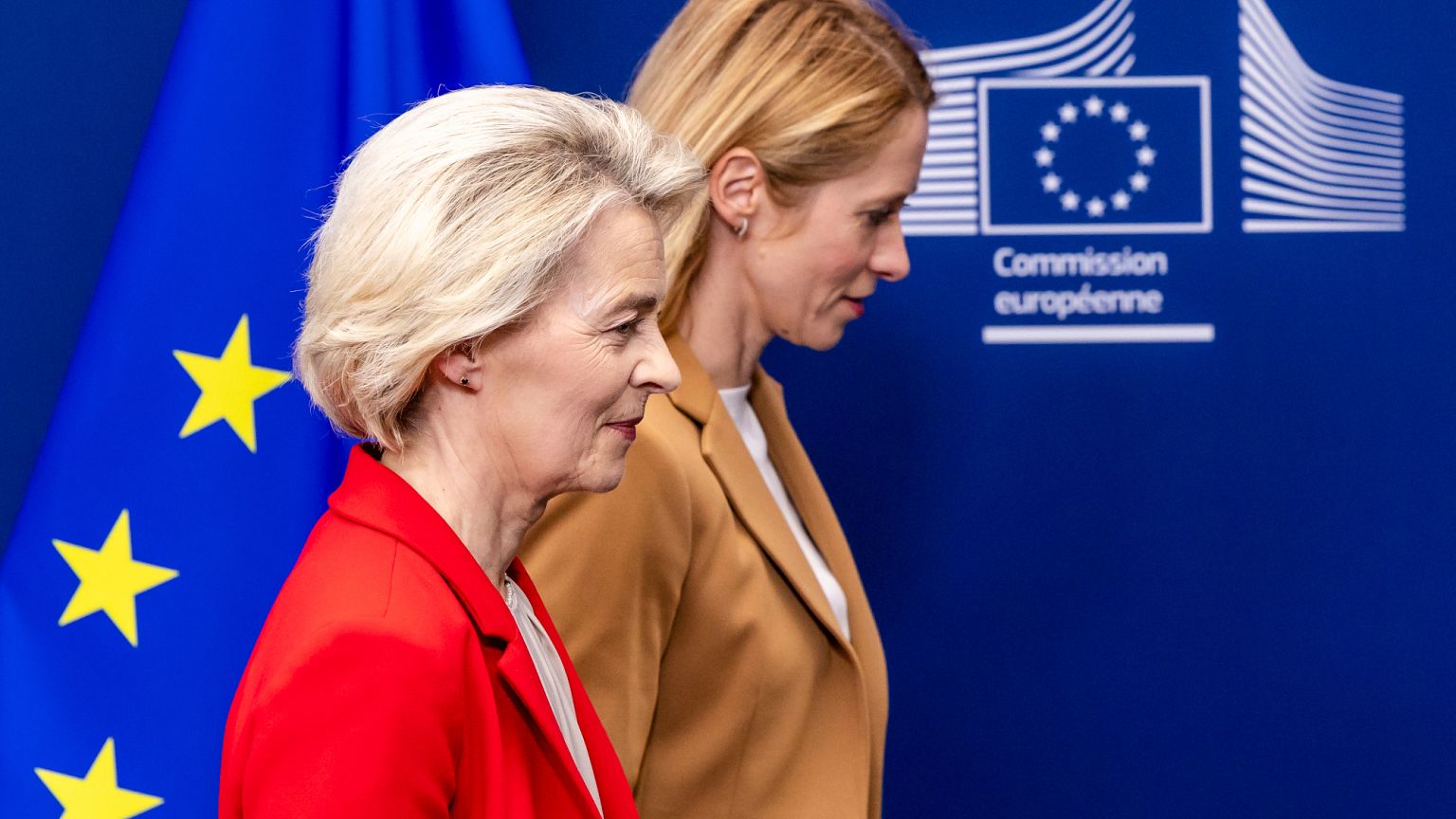
European Commission President Ursula von der Leyen, left, and European Union foreign policy chief Kaja Kallas leave after a media briefing at EU headquarters in Brussels.
Copyright (AP Photo/Geert Vanden Wijngaert)

By Shona Murray
Published on 

The European Commission is tabling the suspension of Israel's access to the EU's Horizon Research fund as a consequence of the worsening humanitarian crisis in Gaza. It comes after an accord between the two sides for Israel to substantially increase aid to Gaza has not materialised, say EU sources.

The European Commission has issued proposals to EU member states to partially suspend Israel's access to the EU's Horizon Europe research and innovation programme in response to Israel's ongoing actions in Gaza.

EU Commissioners met on Monday today to discuss the move in response to the failure of Israel to implement a negotiated agreement to "substantially" improve access to food and medical supplies to Palestinians in Gaza. 

The move would affect the participation of Israeli start-up businesses with "disruptive innovations and emerging technologies that have potential dual-use applications, such as cyber-security, drones and artificial intelligence", a statement from the European Commission said.

Until this decision, EU Commissioners including President of the European Commission, Ursula von der Leyen have collectively refused to support any action against Israel.

The proposal will be discussed and potentially voted on by member states as early as Tuesday when EU ambassadors from all 27 member states will convene. 

Suspending Israel from the Horizon programme was one of ten options the European Commission and member states were presented with on foot of a report confirming Israel was in breach of international law due to the dire situation for civilians across the Palestinian Territories.

Partially suspending Horizon would not require unanimous support across all 27 countries, and member states such as Austria, Germany, Hungary and the Czech Republic are still unlikely to agree to taking action against Israel. 

However, the motion could pass with the qualified majority voting, which means larger state such as Italy would have to support it in order to meet the requirements.

Dutch Prime Minister Dick Schoof said the humanitarian situation in Gaza is "catastrophic" and demanded "the people of Gaza be given immediate, unfettered, safe access to humanitarian aid."

In a post on social media, Schoof also said his government could take even stronger action against Israel.

The Hague supports the plan to suspend Israeli participation in Horizon, adding the Netherlands will "also press for further European measures, for example in the realm of trade", he said.

On 10 July the EU negotiated a "significant" improvement of humanitarian aid access into Gaza, including an increase of food trucks, and an agreement to "protect the lives of aid workers", after the EU High Representative for Foreign Affairs Kaja Kallas dispatched a delegation to Tel Aviv, including Christophe Bigot, the EU's Special Envoy to the Middle East. 

But strong consensus within the EU is that Israel has not enacted its part of the deal.

"Clearly the situation in the last few days in Gaza is still awful, and although some more aid is getting in, distribution has been deadly," a highly placed source told Euronews.

The UN estimates over 1000 people have been killed at food distribution sites alone, and dozens have died of starvation in recent days. 

"I hope they're discussing actual measures and not just the situation in Gaza, we need action, not more declarations of how terrible it is," said another EU diplomat close to the matter.

"Focusing on one option forces member states to make a decision, I'm not sure how economically this will impact Israel, but it shows political pressure is really mounting" on Israel, said this diplomat, adding that they considered the Commission "has washed its hands of the matter" up to this point.

Egyptian President El-Sisi rejects displacement of Palestinians, urges Trump to end Gaza war

Egyptian President El-Sisi rejects displacement of Palestinians, urges Trump to end Gaza war
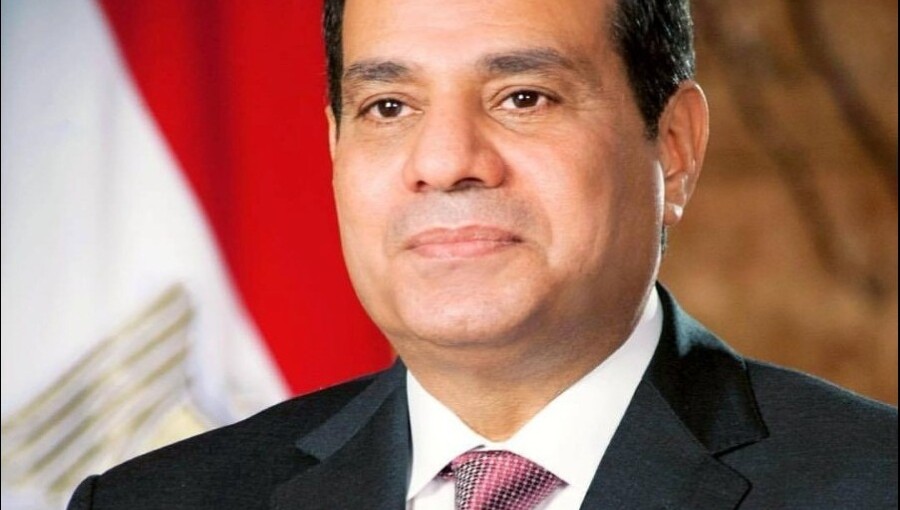
Egyptian President Abdel Fattah El-Sisi delivered a televised address on the situation in Gaza. / President El-Sisi official Facebook page
By bna Cairo bureau July 28, 2025

Egyptian President Abdel Fattah El-Sisi said on July 28 that there is an urgent need to end the war in Gaza and support a two-state solution, reaffirming that Egypt’s stance on the Gaza conflict remains firm, Al Ekhbariya reported. 

In a televised speech addressing the situation in Gaza, El-Sisi noted Egypt’s ongoing diplomatic efforts since the outbreak of the war on October 7.

The humanitarian crisis in Gaza has reached catastrophic levels, with thousands of civilians lacking access to food, clean water and medical care. Continuous bombardment and destruction have left much of the infrastructure in ruins, displacing families and devastating communities. Hospitals are overwhelmed, operating without essential supplies, while children and the elderly bear the brunt of the ongoing suffering.

“Since October 7, we have worked closely with our partners in Qatar and the US to achieve three key goals: ending the war, delivering humanitarian aid and securing the release of hostages,” El-Sisi added.

He described the humanitarian conditions in Gaza as “tragic” and “unbearable,” stressing the urgent need to increase aid flows into the enclave. He also clarified that the Rafah border crossing, primarily used for people, cannot operate independently of the situation on the Gaza side.

El-Sisi affirmed that Egypt has consistently stressed the need to deliver humanitarian aid to the Gaza Strip, noting that under normal circumstances, the territory requires 600 to 700 aid trucks daily. He added, “Over the past 21 months, we have worked to ensure the entry of the largest possible volume of aid.”

The Egyptian Red Crescent confirmed on July 27 that over 100 trucks carrying more than 1,200 tonnes of food, including approximately 840 tonnes of flour, were dispatched via the Kerem Shalom (Karam Abu Salem) crossing. Egyptian state television broadcast footage of trucks loaded with aid pallets en route to the crossing point.

President El-Sisi continued: “We have a very large volume of aid ready to enter the Gaza Strip… and we cannot block it – our morals and values do not allow that. But for aid to pass through, coordination is essential, and the Palestinian side of the Rafah crossing must be open to facilitate it. Many details are being addressed in discussions with both the Palestinian and Israeli sides, with strong and sincere involvement from our brothers in Qatar and the US.”

El-Sisi firmly rejected any plans for the displacement of Palestinians, warning that such actions would undermine any prospect of peace. “Forcible displacement would empty the idea of a two-state solution and any hope for a peaceful resolution,” he explains.

Addressing Egyptians, the president affirmed Egypt’s commitment to its Palestinian brothers: “We will never take a passive role. Our support is sincere and unwavering.”

In a notable appeal, El-Sisi called on former US President Donald Trump to use his influence to help end the conflict. “I make a special appeal to President Trump to do everything in his power to stop the war, deliver aid, and end the suffering,” El-Sisi urged, expressing confidence in Trump’s ability to intervene effectively.