Tuesday, August 05, 2025

​​​​​​​Plastic pollution inextricably linked with numerous 'public health crises'


Issued on: 05/08/2025 - 

Plastic pollution is so ubiquitous that microplastics have been found on the highest mountain peaks, in the deepest ocean trench and scattered throughout almost every part of the human body. Plastic pollution is so ubiquitous that microplastics have been found on the highest mountain peaks, in the deepest ocean trench and scattered throughout almost every part of the human body. For in-depth analysis and a deeper perspective, FRANCE 24's Delano D'Souza welcomes Dr. Bethanie Carney Almroth, Researcher and Professor of Ecotoxicology at University of Gothenburg.

Video by: Delano D'SOUZA


The Lancet: Plastic pollution is an underrecognised threat to health, experts warn as they launch a project to track plastics’ health impacts and monitor progress


The Lancet


Ahead of the expected finalisation of an UN global plastics treaty [1], a group of international experts call for a greater focus on health impacts when considering plastic pollution. The Health Policy published in The Lancet reviews the current evidence on how plastics – including microplastics and plastic chemicals - impact health and announces the launch of a new project tracking these impacts: the Lancet Countdown on Health and Plastics.

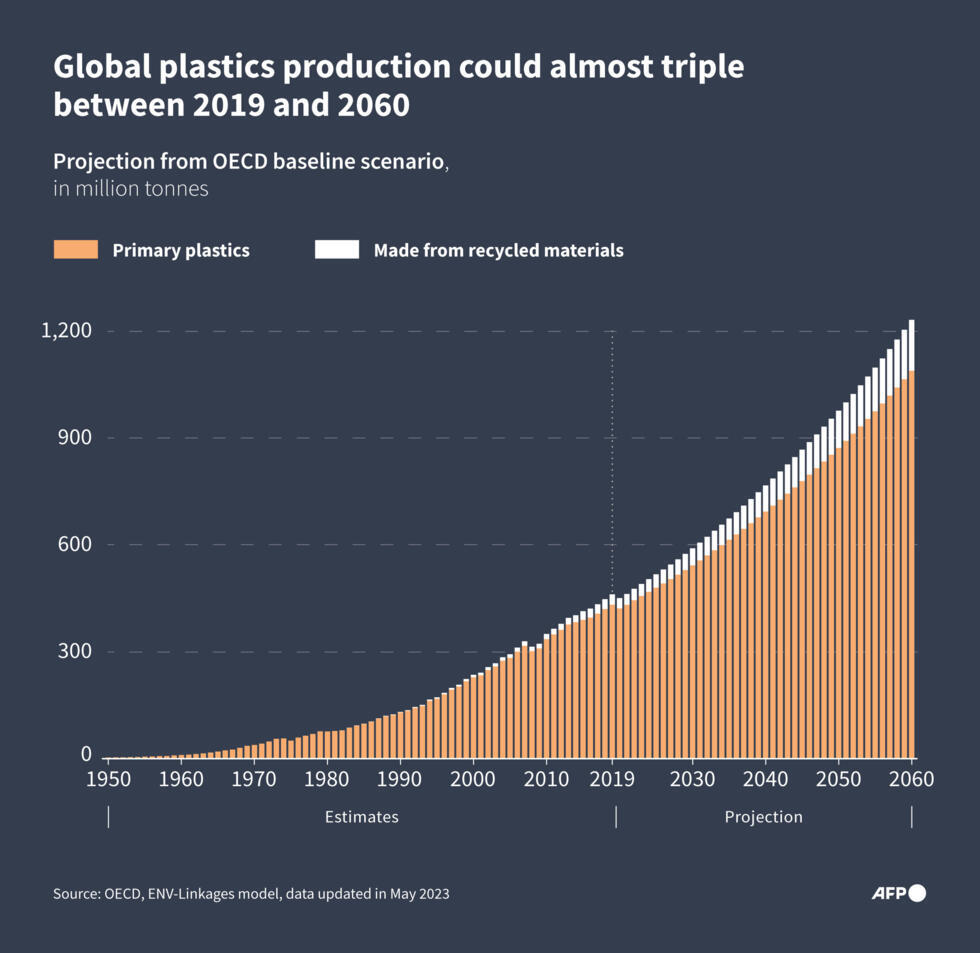
It is projected that, without changes, plastic production will almost triple between 2019 and 2060 [2]. The Health Policy discusses evidence that plastics endanger human health at every stage of their life cycle – in production, use, and disposal – and highlights:  

  • Airborne emissions from plastic production include particulate matter (PM2.5), sulfur dioxide and nitrogen oxides as well as hazardous chemicals to which plastic workers can be exposed.  
  • There is a lack of transparency around which chemicals are present in plastics, their production volumes, uses, and known or potential toxicity, and many plastic chemicals are associated with multiple health effects at all stages of human life.
  • Microplastics have been reported in human tissues and body fluid, and, while further research is needed to understand the relationship with potential health impacts, a precautionary approach is warranted. 
  • An estimated 57% of unmanaged plastic waste is burned in the open - a major source of air pollution in low- and middle-income countries.      
  • Plastic waste can provide a habitat for mosquitoes to lay their eggs and for the growth of microorganisms, potentially contributing to the spread of vector-borne diseases and antimicrobial resistance. 

Based on the Lancet Countdown on Health and Climate Change, the Lancet Countdown on Health and Plastics will identify and track a series of indicators that document the impacts of plastics and plastic chemicals on human health across all stages of the plastic life cycle. The first indicator report is expected in mid-2026.

[1] https://www.unep.org/inc-plastic-pollution/session-5.2
[2] https://www.oecd.org/content/dam/oecd/en/publications/reports/2022/06/global-plastics-outlook_f065ef59/aa1edf33-en.pdf
 

Announcing The Lancet Countdown on Health and Plastics


Monterey Bay Aquarium


A new report published in The Lancet issues a fresh clarion call: plastic pollution is a grave and growing danger to human and planetary health. As Ministers and diplomats arrive in Geneva for the final round of talks to conclude a global plastics treaty, the report provides the most up-to-date assessment of the links between health and plastic pollution across the full life cycle of plastic. 

An estimated 8 billion metric tons of plastic waste now pollute the planet. Micro- and nanoplastic particles and multiple plastic chemicals are found in the most remote reaches of the environment and in the bodies of marine and terrestrial species worldwide, including humans. Plastics harm human health at every stage of the plastic life cycle, and at every stage of human life. While we are all affected, vulnerable populations bear a disproportionate burden. This new report chronicles the impacts of plastics and plastic pollution for disease and death from infancy to old age, and highlights the significant health-related economic costs. 

While the impacts of plastic pollution on human health and the environment are growing, a worsening of plastics’ harms is not inevitable. UN Member States will gather in Geneva, Switzerland from 5 – 14 August 2025 for the expected final round of talks to conclude a global plastics treaty to end plastic pollution. The mandate for these negotiations, unanimously agreed at UNEA5.2 in 2022, is to develop an international legally binding instrument on plastic pollution, including in the marine environment, based on a comprehensive approach that addresses the full life cycle of plastic. 

Prof Philip Landrigan, MD, a paediatrician and epidemiologist, Director of the Global Observatory on Planetary Health at Boston College - and the lead author of the new report - emphasised the imperative for the global plastics treaty to include measures that protect human health and the environment across the full life cycle of plastic: “We know a great deal about the range and severity of the health and environmental impacts of plastic pollution across the full life cycle of plastic. These impacts fall most heavily on vulnerable populations, especially infants and children. They result in huge economic costs to society. It is incumbent on us to act in response. To those meeting in Geneva: please take up the challenge and the opportunity of finding the common ground that will enable meaningful and effective international cooperation in response to this global crisis.” 

Coincident with the expected finalization of the global plastics treaty, the report also announces the launch of an independent, health-focused global monitoring system on plastics: The Lancet Countdown on Health and Plastics. The Countdown is inspired by the model and impact of the Lancet Countdown on Health and Climate Change (https://lancetcountdown.org). Prof Joacim Rocklöv, Heidelberg University, Co-Chair of the new Countdown and also Regional Co-Director, Europe, of the Lancet Countdown on Health and Climate Change said: “Through its publications, the Lancet Countdown on Health and Climate Change has moved consideration of climate change’s health impacts to the mainstream of the climate conversation, and played a key role in the decision to incorporate an explicit focus on human health into the annual climate negotiations, beginning with COP 28. This new Countdown will provide the data to ensure that health remains at the centre of the plastics pollution conversation.” 

The new Countdown will identify and regularly report on a suite of scientifically meaningful and geographically and temporally representative indicators across all stages of the plastic life cycle, and track progress towards minimising exposures and mitigating human health impacts. In doing so, the Countdown will provide independent data that can continue to inform decision-making for the benefit of public health. 

Margaret Spring, one of the report’s co-authors and Co-Lead of one of the working groups within the new Lancet Countdown, said: “Decision-makers around the world will need access to the best available scientific evidence to guide the implementation and development of this important treaty in the months and years to come. The Countdown reports will offer a robust, independent, and accessible data source that can help to inform development of effective policies addressing plastic pollution at the international, regional, national, sub-national and local levels.” 

The Countdown will develop and track indicators across four domains: Production and Emissions, Exposures, Health Impacts, and Interventions and Engagement. The first three domains follow a classic source-exposure-effects model, and provide a framework for tracking plastics’ impacts on human health across every stage of the plastic life cycle. The fourth domain will track interventions across the plastic life cycle that have the potential to affect exposures and human and planetary health, as well as activities that enable and support these interventions. 

Prof Sarah Dunlop, Director, Plastics & Human Health at Minderoo Foundation, a philanthropic foundation which is the principal supporter of the new Countdown, said: “Our knowledge of the impacts of plastics on human health is growing all the time, and signal a need for immediate action. In 2023, the Minderoo Monaco Commission on Plastics and Human Health concluded that plastics endanger human health at every stage of their life cycle – in production, use, and on disposal. This report looks at the breadth of new information that has emerged in the short time since, which has included even more evidence of the range of harms associated with a number of toxic groups of chemicals that are commonly used in the plastic products we encounter every day.” 

Dr Herve Raps, Research Delegate Physician, Centre Scientifique de Monaco, one of the report’s co-authors and Co-Lead of one of the working groups within the new Lancet Countdown, said: “Protection of human health and the environment should be our guiding star; to achieve this, we know that addressing the harms associated with plastics and plastic chemicals across the full life cycle of plastics is necessary.”

Plastic pollution treaty talks open with 'global crisis' warning

Geneva (AFP) – The 184 countries gathering to forge a landmark treaty on combating plastic pollution were told Tuesday they must find a way to tackle a global crisis wrecking ecosystems and trashing the oceans.


Issued on: 05/08/2025 - 

Nations are trying to secure the world's first treaty on plastic pollution © Lou BENOIST / AFP/File

States should seize the chance to shape history, the man chairing the talks said as 10 days of negotiations kicked off at the United Nations in Geneva.

"We are facing a global crisis," Ecuadoran diplomat Luis Vayas Valdivieso told the more than 1,800 negotiators as they prepared to thrash out their differences in the search for common ground.

"Plastic pollution is damaging ecosystems, polluting our oceans and rivers, threatening biodiversity, harming human health, and unfairly impacting the most vulnerable," he said.

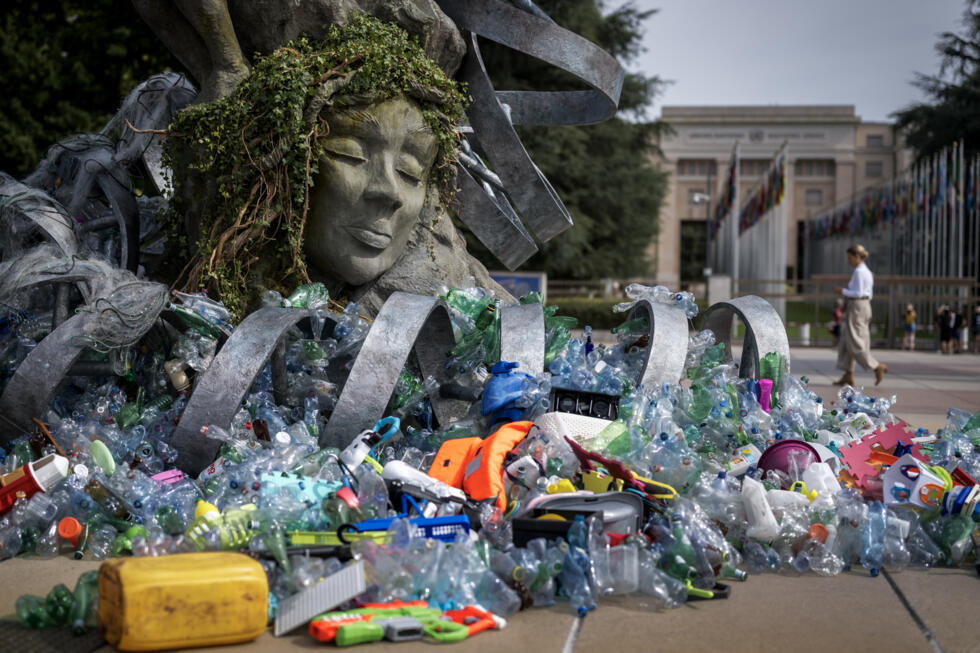
Outside the UN, Canadian activist Benjamin Von Wong's artwork 'The Thinker's Burden' is being slowly submerged in plastic rubbish
 © Fabrice COFFRINI / AFP


"The urgency is real, the evidence is clear -- and the responsibility is on us."

Plastic pollution is so ubiquitous that microplastics have been found on the highest mountain peaks, in the deepest ocean trench and scattered throughout almost every part of the human body.

But after five rounds of talks, three years of negotiations hit the wall in Busan, South Korea, in December when oil-producing states blocked a consensus.
Pathway to deal

Key figures steering this revived attempt insist a deal is within reach this time around.

Delegates gather for UN talks on securing a treaty on plastic pollution © Fabrice COFFRINI / AFP


"There's been extensive diplomacy from Busan till now," the UN Environment Programme's Executive Director Inger Andersen told AFP.

The UNEP is hosting the talks, and Andersen said conversations between different regions and interest groups had generated momentum.

"Most countries, actually, that I have spoken with have said: 'We're coming to Geneva to strike the deal’.

"Will it be easy? No. Will it be straightforward? No. Is there a pathway for a deal? Absolutely."
Dumped, burned and trashed

More than 400 million tonnes of plastic are produced globally each year, half of which is for single-use items.

While 15 percent of plastic waste is collected for recycling, only nine percent is actually recycled.

Nearly half, or 46 percent, ends up in landfills, while 17 percent is incinerated and 22 percent is mismanaged and becomes litter.

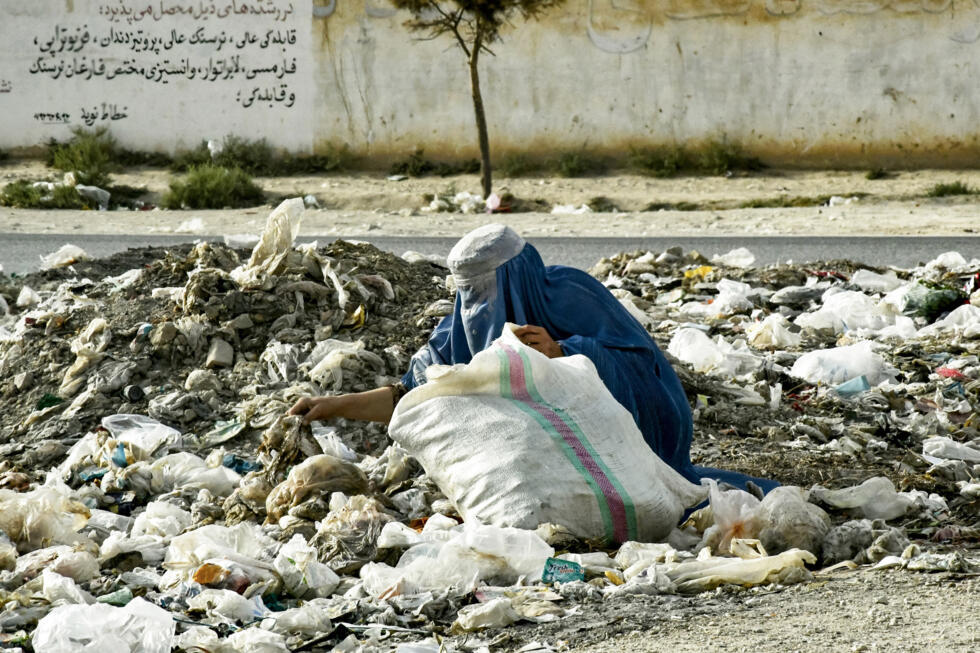
Plastic waste has become a global threat to human health and the environment, according to experts © Atif Aryan / AFP


In 2022, countries agreed they would find a way to address the crisis by the end of 2024.

However, the supposedly final negotiations on a legally binding instrument on plastic pollution, including in the seas, flopped in Busan.

One group of countries sought an ambitious deal to limit production and phase out harmful chemicals.

But a clutch of mostly oil-producing nations rejected production limits and wanted to focus on treating waste.
Production cap gap

A cap on plastic production is one of the thorniest issues being debated in Geneva.

Global plastics production could almost triple between 2019 and 2060 © Sylvie HUSSON, Christophe THALABOT / AFP


Katrin Schneeberger, the director of Switzerland's environment ministry, told the opening press conference: "This is no call for a production cap. Clarifying this in informal meetings was an important message to producing countries."

Without commenting on whether there would be a cap, Andersen then stressed that the treaty would cover the entire life cycle of plastics, from production to waste.

More than 600 non-governmental organisations are in Geneva, and this time have access to the discussion group meetings.
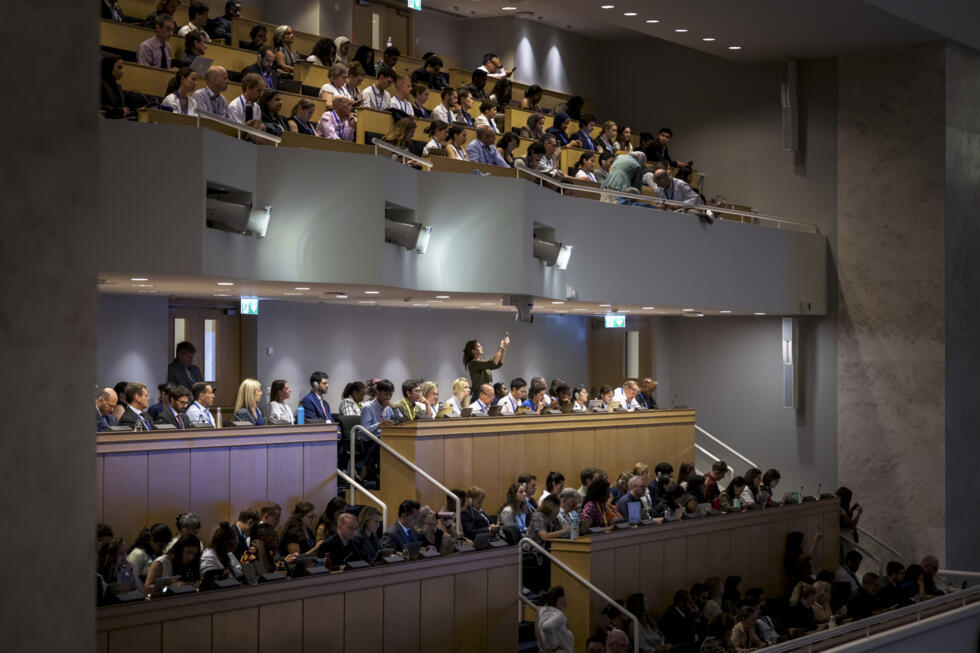
Delegates are meeting in the main assembly hall at the UN Palais des Nations in Geneva © Fabrice COFFRINI / AFP


"We have to stop making so much plastic," Greenpeace's delegation chief Graham Forbes told AFP.

The group and its allies want a treaty "that cuts plastic production, eliminates toxic chemicals and provides the financing that's going to be required to transition to a fossil fuel, plastic-free future", he said.

"The fossil fuel industry is here in force," he noted, adding: "We cannot let a few countries determine humanity's future when it comes to plastic pollution."
Big triggers

France's Ecological Transition Minister Agnes Pannier-Runacher -- one of a few dozen ministers planning on heading to Geneva later in the talks -- warned Tuesday that the negotiations would be "difficult".


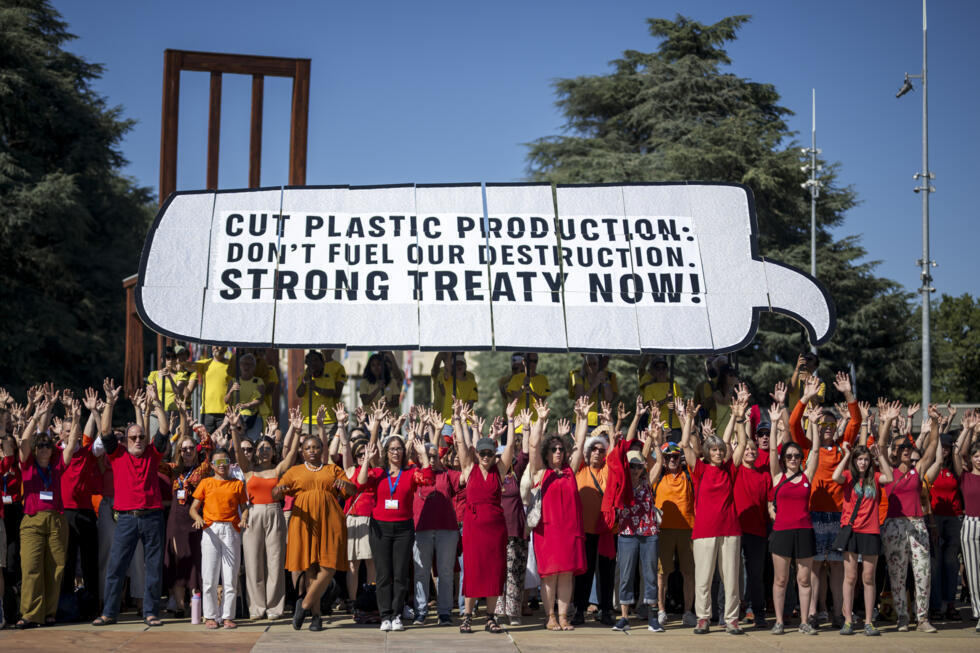
Activists stage a demonstation outside the United Nations ahead of talks on securing a treaty on plastic waste and production © Fabrice COFFRINI / AFP

"I call on each state to take responsibility before we are overwhelmed by this pollution," she said in a statement.

Panama's delegate Juan Monterrey Gomez -- a fellow proponent of an ambitious treaty -- voiced optimism that a treaty could be struck on August 14.

"The beginning is better than Busan," he said of the start of talks.

No country wanting to be held responsible for sinking the negotiations "is probably the biggest trigger we can push", he told AFP.

© 2025 AFP

Fighting plastic pollution: UN's landmark treaty in the making


Issued on: 05/08/2025 - 

The UN Environment Programme is hosting a conference in Geneva with the aim of building a landmark treaty to combat plastic pollution. Scientists explain that microplastics have been found on the highest mountain peaks, in the deepest ocean trenches, and even in the human body. Emerald Maxwell takes a closer look at how we can protect ourselves from microplastics.

Video by:  Emerald MAXWELL


UN Plastics Treaty: Will The Negotiations In Geneva Finally Achieve A Breakthrough?

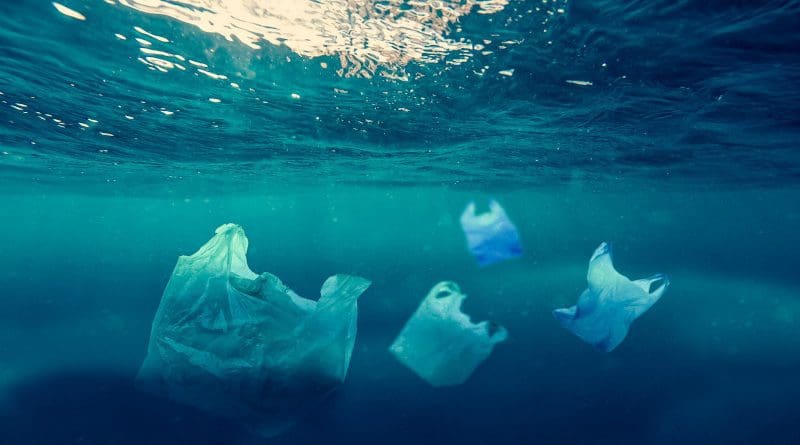
Plastic bags in sea. Photo Credit: Pixahive


By 

From 5 to 14 August, representatives from over 170 countries as well as from science, civil society and industry are meeting in Switzerland continuing the negotiations for a legally binding agreement to tackle the global plastic pollution.

Dr Melanie Bergmann from the Alfred Wegener Institute (AWI), has been involved in the negotiations since the beginning as part of the German delegation and the Scientists’ Coalition for an Effective Plastics Treaty: “Ideally, we will achieve in Geneva that the global community, or at least large parts of it, commit to a strong agreement that is based on scientific facts and recognizes how harmful plastic are to humans and nature.”

Over 460 million tons of plastic are produced worldwide every year. The production alone generates more greenhouse gases than the entire aviation sector. Many products are designed in a way that makes it difficult or even impossible to recycle or reuse them. The amount of plastic waste is therefore expected to triple by 2060 if we continue to produce this much plastic. 

A recent study shows that there are way more plastic particles in the sea than previously assumed. According to the study, there are 27 million tons of tiny plastic particles in the upper water layer of the North Atlantic alone. Plastics can now be found in even the most remote parts of our planet, and researchers are also finding plastic everywhere in our bodies. Studies show that we have already exceeded the planetary boundaries for new substances. As part of the triple planetary crisis, plastics are therefore contributing to global warming and the biodiversity crisis.

Since 2022, delegates from UN member states and representatives from science, civil society and industry have been negotiating an agreement to curb plastic pollution.

Dr Melanie Bergmann from the Alfred Wegener Institute, Helmholtz Centre for Polar and Marine Research (AWI), has been involved in the negotiations since the beginning as part of the German delegation and the Scientists’ Coalition for an Effective Plastics Treaty: “Scientific calculations show that effective measures must start at the production level. We should limit production to unavoidable areas of application, reduce chemical diversity right from the design and gradually eliminate substances of concern.“

Although no final agreement was reached in the last round of negotiations in South Korea, more than 100 countries were much more united and clearer on red lines than before regarding  production limits and the regulation of chemicals, for example. This could be a turning point. In Geneva, the parties will now try to reach consensus on a final text with measures for the agreement.

For the AWI marine biologist, this means: “The delegations must use diplomacy to bring their positions closer together, despite geopolitical tensions and differing interests in order to create a basis for successful cooperation.“ 

Whether decisions are made by majority or unanimous vote and how conflicts of interest can be avoided will remain crucial points of the negotiations. 

“Ideally, we will achieve in Geneva that the global community, or at least large parts of it, commit to a strong agreement that is based on scientific facts and recognizes how harmful plastic are to humans and nature.“ 

An agreement with global regulations would simplify the production of plastic in a globalized economy and create a level playing field for all countries. One thing is certain: The production of plastic would have to be reduced by at least 12 to 17 per cent per year starting from 2024 in order to reduce greenhouse gas emissions caused by the production of plastics so that they are in line with the 1.5 to 2 degree limit set out in the Paris Agreement.

Biogaran sale talks renew fears over foreign control of French pharma

France’s top generic drug maker, Biogaran, could soon be sold to a British investment fund, raising new fears about the country’s control over vital medicines.


Issued on: 04/08/2025 - RFI

French pharmaceutical company Servier has announced at it has entered into exclusive negotiations with British-based European investment fund BC Partners to sell its generic drug subsidiary Biogaran, just over a year after an initial offer fell through. © AFP


French pharmaceutical group Servier has entered exclusive talks with BC Partners, a UK-based fund, to sell Biogaran. The deal has drawn attention from both the markets and political leaders.

If completed, it would reopen the debate over France’s so-called “health sovereignty” at a time when drug shortages are becoming more frequent across Europe.

Servier has not disclosed the price, but people familiar with the talks said the offer could be worth between €800 million and €1 billion. That is in line with what BC Partners proposed last year before shelving the deal following political pressure.

Biogaran is France’s leading supplier of generic drugs and plays a key role in the public health system. But its importance has made the potential sale a sensitive issue.

Several lawmakers have warned that handing over such a strategic company to foreign investors could make France more vulnerable to supply problems, especially during ongoing shortages of key medicines.

Drugs shortage sees France restart local production, target antibiotics use

Failed acquisition


This is not the first time BC Partners has tried to buy Biogaran. In 2023, it joined forces with state-backed bank Bpifrance to put forward a bid. The fund was competing against Indian pharma companies Torrent and Aurobindo.

But the offer was dropped after growing concern that the sale would weaken France’s drug-making capacity. Servier said at the time that the conditions for "value creation” were not met.

Now, in 2025, BC Partners is back at the table – this time without a French partner – and appears to have adjusted its plan.

The fund said it wants to strengthen Biogaran’s position in France and help it grow in areas like biosimilars and over-the-counter drugs.

France could block sale of 'best-selling' drug if production doesn't stay local

Cost cuts and budget shifts

These are seen as important tools to lower prices and improve access to medicine, especially as France’s health budget remains under pressure.

“This project would be perfectly in line with the strategic orientations of Biogaran and Servier,” said Servier chairman Olivier Laureau in a joint statement.

He said the deal could also help Servier focus more on research in cancer and brain disorders – two sectors where it wants to become a leader.

Still, the sale is likely to renew debate over whether France is losing control of its healthcare infrastructure – and whether deals like this could chip away at its pharmaceutical independence.
US axes mRNA vaccine contracts, casting safety doubts

Washington (AFP) – President Donald Trump's administration on Tuesday announced it would terminate 22 federal contracts for mRNA-based vaccines, questioning the safety of a technology credited with helping end the Covid pandemic and saving millions of lives.


Issued on: 06/08/2025 - FRANCE24


The announcement, made by Health Secretary Robert F. Kennedy Jr., marks his latest effort to weave vaccine skepticism into the core of US government policy.

"We reviewed the science, listened to the experts, and acted," Kennedy said in a statement.

The health department's Biomedical Advanced Research and Development Authority (BARDA) is "terminating 22 mRNA vaccine development investments because the data show these vaccines fail to protect effectively against upper respiratory infections like COVID and flu," he added.

"We're shifting that funding toward safer, broader vaccine platforms that remain effective even as viruses mutate."


The changes affect Moderna's mRNA bird flu vaccine -- a move the company itself disclosed in May -- as well as numerous other programs, including "rejection or cancellation of multiple pre-award solicitations" from pharmaceutical giants Pfizer and Sanofi.

In total, the affected projects are worth "nearly $500 million," the Department of Health and Human Services (HHS) said. Certain late-stage projects were excluded from the move "to preserve prior taxpayer investment."

"Let me be absolutely clear: HHS supports safe, effective vaccines for every American who wants them," Secretary Kennedy said.

"That's why we're moving beyond the limitations of mRNA and investing in better solutions."

Since taking office, Kennedy, who spent two decades sowing misinformation around immunization, has overseen a major overhaul of US health policy -- firing, for example, a panel of vaccine experts that advise the government and replacing them with his own appointees.

In its first meeting, the new panel promptly voted to ban a longstanding vaccine preservative targeted by the anti-vaccine movement, despite its strong safety record.

He has also ordered a sweeping new study on the long-debunked link between vaccines and autism.

Unlike traditional vaccines, which often use weakened or inactivated forms of the target virus or bacteria, mRNA shots deliver genetic instructions into the host's cells, prompting them to produce a harmless decoy of the pathogen and train the immune system to fight the real thing.

Though in development for decades, mRNA vaccines were propelled from lab benches to widespread use through President Trump's Operation Warp Speed -- a public-private partnership led by BARDA that poured billions into companies to accelerate development.

The technology's pioneers, Katalin Kariko and Drew Weissman, were awarded the 2023 Nobel Prize in Medicine for their work contributing "to the unprecedented rate of vaccine development during one of the greatest threats to human health in modern times."

© 2025 AFP


Violent videos draw more MALE teens into 'terror' plots, warn French prosecutors

French prosecutors are alarmed at an increasing number of young teenage boys seemingly plotting "terror" attacks, and say they all share an addiction to violent videos online.


Issued on: 30/07/2025 - RFI

A teenager uses his mobile phone to access social media. © Dean Lewins / AP

As communities worldwide worry about boys being exposed to toxic and misogynistic influences on social media, French magistrates say they are looking into what draws young teens into "terrorism".

"Just a few years ago, there were just a handful of minors charged with terror offences," France's National Anti-Terror Prosecutor's Office (PNAT) said.

"But we had 15 in 2013, 18 in 2024 and we already had 11 by 1 July" this year.

They are aged 13 to 18 and hail from all over France, the PNAT said.

Lawyers and magistrates said these teens are usually boys with no delinquent past, many of whom are introverts or have had family trouble.

The PNAT opened a special branch in May to better examine the profiles of minors drawn into "terrorism", but it said it has already noticed they are all "great users of social media".

"Most are fans of ultra-violent, war or pornographic content," it said.

In France, "terrorism" is largely synonymous with extremist Islamist ideas such as those of the Islamic State jihadist group.

Only in recent months has the PNAT taken on cases different in nature - in one case an adult suspected of a racist far-right killing, and the other an 18-year-old charged with developing a misogynist plot to kill women.

In one recent case, the 14-year-old schoolboy who stabbed a teaching assistant to death in June was a fan of "violent video games", although his case was not deemed "terrorist" in nature.

Teenage pupil faces murder charge after school stabbing that shook France

'Proving themselves...'

In the case of France's youngest "terror" suspects, a judicial source told French news agency AFP, social media provides them with a flow of violent videos that are "not necessarily linked to terrorism", such as from Latin American cartels.

"They think they're proving themselves as men by watching them," the source said.

Sociologist Farhad Khosrokhavar said the teens were "neither children nor adults".

This "leads them to violence in order to be recognised as adults - even if it's a negative adult," he said.

Laurene Renaut, a researcher looking into jihadist circles online, said social media algorithms could suck adolescents in fast.

"In less that three hours on TikTok, you can find yourself in an algorithm bubble dedicated to the Islamic State" group, she said.

You can be bathing in "war chants, decapitations, AI reconstructions of glorious (according to IS) past actions or even simulations of actions to come," she said.

The algorithms feed users "melancholic" content to boost their "feeling of loneliness, with ravaged landscapes, supposed to reflect the soul," she said.

EU countries push for stricter rules to keep children off social media

'Injustice'


In one such case, a teenager claimed he was driven by a sense of "injustice" after watching a video online of a brutal attack on a mosque in New Zealand.

The footage depicted the massacre carried out by white supremacist Brenton Tarrant, who, in March 2019, embarked on a deadly rampage through mosques in Christchurch in New Zealand killing 51 worshippers in what remains the deadliest mass shooting in New Zealand’s modern history.

“Someone sent me Tarrant’s video,” the teenager recalled. “It felt deeply unjust to watch men, women and children being slaughtered.”

Ultimately, he was convicted of plotting terrorist attacks targeting far-right bars.

He told investigators that his path towards extremism began at the age of 13, while playing the video game Minecraft and engaging with others on the gaming platform Discord.

Porn sites go dark in France over new age verification rules

In July 2024, a French appeals court sentenced him to four years in prison, with two of those years suspended, after he attempted to contact an undercover officer to inquire about acquiring weapons.

The court acknowledged the serious nature of his planned actions but also noted the absence of any deeply rooted ideological radicalisation.

Rather, it concluded that he was the product of a violent upbringing, the child of warring parents in a troubled neighbourhood, significantly deprived of affection and desperate to fit in with online communities.

His lawyer, Jean-Baptiste Riolacci, told the French news agency AFP that his client was "a fundamentally lonely, sad and kind boy, whose only pastime beyond his computer was riding around aimlessly on his scooter."

'Guesswork'


The judicial source, who spoke anonymously due to the sensitivity of the issue, said the French system favours early intervention through charging youth for associating with "terrorist" criminals, and then adapting their punishment according to the severity of the accusations.

But attorney Pierre-Henri Baert, who defended another teenager, said the system did not work.

His client was handed three years behind bars in May for sharing an IS propaganda post calling for attacks against Jewish people as a 16-year-old.

"It's a very harsh sentence considering his very young age, the fact he had no (criminal) record, and was really in the end just accused of statements online," he said.

Another lawyer, who worked on similar cases but asked to remain anonymous due to the sensitivity of the issue, agreed.

"When the judiciary goes after people for terrorist criminal association, it's basically doing guesswork," she said, adding that the "terrorist" label could be very stigmatising.

"There's no differentiation between a kid who sent aggressive messages and a suspect who actually bought weapons," she added.

'Fantasising about jihadism'

Two judicial sources said teens prosecuted for alleged "terrorism" are usually only spotted through their behaviour on social media.

They are then charged over other actions, such as moving to an encrypted messaging app, sharing recipes to make explosives or looking for funding, the sources said.

A Paris court will try three teenagers in September, aged 14 and 15, for allegedly planning to blow up a truck outside the Israeli embassy in Belgium.

They had been spotted at high school for their "radical remarks", but were then found in a park with "bottles of hydrochloric acid" containing "aluminium foil", a homemade type of explosive, the PNAT said.

Their telephones showed they had watched videos of massacres.

Jennifer Cambla, a lawyer who represents one of the defendants, said accusations against her client were disproportionate.

"My client may have had the behaviour of a radicalised person by consulting jihadist websites, which is forbidden. But he is far from having plotted an attack," she said.

But another lawyer, speaking anonymously, said arresting teenagers "fantasizing about jihadism" could be an opportunity to turn their lives around - even if it involved "a monstruous shock".

"The arrests are tough," with specialised forces in ski masks pulling sacks over the suspect's head, they said.

But "as minors, they are followed closely, they see therapists. They are not allowed on social media, and they do sport again," the lawyer said.

One of the judicial sources warned it was not clear that this worked.

It "makes it look like they are being rapidly deradicalised, but we do not know if these youth could again be drawn in by extremist ideas," they said.

(AFP)
Five years after Beirut port explosion justice and recovery remain elusive

Five years after the deadly explosion at Beirut’s port on 4 August 2020, many Lebanese are still struggling with loss, trauma and broken lives.


Issued on: 04/08/2025 - RFI

The destroyed silos in the port of Beirut on 1 August 2025, five years after the colossal explosion of 4 August 2020. AFP - JOSEPH EID

The blast, caused by hundreds of tonnes of badly stored ammonium nitrate, killed 235 people and injured more than 6,500. It tore through the capital, flattening homes, damaging businesses and gutting historic neighbourhoods.

It was one of the most powerful non-nuclear explosions ever recorded. Beirut was left in ruins. The shockwave could be felt for kilometres. But five years on, there is still no justice, no clear answers and no full recovery.

France leads international push for Beirut reconstruction after fatal blast

Search for accountability

From the outset, the investigation has faced relentless political obstruction. The first judge tasked with the case, Fadi Sawan, was removed in early 2021 after charging two former ministers – Ali Hassan Khalil and Ghazi ZeaĂŻter – both close allies of powerful political figures.

His successor, Judge Tarek Bitar, has shown determination to press on despite enormous pressure. He upheld the charges and issued arrest warrants for numerous politicians, officials, and port employees.

However, Bitar’s efforts have sparked fierce resistance, particularly from Hezbollah and the Amal Movement, who claim the probe is politically motivated.

This culminated in armed clashes during a protest in October 2021, tragically echoing Lebanon’s civil war. Since then, dozens of legal appeals have been filed to stall the investigation, with the process grinding to a near halt for over a year.

There is now renewed hope. Since January 2025, under a new government less beholden to political factions, Bitar has resumed his work.

With support from the current prosecutor, several fresh arrest warrants have been issued. There are signs that an indictment could finally be issued before the year’s end, potentially paving the way for long-awaited trials.

A metal installation set up across from the Beirut port with a view of its destroyed silos, shows a judge's gavel with a message calling for justice on August 1, 2025, as Lebanon prepares to mark the 5th anniversary of the August 4 harbour explosion that killed more than 250 people and injured thousands AFP - JOSEPH EID

Rebuilding against the odds

Justice is not the only thing that’s stalled – so too has reconstruction. In neighbourhoods like GemmayzĂ© and Mar MikhaĂ«l, once vibrant cultural and commercial hubs, rebuilding has been slow and sporadic.

The ambiguity surrounding the cause of the explosion has left insurance payouts in limbo.

Whether the blast is classified as an accident or a terrorist act significantly affects compensation – delays that have left thousands in financial uncertainty.

Added to this is the collapse of the Lebanese state. Bankrupt, politically paralysed, and deeply mistrusted by international donors, the government has failed to lead a proper reconstruction effort.

French-hosted international conference on Lebanon raises $370 million

Corruption and incompetence have blocked plans and funding, and no cohesive state-led strategy has been implemented.

But amidst the frustration, there is resilience. Many residents and small business owners, refusing to be defeated by bureaucracy or despair, have pressed on with rebuilding on their own, relying on community solidarity and limited private support.

Lebanon is no stranger to hardship. Yet five years since the port disaster, the lack of closure continues to cast a long shadow over the country.
Vice-president of France's National Assembly files complaint for racial hatred

Nadège Abomangoli, vice-president of France’s National Assembly and an MP, has filed a complaint for racist and sexist hatred after receiving an anonymous letter questioning her legitimacy as a black woman in office – the latest in a string of such incidents targeting left-wing lawmakers of colour.


Issued on: 01/08/2025 - RFI

Nadege Abomangoli, MP and vice-president of the National Assembly has filed a complaint after receiving racist hate mail. © AFP/Julien de Rosa

Abomangoli, who is an MP with the hard-left France Unbowed (LFI) party, has filed a complaint with the Paris public prosecutor, her lawyer Chirinne Ardakani has said.

The complaint was made on the grounds of “insulting a person holding public authority, or alternatively, a public insult of a racist and sexist nature”, Ardakani said in a statement.

The letter arrived on 11 July at Abomangoli’s parliamentary office in the Palais Bourbon. It included what Ardakani described as “outrageous, openly racist and sexist remarks” aimed at her “in the exercise of her duties as Vice-President of the National Assembly and MP for the 10th constituency of Seine-Saint-Denis”.

Right-wing outcry as historian Pap Ndiaye heads up French education ministry

According to the statement, the letter said: “First black woman vice-president – I get shivers of discomfort. Decolonialism does not make you legitimate” and “I am a white man. My surname Jourdain is far more deserving of your position than you are.” Another part read: “A black woman has no business in this role. Leave. You don’t belong here. Or anywhere.”

Such remarks, Ardakani said, “deny Ms Abomangoli the legitimacy to hold one of the highest institutional offices – that of Vice-President of the National Assembly – under a mandate granted by the French electorate, solely on the basis of her skin colour and gender”. She said the letter was “an attack on her dignity and the respect due to her office”.

The comments, she added, are “laden with xenophobic and misogynistic stereotypes” and are “unquestionably intended to denigrate and stigmatise the vice-president – both for who she is and what she represents”.

'Broader and repeated pattern'

Abomangoli is not the only left-wing MP of colour to face such abuse. Ardakani said the message reflects “a broader and repeated pattern” of targeting black and minority lawmakers in France.

LFI MPs Carlos Martens Bilongo and Aly Diouara have both reported frequent racist threats since being elected.

On Tuesday, Diouara’s lawyer announced that seven people will go on trial in December at the Paris criminal court. The trial follows a complaint Diouara filed after being harassed online following his election.

Thirteen on trial over 'racist' stunt targeting French-Malian singer Aya Nakamura

In November 2022, a far-right MP from the National Rally party was suspended from parliament for 15 days after making racist remark about Bilongo during a legislative session.

In 2020, the ultra-conservative magazine Valeurs Actuelles published a fictional story portraying black MP Danièle Obono as a slave. The magazine later apologised but denied the accusation of racism, saying the article was “a work of fiction ... but never nasty”.

The story drew condemnation from across the political spectrum, including President Emmanuel Macron.

In 2013, a far-right French newspaper caused uproar with a headline comparing the then-justice minister Christiane Taubira to a monkey. Taubira, who was born in French Guiana, chose not to file a legal complaint, but the incident led to protests against racism.

(with newswires)

Rwanda agrees to take migrants from US in deal that includes cash grant

Rwandan authorities say they have reached an agreement with the United States to take in up to 250 migrants, as part of a new deal that includes a cash grant. The move is part of a wider effort by the Trump administration to remove migrants to third countries, and has raised fresh concerns over human rights, legality and the growing trend of wealthier nations paying others to take in deportees.

“Rwanda has agreed with the United States to accept up to 250 migrants,” said government spokesperson Yolande Makolo said on Tuesday. “In part because nearly every Rwandan family has experienced the hardships of displacement, and our societal values are founded on reintegration and rehabilitation.”

The agreement was signed by US and Rwandan officials in Kigali in June, according to another Rwandan official, speaking to Reuters on condition of anonymity, adding that Washington had already sent an initial list of 10 people to be vetted.

The White House, Department of Homeland Security and State Department had no immediate comment. 

The deal comes as former US president Donald Trump pushes to deport millions of people living in the country illegally. His administration has sought to remove migrants to third countries, including deporting convicted criminals to South Sudan and Eswatini.

South Sudan turns US deportations to its diplomatic advantage

Cash for refugees

Under the agreement, Rwanda will receive funding from the US in the form of a grant. The Rwandan official said the grant letter was signed in July but declined to say how much money was involved.

“This is the real surprise in this deal,” said Phil Clark, a professor at SOAS University in the UK who studies Rwanda and the Great Lakes region.

“The previous announcement about this migrant deal showed that the US was trading this policy against a peace deal with the DRC,” Clark told RFI. “Now it shows that Rwanda will also profit financially from this scheme.”

The official said the two countries could agree to expand the scheme beyond the initial 250 people. Migrants sent to Rwanda would be free to leave the country if they chose to.

“Rwanda has already gained hundreds of thousands of British pounds from the failed deal with the UK and now seems to be able to profit from hosting refugees and migrants for years to come,” Clark said

Rwandan authorities will have the final say on who can be resettled. Kigali has made clear it will not accept anyone who has served part of a prison sentence or who faces criminal charges.

The official said there is no plan to let deportees complete US prison terms in Rwanda, and that child sex offenders would not be accepted.

Makolo said approved migrants would receive job training, healthcare and housing support. “Giving them the opportunity to contribute to one of the fastest-growing economies in the world over the last decade,” she said.

The US Supreme Court ruled in June that the Trump administration could deport migrants to third countries. But the legal battle is ongoing. A federal lawsuit challenging the policy is underway in Boston and could reach the Supreme Court again.

The US has also pressed other countries to accept deportees. In March, more than 200 Venezuelans accused of being gang members were sent to El Salvador, where they were held until they were later exchanged in a prisoner swap.

Rwanda in 'initial' talks to receive migrants deported from the US

Human rights worries

Talks between the US and Rwanda began earlier this year, according to Rwanda’s foreign minister.

While Western leaders often praise Rwandan President Paul Kagame for rebuilding the country after the 1994 genocide, rights groups accuse his government of abuses and of backing rebel groups in eastern DRC. Kagame denies the allegations.

The UN refugee agency (UNHCR) has warned that some migrants deported to Rwanda could face forced return to countries they fled.

Rwanda, home to around 13 million people, has been criticised by international watchdogs for its limits on free speech and political opposition. Still, the government has promoted the country as a willing partner for Western countries seeking to offload asylum seekers and migrants.

It previously signed a deal with the UK under then-prime minister Rishi Sunak. But no one was deported under the plan due to years of legal challenges. It was officially dropped in July 2024 by the incoming Labour government.

Rwandan opposition deplores UK deportation deal as 'modern slavery'

Clark said the issue is not limited to Rwanda but reflects a wider shift in policy across the West.

“These countries have now decided that it is acceptable to spend more money sending migrants away than they used to spend in hosting them, which used to be seen as an immoral way to deal with refugees and economic migrants,” he said.

The Trump administration has defended third-country deportations as a way to remove people quickly, especially those with criminal records.

Supporters say it helps prevent threats to public safety. Critics say the policy is dangerous and inhumane, sending people to unfamiliar countries where they may face harm or have no connections.

Kenya’s refugee camps suffer as US slashes aid

Issued on: 30/07/2025 -

A severe humanitarian crisis is unfolding in northwest Kenya, where refugee camps housing people fleeing conflicts in South Sudan and the DRC are nearing collapse. The crisis was triggered by a sudden halt in US funding, as the Trump administration slashes foreign aid. Protests have since erupted in and around the camps, with rising tensions leading to outbreaks of violence.

Denmark’s migration reset sets the stage for EU-wide rethink

SOCIAL DEMOCRACY IS SOCIAL FASCISM

Denmark has reframed the debate on migration by adopting highly restrictive rules presented through the lens of progressive politics.


Copyright Euronews.

By Jorge Liboreiro
Published on 31/07/2025 - 

When it comes to migration, Denmark can barely hide its sense of vindication.

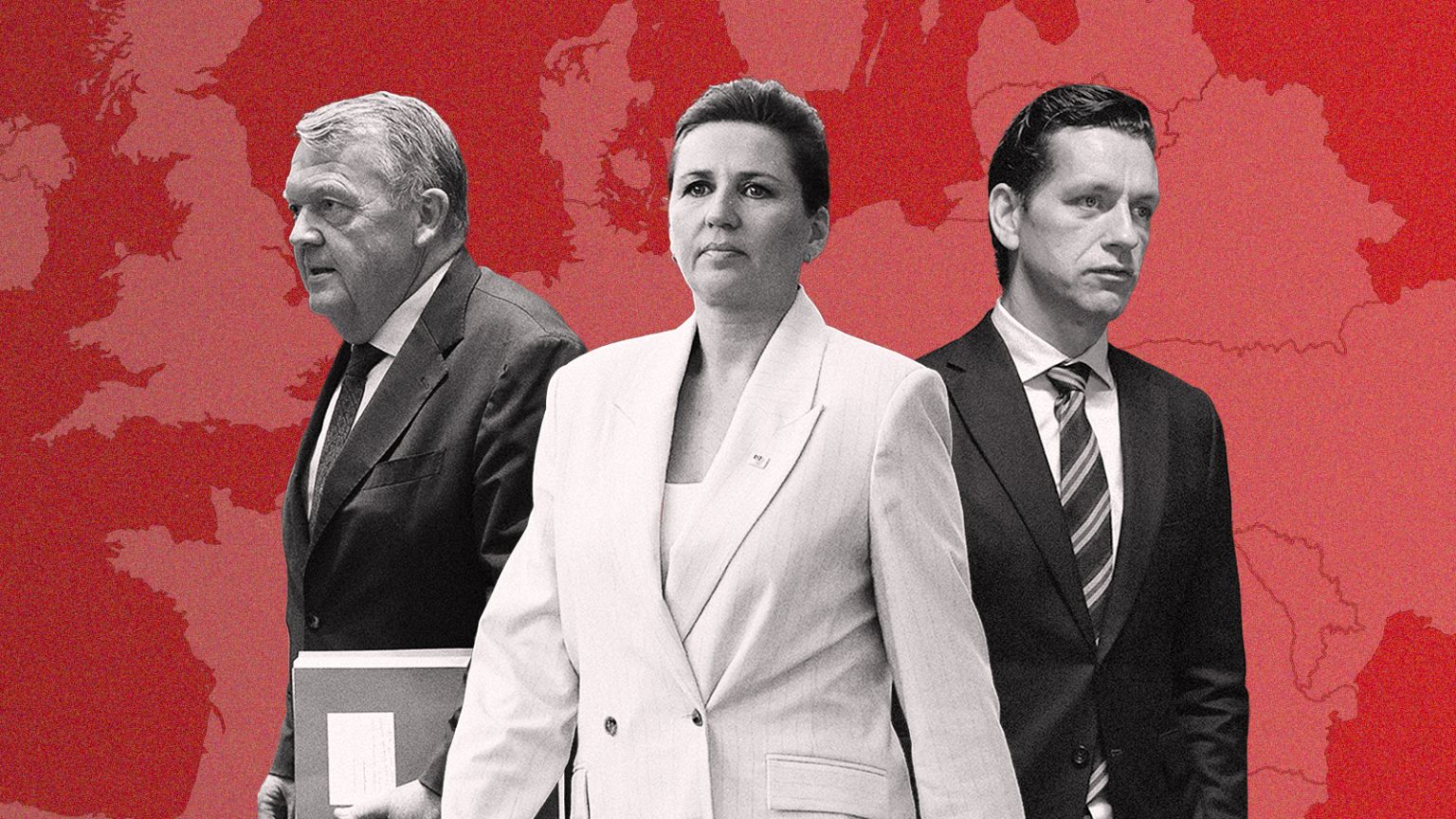
"What has been mainstream among our populations for quite many years is now mainstream for many of us politicians as well," Prime Minister Mette Frederiksen said earlier this month, speaking at the European Parliament in Strasbourg.

"Finally."

Her minister for immigration, Kaare Dybvad, feels equally triumphant.

"I remember when I started in this post three years ago, the Austrian minister was the only one who supported these notions," Dybvad told Euronews in an interview.

"Now it seems there are a lot more countries that have rallied around the notion that we should get democratic control of the migrant flows."

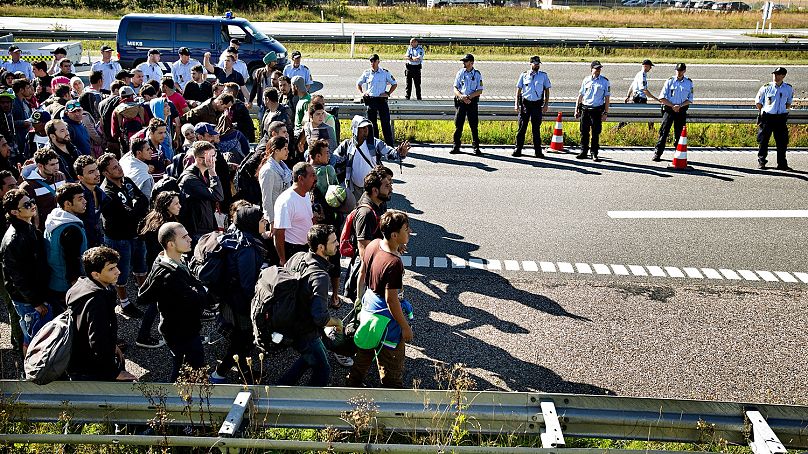
For years, Denmark was considered the European Union's black sheep of migration policy. In the aftermath of the 2015-2016 migration crisis, the country began adopting increasingly restrictive rules to deter arrivals and hinder access to legal safeguards, a decision powered by its opt-out clause from the EU asylum framework.

In 2019, Denmark approved a "paradigm shift" law that made temporary protection for refugees the new norm. The focus turned to self-sufficiency to stimulate integration in the labour market and reduce welfare dependency. Permanent residence was still available, but subject to strict criteria on full-time, long-lasting employment.

By limiting the duration of asylum, Danish authorities made it easier to check whether the grounds of protection were still applicable and, if not, whether deportation was feasible.

Denmark became the first European nation to declare parts of Syria as "safe", alleging the situation on the ground had "improved significantly". At that time, the designation, which saw the residence permits of hundreds of Syrian refugees revoked, proved extremely controversial and made international headlines.

A similar outcry occurred in 2021 when Denmark signed a memorandum of understanding with Rwanda. Under the deal, Denmark would transfer asylum seekers to a reception centre in the African nation to wait for the examination of their applications.

It was the first time that an EU member state openly pursued an outsourcing strategy. The European Commission, which had harshly criticised a similar scheme between the United Kingdom and Rwanda, reserved its right to take legal action.

"External processing of asylum applications raises fundamental questions about both access to asylum procedures but also effective access to protection in line with the requirements of international law," a Commission spokesperson said in 2022.

A year later, Denmark ditched the plan – but retained the principle. Instead of pursuing outsourcing at a national level, the country would aim higher: the European dimension.

From black sheep to shepherd

The Danish bet on the European level did not immediately resonate.

The bloc was then negotiating the New Pact of Migration and Asylum, a comprehensive reform aimed at establishing common, predictable rules for the reception and distribution of asylum seekers. The talks were bitter and intense, and laid bare the old-age divisions between the South and the North. At times, the Pact seemed doomed to fail.

In the end, member states recognised the value of having collective legislation to deal with a cross-border challenge like irregular migration. The five interlinked laws under the Pact were adopted on 14 May 2024, with only Poland and Hungary voting against.

The moment was hailed as a historic breakthrough.

But for Copenhagen, it was not enough. Two days after the vote, Denmark published a letter co-signed by Austria, Bulgaria, Cyprus, the Czech Republic, Estonia, Finland, Greece, Italy, Latvia, Lithuania, Malta, the Netherlands, Poland and Romania.

In the document, the 15-strong group advocated, in no uncertain terms, the outsourcing of asylum procedures, including by setting up a "return hub mechanism" where "returnees could be transferred to while waiting their final removal".

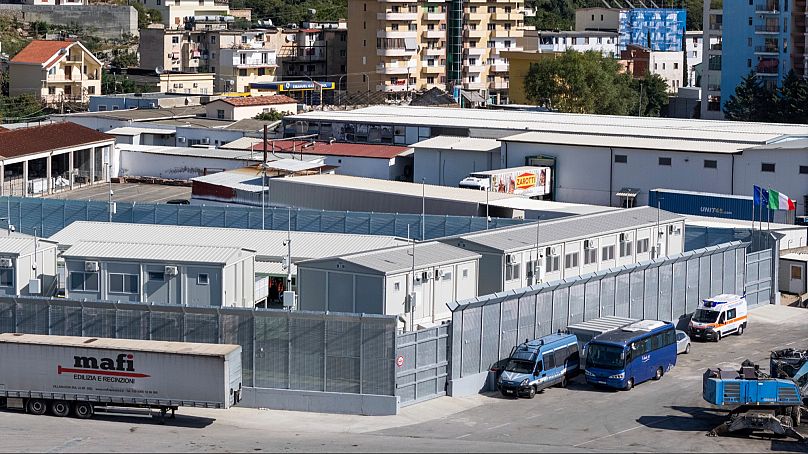
The letter made special mention of Italy's initiative to build centres in Albania to process asylum claims of migrants rescued in high waters.

It was a show of force and a declaration of intent that Brussels could no longer ignore. The conversation quickly shifted from the Pact to so-called "innovative solutions".

The 2015-2016 migration crisis changed Denmark's policy. Martin Lehmann /AP

In October, the lobbying paid its greatest dividend when Ursula von der Leyen, the president of the European Commission, endorsed the idea of building deportation centres on foreign soil, a clean break from the executive's traditional thinking.

Soon after her re-election, the Commission presented a draft regulation that would enable member states to strike arrangements with nations outside the bloc to transfer rejected asylum seekers in return for financial incentives.

By coincidence, the law is primed for negotiations just as Denmark assumes the six-month presidency of the EU Council. The country has underscored its intention to reach a political deal on the file before the end of the year.

Another key priority is the review of the "safe third country" concept, which would facilitate the relocation of asylum seekers beyond European borders.

"We want to move the migration agenda forward," Lars Løkke Rasmussen, Denmark's foreign minister, said earlier this month in a briefing with journalists in Aarhus.

"It's well known we have a rather tough policy towards illegal migration, and we have proven to be pretty successful," he added.
Pushing the law

As it happens, Copenhagen has more-than-decent chances of success: the 15-country group that backed the 2024 letter has grown over time and today represents a decisive majority. Germany joined shortly after its new federal chancellor, Friedrich Merz, came into office. Merz has praised Denmark's migration policy as "truly exemplary".

The speed at which things are moving has alarmed humanitarian organisations, who warn that outsourcing will waste taxpayers' money and fuel human suffering.

"Denmark's model of migration control is being advertised as the gold standard and worthy of imitation because it aims to deter asylum-seekers from coming," said Céline Mias, EU director at the Danish Refugee Council (DRC).

"The current trend of European nations focusing on deterrence mechanisms and externalising asylum processes is not only ethically questionable, often violating the principle of non-refoulement, but also demonstrably ineffective in the long run."

Italy has built migration centres in Albania. AP Photo

At any rate, outsourcing remains a largely abstract concept.

Neither Denmark, its allies nor the European Commission have yet offered details on what these external facilities might look like in practice. There has been no financial estimation, no logistical blueprint and, crucially, no suggested destination.

The Italian-Albanian protocol, which von der Leyen hailed as a pioneering model from which the bloc could draw lessons, has fallen well below the five-digit figure of asylum seekers originally announced. With a reported price tag of €74.2 million, the centres currently host a few hundred migrants under deportation order.

Danish officials admit they have not yet conducted an assessment to flesh out the project of "return hubs", but insist any agreement with a non-EU country should be designed as a mutually beneficial partnership and comply with international law and fundamental rights, a high standard that might complicate the selection process.

Given the divisive nature of outsourcing, the scheme is expected to be pursued by a "coalition of the willing" with the political and potentially financial support of Brussels.
A progressive spin

Denmark's approach to migration comes with an ideological twist.

Instead of being spearheaded by a right-wing government, as is generally the case in Europe, the stringent policy is enthusiastically promoted by the Social Democrats.

The party defends many of the ideas common in the European left, such as climate action, gender equality, LGBTQ rights and a strong welfare state. But on migration, it has chosen to deviate sharply from the progressive agenda and adopt a hard line that raises eyebrows among socialists and prompts cheers among conservatives.

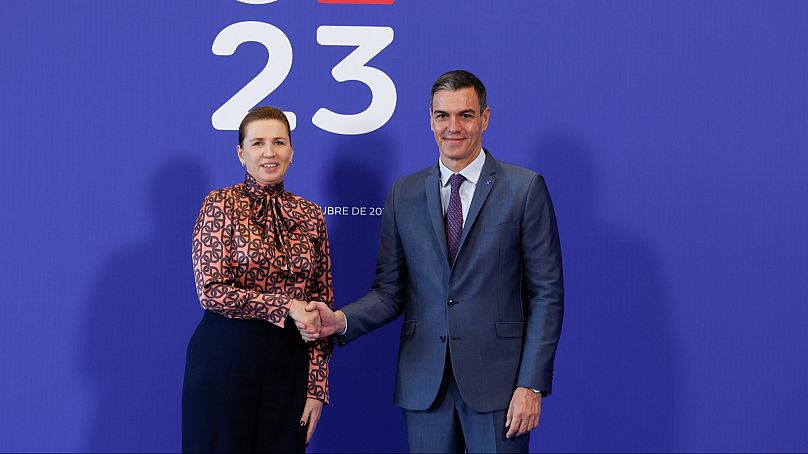
The taboo-breaking fusion has played in Frederiksen's favour. The prime minister is one of the three socialists who have managed to survive the recent right-wing shift and retain their seat in the European Council. The other two are Malta's Robert Abela, who supports outsourcing, and Spain's Pedro Sánchez, who opposes it.

"We need to tackle the migratory phenomenon by thinking about the future generations and not the future elections," Sánchez said last year, arguing a welcoming approach was necessary to address Europe's demographic crisis and ensure economic prosperity.

Mette Frederiksen and Pedro Sánchez disagree on migration policy. European Union, 2023.

But Frederiksen and her ministers are convinced that their method is the only viable option for centre-left politicians to stay in power and fend off the advance of hard-right forces, which pose a direct threat to their progressive beliefs.

Kaare Dybvad, Denmark's minister for immigration, believes other social democratic parties should reframe the hot-button issue by taking their cue from Copenhagen.

"Migration is often a burden for the constituents. Working-class communities have taken the largest part of the task of integrating people into local communities and the labour market," Dybvad told Euronews.

"And therefore, if you're a party that is representing low-skilled, low-paid people, then you should be quite restrictive around migration."

Asked if he felt vindicated by Europe's change of heart, the minister said: "I'm just happy that we have a lot more discussions on these matters."