Our Genocide — Executive Summary
Thursday 7 August 2025, by B’tselem
B’TSELEM IS THE long-established Israeli human rights information center. It is one of the two organizations in Israel (along with Physicians for Human Rights) that have now formally identified the Israeli state’s war on Gaza as genocide. What follows is the Executive Summary of B’tselem’s report titled “OUR GENOCIDE.” You can also read the full report.
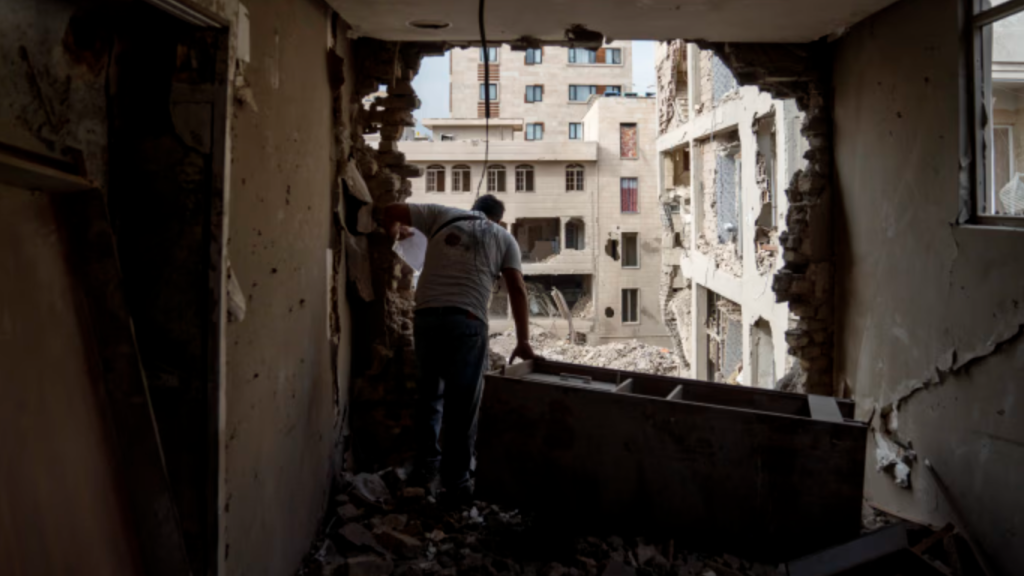
SINCE OCTOBER 2023, ISRAEL has fundamentally changed its policy toward the Palestinians. Following the Hamas-led attack on 7 October 2023, Israel launched an intensive military campaign in the Gaza Strip, which is still underway more than 21 months later. Israel’s onslaught on Gaza includes mass killing, both in direct attacks and through creating catastrophic conditions that increase the massive death toll; serious bodily or mental harm to the entire population of the Strip; large-scale destruction of infrastructure and living conditions; destruction of the social fabric, including Palestinian educational institutions and cultural sites; mass arrests and abuse of detainees in Israeli prisons, which have effectively become torture camps for thousands of Palestinians held without trial; mass forced displacement, including attempts at ethnic cleansing of Palestinians in Gaza and making the latter an official war goal; and an assault on Palestinian identity through the deliberate destruction of refugee camps and attempts to undermine the United Nations Relief and Works Agency for Palestine Refugees (UNRWA). The outcome of this comprehensive assault on the Gaza Strip is severe, and at least in part, irreparable harm to more than 2 million people living in the Gaza Strip, as part of the Palestinian people.
An examination of Israel’s policy in the Gaza Strip and its horrific outcomes, together with statements by senior Israeli politicians and military commanders about the goals of the attack, leads to the unequivocal conclusion that Israel is taking coordinated, deliberate action to destroy Palestinian society in the Gaza Strip. In other words: Israel is committing genocide against the Palestinians in the Gaza Strip.
The term genocide refers to a socio-historical and political phenomenon that has occurred throughout human history. Since the UN Convention on the Prevention and Punishment of the Crime of Genocide was signed in 1948 (and came into force in 1951), genocide has also been recognized as one of the gravest crimes in international law, involving acts committed with intent to destroy, in whole or in part, a national, ethnic, racial or religious group. Genocide is carried out through multiple and parallel practices over time, with mass physical killing being only one of them. Destroying living conditions, sometimes in concentration zones or camps, systemically trying to prevent births, widespread sexual violence against group members or their mass expulsion, can all be — and have been throughout history — among the means used by states or ruling authorities to destroy ethnic, national, racial, religious and other groups. Accordingly, genocidal acts are various actions intended to bring about the destruction of a distinct group, as part of a deliberate, coordinated effort by a ruling authority. Both morally and legality, genocide cannot be justified under any circumstance, including as an act of self-defense.
Genocide always occurs within a context: there are conditions that enable it, triggering events, and a guiding ideology. The current onslaught on the Palestinian people, including in the Gaza Strip, must be understood in the context of more than seventy years in which Israel has imposed a violent and discriminatory regime on the Palestinians, taking its most extreme form against those living in the Gaza Strip. Since the State of Israel was established, the apartheid and occupation regime has institutionalized and systematically employed mechanisms of violent control, demographic engineering, discrimination, and fragmentation of the Palestinian collective. These foundations laid by the regime are what made it possible to launch a genocidal attack on the Palestinians immediately after the Hamas-led attack on 7 October 2023. This report emphasizes three of these foundations in particular: life under an apartheid regime that imposes separation, demographic engineering, and ethnic cleansing; systematic and institutionalized use of violence against Palestinians, while the perpetrators enjoy impunity; and institutionalized mechanisms of dehumanization and framing Palestinians as an existential threat.
Such conditions can exist over time without developing into a genocidal assault. Often, a violent event that creates a sense of existential threat among the perpetrating group is the trigger for the ruling system to carry out genocide. The attack by Hamas and other Palestinian armed groups on 7 October 2023 was a catalyst of this kind. The atrocious attack, aimed mostly at civilians, included many war crimes and likely also crimes against humanity. It took the lives of 1,218 Israelis and foreign nationals, 882 of them civilians, involved extensive and severe acts of violence, including sexual violence, and resulted in tens of thousands of people wounded and the abduction of 252 people to the Gaza Strip — most of them civilians, including women, elderly people and children. The youngest child abducted was a nine-month-old baby who was killed, along with his three-year-old brother and their mother, while held in Gaza. For Israelis, the very fact of the attack, its scope and its outcomes, generated anxiety and a feeling of existential threat to a degree that led to profound social and political changes in Israeli society. These instigated a shift in Israeli policy toward Palestinians in the Gaza Strip: from repression and control to destruction and annihilation.
The assault on Gaza cannot be separated from the escalating violence being inflicted, at varying levels and in different forms, on Palestinians in the West Bank, including East Jerusalem, and within Israel. In these areas, as in Gaza, lethal crimes are being committed against Palestinians with no accountability for the perpetrators. The violence and destruction in these areas is intensifying over time, with no effective domestic or international mechanism acting to halt them. As a result, these crimes are becoming normalized in the eyes of soldiers, commanders, politicians, media figures and Israelis in general. We warn of the clear and present danger that the genocide will not remain confined to the Gaza Strip, and that the actions and underlying mindset driving it may be extended to other areas as well.
B’Tselem is an Israeli human rights organization that documents and researches harm caused to Palestinians under Israel’s apartheid and occupation regime. In the name of the duty to protect human beings, their lives, dignity, and individual and collective rights, B’Tselem has worked for over 35 years to expose Israel’s systematic violations of Palestinians’ human rights.
As a human rights organization working to stop and prevent systemic and widespread state violence against Palestinians, it is our duty to analyze human rights violations on the ground in the context of the regime carrying them out and its underlying political logic.
Since October 2023, we have gathered eyewitness testimonies and documented hundreds of incidents involving unprecedented and extreme violence against Palestinian civilians throughout the territory Israel controls, while key politicians and military commanders have openly declared the policies being implemented on the ground. Countless evidence of the consequences of these policies reflects the horrifying transformation of the entire Israeli system in its treatment of Palestinians.
At B’Tselem, Jewish-Israelis and Palestinians from the Gaza Strip, the West Bank, East Jerusalem, and Israel work side by side, guided by the shared view that defending human rights is a basic human and moral obligation. We all live under a discriminatory apartheid regime that classifies some of us as privileged subjects simply because we are Jewish, and others as undeserving of any protection simply because we are Palestinian. Together, we fight for the right we all have to live between the Mediterranean Sea and the Jordan River without discrimination, violent oppression and annihilation.
Even as we write, Israel is intensifying its brutal, merciless assault on the Palestinians. The routine killing and destruction in the Gaza Strip, as well as the growing violence and forced displacement of tens of thousands in the West Bank, would not have been possible without international inaction in the face of the incomprehensible scale and severity of these crimes. Many state leaders, particularly in Europe and the United States, have not only refrained from effective action to stop the annihilation and violence but have enabled it to continue — whether through statements affirming Israel’s “right to self-defense” or through active support, including the shipment of weapons and ammunition.
As people of this land and as human rights activists, it is our duty to bear witness to the state of affairs we and many others have documented and investigated. It is our duty to name the reality we are witnessing and living through, to recount it, and to stand with the victims.
The recognition that the Israeli regime is committing genocide in the Gaza Strip, and the deep concern that it may expand to other areas where Palestinians live under Israeli rule, demand urgent and unequivocal action from both Israeli society and the international community, and use of every means available under international law to stop Israel’s genocide against the Palestinian people.
B’Tselem Report July 2025
Source: Solidarity.
Attached documentsour-genocide-executive-summary_a9117.pdf (PDF - 914.8 KiB)
Extraction PDF [->article9117]
Palestine
Neofascism, Imperialism, War, and Revolution in the Middle East
The Mirage of a Palestinian State
Free the Children! End the Starvation and Genocide!
Solidarity with Gaza is not antisemitic - Death to hypocrisy
Massacres and starvation in a criminal silence
Israel
“War supports reactionary, capitalist and fascist forces and destroys lives, hopes and nature”
European Union/Israel: Time to choose on trade agreements
A Terrifying Abyss for the Iranian People and the Region
Faced with the Iran-Israel war, a third way is possible!
The United States at War in the Middle East —Again
B’tselem
B’tselem is a long-established Israeli human rights information center.
International Viewpoint is published under the responsibility of the Bureau of the Fourth International. Signed articles do not necessarily reflect editorial policy. Articles can be reprinted with acknowledgement, and a live link if possible.
The Verdict of History: How Political Calculations Betrayed Gaza
Photograph by Nathaniel St. Clair
The Israeli human rights organization B’Tselem released a comprehensive report on July 27 describing the Israeli war on Gaza as genocide. However, the delay in publishing such an indictment is troubling and adds to an existing problem of politically motivated decision-making processes that have, in their own right, prolonged the ongoing Israeli war crimes.
The report accused Israel of committing genocide, a conclusion reached after a detailed analysis of the military campaign’s intent, the systematic destruction of civilian life, and the government-engineered famine. This finding is significant because it adds to the massive body of legal and testimonial evidence affirming the Palestinian position that Israel’s actions in Gaza constitute a genocide.
Moreover, the fact that B’Tselem is an Israeli organization is doubly important. It represents an insider’s indictment of the horrific massacres and the government-engineered famine in the Strip, directly challenging the baseless argument that accusing Israel of genocide is an act of antisemitism.
Western media were particularly interested in this report, despite the fact that numerous first-hand Palestinian reports and investigations are often ignored or downplayed. This double standard continues to feed into a chronic media problem in its perception of Palestine and Israel.
Claims by Palestinians of Israeli war crimes have historically been ignored by mainstream media or academia. Whether the Zionist militia’s massacre of Tantura in 1948, the actual number of Palestinians and Lebanese killed in the massacres of Sabra and Shatila in Lebanon in 1982, or the events resulting in the Jenin massacre in the West Bank in 2002, the media has frequently ignored the Palestinian account. It often gains a degree of validation only if it is backed by Israeli or Western voices.
The latest B’Tselem report is no exception. But another question must be asked: why did it take nearly two years for B’Tselem to reach such an obvious conclusion? Israeli rights groups, in particular, have far greater access to the conduct of the Israeli army, the statements of politicians, and Hebrew media coverage than any other entity. Such a conclusion, therefore, should have been reached in a matter of two months, not two years.
This kind of intentional delay has so far defined the position of many international institutions, organizations, and individuals whose moral authority would have helped Palestinians establish the facts of the genocide globally much earlier.
For example, despite the ICJ’s historic ruling on January 26, 2024, that determined that there are plausible grounds for South Africa’s accusation of Israel of committing genocide, the court is still unable, or unwilling, to produce a conclusive ruling. A definitive ruling would have been a significant pressure card on Israel to end its mass killing in Gaza.
Instead, for now, the ICJ expects Israel to investigate itself, a most unrealistic expectation at a time when Israeli Prime Minister Benjamin Netanyahu promises his extremist ministers that Israel will encourage the ethnic cleansing of Gaza.
The same indictment of intentional and politicized delays can be attributed to the International Criminal Court. While it issued arrest warrants for Netanyahu and his former defense minister on November 21, 2024, no concrete action has been taken. Instead, it is the Chief Prosecutor of the court, Karim Khan, who finds himself attacked by the US government and media for having the courage to follow through on the investigation.
Individuals, too, especially those who have been associated with ‘revolutionary’ politics, the likes of Congresswoman Alexandria Ocasio-Cortez and Senator Bernie Sanders, among others, have been reluctant to act. On March 22, 2024, Ocasio-Cortez refused to use the term genocide in Gaza, going as far as claiming that, while she saw an “unfolding genocide,” she was not yet ready to use the term herself.
Sanders, on the other hand, who has spoken out repeatedly and strongly against Netanyahu, describing him in an interview with CNN on July 31 as a “disgusting liar,” has had repeated moral lapses since the start of the war. When the term genocide was used by many, far less ‘radical’ politicians, Sanders doubled down during a lecture at a university in Ireland. He said that the word genocide “makes him queasy,” and he urged people to be “careful about it”.
These are not simply lost opportunities or instances of moral equivocation. They have had a profound and direct impact on Israel’s behavior. The timely intervention of governments, international institutions, high courts, media, and human rights groups would have fundamentally changed the dynamics of the war. Such collective pressure could have forced Israel and its allies to end the war, potentially saving thousands of lives.
Delays born of political calculation and fear of retribution have given Israel the critical space it needed to carry out its genocide. Israel is actively exploiting this lack of legal and moral clarity to persist in its mass slaughter of Palestinians.
This must change. The Palestinian perspective, their suffering, and their truths must be respected and honored without needing validation from Israeli or other sources. The Palestinian voice and their rights must be truly centered, not as an academic cliché or political jargon, but as an undeniable, everyday reality.
As for those who have delayed their verdict regarding the Israeli genocide, no rationale can possibly absolve them. They will be judged by history and by the desperate pleas of Gaza’s mothers and fathers, who tried and failed to save their children from the Israeli killing machine and the world’s collective silence or inaction.
Bearing the Mark of Cain for Naming the Gaza Genocide
August 8, 2025
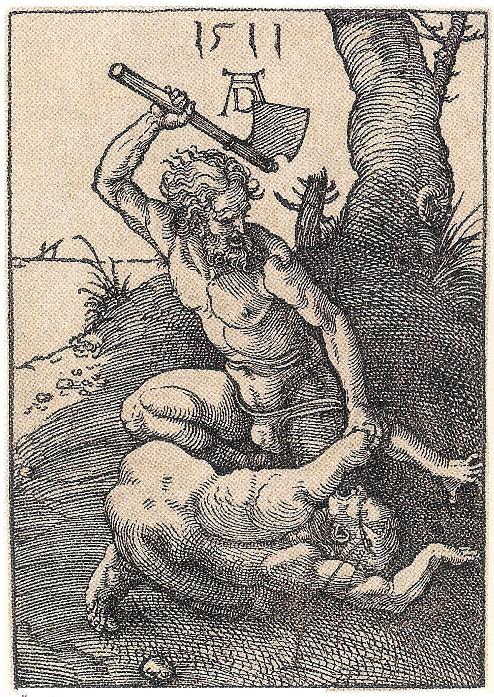
Cain and Abel by Albrecht Dürer, woodcut, 1511.
I began publicly invoking the word “genocide” in July 2025 to describe the actions of the Israeli government in Gaza in response to the horrific Hamas terrorist attacks of October 7, 2023, and the incomprehensible ongoing hostage crisis. Since that time, despite increasing agreement among liberal Jewish organizations over the use of this term, I cannot help but feel like I wear the mark of Cain in the Jewish community. Many colleagues, friends, and loved ones have gone from praising my recent award as a “Rabbinic Human Rights Hero” for my efforts to mobilize the Jewish community against the death penalty, to vilifying me for what they claim is parroting anti-Semitic canards. Others have dismissed me as “insane,” a “psychopath,” or attempted to shame me for what they feel is my abandonment of my fellow descendants of Holocaust survivors, and the Jewish people as a whole.
I thought I knew of vitriol and recrimination; I was wrong. For years, proponents of the death penalty have lodged heinous verbal attacks against me for my public activism as the co-founder of “L’chaim! Jews Against the Death Penalty.” Even that could not have prepared me, however, for the deluge of hate and ridicule I have received throughout the Jewish world this past month. Now, I feel like a persona non grata when I enter many congregations and communities that previously embraced me as an ordained cantor. Decades-long friends and colleagues have started to treat me like a social pariah. Acquaintances who know me less well are more direct. “Kapo,” some of them have called me, adding: “You’d sell us out to the Nazis any day just to keep yourself lookin’ good to your antisemite friends.”
Critics may ask why I subject myself to the kangaroo court of public opinion. The truth is that it is not for my sake, but rather for the children of our shared world. First and foremost, for Gazan children, who remain in the line of fire and starvation as I write these words. Also, for my own children. In their faces, I see the emaciated images of their young cousins scattered among the rubble in Gaza, alongside Israeli children like Kfir and Ariel Bibas, of blessed memories, slaughtered in captivity after the ruthless October 7th massacre of over a thousand more innocent souls. They, like Jewish children everywhere, one day will read about this fraught moment in time and wonder where their ancestors stood in the public arena while a veritable genocide unfolded before their eyes. They will consider individuals like Israeli lawmaker Ofer Cassif, whose colleagues ejected him from the Knesset this week for calling the government’s campaign in Gaza a genocide. They will remember, as well, Israeli author David Grossman, whose use of that same term Cassif had quoted before his removal from Israel’s parliamentary chamber.
Some argue that terminology does not matter when reckoning with the atrocities that the IDF has committed in response to the heinous Hamas terrorist attacks. I firmly disagree. Words matter – they can wage wars and herald peace; inspire killing, and save lives. As the government of Israel’s military response to the October 7th, 2023 attacks became more extreme, I carefully chose my words. I first spoke of vengeance, then of ethnic cleansing. Now, albeit far too late and with a weighty heart, I am quite intentionally – and far from lightly – employing the word “genocide,” as per a growing consensus of genocide scholars and humanitarian organizations, in describing the actions in Gaza of the government of Israel, whose land and people I dearly love as a progressive Zionist. Others have indicated that employing the term genocide might empower those eager to engage in antisemitic rhetoric and violence, which is indeed a very legitimate concern. Rabbi Jill Jacobs, the director of T’ruah: The Rabbinic Call for Human Rights, helped to remind me, though, that one can and should be able to criticize the Israeli government without fomenting antisemitism.
The metaphor of the infamous “Ot Kayin” (Hebrew: “Mark of Cain”) that I feel I bear – and its related Biblical narrative – is most telling. After Cain kills his brother Abel in a fit of rage and jealousy, the Divine exclaims to him: “Hark, your brother’s blood cries out to Me from the ground!” (Genesis 4: 10). Many progressive Jewish groups have quoted this exact verse in drawing a parallel between Cain and Abel’s archetypal sibling rivalry and what HaShechinah – the Divine Presence – might say in response to the government of Israel’s killings of their Gazan cousins.
It merits reminding that in the Biblical text, the Creator did not intend for the sign on Cain’s forehead to be a symbol of shame, despite its evolution as such in the prevalent mindset over the millennia. Instead, God meant for it to protect Cain from others bent on putting him to death for having killed his brother. It is fitting that a death penalty abolitionist like myself would wear this misunderstood mark in the eyes of so many of my fellow Jews. Many of them seem to view my argument as tantamount to fratricide, a treasonous action that would appear, for some, to be worthy of execution.
I pen these reflections on Tisha B’Av, the Jewish calendar’s major day of communal mourning and fasting over the destruction of the ancient Temples and countless other calamities in Jewish history. Many colleagues have written powerful prose and poetry about the cruel irony this year of fasting on this solemn day, which recalls in grim detail the starvation of the Jewish people in ancient times. They have rightfully juxtaposed this ritual with the fact that, while Hamas continues to torture and starve Israeli hostages to death, the government of Israel enables a famine that kills countless innocent Palestinian children and civilians, and plans now to expand the military occupation and destruction of Gaza. I, too, mourn these detestable synchronicities.
At the same time, I lament how future generations will perceive those who are unable or unwilling to open their eyes to the reality of the genocide. I profoundly regret that I waited far too long before using this word to describe what is occurring in Gaza. I will have to live with that realization for the rest of my life. Just as with my shifting view of the death penalty over time, I hope that my progeny will forgive me for not reading the signs sooner of clear human rights violations in Gaza. May my journey be a lesson to them that no one is immune to blind spots. May it also demonstrate that it is possible to summon the courage necessary to live by one’s values, even in the face of prodigious criticism and public and private condemnation. Finally, I pray that these sincere sentiments will give renewed hope to readers, reminding them that people can change their attitudes. I encourage others to do so – despite the costs – as soon as possible, for the sake of Palestinians in Gaza, the global Jewish community, and all humanity.
A version of this essay first appeared on The Jurist.