Tuesday, August 12, 2025


Trump, China and the Militarisation Drive

“Trump erupted onto the world stage in a wave of shock and awe, doubling down on a trade war targeting not just China but everybody, and terrifying Europe with hints of abandoning them to face the threats from Russia and a chaotic Middle East.”

By Jenny Clegg

With the world in such disarray, how to make some kind of sense of what’s going on is the key question. Taking in the bigger picture, we should look back to just after the fall of the Soviet Union when Wolfowitz claimed the main task of the US superpower was to prevent the rise of any potential competitors.  Then after 9/11, Bush, channelling Wolfowitz to seize the unipolar moment, vowed to deal with 7 countries in 5 years – Iraq, Syria, Lebanon, Libya, Somalia, Sudan and Iran.   

The problem now for the US is that they are still working through this list whilst the main competitor, that is China, now with a GDP two-thirds the size of the US, has become the world’s biggest in trade, in manufacturing, advancing along the technological frontiers.

It was Biden, in his 2022 National Security Strategy, that was to pinpoint the dangers of Chinese competition in areas of AI, quantum computing, space, and cyberspace, key areas in military modernisation and so seen as threatening US future dominance.  

The Biden administration was to steer the NATO summit in 2024 towards identifying China as the ‘decisive enabler’ of Russia’s Ukraine war.  Mention also of Iran and North Korea, suggesting a ‘deadly quartet’ of autocratic allies, aimed to underpin the call for a Global NATO from the EuroAtlantic to the IndoPacific.

But the hypocrisy of vaunting the Ukraine war as a moral crusade whilst supporting the Gaza genocide, saw not only the end of Biden but shattered the myths surrounding Western values on which the US claim to superiority in world leadership has rested since the end of WW2.  The US can only now resort to coercion.

Trump erupted onto the world stage in a wave of shock and awe, doubling down on a trade war targeting not just China but everybody, and terrifying Europe with hints of abandoning them to face the threats from Russia and a chaotic Middle East. In so doing, he has extorted huge sums of military spending from the US allies.

Trump, it is said, wants the Europeans to cover the costs of defending Europe so the US can finally pivot to China. But what about the Middle East? Try as it might, the US seems unable to detach itself from this turbulent region: through Israel, and with difficulty, it still seeks to secure regional control. 

In part, this is about keeping leverage over China, which imports roughly half of its crude oil from the Gulf. The Gulf states are a major arms market for the West but there’s also the fact that these states reinvest their dollar revenues from oil in the US so offsetting US debt and strengthening the dollar.  The possibility of using the RMB in Middle East-China trade could be a major threat to US dollar hegemony.  

To return to the ‘deadly quartet’ idea of the US hawks, now echoed by both Rutte and Starmer – what this is really about is establishing a complete system of military control over Eurasia – from Russia to the Middle East to China and North East Asia.

This military system is to be based on those technologies previously mentioned. What today’s wars show us is how what happens on the battleground is controlled from space, using cyber- and AI technologies: the surveillance, the targeting, the ability to shoot down incoming missiles.  The huge military budgets are now going to build a globalised military-industrial complex centred on US core technologies. 

Following Biden, Trump has declared a technological arms race with China as a fight that will define the 21st century, one the US is going to win. Seeking to tie trade deals into arms purchases and security arrangements, Trump’s tariffs aim not simply to constrain but to isolate China, forcing its trading partners not only to decouple, but locking them instead in to a US-centred world system. To see how the globalised production of military equipment constrains foreign policy options, just see the F35s.

So much more is going on here than the Ukraine war: Russia’s military spend may be the biggest in Europe but it’s still only one third the existing EU total – the military budgets of the UK, France and Germany are 1.5 times greater. 

The US, perhaps banking on monies saved from Europe, plans an $800 billion Golden Dome project, modelled on Israel’s Iron Dome. This protective shield supposedly would allow the US to launch a missile or even nuclear attack on China or Russia without fear of retaliation. But it doesn’t even work properly for Israel just slightly bigger than Wales let alone a territory the size of the US.

Here in the UK, we’re increasing the number of Astute nuclear-powered submarines for AUKUS from 7 to 12; there’s also the Tempest fighter jet – a joint project with Italy and Japan. Neither of these items will be ready until the early 2030s, too late for Rutte, who predicts a Russian attack within 5 years. Cost and timescale overruns threaten to spiral out of control: even the government’s own projects agency says current goals are unachievable.. 

Here we might learn the lessons of the past: just over 15 years ago, the Labour government decided to go ahead with the construction of the two aircraft carriers and the production by BAE Systems of parts for the F35s. Last year, the aircraft carriers spent half their time in dock under repair. 15 years or so ago, China decided to go all out to develop renewable energy and EV vehicles. How do those decisions compare now? 

Starmer’s argument that defence is the driver of growth does not hold water. Even the new director of the Institute of Fiscal Studies pointed out in a recent article in the Financial Times ‘merely building a stock of weapons won’t drive growth’ and that ‘more jobs in one area mostly means fewer jobs elsewhere’, adding, ‘Would investing in weapons and nuclear submarines be the best way to boost economic growth? I doubt it’.

War is imminent we are told, but it seems we are preparing for a forever war with Russia, burdening generations to come. Catastrophising the future, Rutte warns that China, in attempting to seize Taiwan, would urge Moscow to launch a parallel attack on NATO territory.  

Why does Starmer support all this? Lets just note our ally Australia has just said it will not spend more than 2 percent of GDP on defence.

But for the UK its all about the special relationship, enabling our nuclear weapons. In return, we offer the US the services of our military bases around the world – the Akrotiri base of course playing a key role in the Gaza genocide.  And we provide a key link between the EuroAtlantic and IndoPacific with the AUKUS project.

The point of being a Nuclear Weapon State is to retain our global status as a permanent member of the UN Security Council.  But the world is changing: becoming less Western, more multipolar – the influence of the BRICS is growing.

Much of the Global South is not buying into the militarisation agenda – 85 percent of the world did not support the sanctions on Russia over Ukraine. They see the world order failing their needs – on addressing climate change, the debt burden, world health; failing on Gaza. They see how the US and Israel wield the rule of power, shredding any norms of warfare, their disrespect for the UN, ready to push the international order off a cliff. So much for peace through strength. For their own survival many in the Global South seek a new kind of world. 

The BRICS in fact are wondering about another proposal for UN reform: that France’s permanent seat on the Security Council should be taken over by Africa, and the UK seat by Latin America.

Surely that goes a significant part of the way to explaining why Starmer backs Trump’s agenda of world military dominance.


UK

‘To end austerity, wealth taxes are a moral and economic necessity’


Photo: Alex Segre/Shutterstock

The UK is at a crossroads. This government inherited the dire legacy of a lost decade of cuts, austerity and underinvestment. The 2010s saw average real pay fall: the first decade in which this has happened since before the Second World War. Meanwhile, since 2010, billionaires have sat back and watched their wealth more than double. 

What do we have to show for this? Crumbling public services, rising child poverty, stagnant wages and sluggish growth. 

Governing in the state that the Conservatives left us in was never going to be easy. But anyone paying attention to the mood of the country can only conclude: this government needs to dramatically change its approach to turn things around.

Breaking out of this economic doom loop demands bold ideas from beyond the normal playbook. It’s why myself and many parliamentary colleagues, including former Shadow Chancellor Anneliese Dodds, as well as Nobel prize winning economists, unions, NGOs and more are calling for wealth taxes on Britain’s super-rich corporations and individuals to unlock billions for public investment and finally close the door on the era of austerity.

That means looking seriously at bold ideas that reach outside the normal playbook. It’s why myself and many parliamentary colleagues, including former Shadow Chancellor Anneliese Dodds, as well as Nobel prize winning economists, unions, NGOs and more are calling for wealth taxes on Britain’s super-rich corporations and individuals to unlock billions for public investment and finally close the door on the era of austerity.

‘If we do not tackle inequality, this will create an opening for other parties’

Why wealth taxes? Our society has always been unequal but inequality in the UK has exploded in the last 30 years. Today, there are two Britains. The Britain of the ultra-wealthy. Of billionaires like the Duke of Westminster, who inherited £9 billion tax-free aged 25. Billionaires who added £35 million to their wealth every single day last year, but currently pay an effective tax rate of close to 0.3% of their wealth. Of corporations like Thames Water who pay their CEOs eyewatering salaries as they pump sewage into our rivers and hike our bills. 

Then there is the Britain most of us live in, where we have seen the longest hit to living standards on record. Where 1 in 3 kids now grow up in poverty and the dream of home ownership is out of reach for millions. 

Voters feel this. Polling from YouGov, commissioned by Green New Deal Rising as part of their PAY UP campaign, found that 58% of Brits believe this Government’s economic policies currently best serve wealthy individuals (40%) and large corporations (18%) compared to UK businesses (3%), the working population (3%), and ordinary British people (2%). There is a clear need to show people that this government is on their side and willing to challenge an unfair economic status quo which has allowed the rich to get richer than ever whilst most of us face declining wealth and living standards.

We have to tell this story. If we do not, we can be sure that other parties will. Recent analysis by Persuasion UK found that while Reform UK poses a threat to 123 Labour constituencies, far more (250) Labour constituencies are at risk from the Greens and Lib Dems. If we do not tackle the issues we have inherited: from skyrocketing wealth inequality to the housing crisis, this will only create an opening for other parties.

‘The moral and political case is overwhelming’

The moral and political case for wealth taxes is overwhelming but they are also simply a practical necessity. Delivering change doesn’t come cheap. We urgently need to find new revenue streams to avoid more politically disastrous, life-threatening cuts and fund investment in communities. A wealth tax of just 2% on net wealth above £10 million would raise £24 billion per year. We can no longer afford to ignore such a large source of revenue. 

Despite predictable right-wing media reports to the contrary, we also know that the UK’s super rich are staying put and the vast majority do not move due to tax changes. Their lives, families, businesses, and communities are here. Overwhelmingly, they want to stay and give back to the country which has given them so much.

Most claims to the contrary are based on a single study by a firm that sells golden passports to the ultra-wealthy. This study was the source of 30 articles every day last year claiming millionaires were leaving in their droves in response to tax policy changes. 

In reality, the report actually found just a 0.31% rate of migration for UK millionaires. Even this tiny figure was derived using highly questionable methodology, with Henley and Partners basing its estimates on where millionaires say they work on social media; not where they actually reside. A far more reliable measure of the validity of this argument is the just 0.01% of richest households that relocated after wealth tax reforms were introduced in Norway, Sweden and Denmark.

‘Pursuing further cuts or raising taxes is politically and morally untenable’

The truth is that none of the choices before us are easy. Like any other major policy, a wealth tax would need to be carefully designed, learning from other countries and using the brightest minds in public taxation to make it work.

Pursuing further cuts or raising taxes on ordinary people is politically and morally untenable. So let’s be bold. Wealth taxes aren’t a silver bullet but they are a crucial piece in the puzzle, helping raise the money needed to deliver real change and signal to the public that we are on their side. This budget is a crucial opportunity to show we have listened. It is one of our last chances to introduce policies which have time to bed in and show their benefits before the next election. Let’s not miss it

UK National Highways’ chief gets big pay rise as roads crumble and workers struggle


10 August, 2025 
Left Foot Forward

“As road users and taxpayers look for tangible improvements in return for public funding, the figures from National Highways are certain to prompt reflection about where the balance lies between reward and responsibility.”


TweetShareWhatsAppMail

Newly released accounts from National Highways show a sharp contrast in pay rises between the company’s chief executive and its frontline workforce, fuelling criticism as the UK’s road network continues to deteriorate.

National Highways, the government-owned body responsible for operating, maintaining, and improving England’s motorways and major A roads, reported that its chief executive, Nick Harris, received a total remuneration package of £426,304 in 2024–25, an 8 percent increase on the previous year. The package includes performance-related bonuses.

By contrast, average worker pay rose by just 5 percent, increasing from £37,679 to £39,477.

The disparity has sparked frustration among staff and trade unions, particularly as National Highways is publicly funded and the state of the nation’s roads, especially in terms of pothole damage, continue to draw widespread complaints.

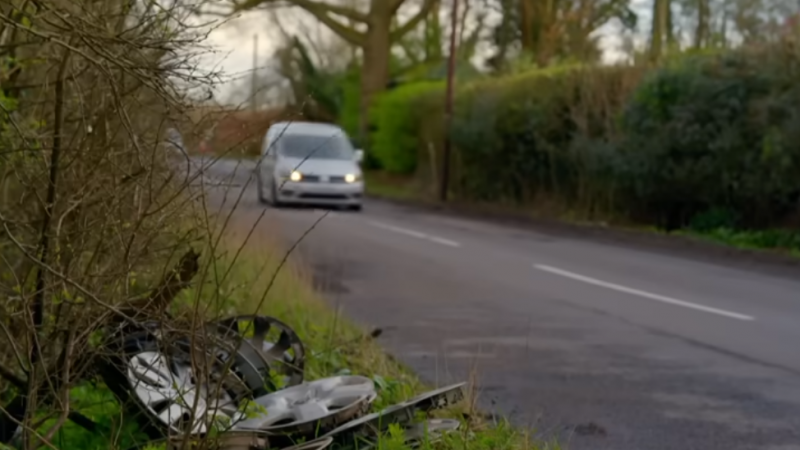
According to the RAC, Britain’s ‘pothole plague’ worsened in 2024, with patrols responding to thousands of breakdowns caused by road defects. The UK is estimated to have over one million potholes, making them one of the leading causes of vehicle damage. The government has allocated £1.6 billion to tackle the problem up to the end of 2026, but critics say progress is too slow.

Adding to concerns, National Highways recorded an average of 11.7 sick days per employee last year, amounting to nearly 80,000 lost workdays among its 6,800-strong workforce. The Workers Union cited the high absence rate as a sign of deeper issues around stress, fatigue, and working conditions, particularly for those in road maintenance and frontline roles.

In a statement, the union said: “We support all efforts to ensure fairness, transparency and wellbeing in public workplaces. While we recognise the complexities of leading national agencies, it’s vital that leadership remains attuned to the lived experiences of workers delivering essential services.

“As road users and taxpayers look for tangible improvements in return for public funding, the figures from National Highways are certain to prompt reflection about where the balance lies between reward and responsibility.”
UK

EXCLUSIVE: Unite leadership not currently considering funding new Corbyn-Sultana Party


11 August, 2025 
Left Foot Forward

There have been no discussions about funding ‘Your Party’, Unite says


TweetShareWhatsAppMail


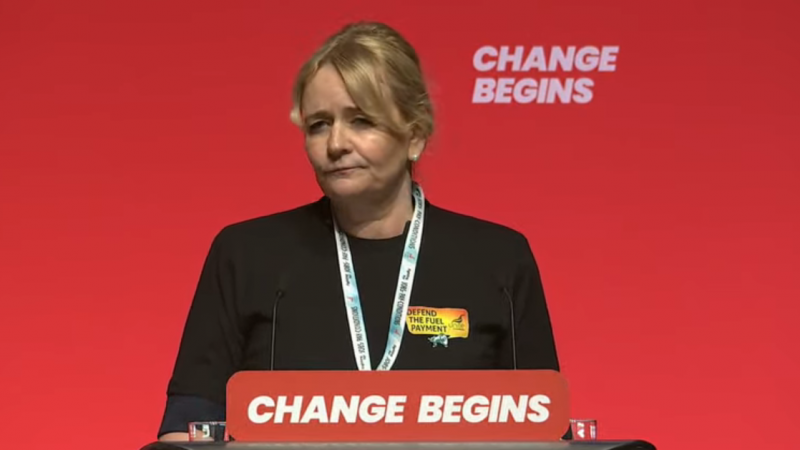
At the Durham Miners’ Gala, Unite’s general secretary Sharon Graham hinted at the prospect of Unite disaffiliating from Labour, sparking questions about whether the trade union might consider backing the new Corbyn-Sultana party.

A Unite spokesperson told Left Foot Forward that there have been “no discussions” with the temporarily-named Your Party about providing funding.

The spokesperson added: “Unite voted to continue affiliating with Labour two years ago and, under current policy, cannot fund another political party.”

Left Foot Forward understands that any decision on disaffiliation from Labour would not be made until Unite’s next rules conference in 2027.

In her speech, Graham hinted that Unite could “leave” or disaffiliate from Labour, and that the union will “forge a new vehicle for our class” and be “an authentic voice for the working class”.

Separately, sources linked to Jeremy Corbyn have told The Times that they are confident that Unite could be persuaded to disaffiliate from Labour and direct funds to candidates his new party runs.

A Unite spokesperson said: “As the general secretary said in her Times interview on 18 July with Patrick Maguire – people are always lobbying for Unite to affiliate to various parties.

“Unite is now focussed on the jobs, pay and conditions of its members, not party politics. We have no intention of getting involved in more Westminster melodrama.

“But that having been said. There can be no doubt that workers are feeling abandoned by Labour and the wrong choices it is making.”

They criticised the party’s lack of a jobs plan, and neglect of industries such as oil and gas, as well as its support for “fire and rehire” tactics in Birmingham, warning it is “inevitable that workers will vote for other parties if Labour does not deliver for them”.

Corbyn and Zarah Sultana have been contacted for comment.

Olivia Barber is a reporter at Left Foot Forward


‘Even the spectre of Corbyn’s party could prove fatal for Starmer and Labour’


© Alexandros Michailidis/Shutterstock.com

We still know very little about Jeremy Corbyn’s new party. Currently operating under the placeholder “Your Party”, its name, personnel and even its leader remain to be decided. Nebulous as this new political party remains, even the mere prospect of a resurgent British Corbynite Left is enough to cause Labour some serious headaches.

Labour has had a torrid first year in government. Keir Starmer’s personal ratings have plummeted, and the party is now averaging a paltry 22% in the polls. There have been several unforced errors, but fundamentally they are now experiencing the fallout from the widespread voter dissatisfaction and distrust that only 13 months helped deliver them a massive majority.

Currently, just two in five voters (39% according to Politico’s poll of polls) would vote for the two major parties. Both the Conservatives and Labour had a higher vote share in 2019 than the two parties combined today. In fact, Corbyn achieved 40% when he led Labour to a narrow defeat in the 2017 election (40%).  This fragmentation will only increase with the introduction of Corbyn’s party.

‘Corbyn is a threat that Labour should take seriously’

Hypothetical polling (which is historically unreliable and should be handled with caution) from More In Common suggests that “Your Party” could immediately jump to 10% in the national opinion polls. Whilst new parties have historically struggled to get off the ground (for example the short-lived Change UK), Corbyn is a threat that the Labour Party should take seriously, not least because of just how unpopular Keir Starmer is with the public.

YouGov polling suggests that just under one in five of the electorate are open to voting for a new Corbyn-led party (although a large majority of these are open to others too), including almost a third Labour 2024 voters. Crucially, YouGov also has Jeremy Corbyn with a higher net favourability and a higher raw favourability than the current Prime Minister, and more than two-fifths (43%) of Labour 2024 voters have a positive view of the former leader.

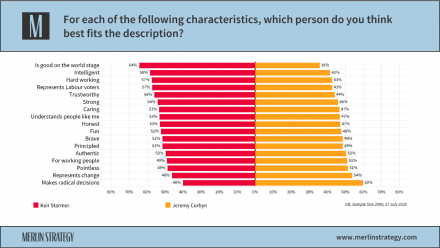
Our polling suggests this could just be the start. In a head to head against Keir Starmer, Jeremy Corbyn performs strongly in key areas amongst the general public, Reform voters and Labour 2024 voters who gave Keir Starmer his majority. Just under two-fifths (39%) Labour 2024 voters say Jeremy Corbyn better fits the description “Understands People Like Me” and a third (34%) say Corbyn is better at “representing Labour voters”. In a straight choice between Jeremy Corbyn and Keir Starmer more of the public opt for Corbyn on attributes such as “For working people”, “Represents Change”, and makes “Radical Decisions”.

May will provide sense of potential of ‘Your Party’

In fact, such is the dislike of current Reform voters towards Keir Starmer they prefer Corbyn to Starmer on all positive metrics apart from is “Good on the World Stage”. These include: “Understands People Like Me”, “Fun”, “Honest”, “Trustworthy” and “Principled”. Whilst this does not mean that Reform voters *like* Jeremy Corbyn, it underlines the strength of dislike felt towards the current Prime Minister, and ‘mainstream’ politics in general.

We are already seeing enthusiasm for Corbyn’s new party amongst the groups that you might expect. Four in ten younger voters are open to voting for ‘Your Party’, and he is the most popular politician amongst 16-17 year-olds (whom Labour have just given the vote). The potential support at the moment is stronger in London than in the Midlands, North and Rest of the South.

It is also thought the new party will include the four so-called “Gaza Independent” MPs, who will likely pose an even bigger challenge to Labour at the next election. There are 60 seats in the country where the number of votes won by ‘others’ (independents) was bigger than the majority, and most of these were on a Gaza ticket. We should be able to get a real sense of their potential to expand in May’s local elections in Birmingham and London.

Labour 2024 voters summing up their view of Starmer and Corbyn in one word


‘Voters have been unsure what Starmer stands for’

However, it is not just amongst these demographics or in these urban areas that Labour should worry about Corbyn and whatever it is his new party turns out to be. Regardless of whether Corbyn’s party succeeds there will be a desire for voters to the left of Starmer’s Labour for more ‘authentic’ representation.

Keir Starmer’s recent U-turns on a range of issues including Welfare Reforms and his anti- immigration rhetoric “Island of Strangers” speech explains why attributes regarding authenticity, principles and honesty are some of Keir’s worst performing. Since he became leader Starmer’s floating principles have been a consistent line of attack, first by Boris Johnson and then Rishi Sunak. Turning against his own speech on immigration will only serve to alienate more voters as his principles and honesty come into even greater question. Voters have consistently been unsure of what Keir Starmer stands for, and that is only getting worse.

Just half of those who voted Labour in 2024 have a clear or broad idea of what Keir Starmer stands for, down from 75% prior to the election. His lack of principles make him the opposite of a conviction politician and it is no surprise his two greatest political threats, Farage and Corbyn, are politicians who have consistently drawn attention due to their radical, but seemingly authentic, views on immigration and/or austerity. Even the spectre of a Corbyn-party is enough to sharpen these attacks on Starmer, and could prove fatal for the embattled PM by the time of the next election.


Diane Abbott: She’s Walked the Line

“Diane Abbott has proved herself a consistent friend of workers in struggle over many years, which just might be another factor explaining why she is not welcome in Keir Starmer’s PLP.”

By George Binette

In contrast to all too many members of the Parliamentary Labour Party (PLP), Diane Abbott has visited a fair few picket lines in her 38 years as the MP for Hackney North & Stoke Newington. That might explain why several unions were keen to contribute to her re-election campaign last year after the Labour leadership finally re-admitted her to the PLP in late May 2024.

In total, Diane’s campaign received £9,000 from three Labour affiliates – the CWU, FBU and Unite – and £5,000 from what is arguably Britain’s most militant major union, the RMT, which found itself expelled from Labour more than two decades ago. There was never any real doubt that Diane would retain her seat last July, though her protracted suspension from the PLP and the party leadership’s support for Israel’s merciless war on Gaza did erode her previously thumping majority. The unions that contributed to her campaign did so in recognition of the role she had played both at Westminster and in showing solidarity publicly for workers fighting back.

During my six-and-a-half-year stint as her local party’s Trade Union Liaison Officer, I frequently called on Diane to send messages of support and visit picket lines. She invariably responded. In June and early July lecturers belonging to the NEU stood outside Hackney’s BSix college. Though Diane was ultimately unable to make a picketing session, her message of support received a warm welcome, not least because she had joined these NEU members when they had walked out in previous disputes, not least during her time as Shadow Home Secretary.

A week before the General Election, when many Labour candidates would have found alternative routes to avoid a picket line, the candidate for Hackney North & Stoke Newington joined Unite members battling for union recognition at the Sanctuary housing association, which now manages some 980 flats on the borough’s Kingsmead estate.

Within the hour, Diane was standing at the entrance to the nearby Homerton Hospital with BMA members striking as part of their long-running pay dispute with the then Tory government, where she also met with angry women, several of them UNISON members, working on an outsourced contract with the Danish-based multinational ISS. These workers, cleaners and catering staff, had worked throughout the Covid pandemic and yet had not received the so-called Covid bonus of at least £1,655 awarded to all directly employed NHS staff.

In June 2022 Diane addressed a lively RMT-organised rally at the start of the mini-strike wave that both reflected and accelerated the collapse in support for the Tory government. Less than a month later, she twice joined striking RMT members from London Underground on blazing hot mornings outside the Seven Sisters depot in neighbouring Haringey. They were defending their Transport for London pension scheme in an ultimately successful battle.

Before the year was out, she appeared next to CWU members at Stamford Hill’s Royal Mail delivery office in quite different weather conditions – one reason she received a rapturous reception from posties at a December 2022 strike benefit her CLP organised. Just under a year later she addressed a rally outside Amazon’s London headquarters midst frigid temperatures in solidarity with GMB members in Coventry striking in pursuit of union recognition.

Diane Abbott joins a CWU picket line outside a Royal Mail delivery office in Stamford Hill.
Diane Abbott joins the Amazon workers’ solidarity rally in Shoreditch on 27 November 2023.

In short, Diane Abbott has proved herself a consistent friend of workers in struggle over many years, which just might be another factor explaining why she is not welcome in Keir Starmer’s PLP.


  • George Binette is a former secretary of Camden UNISON and the former Trade Union Liaison Officer for Hackney North & Stoke Newington CLP between autumn 2017 and spring 2024.
  • You can add your name to a petition in support of Diane Abbott here.
  • If you support Labour Outlook’s work amplifying the voices of left movements and struggles here and internationally, please consider becoming a supporter on Patreon.


Texas Warns Wastewater Injection Threatens Key Permian Oil Reserves

The Texas General Land Office (GLO) has formally objected to a plan by Pilot Water Solutions LLC to drill three new saltwater disposal wells in the Permian Basin, warning the project could contaminate state-owned crude reserves in North America’s top oil field, according to the Dallas Morning News.

Founded in 1836, the GLO manages 13 million acres of state land and generates billions of dollars for Texas public schools through oil and gas leasing. It argues the proposed disposal sites in Loving County near the New Mexico border pose “significant risk” to mineral interests under its control. 

Bloomberg reports that ConocoPhillips, one of the Permian’s largest producers, has joined the opposition, noting that in the area near the proposed wells it is producing less than 40% of expected oil volumes while generating nearly twice the forecast water output.

For every barrel of oil pumped in the Permian, as many as five barrels of wastewater are produced, presenting a growing operational and environmental challenge. Reuters notes that disposal capacity is under mounting strain, with costs climbing and injection-related earthquakes drawing regulatory scrutiny.

The Railroad Commission of Texas will hold a hearing later this month to assess the Pilot Water Solutions proposal. State officials are weighing contamination risks alongside concerns about induced seismicity linked to high-volume wastewater injection.

Environmental groups and local ranchers have long warned about the hazards of underground wastewater disposal, but record Permian output has made the problem more acute. The GLO’s opposition is the first real indication we are seeing that water management is no longer just a peripheral environmental issue, but is now a direct threat to oil production economics in the nation’s most prolific basin.

By Charles Kennedy for Oilprice.com


Syria Eyes Pipeline Lifeline as Post-Assad Power Struggle Escalates

Syria’s caretaker government is moving to restore the Kirkuk-Baniyas oil pipeline with Iraq, a strategic corridor that had the capacity to move up to 300,000 barrels per day to Syria’s Mediterranean coast before war and sanctions shut it down in the early 2000s. Syrian Energy Minister Mohammed al-Bashir will travel to Baghdad in the coming days to discuss rehabilitation plans, according to Iraqinews.com.

For Damascus, reconnecting to Iraq’s oil network could provide critical transit revenues, reduce reliance on costly maritime imports, and restore its position as a regional energy hub. For Baghdad, reopening the route would offer an alternative export outlet to Europe, bypassing chokepoints in the Strait of Hormuz and diversifying away from Turkey-dependent pipelines, as highlighted by Shafaq News.

The proposal comes as post-Assad Syria navigates a shifting geopolitical landscape. Regional powers, including Turkey, Iran, and Gulf states, are recalibrating their strategies, while Western capitals weigh how to engage without ceding influence to rivals. Analysts told the Yetkin Report that the Kirkuk-Baniyas revival could weaken Ankara’s leverage over Iraqi exports and reshape Mediterranean energy flows.

The revival of the Kirkuk-Baniyas could also have far-reaching consequences for Baghdad’s relations with the Kurdistan Regional Government (KRG) in northern Iraq. For over two years, northern exports have been hampered by the shutdown of the Iraq-Turkey pipeline to Ceyhan, a route that runs through territory controlled by the KRG.

A functioning Baniyas route would give Baghdad a northern export corridor that bypasses both KRG-controlled infrastructure and Turkish territory. Analysts note that this could diminish Erbil’s bargaining power in budget talks and shift Iraq’s export calculus toward Syrian cooperation. The change could also heighten tensions if Baghdad attempts to channel crude from disputed fields in Kirkuk and Nineveh through Syria without KRG consent.

By Charles Kennedy for Oilprice.com