Tuesday, August 19, 2025

Dark Lessons of Prewar Protectionism: From Tariff Wars to Global Fragmentation

The new Trump administration’s tariff wars are causing costly, even dangerous global fragmentation, with coercive unilateralism that’s fostering 1930s-like xenophobia and far-right nationalism.

by  | Aug 19, 2025 |

With its misguided tariff wars, the second Trump administration is not only fragmenting seven decades of globalization. It is also contributing to a kind of geopolitical climate that set the stage for the rise of fascism in the 1930s.

Times are different today, but like then, globalization is no longer at crossroads. It is unraveling. The White House has opted for an ominous path with a dark historical precedent.

Dark legacies of the 1930 Smoot-Hawley Act

After the “Soaring Twenties,” US economy drifted into the Great Depression. Presumably to protect American jobs and farmers, two Republicans, Reed Smoot and Willis C. Hawley, pushed for a major tariff increase. This led to the enactment of the Smoot-Hawley Tariff Act, despite opposition by over 1,000 leading US economists. 

The ensuing tariffs were the second highest in US history. But instead of protecting American jobs and boosting US economy, the effect of the Act turned out to be precisely the opposite. 

Following the retaliatory tariffs of America’s major trading partners, it reduced US exports and imports by more than half during the Depression. In Germany, however, international friction paved the way to the rise of the Nazi party. 

The US economy recovered only with the war effort serving as a huge fiscal stimulus. 

The Act of 1930 was a grossly misguided response to the economic crash. What it gained in the short-term, it lost in the long-term. It delivered neither US stability nor prosperity. Instead, it contributed to instability and worsened the economic malaise. 

In brief, the Act made the Great Depression worse, compounding the chaotic international status quo that prolonged the lingering contraction, thus paving the way for World War II.  

The Trump tariffs

With the new Trump administration, the first round of tariffs built on traditional trade wars focusing mainly on Canada, Mexico and China. The tariff costs amount to more than $1.3 trillion; that is, over 3.5 times more than the 2017-18 tariffs. 

The second round began with President Trump’s “reciprocal tariffs.” It is an odd, Orwellian term for tariffs that are not multilateral, conceptually sound and appropriately estimated. Instead, the Trump tariffs are unilateral, flawed and mistakenly calculated – that is, coercive, illicit and miscalculated. 

Subsequently, the Trump White House boasted that “every country in the world wants to make a deal with America.” But that did not happen. Instead, the reciprocal tariffs were followed by a series of retaliations, which heralded the ongoing third round of tariff wars.

Nonetheless, under the US tariff attacks, many economies have been compelled to make deals with the Trump administration. In the short-term, they may contribute tens of billions of dollars to the US. But in the long-term, such intimidation tactics will cost US economy hundreds of billions of dollars, fragment globalization and erode the rules-based international trading regime.

Figure US tariff wars and Smoot-Hawley in history (stylized)
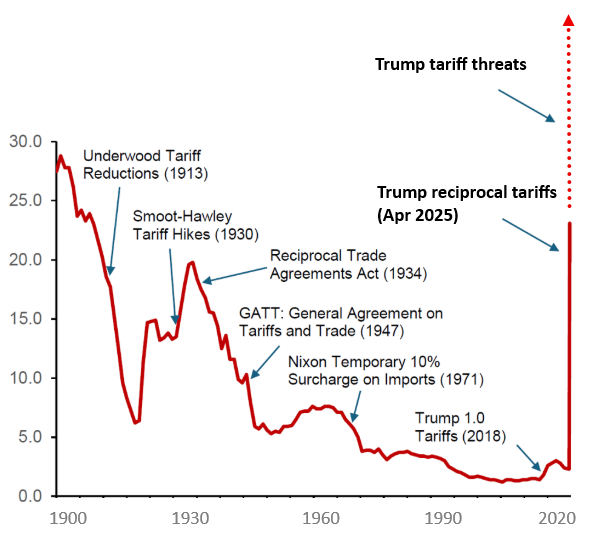
Source: White House, Bloomberg, MUFR GMR, author

Dark parallels

Global economic prospects have been fragile since 2008. A decade later, in 2018, the first Trump administration’s tariffs and deglobalization undermined a promising recovery, with the US imposing punitive tariffs on $400 billion worth of Chinese goods which affected more than 90% of the trade affected. 

Instead of building a multilateral front against trade protectionism, Western powers sought to appease the first Trump administration. That emboldened the Trump trade czars and contributed to the Biden administration’s fatal decision not to reverse his predecessor’s tariff decisions. 

Devoid of any meaningful economic rationale, the Trump tariffs go hand in hand with major austerity tremors, which are set to erode what is left of Roosevelt’s New Deal and Lyndon B. Johnson’s dream of Great Society. Perversely, the new focus is on massive rearmament, a new Cold War, and destructive geopolitics, including US complicity in the genocide in the Gaza Strip.

Once the tariffs’ full impact is felt, global economic prospects will suffer more shocks. Worse, the Trump administration is doing its best to obfuscate the destructive impact of its tariff stance by firing federal economists dedicated to monitoring economic data, in order to replace them with uber-conservative ideologues and data manipulation

The result is a darkening economic picture that could cause a “big correction” in US markets, as America’s big investment banks are now alerting their clients.

Global costs of fragmentation

Globalization fosters the flows of trade, investment and people. From 1950 to 2008, it reinforced integration among economies, thanks to technological progress, reduced transport costs, and offshoring of value activities across countries. Thereby, it also enabled the rise of the Asian dragons, China and India and more broadly the Global South.

Conversely, deglobalization reflects the retrenchment of such flows between countries. It fosters de-integration and fragmentation. During the first Trump administration, the Trump administration tried to exploit deglobalization to overcome the longstanding secular stagnation in the West, compounded by the US tariff wars.  

With the second Trump administration, the net effect is geoeconomic fragmentation, due to “a policy-driven reversal of global economic integration,” as the International Monetary Fund (IMF) calls it. It is neither automatic nor inevitable, but a US policy choice, with horrible economic and human consequences. With the resulting trade war contributing to the weakest global growth prospects in decades, geoeconomic fragmentation is feeding into another Cold War, which the world cannot afford.

In the late 2010s, deglobalization translated to slowing growth in the Global South. Today, global economic fragmentation is effectively curbing the rise of emerging and developing world

The original commentary was published by China Daily on August 12, 2025

Dr. Dan Steinbock is an internationally recognized visionary of the multipolar world and the founder of Difference Group. He has served at the India, China and America Institute (US), Shanghai Institutes for International Studies (China) and the EU Center (Singapore). For more, see https://www.differencegroup.net 

Tariffs: A Tax Increase Republicans Support Despite Pledges Never To Raise Taxes


Americans are afflicted with increasing economic inequality. We should therefore avoid regressive tax increases, which put the highest increase on poor or average Americans. But tariffs are highly regressive.
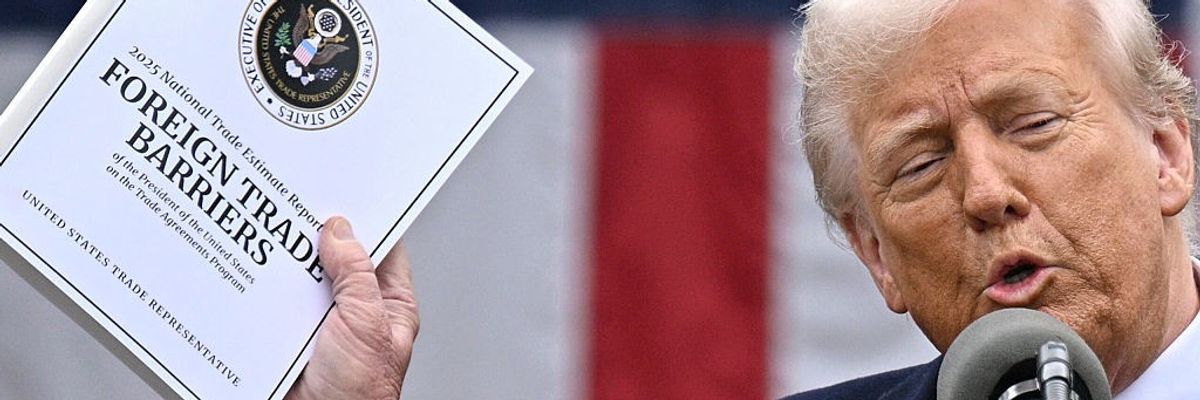


US President Donald Trump delivers remarks on reciprocal tariffs during an event in the Rose Garden entitled "Make America Wealthy Again" at the White House in Washington, DC, on April 2, 2025.
(Photo by Brendan Smialowski / AFP via Getty Images)
Common Dreams

For some decades most Republican members of Congress have taken the "Norquist Pledge" never to vote for tax increases. Many of them have carried this pledge even further by reducing the Internal Revenue Service budget, impairing the agency's ability to collect taxes that are already in the law books. Lately, however, these Republicans have supported major increases in federal taxes imposed by US President Donald Trump---high tariffs on goods imported into the United States.

Although Mr. Trump repeatedly speaks of "making Brazil pay, " "making China pay," etc., he is actually imposing a tax on goods imported into the US from those countries. This tax will either be passed along to American consumers in the form of higher prices, or it will be absorbed by the importing company, making it a tax on American business owners.

No money is coming in from Brazil or China.

These new taxes have been putting decent amounts of money into the federal treasury, which it certainly can use. But it is all coming in from Americans.

Congress clearly did not specifically authorize the president to impose tariffs on Brazil because it is prosecuting its former president for trying to remain in office after he lost an election.

I have often attacked the Norquist Pledge and accused politicians who take it of political malpractice, since changed circumstances may sometimes require tax increases to support needed spending or reduce out of control deficits. So why am I not happy that Republicans have found a way to weasel out of their pledge never to increase taxes?

Americans are afflicted with increasing economic inequality. We should therefore avoid regressive tax increases, which put the highest increase on poor or average Americans. But tariffs are highly regressive. Poor people must spend all of their meager incomes, mostly on goods. Better-off people save some of their income and spend more on services, which tariffs do not greatly affect.

Of course regressive taxes suit the interests of the wealthy, whose campaign donations politicians covet, and who also benefit from legislation impairing the ability of the IRS to audit them.

Unfortunately for Mr. Trump and his entourage, the claimed legal basis for his power to impose tariffs is extremely weak. Congress has authorized the president to adjust tariffs in unforeseen domestic or international emergencies. But Mr. Trump has pushed this authorization beyond all reasonable limits and has a propensity to declare emergencies that clearly are not emergencies.

In recent years the newly conservative US Supreme Court has invented a new "major questions" doctrine. This doctrine is not unreasonable. It says that when US Congress has authorized a government agency to regulate something, if that agency enacts a regulation that has large scale consequences, the court will strike that regulation down unless Congress has clearly and specifically authorized that kind of regulation.

The tariffs are a presidential action, not that of a government agency, but this is an even more appropriate case for applying the major questions doctrine. Government agencies can only impose new regulations after lengthy deliberations required by the Administrative Procedures Act. Unlike federal administrative agencies, the president—claiming congressional authorization—can just do things without any required procedures or consultation.

Congress clearly did not specifically authorize the president to impose tariffs on Brazil because it is prosecuting its former president for trying to remain in office after he lost an election. And it clearly did not specify that the president could increase tariffs in order to increase federal revenues, or to deal with imaginary emergencies that he himself dreamed up.

Presidentially imposed tariffs are obviously a case where the major questions doctrine would be an appropriate guide to the justices.

No doubt the court's conservative majority invented the major questions doctrine because it supported some decision that they wanted to make. Fair enough. But will they respect this doctrine when it requires a decision they do not want to make?

Our work is licensed under Creative Commons (CC BY-NC-ND 3.0). Feel free to republish and share widely.


Paul F. Delespinasse, who now lives in Oregon, is professor emeritus of political science at Adrian College in Michigan. He can be reached via his website, www.deLespinasse.org.
Full Bio >


House Report Warns Trump Tariffs Could Stymie US Manufacturing for 'Years to Come'

Democrats on the Joint Economic Committee said that "continued uncertainty" caused by the president's policies could reduce manufacturing investments by nearly half a trillion dollars by the end of this decade.
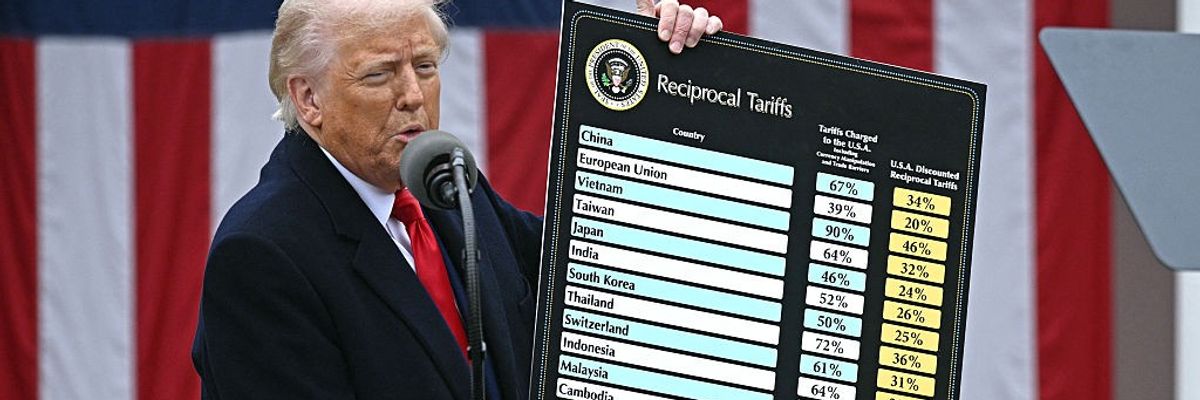

US President Donald Trump holds up a chart of "reciprocal tariffs" while speaking during a “Make America Wealthy Again” trade announcement event in the Rose Garden at the White House on April 2, 2025 in Washington, DC
(Photo by Brendan Smialowski/AFP via Getty Images)

Brett Wilkins
Aug 18, 2025
COMMON DREAMS


US President Donald Trump's tariff whiplash has already harmed domestic manufacturing and could continue to do so through at least the end of this decade to the tune of nearly half a trillion dollars, a report published Monday by congressional Democrats on a key economic committee warned.

The Joint Economic Committee (JEC)-Minority said that recent data belied Trump's claim that his global trade war would boost domestic manufacturing, pointing to the 37,000 manufacturing jobs lost since the president announced his so-called "Liberation Day" tariffs in April.

"Hiring in the manufacturing sector has dropped to its lowest level in nearly a decade," the Democrats on the committee wrote. "In addition, many experts have noted that in and of itself, the uncertainty created by the administration so far could significantly damage the broader economy long-term."

"Based on both US business investment projections and economic analyses of the UK in the aftermath of Brexit, the Joint Economic Committee-Minority calculates that a similarly prolonged period of uncertainty in the US could result in an average of 13% less manufacturing investment per year, amounting to approximately $490 billion in foregone investment by 2029," the report states.

"The uncertainty created by the administration so far could significantly damage the broader economy long-term."

"Although businesses have received additional clarity on reciprocal tariff rates in recent days, uncertainty over outstanding negotiations is likely to continue to delay long-term investments and pricing decisions," the publication adds. "Furthermore, even if the uncertainty about the US economy were to end tomorrow, evidence suggests that the uncertainty that businesses have already faced in recent months would still have long-term consequences for the manufacturing sector."

According to the JEC Democrats, the Trump administration has made nearly 100 different tariff policy decisions since April—"including threats, delays, and reversals"—creating uncertainty and insecurity in markets and economies around the world. It's not just manufacturing and markets—economic data released last week by the Bureau of Labor Statistics showed that businesses in some sectors are passing the costs of Trump's tariffs on to consumers.

As the new JEC minority report notes:
As independent research has shown, businesses are less likely to make long-term investments when they face high uncertainty about future policies and economic conditions. For manufacturers, decisions to expand production—which often entail major, irreversible investments in equipment and new facilities that typically take years to complete—require an especially high degree of confidence that these expenses will pay off. This barrier, along with other factors, makes manufacturing the sector most likely to see its growth affected by trade policy uncertainty, as noted recently by analysts at Goldman Sachs.

"Strengthening American manufacturing is critical to the future of our economy and our national security," Joint Economic Committee Ranking Member Maggie Hassan (D-N.H.) said in a statement Monday. "While President Trump promised that he would expand our manufacturing sector, this report shows that, instead, the chaos and uncertainty created by his tariffs has placed a burden on American manufacturers that could weigh our country down for years to come."
Corporate Greed and National Interests Torpedoed the UN Plastics Treaty

The latest round of negations show just how difficult it is to enforce humanitarian and ecological objectives which go against the interests of the oil industry and oil-producing countries.


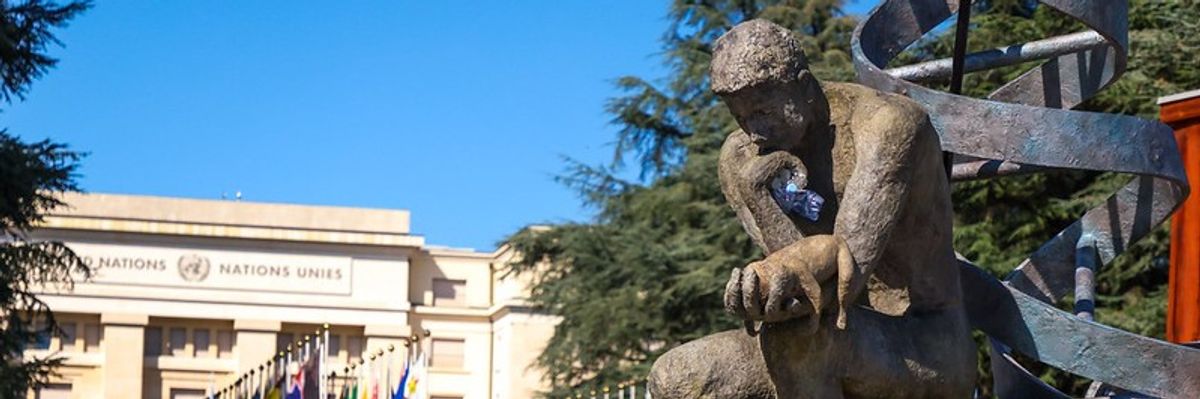
The sculpture "The Thinker's Burden" by Benjamin Von Wong is displayed outside the United Nations plastics treaty negotiations in Geneva.
(Photo by Florian Fussstetter/UNEP/Flickr/CC BY-NC-SA 4.0)

Dr. Norbert StuteKlaus MoeglingRachael Mellor
Aug 19, 2025
Common Dreams


A legally binding Global Plastics Treaty was first proposed in March 2022 when 175 nations signed a resolution at the United Nations Environment Assembly committing to draft the treaty. Negotiations have, however, been stalled by disagreements for years.

This treaty was seen as our greatest chance to address the plastics crisis on a global scale across its entire lifecycle, from production to disposal. In August 2025, at the Intergovernmental Negotiating Committee (INC)-5.2, 184 countries negotiated the details of the agreement in Geneva, resulting in an outcome that many have labelled a failure.

The Plastics Crisis

Plastic was once hailed as a great invention, but is now increasingly seen as a considerable risk to human health, the environment, and the economy. In a 2016 report, the World Economic Forum found that, at current rates, it is predicted that without a solution, "Oceans will contain more plastic than fish by 2050."

Plastics production has increased twentyfold since 1964, and now 360 million metric tons of plastic waste is created every single year. Just 9% of this is recycled effectively. One-third will end up in fragile ecosystems such as the world's oceans. Plastic production is set to triple by 2060.

There are about 16,000 different plastic chemicals, the effects of which are still largely unexplored; this includes per- and polyfluoroalkyl substances (PFAS) and other forever chemicals. Toxic chemicals now pose one of the greatest threats to humanity, alongside the climate crisis, species extinction, and nuclear weapons.

As with the fossil fuels industry, big tobacco, and the arms trade, profits are privatized, but the burden is carried socially.

There are already five marine regions which are completely contaminated with plastic and can no longer support life. The most infamous is the Great Pacific Garbage Patch in the North Pacific, which is twice the size of Texas.

Plastic is now considered a health risk with an estimated cost of up to $1.5 trillion per year. Plastic is inhaled from the air and consumed in food and drinks. Tiny microplastic particles have been found in human blood, brains, intestines, and placentas, which can cause cancer, heart attacks, and strokes. Once they have entered the environment, microplastics cannot ever be removed.

The vast majority of synthetic plastics are derived from crude oil, natural gas, or coal. The transition away from fossil fuels in the energy sector has led many fossil fuel companies to shift their attention to the plastics industry, building new manufacturing sites and ramping up production. Plastics play a significant role in the climate crisis and are responsible for 5% of global greenhouse gas emissions—twice as much as global air traffic.

Mismanagement of plastic waste results in the vast majority of it being discarded, burned, or relocated to poorer regions of the world, where it is released back into the environment and ultimately finds its way into our oceans.


UN Plastics Treaty Conferences


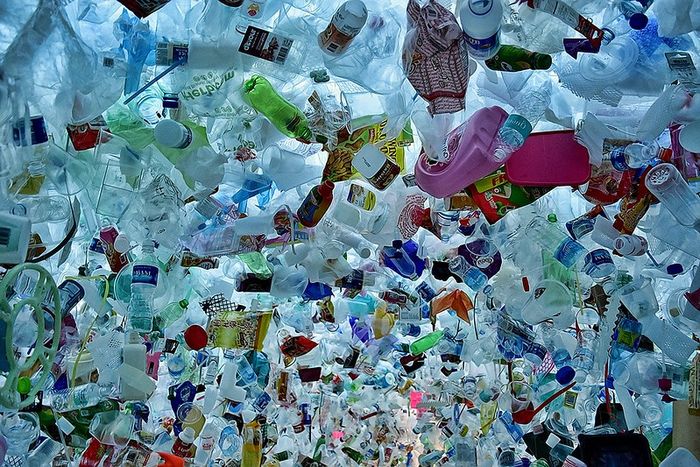
An installation of wasted materials turned into art by Tan Zi Xi is shown.
 (Photo by Choo Yut Shing/Flickr/CC BY-NC-SA 2.0)

There have so far been six rounds of talks organized by the UN Environment Programme (UNEP), none of which have resulted in a consensus. The previous session of the Intergovernmental Negotiating Committee (INC-5.1) in Busan, South Korea was unable to overcome opposition to an international plastics treaty and adjourned until the next year.

The main points of contention were the inclusion of mandatory caps on plastic production and the use of toxic chemicals in processing.

Oil and gas-producing countries such as Saudi Arabia, Russia, Iran, Egypt, Kuwait, and the USA have been stalling progress, as they oppose production targets and prefer to focus on waste management. The UNEP conferences have been swarmed by fossil fuel lobbyists who have been very much part of the pressure groups blocking a strong deal.

The INC-5.2 took place in Geneva from 5-15 August 2025. Representatives from 184 countries and numerous national and international nongovernmental organisations (NGOs) took part under the auspices of the United Nations. It was the largest round of international negotiations since the Paris Climate Agreement in 2015 and the UN Biodiversity Summits.
Outcome of the Plastics Treaty Talks (INC-5.2)


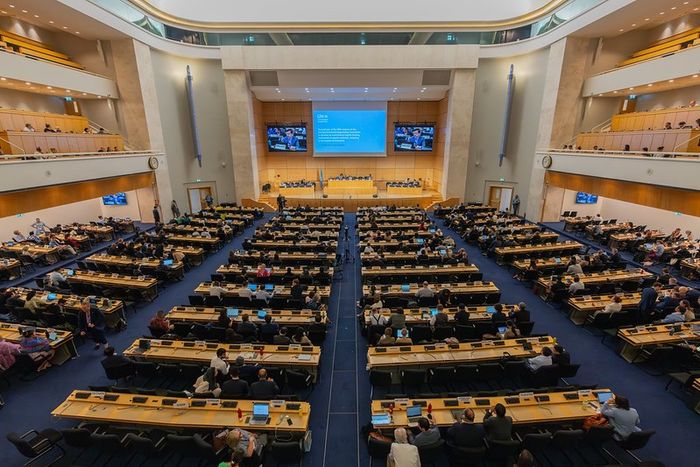
The UNEP INC-5.2 Plenary is shown.
 (Photo by Alejandro Laguna Lopez/UNEP/Flickr/CC BY-NC-SA 4.0)

The talks formally closed on August 15 without a deal—a historic opportunity missed. Two days before the decision was made, chairman Luis Vayas Valdivieso presented a proposal that was deemed unsatisfactory by the conference delegates. The draft practically dropped all measures to reduce plastic production and referred mainly to the handling of plastic waste that has already entered the environment.

The conference was extended by one day, which left just hours to find a compromise. A revised draft was submitted by the chair at the last hour. It was also deemed not fit for discussion by high-ambition countries as it omitted the key concepts of reducing plastic production, regulating chemicals of concern, and creating a fund to tackle plastic injustice in the Global South.

Forming a coalition of the willing, which excludes states blocking the deal, will enable countries that want a strong plastics treaty to fulfil their mandate without obstacles and move forward together.

The main obstacle to securing a strong deal was the UN's requirement for consensus in decision-making. For years, delegations have been urging a reform to a democratic voting system, allowing drafts to be approved with a two-thirds majority. Most governments support a strong treaty. The consensus process bows to low-ambition countries, who are backed by powerful corporations intent on blocking real solutions.

Colombia's delegate, Sebastián Rodríguez, blasted the talks, stating that "the negotiations were consistently blocked by a small number of states who simply don't want an agreement." Even French President Emmanuel Macron stepped in to call for a successful conclusion in the interest of future generations.

There is currently no confirmed date or venue for the next round of negotiations.

High Ambition Coalition—Supporters of a Strong Plastics Treaty

Co-headed by Norway and Rwanda, a group of like-minded countries have formed The High Ambition Coalition made up of many European countries, including the UK, Germany, and France, many small island nations, Japan, many Latin American countries, and even the UAE.

Their common goal is to end plastic pollution by 2040 and implement a strong plastics treaty which is both legally binding and effectively monitored. In preparation for the INC-5.2, the coalition drafted the Nice Wake-up Call in June 2025.

Their three primary objectives are:Restrain plastic production and consumption to sustainable levels;
Introduce a circular economy for plastics; and
Implement environmentally sound management of plastic waste globally.

Solutions for the Plastics Crisis

Civil society organizations such as the Scientists' Coalition for an Effective Plastic Treaty, Business Coalition for a Plastics Treaty, Break Free From Plastic, Greenpeace, WWF, IPEN, the Center for International Environmental Law, GAIA, Environmental Justice Foundation, and groups of Indigenous peoples are calling for:Regulations which significantly limit production for producers by at least 40%;
A plastic tax on plastic products;
Annual financing of $240 billion by 2040 to establish a global waste management system—far less than the costs of doing nothing;
Implementing a polluter pays principle;
Banning single-use plastics, which make up half of plastic use and two-thirds of short-lived plastic waste;
The integration of the plastics crisis into school curricula to help instil correct behaviors regarding plastic use and disposal; and
Reuse, refill, and bottle return initiatives to enable efficient recycling.

Plastic credits and carbon offset schemes are not a viable solution. They merely enable uninhibited plastic production under the guise of offsetting emissions elsewhere. The incineration of plastic must also be minimized as a method of plastic disposal, as it adds even further carbon to our atmosphere.

The Road Forward for a Plastics Treaty

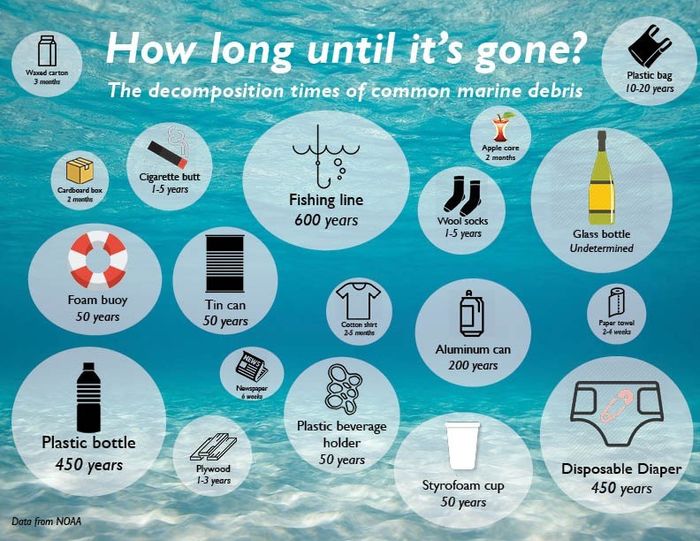
The decomposition times of marine debris are shown.
 (Photo by Zephyrschord/CC BY-SA 4.0

Just seven countries are responsible for the production of two-thirds of the four most widely used types of plastic worldwide. China leads by a wide margin, producing as much plastic as the next six largest producers. The USA follows in second place, producing more than the countries in the EU combined. The countries with the highest plastic consumption per capita are the USA, closely followed by South Korea and Australia.

The plastics crisis does not respect geographical boundaries; the whole of humanity must consume and produce less plastic. The technology and materials for replacing plastic with more ecologically compatible materials are already a reality. The plastics industry needs to be refocused and jobs transformed.

As with the fossil fuels industry, big tobacco, and the arms trade, profits are privatized, but the burden is carried socially. This strategy is now an institutionalised playbook. Profits must not take precedence over environmental and health concerns. Lobbyists must be excluded from negotiations.

This conference shows just how difficult it is to enforce humanitarian and ecological objectives which go against the interests of the oil industry and oil-producing countries. The failed deal is a metaphor for global conflicting interests, a lack of ability to compromise, and the shortsighted behavior of profiting states and companies.

An eye-opening meta study from 2024 revealed the following:
We reviewed economic and environmental studies on global plastic pollution and we estimate the global cost of actions toward zero plastic pollution in all countries by 2040 to be US$ 18.3-158.4 trillion (cost of a 47% reduction of plastic production included). If no actions are undertaken, we estimate the cost of damages caused by plastic pollution from 2016 to 2040 to be US$ 13.7–281.8 trillion. These ranges suggest it is possible that the costs of inaction are significantly higher than those of action.

How long does humanity want to go on like this?

The High Ambition Coalition should continue to organize, expand its networking, and initiate the next round of negotiations with a well-prepared draft. Forming a coalition of the willing, which excludes states blocking the deal, will enable countries that want a strong plastics treaty to fulfil their mandate without obstacles and move forward together.

Individually, we can reduce our purchases and consumption of plastic and improve our management of plastic waste. Individuals can seek out alternative products such as those made from natural materials or bioplastics, which are biodegradable.

Environmental education, which informs politicians and citizens about the extent and consequences of plastic waste, is essential. It promotes ecological commitment, civil society engagement, and informed voting behavior.

Environmental protection can be enforced by legal action. The climate ruling by the International Court of Justice on July 23, 2025, initiated by Vanuatu, officially states that the human right to a clean, healthy, and sustainable environment is protected by law. Legal action can and should also be taken to reduce plastic production and pollution.

The online platform Better World Info has extensively researched and documented the Plastics Crisis and the Global Plastics Treaty. It provides additional resources and proposed solutions.


Our work is licensed under Creative Commons (CC BY-NC-ND 3.0). Feel free to republish and share widely.

Dr. Norbert Stute
Dr. Norbert Stute is a physician and the founder and coordinator of the nonprofit information platform betterworld.info.
Full Bio >
Klaus Moegling
Prof. Dr. Klaus Moegling is a political scientist, sociologist, and author of the book "Realignment. A peaceful and sustainably developed world is (still) possible." Which you can read here: https://www.klaus-moegling.de/international-edition/
Full Bio >
Rachael Mellor
Rachael is a key writer for the nonprofit platform Better World Info, which focuses on global issues such as peace, human rights, environment, and social justice. Her articles are also published in The Transnational and Peace News. Follow her work at www.betterworld.info and @BetterWorldInfo.
Full Bio >
Pastor tests new IRS endorsement rule by backing AOC – and loses church

Travis Gettys
August 19, 2025 
RAW STORY


Alexandria Ocasio-Cortez Image via Daniel Lehrhaupt/Shutterstock

A Lutheran pastor in Wisconsin intended to test new Internal Revenue Service rules and endorse a candidate from the pulpit before his plan went wrong and left him without a church.

The Rev. Jonathan Barker had planned to throw his support behind a Democratic candidate after the IRS appeared to carve out an exception to federal law prohibiting churches from making political endorsements, saying that should not apply to preachers speaking to their own congregations. Instead he lost his flock, reported the New York Times.

"Pastor Barker, an outspoken liberal, was ready for the change," the Times reported. "He had written a sermon urging Representative Alexandria Ocasio-Cortez, Democrat of New York, to run for president in 2028. His denomination, the Evangelical Lutheran Church in America, was not so ready."

"As a result, when Sunday came, Pastor Barker was no longer the pastor of Grace Lutheran," the newspaper added.

The pastor gave his sermon that Sunday, describing Ocasio-Cortez as a “what-would-Jesus-do candidate," but in a borrowed event space to a congregation of nine instead of his former church across town in Kenosha.

“I am very proud, as a pastor, to endorse AOC to be the love-your-neighbor presidential candidate,” he told the small gathering.

Two churches in Texas and a group of religious broadcasters had sued the IRS last year seeking to invalidate the 1954 Johnson Amendment revoking their tax-exempt status for endorsing political candidates, and the agency agreed to settle the case after President Donald Trump took office, loosening restrictions on individual pastors – which religious conservatives interpreted as a green light to activism.

“There’s 18,000 that’s ready to go,” Barker said, referring to the number of preachers the Family Research Council is trying to organize before next year's midterm elections, "and there’s none of us ready to go.”

The 41-year-old Barker had been trying to rejuvenate his church, which had dwindled from 1,500 attendees in the 1950s to 20 or 30 people on most Sundays, by focusing on liberal causes, and he did not provide advance notice to church leaders about his plan but instead sent out a news release to reporters, hoping to encourage other progressive-minded pastors to join him in advocacy.

“I said, ‘Jon, we just agreed as a group that this is not a good idea,’” said Bishop Paul D. Erickson, who oversees churches in southeast Wisconsin, after catching wind of the plan.

Erickson urged Barker to reconsider because his advocacy could potentially jeopardize the tax exemption for the denomination’s other churches.

“You are putting them at risk without their knowledge or consent,” Erickson said he told the pastor.

Instead, Barker resigned, leaving Erickson to face questions from the rest of their congregation.

"Their questions were not about politics," the Times reported. "Who had keys to the front door? Who knew the Facebook password? Would the diaper bank be discontinued? Was the church going to survive?"

"Bishop Erickson said they would figure the answers out together," the paper added.


This Wisconsin pastor wrote a sermon endorsing AOC for president — then he lost his job


Rep. Alexandria Ocasio-Cortez (D-New York) at the 2024 Democratic National Convention in Chicago on August 19, 2024 (Maxim Elramsisy/Shutterstock.com)

August 19, 2025 
ALTERNET

Far-right white evangelicals are applauding a new Internal Revenue Service (IRS) rule that allows pastors to make political endorsements in the pulpit, including the Family Research Council. But Christianity is far from monolithic, and individual churches don't necessarily approve of the practice even though the IRS is now allowing it.

In Kenosha, Wisconsin, the Rev. Jonathan Barker found that out the hard way.

Barker, until recently, preached at the Grace Lutheran Church, where the liberal/progressive Mainline Protestant pastor planned to give a sermon endorsing Rep. Alexandria Ocasio-Cortez (D-New York) for president in the United States' 2028 election. But when the church objected — regardless of the new IRS rule — he ended up resigning, according to the New York Times.

READ MORE: 'Complete 180' and 'hot mic moment': Brutal CNN supercut reveals how Trump got played by Putin

Barker still gave the pro-AOC sermon, but not in the Grace Lutheran Church pulpit.

In an article published on August 19, Times reporters David A. Fahrenthold and Elizabeth Dias explain, "The odd battle that played out last week over one sermon for one Lutheran congregation in Kenosha, an industrial city on Lake Michigan, was an illustration of the sharply different ways that American churches have responded to the IRS' surprise reinterpretation of the decades-old law. It may have also foreshadowed many similar fights to come."

The journalists continue, "The fight was set in motion by a lawsuit that two Texas churches and a group of religious broadcasters filed against the IRS last year, seeking to invalidate a 1954 law called the Johnson Amendment. That law, introduced by then-Sen. Lyndon B. Johnson, said that churches and charities could lose their tax-exempt status if they endorsed candidates for office. The plaintiffs said it was an unconstitutional limit on free speech."

Back in 1993, the late Rev. Jerry Falwell Sr.'s show "The Old-Time Gospel Hour" was fined $50,000 by the IRS and lost its tax-exempt status for two years because of his overtly political activity in the pulpit. Falwell, founder of the Moral Majority and father of former Liberty University President Jerry Falwell Jr., was a leading religious right figure who drew scathing criticism from the late Sen. Barry Goldwater (R-Arizona) — an influential conservative who believed that Falwell and other far-right evangelicals were terrible for the GOP and the conservative movement.

Fahrenthold and Dias note that Christian churches are hardly in lockstep when it comes to political endorsements.

"The Family Research Council, an advocacy group that promotes conservative values, is already trying to organize 18,000 pastors for next year's midterm elections," the Times reporters explain. "But leaders of the Roman Catholic Church and some Mainline Protestant denominations, including the Evangelical Lutherans, have told their pastors to refrain from endorsements, maintaining their earlier practices. Many said they worried that endorsing candidates would drive away members, and drag their divine lessons into the mud of earthly politics."

Read the full New York Times article at this link (subscription required)