Sunday, August 24, 2025

Famine in killing fields of Gaza

Abbas Nasir 
Published August 24, 2025
DAWN
The writer is a former editor of Dawn.

THE UN says there is a famine in Gaza.

Yes, the killing fields of Gaza are seeing another weapon — starvation — being deployed, because the Israeli Occupation Forces (IOF), under orders from the Netanyahu government, are not content with killing 60,000 people — a figure which its own database says included, in the first phase of the war, 83 per cent unarmed civilians. If the first phase set a trend that continues, then some 50,000 innocent civilians have been killed so far.

The blockade clamped by IOF, also known as IDF (Israeli Defence Forces), has triggered a famine. Malnutrition and death stalk the Strip as the UN says that one in five households, some half a million Gaza Palestinians, are facing an acute food and nutrition deficit, and one in three children or more are acutely malnourished. Similarly, two per 10,000 people are dying daily due to malnutrition and disease. Soul-destroying numbers, you’d agree

The web-based +972 Magazine, run by Israeli and Palestinian journalists, has published a story based on the Israeli ministry of intelligence’s database, which says that of those killed by Israel in the first phase, only 17pc are identified as Hamas militants or other combatants. The rest were unarmed civilians. This when Israel was claiming a high ‘kill ratio’ of 50pc to 60pc of militants. The report also says of those killed, 60pc were women and children.

It seems that starvation and killings are not enough to achieve the goal of total and expeditious ethnic-cleansing of Gaza. So, Nobel Peace Prize aspirant US President Donald J. Trump has greenlit Israeli Prime Minister Benjamin Netanyahu’s Gaza occupation plan for which a 60,000-strong IOF force has been assembled. Reservists in multiples of that number are being recalled to duty.


There can be no doubt that the apartheid state enjoys unparalleled impunity to kill, maim and forcefully displace Palestinians.

This occupation plan and the UN designation of the situation in Gaza as a famine has stirred the conscience of ‘civilised and democratic’ Europe enough for its leaders to quickly issue perfunctory statements of disapproval — while continuing to supply the apartheid state with advanced weaponry, vital parts and other defence equipment.

There can be no doubt that the apartheid state enjoys unparalleled impunity to kill, maim and forcefully displace Palestinians not just in Gaza but also in the West Bank where settlers backed by IOF personnel have been on the rampage. The story of the Palestinians in Jerusalem is no different.

And this impunity extends to American soil too. Just Google to see how many Israeli paedophiles have been arrested by joint FBI Police and Homeland Security taskforces and then bailed out and allowed to return home. The story of the latest such incident was broken by independent journalist Shaun King on X.

Tom Alexandrovich was caught this month in a joint taskforce sting targeting paedophiles when he tried to lure a decoy underage girl for sex and used explicit language in his messages to her. A lot of reporting on the issue has been deleted by X but try and search for a video recorded by the Nevada law-enforcement officers where he is seen saying “Sorry, I didn’t mean to do anything”, in a daze, minutes after having been caught. When I checked last, it was there on the handle Ultras_antifaa on X.

While a lot of information is available online, this powerful man, who told law-enforcement officers he was in the US for meetings with the NSA and FBI, had a lot of content taken down by X and also wiped off other internet sites where the matter was being reported.

Why did he have such influence? Well, he heads the department in Israel which is behind the agency’s ‘take down’ requests to, for example, X. He is one of Netanyahu’s top aides and his social media profile says “Executive Director, Israel National Cyber Directorate, Building National Cyber Security, AI for Defence, Threat Intelligence (CTI), Aviation Security”.

King reported that taskforce officers involved in the sting operation and arrest confirmed to him that the “Trump administration personally intervened, at Israel’s request, to override US law enforcement, including their own federal agents involved in the sting, to make sure Alexandrovich got back to Israel quickly and safely”. The officers confirmed that the arrested man did not have a diplomatic visa or any kind of diplomatic immunity.

Alexandrovich’s department works in close coordination with NSO, the developer of the Pegasus spying software that governments around the world use to snoop on confidential conversations of their own citizens as well as foes. In all likelihood, the department snoops on foreign players and governments. He has also posted about making presentations to Netanyahu on projects to protect his country and undermine the adversaries.

Now imagine if the citizen of any other country was caught while attempting to lure a minor for sex. The US has cancelled the student visas and ruined the lives of a large number of foreign students for merely exercising their freedom to protest peacefully against Israeli atrocities in Gaza. It has also blocked visas to overseas students admitted to US colleges because their social media timelines show them to be critical of Israel.

And in the US, the Nevada state attorney, whose personal social media account (since deleted) had multiple posts supporting Israeli actions and the annihilation of Palestinians and the Clark County district attorney (both US-Israeli dual nationals) played their part in freeing a man charged with a serious offence that carries a jail term of up to 10 years. They happily complied with the Trump administration’s request and freed him on bail.

This story is shared here because you are unlikely to have read it on Western media, the self-proclaimed citadel of free speech. The purpose of sharing this was also to underline the sort of leverage the apartheid state has over the US. The one major consequence is the fate of Palestine and the Palestinians.

abbas.nasir@hotmail.com

Published in Dawn, August 24th, 2025
Kneecap to play Paris concert in defiance of objections

Paris (AFP) – Irish rap group Kneecap, one of whose members faces a British terror charge for allegedly supporting Hezbollah, are to perform outside Paris on Sunday, despite objections from French Jewish groups and government officials.


Issued on: 24/08/2025 

The trio's performance at Glastonbury generated immense controversy © Oli SCARFF / AFP

The local authorities have also withdrawn their subsidies for the music festival where the trio will play -- the annual Rock en Seine festival, held in the Paris suburb of Saint-Cloud -- after organisers kept the controversial band on the programme for their slot from 1630 GMT.

Strongly backing the Palestinian cause and bitterly criticising Israel, the group from Northern Ireland, which is part of the UK, have turned concerts into political events.

Liam O'Hanna, 27, who performs under the stage name Mo Chara, was charged in England in May accused of displaying a flag of the Lebanese militant group Hezbollah during a London concert in November.

They played a closely scrutinised concert at the Glastonbury Festival in June, where Chara declared: "Israel are war criminals."

The group later missed playing at the Sziget Festival in Budapest after being barred from entering the country by the Hungarian authorities, a close ally of Israel.

Kneecap, who also focus on Irish republicanism, are controversial within the UK and Ireland, more than two-and-a-half-decades after the peace agreement that aimed to end the conflict over the status of Northern Ireland.

The group takes its name from the deliberate shooting of the limbs, known as "kneecapping", carried out by Irish Republicans as punishment attacks during the decades of unrest.
'Confident'

"We are confident that the group will perform in the correct manner," Matthieu Ducos, director of Rock en Seine, told AFP ahead of the festival.

The municipality of Saint-Cloud for the first time withdrew its 40,000-euro ($47,000) subsidy from Rock en Seine.

The wider Ile-de-France region that includes Paris also cancelled its funding for the 2025 edition.

However, such moves do not jeopardise the viability of the festival, whose budget was between 16 million and 17 million euros this year.

The group has already played twice in France this summer -- at the Eurockeennes festival in Belfort and the Cabaret Vert in Charleville-Mezieres -- both times without incident.

But the concert comes against a background of concerns about alleged high levels of antisemitism in France in the wake of the October 7, 2023 attack by Palestinian militant group Hamas on Israel and the devastating assault on the Hamas-ruled Gaza Strip that Israel launched in response.

"They are desecrating the memory of the 50 French victims of Hamas on October 7, as well as all the French victims of Hezbollah," said Yonathan Arfi, president of the Representative Council of Jewish Institutions of France (CRIF), calling for the concert to be cancelled.

Interior Minister Bruno Retailleau said vigilance would be required against "any comments of an antisemitic nature, apology for terrorism or incitement to hatred" at the event.

© 2025 AFP


What is Palestine Action, the protest movement banned under UK terror act?


Founded in 2020, the British pro-Palestinian group Palestine Action was branded a “terrorist organisation” and banned by the UK government on July 5. Since then, more than 700 people have been arrested for showing their support for the group. Critics say the ban is an abuse of anti-terrorism law and an attack on civil liberties.


Issued on: 22/08/2025 - FRANCE24
By: Cyrielle CABOT


Protesters hold placards at a "Lift The Ban" demonstration in support of the proscribed group Palestine Action, calling for the recently imposed ban to be lifted, in Parliament Square, central London, on August 9, 2025. © Henry Nicholls, AFP


The award-winning Irish novelist Sally Rooney says she will continue to support the pro-Palestinian group Palestine Action despite the recent UK law banning the group as a terrorist organisation.

In an August 16 opinion column in the Irish Times, Rooney, 34, said: "I too support Palestine Action. If this makes me a ‘supporter of terror’ under UK law, so be it.”

Author of the bestsellers “Normal People”, and “Intermezzo”, Rooney says that she will use income derived from BBC television adaptations of her novels to fund the movement.

“I intend to use these proceeds from my work, as well as my public platform generally, to go on supporting Palestine Action and direct action against genocide in whatever way I can,” she wrote.

But this commitment could cost her dearly. Since July 5, being a member of the group or supporting it – especially financially – are now criminal offences punishable by up to 14 years in prison.


Destruction of property, occupation, red paint...


Palestine Action was launched in 2020 by activist Huda Ammori. Born near Manchester to a Palestinian father and Iraqi mother, the 30-year-old initially campaigned with the Palestine Solidarity Campaign, the largest British pro-Palestinian group, promoting boycotts against Israel and lobbying British MPs.

But in 2020, frustrated by the “ineffectiveness of traditional campaigns”, she decided to quit her job and join forces with Richard Barnard, a long-time activist with the climate action group Extinction Rebellion. Together, they founded Palestine Action with the goal to denounce “British complicity" with the State of Israel, particularly on the issue of arms sales.

Palestine Action follows Extinction Rebellion's tactics of civil disobedience – occupying company premises, spray-painting buildings with red paint, destroying equipment or having activists chain themselves to factory gates. The group favours direct action and increasingly resorts to acts of vandalism.

Initially, the group mainly targeted the British subsidiaries of Elbit Systems, Israel's largest arms manufacturer. In September 2020, activists occupied one of Elbit’s factories in Shenstone, north of Birmingham. But gradually, Palestine Action expanded its activities and began targeting banks, universities, insurance companies and government offices, as a way to highlight links to Israel it finds objectionable.

In 2022, members of the group stormed a site belonging to French defence contractor Thales in Glasgow, armed with smoke bombs and banners. In March 2024, its activists damaged a portrait of former UK Prime Minister Arthur Balfour, co-author of the Balfour Declaration of 1917, which supported a "home for the Jewish people" in Palestine.

An activist sprays red paint and then slashes a portrait of Lord Arthur James Balfour at Trinity College, Cambridge. © AFP

The group has stepped up its campaign of civil disobedience since the start of the war in Gaza, in which more than 60,000 Gazans have been killed, the vast majority of them civilians, according to health officials in the Palestinian territory.

Read more London police arrest at least 522 supporters of banned pro-Palestine group

According to The Sunday Times, Palestine Action carried out 170 acts of protest in 2024, up from 17 in 2020. Its actions included vandalising the BBC and Foreign Office buildings with paint and blocking dozens of businesses.

In March 2025, Palestine Action made headlines for targeting a golf course owned by US President Donald Trump in Turnberry, Scotland. After daubing paint on one of the buildings, activists wrote “Gaza is not for sale” in capital letters on one of the greens. This was a reference to Trump’s plan to transform the Gaza Strip into the "Riviera of the Middle East", a plan denounced by the UN chief as support for ethnic cleansing.

Things came to a head on June 20, when several Palestine Action members infiltrated the UK's largest air force base at Brize Norton and damaged two military aircraft. The damage was estimated at £7 million (€8 million) .

Read more UK moves to ban protest group Palestine Action

Prime Minister Keir Starmer’s government quickly introduced legislation to ban Palestine Action. The bill was passed a few days later by Parliament, which added the group to its list of “terrorist organisations”. Its name now appears alongside those of other proscribed groups like Hamasal Qaeda, the Russian paramilitary group Wagner and certain neo-Nazi groups.

The ban means it is now illegal to be a member of Palestine Action or to show support for the group – even wearing a T-shirt bearing its logo.

Home Secretary Yvette Cooper justified the ban in a statement to the House of Commons on June 23: “Since its inception in 2020, Palestine Action has orchestrated a nationwide campaign of direct criminal action against businesses and institutions, including key national infrastructure and defence firms,” she said. “Its activity has increased in frequency and severity since the start of 2024 and its methods have become more aggressive, with its members demonstrating a willingness to use violence.”
More than 700 arrests

But the ban has not discouraged activists supporting the Palestinian cause, quite the contrary. Since Palestine Action was banned, demonstrations of support for the group have taken place across the country.

More than 700 people have been arrested for defying the ban and around 60 are facing prosecution, solely for supporting Palestine Action, notably by holding up placards during non-violent protests.

Among those arrested were the award-winning poet Alice Oswald and many ordinary citizens – both young and not so young. According to the Metropolitan Police, half of those arrested during a demonstration organised in early August were over 60 years old.

The images of people arrested simply for holding up placards that say, “I oppose genocide, I support Palestine Action”, shared on social media, helped spark a public outcry in the country. Many people have denounced a “disproportionate” decision and an “attack on freedom of expression and the right to protest”.

“Hundreds of people are facing potential prison sentences for sitting quietly holding placards. It isn’t difficult to see why this could be a disproportionate restriction on people’s freedom of expression,” notes Areeba Hamid, co-executive director of Greenpeace UK.
A ‘confusion between protest and terrorism’

In an open letter published on August 6 in The Guardian, 52 academics and writers, including philosophers Judith Butler and Angela Davis, called on the government to reverse its decision. They denounced the ban as “an attack both on the entire pro-Palestine movement and on fundamental freedoms of expression, association, assembly and protest".

Lawyers’ organisations including the Network for Police Monitoring (Netpol) have sent letters to Cooper deploring the ban.

Netpol’s letter says that “proscription of a direct-action protest group is an unprecedented and extremely regressive step for civil liberties".

“The conflation of protest and terrorism is the hallmark of authoritarian regimes. Our government has stated that it is committed to respecting the rule of law: this must include the right to protest,” the group says.

“To use the Terrorism Act to ban Palestine Action from direct action would be an abuse of this legislation and an interference with the right to protest” – and “a terrifying blow to our civil liberties”, Netpol adds.

Internationally, the proscription raises questions even at the highest levels of the United Nations.

According to the UN High Commissioner for Human Rights, Volker Türk, the ban “raises serious concerns that counter-terrorism laws are being applied to conduct that is not terrorist in nature”.

Türk points out that “according to international standards, terrorist acts should be confined to criminal acts intended to cause death or serious injury or to the taking of hostages, for purpose of intimidating a population or to compel a government to take a certain action or not”.

To date, no one has been injured by the actions of Palestine Action.

The ban on Palestine Action was immediately challenged in court by the group's co-founder Ammori. Her appeal is scheduled to be heard in November.

This article has been translated from the original in French.

UN declares famine in Gaza, first ever in the Middle East

Rome (AFP) – The United Nations on Friday officially declared a famine in Gaza, the first time it has done so in the Middle East, with experts warning 500,000 people face "catastrophic" hunger.


Issued on: 22/08/2025 - RFI


More than three quarters of Gaza's population will face famine by the end of September, the UN estimates. © - / AFP

"It is a famine: the Gaza famine," said Tom Fletcher, the UN's emergency relief coordinator.

He blamed Israel, accusing it of "systematic obstruction" of aid deliveries to the war-ravaged Palestinian territory.

Israel's foreign ministry said the declaration that famine is now present in and around Gaza City was "based on Hamas lies laundered through organisations with vested interests".

"There is no famine in Gaza," it insisted.
Israel says 'there is no famine' © - / AFP/File

The assessment of famine was made by the Integrated Food Security Phase Classification Initiative (IPC), a coalition of monitors tasked by the UN to warn of impending crises.

It defines famine as occurring when 20 percent of households have an extreme lack of food; 30 percent of children under five are acutely malnourished; and at least two in every 10,000 people die daily from outright starvation or from malnutrition and disease.

UN agencies have for months been warning of the deteriorating humanitarian situation in Gaza, which has worsened as Israel steps up its offensive against Hamas.

Defining famine: the complex process behind Gaza's hunger crisis

The Rome-based IPC said that "as of 15 August 2025, famine (IPC Phase 5) – with reasonable evidence – is confirmed in Gaza governorate", the area that encompasses Gaza City and its surroundings.

The UN estimates that nearly one million people currently live in the Gaza governorate.

"After 22 months of relentless conflict, over half a million people in the Gaza Strip are facing catastrophic conditions characterised by starvation, destitution and death," the IPC report said.

It projected that famine would spread to the Deir el-Balah and Khan Yunis governorates by the end of September, encompassing more than three-quarters of the total Gaza population, or nearly 641,000 people.

The IPC said it was "the first time a famine has been officially confirmed in the Middle East region". A famine was projected in Yemen in 2018, but did not materialise, a spokesman told AFP.

'Haunt us all'

The IPC said the crisis was "entirely man-made", driven by a sharp escalation of the conflict in July, massive displacement of people since mid-March and restricted access to food.


Israel at one point stopped all aid deliveries into Gaza, then started permitting only limited quantities to arrive © Bashar TALEB / AFP/File


In early March, Israel completely banned aid supplies from Gaza, before allowing very limited quantities to enter at the end of May, leading to severe shortages of food, medicine and fuel.

Speaking to reporters in Geneva, Fletcher said the famine should "haunt us all".

"It is a famine that we could have prevented if we had been allowed. Yet food stacks up at borders because of systematic obstruction by Israel," he said.

Gaza's largest hospital struggles to function in 'catastrophic' health situation

UN rights chief Volker Turk said "it is a war crime to use starvation as a method of warfare".

UN Secretary-General Antonio Guterres renewed calls for an immediate ceasefire in the war, the release of all hostages taken by Hamas from Israel, and full humanitarian access to Gaza.

"We cannot allow this situation to continue with impunity," he said.

Children are particularly hard-hit by the lack of food © - / AFP

'Too weak to cry'


Children are particularly hard hit by the lack of food.

In July alone, more than 12,000 children were identified as acutely malnourished – a six-fold increase since January, according to UN agencies.

"The signs were unmistakable: children with wasted bodies, too weak to cry or eat, babies dying from hunger and preventable disease," said Unicef executive director Catherine Russell.

The local food system has collapsed, with an estimated 98 percent of cropland in the Gaza Strip either damaged, inaccessible or both, the IPC said. Livestock is decimated and fishing is banned.

The severe deterioration of the health system and the lack of safe drinking water and adequate hygiene compound the crisis.

Gathering information is extremely difficult in Gaza.

The IPC said conditions in the North Gaza Governorate, north of Gaza City, may well be worse, but said it did not have enough data.

Israel's foreign ministry rejected the IPC's assessment as "political" and asserted that a "massive influx of aid" had entered the Gaza Strip in recent weeks.

The Israeli defence ministry body which oversees civil affairs in the Palestinian territories, COGAT, accused the authors of relying on "partial data" and ignoring information provided to them.

Gazans testify to the reality of severe food shortages


Issued on: 23/08/2025 

The world's leading authority on hunger, backed by the UN, said Friday that Gaza's largest city is gripped by famine. While experts say half a million people face catastrophic hunger, Israel's foreign ministry said there was no famine in Gaza, and claimed that the UN declaration was based on Hamas lies. Gazans themselves testified to the reality of severe food shortages.

Video by:  FRANCE 24


'Far too late': Palestinian despair mounts after UN declaration of famine in Gaza
Middle East

Conditions in the Gaza Strip continue to deteriorate after the United Nations on Friday officially declared a famine there. Palestinians recounted feeling like "the end is near" amid "absolutely catastrophic" scenes of destruction Saturday as Israel continued its bombardment of the enclave.


Issued on: 23/08/2025 
By: FRANCE 24

The UN officially declared a famine in Gaza on Friday, blaming the 'systematic obstruction' of aid by Israel. © Omar Al-Qattaa, AFP

Desperate Palestinians clutching pots and plastic buckets scrambled for rice at a charity kitchen in Gaza City on Saturday, a day after the United Nations declared a famine in the war-battered territory.

AFP footage from Gaza's largest city, which Israel plans to seize as part of an expanded military offensive, showed women and young children among the chaotic jostle of dozens clamouring and shouting for food.

One young boy used his hands to scrape a few leftover grains from the inside of a cooking vat.

"We have no home left, no food, no income... so we are forced to turn to charity kitchens, but they do not satisfy our hunger," said Yousef Hamad, 58, who was displaced from the northern city of Beit Hanoun.

Further south at a charity kitchen in Deir el-Balah, 34-year-old Umm Mohammad said the UN's declaration of a famine had come "far too late".

The children are "staggering from dizziness, unable to wake up because of the lack of food and water", she said.

The UN officially declared a famine in Gaza on Friday, blaming the "systematic obstruction" of aid by Israel during more than 22 months of war.

The Rome-based Integrated Food Security Phase Classification Initiative (IPC) said famine was affecting 500,000 people in Gaza governorate, which covers about a fifth of the Palestinian territory including Gaza City.

'Moral duty'

Israeli Prime Minister Benjamin Netanyahu rejected the report as "an outright lie".


The IPC projected that the famine would expand to Deir el-Balah and Khan Yunis governorates by the end of September. © Omar Al-Qattaa, AFP

On Saturday, the head of the UN agency for Palestinian refugees said it was "time for the government of Israel to stop denying the famine it has created in Gaza".

"All of those who have influence must use it with determination & a sense of moral duty," UNRWA chief Philippe Lazzarini posted on X.

The IPC projected that the famine would expand to Deir el-Balah and Khan Yunis governorates by the end of September, covering around two-thirds of Gaza.

Israel, meanwhile, kept up its bombardment of the Palestinian territory, with AFP footage showing heavy smoke billowing above the Zeitoun district of Gaza City as Palestinians picked through the wreckage of buildings.


'Feel like end is near'

The spokesman for Gaza's civil defence agency, Mahmud Bassal, called the situation in the Sabra and Zeitoun neighbourhoods "absolutely catastrophic", describing the "complete levelling of entire residential blocks".

"We are trapped here, living in fear, with nowhere to go. There's no safety anywhere in Gaza. Movement now leads to death," said Ahmad Jundiyeh, 35, who was displaced to the northern outskirts of Zeitoun.

"We constantly hear the sound of bombing... we hear fighter jets, artillery shelling and even drone explosions," he told AFP by telephone.

"We're extremely afraid – it feels like the end is near."

Israeli Defence Minister Israel Katz vowed Friday to destroy Gaza City if Hamas did not agree to disarm, release all remaining hostages in the territory and end the war on Israel's terms.

Hamas's October 2023 attack that sparked the war resulted in the deaths of 1,219 people, mostly civilians, according to an AFP tally based on official figures.

Israel's offensive has killed at least 62,622 Palestinians, most of them civilians, according to figures from the health ministry in Hamas-run Gaza that the United Nations considers reliable.

(FRANCE 24 with AFP)

Amnesty says Israel has 'deliberate policy' of starving Gaza's population


Israel is carrying out "a deliberate campaign of starvation" in the besieged Gaza Strip, human rights group Amnesty International said Monday. Seven more people, two of them children, died from malnutrition-related causes in the Palestinian territory on Sunday, the occupied enclave's health ministry said.


Issued on: 18/08/2025 -
By:  FRANCE 24
Video by:  Morgan AYRE


Palestinians gather to receive cooked meals from a food distribution center in Gaza City on August 13, 2025. © Omar al-Qattaa, AFP
01:12


Rights group Amnesty International on Monday accused Israel of enacting a "deliberate policy" of starvation in Gaza, as the United Nations and aid groups warn of famine in the Palestinian territory.

Israel, which heavily restricts the aid it allows into the Gaza Strip, has repeatedly rejected claims of deliberate starvation in the 22-month-old war.

In a report citing testimonies of displaced Palestinians and medical staff who treated malnourished children, Amnesty said that "Israel is carrying out a deliberate campaign of starvation in the occupied Gaza Strip".

The group accused Israel of "systematically destroying the health, well-being and social fabric of Palestinian life".

"It is the intended outcome of plans and policies that Israel has designed and implemented, over the past 22 months, to deliberately inflict on Palestinians in Gaza conditions of life calculated to bring about their physical destruction – which is part and parcel of Israel's ongoing genocide against Palestinians in Gaza," Amnesty said.


Israeli minister announces settlement plan to 'bury the idea of a Palestinian state'
israel © France24
01:36


The report is based on interviews conducted in recent weeks with 19 displaced Gazans sheltering in three makeshift camps as well two medical staff in two hospitals in Gaza City.

Contacted by AFP, the Israeli military and foreign ministry did not immediately comment on Amnesty's findings.

Two children and five adults died of malnutrition-related causes Sunday, according to Gaza health ministry. The United Nations has warned that levels of starvation and malnutrition in the besieged territory are at their highest since the war began.

In a report issued last week, the Israeli defence ministry's COGAT, a body overseeing civil affairs in the Palestinian territories, rejected claims of widespread malnutrition in Gaza and disputed figures shared by the health ministry in the Hamas-run territory.

In April, Amnesty accused Israel of committing a "live-streamed genocide" against Palestinians by forcibly displacing Gazans and creating a humanitarian catastrophe in the besieged territory, claims that Israel dismissed at the time as "blatant lies".

Hospitals and witnesses in Gaza said Israeli forces killed at least 17 people seeking humanitarian aid on Sunday, including nine awaiting UN aid trucks close to the Morag corridor.

Hamza Asfour said he was just north of the corridor awaiting a convoy when Israeli snipers fired, first to disperse the crowds. He saw two people with gunshot wounds.

“It's either to take this risk or wait and see my family die of starvation,” he said

(FRANCE 24 with AFP and AP)


Refugees in Cameroon face hunger as UN runs out of emergency food funds

The United Nations has warned it will have to suspend life-saving humanitarian aid for half a million refugees and vulnerable people in Cameroon at the end of August unless it receives new emergency funding.


Issued on: 22/08/2025 - RFI

Men unload the belongings of Central African Republic (CAR) refugees from the Gado camp at a transit camp managed by United Nations High Commissioner for Refugees (UNHCR) in Beloko, CAR, on 2 December, 2020. © AFP

The UN’s World Food Programme (WFP), which provides food assistance to 523,000 people in Cameroon, said it has already been cutting back operations "as resources ran out".

In the Gado Camp in eastern Cameroon, refugees "are now receiving only half of their daily food needs, pushing families to adopt negative coping strategies such as skipping meals, or selling their limited belongings to afford food", the WFP in a statement.

In July, WFP said it had already stopped assistance for 26,000 refugees – many from Nigeria – in the Minawao refugee camp in the north.

"We have reached a critical tipping point," said Gianluca Ferrera, WFP’s country director in Cameroon.

"Without immediate funding, children will go hungry, families will suffer, and lives will be lost," Ferrera added.
Distribution of food at the Minawao camp in 2024. © ©UNHCR/Moise Peladai

The UN body said it needs €57 million to sustain humanitarian assistance through January 2026.

Djaounsede Madjiangar, communications officer and spokesperson for the WFP's regional office for West and Central Africa said there were multiple reasons behind the crisis.

Cameroon's forgotten crisis displaces nearly a million people

"Already, as we speak, our studies have shown that there are more than two million people, all categories combined, affected by acute hunger in the country," he told RFI.

"And the reasons are well known: conflicts that prevent people from working the land, climatic shocks, and of course, the rising cost of living, making households almost unable to access food."
CAR refugees look on as a group of their compatriots return home, Gado-Badgere, Cameroon. © Ngala Killian Chimtom

Families skipping meals


In the Gado camp, Madjiangar says mothers are skipping meals to feed their children.

"There is one mother who told us that she is forced to deprive herself; she refuses to eat so that her children can eat their share," adding that others are forced to sell the smallest things and the few possessions they have left. How long they will last, we don't know."

Global aid in chaos as Trump proposes to slash funds and dismantle USAID

Around 2.6 million people in Cameroon were facing "acute food insecurity" between June and August 2025, according to estimates from Cadre Hamronise, a tool used to identify areas at risk of food insecurity and famine – up six percent compared to a year ago. The country has a population of about 31 million.

The rising numbers of refugees in Cameroon are fleeing multiple crises, including a prolonged conflict with armed groups in the Lake Chad basin, ongoing violence in the country's northwest and southwest, and persistent instability spilling over from neighbouring Central African Republic.

Last year, Cameroon overtook Burkina Faso on the Norwegian Refugee Council's list of the world's most neglected displacement crises.

(with AFP)


Guinean workers fearful of mass job losses after mining permits cancelled

Since May 2025, authorities in Conakry have revoked more than 300 mining permits from companies operating across Guinea’s vast mineral sectors, sparking widespread uncertainty among thousands of workers. While the government has stressed its commitment to preserving jobs, anxiety is growing among those now facing redundancy.

Issued on: 22/08/2025 - RFI

A bauxite mine in Guinea. RFI/Coralie Perret

The fate of Guinea’s mining workers hangs in the balance, with fears growing over widespread job losses and social fallout as the dust settles from a sweep of regulatory reforms.

The ruling junta says its intent is to clean up the mining registry and boost sector revenues for national development.

One of the most notable cases is the withdrawal of the operating licence from Guinea Alumina Corporation (GAC), an Emirati firm that – along with its subcontractors – employed around 3,000 people, all now at risk of losing their livelihoods.

Earlier this month, Prime Minister Aamadou Oury Bah told RFI that GAC’s assets and staff would be taken over by the newly formed state company, Nimba Mining Company.


Guinea-Conakry's Prime Minister Aamadou Oury Bah speaking to RFI in 2024. 
© RFI FULFULDE


“A delegation from the authorities visited to reassure us,” one GAC manager, speaking anonymously, confirmed.

“Right now, GAC is in the process of winding down operations. Most staff have received redundancy notices. We've been promised priority, but officials have been cautious and haven’t provided any numbers. For now, I’m remaining optimistic.”

However, the transition from private multinational to freshly established state firm is shrouded in uncertainty and causing scepticism.

Trade unionist Mamady Diakité from the Federation of Mines and Quarries under the General Union of Guinean Workers points out that, “We've seen this sort of situation before, as with SMB (Boké Mining Company). Back then, employees were assured their service rights, salaries, and benefits would all be protected. The reality was very different.”

UN panel seeks to stem mining abuses in global rush for critical minerals


State silence


This scepticism is echoed by Amadou Bah, executive director of the NGO Actions Mines, who notes the lack of transparency surrounding Nimba Mining Company.

“We don’t even know its true agenda. Will it take on the activities and outsourced services previously handled by GAC? And what of the refinery project – supposedly one of the reasons for GAC’s permit being pulled? Everything is still unclear,” he says.

"If the state plans to operate at GAC’s previous pace, it’ll have to keep staff levels up.”

Outside GAC, state silence has left employees at other affected companies in the dark.

At Axis Minerals, founded by the Swiss-Australian businessman Pankaj Oswal, the firm reports the loss of its licence puts some 5,000 jobs in jeopardy.

Guinea's junta sets September vote on new constitution after missed deadline

Mamoudou (a pseudonym), a supervisor at an Axis subcontractor, says that since early May he’s been on reduced hours, receiving only a third of his normal salary.

“It’s nowhere near enough,” he says. “With wages so low, it’s even tougher. Many are looking for new opportunities, but where can they go?”
10,000 jobs at risk

The shockwaves are also being felt in smaller businesses and among local populations in Guinea's key mining areas like Boffa, along the Atlantic coast, and Boké in the northwest. The potential number affected could far exceed official estimates.

As Amadou Bah warns, “If you include every salaried worker, we’re looking at more than 10,000 jobs at risk. If the government does nothing, poverty in these communities will only deepen.”

A well-placed source at the Ministry of Mines reports that a review committee is now handling more than 100 appeals from companies contesting the permit withdrawals.

These reviews focus on both procedural and substantive grounds. Some businesses argue the moves are illegal; others are seeking administrative recourse.

“Once verification is complete, we’ll decide what comes next. The state’s priority is definitely job protection, but if a company is found to be in breach of regulations, we cannot intervene,” said the source.

This article was adapted from the original version in French by RFI's Diarouga Aziz Balde in Conakry.


Extreme heat linked to more than 1,300 deaths in Portugal in 20 consecutive days

Excess mortality due to the heat hits the older population hardest
Copyright Kin Cheung/Copyright 2025 The AP. All rights reserved


By Euronews
Published on 

Between 27 July and 15 August, 1,331 excess deaths were reported with the over 75 age group particularly hard hit.

The months of July and August in Portugal were marked by several warnings of high temperatures that coincided with a significant increase in mortality.

According to data analysed by the Público newspaper from the Death Certificates Information System (SICO), there were 20 consecutive days of excess mortality between 27 July and 15 August, resulting in 1,331 deaths, a relative increase of 25%.

According to the Directorate-General for Health (DGS), excess deaths occurred in all regions of the country, but with a higher incidence rate in the north, central areas and the southern region of Alentejo.

The health authority said that high temperatures were the main factor, fuelling dehydration and aggravating chronic diseases, especially cardiovascular and respiratory diseases, in the most vulnerable people.

Data from the Dr Ricardo Jorge National Health Institute shows that this excess mortality was observed mostly among older people.

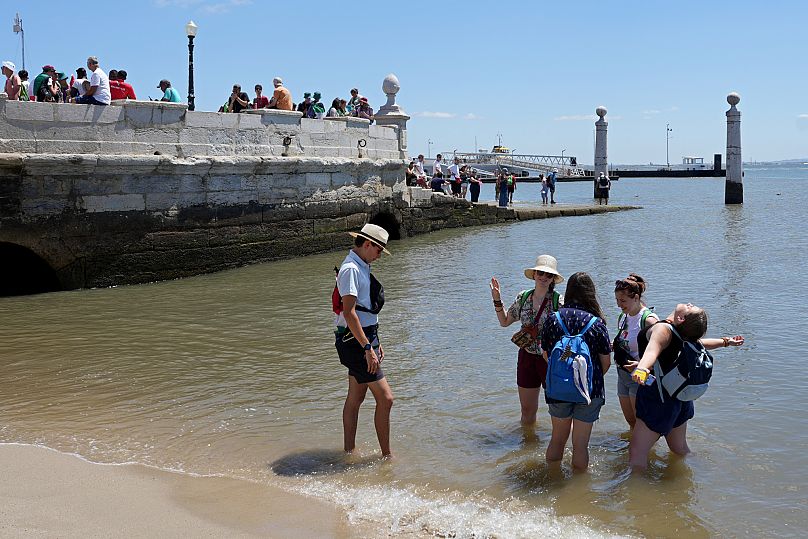
World Youth Day pilgrims stand in the Tagus river water by Comercio square in Lisbon, 1 August, 2023
World Youth Day pilgrims stand in the Tagus river water by Comercio square in Lisbon, 1 August, 2023 AP Photo

Of the 34 days of excess mortality recorded in July and August, 29 corresponded to higher than expected deaths in the over 70 age group.

The DGS says that the age group of 75 and over, with the highest burden of disease and the lowest physiological response capacity to heat, were the hardest hit.

The month of July was particularly critical, with two hot spells (1 to 9 and 25 to 31 July).

The Portuguese Institute for the Sea and Atmosphere (IPMA) confirmed that it was the 9th hottest July since 1931, "with air temperature values more than 3°C above the monthly average on the 3rd, 4th, 30th and 31st."

Despite the excess mortality, the accumulated data up to 18 August shows that the total number of deaths (77,292) is in line with the same period in 2024 (76,849).

However, this year it was July that stood out for its high figures, whereas in the previous year the peak in mortality had occurred in January, coinciding with the end of the flu epidemic period.


France’s summer of heatwaves exposes


hidden mental health cost


This summer’s record temperatures are revealing the toll climate change is taking on mental health. In France, psychiatric emergency services have reported a spike in calls during heatwaves, while experts warn the heat can worsen existing mental health issues. Meanwhile, young people are feeling overwhelmed by climate anxiety, as temperatures push past 40C.


Issued on: 22/08/2025 - RFI

When temperatures soar, physical symptoms such as sweating and headaches can trigger mental distress. 
© iStock/Studio Graphique FMM

At Sainte-Anne hospital in Paris, psychiatric emergency services report seeing more patients during heatwaves. For French psychiatrists, this is a warning sign of what lies ahead as summers get hotter.

“You may think you’re not affected because you’re young. But it will affect the healthy population as much as other groups,” Suzana Andrei, secretary-general of the French Federation of Psychiatry, told RFI.

People already living with a mental health condition are at the greatest risk.

“Even if it is mild, it will be made worse by a heatwave that consumes a person’s physical and mental coping resources,” Andrei added.

A study in the International Journal of Environmental Research and Public Health, published in July, found that people with bipolar disorder are more likely to see their condition suddenly worsen during heat spikes.

Medication too can be affected by hot weather, Andrei warns. “Dehydration is never far away. So the medicine becomes more concentrated in the blood and side effects can be felt in a much more unpleasant way than usual."

Biggest French wildfire since 1949 a 'catastrophe on an unprecedented scale'


Climate anxiety

When temperatures climb, physical reactions can include sweating, headaches and faster breathing – symptoms that can trigger anxiety even in people with no prior history of it.

The body also reacts by producing cortisol – the stress hormone – to help cope with danger.

"Cortisol normally helps us adapt to temperature changes. But when the heat is very intense and lasts for several days, cortisol production can’t keep up, and the body’s stress system gets overwhelmed," Andrei said.

This summer has seen periods of extreme heat across Europe, with June and July ranked among the hottest ever recorded – which are feeding eco-anxiety.

“It can affect people with no previous mental health issues – sometimes those very active in public life and committed to their community’s future. This fear can trigger a wider anxiety disorder,” Andrei explained.

Young people are particularly vulnerable to anxiety over climate change. In a 2023 European study, 45 percent of people aged 16 to 25 said that eco-anxiety had a significant impact on their daily lives.

The impact of heat affects some more than others, given that access to insulated housing, a cool workplace or a psychologist is determined by a person's income and status. People in precarious situations often lack these protections, putting them more at risk of heat stress.

France rolls out plan to prepare for 4C temperature rise by end of century


Increase in domestic violence

Researchers also warn of the effect of extreme heat on social issues, including domestic violence.

A report from the United Nations Spotlight Initiative – a global project aimed at ending violence against women and girls – links each 1C of warming to a 4.7 percent rise in intimate partner violence.

At 2C, that would mean 40 million more women and girls facing such abuse every year by 2090.

separate study, published in the International Journal of Environmental Research and Public Health in June, found consistent connections between higher temperatures and violence against women worldwide.

Scientists say heat-induced stress can reduce self-control and increase irritation – one reason extreme heat is linked with higher incidences of aggression and violence.

And direct exposure to extreme climate events can magnify this effect, as France’s psychiatry federation observed during the wildfires around Marseille in early summer 2025.

“It causes acute stress for people living in the area. Vulnerability, psychological distress that can be long term, even post-traumatic stress,” said Andrei.

With Europe warming faster than any other continent, psychiatrists expect more heat-linked stress in summers ahead – from spikes in emergency visits to longer-term anxiety and trauma.

Partially adapted from this article by RFI's French service

Death of a 17-year old teenager in the Netherlands sparks outrage over violence against women

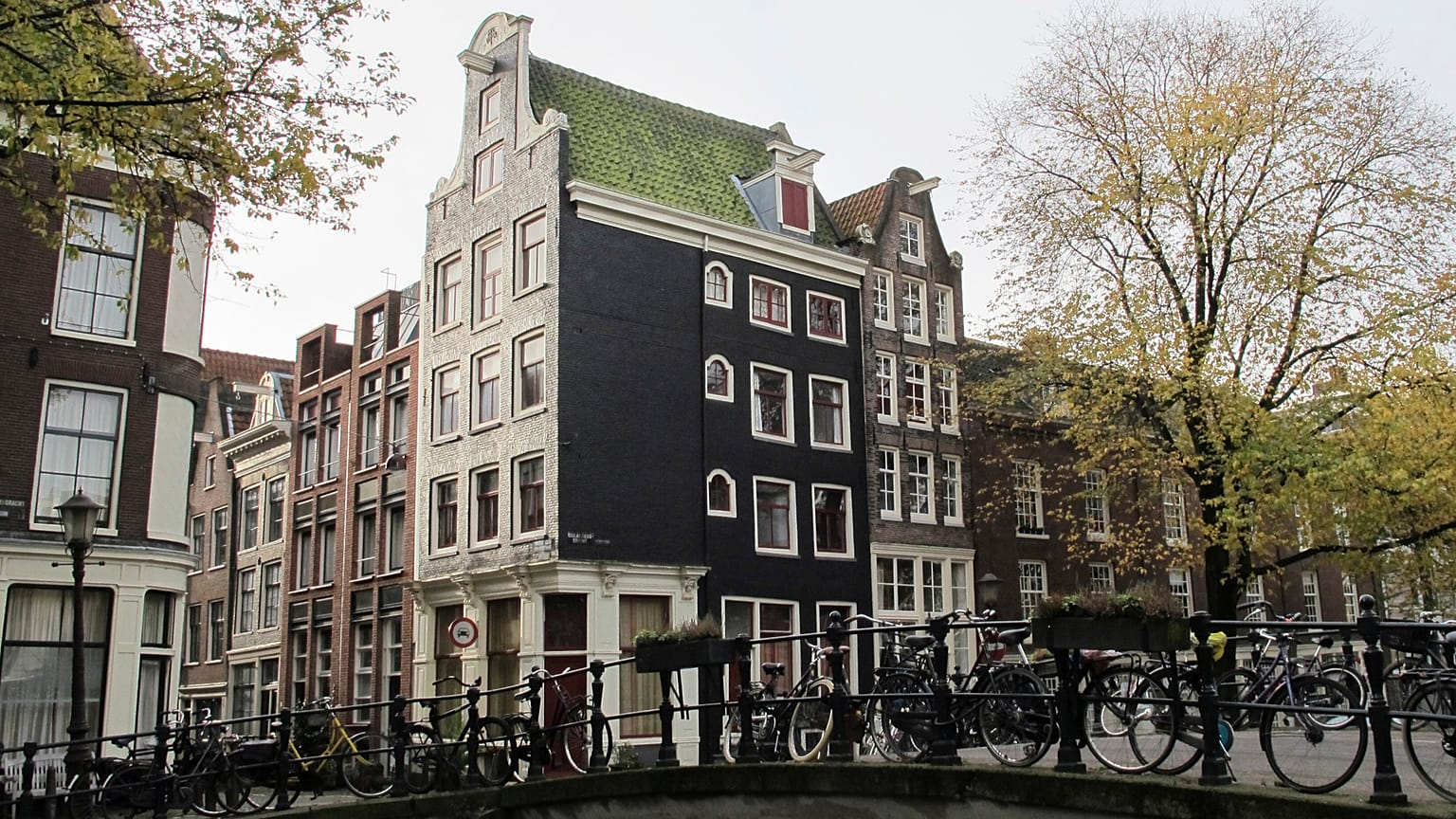
Bikes are parked on a bridge over Egelantiersgracht canal in the center of Amsterdam, Friday, Nov. 8, 2013.
Copyright AP Photos/Margriet Faber


By Evelyn Ann-Marie Dom
Published on 

'We all have 24 hours in our day. 24 hours that we are free to use how and where we choose,' Dutch actrice and author Nienke ’s Gravemade wrote in a post that went viral on social media.

The violent murder of a Dutch teenager, 17-year-old Lisa, who had been biking home after a night out with her friends sparked outrage across the Netherlands and Belgium.

A poem written by Dutch actrice and author Nienke 's Gravemade has been widely shared on social media, in it she writes how women have the right to feel safe and move freely at night. The text is accompanied by a hashtag, translating to #reclaimthenight.

"The red handbag. I keep thinking about the red handbag. How it dangled from her handlebars as she rode through the night. A night that belonged to her too, because we all have 24 hours in our day. 24 hours that we are free to use how and where we choose," 's Gravemade wrote in a post on Instagram.

Early on Wednesday, Lisa left the centre of Amsterdam around 3:30AM after a night out with friends, and was cycling back home to the nearby town of Abcoude. After she noticed someone was following her, the 17-year-old called the national emergency number


The scene where the body of 17-year-old Lisa was found after she was violently murdered in Duivendrecht near Amsterdam, The Netherlands. Wednesday, August 20, 2025. police.nl

The police were able to locate the teenager using her phone, but all help came too late. When the dispatched team arrived at the scene at 4:15AM, Lisa's lifeless body was found by the side of the road in Duivendrecht, nearby Amsterdam, local media reported.

On Friday afternoon, Dutch police announced a suspect had emerged in the investigation into Lisa's death. The 22-year-old man was arrested Thursday night on suspicion of involvement in a serious sexual offence in Weesperzijde, a neighbourhood in Amsterdam.

'Text me when you're home.'

"Text me when you're home, [...] I'll just share my live location and take the longer route instead of going down that road," reads a poem by another Dutch author Lois Kruidenier. She took to social media to share an experience that widely resonates with women.

"I put on my sneakers before getting on my bike with no lights. I tie my hair into a bun or tuck it into my jacket, trying to be as invisible as possible. I listen to music, but very quietly. I see a man without looking at him, and I don't stop at red lights because that takes too much time. Hi dad - I yell into my phone, even though no one's on the other end of the line," Kruidenier's poem continued.

The incident reignited debate about the damaging effects of "victim blaming."

"Why didn't she just take a taxi with her friends?" Was it really smart to get on her bike alone? Why was she still cycling that late at night? Why did she choose to wear that, of all things?," 's Gravemade wrote in her post, highlighting some of common remarks women often hear when blame is unfairly shifted onto them.

The Dutch author admitted feeling guilty right after having shared those same thoughts, and emphasised that the blame should not rest on women, but on the perpetrator.

'Taking advantage of the moment': Why a 'whites only' compound is blossoming under Trump


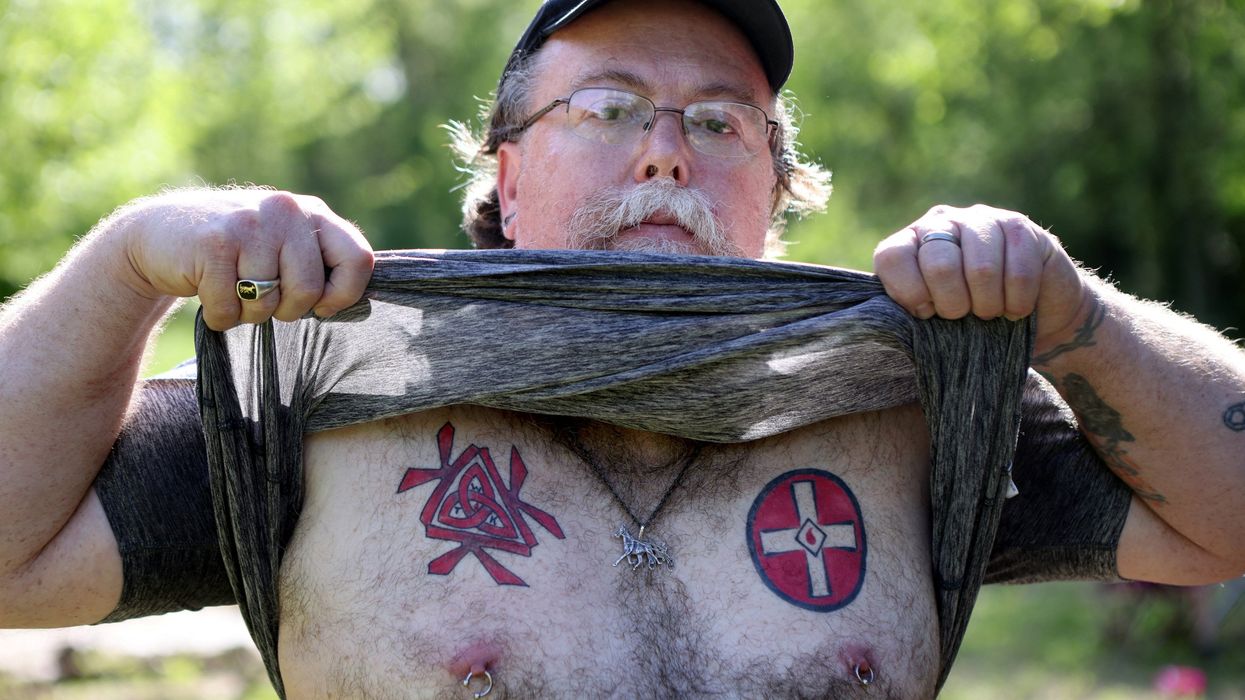
A participant shows his tattoo as members of the Trinity White Knights, along with members from other KKK groups and new initiates, attend a gathering and cross-burning marking the 160th anniversary of the Ku Klan (Reuters)
August 23, 2025

New York Times reporter Debra Kamin says the Trump administration is emboldening racists to defy 57-year-old anti-discrimination housing laws.

Eric Orwoll and Peter Csere believe their “Return to the Land” residential community development meets the requirements for a legal exemption for private associations and religious groups that offer housing to their members, and they’re using it to reserve home lots exclusively for heterosexual white residents.

When asked “Why and why now” Kamin said it comes down to who occupies the White House.

“Racism is, as you know, definitely not anything new. But definitely ‘why now’ is because there is a feeling among the architects of this community and the people who created it that they can get away with it now, because even though the laws obviously very explicitly make it illegal to discriminate, a lot of things that we took as rules and norms just a few months ago no longer really apply,” Kamin said. “They feel that at the highest levels of government, they will be allowed to do this.”

The Times reports Csere, who was arrested in Ecuador for stabbing a miner and remains accused of stealing tens of thousands of dollars from a vegan community there, is breaking ground in Arkansas.

Kamin told CNN while visiting the compound that founder Orwoll pulled a copy of Adolf Hitler’s manifesto, “Mein Kampf” from a bookshelf and turned it around to hide its spine just before Times photographers snapped pictures of the room. But Orwoll insists he is not a racist.

“I'm not asking for supremacy over anyone else,” Orwoll said in a clip. “Return to the Land is not a supremacist group. It's not a hate group. It's not even a white nationalist group. We are white identitarians. We value our identity and want to preserve it. That's not hate. That is love for your own people.”

Kamin said the state attorney general is investigating the legality of the development but has done nothing beyond that because “someone would have to say that they've been wronged, and that's where it gets tricky.”

“For someone to say they've been wronged, you would have to have, someone who wants to live here and was rejected, and how many Black or Jewish or gay families are going to want to move to this compound in the middle of Arkansas?” Kamin said. “They’re clearly in violation of the Fair Housing Act, but to bring a legal case against them is going to take a few more steps."

Watch the video below or at this link.


Convicted German transgender right-wing extremist to serve time in women's prison

Marla Sven Liebich in court
Copyright picture alliance/dpa | Sebastian Willnow


By Euronews
Updated 

In July 2023, Marla-Svenja Liebich, then still known as Sven, was sentenced to one and a half years' imprisonment without probation by the Halle district court. A year and a half later, Sven became Marla-Svenja by simple deed poll, made possible under a new law.

Marla-Svenja Liebich, previously known as Sven Liebich, has been convicted of right-wing extremist activities, including incitement to hatred, and is due to start a prison sentence soon. The public prosecutor's office in Halle has summoned Liebich to appear at Chemnitz prison.

Liebich published a corresponding summons to start his sentence in a post on Platform X.

According to current plans, Liebich will initially be held in a prison for women.

The background to this is a corresponding self-disclosure on gender identity, based on the new regulations of the Self-Determination Act, which came into force in November last year.

The reformed law makes it possible to have the gender entry adjusted by means of a personal declaration.

Warnings about abuse of new 'self-declaration' law

Since the coalition government's plans for the law became known, concerns have repeatedly been raised about possible abuse. During the election campaign, the CDU/CSU clearly took up the issue. Andrea Lindholz, then deputy chairwoman of the CDU/CSU parliamentary group, declared in April last year that the coalition had "lost its way" with this law.

The coalition agreement signed by the SPD and CDU/CSU in May last year merely stated that the Self-Determination Act would be reviewed "by 31 July 2026 at the latest".

During the coalition negotiations between the CDU/CSU and SPD, it was therefore not dealt with in the justice working group, but by the negotiators for the "Family" department.

According to German tabloid BILD, however, no agreement could be reached there on how to deal with the law. The issue was therefore referred back to the party leaders. The result was merely a vague formulation in the coalition agreement.

'Clear criteria'

As Benedikt Bernzen, spokesperson for the public prosecutor's office in Halle, explained to German public broadcaster Mitteldeutscher Rundfunk (MDR), the decision on placement is now based on two clear criteria: the officially registered gender, in Marla-Svenja Liebich's case female, and the registered place of residence.

As this is in Saxony, the local enforcement plan there applies, which provides for female prisoners to be detained in Chemnitz Prison.

However, the Saxon Ministry of Justice emphasised to the local daily Mitteldeutsche Zeitung that additional psychological or medical reports can be used in certain cases. These include, for example, if there is a suspicion that someone may have deliberately changed the gender entry in order to influence the prison conditions.

In July 2023, Liebich was sentenced to one and a half years' imprisonment without probation by the Halle district court.

The sentence included incitement to hatred, insult and defamation. Appeals by both Liebich and the public prosecutor's office failed before the Halle district court.

Liebich had changed gender and first name by making a "simple declaration" to the registry office in Schkeuditz in north-west Saxony.