Monday, August 25, 2025

'Restoring dignity': Kenya slum exchange offers water for plastic

Nairobi (AFP) – Using a crutch to bear her weight, 85-year-old Molly Aluoch trudges from her mud-walled room on the outskirts of a sprawling Nairobi slum, shouldering a sack of used plastic to exchange for a shower or a safe toilet.

Issued on: 25/08/2025 - FRANCE24

Molly Aluoch collects plastic daily to exchange for points giving her access to clean toilets, showers, laundries and even meals © Tony KARUMBA / AFP

For the 31 years she has lived in Kibera, Kenya's largest informal settlement, water and sanitation have remained scarce and costly -- often controlled by cartels who charge residents prices beyond their means.

The Human Needs Project (HNP) seeks to mitigate that. Residents can trade discarded plastic for "green points", or credits, they can redeem for services such as drinking water, toilets, showers, laundries and even meals.

"With my green points, I can now access a comfortable and clean toilet and bathroom any time of the day," Aluoch said.

Before, she would spend 10 shillings (eight US cents) to use a toilet and another 10 for a bathroom, a significant chunk from the residents' average daily income, 200 to 400 shillings, before food and housing costs.

"It meant that without money, I would not use a toilet," she said.

Unable to use Kibera's pit latrines owing to her frailty meant she would have to resort to "unhygienic means".

Now, that money goes towards food for her three grandchildren.

Aluoch, a traditional birth attendant, is among some 100 women who collect plastics for green points, helping them access water, sanitation, and hygiene services.

She takes her plastic to a centre 200 metres (yards) from her home, where one kilogramme of recyclable plastics earns 15 green points, equivalent to 15 shillings.

The project serves some 800 residents daily, allowing them access to modern bathrooms, clean water and menstrual hygiene facilities -- services that are out of reach for many Kibera households.

Since 2015, the project has distributed more than 50 million litres (13 million gallons) of water and more than one million toilet and shower uses.

In 2024 alone, it distributed 11 million litres of water and enabled 124,000 bathroom and toilet uses.

'Days without water'


With water a scarce commodity in Kibera, it is common for vendors to create artificial shortages to inflate prices, forcing residents to pay more than 10 times the normal price.
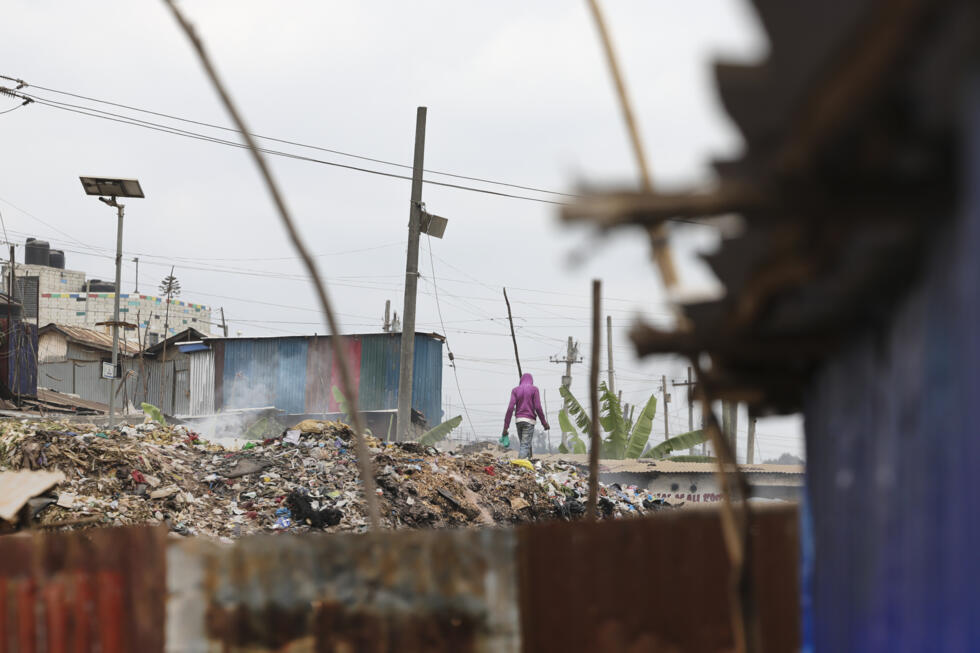

The dual mission of the scheme is to meet basic human needs in Kibera, while tackling a mounting waste problem © Tony KARUMBA / AFP

The city's water service charges between $0.60 and $0.70 per cubic metre for connected households, but by comparison, Kibera residents have to stump up as much as $8 to $19 for the same amount.

"Getting water was hard. We could go several days without water," said Magret John, 50, a mother of three.

Today, her reality is different.

"The water point is at my doorstep. The supply is steady and the water is clean. All I need is to collect plastics, get points, redeem and get water," she said.

John, who has lived in Kibera for nine years, says the project has been a game changer, especially for women and girls.

"Access to proper sanitation services guarantees women and girls their dignity during menstruation."

Now, with 10 water points spread across Kibera -- pulled from a borehole with a daily capacity of half a million litres -- NHP shields some residents from informal vendors' exploitative pricing.

The project's dual mission is to meet basic human needs while tackling Kibera's mounting waste problem.

HNP's director of strategic partnerships Peter Muthaura said it helps to improve health and the daily living conditions in Kibera.

"When people cannot access dignified toilets and bathrooms, the environment bears the impact," he said.

It also fosters development, he said.

In the first quarter of 2025 alone, Kibera residents delivered two tonnes of recyclable plastic, with around 250 women directly engaged in daily collection and delivery.

For Aluoch, every sack of plastics and every green point earned goes beyond clean water and sanitation: it restores a sense of dignity.

"My prayer is that this project spreads to every corner of Kibera, and reaches thousands of women whose dignity has been robbed by a lack of sanitation services," she said.

© 2025 AFP

Washington trades military support to Sahel juntas for access to mineral wealth

Under President Donald Trump, the United States has quietly recalibrated its Sahel strategy, trading military support to West African juntas battling jihadists for lucrative access to the region’s vast mineral wealth, experts say. The strategy marks a stark shift from the Biden administration’s aid freeze amid coups, signaling a new era of transactional diplomacy as Washington seeks to counter Russian and Chinese influence in Africa.


Issued on: 25/08/2025 -
By: FRANCE 24

Miners hold stones that contains lithium in a mining site in Gidan Kwano, in Nasarawa state, on January 23, 2025. © Olympia de Maismon, AFP


Under President Donald Trump the United States has reset relations with west Africa's military leaders on a mutual back-scratching basis, bartering help fighting jihadists for the Sahel region's mining riches, experts say.

While Joe Biden was in office the US suspended most of the development and military aid it sent to Burkina Faso, Mali and Niger in the wake of the rash of coups that brought juntas to power in the three restive countries between 2020 and 2023.

Trump's return to the White House has shifted the US away from that stance, as part of a wider pivot in Washington's African foreign policy and its attempts to counter Russia and China's influence on the continent.

"Trade, not aid ... is now truly our policy for Africa," Troy Fitrell, the State Department's top official for African affairs, told an audience in Abidjan, Ivory Coast in May.

In recent weeks several other senior American figures have paid visits to the capitals of Burkina Faso, Mali and Niger, which have all been struggling to root out jihadists linked to al Qaeda or the Islamic State group for more than a decade.

In early July, Rudolph Atallah, a security and counterterrorism adviser to Trump, visited Mali to offer the "American solution" for the unrest.

"We have the necessary equipment, the intelligence and the forces to stand up to this menace. If Mali decides to work with us, we'll know what to do," Atallah was quoted as saying by the country's state newspaper.

Several days later, William B. Stevens, the State Department's deputy assistant secretary for West Africa, likewise raised the possibility of private American investment in the anti-jihadist fight to an audience in the Malian capital Bamako, after stop-offs in Ouagadougou and Niamey.

"Washington offered to kill the leaders of jihadist groups, in exchange for access to lithium and gold for American businesses," said Ulf Laessing, head of the Sahel programme at the Konrad Adenauer Foundation, a think tank affiliated with Germany's conservative CDU party.

Trump has brought US access to key minerals front and centre of his negotiations with foreign countries, including in his attempts to end the Russia-Ukraine war and the long-running conflict between Rwanda and the Democratic Republic of Congo.

Lithium, gold, uranium

Mali is among Africa's top producers of gold and lithium, a key component in the electric car batteries necessary for the transition to a low-carbon economy in the age of climate change.

Burkina Faso likewise possesses rich veins of gold, while Niger's uranium deposits make the desert nation among the world's top exporters of the radioactive metal.

Although all three Sahel juntas came to power while promising the people greater control and sovereignty over their country's mineral wealth, the officers in charge have welcomed Washington's change in tack.

"We have to look at investment, the potential of our countries," said Mali's Foreign Minister Abdoulaye Diop in July, hailing "today's convergence of viewpoints between the American administration and the government of Mali".

Laessing argued that "some officials in the State Department, worried about the end of USAID and the closure of embassies, pointed out Mali's rich resources to the Trump administration as a way to encourage it to remain engaged and keep the American embassy in Bamako open, at a point where Russia and China are expanding their influence in the region."

But for Liam Karr, an analyst at the American Enterprise Institute, any critical minerals deal would be "a much longer-term project".

"The terrorism threat is the biggest issue ... stabilising the region is key to any investment hopes," Karr argued.

'American mercenaries'


Washington's courting of the Sahel states comes despite the juntas pivoting towards Russia, having cut ties with the West and former imperial ruler France in particular since the coups.

Moscow has sent mercenaries from the infamous Wagner paramilitary organisation, and its successor the Africa Corps, to help the Sahel countries' armies push back the jihadists.

After Niger nationalised the local branch of French uranium giant Orano, the Kremlin, which commands the world's largest arsenal of nuclear weapons, said it wished to mine the radioactive metal in the west African country itself.

So far, Russia's foothold in the region has yet to provoke the White House's ire.

In his visit to Mali, security adviser Atallah said he saw no problem with Moscow's presence in the region, insisting that the country was "free to choose its partners".

"Since the French were kicked out ... and Russia welcomed into the region, Trump sees no problem in accompanying and/or supporting Russian efforts in the region. The fact that the Russians eschew democratic values and human rights promotion also aligns with the Trump administration's transactional approach to relations between states," Bisa Williams, a former US ambassador to Niger, told AFP
.

Williams, now a consultant and academic, said Trump could strike an agreement that "would guarantee majority or near-majority ownership and a high percentage of extracted minerals in exchange for support fighting terrorism".

That could involve the deployment of American mercenaries, along the lines of how Russia used Wagner, Williams said.

"That way, he wouldn't have to defend the policy before Congress or his MAGA base."

(FRANCE 24 with AFP)


In Africa, Russia is swapping a ruthless paramilitary for a replica it can control. What’s Putin’s game plan?


Nimi Princewill, 
CNN
Mon 25 August 2025 


Russian officers from the Wagner Group are seen around Central African President Faustin-Archange Touadera in Bangui, on July 17, 2023. - Leger Kokpakpa/Reuters

Wagner, a feared Russian mercenary group that is notorious for staging a failed mutiny against Moscow and accused of committing serious abuses against civilians in Africa, is being replaced on the continent by another Russian paramilitary.

Its successor, experts say, is the Kremlin-controlled Africa Corps.

For years, Wagner, which was funded by the Russian government and praised for its “courage and heroism” by Russian President Vladimir Putin in 2023, has embodied Moscow’s military offerings in the Sahel, a semiarid region of western and north-central Africa that extends from Senegal to Sudan.

With Wagner’s exit from swathes of the region, which is beset by recurring coups, armed rebellion and extremist insurgency, however, it seems the Kremlin wants a controlled, but unofficial, army to replace it.

Putin revealed at a Russia–Africa Summit in 2023 that the Kremlin had “concluded military-technical cooperation agreements with more than 40 African countries, to which we supply a wide range of weapons and equipment.”

The Kremlin is to some extent filling a vacuum left by Western troops, who were expelled by several governments in the Sahel between 2022 and this year as anti-Western sentiments reverberate around the region.


Protesters hold a banner reading "Thank you Wagner" during a demonstration organized to celebrate France's announcement it would withdraw French troops from Mali, in February 2022. - Florent Vergnes/AFP/Getty ImagesMore

At a time when the West has largely turned its attention elsewhere, from wars in the Middle East and Ukraine to tensions with China, Russia has become a sought-after security partner both within and outside the Sahel.

In parts of the region, such as Mali, where Wagner sustained some of its worst known losses, with dozens reported killed in a rebel ambush a year ago, its forces have joined local militaries in combat against insurgents.
What we know about the Africa Corps

Wagner’s successor is not self-run. Unlike the mercenary group, the paramilitary Africa Corps is placed under the umbrella of the Russian defense ministry, according to the group’s official Telegram channel.

The corps consists of elite combat commanders from Russia’s army. “Priority” recruitment was also given to current and former Wagner fighters, a post on the Africa Corps’ Telegram channel revealed in January 2024.

Operatives of the Africa Corps have since joined the battlefield, conducting joint operations with Mali’s military against militia groups.

Wagner announced in June that it was leaving Mali, one of the troubled nations in the Sahel, saying it had completed a three-and-a-half-year mission fighting insurgents in the junta-led West African country.

A similar exit by Wagner has been mooted in the Central African Republic (CAR), the nerve center of the group in Africa.

Wagner has operated in CAR since 2018 and has become the dominant force in the Central African nation following the final exit of French troops in 2022. It is widely credited in CAR with helping the nation stave off collapse.

Earlier this month, however, military officials in CAR told The Associated Press that Russia’s defense ministry had asked authorities in the nation to substitute in the Africa Corps for Wagner and to pay for its services in cash.

Remuneration of Wagner for providing military services to CAR, which include protecting its president, reclaiming territory seized by rebels and keeping armed groups at bay, “is done in an extremely hidden and discreet manner” by CAR’s government, Martin Ziguélé, an opposition lawmaker who served as prime minister from 2001 to 2003, told CNN in January.

As a result, it is not clear how Wagner’s services are paid for. Still, previous CNN investigations found that companies linked to ex-Wagner leader Yevgeny Prigozhin had won concessions to mine gold and diamonds in CAR, where nearly 70% of the population lives in extreme poverty – the fifth highest poverty rate in the world, according to a World Bank assessment in 2023.

Prigozhin was killed in a plane crash northwest of Moscow in August 2023, two months after he launched a failed rebellion against Russia’s military leadership.


A photograph from 2024 shows a bronze statue depicting Wagner group chief Yevgeny Prigozhin (L) and commander Dmitry Utkin in front of the "Maison Russe" (Russian House) in Bangui, CAR. - Annela Niamolo/AFP/Getty ImagesMore

Neither a government spokesperson nor CAR’s defense or communication ministers responded to CNN’s request for comment on the alleged planned pivot to the Africa Corps. CNN has also not heard back from Russian authorities.

The communications minister, Maxime Balalou, told CNN in January that a bilateral defense agreement “allowed Russia to provide us with weapons,” as well as “handling and training for our defense and security forces, (and) assisting our armed forces on the ground.”

The Africa Corps has already arrived in other parts of Africa, according to the Africa Corps’ Telegram channel, operating in West African nations Niger and Burkina Faso, both governed by juntas.


Supporters of junta leader Capt. Ibrahim Traore wave a Russian flag in the streets of Ouagadougou, Burkina Faso, on Oct. 2, 2022. - Sophie Garcia/AP

It is not known whether the corps functions in Central Africa’s Equatorial Guinea, which hosts an estimated 200 Russian military instructors, according to a Reuters report late last year. Equatorial Guinea has had the same ruler for 46 years.
What does Putin want to do differently?

Russia’s move to replace Wagner in Africa could be a “strategic rebranding by Moscow,” according to Héni Nsaibia, a senior analyst at the crisis-monitoring group, the Armed Conflict Location & Event Data Project (ACLED).

“With the Wagner name severely tarnished after the mutiny and Prigozhin’s death, Russia is likely consolidating its foreign military ventures under formal state control by erasing the ‘Wagner’ brand while retaining its core functions under a new name like the Africa Corps,” Nsaibia said in written responses to CNN.

“In this way,” he added, “Moscow can distance itself from the mercenary narrative while maintaining a strong presence in the region.”

Institutionalizing its military engagement in Africa could benefit the Kremlin in other ways, Nsaibia said.

“The Africa Corps is intended to give Moscow greater control over operations, and potentially more international legitimacy, and fewer legal and reputational risks,” Nsaibia explained.

Wagner has faced lawsuits from human rights groups over accusations of human rights abuses.

The European Union sanctioned the Wagner Group and individuals and entities connected to it in 2021 and 2023. Among those sanctioned in 2023 were “the head of the Wagner Group in Mali, where Wagner mercenaries have been involved in acts of violence and multiple human rights abuses, including extrajudicial killings, as well as various high-profile members of the group in the CAR,” the Council of the EU said.

United Nations experts also called in 2023 for an independent investigation into alleged crimes committed by the Wagner Group and the Malian military.

Their statement said, “the lack of transparency and ambiguity over the legal status of the Wagner Group… create an overall climate of terror and complete impunity for victims of the Wagner Group’s abuses.”

Malian authorities pushed back against the allegations, saying that the country “was unwavering in prosecuting and punishing proven perpetrators of human rights violations.”

While many questions remain about Wagner’s operations in Africa, there are mixed views about the impact its counterterrorism operations with local armies have had on the continent.

“I don’t see what Wagner has brought to the battle (against terrorists),” said security consultant Mamadou Adje.

“Since they (Wagner forces) joined the fight, jihadists have spread across Mali, Burkina Faso and Niger with lots of civilian casualties,” Adje, a retired Senegalese colonel who previously served in Mali and Burkina Faso under West African regional bloc ECOWAS, told CNN.

As for Wagner’s replacement with the Africa Corps in certain countries, “I don’t see much changing on the battlefield,” Adje said.

In Nsaibia’s view, Wagner helped Mali’s military “achieve some tactical and strategic victories, notably the recapture of rebel strongholds.”

Nonetheless, he said, the group leaves behind “a state on the brink of collapse.”


People walk through the weekly market in M'Berra camp in Bassikounou on June 7, 2022. The camp, in Mauritania, is one of the largest in West Africa, hosting refugees fleeing violence in Mali. - Guy Peterson/AFP/Getty ImagesMore

Earlier this month, UN delegates told the Security Council that security across the Sahel “is deteriorating rapidly,” and that terrorist activity in parts of the region has intensified “in scale, complexity and sophistication, including through the use of drones, alternative internet communication, and increasing collusion with transnational organized crime.”

Ahunna Eziakonwa, a UN Assistant Secretary-General and Africa Director for the UN’s development program (UNDP), warns that the security problems in the Sahel “are beyond the capacity of the national governments,” and so global support is needed.

What matters, though, is that any help from external actors is “well-meaning,” she told CNN, adding: “We’re not promoting any kind of support in the military side or security side that undermines human rights, irrespective of where it comes from.”

CNN’s Anna Chernova contributed to this report.
Bleak future for Rohingya, as Bangladesh seeks to tackle crisis

Dhaka (AFP) – The rain was relentless the night Mohammad Kaisar fled for his life from his home in Myanmar's Maungdaw township.


Issued on: 25/08/2025 - RFI


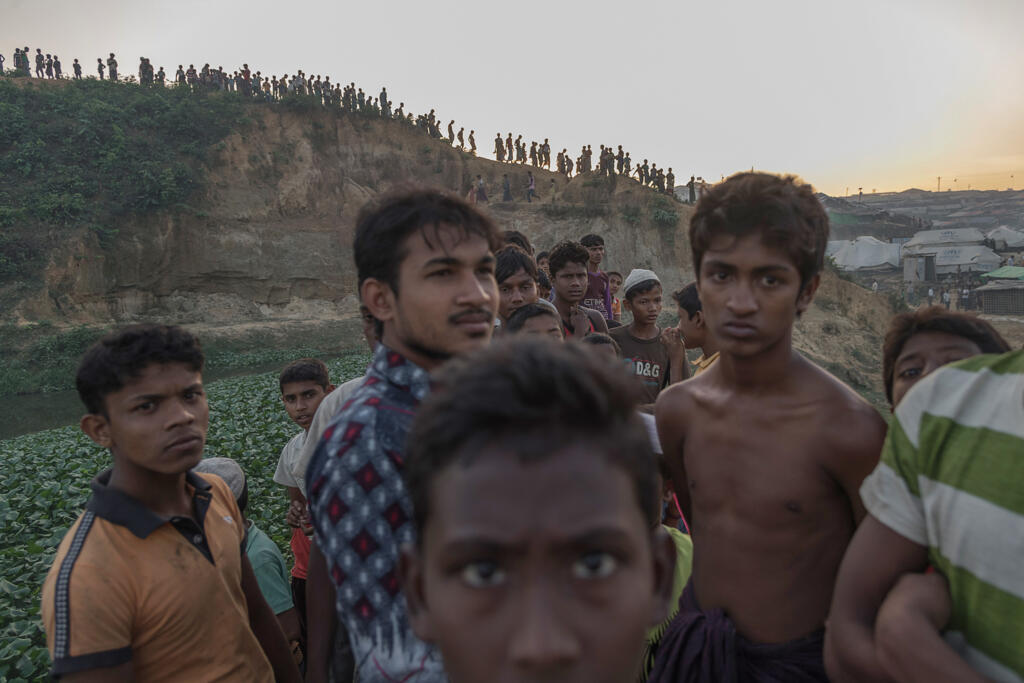
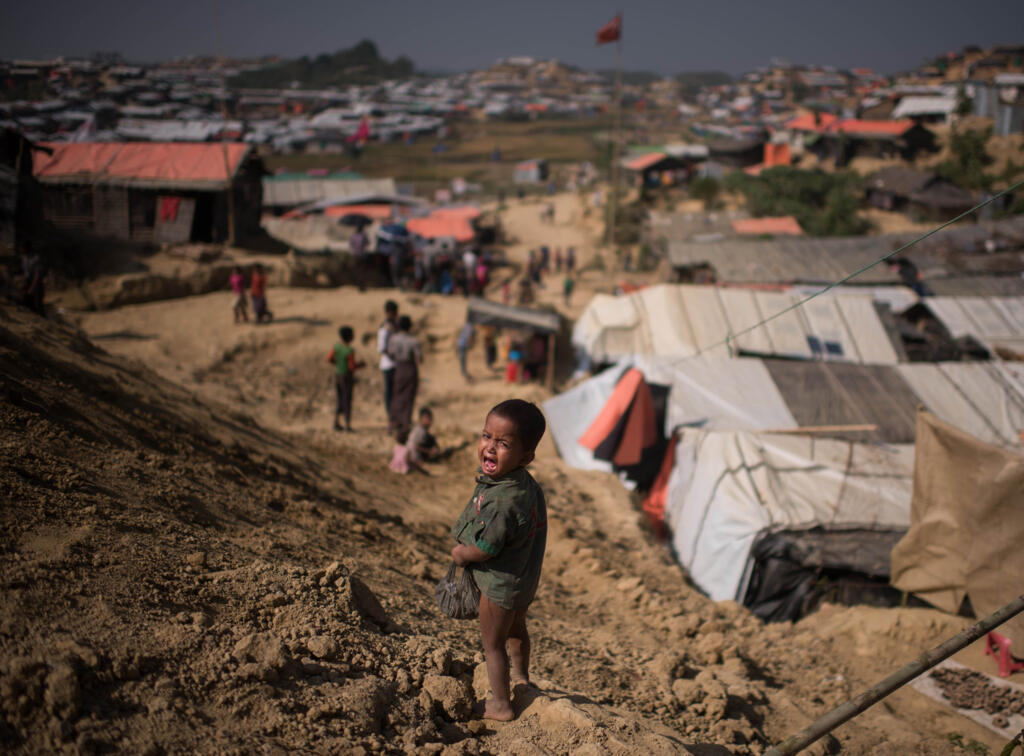
Hundreds of thousands of Rohingya live in the sprawling refugee camps of Bangladesh's Cox's Bazar © Ed JONES / AFP


Barefoot and exhausted, he trudged with his parents and four siblings on mud paths until they reached the Naf River.

On a flimsy boat, they crossed into Bangladesh, joining around a million of the largely Muslim Rohingya minority, fleeing a military crackdown in Myanmar's Rakhine state.

That was in 2017. Eight years later, rain still lashes down on his simple shelter in the sprawling refugee camps of Cox's Bazar.

But for the 28-year-old refugee, nothing has washed away his despair.

"War is raging. Hundreds are waiting at the border to enter Bangladesh. Every day, a new family from Rakhine takes refuge," Kaisar told AFP by telephone, speaking outside his cramped hut in Balukhali camp.

"How is it possible to return home? We were destined to stay in this crowded camp, sandwiched between small huts."

'Like a hostage'


Bangladesh and the United Nations both hope to create conditions for Rohingya refugees to return to their homes in Myanmar -- that seems unlikely anytime soon © Ed JONES / AFP

Bangladesh on Monday is holding talks aimed at addressing the plight of Rohingya refugees, even as fresh arrivals cross over from war-torn Myanmar and shrinking aid flows deepen the crisis.

The meetings in Cox's Bazar are taking place ahead of a UN conference in New York on September 30.

Both Bangladesh and the UN want to provide stable conditions in Myanmar for the Rohingya to eventually return.

That seems unlikely any time soon.

"I consistently hear from Rohingya refugees that they want to return to their homes in Myanmar, but only when it is safe to do so," Nicholas Koumjian, who heads the UN's Independent Investigative Mechanism for Myanmar, warned ahead of the meeting.

"Ending the violence and atrocities against civilians from all communities in Rakhine is critical for the eventual safe, dignified, voluntary and sustainable return of those that have been displaced."

But Kaisar's old homeland of Rakhine is the site of intense fighting in Myanmar's civil war, triggered by the 2021 coup that ousted the democratic government.

Bangladesh has recorded a surge of refugees from Myanmar since early 2024, with 150,000 more Rohingya arriving.

For Kaisar, life in Myanmar was a spacious home, running a small grocery shop.

Today, in the grim camps, it's a battle for survival.

Safety is fragile. Factional clashes have shaken the camp in recent months.

"We had two armed groups fighting only a few months ago. It was like a hostage situation," he said.

"Violence is common; children are the most vulnerable."

'Violence and atrocities'

Refugees receive a ration card worth about $12 a month, enough for rice but not nutritious food © Ed JONES / AFP


In Rahkine, restricted access due to fighting has been compounded by worldwide aid cutbacks spearheaded by US President Donald Trump's freeze on humanitarian funding.

The World Food Programme -- which received nearly half its 2024 donations from the United States -- warned this month that 57 percent of families in central Rakhine are now unable to meet basic food needs.

In the camps, food too is a constant worry.

Each refugee receives a ration card worth about $12 a month. Kaisar listed what that buys: 13 kilogrammes of rice, a litre of oil, a handful of onions and garlic, and a packet of salt.

"It fills our stomachs, but there is no nutrition," he said.

"I have a three-year-old son. He needs milk, eggs, lentils, but we cannot afford them. Nutrition centres in the camps provide support to children under two. After that, we are left to struggle."

'Used us as pawns'


Education is the next looming hurdle, and Kaisar fears for his young son.

"Will he be able to study and get a job? Or will he spend his whole life as a refugee like me?" Kaisar asked.

He recalled how ordinary villagers in Bangladesh once handed him dry clothes and food after his escape. But beyond that generosity, the future looks bleak.

The violence that uprooted him still rages across the border, and Rohingya militants working with the Myanmar junta have tried to recruit refugees, according to camp residents, UN reports and analysts.

"We civilians have been continuously betrayed," Kaisar said bitterly. "Every side has used us as pawns."

For now, the father's appeal is simple: that Dhaka eases restrictions on education, to allow Rohingya children to attend regular Bangladeshi schools.

"At least allow our children to attend school," he said. "If they can stand on their own, maybe their future won't be as hopeless as ours."

© 2025 AFP
Human ancestor Lucy gets first European showing in Prague

Prague (AFP) – The 3.18-million-year-old bone fragments of human ancestor Lucy, which rarely leave Ethiopia, will go on display in Europe for the first time Monday at the Czech National Museum in Prague.


Issued on: 25/08/2025 - 

The National Museum of Prague already has hyperrealistic artistic reconstructions of human ancestors © Michal Cizek / AFP


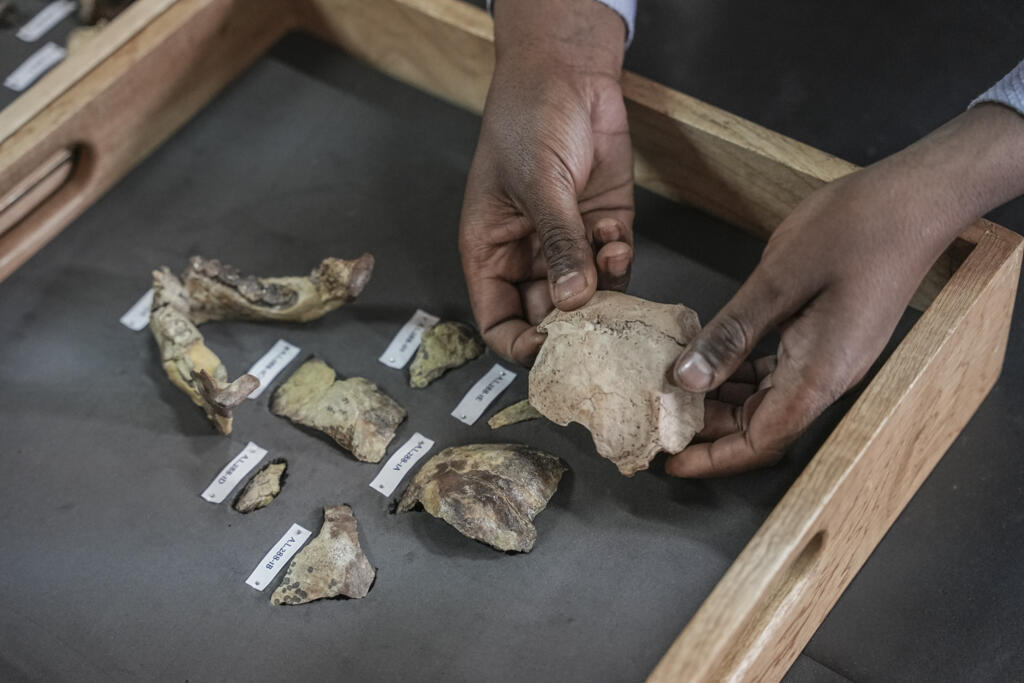
The ancient remains of the Australopithecus afarensis were discovered in Ethiopia in 1974. The find was, at the time, the most complete ever made and revolutionised the understanding of humanity's ancestors.

Lucy's remains will be presented alongside Selam, the fossil of a baby Australopithecus who lived about 100,000 years earlier than Lucy and was found in the same place 25 years later.

Donald Johanson, who discovered Lucy, and Zeresenay Alemseged, who discovered Selam, will attend the opening in Prague.

"Selam has never been displayed outside Ethiopia, and Lucy was only once exhibited in the United States," National Museum director Michal Lukes said when the remains arrived in Prague on August 15.

The remains, lent by Ethiopia's National Museum in Addis Ababa, rank among "the most precious and oldest paleoanthropological exhibits in the world", he added.

The fragments are being shown as part of a 'Human Origins and Fossils' exhibition for 60 days © Amanuel Sileshi / AFP/File


The 52 fragments will be shown for 60 days as part of a "Human Origins and Fossils" exhibition.

Ethiopian Heritage Authority director Abebaw Ayalew Gella said the exhibition "promotes Ethiopia as the land of human origin".

"Lucy... revolutionised the course of the study of human ancestors, first because of its completeness and second because of its age," said Ayalew Gella.

"Selam is a unique fossil for its age... This is a fossil of a baby who died at two years and seven months old," he added.
Inspired by The Beatles

In her current shape, Lucy consists of fossilised dental remains, skull fragments, parts of the pelvis and femur.

The fossilised skeleton of the 1.1-metre-tall (three-foot seven-inch), 29-kilogramme (64-pound) Lucy last left Ethiopia between 2007 and 2013, when it toured US museums.

One sculptor made a rendering based on the remains of the hominid Australopithecus afarensis -- Lucy -- who was found in Ethiopia and rarely leaves the African state © Dave Einsel / GETTY IMAGES NORTH AMERICA/AFP

The hominid was named after The Beatles's song "Lucy in the Sky with Diamonds", which the team that found her listened to after the discovery.

Lucy walked on two legs and is thought to have died aged between 11 and 13 -- considered an adult for this species.

Long considered the oldest human ancestor ever found, Lucy was dethroned of that status in 1994 following the discovery -- also in Ethiopia -- of Ardi, a female Ardipithecus ramidus who lived 4.5 million years ago.

In a 2016 study, researchers said Lucy had strong upper arms, suggesting she regularly climbed trees and nested in branches at night.

She also had relatively weak legs that were not used for climbing and were inefficient for walking, the study concluded.

An analysis of a fracture on one of Lucy's bones suggested that she probably died from a fall from a tall tree.

© 2025 AFP

How Artificial Intelligence Is Both Driving and Derailing Decarbonization

  • Training and running AI models demand vast amounts of electricity, driving up emissions and prompting new fossil-fuel power plant construction.

  • Despite the risks, AI could unlock efficiencies in energy storage, smart grids, materials science, and permitting processes that accelerate the clean transition.

  • Consumers currently bear the brunt of AI’s energy surge, but experts argue long-term gains in efficiency may outweigh today’s ecological and economic costs.

Will Artificial Intelligence be the downfall of the clean energy transition, or the catalyst that makes it possible? The answer is complicated, and somehow contains a bit of both. Training the large language models that power AI is incredibly energy-intensive, and as models like ChatGPT and DeepSeek become increasingly complex, each individual query can rack up a serious ecological footprint.  

Already, the AI boom has seriously compromised tech sector commitments to reach carbon neutrality. Last year, Google admitted that the company’s carbon emissions had skyrocketed by 48 percent over the last five years. Google has pledged to reach net zero greenhouse gas emissions by 2030 but the company concedes that "as we further integrate AI into our products, reducing emissions may be challenging."

Those rising emissions are going to have widespread impacts on whole communities, grids, and nations. Already, the rapid rise of AI has already caused the fast-tracking of new gas-fired power plants and generated serious concern for energy security in the many countries where data center growth is outpacing energy production capacity. 

Plus, planning for AI’s energy needs is an incredibly tall order. The sector is undergoing rapid changes in terms of growth as well as technological evolutions and advancements. Moreover, AI companies are not required to disclose their energy use or environmental impact, and so the vast majority do not. While researchers are working hard to calculate how much energy those companies are using, we still just don’t know for certain – and the numbers are changing all the time.  

But some experts think that fears over AI’s runaway energy consumption are overblown. As AI becomes more advanced and more ubiquitous, the spread of automation is expected to make nearly everything we do more efficient. Overall, this could seriously overshadow the energy use of the AI models themselves. 

AI will be instrumental in improving some of industry’s most inefficient systems, like materials value chains and biotechnology. “Finding new materials, catalysts or processes that can produce stuff more efficiently is the sort of ‘’needle in a haystack’ problem that AI is ideally suited to,” reports the Financial Times.

Plus, AI will likely be instrumental in the green energy transition itself. Large language models are already being used to look for better models and materials in the burgeoning energy storage sector, for example. In addition, the United States Department of Energy (DoE) has noted that AI could be a critical component of smart grids capable of handling increasing shares of variable energies like wind and solar in our power grids. However, they concede that AI carries significant risks if deployed ‘naïvely.’ Furthermore, “machine learning could help electric utilities improve permitting and siting, reliability, resilience and grid planning,” the DoE report goes on to say.

And, at present, an argument could be made that AI is being deployed ‘naïvely’, or at the very least, with low levels of discretion. And it’s consumers that are footing the bill for all of this early-stage experimentation where seemingly everyone and every sector is just throwing AI at the wall to see what sticks. Consumers across the U.S. – and especially in regions that house a lot of data centers – can expect their energy bills to rise in response. 

"We are witnessing a massive transfer of wealth from residential utility customers to large corporations—data centers and large utilities and their corporate parents, which profit from building additional energy infrastructure," Maryland People's Counsel David Lapp told Business Insider last month. "Utility regulation is failing to protect residential customers, contributing to an energy affordability crisis.”

There are certainly risks associated with this Wild West era of AI evolution – but the sector will become more sophisticated as time goes on. “It is true of course that, for climate change purposes, cutting CO? today is worth more than cutting it tomorrow,” reports the Financial Times. “But looking at the numbers at stake, if AI facilitated even modest savings on overall electricity use, it would be a net positive for the energy transition.”

By Haley Zaremba for Oilprice.com


The Race to Decarbonize Steel and Cement

  • Steel and cement together account for nearly 14% of global energy-related emissions, making international standards and innovation critical for decarbonisation.

  • Emerging technologies—from carbon-negative limestone and renewable-powered kilns to carbon capture—are gaining traction with strong investor and industry support.

  • Consumer demand and partnerships, such as Sublime and Brimstone’s deals with tech companies, are helping scale cleaner cement and steel solutions despite funding challenges.

As companies worldwide invest in decarbonisation efforts, this has been found to be easier in some industries than others. In hard-to-abate industries, such as steel and cement production, it has proved extremely difficult to reduce emissions. Meanwhile, the demand for these staple building materials is increasing in line with higher spending on infrastructure projects. So, what would it take to develop the “green cement” and “sustainable steel” industries?

In 2024, the International Energy Agency (IEA) released a commentary entitled “Collaboration on steel and cement standards is crucial for global markets.” The organisation said that, together, the steel and cement industries contribute almost 14 percent of global energy-related emissions. Most countries worldwide rely on steel imports and exports, with global steel sales in 2023 totalling $1.4 trillion. This demonstrates the need for the introduction of international standards, according to the IEA. 

The agency emphasised the importance of establishing standards with clear methodologies for measuring emissions and definitions for which products are considered low or near-zero emissions, as well as the use of labelling or certification systems, to help improve the transparency around how building materials are produced and associated carbon emissions. 

Some regions have already begun to explore the introduction of stricter standards on hard-to-abate sectors. For example, the European Union’s Ecodesign for Sustainable Products Regulation is a preparatory study on iron and steel products whose results are expected to be used to establish a Delegated Act for iron and steel products within the framework of the Sustainable Products Regulation. 

One of the IEA’s principal recommendations is to introduce standards that are “Globally comparable, even as they are used by different countries and stakeholders according to their own objectives.” This would increase “The coherence and reduce the reporting burden for producers and buyers operating across multiple jurisdictions, facilitates the trade of low- and near-zero emissions materials and products, and provides a common language for tracking market developments – sending a signal to global markets on the direction of travel and providing greater certainty for investments in new technologies.” 

When it comes to cement, reducing the greenhouse gas (GHG) emissions associated with production is no easy feat. Cement production requires temperatures above 1,400 degrees Celsius, with heat that is largely generated from fossil fuels. The heat is used to release carbon dioxide from limestone to make clinker, which is ground down to produce cement, meaning that around half of production emissions come from clinker output. Meanwhile, the demand for cement is increasing year on year, particularly in the Global South. 

Despite the challenges to decarbonisation, a 2020 analysis by the venture capital firm 2150 showed that significant innovation was being seen in cement production. And when recently assessing the industry, 2150 found that over 60 companies were involved in low-carbon concrete, supported by higher levels of public and private funding. Several cement producers and users have now introduced net-zero targets, including the major production companies Holcim and Heidelberg Materials. 

On the demand side, making changes such as extending the life of buildings, reusing concrete, and smarter design could cut emissions by as much as 22 percent. Meanwhile, companies such as Heimdal and SeaChange hope to use carbon-negative limestone created from the CO2 in seawater to reduce emissions, while the firms Rondo and Antora are looking into thermal energy storage to increase renewable energy use in cement production. Successfully cutting the industry’s carbon emissions is expected to require a range of actions, including switching from fossil fuels to renewable alternatives for power and heat and incorporating carbon capture and storage (CCS) technologies into operations. 

Meanwhile, making steel production more sustainable is complicated, but several companies have already made progress in the field. In the past half a century, the shift from traditional blast furnaces to electric arc furnaces has reduced energy use in steel production by an estimated 60 percent. Higher renewable energy use, the incorporation of CCS technologies, and greater digitalisation could help further improve efficiency and reduce emissions in the coming years.

The good news is that there is greater interest from consumers in purchasing cleaner cement and steel. In August, the cement startups Sublime Systems and Brimstone both announced new partnerships with data centre companies with the aim of decarbonising cement production operations. This gave the two companies a much-needed economic boost, following recent U.S. federal funding cuts across a range of green energy and cleantech sectors.

Sublime conducted a “pilot pour” of its fossil-fuel-free cement at a Stack Infrastructure data centre in Virginia in August as part of a demonstration project. The company makes its cement more sustainable by electrically charging a bath of chemicals and calcium silicate rocks. Meanwhile, Brimstone uses carbon-free rocks instead of limestone, which it then pulverises before adding chemicals to leach out valuable minerals. Some of the compounds produced are heated in a rotary kiln to make industry-standard cement. Brimstone’s agreement is with Amazon, which reserved future supplies of Brimstone’s sustainable cement as part of the deal. 

By Felicity Bradstock for Oilprice.com


Spain heatwave was ‘most intense on record’


By AFP
August 24, 2025


The August heatwave exacerbated tinderbox conditions that have fuelled deadly wildfires - Copyright POOL/AFP Yves Herman

A 16-day heatwave Spain suffered this month was “the most intense on record”, the national meteorological agency said on Sunday.

With forest fires still burning across northern and western Spain, the AEMET meteorological agency said provisional readings for the August 3-18 heatwave exceeded the last record, set in July 2022, and showed an average temperature 4.6C higher than previous events.

AEMET said a 10-day period from August 8 to August 17, was the hottest 10 consecutive days recorded in Spain since “at least 1950”.

The August heatwave exacerbated tinderbox conditions that have fuelled wildfires which have killed four people and forced thousands out of their homes.

Four people have also died in fires in Portugal, where emergency services are still struggling to control the blazes.

More than 1,100 deaths in Spain have been linked to the August heatwave, according to an estimate released Tuesday by the Carlos III Health Institute.

The institute had already said that 1,060 deaths in July could be attributed to excess heat, a 50 percent rise on the figure for July 2024.

Since it began keeping records in 1975, AEMET has registered 77 heatwaves in Spain, with six going 4C or more above the average. Five of those have been since 2019.

Scientists say climate change is driving longer, more intense and more frequent heatwaves worldwide.

The agency said that it is “a scientific fact that current summers are hotter than in previous decades”.

“Each summer is not always going to be hotter than the previous one, but there is a clear trend towards much more extreme summers. What is key is adapting to, and mitigating, climate change,” it added.

Fires burning in northern regions have destroyed more than 350,000 hectares (865,000 acres) in the past weeks and a record of more than 400,000 hectares since the start of the year.

Authorities say they are only now starting to control the fires.

Firefighters and water-bombing planes from nine European countries have been helping Spanish emergency services.

Hundreds of people are still kept away from their homes though many have started returning in the past 24 hours.

Portugal announced its fourth fatality from the current wildfires on Saturday. The 45-year-old fireman had been critically injured battling the flames last week.

More than 60,000 hectares of land have burned in Portugal in the current heatwave and more than 278,000 hectares since the start of the year.

Central Asian states stepping up efforts to tackle water-related challenges

Central Asian states stepping up efforts to tackle water-related challenges
An extremely dry summer has caused water shortages across Central Asia. / kaz.gov
By Eurasianet August 25, 2025


Summer can be a quiet time in Central Asian capitals, but this August officials in Kazakhstan, Turkmenistan and Uzbekistan have launched initiatives designed to get a handle on water-related challenges threatening the region.

Uzbekistan has unveiled a three-year water-management programme that strives to promote conservation via the modernisation of the country’s vast irrigation network. Under the plan, antiquated equipment will be replaced on over 2,500 kilometres (1,553 miles) of canals and other hydraulic systems, covering 1.4mn hectares of farmland. 

Drip technologies will be introduced on 300,000 hectares and digital systems will manage water flows across the network, the programme envisions. Pumping stations will be powered by renewable energy sources.

Once implemented, the modernisation is projected to reduce soil salinity and bring 460,000 hectares of land back into cultivation. According to initial projections, overhauling the network will save 10bn cubic metres (bcm) of water during the first year of the programme and up to 14bcm by 2028. Uzbek officials have not put a price tag on the modernisation initiative.

statement released on August 12 by Uzbek President Shavkat Mirziyoyev announced the creation of a water-management training centre that will help ensure state personnel make the most efficient use of the new technologies. A public awareness campaign will also be developed to encourage better water conservation habits among the population.

Kazakh officials, meanwhile, are allocating 305mn tenge (about $566,000) to expand the national Caspian Sea Research Institute. The sea’s level has declined by roughly two meters over the past two decades due to global warming-related factors, and some projections show the shrinkage will accelerate so that by the end of the century the sea may lose up to a quarter of its surface area.

The upgrade to the institute will facilitate research aimed at gaining a better understanding of the factors driving the decline, while also helping to develop effective restoration measures. The funding will additionally enable experts to broaden efforts to measure fish stocks and search for the causes of mass seal deaths.

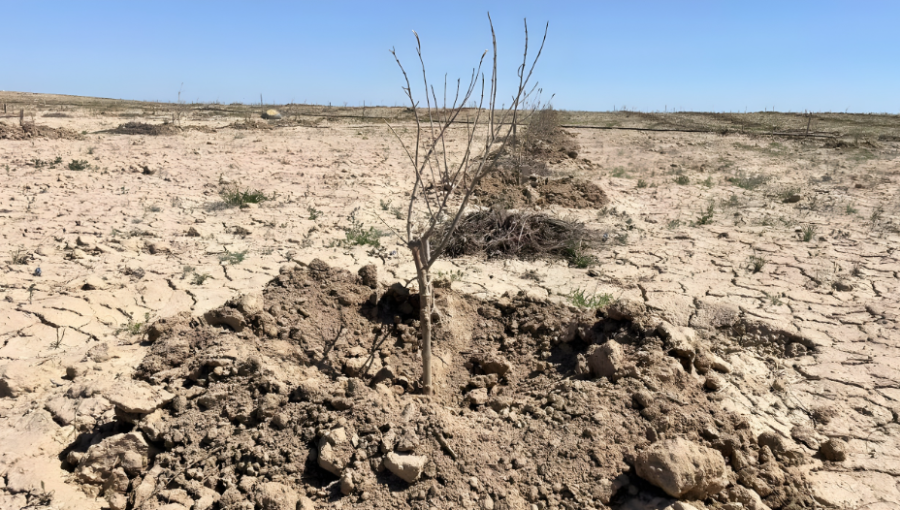
A more immediate concern for Kazakhstan is an extremely dry summer that has caused a water shortage. The Syr Darya River is running at up to 40% below its normal water level for this time of year, threatening crop yields in the Turkestan and Kyzylorda regions. Reservoirs are also recording worryingly low levels.

Kazakh Deputy Prime Minister Kanat Bozumbayev announced that Uzbekistan and Kyrgyzstan have agreed to allocate 600mn cubic metres of water to Kazakhstan to alleviate the shortfall over the near term. The Uzbek and Kyrgyz supplies are expected to start flowing into Kazakhstan by the end of August.

Local media also report that Kazakh officials are exploring a deal with an American firm, Dynamic Aviation, to confront yet another water-related hazard — flooding. Authorities are eager to avoid a repeat of the widespread flooding in 2024 that displaced tens of thousands of citizens and caused millions of dollars worth of property damage.

On August 12, company officials met with Nurzhan Nurzhigitov, Kazakhstan’s minister of water resource management, to discuss potential projects on flood forecasting and mitigation. Virginia-based Dynamic Aviation also bills itself as a “leading company specializing in oil spill response.”

Meanwhile, Turkmenistan is trying to catalyse a multilateral response to the Caspian Sea-level issue. The Trend news agency reported on August 12 that Turkmen Foreign Minister Rashid Meredov has circulated a blueprint outlining possibilities for collective action and is seeking commitments from other regional states to convene a summit of Central Asian leaders devoted specifically to preserving the sea’s “ecological integrity.”

At an August 14 meeting of the Central Asian Interstate Commission for Water Coordination (ICWC), a forum that brings together officials and experts from all five regional states, Bozumbayev, the deputy Kazakh prime minister, sounded an alarm, asserting that dwindling water resources are insufficient to meet growing agricultural needs. He also acknowledged that the ICWC to date has been ineffective in creating a viable resource-management system. 

“The times require more dynamic [action] from us,” Bozumbayev said, according to a government statement. “It is necessary not only to discuss and plan, but also to take specific measures.”

Officials from Kazakhstan, Tajikistan and Uzbekistan have convened multiple meetings in August, striving to develop more efficient water distribution and management systems covering the Amu Darya and Syr Darya river basins.

This article first appeared on Eurasianet here.

The Trump Admin's Climate Denial Proposal Contradicts Science, Law, and Public Opinion

The world’s highest court recently affirmed that climate action is a legal duty and that governments must regulate greenhouse gas emissions.


Climate activists gather outside the US Embassy just over a week before the inauguration of US President-elect Donald Trump in solidarity with people on the frontline of the climate crisis and in protest against his policies based on climate denial on January, 11 2025 in London, United Kingdom.
(Photo by Mark Kerrison/In Pictures via Getty Images)


Dana Drugmand
Aug 24, 2025
Common Dreams


When US Environmental Protection Agency, or EPA, Administrator Lee Zeldin announced last month his official proposal to rescind the agency’s foundational determination that greenhouse gas emissions endanger human health and welfare, he insinuated that previous administrations (under former Presidents Barack Obama and Joe Biden) had “twisted the law, ignored precedent, and warped science” in order to achieve their regulatory agendas. And the regulations of these planet-warming emissions, not the emissions themselves like carbon dioxide, are “the real threat to Americans’ livelihoods,” Zeldin suggested.

EPA’s greenhouse gas endangerment finding, established in 2009, serves as the basis of its legal obligation under the Clean Air Act to regulate greenhouse gas (GHG) emissions from sources such as motor vehicles and power plants. The finding was based on an extensive review of the scientific record, which has gotten even more robust over the last 16 years, and has survived all legal challenges brought against it.

The Trump administration’s move to do away with the finding contradicts the overwhelming scientific evidence that greenhouse gas emissions are driving dangerous climate change impacts. There are also arguments to be made that it is unlawful. And, it goes against the pleas of the hundreds of Americans who have spoken out this week in opposition to Zeldin’s sweeping deregulatory proposal. In other words, contrary to Zeldin’s assertion, it is actually the Trump administration that is twisting or ignoring the law and public sentiment and warping science.

Let’s start with the science. The world’s premier body of climate scientists—the Intergovernmental Panel on Climate Change—has stated that it is “unequivocal” that human activities are warming the planet and causing rapid and widespread changes, such as more extreme weather, that are unprecedented over millennia. The US Fifth National Climate Assessment report observes that “harmful impacts from more frequent and severe extremes are increasing across the country” and notes that “climate changes are making it harder to maintain safe homes and healthy families; reliable public services; a sustainable economy; thriving ecosystems, cultures, and traditions; and strong communities.” These are authoritative statements from reports involving hundreds of scientists and extensive peer review.

What the Trump administration is doing with repealing the endangerment finding and all GHG regulations that flow from it, therefore, could be a violation of international law under the ICJ’s recent advisory opinion.

But to support its proposal to rescind the endangerment finding, Trump’s EPA relies instead on a new report issued by the Department of Energy (DOE) that rejects the scientific consensus on climate change and claims that GHG emissions and climate impacts are not harmful. The report, hastily written by five climate skeptics over a period of just two months, recycles many climate denialist talking points and, according to one analysis, includes over 100 false or misleading statements. As science historian Naomi Oreskes puts it, “Climate denial is now the official policy of the US government.”

“What the Trump administration and the Department of Energy did is pull together this small hand-picked group of people to work in secret to write this report that questions that mountain of scientific evidence that climate change is harming people,” said Erin Murphy, a senior attorney at Environmental Defense Fund (EDF).

“In and of itself, the conclusions of that report are inaccurate and inconsistent with the vast, vast majority of scientific findings and the consensus across the scientific community,” she added. “But also, the report is inconsistent with federal law.”

EDF and the Union of Concerned Scientists have filed a lawsuit against the DOE, the EPA, and the group of five climate skeptics arguing that the secretive manner in which the report was pulled together violates the Federal Advisory Committee Act, which mandates transparency and opportunities for public engagement in government advisory proceedings.

The report has not gone through formal peer review, and although it is currently open to public comment, the time window for commenting is limited to just 30 days (closing on September 2) during a month when many people take vacations or might otherwise be unavailable. And until this week, none of the hundreds of comments that have come in were publicly visible. That hiding of the comments, Murphy said, “further underscores the government’s efforts to do this in secret.”

The lawsuit aims to block the Trump administration from using this report in its efforts to rescind the endangerment finding.

It was clear to me that the speakers—from environmental groups, the medical community and scientists to municipal and state governments and private citizens—were overwhelmingly united in their disapproval of the nixing of EPA’s foundational finding that GHG emissions endanger our health and welfare.

Even if EPA plows ahead and finalizes its move to eliminate the finding, that action will certainly be challenged in court. It remains to be seen what legal arguments environmental groups and other challengers will put forth.

One thing that is clear is that climate action is no longer optional, but rather a legal obligation, as several international courts have affirmed in recent landmark climate change advisory opinions. The International Court of Justice, considered the world’s highest court, delivered its opinion on July 23. The ICJ clarified that states have obligations under multiple sources of international law to reduce emissions and that governments must regulate the emissions of private actors. The customary law duty to prevent significant environmental harm to the climate system, which applies to all countries regardless of whether they are parties to specific treaties, includes putting in place “regulatory mitigation mechanisms” to reduce GHG emissions, the court said. Such rules “must regulate the conduct of public and private operators.” According to the court, failure to act in good faith to regulate emissions could be considered an unlawful act.

What the Trump administration is doing with repealing the endangerment finding and all GHG regulations that flow from it, therefore, could be a violation of international law under the ICJ’s recent advisory opinion. And while the opinion itself is nonbinding, it may be invoked in domestic court proceedings around the world, including in the US.

Zeldin’s endangerment finding rescission also seems to be untenable in the court of public opinion. “In repealing the endangerment finding, the Trump administration is stepping far out of line with public opinion, as voters across partisanship are in strong agreement that greenhouse gas emissions are a threat to public health and should be regulated,” Data for Progress says in reference to new poll results it released last week.

EPA held virtual public hearings last week on its proposal, and almost everyone who testified spoke in opposition to eliminating the endangerment finding. Out of the roughly 200 people who spoke on Tuesday, fewer than 10 voiced support for EPA’s rollback, Inside Climate News reports. I tuned into some of the hearings on Wednesday and Thursday, and it was clear to me that the speakers—from environmental groups, the medical community and scientists to municipal and state governments and private citizens—were overwhelmingly united in their disapproval of the nixing of EPA’s foundational finding that GHG emissions endanger our health and welfare.

“The EPA has a responsibility to regulate greenhouse gases for what they are—a clear, present, and growing threat to the health and well-being of every American,” Kim Cobb, a climate scientist, told the EPA panel in concluding her testimony.

Tiffany Covarrubias Lyttle, a registered nurse and mother of seven children, said during her testimony that the father of her children recently passed away from cancer, specially an environmentally triggered adenocarcinoma.

“Repealing environmental protections and rescinding [the endangerment] finding will make stories like mine more common,” Lyttle said. “Clean air, clean water, and a stable climate aren’t just environmental issues. They are in fact a matter of life and death.”


This piece was originally published on Dana Drugmand’s Substack One Earth Now on August 21, 2025.


Our work is licensed under Creative Commons (CC BY-NC-ND 3.0). Feel free to republish and share widely.


Dana Drugmand
Dana Drugmand is a freelance journalist and environmental advocate. She completed her Master's degree in Environmental Law and Policy at Vermont Law School.
Full Bio >