Wednesday, August 27, 2025

Modi vows to shield Indian farmers and small firms against US tariffs

Modi vows to shield Indian farmers and small firms against US tariffs
/ The White House Cropped
By bno Chennai Office August 26, 2025

Indian Prime Minister Narendra Modi signalled in a speech that his government would not bend under pressure from the US as tariffs on Indian goods are set to take effect. Speaking in Ahmedabad, Modi told farmers, shopkeepers and small entrepreneurs that their interests would remain his priority despite mounting global trade tensions, according to a press release by India’s Press Information Bureau.

The remarks came hours before the US administration of President Donald Trump was due to impose higher duties on a range of Indian exports after withdrawing preferential trade benefits and imposing 25% tariffs as reciprocal tariffs and another 25% tariffs on top of that for buying and profiteering from refining and reselling Russian hydrocarbons.

Washington had argued that India did not provide fair access to American companies, as well as enabling Russia’s war in Ukraine by not only funding its state coffers but also not caring for the lives lost on the Ukrainian side. In an August 20 2025 press briefing, US White House Press Secretary Karoline Leavitt referred to the measures as sanctions on India which was not only received poorly in India but likely strengthened the hand of anti-US voices in New Delhi’s policy circles.

While New Delhi and Washington were reportedly close to concluding a free trade pact or at least a trade deal of some magnitude in February 2025, the following months have seen all that progress being virtually lost and bilateral relations stall if not regress altogether. 

India’s Ministry of Commerce and Industry has been preparing a set of retaliatory measures targeting US farm products and steel items. Officials indicated that the counter-tariffs would cover about INR16.7bn ($240mn) worth of imports.

India had earlier delayed the implementation of these duties while talks were ongoing, but the collapse of discussions prompted New Delhi to reconsider. Modi’s comments stressed resilience, saying his government would continue to strengthen its ability to withstand external shocks. He underlined that the administration would not allow harm to small businesses, cultivators or livestock rearers, even if outside pressure intensified.

The dispute follows India’s rapid expansion as one of the fastest-growing major economies, which has sharpened trade frictions with partners. Analysts suggest New Delhi’s firm line reflects both domestic political commitments and its intent to be treated on equal footing in global trade negotiations. 

India braces for export shock as 50% US tariff takes effect


Copyright AP/Manish Swarup

By AP with Eleanor Butler
Published on 27/08/2025 

The duty rate US President Donald Trump has placed on Indian goods is among the highest in the world.

India is bracing for a sharp blow to its overseas trade as steep US tariffs take effect on a range of Indian products on Wednesday.

The move threatens over half of India’s exports to its largest market and highlights the fragile trade ties between the two countries.

President Donald Trump had initially announced a 25% tariff on Indian goods but he signed an executive order earlier this month, imposing an additional 25% tariff due to India’s purchases of Russian oil. That brought the combined tariffs imposed by the United States on its ally to 50%.

The Indian government estimates the tariffs will impact $48.2 billion (€41.5bn) worth of exports. Officials have warned the new duties could make shipments to the US commercially unviable, triggering job losses and slower economic growth.

India–US trade relations have expanded in recent years but remain vulnerable to disputes over market access and domestic political pressures. India is one of the fastest-growing major global economies and it may face a subsequent slowdown.

Sectors to be impacted by US tariffs


Estimates by New Delhi-based think tank, Global Trade Research Initiative, suggest labour-intensive sectors such as textiles, gems and jewellery, leather goods, food and automobiles will be hit hardest.

“The new tariff regime is a strategic shock that threatens to wipe out India’s long-established presence in the US, causing unemployment in export-driven hubs and weakening its role in the industrial value chain,” said Ajay Srivastava, the think tank's founder and a former Indian trade official.

The US has for now exempted some sectors such as pharmaceuticals and electronic goods from additional tariffs, bringing some relief for India as its exposure in these sectors is significant.

Exporters fear losses


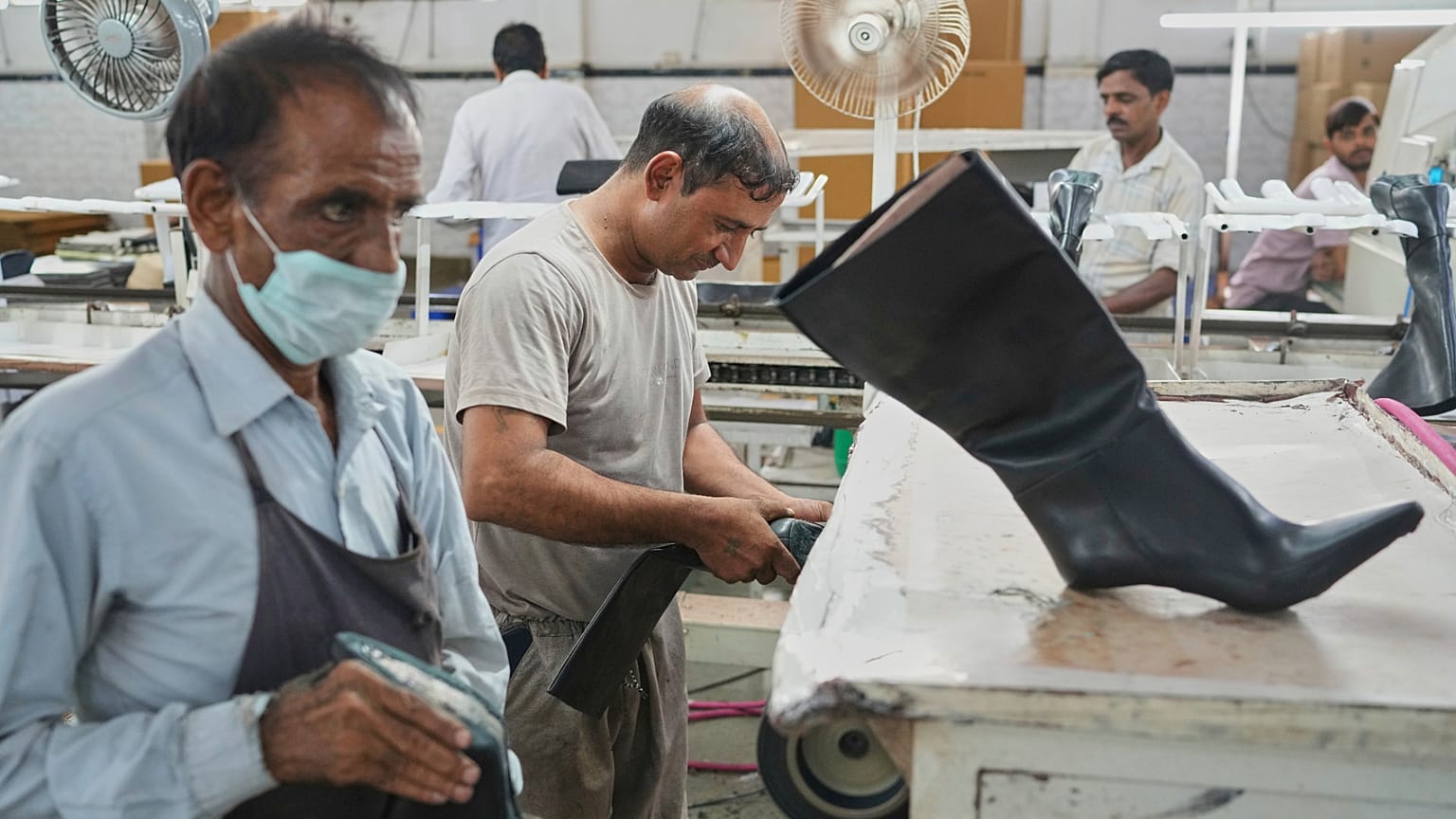
Puran Dawar, a leather footwear exporter in northern India’s Agra city, says the industry would take a substantial hit in the near term unless domestic demand strengthens and other overseas markets buy more Indian goods.

“This is an absolute shock,” said Dawar, whose business with the US has grown in recent years. Dawar’s clients include the major fashion retailer Zara.

Dawar, who is also the regional chairman of the Council for Leather Exports — an export promotion body — said the US should understand that the steep tariffs will hurt its own consumers.

Groups representing exporters warn that new import tariffs could hurt India’s small and medium enterprises that are heavily reliant on the American market.

“It’s a tricky situation. Some product lines will simply become unviable overnight,” said Ajay Sahai, director general of the Federation of Indian Export Organisations.
Modi vows not to yield to US pressure

The tariffs come as the US administration continues to push for greater access to India’s agriculture and dairy sectors.

India and the US have held five rounds of negotiations for a bilateral trade agreement, but have yet to reach a deal. That's largely because New Delhi has resisted opening these sectors to cheaper American imports, citing concerns that would endanger jobs of millions of Indians who rely on them for their livelihoods.

Prime Minister Narendra Modi has vowed not to yield to the pressure.

Related

India attacks US and Europe's 'double standards' in their trade relationship with Russia

“For me, the interests of farmers, small businesses and dairy are topmost. My government will ensure they aren’t impacted,” Modi said at a rally this week in his home state of Gujarat.

He said the world was witnessing “politics of economic selfishness".

A US delegation cancelled plans to visit New Delhi this week for a sixth round of trade talks.

India plans local reforms to cushion the blow from tariffs

The government has begun working on reforms to boost local consumption and insulate the economy.

It has moved to change the goods and services tax, or consumption tax, to lower costs for insurance, cars and appliances ahead of the major Hindu festival of Diwali in October.

The government council is set to meet early next month to decide on cutting taxes.

The trade ministry and finance ministry are discussing financial incentives that would include favourable bank loan rates for exporters.

The trade ministry also is weighing steps to expand exports to other regions, particularly Latin America, Africa and Southeast Asia. Trade negotiations underway with the European Union could gain renewed urgency as India works to reduce its dependence on the US market.


Chinese scientists develop high-performance iron catalyst for fuel cells


Chinese Academy of Sciences Headquarters
Construction of CS Fe/N-C 

image: 

Construction of CS Fe/N-C

view more 

Credit: ZHAO Yasong


Proton exchange membrane fuel cells (PEMFCs), often referred to as "hydrogen power banks," are clean energy devices that generate electricity from hydrogen and oxygen with only water as a byproduct. Characterized by high efficiency, rapid start-up, and zero emissions, they hold great promise in transportation, portable electronics, and stationary power generation. Unfortunately, PEMFCs currently rely heavily on scarce and expensive platinum as a catalyst, making their widespread adoption impractical.

Now, however, a team of Chinese scientists has developed a high-performance iron-based catalyst for these fuel cells that could potentially reduce reliance on platinum. The new design, described as "inner activation, outer protection," enables record efficiency and long-term durability.

The findings were published in Nature.

Traditional Fe/N-C catalysts typically rely on outer surface of graphene or carbon supports, limiting the exposure of active sites and hindering their practical application. In general, PEMFCs have also been hampered by overly strong binding with oxygen intermediates, poor reaction kinetics, and vulnerability to Fenton reactions in oxidative environments (e.g., H2O2 and ·OH), leading to metal leaching and performance degradation.

To address these challenges, the research team led by Prof. WANG Dan (currently at Shenzhen University) and Prof. ZHANG Suojiang from the Institute of Process Engineering of the Chinese Academy of Sciences developed an inner curved-surface single-atom iron catalyst (CS Fe/N-C) with a unique nanoconfined hollow multishelled structure (HoMS). Each nano hollow particle, about 10 nm × 4 nm in size, consists of multiple shells where Fe atoms are concentrated on the inner layers at high density.

This catalyst is composed of numerous nano HoMS dispersed on 2D carbon layers, with single-iron-atom sites primarily embedded within the inner curved surface of the nano HoMS. The outer graphitized carbon layer of the nano HoMS not only effectively weakens the binding strength of the oxygenated reaction intermediates but also reduces the hydroxyl radical production rate, forming a distinctive "inner activation, outer protection" microenvironment. The Fe/N-C catalyst delivers one of the best-performing platinum-group-metal-free PEMFCs.

Synchrotron X-ray absorption spectroscopy revealed that these inner Fe atoms predominantly exhibit a +2 oxidation state and an FeN4C10 coordination structure. Mössbauer spectroscopy further confirmed that 57.9% of the Fe sites are in a catalytically active low-spin D1 state.

Theoretical calculations showed that increasing curvature alone strengthens intermediate binding and hinders desorption, thereby reducing catalytic activity. However, introducing a nitrogen-doped carbon outer shell with Fe vacancies induces significant electrostatic repulsion (0.63–1.55 eV) between the outer-layer nitrogen atoms and the oxygen atoms of adsorbed intermediates on the inner shell. This repulsion weakens the binding strength, breaks the linear scaling relationship among ΔG*OH, ΔG*O, and ΔG*OOH, and significantly enhances the catalytic performance.

According to the researchers, the catalyst achieved an oxygen reduction overpotential as low as 0.34 V, which is far better than that of planar structure. It also suppressed hydrogen peroxide formation and improved selectivity and durability. Additionally, it delivered a record power density of 0.75 W cm-2 under 1.0 bar H2-air with 86% activity retention after more than 300 hours of continuous operation.

This work establishes a new type of CS Fe/N-C for highly active and durable oxygen reduction catalysis in fuel cells. The graphitized outer N-C layer effectively weakens the binding strength of oxygenated intermediates and suppresses ·OH generation, thereby improving both activity and stability. It provides a new paradigm for developing high-performance catalysts for next-generation electrocatalyst.


‘Built for cutting flesh, not resisting acidity’: sharks may be losing deadly teeth to ocean acidification


Scientists found that some of the oceans’ fiercest hunters could be losing their bite: As oceans become more acidic, sharks’ teeth may become structurally weaker and more prone to break


Frontiers

Blacktip Reef Shark 

image: 

Blacktip Reef Shark at Sealife Oberhausen, where teeth used in the study were collected. Credit: Max Baum.

view more 

Credit: Max Baum


Sharks can famously replace their teeth, with new ones always growing as they’re using up the current set. As sharks rely on their teeth to catch prey, this is vital to the survival of one of the oceans’ top predators.

But the ability to regrow teeth might not be enough to ensure they can withstand the pressures of a warming world where oceans are getting more acidic, new research has found. Researchers in Germany examined sharks’ teeth under different ocean acidification scenarios and showed that more acidic oceans lead to more brittle and weaker teeth.

“Shark teeth, despite being composed of highly mineralized phosphates, are still vulnerable to corrosion under future ocean acidification scenarios,” said first author of the Frontiers in Marine Science article, Maximilian Baum, a biologist at Heinrich Heine University Düsseldorf (HHU). “They are high developed weapons built for cutting flesh, not resisting ocean acid. Our results show just how vulnerable even nature’s sharpest weapons can be.”

Damage from root to crown

Ocean acidification is a process during which the ocean’s pH value keeps decreasing, resulting in more acidic water. It is mostly driven by the release of human-generated CO2. Currently, the average pH of the world’s oceans is 8.1. In 2300, it is expected to drop to 7.3, making it almost 10 times more acidic than it currently is.

For their study, the researchers used these two pH values to examine the effects of more and less acidic water on the teeth of Blacktip reef sharks. Divers collected more than 600 discarded teeth from an aquarium housing the sharks. 16 teeth – those that were completely intact and undamaged – were used for the pH experiment, while 36 more teeth were used to measure before and after circumference. The teeth were incubated for eight weeks in separate 20-liter tanks. “This study began as a bachelor’s project and grew into a peer-reviewed publication. It’s a great example of the potential of student research,” said the study’s senior author, Prof Sebastian Fraune, who heads the Zoology and Organismic Interactions Institute at HHU. “Curiosity and initiative can spark real scientific discovery.”

Compared to the teeth incubated at 8.1 pH, the teeth exposed to more acidic water were significantly more damaged. “We observed visible surface damage such as cracks and holes, increased root corrosion, and structural degradation,” said Fraune. Tooth circumference was also greater at higher pH levels. Teeth, however, did not actually grow, but the surface structure became more irregular, resulting in it appearing larger on 2D images. While an altered tooth surface may improve cutting efficiency, it potentially also makes teeth structurally weaker and more prone to break.

Small damage, big effects

The study only looked at discarded teeth of non-living mineralized tissue, which means repair processes that may happen in living organisms could not be considered. “In living sharks, the situation may be more complex. They could potentially remineralize or replace damaged teeth faster, but the energy costs of this would be probably higher in acidified waters,” Fraune explained.

Blacktip reef sharks must swim with their mouths permanently open to be able to breathe, so teeth are constantly exposed to water. If the water is too acidic, the teeth automatically take damage, especially if acidification intensifies, the researchers said. “Even moderate drops in pH could affect more sensitive species with slow tooth replication circles or have cumulative impacts over time,” Baum pointed out. “Maintaining ocean pH near the current average of 8.1 could be critical for the physical integrity of predators’ tools.”

In addition, the study only focused on the chemical effects of ocean acidification on non-living tissue. Future studies should examine changes to teeth, their chemical structure, and mechanical resilience in live sharks, the researchers said. The study shows, however, that microscopic damage might be enough to pose a serious problem for animals depending on their teeth for survival. “It’s a reminder that climate change impacts cascade through entire food webs and ecosystems,” Baum concluded.


Blacktip Reef Shark at Sealife Oberhausen, where teeth used in the study were collected. Credit: Max Baum.

Credit

Max Baum

Microscopic view of damaged shark tooth after incubation for eight weeks at 7.3pH. Credit: Baum et al., 2025.

Credit

Steffen Köhler


Treating heart failure patients with anti-obesity medication reduces greenhouse gas emissions and improves clinical outcomes


European Society of Cardiology


Key takeaways 

  • New research shows that treatment of heart failure patients with a type of anti-obesity medication reduces the environmental footprint of healthcare, as well as improving clinical outcomes.  

  • People being treated for heart failure with GLP-1 receptor antagonists used 0.25 kg CO₂-equivalent less per person annually, compared to patients with heart failure taking a placebo. When this saving is scaled to the millions of people eligible for the treatment, the findings suggest that 2 billion kilograms of CO₂-equivalent could be saved annually. 

  • The study is one of the first to quantify the environmental co-benefits of pharmacologic treatment. The authors hope that studies like this will empower policy makers, clinicians and patients to consider environmental outcomes alongside clinical outcomes in the future. 


Madrid, Spain - 27 August, 2025 : New research has found that the use of GLP-1 receptor agonists*, a class of medications commonly prescribed for patients with obesity and diabetes, reduces the environmental footprint of healthcare and clinical outcomes when used to treat heart failure.  

Treatment of heart failure patients with these therapies led to fewer hospitalizations and lower calorie intake, which together translated into decreased greenhouse gas emissions, less medical waste, and reduced water usage. 

The study is one of the first to quantify the environmental co-benefits of pharmacologic treatment. The findings are being presented today at the 2025 European Society of Cardiology Congress in Madrid, Spain. 

The healthcare sector is responsible for nearly 5% of greenhouse gas emissions globally (1), highlighting the need for interventions to reduce the environmental footprint of clinical care. 

Patient level meta-analysis of four randomised controlled trials, SELECT, FLOW, STEP HFpEF, and STEPHFpEF DM, was conducted. All the trials involved patients with a type of heart failure, called heart failure with preserved ejection fraction, who had been treated with GLP-1 receptor agonists or a placebo. Estimates of mean inpatient days, ICU admissions, emergency department and ambulatory visits per event of heart failure, and related greenhouse gas emissions were obtained from previously published literature.  

A total of 54 worsening heart failure events were reported among 1,914 patients receiving GLP1-receptor antagonist treatment, compared to 86 events among 1,829 patients receiving placebo. 

Those receiving the treatment were estimated to have 9.45 kg CO₂-equivalent emissions per patient per year, compared to 9.70 kg CO₂-equivalent emissions per patient per year among placebo users. The differences were predominantly driven by emissions arising from inpatient stays and outpatient visits due to worsening heart failure events.  

The study was led by Dr.Sarju Ganatra, Director of Sustainability and Vice Chair of Research at Lahey Hospital & Medical Center in the US and the President of Sustain Health Solutions, a non-profit organization that helps healthcare organizations integrate sustainability in care delivery. He explained, “The magnitude of the potential environmental emission savings found in our analysis was striking.”  

“0.25 kg of CO2-equivalent per person saved annually from reduced hospitalizations might sound small. However, when this figure is scaled up to the millions of patients eligible for these therapies, it adds up to over 2 billion kilograms of CO2-equivalent saved. Similar-scale reductions were observed in waste generation and water use. This research highlights how even modest incremental individual gains can result in significant collective impact,” Dr Ganatra continued. 

2 billion kg of CO2 is approximately equivalent to 20,000 full capacity Boeing 747 long-haul flights, or city-wide emissions from Brussels over 3 months. Around 30 million trees grown over 10 years would be needed to offset 2 billion kg of CO2. 

The analysis also showed that those taking the GLP1-receptor antagonist treatment had approximately 695.33 kg CO2-equivalent lower emissions per patient per year due to a reduction in daily calorie consumption compared to placebo.   

“By combining clinical trial data with environmental life cycle assessment metrics, we offer a new lens to evaluate the full impact of prescribing decisions. We also show that it is possible for medical treatments to deliver dual benefits—better health for patients and a healthier planet,” Dr Ganatra added. “We hope that in the future, policymakers will integrate sustainability metrics into health technology assessments, drug coverage decisions, and procurement frameworks.” 

Each worsening heart failure event was assumed to involve one inpatient admission and a round trip to the hospital. Greenhouse gas emissions associated with the production and use of a GLP1 receptor agonist were obtained from a leading pharmaceutical drug manufacturer.  

The study used modelling data from prior trials and established environmental life cycle assessment emissions data sets, rather than direct measurements. It could not take into account patient-level variability such as behavioural differences, and the research used mean values for hospital-related emissions.  

“The next step for this research is to validate our modelling with real-world emissions data and clinical outcomes. In the future, we hope that environmental impact will be integrated into clinical trial designs, drug regulatory processes, and formulary decisions to ensure health systems align with planetary health goals,” Dr Ganatra concluded. 

The findings from this study also support previous research that found that treatment of patients with GLP-1 receptor agonists reduced hospital visits for patients with heart failure with preserved ejection fraction. 


ENDS 

Notes to editor 

This press release accompanies an abstract at ESC Congress 2025.  

It does not necessarily reflect the opinion of the European Society of Cardiology. 


Funding: N/A 

Disclosures: None provided 

References and notes: 

*Glucagonlike peptide 1 (GLP-1) receptor agonists are medicines that mimic the action of a hormone, called GLP-1, that is released by the stomach when food is eaten. These medicines have a number of actions including reducing appetite, slowing down the digestion of food, reducing the sugar that the liver makes, and helping the body to make more insulin.  

  1. https://global.noharm.org/sites/default/files/documents-files/5961/HealthCaresClimateFootprint_092319.pdf 

The abstract «Environmental impact of novel anti-obesity medications on healthcare-related greenhouse gas emissions in patients with heart failure with preserved ejection fraction »  will be presented at the session Perspectives in public health and cardiovascular diseases  which takes place on 31 August from 2:15 to 3:00 pm CEST at Ex-change Circle 4 - Research Gateway 


ESC Press Office  
Tel: +33 661401884    
Email: press@escardio.org   

The hashtag for ESC Congress 2025 is #ESCCongress  

Follow us on LinkedIn @European Society of Cardiology News 

Journalists are invited to become accredited and register here

Check out the ESC Media and Embargo Policy

About ESC Congress 2025 

It is the world’s largest gathering of cardiovascular professionals, disseminating ground-breaking science both onsite in Madrid and online – from 29 August to 1 September 2025. Explore the scientific programme. More information is available from the ESC Press Office at press@escardio.org

About the European Society of Cardiology 

The ESC brings together healthcare professionals from more than 150 countries, working to advance cardiovascular medicine and help people to live longer, healthier lives. 


Phone snubbing more damaging to insecure partners, study finds


Put down your phones to pick up your relationship, say researchers


University of Southampton


Researchers from the University of Southampton have found that people with emotional insecurities are more affected than others when their partners choose their phone over them.

The researchers have conducted a study into ‘phubbing’ – a mashup of ‘phone’ and ‘snubbing’ used to describe the all too familiar scenario where the person you are talking to shuns you to look at their phone.

The team wanted to find out how people with different ways of thinking and feeling about their relationship would respond to being ‘phubbed’. The results have been published in the Journal of Personality.

Dr Claire Hart, Associate Professor of Psychology at the University of Southampton and coauthor of the study, says: “We know that everyone finds phubbing frustrating and annoying. It might seem trivial, but in relationships these small moments can mount up, creating a sense that your partner’s attention is elsewhere and that you’re less valued.

“For people who are already sensitive to signs of rejection, this impact can be magnified, leading to cycles of conflict and withdrawal.”

The researchers were particularly interested in those with high attachment anxiety - people who fear abandonment and crave reassurance, and those with high attachment avoidance - people who are uncomfortable with closeness.

They asked 196 adults in relationships to complete a ten-day diary, detailing how often their partner had phubbed them, how they felt, how they responded and their reasons for retaliating – picking up their own phone as a tit-for-tat response.

The diaries showed that people with high attachment anxiety reacted more strongly than people who are more secure. They reported higher depressed mood, lower self-esteem and greater resentment on the days they had been phubbed.

They were also more likely to pick up their own phones in response to get support and approval from others.

Dr Kathy Carnelley, Associate Professor of Psychology at the University of Southampton and coauthor of the study, says: “We found that people with high attachment anxiety retaliated as a way of seeking connection from others when their partner seemed unavailable to them. They also posted or messaged to get validation from others.

“While this kind of retaliation might offer immediate comfort, it may lead to a downward spiral of poor interactions.”

Those with high attachment avoidance were somewhat ‘immune’ in terms of the impact on their well-being. They were less likely to confront their partner about their phone use, and when they retaliated in kind, it was often to seek approval rather than connection.

The researchers say that choosing to be present with your partner matters more than you might think.

Dr Hart says: “Being accused of phubbing doesn’t mean you’re a bad partner, but there are some simple steps that can help protect our relationships. Creating phone-free zones at mealtimes or before bed and discussing phone boundaries openly can help both partners feel respected. If you must check your phone, acknowledge the interruption, explain why and return your attention quickly.

“Simply put, put down your phone to pick up your relationship.”

The paper Attachment, Perceived Partner Phubbing, and Retaliation: A Daily Diary Study is published in the Journal of Personality and is available online.

Ends

Contact

Steve Williams, Media Manager, University of Southampton, press@soton.ac.uk or 023 8059 3212.

Notes for editors

  1. The paper Attachment, Perceived Partner Phubbing, and Retaliation: A Daily Diary Study is published in the Journal of Personality and is available here: https://onlinelibrary.wiley.com/doi/10.1111/jopy.70012
  2. For Interviews with Dr Hart and Dr Carnelley please contact Steve Williams, Media Manager, University of Southampton press@soton.ac.uk or 023 8059 3212.

Additional information

The University of Southampton drives original thinking, turns knowledge into action and impact, and creates solutions to the world’s challenges. We are among the top 100 institutions globally (QS World University Rankings 2025). Our academics are leaders in their fields, forging links with high-profile international businesses and organisations, and inspiring a 22,000-strong community of exceptional students, from over 135 countries worldwide. Through our high-quality education, the University helps students on a journey of discovery to realise their potential and join our global network of over 200,000 alumni. www.southampton.ac.uk

www.southampton.ac.uk/news/contact-press-team.page

Follow us on X: https://twitter.com/UoSMedia


EU claims ‘sovereign right’ to regulate tech after Trump threat


By AFP
August 26, 2025


The EU has already slapped heavy fines on US behemoths including Meta and Apple under its new digital rules - Copyright AFP/File JUSTIN TALLIS
Emma CHARLTON

The European Commission Tuesday asserted the “sovereign right” to regulate the activities of tech giants within the bloc and rejected claims by President Donald Trump that its rules unfairly harm US firms.

Brussels has adopted a powerful legal arsenal aimed at reining in tech giants, particularly through the Digital Markets Act (DMA) covering competition and Digital Services Act (DSA) on content moderation.

Without explicitly naming the EU, Trump threatened on Monday to impose fresh tariffs on countries with regulations that sought to “harm” American technology, just days after both sides released details of a hard-fought transatlantic trade deal.

“It is the sovereign right of the EU and its member states to regulate economic activities on our territory,” European Commission chief spokesperson Paula Pinho told reporters in response.

The EU has already slapped heavy fines on US behemoths including Meta and Apple under its new digital rules, which have faced months of pushback from Trump’s administration.

EU tech spokesman Thomas Regnier said the bloc could “firmly rebut” the idea pushed by Trump that its rules targeted US companies.

“The DSA does not look at the colour of a company, at the jurisdiction of a company,” Regnier said — noting that the last three enforcement decisions under the law had been against China’s AliExpress and TikTok, and Chinese-founded Temu.

Aimed at protecting consumers from disinformation and hate speech as well as counterfeit or dangerous goods, the DSA obliges platforms to swiftly remove illegal content or make it inaccessible.

Among its provisions, the law instructs platforms to suspend users who frequently share illegal content such as hate speech — something framed as “censorship” by detractors from Meta CEO Mark Zuckerberg to the US State Department.

“The claims that the DSA is a censorship tool are completely wrong and completely unfounded,” Regnier said.

“We’re not asking platforms to remove content. We’re asking them to enforce their own terms and conditions.”

– ‘Speculative’ –

Trump’s latest threat comes after the United States and the EU finally released details of the trade deal struck between the US leader and European Commission President Ursula von der Leyen in July to end a months-long transatlantic standoff.

A joint statement issued last Thursday confirmed that the deal imposes a 15-percent US levy on most EU exports, including cars, pharmaceuticals, semiconductors and lumber, but negotiations are not over and some moving parts remain.

The bloc’s trade chief Maros Sefcovic insisted last week that Brussels successfully kept digital issues “out of the trade negotiations” with Washington — and that the bloc’s “regulatory autonomy” was not up for debate.

The commission’s Pinho stood by those comments, saying Trump’s latest threat would not derail work on implementing the agreement.

“We have a clear framework on which we are working,” she said, adding: “any other measures which fall out of the scope of this framework agreement at this stage are merely speculative.”

'Trial balloon': Trump slammed for trying to 'normalize the idea that he's a dictator'


August 26, 2025 
ALTERNET


For the second day in a row, President Donald Trump insisted he is not a dictator, but also insisted that many Americans would like to have one running the country. Some critics are calling his remarks a “trial balloon.”

“So the line is that I’m a dictator — but I stop crime,” Trump said at his televised Cabinet meeting on Tuesday (video below). “So a lot of people say, ‘You know, if that’s the case, I’d rather have a dictator.’ But I’m not a dictator. I just know how to stop crime.

Those remarks echo ones he made just one day earlier in the Oval Office while attacking Illinois Democratic Governor JB Pritzker.

“I have some slob like Pritzker criticizing us before we even go there,” he said of his plan to deploy the National Guard to Chicago. “I made the statement that next should be Chicago, ’cause, as you all know, Chicago’s a killing field right now. And they don’t acknowledge it, and they say, ‘We don’t need him. Freedom, freedom. He’s a dictator, he’s a dictator.'”

“A lot of people are saying, maybe we like a dictator,” Trump mused. “I don’t like a dictator. I’m not a dictator. I’m a man with great common sense and a smart person.”

Declaring that an American president “even suggesting that Americans want to do away with democracy and be ruled” by a dictator is “chilling,” Rolling Stone on Monday noted that “Trump has been ruling like an authoritarian since retaking office in January, repeatedly thumbing his nose at Congress, the Constitution, and any other check on presidential power.”

CNN’s Aaron Blake, even before Trump’s second “I’m not a dictator” attestation, wrote: “Many people are increasingly entertaining the idea of a dictator. They are his supporters.”


“They don’t necessarily say, ‘Yes, I want a dictator.’ But polling shows Republicans have edged in that direction – to a pretty remarkable degree.”

“Perhaps the most startling poll on this came last year,” Blake explained. “A University of Massachusetts Amherst survey asked about Trump’s comment that he wanted to be a dictator, but only for a day,” during the campaign. “Trump said it was a joke, but 74% of Republicans endorsed the idea.”

He noted that a “Pew Research Center poll early this year showed 59% of Republicans and Republican-leaning independents agreed that many of the country’s problems could be better solved ‘if Donald Trump didn’t have to worry so much about Congress and the courts.'”

And, Blake added, “as many 3 or 4 in 10” Republicans, according to several polls, are “endorsing that kind of power.”

Critics expressed outrage.

Journalist Ahmed Baba observed: “This is the second day in a row he’s said this. This is an intentional normalization effort.”

Journalist Aaron Rupar wrote, “note how Trump on a daily basis is trying to normalize the idea that he’s a dictator.”

Rep. Jake Auchincloss (D-MA) wrote: “Deploying the military to cities. Breaking laws. Attacking judges. Firing generals, economists, and central bankers who speak truth to power. Praising autocrats who hate America. Republican officials have given up on the rule of law. They obey the law of the ruler. But in America, law is king.”

Hedge fund manager Spencer Hakimian wrote: “You are all frogs in a boiling pot.”


Watch the video below or at this link.