Wednesday, September 10, 2025


Researchers keep a mammalian cochlea alive outside the body for the first time


Rockefeller University

Cochlea 

image: 

A specially designed chamber that helps imitate the living environment of the cochlea. 

view more 

Credit: Chris Taggart/The Rockefeller University


Shortly before his death in August 2025, A. James Hudspeth and his team in the Laboratory of Sensory Neuroscience at The Rockefeller University achieved a groundbreaking technological advancement: the ability to keep a tiny sliver of the cochlea alive and functional outside of the body for the first time. Their new device allowed them to capture the live biomechanics of the cochlea’s remarkable auditory powers, including exceptional sensitivity, sharp frequency tuning, and the ability to encode a broad range of sound intensities.

“We can now observe the first steps of the hearing process in a controlled way that was previously impossible,” says co-first author Francesco Gianoli, a postdoctoral fellow in the Hudspeth lab.

Described in two recent papers (in PNAS and Hearing Research, respectively), the innovation is a product of Hudspeth’s five decades of work illuminating the molecular and neural mechanisms of hearing—insights that have illuminated new paths to preventing or reversing hearing loss.

With this advance, the researchers have also provided direct evidence of a unifying biophysical principle that governs hearing across the animal kingdom, a subject Hudspeth investigated for more than a quarter-century.

“This study is a masterpiece,” says biophysicist Marcelo Magnasco, head of the Laboratory of Integrative Neuroscience at Rockefeller, who collaborated with Hudspeth on some of his seminal findings. “In the field of biophysics, it’s one of the most impressive experiments of the last five years.”

The mechanics of hearing

Though the cochlea is a marvel of evolutionary engineering, some of its fundamental mechanisms have long remained hidden. The organ’s fragility and inaccessibility—embedded as it is in the densest bone in the body—have made it difficult to study in action.

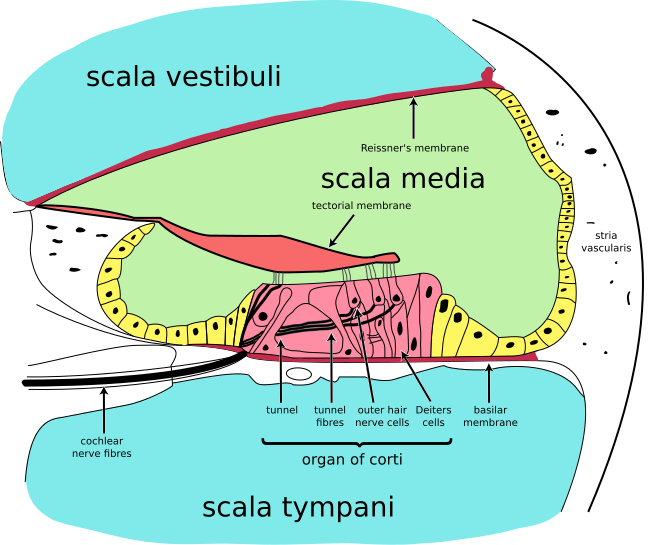
These challenges have long frustrated hearing researchers, because most hearing loss results from damage to sensory receptors called hair cells that line the cochlea. The organ has some 16,000 of these hair cells, so-called because each one is topped by a few hundred fine “feelers,” or stereocilia, that early microscopists likened to hair. Each bundle is a tuned machine that amplifies and converts sound vibrations into electrical responses that the brain can then interpret.

It’s well documented that in insects and non-vertebrate animals—such as the bullfrogs studied in Hudspeth’s lab—a biophysical phenomenon known as a Hopf bifurcation is key to the hearing process. The Hopf bifurcation describes a kind of mechanical instability, a tipping point between complete stillness and oscillations. At this knife-edge, even the faintest sound tips the system into movement, allowing it to amplify weak signals far beyond what would otherwise register.

In the case of bullfrog cochlea, the instability is in the bundles of the sensory hair cells, which are always primed to detect incoming sound waves. When those waves hit, the hair cells move, amplifying the sound in what’s called the active process.

In collaboration with Magnasco, Hudspeth documented the existence of the Hopf bifurcation in the bullfrog cochlea in 1998. Whether it exists in the mammalian cochlea has been a subject of debate in the field ever since.

To answer that question, Hudspeth’s team decided they needed to observe the active process in a mammalian cochlea in real time and at a greater level of detail than ever before.

A sliver of a spiral

To do so, the researchers turned to the cochlea of gerbils, whose hearing falls in a similar range as humans. They excised slivers no larger than .5 mm from the sensory organ, in the region of the cochlea that picks up the middle range of frequencies. They timed their excision to a developmental moment in which the gerbil’s hearing is mature but the cochlea hasn’t fully fused to the highly dense temporal bone.

They placed a sliver of tissue within a chamber designed to reproduce the living environment of the sensory tissue, including continuously bathing it in nutrient-rich liquids called endolymph and perilymph and maintaining its native temperature and voltage. Key to the development of this custom device were Brian Fabella, a research specialist in the Hudspeth lab, and instrumentation engineer Nicholas Belenko, from Rockefeller’s Gruss Lipper Precision Instrumentation Technologies Resource Center.

They then began to play sounds via a tiny speaker and observed the response.

Discovering a biophysical principle

Among the processes they witnessed were how the opening and closing of ion channels in the hair bundles add energy to the sound-driven vibrations, amplifying them, and how outer hair cells elongate and contract in response to voltage changes through a process called electromotility.

“We could see in fine detail what every piece of the tissue is doing at the subcellular level,” Gianoli says.

“This experiment required an extraordinarily high level of precision and delicacy,” notes Magnasco. “There’s both mechanical fragility and electrochemical vulnerability at stake.”

Importantly, they observed that key to the active process was indeed a Hopf bifurcation—the tipping point that turned mechanical instability into sound amplification. “This shows that the mechanics of hearing in mammals is remarkably similar to what has been seen across the biosphere,” says co-first author Rodrigo Alonso, a research associate in the lab.

A device that could lead to future treatments

The scientists anticipate that experimentation using the ex vivo cochlea will improve their understanding of hearing and hopefully point to better therapies.

“For example, we will now be able to pharmacologically perturb the system in a very targeted way that has never been possible before, such as by focusing on specific cells or cell interactions,” says Alonso.

There’s a great need in the field for new potential therapies. “So far, no drug has been approved to restore hearing in sensorineural loss, and one reason for that is that we still have an incomplete mechanistic understanding of the active process of hearing,” Gianoli says. “But now we have a tool that we can use to understand how the system works, and how and when it breaks—and hopefully think of ways to intervene before it’s too late.”

Hudspeth found the results deeply gratifying, Magnasco adds. “Jim had been working on this for more than 20 years, and it’s a crowning achievement for a remarkable career.”


Mysterious flag-waving behavior in a tropical bug is an anti-predator strategy


Smithsonian Tropical Research Institute
Flag-waving behavior in matador bugs is an anti-predatory strategy 

video: 

Scientists at the Smithsonian Tropical Research Institute in Panama discovered that the matador bug’s hind leg-waving display is more than just a show — it helps protect it from predators. 

view more 

Credit: Smithsonian Tropical Research Institute


If you happen to be walking in the forests of Panama, you might just come across a bug that will wave at you, which scientists at the Smithsonian Tropical Research Institute (STRI) have been studying for a while. The matador bug (Bitta alipes) carries striking, reddish “flags” on its hind legs and performs an intricate leg-waving display. But the reason why these bugs perform this behavior has remained a mystery — until now.

Sexual selection seemed a likely explanation. Males would wave their flags to attract females. Yet when scientists tested the idea, they found no evidence: both males and females waved their legs, and waving was unrelated to courtship or competition. That deepened the puzzle: if not for sex, why evolve such a conspicuous and seemingly costly behavior?

A new study published in Current Zoology by STRI researchers Connor Evans-Blake, Juliette Rubin and Ummat Somjee offers an answer. These colorful “flags” appear not to attract mates, but to deter predators. The team exposed matador bugs to two different arthropods: predatory praying mantids and harmless katydids. They recorded nearly 3,000 leg waves. The results were striking: on average, bugs increased their waving behavior seven-fold in the presence of mantids, but barely responded to katydids. Even more telling, mantids never attacked bugs that were actively waving.

The findings show that waving is an anti-predator behavior, deployed specifically when danger looms. To document whether similar flag-waving behavior occurs in other species within the family, researchers used direct observations in Panama and searched for videos online. They found that at least five related flag-legged species display similar waving behaviors, hinting at a broader evolutionary strategy among these plant-feeding insects.

All these flag-waving insects feed on passionflower vines, known to carry toxins, and may thus be advertising their own chemical defenses with these bold movements. But how does waving reduce predatory attacks? The precise mechanism remains a mystery. Is the waving communicating the bugs’ likely toxicity, confusing predators’ vision, or intimidating attackers with exaggerated motion?

“We’re left with more questions than answers,” said senior author Ummat Somjee. “But that’s the beauty of studying insects — there are hundreds of thousands of species, most of them completely unstudied, and every time we look closely we uncover behaviors that change the way we think about evolution.”

Research like this goes beyond solving quirky puzzles. Insects make up the majority of Earth’s biodiversity and are foundational to terrestrial ecosystems worldwide, yet most of their behaviors remain undocumented. Understanding how prey defend themselves provides insight into how animals evolve and diversify into the many forms, sometimes bizarre, that make up complex ecosystems.

Reference: Evans-Blake, C., Rubin, J. J., & Somjee, U. (2025). Flag-waving behavior in matador bugs is an antipredatory strategy. Current Zoology, zoaf047.


About the Smithsonian Tropical Research Institute

Headquartered in Panama City, Panama, STRI is a unit of the Smithsonian Institution. Our mission is to understand tropical biodiversity and its importance to human welfare, to train students to conduct research in the tropics and to promote conservation by increasing public awareness of the beauty and importance of tropical ecosystems. Watch our video, and visit our websiteFacebookX and Instagram for updates.


Matador bug, Bitta alipes (former Anisoscelis alipes), a leaf-footed bug (family Coreidae) with impressive, large, colorful flags on its hind tibia. 

Credit

Steven Paton

Elaborate flag-waving behaviour is found in at least five species of coreid bugs with tibial flags. All species that display this behaviour possess conspicuous, elaborate tibial flags and are Passiflora specialists. a) Bitta lurida b) Bitta hymeniphera c) Diactor bilineatus d) Bitta gradadia and e) Anisoscelis foliaceus. Credit: B. lurida © adel-fridus, iNaturalist observation:, accessed 17/03/2025; B. hymeniphera © Erika Nathaly Bernal Morales, iNaturalist observation: https://www.inaturalist.org/observations/48812802, accessed 17/03/2025; D. bilineatus © tyski, 2023, iNaturalist observation: https://www.inaturalist.org/observations/188839210, accessed 17/03/2025; B. gradadia photo by Ummat Somjee; A. foliaceus © Cristian Serrano, iNaturalist observation: https://www.inaturalist.org/observations/54789401, accessed 17/03/2025. 

Credit

Connor Evans-Blake, Juliette J. Rubin and Ummat Somjee


Matador bug, Bitta alipes performing the flag-waving behavior in the presence of a predatory mantis. [VIDEO] 

More Michigan children are losing parents to overdose, suicide, homicide


PUBLIC HEALTHCARE WORKERS NEEDED NOT FEDERAL TROOPS 


University of Michigan


The number of Michigan children whose parents died from overdose, suicide, homicide or other substance-related causes has surged since 2000, accounting for 2 in 5 parental deaths, a new University of Michigan study found.

Michigan has higher parental mortality rates than the national average, said Sean Esteban McCabe, professor at the U-M School of Nursing and lead author of the study, which appears in JAMA Network Open. 

McCabe and his team wanted to better understand the state landscape of stigmatized deaths. The goal was to provide bereavement services to the children left behind in the areas that need it most.

"Parental deaths from overdoses, homicides, suicides, and other substance-related causes are associated with more adverse health outcomes and higher rates of early mortality in their children, so more attention is needed in this area, because no child should ever have to grieve alone," said McCabe, who is also the director of U-M's Center for the Study of Drugs, Alcohol, Smoking and Health. 

McCabe and colleagues formed a collaboration with the Michigan Department of Health and Human Services, the Community Foundation of Southeast Michigan and HopeHQ, a research group focused on children who are grieving parental overdose deaths. 

To understand the state- and county-level trends in parental deaths, researchers linked death certificates of individuals who died between 2000 and 2023 to birth certificates from 1989 to 2023 to establish a cohort of biological children aged 17 or younger who had experienced a parental death. 

Other key findings: 

  • Between 2000 and 2023, 115,558 children in Michigan experienced a parental death for any cause.

  • Between 2000 and 2023, 38,429 children experienced a parental death due to suicide, homicide, overdose or other substance-related death.

  • Stigmatized deaths represented 1,372 deaths, or 28%, in 2008.

  • Stigmatized deaths represented 2,222 deaths, or 42%, in 2023.

  • At the county level, the percentage of children who experienced stigmatized parental deaths relative to all other causes ranged from 21% to 47%.

"Despite some recent declines in fatal drug overdoses, the number of children who have experienced a parental death due to a drug overdose continues to rise in Michigan and nationally because of the tremendous surge in fatal drug overdoses over the past decade," McCabe said.

One notable finding, he said, is that counties experiencing high levels of parental deaths due to drug overdose, homicide, suicide and other substance-related causes are spread across the state rather than concentrated in one area. Some counties that topped the list include: Marquette, Luce, Alger, Dicknson, Baraga, Menominee, Charlevoix, Manistee, St. Clair, Monroe, Calhoun and Crawford. 

"Taken together, these findings offer key metrics to make sure that there are adequate bereavement services to meet the increased needs at the county and state levels," McCabe said. "We are fortunate to live in a state that prioritizes public health and is willing to make data-driven decisions to make sure no child or family grieves alone."

Because the study focused on biological parents and did not include step parents or other caregivers, it underestimates the true impact of bereaved children in Michigan, he said. 

"It's a great first step and more work is clearly needed," McCabe said.

Co-authors include Luisa Kcomt, Wayne State University, Rececca Evans-Polce, U-M School of Nursing; Samuel Tennant, U-M School of Public Health; Eric Hulsey, Institute for Research, Education and Training in Addictions; and Vita McCabe, Michigan Medicine.

Study: Children's Experiences of Parental Deaths Due to Suicide, Homicide, Overdose, Alcohol, or Drug Use