Water As A Means Or Instrument Of Warfare In South Asia – OpEd
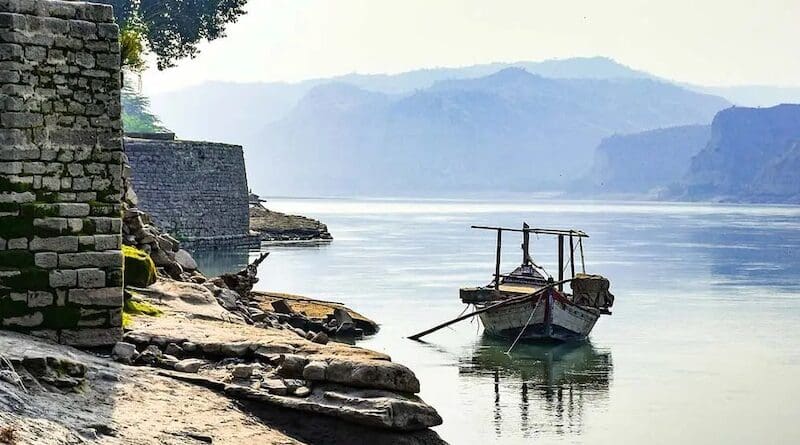
A boat on the Indus River in Makhad, Punjab, Pakistan. Photo Credit: Iqbal Khattak (Pexels)
By Ali Mehar
Water, in modern India-Pakistan conflict, has become a subject of controversy and dispute, and unfolding events can still turn decades of shared endeavor on its head under the Indus Waters Treaty. The treaty signed in 1960 has been a symbol of India-Pak cooperation untainted by war and crises. India’s ad-hoc reversal of the treaty in May 2025 and spilling of dam water over Pakistan’s border lands have already increased tensions and acted as alarm bells to weaponize water resources. Indus basin is the backbone of Pakistan’s Agri-based economy and rural livelihood.
Tampering with water flows will degrade food security, economic stability, and public health. Pakistan views India’s suspension of the treaty and the flood of August 2025 as acts of willed hostility to international agreements and the law of humanity due to the release of water from dams. Suspension of the treaty to Pakistan is not a political loss but a bare faced danger to millions of people whose very existence is Indus waters. India has justified its move on grounds of security and having to build water facilities for its citizens.
India accuses Pakistan of ignoring rights under the treaty and identifying Pakistani water projects as Indian hostilities. India asserts August releases were carried out as a precaution in anticipation of dam bursts from rain rather than a strategic action intended to cause damage. India’s approach is to find out the need to balance development needs, national security and international obligations in a politically sensitive situation. Both nations are confronted with the monumental task of managed management of shared water resources in the instance of climate insecurity and population pressure. The present floods in Pakistan put us into perspective that water problems are part of existential human security and environmental exposure. Displacement, mortality, and agriculture loss have long-term adverse social and economic impacts. It underlines the necessity of collective flood management as well as coordinated emergency intervention responses.
The global world in general has seen to it that it prioritizes keeping such agreements like the IWT in the process of stabilizing the world. Suspension of agreements acts as a disincentive against the global legal world responsible for contributing towards transboundary water resources and plays a critical role in preventing world wars. Water cooperation has been one of the key pillars of sustainable development and peace building symbolizing the centrality of trust and compliance with rules prescribed.
International organizations such as the United Nations and the World Bank can facilitate technical collaboration and exchange between India and Pakistan. Statistical exchange on hydrology, dam operation management, and investment in trans-frontier benefit infrastructure can ease tension and make both nations climate change resilient. All this interaction can be a greater measure of confidence than the normal geopolitical complexity.
Innovation approaches to water diplomacy like people’s participatory governance and transboundary river basin management provide avenues for nonviolent and sustainable sharing of the resource. Association of water professionals, consultation of policy elites, and civil society dialogue can create mutual understanding and overcome distrust barriers.
Water in its nature is not politicized- nor border. It is shared inheritance to be preserved in common trusteeship. Militarization of water disregards not only immediate humanitarian interests but also longer-term prospects of regional peace and prosperity in South Asia. Pakistan and India are both to benefit by re-commemorating Indus Waters Treaty or negotiating new terms on basis of existing realities.
Finally, for the good and survival of millions on both sides of the divide, Indus waters have to be democratically managed, in the open, and cooperatively. It is a test case of how states can transcend politics of rivalry to step into the field of collective responsibility for common resources. The topic of the 80th session, “Better together,” was also very relevant on this score, reminding one and all that unity is strength for peace, human rights, and sustainable development.

Ali Mehar is a student of BS International Relations at Quaid e Azam University. He can be reached at @ alimeharmail50@gmail.com