Trump vows to block Israeli annexation of West Bank ahead of Netanyahu visit
US President Donald Trump vowed Thursday to block Israel from annexing the West Bank as he pushes to end the Gaza war. Israeli Prime Minister Benjamin Netanyahu addresses the UN Friday before meeting Trump, amid Israeli ministers’ calls to annex territory after Western recognition of Palestine.
Issued on: 26/09/2025 -
By: FRANCE 24
Abbas says no role for Hamas
Palestinian leader Mahmud Abbas in his own address to the United Nations on Thursday sought to allay concerns as he called for all countries to recognize Palestinian statehood.
The veteran 89-year-old president of the Palestinian Authority was forced to address the General Assembly by video after the United States took the unusual step of denying him a visa to come to New York.
Abbas made clear he was different from Hamas, which took control of Gaza in 2007.
"Hamas will not have a role to play in governance. Hamas and other factions will have to hand over their weapons to the Palestinian National Authority," Abbas said in a speech that received loud applause by delegates watching the video.
He distanced himself from the Hamas attack of October 7, 2023 -- the deadliest day ever for Israel, in which 1,219 people died, mostly civilians -- as well as frequent accusations by Israel's supporters that the Palestinians are denying the rights of Jews.
"Despite all that our people have suffered, we reject what Hamas carried out on October 7 -- actions that targeted Israeli civilians and took them hostage -- because these actions do not represent the Palestinian people, nor do they represent their just struggle for freedom and independence," Abbas said.
"We reject confusing the solidarity with the Palestinian cause and the issue of antisemitism, which is something that we reject based on our values and principles," he said.
Abbas nonetheless called the nearly two-year Israeli assault in Gaza "one of the most horrific chapters of humanitarian tragedy of the 20th and 21st century" -- by implication putting it alongside the Holocaust against the Jews by Nazi Germany during World War II.
Israel's offensive has killed more than 65,500 Palestinians, according to health ministry figures in the Hamas-run territory that the United Nations considers reliable.
(FRANCE 24 with AFP)
US President Donald Trump vowed Thursday to block Israel from annexing the West Bank as he pushes to end the Gaza war. Israeli Prime Minister Benjamin Netanyahu addresses the UN Friday before meeting Trump, amid Israeli ministers’ calls to annex territory after Western recognition of Palestine.
Issued on: 26/09/2025 -
By: FRANCE 24
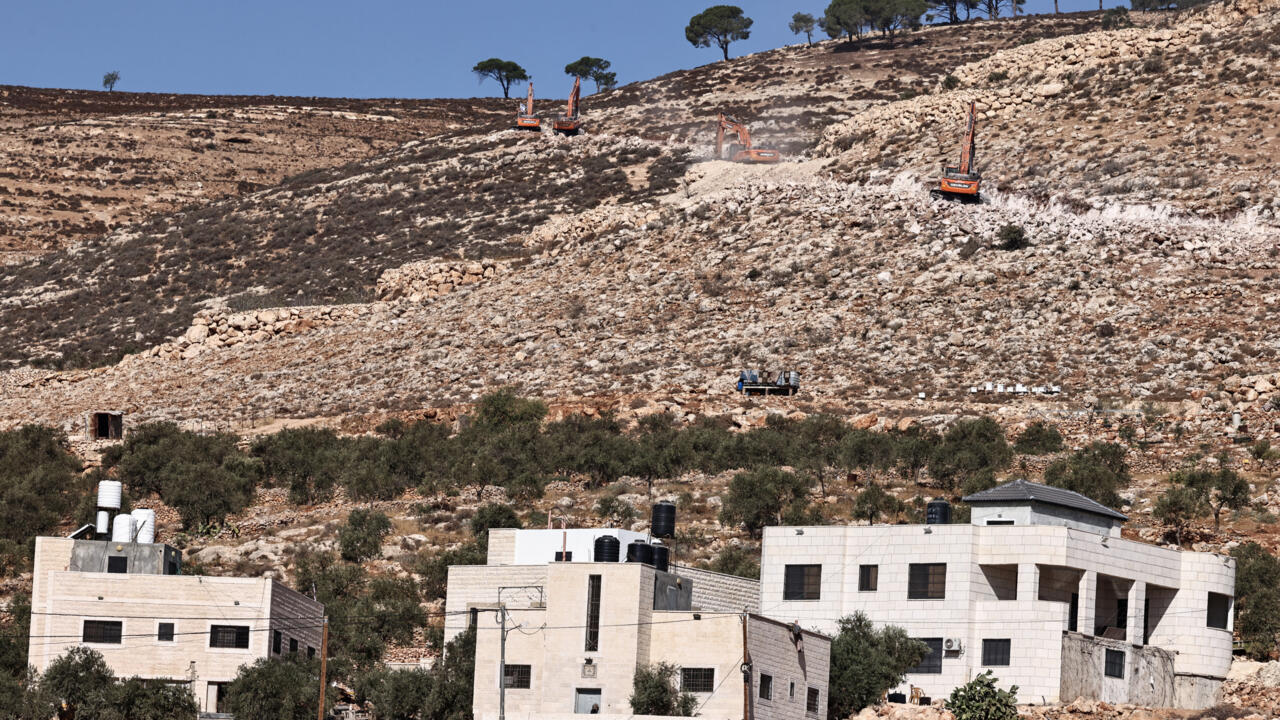
Israeli settlers use bulldozers to pave a road for a new settlement on the outskirts of the occupied West Bank village of Al-Mughayyir, north of Ramallah, on August 24, 2025. © Zain Jaafar, AFP
US President Donald Trump vowed Thursday to stop Israel from annexing the West Bank as he presses to end the Gaza war, ahead of a high-stakes visit by Israeli Prime Minister Benjamin Netanyahu.
Netanyahu will address the United Nations on Friday and later meet Trump in Washington as Israeli ministers muse of annexing the West Bank in response to recognition of a Palestinian state by France, Britain and several other Western powers.
But Trump, who has offered crucial support to Netanyahu as Israel comes under mounting global pressure, made clear he would not back annexation, which far-right Israelis see as a way to kill any real prospect of an independent Palestine.
"I will not allow Israel to annex the West Bank," Trump told reporters at the White House. "No, I will not allow it. It's not going to happen."
Trump voiced optimism about ending nearly two years of devastating war, echoing the confidence expressed a day earlier on the sidelines of the United Nations by his roving envoy, Steve Witkoff.
"We're getting pretty close to having a deal on Gaza and maybe even peace," said Trump, who also spoke to Netanyahu by telephone on Thursday.
Trump met Tuesday at the United Nations with the leaders of key Arab and Muslim nations who warned him of consequences if Israel moved ahead.
"I think the president of the US understands very well the risks and dangers of annexation in the West Bank," Saudi Arabia's Foreign Minister Prince Faisal bin Farhan told reporters.
Saudi Arabia has mulled recognition of Israel in what would be a massive symbolic step, as the kingdom is home to Islam's two holiest sites.
The United Arab Emirates, whose 2020 normalisation with Israel is seen as a top achievement by both Netanyahu and Trump, has publicly warned Israel against annexation.
Netanyahu nonetheless has defied Trump in recent months with attacks in Iran, Qatar and Syria amid US diplomacy.
US President Donald Trump vowed Thursday to stop Israel from annexing the West Bank as he presses to end the Gaza war, ahead of a high-stakes visit by Israeli Prime Minister Benjamin Netanyahu.
Netanyahu will address the United Nations on Friday and later meet Trump in Washington as Israeli ministers muse of annexing the West Bank in response to recognition of a Palestinian state by France, Britain and several other Western powers.
But Trump, who has offered crucial support to Netanyahu as Israel comes under mounting global pressure, made clear he would not back annexation, which far-right Israelis see as a way to kill any real prospect of an independent Palestine.
"I will not allow Israel to annex the West Bank," Trump told reporters at the White House. "No, I will not allow it. It's not going to happen."
Trump voiced optimism about ending nearly two years of devastating war, echoing the confidence expressed a day earlier on the sidelines of the United Nations by his roving envoy, Steve Witkoff.
"We're getting pretty close to having a deal on Gaza and maybe even peace," said Trump, who also spoke to Netanyahu by telephone on Thursday.
Trump met Tuesday at the United Nations with the leaders of key Arab and Muslim nations who warned him of consequences if Israel moved ahead.
"I think the president of the US understands very well the risks and dangers of annexation in the West Bank," Saudi Arabia's Foreign Minister Prince Faisal bin Farhan told reporters.
Saudi Arabia has mulled recognition of Israel in what would be a massive symbolic step, as the kingdom is home to Islam's two holiest sites.
The United Arab Emirates, whose 2020 normalisation with Israel is seen as a top achievement by both Netanyahu and Trump, has publicly warned Israel against annexation.
Netanyahu nonetheless has defied Trump in recent months with attacks in Iran, Qatar and Syria amid US diplomacy.
Abbas says no role for Hamas
Palestinian leader Mahmud Abbas in his own address to the United Nations on Thursday sought to allay concerns as he called for all countries to recognize Palestinian statehood.
The veteran 89-year-old president of the Palestinian Authority was forced to address the General Assembly by video after the United States took the unusual step of denying him a visa to come to New York.
Abbas made clear he was different from Hamas, which took control of Gaza in 2007.
"Hamas will not have a role to play in governance. Hamas and other factions will have to hand over their weapons to the Palestinian National Authority," Abbas said in a speech that received loud applause by delegates watching the video.
He distanced himself from the Hamas attack of October 7, 2023 -- the deadliest day ever for Israel, in which 1,219 people died, mostly civilians -- as well as frequent accusations by Israel's supporters that the Palestinians are denying the rights of Jews.
"Despite all that our people have suffered, we reject what Hamas carried out on October 7 -- actions that targeted Israeli civilians and took them hostage -- because these actions do not represent the Palestinian people, nor do they represent their just struggle for freedom and independence," Abbas said.
"We reject confusing the solidarity with the Palestinian cause and the issue of antisemitism, which is something that we reject based on our values and principles," he said.
Abbas nonetheless called the nearly two-year Israeli assault in Gaza "one of the most horrific chapters of humanitarian tragedy of the 20th and 21st century" -- by implication putting it alongside the Holocaust against the Jews by Nazi Germany during World War II.
Israel's offensive has killed more than 65,500 Palestinians, according to health ministry figures in the Hamas-run territory that the United Nations considers reliable.
(FRANCE 24 with AFP)
Opinion...
Trump’s UN speech, Palestine and the futility of Western recognition
September 24, 2025

US President Donald Trump speaks during the 80th United Nations General Assembly (UNGA) in New York, US, on Tuesday, on September 23, 2025. [Celal Güneş – Anadolu Agency]
by Ronny P Sasmita
Donald Trump’s 23 September speech at the United Nations General Assembly was never going to be subtle. True to form, the US president turned what is traditionally a stage for diplomacy into a spectacle of nationalist swagger, disdain for multilateral institutions, and open contempt for the very ideals the UN purports to uphold. What stood out most this year, however, was not just Trump’s scorn for the UN itself, he ridiculed it as “a club for the weak” that has “never solved a real problem”, but his deliberate silence on one of the world’s most enduring crises, the devastation of Gaza and the Palestinian people’s plea for justice.
This omission was not accidental. Trump has long approached the Israel–Palestine conflict with a combination of ideological blindness and transactional calculation. His speech, laced with invocations of sovereignty, “America First” nationalism, and sneering dismissals of global governance, underscored a simple message, Palestine will not find its justice in a world defined by strongmen. Even as multiple Western states, including several in Europe, moved in September to grant recognition to Palestine, Trump’s posture, amplified by the growing global chorus of leaders who share his disdain for multilateralism, rendered those recognitions almost meaningless. When the loudest and most powerful voice in the room mocks the institutions meant to enforce international law, recognition becomes little more than symbolism.
Trump’s failure to mention Gaza was not merely a gap in speechwriting. It was a political signal. For months, images of bombed-out neighborhoods, mass civilian casualties, and desperate calls for humanitarian relief have defined the Gaza Strip in the eyes of the world. Yet Trump’s UN remarks avoided even a perfunctory acknowledgment of the suffering. Instead, he doubled down on defending “allies who stand strong against terror,” a not-so-subtle gesture toward Israel, without naming it directly. The omission is consistent with the “strongman” playbook.
As Gideon Rachman argues in The Age of the Strongman, contemporary leaders thrive by appealing to domestic audiences through nationalism and the projection of strength, while treating international norms as irrelevant or even hostile. Strongmen rarely find political capital in empathy for stateless peoples or in calls for compromise. In Trump’s world, the Palestinians are either a nuisance or an obstacle, never a constituency worth defending. His silence on Gaza was therefore a declaration, Palestinians have no place in the narrative of strongman politics.
The contrast between Trump and Indonesia’s President Prabowo Subianto could not have been starker. Just days before, Prabowo used his own UN speech to issue a passionate defense of the Palestinian cause, calling for urgent international action to halt Israel’s attacks and restore dignity to Gaza’s civilians. For Prabowo, a leader with strongman ambitions of his own, Palestine is not simply a moral issue but a strategic one. By aligning himself with the Palestinian cause, Prabowo strengthens his legitimacy at home, where public support for Palestine runs deep, and positions Indonesia as a moral heavyweight in the Muslim world. Yet Trump, with his trademark cynicism, brushed off such rhetoric as “performative posturing.”
READ: UN commission of inquiry accuses Israeli president, prime minister of inciting genocide in Gaza
His dismissive tone suggested that Prabowo’s defense of Palestine was little more than political theater designed for domestic consumption. And in some sense, Trump was right—Prabowo, like other aspiring strongmen, understands that foreign policy can serve as a stage for consolidating power. But Trump’s sneer also revealed something darker: a worldview in which appeals to justice, solidarity, or human rights are treated as laughable. To Trump, leaders like Prabowo may talk about Gaza, but power ultimately belongs to those who ignore Gaza and stand firmly with stronger, wealthier allies like Israel.
The cruel irony of September’s wave of recognition for Palestine by Western countries is that it arrived precisely at the moment when the global order is least capable of translating recognition into meaningful change. The European states that extended recognition no doubt imagined themselves standing on the right side of history, affirming the Palestinians’ right to self-determination. Yet in practice, these symbolic gestures collide with the reality of Trump-style strongman politics.
Terry M. Moe, in Trajectory of Power: The Rise of the Strongman Presidency, explains how leaders who command vast executive powers can nullify institutional norms with the stroke of a pen. Trump exemplifies this. Even if an international consensus forms around Palestine, a U.S. president committed to undermining multilateral institutions can paralyze enforcement. The UN Security Council remains hostage to the veto power of the United States. The International Criminal Court is ridiculed as “illegitimate.” And so, the machinery that might transform recognition into accountability or statehood is dismantled by strongman contempt. Recognition without enforcement is theater, and Trump’s speech at the UN drove home that point with ruthless clarity.
Trump is not alone. His speech echoed the voices of other strongmen, from Vladimir Putin to Narendra Modi, who have systematically eroded faith in multilateral institutions. Together, these leaders represent a global shift away from consensus-driven diplomacy toward transactional power politics. For Palestine, this shift is devastating. The cause that once animated solidarity movements and inspired resolutions at the UN is now sidelined by leaders more interested in tariffs, sovereignty, and cultural nationalism than in justice for stateless peoples. The implications go beyond Palestine. As Trump derided the UN and laughed off its failures, the message to other conflicts, from Ukraine to Myanmar, was unmistakable, multilateral solutions are obsolete. The age of strongmen is an age in which power speaks louder than law, and in such an age, Gaza’s cries for justice will always be drowned out.
Donald Trump’s UN speech did not just diminish the institution; it diminished the hope of Palestinians who, for decades, have looked to international law and global solidarity as their lifeline. By ignoring Gaza, sneering at leaders like Prabowo who invoked it, and mocking the very institutions designed to address such crises, Trump confirmed that Palestine’s struggle is increasingly futile in a strongman-dominated world. Western recognition of Palestine in September may have been a symbolic victory, but in the absence of enforcement, it changes nothing on the ground. Strongmen like Trump ensure that such gestures remain hollow, easily dismissed, and politically inert. In the final analysis, Trump’s speech was more than a performance of nationalist bravado. It was a reminder that in the age of the strongman, justice for Palestine, and for Gaza’s beleaguered people, is not merely delayed. It is indefinitely denied.
OPINION: Israel’s crimes in Gaza and the United States’ waning credibility
The views expressed in this article belong to the author and do not necessarily reflect the editorial policy of Middle East Monitor.
Trump’s UN speech, Palestine and the futility of Western recognition
September 24, 2025
US President Donald Trump speaks during the 80th United Nations General Assembly (UNGA) in New York, US, on Tuesday, on September 23, 2025. [Celal Güneş – Anadolu Agency]
by Ronny P Sasmita
MEMO
Donald Trump’s 23 September speech at the United Nations General Assembly was never going to be subtle. True to form, the US president turned what is traditionally a stage for diplomacy into a spectacle of nationalist swagger, disdain for multilateral institutions, and open contempt for the very ideals the UN purports to uphold. What stood out most this year, however, was not just Trump’s scorn for the UN itself, he ridiculed it as “a club for the weak” that has “never solved a real problem”, but his deliberate silence on one of the world’s most enduring crises, the devastation of Gaza and the Palestinian people’s plea for justice.
This omission was not accidental. Trump has long approached the Israel–Palestine conflict with a combination of ideological blindness and transactional calculation. His speech, laced with invocations of sovereignty, “America First” nationalism, and sneering dismissals of global governance, underscored a simple message, Palestine will not find its justice in a world defined by strongmen. Even as multiple Western states, including several in Europe, moved in September to grant recognition to Palestine, Trump’s posture, amplified by the growing global chorus of leaders who share his disdain for multilateralism, rendered those recognitions almost meaningless. When the loudest and most powerful voice in the room mocks the institutions meant to enforce international law, recognition becomes little more than symbolism.
Trump’s failure to mention Gaza was not merely a gap in speechwriting. It was a political signal. For months, images of bombed-out neighborhoods, mass civilian casualties, and desperate calls for humanitarian relief have defined the Gaza Strip in the eyes of the world. Yet Trump’s UN remarks avoided even a perfunctory acknowledgment of the suffering. Instead, he doubled down on defending “allies who stand strong against terror,” a not-so-subtle gesture toward Israel, without naming it directly. The omission is consistent with the “strongman” playbook.
As Gideon Rachman argues in The Age of the Strongman, contemporary leaders thrive by appealing to domestic audiences through nationalism and the projection of strength, while treating international norms as irrelevant or even hostile. Strongmen rarely find political capital in empathy for stateless peoples or in calls for compromise. In Trump’s world, the Palestinians are either a nuisance or an obstacle, never a constituency worth defending. His silence on Gaza was therefore a declaration, Palestinians have no place in the narrative of strongman politics.
The contrast between Trump and Indonesia’s President Prabowo Subianto could not have been starker. Just days before, Prabowo used his own UN speech to issue a passionate defense of the Palestinian cause, calling for urgent international action to halt Israel’s attacks and restore dignity to Gaza’s civilians. For Prabowo, a leader with strongman ambitions of his own, Palestine is not simply a moral issue but a strategic one. By aligning himself with the Palestinian cause, Prabowo strengthens his legitimacy at home, where public support for Palestine runs deep, and positions Indonesia as a moral heavyweight in the Muslim world. Yet Trump, with his trademark cynicism, brushed off such rhetoric as “performative posturing.”
READ: UN commission of inquiry accuses Israeli president, prime minister of inciting genocide in Gaza
His dismissive tone suggested that Prabowo’s defense of Palestine was little more than political theater designed for domestic consumption. And in some sense, Trump was right—Prabowo, like other aspiring strongmen, understands that foreign policy can serve as a stage for consolidating power. But Trump’s sneer also revealed something darker: a worldview in which appeals to justice, solidarity, or human rights are treated as laughable. To Trump, leaders like Prabowo may talk about Gaza, but power ultimately belongs to those who ignore Gaza and stand firmly with stronger, wealthier allies like Israel.
The cruel irony of September’s wave of recognition for Palestine by Western countries is that it arrived precisely at the moment when the global order is least capable of translating recognition into meaningful change. The European states that extended recognition no doubt imagined themselves standing on the right side of history, affirming the Palestinians’ right to self-determination. Yet in practice, these symbolic gestures collide with the reality of Trump-style strongman politics.
Terry M. Moe, in Trajectory of Power: The Rise of the Strongman Presidency, explains how leaders who command vast executive powers can nullify institutional norms with the stroke of a pen. Trump exemplifies this. Even if an international consensus forms around Palestine, a U.S. president committed to undermining multilateral institutions can paralyze enforcement. The UN Security Council remains hostage to the veto power of the United States. The International Criminal Court is ridiculed as “illegitimate.” And so, the machinery that might transform recognition into accountability or statehood is dismantled by strongman contempt. Recognition without enforcement is theater, and Trump’s speech at the UN drove home that point with ruthless clarity.
Trump is not alone. His speech echoed the voices of other strongmen, from Vladimir Putin to Narendra Modi, who have systematically eroded faith in multilateral institutions. Together, these leaders represent a global shift away from consensus-driven diplomacy toward transactional power politics. For Palestine, this shift is devastating. The cause that once animated solidarity movements and inspired resolutions at the UN is now sidelined by leaders more interested in tariffs, sovereignty, and cultural nationalism than in justice for stateless peoples. The implications go beyond Palestine. As Trump derided the UN and laughed off its failures, the message to other conflicts, from Ukraine to Myanmar, was unmistakable, multilateral solutions are obsolete. The age of strongmen is an age in which power speaks louder than law, and in such an age, Gaza’s cries for justice will always be drowned out.
Donald Trump’s UN speech did not just diminish the institution; it diminished the hope of Palestinians who, for decades, have looked to international law and global solidarity as their lifeline. By ignoring Gaza, sneering at leaders like Prabowo who invoked it, and mocking the very institutions designed to address such crises, Trump confirmed that Palestine’s struggle is increasingly futile in a strongman-dominated world. Western recognition of Palestine in September may have been a symbolic victory, but in the absence of enforcement, it changes nothing on the ground. Strongmen like Trump ensure that such gestures remain hollow, easily dismissed, and politically inert. In the final analysis, Trump’s speech was more than a performance of nationalist bravado. It was a reminder that in the age of the strongman, justice for Palestine, and for Gaza’s beleaguered people, is not merely delayed. It is indefinitely denied.
OPINION: Israel’s crimes in Gaza and the United States’ waning credibility
The views expressed in this article belong to the author and do not necessarily reflect the editorial policy of Middle East Monitor.
Issued on: 24/09/2025 -
From the show

A fleeting flicker of hope soon to be snuffed out, or are fault lines finally moving in the Middle East? Donald Trump is addressing the United Nations on the heels of the recognition of a Palestinian state by France, Britain and a host of others. The US president condemned the move and blamed everything on Hamas. Has he given up on his Gaza Riviera scheme?
What's the alternative? Already on Monday, French President Emmanuel Macron laid out steps for a two-state solution while Indonesian President Prabowo Subianto volunteered peacekeepers for when guns go silent. We examine options for both the current humanitarian emergency and paths to lasting peace.
Peace cannot be imposed from a conference hall in New York, but only from the protagonists themselves. Would Israelis and Palestinians still be willing to make concessions in the name of lasting peace?
Produced by Ilayda Habip, Aurore Laborie, Théophile Vareille, and Charles Wente.
Our guestsEberhard KIENLEResearch Professor, CNRS and Sciences Po Paris
Patrice PAOLIFormer French Ambassador to Lebanon
Shannon SEBANRenaissance President in Seine-Saint-Denis department
John LYNDONExecutive Director, Alliance for Middle East Peace
A fleeting flicker of hope soon to be snuffed out, or are fault lines finally moving in the Middle East? Donald Trump is addressing the United Nations on the heels of the recognition of a Palestinian state by France, Britain and a host of others. The US president condemned the move and blamed everything on Hamas. Has he given up on his Gaza Riviera scheme?
What's the alternative? Already on Monday, French President Emmanuel Macron laid out steps for a two-state solution while Indonesian President Prabowo Subianto volunteered peacekeepers for when guns go silent. We examine options for both the current humanitarian emergency and paths to lasting peace.
Peace cannot be imposed from a conference hall in New York, but only from the protagonists themselves. Would Israelis and Palestinians still be willing to make concessions in the name of lasting peace?
Produced by Ilayda Habip, Aurore Laborie, Théophile Vareille, and Charles Wente.
Our guestsEberhard KIENLEResearch Professor, CNRS and Sciences Po Paris
Patrice PAOLIFormer French Ambassador to Lebanon
Shannon SEBANRenaissance President in Seine-Saint-Denis department
John LYNDONExecutive Director, Alliance for Middle East Peace
By: François PICARD
Play (46:50 min)

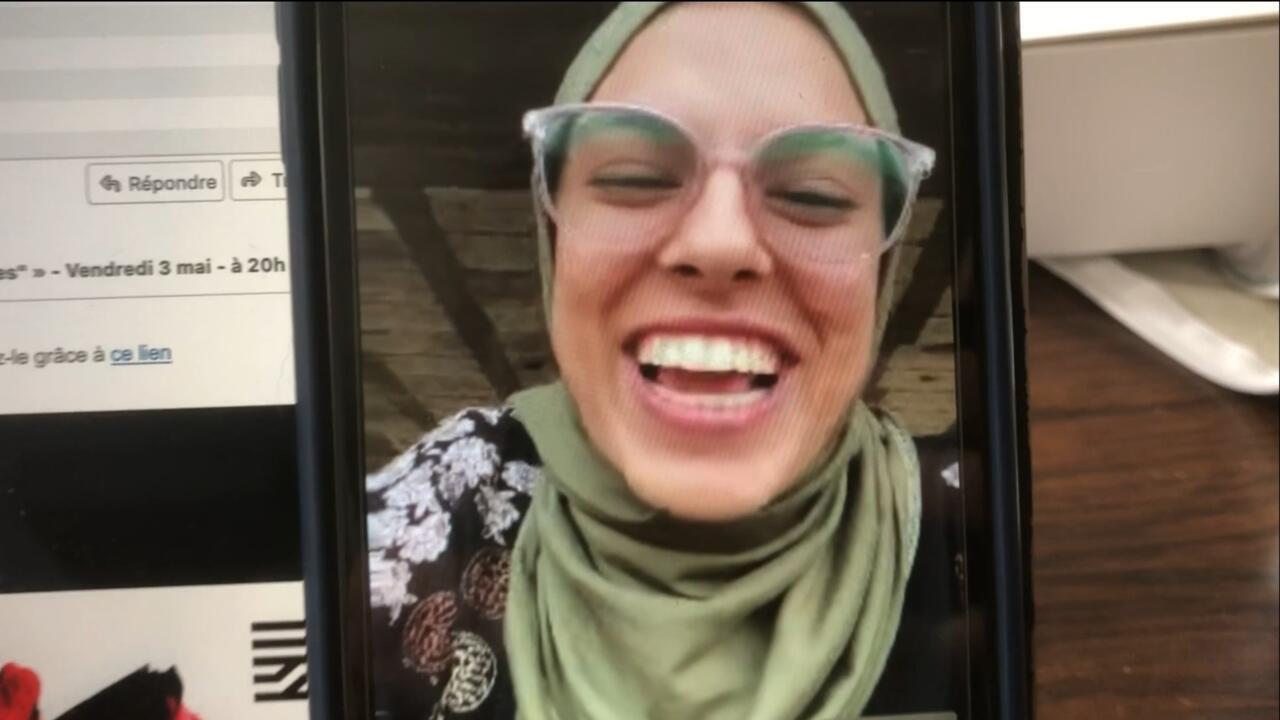 Gaza photojournalist Fatma Hassona seen in a still from Sepideh Farsi's "Put Your Soul on your Hand and Walk". © Courtesy of Sepideh Farsi, Rêves d'Eau Productions