It’s possible that I shall make an ass of myself. But in that case one can always get out of it with a little dialectic. I have, of course, so worded my proposition as to be right either way (K.Marx, Letter to F.Engels on the Indian Mutiny)
Wednesday, October 01, 2025
China Amends Maritime Regulations Ahead of USTR Fee Implementation
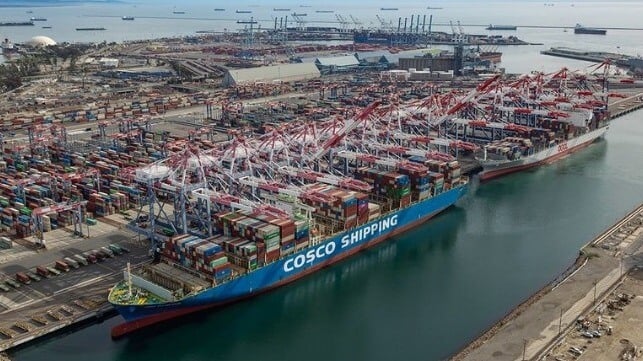
China's COSCO and OOCL dockedi n Port of Long Beach (Port of Long Beach file photo)
Just two weeks ahead of the scheduled start of the U.S. Trade Representative’s plan to impose fees on Chinese-built, owned, or operated vessels calling at U.S. ports, the Chinese government announced changes to its 2001 International Maritime Transport Regulations. While it is the fifth time the regulations have been updated in the past 24 years, it is widely seen as a response to the U.S. fees and a further complication in the international trade talks.
Chinese officials have repeatedly said they would respond to actions that threaten Chinese trade. Xinhua, the Chinese state news agency, announced that Chinese Premier Li Qiang immediately signed a decree from the State Council on September 28. Among the changes are the ability to take “countermeasures against countries that impose of support discriminatory bans, restrictions, or similar measures targeting Chinese operators, vessels, or crew engaged in international maritime transport and related services.”
The text of the decree posted to the Chinese government website reads, “If any country or region adopts, assists or supports the adoption of discriminatory prohibitions, restrictions or other similar measures against operators, ships or crew members of the People’s Republic of China engaged in international maritime transport and its ancillary services, the government of the People’s Republic of China shall, unless relevant treaties and agreements can provide sufficient and effective remedies.”
China says its actions could include charging special fees to ships of that country or region berthing at Chinese ports, prohibiting and or restricting ships of that country or region from entering or leaving Chinese ports. It could also prohibit or restrict organizations and individuals of that country or region from obtaining data and information related to China’s international maritime transport, and operating international maritime transport and its ancillary services entering and leaving Chinese ports.
Another provision requires international shipping operators to submit information “such as the operator's name, place of registration, contact information, platform service agreement, and shipping transaction rules to the transportation department of the State Council.” The revised decree also provides the power to charge a fee of between approximately $2,800 and $14,000 if a company does not provide the required information. It further establishes that “if the circumstances are serious, it shall be ordered to cease conducting relevant business."
The U.S. Trade Representative released is April its plan to impose fees in response to a complaint from five unions that asserted China was unfairly dominating shipbuilding and maritime trade. Finding that China had unfair business practices, the U.S. said it would impose fees on Chinese-flagged operators calling in the U.S., ships owned by Chinese investors, and ships built by Chinese shipyards. Other parts of the fee proposal target Chinese-made port cargo cranes, international car and vehicle carriers regardless of their nationality, and the U.S. LNG export trade.
The moves are part of a series of consequential initiatives all expected to reach decision points during October. Experts, however, point out that the U.S. is yet to finalize the rules, respond to industry questions, and formalize the plan for the collection of the fees. The USTR and Customs and Border Protection (CBP) are expected to release documentation ahead of the October 14 scheduled start of the fees.
China’s state carrier COSCO Shipping and its subsidiary OOCL have admitted that the fees would impact their business but have said they remain committed to their operations. Many international carriers, including MSC, Maersk, CMA CGM, ONE, have all said they would be adjusting deployments and expected to avoid most of the fees. Investors and vessel owners/operators are considering other responses as greater clarity emerges on the fee structure and the potential for legal challenges remains, although none have yet been filed.
Op-Ed: Green Shipping Requires Giga-Scale Projects and Regulatory Certainty
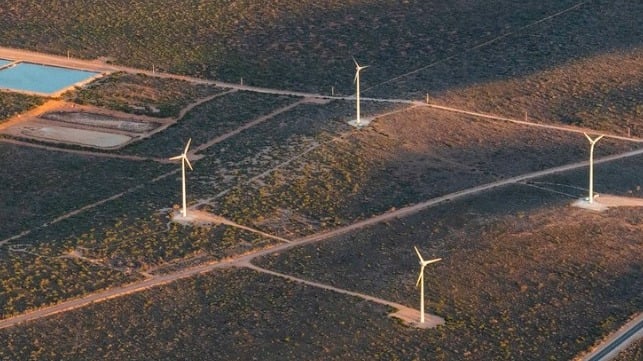
A wind farm near the remote town of Denham, Western Australia. Giga-scale projects would be far larger and geared for global markets (Chris Gordon / iStock)
The shipping industry stands at a decisive moment. The International Maritime Organization (IMO) has already committed to reaching net-zero emissions by or around 2050, with interim targets for 2030 and 2040. These milestones demand rapid transformation of a sector that currently contributes almost three percent of global greenhouse gas emissions. The upcoming vote at the IMO in October will determine whether the industry gains the clear framework it needs to accelerate its energy transition, or whether uncertainty continues to slow progress.
Pilot projects and small-scale demonstrations have played a useful role in testing new technologies, but they cannot deliver the volumes of affordable green fuels required to decarbonize the global fleet. Only giga-scale projects can provide the speed, cost reductions and reliability needed to meet the IMO’s ambitious goals. At InterContinental Energy, we see mega-projects, supported by predictable regulation and industry-wide partnerships, as the only credible path to define the next chapter of maritime decarbonization.
The Case for Scale
The shipping sector requires an entirely new fuel system at a global level. Unlike other industries that can decarbonize incrementally, maritime must transition to fuels that can power vessels across international waters, be available in every port, and be produced competitively enough to rival fossil fuels. This transformation cannot be achieved through scattered initiatives.
Giga-scale renewable energy hubs provide a credible pathway. Projects like InterContinental Energy’s Western Green Energy Hub (WGEH) in Western Australia demonstrate what is possible. At full build-out, WGEH will produce up to 28 million tonnes of green ammonia per year, enough to displace a significant proportion of today’s marine fuel demand. Even its first phase, expected in the early 2030s, will deliver two million tonnes annually. By then, production costs are expected to fall below $650 per tonne, making green ammonia competitive with fossil-derived fuels - but only if the right regulatory framework is in place to unlock demand and investment.
The economics hinge on size. Like the oil and gas industry, large renewable projects can tap resource basins to maximize efficiency. InterContinental Energy’s project locations in coastal deserts combine world-class wind and solar profiles, with windy nights and sunny days creating a near-continuous energy supply for hydrogen electrolyzers. This natural complementarity reduces intermittency and enables cost-effective, large-scale production of green fuels. For shipping, this means green fuels can reach the market more quickly and expand in line with demand.
Among the potential fuels, green ammonia stands out as one of the most viable options for deep-sea shipping. While its volumetric energy density is lower than conventional marine fuels, it is relatively straightforward to store and transport at scale. Crucially, ammonia can be produced directly from renewable hydrogen, meaning both fuels are part of the same value chain. It is energy-rich enough to power long-haul voyages, scalable from abundant renewable resources, and avoids the land-use and food security concerns associated with biofuels. Momentum is already building, with ammonia-ready vessels entering the global fleet and ports beginning to plan bunkering facilities.
Building the Ecosystem
Fuel producers alone cannot deliver maritime decarbonization. Ports, shipbuilders, engine manufacturers, financial institutions and training providers must all evolve in parallel. Infrastructure for bunkering and handling new fuels needs to be developed. Shipyards must deliver dual-fuel and ammonia-ready engines. Investors must provide capital through long-term contracts. Seafarers must be trained to handle alternative fuels safely.
Encouraging signs of collaboration are emerging. Some shipping companies are committing to offtake agreements, a vital step in enabling mega-projects to reach final investment decision (FID). Ports across Europe, the Middle East and Asia are mapping future fuel requirements, and classification societies are establishing safety standards for ammonia handling. Yet more must be done. Without stronger demand signals from the shipping sector, companies risk missing the opportunity to secure competitively priced green fuels, leaving other industries to move ahead.
Timing is also critical. Infrastructure must be available when shipping needs it, not years later. That means building ahead of demand. InterContinental Energy’s projects are already progressing through environmental approvals, with phased development designed to align with the IMO’s milestones. If the industry waits until demand is guaranteed, it will be too late to meet the 2030 and 2040 targets. Forward planning is essential, even when the commercial case is not yet fully visible.
Regulatory Certainty as the Catalyst
The decisive factor in unlocking this transformation is regulatory certainty. Shipping is a global industry that relies on clear and enforceable international rules. For decades, the IMO has provided the level playing field necessary for trade. It must now provide the same clarity for decarbonization.
Earlier this year, the IMO adopted a revised strategy at MEPC 83, but the vote on mid-term measures in October will be decisive. This package, which could include fuel standards and carbon pricing mechanisms, has the potential to unlock investment across the sector. A robust framework will give shipowners, ports and fuel producers the confidence to commit to the large-scale infrastructure required. Without it, uncertainty will delay capital flows, slow down deployment and risk derailing progress toward net zero.
With regulatory clarity, however, the industry can move decisively. Developers can advance giga-projects, investors can commit capital, and shipowners can plan vessel renewals knowing that alternative fuels will be available at competitive prices. The October vote is not simply a policy milestone; it is the catalyst for the entire ecosystem to accelerate.
A Call to Action
The shipping industry has no margin for delay. Giga-scale, modular renewable projects can deliver affordable fuels at scale. Partnerships across the ecosystem can align supply and demand. Regulatory clarity from the IMO can unlock the confidence needed to act with speed and conviction.
Maritime leaders now face a responsibility and an opportunity. They must support the IMO’s vote in October, advocate for ambitious regulatory measures, and commit to offtake agreements that will bring giga-projects from vision to reality. They must also champion collaboration across the value chain, ensuring that ships, ports, fuels and finance evolve together.
The future of shipping will not be defined by incremental improvements but by decisive choices. Scale, certainty and collective action are the keys to success. The time to act is now, and the industry must seize this moment to lead the global energy transition.
Isabelle Ireland is Head of Corporate Operations at InterContinental Energy.
The opinions expressed herein are the author's and not necessarily those of The Maritime Executive.
Samsung Heavy Industries Partners with India’s Swan as it Builds Network
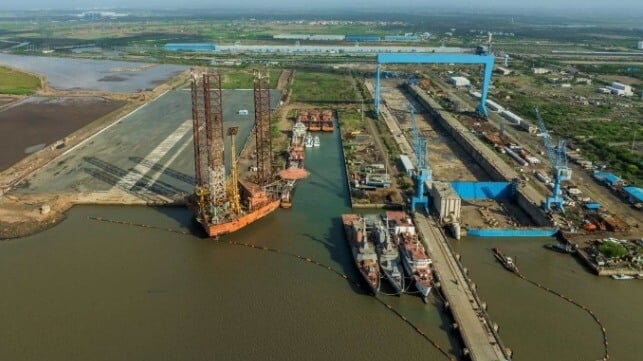
Swan's yard in northwest India has the country's largest dry dock (Swan Defence & Heavy Industries)
South Korea’s Samsung Heavy Industries (SHI) and India’s Swan Defence and Heavy Industries have entered into a “shipbuilding and marine business cooperation” agreement. It comes as India is pursuing its strategy to become a global competitor in shipbuilding, and SHI continues to build its international capabilities.
Through the collaboration, Samsung Heavy Industries reports it plans to secure a production bridgehead in India. The companies plan to cooperate in the areas of new ship design, procurement, and production management. The yard is targeting both commercial and defense shipbuilding, but also has capabilities for large marine constructions, including offshore platforms.
Swan is the relaunch of the former Reliance Naval and Engineering Limited, and reports that it is India’s largest shipyard. The company was started in 1997 as the Pipavav Shipyard, and owned from 2015 to 2020 by the Indian conglomerate Reliance Group. The yard was closed by a bankruptcy but restarted in 2022 and was renamed Swan in 2025.
It reports it has the largest dry dock in India, measuring 662 x 65 meters (2,172 x 213 feet), which it says gives it the capability to build ships up to 400,000 dwt. SHI cites the opportunity to build very large crude carriers (VLCCs) at the yard. Swan reports that historically it has delivered 18 vessels, including 74,500 dwt Panamax vessels and Offshore Support Vessels, among others. The shipyard has also designed and constructed Naval Offshore Patrol Vessels (NOPVs) and a Coast Guard Training Ship (CGTS). It also has a dedicated yard for the construction and load out of large offshore platforms and constructions up to 10,000 tons.
In July this year, as part of its revitalization, it also announced a ship repair operation. The yard is located in Gukarat in northwestern India, which the company says positions it close to major trade routes.
Swan is positioning to play a major role in the government’s plans to expand Indian shipbuilding. Last year, the government approved a plan to invest more than $8 billion to support the growth of the industry. India’s goal is to become a top-five global shipbuilding country.
The government looks to develop greenfield projects with shipbuilding clusters. The country’s major yards are also working to expand their capabilities through partnerships. HD Hyundai entered into a partnership agreement with India’s Couchin Shipyard in July to expand shipbuilding activities.
The leading South Korean companies are working to build networks, expand capacity, and lower their costs. Samsung Heavy Industries formed a partnership in China in 2024 and, earlier this year, formed a partnership with Oregon-based Vigor Marine Group.
Vancouver, B.C. Sees Record First Half Volume as Canada Grows Exports Beyond U.S.
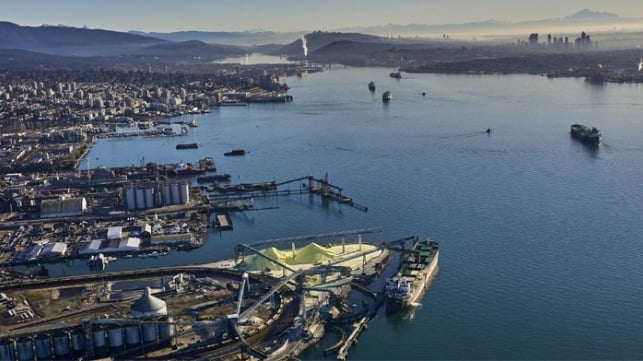
Vancouver reported strong growth as Canada expands its overseas trade (Fraser Vancouver Port Authority)
The Port of Vancouver in British Columbia is already Canada’s largest port, and as the country looks to expand trade with Asia, the port is handling record volumes. The Vancouver Fraser Port Authority reports it handled a record 85 million metric tons of cargo in the first half of 2025 as the country expands its trade beyond the U.S.
“Canadians and their businesses depend on the Port of Vancouver to buy and sell the products they manufacture, farm, mine, and stock their shelves with,” said Peter Xotta, President and CEO of the Vancouver Fraser Port Authority. He notes as Canadians navigate a moment in time like no other, “The Port of Vancouver has a critical role to play in meeting the moment as Canadian businesses seek to sell more of their products to more customers outside of the U.S.”
With Canada caught in tariff disputes with the Trump administration, the port notes it saw delivering vast quantities of made-in-Canada grain, energy, and fertilizer exports. The port’s mid-year cargo statistics show a 13 percent increase in cargo moved between January and June 2025, compared to the same six-month period last year. Port of Vancouver terminals handled nearly 20% more international trade than a year ago, with Xotta highlighting that more than 80 percent of the trade through the Port of Vancouver is Canadian trade with countries other than the U.S.
Bulk exports of Canadian commodities were strong in the first half of the year, including record volumes of crude oil exports (up 365 percent), and robust volumes of canola oil (up 72 percent), grain, and potash exports from Manitoba, Saskatchewan, and Alberta. Approximately 60 percent of the record energy volumes went to China, while other markets, including the U.S., South Korea, Singapore, and Japan, all surpassed their full-year 2024 volumes early in the first half of 2025.
The Port of Vancouver’s four container terminals moved 1.88 million TEUs during the first half of 2025, with mid-year volume growth of 6 percent driven largely by Canadian trade. It was the second-highest volume of containers moved at mid-year, after 2021’s record of 1.94 million TEU.
The port authority highlights that it is also continuing to work closely with industry and government to plan and deliver investment in the gateway to boost reliability and capacity. Among the major projects are the Roberts Bank Terminal 2.
These record volumes come as Canada continues to step up its efforts to move away from the U.S., which was its largest customer, and expand international opportunities. Beyond the growth reported for the operations in Vancouver, Canada also saw the opening of its first LNG export terminal at mid-year. It is the first major export terminal from North America on the Pacific coast and looks to build a large trade with Asia, offering significant advantages of U.S. LNG, which comes from the Gulf Coast and has to transit the Panama Canal.
Port of Long Beach Recovery Completed and Containership Departs
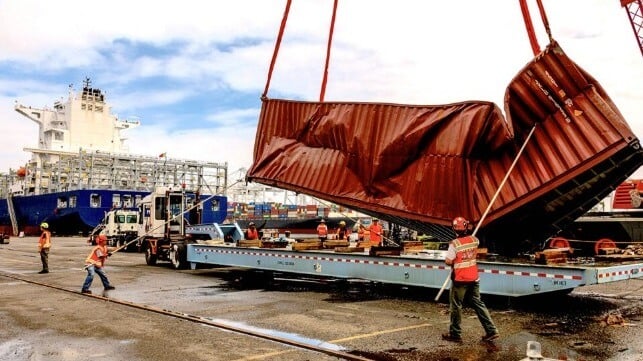
Last containers were covered and the Mississippi has been offloaded and now departed (Port of Long Beach)
The recovery from the container collapse at the Port of Long Beach has been completed, and the safety restrictions have been lifted. The containership Mississippi has also departed the port on its way back to Asia, bringing to a close the incident after 18 days.
“This was an extremely rare event that required a complex and unique salvage operation,” said Michael Goldschmidt, Port of Long Beach incident commander for the Pier G Container Incident response. “We are grateful to the Coast Guard, vessel managers, salvage teams, and the highly skilled ILWU workers for expediting a safe and speedy return to normal operations.”
A total of 95 containers that fell overboard from the Mississippi at Pier G were recovered in and around the Port of Long Beach. The count, which was originally estimated at 67 and later increased to 75 boxes, increased as they discovered that some units were crushed, submerged, or hidden from view in the nearby boat basin. In the hours after the collapse, they have corralled the boxes and pushed some of them into the basin.
They reported that the efforts employed side-scan sonar and remotely operated vehicles to locate submerged containers. Dive teams were also used to inspect the bottom of the Mississippi and assist in recovering containers around the vessel. After the stacks had been offloaded from the vessel, a tug, pilot vessels, and line handlers were used to reposition the vessel to access containers trapped beneath the bottom of the Mississippi.
The port reduced the safety zone to 100 yards from the originally 500 yards, and then, as of Friday afternoon, September 26, the safety zone was removed. The USCG reports a total of 142 vessel transits were authorized during the salvage operations phase of the response to ensure continued operations in the busy port.
Photos from Friday also showed the Mississippi, which has a capacity of approximately 5,500 TEU, had been fully offloaded. Two of the stacks had been destabilized during the collapse. Boxes were askew on the vessel, and others were hanging over the side or resting on the emission control barge, which was alongside on September 9 when the collapse occurred.
Mississippi departed Port of Long Beach on September 27. Her AIS signal shows she is heading to Cai Mep in Vietnam.
The authorities have not commented on what might have caused the collapse. The U.S. Coast Guard and the National Transportation Safety Board are investigating the incident.
Greece’s $680 Million Investment Plan to Upgrade Ports
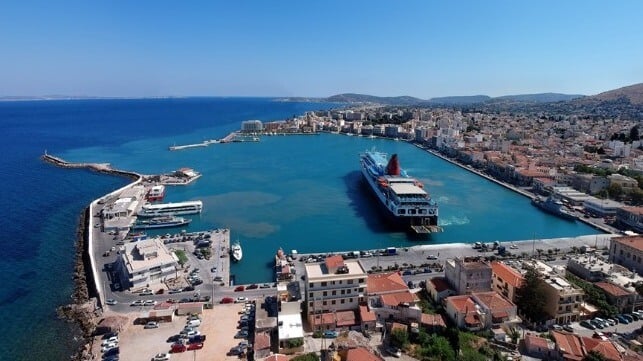
A ropax ferry at the port of Chios (OguzMeric / iStock)
The Greek government has confirmed a $680 million investment plan to modernize the country’s port infrastructure. Speaking at an infrastructure conference in Athens last week, the Greek Deputy Maritime Affairs Minister Stefanos Gkikas said that the port upgrade program will focus on Greece’s island ports.
“The upgrade is a basic priority so that islands acquire equal terms of competitiveness with mainland Greece and international markets,” added Gkikas.
For several years now, port stakeholders in Greece have been highlighting the dilapidated port infrastructure. For instance, some Greek Island ports have gone without repairs for over 30 years. This means the facilities are limited in terms of the type of vessels and cargo they can accommodate. In its annual reports, the Panhellenic Association of Merchant Marine Captains, have decried of the aging Greek port facilities. Some of the pressing challenges that the association has highlighted include years of silt accumulation, significantly reducing port channel depths. Others are crumbling piers and lighthouses, inadequate parking and passenger waiting spaces,
To address some of these challenges, Gkikas said that the maritime ministry has secured $210 million from the National Strategic Reference Framework (NSRF) 2021-2027 Transport program. The initiative is supported by European Union(EU) funds, with additional contributions from Greece. The financing will go into upgrading 30 island ports. Notably, 21 of these port upgrades have already been included in projects being implemented by Growthfund, Greece’s national investment fund.
Greece has also secured another $93 million from EU’s Recovery and Resilience Facility. The funds will further support the planned upgrades in island and regional ports. A major focus of this upgrade effort will include green transition for the ports. Gkikas estimated that at least 12 ports will be equipped with shore power (cold ironing systems) by 2029. $11 million has been allocated for shore power feasibility studies in ports such as Lavrio, Rafina, Kavala and Corfu.
The green transition element of the program is estimated to cost $310 million, with almost half of the financing provided by the Island Decarbonization Fund. The fund is a joint effort between Greece, the EU and the European Investment Bank partly aimed at supporting green transition projects in Greek Islands.
TUI Revised UK Strategy Transferring Newbuild Orders Away from Marella
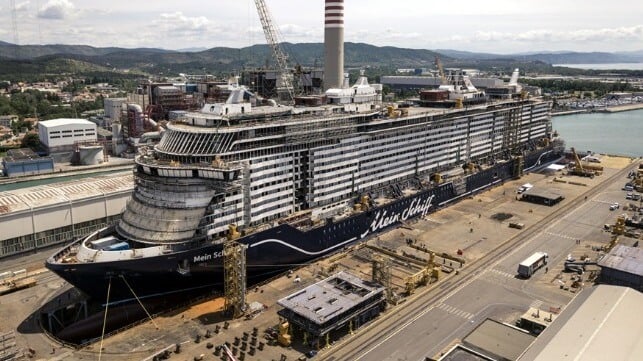
Fincantieri will build two more large ships for TUI Cruises, sisters to Mein Schiff Flow which was floated in May 2025 (Fincantieri)
TUI Group, which markets Mein Schiff in Germany and Marella Cruises in the UK, is revising its strategy for the UK. The group is transferring the first-ever newbuild order planned for Marella to TU Cruises, its joint venture with Royal Caribbean Group.
The move is part of a “strategic realignment of its cruise operations,” the parent company TUI AG said in a financial community press release. It said the goal is to strengthen TUI Cruises' long-term growth platform in Europe and the UK and to diversify the operation into the UK and Europe. The group highlights that it is following an “asset-right approach” that will harness TUI Cruises’ strong financial position and growth capabilities. TUI AG is working to lower its financial net leverage ratio strongly below 1.0 times in the mid-term, the company reiterated.
The order, as initially announced in March 2025, was part of what it said would be a refleeting of Marella Cruises, thereby replacing a significant proportion of the capacity of the current fleet. The group acknowledged a background of an aging Marella fleet. The cruise line, which was launched in the 1970s as part of the Thomson Holidays tour operations, was rebranded Marella in 2017, but has always worked with second-hand ships. Its current fleet consists of two ships, Marella Discovery and Marella Discovery 2, built in 1996 and 1997 for Royal Caribbean International, and three ships, Marella Explorer, Marella Explorer 2, and Marella Voyager, built in 1995, 1996, and 1997 for Celebrity Cruises.
The order was valued at more than €2 billion but was subject to Marella completing binding shipbuilding contracts and financing. TUI said it was also continuing to explore partnership options for the UK operation, which is not part of the JV with Royal Caribbean Group. TUI Cruises owns Mein Schiff and the ultra-luxury and explorer cruise brand Hapag-Lloyd Cruises.
Under today’s agreement, Marella has released the building slots at Fincantieri to TUI Cruises, and TUI has entered into new shipbuilding contracts with the Italian shipbuilder. The originally planned ships would have been smaller, designed specifically for the English market, and used design and high-quality materials to redefine premium cruising in the UK. They were scheduled for delivery in 2030 and 2032. Fincantieri will reimburse Marella’s down payment made with the Memorandum of Agreement signed in March.
TUI Cruises plans to build two larger ships, which will be sisters to the Mein Schiff Relax (157,651 gross tons) delivered in April 2025 by Fincantieri, and a sister ship, Mein Schiff Flow, floated in May and is due for delivery in 2026. Known as the inTUItion Class, they are 1,092 feet (333 meters) in length, making them the largest in the current Mein Schiff fleet of eight ships, and the first to be equipped with dual-fuel LNG and MGO (Marine Gas Oil) fueled engines. They have accommodations for 3,984 passengers.
The intent is that Marella Cruises will continue its operations with its existing fleet, TUI Group reports. The cruise ships have been significantly refurbished, but they are older and smaller than P&O Cruises, which Carnival Corporation added new ships in 2015, 2020, and 2022. P&O’s oldest cruise ship was built in 2000.
UECC’s Auto Advance Wins Award With Bremenports For Most Eco-Friendly Ship
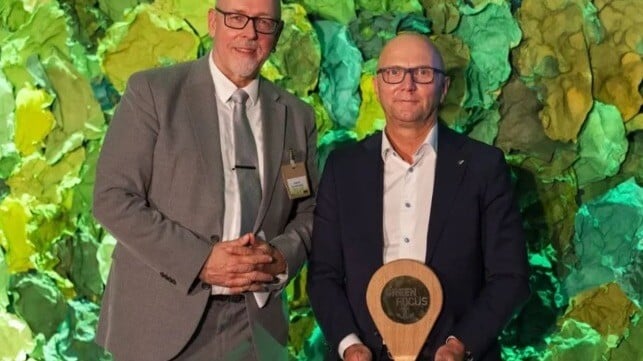
UECC’s Head of Newbuilding Jan Thore Foss (right) is presented with the Green Focus Award for Cleanest Ship by Bremen State Councillor Kai Stührenberg. Photo: Bremenports
United European Car Carriers (UECC) has secured for the fourth time Bremenports’ Green Focus Award for the most eco-friendly ship, with its multi-fuel LNG battery hybrid PCTC Auto Advance gaining the prestigious prize for the second year running with an even higher green score.
“UECC has taken a leading role in implementing innovative technological solutions on its newbuilds and these pioneering investments are now paying off in the form of enhanced environmental performance and reduced exposure to new green regulations,” said UECC’s Head of Newbuilding Jan Thore Foss.
“This award further vindicates these investments and provides an additional incentive to continue upgrading our fleet with alternative fuel technologies to accelerate progress towards our goal of net zero emissions by 2040.”
‘Exceptionally strong score’ He was speaking after the awards ceremony at Bremenports’ recent Envoconnect ports sustainability conference at which Foss was handed the trophy for the Cleanest Ship calling at the German ports of Bremen and Bremerhaven in 2024 by Bremen State Councillor Kai Stührenberg. “That is an exceptionally strong score,” Stührenberg emphasised in presenting the award before a packed audience at the high-profile event staged in Bremerhaven.
He was referring to the Environmental Ship Index (ESI) rating of 82.77 recorded by the Auto Advance with calls at Bremerhaven last year, which exceeded its previous winning score of 80.1 logged in 2023. ESI is a global benchmark of ship performance in terms of carbon dioxide (CO2), nitrogen oxide (NOx) and sulphur oxide (SOx) emissions, giving a score of between zero and 100 to indicate the level of performance exceeding IMO requirements.
Energy-saving technologies The 2021-built Pure Car and Truck Carrier (PCTC) Auto Advance is one of three UECC sister ships – along with Auto Achieve and Auto Aspire – that are equipped with multi-fuel LNG engines allowing the use of both LNG and low-carbon liquefied biomethane (LBM), as well as a battery hybrid solution for energy efficiency.
The first such LNG battery hybrid PCTCs to be delivered, these vessels have an advanced energy management system to control production and consumption of power onboard, optimising operations at sea and manoeuvring in port. This regulates the vessels’ energy storage system – charged by a permanent magnet, directly driven shaft generator or dual-fuel generators – to ensure minimal emissions when using the bow thruster for harbour manoeuvring.
Foss pointed out the use of LBM, or bioLNG, under UECC’s Sail for Change environmental initiative, supported by leading European vehicle manufacturers, allows carbon-neutral transportation, while turbocharging UECC’s efforts to reach its goal of a 45% reduction in carbon intensity by 2030 - above the IMO target of 40%.
Accelerating alternative fuel adoption UECC has made rapid strides in adoption of alternative fuels such as biofuels, LNG and bioLNG, which can contribute as much as 70% of emissions reductions, while also rolling out a range of energy-saving solutions that can deliver around 20%. The remaining 10% of emissions cuts can be derived from port electrification and shore power. In parallel, the company is advancing digitalization initiatives to optimize vessel performance and further support decarbonization.
The company’s CEO Glenn Edvardsen said the environmental profile of its 16-vessel fleet will be further enhanced with the scheduled delivery in 2028 of two similar multi-fuel LNG battery hybrid newbuilds that will strengthen its position as the leading provider of sustainable short sea ro-ro transportation in Europe.
Commenting on the latest Green Focus award, Edvardsen said: “We are delighted to again receive this coveted accolade that demonstrates our commitment to sustainability and our ability to progressively reduce the carbon footprint of our fleet through the use of alternative fuels, as well as other energy-saving measures, to optimise environmental performance for the benefit of our customers under the new green regime.”
The products and services herein described in this press release are not endorsed by The Maritime Executive.
Mustang Survival Expands Innovation Team & Lab, Using AI to Advance Safety
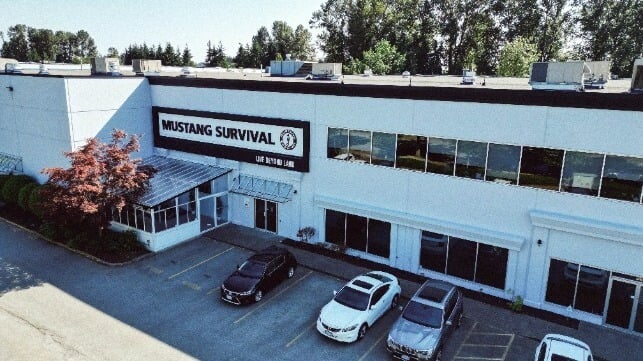
Mustang Survival, part of Wing Group, is expanding its research and development capabilities through a newly formed R&D and Advanced Concepts team with investments in state-of-the-art testing, AI-driven analytics, and global collaborations. Built on decades of problem-solving in the harshest conditions, the company is accelerating the entire cycle — from early-stage research and user engagement, through identifying needs and defining problems, to concept development and commercialization — reinforcing its role as a pioneer in marine safety innovation.
From military operations and public-safety agencies to industrial sectors and recreational communities such as sailing, paddling, and fishing—Mustang Survival’s heritage includes category defining solutions like the original Floater® Coat, the RATIS™ system and the award-winning Atlas Life Jacket and Elite PFD.
As part of this effort, the company has expanded their on-site laboratory to simulate extreme environments more effectively, enhancing fire-resistance and cold-immersion testing—accelerating learning cycles from concept to commercialization within the Waterlife Studio.
“A big unknown piece is how materials behave at different temperatures. Being able to understand these shifts allows us to best address solutions around mobility, insulation, and inflation,” said Jill Davidson, Director R&D and Advanced Concepts, Mustang Survival.
Additionally, as part of Wing Group’s broader initiative, the team is applying AI and advanced analytics to accelerate insights from testing and improve material evaluation—supporting faster iteration and more reliable outcomes across programs.
To deepen its research pipeline, Mustang Survival has expanded collaborations with universities across Canada and strengthened relationships with third-party laboratories locally and globally. The team has also secured government funding to advance research and intellectual property development, creating further opportunities for patents.
“By increasing our commitment to R&D and Advanced Concepts, we are dedicated to a long-term, sustainable solution to the problems that our core users face, ensuring Mustang Survival stays on the leading edge of defining innovation within our market and categories,” said Kenny Ballard, President, Mustang Survival.
By investing in people, processes, and partnerships—and by testing directly in real-world conditions—Mustang Survival is extending their solutions-driven heritage while building a stronger foundation for future advancements in marine safety.
The products and services herein described in this press release are not endorsed by The Maritime Executive.
Retailers Turn to AI for Precision Forecasting Amid Supply Chain Challenges
In a rapidly evolving retail environment, artificial intelligence (AI) is emerging as a critical tool for executives seeking to navigate shifting consumer behaviors and increasingly complex supply chains. As traditional forecasting models falter in the face of new market realities, industry leaders are embracing AI-driven predictive analytics to gain a competitive edge.
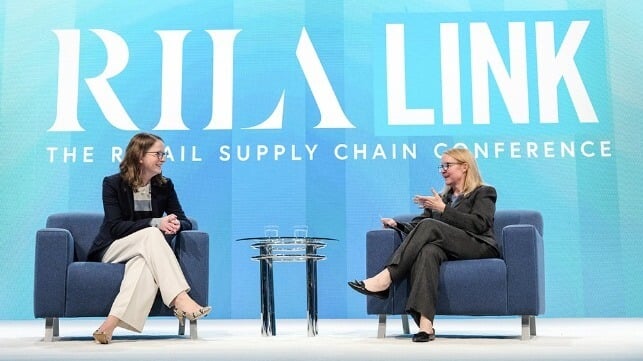
The use of AI to optimize supply chains is a top focus of the upcoming LINK 2026: The Retail Supply Chain Conference, a gathering of the nation’s top retailers and solution providers. The conference will delve deeply into several AI-related topics, including how top retailers are reworking the approach to demand planning during this tumultuous time for trade.
For decades, retailers relied on forecasting methods rooted in historical averages and static assumptions. These models, while useful in stable conditions, have proven inadequate as consumer preferences change and external disruptions, such as global pandemics, extreme weather events, and geopolitical tensions, become more frequent. The limitations of shipment-based and manual forecasting have prompted a strategic pivot toward AI-powered solutions.
AI-driven forecasting systems leverage vast amounts of internal and external data, including sales trends, seasonal fluctuations, promotional calendars, weather forecasts, economic indicators, and even social media sentiment. Unlike traditional models, these systems continuously learn and adapt, refining their predictions as new information becomes available. The result is a level of precision that allows retailers to optimize inventory, reduce waste, and improve operational efficiency at both the store and distribution center levels.
Empowering Executives with Granular Insights
For retail executives, the adoption of AI is more than a technological upgrade, it is a strategic imperative. By moving beyond shipment-based models, leaders gain granular visibility into demand fluctuations across regions and channels. This enables smarter inventory deployment and replenishment decisions, minimizing costly stockouts and overstocks while enhancing customer satisfaction.
AI also helps retailers identify emerging trends early, allowing them to respond proactively rather than reactively. For example, machine learning algorithms can detect subtle shifts in consumer preferences or anticipate the impact of upcoming events, such as holidays or major sporting competitions, on product demand. This foresight empowers executives to adjust inventory levels and marketing strategies in real time.
Navigating Supply Chain Disruptions with Scenario Planning
One of the most significant advantages of AI in retail forecasting is its ability to simulate multiple scenarios. In an era marked by near-constant supply chain disruptions, machine learning models can help executives plan for a range of contingencies. Whether adjusting inventory ahead of a major event or reallocating resources during a supply chain hiccup, AI provides the agility retailers need to thrive amid uncertainty.
“AI gives us the ability to plan for the unexpected,” said a supply chain executive at a leading national retailer. “We can model different scenarios and make data-informed decisions with greater confidence, which is invaluable in today’s environment.”
Supporting Sustainability and Strategic Growth
The benefits of precision forecasting extend beyond the bottom line. By reducing excess inventory and waste, AI supports retailers’ sustainability goals. It also frees up teams from manual forecasting tasks, allowing them to focus on strategic initiatives that drive growth and innovation.
As AI and machine learning become “table stakes” in retail forecasting, companies are exploring next-level agentic AI applications to further increase responsiveness and flexibility. These advanced systems can autonomously adjust forecasts and inventory plans, responding instantly to new data and market signals.
Industry Spotlight: LINK 2026 Conference
The transformation underway in retail forecasting will be a central topic at the upcoming LINK 2026 conference, hosted by the Retail Industry Leaders Association (RILA). The event will feature peer-led Tabletalk discussions and retailer-led breakout sessions, including a presentation on how Dollar General implemented its own AI-powered forecasting system to enhance operational performance. Industry experts and executives will share best practices and insights on harnessing AI to deliver the right product, at the right place, at the right time, every time.
Conclusion
AI-driven forecasting is transforming retail from a reactive to a predictive industry. For executives committed to leading with data, the opportunity is clear: harness AI to make smarter decisions, optimize operations, and deliver superior customer experiences in an increasingly complex world.
This article is sponsored by RILA.
The opinions expressed herein are the author's and not necessarily those of The Maritime Executive.
The International Harbour Masters Association (IHMA) and the Port of Rotterdam Authority are pleased to announce the 15th International Harbour Masters Association Congress, to be held from 09–12 June 2026 at Theater Zuidplein in Rotterdam.
The theme of the IHMA Congress 2026 is Connecting Horizons – Building Future Resilient Ports Together, reflecting a shared commitment to collaboration, innovation, and sustainability across the global maritime sector.
The IHMA Congress is a biennial event offering a vital forum for IHMA members, industry stakeholders, innovators, and suppliers from across the ports sector. The Congress enables attendees to connect, share insights, and explore the latest advancements in technology and best practices.
What’s On The Agenda? The event will open at 09:00 on Tuesday, 09 June 2026, with a formal Opening Ceremony, followed by plenary sessions and panel discussions, keynote addresses, workshops and games. Over three days, the Congress will explore the following core themes:
Emerging Technologies
Sustainable Together
Resilient Ports
On the final day, Friday, 12 June, participants will have the opportunity to join an exclusive Port Tour, inside the biggest port in Europe, organised by the Port of Rotterdam Authority, offering a unique, behind-the-scenes look at one of the world’s largest ports.
Gala Dinner & Awards Ceremony The Congress Gala dinner takes place in the heart of Rotterdam on the evening of Thursday, 11 June and will include the announcement of the IHMA award winners.
Launched in 2018, the IHMA awards are held to recognise and celebrate the contributions Harbour Masters make to ensuring safe, secure and efficient ports around the world.
The awards will be judged in three categories:
Safe, Efficient and Secure Port
Outstanding Individual Achievement in the Profession of Harbour Master
What Our Leaders Say IHMA Congress Chair Gary Wilson: “We’re very much looking forward to the next IHMA Congress in Rotterdam. The theme, Connecting Horizons – Building Future Resilient Ports Together, promises to spark essential discussions. Coming together to share our recent experiences is always a privilege.”
Harbour Master, Port of Rotterdam Authority - René de Vries: “We look forward to welcoming IHMA members to Rotterdam next year. It will be an excellent opportunity to exchange ideas and discuss resilience and new technologies in our ports. We are honoured to host this event in Rotterdam.”
IHMA President Paul O’Regan: “From the port to the city, Rotterdam has it all. Experiences we can all learn from. I’m truly excited about reconnecting with colleagues and delivering a superb programme that will empower us all to build more resilient ports.”
Registration Now Open Registration is open to all members of the maritime community. For more information and to register, visit: https://ihmacongress2026.harbourmaster.org/
Coming Next
Call for Papers – September 2025 IHMA will invite professionals to submit abstracts for proposed papers in their area of expertise. This is a valuable opportunity to contribute forward-thinking ideas and practical solutions for building more resilient ports.
Innovation Hub & Student Showcase – November 2025 Aimed at highlighting future talent and voices of the next generation, we will be inviting start-ups, scale-ups and students to present their boldest ideas for the future of sustainable ports. More on this to come!
The products and services herein described in this press release are not endorsed by The Maritime Executive.
Tuesday, September 30, 2025
Amidst Russia-NATO Tensions, Drone Spotted at North Sea Gas Platform
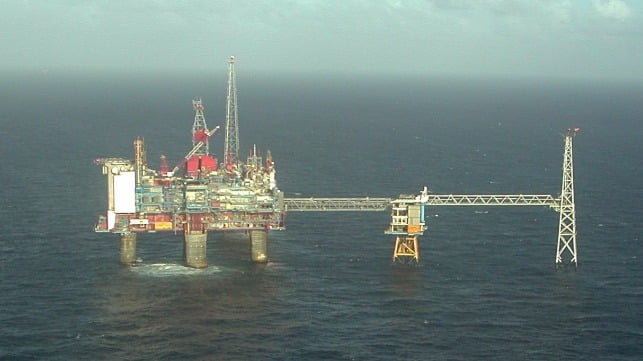
The Sleipner A platform (left) (Bair175 / CC BY SA 3.0)
On Monday, as NATO ramped up preparedness for ongoing Russian drone and aircraft incursions, workers at Norway's Sleipner gas field reported sighting an unidentified drone. It is not the first time that suspicious drone activity has been spotted in the area, but the approach is under investigation because of elevated concerns about hybrid warfare threats - and the value of the installation.
The four-platform Sleipner complex handles output from five mature fields, including tiebacks. The installation dates back to the 1990s, and is still actively contributing to Norway's gas production; it feeds into the Gassled Area D dry gas offshore pipeline network, which serves customers in Europe. Taken as a whole, including other fields, the Gassled supply system is a strategic asset: Norway's offshore sector provides more than 30 percent of all natural gas used by consumers in the UK and EU combined.
Personnel aboard Sleipner A notified shoreside staff at Equinor on Monday night that a suspicious drone had been sighted near the platform, an operations manager confirmed to VG and NRK. No further details were available, but he said that these matters are taken seriously, and the company is following its notification protocols. The platform's operations are unaffected, he told NRK.
"We encourage our employees to have a certain level of vigilance given the circumstances we are in. It has been like this for a while," Equinor spokesman Magnus Frantzen Eidsvold told NRK.
Sleipner is in the middle of the North Sea, halfway between Norway and Scotland - more than 100 nautical miles beyond the reach of a typical consumer drone. However, it is not the first time that a drone has been spotted near Sleipnir. In October 2022, amidst heightened tensions over the then-new Russian invasion of Ukraine, workers on the Sleipner platform reported a "helicopter-style" drone near the facility. The Norwegian Police Security Service opened an investigation into a possible espionage threat in connection with the case, and drone detection sensors were installed to identify any approaching UAVs.
Then and now, the drone sightings offshore are accompanied by concerning drone threats over land. On Sunday, one Norwegian airplane flight departing Oslo had to return to the airport because of suspicious drone sightings on its route. Over the past week, unauthorized drones shut down the Copenhagen airport in a coordinated raid - and several Russia-linked ships are suspected of serving as possible launch pads for the operation.

.jpg)