Pakistan As A Consequence Of The Partition Of British India In 1947 – Analysis
Pakistan as a country
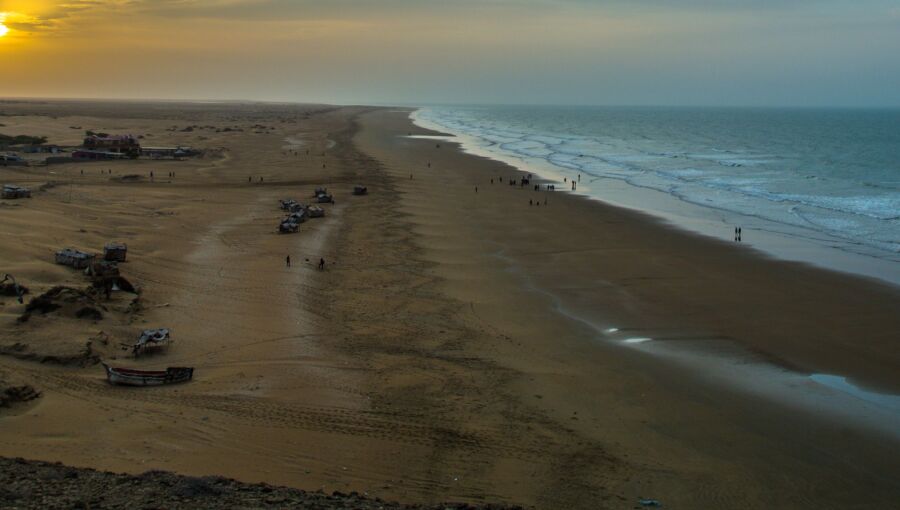
Pakistan is a country located in the northwest of the Indian sub-continent. It borders Iran on the west, Afghanistan on the north-west, China on the north-east, and India on the east, with the direct exit to the Arabian Sea.
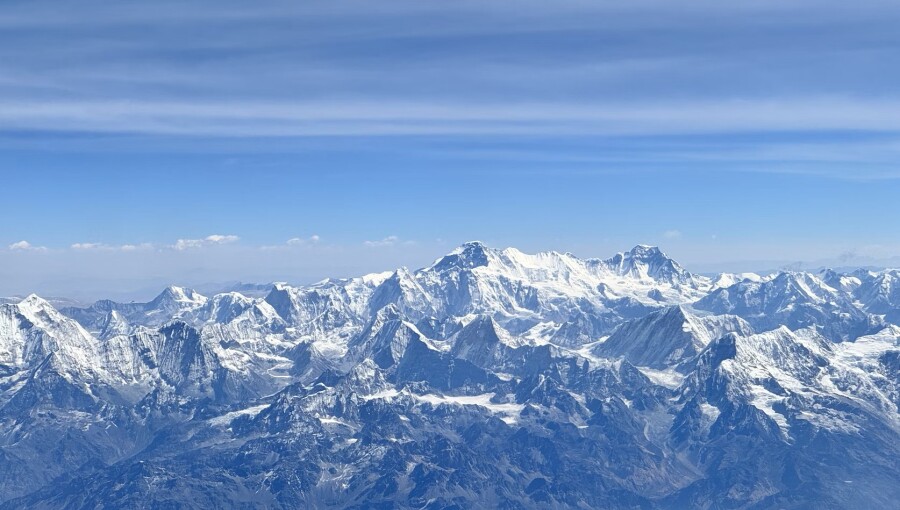
Physically, from the rest of Asia, Pakistan is separated in the north by the Hindu Kush, Karakoram, and the Himalaya high ring of mountain chains. Other mountain ranges are going down on the Pakistani western side to the Arabian Sea. Below them is the long and broad valley of the Indus River. The Province of the North-West Frontier contains the strategically very important Khyber Pass, which is very high. Toward the south is the Punjab plateau. It is watered by the tributaries of the Indus River, where wheat is grown. However, to the east is the Thar Desert. It is important to stress that between the Sind Desert, which covers part of the Indus delta, and Baluchistan in the western hills, there are large reserves of natural gas and, to a certain extent, oil, which is also found in Punjab.
Pakistan has a predominantly agricultural economy. The focal export goods are raw and processed cotton, cotton fabrics, and rice. Other agricultural products include sugar cane, wheat, and maize. Livestock-raising is important too. Textiles are an important part of the Pakistani industry and are substantially contributing to Pakistani exports. Other industries include chemicals, cement production, fertilizer, and food processing.
Population
The inhabitants of Pakistan are about 88% Pakistani Muslims, while there are about 11% Indians (Hindi). Of all the other ethnic groups, Baluchistanis are the most numerous. Baluchistan, as a province, is the least populated. With the partition of British India in 1947 into Pakistan and India, Pakistan received a predominantly Muslim population as well as a larger number of Indians, and vice versa. In the period from 1947 to 1950, population exchange between Pakistan and India, including ethnic cleansing, reached the scale of several million inhabitants in both directions. In Pakistan, the official language is Urdu (the Muslim variant of the Hindi language), which in 1972 replaced English as the official language. However, several other local/regional languages are in use. In 1970, 80% of Pakistan’s inhabitants were illiterate, which caused a lack of professional and educated staff, and this was especially felt in the administration and economy.
For the sake of more comprehensive education and the reduction of illiteracy, in September 1972, 176 private colleges were nationalized. There were three universities in Pakistan then. About 15% of the population lived in cities, while there were 10 cities with over 100,000 inhabitants. The capital of Pakistan was Rawalpindi from 1959, while today it is Islamabad. Until 1959, the largest city in Pakistan was Karachi. Today, Pakistan has a population of 251 million in an area of 881,913 sq. km. The GDP is 373 billion dollars, while the GDP per capita is almost 1500 dollars.
State organization
With the division of the British colony of (British) India into two states, India and Pakistan, on August 15th, 1947, Pakistan received the status of dominion, and according to the constitution of February 29th, 1956, it became a republic – the Islamic Republic of Pakistan, composed of two federal units: West and East Pakistan.
By the military coup of October 1958, the constitution was abolished, and a new one was adopted in March 1962. This new constitution provided for a federal system of government, a presidential system of government (the president must be a Muslim and is elected for 5 years), a National Assembly of 156 deputies (78 deputies from each of the two federal units) and two capital cities: Islamabad in West Pakistan (seat of the central government) and Dhaka in East Pakistan (seat of the National Assembly). However, the constitution from 1962 was repealed on March 25th, 1969, and only partially reinstated on April 4th, 1969.
A turning point in Pakistan’s history was the separation of East Pakistan from West Pakistan in December 1971, when East Pakistan declared itself an independent state under the name Bangladesh. Thus, the new state of Pakistan included only the territory of the former West Pakistan. In January 1972, Pakistan left the British Commonwealth.
A modern history of Pakistan up to the Partition in 1947
Pakistan is a country that came under British colonial control in the first half of the 19th century, when it became part of (a Greater) British India. Interestingly, its name is derived from the word “pak” (ritually pure) in the Urdu language. In other words, it means “Land of the Pure”. However, it is as well as an acronym for its most important component peoples: Punjabis, Afghans, Kashmirs, Sindhis, and the peoples of Baluchistan.
At the beginning of the 20th century, there were only a several moves towards independence. One of the reasons was that those people living in the north in Punjab and Kashmir have been great beneficiaries of the British Raj, and occupied important posts in the administration and army of British India. It was among the more disadvantaged Muslim minority in north-central India that a Muslim cultural and political identity began to form, mainly due to several reformers and organizations like the Muslim League, a party founded on December 30th, 1906, in Dacca. Originally, the party fought for separate Muslim representation at all levels of government. The party claimed to represent the grievances and demands of the entire Muslim community within British India.
Under its leader, Jinnah, the Muslim League issued several requirements for greater rights of Indian Muslims in a vast country of British India in which Muslims at that time accounted for some ¼ of the total population. Nevertheless, this political demand became all the more urgent with the increasing momentum of the Indian National Congress (the INC) under M. Gandhi, which made self-government or even independence under a Hindu-dominated government all but inevitable during the 1930s. In the first decades of its existence, the Muslim League pursued the dual aim of winning greater rights of self-government from the British colonial power and of winning greater rights for Muslims within such a British system. In order to achieve the first aim, the Muslim League cooperated with the INC, with which it allied itself in the Lucknow Pact of December 1916. However, the League was largely ineffective in the 1920s, when it claimed to have some 1.000 members in the whole of British India. This led to a decade in the 1930s of a major revision of the political goals of the Muslim League and the organization itself for the sake of appealing to the disparate Muslim community.
The League, in 1930, addressed its annual conference to demand, for the first time, a separate Muslim state in the western portion of British India. This demand became gradually accepted, particularly after the Muslim League’s catastrophic showing in the 1937 elections, when it gained only 104 out of 489 Muslim seats. Therefore, its leader, Jinnah, now sought to broaden its popular base. On March 23rd, 1940, the requirement for a separate Muslim state became accepted as the official party’s policy in the coming years. It was known as the Pakistan Resolution or the Lahore Resolution, which, in fact, warned that if conditions for Muslims, especially in areas with a Muslim minority, did not improve, Muslims would lay claim to separate states as their homelands. The very idea of separate Muslim states referred to the western provinces of British India and East Bengal. The Muslim League in 1944 claimed over 2.000.000 members. The League got in the 1945−1946 elections 75% of the Muslim vote. Therefore, the Muslim League got a popular mandate for the creation of a separate Muslim state in the western regions of British India. This task was finally achieved by the creation of an independent Pakistan on August 15th, 1947. However, initially dominant in Pakistani politics, after the death of its party’s leader, Jinnah, the Muslim League lacked an integrative force and soon dissolved into various groups in the coming decade.
All the countries of South Asia have been troubled by the special position of minorities and of regional groups. The Indian government’s attempt to foster Hindi was soon faced by demands for a new structure of states on linguistic lines, and from the 1950s onward, state boundaries have been rearranged. However, the linguistic feeling remained strong, especially in South India in Madras State, which was renamed Tamil Nadu. Before 1947, Pakistan formed part of British India, but following the British withdrawal from the Indian sub-continent in 1947, Pakistan was created as a separate state, comprising the territory to the north-east and north-west of ex-British India in which the population was predominantly Muslim. In Pakistan, linguistic and regional demands were initially resisted, and the separate provinces of West Pakistan were amalgamated as One Unit. However, regional loyalties forced a return to the old provinces, representing linguistic regions, in 1970. In East Pakistan, the strength of Bengal culture and grievances against the dominant West Pakistan elite fostered a demand for autonomy and later for independence.
The Partition in 1947
For the reason that no agreement could be reached on a unified form of independence, a decision was required about the partition of the Indian sub-continent. The areas in the northwest with a Muslim majority were allowed to choose separation and the formation of a new state of Pakistan. The provinces of British India, which were affected, voted either through their elected representatives or by plebiscite. The rulers of the princely states within British India chose whether to join the independent state of India or where their boundaries marched with the new partition line, Pakistan. Punjab and Bengal were separately partitioned. Independence came to India and Pakistan in August 1947, to Burma in January 1948, and to Ceylon in February 1948.
In India, it was fraught with problems from the beginning. The major part of the Indian sub-continent wished to remain united under the leadership of Nehru and the Indian National Congress. However, the explosive situation and the impossibility of securing agreement between Congress and the Muslim League led by Jinnah forced the hand of the Viceroy, Lord Mountbatten, and on August 14th, 1947, the sub-continent became partitioned and the new state of Pakistan (physically composed of two parts) came into existence. The princely states (500+) have been left to the individual decisions of their rulers, who could, in effect, join either India or Pakistan if their boundaries marched with the new partition lines.
For both India and Pakistan, the first question was the delimitation of frontiers between the new states. However, this question particularly affected the provinces of Punjab and Bengal, where the populations were so mixed that partition seemed the only feasible solution (like in Bosnia-Herzegovina in the 1990s). But the boundary award cut through areas which in Punjab were occupied by rich farmlands populated by Sikhs, Muslims, and Hindus as neighbors.
Nevertheless, the partition of British India soon led to the high rank of violence between Hindus and Muslims as communal riots followed, and a two-way exodus started, with Muslims moving west and Sikhs and Hindus moving east, with more than 1 million people killed. Around 7.5 million Muslim refugees fled to both parts of Pakistan from India, and around 10 million Hindus and Sikhs left Pakistan for India. The partition of Bengal produced similar results. Overall, some 500.000 people lost their lives. Muhammad Ali Jinnah, President of the Muslim League, became Pakistan’s first governor-general (President). The new state was composed of the western provinces of Baluchistan, Sind, Punjab, and North-West Frontier (or known as West Pakistan). Separated by Indian territory was the eastern half of Bengal, which also belonged to the newly proclaimed independent Pakistan (or known as East Pakistan).
In addition to the resettlement of the refugees, the governments had to integrate the 500+ princely states. Most princes were persuaded to accede, promptly, to either India or Pakistan. Hyderabad resisted and became absorbed only after the action by the security forces (police). The ruler of Kashmir as well as hesitated, and an invasion of tribesmen from the Pakistani North West Frontier Province followed. The Maharaja then acceded to India, subject to a plebiscite of the Kashmir people, but Pakistan supported the tribal invaders. The situation was only stabilized by the mediation of the UN in 1949.
The new state of Pakistan was, from the very beginning, confronted by plenty of problems. The most immediate of these was extensive migration (around 17.5 million people), as a consequence of the partition of British India into a Hindu and Muslim state. In addition, Pakistan contested its borders, as it competed with India over control of Kashmir. This confrontation has led to hostile relations with India up to today and the conduct of three Indo-Pakistani Wars. Moreover, Pakistan suffered as well from the tension between the majority of the population living in East Pakistan and the important posts in government, administration, and the military being occupied by officials from the wealthier and better-educated West Pakistan. These problems have been compounded by the total lack of any tradition or history as a single, unitary state. On one hand, East Pakistan (or East Bengal) was relatively homogeneous, but on the other hand, West Pakistan was composed of regions with widely different economies and ethnicities and with different degrees of religious observance. Some tribes of the North-West Frontier had devout observance of Islam and a history of autonomy within the former British colonial system. They have been contrasted with the more secular elite of Punjab, which had been well integrated into the British colonial administration.
A contemporary history of Pakistan since the Partition in 1947 up to 9/11
The problem of finding a compromise that would create a viable, integrated, and constitutional entity bedeviled Pakistan during its existence. Pakistan continued to be formally ruled by the 1935 Government of India Act until 1956. The country’s liberal constitution became opposed by the fundamentalist Muslims, and in 1951, the Prime Minister Liaqat Ali Khan was assassinated by an Afghan fundamentalist. In 1954, a state of emergency was declared, and a new constitution was adopted in 1956. However, the new political settlement failed to stabilize the country sufficiently to prevent the 1958 army coup, led by Ayub Khan. It was an attempt to adopt a multiparty system, but it failed, and consequently, Ayub Khan imposed martial law in 1958. He, in fact, abolished the recently established democracy but without much resistance, and devised a second constitution in 1962.
On the other hand, Ayub Khan’s decade of power produced economic growth, followed, however, by political resentment as the two parts of the Pakistani state have been physically separated by a thousand kilometers of the territory of the independent and hostile Republic of India. Allegations by the Bengalis in East Pakistan against West Pakistan’s disproportionate share of the state’s assets led to demands by the Awami League, led by Mujibur Rahman, for regional autonomy. Nonetheless, in the following civil war in 1971, the Bengali dissidents defeated the Pakistani army, with help from India. It resulted in the establishment of the new state of Bangladesh in the same year.
In 1965, Pakistan attempted to infiltrate troops into Kashmir. In the fighting which ensued, India made some gains, but in the agreement afterward reached in Tashkent under Soviet auspices, both countries agreed to return to the status quo. His precipitation of a costly and unsuccessful war with India over Kashmir in 1965, and increasing economic difficulties in Pakistan, finally led to his resignation in 1969. Relations between Pakistan and India continued to be tense, however, and rapidly worsened in 1971 when Pakistani military President, Yahya Khan, cruelly repressed the demands for autonomy in East Pakistan (East Bengal, later Bangladesh), which led to 10 million refugees crossing over into India.
In 1970, the first-ever general democratic election has been organized, which brought to power in Pakistan Zulfikar Ali Bhutto, leader of the Pakistan People’s Party. However, these elections were won by the Awami League in East Pakistan. Therefore, the West Pakistani political establishment, led by Yahya Khan, refused to hand over power and sent military troops to secure control in East Pakistan. This action caused a short but extremely violent civil war, and led, after Indian military intervention in December 1971, which supported the Bangladesh guerrilla with powerful military forces, which defeated the Pakistani army within two weeks, to the independence of East Pakistan as Bangladesh. Zulfikar Bhutto, as the new President since 1971, created a populist and socialist regime. His program of nationalization, public works, and independence from US financial help failed to overcome the negative effects of the oil price shock of 1973, leading Pakistan into an economic crisis. He introduced constitutional, social, and economic reforms, but in 1977 was deposed in an army coup led by Zia-ul-Haq and later executed.
Zia-ul-Haq improved Pakistani relations with the USA after the Soviet invasion of neighboring Afghanistan in 1979, when Pakistan came to host up to three million Afghan refugees, followed by bases for Afghan guerrillas. US military and civilian assistance led to high economic growth in the 1980s. However, Zia-ul-Haq died in a 1988 plane crash. His successor, Ishaq Khan, supervised the transition back to democracy, with the 1988 elections won by Zulfikar Ali Bhutto’s daughter, Benazir Bhutto. She failed to establish control over the country and was dismissed by Khan in 1990 on charges of corruption. However, she became re-elected in 1993, but once again struggled to maintain control in a country plagued by crime, the international drugs trade, and the growing assertiveness of some of the Pakistani provinces (Baluchistan and Sind) and tribes (North West Frontier Province).
Benazir Bhutto became dismissed by President Leghari once again on formal charges of corruption and mismanagement in 1996 and was finally succeeded by Mian Muhammad Nawaz Sharif (leader of the Islamic Democratic Alliance) in 1997, who proceeded to strengthen his position by changing the constitution, which limited the power of the Prime Minister (the PM). Nevertheless, he as well as confronted the judiciary, which he sought to conciliate towards his policies. Ultimately, in 1999, he sought to introduce Islamic law in Pakistan, but this attempt led to widespread demonstrations, while at the same time, the deteriorating economic situation had already eroded Sharif’s popular support, and for the reason of his pro-Western position during the First Gulf War/Desert Storm, 1990‒1991. His order to the army to withdraw forces from Kashmir and his dismissal of Musharraf led to a successful army coup, headed by Musharraf himself, who suspended the constitution, moved to put Pakistani political and judicial institutions under military control, and tried to stabilize the economy to placate international creditors. After establishing control, Musharraf’s regime became more liberal. However, it happened only after 9/11 (in 2001) that his regime became welcomed in the Western international arena. His decisive support of the US War on Terrorism brought great foreign policy benefits and enabled him to gain very much-needed Western international loans. Nevertheless, his pro-US stance was criticized by many Islamic fundamentalists and radicals in Pakistan, so that needed to temper by a moderate stance towards radical Islamist groups in Kashmir. In 1998, Pakistan carried out a series of underground nuclear tests in response to a similar program by the focal regional enemy – India.
The political situation in Pakistan remained turbulent, including intra-ethnic violence in Karachi, followed by national economic problems. Pakistani industrial expansion emphasized the private sector and consumer goods. Nonetheless, unemployment rose more rapidly than new production, and up to 70% of the population is still dependent on agriculture. Both governments of India and Pakistan have been putting greater emphasis on better yields from the soil. Though the rate of growth remains slow, both India and Pakistan have succeeded in attaining self-sufficiency in food. Yet some 40% of the rural population remains undernourished because their income is very low.
Finally, from 1947 up to 1971, there were three Pakistani-Indian Wars: the First (1947‒1948); the Second (September 1st‒23rd, 1965); and the Third (December 3rd‒16th, 1971). These Pakistani-Indian wars were the result of unresolved issues, but especially border-territorial ones, between Pakistan and India that appeared after the British division of the Indian subcontinent, i.e., of British India, in August 1947 between these two states. As a consequence of the Third War, Pakistan lost its eastern territories, on which the new state of Bangladesh was formed. After the war, the general balance of power on the Indian subcontinent changed in India’s favour. India, also improved its strategic and geopolitical position. Nevertheless, the region of Kashmir has been left to be he apple of discord between Pakistan and India to our da