Monday, October 13, 2025


UK heatwaves overwhelm natural ecological safeguards to increase wildfire risk


Extreme conditions including 40oC heat seen in 2022 led to all fuel sources in our heathlands to dry leading to significant increase in the threat of wildfire incidents


University of Birmingham


Heatwaves in the UK have led to unseasonable drying of vegetation bypassing natural ecological processes that limit the spread of wildfires, a new study has found.


In a paper published in the journal Communications Earth & Environment, a team of researchers led by the University of Birmingham have been studying moisture levels in plant life and carbon-rich soil around the UK to understand variations that affect the risk of wildfire. Alongside their three-year sampling period, the first long term survey of vegetation and soils that acts as fuel in wildfires collected across the UK, the team collected samples during the 2022 heatwave that resulted in an unprecedented number of wildfires, with a 500% increase in 999 calls and 14 major incidents declared.


The team found that samples taken during the 2022 heatwave were unlike anything collected during the previous three years.


Samples of soil, dead vegetation and living vegetation collected during the previous three-year period suggest that the moisture content of dead heather is primarily affected by weather, while drier summer conditions actually sees living heather increasing their moisture content. Soil moisture meanwhile was not just impacted by climatic conditions, but also by geographical conditions including elevation and underlying substrate rock.


However, the usual variations in moisture values were missing during the heatwave as the extreme heat conditions have led to dry soil as well as living and dead vegetation all having significantly less moisture. The team highlight that future climate change-related extreme heat events are likely to increase the likelihood and severity of wildfires in the UK due to this unseasonable drying effect.


Dr Katy Ivison from the University of Birmingham and first author of the study said: “Man-made climate change is having a serious financial and ecological impact across the UK and leading to wildfires spreading in areas not traditionally at risk.


“Our latest study shows how extreme weather conditions which are becoming increasingly common are leading to heat that is overwhelming the typical ways that heathland areas protect themselves against destructive wildfires. The three-year survey our team conducted has found that there is a normal variation in moisture content between the three fuel sources we studied that by and large balances itself out. Dead heather is affected by weather conditions during the summer but the living heather generally tends to take on more moisture in the summer months during green up, after seeing drier conditions during the spring.


“The extreme heat of the 2022 heatwaves, and further dry conditions in the last few years including record breaking weather in 2025, are likely to become the new normal in the UK. This extreme heat leaves the UK at much greater risk of wildfires that are a threat to human life, our homes, infrastructure, ecosystems and their wildlife.”


Spring usually sees most wildfires – but heatwaves changing this pattern


Live heather drying out during the spring is actually a driver of wildfire occurrences during the year, while greening during the summer provides a natural mitigation against fire spread in peatlands and heathlands.


However, the data from 2022 shows that live vegetation has a limit on its ability to weather hotter conditions. In such extreme hot weather, samples suggest that there is an increased risk of severe wildfires spreading from one ecosystem to another due to uniform conditions in which fires can take hold.


Samples taken from around the UK also showed that the South East and East Anglia were most affected by heatwave conditions, largely driven by the most extreme temperatures including 40oC heat recorded in Lincolnshire.


Professor Nick Kettridge from the University of Birmingham and senior lead author of the paper said: "This is an important study to better understand how extreme weather conditions change our usual understanding of wildfire risk.


“We may be substantially underestimating the danger posed by wildfire through the summer, considering the risk to be low in areas of the country that have been historically resistant to summer fire. But heatwaves this year as well as 2022 have demonstrated the threat we face.”


The study was funded by the NERC Highlight project Towards a UK Fire Danger Rating System NE/T003553/1. Https://ukfdrs.com/


World's coral reefs crossing survival limit, global experts warn

Paris (AFP) – The world's tropical coral reefs have almost certainly crossed a point of no return as oceans warm beyond a level most can survive, a major scientific report announced on Monday.


Issued on: 13/10/2025 - RFI

Coral reefs are highly sensitive to changing conditions in the oceans and global warming poses the greatest threat to these vibrant ecosystems. © Glenn NICHOLLS / AFP

It is the first time scientists have declared that Earth has likely reached a so-called "tipping point" – a shift that could trigger massive and often permanent changes in the natural world.

"Sadly, we're now almost certain that we crossed one of those tipping points for warm water or tropical coral reefs," report lead Tim Lenton, a climate and Earth system scientist at the University of Exeter, told AFP.

This conclusion was supported by real-world observations of "unprecedented" coral death across tropical reefs since the first comprehensive assessment of tipping points science was published in 2023, the authors said.

In the intervening years, ocean temperatures have soared to historic highs, and the biggest and most intense coral bleaching episode ever witnessed has spread to more than 80 percent of the world's reefs.

Understanding of tipping points has improved since the last report, its authors said, allowing for greater confidence in estimating when one might spark a domino effect of catastrophic and often irreversible disasters.

Scientists now believe that even at lower levels of global warming than previously thought, the Amazon rainforest could tip into an unrecognisable state, and ice sheets from Greenland to West Antarctica could collapse.


'Unprecedented dieback'


For coral reefs, profound and lasting changes are already in motion.

"Already at 1.4C of global warming, warm water coral reefs are crossing their thermal tipping point and experiencing unprecedented dieback," said the report by 160 scientists from dozens of global research institutions.

The global scientific consensus is that most coral reefs would perish at warming of 1.5C above preindustrial levels – a threshold just years away.

When stressed in hotter ocean waters, corals expel the microscopic algae that provides their distinct colour and food source.

Unless ocean temperatures return to more tolerable levels, bleached corals simply cannot recover and eventually die of starvation.

Since 2023, marine scientists have reported coral mortality on a scale never seen before, with reefs turning ghostly white across the Pacific, Indian and Atlantic oceans.

"I am afraid their response confirms that we can no longer talk about tipping points as a future risk," Lenton told reporters.

Rather than disappear completely, scientists say reefs will evolve into less diverse ecosystems as they are overtaken by algae, sponges and other simpler organisms better able to withstand hotter oceans.

These species would come to dominate this new underwater world and over time, the dead coral skeletons beneath would erode into rubble.

Such a shift would be disastrous for the hundreds of millions of people whose livelihoods are tied to coral reefs, and the estimated one million species that depend on them.

'Danger zone'

Some heat-resistant strains of coral may endure longer than others, the authors said, but ultimately the only response is to stop adding more planet-warming greenhouse gases into the atmosphere.

Exceeding 1.5C "puts the world in a greater danger zone of escalating risk of further damaging tipping points", Lenton said, including the collapse of vital ocean currents that could have "catastrophic" knock-on impacts.

Scientists also warned that tipping points in the Amazon were closer than previously thought, and "widespread dieback" and large-scale forest degradation was a risk even below 2C of global warming.

That finding will be keenly felt by Brazil, which on Monday is hosting climate ministers in Brasilia ahead of next month's UN COP30 conference in Belem on the edge of the Amazon.

In good news – the exponential uptake of solar power and electric vehicles were two examples of "positive" tipping points where momentum can accelerate for the better, said Lenton.

"It gives us agency back, policymakers included, to make some tangible difference, where sometimes the output from our actions is sometimes disproportionately good," he told AFP.
Ghana faces mounting pressure to take action over illegal mining

Pressure is mounting on Ghana’s President John Dramani Mahama to declare a state of emergency as environmental degradation caused by illegal mining reaches critical levels.


Issued on: 11/10/2025 - RFI

A protest demanding government action on illegal gold mining in Accra, 3 October 2024. AFP - NIPAH DENNIS

By:Michael Sarpong Mfum in Ghana

Vast stretches of the country's forest reserves have been stripped bare and water bodies have been contaminated. Activists are warning that without immediate, decisive action the damage could become irreversible.

Illegal mining – locally known as galamsey – is also threatening livelihoods and fuelling political and social unrest.

Civil society groups, environmental advocates and the Catholic Bishops’ Conference are among those now calling on the president to declare a state of emergency to combat the crisis.

Matthew Kwasi Gyamfi, president of the Catholic Bishops’ Conference, said: "Such a declaration would empower extraordinary interventions: curfews in volatile areas, the securing of devastated lands, the dismantling of entrenched criminal syndicates and the halting of corrupt administrative complicities."

Civil society demands

Darly Bosu, deputy director of environmental NGO A Rocha Ghana, has echoed this call, saying the time for political debate has passed.

“The devastation caused by illegal mining has gone far beyond control,” he said.

“Our rivers are poisoned, farmlands destroyed, and communities displaced. The survival of millions of Ghanaians is at stake. A Rocha Ghana is calling on [the president] to declare a national state of emergency on galamsey. This is no longer a political issue. It is about the very soul of Ghana – its water, its food and life itself.”

The Ghana Coalition Against Galamsey has also demanded that the government declare a state of emergency in those areas most affected by illegal mining as justification for urgent intervention.

Kenneth Ashigbey, the Coalition’s convenor, stressed the need for security forces to be empowered through such a declaration to tackle illegal mining head-on.

“The Ghana Coalition Against Galamsey has called for a declaration of a state of emergency in areas prone to galamsey,” he said. “Illegal mining activities continue to devastate the environment, posing threats to lives. A state of emergency is needed to address this issue directly.”

Government reaction


President Mahama, however, says the National Security Council does not currently recommend declaring a state of emergency in response to the ongoing crisis.

Speaking at a stakeholders' meeting on illegal mining in Accra, he explained that while he has the constitutional authority to make such a declaration, the decision must be informed by the counsel of the National Security Council.

“At this point, the Council believes we can overcome the galamsey challenge without resorting to emergency powers," he said.

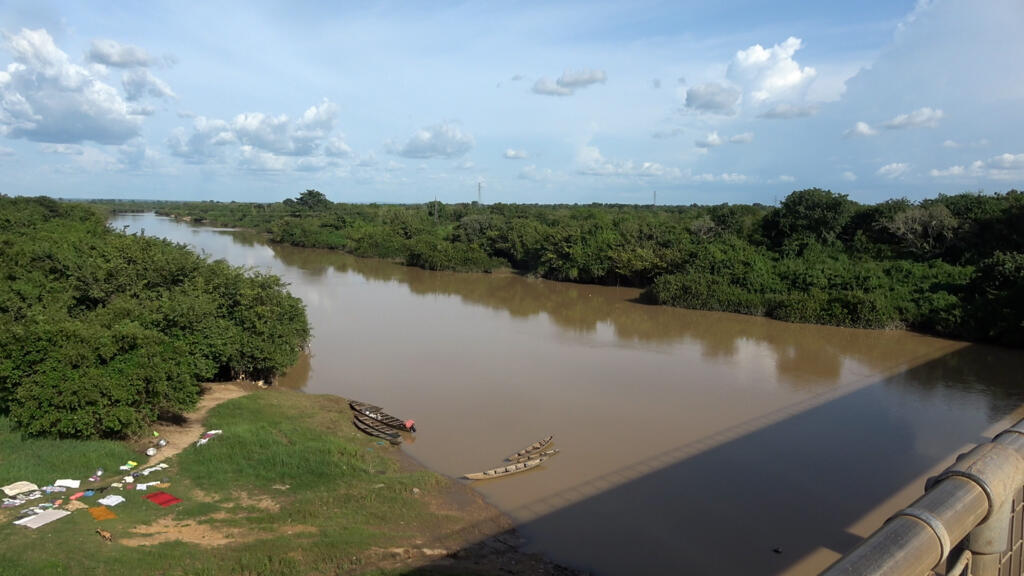
The polluted Black Volta at Bambao in the Savannah Region. © RFI/Michael Sarpong

Human impact

The consequences of illegal mining are being felt across the country.

Forensic histopathologist Professor Paul Poku Sampene Ossei says his research has linked at least 500 cases of spontaneous abortion in Ghana to high levels of heavy metals in the placenta caused by illegal mining activities.

His research involved more than 4,000 placentas examined from different regions across Ghana, with results showing dangerous levels of contamination on both the maternal and foetal sides.

“I have about 500 cases where women [lose their babies] because of the concentration of these heavy metals in their placenta,” he said. “The placentas are all contaminated and polluted with heavy metals."

Many communities have also been left without water as a consequence of illegal mining.

The Ghana Water Company has shut down its treatment plant at Kwanyako in the Central Region, and the government minister responsible for the area, Ekow Panyin Okyere Eduamoah, disclosed that around 10 of the 22 Metropolitan, Municipal and District Assemblies in the region are facing an acute water shortage as a result.

“I visited the plant myself, and I realised that even if they were forced at gunpoint to provide water, you could not be sure of its quality,” he said. “I therefore asked that they stop.”

Farms destroyed


Meanwhile, Bismark Owusu Nortey, executive director of the Peasant Farmers Association of Ghana, told RFI that illegal small-scale mining has devastated farmland across the country.

“A report that we’ve worked on shows that close to 1.2 million hectares of farmlands have already been destroyed due to galamsey," he said.

"Behind these farmlands are over 500,000 individual farmers and their dependants who have been denied the opportunity to use farming as an economic tool to improve their livelihoods."


The destruction of farmlands and the pollution of water bodies have drastically reduced farmers’ productivity, with some who had farmed all year round now restricted to seasonal cultivation.

Illegal mining has also claimed lives. On 1 October, seven illegal miners died after a pit collapsed at an unauthorised mining site at Kasotie in the Atwima Mponua District of the Ashanti Region.

In response to the escalating crisis, the minister for lands and natural resources, Emmanuel Amarh Kofi-Buah, has issued a directive to security forces tasked with fighting illegal mining, urging them to be “firm, resolute and ruthless” in their operations.

Environmental groups, however, insist that extraordinary measures are needed before the damage becomes permanent.
Here’s why cows are wearing electric collars to boost potato yields

By Maria Sarrouh
Updated: October 12, 2025 

A pilot project on P.E.I. is testing electronic collars on cows with the goal of boosting potato yields and pastures. (CTV News)

A pilot project on P.E.I. is testing electronic collars on cows with the goal of boosting potato yields and pastures.

By controlling where cows graze and leave their manure, farmers hope to put nutrients and organic matter back into fields and build healthier soil that holds moisture in dry years.

“In a perfect world, we’d see a significant bump in organic matter and a significant bump in yield,” said Chad Mooney of Arthur Mooney and Sons Farms.

Rotational grazing, sometimes called mob grazing, keeps a large group of cattle in a small area for a short period, Mooney explained. In this case, about 100 animals are held in a two-acre section, then moved every few days through a 100-acre field.

The herd grazes alfalfa down to a level that allows it to regrow, while manure is spread across the whole field, instead of piling up in one part of the pasture.

The electric collars, or e-collars, create virtual fences that hold the herd in place. If an animal approaches the line, the collar emits a tone - an audible warning - and most turn around. If they keep going, the device delivers a brief shock.

“Very seldom (do) they actually get a stimulation from the shock,” Mooney said, adding the animals learn fast and the voltage is less powerful than the fence around the field.

The project offers benefits to both potato farmers and beef producers, says Ryan Barrett, research and specialist with the P.E.I. Potato Board. For cattle owners, partnering to share fields can be more cost-effective than buying land. For potato farmers, it brings rental income and returns nutrients to fields.

“I think most farmers would think that’s a win-win,” Barrett said.

Each e-collar costs a few hundred dollars, and the project is partially financed by the On-Farm Climate Action Fund, an initiative through Agriculture and Agri-Food Canada, distributed locally by the P.E.I. Federation of Agriculture.

Researchers with the P.E.I. Potato Board could begin seeing preliminary results next year.

“Maybe we won’t see so much in terms of the potato yield,” Barrett said. “That’s too early to tell. But hopefully we’ll start seeing some difference in maybe some of the soil testing metrics, that sort of thing.”

Mooney adds that meaningful change takes time, saying P.E.I. fields generally range between two-to-four per cent of organic matter, depending on whether they are old pasture or heavily farmed ground. Potatoes, in particular, deplete organic matter.

“Ultimately, changes like this are generational,” he said. “Over 12 years … we may see a significant bump ideally.”

Even if yields don’t shift in the short term, Mooney says returning organic matter to the soil is something to celebrate.


Maria Sarrouh

Journalist, CTV National News

Helium was China's rare earth metals Achilles' heel

Helium was China's rare earth metals Achilles' heel
China couldn't restrict its rare earth metal exports to the US until recently as it was just as dependent on US exports of helium, needed to run its own tech industry. That is no longer true
 

\


bne IntelliNews
By Ben Aris in Berlin October 13, 2025

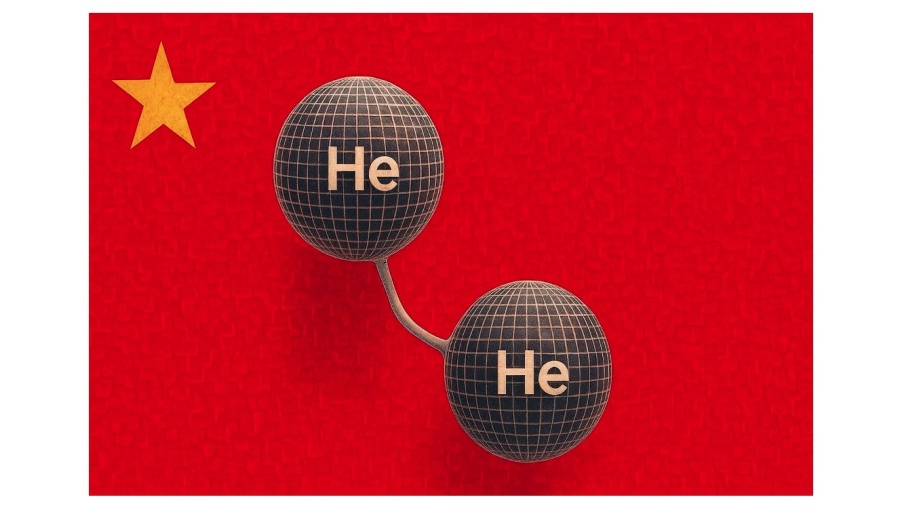
​​China has a devastating tool in its escalating trade war with the US: rare earth metals (REMs). Last week, Beijing announced new restrictive export controls on the export of anything with even a smidgen of Chinese-produced REMs that could strangle the American tech sector. It was not in a position to do this until recently as it was 95% dependent on the import of US-made helium, an essential input into its own tech sector. However, after a few years of heavy investment it has broken that dependency and now only imports 5% of its helium from the US.

The clash over exotic materials trade is escalating into a serious trade war. When China’s exports of rare earths dropped sharply in the months after export controls were first introduced this April, manufacturers across the globe, especially in the auto sector, warned of imminent disruptions to production. Those disruptions were largely avoided after the Trump administration threatened to call off the Geneva trade truce if China didn’t quickly approve more export licences. For now, exports have largely returned to normal, though they are still down year-to-date.

Anticipating more trouble, the Pentagon announced last week it would procure up to $1bn worth of critical minerals, as part of a global stockpiling spree to counter Chinese dominance of the metals that are key for the manufacture of things like magnets needed in everything from mobile phones to wind turbines and weapons.

China’s aggressive move follows the White House announcement of new duties on Chinese imports. US President Donald Trump said on October 10 that he may introduce new 100% tariffs on Chinese goods in retaliation for restrictions on REMs, although he set the deadline for these tariffs as November 1, just after he is due to meet face-to-face with Chinese President Xi Jinping on the sidelines of the APEC summit. Trump said: “There is no way that China should be allowed to hold the world ‘captive’ but that seems to have been their plan.”

China’s exports of rare earth elements and magnets are relatively small in value terms, less than $4bn last year (~0.1% of China total exports), but they are of outsized importance to global supply chains.

The new export restrictions mark a significant escalation in the trade war that was not possible until recently, according to China-watcher and bne IntelliNews columnist, Arnaud Bertrand. The key reason for Beijing’s restraint until now lies in its unexpected vulnerability: helium.

“Helium isn’t just a party balloon's gas,” Bertrand said in a recent comment. “It has plenty of industrial applications for things such as quantum computing, rocket technology, MRI machines, as a coolant for chip lithography equipment, etc.”

Until 2022, China imported 95% of its helium, with the US controlling most of that supply. Four of the world’s ten largest helium producers were American firms, while the remaining six relied on US-made technology. The imbalance created a strategic pressure point that prevented Beijing from escalating export restrictions on critical materials such as rare earth elements. If Beijing cut the US off from REMs, the US could retaliate with an equally painful ban on helium exports to China.

“This raised huge alarm bells inside China,” Bertrand said, citing a 2022 paper in Frontiers in Environmental Science, authored by researchers from PetroChina’s Research Institute of Petroleum Exploration and Development. The study warned that China would be “greatly affected” by a US-led blockade on helium exports.

In response, China launched a multi-year drive to sever its dependence on American helium. China's domestic helium production has grown at a compound annual growth rate (CAGR) of approximately 65% over the last three years from an almost standing start in 2020. By 2023, it had exceeded 750,000 cubic metres of production a year. The country had built seven helium extraction facilities and reoriented imports toward suppliers in Russia and other “friendly” nations by the end of 2024.

A project to develop domestic extraction technology was awarded the 2024 “Outstanding Science and Technology Achievement Prize” by the Chinese Academy of Sciences, which said the effort had “broken the long-standing monopoly of the US and ensured the security of China’s helium resources.”

Several state-backed initiatives have aimed to develop helium extraction and purification facilities, often tied to natural gas projects in provinces such as Xinjiang, Inner Mongolia, and Sichuan. The most notable project is the Yurungkash helium extraction plant in Xinjiang, operated by Sinopec, which began operations in 2022. The plant is estimated to produce around 200,000 cubic metres of helium per year. Additional production units have come online in Shaanxi and Sichuan, including a facility operated by PetroChina.

By the end of 2023, China’s total annual helium production capacity had reached an estimated 700,000–800,000 cubic metres, according to industry estimates cited by the Asia Industrial Gases Association (AIGA). That figure was less than 5% of global production but marked a significant rise from near-zero levels just a few years prior.

China continues to import significant amounts of helium. As of 2023, domestic production accounted for only around 12–13% of total consumption. But it has diversified supplies and is no longer dependent on the US. In 2022, China imported around 1.2mn cubic metres of helium from the United States, down from more than 2.5mn cubic metres in 2019, according to trade data from Chinese customs and the US Geological Survey (USGS), but at the same time increased imports from Qatar, Algeria, and Russia, which have all ramped up supplies and production. New units are scheduled to come online by 2026, as China aims to double domestic helium production to over 1.5mn cubic metres annually.

“The ‘helium shackles’ were broken,” Bertrand said. “By the end of 2024 China had cut its helium dependence on the US to less than 5%," reported the South China Morning Post.

With this key vulnerability addressed, Beijing lifted the last leverage the US had over China, freeing it to use its REMs as a political weapon in the growing trade war that was already on the cards during Trump’s first term in office.

“Power isn’t about intentions or rhetoric – it’s about what you can actually do,” Bertrand said. “Many wonder why countries almost never retaliate when the US imposes sanctions. The answer is simple: they can’t. They lack the alternatives, the technology, the supply chains.”

Beijing has solved that problem. China remains heavily dependent on the US as an export market, which still accounts for just under 15% of all Chinese exports, or around half a billion dollars a year, down from a peak of 19% in 2018. But the goods it sells to the US can now be redirected to new customers in the Global South and that process has already started.

According to China's Ministry of Commerce, "export growth is shifting from traditional developed markets to emerging economies," a trend that accelerated following US tariffs imposed during the trade war and further deepened by disruptions during the COVID-19 pandemic.

China has been pursuing a systematic campaign to remove all possible US pressure points across strategic sectors, including semiconductors, energy, telecommunications and pharmaceuticals. That effort, Bertrand said, is what has enabled the country to respond more assertively in the ongoing economic standoff with Washington.

“It’s depressing because it highlights the immense magnitude of the task at hand to become genuinely sovereign,” Bertrand said. “Inspiring because China demonstrated that it can actually be done, and relatively fast if we execute competently.”

Rediscovered Seeds Unite African Community Around The Taste Of Home — And Improve Organic Corn Breeding


University of Illinois Urbana-Champaign organic corn breeder Chris Mujjabi holds one of his white corn hybrids.

By 

When Chris Mujjabi found an envelope marked ‘Kitale Synthetic’ in a cold storage room at the University of Illinois Urbana-Champaign, the corn breeder knew he had stumbled on something special. He had gone looking for exotic germplasm that could improve yield or weed tolerance in his latest organic hybrids, but instead he found a connection to his past and his community.


“The name just resonated as African,” said Mujjabi, a doctoral student in the Department of Crop Sciences in the College of Agricultural, Consumer and Environmental Sciences at Illinois. “I couldn’t wait to plant it — it felt like a piece of home.”

Mujjabi is from Uganda and, back home, corn is everything.

“Every single day, we eat it for breakfast, lunch, snacks, even in schools. It’s a staple.”

Across Africa — not just in Uganda — corn is eaten fresh, boiled, grilled, and ground into cornmeal. The names of the dishes vary from country to country, but corn’s prominence in the African diet is consistent across the continent. So is the preference for white corn.

It turns out that the Kitale research station in western Kenya was the 1960s-era birthplace of modern white corn hybrids in Kenya. Previously, most corn was open-pollinated, so it was harder to predict yield, disease tolerance, and other growth characteristics. When Kitale Synthetic was introduced, it quickly spread across East Africa. It also fit the preferred taste profile across African cultures: a little bit starchy and not too sweet.


When Mujjabi grew seeds from the ‘Kitale Synthetic’ envelope, some of the resulting ears were yellow and others were white. By performing cross after cross, he created three new white hybrids suited to the Central Illinois climate that he hoped would taste like corn from home. In early September, he invited members of the African community in Champaign-Urbana and Central Illinois for the inaugural “Kasooli Party,” a field day and taste test named for the Luganda word for white maize.

Among the 35 participants, Boris Alladassi, a postdoctoral research associate in crop sciences, was the first to taste the corn that day. “I picked the grilled corn right from the fire because I was so eager. It had been seven years since I last had grilled white corn in Africa, so it was a very pleasant experience. We really treasure having access to something we are familiar with from home.”

Mujjabi set up a sensory panel to rank his three white corn hybrids against American sweet corn as a control group. Among the African guests, sweet corn came in dead last.

“Many Africans think sweet corn is too sweet. We don’t really like it. But that’s all we have access to here in the U.S.,” Mujjabi said.

Crop sciences professor Martin Bohn, who co-organized the field day and advises Mujjabi, says the demand for white corn extends to other expat communities that prefer a less-sweet cob. As proof of the demand, he points to work by “Mama Janet” Zintambila, a Kenyan farmer in Normal, Illinois, who produces and distributes white corn throughout the U.S.

“There is huge demand in places like Chicago, Indianapolis, Houston, and beyond,” Bohn said. “I’ve seen pictures where trailers come in filled with Mama Janet’s white corn, and people are already waiting in line. People come from all over.”

Kasooli Party attendees filled bags from the rows of white corn, but they’re looking for a more reliable supply. To meet future demand, Bohn and Mujjabi are developing organic seed for domestic growers.

Traits from ‘Kitale Synthetic’ are also proving useful in Bohn’s organic dent corn breeding program, conducted at the certified organic research fields managed by Illinois Organic, where the team evaluates hybrids under real-world organic production conditions.

Because it was developed in a tropical climate, Kitale Synthetic is taller and exhibits a more horizontal canopy architecture with broader leaves compared to the compact, upright stature of American varieties. Compact corn means more plants per row, but it also allows for more light to penetrate between rows. That means more weed growth.

“Upright stature doesn’t work for us in organic. The more you open up the row, the more weeds,” Mujjabi said. “So we are thinking in a completely different way. We want more horizontal leaves so that the canopy closes earlier and more thoroughly to prevent weed growth.”

The research team hopes to breed corn with faster emergence and a more horizontal leaf architecture into their organic hybrids — traits that help the canopy close quickly and shade out weeds — along with other potentially beneficial genes that could increase yield, disease resistance, and more.

“That’s why we always want to introduce exotic germplasm in our organic breeding program. Rare alleles from Africa, in this case, may introduce traits that benefit our productivity,” Bohn said. “This really underscores the importance of maintaining high-quality corn germplasm collections and making them accessible to everyone. This germplasm was in my collection, but we need to protect public germplasm collections on our campus and globally.”

Properly Managed Urban Rainwater Could Also Be Used For Cleaning Or Irrigation Purposes


By 

EHU engineers, chemists and geologists are exploring sustainable urban drainage systems in several towns and cities across the Basque Autonomous Community


The EHU researchers explored how a sustainable urban drainage system built in Legazpi has affected various rainwater parameters, and have concluded that a permeable pavement has improved the quality of runoff water and has reduced turbidity, suspended solids and the amount of certain metals. They also found that once this rainwater has been filtered and its biological quality ensured, it can be used for washing and/or irrigation purposes. 

When rainwater reaches the ground in cities, it flows directly into the sea or into rivers or else gets mixed up with the dirty water that flows along the sewers into the water treatment plants. This can lead to various problems, such as the pollution of seas and rivers and a large increase in the amount of water to be treated in the treatment plants during downpours. Urban pavements do not generally allow the water to infiltrate and completely hamper the natural process of the water, but the use of permeable pavements is expanding, albeit very gradually.

Sustainable urban drainage systems are designed to protect the natural water cycle, manage flood risks and improve the quality of runoff water. A combined system has been built in Legazpi: “In one of the town’s car parks there is a permeable pavement where the infiltrated and filtered water is collected in a rainwater tank,” explained Eneko Madrazo-Uribeetxebarria, a lecturer at the EHU’s Faculty of Engineering – Gipuzkoa.

On the whole, permeable pavements imitate the natural water cycle: “Rainwater penetrates the pavement, and thanks to the pavement’s pores and gravity, it is infiltrated into natural soil. The rainwater is also filtered through the pores along this infiltration path. What is more, this process is slow, so it means that some of this water may evaporate,” said Ainhoa Lekuona-Orkaizagirre, a PhD student at the Faculty of Chemistry.

At the request of Legazpi City Council, researchers from the EHU-University of the Basque Country studied the impact of this system on the quality of runoff water. More pollutants were studied than in any other studies to date. After comparing the water that has passed through an ordinary asphalt pavement with the water that has passed through the permeable pavement and the water collected in the tank, “we found that multiple parameters are better in the water that has passed through the permeable pavement. The quality of the runoff water is better; the turbidity of the water and the amount of suspended solids are significantly lower; and the concentrations of certain metals, such as iron, manganese, vanadium and copper, are also lower”, explained Lekuona.

As the researcher explained, turbidity is related to the sediments that the water picks up along its path and “the sediments may contain a wide variety of pollutants: metals, hydrocarbons, etc.”

The researchers also confirmed that the water collected in the tank does not pose an ecological risk for aquatic ecosystems. So, “it might be possible to use the water in the tank for cleaning purposes or even to discharge it into a nearby river or, after filtering and ensuring the biological quality of the water, to use it for irrigation purposes”, explained Madrazo.

Further research is needed

As the researchers pointed out, “with a system like this, you can’t solve a big problem. Many systems of this kind would need to be set up in a city to manage the water properly. Although the results obtained in the research are currently very good, more research is needed since the Legazpi system is only five years old and we don’t know whether in the future the pavement may become saturated and less efficient. What is more, pavements of this type also need to be maintained”. 

It is therefore important to continue to explore them because local conditions vary greatly.

The researcher revealed that such drainage systems are gaining strength in regulations and laws. However, the regulations still in force do not specify the obligation to set up these drainage systems, but “the tendency is to limit discharge from a newly built plot of land; in other words, so that once a plot of land has been urbanized, it does not discharge more than it did in its natural state. So sustainable urban drainage systems are essential”, they said.

This group of researchers is involved in other ongoing studies in the Txominenea neighbourhood of Donostia-San Sebastian, for example. If such systems are to thrive, several municipal departments need to be involved, and “that is often one of the main difficulties”, the researchers said. However, they were keen to point out that the cycle that water fulfils in nature would need to be restored.

Can Solar Farms Become Future Refuges For Bumblebees?

October 13, 2025 
By Eurasia Review


Solar farms could become important refuges for bumblebees in Britain, a new study reveals – though their benefits only go so far.

In the first study to investigate the role of solar farms in future biodiversity conservation, a research team, from Lancaster University, the UK Centre for Ecology & Hydrology and the University of Reading, set out to discover if the UK’s existing solar farms could support bumblebees in the face of a changing countryside.

They found that solar farm management – wildflower margins verses turf – was the main factor influencing the number of bumblebees within solar farms themselves.

Their new modelling suggests bumblebee numbers within solar farms could more than double (increase by 120%) if solar farms are managed for biodiversity, with wildflower margins providing a rich source of food for the bees. This increase is when compared to solar farms just covered with turf grass.

“Our results indicate that well-managed solar farms could provide refuges to help protect localised bumblebee populations against landscape changes happening beyond the site boundaries,” said Dr Hollie Blaydes, Senior Research Associate at Lancaster University. “We expected to find that solar farms with more resources would support more bees, but we were also interested in how this management interacts with wider land use changes.”

The researchers applied a novel high-resolution modelling technique to predict how Britain’s existing 1,042 solar farms may play a role in supporting bumblebee numbers in the coming decades.

They used and investigated three previously established future visions (based on the Representative Concentration Pathways and Shared Socioeconomic Pathways) of what landscapes in Britain could look like based on ‘sustainable’, ‘middle-of-the-road’ and ‘fossil-fuelled development’ socio-economic scenarios, downscaled from 1km to a highly detailed 10m square resolution.

Across these scenarios, the amount of different habitats in a landscape varies, as does management of these habitats, with consequences for bumblebee foraging and nesting opportunities. All futures see a decrease in agricultural land area surrounding solar farms compared to the present day, driven by factors ranging from changing diets to increased urbanisation.

Dr Blaydes said: “We took existing land use futures maps and downscaled them to a resolution that is more relevant to bumblebees. Then, we added features, such as hedgerows and wildflower patches, which are important landscape elements for bumblebees and combined the maps with a pollinator model. The model predicts how bees use these landscapes based on foraging and nesting resources. This aspect of the work was particularly novel – it is unusual for modelling like this to be done in such detail.”

Their results suggest the bee-boosting effects of the management of solar farms are largely constrained to the solar farms themselves – and have a limited and localised impact across a large wider landscape.

Landscape composition around solar farms were found to have a greater influence on bumblebee densities in the foraging areas surrounding solar farms.

Modelling for a ‘sustainable’ future scenario where more bumblebee food resources and habitat are put back into the landscape would have the most positive impact on bumblebee densities across a wider landscape and including foraging zones around existing solar farms.

Alona Armstrong, Professor in Energy and Environmental Sciences and co-author of the study, said: “While benefits from solar farms for bumblebee densities may be limited to the local scale, our findings help to show that site management plays a role in supporting bumblebee populations. Solar farms could be considered as an emerging tool in conservation to help protect populations of bumblebees into the future.

“If we are going to need additional solar farms to meet our national renewable energy commitments, then strategic siting of solar farms could be considered to connect bumblebee habitats or provide bumblebee resources where they are otherwise limited.”

Dr Blaydes said: “Solar farms can be refuges for bumblebees in the present day and in the future and could play a part in mitigating habitat loss – if managed well. But, solar farms alone will not be able to counteract the effects of all future land use changes on bumblebees and other biodiversity.”

The results of the study, which was funded through researcher grants by the Natural Environment Research Council with support from Low Carbon, are detailed in the paper ‘Solar farms as potential future refuges for bumblebees’ which has been published by the journal Global Change Biology’.
Authors of the study include Hollie Blaydes, Duncan Whyatt and Alona Armstrong of Lancaster University; Emma Gardner, Robert Dunford-Brown and John Redhead of the UK Centre for Ecology & Hydrology; and Simon Potts of the University of Reading.