Monday, October 13, 2025

FREE SPEECH! IN AMERIKA


Celebrating Lenny Bruce’s 100th Birthday:  “The World is Sick and I’m the Doctor”


October 10, 2025

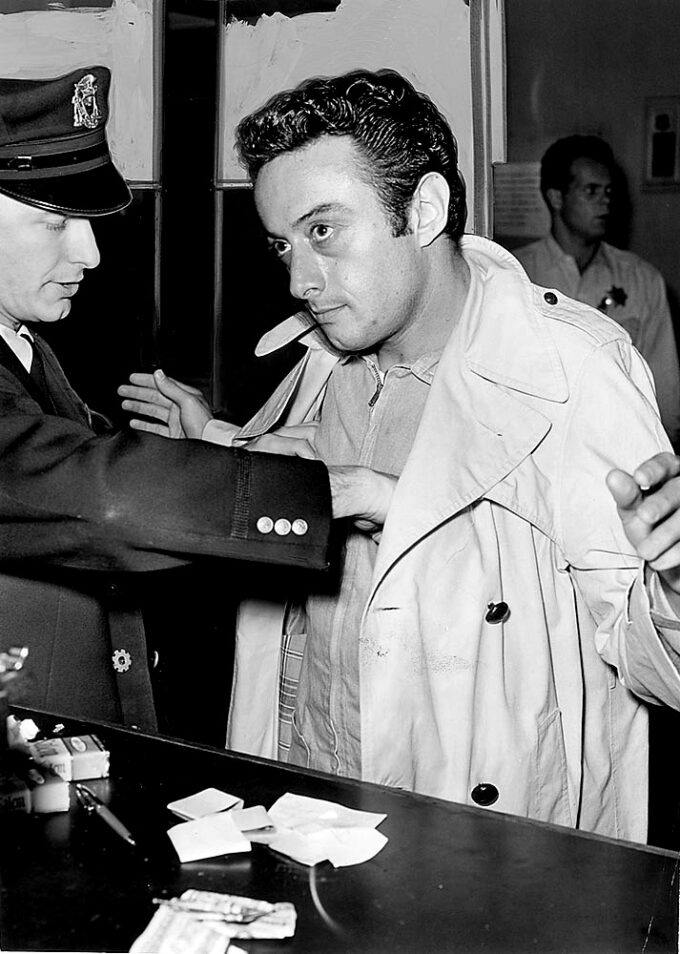
Lenny Bruce’s booking, following his arrest in 1961. Photo: Examiner Press. Public Domain.

“Lenny Bruce is not afraid”

—“It’s the End of the World as We Know It (And I Feel Fine),” R.E.M.

Lenny Bruce, born Leonard Schneider on October 13, 1925, died on August 3, 1966. Officially, Bruce died from a drug overdose. Unofficially, he was murdered by the New York County District Attorney’s office.

The Trump Reich is not the first era in U.S. history in which local, state, or federal government has attempted to abolish free speech and destroy opposition; for example, Woodrow Wilson threw Eugene Debs in prison for speaking out against capitalism and World War I. What makes the current era different is that a U.S. president is not only acting like a dictator, he is doing everything possible to ensure the world views him as one, getting these headlines: “Trump Pulls From Dictator Playbook and Hangs Giant Banner of His Face.” Today, one risks imprisonment or having a career derailed not simply for challenging obscenity laws, as did Bruce, or speaking out against a capitalist war, as did Debs, but for hurting a president’s feelings. So, it’s an especially good time to celebrate Lenny Bruce.

At the time of his death, Bruce was blacklisted by almost every venue in the United States, as owners feared that they too would be arrested for obscenity. One of the New York district attorneys who prosecuted Bruce’s last 1964 obscenity case, Assistant District Attorney Vincent Cuccia, later admitted, “We drove him into poverty and bankruptcy and then murdered him. I watched him gradually fall apart. . . . We all knew what we were doing. We used the law to kill him.”

 “As a child,” Bruce recounted, “I loved confusion: a freezing blizzard that would stop all traffic and mail; toilets that would get stopped up and overflow and run down the halls; electrical failures—anything that would stop the flow and make it back up and find a new direction.” At age 16, Lenny ran away from home and boarded with the Dengler family, working on their Long Island farm in the 1940s. The Denglers had a roadside stand, and city and suburban folks loved the idea of fresh farm eggs, but the Denglers didn’t have enough chickens to meet the demand, so they would buy eggs wholesale, and a teenage Lenny repackaged them in Dengler cartons; and he would later recount, “With my philanthropic sense of humor, I would add a little mud and straw and chicken droppings to give them an authentic pastoral touch.”

Bruce’s rebellions against authority, on stage and off, remain legendary among comics. Fed up with the navy in 1945, Bruce told medical officers he was overwhelmed with homosexual urges, and this tactic worked to get him discharged. He then fell in love with Honey, a stripper at the time, and they married in 1951. To raise money so that Honey could leave her profession, Lenny created the “Brother Mathias Foundation,” in which he impersonated a priest and solicited donations. Bruce was arrested for that scam but was lucky and found not guilty.

On stage, Bruce was fearless. He worked as an MC at strip clubs, and following one performer, he himself came on stage completely naked and said, “Let’s give the little girl a big hand.” In Bruce’s time, it was still common for some Christians to accuse Jews of killing Jesus, and this would put most Jews on the defensive—but not Lenny. In his act, Lenny would “fess up” that not only did the Jews kill Jesus but that it was his Uncle Morty who did it. In one variation of this bit, he said that what in fact Jews really had covered up was that his Uncle Morty had killed Jesus with an electric chair, but that Jews thought that Christian women wouldn’t be as attractive wearing necklaces with Jesus in an electric chair dangling over their chests, so Jews made up the crucifixion story.

However, as Bruce became more famous for his risk-taking humor that fearlessly mocked authorities, his luck eventually ran out. He was arrested multiple times for obscenity during his stand-up act as well as for drug possession. Bruce believed that authorities went after him mostly because he made fun of organized religion, and his friend George Carlin agreed, “Lenny wasn’t being arrested for obscenity. He was being arrested for being funny about religion and in particular Catholicism. A lot of big city cops . . . tend to be Irish Catholic,” noted the Irish Catholic Carlin.

In the years before his death, Bruce became increasingly preoccupied by how to prevent his arrest for drug use. In his autobiography, Bruce wrote, “For self-protection, I now carry with me at all times a small bound booklet consisting of photostats of statements made by physicians, and prescriptions and bottle labels.”

+++

In 1964, Bruce was arrested in New York on obscenity charges, and despite petitions and protests from many renowned people, he was convicted and sentenced in December 1964 to four months in a workhouse. 

In July 1966, free on bail during the lengthy appeals process, Bruce got a visit from Carlin and his wife. Carlin recalled, “He was completely immersed in his legal battles. . . . He didn’t appear in clubs anymore—the Irish cops and judges had indeed shut him the fuck up. He was just about bankrupt, having spent all his income and intellect trying to vindicate himself. We visited for a while and he was as affectionate and lovable as ever. That was the last time we saw him alive.” Twelve days after their visit, Lenny Bruce died of a drug overdose.

Lenny Bruce may not have been the funniest comedian in U.S. history, but his anti-authoritarian defiance is unsurpassed among comedians, many of whom to this day honor him for his trailblazing free speech advocacy. In Resisting Illegitimate Authority (2018), to illustrate the diversity among anti-authoritarians, I profile twenty U.S. anti-authoritarians, including Lenny, with an emphasis on what can be gleaned from their lives, including lessons about survival, triumph, and tragedy.

Sometimes it is luck that makes the difference between anti-authoritarians having a triumphant or tragic life, and Lenny did not have the luck of coming to prominence in a more anti-authoritarian era, as was the case with his friend George Carlin, whom I also profile. In a more anti-authoritarian era, Carlin’s 1972 Milwaukee disorderly conduct-profanity arrest for his “Seven Words You Can’t Say on Television” bit was dismissed by a laughing judge, and it actually helped Carlin’s career, even getting an invitation from Johnny Carson to discuss it and promote his album on national television.

+++

Another luckier U.S. anti-authoritarian is Noam Chomsky who, in the early 1960s, challenged and resisted the U.S. government’s war in Vietnam at a time when very few Americans were doing so. He refused to pay a portion of his taxes, supported draft resisters, got arrested several times, and was on Richard Nixon’s official enemies list. Chomsky anticipated going to prison, and he later recounted how only luck and a changing era saved him from prison, “That is just what would have happened except for two unexpected events: (1) the utter (and rather typical) incompetence of the intelligence services. . . . [and] (2) the Tet Offensive, which convinced American business that the game wasn’t worth the candle and led to the dropping of prosecutions.” 

Lenny Bruce was often referred to as a “sick comedian,” but he famously said, “I’m not a comedian. And I’m not sick. The world is sick and I’m the doctor. I’m a surgeon with a scalpel for false values. I don’t have an act. I just talk. I’m just Lenny Bruce.”

Today, it is an understatement to say that mainstream U.S. society is sick with what Lenny called “false values.” Tip-of-the-iceberg evidence of how a sick U.S. society has gotten even sicker? In 2024, an in-your-face scumbag bully was elected president—this time with the popular vote, a majority of American voters who were either blind to what he is all about, or saw what he is all about and were unbothered by him being a scumbag bully because he is their scumbag bully. 

Bruce E. Levine, a practicing clinical psychologist, writes and speaks about how society, culture, politics, and psychology intersect. His most recent book is A Profession Without Reason: The Crisis of Contemporary Psychiatry—Untangled and Solved by Spinoza, Freethinking, and Radical Enlightenment (2022). His Web site is brucelevine.net


A portion of the proceeds from this book will go directly to the Lenny Bruce Memorial foundation, a. 501(c)(3) not-for-profit. Copyright © 2016 by Kitty Bruce.


Flights of the Imagination: Jesus Christ Superstar at Tempelhof Airport

October 10, 2025

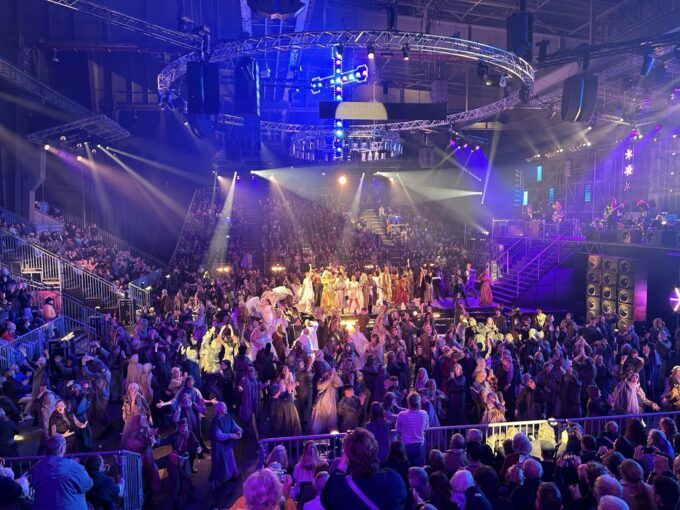
Jesus Christ Superstar, Tempelhof Airport, Hangar 4, Komische Oper Berlin. Photo: David Yearsley.

Founded in 1947, the third and youngest of Berlin’s great opera houses is the Komische Oper—the comic opera. In the rubble of war, it took up residence in the late-nineteenth-century Metropol-Theater, beloved for its racy revues and risqué operettas. The Nazis had closed the place down in 1933, then began to stage their own Volk-friendly entertainments there under the auspices of the party’s Kraft durch Freude initiative. 

The neo-baroque building stood only a few blocks from the Brandenburg Gate and was badly bombed in the war. But the auditorium itself, with its mirrors and chandeliers and gods and goddesses of muscly and curvaceous stucco, was left virtually untouched by the destruction. The show could go on and did. 

The wrecked foyer and façade were eventually redone under the socialist East Berlin regime in clean, modernist lines that worked in bracing counterpoint to the louche interior.  

Since its founding, the Komische Oper has reaped admiration and condemnation in nearly equal measure for productions that are often wildly creative, convention-defying, and graphically scandalous. The house does not shy away from confronting many of the underlying currents troubling the depths of opera (viz., violence, misogyny, racism), nor does it apologize for its sometimes almost X-rated depictions of liberation and pleasure.

Nearly eighty years on since the birth of the Komische Oper, its building is now in the midst of a renovation set to cost nearly 500 million euros, an outlay decried by the likes of the rightwing tabloid Bild-Zeitung as an outrageous luxury in a time of retrenchment in the city-state of Berlin. 

While the work goes on despite such grumblings, the Komische Oper has taken up provisional residence in the Schiller-Theater a couple of miles to the west, but the company launched its fall season offsite with an eye-popping earwax-cleansing production of Jesus Christ Superstar in the spectacular venue of the former Tempelhof airport. This airfield was opened in 1923 but massively expanded by the plane-crazy Nazis from 1936 to 1941 until the long curve of its bays and hangars had occupied more surface area than any other building in the world. That dubious distinction was eventually overtaken by the American Pentagon.  

As the Russians closed in, in April of 1945, Hitler’s orders that the airport be blown up went unexecuted, so that the enormous building stands still. It was used by the Americans in the Cold War, most famously during the Berlin Airlift that thwarted the Russian Blockade in 1948-9. Tempelhof was closed to flight traffic in 2008 and various parts of the humongous structure now host exhibitions and spectacles put on by the likes of the Komische Oper.  

The airfield itself is currently a park visited by nearly 100,000 people on non-rainy days. Kite surfers, skateboarders and cyclists wheel and wing across the wide, windswept spaces. Cricket matches take place in the shadow of the radar tower. If only all airports could be converted to democratic, carbon-sinking, low-decibel open spaces on the Tempelhof model and all the world’s concourses and hangars dedicated to theater and the other arts! 

We arrived at Tempelhof on a clear, autumnal Tuesday evening. Along the access road leading into the hangar, a group of a dozen or so Catholic protestors recited the Hail Mary while holding up a banner that read “Blasphemy:  Hate Against Christians.”  

I wanted to ask the Catholic critics if they’d seen the show. If they had, they’d realize that this is just a trashy Passion Play, not so different in its theological underpinnings—or lack thereof —than kindred spectacles like the five-day reenactment in Oberammergau, which got going four hundred years ago and has thus had an even longer run in the Bavarian Alps than did Andrew Lloyd Webber’s Phantom of the Opera on Broadway.  

Whether they liked it or not, the protestors were themselves part of the show, a pious prelude that reminded the undeterred audience that forbidden fruit is the sweetest and juiciest. 

We followed the crowd in and stowed our bikes on a couple of the hundreds of stands already filling up—another happy testament to Berlin’s bike-and-arts friendliness and a reminder that the Wright brothers were into the bicycle before they became the first in flight.

The Komische Oper has real flair, whether putting on a show in an opera house or in an empty airplane bay looking out at a dusky runway. In an ad hoc bar area the size of at least two football fields, sofas had been set up with more than ample space between them.  The clink of champagne glasses echoed off the trusses high up in the cantilevered dimness.  A neon sign marked off this vast ad hoc opera foyer from the airfield beyond, resisting the gathering dark with its message of #allesaußergewöhnlich (everything extraordinary).  That said it all—in lurid pink.

Lurking on the tarmac beyond the cordon, the silver hull of a Douglas C-47 Rosinenbomber (raisin bomber), one of the planes that supplied Berliners with food during the blockade, held the last of the twilight on its silvery skin. 

The bell rang and the crowd streamed into Hangar 4. Metal grandstands rose up on three sides of the cavernous cube. At the front of the stage glowered a cross built from metal poles and struts housing headlights, looking as if it could have done service controlling plane traffic out on the runways. 

The band, fronted by three guitarists, a keyboardist, and a drummer, was arrayed along the fourth wall on a higher platform with stairs leading down to the catwalk stage. The Komische Oper orchestra strings and woods spread out behind and to either side. Miraculously, given the sprawling space and ever-changing formations pushing into every corner, music director Koen Schoots maintained discipline, yet fostered feeling. 

The cavernous hangar was filled to capacity—enough people to fill several 747s—and all were ready for a theater evening that, in the end, brought everyone into the show in a singalong encore of the title tune.  

Throughout, Dancers and Disciples, Money Changers, Priests and Judges rushed in from entrances that seemed to lead out to the airfield itself and also scampered up the metal stairs and into the audience.  The messianic mob was worthy of Cecil B. DeMille in scope and energy and rustic Levantine textiles. Andreas Homoki stage direction was devoted to excess worthy of Berlin, encouraging seething movement but also leaving space for poised prayer. 

Andrew Lloyd Webber is not renowned for his musical originality, having settled at least one copyright infringement case over the years and been threatened with others.  He shamelessly appropriated the theme, and much else too, from the slow movement of Mendelssohn’s Violin Concerto for the show’s biggest hit, the oft-excerpted ballad, “I Don’t Know How to Love Him.” There is ample precedence for such plagiarism, even if done far more skillfully, in the oeuvre of Lloyd Webber’s predecessor as top dog of the London musical theater— George Frideric Handel. Luckily for Webber, Mendelssohn’s copyright expired a while back.

The dynamic choreography by Sommer Ulrickson, whether animating the unwashed masses or the serpentine apostles, shifty priests, or slinky Motown soul sisters, was exuberantly varied and inventive. Frank Wilde created the colorful, even crazy costumes, from diaphanous and billowing, to form-fitting and crotch-hugging. The enthralling Albert-Speer-at-Studio-54 lighting was conceived for maximum wow-factor by Olaf Freese and Florian Schmitt.

Jesus was not the bearded, long-locked waif of medieval carvings and Renaissance portraiture but instead close-cropped on top and muscle-bound all the way down from there. Had the engrossing and literally gripping Ryan Vona walked on water during the show, the miracle would have been all the more impressive given the body density. But he could sing, nailing (sorry! Will say 10 Hail Mary’s and buy an extra indulgence from the Editor during the current fund drive) the high notes and wringing more than the requisite emotion out of librettist Tim Rice’s embarrassing doggerel  (viz. “tables, chairs and oaken chests would have suited Jesus best / He’d have caused nobody harm – no one alarm!”). In scarlet-letter red evening gown and shaved head, Ilay Bay Arslan sang the part of Mary Magdalena with an allure both sin-soaked and purified.

As the man-bunned, clog-sporting, eventually shirtless Judas, Ryan Shaw effectively and effortlessly toggled between keening falsetto and full-throated song, between anguish and affection. 

If you’re going to stage a show at the Nazi Airport, the bad guy had better steal the show, and he did.

David Yearsley is a long-time contributor to CounterPunch and the Anderson Valley Advertiser. His latest albums, “In the Cabinet of Wonders” and “Handel’s Organ Banquet” are now available from False Azure Records.


JUDAS I DON'T KNOW HOW TO LOVE HIMN


HARAD'S SONGL; THE GREAT JESUS CHRIST


The end of an era: MTV music channels to be switched off across Europe by end of 2025

MTV music channels switched off across Europe by end of 2025
Copyright Canva

By David Mouriquand
Published on 

A sign of changing times... And a business decision that represents a cultural moment, signalling the death of communal music discovery and prompting a reflection on how we consume music in the digital age.

It’s the end of an era for those who spent treasured parts of their childhoods waiting to discover the latest music video, eager to watch the countdown charts and lapping up all the pop culture and fashion goodness MTV offered.

Entertainment giant Paramount Global has delivered the sad news that after 44 years of continuous broadcasting, a cultural institution will be permanently shut down by 31 December 2025.

The plug will be pulled on five cherished channels: MTV Music, MTV 80s, MTV 90s, Club MTV and MTV Live. They’ll first go down in the UK and Ireland, before switching off in France, Germany, Austria, Austria, Poland, Hungary, Australia and Brazil.

The decision comes amid aggressive cost-cutting measures from Paramount Global, as they merge with Skydance Media this year. Beyond financial realities, the move also reflects how viewing and media habits have shifted dramatically for many years now, with music fans migrating towards digital options.

Indeed, social media channels and streaming platforms represent fierce competition, and TV channels can’t compete – despite offering a sense of community that has lasted for decades, now replaced by more personalized ways of experiencing music.

The shutdown will put an end to a pop culture legacy which began in the US in 1981. Rather prophetically, the first video aired on MTV was ‘Video Killed The Radio Star’ by The Buggles.

From there, iconic pop culture moments followed: the premiere of Michael Jackson’s ‘Thriller’ video in December 1983; David Bowie advocating for Black artists on MTV News; the pioneering reality show The Real World in the early 90s; Nirvana bringing grunge into the mainstream with the constant airing of the ‘Smells Like Teen Spirit’ music video; the Courtney Love vs Madonna debacle...

After the first few years of MTV, it began airing in Europe in 1987. Shows like MTV Unplugged became institutions, with the channels at their peak transforming promo videos into artistic offerings, launching music careers, allowing fashion trends to cross borders, and defining youth culture.

By the 2010s, traditional music television became outdated with the rise of social media and on-demand streaming taking over.

The MTV brand will continue through digital platforms and signature events like the VMAs and EMAs. However, on the last day of 2025, music television as generations have known it will be no more.

Tombstone tourism: Meet the travelling taphophiles obsessed with graveyards


Copyright Jono Namara and Dan O'Brien.

By Liam Gilliver
Published on 12/10/2025 - EURONEWS


A growing number of tourists are “rebelling against tick-box travel” by ditching the popular sights for a trip to the graveyard.


Graveyards could become the latest travel trend to spread across Europe, as tourists look to liven up their usual itinerary of museums and TikTok-famous coffee shops.

It might sound macabre and slightly spooky, but for taphophiles – those with a strong interest in cemeteries and epitaphs – roaming around tombstones offers a unique insight into a country’s culture and history.

Even travel experts acknowledge the growing popularity of graveyard tourism, arguing it provides a rare chance to “rebel against tick-box travel” as overtourism plagues much of the continent.
Graveyard tourism: What’s the appeal?

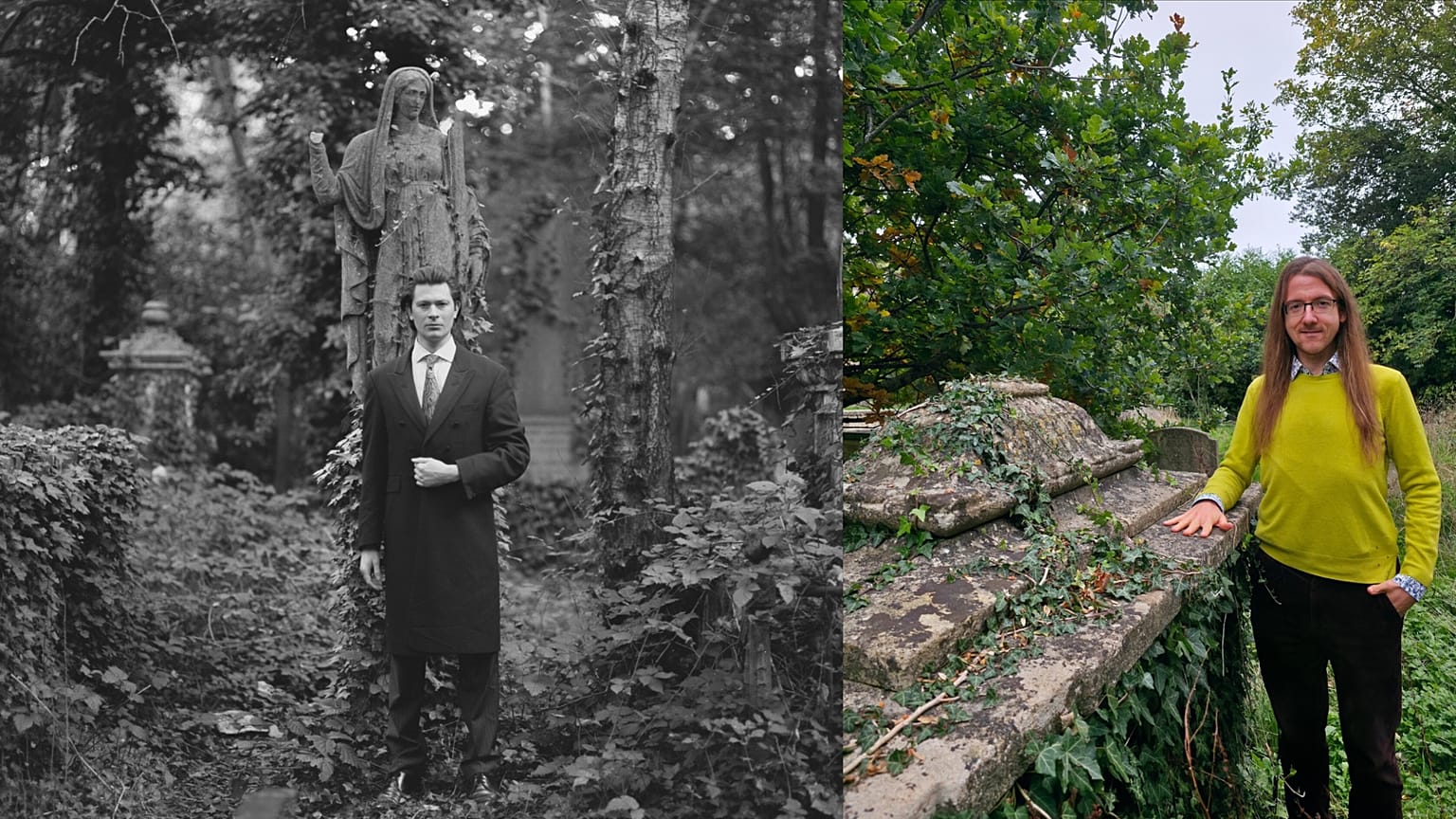
“Graveyards are not scary or ghoulish places,” says Jono Namara, a filmmaker and self-proclaimed taphophile who has visited hundreds of burial grounds across Europe.

The video player is currently playing an ad. You can skip the ad in 5 sec with a mouse or keyboard

Growing up with a fascination with all things history and gothic, Namara has turned his morbid love into a social media series documenting how the dead continue to shape the living through the “monuments and mysteries” they leave behind.


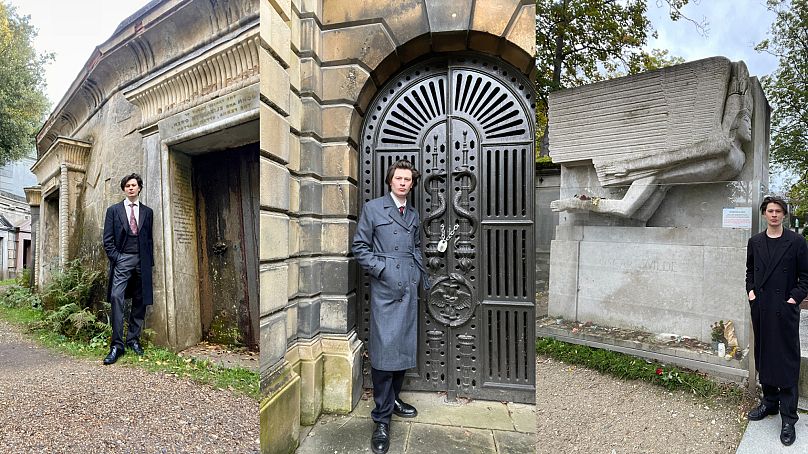
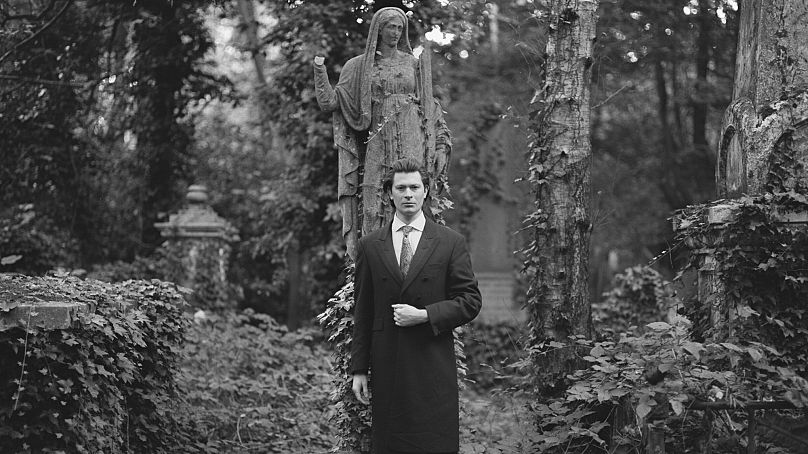
Jono Namara at various graveyard locations across Europe, including next to Oscar Wilde's tombstone. Jono Namara

Some of his favourite grounds include London’s Magnificent Seven - where notable figures such as Karl Marx, Emmeline Pankhurst, and Sir Henry Tate are buried - Père Lachaise in Paris, the resting place of Oscar Wilde, Jim Morrison, and Édith Piaf, and Laeken in Brussels.

“Next on my list is the Zentralfriedhof in Vienna, where composers and poets share eternal rest,” Namara tells Euronews Travel.

Describing graveyards as “open-air museums” that are shaped by art, architecture, and belief, Namara believes such sights provide the perfect combination of culture, quiet, and curiosity.

A break from the crowds and ‘clichés’.

With record-breaking levels of tourism hitting European countries like Spain and Greece hard this year, such a trifecta can feel rare to find.


It’s one of the main reasons why graveyard tourism is coming to life, and can tell a city’s story “without the crowds or clichés”.

“Cemeteries are usually tucked into real neighbourhoods, away from the coach tours and souvenir shops,” Namara adds.

“In searching for them, you wander through the everyday fabric of a place. You see how a culture remembers its dead, and in doing so, you understand how it chooses to live.”
The best graveyards to visit in Europe

Dr Dan O’Brien is also a graveyard enthusiast and works as a death historian at the University of Bath in the UK.

Lured into the world of burial grounds due to his love of walking and interest in history, O’Brien started exploring sites in between work meetings.

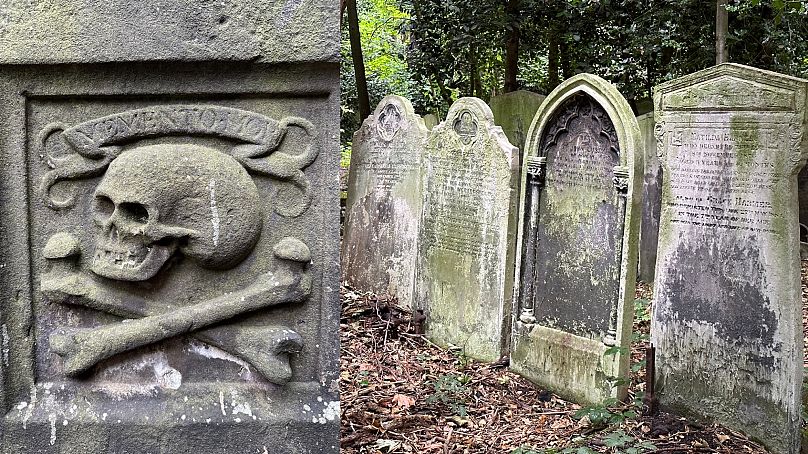
Now, he says, finding new graveyards has become “quite addictive”, and he’s developed a particular passion for spotting memento mori on headstones (the skulls and bones which symbolise the inevitability of death).

Images from Greyfriars Kirkyard (left) and Tower Hamlets (right) Dan O'Brien

Some of his favourite sights include Greyfriars Kirkyard in Edinburgh and Tower Hamlets in London, as well as Key Hill and Warstone Lane in Birmingham

The taphophile points out that many of these sights are near some of Europe’s most popular attractions, but offer a moment of calm away from the crowds.

“I would also make a special mention of Venice’s San Michele cemetery, a working cemetery on an island - it’s a quiet, peaceful spot near the busy tourist areas, perfect for a stroll or a sit,” he adds.

“The tiny pet cemetery in Bath’s Parade Gardens is also a treat and hidden in the very heart of the city!”

Next on his bucket list are the historic cemeteries around New Orleans, especially St Louis No.1, which is the oldest in the area.
‘Rebelling against tick-box travel’

Many tourists may still feel uncomfortable at the idea of visiting a graveyard, but for those brave enough to give it a try, they may stumble across a newfound interest.

Catherine Warrilow, a tourism brand strategy expert at The Plot, says more people are taking “journeys of self-discovery” on their travels now, with many wanting to reconnect with people’s stories.

PICTURED: Jono Namara. Jono Namara.

“The interest in visiting graveyards is increasing - and I think it's a really positive connection with ancestry and regional history,” she adds

“Many of the people laid to rest in our cemeteries fundamentally shaped local culture and history - and are unexpectedly beautiful places.”

The expert argues that Gen Z, especially, are starting to “rebel against tick-box travel” and start to visit places that allow them to truly stop and reflect. And it’s not just graveyards that offer this.

“As we get comfortable with the need to take ownership in off-setting overtourism, travellers are actively looking for smaller, lesser known stop-offs - such as chapels, ancient burial sites and historical ruins, as well as locations of folklore, myth and legend,” Warrilow says.