Monday, October 20, 2025


NextSource says graphite operations not impacted by political unrest in Madagascar
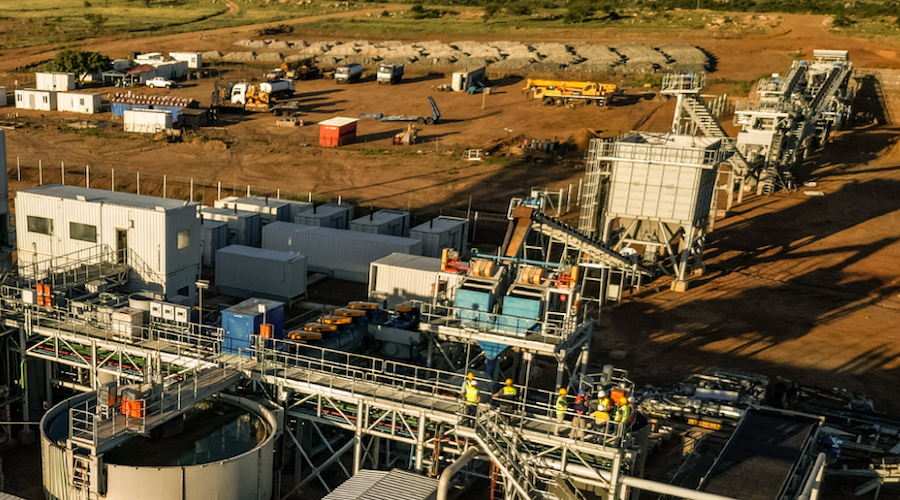

The Molo graphite mine in Southern Madagascar. (Image courtesy of NextSource Materials.)

NextSource Materials’ (TSX: NEXT) graphite mining operations in southern Madagascar have not been impacted by the ongoing political situation, and shipments of its graphite products are proceeding as planned, the company confirmed.

The East African nation is currently in political turmoil following a military takeover that ousted President Andry Rajoelina. The upheaval began with youth-led protests against economic hardship and corruption, which were then joined by an elite military unit, leading to Rajoelina’s impeachment and flight from the country.

According to NextSource, mining and processing activities at its Molo mine are continuing under normal conditions, and its regular campaign production and logistics are both on schedule. The company’s trademarked SuperFlake graphite products are also being shipped to international customers form the port of Tulear without disruption, it added.

“NextSource maintains close engagement with community stakeholders to ensure continued collaboration and stability around its operations,” the company stated in a press release, adding that it will continue to monitor the events in Antananarivo, Madagascar’s capital city.

Located 900 km away in southern Madagascar, the Molo mine represents one of the world’s largest and highest quality graphite deposits, with over 100 million tonnes in measured and indicated resources grading approximately 6.3% graphitic carbon.

The mine, which came online two years ago, currently produces high-quality graphite concentrate with a fixed carbon content between 94-97%. While it has an initial production capacity of 17,000 tonnes per annum, plans are underway for an industry-scale expansion that would see its capacity increase over tenfold.

Shares of NextSource plunged 8.9% at Friday’s close amid a market-wide selloff. The Canadian miner has a market capitalization of C$75.8 million ($54 million).

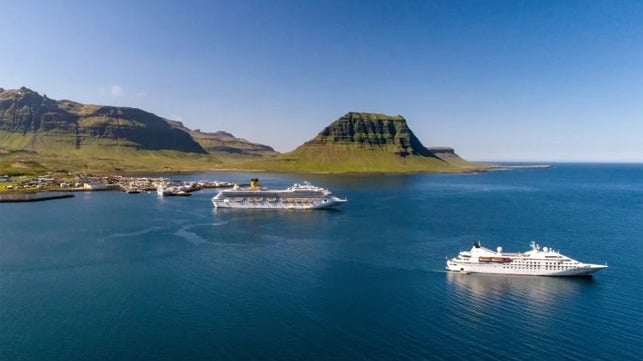
 

Passenger Tax Causes Iceland’s Cruise Business to Decline

cruise ships anchored off Iceland
Future bookings for cruise ships are down after Iceland imposed a head tax on passengers (Cruise Iceland)

Published Oct 20, 2025 2:31 PM by The Maritime Executiv


Cruise Iceland, which was set up to promote the country for cruise tourism, is warning that a government head tax imposed in 2025 is driving away the cruise lines. The group highlights that bookings for cruise ship port calls are down in 2026 and will further decline in 2027 unless the government reconsiders its position.

Iceland saw a strong growth in its tourism business based on its successful promotion campaign. The Icelandic Tourism Board reports a total of 2.3 million visitors to the country in 2024, but was projecting that the figure would largely plateau in 2025.

Specifically, cruise ship visits set a record in 2024 with 104 ships and 1,248 visits. Iceland is a popular destination for exploration cruise ships, and through the promotions, it was able to attract more large cruise ships, including some programs originating or ending the cruises in the capital of Reykjavik. However, Reykjavik received only approximately 20 percent of the cruise ship arrivals in 2024, with the vast majority going to smaller countryside ports including Akureyri, Ísafjörður, Seyðisfjörður, Grundarfjörður, Vestmannaeyjar, and Borgarfjörður Eystri.

For the 2025 season, the government imposed a head tax of approximately $20 for each passenger, irrespective of age. It applies regardless of whether the passenger was disembarking in Iceland and is for each day the cruise ship is in Icelandic waters. Cruise lines were passing the fees on to passengers, noting that they were acting as agents collecting the money for the government.

“Bookings for the coming years have already decreased significantly,” says Cruise Iceland, “so much so that one can speak of a collapse.” They noted a lack of interest at recent trade shows, asserting that the “shipping companies have begun to avoid Iceland.”

The group notes that cruise lines book their port calls two to four years in advance, saying that the full impact of the new tax will not be felt until 2027. Based on current bookings, however, it projects a 17 percent decline in total ship arrivals in 2026 and a 37 percent decline in 2027, compared to the record levels in 2024. On a gross tonnage basis, they project a 12 percent decline in 2026 and a 23 percent decline in 2027. They highlight that this demonstrates a decline in both large cruise ships and smaller expedition vessels. They cite as an example, Borgarfjörður Eystri, where calls will go from 28 ships to just one in 2027.

A 30 percent decline in ship calls, they project, will cost the government approximately $14 million in revenues. They note, however, that it will be particularly bad for smaller ports and municipalities around the country, which rely heavily on summer cruise tourism for revenues.

Under pressure, the government agreed in the spring to lower the 2026 head tax to approximately $16.50 (based on current exchange rates). The group, however, highlights that this remains significantly higher than the overnight tax on hotel stays in Iceland.

Cruise Iceland is presenting its data to the Parliamentary Committee on Economic Affairs and Trade. It is urging a reassessment of the policy. 


ONEX Undertaking Second Phase of Expansion of Greek Shipyard at Syros

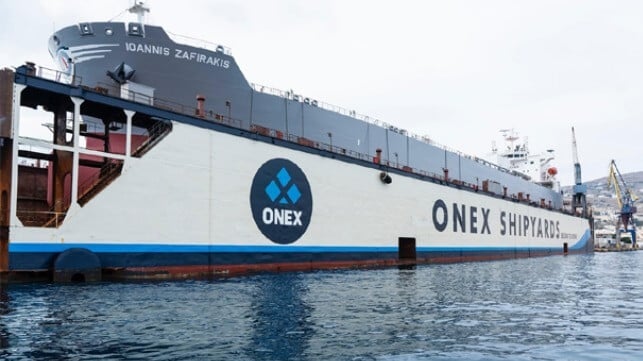
Onex shipyard in Greece
ONEX is investing in the continued redevelopment of the shipyard on Syros (ONEX Shipyards)

Published Oct 20, 2025 3:18 PM by The Maritime Executive


The U.S. equity firm ONEX outlined its second phase of investments in its Greek shipyards while hosting a visit by the Greek Minister of Development Takis Theodorikakos at the Neorion Shipyard on the island of Syros. The company has been pursuing the revitalization of Greek shipbuilding and repair at its two yards, Syros and the Elefsina Shipyard near Athens.

The company highlights that it is working to develop a multi-functional industrial hub in the Aegean. It is expanding services and capabilities for commercial shipping and also looks to participate with the energy and offshore sectors.

ONEX Shipyards is launching a new five-year investment program for the shipyard on Syros with plans to invest €14 million (US$16.3 million). It will be the second phase of the efforts that started with the rescue and reopening of the historic facility. 

The Minister stressed the importance of the efforts and said the government firmly supports the investments. Theodorikakos said without the shipbuilding and repair business, it would not be possible to maintain the country’s productivity, competitiveness, and security. He noted that Greece wants to maintain a world-class naval force and to achieve this requires the industry. The Greek frigate HS Spetsai has been contributing to the EUNAVFOR Aspites protection efforts in the Red Sea region including this week’s rescue of the seafarers from the LNG tanker Falcon. ONXY and Fincantieri have agreed to efforts to build at least two corvettes with an option for a third for the Hellenic Navy.

The company highlighted that it is investing €5 million for upgrading on its floating dry dock and an additional €2.5 million for the Syncrolift. They noted that the equipment had not been operated for 20 years but it will now expand capacity. They are also modernizing the cranes at the shipyard.

Other investments are focusing on energy upgrades for the yard. They are also introducing technological improvements including robotics and hydroblasting.

ONEX is also leading the upgrading and modernization of the Elefsis shipyard which had fallen into disrepair and debt. In 2022, it was reported the yard had not received a commercial ship in five years. It undertook repairs on a Star Bulk vessel in November 2022 as it restarted work. In 2023, they lifted the Number 1 dry dock for the first time in five years. The Elefsis yard in late 2023 signed a $125 million financing agreement with the U.S. International Development Finance Corporation as part of its revitalization efforts.

Speaking about the efforts at Syros, Director General Yiannis Vamvakousis told the minister it is a holistic reconstruction of the shipyard aiming at sustainability, technological progress and securing jobs. The yard currently employs between 450 and 500 people and completes 80 ship repair and refit projects each year.


ClassNK to Class Japan's 1st Hydrogen Fueled Tugboat Built by TSUNEISHI

ClassNK
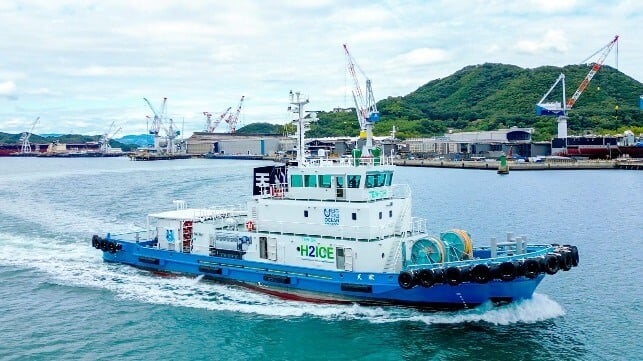
Hydrogen Fueled Tugboat TEN-OH (Courtesy of TSUNEISHI)

Published Oct 20, 2025 3:56 PM by The Maritime Executive


[By: ClassNK]

ClassNK has added Japan's first hydrogen-fueled tugboat TEN-OH to its register, which is built by TSUNEISHI SHIPBUILDING Co., Ltd.

This vessel was developed and build under the 'Nippon Foundation Zero Emission Ships Project', a grant program by The Nippon Foundation aimed at developing ships with zero CO2 emissions.

Based on discussions among the parties involved during the planning stage of the vessel, ClassNK reviewed the safety requirements and countermeasures for hydrogen-fueled ships by applying Part GF of its 'Rules and Guidance for the Survey and Construction of Steel Ships' etc.

These reviews focused on issues such as preventing explosions caused by the high ignitability of hydrogen and mitigating the potential impacts of hydrogen fuel leakage on crew members and the environment.

On completion of the necessary surveys in line with the relevant class rules etc., ClassNK added the vessel to its register on 9 October 2025.

Going forward, ClassNK will continuously support the safe operation of the vessel through surveys in service, and not only that, support industry’s effort toward decarbonization through utilizing the knowledge and experience gained from the surveys for keeping its guidelines up to date and contributing to establishment of the appropriate international standard.

The products and services herein described in this press release are not endorsed by The Maritime Executive.


Thyssenkrupp Completes Spin Off of TKMS into Bullish Stock Market

TKMS shipyard Germany
TKMS operates Germany's largest shipbuilding yard (TKMS file photo)

Published Oct 20, 2025 6:53 PM by The Maritime Executive


German conglomerate Thyssenkrupp completed the previously announced spin off of its marine shipbuilder TKMS today, October 20, as the market for marine defense manufacturers is booming. The parent company distributed 49 percent of the shares to its shareholders (Thyssenkrupp continues to own 51 percent) and at the end of the day TKMS’s stock value had soared nearly 50 percent giving the one-time subsidiary a higher market capitalization (over $7 billion) than its parent company. 

The conglomerate has been under pressure to improve its results and a had been exploring the partial sale of the shipbuilder. A potential deal with US-based investment group Carlyle collapsed a year ago. Other companies including Fincantieri were rumored to be interested in a deal with TKMS, and Germany’s Rheinmetall was reported to be a potential bidder and recently entered the sector buying NVL (Naval Vessels Lürssen). TKMS’ parent instead elected to spin off half the shares to its investors in what it said was a strategic realignment to make the parent a focused holding company.

"The independence provides TKMS with the necessary entrepreneurial freedom to further develop technological excellence and enable a substantial contribution to national and alliance defense," said Prof. Dr.-Ing. Siegfried Russwurm, Chairman of the Supervisory Board of Thyssenkrupp.

The parent cited the independence for the shipbuilder giving it the ability to focus on innovation and greater flexibility. The separation the parent said would also provide better access to capital for the shipbuilder both for growth and to develop new technologies, and potentially to pursue partnerships or acquisitions. It, however, also proved to be a pivotal transaction unlocking significant value in the companies for the shareholders.

Over the past five years, TKMS's order backlog has tripled and currently stands at a record level of €18.6 billion ($21.66 billion). Management has forecast that the company would be targeting medium-term revenue growth of around 10 percent per year and improving margins. 

Timing for the spin-off comes as the market for defense systems and countries’ defense spending is growing rapidly since the invasion of Ukraine and with other global tensions. TKMS has said that it expects the market potential for maritime security to double by the mid-2030s. The company, which has over 9,000 employees, is described as the world’s largest builder of non-nuclear submarines and frigates. It also acquired Atlas Electronics, a division for underwater technology, including mine-sweeping systems.

“We are one of the leading providers in all three ‘dimensions’ of maritime defense, i.e., in surface and submarine shipbuilding as well as in electronics, sensor, and technology solutions,” highlights CEO Oliver Burkhard. He said he believes the company is ideally positioned to meet the dynamic demand of the market.

At the end of 2024, the company received an order extension for four Class 212CD submarines from Germany, and more recently the German Navy commissioned TKMS to modernize six Type 212A submarines. It also received a contract for the reorder of two submarines from Singapore, and it is also building a new research vessel, Polarstern, for the Alfred Wegener Institute, Helmholtz Centre for Polar and Marine Research. TKMS is also reported to be a front-runner both for an order from Canada for a major submarine project and in negotiations with India for a submarine project likely with one of the leading Indian shipbuilders.

Headquartered in Kiel, Germany, the company has been expanding its capacity. In 2022, it acquired the yard in Wismar from the bankrupt MV Werften. They have been gearing up the operation and with the recent departure of the Disney Adventure cruise ship now have the full capacity of the yard which will be used to expand newbuilding operations.


Famed Investment Firm KKR Makes $500M Bet on Container Leasing

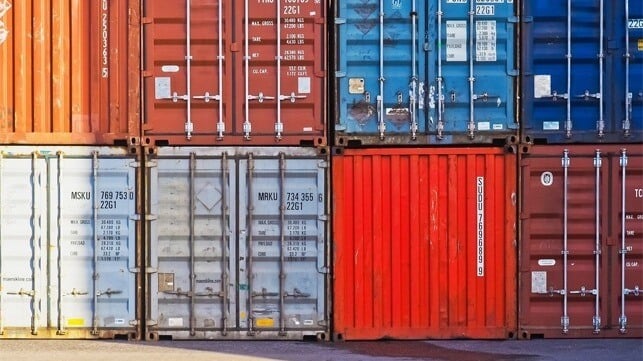
containers
KKR is investing in the launch of a new container leasing business (file photo)

Published Oct 20, 2025 4:45 PM by The Maritime Executive


The well-known and respected investment firm KKR announced it is committing $500 million to the launch of a new global marine container leasing and financing platform. Seeing strong opportunities in the sector, it has decided to jump in to the business in partnership with a team of industry veterans, who previously lead another leader in the sector, Global Container International.

The new business will be led by the experienced team. Know as Galaxy Container Solutions it will be owned by KKR-managed credit funds and accounts, which are committing $500 million to the Company via KKR’s Asset-Based Finance (ABF) strategy.

“Galaxy represents an exciting expansion of our Asset-Based Finance strategy into the container leasing sector, which offers attractive downside-protected investment opportunities backed by essential global trade infrastructure,” said Daniel Pietrzak, Partner and Global Head of Private Credit at KKR. "The company is in great hands with the Galaxy team, and we’re confident they will deliver dynamic solutions that meet the evolving needs of the world’s leading shipping lines.”

Galaxy will provide a full suite of container leasing and financing solutions to shipping companies around the world, enabling flexible, capital-efficient access to the container fleets that keep global trade moving. Supported by KKR’s stable capital base and a management team with decades of experience, the Company is well positioned to meet customer needs for fleet growth and balance sheet optimization.

“This is an ideal moment to launch Galaxy, as market dynamics like lessor consolidation and sustained demand are creating real opportunities for new entrants,” said Jeffrey Gannon, CEO of Galaxy Container Solutions. “With KKR’s support, we are excited to harness our proven approach to offer our customers reliable, flexible solutions for their fleet and capital needs.”

Galaxy is helmed by Chief Executive Officer Jeffrey Gannon and Chief Operating Officer Adrian Dunner, who have successfully launched and scaled multiple container leasing companies. Most recently, Gannon and Dunner co-founded and led Global Container International. The company grew to be the seventh-largest lessor of marine containers globally when it was sold to Triton International. Started in 2018, GCI was sold in 2025 in a deal valued at over $1 billion.

It was the latest in a series of consolidations in the sector. Triton had been acquired in 2023 by another well-known investment firm, Brookfield. That deal valued the company at more than $13 billion (enterprise value).

Joining the management team will be the former Chief Financial Officer of GCI, Stephen Controulis, along with a seasoned team of specialists across container leasing management, operations, finance, and sales functions.


Sanctions Scuttle Lucrative Drilling Contract

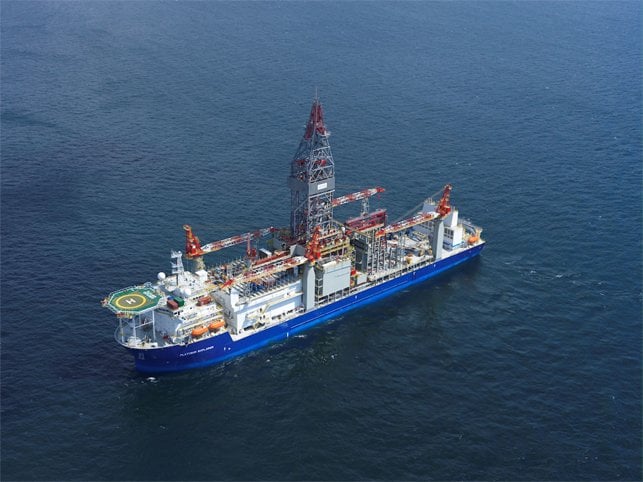
drillship
Vantage reports due to sanctions the termination of a lucrative contract for its idle drillship (Vantage Drilling)

Published Oct 20, 2025 5:38 PM by The Maritime Executive


Dubai-based offshore drilling contractor Vantage Drilling is reporting that changes in the sanction programs have forced the cancellation of a lucrative contract. The company had not revealed the client or the nature of the assignment which was initially announced in April, subject to completion of the agreement and critically the client having received all necessary state, governmental and administrative approvals.

The project was announced after the completion of a conditional letter of award in April 2025 with the company reporting represented approximately an $80 million job that would require an anticipated 260 days. The COA was good for 90 days. It was initially extended in July for an additional 30 days. 

The contract was completed in September to deploy contract the drillship Platinum Explorer (68,000 GT). The company reported the operations for the approximately 260-day campaign, inclusive of mobilization and demobilization time, were expected to commence in Q1-2026.

A brief announcement was made on October 19 reporting, “The termination is due to changes in economic sanctions applicable to the campaign, rendering the contract execution unlawful and therefore subject to termination.”

No details were offered, but it is well-known that the West has been moving aggressively against the Russian energy sector in particular. Last week, the government of the UK directly sanctioned top Russian oil exporters Rosneft and Lukoil. It had previously sanctioned Russia's Gazprom Neft and Surgutneftegas.

Vantage had reported the contract for the ideal drillship, which was built in 2010. The ultra deepwater drill ship can operate at up to depths of 10,000 feet and has a maximum drilling depth of 40,000 feet. The vessel has accommodations for 180 personnel. It is registered in the Bahamas and currently in the Singapore anchorage.


Chinese Shipyard Launches First Two Large Ammonia-Fueled Bulkers

ammonia-fueled bulker floated
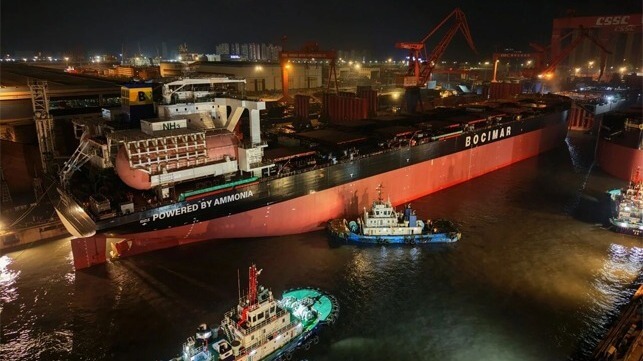
Chinese shipyard has floated the first large, ammonia-fueled dry bulk carriers (CSSC)

Published Oct 19, 2025 6:48 PM by The Maritime Executive


Construction is proceeding on the first large ammonia-fueled bulkers, which were ordered by CMB.TECH for Bocimar, its operator of dry bulk carriers. The ships are being built in China, and when delivered, will be pioneers for ocean-going, ammonia-fueled shipping.

Beihai Shipyard, a subsidiary of China State Shipbuilding Corporation, reports it recently floated out the first two Newcastlemax dry bulk carriers. The ships are 300 meters (984 feet) in length and, when completed, will be 210,000 dwt. CMB.TECH currently has a total of 10 Newcastlemax vessels on order that will be fitted with ammonia-fueled propulsion and an additional eight vessels that will be ready for a future conversion to ammonia.

CMB.TECH announced the project in 2023 as an effort to lead shipping into ammonia as an alternative fuel. It partnered with WinGD to develop the X72DF engine, a two-stroke engine capable of operating on ammonia as its fuel. Later, the companies announced they were making progress on the 72-bore ammonia engine, and this year, WinGD highlighted good progress on the engines. Its first ammonia engine, a 52-bore, was installed in August 2025 in a gas carrier newbuild at HD Hyundai in South Korea.

Benhai reports that before floating out the two vessels from the dry dock, it completed the installation of four engines and one auxiliary boiler for each ship. They expect to proceed with the testing simultaneously on the two vessels to shorten the construction period.

CMB.TECH has reported that it has entered into an agreement with Japan’s Mitsui O.S.K. Lines (MOL) for the joint ownership of three of the ammonia-fueled bulkers. These vessels are due to be delivered in 2026 and 2027, with MOL taking them on 12-year charters. Separately, CMB.TECH has also announced a charter with Fortescue for another one of the ammonia-powered ore carriers. Fortescue will get its ship by the end of 2026, and the plan calls for it to operate transporting ore from Australia’s Pilbara to customers in China and around the world.

CSSC reported that Beihai has overcome difficulties in its operations and is accelerating various construction projects. After the floatout from the dry dock of the two vessels for CMB.TECH, Beihai reports the bottom blocks were set for two more of the Newcastle carriers ordered by the Belgian company. The two that started construction are part of the ammonia-ready portion of the order. Work has also started on another one of the large ore carriers for CMB.TECH.

DNV’s Alternative Fuels Insights database lists only three ammonia-fueled ships in operation in the world, including the OSV converted by Fortescue and a tug converted by NYK. They project both the Exmar gas carrier being built in South Korea and the first of the CMB.TECH bulkers will be delivered this year, with ammonia-fueled deliveries accelerating in the coming years. It lists 22 ammonia-fueled ships for delivery in 2026 and a total of 39 on order for delivery by 2029.

World’s Largest FPSO Achieves First Oil at Brazil’s Bacalhau Field

FSO oil Brazil
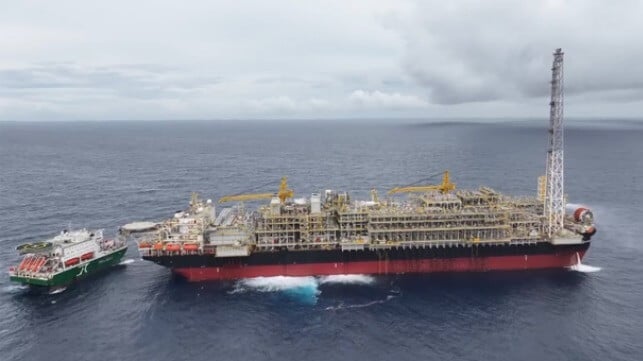
Equinor's massive FSO produced its first oil in Brazil last week (Equinor)

Published Oct 19, 2025 7:12 PM by The Maritime Executive


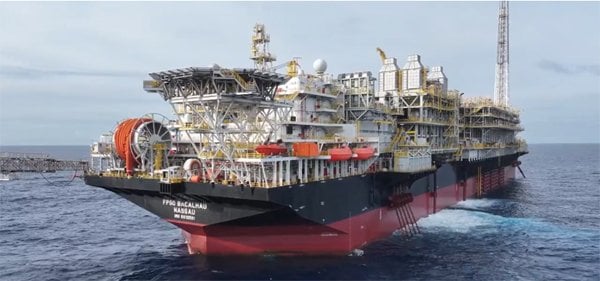
A floating production storage and offloading vessel (FPSO) that is being touted as one of the largest and most modern in the world has achieved first oil production in the Bacalhau field in Brazil. Norway’s energy giant Equinor highlighted that the start of crude flow from the field is a critical milestone in its oil and gas operations in Brazil.

Equinor announced that FPSO Bacalhau achieved its first oil on October 15 at the Bacalhau field, which is the largest offshore field ever developed by the company outside Norway. Located in the pre-salt region of Brazil's Santos Basin in ultra-deep waters exceeding 2,000 meters (more than 6,500 feet), the field boasts recoverable reserves exceeding one billion barrels of oil equivalent.

Following the discovery of crude in the field in 2012 by Brazil’s Petrobras, Equinor took over the operations in 2016. Together with its partners ExxonMobil Brasil, Petrogal Brasil (JV Galp|Sinopec), and Pré-sal Petróleo SA (PPSA), the company is celebrating the commencement of production at the field that is said to represent a new generation of projects that bring together scale, cost-efficiency, and lower carbon intensity.

The 370-meter (1,214-foot) long Bacalhau is deployed approximately 115 miles off the coast of Ilhabela, São Paulo. Permanently moored at a water depth of around 2,050 meters using a spread mooring system, the vessel is designed to produce up to 220,000 barrels of crude oil per day. At a width of 64 meters, it also boasts a minimum crude oil storage capacity of two million barrels, making it one of the largest FPSOs ever delivered to Brazil.


Constructed by Japanese giant MODEC, the FPSO is also designed with a gas turbine combined cycle, a technology that significantly reduces carbon intensity. This will ensure that the field has a CO2 intensity of approximately nine kilograms per barrel, which is half of the industry average. Notably, the company’s innovative M350 hull offers enhanced topside capacity, greater storage than conventional very large crude carriers, and a longer service life.

Equinor is highlighting that it has invested a staggering $8 billion in Bacalhau Phase 1, whose drilling campaign started in 2022 and comprises 19 wells. Over its 30-year lifespan, the field is expected to create around 50,000 jobs and is a reflection of the company’s deep commitment to Brazil´s energy future, which is further underscored by its planned investments of $25 billion by 2030.

The road to first oil has been torturous for Equinor considering that Bacalhau is one of the most complex oil and gas projects in the world due to the characteristics of its reservoir. Apart from being located in ultra-deep waters, the field has a complex carbonate reservoir with a pressure of 900 bar. This makes it the deepest development well drilled for the company to date. Critically, around 70 million hours of work has been recorded in the project with solid safety results.

“The safe start-up of Bacalhau marks a major milestone for Equinor. Bacalhau represents a new generation of projects that bring together scale, cost-efficiency, and lower carbon intensity. With this development, we are strengthening the longevity of our oil and gas production and securing value creation for decades to come,” said Anders Opedal, Equinor President and CEO.

The company contends that Bacalhau will be a major contributor to its goal of generating more than $5 billion of free cash flow by 2030 from its international portfolio. With MODEC as the operator of the FPSO for the initial phase, Equinor plans to operate the Bacalhau facilities until the end of the license period.

The vessel cements MODEC’s dominance in Brazil’s oil and gas sector, owing to the fact that the company has delivered 17 FPSO/FSO vessels to the country. Bacalhau is the ninth FPSO in the pre-salt region, and the company’s first collaboration with Equinor.


AI-based system automatically detects and tracks river plastics


A new approach to understanding land-to-sea transport


Ehime University

Analysis flow of RiSIM 

image: 

By applying three image and computational processes to a series of continuously captured videos, this method reveals how plastics are transported in rivers. (1) Flow velocity is measured using template matching. (2) Plastics are detected and classified into four categories by the object detection AI YOLOv8, and each item is tracked using the AI DeepSORT. (3) The measured flow velocity and tracking results are combined to calculate plastic transport volume—the number and mass of plastics carried per unit time.

view more 

Credit: Tomoya Kataoka(Ehime University)


Understanding how plastics flow from land to sea is essential for solving the growing problem of plastic pollution. Rivers play a key role as major transport pathways, and accurate monitoring technologies are urgently needed to achieve the “Osaka Blue Ocean Vision” declared at the 2019 G20 Osaka Summit, which aims to reduce additional marine plastic pollution to zero by 2050.

The newly developed software integrates three key technologies:

  • Template matching1 for measuring river surface flow velocity;
  • YOLOv82 for detecting and classifying plastic objects; and
  • Deep SORT3 for tracking their movements.

By combining these techniques, the system automatically quantifies the transport volume of floating plastics in rivers. This innovation enables continuous, simultaneous monitoring at multiple sites, including under challenging conditions such as floods—something that was previously difficult and dangerous to perform manually. In addition, because the software can distinguish plastics by type, it allows for more direct evaluation of source reduction measures and the effectiveness of waste management policies.

Moving forward, the research team plans to incorporate this software into the Plastic River Monitoring System (PRIMOS4), jointly developed with Yachiyo Engineering Co., Ltd., to promote its application in real river environments. Through this effort, the team aims to:

  • Accurately estimate the amount of plastic flowing from land to sea;
  • Clarify the transport processes across entire river basins; and
  • Support the formulation and evaluation of evidence-based environmental policies.

This initiative is expected to make a significant contribution to international efforts toward a sustainable and pollution-free society.

1 Template Matching: An image recognition technique that searches for areas within an image that match a pre-prepared sub-image (template).

2 YOLOv8: The eighth version of the “You Only Look Once” object detection algorithm, a deep learning model capable of detecting and classifying objects quickly and accurately.

3 Deep SORT: An extension of the “Simple Online and Realtime Tracking (SORT)” algorithm that improves object identification accuracy by incorporating deep-learning-based appearance features.

4 PRIMOS: Plastic Runoff Identification, Monitoring & Observation System, which is a river plastic monitoring system jointly developed by Ehime University and Yachiyo Engineering Co., Ltd. Please visit the PRIMOS

website: https://info.river-monitoring.net/en/index.html