Tuesday, October 21, 2025

Russia, China sign off on Northern Route shipping deal to slash global freight times

Russia, China sign off on Northern Route shipping deal to slash global freight times
Russo-China bilateral trade is surging and now they have signed off on a new trade deal to expand sue of the Northern Route that is completely under Russian control, avoiding other global transit chokepoints. / bne IntelliNews
By Ben Aris in Berlin October 20, 2025

Russia and China have signed a landmark agreement to develop and commercialise the Northern Sea Route (NSR), after Beijing tested the route last month, that could slash Europe-Asia cargo transit times and challenge the primacy of the Suez Canal.

The first ever Chinese cargo vessel departed from the massive Ningbo-Zhoushan port on September 22 bound for Felixstowe in the UK via Russia’s frozen Northern Route, in an experiment that could have a major impact on Sino-European trade.

“This is a game-changer for Arctic trade,” said one official familiar with the agreement. “Both countries will collaborate on shipbuilding, logistics optimisation, crew training, and innovative technologies to ensure year-round sustainability.”

The deal, finalised in Moscow this week and made public on October 18, will intensify Sino-Russian cooperation in the Arctic and provide both nations with a strategic corridor that bypasses choke points in the Middle East and Europe. According to Chinese and Russian sources, the pact reduces shipping distances by 7,000 to 10,000 kilometres, cutting fuel costs by over 20% and transit times by nearly 40%.

Bypassing global chokepoints

The Northern Sea Route, which traces Russia’s northern coastline from the Bering Strait to the Barents Sea, offers an increasingly viable alternative to traditional shipping lanes as Arctic ice continues to recede due to climate change.

While the route was once navigable only in the summer months, advances in icebreaker technology and warming temperatures have extended the navigable window dramatically offering a major alternative to the multiplying global chokepoints for international trade.

“This pact hands Moscow and Beijing a fortified backdoor for energy flows that laughs off Houthi disruptions and Baltic bottlenecks,” noted one analyst. “Arctic transit hit a record 400,000 tonnes this year; next stop, rerouting half of Eurasia's trade.”

Last year alone, Arctic freight volumes surged by 46%, according to Russian Ministry of Transport figures. The Russian government aims to boost traffic along the NSR to 200mn tonnes annually by 2030, up from less than 35mn tonnes in 2023.

The agreement builds on recent Russo-China joint military exercises in the Sea of Japan, signalling deeper strategic ties. The deal comes in the context of a with a 40% surge in East-West bilateral trade between China and Russia in the last few years that is now more than $200bn a year – about two thirds of the trade that Russia used to have with Europe prewar.

Strategic ambition and long-term plans

The NSR agreement comes as part of a wider strategic realignment between Moscow and Beijing, who are investing heavily into a land-based Eurasia-based alternative trade ecosystem that is not exposed to the US dominance of the world’s sea lanes. Numerous trade routes are being developed with the Middle Corridor amongst the most developed. Rail links across Central Asia and connected China to Europe are also proliferating.

Russia’s President Vladimir Putin and Chinese President Xi Jinping have framed the Arctic corridor as a pillar of a new multipolar trade order. The NSR could not only enhance energy and goods exports, but also strengthen regional influence in the Arctic, where the melting ice is opening access to untapped reserves of oil, gas, and rare minerals.

In a separate but related initiative, Russia has revived a longstanding proposal for a “Putin-Trump” tunnel beneath the Bering Strait, linking eastern Russia to Alaska. The 70-mile undersea rail and cargo tunnel would, if built, represent the most ambitious infrastructure project since the Panama Canal. The project would only go ahead if a peace deal with Ukraine can be signed, but for Putin, the tunnel could cement better relations with the US and diversify his growing dependence on Beijing. Moscow has suggested it could become part of a “Trans-Eurasian Belt,” creating a land-based transport route stretching from Shanghai to New York via rail, roads, and sub-sea links.

“We hope the Americans go for it,” said one Russian official involved in feasibility studies according to local reports. “This is not just about trade—this is about vision.”

Europe watches cautiously

In Europe, the move is likely to spark renewed anxiety over Arctic militarisation and the shifting geopolitical map of global trade. The European Commission has previously warned that Arctic commercialisation must proceed under a regime of environmental protection and multilateral governance.

The Kremlin has ignored those calls and is moving ahead regardless, with plans to deploy dozens of nuclear-powered and LNG-fuelled icebreakers to keep the NSR open year-round. China, for its part, has declared itself a “near-Arctic state” and has already launched its second icebreaker, the Xuelong 2, with more in development.

For China, the NSR offers not only a shorter route to Europe but a way to diversify shipping away from the increasingly vulnerable Strait of Malacca and the congested Suez Canal. For Russia, it is a lifeline for energy exports to Asia, a source of regional development, and a geopolitical counterweight to Western sanctions.

Despite the bold ambitions, environmental groups warn that the increased industrialisation of the Arctic poses serious ecological risks. Greenpeace has cautioned that Arctic development—especially fossil fuel extraction—could accelerate climate change and threaten fragile ecosystems already under stress.

Technically, too, the NSR remains challenging. Ice conditions are unpredictable, insurance costs remain high, and ports along Russia’s northern coast are underdeveloped.

While the full economic impact of the NSR pact remains to be seen, Washington and Brussels continue to focus on sanctions and containment of Moscow and Beijing. If fully realised, the NSR could shift the gravitational centre of global trade further north—and further east.

Japan's hardline conservative Sanae Takaichi elected first female prime minister


JAPANESE MAGGIE THATCHER 


Japan's parliament elected ultraconservative Sanae Takaichi as the country’s first female prime minister Tuesday, a day after her struggling party struck a coalition deal with a new partner expected to pull her governing bloc further to the right.


Issued on: 21/10/2025 
By: FRANCE 24

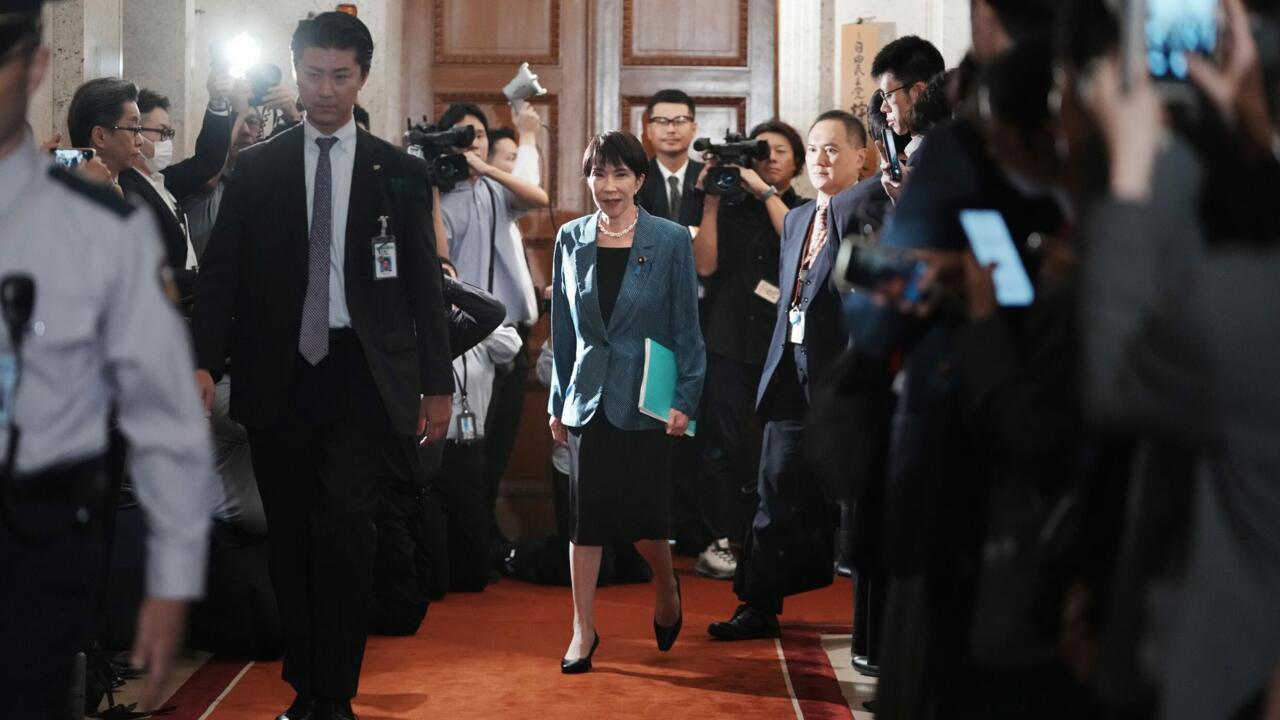
Sanae Takaichi walks before signing a policy agreement in Tokyo on October 20, 2025. 
© Kazuhiro Nogi, AFP

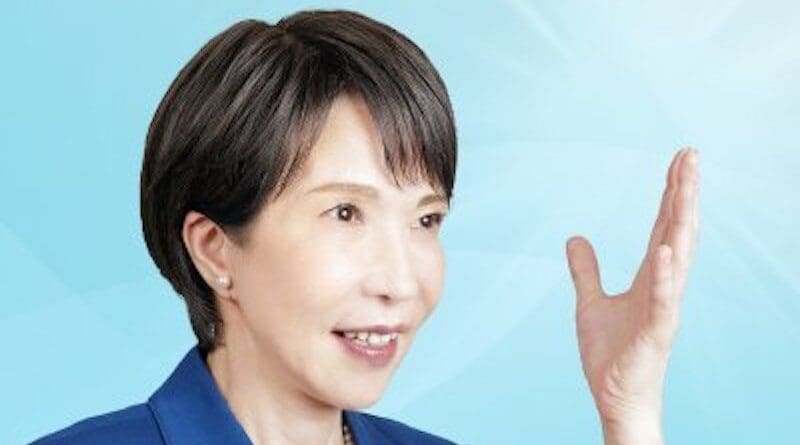
Hardline conservative Sanae Takaichi was elected Japan’s first female prime minister on Tuesday, shattering the nation’s glass ceiling and setting it up for a forceful turn to the right.

An acolyte of former Prime Minister Shinzo Abe and an admirer of Britain’s Margaret Thatcher, Takaichi received 237 votes in the lower house election to choose the next premier, topping the majority of the 465-seat chamber.

Her victory marks a pivotal moment for a country where men still hold overwhelming sway. But it is also likely to usher in a sharper move to the right on things like immigration and social issues.

Takaichi’s victory was secured after her Liberal Democratic Party, which has governed Japan for most of its postwar history, agreed to a coalition deal with the right-wing Japan Innovation Party, known as Ishin, on Monday.

After years of deflation, Japan is now grappling with rising prices, something that has sparked public anger and fuelled support for opposition groups including far-right upstarts.

Like Abe, Takaichi is expected to favour government spending to jumpstart the weakened economy. That has prompted a so-called “Takaichi trade” in the stock market, sending the Nikkei share average to record highs, the most recent on Tuesday. But it has also caused investor unease about the government’s ability to pay for additional spending in a country where the debt load far outweighs annual output.

Takaichi had enough votes to get the premiership, but to govern effectively she will need the backing of more opposition lawmakers, said Tadashi Mori, a professor of politics at Aichi Gakuin University.

“The two parties do not command a majority in either chamber and to ensure a stable government and gain control of key parliamentary committees, they will need to secure more than half the seats,” he said.

Any attempt to revive Abenomics could also run into trouble, Mori said, because it was devised to fight deflation.

“In today’s inflationary environment, further stimulus risks only weakening the yen. Likewise, cutting the consumption tax may spur demand, but it won’t curb rising prices.” Takaichi was also approved by the less-powerful upper house and will be sworn in as Japan’s 104th prime minister on Tuesday evening to succeed the incumbent Shigeru Ishiba, who last month announced his resignation to take responsibility for election losses.

(FRANCE 24 with Reuters)

Can LDP-JIP Alliance Ensure Political Stability In Japan? – Analysis


Japan's Sanae Takaichi. Photo Credit: X

October 21, 2025 
By Dr. Rajaram Panda

When Japan’s governing party, the Liberal Democratic Party (LDP) elected former Economic Security Minister Sanae Takaichi, a hard-line ultra-conservative and China hawk, as its new leader on 4 October, making her likely to become the country’s first female prime minister, it raised eyebrows in some quarters. The path to the high office was not smooth, however. The LDP received further setback when its junior coalition partner, the Komeito, pulled out from the alliance because of policy differences. Since the LDP does not have a majority in either of the two Houses of the Diet, roping in some opposition parties to the formation of a coalition government required concessions and compromises.


After series of parleys, the LDP and the major opposition Nippon Ishin no Kai or Japan Innovation Party (JIP) effectively struck a policy deal for coalition. However, the JIP chief Hirofumi Yoshimura offered support to Takaichi from outside the Cabinet. Both Takaichi and Yoshimura signed a coalition agreement on their alliance on 20 October, which marked a new phase in Japan’s multiparty politics following the Komeito party’s departure from its 26-year alliance with the LDP. With the assurance received from the JIP to vote for Takaichi in the extraordinary Diet session to select the next prime minister on 21 October, her bid to become Japan’s first female prime minister was virtually assured. The move by the LDP and JIP marks a new phase in Japan’s multiparty politics following the Komeito party’s departure from its 26-year alliance with the LDP.

When the leaders of the conservative LDP and smaller right-leaning group were in talks, the JIP’s co-head, Fumitske Fujita, raised expectations for a deal on 17 October, saying the two parties had made “big progress” in coalition talks. At present, the JIP has no plan to send ministers to Takaichi’s Cabinet and thus shall support from outside. This would mean that Takaichi’s government would not be full-fledged alliance that the LDP maintained with the Komeito. This also raises concern over stability of Takaichi’s government.

Does it mean that Takaichi’s path ahead would be smooth? Far from it, she is likely to face a rocky road. As said, adjustment, concessions and compromises of certain policy stances would be the guiding mantra of the Takaichi’s government. The LDP already offered to working toward banning donations from companies and other organisations and exempting food items from Japan’s sales tax. The JIP proposed eliminating the tax on food items for two years. In contrast, Takaichi is a fiscal dove. She had called for higher spending and tax cuts to cushion consumers from rising inflation and criticised the Bank of Japan’s decision to raise interest rates. Like her mentor Shinzo Abe, Takaichi favours revising Japan’s pacifist Constitution to recognise the role of Japan’s expanding military.

Even after the LDP and JIP join hands, her government still falls short of a majority of 233 in the powerful 465-member House of Representatives. Days after centrist Komeito, the “peace party” decided to quit the coalition with the LDP, Takaichi and Yoshimura pledged to begin talks with the possibility of creating a new government. The LDP agreed to JIP’s proposal to lower the consumption tax rate to zero from the current level of up to 10 per cent, and to abolish corporate and organisational donations by September 2027, when Takaichi’s tenure as party president expires. Takaichi also accepted Yoshimura’s demand to cut the number of Diet seats, which he called a “nonnegotiable condition”. At the moment, the JIP’s role would be just advisory to the Prime Minister. As a part of the ruling bloc, JIP’s goal is to put policies into action, rather than seek Cabinet slots.

At present, in the lower house, the LDP holds 196 seats, the main opposition Constitutional Democratic Party of Japan (CDPJ) 148, the JIP 35, and Komeito 24. With the LDP — the biggest force in parliament –joining the JIP form a coalition, their combined seats would total 231. Komeito, supported by Japan’s largest lay Buddhist organization Soka Gakkai, whose membership has declined amid an aging population, criticized the LDP over its high-profile slush fund scandal that has eroded the ruling camp’s popularity across the board. Meanwhile, Yuichiro Tamaki, leader of the Democratic Party for the People, which holds 27 seats in the lower house, expressed willingness to work with Takaichi in areas where their policies align.


For a while, Takaichi’s aspiration to become Japan’s first female prime minister when she was elected as the head of the hurling party was derailed when LDP’s junior partner for 26 years Komeito broke the alliance. Since then, she was working to cobble together a different alliance, putting her chances back on track. With the JIP agreeing to support but not join the government with ministerial berths, her ambition was achieved.

When the LDP and the JIP were holding talks exploring the possibility of a coalition government, other opposition figures were also scrambling and hinting at a vague CDP-DPP-Komeito bloc coming together to form a government. However, that lacked substance from the outset. Clearly, the opposition parties miscalculated Takaichi’s strategy to rope in the JIP into the alliance talk. The leaders of the three opposition parties – Jun Azumi of CDP, Tetsuo Saito of Komeito, and Yuichiro Tamaki of DPP – misread the strategy of Takaichi reaching out to the JIP. The trio thought that Takaichi’s team had no real channel to the JIP as the JIP was effectively betting on Agriculture Minister Shinjiro Koizumi to win the LDP race and was already talking with his camp. That proved to be the damp squib. The trip clearly missed LDP’s quiet diplomacy.

The trio miscalculated on another count. The Komeito felt once it left the coalition, Takaichi will withdraw from the race as she would not have the numbers. Komeito even entertained the “Tamaki-for-PM” idea. This was the idea CDP secretary-general Azumi floated. The reasoning behind this idea was that the trio together shall cobble together with the CDP with 148 seats, JPI 35, the DPP 27, and Komeito 24, totalling 234 seats, which would have been one more than the 233-seat majority. With this four-party alliance would have outnumbered the LDP, pushing it into opposition. In that scenario, Takaichi would have been stranded all alone. The four-party group let the golden chance slip through the fingers. The fragmented opposition failed to agree a common joint candidate for premier. For a while it seemed the opposition bloc was inching toward a unified candidate but that was not to be. They had broad-based policy differences that at the end proved difficult to overcome. From the beginning the parliamentary arithmetic looked tight.

Takaichi will be walking the tightrope. She needs to prioritise constantly on consultation whenever there are differences with the JIP. JIP’s demands would continue to test the LDP’s limits, especially on political finance. The challenge before Takaichi would be not to concede too much as that might alienate her own party and undermine longer-term stability once she assumes office of the prime minister. Both the leaders of the LDP and the JIP have reportedly already reached an agreement on 12 points that the JIP champions. These involve basic policies regarding constitutional reforms, national security, and energy, including nuclear power.

Takaichi’s biggest challenge would be to restore political stability and both the LDP and the JIP need to cooperate and agree to translate their policies into concrete measures for implementation. It is a truism that political parties with left-leaning views are losing support among Japanese voters. This was proved when the LDP fared badly in the Lower House election on 27 October 2024, and Upper House election on 20 July 2025. It is here Takaichi needs to demonstrate her political skills and ensure that realistic policies are implemented. Many of the 12 points raised by the JIP overlap with the LDP’s own positions, including policies concerning foreigners in Japan. This is the task before the negotiators of both the LDP and JIP to find out a workable path.

While on the domestic policy front, there does not seem to be major differences, on foreign policy and national security, which includes the revision for the three security-related documents decided by the Fumio Kishida Cabinet in 2022. The JIP favours enabling stand-off defence capabilities, such as long-range missiles with counterattack capabilities.

Japan’s security is under threat as three hostile neighbours – China, Russia and North Korea – are deepening their strategic ties. The previous governments in Japan have prioritised to strengthen the defence capabilities in response to the region’s changing security environment to protect Japan from potential external threat. Takaichi’s task ought to be in pursuance of such a policy.

Japan is undergoing this political battle at home on government formation just days before the US President Donald Trump arrives by the end of October. Trump will travel to Japan before the annual Asia-Pacific Economic Cooperation (APEC) summit in South Korea. Takaichi’s task at hand is to convey the impression to Trump that Japan’s political situation is stable and that there would not be major policy disruption impacting Japan-US relations.


Dr. Rajaram Panda

Dr. Rajaram Panda is former Senior Fellow at Pradhanmantri Memorial Museum and Library (PMML). Earlier Dr Panda was Senior Fellow at MP-IDSA and ICCR Chair Professor at Reitaku University, JAPAN. His latest book "India and Japan: Past, Present and Future" was published in 2024 by Knowledge World. E-mail: rajaram.panda@gmail.com


Chobani yoghurt king Hamdi Ulukaya becomes richest Turk

Chobani yoghurt king Hamdi Ulukaya becomes richest Turk
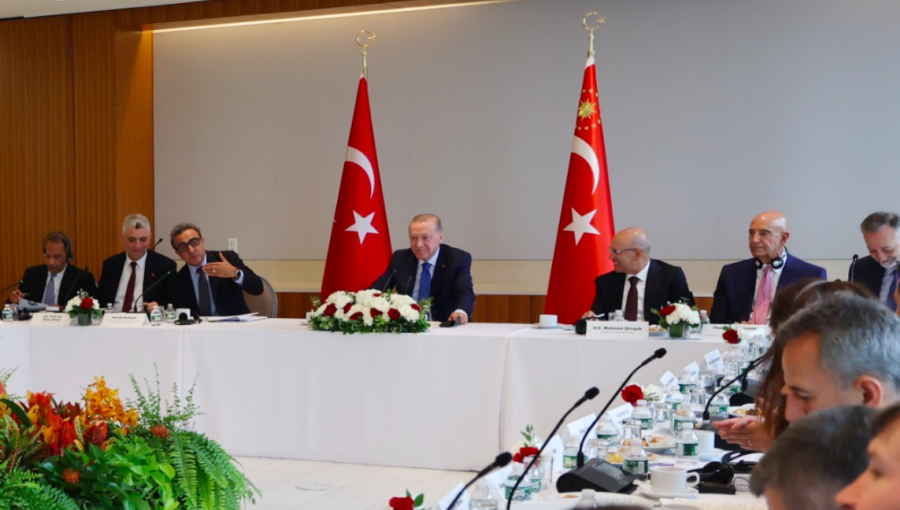
Ulukaya, who chairs the US-Turkey Business Council, seen sitting on Turkish president Recep Tayyip Erdogan's right-hand side during a meeting held in New York last month. / Iletisim.gov.tr
By Akin Nazli in Belgrade October 20, 2025

Forbes assessment of Turkish billionaire Hamdi Ulukaya’s wealth on October 16 showed it jumped by $11.4bn to $13.5bn from $2.1bn when the valuation of his company hit $20bn.

The publication estimated that Ulukaya has a 65% stake in Chobani, America’s top yoghurt brand. which posted $3bn in net revenues in 2024. That means Ulukaya has taken over the title of richest Turk and it looks like he will hold on to it for a good while.

Forbes estimated the wealth of Murat Ulker, who held the title in the 2025 ranking, stood at $5.4bn, making him the second richest Turk behind Ulukaya.

Aggressive expansion

On October 16, Chobani said that it had raised $650mn in equity capital to fund production plant investments. The New York Times, meanwhile, quoted unnamed sources as saying that the deal valued the enterprise at $20bn.

The company aims to increase its net sales by 28% y/y to $3.8bn this year, according to the newspaper.

In April, Chobani broke ground on a $1.2bn dairy plant in New York. In March, it announced a $500mn expansion of its Idaho plant.

Additionally, the company acquired coffeemaker La Colombe for a consideration of $900mn in 2023 and bought up plant-based frozen meal provider Daily Harvest in May for an undisclosed sum.

More visible in Turkey recently

Hamdi Ulukaya, Chobani’s self-made billionaire founder, was born in 1972 in the town of Ilic in Erzincan province, eastern Turkey to Kurdish dairy farmers. He moved to the US in 1994.

In 2024, Ulukaya bought a $45mn mansion on the Bosporus strait in Istanbul.

In July this year, his company signed a €120mn sponsorship deal with Turkish football team Fenerbahce A.S. (FENER).

Under the agreement, Fenerbahce’s 50,000-capacity stadium in the heart of Kadikoy district on Istanbul’s Asian side, has been renamed Chobani Stadium.


India’s opposition slams Modi over Trump’s Russia oil claim

India’s opposition slams Modi over Trump’s Russia oil claim
/ The White House
By bno Chennai Office October 21, 2025

Indian National Congress (INC) leader Jairam Ramesh in an X post criticised Prime Minister Narendra Modi for staying silent over US President Donald Trump’s repeated claims that India would cut back on oil imports from Russia. Ramesh said Modi turns into a “Mauni Baba” - “silent monk”, whenever Trump mentions stopping “Operation Sindoor” - India’s punitive military strikes against Pakistan in May 2025, or asserts that India plans to reduce energy purchases from Moscow.

According to a report by Hindustan Times, Trump told reporters on October 16 and reiterated the claim on October 20, that Modi had assured him India would cease buying Russian oil, describing it as a major step to increase pressure on Moscow. The statement drew political reactions in New Delhi, where officials swiftly denied any such communication between the two leaders. India’s Ministry of External Affairs (MEA) said no phone call took place between Modi and Trump on October 16.

Spokesperson Randhir Jaiswal clarified that their last conversation occurred on October 9, when Modi congratulated Trump on the Gaza peace plan and discussed progress in trade negotiations. The Indian MEA reiterated that India’s energy sourcing decisions are guided by national interests and aim to shield Indian consumers from volatility in global markets. It added that details regarding Modi’s participation in the forthcoming ASEAN Summit would be announced once finalised.

Trump and Modi were expected to meet at the sidelines of the ASEAN summit, however the controversy around Trump’s claim could jeopardise the engagement. Ramesh’s remarks also cited data alleging India’s trade deficit with China widened to $54.4bn during April–September 2025 from $49.6bn a year earlier, adding fuel to the fire of criticism of the government’s handling of trade and foreign policy.

Top US military officer for Latin America quits amid Venezuela tensionsTop US military officer for Latin America quits amid Venezuela tensions

The departure adds to a growing list of US senior military officers who have left their posts this year under Defense Secretary Hegseth's controversial tenure, many of them black or women. 
/ bne IntelliNews
By bnl editorial staff October 20, 2025

The head of the Pentagon's Southern Command is to step down at the end of the year, two years ahead of schedule, amid mounting tensions over the Trump administration's military operations in the Caribbean targeting alleged Venezuelan drug traffickers.

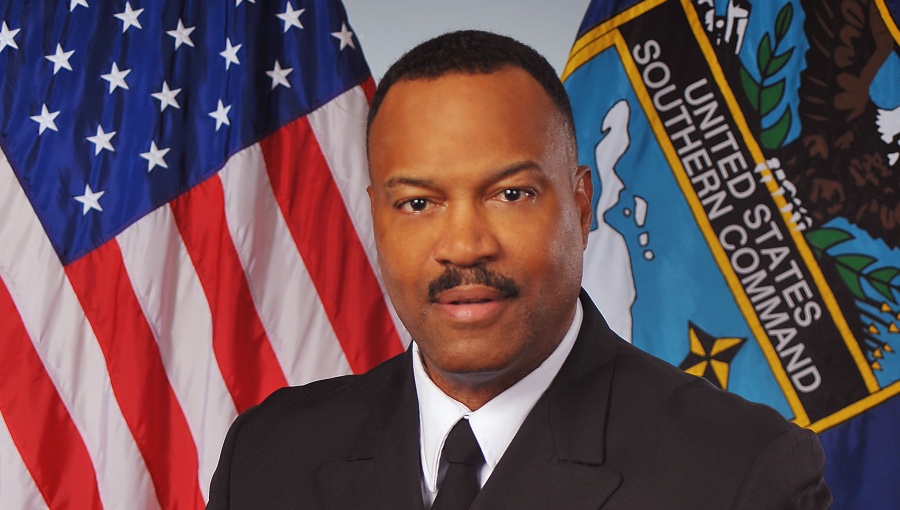
Admiral Alvin Holsey, who oversees all US military operations in Central and South America, announced on October 16 he would retire on December 12, less than a year into what is typically a three-year posting. The abrupt departure comes as the Pentagon has deployed roughly 10,000 troops to the region in what it describes as a counter-narcotics mission.

Defence Secretary Pete Hegseth, who has controversially rebranded his position as "Secretary of War," made no mention of policy disagreements in his public statement, saying: "On behalf of the Department of War, we extend our deepest gratitude to Admiral Alvin Holsey for his more than 37 years of distinguished service to our nation as he plans to retire at year's end."

However, two US officials told the New York Times that Admiral Holsey had raised concerns about the mission and attacks on suspected drug vessels, speaking on condition of anonymity to discuss personnel matters.

The timing of the admiral's departure has alarmed Democratic lawmakers, particularly given the rapid US military build-up in the Caribbean and escalating rhetoric towards Venezuela's President, Nicolás Maduro, who Washington accuses of heading the alleged narcotrafficking group “Cartel de Los Soles.”

Senator Jack Reed, the ranking Democrat on the Senate Armed Services Committee, said the resignation sent "an alarming signal of instability within the chain of command".

"Admiral Holsey's resignation only deepens my concern that this administration is ignoring the hard-earned lessons of previous US military campaigns and the advice of our most experienced warfighters," Reed said.

Since early September, US Special Operations forces have struck at least six boats off the Venezuelan coast, killing at least 29 people. The White House has justified the attacks by claiming the vessels were transporting drugs, though American officials have privately acknowledged the main objective is forcing Maduro from power.

The operations have sparked concern amongst legal experts, who dispute the administration's claim that it can lawfully kill suspected drug traffickers as if they were enemy combatants, rather than arresting them for prosecution. Congress has not authorised any armed conflict, whilst under international law, targeting individuals based solely on their status requires them to be part of an organised armed group engaged in hostilities.

Representative Adam Smith, the senior Democrat on the House Armed Services Committee, said Admiral Holsey's early departure was unprecedented. "Prior to Trump, I can't think of a combatant commander who left his or her post early, ever," he said, as quoted by the NYT.

The departure adds to a growing list of senior military officers who have left their posts this year under Hegseth's controversial tenure, many of them black or women. The defence secretary has fired or pushed out more than a dozen military leaders, including General Charles Q Brown Jr, the chairman of the Joint Chiefs of Staff, and Admiral Lisa Franchetti, the first woman to command the Navy.

Admiral Holsey, one of only two Black four-star officers leading a US combatant command, gave no explanation for his decision in a message posted on Southern Command's social media account. "The SOUTHCOM team has made lasting contributions to the defence of the nation and will continue to do so," he said.

The current US force posture in the Caribbean includes eight Navy warships, a nuclear submarine, and approximately 2,200 Marines on amphibious assault ships, with the majority of personnel based in Puerto Rico. The Pentagon announced last week it would create a new counter-narcotics joint task force, though operational command has controversially been assigned to II Marine Expeditionary Force rather than Southern Command.

The Trump administration has justified the attacks as national self-defence amid high US overdose deaths, though the surge has been driven primarily by fentanyl entering from Mexico rather than cocaine from South America.

News of Admiral Holsey's departure emerged a day after reports that President Trump had secretly authorised CIA covert operations in Venezuela aimed at unseating Maduro. Trump confirmed the authorisation on October 15 and said the US was considering strikes on Venezuelan territory.

Senator Tim Kaine is preparing to force a vote on a war powers resolution in the coming weeks to prevent Trump from using military force in Venezuela without congressional approval, The Hill reported. A similar measure failed last week by 48 votes to 51, though it gained support from two Republican senators.

It remains unclear who will replace Holsey at Southern Command.

Monday, October 20, 2025


Colombia pulls ambassador from Washington as Trump threatens tariffs

Colombia pulls ambassador from Washington as Trump threatens tariffs
“Colombian President Gustavo Petro is an illegal drug dealer,” Trump stated, adding that from now on Colombia would receive no payments or subsidies from the US.
By Cynthia Michelle Aranguren Hernández in Bogota October 20, 2025

Colombia recalled Ambassador Daniel García Peña from Washington on October 20 after President Donald Trump branded President Gustavo Petro an "illegal drug leader" and pledged to halt all financial assistance whilst threatening fresh tariffs against the Andean nation.

The escalating confrontation centres on US military strikes in Caribbean waters near Venezuela that have killed at least 32 people across seven operations since early September. Trump stated on October 19 that Colombia would forfeit all "payments and subsidies," accusing Petro of enabling cocaine production despite receiving $740mn (COP2.9 trillion) annually—the highest in South America—with $370mn (COP1.45 trillion) designated for counter-narcotics programmes, according to US government figures.

Colombia currently faces a 10% baseline levy on exports to the United States. But Trump now promises "major tariffs," to be announced on October 21, that could significantly escalate trade barriers. The threat carries substantial economic weight as the US represents Colombia's largest export market, absorbing 26% of Colombian goods valued at approximately $16bn annually. Trade analysts warn higher tariffs could devastate Colombia's manufacturing, agriculture, and flower industries whilst further straining bilateral relations already at their lowest point in decades.

Defence Minister Pedro Sánchez rejected Trump's characterisation, stressing Colombia "has used all its capability and also lost women and men fighting drug trafficking." The Foreign Ministry condemned the remarks as undermining presidential dignity whilst constituting "a direct threat to national sovereignty by proposing an illegal intervention in Colombian territory," pledging to seek international legal recourse through multilateral bodies.

Petro vehemently challenged US assertions that the October 18 vessel strike targeted a National Liberation Army craft, insisting the boat belonged to "a humble family" and not to the armed rebel group. The Colombian leader accused Washington of murder, citing the September 16 death of fisherman Alejandro Carranza, whose disabled vessel displayed distress signals when attacked in territorial waters. "US government officials have committed murder and violated our sovereignty," Petro wrote on X, demanding prosecution before international courts.

The Trump administration has justified the attacks, largely off the Venezuelan coast, as national self-defence amid high US overdose deaths, though the surge has been driven primarily by fentanyl entering from Mexico rather than cocaine from South America. However, analysts increasingly believe the White House's real intent is to drive Venezuelan authoritarian President Nicolas Maduro from power.

Petro, who has supported Maduro against foreign intervention, went on to slam decades of US anti-drug policy as a pretext for regional control, claiming it has caused 1mn Latin American deaths. He said the ultimate aim was "taking the resources of their American siblings," in an apparent reference to Venezuelan oil.

Tensions further ramped up on October 18 when protesters assaulted the US Embassy in Bogotá with bows, arrows, and incendiary devices, injuring four police officers. The demonstrators, affiliated with the Congreso de los Pueblos movement, denounced US policies regarding Venezuela and Palestine. Petro condemned the violence and ordered "maximum caution" to protect the diplomatic mission. "The problem is with Trump, not with US," he stated, adding that he respects American people and culture.

Since assuming office in 2022, the leftist leader has championed redirecting drug war strategy from forced crop eradication towards addressing underlying social factors. The approach has coincided with a 70% surge in coca cultivation to 253,000 hectares, according to Colombian government and UN estimates. Washington decertified Colombia as a drug-war ally in September, prompting Bogotá to suspend arms purchases from its primary military partner and halt an estimated $1.5bn in USAID funding for peace process implementation.