Friday, November 07, 2025


Houthis Develop General Cargo Handling at Ras Isa
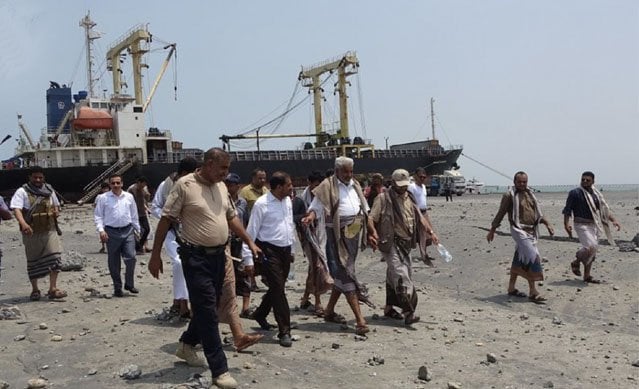
Yemen port area
The Houthis are working to develop port capabilities in Ras Isa and along the Red Sea coast (Yemen News Agency)

Published Nov 6, 2025 12:43 PM by The Maritime Executive


Satellite imagery taken over the Ras Isa coastal area of Yemen on November 5 suggests that the Houthis have, in recent weeks, expanded capacity to handle general cargo.

Until recently, Ras Isa was a very rudimentary port that only handled oil product tankers. Small to medium-sized tankers were typically moored with sterns towards the beach. Flexible piping was then used directly from ships and hauled across the beach into a limited fixed pipeline network connecting into a small nearby tank farm. 

There was very little that could be destroyed at Ras Isa in recent air attacks, but the remains of the hijacked car carrier Galaxy Leader (IMO: 9237307), which was targeted by Israel on July 6 because its radar was being used to cover ship movements on the Red Sea, remains a hulk on the beach. No doubt in due course it will be put to use by the Houthis as a pontoon. 

General cargo was normally handled at the nearby port of Salif, five miles to the north on the opposite side of the bay, which has berthing for two vessels. Salif also had a more substantial oil products tank farm, which can be fed by tankers coming alongside in the port. The facilities in Salif were damaged in Israeli and American attacks in April, May, and July, with traffic severely disrupted for several weeks after each attack. In contrast, however, to the attacks mounted on Hodeidah, the oil storage facilities in Salif appear to remain relatively undamaged.

The imagery taken this week shows that Salif is fully back in action.  Two bulk carriers can be seen tied up at the dockside, identified by VesselFinder as the 29,990GT MV Paras (Marshall Islands, IMO 9277656) and the 24,109GT MV Kashkar (Panama, IMO 9285029). Both these ships shuttle regularly between Salif and Djibouti.
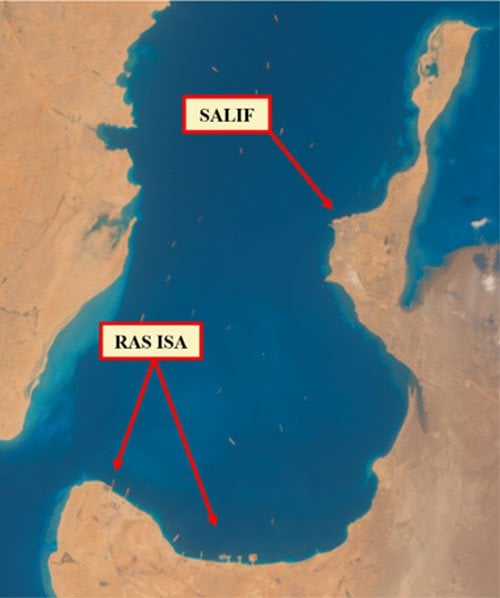
 

The ports of Salif and Ras Isa, on the West coast of Houthi-controlled Yemen, November 5, with ships in the anchorage between (Sentinel-2/CJRC)


At Ras Isa, however, not only are tankers back, but new jetty facilities have been built. Three tankers can be seen, as before, unloading over the beach, identified by VesselFinder as Sofia K (Panama, IMO 9299123), Charminar (Comoros, IMO 9318022), and Dorin (Gambia, IMO 9260055). All three of these 50,000GT coastal tankers are sanctioned. The significant increase in tanker activity, more than seen hitherto in this area, can be attributed to a diversion of traffic from Hodeidah, where oil product handling facilities were more substantially damaged.  But in addition, there are two new T-shaped jetties at Ras Isa, which were quickly built in July, and a third jetty connecting to an artificial island, which has also been expanded.  Small coastal vessels have been seen at all three of these jetties in recent weeks, and two Comoros-registered cargo ships, MV Yasc-1 (IMO 9071648) and MV Elif Ipek (IMO 7615359), appeared to be alongside yesterday at these new facilities.

In addition to the vessels noted in the two ports, at least 17 vessels are at anchor in the waters between Salif and Ras Isa, presumably awaiting allocation of berths in port.

In accordance with UN Security Council Resolution 2216 (2015), all ships entering either Salif or Ras Isa should have sought clearance beforehand from the United Nations Verification and Inspection Mechanism (UNVIM) in Djibouti.  UNVIM does not appear to have a presence in either Salif or Ras Isa to ascertain whether or not ships entering port have received the necessary UNVIM clearance.  Multiple instances continue to occur, often uncovered when illicit cargoes are intercepted by National Resistance Forces who operate in the Bab el Mandeb sea area, of vessels either not having sought clearance, or which have made false manifest declarations.

 

Multi-Billion Dollar Offshore Wind Energy Investments from Apollo and CIP

offshore wind farm
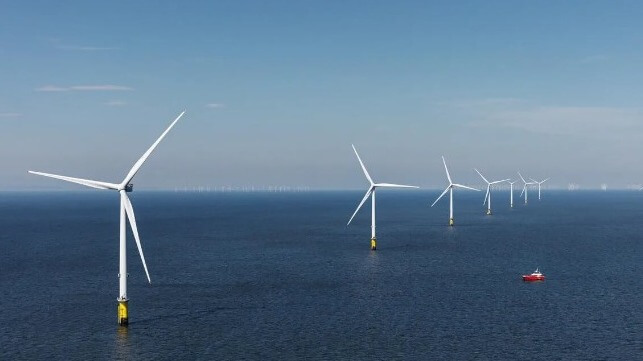
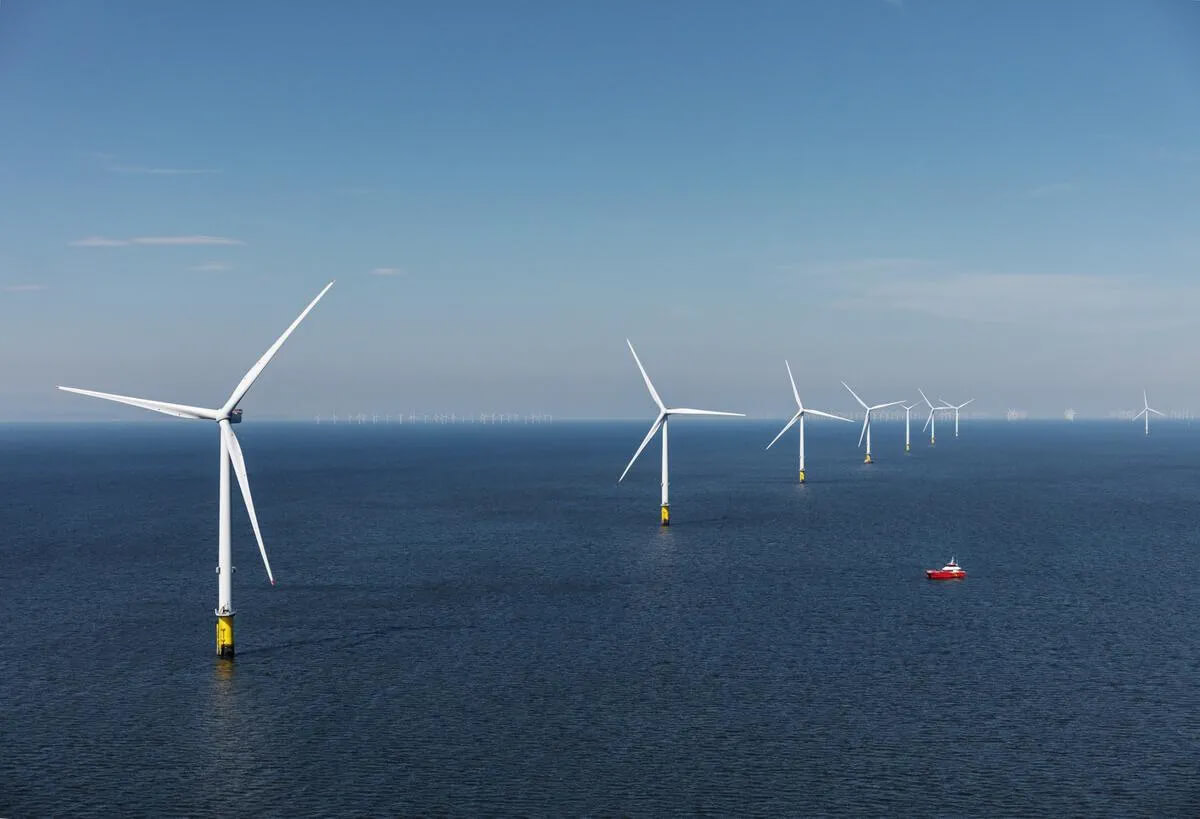
Apollo is making a large investment for a 50 percent stake in the UK's Hornsea 3 offshore wind energy project (Orsted)

Published Nov 4, 2025 7:51 PM by The Maritime Executive


The international investment community continues to see compelling investment opportunities in the offshore wind energy sector, with the respected Apollo-managed funds announcing they will invest $6.5 billion in the UK, while Copenhagen Infrastructure Partners is reported to be planning a $3 billion investment in the Philippines. The moves come despite the repeated headlines about the troubles in the offshore wind energy sector.

Danish developer Ørsted has struck a deal with Apollo to sell a 50 percent stake in the under-construction Hornsea 3 project, which will be one of the largest offshore wind farms ever built. Located in the North Sea, the project will have a total of up to 231 turbines and a capacity of 2.9 GW. Onshore work has been underway since 2023, with the project expected to be completed in 2027.

Ørsted reports that it chose to partner with Apollo in part for its ability to deliver a long-term, comprehensive equity and financing solution for the large-scale infrastructure project. It cites the investment group’s expertise and scaled capital, along with Ørsted’s strategy to divest of shares in projects to reduce risks, as the group faces deep financial troubles.

“The divestment represents an important milestone for Ørsted as we continue to deliver on our partnership and divestment program, which is a cornerstone of our business plan,” said Trond Westlie, Ørsted Group CFO. 

The Hornsea 3 transaction is subject to regulatory approvals and is anticipated to close before year-end 2025. The Apollo Funds are expected to invest approximately $3.25 billion upon close, with the remaining $3.25 billion to be funded as the project reaches certain construction and development milestones in the coming years.

Apollo Partner and Co-Head of European Credit Leslie Mapondera noted that this is the latest large-scale transaction in Europe for the group, where it is investing behind energy infrastructure, transition assets, AI, and other key priorities. The investment in Hornsea 3 follows a series of recent large-scale capital solutions Apollo Funds have provided for European energy infrastructure, including a €3.2 billion investment to support expansion of the German energy grid, a £4.5 billion financing commitment to EDF for its Hinkley Point C nuclear power plant, and more than $4.5 billion of investments with BP in its TANAP and TAP pipelines.

While Apollo has been making large investments in Europe, President Ferdinand Marcos of the Philippines met with representatives of Copenhagen Infrastructure Partners today to discuss the company’s first offshore wind development in Southeast Asia. The Philippines reports that CIP will build a $3 billion offshore farm project south of Manila in the central Philippines. The project will be on the East Coast in the Philippine Sea. 

The reports said CIP was attracted to the project because of the strategic location of the Philippines and the government’s commitment to shifting to renewable energy.


Orsted Still Sees a Strong Future for Offshore Wind in Europe

Hornsea wind farm
File image courtesy Orsted

Published Nov 5, 2025 11:36 PM by The Maritime Executive


Western offshore wind leader Orsted sees signs of hope in the European market, despite near-term headwinds in the global market, executives said in a third-quarter earnings call on Wednesday. 

"We remain very bullish about the prospects for offshore wind in Europe, in particular. We see the rebasing happening in the market," said Rasmus Errboe, Group President and CEO. "We will be patient, and we will prioritize value over volume."

Errboe highlighted three potential business areas for growth in Europe: maturing Orsted's existing pipeline of project options; partnerships and M&A for specific projects; and competing in centralized tenders. "2026 is probably going to be a bit on the low side in terms of numbers of tenders that are being put out there. But then from 2027 onwards it would take a bit of a step change," he said, highlighting expected leasing activity in the UK, the Netherlands, and Germany.

Equinor swung to a loss of $260 million in the third quarter, including impairment charges of about $175 million - a better result than analysts had expected, but a clear setback compared with last year's performance. Regulatory setbacks in the United States (including the stop-work order on Revolution Wind) and high American tariffs are among the firm's challenges.

To adapt to global challenges for offshore wind, Orsted's leaders have embarked on a muscular strategy to stabilize finances: since May, the firm has announced plans to lay off 2,000 employees; raised $9 billion in a heavily discounted rights issue; canceled the costly Hornsea 4 project; and sold half of its giant Hornsea 3 project for $6 billion to Apollo Global Management. The latter move is expected to raise enough cash to stave off a possible credit downgrade; one further drop from S&P could prompt some institutional investors to sell the company's bonds. 

Many market analysts have speculated that a tie-up between Orsted and Norwegian state energy firm Equinor's offshore wind division would produce synergies and reduce competition, giving Orsted a leg up. For Equinor, divesting its renewables division would allow it to refocus on its core oil and gas business after a bruising experience with offshore wind in the United States. However, Errboe firmly ruled out the possibility.

"That is not in our plans," Errboe said. "Our focus, my focus, is to deliver on our plans, on our strategy, quarter by quarter."


Matson Dodges $80M in Fees as US and China Postpone Reciprocal Port Fees

Matson containership at sea
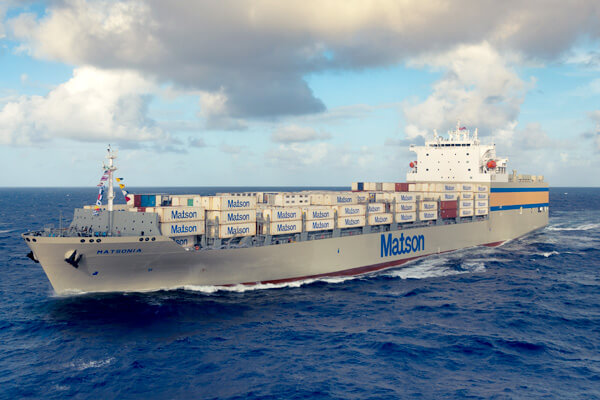
Matson reported it has paid approximately $20 million in fees so far and is waiting for instructions to see if there might be rebates (Matson)

Published Nov 5, 2025 3:33 PM by The Maritime Executive


Matson, the largest U.S. ocean container carrier and likely the first to have paid China’s special port fees for U.S.-built or operated ships, expects to save as much as $80 million annually after the U.S. and China agreed to postpone their reciprocal fee programs. Despite that, the carrier is seeing significant declines in its ocean revenues and income as customers are expected to remain cautious despite a more stable environment.

The company told investors on Tuesday, November 4, that it believed the business had performed well in a difficult environment, which it said was “marked by continued uncertainty and volatility arising from tariffs and global trade.” Chairman and CEO Matt Cox said the company had experienced a “muted peak season” on its transpacific trade lane with lower freight rates and container volume on its service from China to the U.S.

Matson saw third quarter operating income decline by half overall while warning that it expects a 30 percent decline year-over-year for the fourth quarter. Container volume, it reported, was down 12.8 percent for its China service in the third quarter, and it does not foresee improvements in the rates or volume for its China service in the current quarter.

“We expect many of our China service customers to be cautious on inventory levels and work through previously purchased inventory,” Cox told investors. “However, we expect a more stable trading environment for our customers,” he said, pointing to the agreements between the countries and the reduction of uncertainty. The U.S. and China agreed to reduce some tariffs and port fees, plus he noted the impact on global trade.

Despite the agreements reached during the summit in South Korea, Matson warned investors that its decline in quarterly income would include $6.4 million in port entry fees paid so far this quarter.  The U.S. announced earlier this week that the port fees implemented after the USTR investigation into China’s shipbuilding and maritime policies would be suspended as of November 10, following the introduction on October 14.

“Based on our initial assessment of our anticipated fleet schedule, vessel charters, and expected dry dockings, we expected to pay approximately $20 million in port entry fees in the fourth quarter 2025 and approximately $80 million annually in port entry fees in 2026 and 2027,” Cox told investors. He said the company had advised customers that port entry fees would not be passed on.

Cox called the agreements between the U.S. and China a “welcome development” and a “positive step towards a longer-lasting agreement.” 

Matson is waiting for the U.S. and China to publish specific instructions regarding port entry fees. The company is waiting to determine whether there will be an element of rebates, allowing it to claw back some of the fees paid starting in mid-October.

Under the Chinese program, Matson was one of the companies expected to incur the largest costs. In the United States, China’s COSCO and its subsidiary OOCL were likely to have incurred the greatest expense. Alphaliner had estimated the fees could cost COSCO $1.53 billion in 2026.


Greek Tanker Reports Gunfire and RPGs in Boarding by Pirates off Somalia

warship
EU warships have maintained patrols for Atalanta off Somalia since 2008 (EUNAVFOR Atalanta)

Published Nov 6, 2025 11:43 AM by The Maritime Executive


A piracy incident is ongoing off the coast of Somalia after the Greek-owned product tanker Hellas Aphrodite reported it had been attacked and boarded. The incident comes just days after a failed boarding on another tanker and is raising concerns over a resurgence of the pirates after 18 months since they boarded another large cargo ship.

The manager of the vessel, Latsco Shipping, confirmed the incident and said the crew was accounted for and that they remained in contact. It is believed the 24-member crew has locked itself in the citadel and radioed for assistance.

The incident began approximately 550 miles off the coast near Mogadishu this morning, November 6. UK Maritimer Trade Operations reports the master of the vessel said they had been approached from the stern by a small craft, and despite increasing speed and evasive maneuvers, the pirates were able to reach the tanker. The master told UKMTO there had been small arms fire and RPGs launched toward the vessel before the boarding. The tanker is reported not to be carrying armed guards.

The Hellas Aphrodite is a 49,992-dwt product tanker flagged in Malta. It was built in 2016 and is 183 meters (600 feet) in length. It is reported to be transporting a cargo of gasoline from India to South Africa.

The authorities are promising further updates as the situation unfolds. EUNAVFOR Operation Atalanta reports that one of the frigates participating in its operation was on patrol close to the incident. They reported the vessel was closing the distance and ready to take appropriate actions.

The authorities had warned shipping that a pirate group was active in the region, although analysts are noting this incident appears to be further from Somalia and beyond what is considered the primary danger zone. The group appears to be working from a mothership that has remained over the horizon. Atalanta reported two dhows had been seized last weekend, and only one recovered. The other, an Iranian vessel named Issamohahmdi, appears to be being used as the mothership. The warships assigned to Atalanta were reportedly searching for the boat before this latest incident.

On Monday, November 3, the chemical tanker Stolt Sagaland reported it too had been approached. Armed security guards returned fire, and the pirates broke off an attempt at boarding the tanker.

Groups of Somali pirates had reemerged in November 2023 after the Houthis began their efforts from Yemen to interrupt shipping. Somali pirates were successful in seizing a bulker but were caught in a daring raid by the Indian Navy aboard another vessel in December 2023. The last reported attack on a large commercial vessel came in May 2024. The groups have also harassed Chinese and Indian commercial fishing vessels with reports of boarding and robberies.


Cruise Lines Bring Aid for Hurricane-Battered Jamaica

Jamaica aid
Image courtesy Carnival Cruise Line

Published Nov 5, 2025 10:53 PM by The Maritime Executive


Foreign relief efforts are beginning to flood into Jamaica in the wake of Hurricane Melissa, bringing aid for thousands of people affected by the category five storm. The powerful storm has shut down the nation's tourism industry, and the cost of the physical damage alone is believed to equal about one-third of Jamaica's annual domestic product.  

The Royal Navy patrol vessel HMS Trent arrived off Falmouth, Jamaica on November 4 to deliver a company of disaster-response specialists from 24 Commando Royal Engineers, the combat engineering force attached to the Royal Marines. The unit will help local authorities assess and repair storm damage, starting with Falmouth Hospital. Trent was already forward-deployed in the Turks and Caicos for the hurricane season, on station to respond to storm damage. The Royal Navy typically maintains at least one vessel in the region during the months of highest risk in order to assist Commonwealth states, like Jamaica. 

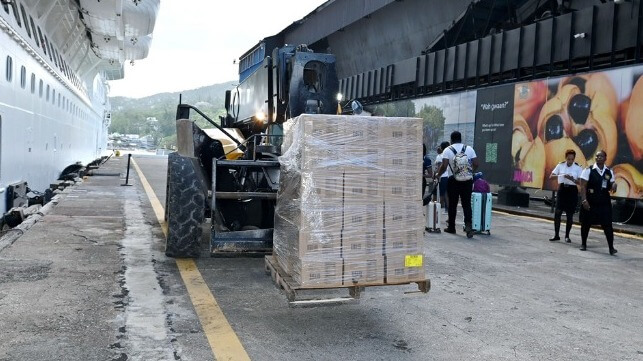
Meanwhile, cruise lines have been making relief aid deliveries to Jamaica during scheduled itineraries in the Caribbean. Carnival Horizon called at Ocho Rios, Jamaica on Tuesday to deliver bottled water, preserved foods, baby food, daipers and other necessaries. Carnival also joined in a drive to donate $1 million to local recovery project. 

On the same day, Royal Caribbean's Rhapsody of the Seas offloaded more than 120 pallets of relief aid in Falmouth, including bedding, food, bottled water and other essentials for displaced residents. No guests disembarked, and the call was only for aid delivery. In addition, the cruise line has pledged to donate more than $1 million in aid to Jamaica and to the Bahamas.

A U.S. military task force has been on the ground since last week, providing the services of multiple helicopters and about 40 servicemembers. The unit has provided transportation to deliver relief supplies from distribution hubs in Kingston to outlying areas in Montego Bay and Black River. Two U.S. Navy amphibs are also in the region with elements of the U.S. Marine Corps' 22nd Marine Expeditionary Unit aboard, if required, but have not joined in the mission.  

Jamaica is a longtime partner to the cruise industry, but normal port calls have been paused for now, and tourism may take time to recover. Jamaica's tourism minister told KVUE that it may take until mid-December for some regions to get back to normal. For now, the situation on the ground is difficult enough that U.S. citizens are advised to reconsider any travel plans to the island, according to the U.S. State Department. 


Divers Identify Wreck of WWI Merchant Cruiser HMS Bayano

Bayano
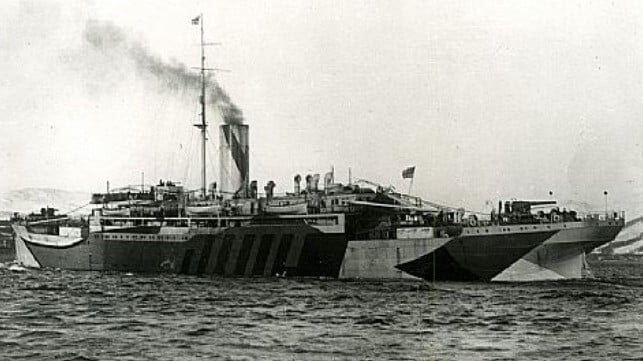
HMS Bayano in "dazzle" camouflage scheme, 1914-15 (Royal NBavy

Published Nov 5, 2025 6:26 PM by The Maritime Executive


Amateur divers have identified the wreck of the British armed merchant cruiser HMS Bayano, which was torpedoed and sunk off Scotland by a German sub in World War I. 

HMS Bayano was a merchant steamer pressed into service as a warship, one of dozens of armed merchant cruisers (AMCs) that the Royal Navy refitted in order to fill a shortage of midsize surface combatants. These improvised gunships conducted enforcement of the allied naval blockade on Germany, served as escorts, and conducted patrol duties near British shores. 17 were lost over the course of the war.

The vessel began life as the banana boat SS Bayano, a reefer ship delivered in 1913. The vessel was requisitioned for naval service in November 1914 and swiftly refitted at Avonmouth, receiving two six-inch guns - one forward and one aft. While the steamer was a fine vessel, Bayano's squadron commander commented shortly after redelivery that the banana boats were vulnerable in a fight. "The two large holds have no sub division, being only two large tanks, and the flooding of either would be sufficient to sink the ship," the admiral warned. 

Bayano's entry into service coincided with the German government's decision to begin unrestricted submarine warfare, and she would be the first British victim of that campaign. At 0515 in the morning on March 11, 1915, the U-boat U-27 fired a single torpedo at HMS Bayano as the vessel was transiting the North Channel. The ship was hit just forward of the bridge and sank within minutes, too fast to launch the lifeboats or to get sleeping crewmembers out from belowdecks. Survivors reported that the wireless operator and the captain remained behind as the vessel sank, without attempting to abandon ship. 

Those who donned life belts and made it over the side had to contend with icy water; would-be rescuers were put off by the presence of U-27, which had surfaced to look for other targets. Ultimately only 27 men survived and were rescued out of a total ship's complement of about 220 people.  

"If the vessel had not gone down so quickly, I believe all aboard would have been saved," ship's telegraphist John Taylor told media after his rescue. 

The remains of the Bayano sat amongst multiple large wrecks in the outer Firth of Clyde and North Channel, making identification a challenge. The water depth in the area is about 100-200 meters, too deep for standard recreational dive techniques, and the wreck had not been identified previously. The dive team - operating under the name of ProjectXplore - started their work to find Bayano with research at the UK's national archives. Once they had figured out a search box for the approximate area where the ship went down, they began a sidescan sonar survey using a small commercial dive boat. 

They found the wreck's sonar signature at a position southwest of the island of Ailsa Craig, at the edge of the Firth of Clyde. A technical dive confirmed the vessel's identity quickly: Bayano was the only missing merchant cruiser with two six-inch guns, one forward and one aft, and the wreck had both. Other factors reinforced this conclusion, including her general arrangements, the refrigeration plant, the shape of her transom and the style of her railings. 

"From a naval historical perspective, the sinking of HMS Bayano heralded a new era: she was arguably the first major British casualty of Germany’s policy of unrestricted submarine warfare, declared on 2 February 1915, just over one month before her sinking," wrote the dive team in an after-action report. "From a social history perspective, the sinking of HMS Bayano revealed both the efficacy and moral dilemma of the doctrine of targeting mixed-use vessels under wartime conditions – and the significant loss of life and outpouring of grief in coastal communities around the North Channel demonstrated how the tragedy touched communities far beyond those directly connected to the ship and her crew."


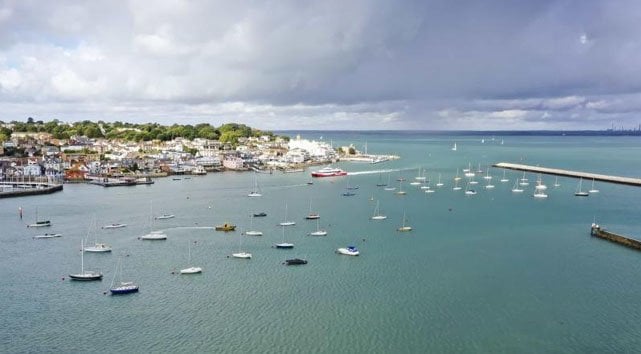
Cargo Ship Blacks Out and Hits Private Crafts Arriving at Cowes

Cowes harbor
Cargo ship lost engine power while maneuvering on the River Medina at Cowesi n the UK (Cowes Harbour Commission)

Published Nov 5, 2025 12:34 PM by The Maritime Executive


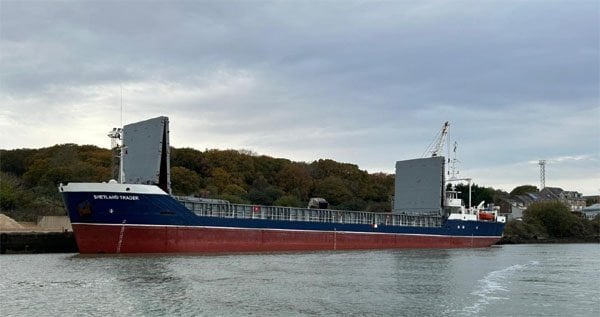
The Cowes Harbor Commission in the UK confirmed that a general cargo ship arriving at the port on Tuesday, November 4, blacked out and plowed into private recreational boats before coming to a stop. There were no injuries, but the private boats were damaged, and the ship, which has a long history of deficiencies, is now facing an investigation.

The general cargo ship Shetland Trader (2,386 dwt) was arriving from the Netherlands when at 1900, the vessel reported an engine power failure while it was transiting the River Medina. The vessel, which is registered in Liberia, is 75 meters (246 feet) in length. 

The Cowes pilot began immediate emergency procedures, including ordering the vessel’s anchor to be dropped to slow the vessel and control movement. The ship, however, continued forward for a short distance, plowing into the anchorage for the port’s private, recreational crafts. 

The Shetland Trader hit a large yacht sailboat, causing its moorings to part. The sailboat became entangled with the cargo ship. Pictures show the mast of the sailboat broken and bent over. Local boat owners assisted in freeing the yacht from the cargo ship and securing it to a pontoon.

During the incident, the cargo ship also struck a motorboat. Luckily, no one was aboard either vessel at the time of the incident.


Shetland Trader was taken to the commercial wharf (Cowes Harbour Commission)


The vessel, which was built in 1992, has been managed by a UK company since 2024. Records show the vessel has consistently been cited for multiple deficiencies over the last decade during its port state inspections. Its last inspection was a year ago and cited issues including with the main and auxiliary engines, magnetic compass, electrical equipment, and structural condition.

The Cowes Harbor Commission reports the crew was able to restore power aboard the Shetland Trader. They raised anchor, and the vessel was escorted to the commercial pier in Cowes. The commission reports there will be a full investigation into the incident.


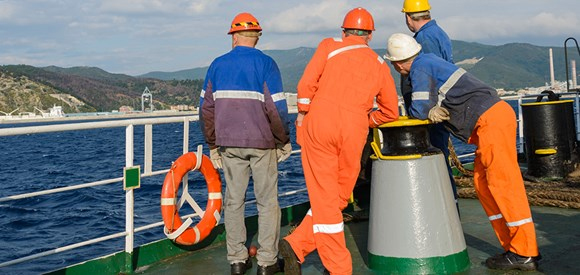
Seafarers’ Access to Shore Leave Has Consistently Declined Since Pandemic

crew looking at shoreline
Seafarers' access to shore leave and time ashore continues to decline (IMO)

Published Nov 5, 2025 5:59 PM by The Maritime Executive


A new study among the providers of shore services for seafarers confirmed the concerns over the decline in access to shore leave and the time spent ashore by seafarers. Shore leave has been repeatedly identified as one of the concerns for seafarers, as experts cite the importance of shore time to crew welfare.

A survey of seafarers in May 2024 published by the World Maritime University highlighted the concern, one that has been repeated in the recent editions of the Seafarers Happiness Index provided by The Mission to Seafarers. In 2024, a total of 5,879 seafarers responded to the World Maritime University survey, with the result showing 25 percent had not had any shore leave over an average contract period of 6.6 months, and of those that did get ashore, nearly half (47 percent) reported spending less than three hours off their ship.

The finding in 2024 led the University to cite shore leave as becoming rare, brief, and in danger of extinction.  This year, shore leave was among the top concerns in the Happiness Index report released last week.

The ITF Seafarers’ Trust did a similar survey this year with 96 responses from 83 organizations that provide shoreside services to seafarers in 25 countries. The finding is the same: shore leave is in decline.

The report shows a 61 percent decline in seafarers' spending time ashore in seafarers’ centers since the start of the pandemic in 2020. Further, respondents said that seafarers are spending less than two hours in their centers. 

The ITF Seafarers’ Trust cites the reduction in manning levels, increased pressure on turnaround times, heightened security measures, and changes in the location and operations of ports as contributing to the decline in time ashore.  

The report concludes that the welfare community shares the frustration of seafarers. They emphasize that the centers are an opportunity to relieve pressures and connect with people and communities. It has long been known that seafarers often use their precious time ashore to connect to the Internet and contact friends and family.

“There must be a consensus around defending seafarers’ right to shore leave, and proactive efforts made to facilitate it at every opportunity,” said Katie Higginbottom, Head of the ITF Seafarers’ Trust. “We must look to the regulators and the shipping industry to make sure that the operational and commercial factors,” to balance these issues with the welfare concerns, says Higginbottom.

Since the pandemic, the maritime industry has been vocal about the importance of seafarers’ welfare and wellbeing, however, the ITF Seafarers’ Trust warns that this is not translating into practices that facilitate shore leave. The report highlights that if these barriers continue unabated, the concern is of a vicious circle of decline in viable port-based welfare services due to lack of demand, and lack of demand due to loss of facilities compounding the problem.

They are calling for regulators to review the requirements around hours of work/rest and minimum safe manning to ensure that seafarers have sufficient time to take adequate rest, and that allows for shore leave. They also call on the shipping companies to ensure “humane conditions of labor.”  They assert that all maritime stakeholders must work together and take a collective responsibility for creating conditions that facilitate access to shore leave.

“This report reminds us that seafarers’ welfare depends on shared responsibility. Together, welfare providers, regulators, and industry leaders must ensure that access to shore leave becomes the norm again, not the exception,” said Dr. Jason Zuidema, General Secretary, International Christian Maritime Association (ICMA), which represents the organizations operating service centers for seafarers around the world.

The full report is available online.


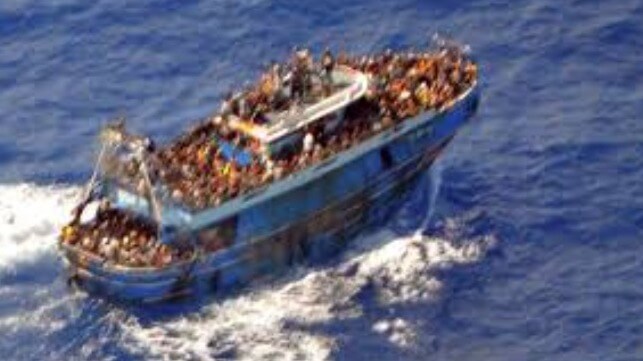
Chief of Hellenic Coast Guard Faces Charges for Migrant Boat Sinking

The overloaded trawler Adriana en route to Italy (Hellenic Coast Guard)

Published Nov 6, 2025 4:23 PM by The Maritime Executive


Four senior officers of the Hellenic Coast Guard have been charged in connection with the 2023 Pylos shipwreck, which killed at least 82 and as many as 650 people. Survivors allege that the actions of coast guard first responders contributed to the casualty, and that the service has attempted to conceal any wrongdoing in the hours before the sinking. 

On June 10, 2023, the trawler Adriana got under way from Libya, bound for Italy with about 400-750 maritime migrants on board. It was overloaded with passengers on deck and below in the holds. En route to  Italy, it crossed into the Greek search and rescue zone on June 13. In response to its clearly precarious situation, the Hellenic Coast Guard dispatched a patrol vessel to the scene.

The exact events of the next 15 hours are disputed, but all acknowledge that on June 14, the overloaded fishing vessel capsized and sank with about 750 personnel aboard. In the aftermath, 82 bodies were recovered, and roughly 500 people were missing and presumed dead. 

104 passengers were rescued and brought to shore. Survivors alleged that the Hellenic Coast Guard patrol boat on scene, the LS-920, had attempted to initiate a tow with the Adriana. On the third attempt to rig a tow line, these survivors suggested, the fishing vessel capsized. Some survivors claimed that they were immediately instructed by Hellenic Coast Guard officers not to talk about any alleged "towing attempt" after they were rescued.

The Hellenic Coast Guard vigorously denies that any towing attempt or other wrongdoing occurred, and it turned down calls for an internal investigation. But the Greek government's ombudsman concluded that the crew of LS-920 may have violated the law, and prosecutors at the Piraeus Naval Court reached the same conclusion earlier this year.

In May 2025, the court's deputy prosecutor brought charges of "causing a shipwreck" against Hellenic Coast Guard servicemembers in connection with the sinking. At the time, top officials on shore were not charged, as the prosecutor concluded that they did not have legal authority at the key moments of the operation - though they were present and involved. 

This week, following a petition by legal counsel for the victims, a court of appeal has ordered the prosecutor's office to expand the list of personnel charged in connection with the sinking to include four additional senior Hellenic Coast Guard officials. The list includes the newly-appointed head of the service, Tryfonas Kontizas, according to Greek outlet News24/7. 

The charges against the four top officials include failure to rescue helpless persons, resulting in death; manslaughter by serial omission in international waters; and an additional charge related to the inaction of subordinates. Under the Greek criminal justice system, the charges mean that the suspects will now appear before the court to answer the allegations.  


NTSB Releases Report on Fatal Fire in 2024 aboard U.S.-Flagged Dredger

dredger
Fire happened in the engine room of the dredger Stuyvesant (Dutra Group photo from NTSB)

Published Nov 6, 2025 5:36 PM by The Maritime Executive


The fatal engine room fire aboard the dredger Stuyvesant in November 2024 that killed the vessel’s first engineer is the subject of a new report from the National Transportation Safety Board (NTSB). It finds that the lack of adequate checks after a routine maintenance procedure failed to detect a missing cap that contributed to the lube oil leak that started the fire.

The U.S.-flagged dredging vessel Stuyvesant was performing dredging tasks on the St. Johns River near Jacksonville, Florida, for the U.S. Army Corps of Engineers. Midday on November 2, 2024, while the vessel was in a break period, the chief engineer instructed that the crew perform routine maintenance on the port auxiliary engine. While the ship was built in 1982, the auxiliary engines had been replaced in December 2022 when the previous ones reached the end of their service life.

The auxiliary engine was offline because the vessel required less power during the break from dredging. The task involved draining and replacing the lube oil and the filters for the engine. It was a routine task, which the crew believed was completed satisfactorily.

The first engineer and an oiler returned to the machinery control room (MCR) and, after informing the wheelhouse that the task was complete, they performed a remote restart. Less than a minute after the engine was started, the first engineer and oiler saw flames in the engine room. Moments later, a crewmember working on deck also saw smoke coming from the engine room and informed the bridge.

The oiler later told the NTSB that the first engineer had opened the portside MCR door, letting the flames from the engine room enter the space. The first engineer grabbed a fire extinguisher, but the oiler observed that within a minute, the engine room had gone dark with smoke, and he was unable to breathe. He was able to escape through an emergency trunk, but then they discovered the first engineer was still in the space.

The shipboard emergency squad was able to locate and extract the first engineer from the MCR, but he was not responsive when they got him to the deck. The crew administered CPR till the local fire and rescue squad reached the ship, and they evacuated the first engineer to a hospital.  He was later transferred to a second hospital, where he was declared deceased.

The vessel sustained an estimated $18 million in damages. The NTSB reports that approximately 300 electrical cables and signal cables in the engine room were burned and required replacement.

Investigators checking the engine room after the fire reported finding the fuel and lube oil filters that had been removed during the routine maintenance from the port auxiliary engine in buckets near the engine, unburned and intact. The lube oil fill cap on the port auxiliary engine had not been reinstalled, and the lube oil filter housing plug was not threaded into the internally threaded port. It was found sitting with a wrench on a nearby storage cabinet.

The NTSB concludes that the crew did not properly check after performing the work and did not detect that the cap had not been reinstalled. When the engine was started, lube oil sprayed from the engine and hit the hot manifold, starting the fire. Because the crew was not onsite and instead doing a remote restart, they could not see it as it happened.

The NTSB warns of the need to follow manufacturer instructions and reports that the operator of the dredger undertook several changes to protocols. Among the changes is the requirement that a crew has to be onsite and perform a local restart. Starting up engines locally, rather than remotely, the NTSB asserts, gives crewmembers the opportunity to immediately verify that the engine is operating satisfactorily (to manufacturer’s specifications) with no visible fuel, lube oil, or water leaks, and has no atypical noises or vibrations that require it to be stopped.