Saturday, November 08, 2025

Colorado Votes to Tax the Rich to Fund ‘Incredibly Popular’ Free School Meals

“Colorado sent a clear message tonight: No child should ever have to learn on an empty stomach,” said the state Democratic Party.
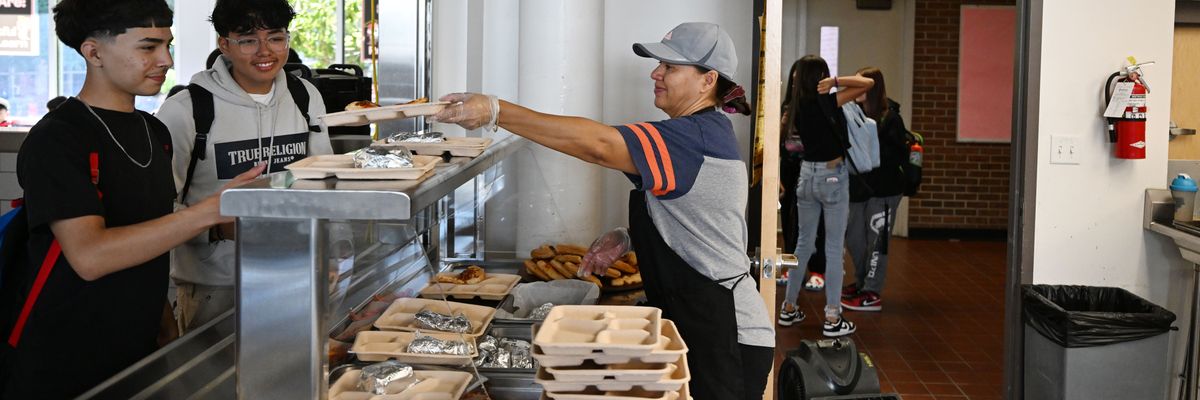

Jefferson Junior/Senior High School cafeteria worker Zoila Estrada serves seventh grade students lunch on September 26, 2024 in Edgewater, Colorado.
(Photo by RJ Sangosti/The Denver Post via Getty Images)

Brett Wilkins
Nov 05, 2025
COMMON DREAMS

Colorado voters on Tuesday handily approved a pair of ballot measures to fully fund free meals for all K-12 public school students, give raises or stipends to scholastic cafeteria workers, and enact grants for schools to buy fresh foods from local farmers.

According to unofficial results published Wednesday morning by the Colorado Secretary of State’s office, Proposition LL overwhelmingly passed 64.66% to 35.34%. The proposal allows the state to keep and spend $12.4 million in tax revenue, including interest, already collected under Proposition FF to fund the Healthy School Meals for All Program, a 2022 voter-approved initiative to provide free breakfast and lunch to students and provide food purchasing grants to public schools.

Proposition MM—which raises taxes on households with annual incomes over $300,000 to fund the meals program—was approved 58.07% to 41.93%. The measure is meant to fill funding gaps in Proposition FF and was spurred by US President Donald Trump’s signing of the so-called One Big Beautiful Bill Act, which inflicted the largest-ever cuts in the Supplemental Nutritional Assistance Program (SNAP), largely to pay for tax cuts for the ultrarich and corporations.

“We’re relieved that Colorado kids will continue to have access to free meals at school,” Anya Rose, director pf public policy at the advocacy group Hunger Free Colorado, told Colorado Public Radio (CPR) after the measures’ passage. “I think that hunger is top of mind for a lot of people right now, and it’s really visible for people. And we know that this is an incredibly popular program that is more important, now than ever, since there are so many people struggling to make ends meet and resources have fallen through for a lot.”


Joe Kabourek, who managed the Keep Kids Fed campaign, said in a statement: “Thank you to every voter, volunteer, community partner, and endorsing organization who turned out to pass Propositions LL and MM, ensuring every child in Colorado can continue to get a healthy meal at school.”

Nine US states have now enacted laws providing free meals to all public school students regardless of family income: California, Colorado, Maine, Massachusetts, Michigan, Minnesota, New Mexico, New York, and Vermont. Cities including Boston, Chicago, Detroit, Los Angeles, San Francisco, and Washington, DC have enacted similar programs.

Betsy Hayes of Denver recalled the cruelty her children faced from other students for needing free school meals.

“It was very embarrassing for them and stigmatizing to them, and I really would like other kids not to have to go through that,” she told CPR.


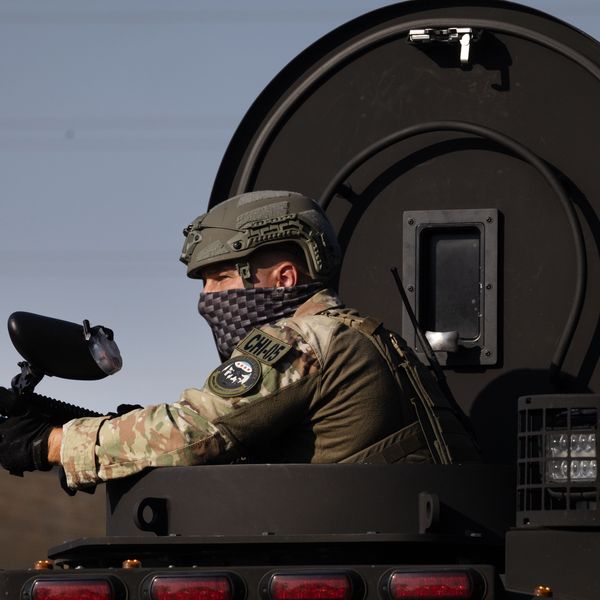
Our Cities Should Not Be Training Grounds for War


What neighborhoods need are affordable housing, accessible healthcare, well-funded schools, and good jobs—not Humvees on their corners.


Katerina Canyon
Nov 07, 2025
Common Dreams


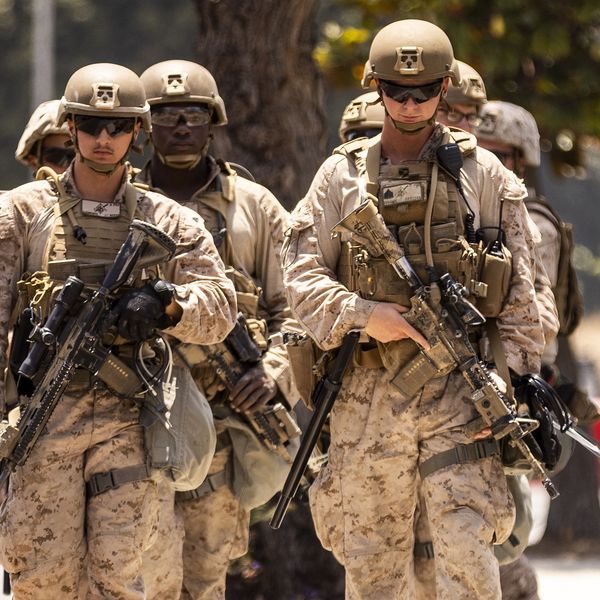
When President Donald Trump stood before military leaders at Marine Corps Base Quantico this September and declared that American cities should serve as “training grounds” for US troops, he did more than test the limits of civil-military relations—he crossed them. His proposal isn’t just bluster. It represents a dangerous escalation in domestic militarization that undermines the Constitution and endangers the very people our government is sworn to protect.

American neighborhoods are not battlefields. These our the places where we build our homes, send our children to school–the places we take the buses to work every morning. These cities are markers of who we are, not training grounds. Treating them as warfields sets a precedent that imperils every citizen, especially the Black, immigrant, and working-class communities he has repeatedly vilified. Cities like ChicagoLos Angeles, and Portland don’t need military drills. They need investments in housinghealthcare, and education.


‘Unlawful and Un-American’: Trump Claims He Can Send ‘Army, Navy, Air Force, Marines’ Into US Cities


The Librarian’s Call: Documenting Is Resistance

There’s a reason the Posse Comitatus Act of 1878 restricts the role of federal troops in domestic law enforcement. The law enshrines a fundamental democratic principle: Civilian life must be separate from military power. Trump’s plan to “train” troops in US cities would erase that line entirely.

He has already blurred these boundaries before—from ordering federal forces into Los Angeles during immigration protests to threatening governors who refused to deploy National Guard troops on his terms. Each instance chips away at the legal and moral walls that protect civilian governance.

Democracy thrives when communities are supported, not surveilled; when people are empowered, not patrolled.

Presidents have rarely invoked exceptions to Posse Comitatus. Dwight Eisenhower did so to enforce school desegregation in 1957; George H. W. Bush during the 1992 Los Angeles riots. Those were extraordinary moments of crisis—not political theater. Turning urban neighborhoods into “training zones” is neither an emergency response nor a lawful one. It’s an authoritarian rehearsal.

Equally troubling is the administration’s push to reshape the armed forces around an exclusionary, hyper-masculine “warrior ethos,” while dismantling diversity and inclusion programs. Combining that militant culture with domestic deployments is a recipe for disaster. Soldiers trained to neutralize foreign enemies should never be tasked with policing American citizens. That pairing risks injury, mistrust, and tragedy. This culture of war needs to end.

The US military has long earned public trust precisely because it stood apart from partisan politics. Using troops in domestic political battles destroys that trust—and corrodes the foundation of democracy itself.

Communities need peace, not militarization. No number of military drills will solve crime, poverty, or unrest. What neighborhoods need are affordable housing, accessible healthcare, well-funded schools, and good jobs—not Humvees on their corners.

At the Peace Economy Project, we’ve spent decades showing how misplaced our national priorities have become. The United States now spends nearly $1 trillion each year on its military, yet millions of Americans struggle to pay rent or buy groceries. Trump’s proposal to rehearse war inside our own borders exposes just how warped this imbalance is.

Some dismiss his statements as rhetoric. But we’ve already seen troops deployed unlawfully, governors coerced, and protesters tear-gassed. Each time the line blurs between civilian life and military power, it becomes easier to cross again. We are marching steadily toward authoritarianism.

What begins as “training” can morph into surveillance, detainment, or suppression of protest. Once normalized, that level of militarization will be nearly impossible to reverse.
What We Must Do

We cannot allow our neighborhoods to become rehearsal spaces for war. Congress must move swiftly to reaffirm the protections of the Posse Comitatus Act and establish clear penalties for violations. Governors must reject attempts to federalize local security for political purposes. Civil society—from churches to universities to advocacy groups—must remain vigilant, united, and vocal.

Above all, we must remember: Democracy thrives when communities are supported, not surveilled; when people are empowered, not patrolled.

Our cities are not training grounds. They are where families grow, where culture flourishes, and where democracy takes root. The path to peace and safety does not run through military drills in our streets—it runs through justice, opportunity, and care.

As Executive Director of the Peace Economy Project, I call on every elected official, civic leader, and citizen to reject this dangerous experiment in domestic militarization. We must defend the line between war and peace, between authoritarianism and democracy—before it disappears altogether.

Because if we allow our streets to become training grounds for soldiers, we risk losing the very freedoms those soldiers are sworn to defend.


Our work is licensed under Creative Commons (CC BY-NC-ND 3.0). Feel free to republish and share widely.

Katerina Canyon
Katerina Canyon is the executive director of the Peace Economy Project, a St. Louis-based nonprofit advancing demilitarization and community-centered investment. She is also an MFA candidate whose work explores the social costs of militarization and the civic imagination.
Full Bio >


Judge says Trump border commander lied to court about use of force incident


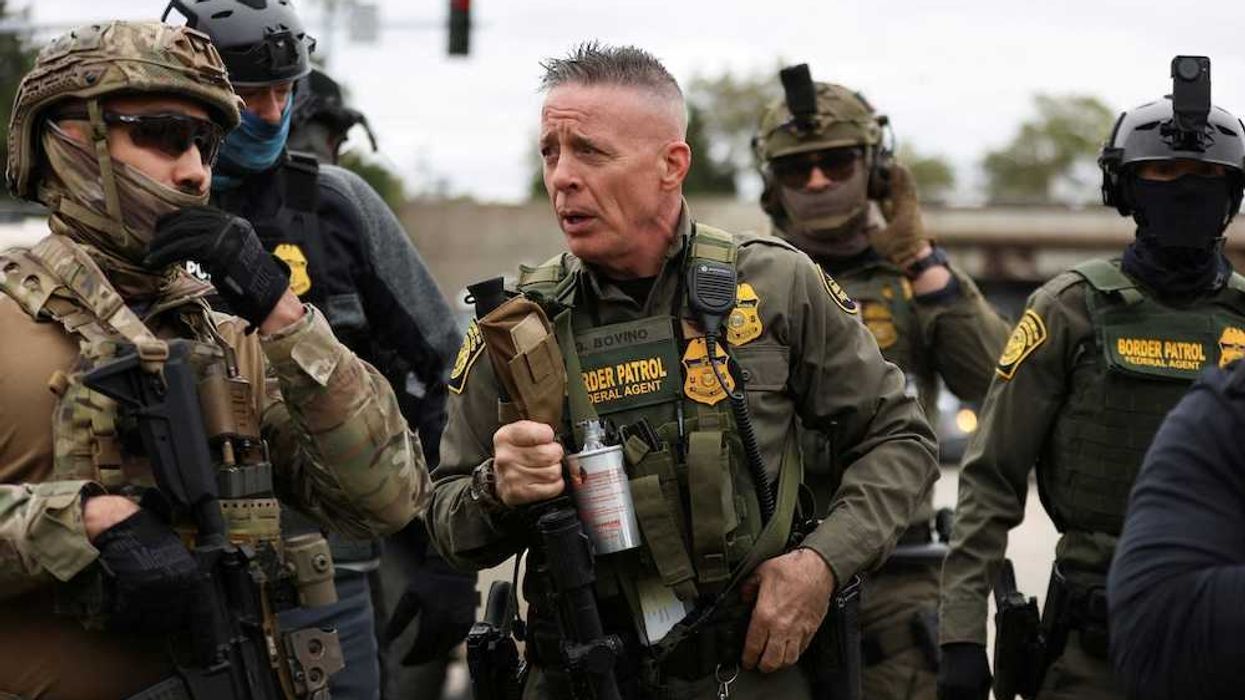
USBP Chief Patrol Agent of the El Centro sector, Greg Bovino, speaks with federal agents in the Cicero neighborhood during an immigration raid, after U.S. President Donald Trump ordered increased federal law enforcement presence to assist in crime prevention, in Chicago, Illinois, U.S., October 22, 2025. REUTERS/Jim Vondruska

November 07, 2025
ALTERNET


ABC News reports the Border Patrol official in charge of Trump’s immigration crackdown in Chicago admitted to lying about a thrown rock before launching tear gas at protesters.

U.S. District Judge Sara Ellis said Thursday that Patrol Commander Greg Bovino fabricated claims about the Oct. 23 incident, which was caught on camera with Bovino throwing a gas canister at demonstrators in Chicago's Little Village neighborhood without giving a verbal warning — a violation of the judge's earlier temporary restraining order limiting the use of force, the judge said. That same day, the judge issued a preliminary injunction limiting the use of force during immigration arrests and protests.

"Mr. Bovino and the Department of Homeland Security claimed that he had been hit by a rock in the head before throwing the tear gas, but video evidence disproves this. And he ultimately admitted he was not hit until after he threw the tear gas," Ellis said.

DHS initially defended Bovino's actions saying that a Border Patrol transport van transporting undocumented immigrants was attacked by demonstrators.

"The mob of rioters grew more hostile and violent, advancing toward agents and began throwing rocks and other objects at agents, including one that struck Chief Greg Bovino in the head," Assistant Secretary Tricia McLaughlin said in an October statement.

But Bovino proved McLaughlin’s statement incorrect.

ABC News reached out to DHS in the aftermath of Bovino’s confession but DHS officials responded by criticizing the judge's decision to grant a preliminary injunction.

“This injunction is an extreme act by an activist judge that risks the lives and livelihoods of law enforcement officers,” the official said.

Commenters on X slammed Bovino’s dishonesty.

“I’d sure as s—— go to jail if had lied about my actions,” posted retired veteran Scott Warhin on X.

“In any other era in America, Greg Bovino would immediately be fired for flagrantly lying under oath in court,” complained another critic on X. “But Trump loves criminals and miscreants. America has had enough of this s—— show.”

Read the ABC report at this link.


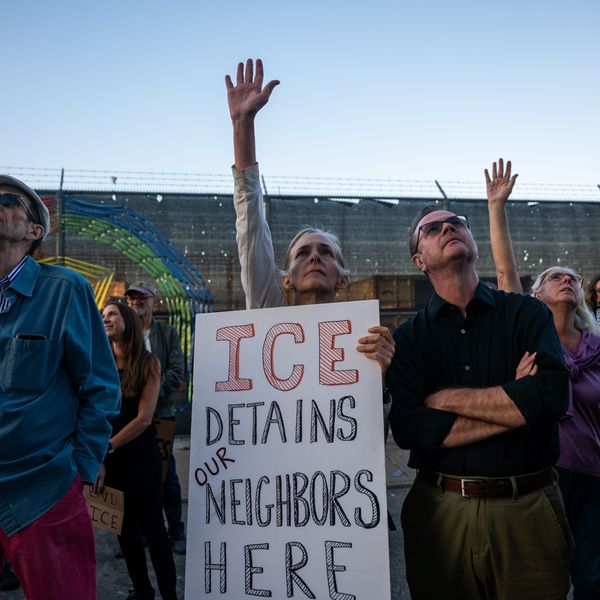
Top ICE Official Says Protesters Can Be Arrested for Simply Criticizing Mass Deportation Campaign: Court Filing


“It’s impossible to overstate how much of what ICE is doing on the ground reflects this completely preposterous conflation of hostile speech and hostile conduct,” commented one legal expert.


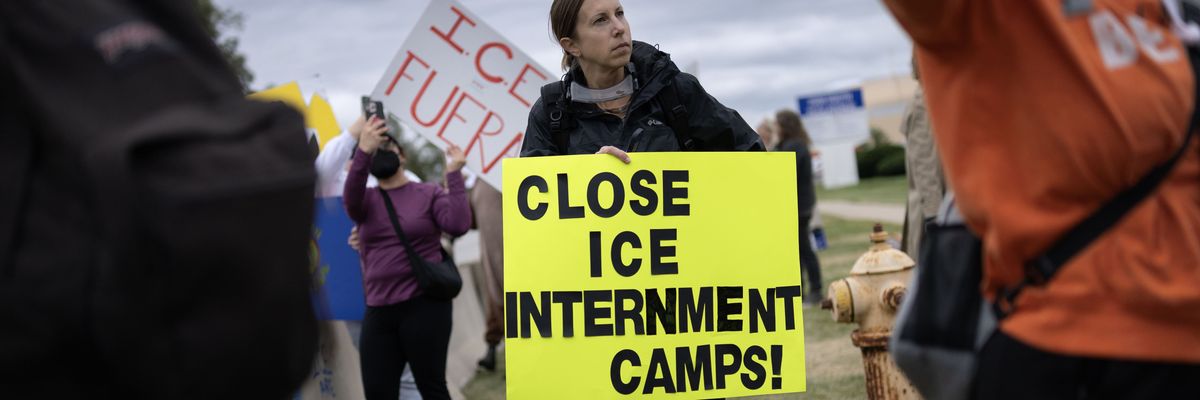
Demonstrators protest outside of the immigration processing and detention facility on October 11, 2025 in Broadview, Illinois.
(Photo by Scott Olson/Getty Images)


Brad Reed
Nov 04, 2025
COMMON DREAMS

A court filing released late on Monday alleged that US Border Patrol Commander-at-Large Gregory Bovino said that merely making what he called “hyperbolic comments” about immigration enforcement operations, including President Donald Trump’s “Operation Midway Blitz” in Chicago, was enough to justify being arrested.

As reported by the Chicago Sun-Times on Tuesday, attorneys representing several Chicago-based media organizations who are suing to restrict federal immigration agents’ use of force in their city claimed that Bovino said during a sworn deposition that “he has instructed his officers to arrest protesters who make hyperbolic comments in the heat of political demonstrations.”


Group Calls on Illinois AG to Open Probe Into ‘Unlawful Actions of Federal Agents’ in Chicago


More Than 170 US Citizens Have Been Held by Immigration Agents, Some Abused or Detained for Days: ProPublica

The attorneys also said in the court document that Russell Hott, the field director for Immigration and Customs Enforcement (ICE) in Chicago, said during his deposition that he did not agree that it would be “unconstitutional to arrest people” simply for expressing opposition to his agency’s current mass deportation operation in the Windy City.

This section of the filing caught the attention of Steve Vladeck, a law professor at Georgetown University, who said it appeared federal immigration officials are straightforwardly violating the First Amendment right to peacefully protest.

“It’s impossible to overstate how much of what ICE is doing on the ground reflects this completely preposterous conflation of hostile speech and hostile conduct,” he wrote in a post on Bluesky. “The First Amendment protects—or, at least, is supposed to protect—the former up and until it’s a ‘true threat,’ which none of this is.”

Elsewhere in the filing, the plaintiffs’ attorneys alleged that Bovino said during testimony that he had “interacted with many violent rioters and individuals” at the ICE facility in Broadview, Illinois, which in recent weeks has become the focal point of local protests. Additionally, the attorneys wrote, Bovino would “not admit he has ever seen protesters who were not violent rioters.”

The attorneys commented that “by Bovino’s logic, anyone who shows up to protest is presumptively violent or assaultive and he can ‘go hard’ against them.”

The case involving the Chicago media organizations and federal immigration enforcement officials is currently being overseen by US District Court Judge Sara Ellis, who last month issued a temporary restraining order that barred federal officers from using riot control weapons “on members of the press, protestors, or religious practitioners who are not posing an immediate threat to the safety of a law enforcement officer or others.”

Federal immigration officials have been employing increasingly aggressive and violent tactics in the Chicago area in recent weeks, including attacking a journalist and a protesting priest with pepper balls outside an Immigration and Customs Enforcement facility; slamming a congressional candidate to the ground; dragging US citizens, including children, out of their homes during a raid in the middle of the night; and fatally shooting a man during a traffic stop.

A hearing on whether to make permanent Ellis’ restraining order which strictly limits the use of riot control munitions has been set for November 5.


Friday, November 07, 2025

YouTube Removed Hundreds of Videos of Israeli Human Rights Violations to Comply With Trump Sanctions

“YouTube is being complicit in silencing the voices of Palestinian victims,” said a spokesperson for the Palestinian Center for Human Rights, whose channel was deleted.


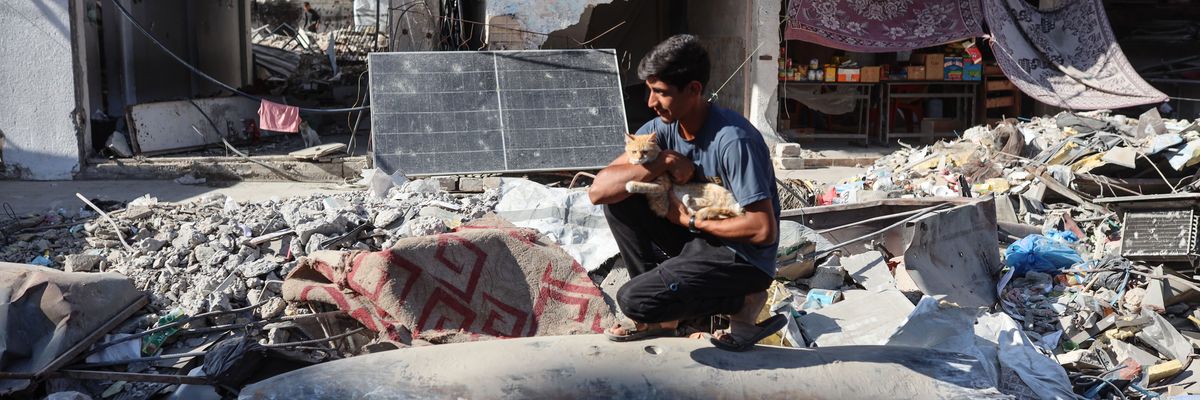
A young Palestinian man holds a cat while sitting on an Israeli rocket in the street in Gaza City, Palestine, on October 30, 2025.
(Photo by Majdi Fathi/NurPhoto via Getty Images)


Stephen Prager
Nov 05, 2025
COMMON DREAMS

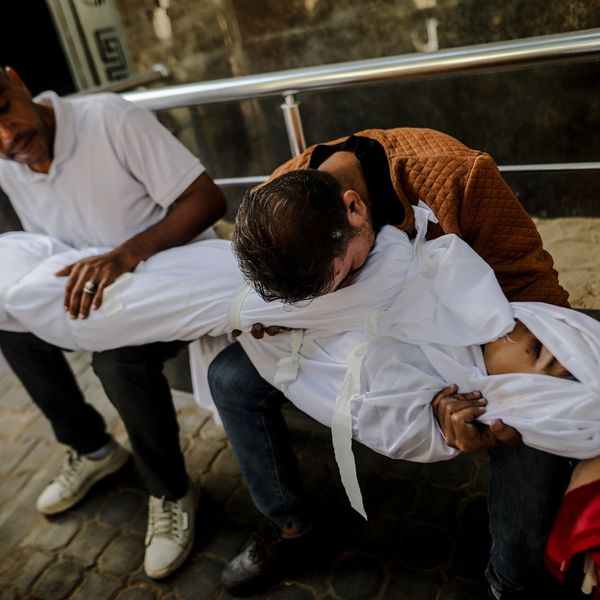
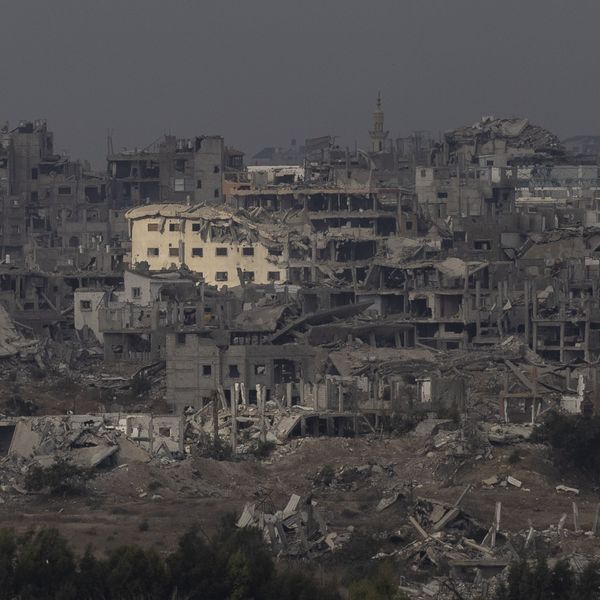
In compliance with a Trump administration effort to punish critics of Israel’s genocide in Gaza, YouTube has deleted the accounts of three prominent Palestinian rights groups, wiping several hundred videos documenting Israeli human rights violations in the process.

According to The Intercept, the video hosting website, owned by Google, quietly removed the accounts of three groups, Al-Haq, the Al Mezan Center for Human Rights, and the Palestinian Center for Human Rights, in October.
RECOMMENDED...


Classified US Report Finds ‘Many Hundreds’ of Alleged Israeli Human Rights Violations in Gaza


Trump Gives Full Support to Israel’s Ceasefire-Violating Attacks That Killed 100+ Palestinians

These are the same three groups that the State Department hit with sanctions in September because they helped to bring evidence before the International Criminal Court (ICC) against Israeli Prime Minister Benjamin Netanyahu and former Defense Minister Yoav Gallant for war crimes, crimes against humanity, and genocide. The court would issue arrest warrants for the pair in 2024.

Secretary of State Marco Rubio said explicitly that the groups were sanctioned because they “directly engaged in efforts by the International Criminal Court to investigate, arrest, detain, or prosecute Israeli nationals, without Israel’s consent.”

YouTube deleted the groups’ channels, as well as their entire archives, which contained over 700 videos that documented acts of brutality by the Israeli military against Palestinians.


According to The Intercept, these included an investigative report about the killing of the Palestinian-American journalist Shireen Abu Akleh by Israeli troops, the military’s destruction of Palestinians’ homes in the West Bank, and a documentary about mothers who’d survived Israel’s genocide in Gaza.

Google confirmed to The Intercept that it deleted the videos to comply with the State Department sanctions.

“Google is committed to compliance with applicable sanctions and trade compliance laws,” YouTube spokesperson Boot Bullwinkle said in a statement.

Katherine Gallagher, a senior staff attorney at the Center for Constitutional Rights, said it was “outrageous that YouTube is furthering the Trump administration’s agenda to remove evidence of human rights violations and war crimes from public view.”

YouTube’s censorship of content deemed too supportive of Palestinians predates President Donald Trump’s return to power. In 2024, officials at YouTube and other social media companies were found to have cooperated through secretive back channels with a group of volunteers from Israel’s tech sector to remove content critical of Israel.

Following news of the three human rights groups losing their channels, documentarian and journalist Robert Inlakesh wrote on social media that in 2024, YouTube removed his channel without warning, deleting all his content, including several documentaries he’d produced in the occupied territories.

“YouTube deleted all my coverage of Israeli soldiers shooting civilians, including children targeted on a live stream, along with my entire account,” he said. “No community guidelines were violated, and three separate excuses were given to me. Then Google deleted my email and won’t respond to appeals.”

Groups sanctioned by the US for supporting the ICC have previously received preliminary injunctions in two cases, in which courts said the State Department violated their First Amendment rights.

But even with the sanctions in place, Sarah Leah Whitson, the executive director of Democracy for the Arab World Now, said there was little legal reason for YouTube to capitulate.

“It’s really hard to imagine any serious argument that sharing information from these Palestinian human rights organizations would somehow violate sanctions,” she said. “Succumbing to this arbitrary designation of these Palestinian organizations, to now censor them, is disappointing and pretty surprising.”

Basel al-Sourani, an international advocacy officer and legal advisor for the Palestinian Center for Human Rights said that YouTube has not made it clear what policies his group’s channel violated.

“YouTube said that we were not following their policy on Community Guidelines, when all our work was basically presenting factual and evidence-based reporting on the crimes committed against the Palestinian people, especially since the start of the ongoing genocide on October 7,” he said.

“By doing this,” he added, “YouTube is being complicit in silencing the voices of Palestinian victims.”
Journalists’ Unions Condemn Condé Nast’s Gutting of Teen Vogue

“As the rest of Condé remained silent or hemmed and hawed over atrocities in Gaza, Teen Vogue printed some of the best analysis and reporting on Palestine in the country,” said one journalist.

THEY WERE THIS GENERATIONS MS. MAGAZINE


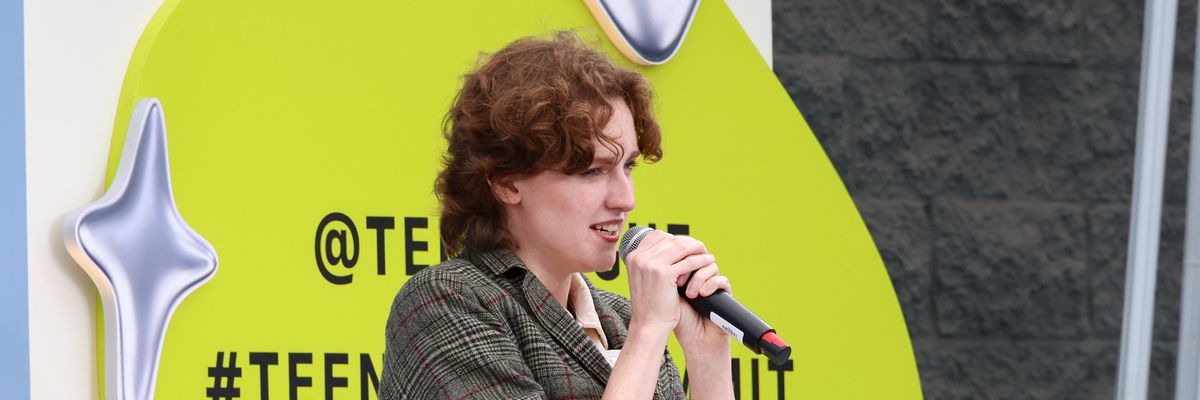
Teen Vogue politics editor Lex McMenamin speaks onstage during Teen Vogue Summit 2024 at Nya Studios on November 23, 2024 in Los Angeles, California.
(Photo by Anna Webber/Getty Images for Teen Vogue)

Julia Conley
Nov 04, 2025
COMMON DREAMS

As praise poured in for Teen Vogue following Condé Nast’s Monday announcement that the youth-focused magazine would be folded into Vogue.com and key staffers credited with driving the publication’s incisive political coverage were being laid off, unions representing Condé Nast journalists condemned the decision to gut the award-winning magazine.

The consolidation of the two brands “is clearly designed to blunt the award-winning magazine’s insightful journalism at a time when it is needed the most,” said Condé United and its parent union, the NewsGuild of New York, in a statement.


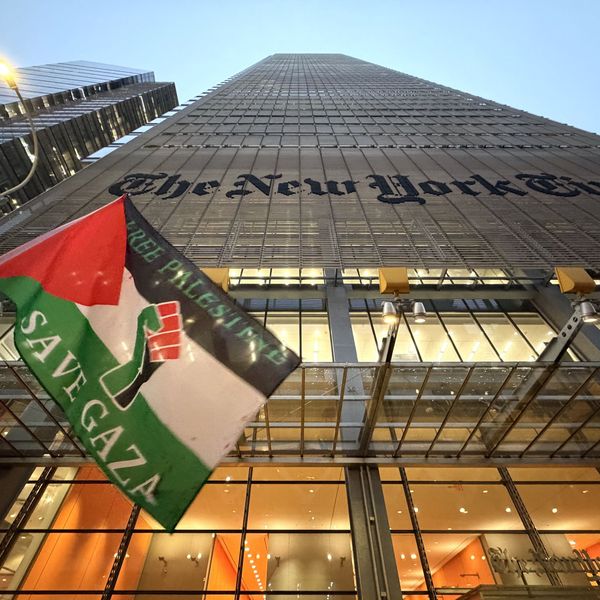
300+ Writers Boycott NYT Opinion Pages Over ‘Shameful’ Anti-Palestinian Gaza Coverage


‘Pro-Trump Propagandists’ Take Over Pentagon Press Corps After Signing Loyalty Pledge

Condé Nast announced Monday that Teen Vogue‘s editor in chief, Versha Sharma, was stepping down. The company said the publication, which ceased its print edition in 2017 and became online-only, would remain “a distinct editorial property, with its own identity and mission,” but admirers of the magazine expressed doubt that it would continue its in-depth coverage of reproductive rights, racial justice, and progressive political candidates as the politics team was dissolved.

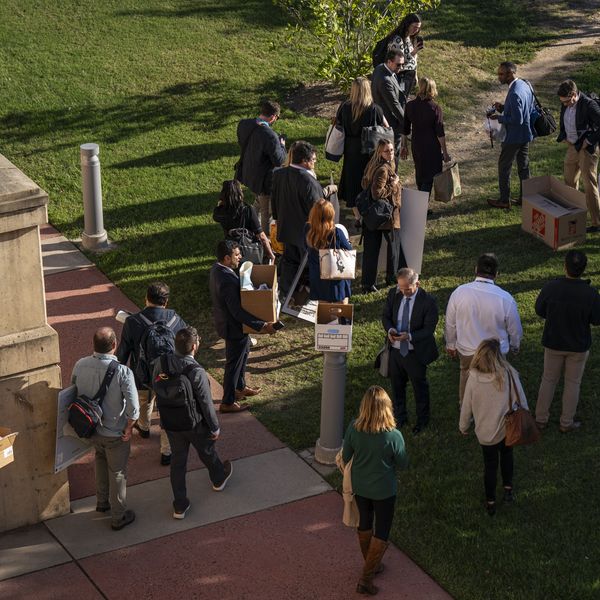
“I was laid off from Teen Vogue today along with multiple other staffers on other sections, and today is my last day,” said politics editor Lex McMenamin. “To my knowledge, after today, there will be no politics staffers at Teen Vogue.”

The unions also said no reporters or editors would be explicitly covering politics any longer.

Sharma helped push the 22-year-old publication toward political coverage with a focus on human rights and engaging young readers on issues like climate action and Israel’s US-backed war in Gaza.

“From interviewing [New York mayoral candidate] Zohran Mamdani on the campaign trail to catching up with Greta Thunberg fresh out of her detention in an Israeli prison to breaking down the lessons that Black Lives Matter taught protestors, Teen Vogue has been considered a platform for young progressives inside the glossy confines of Condé Nast,” wrote Danya Issawi at The Cut.

Recent coverage from the magazine included a dispatch from Esraa Abo Qamar, a young woman living in Nuseirat refugee camp in Gaza, about the Israel Defense Forces’ destruction of schools there; an article linking the US government’s support for Israel’s starvation of people in Gaza to the Trump administration’s cuts to federal food assistance; and Jewish protesters demanding that US companies divest from Israel.

The unions said six of its members, “most of whom are BIPOC women or trans,” were being laid off, including McMenamin.

They added that Condé Nast’s announcement included no acknowledgment of “the coverage that has earned Teen Vogue massive readership and wide praise from across the journalism industry.”


“Gone are the incisive and artful depictions of young people from the Asian and Latina women photographers laid off today,” said the unions. “Gone, from the lauded politics section, is the work that made possible the blockbuster cover of [billionaire CEO Elon Musk’s daughter] Vivian Wilson, one of Condé Nast’s top-performing stories of the year, coordinated by the singular trans staffer laid off today.”

The journalists added that the publisher’s leadership “owes us—and Teen Vogue‘s readership—answers” about the decision to slash the boundary-pushing magazine’s staff. “We will get those answers. And we fight for our rights as workers with a collective bargaining agreement as we fight for the work we do, and the people we do it for.”

Emily Bloch, a journalist at the Philadelphia Inquirer and a former Teen Vogue staffer, said the consolidation of the magazine is likely “more than an absorption and clearly a full shift from the publication’s DNA,” and noted that the decision was announced the day before New Yorkers head to the polls to vote for mayor in a nationally-watched, historic election in which Mamdani has been leading in polls.

“Laying off the entire politics team a day before the NYC election is heinous and a knife in the back to a brand that has solidified its importance for youth,” said Bloch. “Devastating... It’s been a force for youth culture and politics since [President Donald] Trump’s first term. This is a major loss.”
100+ Democrats Urge Trump to Improve US-Mexico-Canada Trade Deal

WE CALL IT THE CMUSA OR NAFTATOO


“We are united in our view that the agreement enacted in 2020 has failed to deliver improvements for American workers, family farmers, and communities nationwide.”


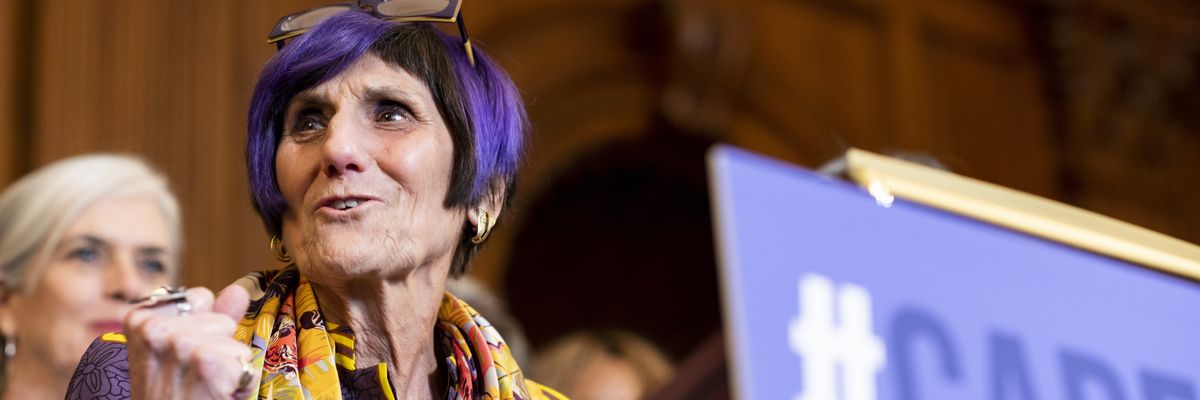
Reps. Rosa DeLauro (D-Conn.)—seen here—and Frank Mrvan (D-Ind.) are leading a letter urging President Donald Trump to strengthen the US-Mexico-Canada Agreement (USMCA) to protect American workers, families, and communities.
(Photo by Bill Clark/CQ-Roll Call, Inc. via Getty Images)


Brett Wilkins
Nov 03, 2025
C0MMON DREAMS

A group of more than 100 congressional Democrats on Monday called on President Donald Trump to use the opportunity presented by the mandatory review of the US-Mexico-Canada Agreement “to make significant and necessary improvements to the pact” that will benefit American workers and families.

“In 2020, some of us supported USMCA, some opposed it, and some were not in Congress,” the lawmakers wrote in a letter to Trump led by Reps. Rosa DeLauro (D-Conn.) and Frank Mrvan (D-Ind.). “Today, we are united in our view that the agreement enacted in 2020 has failed to deliver improvements for American workers, family farmers, and communities nationwide.”

The USMCA replaced the highly controversial North American Free Trade Agreement (NAFTA), which was enacted during the administration of then-Democratic President Bill Clinton in 1994 after being signed by former Republican President George H.W. Bush in 1992. The more recent agreement contains a mandatory six-year review.

As the lawmakers’ letter notes:
Since enactment of the USMCA, multinational corporations have continued to use the threat of offshoring as leverage wielded against workers standing up for dignity on the job and a share of the profits generated by their hard work—and far too often, enabled by our trade deals, companies have acted on these threats. The US trade deficit with Mexico and Canada has significantly increased, and surging USMCA imports have undermined American workers and farmers and firms in the auto, steel, aerospace, and other sectors. Under the current USMCA rules, this ongoing damage is likely to worsen: Since USMCA, Chinese companies have increased their investment in manufacturing in Mexico to skirt US trade enforcement sanctions against unfair Chinese imports of products like electric vehicles and to take advantage of Mexico’s duty-free access to the US consumer market under the USMCA.

These disappointing results contrast with your claims at the time of the USMCA’s launch, when you promised Americans that the pact would remedy the NAFTA trade deficit, bring “jobs pouring into the United States,” and be “an especially great victory for our farmers.”

Those farmers are facing numerous troubles, not least of which are devastating tariffs resulting from Trump’s trade war with much of the world. In order to strengthen the USMCA to protect them and others, the lawmakers recommend measures including but not limited to boosting labor enforcement and stopping offshoring, building a real “Buy North American” supply chain, and standing up for family farmers.

“The USMCA must... be retooled to ensure it works for family farmers and rural communities,” the letter states. “Under the 2020 USMCA, big agriculture corporations have raked in enormous profits while family farmers and working people in rural communities suffered.”

“We believe that an agreement that includes the improvements that we note in this letter” will “ensure the USMCA delivers real benefits for American workers, farmers, and businesses, [and] can enjoy wide bipartisan support,” the lawmakers concluded.
Protesters at 100+ Campuses Tell Trump ‘Hands Off Higher Ed!’

“We’re not only out to defeat Trump, but to also win a vision for affordability, security, and freedom for our generation—both in higher education, and in our democracy,” said one student organizer.


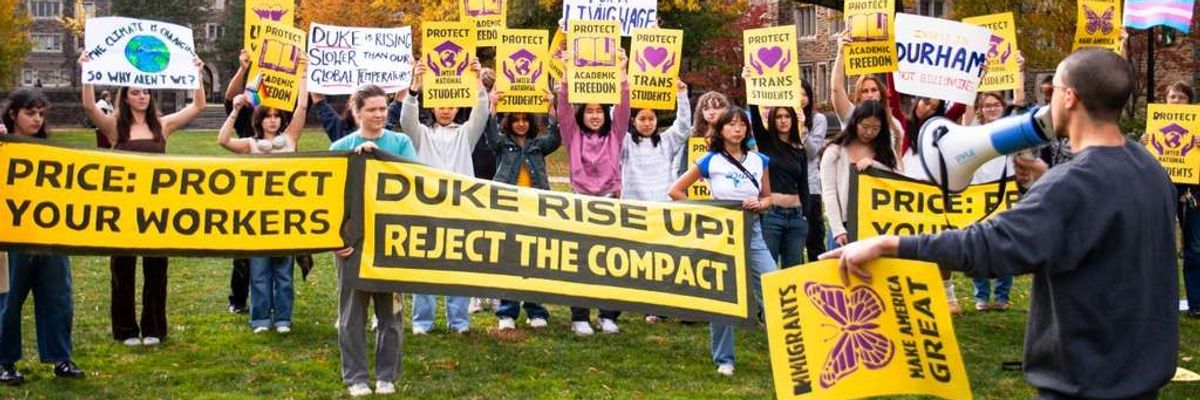
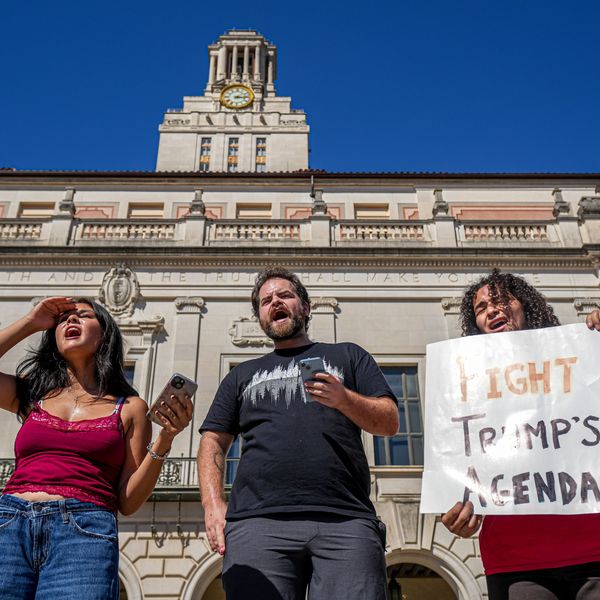
Students at Duke University in Durham, North Carolina joined nationwide protests against President Donald Trump’s attacks on higher education on November 7, 2025.
(Photo: Sunrise Movement/X)

Jessica Corbett
Nov 07, 2025
COMMON DREAMS


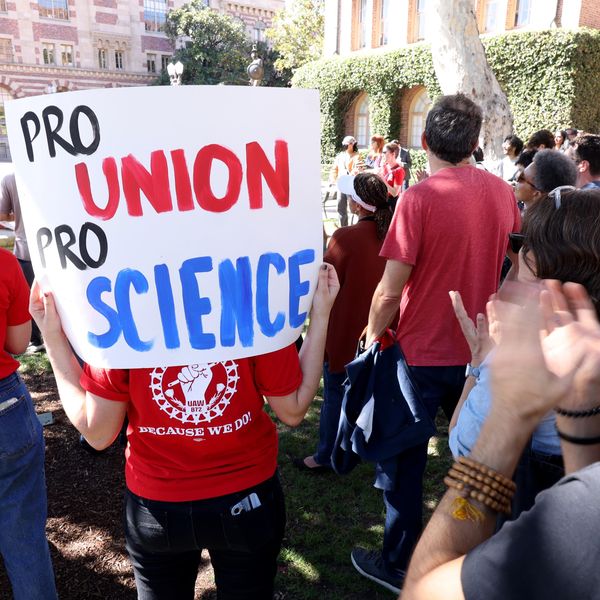
Students and professors at over 100 universities across the United States on Friday joined protests against President Donald Trump’s sweeping assault on higher education, including a federal funding compact that critics call “extortion.”

Crafted in part by billionaire financier Marc Rowan, Trump’s Compact for Excellence in Higher Education was initially presented to a short list of prestigious schools but later offered to other institutions as a way to restore or gain priority access to federal funding.


100+ US Campus Protests to Call Out Trump Attacks and Unaffordable Education


The compact requires signatories to commit to “transforming or abolishing institutional units that purposefully punish, belittle, and even spark violence against conservative ideas,” while also targeting trans student-athletes and diversity, equity, and inclusion (DEI) policies.

“The attacks on higher ed are attacks on truth, freedom, and our future. We’re organizing to protect campuses as spaces for learning, not control—for liberation, not censorship,” said Brianni Davillier, a student organizer with Public Citizen, which is among the advocacy groups and labor unions supporting the Students Rise Up movement behind Friday’s demonstrations.


At the Community College of Philadelphia, protesters stressed that “higher education research saves lives.” Duke University demonstrators carried signs that called for protecting academic freedom and transgender students. Roughly 10 miles away, at the University of North Carolina at Chapel Hill, they unfurled a banner that read, “Stand for Students | Reject Trump’s Compact.”

Professors from multiple schools came together for a rally at Central Connecticut State University, according to Connecticut Post.

“The compact would require universities submit to a system of government surveillance and policing meant to abolish departments that the government disapproves of, promote certain viewpoints over others, restrict the ability of university employees to express themselves on any major issue of the day,” said James Bhandary-Alexander, a Yale Law School professor and member of the university’s American Association of University Professors (AAUP) executive committee.

AAUP, also part of the coalition backing the protest movement, said on social media Friday: “Trump and Marc Rowan’s loyalty oath compact is [trash]!! Out with billionaires and authoritarians in higher ed! Our universities belong to the students and higher ed workers!”


Protesters urged their school leaders to not only reject Trump’s compact—which some universities have already publicly done—but also focus on other priorities of campus communities.

At the University of Kansas, provost Barbara Bichelmeyer confirmed last month to The University Daily Kansan that KU will not sign the compact. However, students still demonstrated on Friday.

“They did say ‘no’ but that’s like the bare minimum,” said Cameron Renne, a leader with the KU chapters of the Sunrise Movement and Young Democratic Socialists of America. “We’re hoping to get the administration to hear us and at least try to cooperate with us on some of our demands.”

According to The University Daily Kansan, “Renne said the groups are also pushing for divestment from fossil fuels, improvements in campus maintenance, and the removal of restrictions on gender ideology.”


Some schools have declined to sign on to the compact but reached separate agreements with the Trump administration. As the Guardian reported Friday:
At Brown University in Rhode Island—one of the first institutions to reach a settlement with the Trump administration earlier this year—passersby were invited to endorse a banner listing a series of demands by dipping their hands in paint and leaving their print, while a group of faculty members nearby lectured about the history of autocracy.

“Trump came to our community thinking we could be bullied out of our freedom,” said Simon Aron, a sophomore and co-president of Brown Rise Up. “He was wrong.”

Brown isn’t the only Ivy League school to strike a deal with Trump; so have Columbia University and the University of Pennsylvania, the alma mater of both Rowan and Trump. Cornell University followed suit on Friday amid nationwide demonstrations.

“November 7th is only the start,” said Kaden Ouimet, another student organizer with Public Citizen. “We’re building a movement of students, faculty, and campus workers to demand our colleges do not comply with the Trump regime, and its authoritarian campus compact.”

“We know that to fully take on autocracy, we have to take on the material conditions that gave rise to it,” the organizer added. “That is why we’re not only out to defeat Trump, but to also win a vision for affordability, security, and freedom for our generation—both in higher education, and in our democracy.”


Cornell Becomes Latest University to Submit to Trump’s ‘Extortion’ Over Student Protests

The government claimed that Cornell had violated civil rights law by allowing students to protest against Israel. Even though the agreement required the school to admit no wrongdoing, it still agreed to pay a $30 million fine.


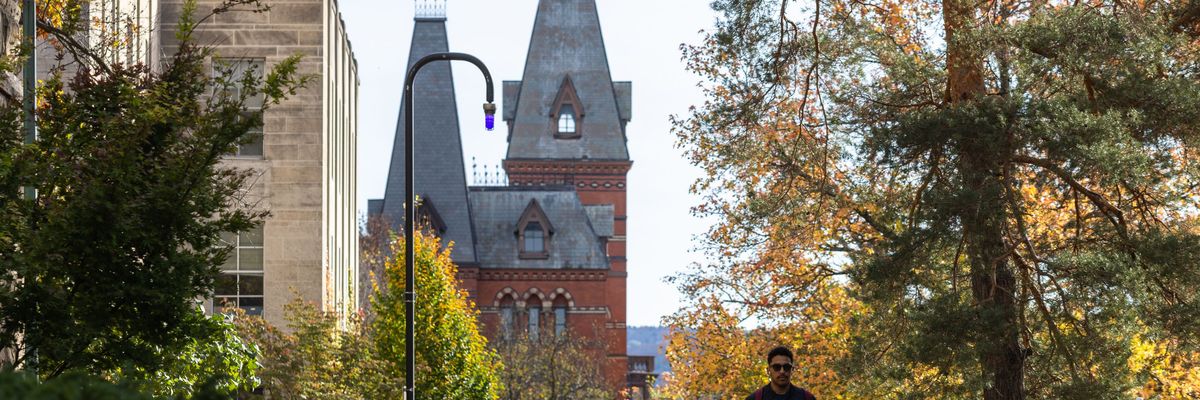
People walk through the Cornell University campus on November 3, 2023, 
in Ithaca, New York.
(Photo by Matt Burkhartt/Getty Images)

Stephen Prager
Nov 07, 2025
COMMON DREAMS

Cornell University became the latest school to cave to demands from the Trump administration on Friday, inking a deal that would restore $250 million in unpaid research funds stripped by the federal government as part of its crusade against higher education and efforts to punish schools that allowed students to freely express pro-Palestine views.

Following a months-long investigation by the government for allegedly violating Title VI of the Civil Rights Act, the Ivy League school agreed to pay a $30 million fine to the government, which claimed that Cornell had violated the law by not sufficiently cracking down on student protests against Israel’s genocide in Gaza. The administration accused the school of failing “to protect Jewish students.”


Three More Top Universities Reject Trump’s Extortion Compact for Funding

In March, the Department of Education launched investigations into 60 major US universities, with Education Secretary Linda McMahon describing students’ peaceful demonstrations against Israel that had swept campuses the previous year as “relentless antisemitic eruptions.”

As The Guardian reported earlier this week, the civil rights investigation at Cornell had been spurred by a nonspecific, anonymous complaint that a professor “is supporting Hammas [sic] and their beliefs. He is literally brain washing students to hate and discriminate towards a certain religions [sic]–Jews.” The complaint demanded that the professor be “black listed” from teaching.

Following this complaint, the Department of Education’s Office of Civil Rights announced an investigation into the school for “failing to respond to incidents of harassment.”

In a letter to the school community on Friday, Cornell’s president, Michael Kotlikoff, said that the resolution made explicit that its agreement to pay out the lofty fine to the Trump administration was “not an admission of wrongdoing” by the university.

In addition to paying the fine, the school also had to set aside another $30 million to invest in “research programs that will directly benefit US farmers through lower costs of production and enhanced efficiency.”

And while Kotlikoff said he would refuse a deal that allowed the government to “dictate our institution’s policies,” the agreement requires the school to comply with several of the Trump administration’s ideological goals.

It agreed to restrict its use of diversity, equity, and inclusion (DEI) policies and turn over data on the racial makeup of its student body to demonstrate that it is complying with the 2023 Supreme Court decision outlawing affirmative action. It also agreed to train staff using a Justice Department memo ordering colleges to abandon “transgender-friendly” policies.

Cornell also agreed to “conduct annual surveys to evaluate the campus climate for Cornell students, including the climate for students with shared Jewish ancestry.” The school specifically agreed to query students about “whether they believe the changes Cornell has made since October of 2023,” when Israel launched a two-year genocide in response to Hamas attack, “have benefited the Cornell community.”

The Trump administration has notably ordered schools to abide by a wide-ranging definition of “antisemitism” that not only punishes displays of bigotry against Jewish people, but also criticisms of Israel’s government and policies.


Cornell also agreed to seek out “experts on laws and regulations regarding sanctions enforcement, anti-money laundering, and prevention of terrorist financing,” suggesting that the school will be expected to discipline and investigate pro-Palestinian organizations on campus, which the administration has baselessly accused of “material support” for terrorism.

Cornell’s agreement with the administration comes as students at more than 100 campuses across the country have launched demonstrations against Trump’s efforts to coerce schools into signing his “Compact for Academic Excellence in Higher Education,” in exchange for priority federal funding and other “positive benefits.” Critics have described it as a “loyalty oath” and an “extortion agreement.”

Though several schools have declined to sign onto the compact, Cornell is not the first school to bend to the Trump administration’s demands to restart the flow of federal funding: Brown University, Columbia University, the University of Pennsylvania, and the University of Virginia have all cut similar deals.

Jameel Jaffer, the director of the Knight First Amendment Institute at Columbia University, has argued that there was little basis for Cornell to be fined for civil rights violations.

“If the Trump administration had evidence that Cornell systemically discriminated against Jewish students in violation of Title VI, it wouldn’t let the university off the hook for a $30 million investment in research about AI, robotics, and farming,” Jaffer said. “But, of course, there’s no such evidence. The settlement only confirms what we already knew—that the Trump administration’s Title VI allegations were baseless and made in bad faith.”

“That doesn’t mean there weren’t antisemitic incidents on Cornell’s campus. There were. But there’s just no support for the notion that Cornell or other major American universities were indifferent to antisemitism,” he continued. “The problem wasn’t that universities were indifferent to antisemitism, but that they allowed trustees, advocacy groups, demagogues, etc. to pressure them into treating as ‘antisemitism’ all kinds of political expression and advocacy that was entirely legitimate.”

A report from the American Association of University Professors and the Middle East Studies Association, which analyzed discrimination complaints sent to the Civil Rights Office found that “all but one of the 102 antisemitism complaint letters we have analyzed focus on speech critical of Israel; of these, 79% contain allegations of antisemitism that simply describe criticisms of Israel or Zionism with no reference to Jews or Judaism; at least 50% of complaints consist solely of such criticism.”

Though the payout was far less than the $200 million settlement Columbia agreed to pay earlier this year, Spencer Beswick, a postdoctoral associate at Cornell’s Humanities Scholars Program, wrote on social media that his university was guilty of “capitulation to extortion.”


Most Campus ‘Antisemitism’ Probes Target Criticism of Israel, Not Anti-Jewish Hate: Report

The report shows how a landmark civil rights law “is being cynically misused to squash political dissent and speech that advocates for the human rights of Palestinians,” said one AAUP leader.


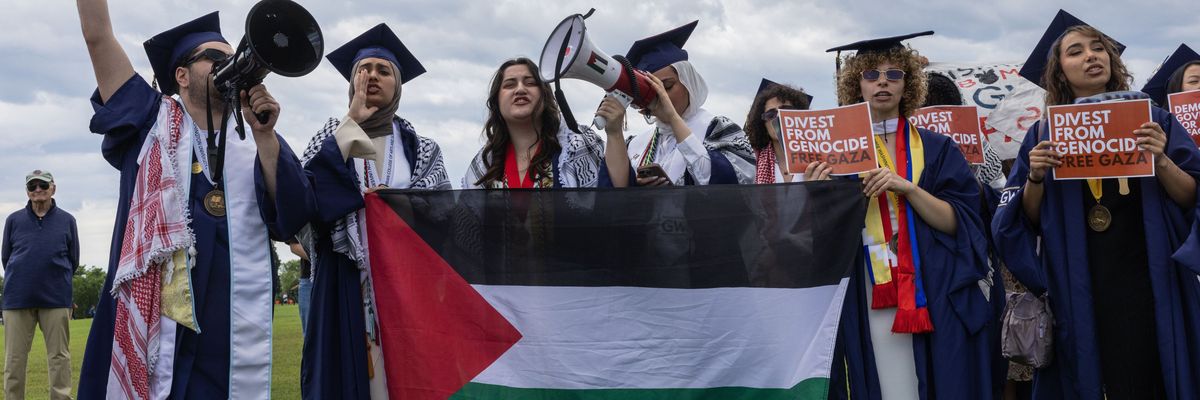
George Washington University students hold a walkout at the National Mall as the institution’s president, Ellen Granberg, delivers her commencement address on May 18, 2025 in Washington, DC.
(Photo by Probal Rashid/LightRocket via Getty Images)


Jessica Corbett
Nov 06, 2025
COMMON DREAMS


Under both the Biden and Trump administrations, pro-Israel and far-right advocacy groups have driven a surge of federal civil rights investigations conflating true antisemitism with university professors and students’ criticism of the US-backed Israeli government and its genocidal assault on the Gaza Strip.


That’s according to Discriminating Against Dissent: The Weaponization of Civil Rights Law to Repress Campus Speech on Palestine, a report published this week by the American Association of University Professors (AAUP) and the Middle East Studies Association (MESA).


‘Solidarity as a Crime’: Report Details Crackdown on Pro-Palestine Protests Across West

“Our members, because of their expertise on the region, have long borne the brunt of allegations that falsely equate criticism of Israel with antisemitism,” MESA president Aslı Bâli said in a statement. “Complaints like these penalize scholars for teaching basic facts about the region.”

The report begins: “Over the past two years, the United States government has taken unprecedented steps to suppress campus speech—including scholarship, advocacy, and protest—opposing the state of Israel’s genocidal war against the Palestinian people in the Gaza Strip. This crackdown has paved the way for profound transformations in US colleges and universities.”

“A long-standing ‘Palestine exception’ to the First Amendment now threatens to give way to a new reality: Palestine is less an exception to academic freedom than it is a pretext for erasing the norm altogether, as part of an authoritarian assault on the autonomy of higher education and on the very idea of racial and gender equity,” the document warns.


The analysis comes as President Donald Trump continues his sweeping attack, aiming to shut down the Department of Educationdeport foreign students critical of Israel, and bully campus leaders into signing an “extortion agreement” for federal funding.

“In effect, the Civil Rights Act of 1964 is no longer being used to address racial discrimination in higher education,” Bâli told the Guardian, which first reported on the findings. “Instead, Title VI has been repurposed as part of the administration’s broader effort to remake higher education in line with its right-wing political and cultural agenda.”

AAUP and MESA found that “more investigations were opened in the last two months of 2023 (25) than in all previous years combined (24). Investigations broke record numbers in 2024 (39) and are on track to do so again in 2025 (38, as of September 30).”

“All but one of the 102 antisemitism complaint letters we have analyzed focus on speech critical of Israel; of these, 79% contain allegations of antisemitism that simply describe criticisms of Israel or Zionism with no reference to Jews or Judaism; at least 50% of complaints consist solely of such criticism,” the document states.

The report highlights that “the Biden administration opened more antisemitism probes against colleges and universities (65) than for all other types of racial harassment combined (38),” and “the Trump administration appears to have halted racial harassment investigations altogether.”

The federal probes “are producing a new system of government surveillance and monitoring of campus speech,” the report notes, with over 20 schools agreeing to share internal data on discrimination complaints with the government.

Examining Trump’s Task Force to Combat Antisemitism, the researchers found that the Department of Education “has continued to open very high numbers of antisemitism probes even as its staff has been slashed by the Trump administration,” and “in its high-profile campaigns against prestigious universities, the task force has systematically ignored the procedural requirements of Title VI, unlawfully cutting off vast sums of funding before any meaningful investigation, let alone findings.”

For at least 78% of the complaints examined by AAUP and MESA, pro-Israel and right-wing advocacy organizations—including those without any campus presence—served as complainants or represented them. Such groups have also been involved with private lawsuits intended to redefine antisemitism as including criticism of Israel and restrict such criticism at universities.

“Antisemitism lawsuits surged after October 7, 2023 (two filed before that date, 26 since),” according to the analysis. “No court has yet made a final judgment in favor of plaintiffs. In nine cases, Title VI claims have been dismissed, including on free speech grounds; nine lawsuits have settled, some of which resulted in even more draconian policy changes on campuses than government investigations.”


AAUP general counsel Veena Dubal said that “the findings in this report underscore how the Civil Rights Act of 1964—which passed in response to years of nonviolent civil disobedience against racial injustice—is being cynically misused to squash political dissent and speech that advocates for the human rights of Palestinians.”

“This is a perverse outcome,” Dubal declared, as AAUP prepares for Friday protests pressuring leaders at over 100 institutions to reject the president’s “Compact for Academic Excellence in Higher Education” and make schooling more affordable.

As AAUP president Todd Wolfson said in a statement about the day of action earlier this week, “From attacks on academic freedom in the classroom to the defunding of lifesaving scientific research to surveilling and arresting peaceful student protesters, Trump’s higher education policies have been catastrophic for our communities and our democracy.”

“We’re excited to help build a coalition of students and workers united in fighting back for a higher education system that is accessible and affordable for all and serves the common good,” he added. Other supporting groups include Campus Climate Network, College Democrats of America, Gen-Z for Change, Indivisible, Jewish Voice for Peace, March for Our Lives, and Sunrise Movement.