Monday, November 24, 2025


UK Budget 2025: What do MPs, trade unions and think tanks want from Reeves?
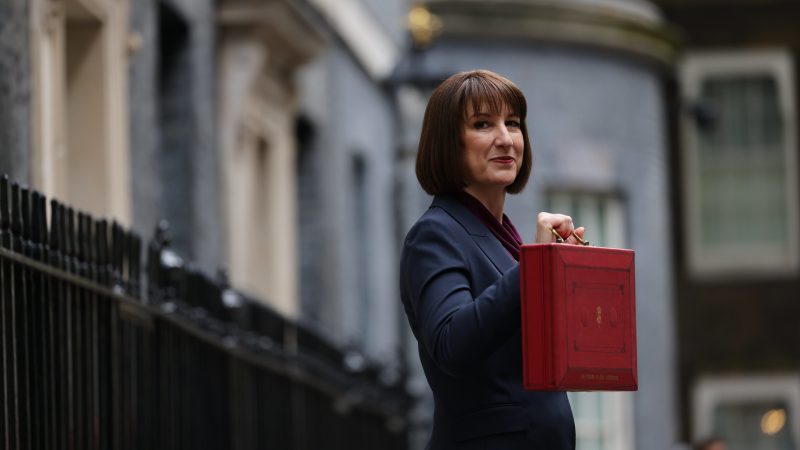

Photo: HM Treasury/Flickr

Chancellor Rachel Reeves is set to deliver her second Budget next week, with the mood music surrounding the announcement setting the stage for further tax rises.

However, talk of a potential reversal of Labour’s manifesto commitment not to raise income tax, National Insurance on VAT on working people has been dismissed – leaving political pundits and MPs guessing how the Chancellor will fill the latest black hole in the nation’s finances.

With growth sluggish and the government shaken by anonymous briefings, the Budget could be a do-or-die moment for the Prime Minister and his administration.

LabourList spoke to MPs, think tanks and some of the nation’s trade unions to ask what they want to see from Reeves’ big announcement next Wednesday.

‘Progressive and pro-growth’

Chris Curtis, co-chair of the Labour Growth Group, acknowledged that the Budget will be “difficult” and will include tax rises of some variety. However, he urged the Chancellor to steer away from measures that could have a knock-on effect to economic growth or risk further difficult choices later down the road.

He told LabourList: “I think in a difficult budget which is ultimately going to lead to tax rises, we avoid policies that are going to hit economic growth, as that will only lead to more tough decisions in the future.”

The newly reinvigorated Tribune Group (representing the party’s so-called ‘soft left’) passed a motion which said that “the forthcoming Budget is an opportunity for the Government to demonstrate Labour’s values of fairness and opportunity, to lower the cost of living, to increase the stability of our public finances by increasing the fiscal headroom, and to set out measures that will tackle child poverty.”

Among the measures they want to see in the budget are taxing sectors such as banking and online gambling that have made excess profits from economic turmoil and weak regulation under the Tories; Abolition of the two-child limit; and a consideration of a ‘Protected Minimum Floor’ below which a person’s Universal Credit cannot fall.

On the left of the party, Poole MP Neil Duncan-Jordan said that next week’s Budget needs to be a “Budget for living standards” and proposed a selection of measures, including scrapping the two child benefit cap and equalising the rate of capital gains tax with income tax.

“The Budget needs to introduce a fair taxation system, so that those with the broadest shoulders carry the heaviest burden – and there are some practical steps that we could take to bring that about.

“Capital gains tax should be set at the same rate as income tax, so that unearned wealth is taxed the same way as earned income. The 45% top rate of tax should go back to 50%. That would affect just around about a million of the wealthiest people in the country.

“We should end paying interest on bank loans, we should have a windfall tax on the utilities, banks and other large companies, who’ve done extremely well – and we should have a wealth tax on those with assets over £10 million.”

Noah Law, MP for St Austell and Newquay, said that the Budget had to be “progressive… beyond a shadow of a doubt”, alongside measures that would boost growth in the economy.

Law welcomed the decision to reverse plans to break the party’s manifesto on tax and said that the Chancellor had a range of alternative options to raise funds to plug the black hole in the country’s finances.

However, he urged the government to steer away from a wealth tax – warning such a measure may not raise as much as some have claimed.

Budget ‘make-or-break for Labour’

The new soft-left grouping Mainstream described next week’s Budget as “make-or-break for Labour and for the country” and said the Chancellor must deliver urgent action to improve living standards and “lay the foundations for a new economic settlement… where people and planet come before profit”.

Luke Hurst, Mainstream’s national coordinator, said: “This Budget must prove Labour is on your side. That means urgent funds for families fighting to make ends meet, and scrapping the cruel two-child benefit cap now. It means making the super-wealthy pay their fair share. It means taking back our water and energy from greedy profiteers.

“We must recognise that prosperity won’t be generated from Whitehall and that power must cascade deeply and widely across the country. We need political reform and meaningful decentralisation to grow the economy.”

Left-wing group Momentum warned that hiking taxes on working people would “not only be morally wrong, but politically disastrous”.

The organisation’s co-chair Sasha Das Gupta said: “We welcome reports that the Chancellor has decided not to raise income tax, but her pro-austerity fiscal framework forces the Government into a corner. 

“Instead, the Chancellor must use the upcoming Budget to announce an end to these arbitrary fiscal rules and focus on rebuilding Britain by taxing the rich, scrapping the two child cap, investing heavily in our public services and genuinely reversing austerity.”

‘Raise revenue without breaking manifesto or killing growth’

The Fabian Society has called on the Chancellor to freeze tax thresholds in order to raise tax revenue, warning of the need to raise tax revenue without breaking Labour’s manifesto commitments on tax.

Joe Dromey said: “The Chancellor will need to raise revenue in the budget in order to protect public services. But we need to do so without breaking the manifesto or killing off growth.

“We should extend the freeze on income tax thresholds for two years. Fabian Society analysis found this would raise over £11bn, with half of the funding coming from the richest fifth of households.”

Dromey also said Reeves should introduce a real living wage for care workers and said: “Care workers deliver some of the most important work in society. But they are chronically underpaid and undervalued, with almost half earning below the real Living Wage.

“Labour had committed to introducing a Fair Pay Agreement for social care, and allocated £500m to improve pay and conditions. The Chancellor should boost the funding available for this to £800m. This would be enough to ensure all care workers are paid at least the real Living Wage, and that they have access to occupational sick pay.

“This could be paid for by raising the insurance premium tax on private health insurance from 12% to 20%, bringing it into line with VAT.”

He called for the Chancellor to restore the health in pregnancy grant, which he said would be “a relatively low-cost, proven mechanism to transform lives”.

Dromey also expressed support for a rumoured nightly tourist tax, which would give mayors the power to levy visitors a charge when staying at hotels and Airbnb-style accommodation.

“Other countries often allow local authorities to charge visitors staying overnight a small amount to help fund the amenities they benefit from. The Chancellor should allow mayors and councils to implement a visitor levy on overnight stays in their areas. It would cost visitors very little, but would add up and make a real difference.”

‘Chancellor must boost living standards and bring down bills’

Trade unions have unanimously called for greater levies on the rich, alongside a focus on addressing the cost of living for working people.

TUC general secretary Paul Nowak said that living standards and decent jobs should be at the core of Reeves’ Budget.

“Households up and down the country are still feeling the pinch, with real pay sluggish. After years of falling living standards, there is still much ground to make up.

“There are no easy fixes to longstanding challenges in the jobs market, with the fall in jobs, higher youth unemployment and persistently high use of zero hours contracts remaining significant concerns.

“The government is on the right track with serious public investment, stronger workers’ rights and improving the support people need to get into work.

“The Chancellor must build on this at the Budget by boosting living standards and bringing down household bills, sustaining investment in our infrastructure and continuing to repair our public services.

“The new jobs guarantee, which is a major step forward for boosting young people’s job prospects, must be ambitious in scale and scope – with early access for those who need it most.”

Unite, which has flirted with the prospect of disaffiliating from Labour, has said that next week’s Budget is a “critical point” for the union’s continued support for the party.

At Labour’s party conference in September, general secretary Sharon Graham said that affiliation was getting “harder and harder to justify” and urged Rachel Reeves to junk the fiscal rules.

She told Sky News: “Those fiscal rules need to be changed. Other countries are doing it. We should stop dancing around our handbag and do that. If the Budget is essentially nothing, it’s insipid, I think we’ve got a real problem on our hands – because without the money to make the change, then nothing is going to change.”

‘Historic opportunity to start to rebalance the country’

Britain’s largest trade union Unison has said the Budget is an “historic opportunity to start to rebalance the country” and called for “brave, progressive choices” to fix public services and tackle poverty.

General secretary Christina McAnea said: “We know the Labour government inherited a mess from the Conservatives, but the economy is still not working for many people who are struggling to afford the basics. This Budget is an opportunity to tax, not work.”

Some of the measures she is calling for is bringing capital gains tax in line with income tax, which she claims would raise up to £14 billion per year, as well as scrapping the two child benefit cap.

“People elected a Labour government because they wanted change and while there are things to celebrate – like the Employment Rights Bill that will transform the working lives of millions – there is a long, long way to go before people can start to feel better.

“This Budget is an historic opportunity to start to rebalance the country. To shift the dial on inequality and call time on child poverty. I hope the Chancellor is bold, grasps the nettle and makes history for the right reasons next week.”

TSSA general secretary Maryam Eslamdoust said that the Budget must be “true to Labour values” and support those struggling to make ends meet.

“If taxes are to rise to build the country and get the country moving, that is no bad thing – but it is those with the deepest pockets who should pay more.”

Eslamdoust said she wanted Reeves to raise income tax on high earners, alongside a wealth tax on the richest – describing it as “the only way forward”. However, increases in income tax have been ruled out by the Chancellor.

‘Pivotal moment’

The think tank ecosystem has also described this year’s Budget as a “pivotal moment” for the government amid difficult economic headwinds.

The Resolution Foundation, the organisation pensions secretary Torsten Bell chaired before his election to Parliament, has urged the Chancellor to make “sensible tax reforms” to raise the £26bn rumoured to be needed.

Research director James Smith said: “Budget-watchers are braced for a major downgrade to Britain’s productivity outlook. But ironically, a major upgrade to the outlook for pay could mean that the Chancellor’s fiscal black hole is less daunting than feared.

“However, reassuring the markets about the state of the public finances, paying for policy U-turns and providing fresh cost of living won’t come cheap. Tax rises of £26bn are likely to be needed.

“The Chancellor should look to make sensible tax reforms to car taxes, dividends and capital gains.”

However, Smith said that Reeves should switch two pence of employee National Insurance onto income tax to raise cash while protecting workers’ wages – a measure all but ruled out by the Chancellor.

Centre-left think tank Compass said that any break of manifesto commitments would be seen as a “sign of desperation”.

Director of the campaign group Neal Lawson said: “  Increasing taxes to enable social investment is a good thing if planned effectively, but breaking manifesto commitments like this is a sign of desperation that could backfire economically and politically.

“This is the inevitable outcome of a hyperfactional obsession that rejects progressive economic arguments in the name of party control: the country is now paying the price.”

Progressive think tank Common Wealth also stressed the need to address the cost of living in the Budget, but also called for the transfer of utilities back into public hands.

Deputy director Sarah Nankivell said: “This should be a budget to take on the cost of living crisis which is the greatest challenge people across the country are facing right now.

“Privatising our essential services has been a disaster. Since the 1990s, almost £200bn has been transferred from the public to shareholders through our transport fares and water and energy bills.

“Investing in buying back our utilities and public transport, at fair value, is critical if we are to get a handle on the cost of essentials. Without this, the government will struggle to achieve any durable increase in living standards.”

 40 MPs call on Rachel Reeves to tax wealth more – Green New Deal Rising

“We are calling on you to make this year’s Autumn Budget a turning point by focusing on taxing wealth more and work less.”
Letter to the Chancellor signed by 40 MPs

By Green New Deal Rising

This morning, 40 MPs from 8 different parties signed an open letter demanding that Rachel Reeves taxes wealth more in the Budget. 

The MP supporters include 21 Labour backbenchers, 4 Greens, SNP, Independents, Lib Dem and SDLP MPs. Thanks our consistent pressure, and the work of our friends at Taxpayers Against Poverty, we’ve got MP backers from Aberdeenshire to Brighton!

The MPs are urging the Chancellor to make this year’s budget a “turning point” for the country by focusing on taxing wealth more and work less.  

They say Britain’s tax system continues to overburden those who work hardest while protecting those whose wealth grows passively, writing: “This imbalance is not only unfair – it is economically damaging.” 

Read the full letter text and list of MP signatories below ðŸ‘‡


Dear Chancellor,

Last year, a cross-party group of MPs urged the Chancellor to make the tax system fairer by asking those with the greatest wealth to contribute more. A year on, the case for doing so has only strengthened.

Britain’s tax system continues to overburden those who work hardest while protecting those whose wealth grows passively. Ordinary families face rising costs of living, crumbling public services, and deepening insecurity, while extreme wealth at the top continues to expand. This imbalance is not only unfair – it is economically damaging.

We are calling on you to make this year’s Autumn Budget a turning point by focusing on taxing wealth more and work less. A fairer approach to wealth taxation would:

  • Reduce poverty and inequality by ensuring those with the broadest shoulders contribute their fair share.
  • Ease the pressure on working families, allowing more people to thrive rather than merely survive.
  • Provide sustainable funding for public services like education, health, housing, and social care – the foundations of a fair and productive society.

This is not about punishing success or creating division. It is about fairness, balance, and responsibility. Britain cannot thrive when wealth accumulates at the top while millions struggle to make ends meet.

We urge you to act with courage and clarity: reform the tax system so that it rewards effort, not advantage, and builds a future that works for everyone.

Yours sincerely,

Diane Abbott — Hackney North & Stoke Newington — Labour
Shockat Adam — Leicester South — Independent
Olivia Blake — Sheffield Hallam — Labour
Apsana Begum — Poplar and Limehouse — Labour
Richard Burgon — Leeds East — Labour
Dawn Butler — Brent East — Labour
Ian Byrne — Liverpool West Derby — Labour
Dr Ellie Chowns — North Herefordshire — Green Party
Carla Denyer — Bristol Central — Green Party
Bobby Dean — Carshalton & Wallington — Lib Dem
Jeremy Corbyn — Islington North — Independent
Alex Easton — North Down — Independent
Colum Eastwood — Foyle — SDLP
Sorcha Eastwood — Lagan Valley — Alliance Party
Neil Duncan-Jordan — Poole — Labour
Claire Hanna — Belfast South and Mid Down — SDLP
Adnan Hussain — Blackburn — Independent
Imran Hussain — Bradford East — Labour
Kim Johnson — Liverpool Riverside — Labour
Ayoub Khan — Birmingham Perry Barr — Independent
Ben Lake — Ceredigion Preseli — Plaid Cymru
Ian Lavery — Blyth and Ashington — Labour
Graham Leadbitter — Moray West, Nairn & Strathspey — SNP
Brian Leishman — Alloa and Grangemouth — Independent
Emma Lewell — South Shields — Labour
Clive Lewis — Norwich South — Labour
Rebecca Long Bailey — Salford — Labour
Rachael Maskell — York Central — Labour
Andy McDonald — Middlesbrough and Thornaby East — Labour
John McDonnell — Hayes and Harlington — Labour
Iqbal Mohamed — Dewsbury and Batley — Independent
Kate Osborne — Jarrow and Gateshead East — Labour
Adrian Ramsay — Waveney Valley — Green Party
Bell Ribeiro-Addy — Clapham & Brixton Hill — Labour
Seamus Logan — Aberdeenshire North and Moray East — SNP
Jon Trickett — Normanton and Hemsworth — Labour
Nadia Whittome — Nottingham East — Labour
Steve Witherden — Montgomeryshire and Glyndŵr — Labour
Siân Berry — Brighton Pavilion — Green Party
Zarah Sultana — Coventry South — Independent


Campaigners come together to challenge Britain’s nuclear expansion


“End the war drive and invest in improving people’s lives, not destroying them.”

By the Campaign for Nuclear Disarmament (CND)

On Monday, 17 November, MPs, trade unionists and civil society figures handed in a letter to Downing Street calling on the Prime Minister, Keir Starmer, to rethink his decision to purchase 12 nuclear-capable F-35A jets, to be stationed at RAF Marham. The jets have been designed to launch deadly US nuclear bombs, now very likely deployed across Europe and in Britain. 

This comes amidst increasing nuclear threats and breaches of international disarmament treaties. In the letter, signatories argue, “[f]ar from protecting the British population, your decision to buy US nuclear capable fighter jets, that can launch US B61-12 nuclear bombs, ties Britain even closer to the dangerous leadership of US President Donald Trump” and “increases the risk of such weapons being used in war.” 

It goes on to state, “[w]e see this nuclear expansion as part of the war drive which is draining public funds away from essential public services and making the population poorer.” 

The letter hand-in follows a report by the Public Accounts Committee (PAC) that has exposed the chaos and spiralling costs already associated with government’s decision to buy nuclear-capable fighter jets from the Trump administration. The Committee’s report reveals that the Ministry of Defence had little understanding of the technical and financial implications of Britain joining NATO’s nuclear mission when Starmer announced the purchase at the NATO summit in June. PAC Chair described the MoD’s spending forecasts as “unrealistic.” The National Audit Office now calculates the full programme of 138 fighter jets could cost at least £71 billion, with even more – as yet unknown – costs involved in joining NATO’s nuclear missions. 

The letter states, “[g]iven the grave consequences of this expansion, including Britain’s breach of international law, it is also deeply concerning that no opportunity was given for parliament to debate or vote on this decision before it was announced.”

The letter concludes by urging that “[i]nstead of pouring hundreds of billions into lethal weapons, action needs to be focused on tackling the underlying causes threatening our human security. This means reversing the devastating poverty, deprivation and crumbling public services that mark our communities, investing in sustainable homes, rebuilding our health and education systems, and funding a just transition through green jobs, skills and infrastructure.”

CND will be bringing together a powerful alliance of campaigners, trade unionists, student activists, environmentalists, and more this Saturday, 22 November, to discuss the next steps for the campaign to halt this disastrous nuclear expansionism.

Independent MP and Chair of Parliamentary CND Jeremy Corbyn said: 
“At a time of growing international tensions, Britain should be leading efforts to de-escalate conflict, not fuelling an arms race. Expanding its nuclear arsenal only makes the world more dangerous. We need a foreign policy rooted in peace, diplomacy, and cooperation — one that addresses the causes of war, not its symptoms.”

Labour MP and Parliamentary CND Vice-Chair Bell Ribeiro-Addy said: 
“It’s deeply worrying that such a major decision — one that expands Britain’s nuclear capability and binds us further to US military policy — has been taken without any parliamentary scrutiny or public debate. The British people deserve transparency on matters that carry such enormous moral, legal, and security implications.”

Ellie Chowns, MP and Green Party Spokesperson for Defence, said: 
“When millions are struggling with the cost of living and our public services are under immense pressure, it is indefensible to spend billions on new nuclear-capable fighter jets. True security comes from investing in climate action, green jobs, and resilient communities — not in weapons that threaten both people and the planet.”

PCS General Secretary Fran Heathcote said:
“The F-35 purchase is a boon for US arms companies and their shareholders, not British workers. Ahead of the budget, we’re calling on them to prioritise our public services and investing in a new economy that puts people and the climate first.”

CND General Secretary Sophie Bolt said:  
“Given how fast the nuclear threats are rising, it is no surprise that opposition to nuclear weapons –  and their obscene costs – is growing. Expanding Britain’s nuclear weapons won’t make us safer. On the contrary, it will put us at much greater risk of these weapons being used. With the economy in turmoil and people getting poorer, the government is faced with a clear solution to this problem: end the war drive and invest in improving people’s lives, not destroying them.”

Convenor of Stop the War Coalition Lindsey German said: 
“Buying nuclear-capable F-35s to please Donald Trump and his belligerent foreign policy puts everyone in Britain at risk of being on the frontline of a nuclear war.”

Journalist Victoria Brittain said:
“80 years on from the horrendous atomic bombings of Japan, the priority must be on limiting the amount of nuclear weapons in the world, not starting a new nuclear arms race that risks nuclear war.”

Chief Executive of Pax Christi England and Wales Andrew Jackson said:
“At a time when we’re seeing global suffering due to war and climate breakdown, we’re calling on the government to put peace, not militarism, at the heart of its defence and foreign policymaking.”

Public Affairs and Media Manager at Quakers in Britain Grace Da Costa said:
“Investing in more nuclear weapons will not help the poorest and most vulnerable in our society and will only contribute to further climate breakdown and conflict.”


Featured image: No US Nukes in Britain, Campaign for Nuclear Disarmament banner. Photo credit: CND

 UK

TSSA members to take industrial action at TransPennine Express

TSSA flag outside parliament


“The company must now move at pace to make an improved and reasonable offer which meets the aspirations of our members.”

By the Transport Salaried Staffs’ Association (TSSA)

TSSA rail union members working at TransPennine Express (TPE) as Operations Managers have voted unanimously in favour of both strike action and action short of strike, in a dispute over on call working arrangements.  
  
To date, TPE has refused to offer an acceptable on-call, overtime and compensatory time off in lieu (TOIL) package to staff in the roles of Driver Managers, Operational Development Managers and Driver Operations Managers.   
  
Several dozen members at TPE responsible for safety issues and operational problems around the clock were balloted – and of those choosing to vote, 100 percent were in favour of strike action and action short of a strike. 
  
Reacting, TSSA General Secretary, Maryam Eslamdoust, said: “This is a decisive mandate from our members that is bound to send a strong message to TransPennine.  
  
“The company must now move at pace to make an improved and reasonable offer which meets the aspirations of our members. Our members work extremely hard to keep rail services running safely and efficiently. Their commitment often means giving up family and personal time, taking on additional responsibilities, and adapting to challenging conditions.   
  
“They deserve fair recompense for the impact that their on call duties have on their home lives. Multiple times a year, whilst on call, they are expected to be available 24 hours a day, responding to what are often traumatic situations.  
  
“Our union takes industrial action only as a last resort and clearly our members in TPE are united and ready to act.”   
  
*TSSA has set a number of dates for action short of a strike –beginning from 00:01 on Tuesday, 25th November 2025. (See Notes below for full details)  
  
Two notices of Action short of strike have been issued so far: 
 
1 – The action short of a strike will be continuous and will take place on the intended dates set out below: 
 From 00:01 on Tuesday, 25th November 2025 
 
The types of industrial action short of a strike that will be taken are: 

*Ban on covering vacant on-call lines 
*Ban on out-of-hours work communication 
*Ban on undertaking contingency duties arising from industrial action 
*No mentoring of colleagues, including new starters 
*No training of colleagues, including new starters 
*No double desking (no carrying out work of absent colleagues and vacancies) 
*Ban on any cross-cover for any other Grade.
*Ban on any Driver Linking (Roster) processes
  
2 – The action short of a strike will be discontinuous and will take place on the intended dates set out below: 
  
From 
*17:01 on Friday 28th November 2025 to 07:59 on Monday 1st December 2025 
*17:01 on Friday 5th December 2025 to 07:59 on Monday 8th December 2025 
*17:01 on Friday 12th December 2025 to 07:59 on Monday 15th December 2025  
  
The types of industrial action short of a strike that will be taken are: 
 
Ban on on-call activities – 
This results in the removal of on call over three weekends in a row. 


*Overview – The cohort of workers involved in the action being taken work on safety and operational matters and are charged with responding immediately to any such problems, supporting staff on the ground and working with emergency services when needed.  
 
From 09:00 Thursday to Thursday, they are always on call – ready to respond at a moment’s notice – which means putting family life, hobbies, and personal plans on hold to keep everything moving safe.


UK

‘Sixteen days, ten years, one promise: Labour must stick to its mission to halve violence against women and girls’


Safe Space Wandsworth

Exactly three years ago, I sat across a table from Keir Starmer MP, then the Leader of the Opposition, in a room with survivors of domestic abuse. He was on a visit facilitated by Women’s Aid where I worked, to a women’s refuge just outside of Birmingham.

I watched as he carefully listened to each of their stories. For many of the women, it had taken up to a decade to feel that they could flee to safety. I could tell at that moment that this had moved him deeply.

A few months later, the Labour Party made a commitment to halve Violence Against Women and Girls (VAWG) as part of their flagship Five Missions. Their manifesto stated “our landmark mission to halve violence against women and girls in a decade will require a national effort”. I, along with so many others, saw it as a once in a lifetime opportunity to consign all forms of gender based violence to the history books.

It is an issue that has dominated media headlines with countless deaths and assaults of women and girls up and down the country.More recently, we’ve seen this issue penetrate the minds of our young people, with the rise of toxic influencers on every social mediaplatform, whilst creating no spaces for young people to talk about these issues.

From Tuesday until 10 December, it is the 16 Days of Activism against Violence Against Women and Girls. We are a long way from where we need to be. Domestic abuse and sexual violence services up and down the country are struggling, some having to close, and we are failing to have the right conversations in schools with young people about these issues. 

The women’s refuge that Keir visited, along with many others, relies on a combination of voluntary sector and local government funding alongside national grants. 

Before working at Women’s Aid, I thought there was a nationally funded safety net for women and girls fleeing abuse. There is not.  Refuges provide what is essentially an emergency service, and must fundraise just to stay operational. Recent Women’s Aid research has found that 1 in 4 women were unable to secure a suitable refuge vacancy when fleeing domestic abuse.

Councils can make a real difference, and the May elections next year are our chance to prove it. I was elected as a Councillor in Wandsworth in 2022, turning Wandsworth Labour for the first time in 44 years. I can say, with pride, that we ran on a platform of delivering real change on VAWG and we have delivered. 

I had countless conversations with young women on the doorstep who felt listened to for the first time in local politics, they felt that the council could change something they really cared about. 

In Wandsworth, we have doubled investment in VAWG and crucially, had unwavering support from our leader and cabinet. With that political will, we’ve embedded a domestic abuse specialist in housing, stabilised local services, and invested in prevention like our Safe Space in Clapham Junction. Women say the improved advocacy service means they can breathe again.

Even without additional funding, there is so much we can do, tackling this issue takes a whole community. Over autumn, I led Wandsworth’s first in-depth review of VAWG prevention, speaking to young people, teachers, parents, carers and frontline workers. We found that our prevention work is not driven by or for young people, and we are going to change that.

As part of the review, I spoke with a boys’ football team who had never talked about domestic abuse before. We had an inspiring and challenging conversation. Yes, they had covered one hour of healthy relationships in PSHE, but they had never spoken with each other about the real-life impacts of misogynistic language. In that short conversation, you could see their views developing. How can we expect to prevent VAWG if we aren’t willing to have these conversations with young people?

So where do we go from here?

As a minimum, the Labour Government must honour the pledge to halve VAWG by 2034. In the long-term, we need multi-year funding for all domestic abuse services. 

On prevention, we need to get serious on creating spaces for young people to talk about VAWG.  We need training for teachers, parents and young people as peers to hold space for these conversations. They are up for it. We can’t be afraid of it. 

At a local level, every council leader must make VAWG support and prevention central to their manifestos and delivery plans, especially those going into the May elections next year. The Government has already signalled their intention to move power away from the centre, back into communities, and this is the perfect opportunity to put that into practice. 

By the time you read this article, one woman or girl will have been killed as a result of domestic abuse. One in four women will experience domestic abuse across their lifetime. It is very likely someone you know has been in an abusive relationship. 

Share your thoughts. Contribute on this story or tell your own by writing to our Editor. The best letters every week will be published on the site. Find out how to get your letter published.

The current scale of VAWG can leave us feeling powerless, our work in Wandsworth is proof that change can happen at a local level. 

Three years ago, in a refuge in Birmingham, Keir Starmer made a commitment to survivors of domestic abuse. Their stories cannot be told in vain. 

With Labour in government and Labour councils across the country, we now have the chance to turn that promise into real change. We must take it.


‘Big Tech sexism must end’


©Shutterstock

The technology, the method, may be new, but the issue, sadly, is not. 

Women’s health has always been marginalised, questioned, deprioritised. Victorian doctors dismissed women’s distress as ‘the vapours’ leaving space for quacks to prescribe dangerous remedies. Today, Big Tech firms see fit to ‘downrank’ content related to female health on the weird and spurious grounds that it uses anatomically correct terms. Again, leaving the way clear for grifters and scammers to take advantage of, and even endanger, women.

This shadow banning is nothing shy of Big Tech sexism. It has to be addressed.

This week I brought together activists and parliamentarians to understand the scale of this new iteration of an age-old problem and to seek solutions. The Big Tech companies – TikTok, Meta which owns Facebook and Instagram, Google and X – are all aware of this issue. We must make them understand the damage it is doing and urge them to fix it. They have the money and the expertise, they only lack the will.

And it is a clear and growing problem. 

Earlier this year Essity – owners of period product brands like Bodyform and ModiBodi – surveyed 4000 adults on the issue. Nearly two thirds of all respondents said they look online for health advice, and half cited social media as an important source of health and wellbeing education. 

The same study revealed many find it difficult to source information on women’s health topics in the places they are active. The highest proportion was among the youngest – 34% of 18-24-year-olds said it was difficult to source information on women’s health topics via social media. 

They found that 77 % of 18–34-year-olds were aware of “shadow banning”, defined as posts being restricted, hidden or de-prioritised without explanation. That practice is impeding their approach to health and wellbeing.
When women’s health terms such as “periods”, “menopause”, “vagina” or “endometriosis” are used, posts may be mis-flagged as adult or sexual content and thereby receive dramatically lower reach. (This speaks to another age-old problem – the default sexualisation of women’s anatomy). 

Users don’t want this. Eight in 10 adults (77 per cent) said words like ‘vagina’ or ‘periods’ should not be restricted on social media when used in an educational context. If the platforms want to be responsive to their customers’ wants and expectations they ought to take note. If their algorithms are unable to spot context they need rewriting and upgrading.

The issue also impacts charities and women’s health businesses, both of which rely on the modern world for reach via social media. 

Campaigners CensHERship have found that 95% of women’s health content creators, educators, charities, and brands, had experienced censorship of women’s health content over the past year. This has serious consequences. 

Female-led businesses and femtech innovators report major financial losses, some of up to £500,000 a year, due to blocked campaigns. Charities say their ability to reach women with vital health information has been severely curtailed. This form of online censorship prevents women and girls from accessing reliable information about their own bodies.

And it’s biased against women. One study found a 66% drop in non-follower views and 69% fewer comments for women’s-health posts compared with men’s-health posts.

Women’s health is being censored by the algorithms. It has to stop.

We need the government to force platforms to come to the table. Big Tech must publicly explain themselves and their processes; listen to the concerns of women and girls; understand the damage that is being done; and recognise and remedy that. 

We are still up against the historic tendency to diminish and dismiss women and their wellbeing. But we have the knowledge and the power now. There is no excuse for this invisible filtering and algorithmic bias and for Big Tech to continue to fail women.